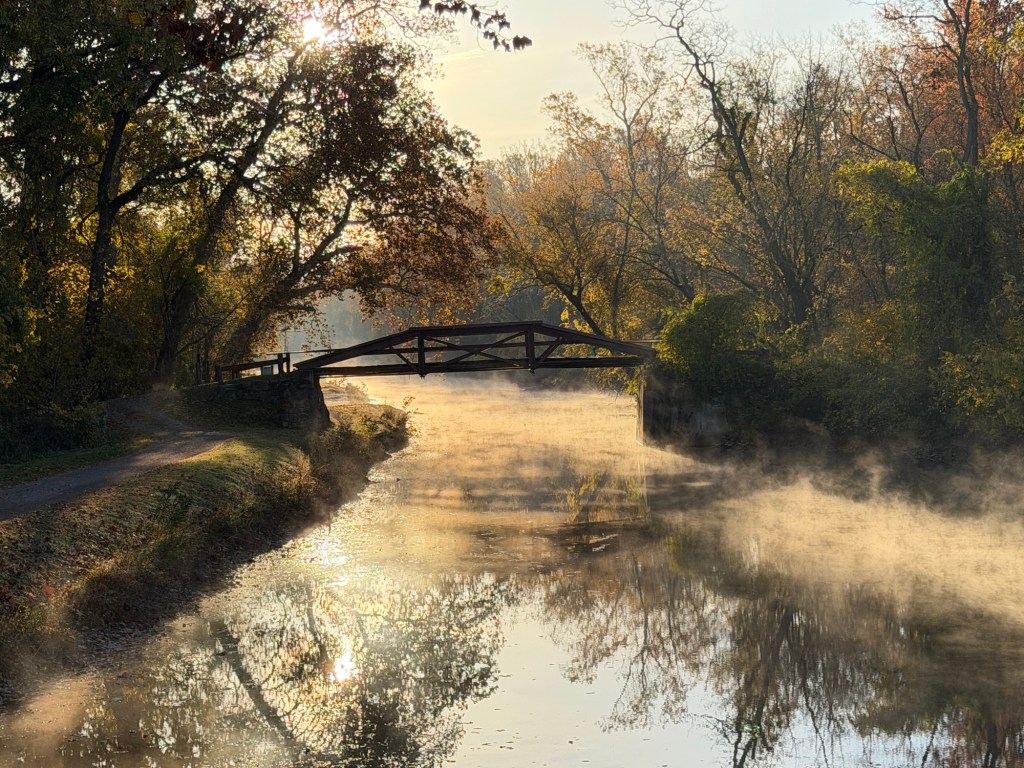
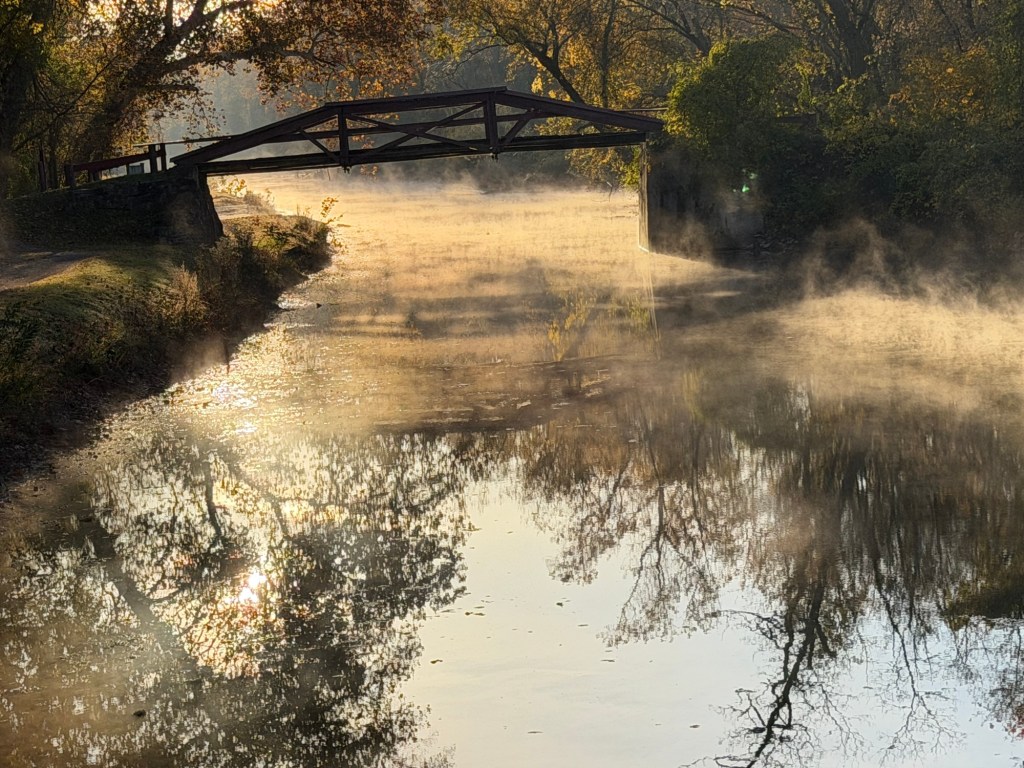
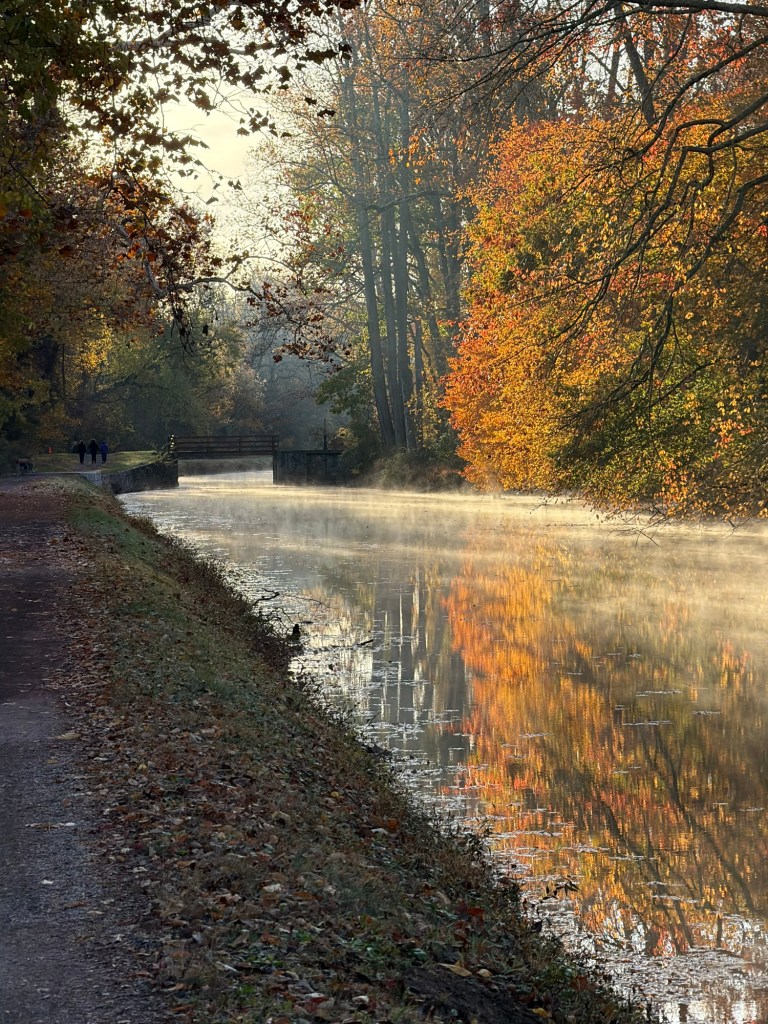
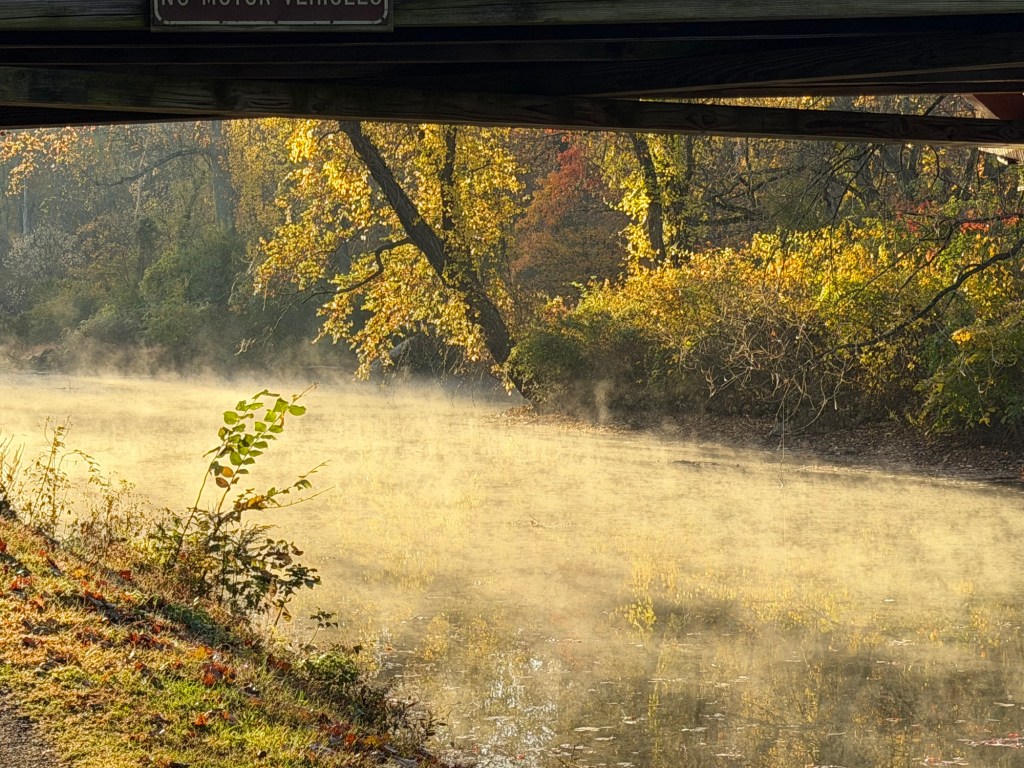
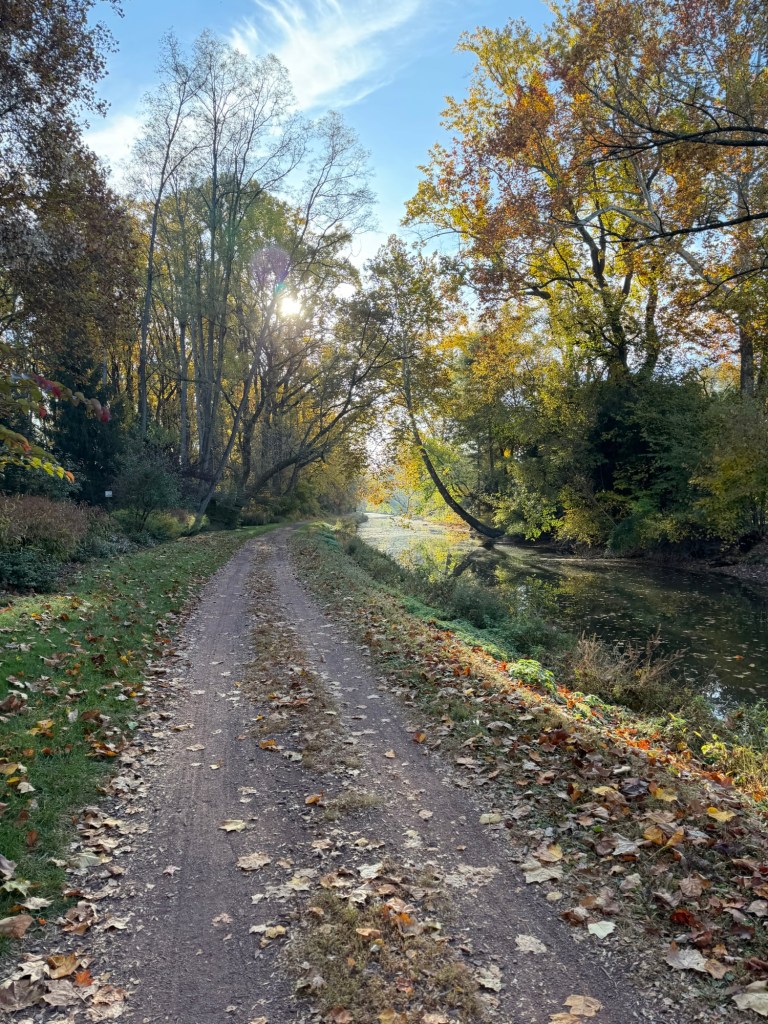
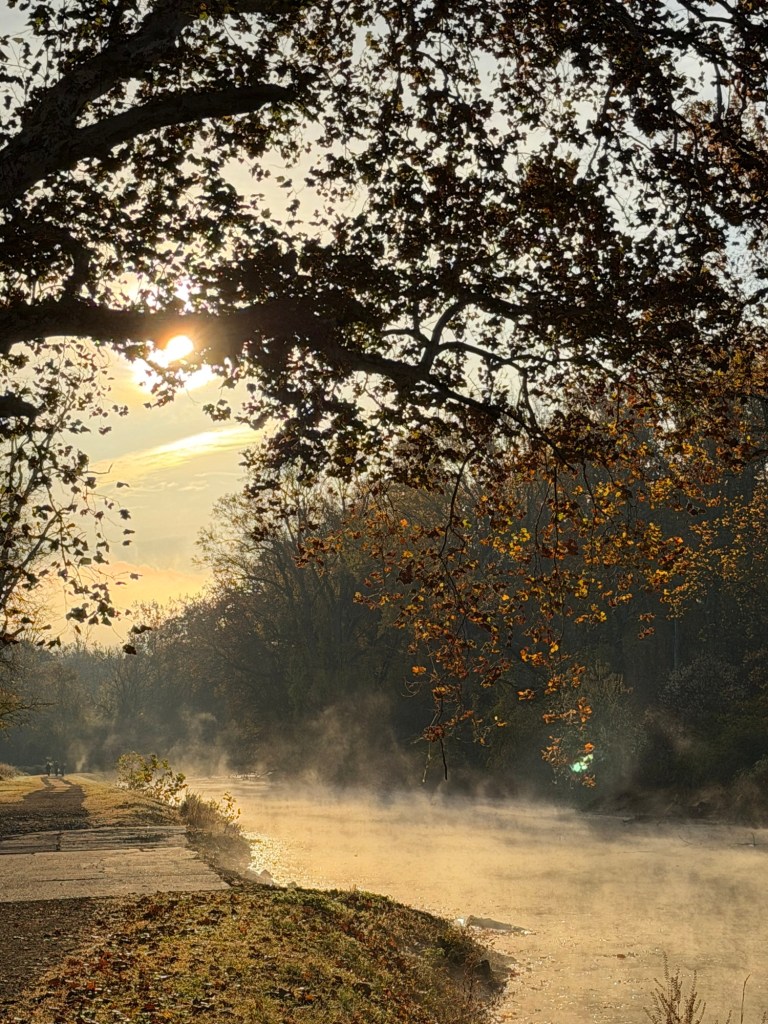
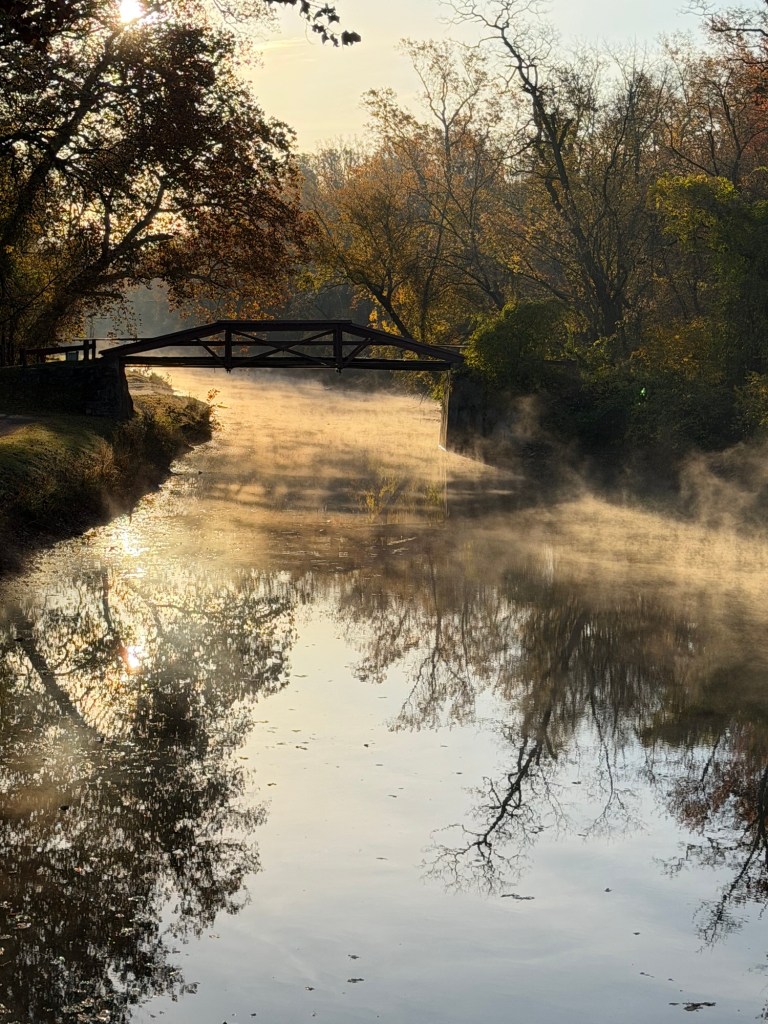
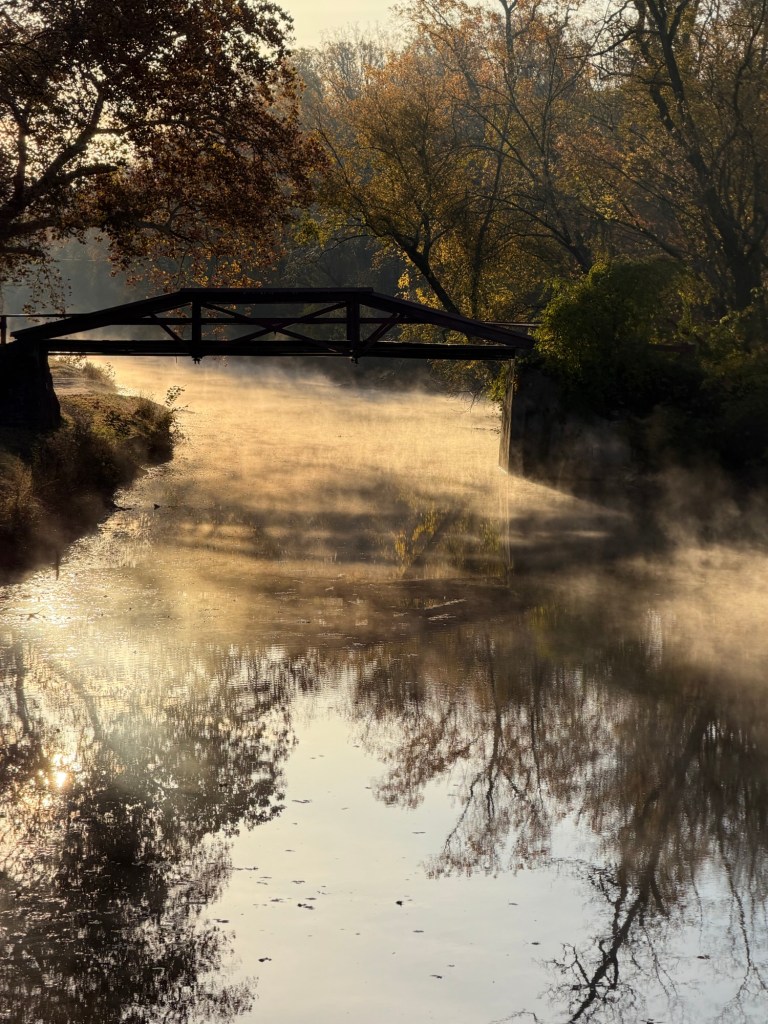
Near the Thompson-Neely House, in New Hope, Bucks County, morning mist drifted above the Delaware and Raritan Canal, turning the water gold beneath the bridge. Trees in autumn color leaned over the banks, their reflections wavering in the still water. It was a peaceful scene, but the canal’s history is also a story of disruption.
Long before the canal, this was Lenape land. European settlement dispossessed the Lenape and transformed the landscape into farms and mills. Then, beginning in the late 1820s, construction of the canal altered the land again. Pidcock Creek was redirected, existing enterprises were displaced or moved, and a new waterway was cut through the countryside to carry coal and commerce.
The canal brought prosperity, but its dominance did not last. Railroads eventually displaced the canal boats, and highways and automobiles later displaced much of the railroad traffic. Each new system advantaged one group while disadvantaging another. The Lenape were displaced by European settlers; older farms and mills yielded to the canal; the canal yielded to the railroad; and the railroad, in turn, lost ground to the highway.
Even the Lenape were not the beginning. Before them—or before the people we recognize by that name—other human beings inhabited the Delaware Valley. They, too, had come from somewhere, perhaps following or displacing still earlier people whose names have vanished. The record is too incomplete to tell us whether each change came through migration, absorption, conflict or gradual cultural transformation. But it all started somewhere, and throughout human history, as one people found a place, another often lost it.
This is the tension John Stuart Mill explored in his essay Civilization. He recognized material progress as a source of real benefits, but distinguished it from human improvement. Civilization can increase wealth, comfort and collective power without necessarily making individuals wiser, freer or better. Progress has never distributed its benefits evenly. What appears to one generation as advancement may appear to another as dispossession. No matter what sales pitch, no form of government will ever equal.
Yet change can leave beauty in its wake. The canal that disrupted an older landscape has itself become historic, peaceful and beloved. There is something of The Brutalist in that tension: civilization’s creations can be beautiful and inseparable from the upheaval that made them possible.
Standing beside the canal on this quiet autumn morning, I found myself wondering about that endless succession—one people, one technology and one way of life replacing another.
I wonder who will come next to this calm and peaceful place, and who will be here. Beneath the tempest of supposed moral clarity lies a harder question: where does anyone acquire the right to decide who will be advantaged and who will be disadvantaged? Power may enforce the decision, success may make it seem inevitable, and history may eventually sanction it. None creates a moral right. The question remains unresolved, drifting like the morning mist above the canal. One truth remains: whatever happens here becomes a part of this place, in beauty or not.