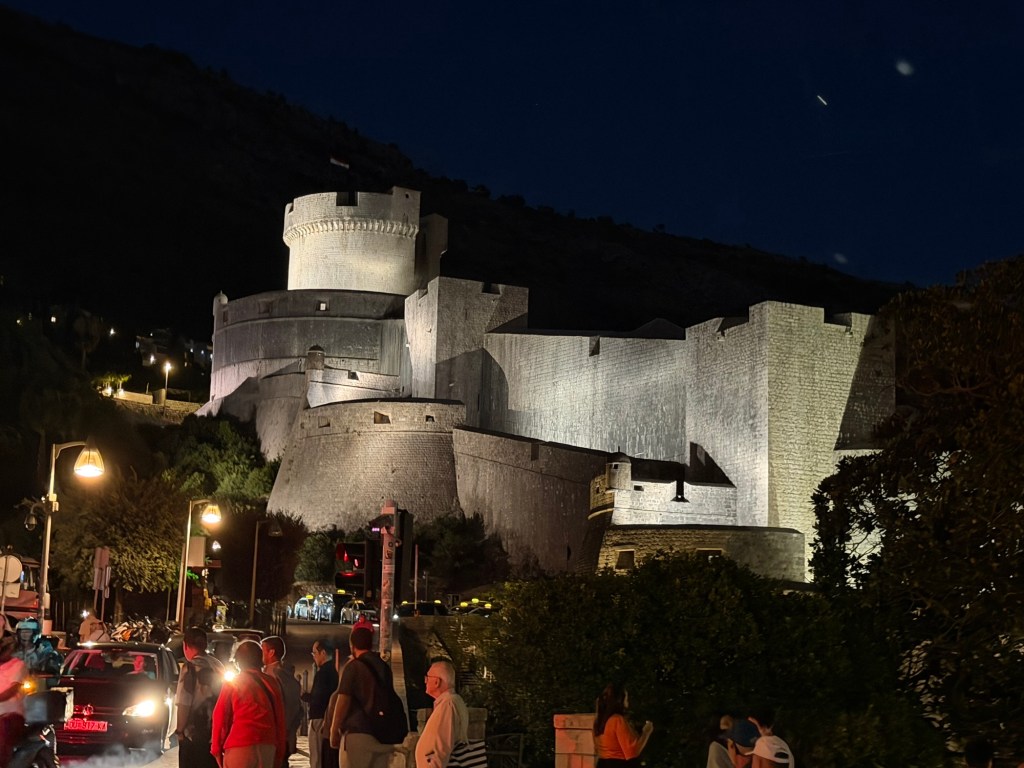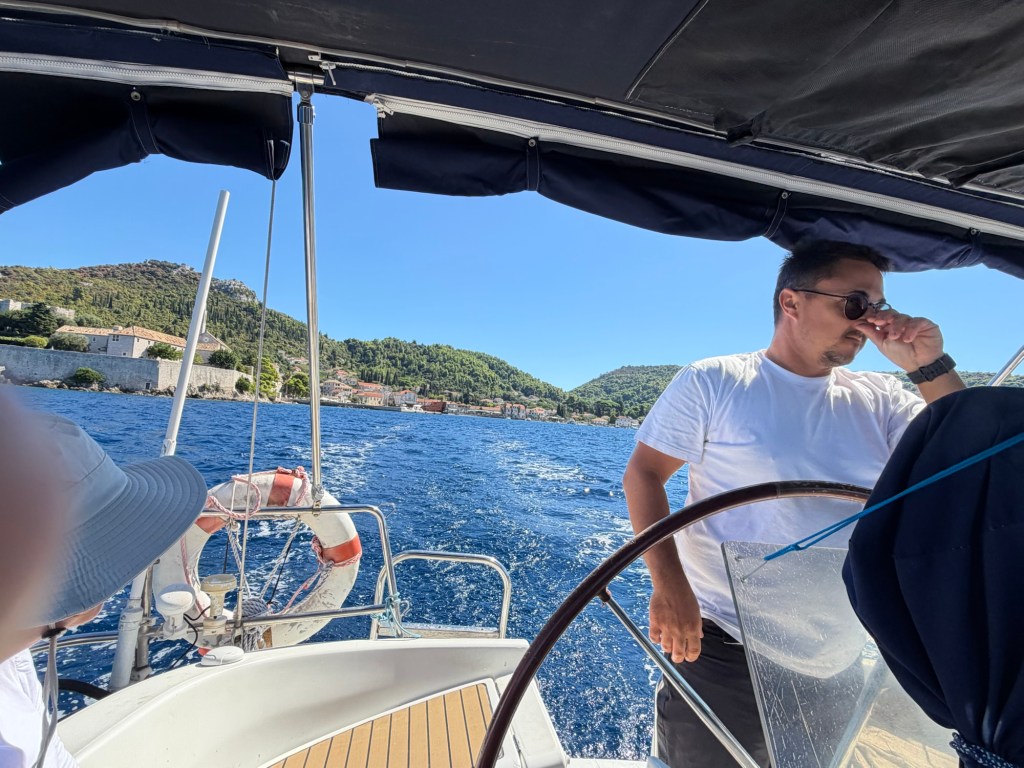
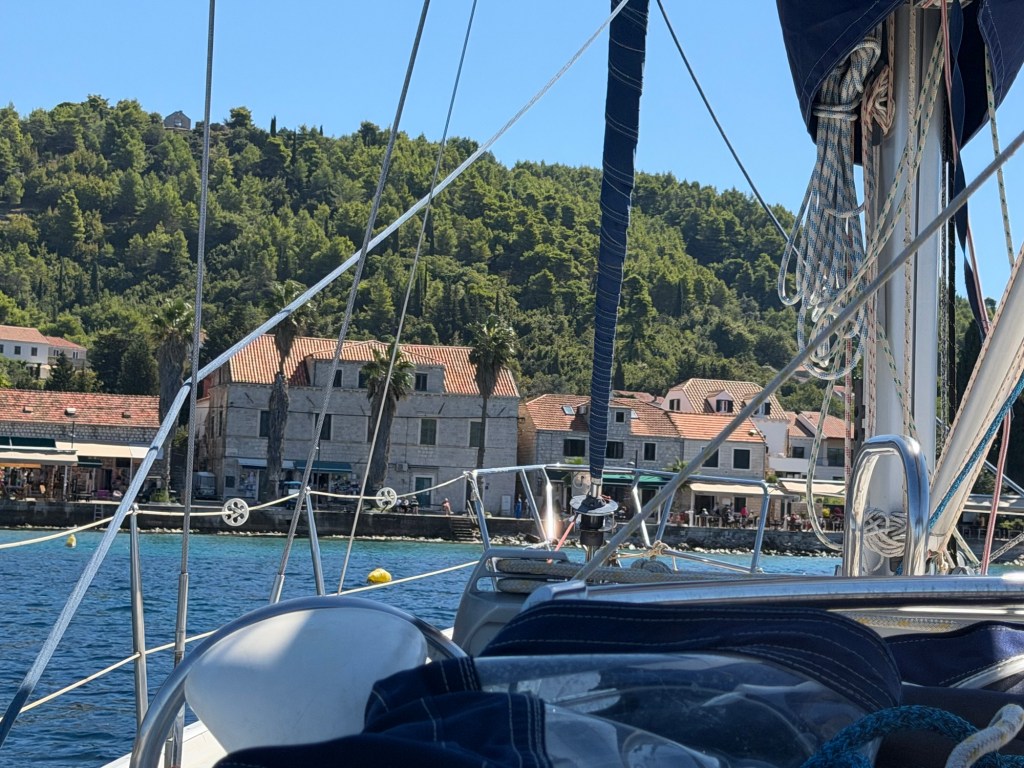
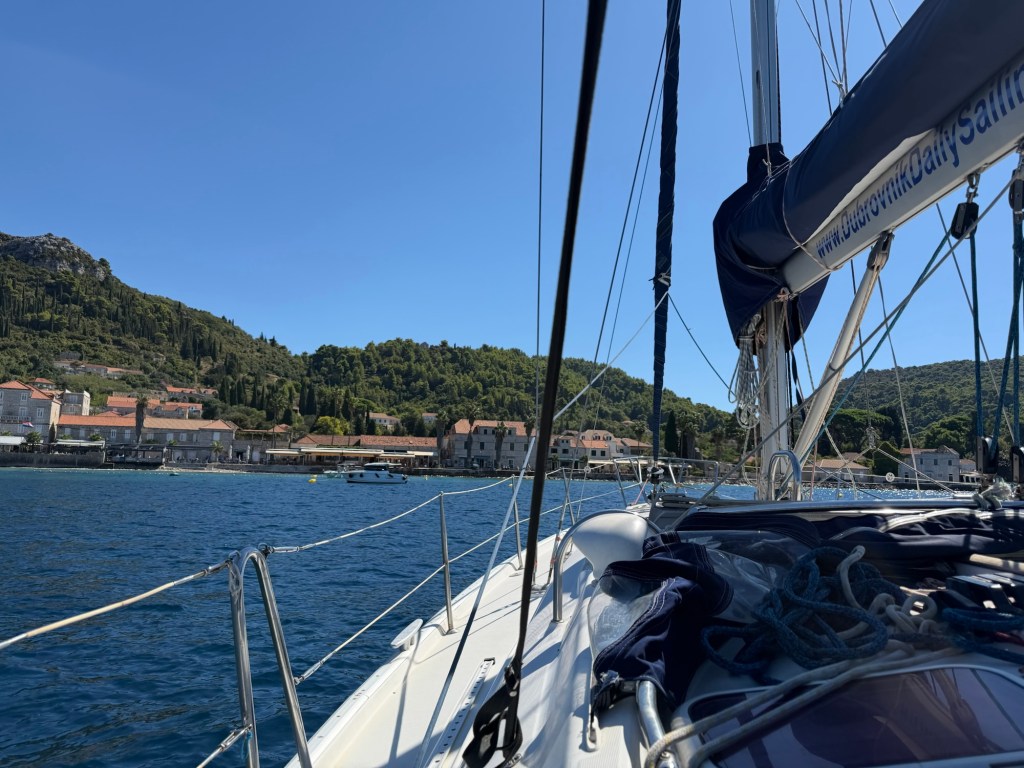
We sailed from Dubrovnik toward the Elaphiti Islands, and Lopud came into view as a sweep of green hills above a waterfront of pale stone houses and terracotta roofs. High on the ridge, the ruins of Sutvrač Fortress stood watch over the harbor. From the boat, the island seemed peaceful and unhurried—a world away from Dubrovnik’s crowded streets
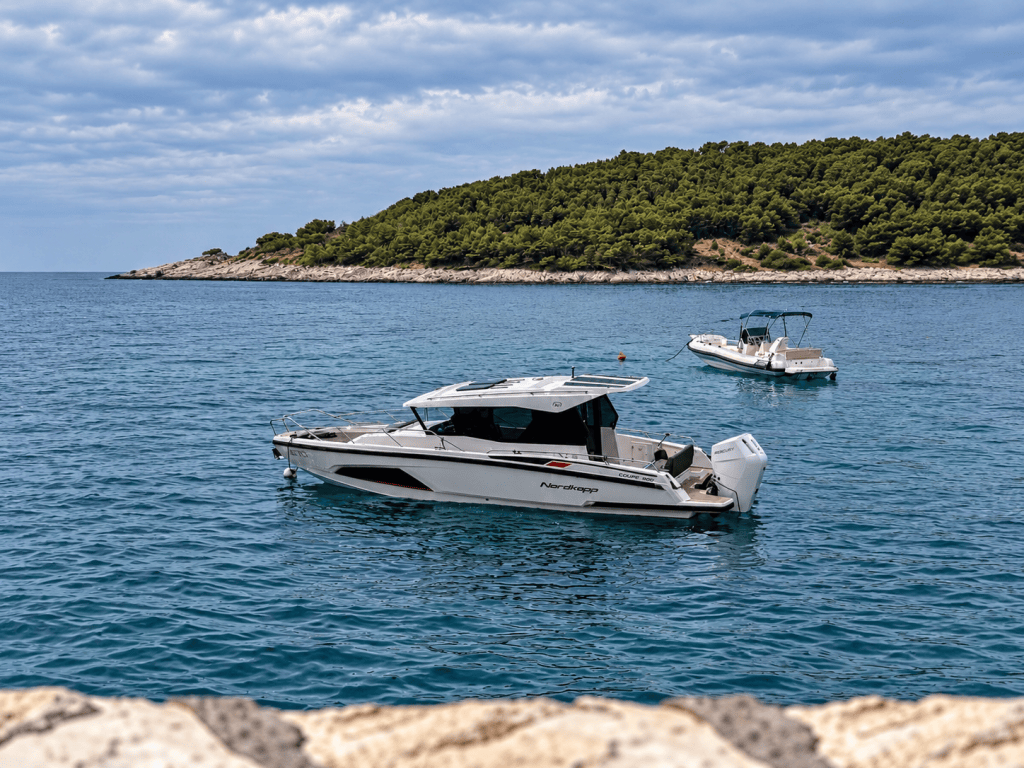
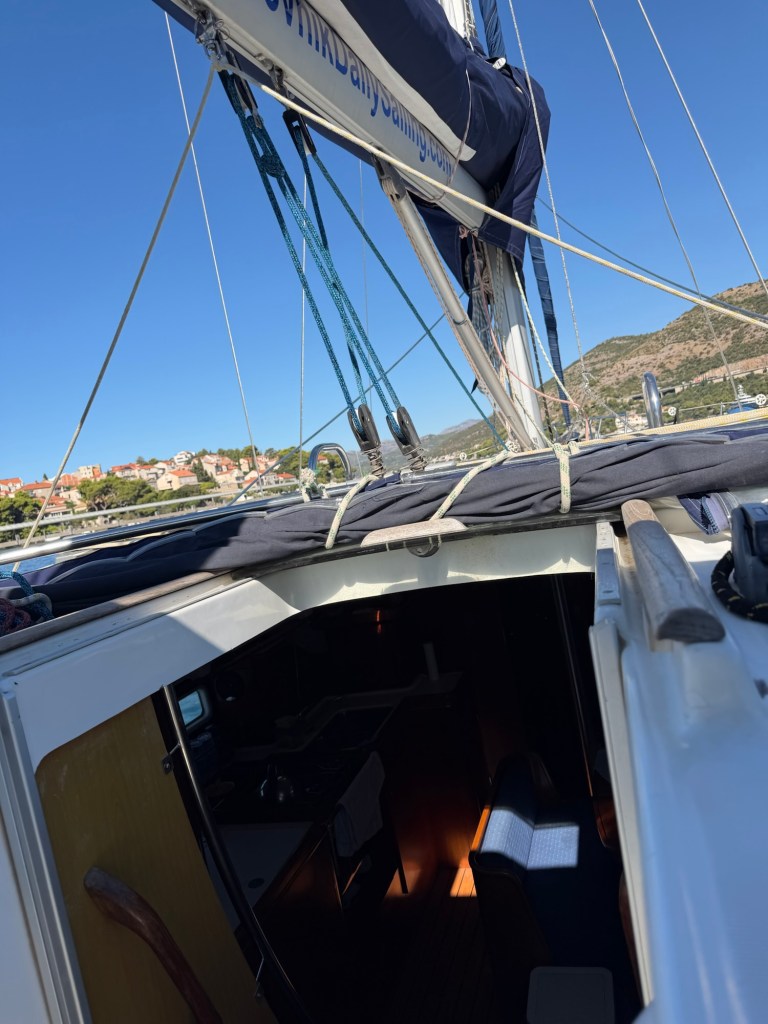
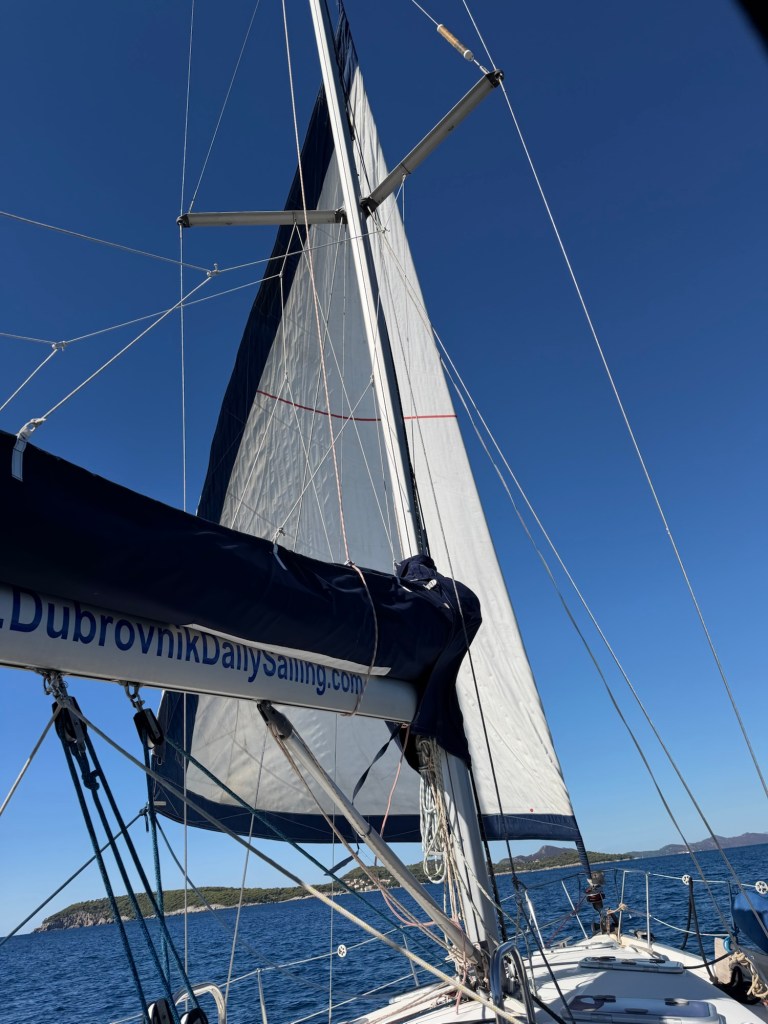
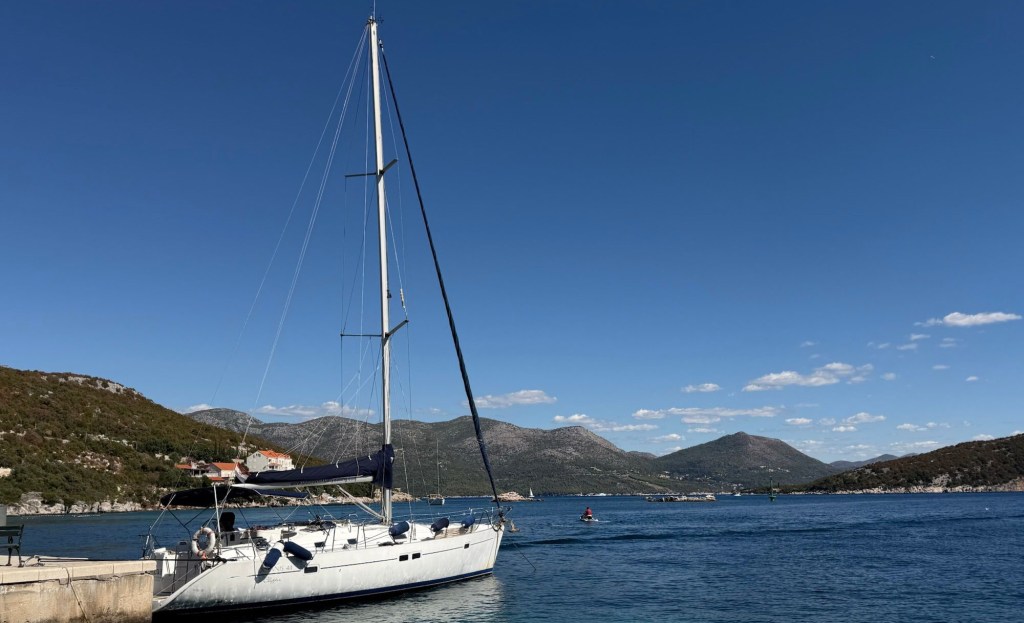
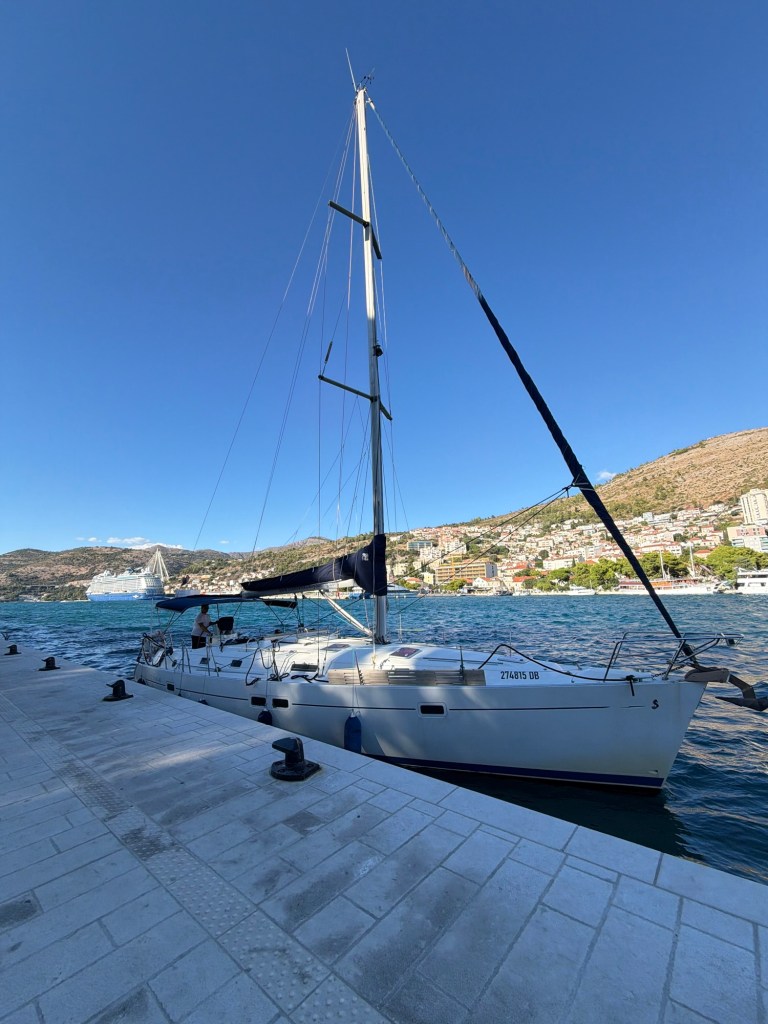
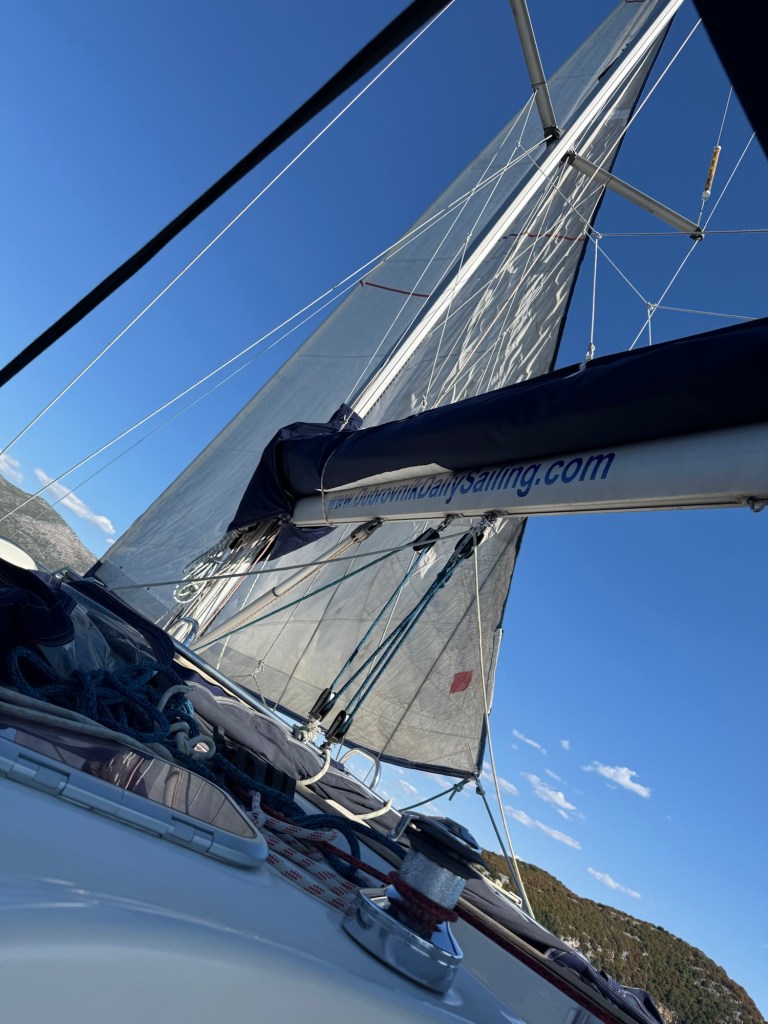
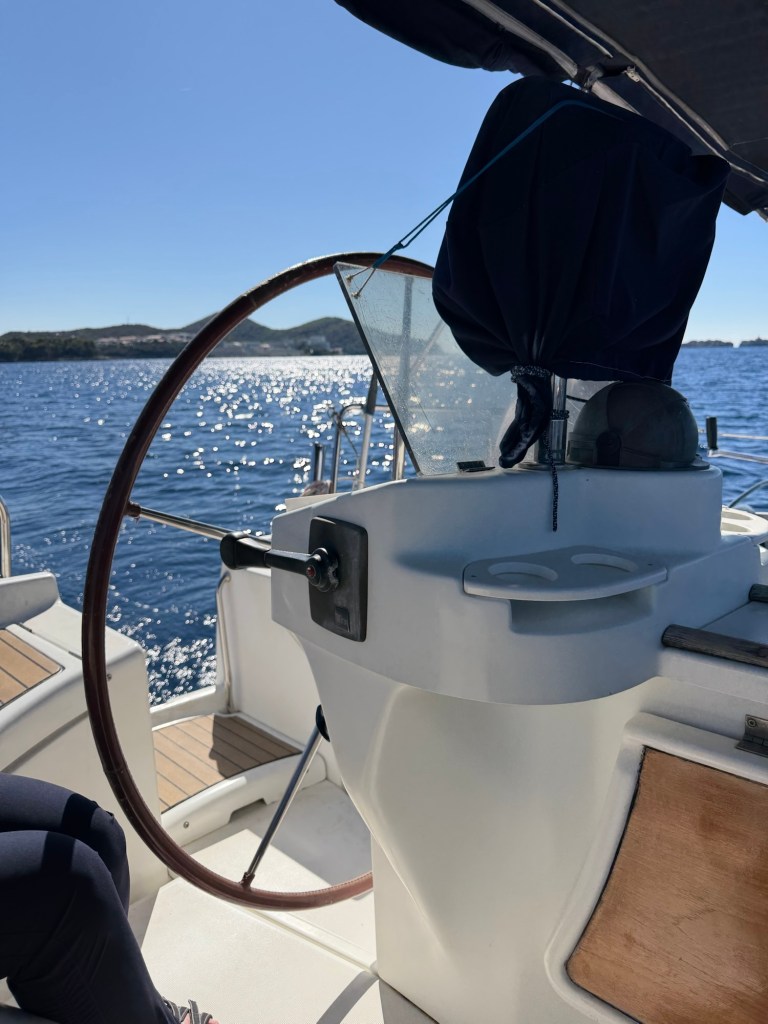
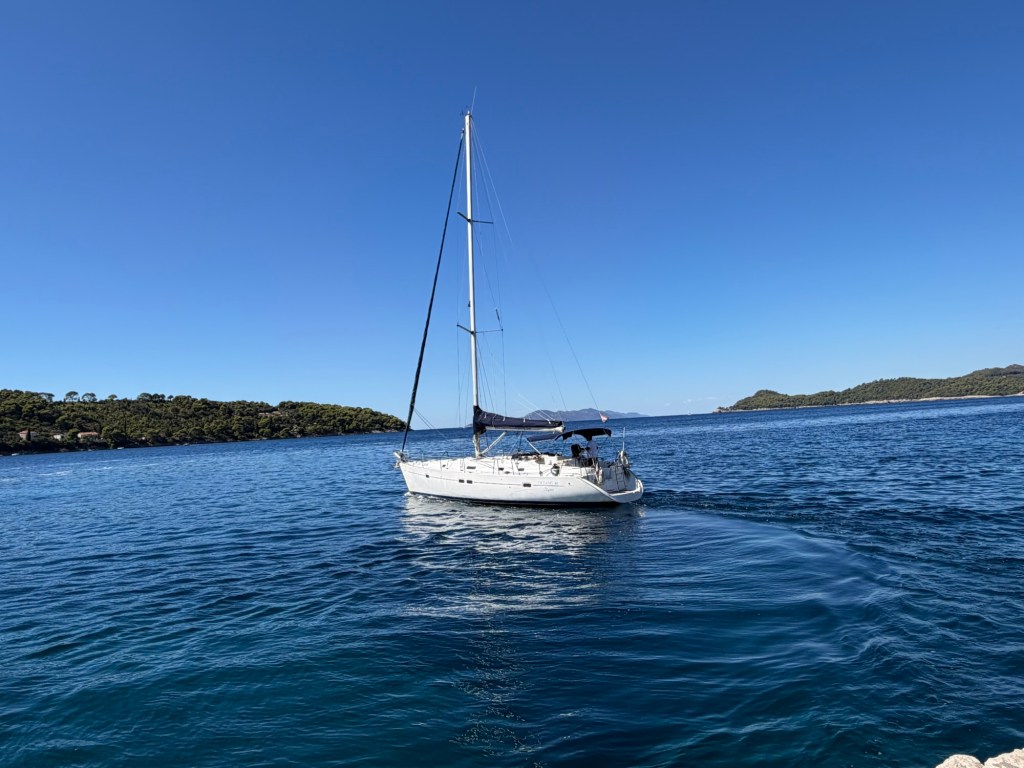
Our boat is a Beneteau Oceanis Clipper 411, a 41-foot cruising sailboat with a sloop rig: one mast carrying a mainsail and a forward sail. Its long white hull and high mast made an elegant sight against the blue Adriatic, while a dark-blue canopy shaded the roomy cockpit. The sails were furled for the trip, their lines and rigging tracing fine angles against the sky. At the stern, a swim platform sat just above the water.
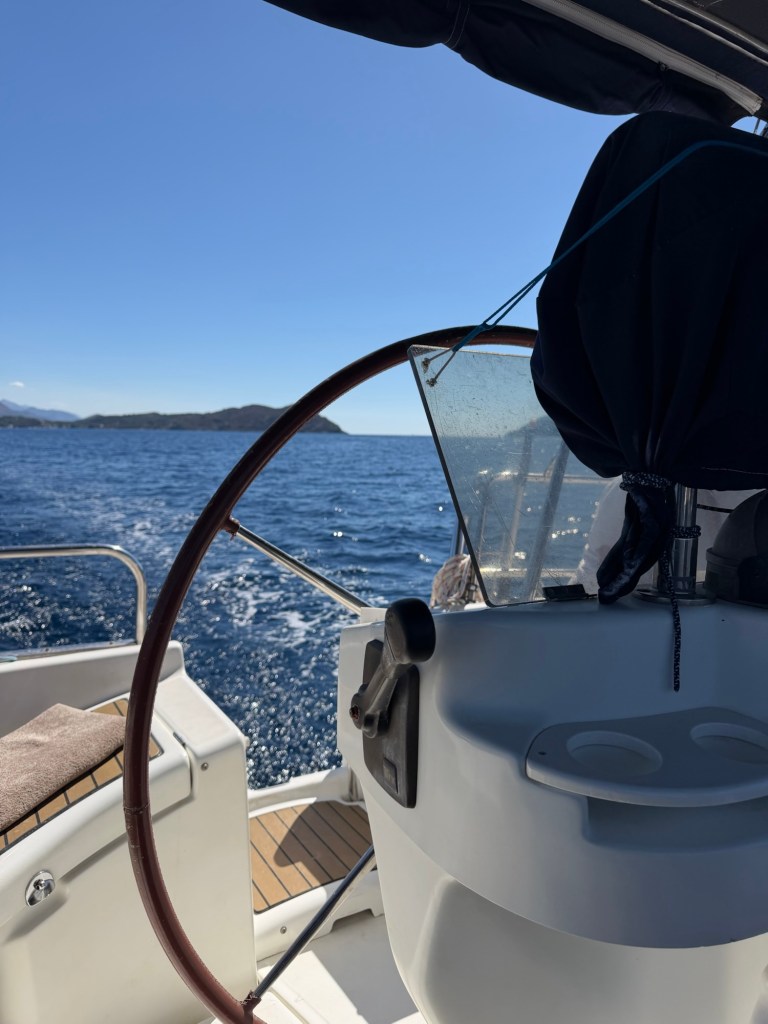
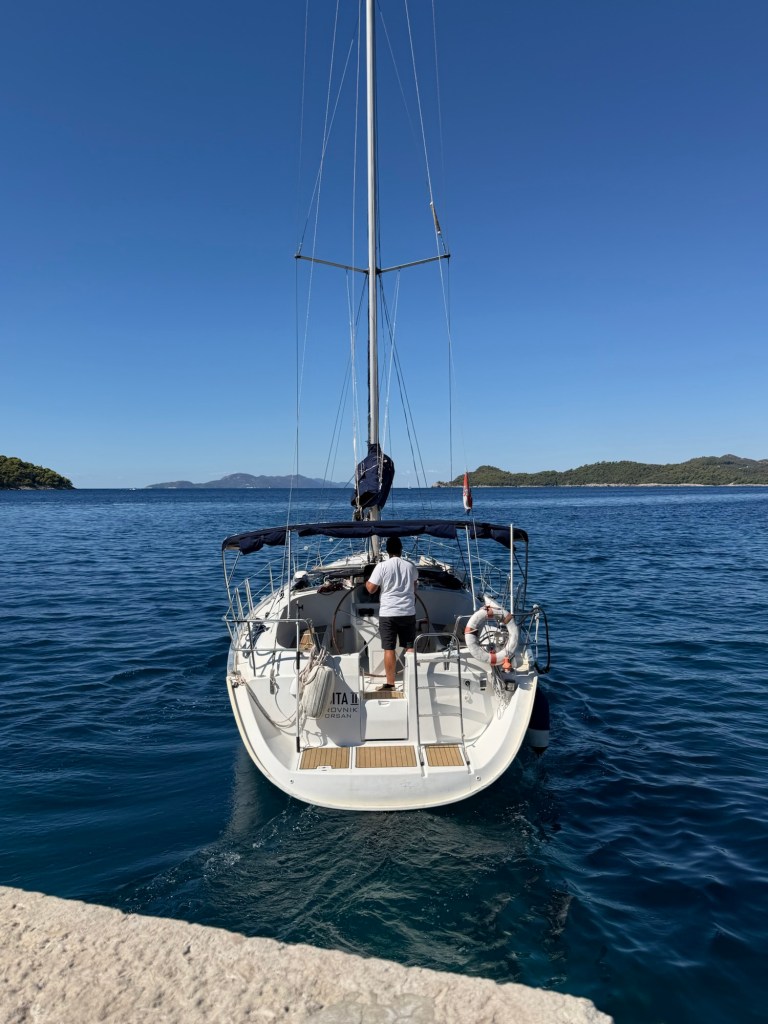
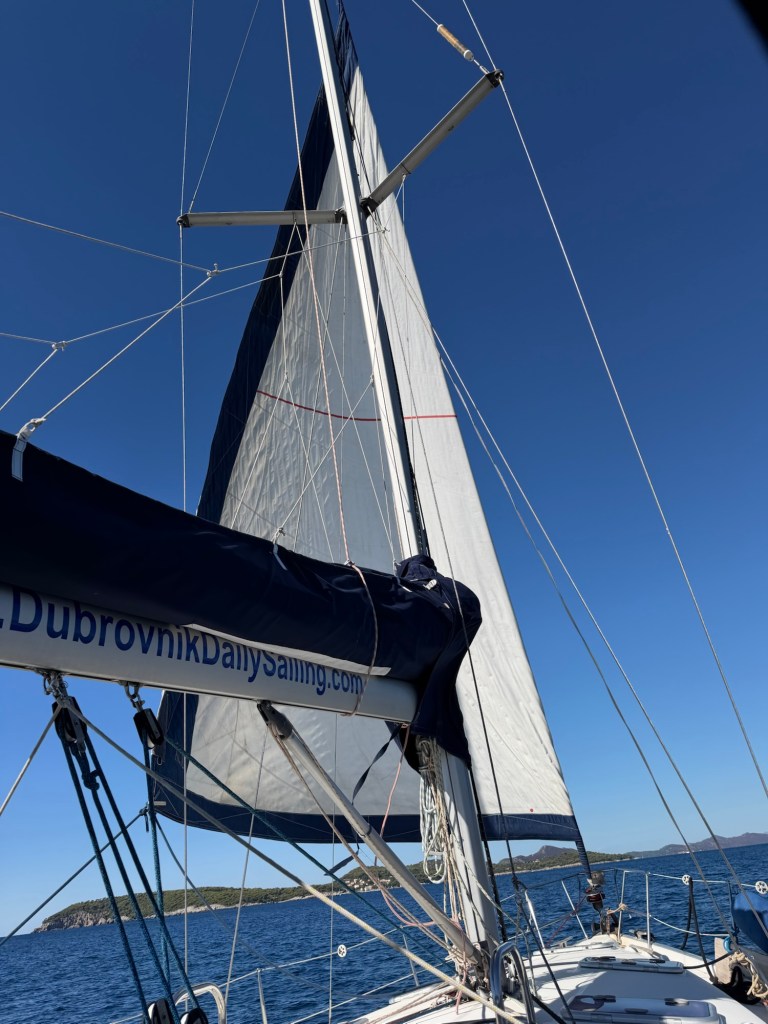
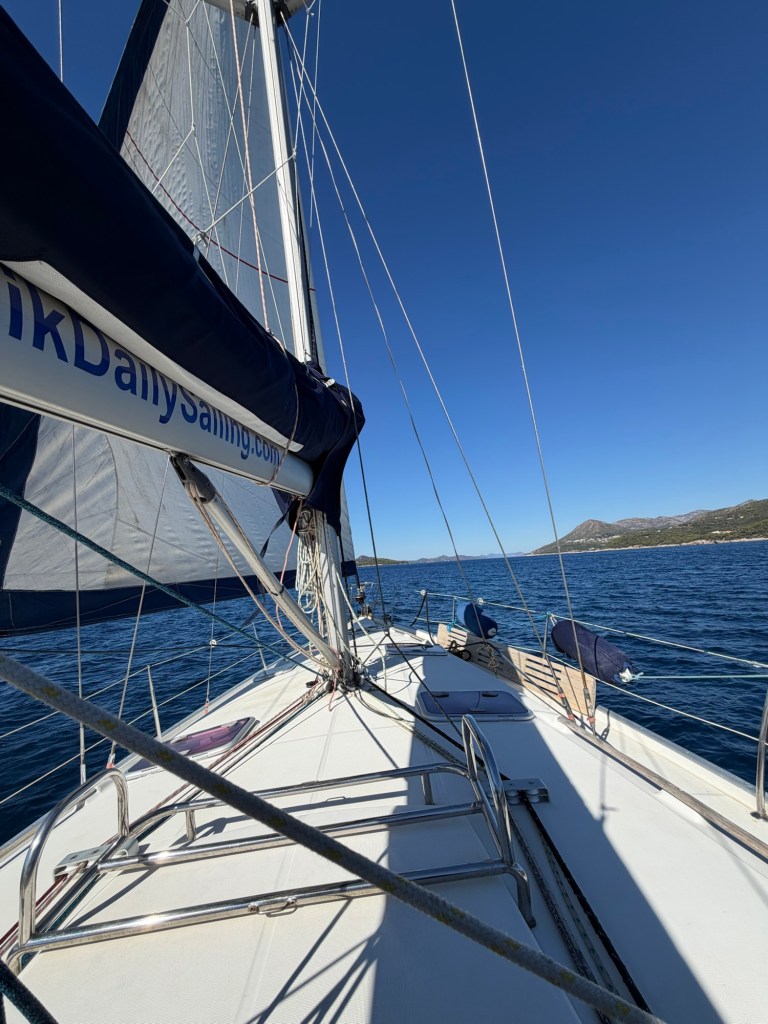
Our captain, Srdan, is a confident young man of 35. Srdfan told us proudly that he has seven children and hoped to have more. When we asked why so many, he answered simply, “I love my wife.” Apparently so. He also said he had been sailing since he was a small child, learning at his father’s side. There was no reason to doubt him.
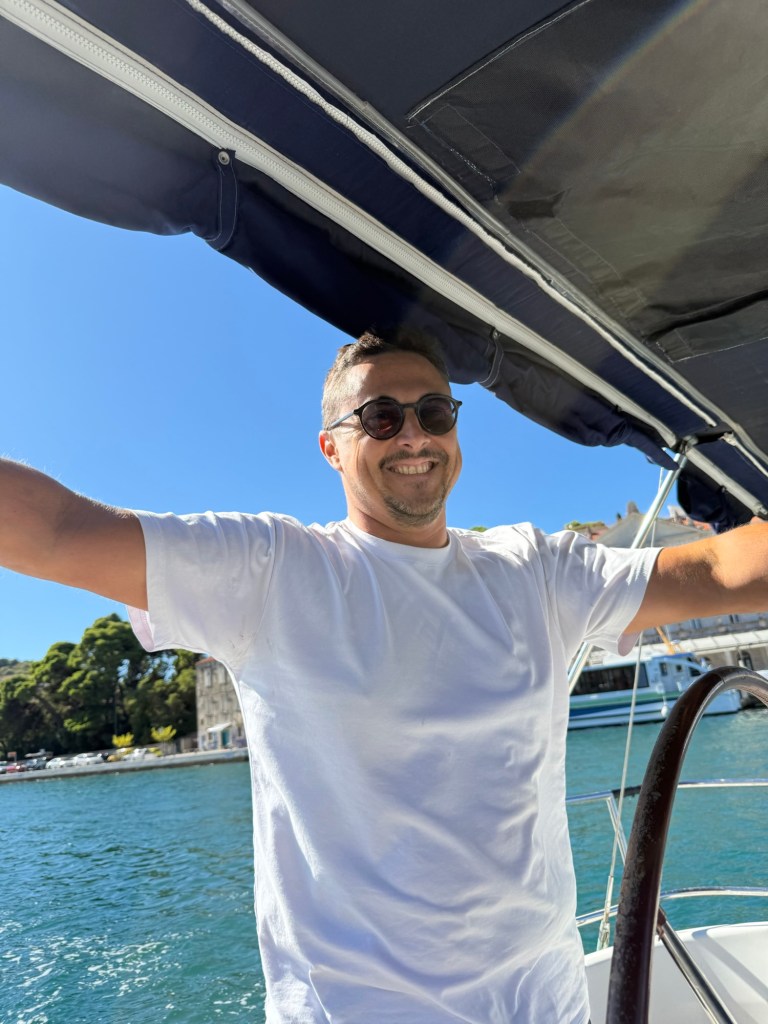
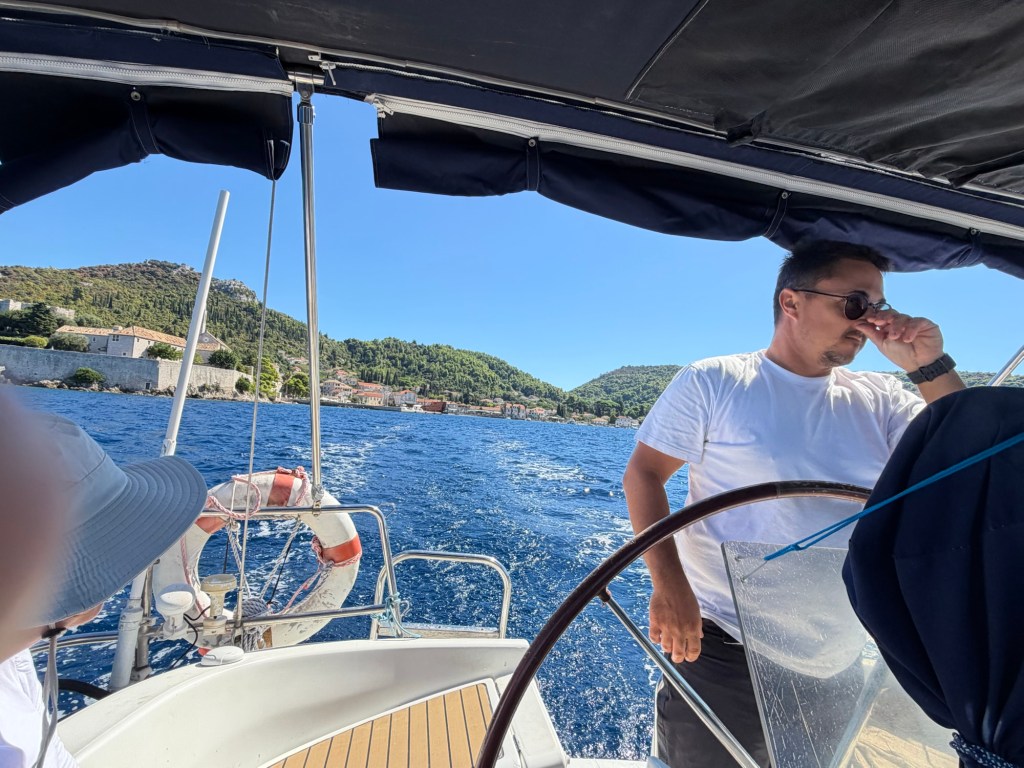
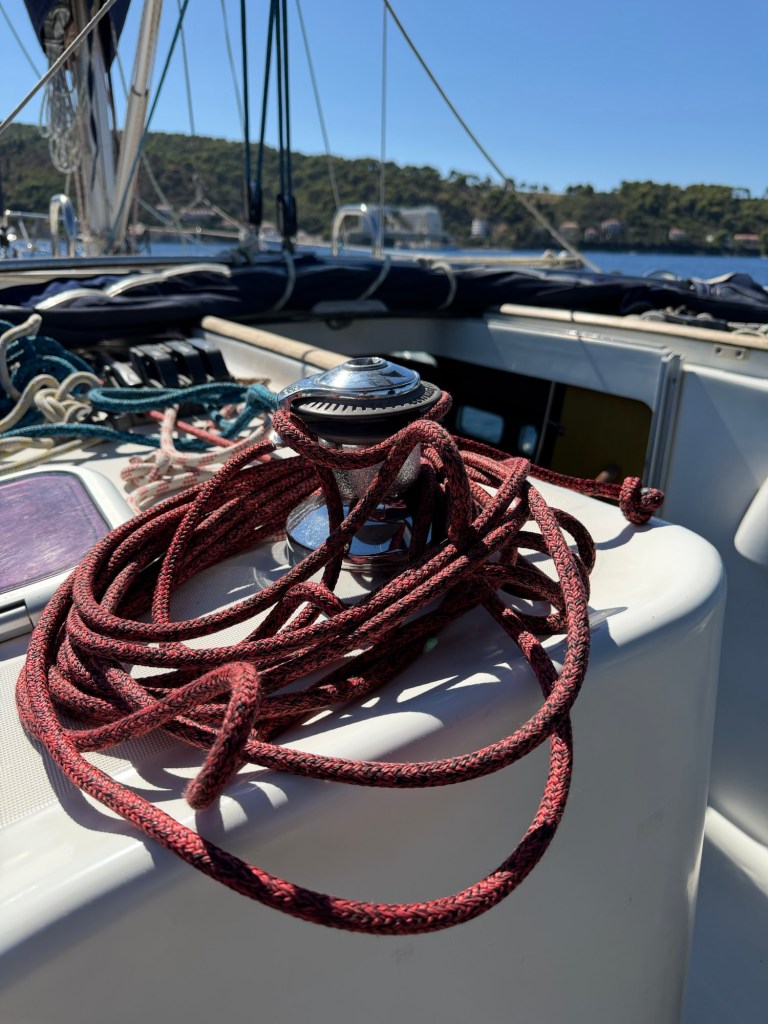
Once we cleared Dubrovnik’s harbor, our captain unfurled the jib. He watched the wind on the water and adjusted the sail’s angle, easing or tightening its sheet until the canvas filled and pulled us forward. With small, practiced movements, he kept the boat in the breeze and made the wind do the work. The sloop gathered speed, and we glided out toward the islands.
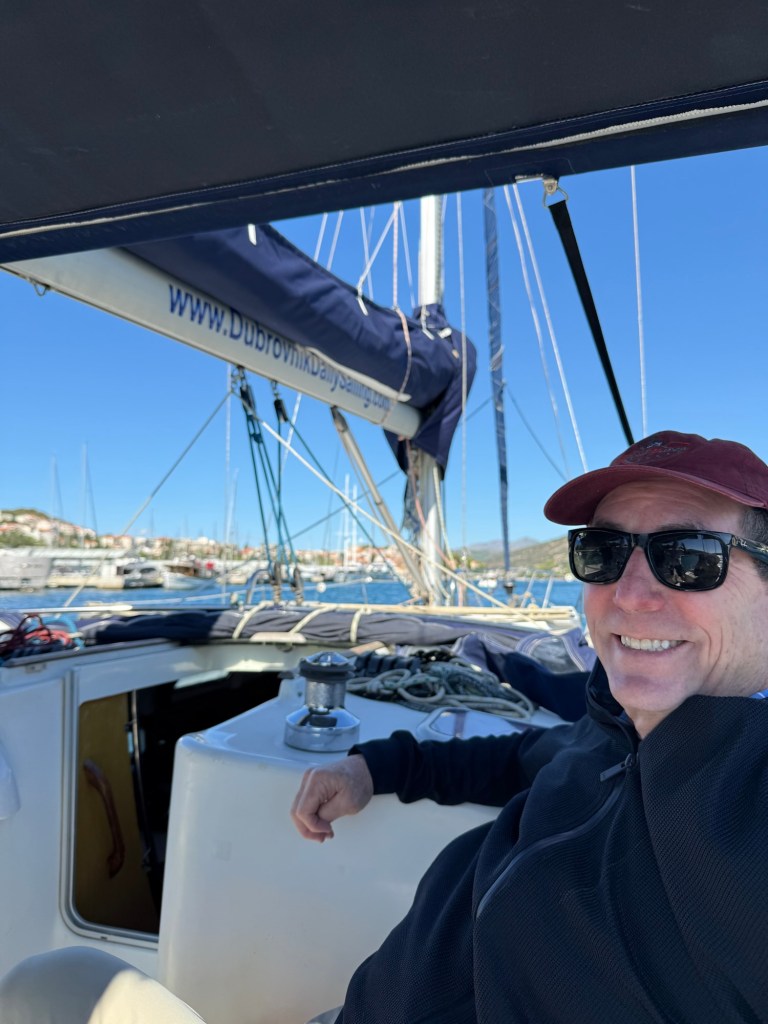


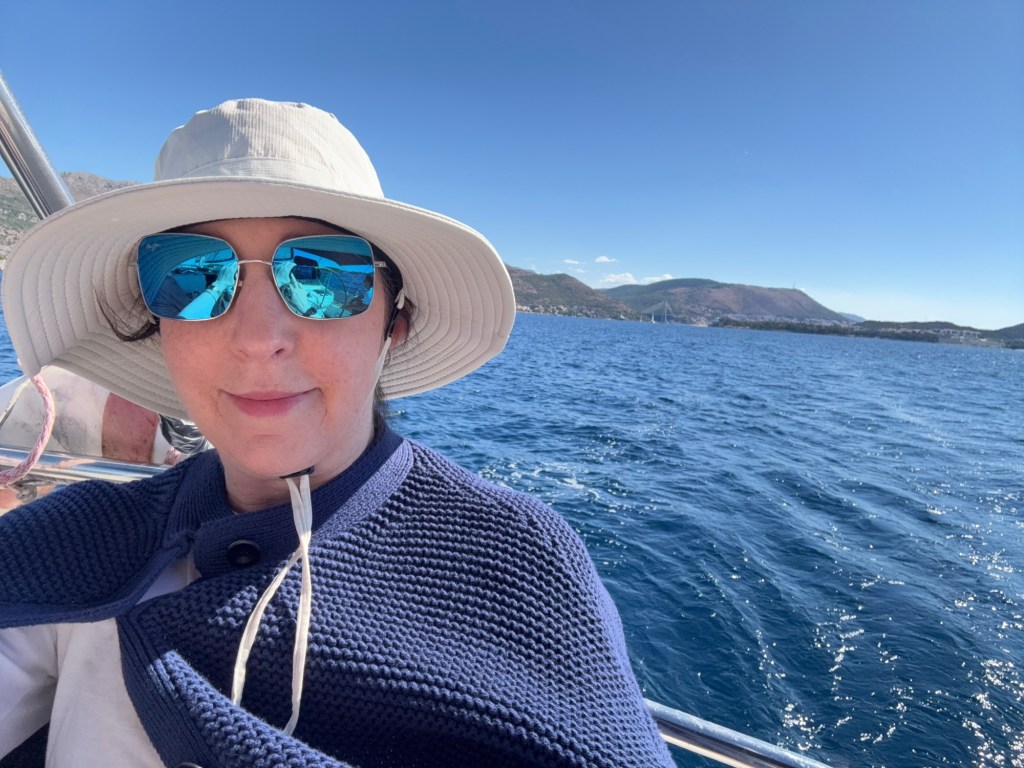
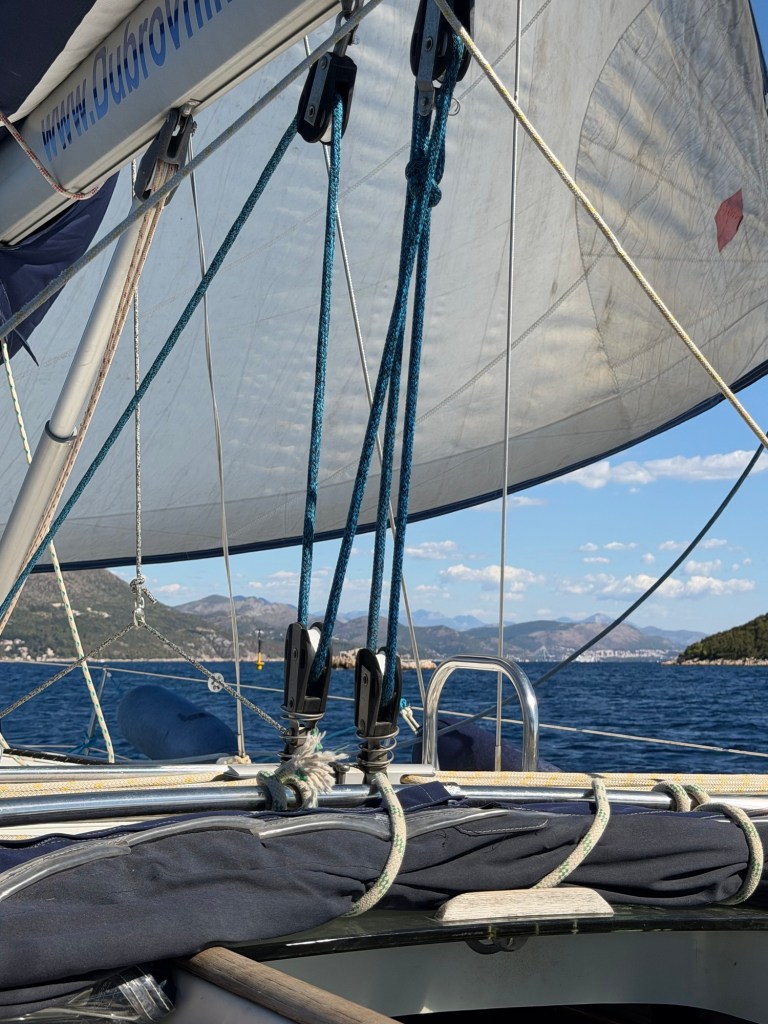
The Elafiti Islands, also known as the Elaphiti Islands, lie northwest of Dubrovnik. The archipelago’s three inhabited islands—Koločep, Lopud, and Šipan—have long been connected to the city and the old Republic of Ragusa. Our captain chose Lopud to set us ashore first, followed by Šipan.
Lopud flourished in the 15th and 16th centuries, when seafaring and commerce brought prosperity. Its waterfront monastery, Rector’s Palace, and old stone houses still hint at that era. Above the village, the ruined fortress on the ridge looks out over the harbor.
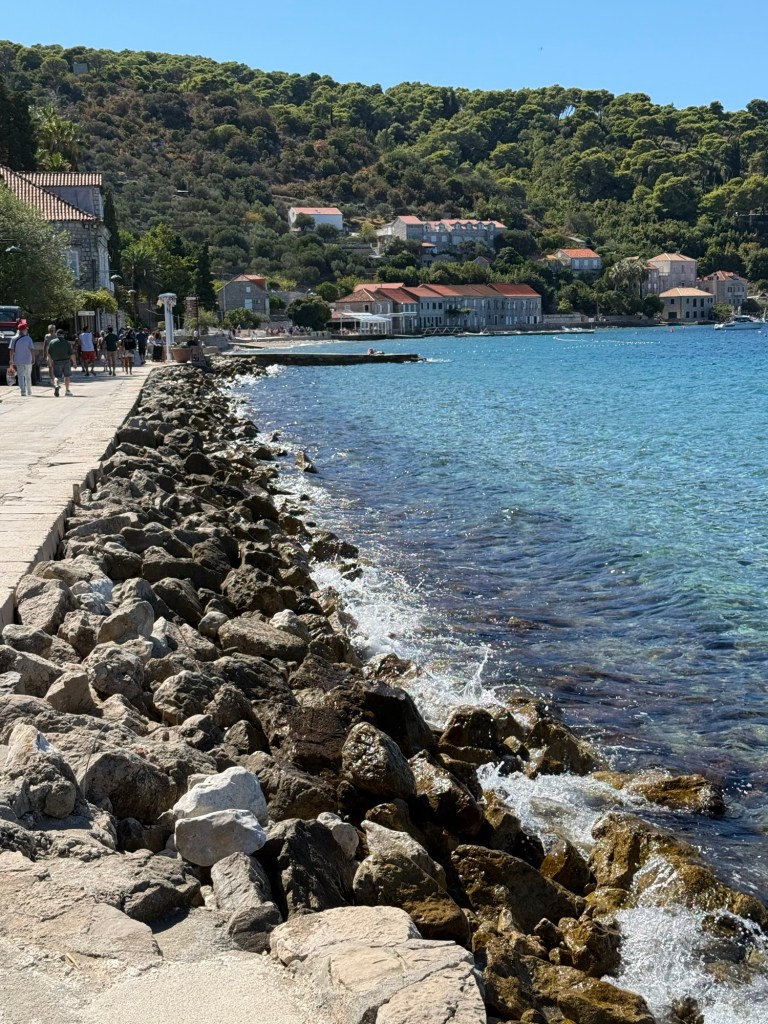
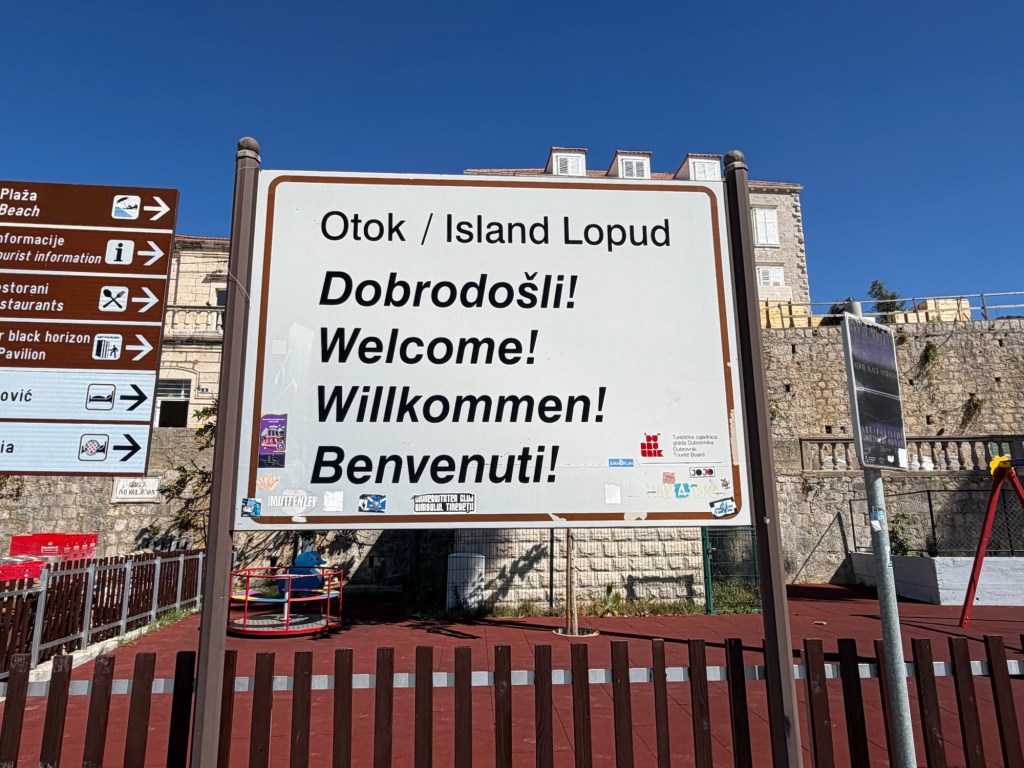
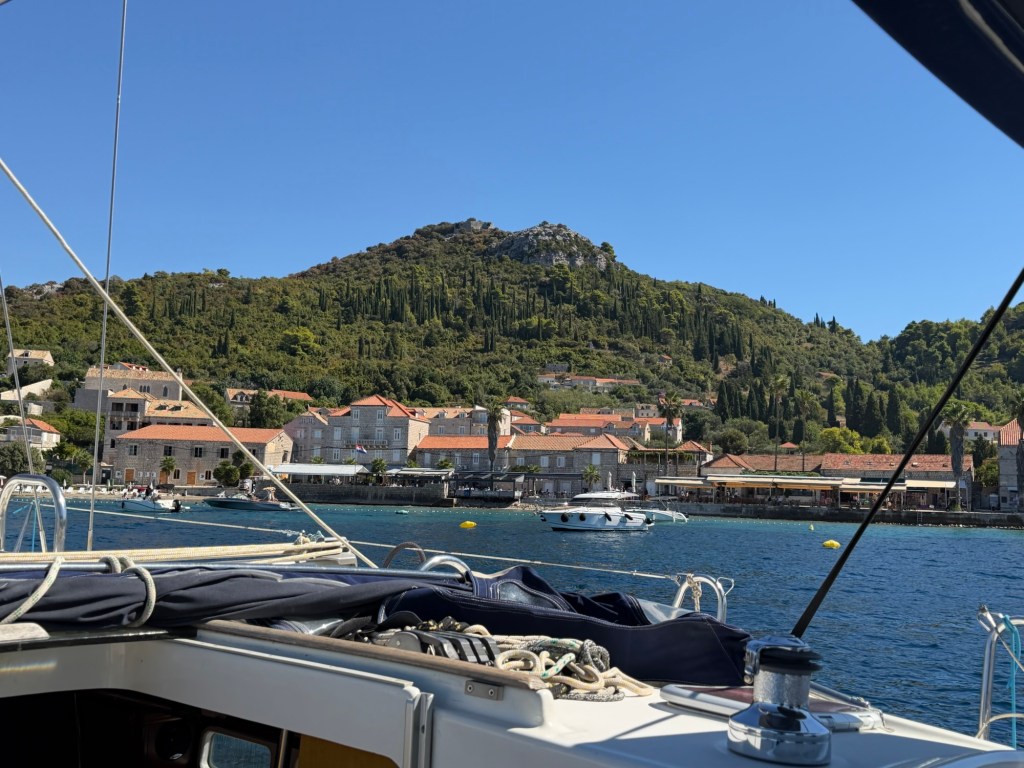
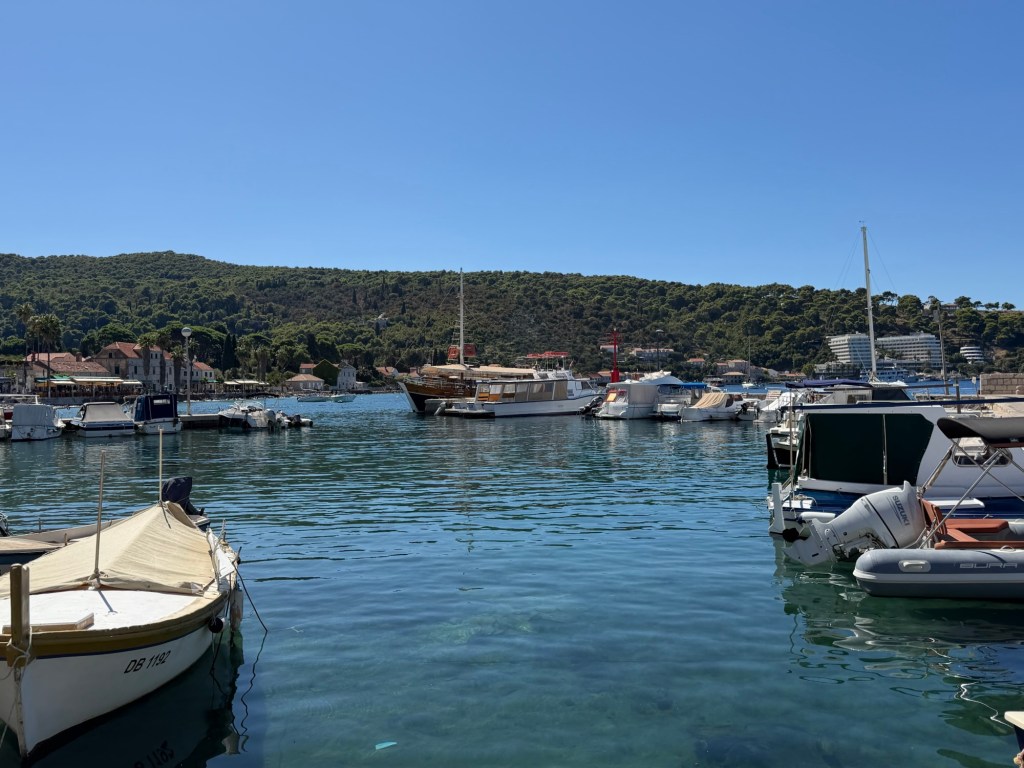
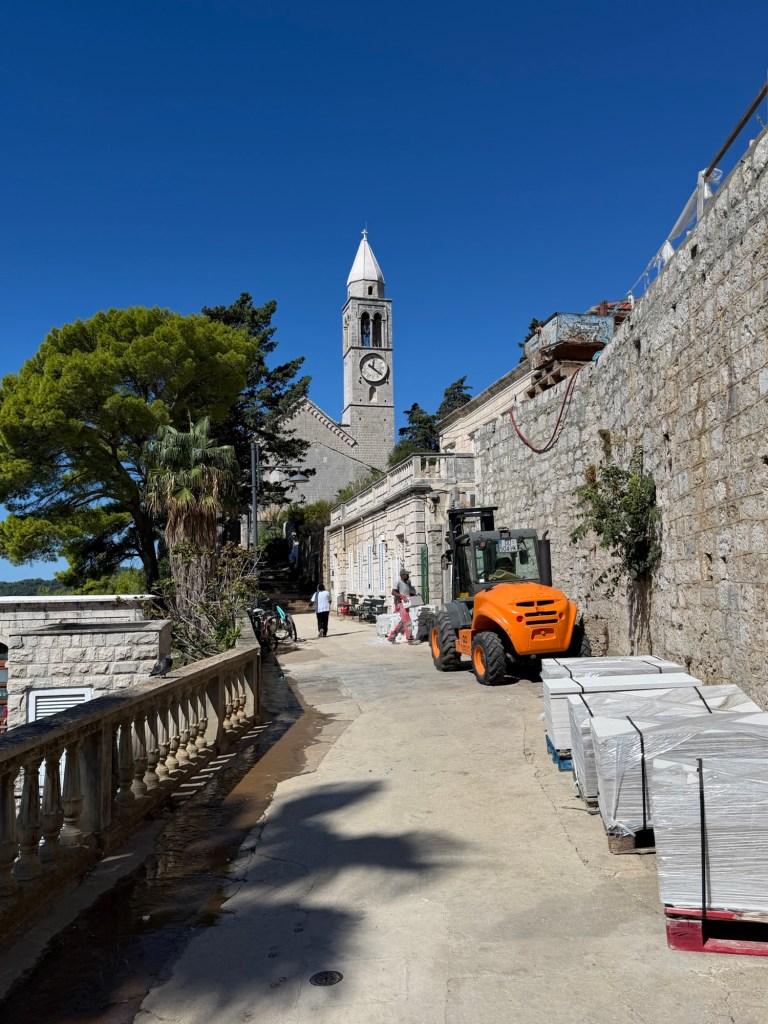
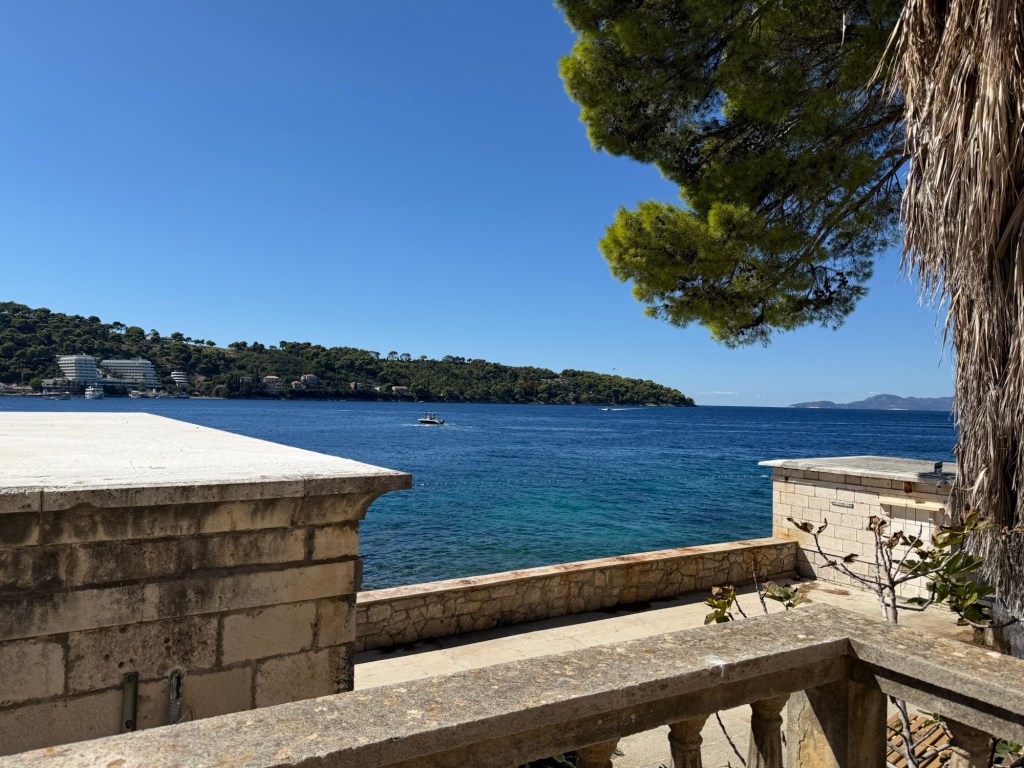
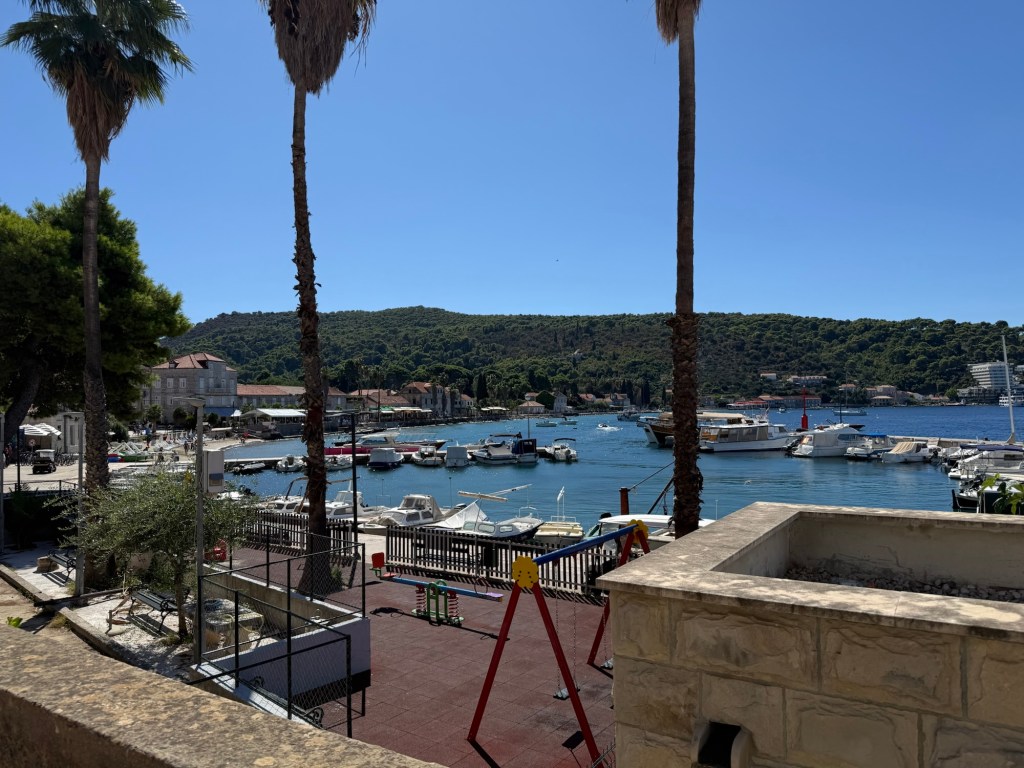
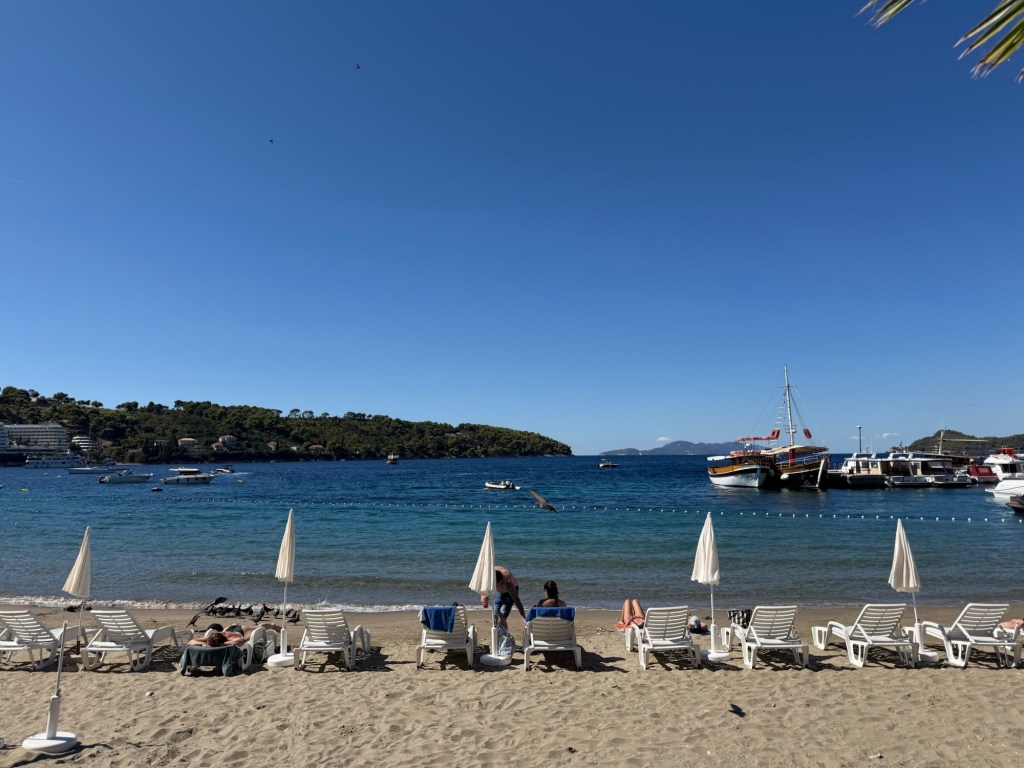
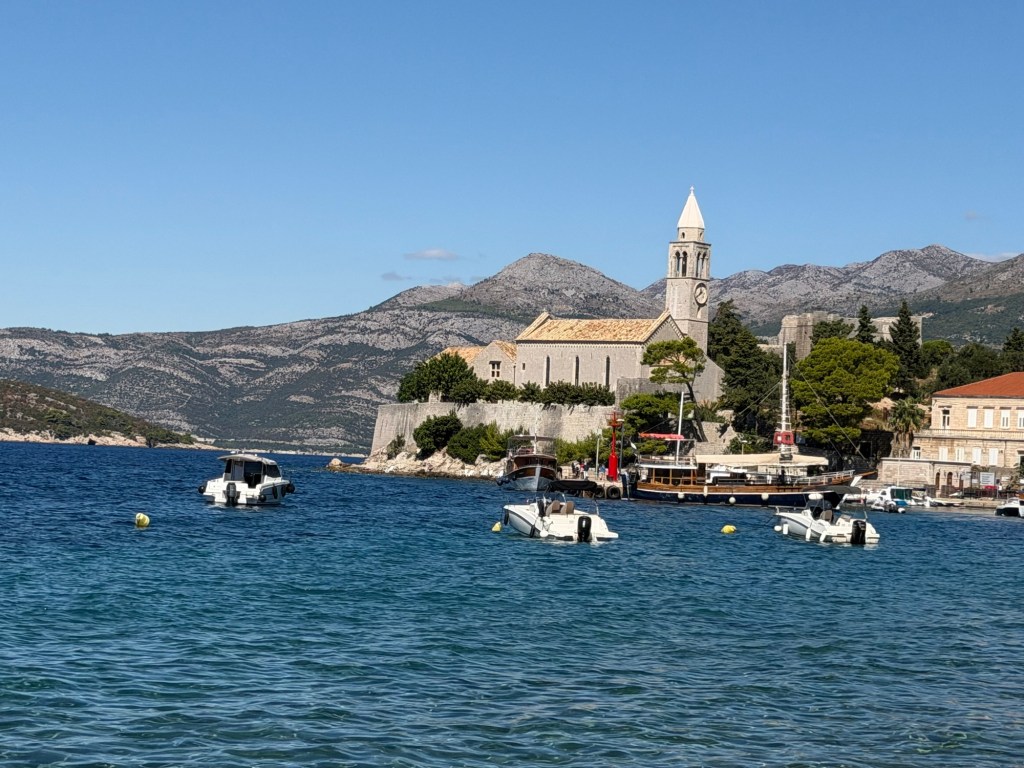
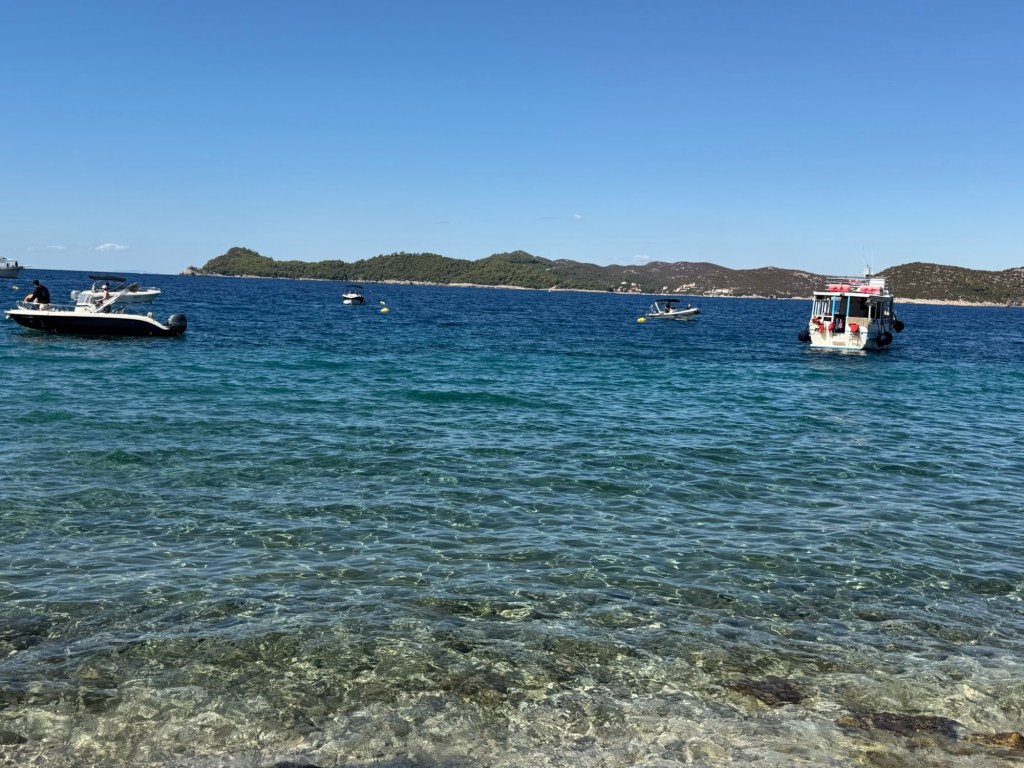
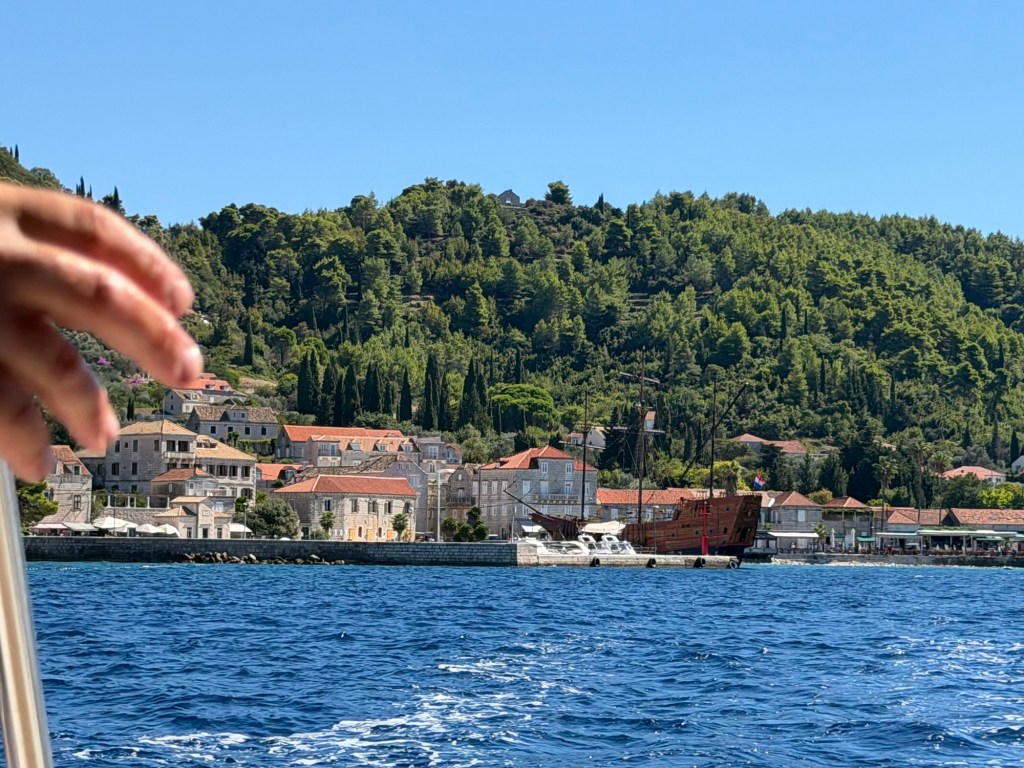
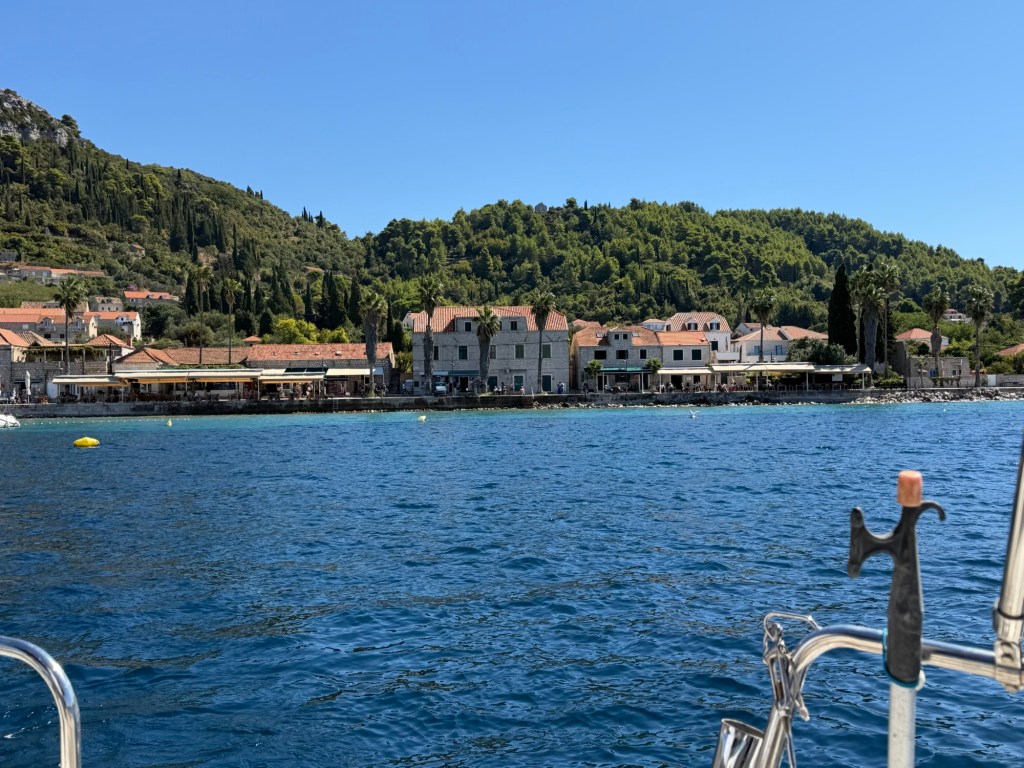
Today, Lopud feels quieter than the prosperous maritime center it once was. The village still gathers along its waterfront promenade, where cafés and restaurants face the harbor. With no cars, the lanes are left to pedestrians; old stone houses and gardens line the way. Boats continue to bring visitors from Dubrovnik, but once ashore, the pace seems to slow.
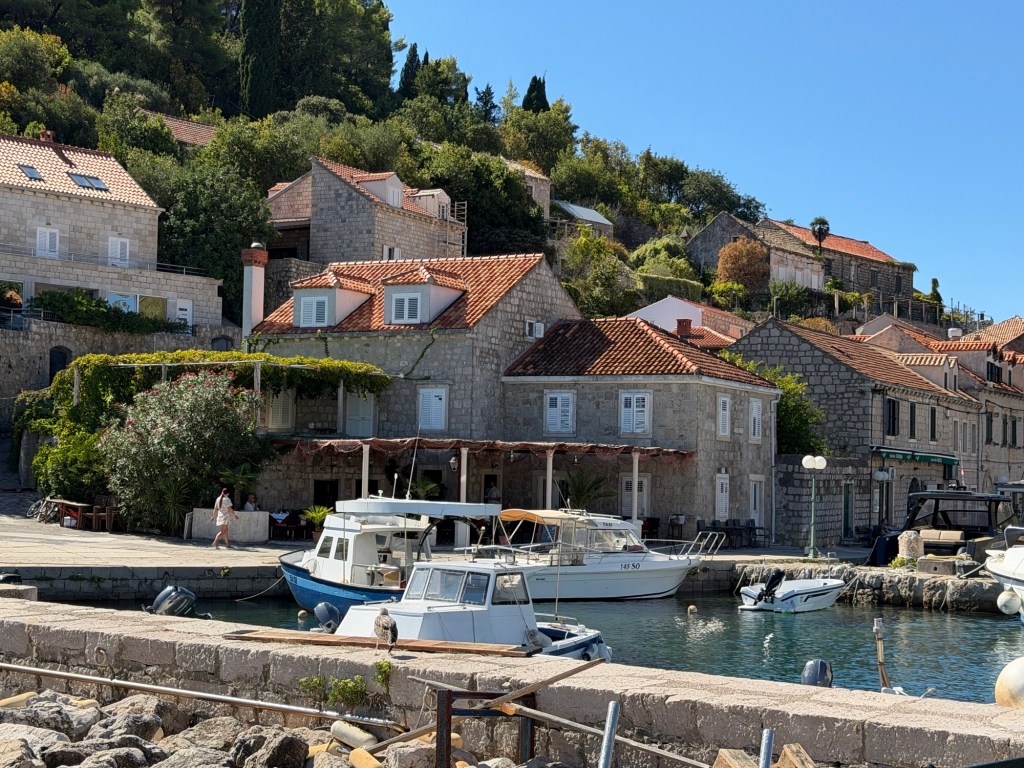
We then put ashore at Šipan, where the skipper Ourhad arranged lunch for us at Stara Mlinica. Afterward, we walked around the village, taking in its quiet harbor and old stone houses.
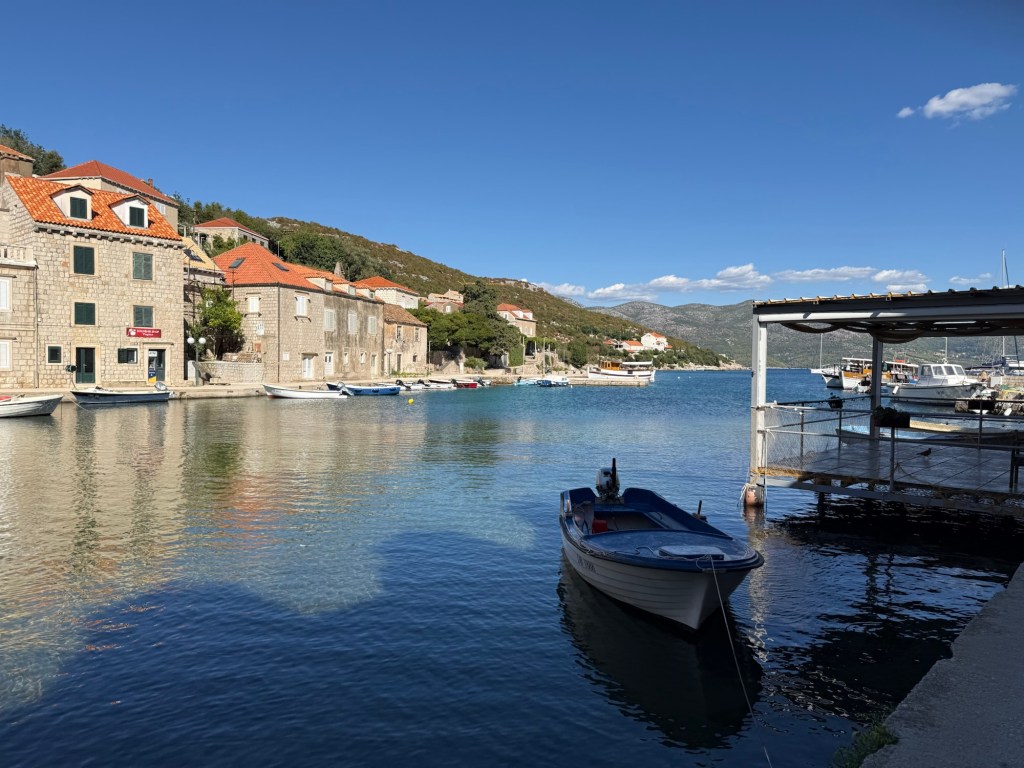
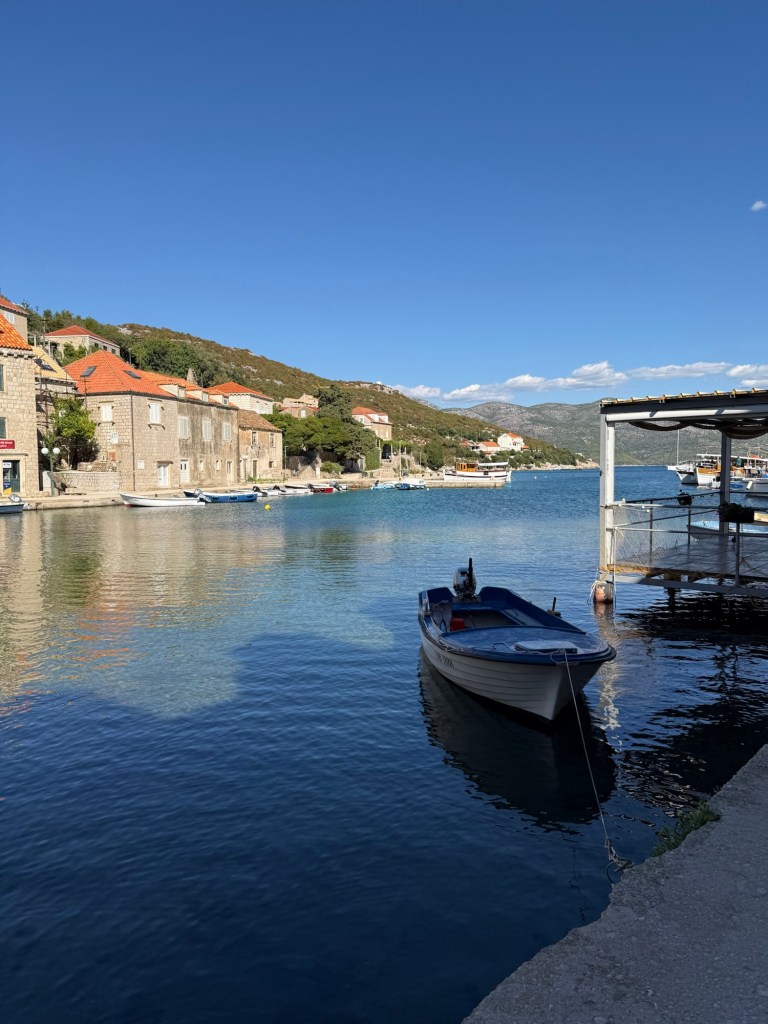
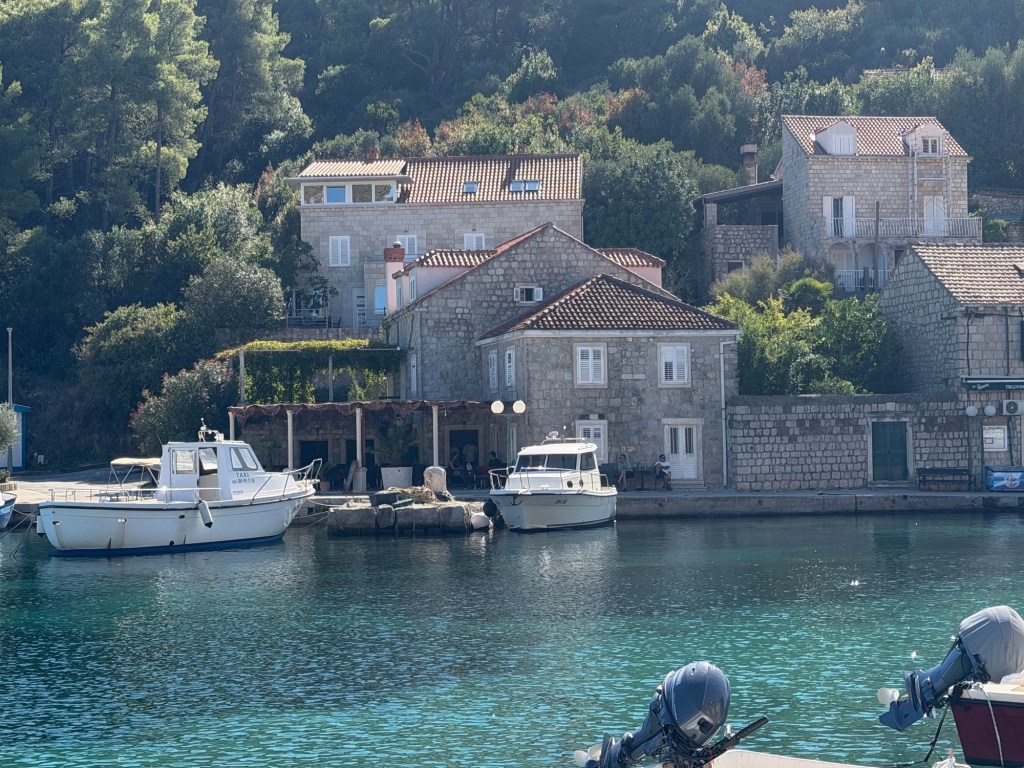
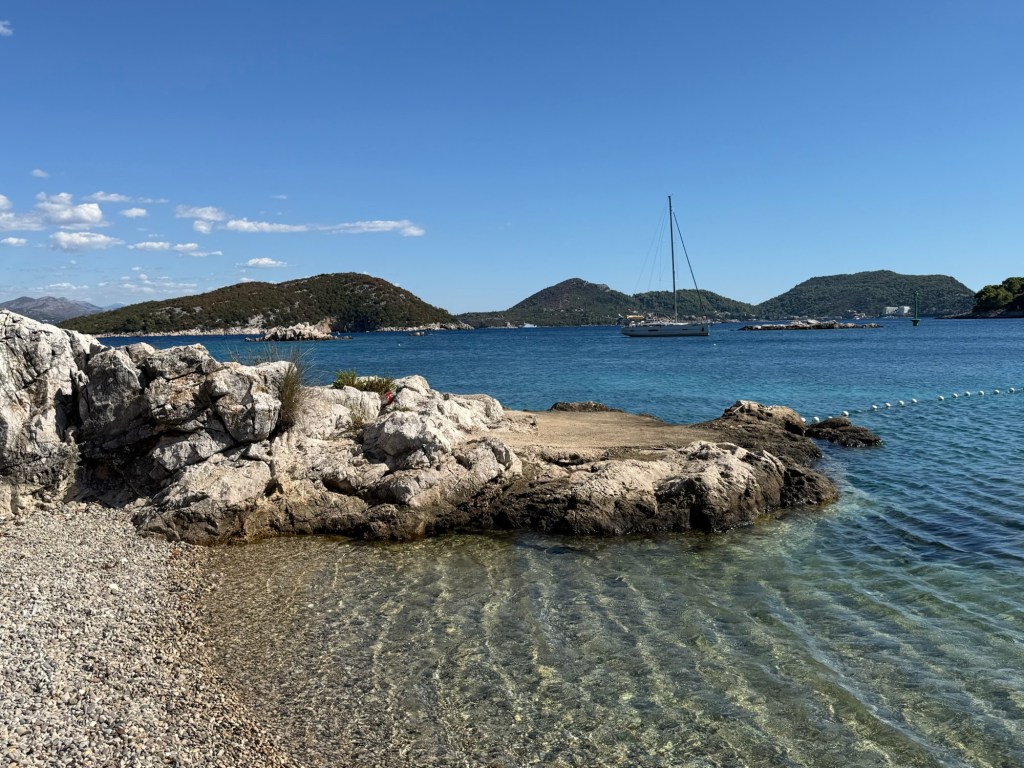
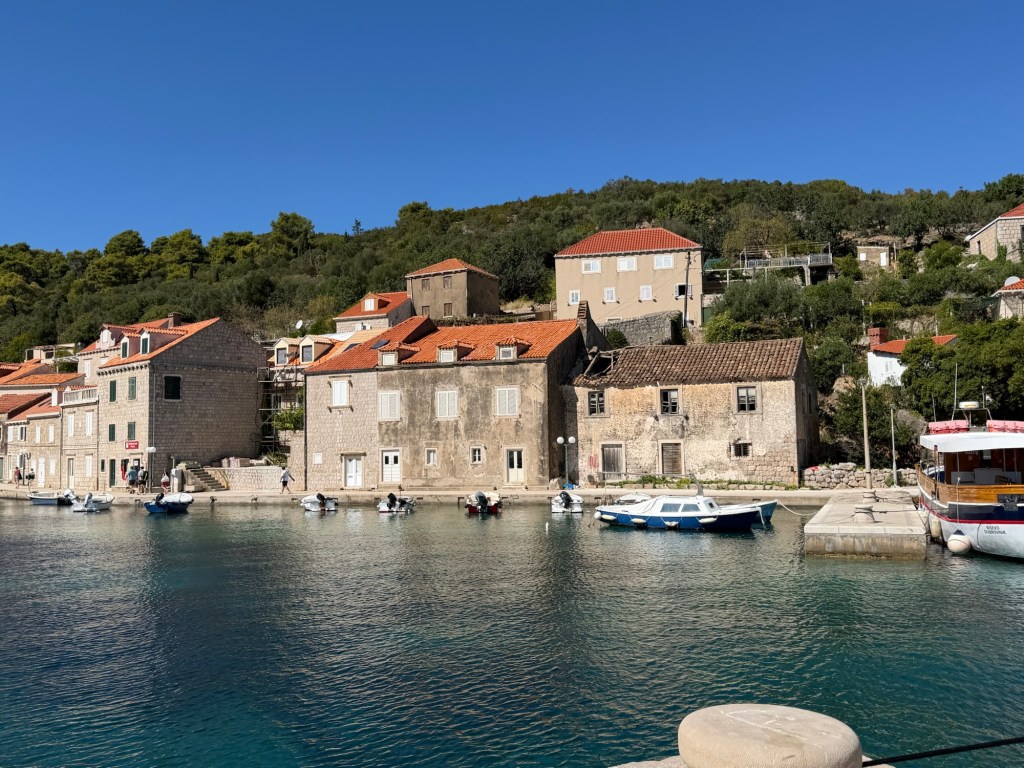
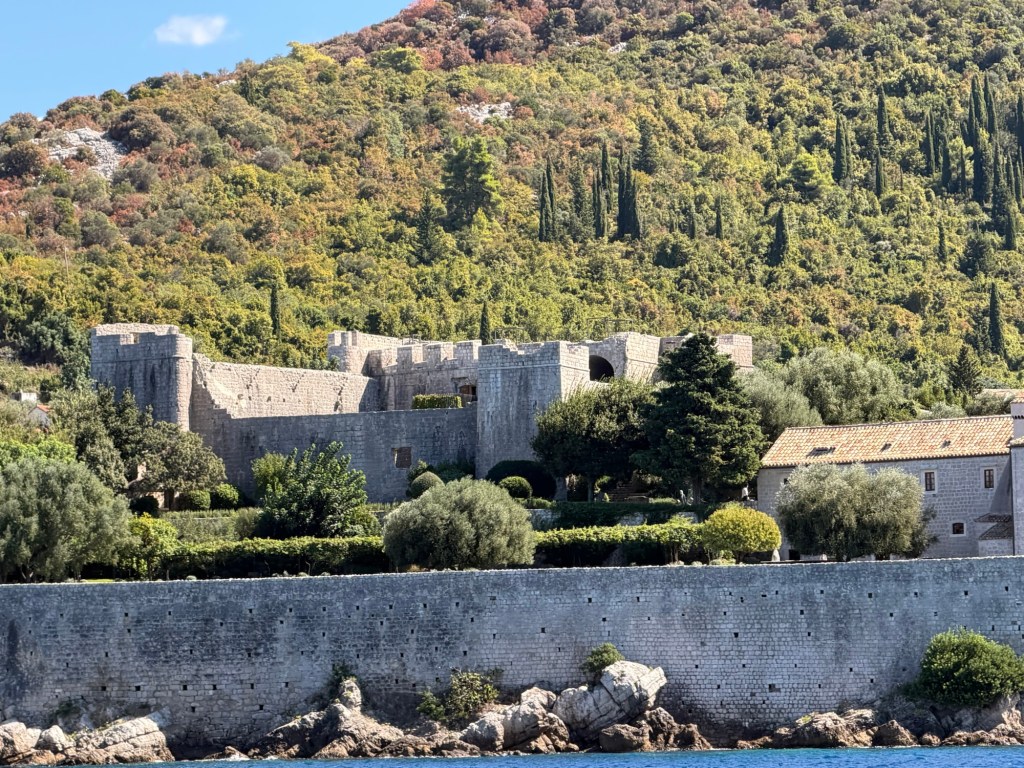
Šipan history reaches back to ancient times, with traces of Illyrian settlement on the island. It later became part of the Republic of Dubrovnik, and flourished in the 15th and 16th centuries, when Dubrovnik’s influence was at its height. Wealthy families built summer residences here, some of which still stand in Suđurađ. The island’s fertile valley, olive groves and vineyards helped sustain a quieter life beyond the busy city.
On the sail back to Dubrovnik, the wind picked up, filling the jib and giving the boat a livelier pace. Our captain stayed at the wheel, making small adjustments to keep the sail drawing and the boat on course.
The water flashed beside us as we leaned into the breeze, and the return voyage became an exhilarating part of the day.
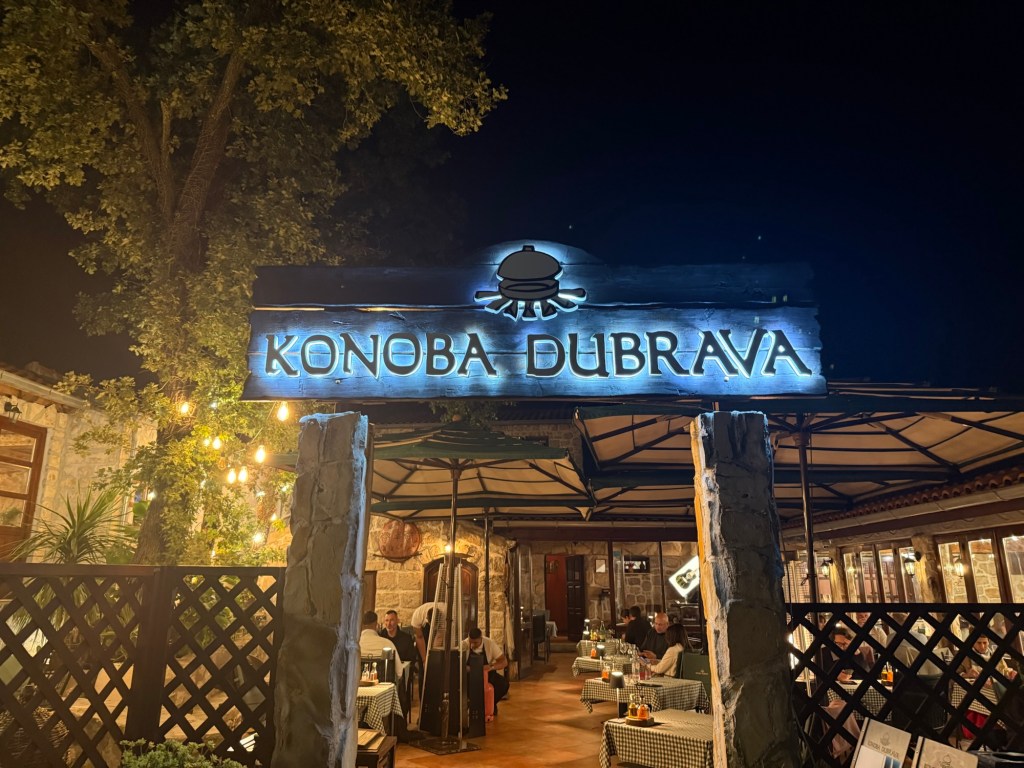
Later that night, we went to Konoba Dubrava, high above Dubrovnik. The rustic stone restaurant had an open-air feel, with tables beneath the trees and warm lights glowing in the darkness.
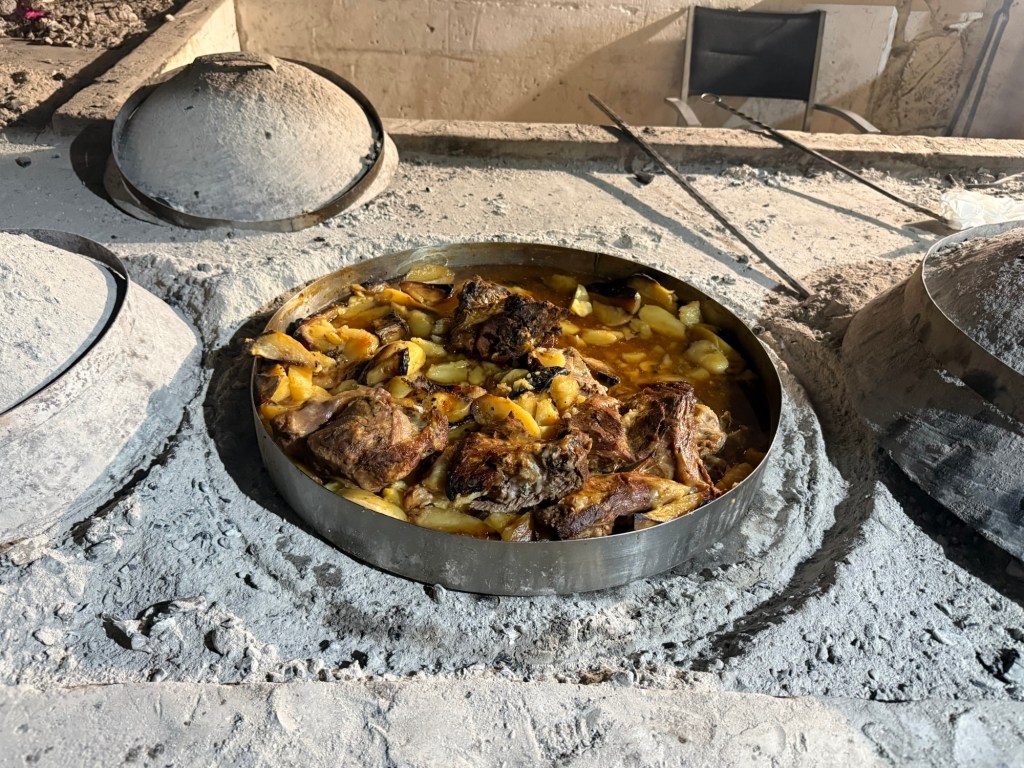
Its specialty is peka, a traditional slow-cooked meal prepared beneath a heavy, bell-shaped iron lid. Meat and potatoes are placed in a shallow pan, covered by the bell, and cooked under hot embers for hours. At Konoba Dubrava, it takes at least three hours to prepare, so it must be ordered in advance. We could see the cooks tending the glowing hearth and lifting the lids to reveal the food inside.
After dinner, the waiter took us on a tour of the kitchen, if you could call it that. It felt more like a great stone hearth than a conventional kitchen. A long cooking station ran beneath the roof, its broad surface dusted with pale ash. Across it sat several heavy, bell-shaped iron lids, some covering the food and others resting nearby. Beneath them, shallow metal pans held generous pieces of meat and golden potatoes, slowly cooking together under the hot embers.
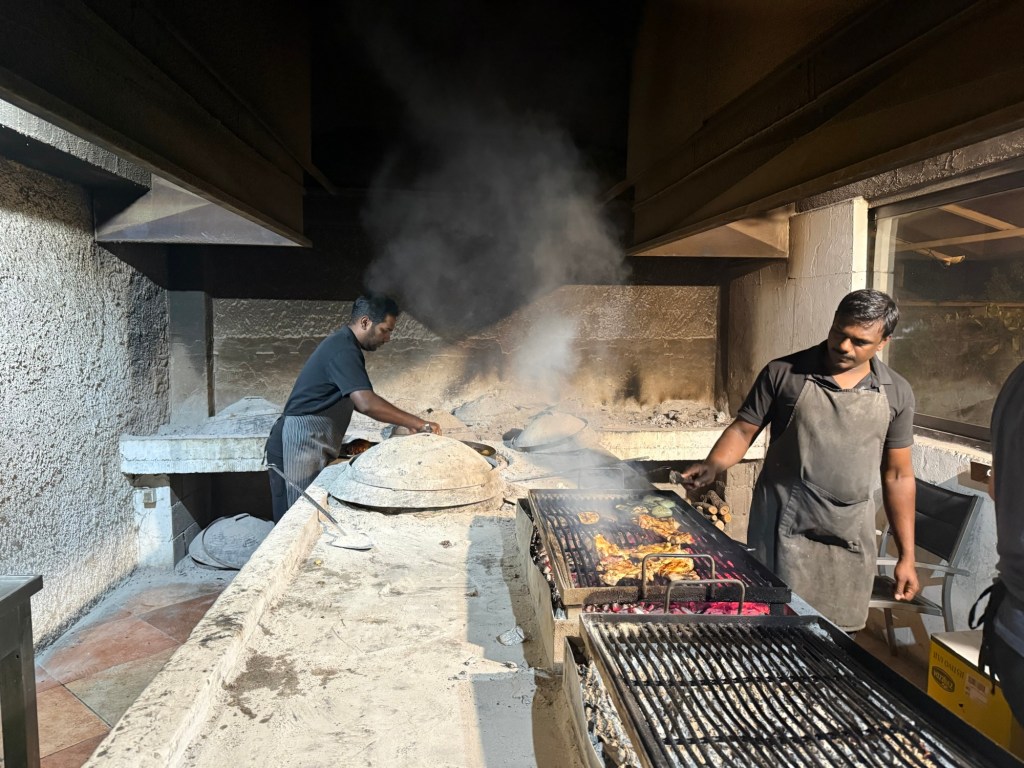
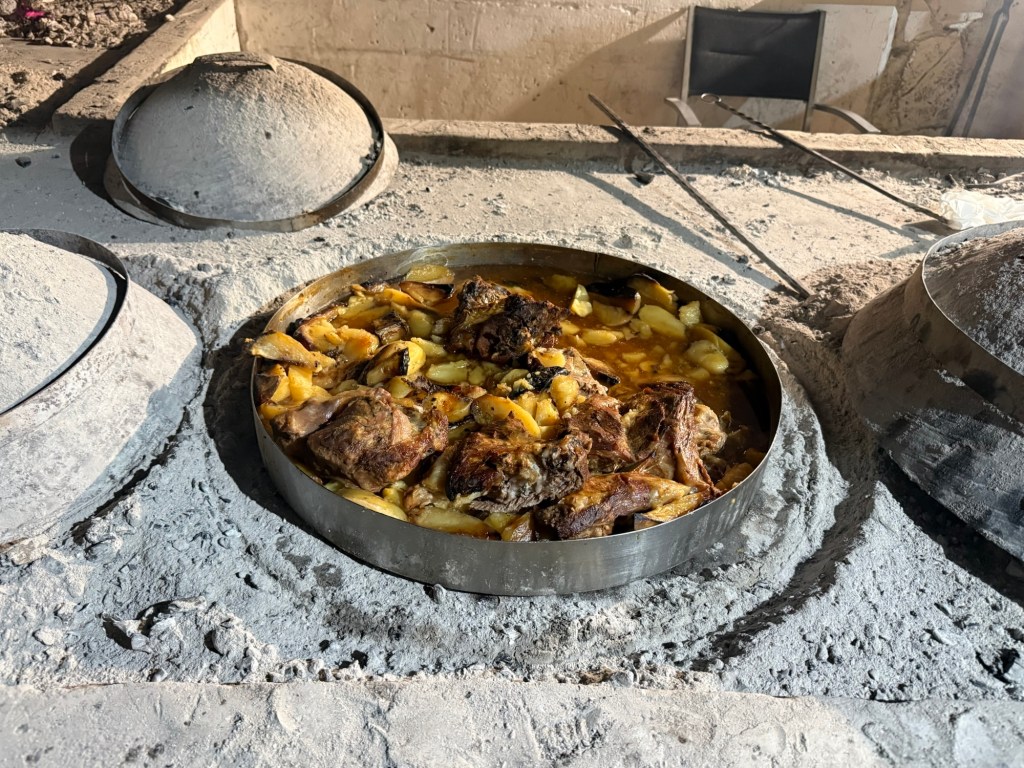
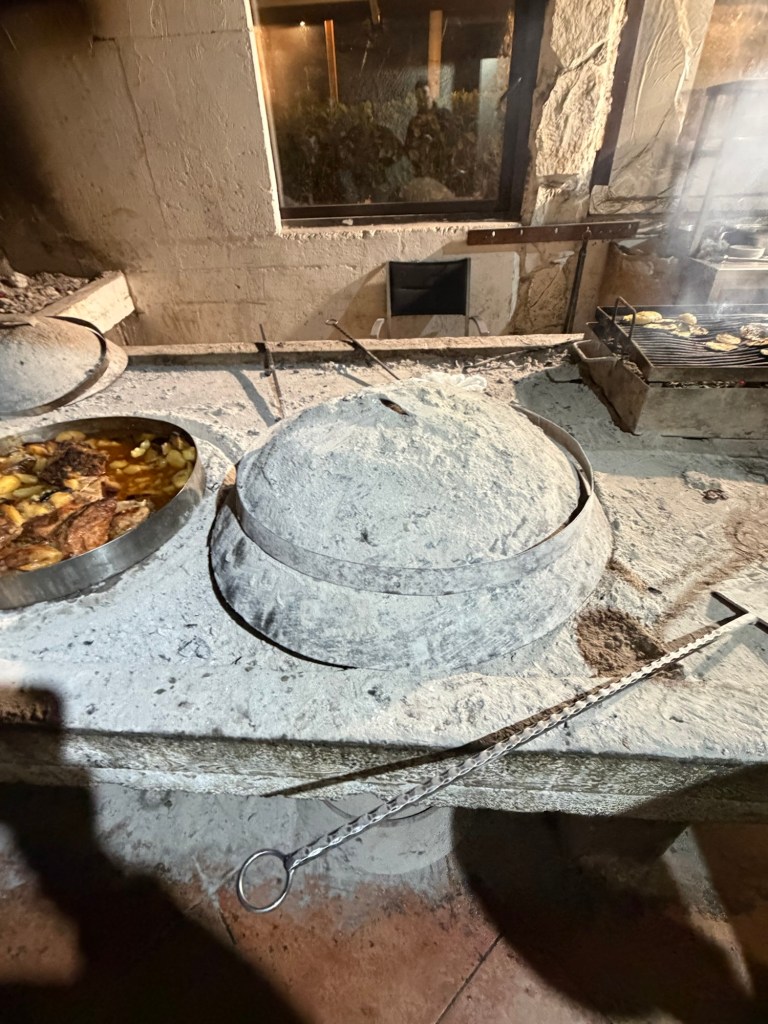
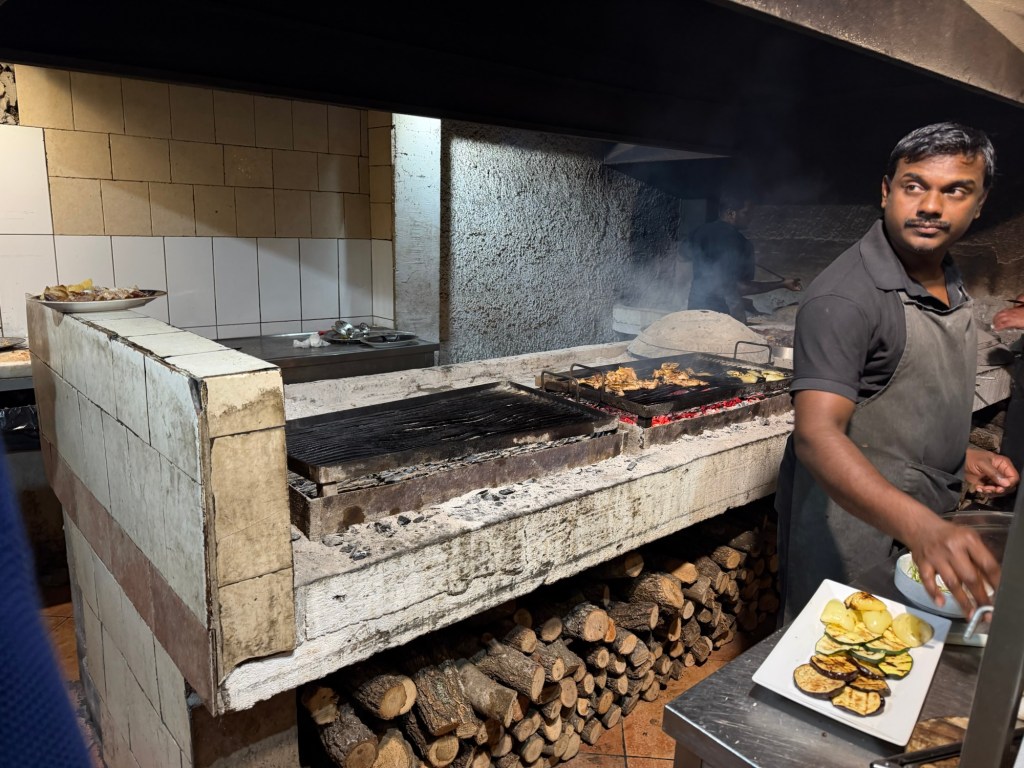
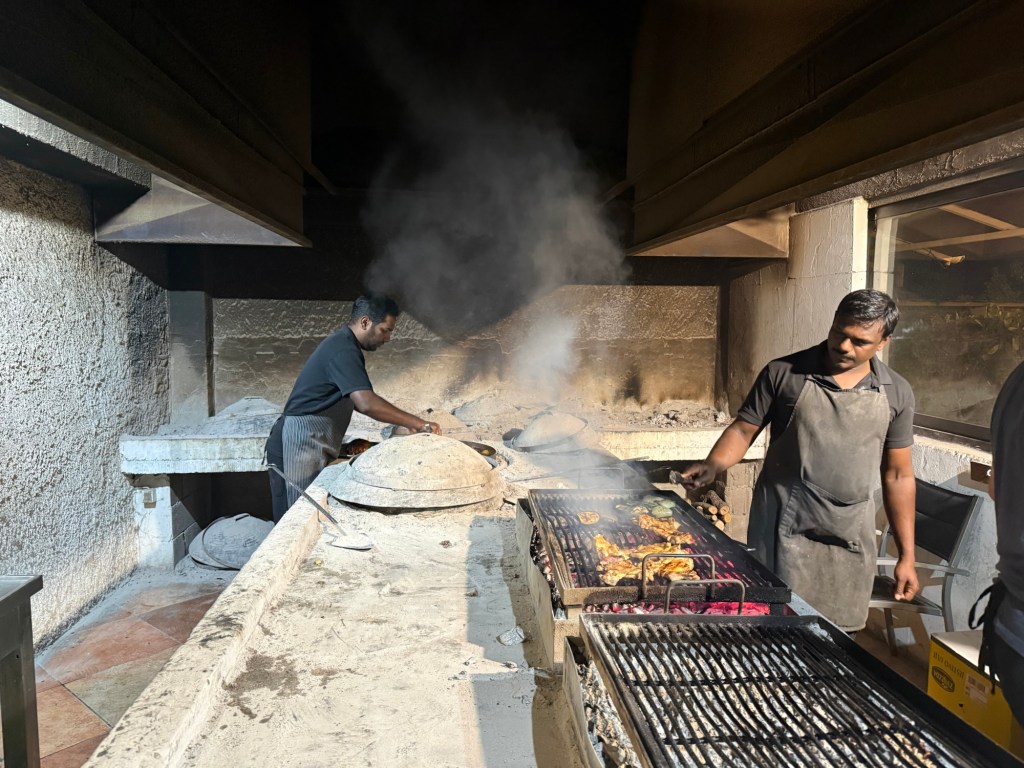
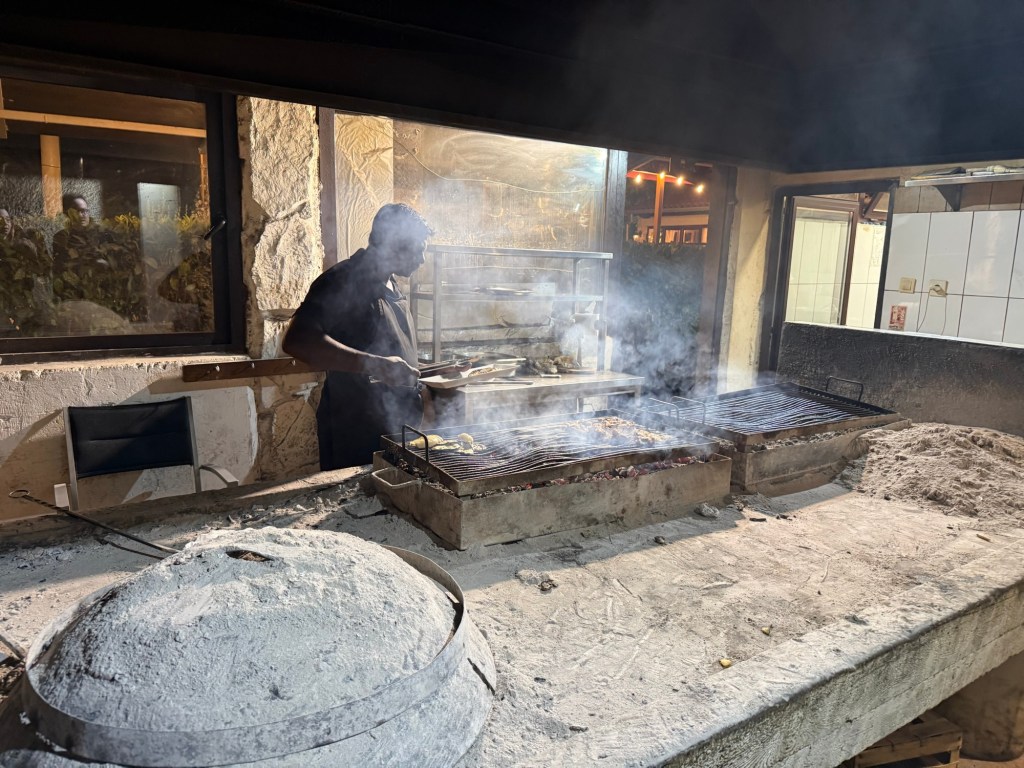
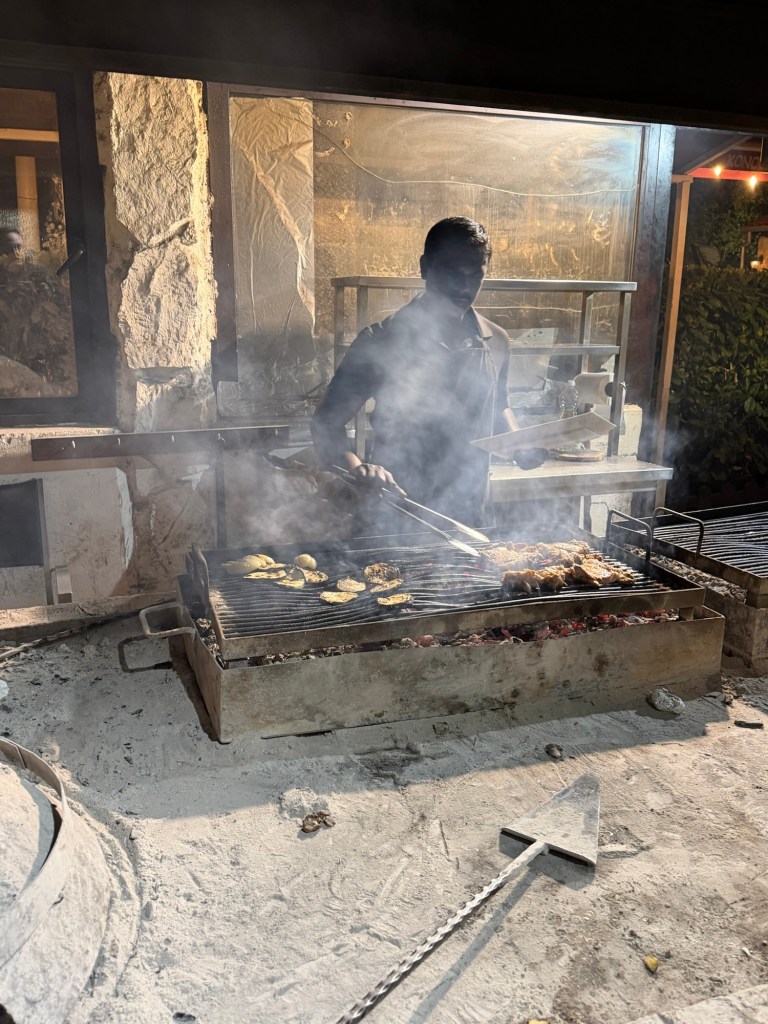
At the far end, another cook worked over an open charcoal grill, turning pieces of meat and vegetables above the glowing coals. Smoke drifted up through the shelter as the cooks moved between the grill and the covered pans, checking the food and lifting the iron bells to reveal what was inside.
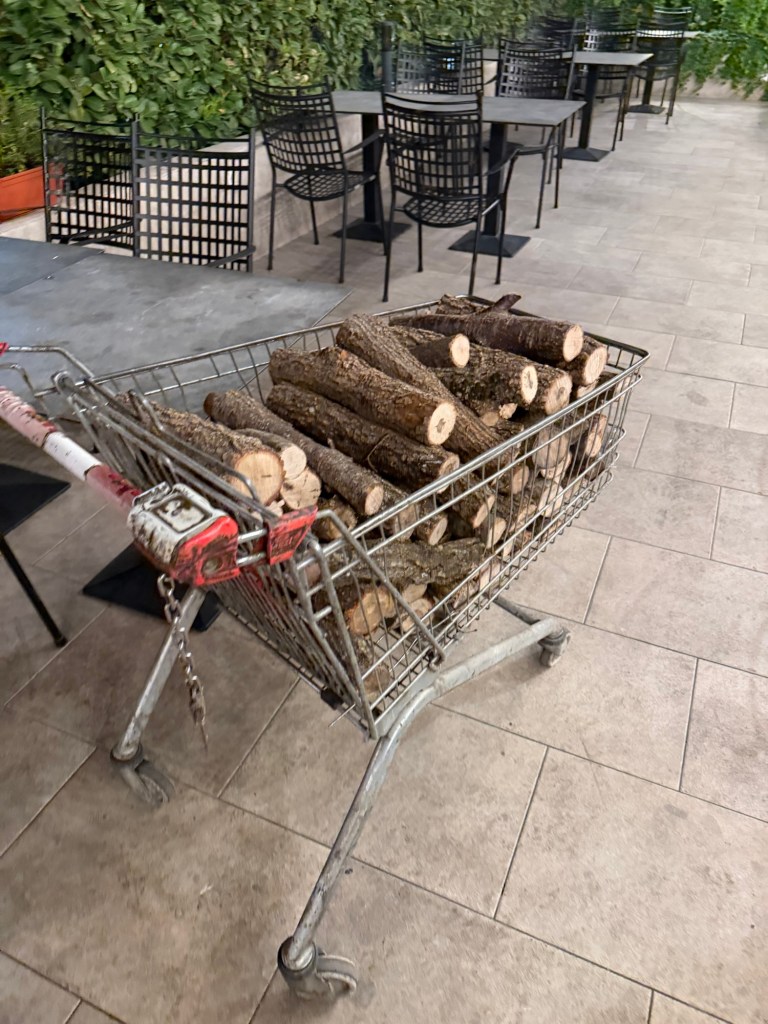
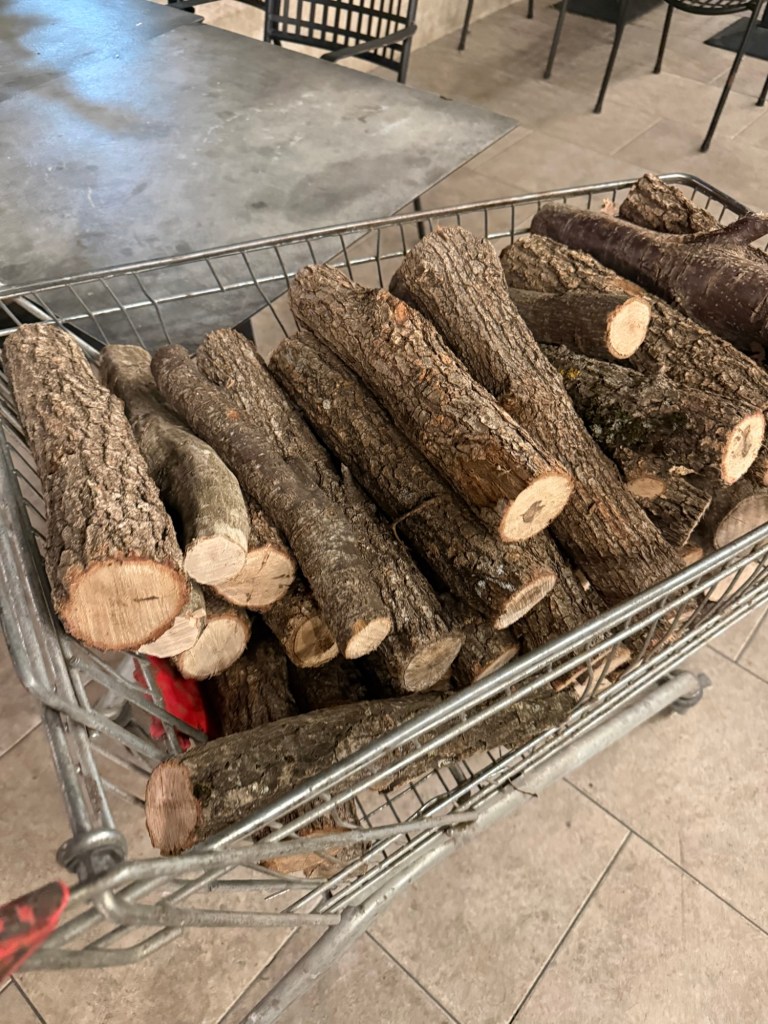
Below the hearth, logs were stacked within easy reach. It was an unhurried, hands-on way of cooking, built around fire, embers, and time—and a memorable glimpse of how the restaurant prepared its peka.
Getting there was less charming: the taxi driver charged us an outrageous fare. For the ride back, we ordered an Uber—and paid just $11 euro.