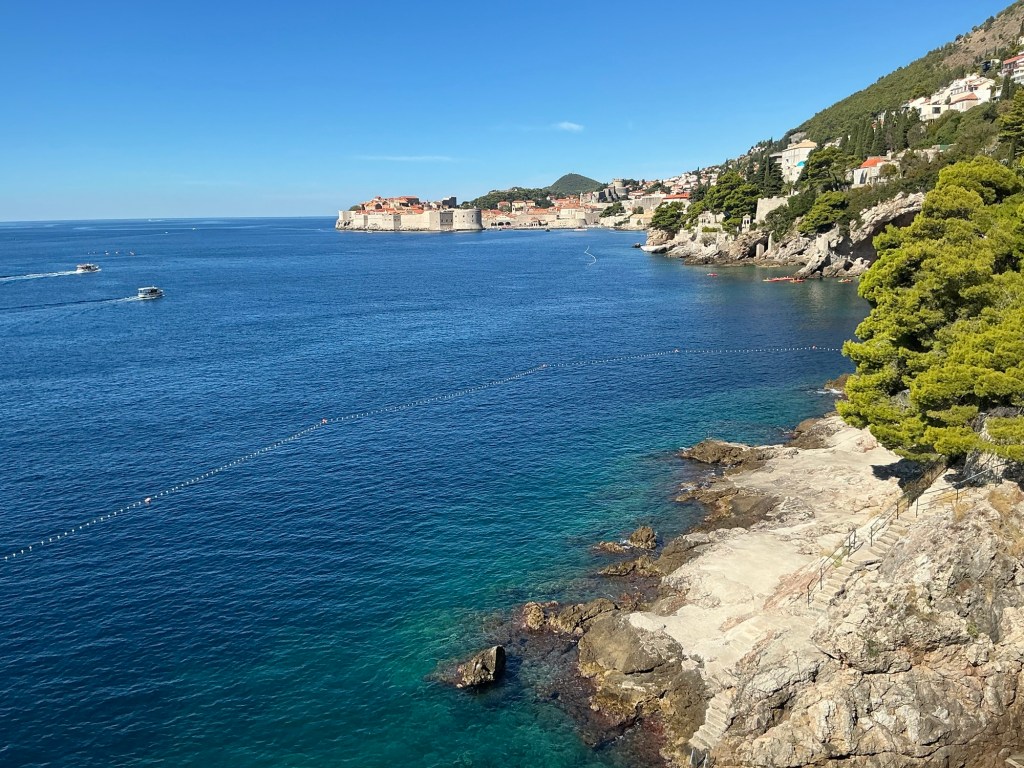
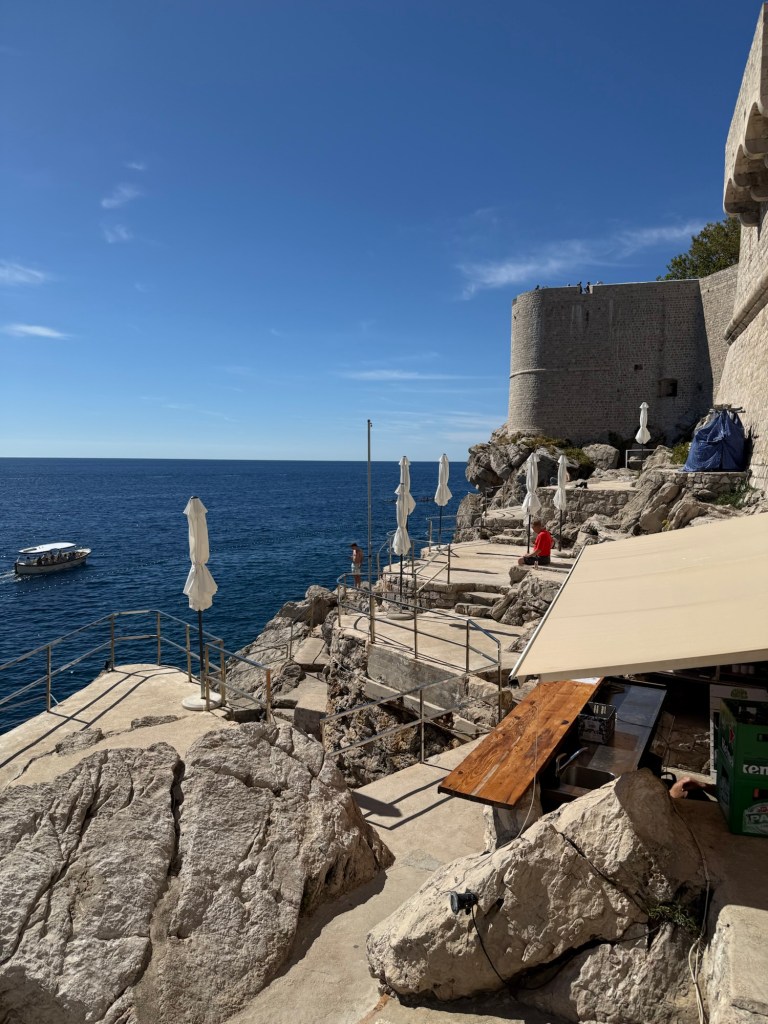
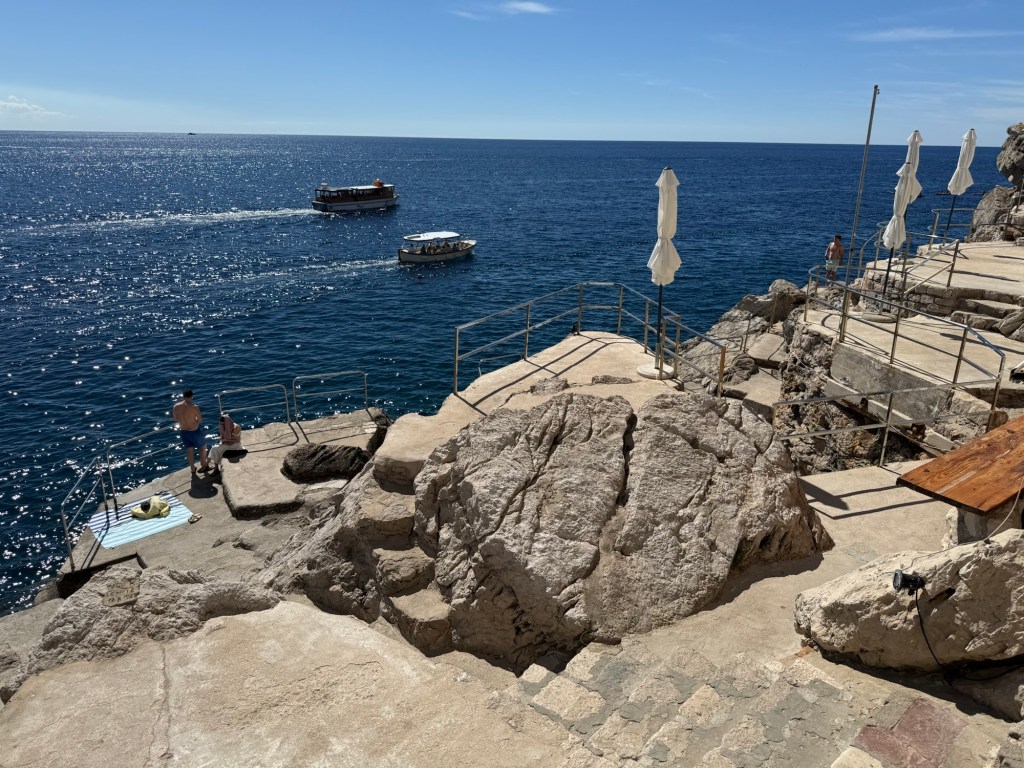
I was laid up at Villa Dubrovnik, feeling under the weather enjoying the views. The view opens across the Adriatic toward Dubrovnik’s walled Old Town, its pale stone ramparts and red roofs bright in the afternoon sun. Closer by, pine trees cling to the steep rocky shore above a broad, flat swimming platform, with steps leading down to the water. A buoy line marks off the swimming area, while small boats cross the bay and leave delicate wakes behind them. The water changes from deep blue offshore to clear turquoise along the rocks, making the whole scene feel both grand and inviting.
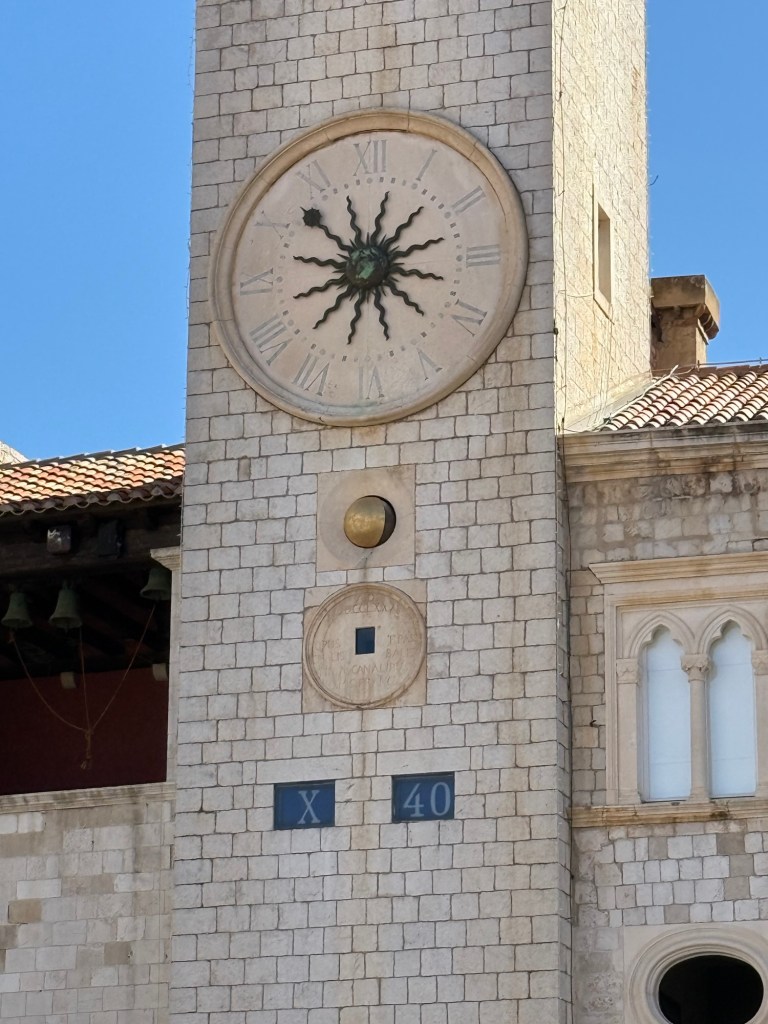
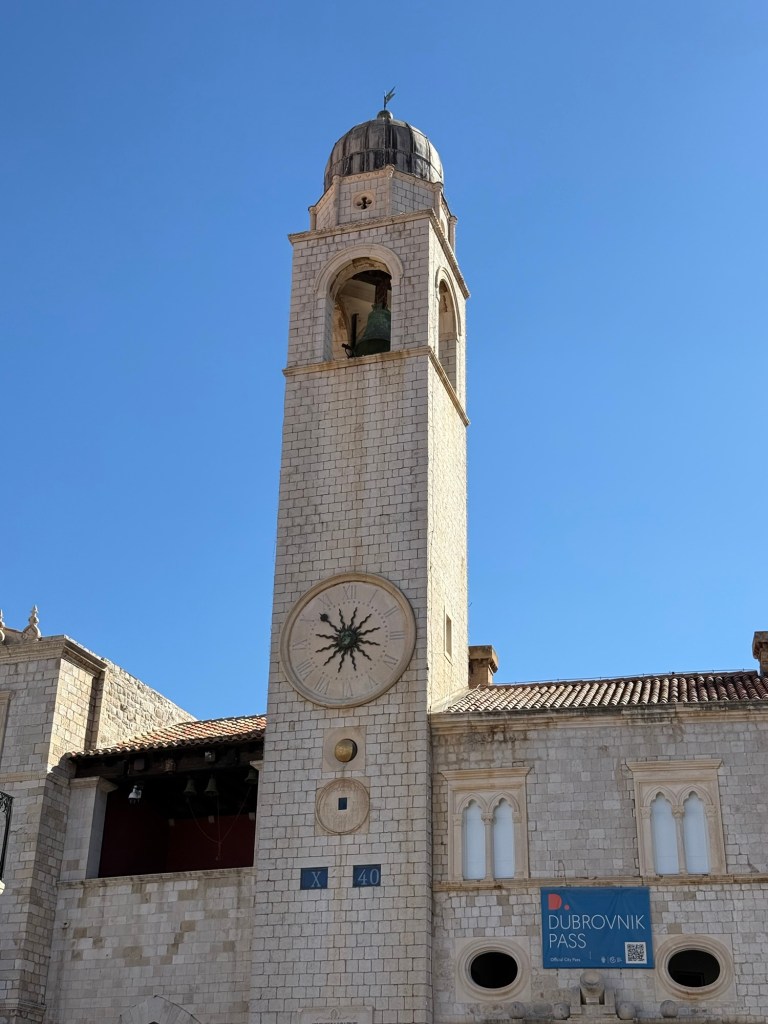
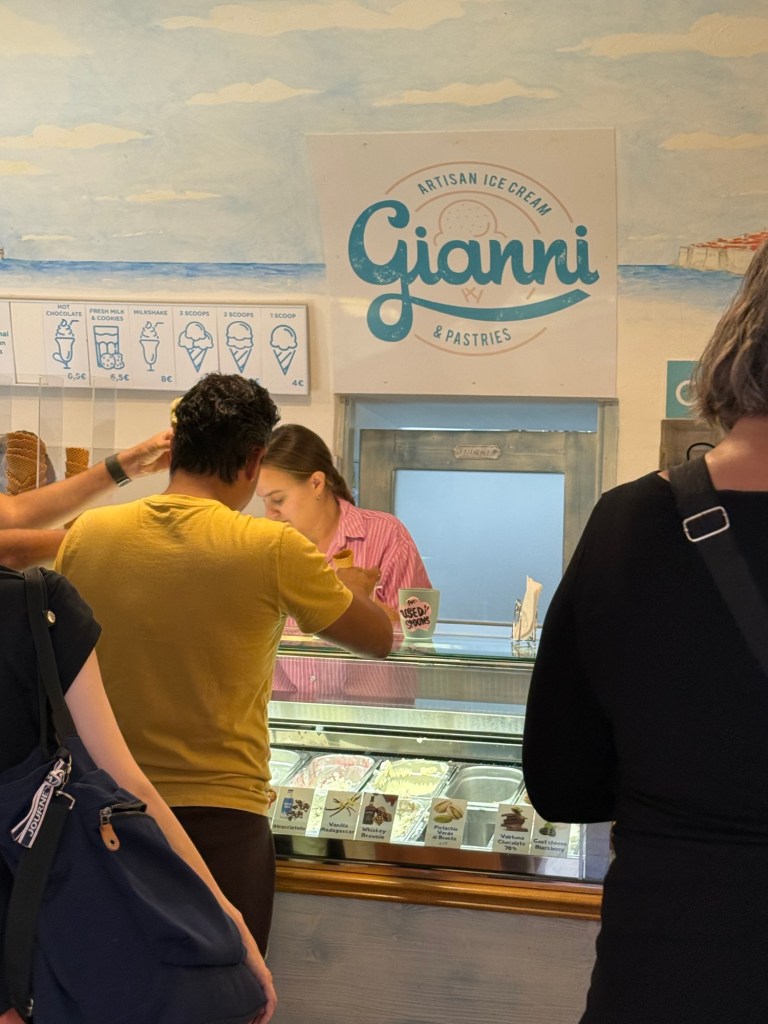
Meanwhile, Beth spent four hours exploring the city with our local guide, Anna. They wandered through the Old Town’s narrow stone lanes, climbed stairways tucked between tall limestone houses, and passed the clock tower anchoring Luža Square. They also passed Gianni Gelato, but didn’t stop—and I wasn’t there to sample it.
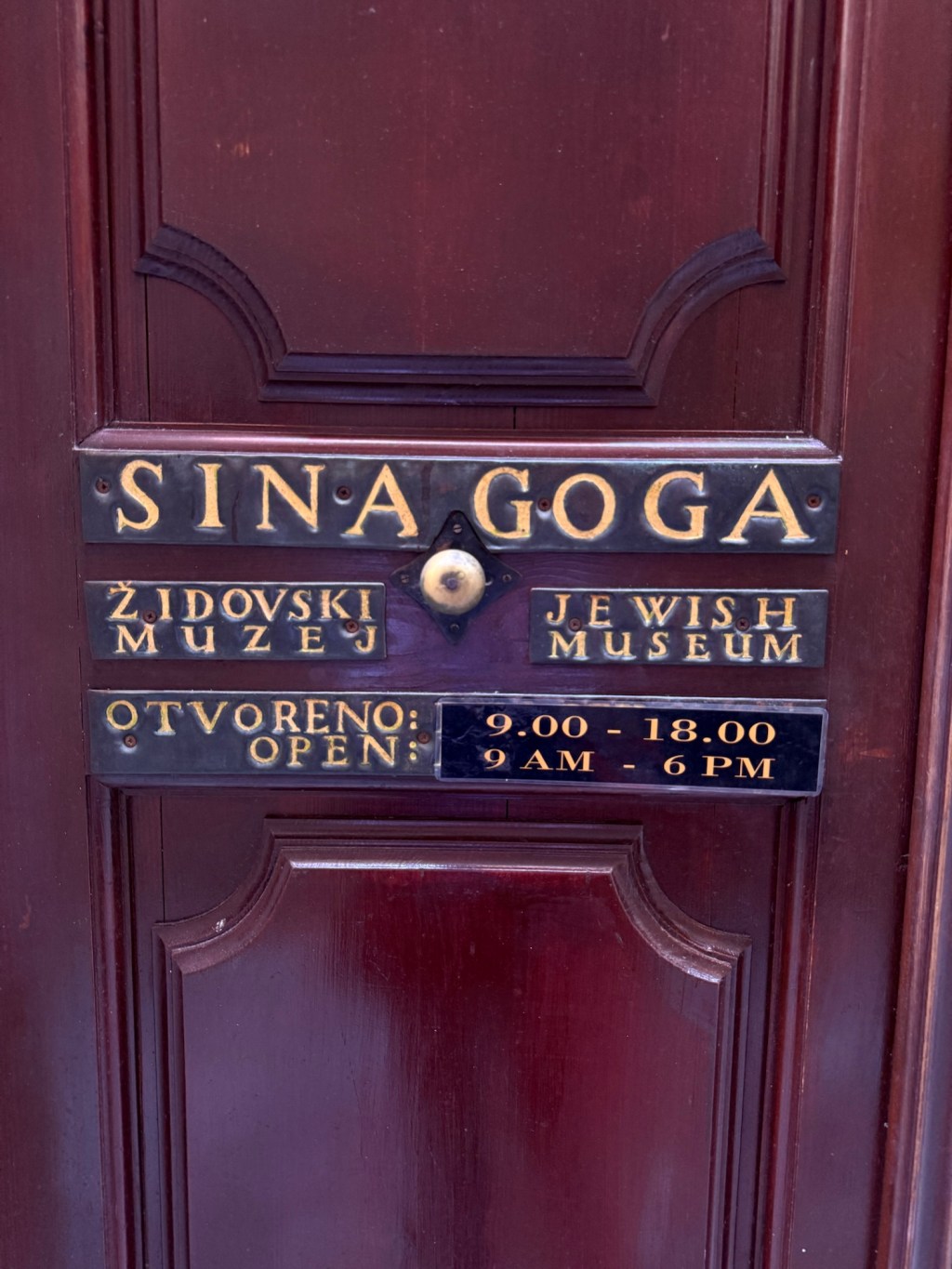
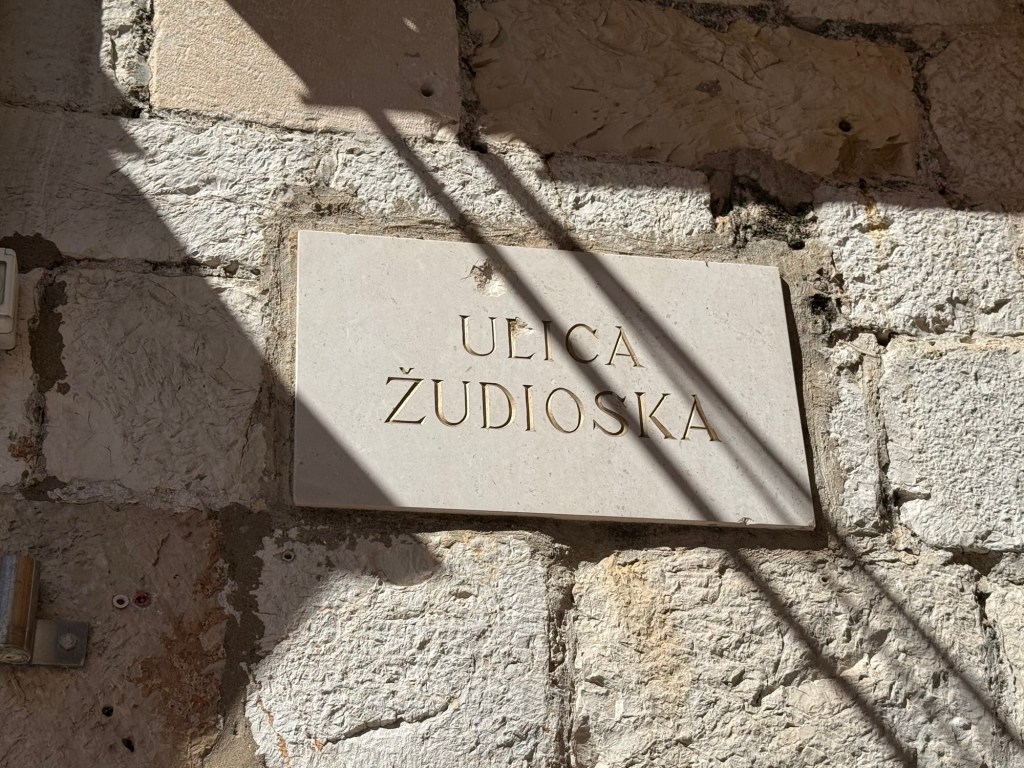
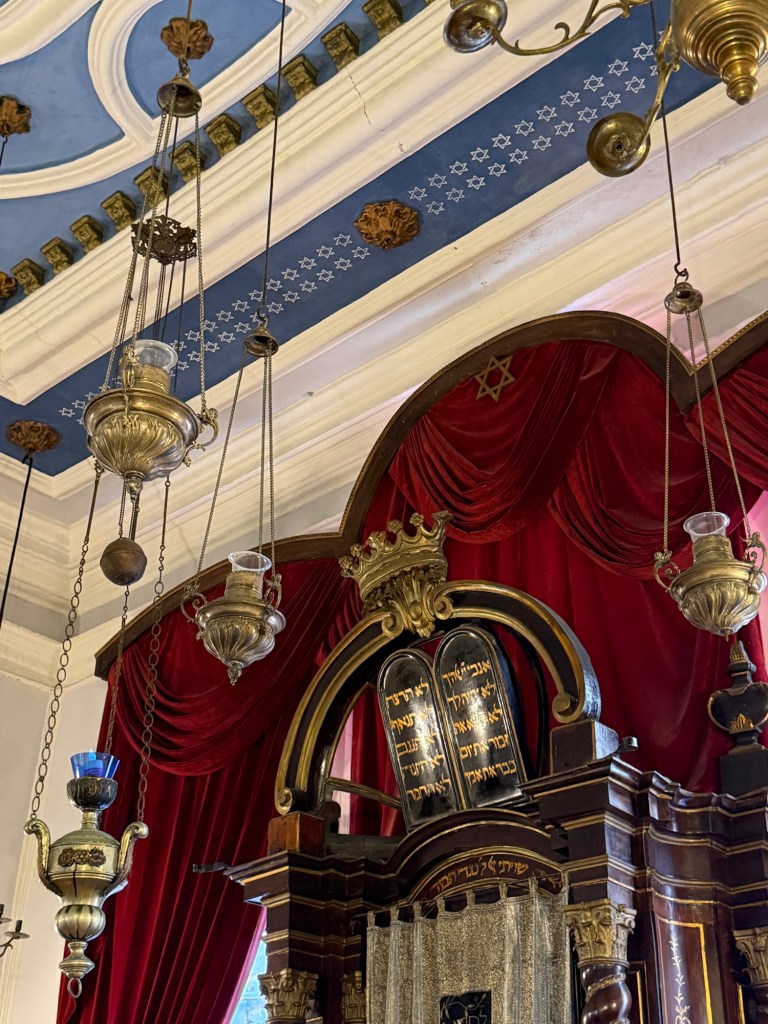
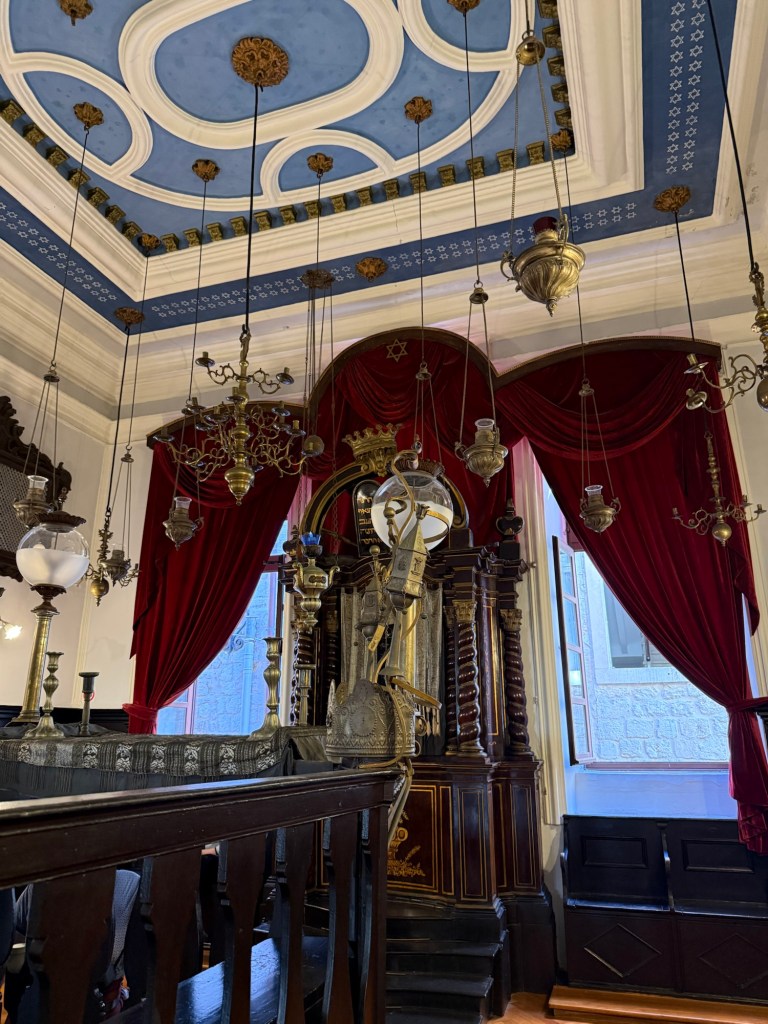
Anna also took Beth through Dubrovnik’s Jewish quarter. On Žudioska Street—literally “Jewish Street”—Beth visited the Dubrovnik Synagogue, also known as the Old Synagogue. It is the oldest Sephardic synagogue in continuous use in the world and the second-oldest synagogue in Europe. Traditionally dated to 1352 and officially recognized in 1408, it has served Dubrovnik’s Jewish community for centuries.
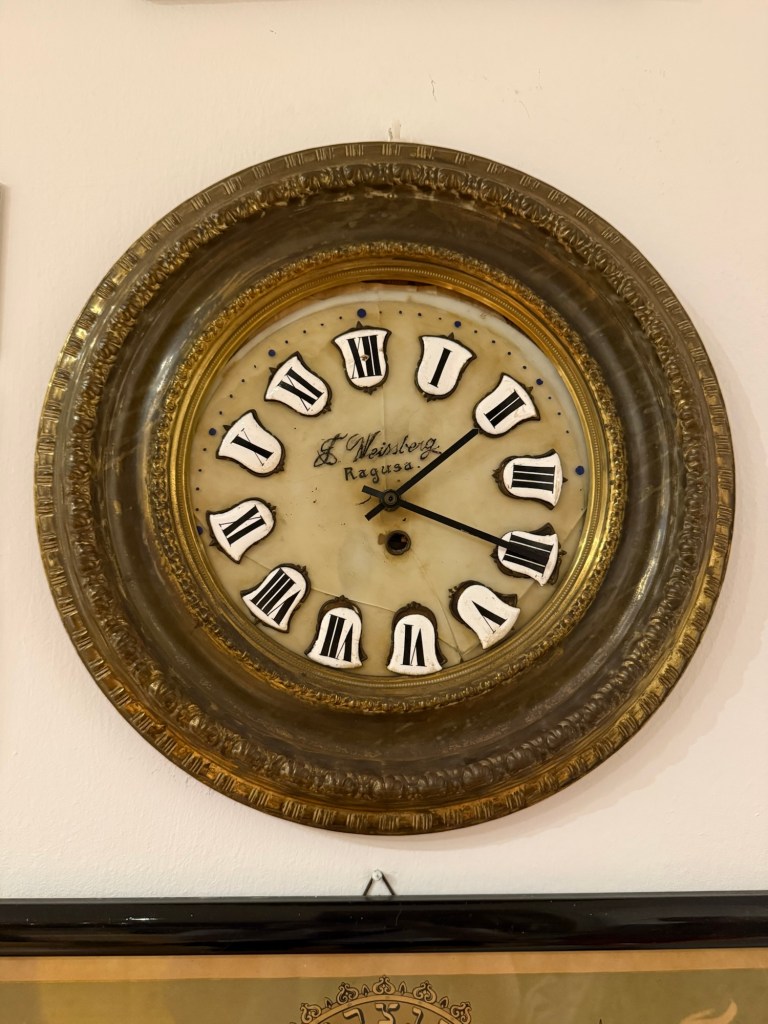
Inside, Beth saw the richly decorated sanctuary and museum exhibits documenting the community’s history. Dubrovnik’s Jewish population grew after Jews were expelled from Spain in 1492. In 1546, the Republic of Ragusa established a Jewish quarter centered on Žudioska Street.
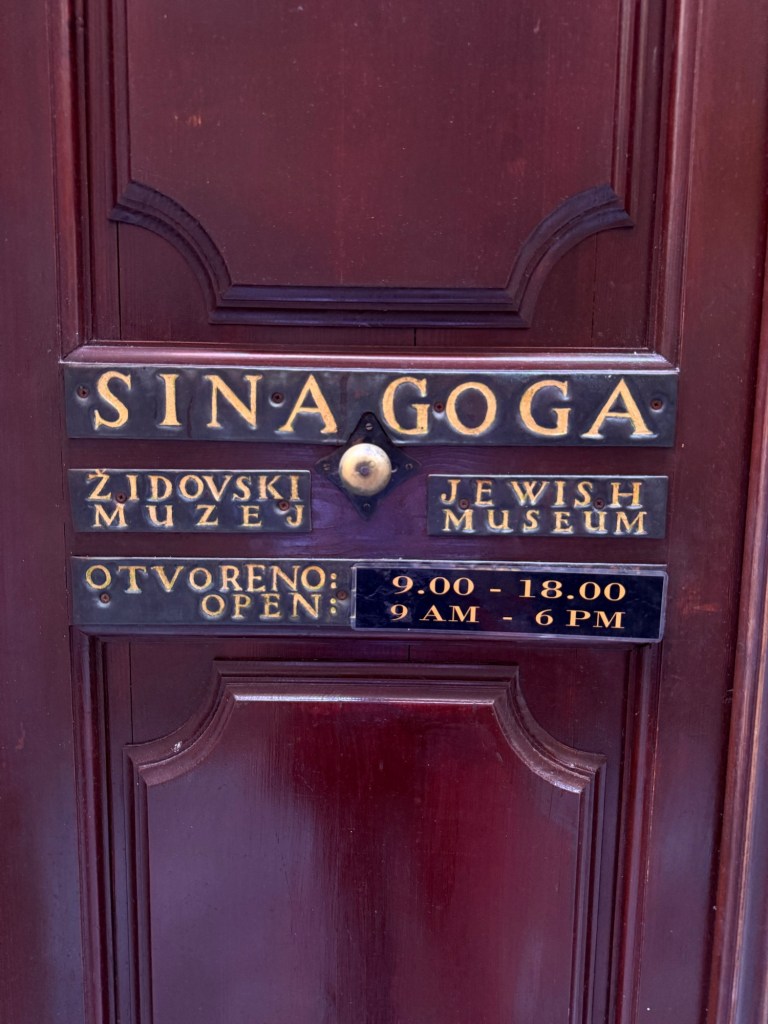
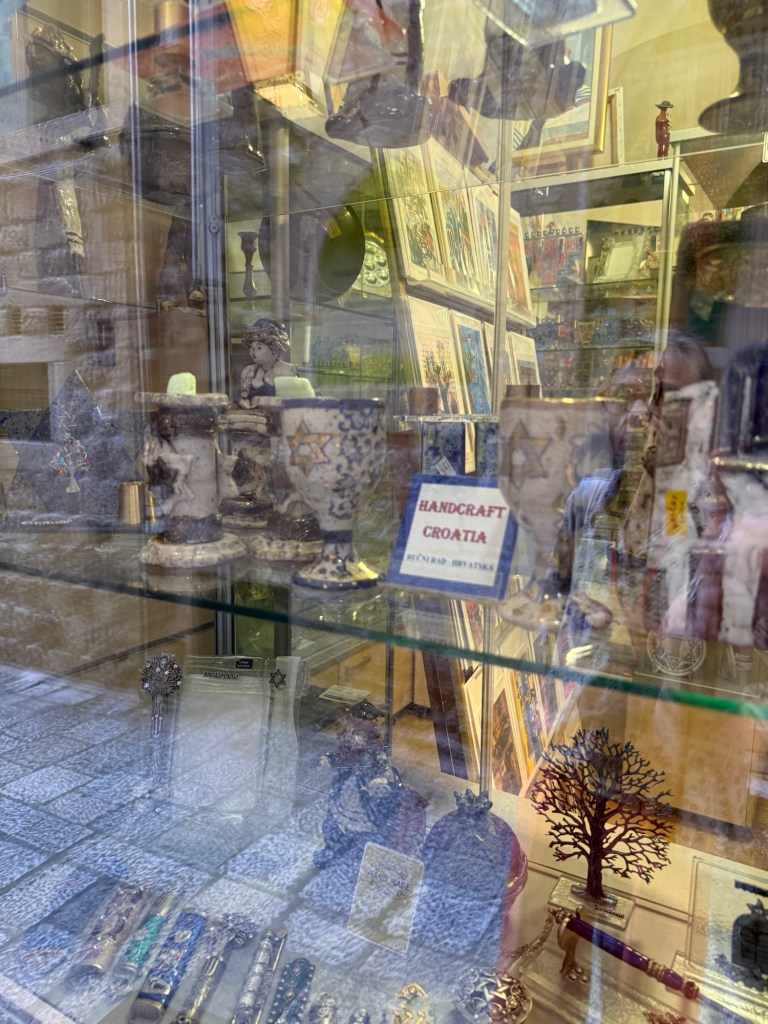
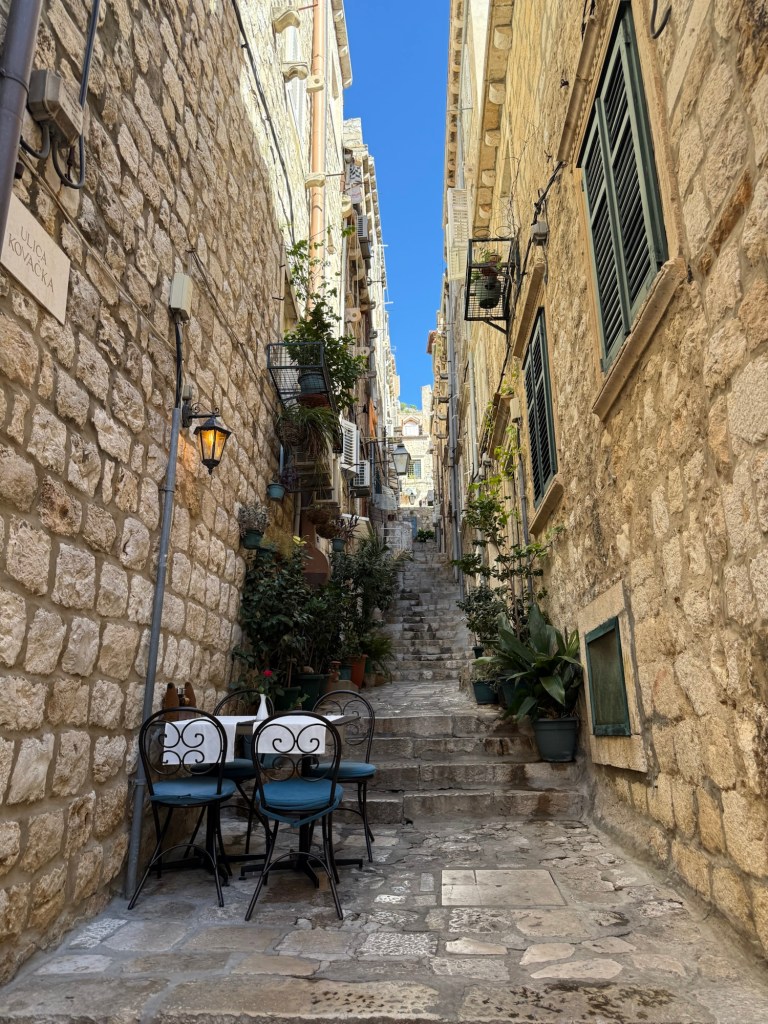
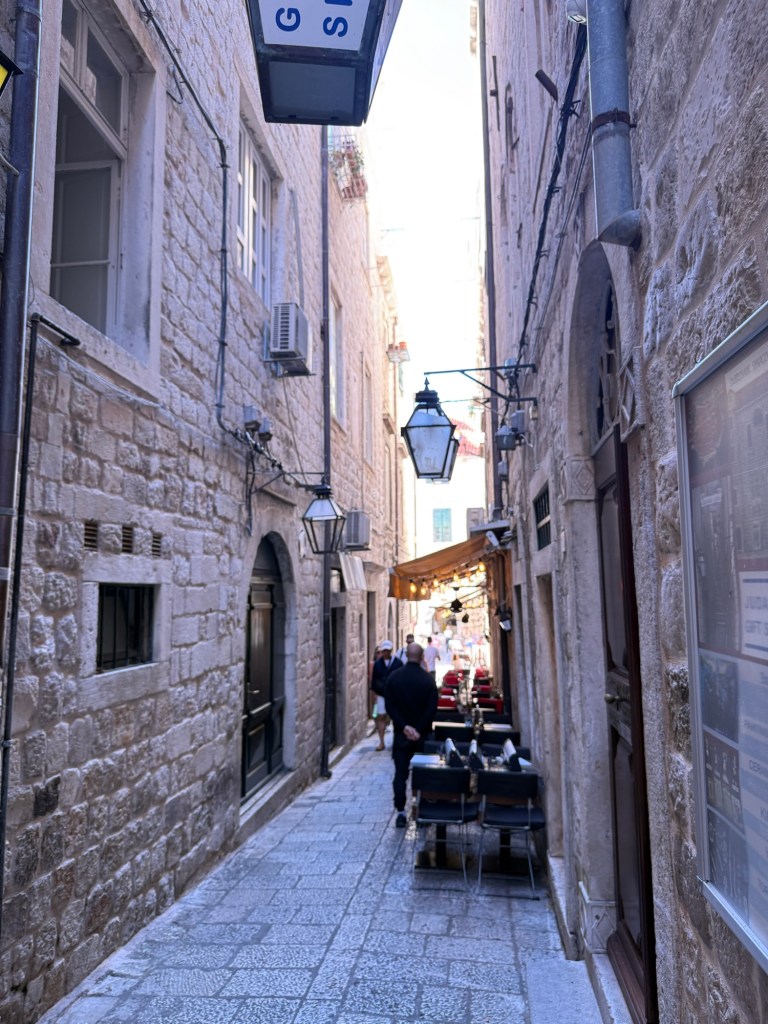
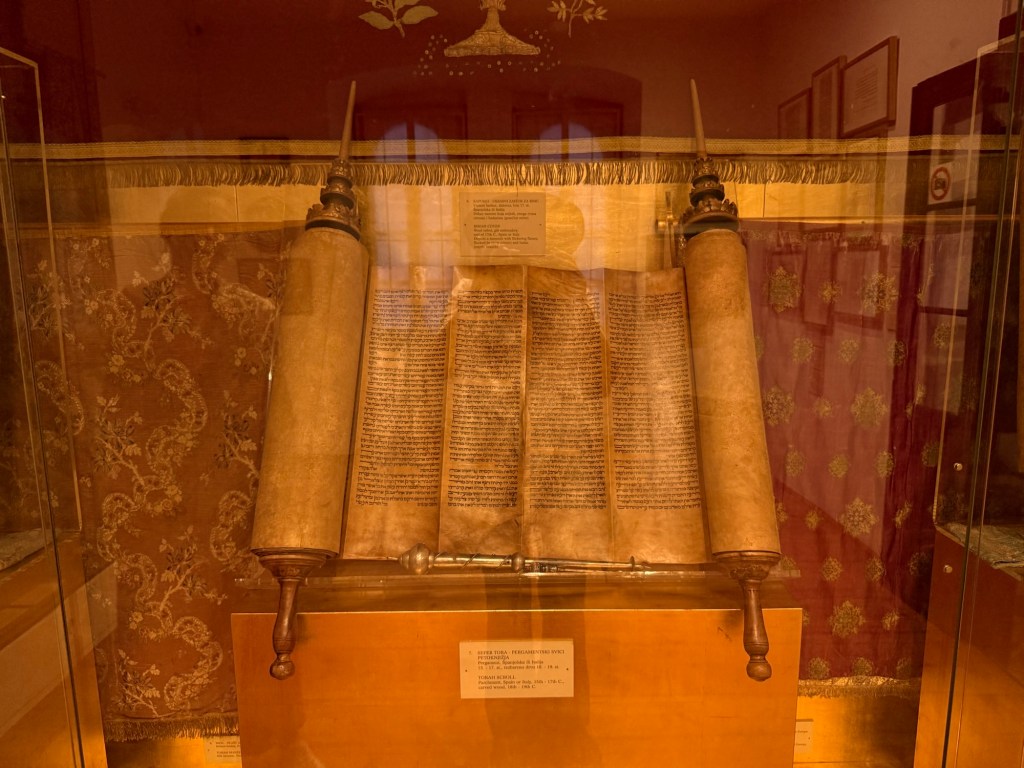
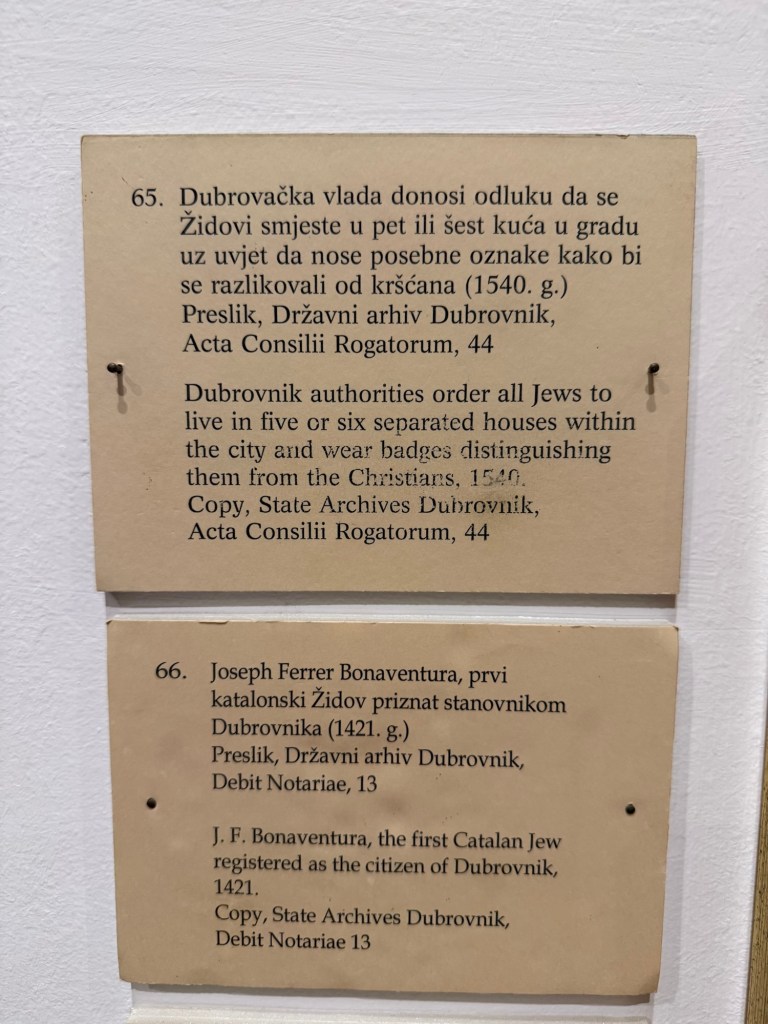
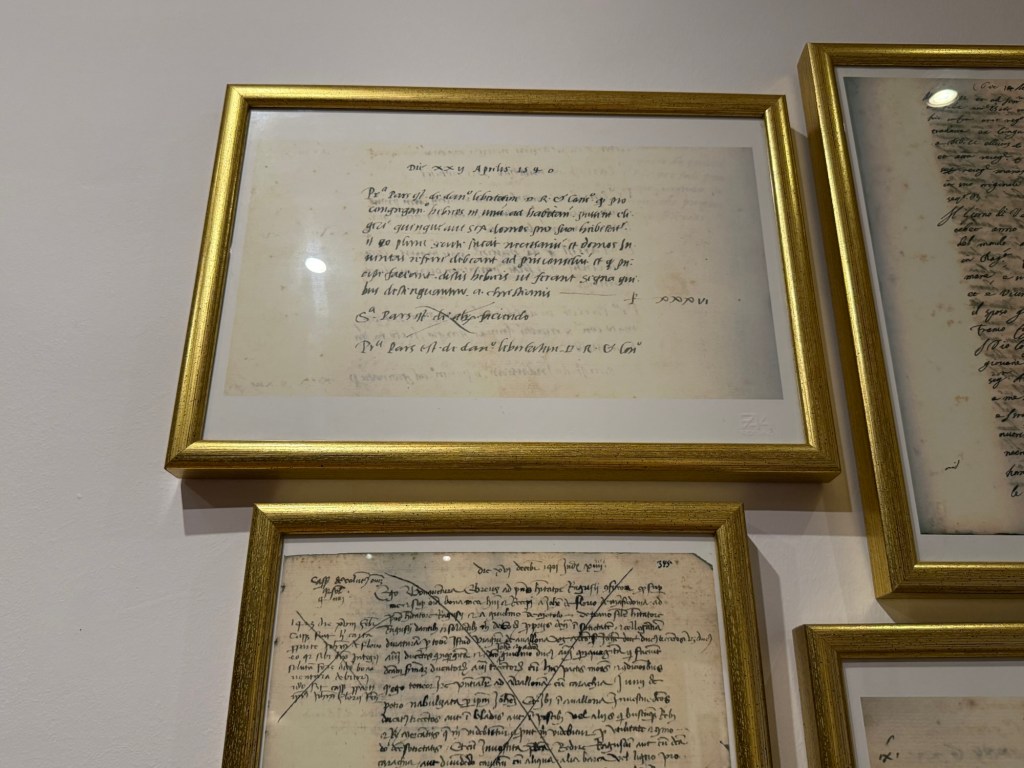
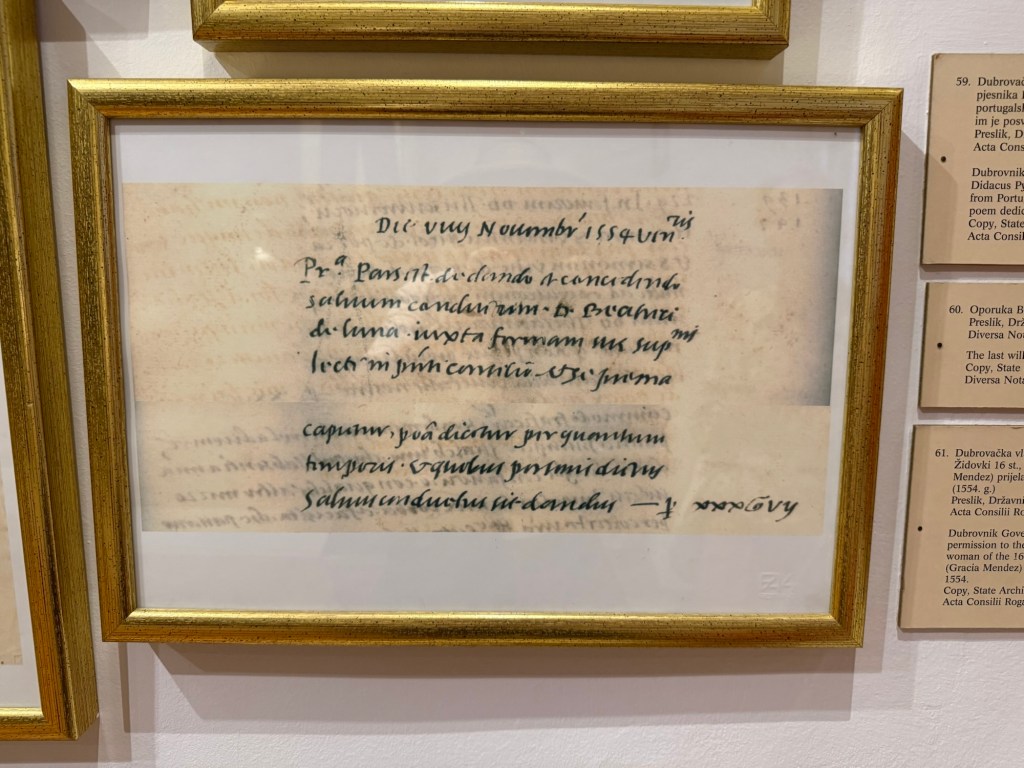
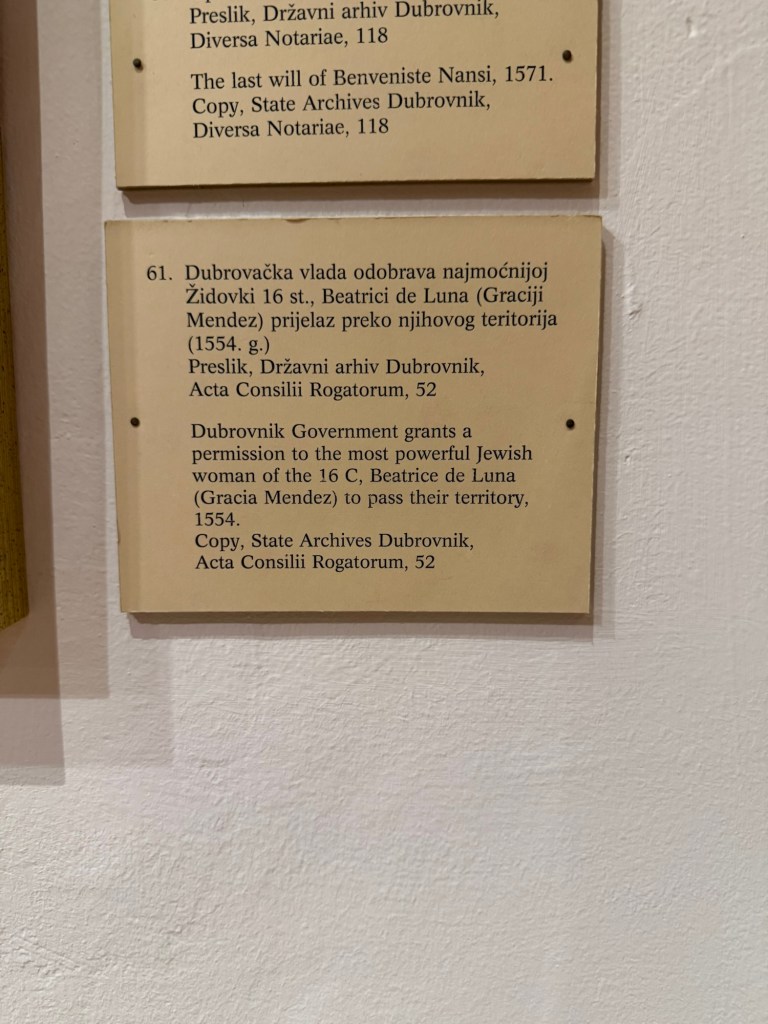
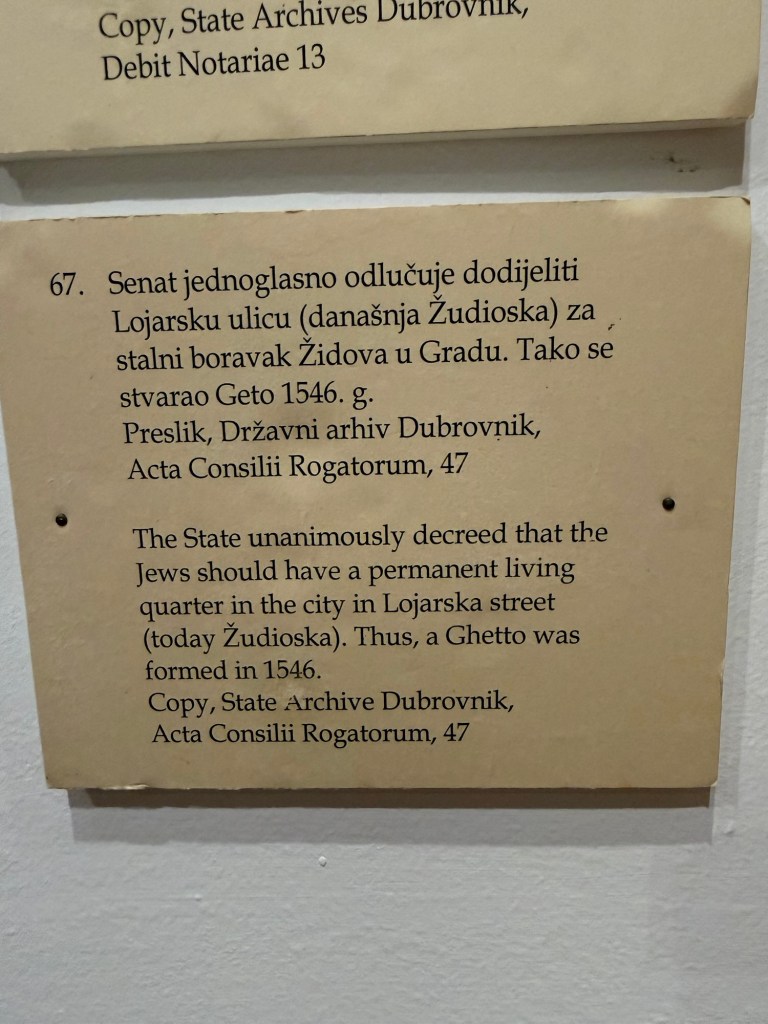
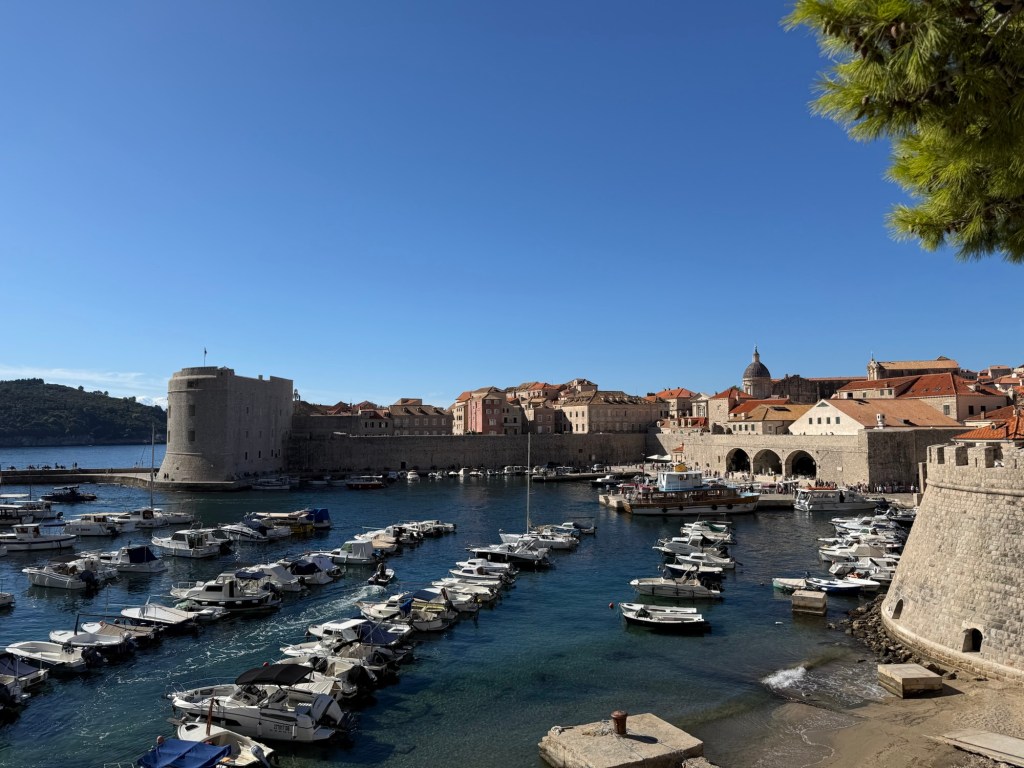
One archival notice described a 1540 order requiring Jewish residents to live in separate houses and wear identifying badges—a sobering glimpse of the restrictions they faced. From the city, the views opened across the Adriatic toward Dubrovnik’s old walls and fortifications.
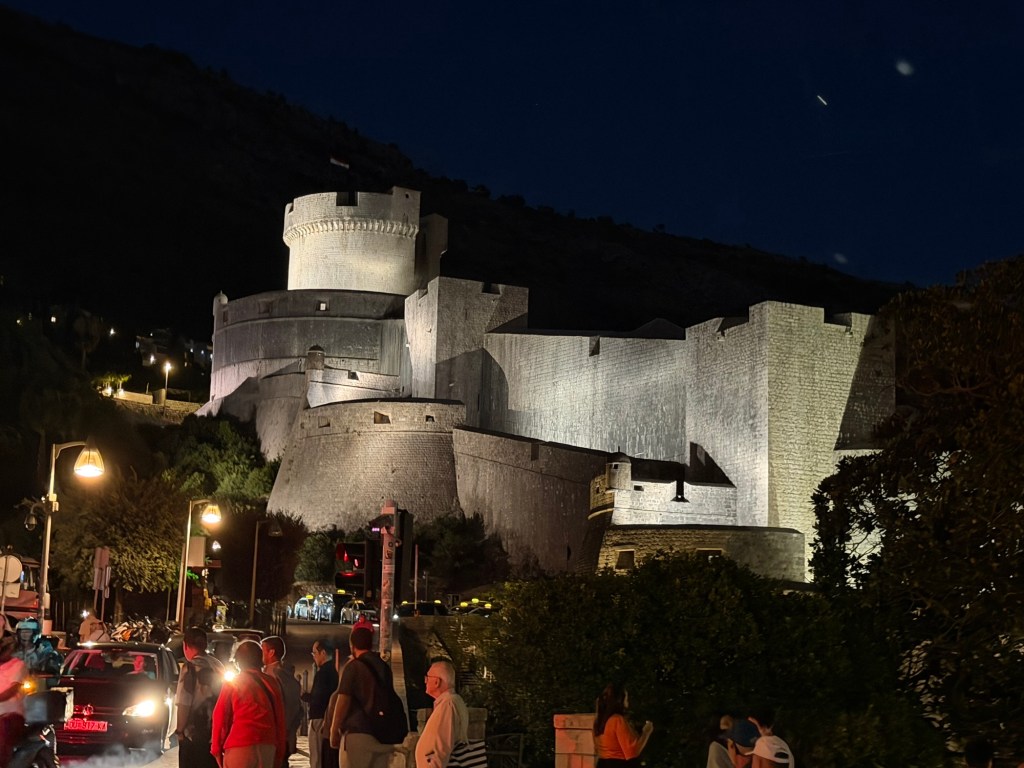
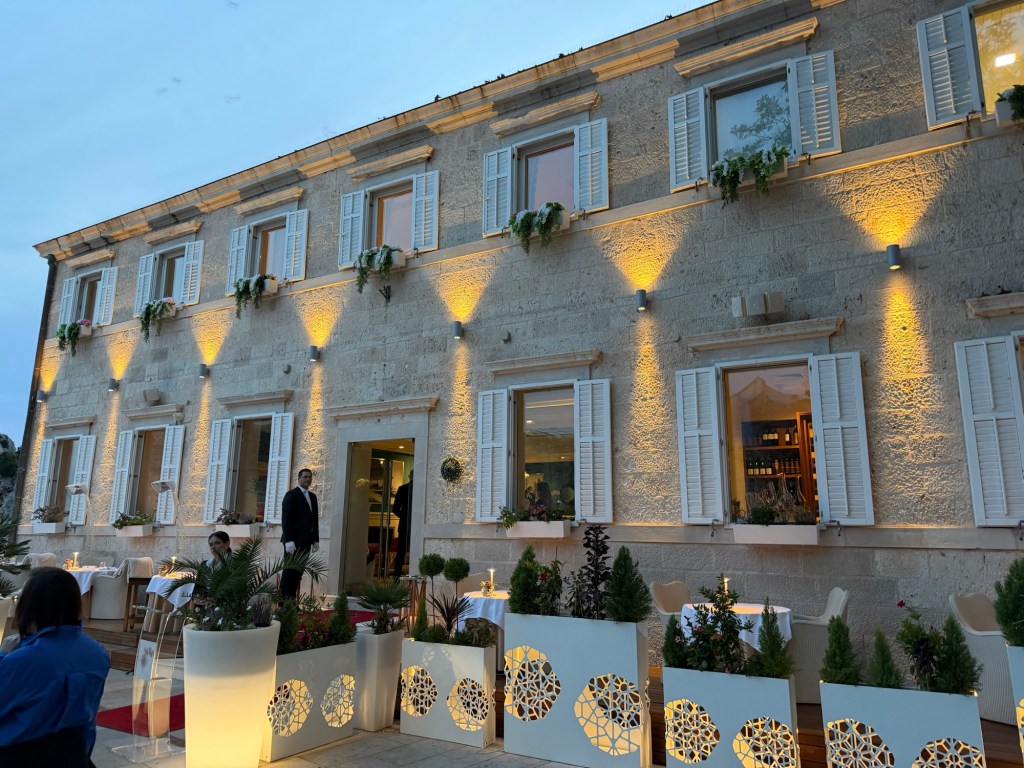
Later, Beth and I regrouped for dinner at Restaurant Nautika, which occupies a building that once housed Dubrovnik’s School of Maritime Studies. The restaurant itself opened in 1993, bringing a new chapter to a place long connected with the city’s seafaring history. Its terrace seemed almost to sit beneath one enormous stone fortress, with the Adriatic stretching beyond it. The view was spectacular as the sky turned pink at sunset.

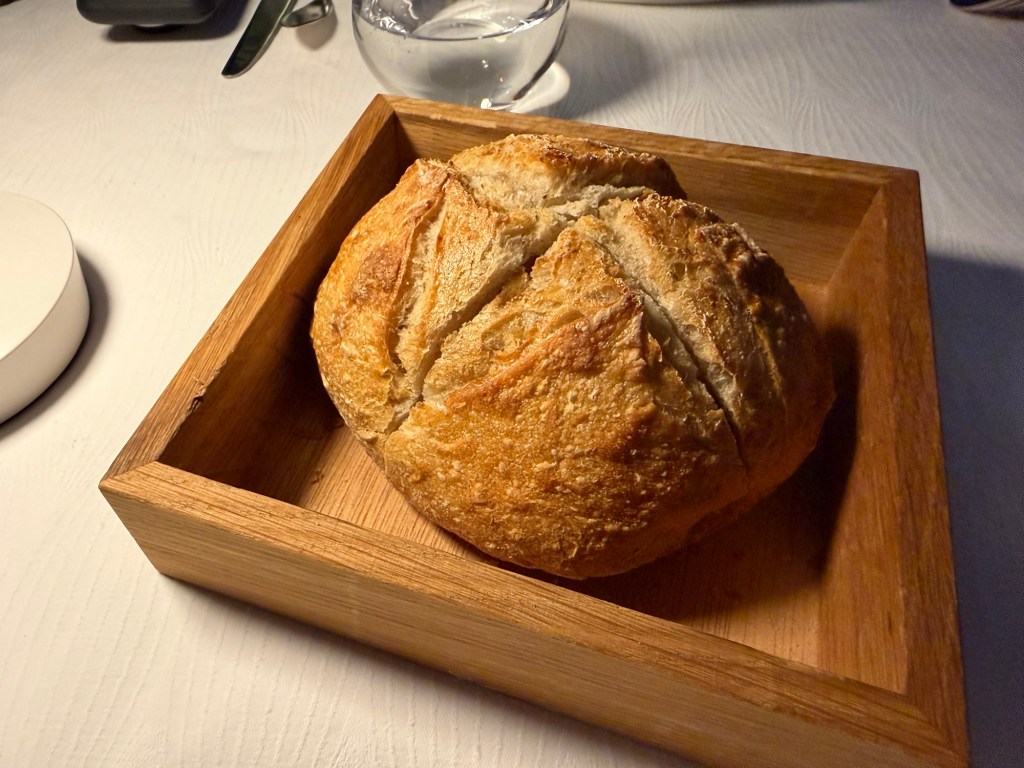
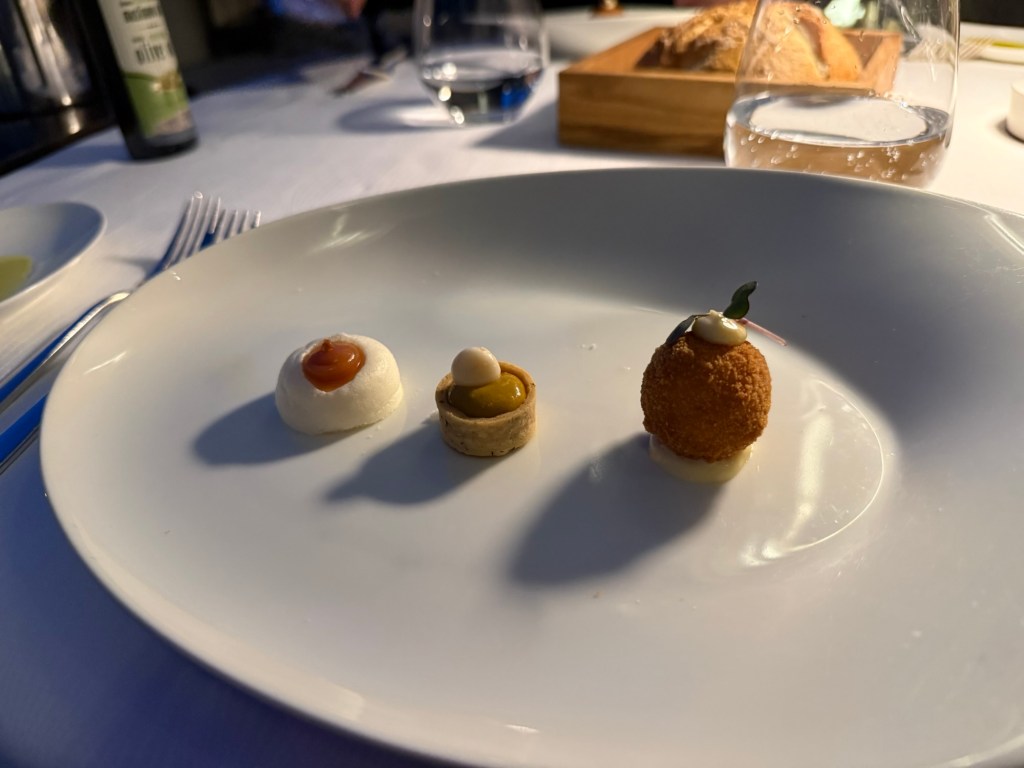
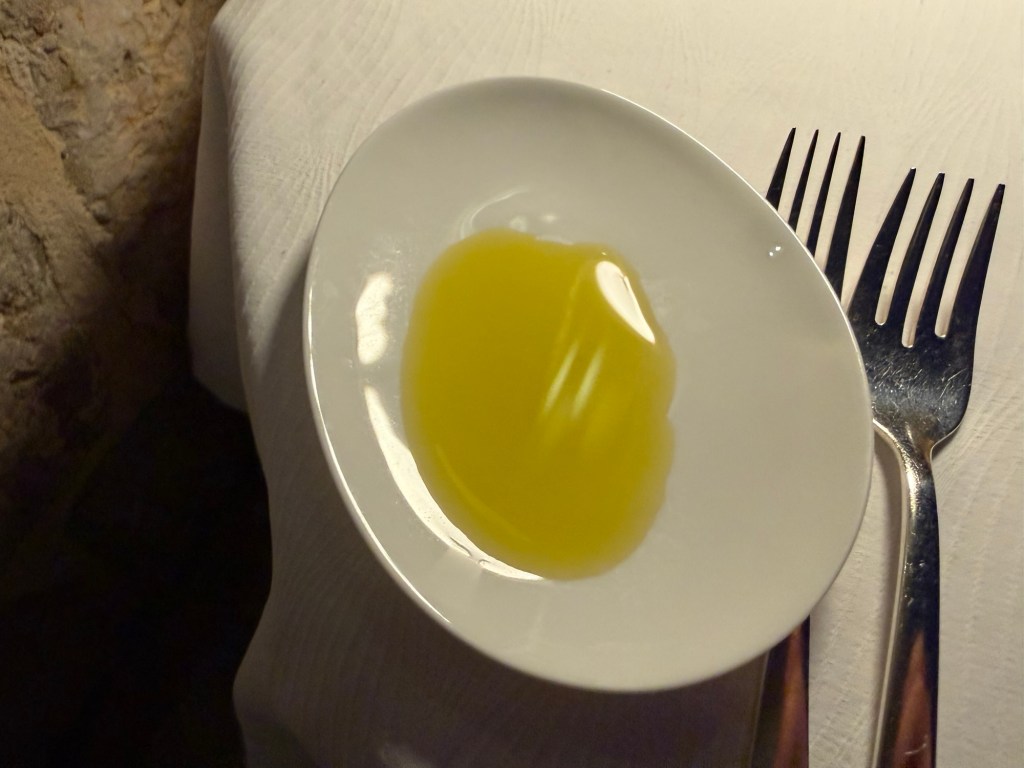
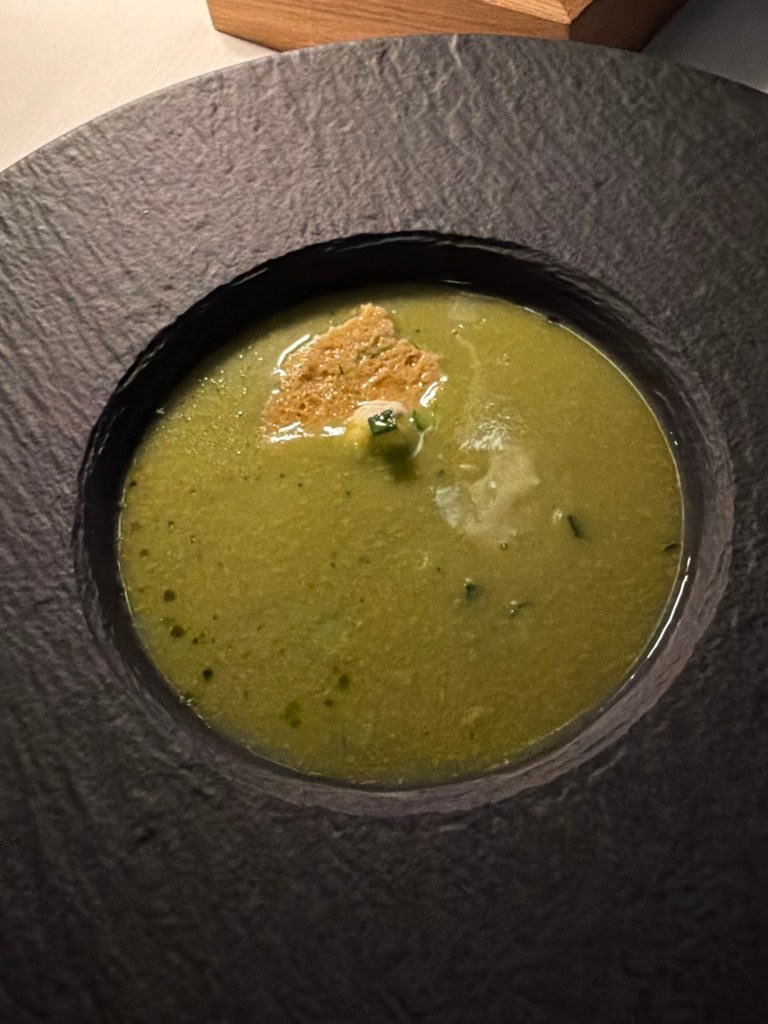
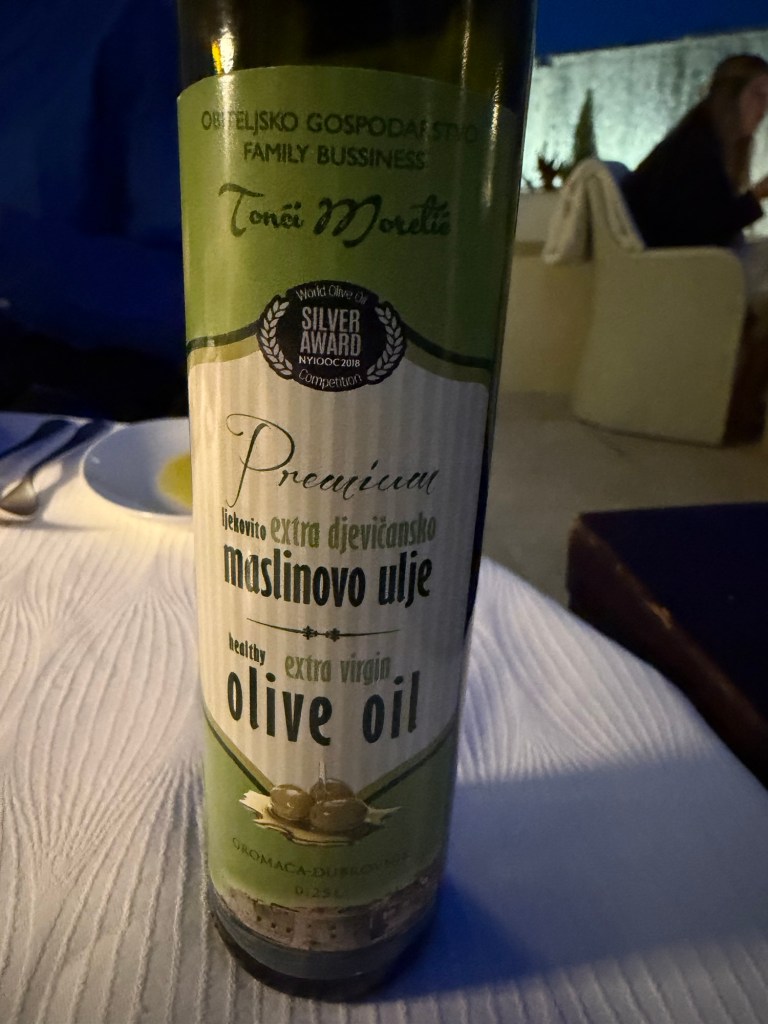
Dinner began with crusty bread and golden extra-virgin olive oil, followed by three tiny amuse-bouches: a smooth white morsel with a bright orange center, a little tartlet topped with green and cream, and a crisp-coated golden bite. A silky green soup came next, finished with a delicate crisp and small garnish.
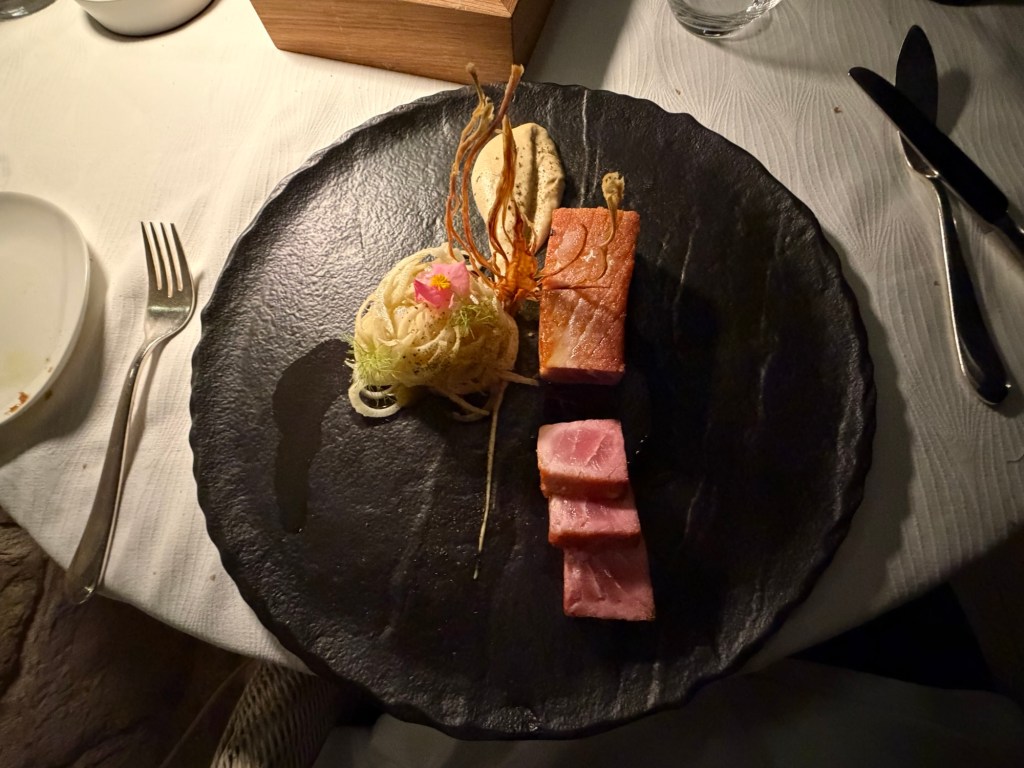
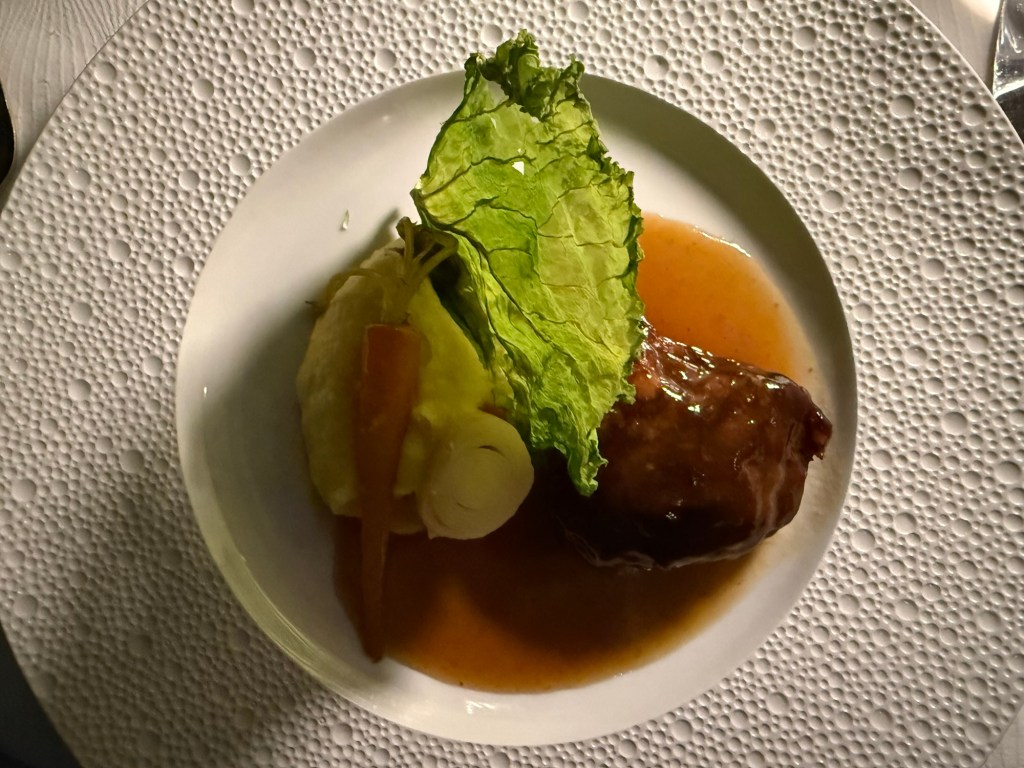
For our main courses, I had tuna, served in rosy slices alongside a nest of dehydrated capers, and fennel triptih. Beth had veal cheek in Malvsija sauce. Both plates were carefully arranged, almost like little compositions.
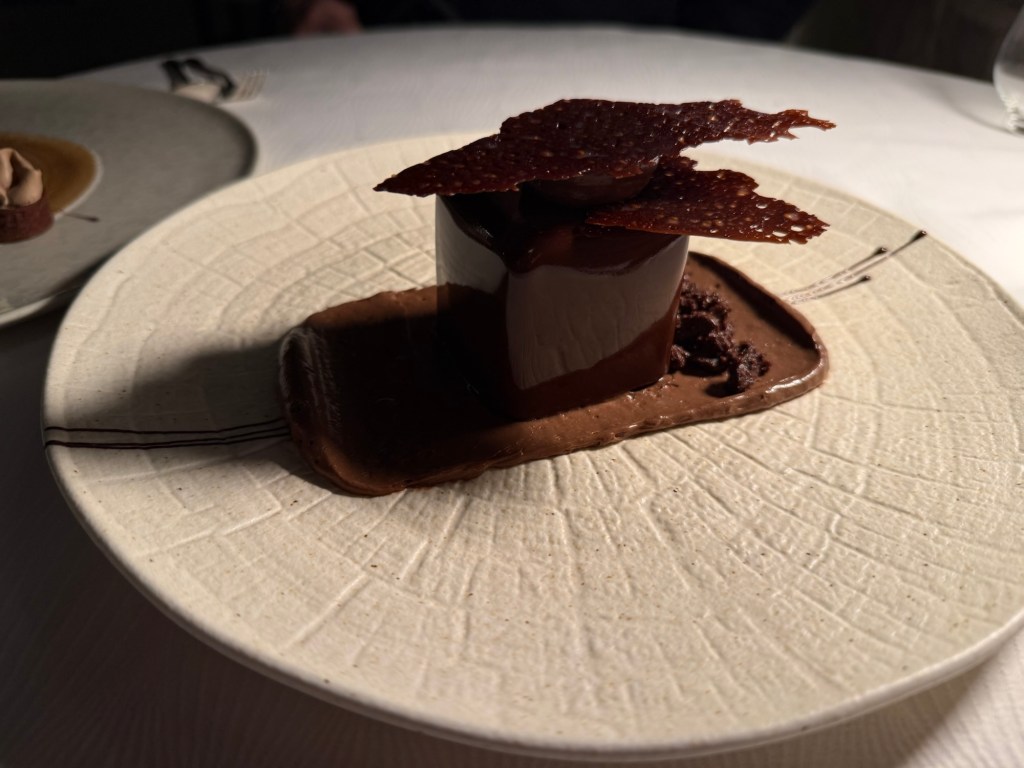
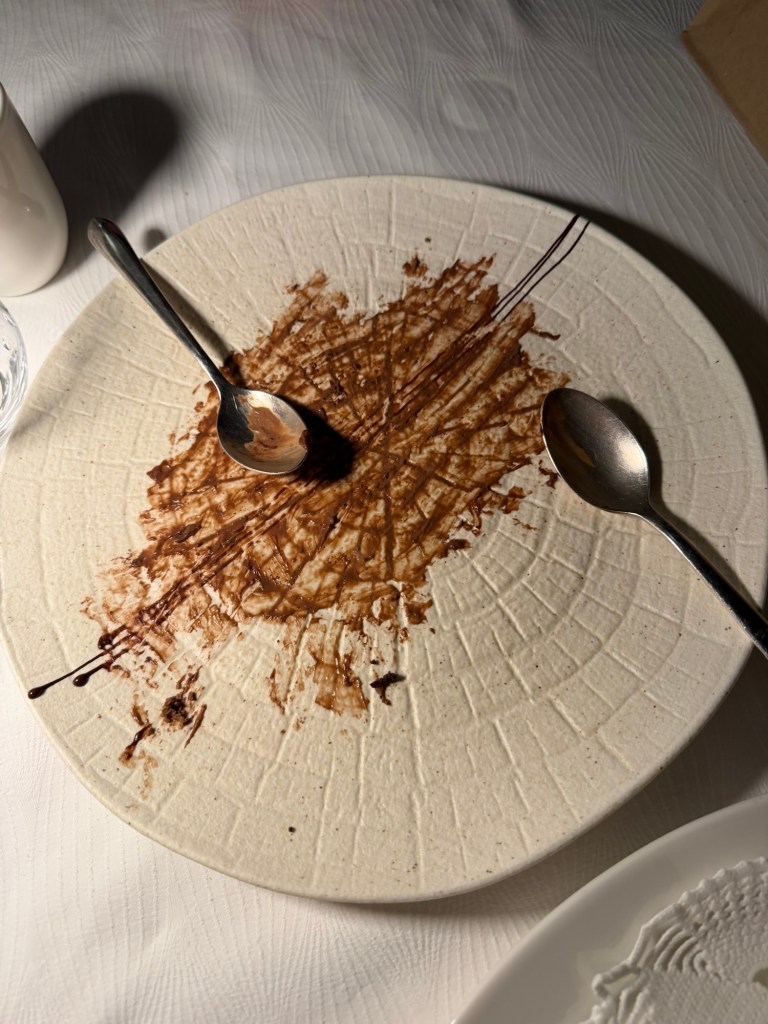
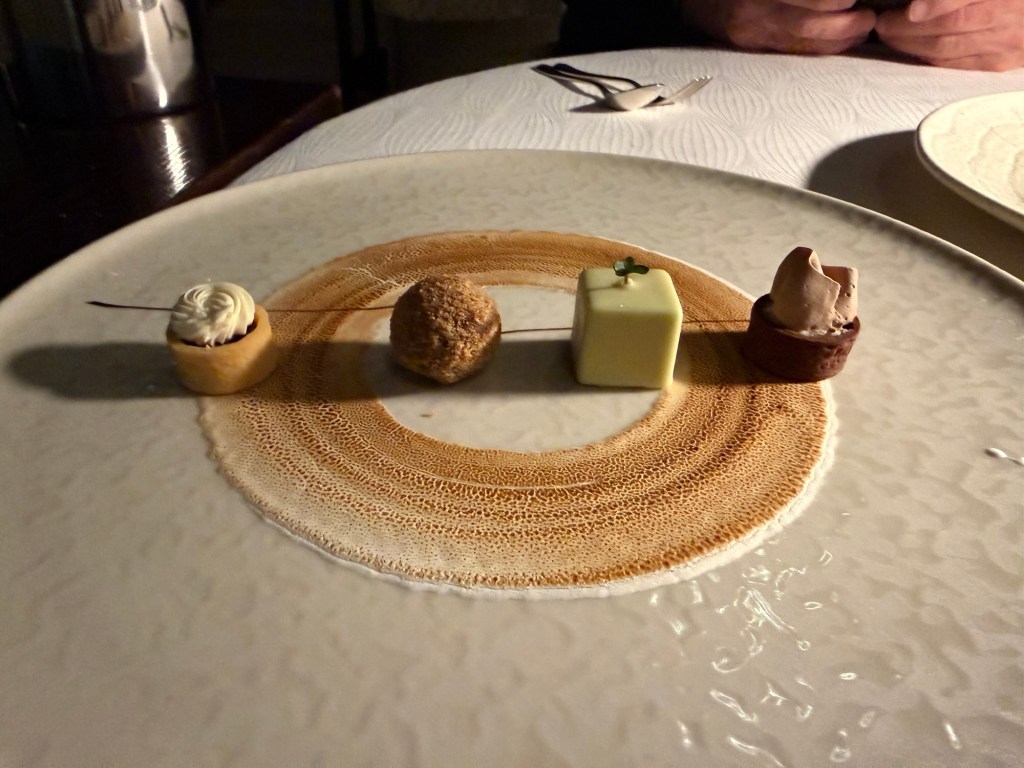
Dessert was a rich chocolate creation topped with crisp chocolate shards and surrounded by a sweep of chocolate sauce. We licked the plate clean. Four little pastries followed, but we saved those for our driver.