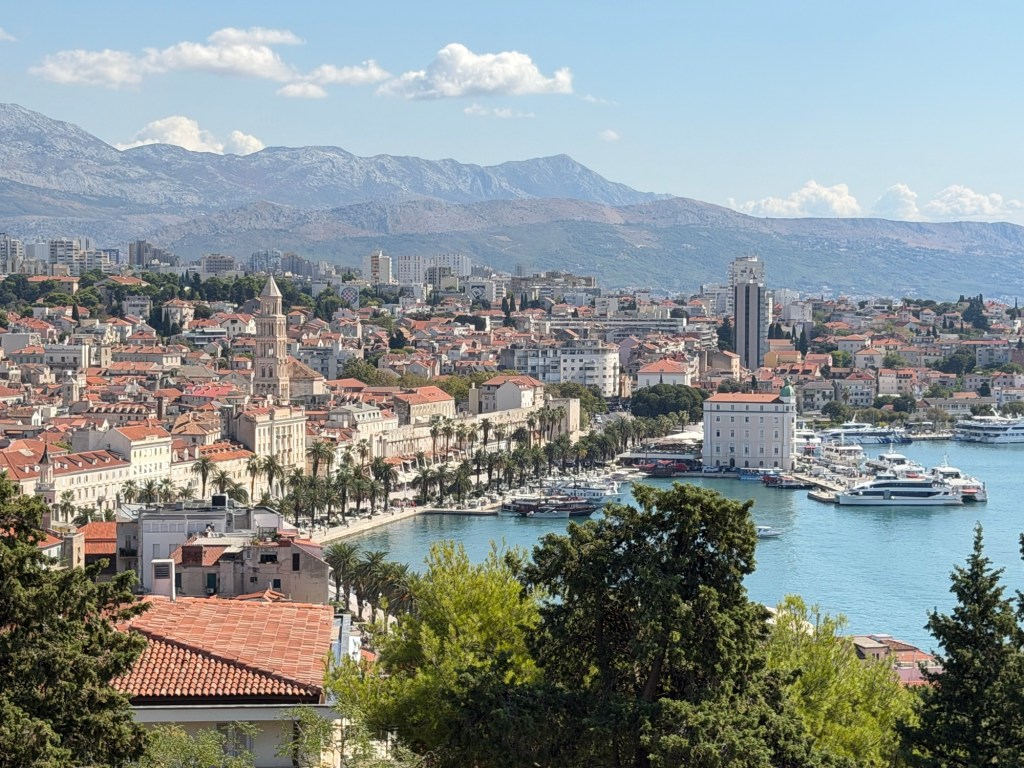
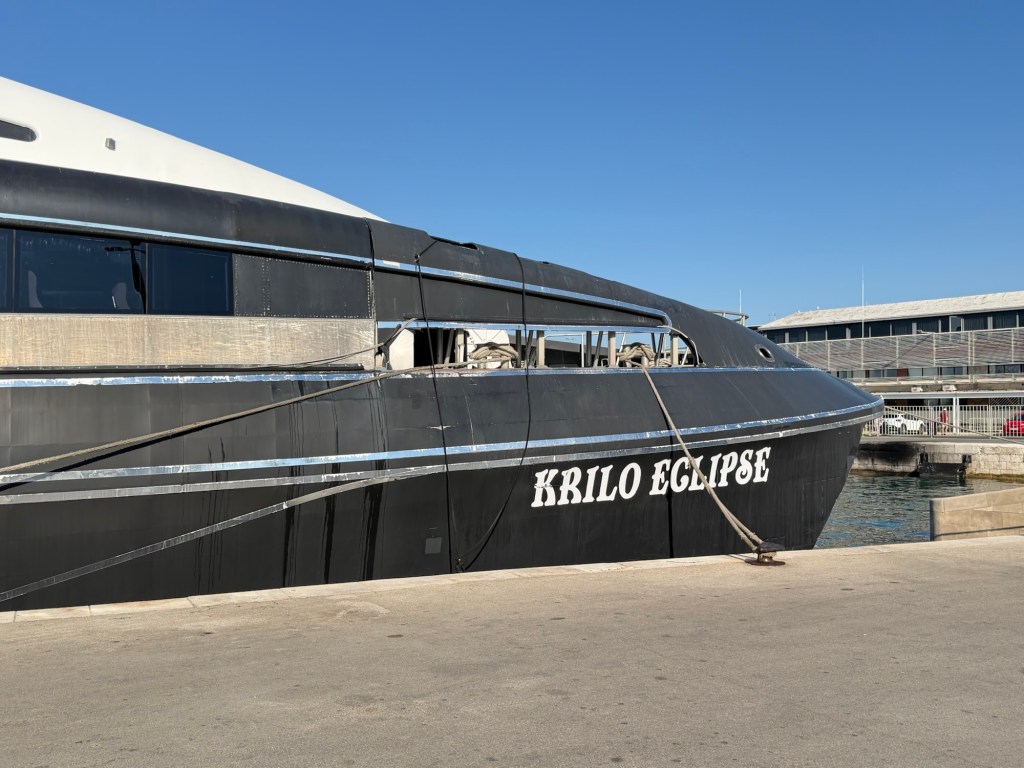
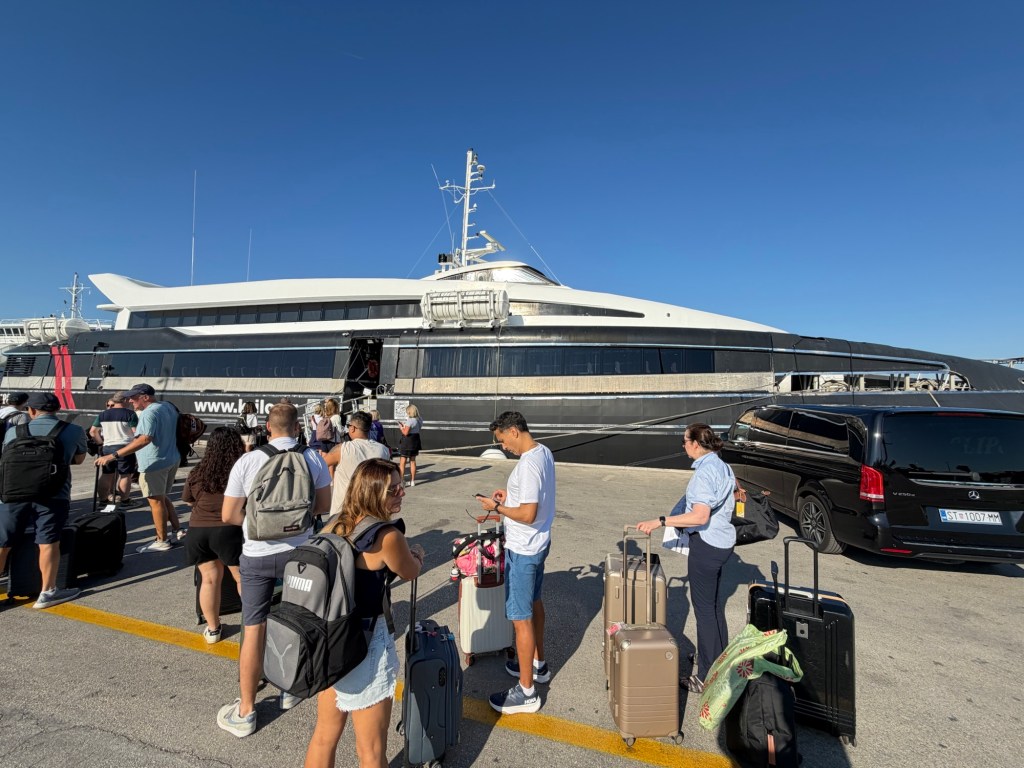
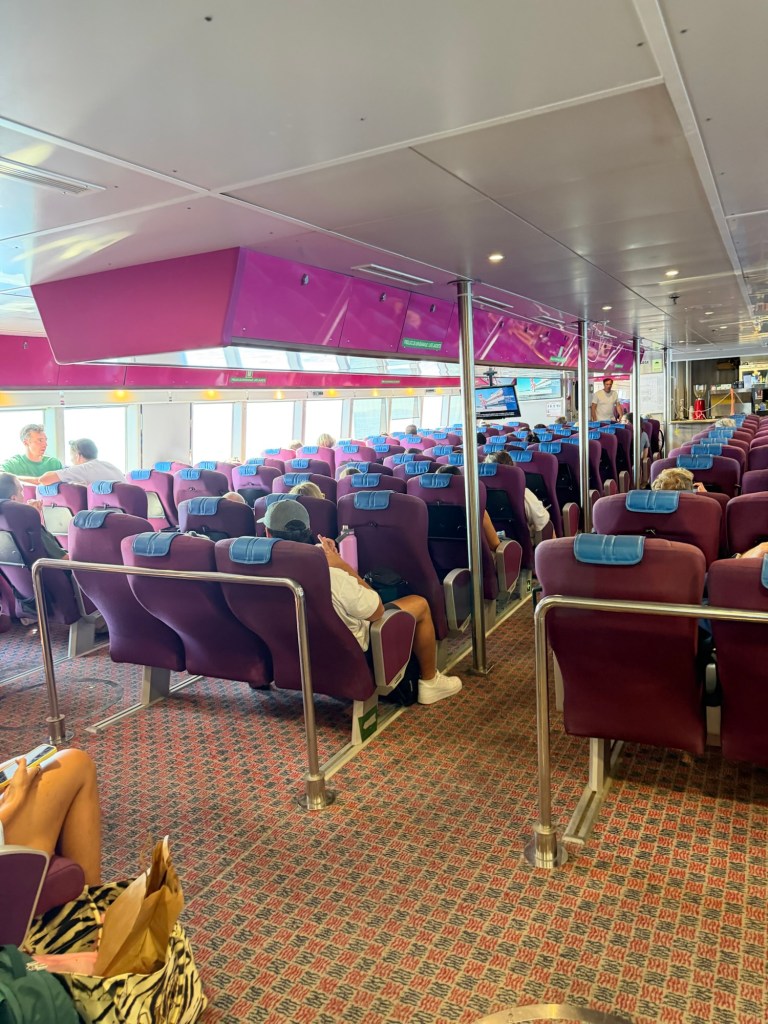
We left Split the next morning aboard the Krilo Eclipse, a sleek black-and-white passenger hydrofoil bound for Hvar Town. Inside, rows of high-backed seats gave it the feel of an airplane cabin, but once underway, the vessel skimmed rapidly across the blue Adriatic.
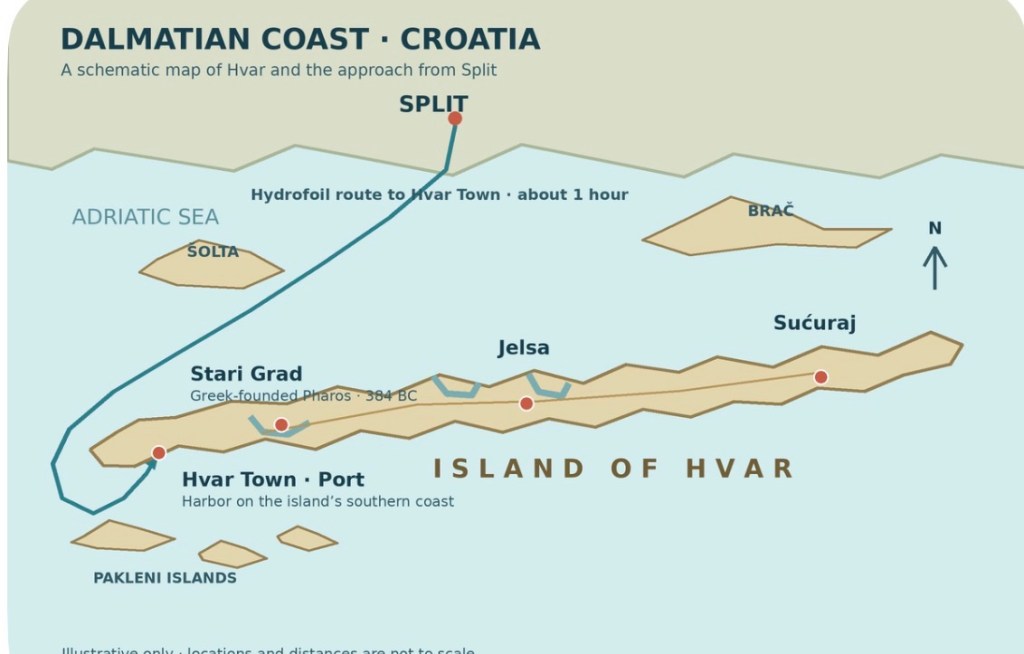
In about an hour, we crossed southwest over the Adriatic to an island shaped by centuries of seafaring, trade and conquest. Hvar’s story reaches back to 384 BC, when Greek settlers from Paros founded Pharos, now Stari Grad. Romans came later, followed by centuries of Venetian rule, which left its mark on the island’s handsome stone towns and maritime character.
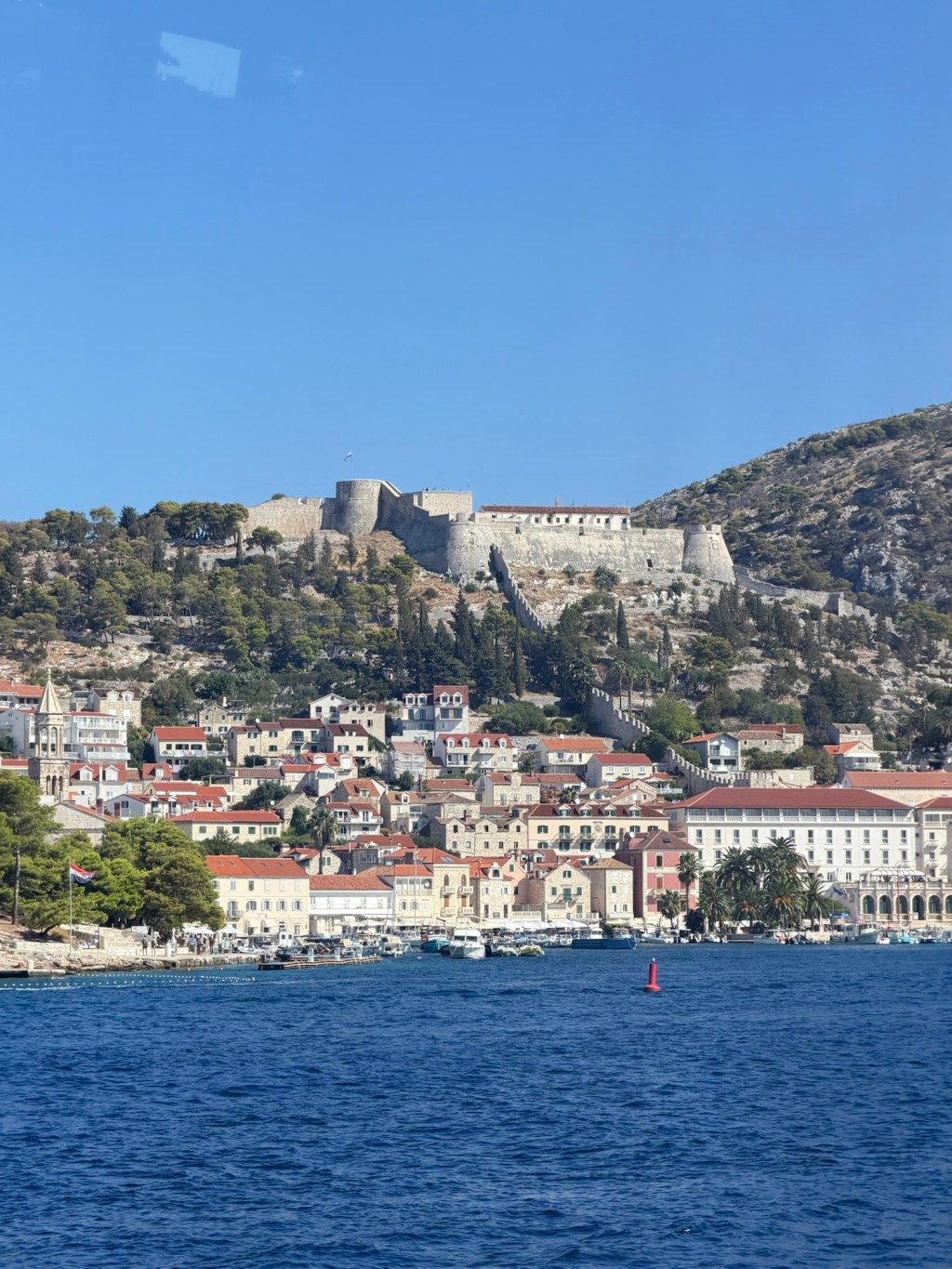
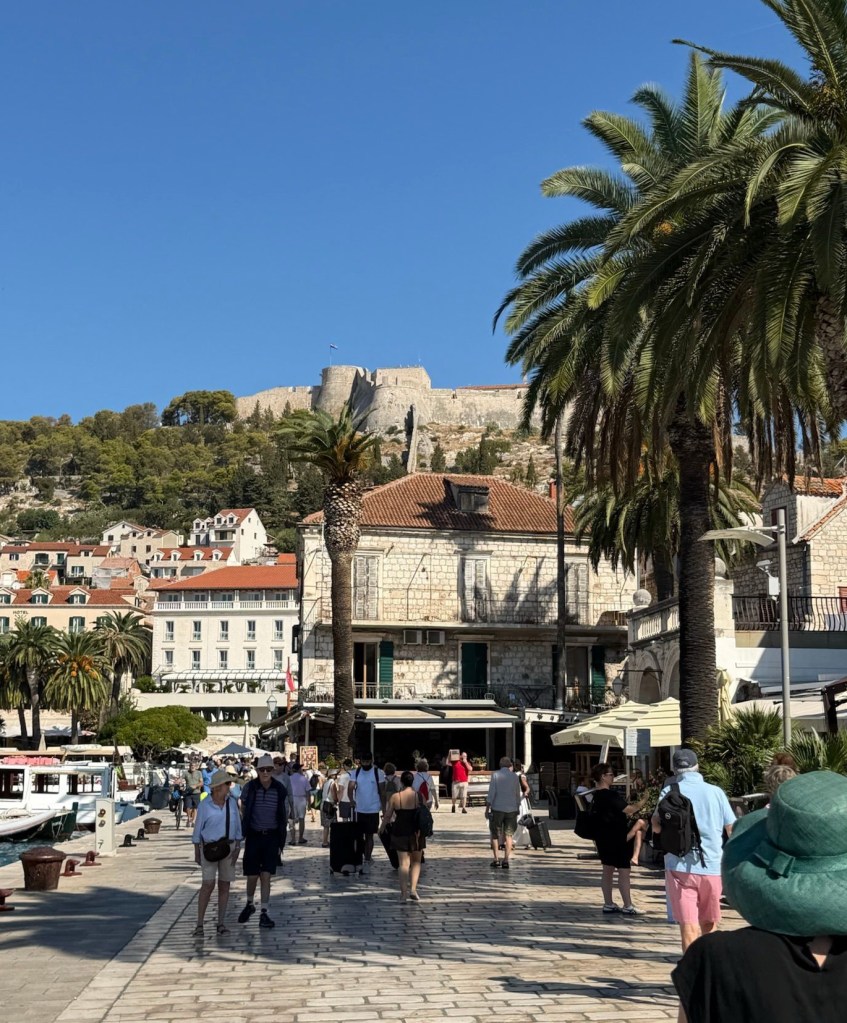
As we stepped off the hydrofoil, our local guide, Victoria, was waiting for us at the harbor. Hvar immediately put on a show: a broad stone waterfront alive with cafés, palm trees and bobbing boats, while pale limestone houses with red-tiled roofs climbed the hillside behind it.
High above everything, the massive Fortica fortress watched over the town and harbor as it had for centuries.
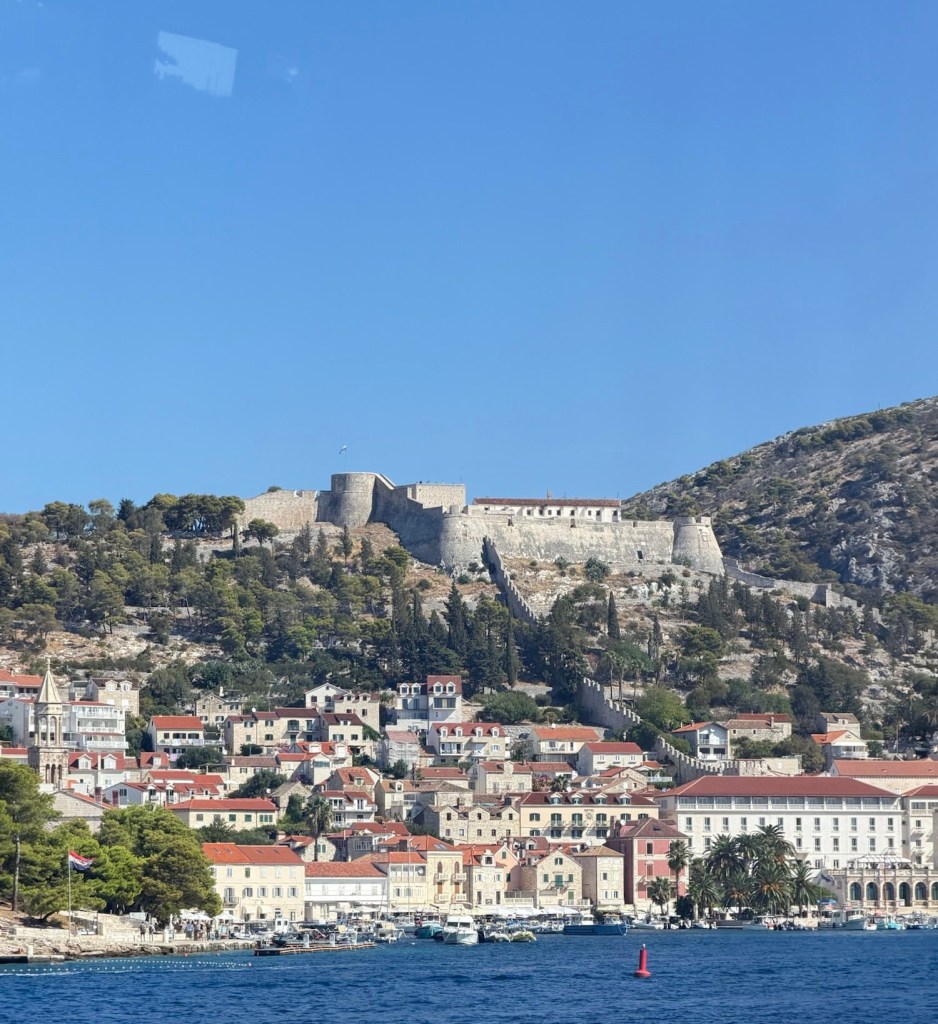
Its commanding position was no accident. Hvar stood along Venice’s principal sailing route through the Adriatic, and its sheltered harbor became an important place for Venetian ships to seek protection, take on supplies and make repairs. That made the town both valuable and vulnerable. The fortress and its walls guarded Hvar against pirates and rival naval powers, particularly the expanding Ottoman Empire. Their importance became clear in 1571, when an Ottoman fleet attacked and burned much of the town while its residents survived by taking refuge inside the fortress.
Even today, Fortica dominates the harbor—a massive reminder that this beautiful island town once occupied a dangerous and strategically important place on the Adriatic. The fort was severely damaged in 1579 due to an explosion in a gunpowder warehouse. Repairs were only completed at the beginning of the 17th century, when new buildings and bastions were built. The last buildings were erected during the 18th and 19th centuries during Austrian rule, when Fortica got its present appearance.
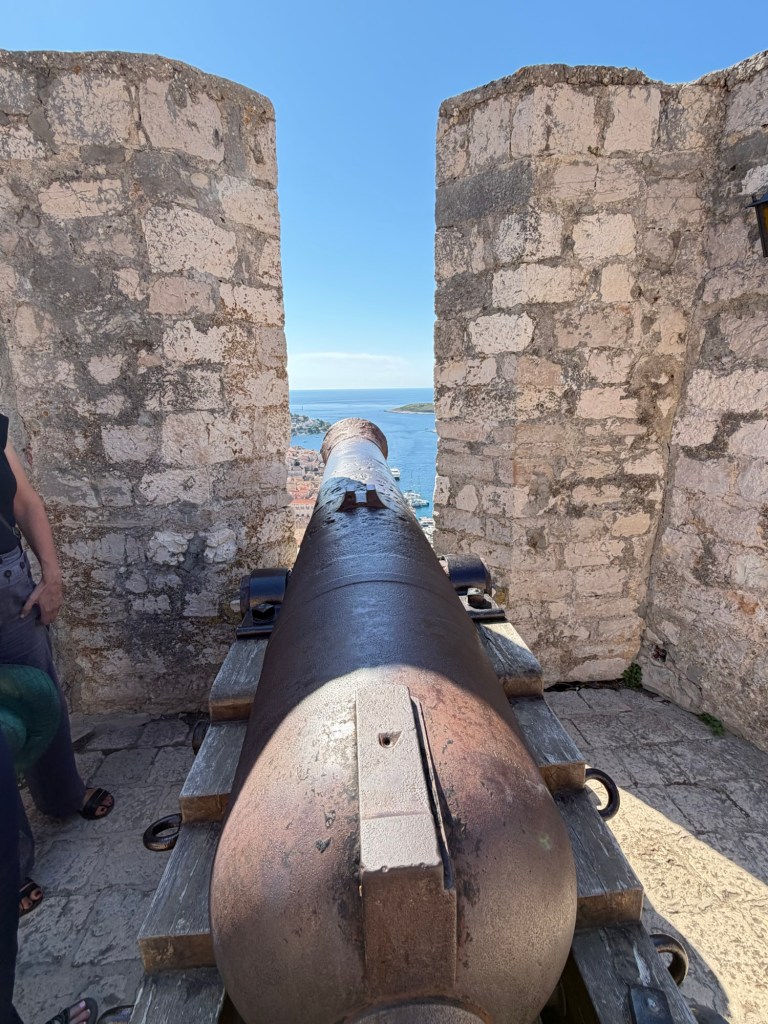
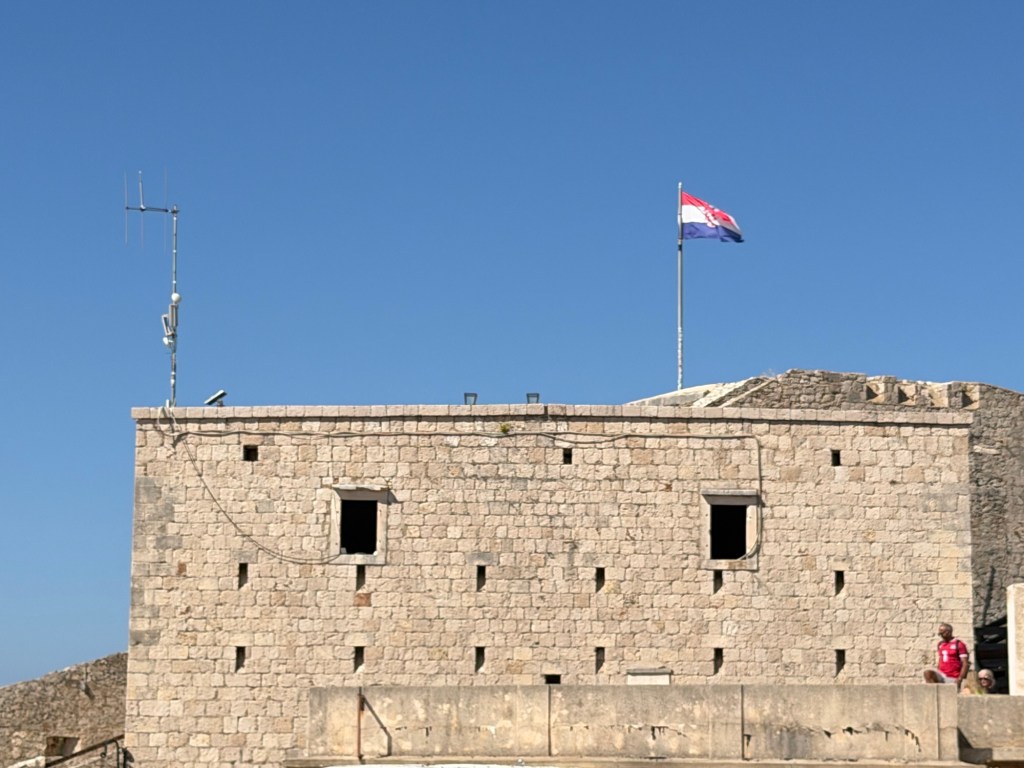
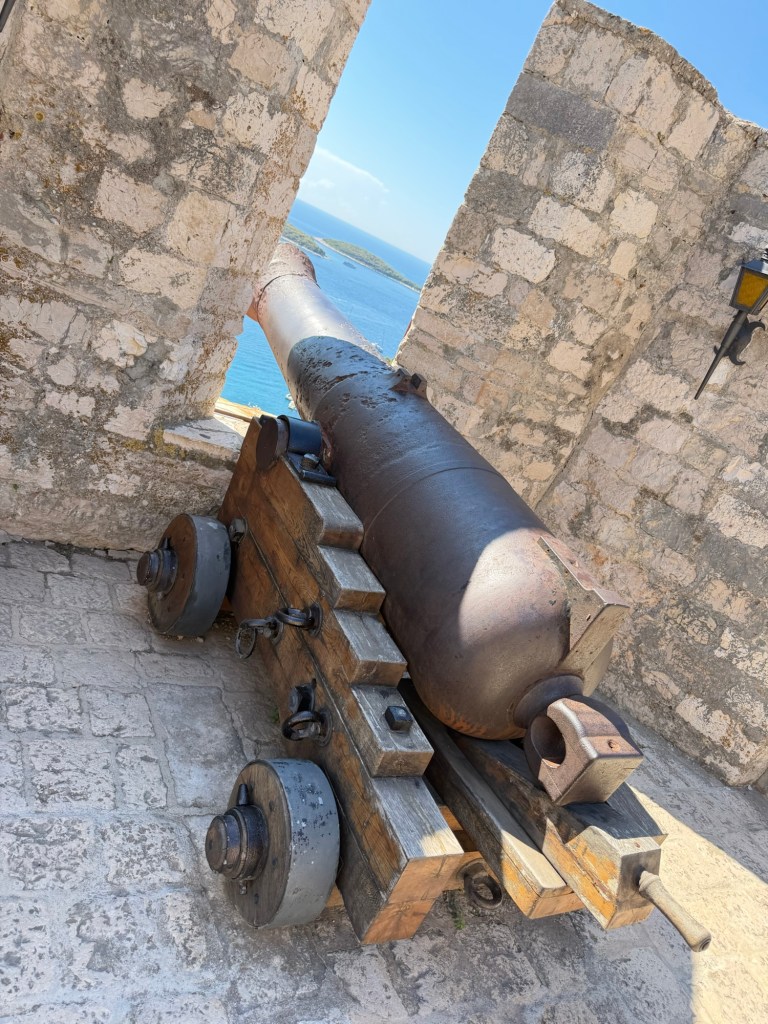
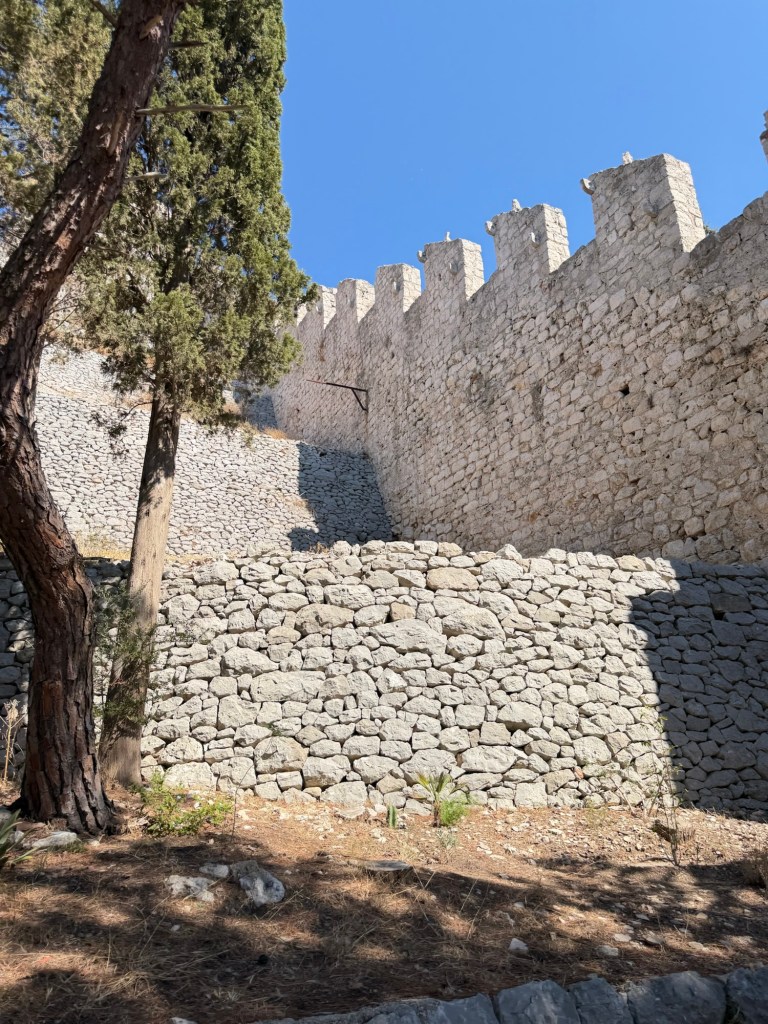
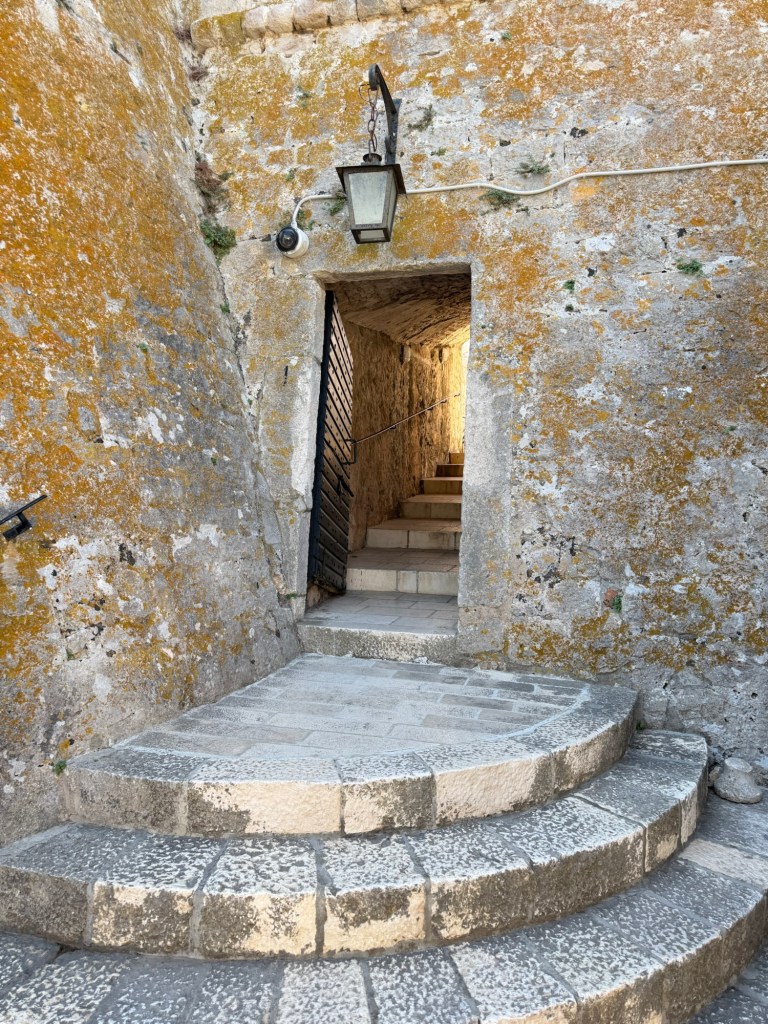
We followed Victoria up the winding path toward Fortica, climbing above Hvar’s terracotta rooftops. The stone walls rose beside us, and tall pines offered patches of shade along the way. With each turn, the harbor opened wider below—boats crossing the deep blue water and the islands scattered beyond it. By the time we reached the top, the climb had become part of the reward: the town and harbor lay spread out beneath us.
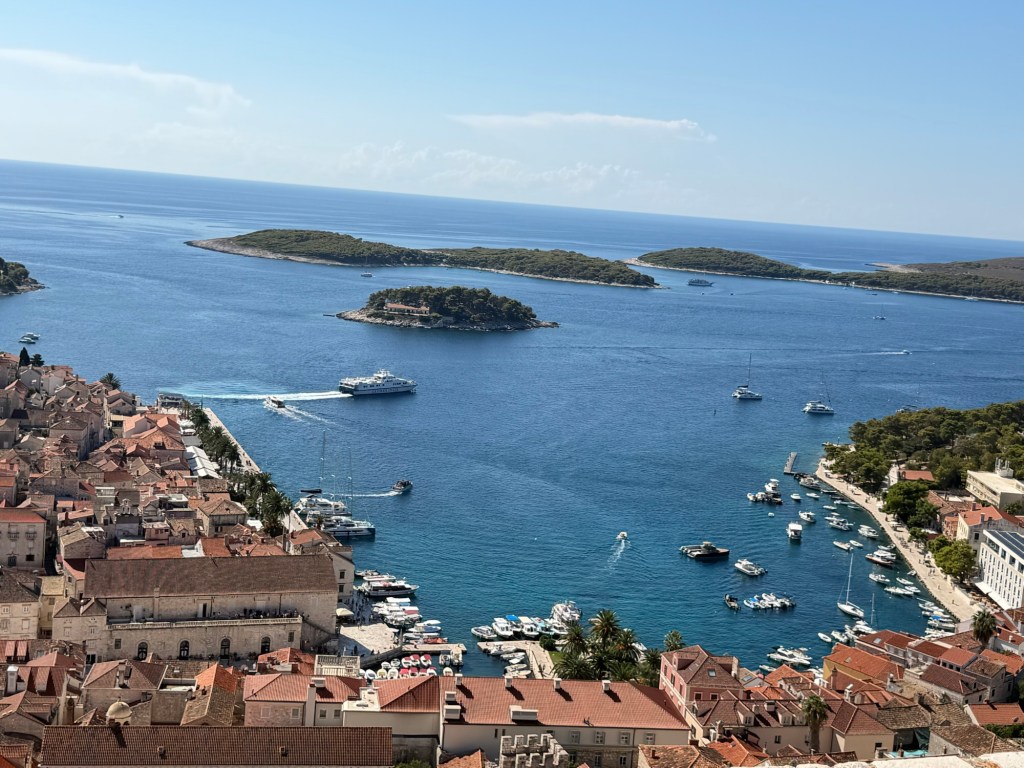
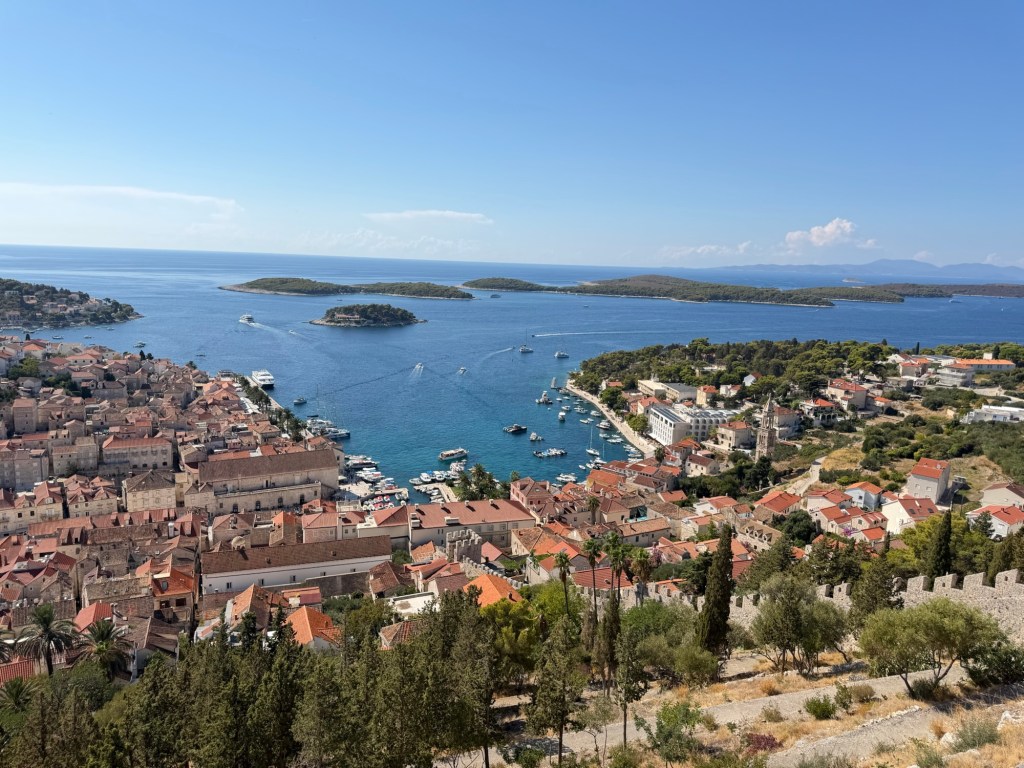
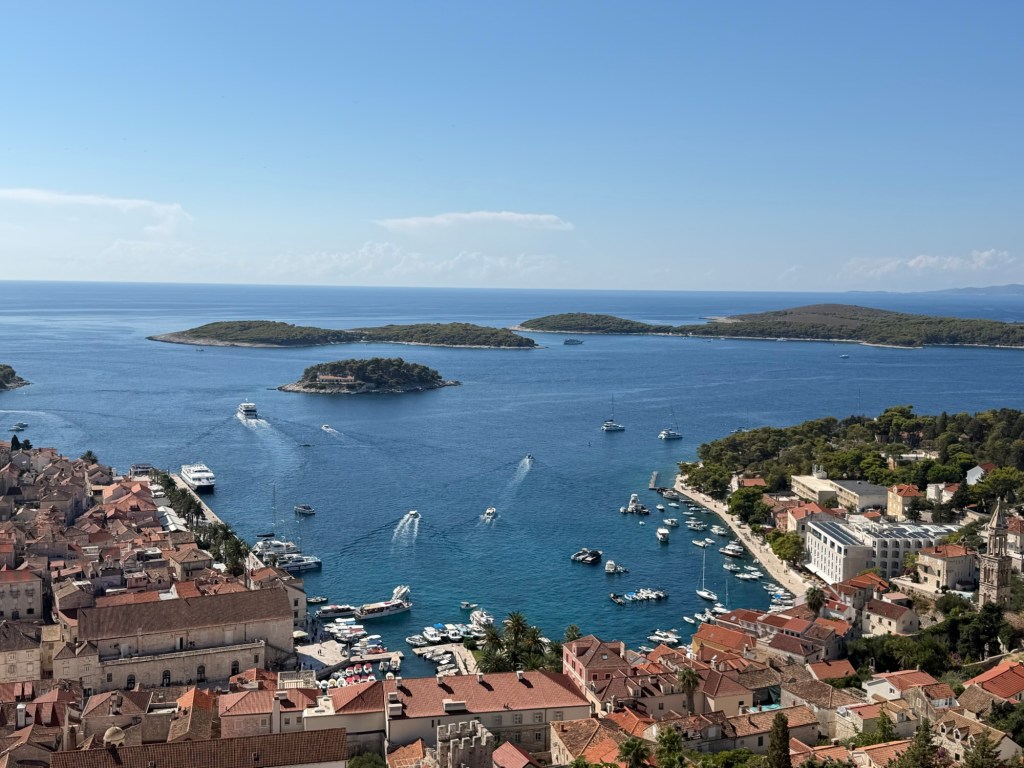
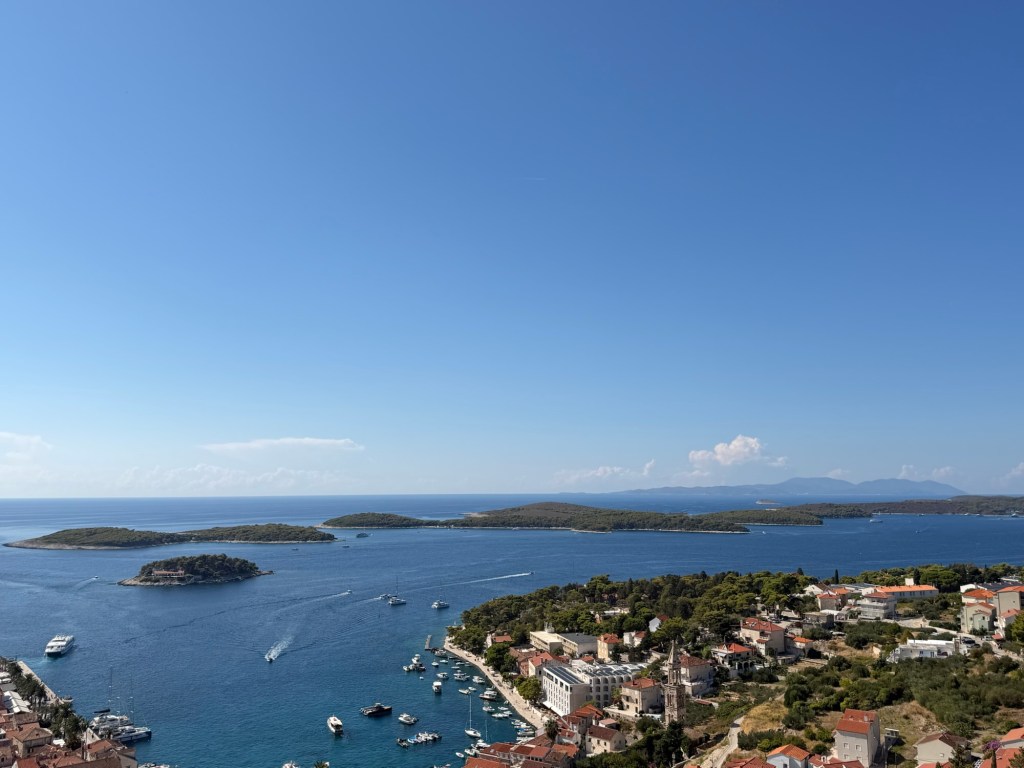
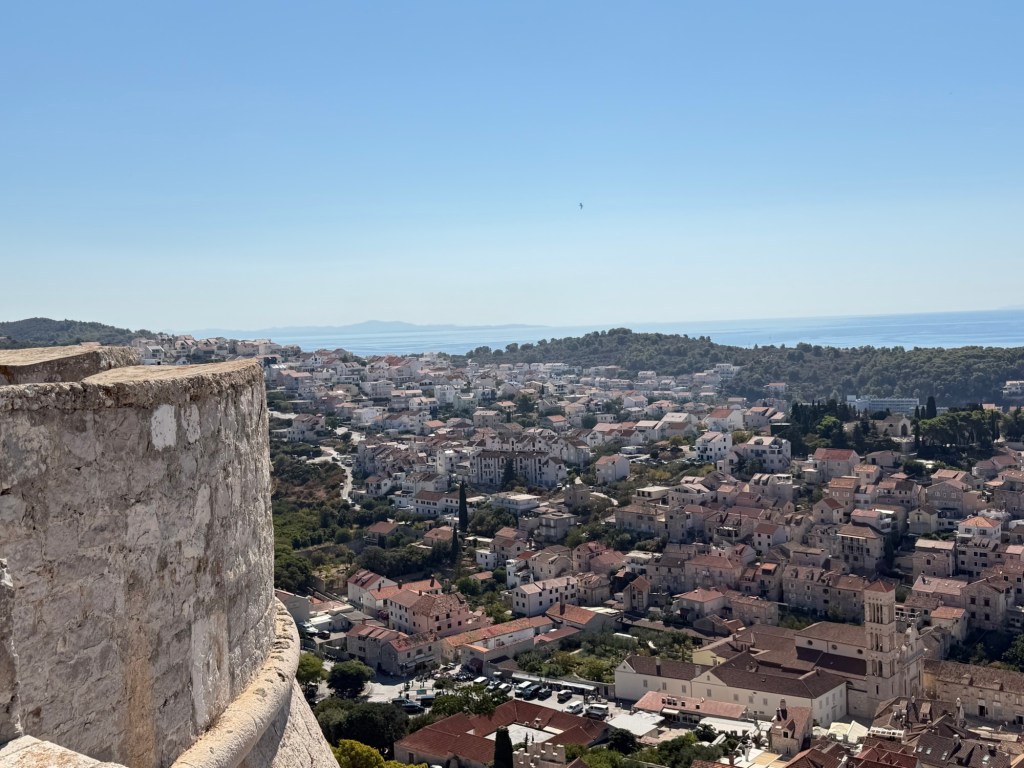
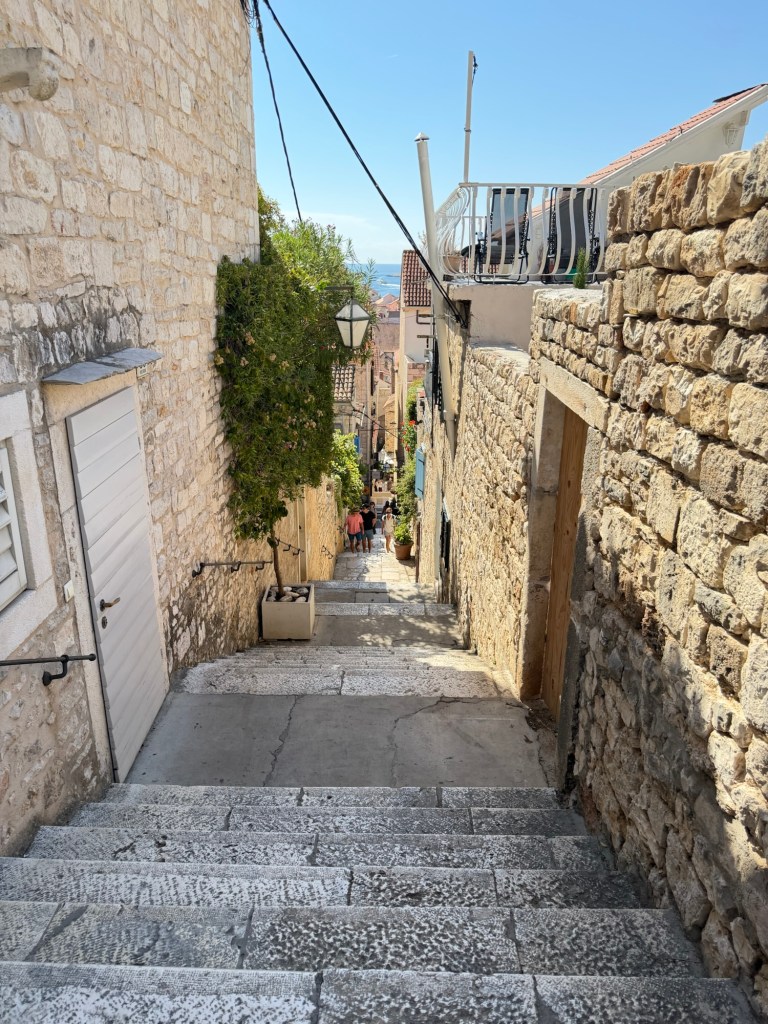
Victoria led us through several of the narrow alleyways near Fortica, including the one where she lives. During the hot summer months, the maestral—a cooling wind from the northwest—is funneled through these confined stone passageways, creating a natural form of air-conditioning.
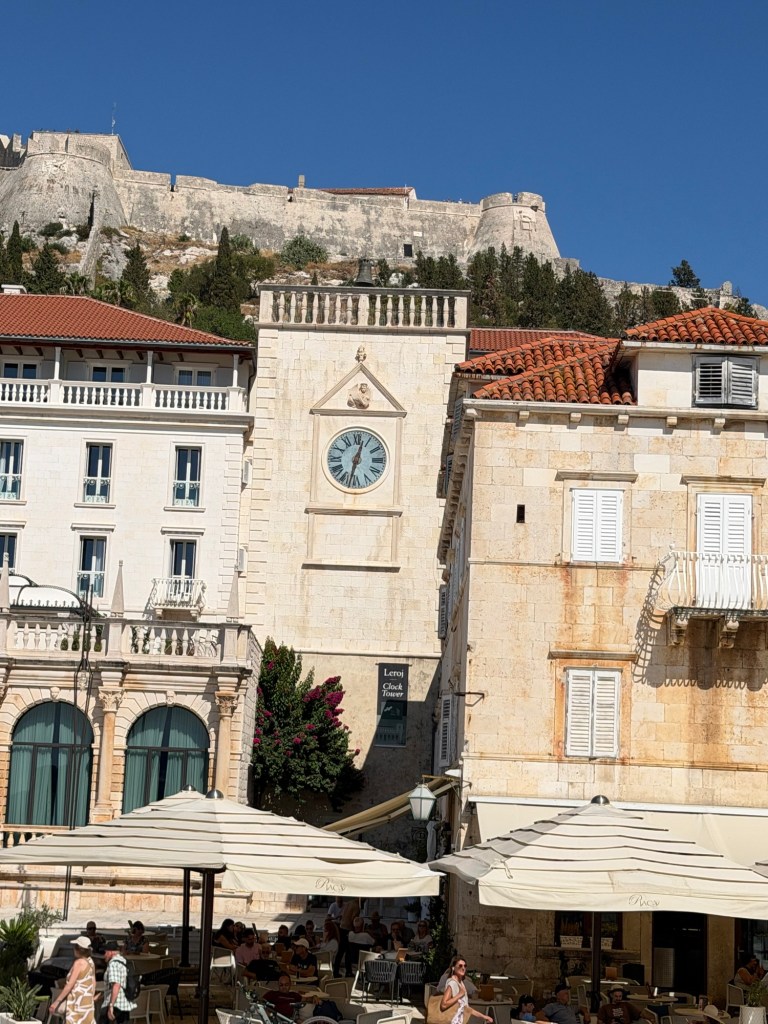
We walked down from the fort into Hvar Town, where Victoria continued our tour of its historic heart. In the broad, sunlit square, she pointed out the Cathedral of St. Stephen and its tall bell tower, as well as the old clock tower. Above the terracotta roofs, the fortress remained in view—a reminder of how closely the town’s history is tied to its defenses.
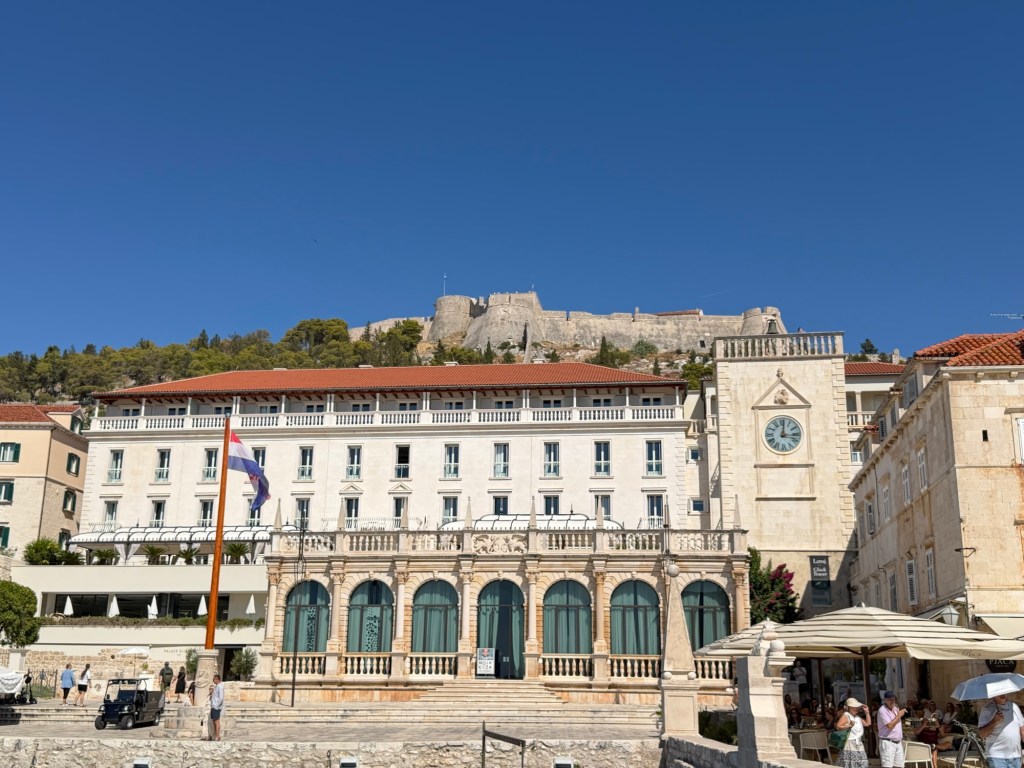
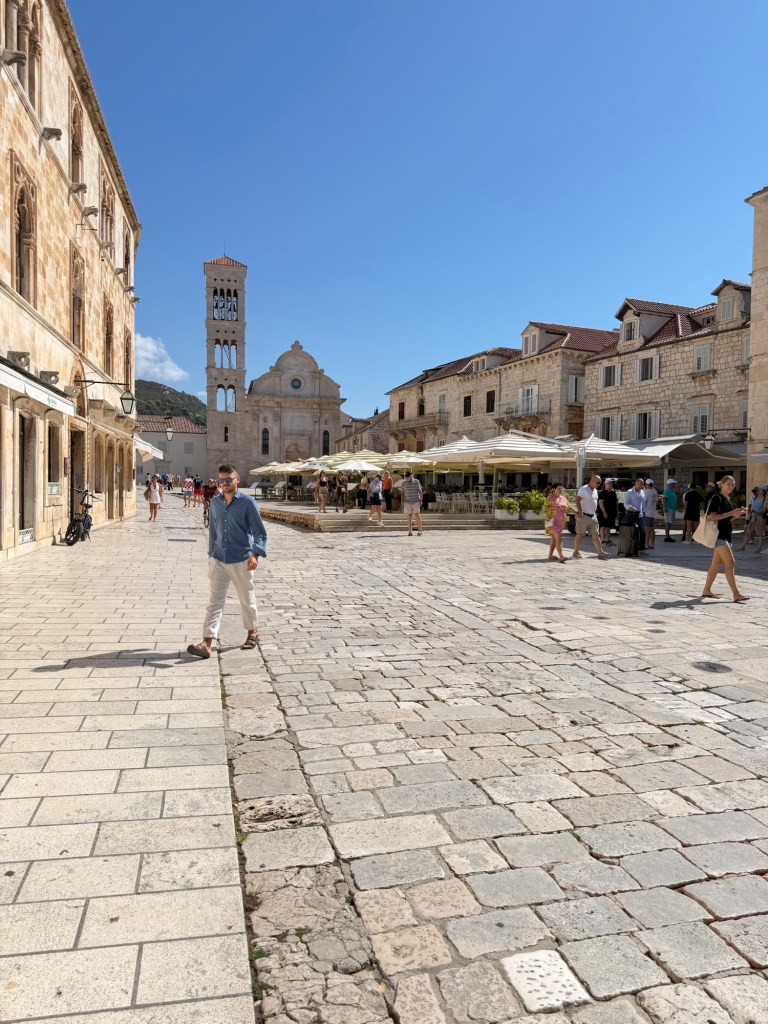
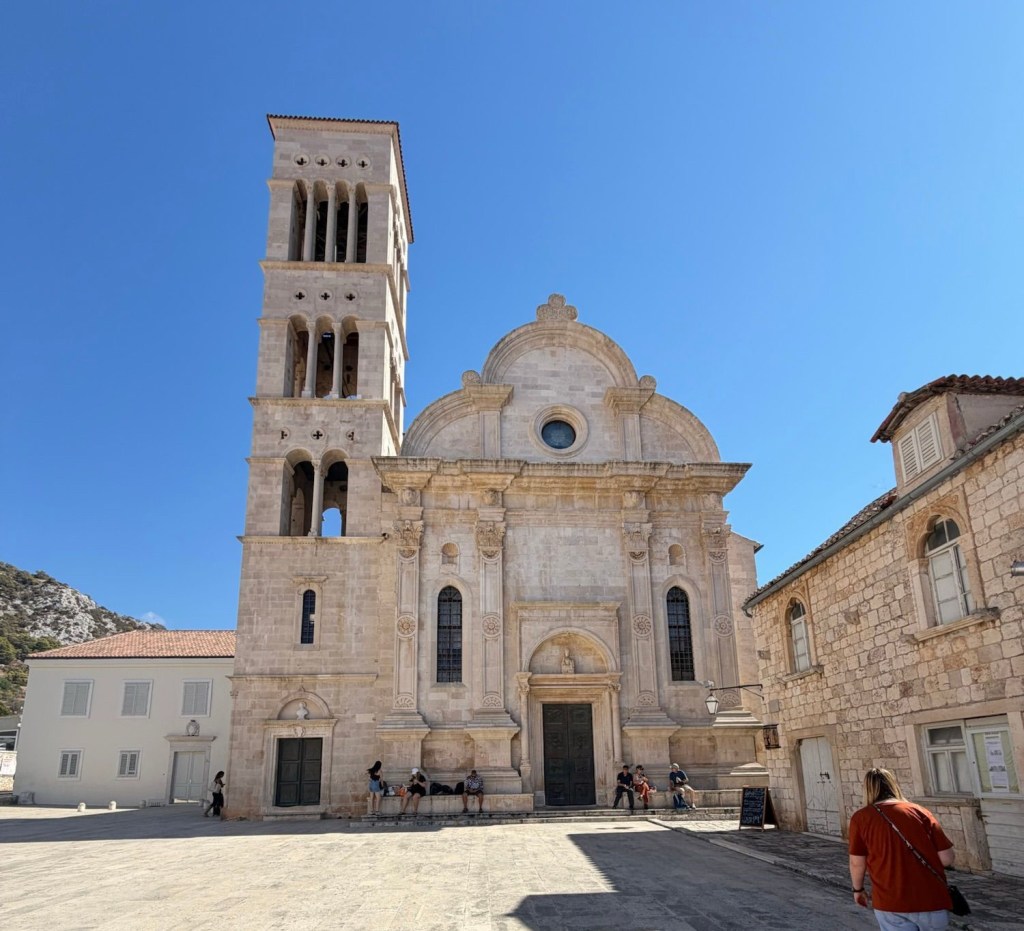
Our walk continued, as Victoria took us inside the Hvar Arsenal, once a Venetian naval facility where galleys were sheltered and repaired and their equipment stored.
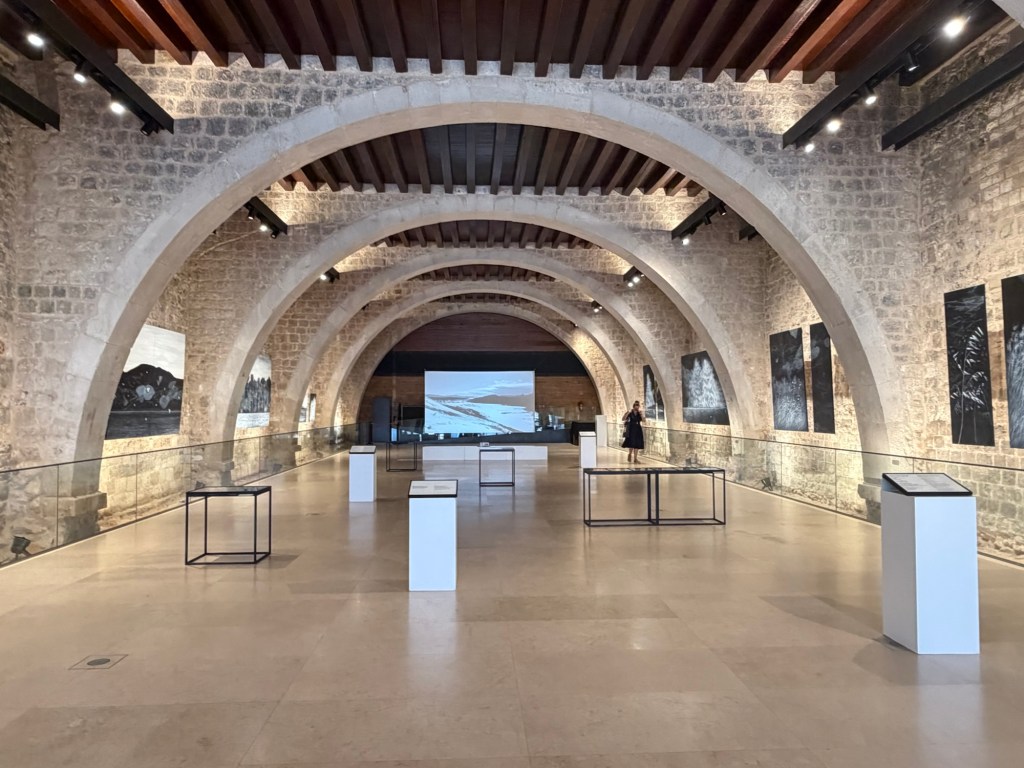
Its great stone arches now frame a gallery, but the real surprise awaited us upstairs. Hidden above the old naval Arsenal was Hvar’s historic theatre, opened in 1612.
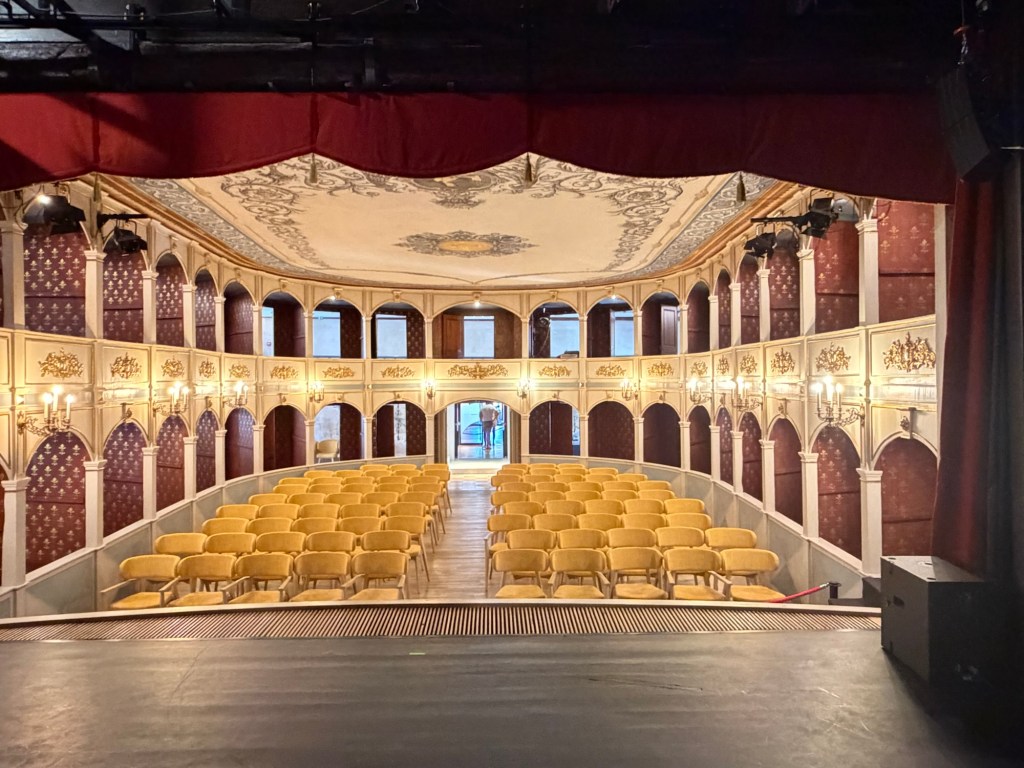
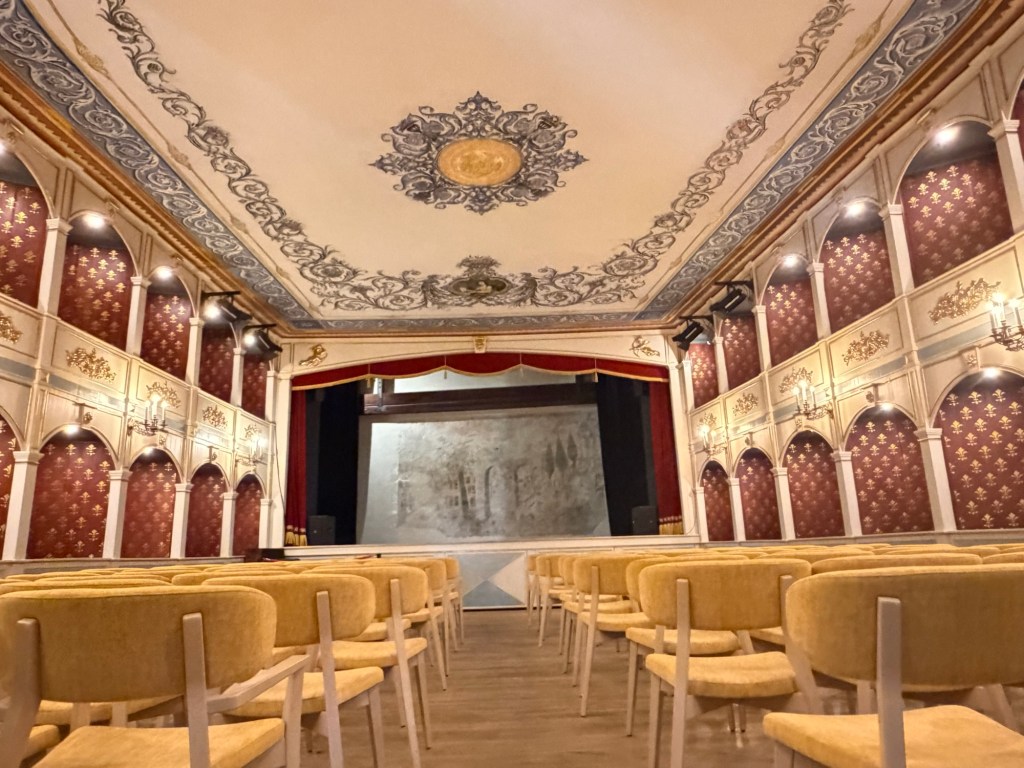
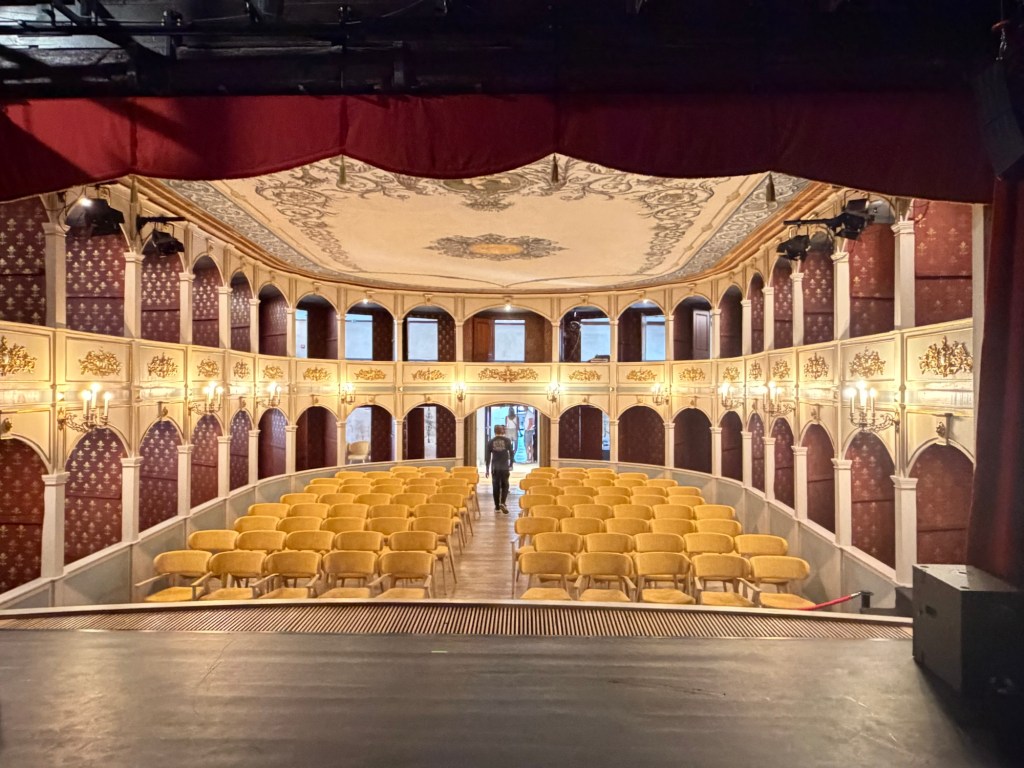
I was stunned to walk into such an intimate and beautifully preserved auditorium, with two tiers of ornate boxes wrapped around the room and rich red and gold decoration glowing beneath the painted ceiling. Created to bridge Hvar’s social divide, nobles and commoners attended performances together. More than four centuries later, the theatre is ready for its next audience.
After exploring Hvar Town, we made the roughly 20-minute drive to Maslina Resort, set on the Adriatic shore near Stari Grad.
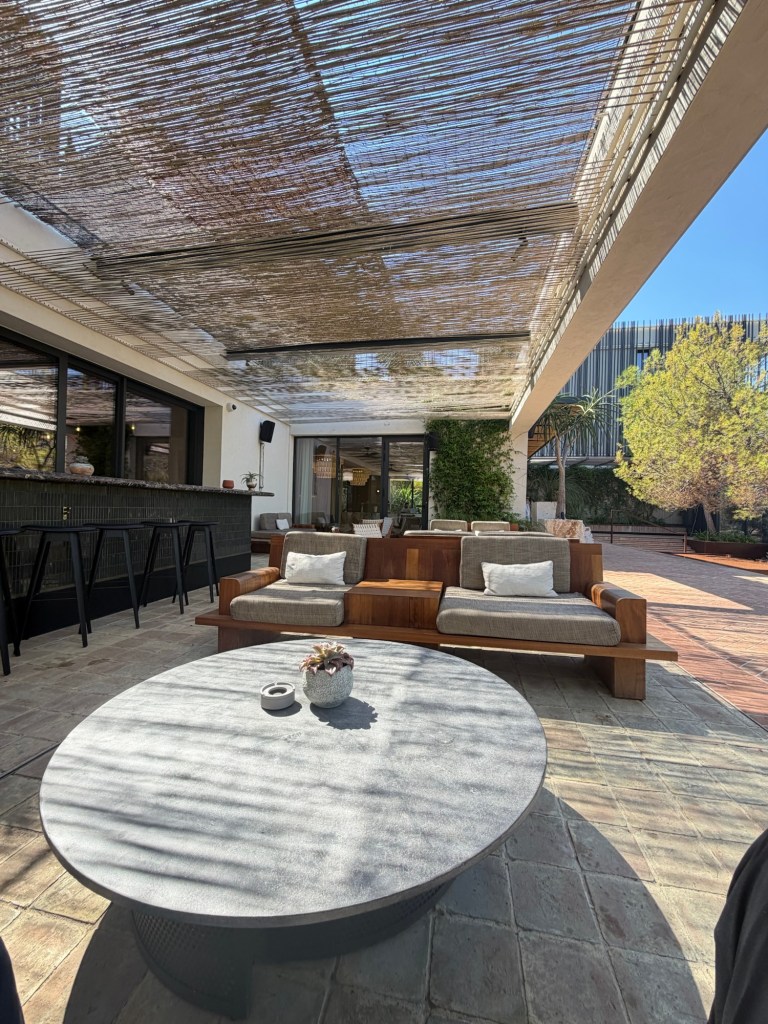
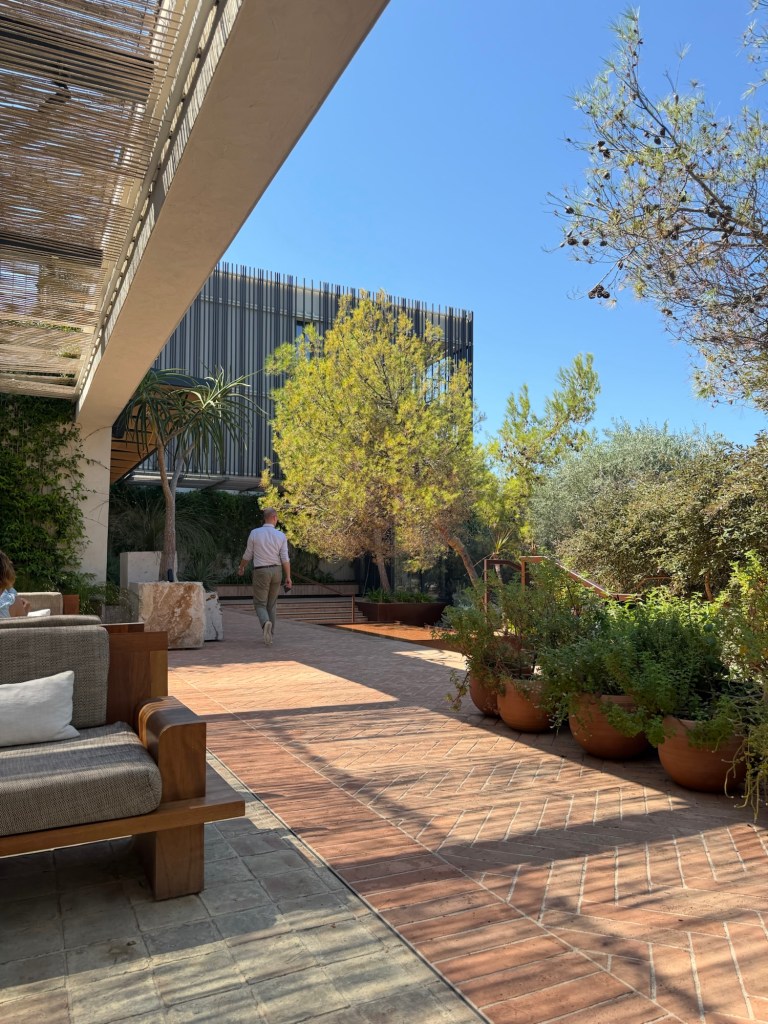
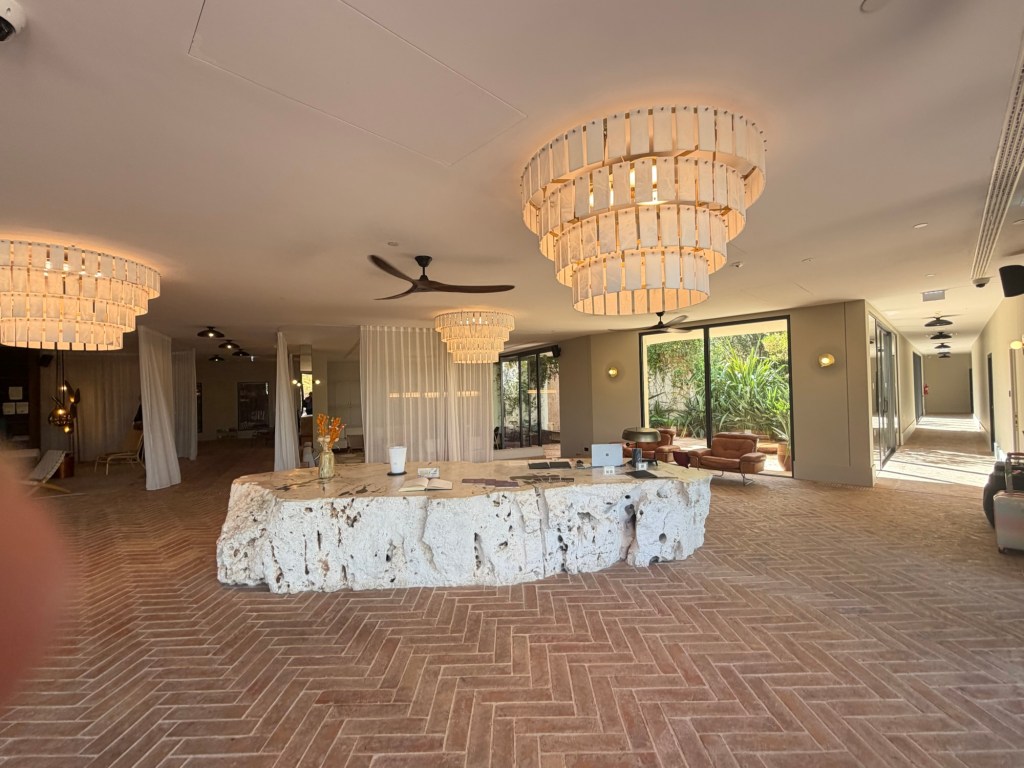
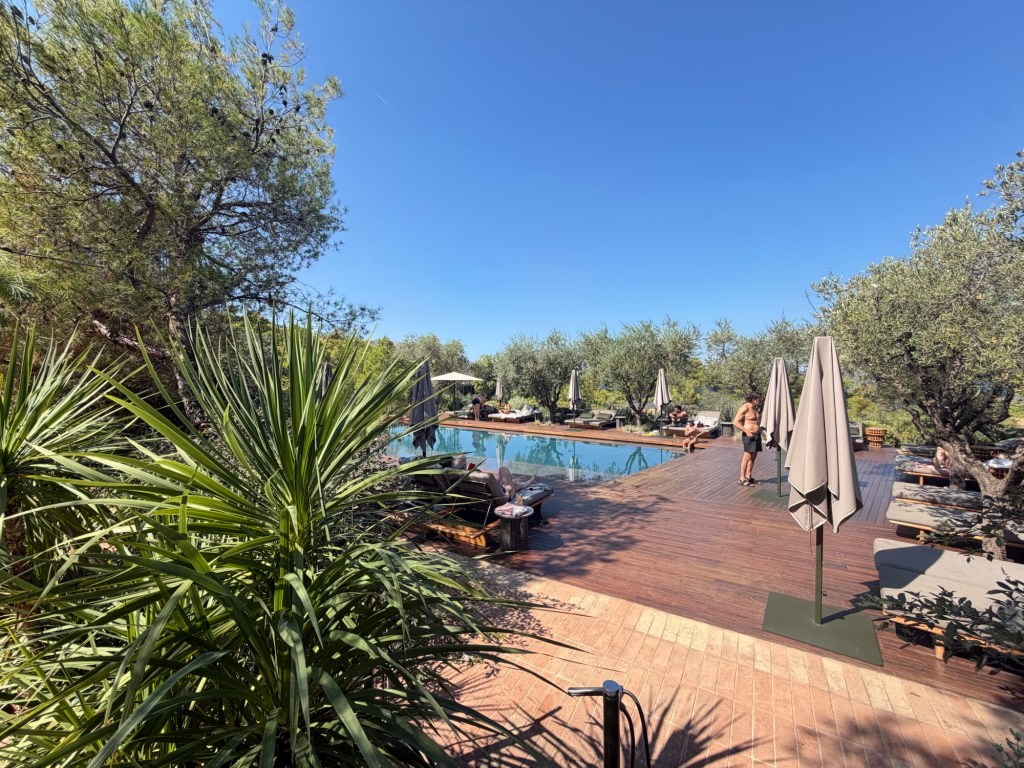
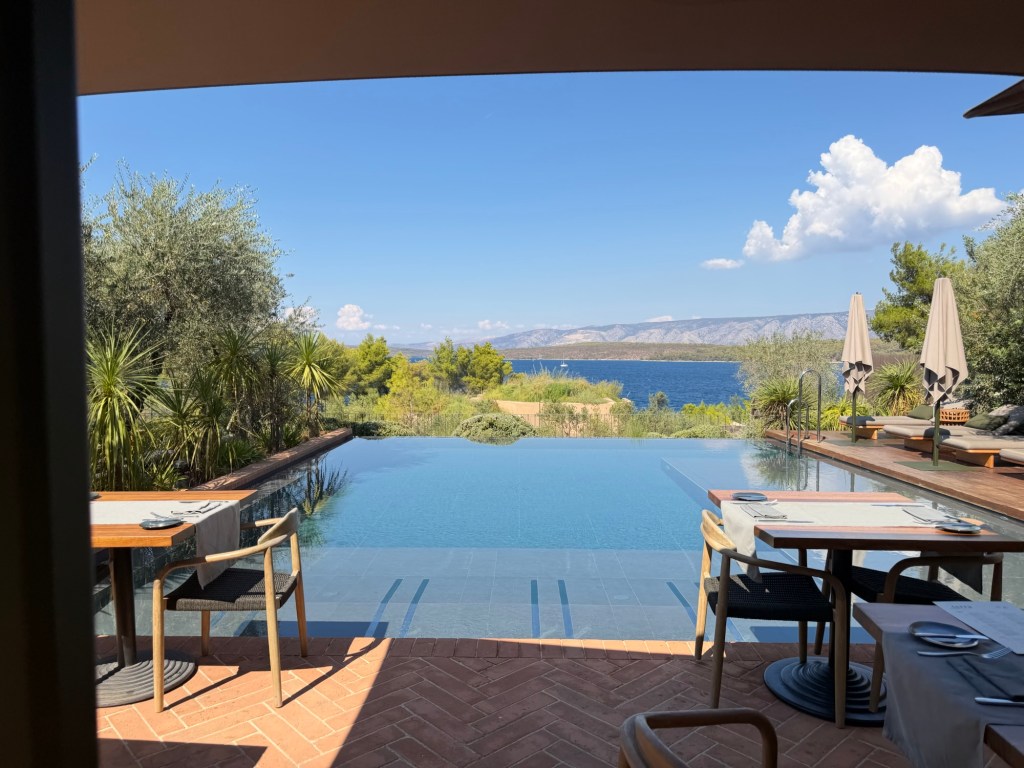
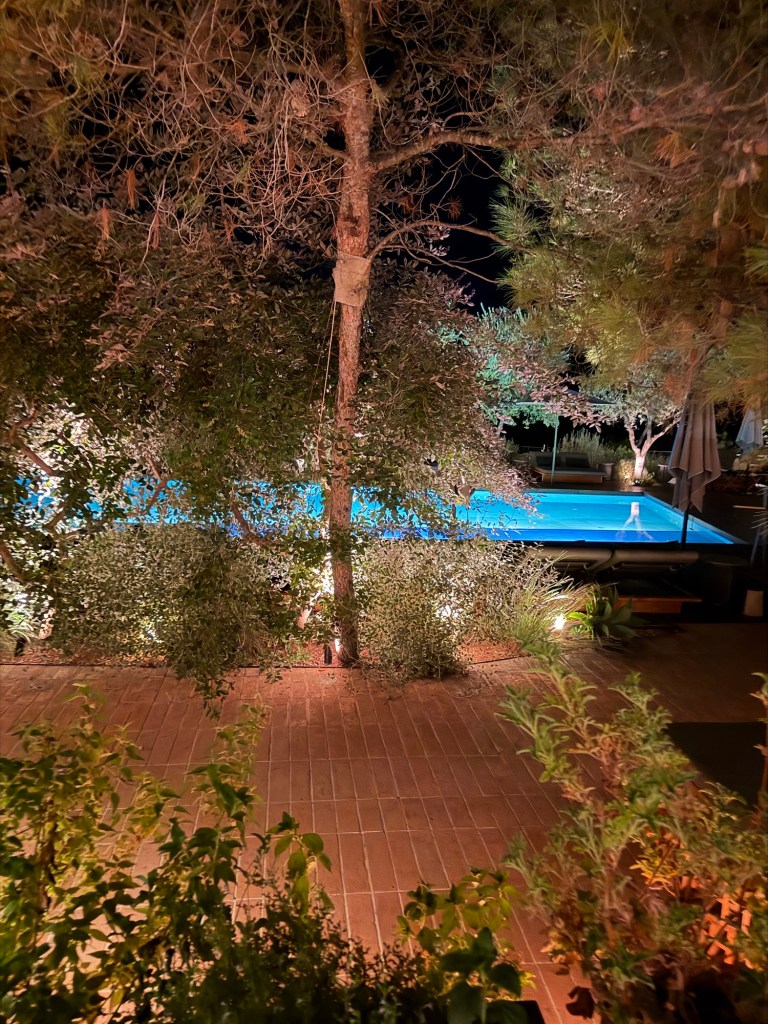
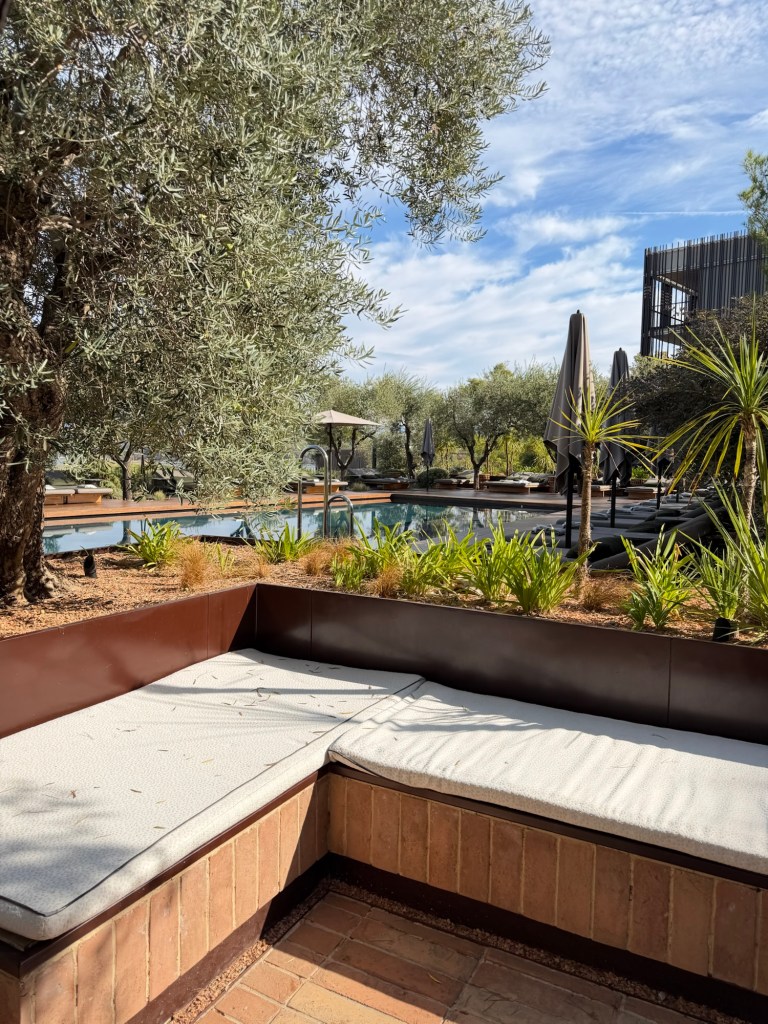
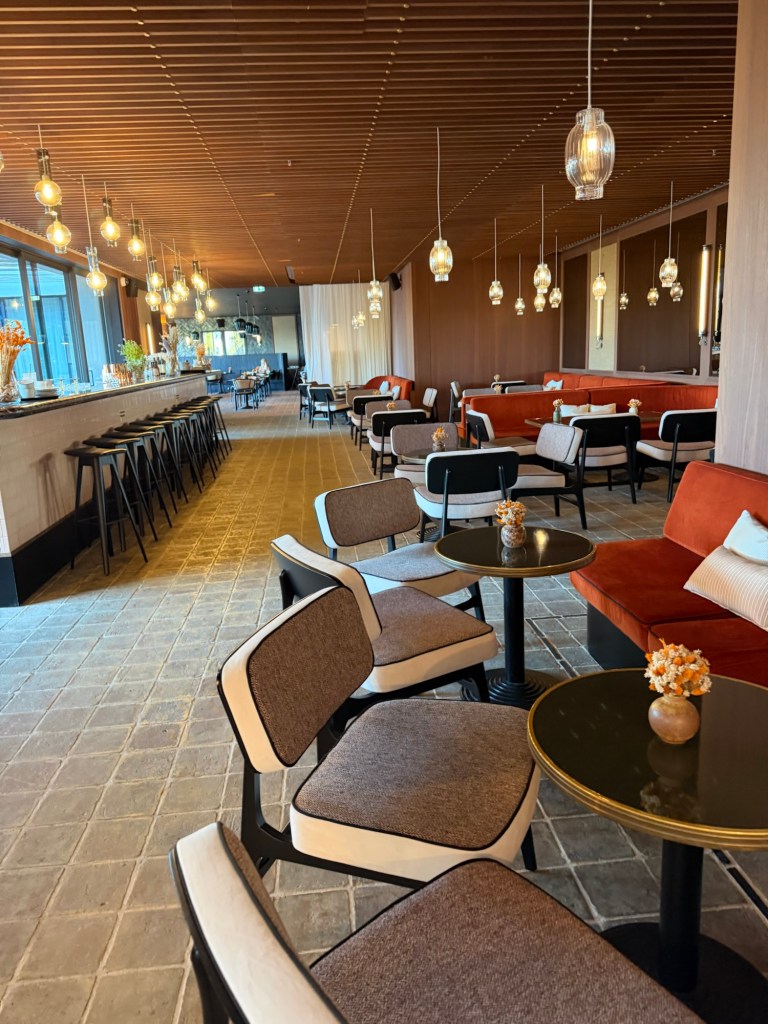
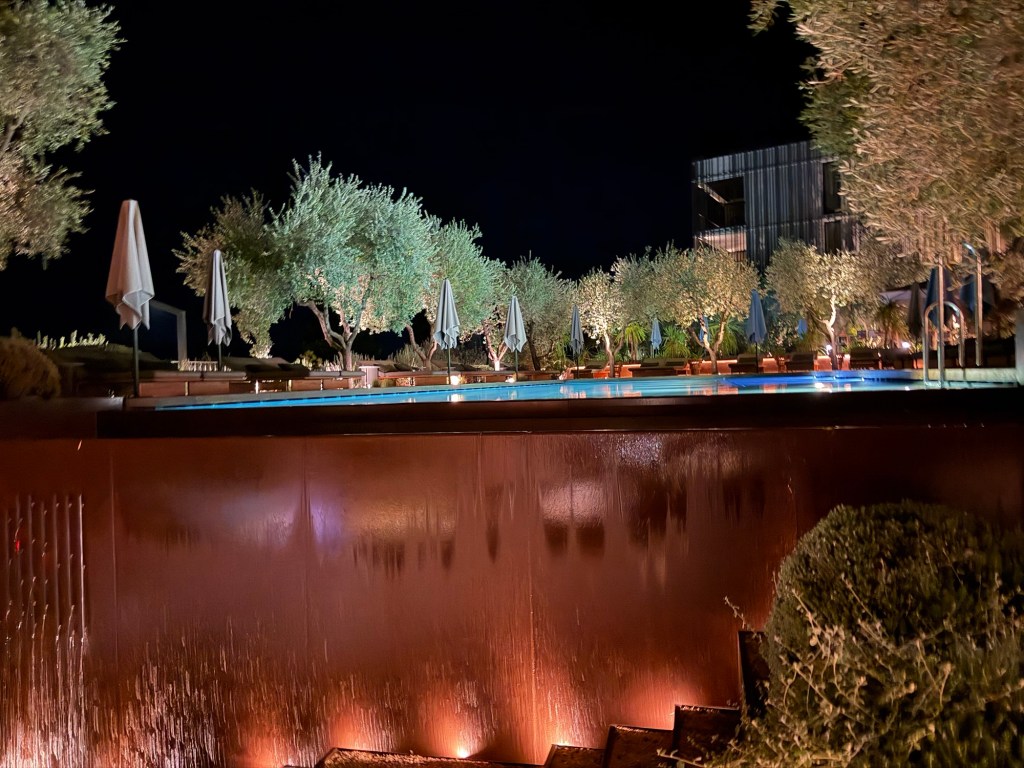
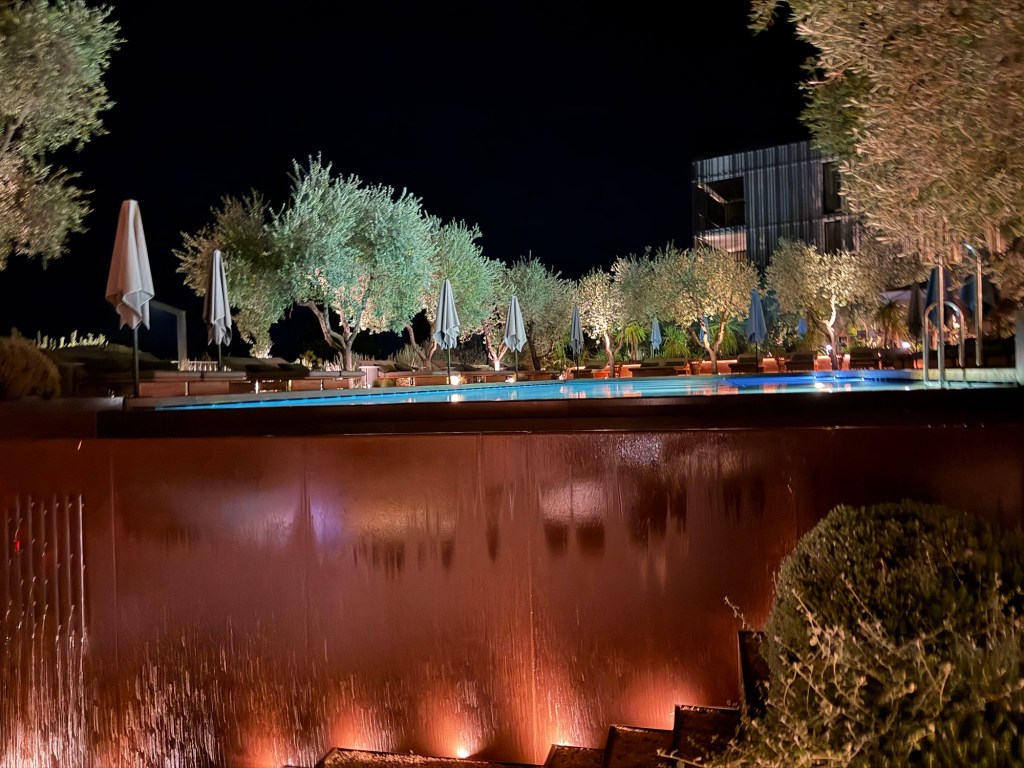
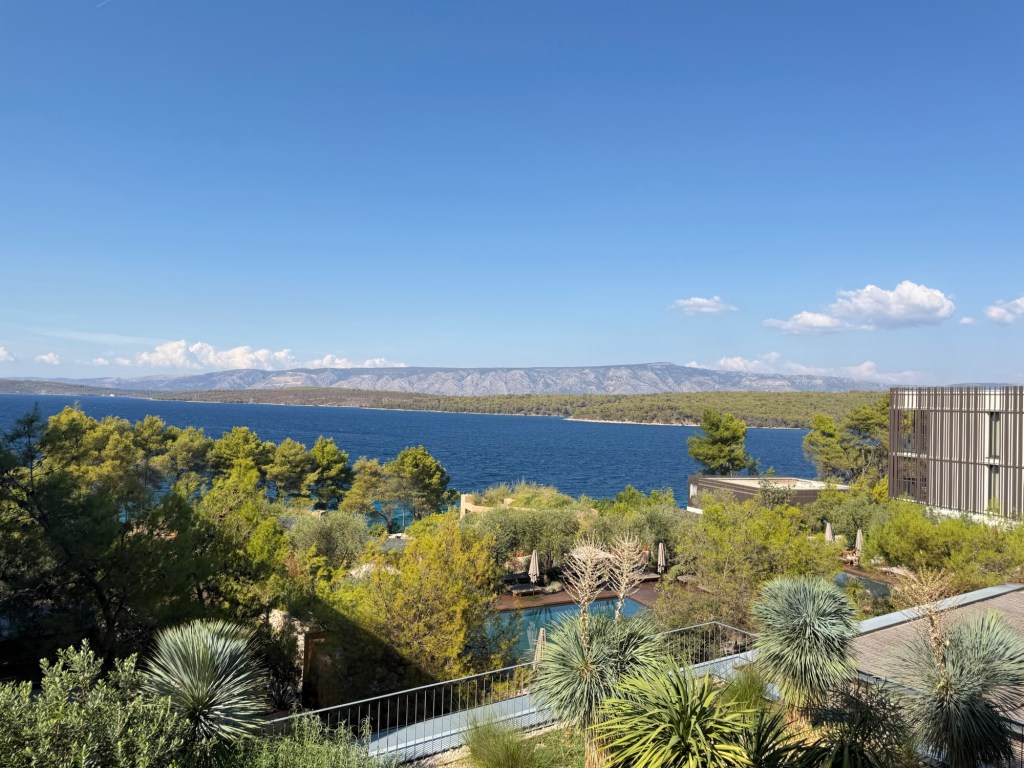
It felt like a quiet retreat after the bustle of town. Low-rise, contemporary buildings nestled among olive trees and gardens, their timber screens and broad windows softening the clean modern lines. From the terraces and infinity pool, we looked across the water to the distant hills.
By day, the pool seemed to merge with the bay; at night, its gentle lighting gave the setting a peaceful glow. Shaded outdoor seating offered inviting places to relax and take in the view.
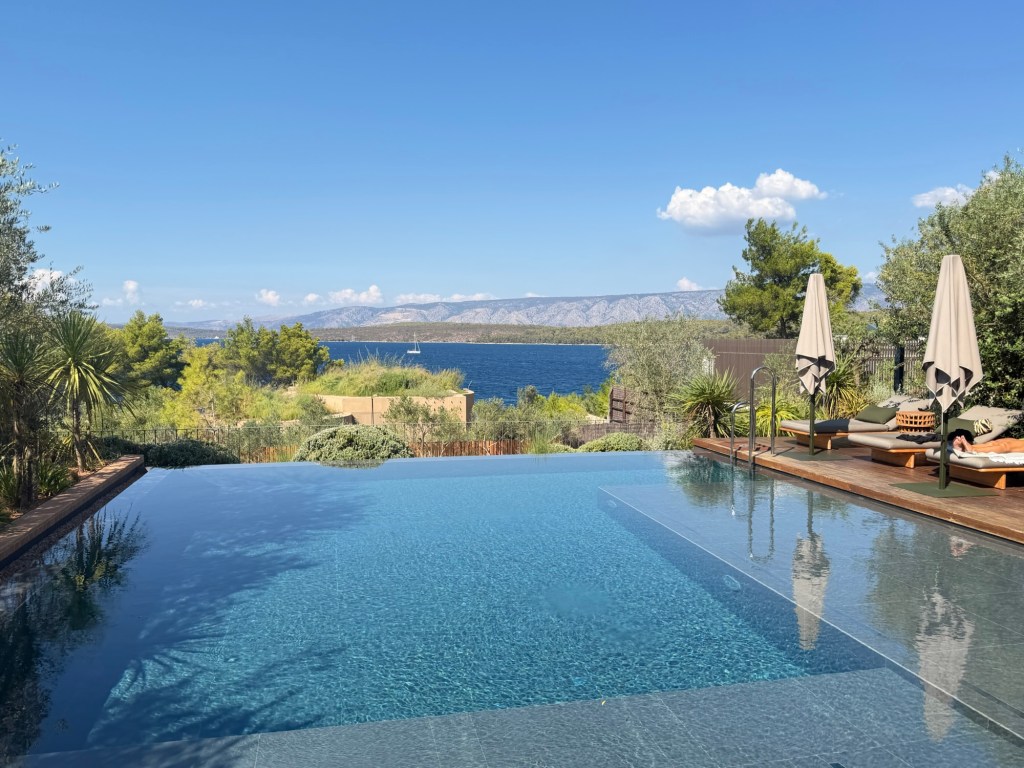
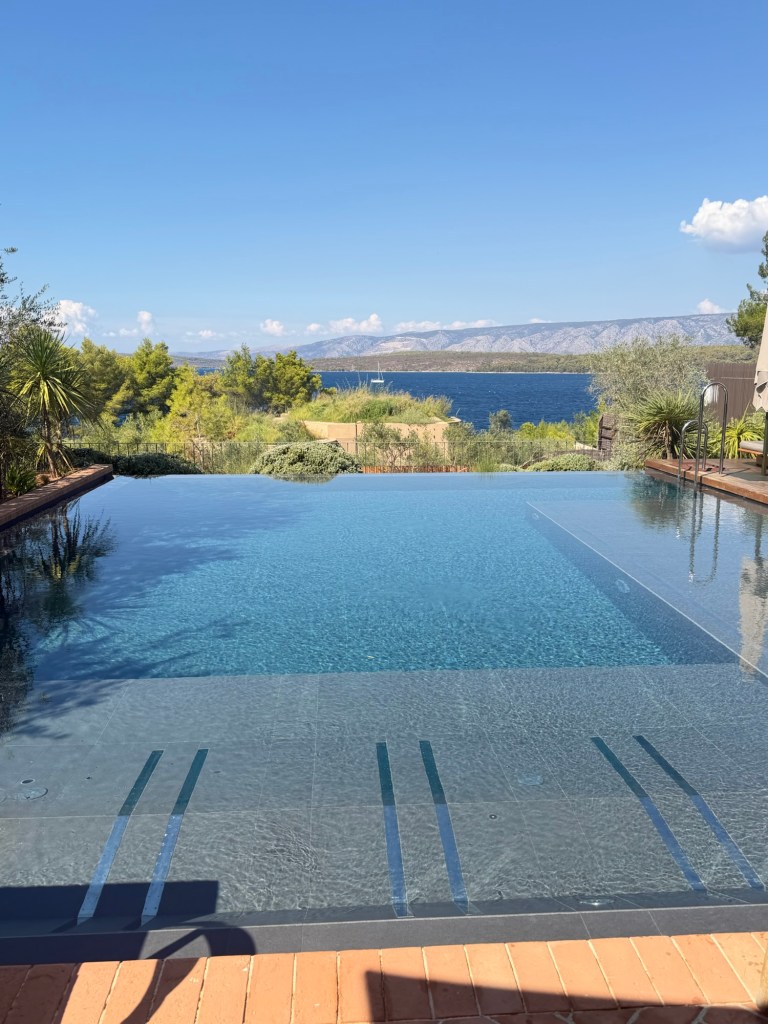
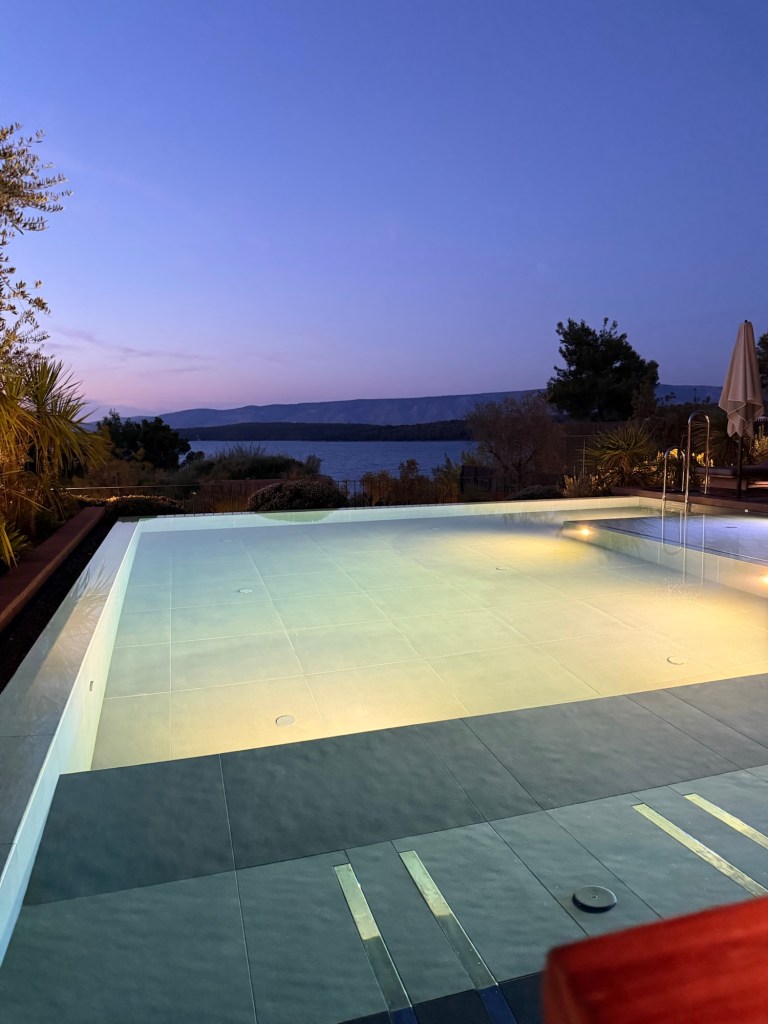
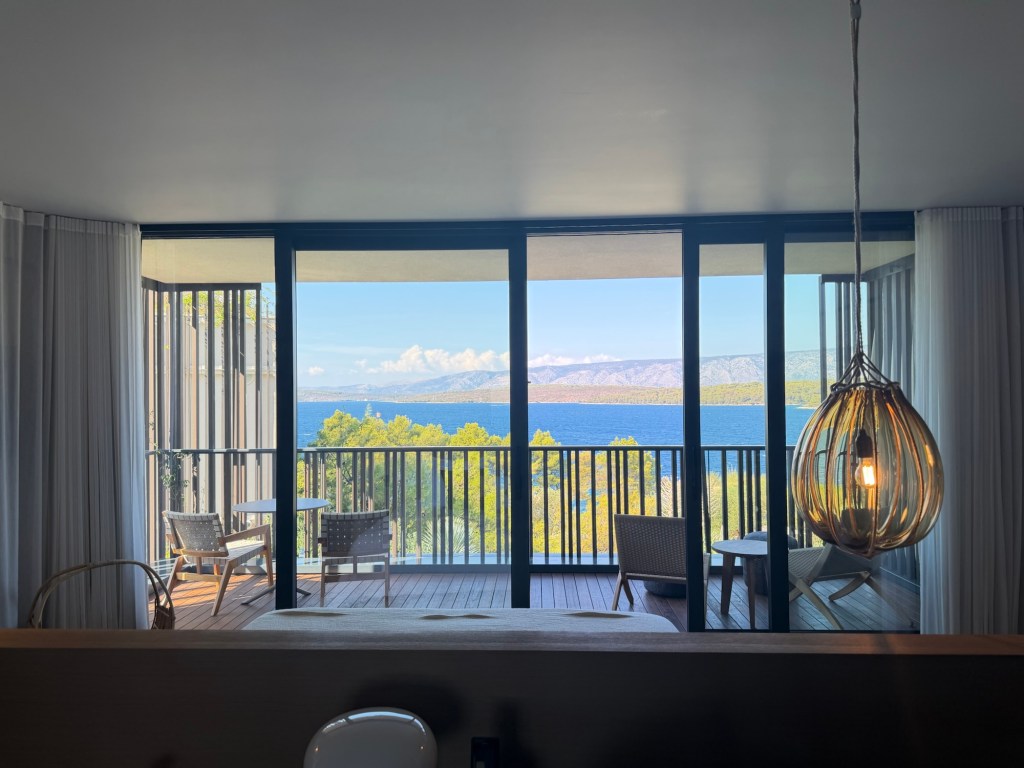
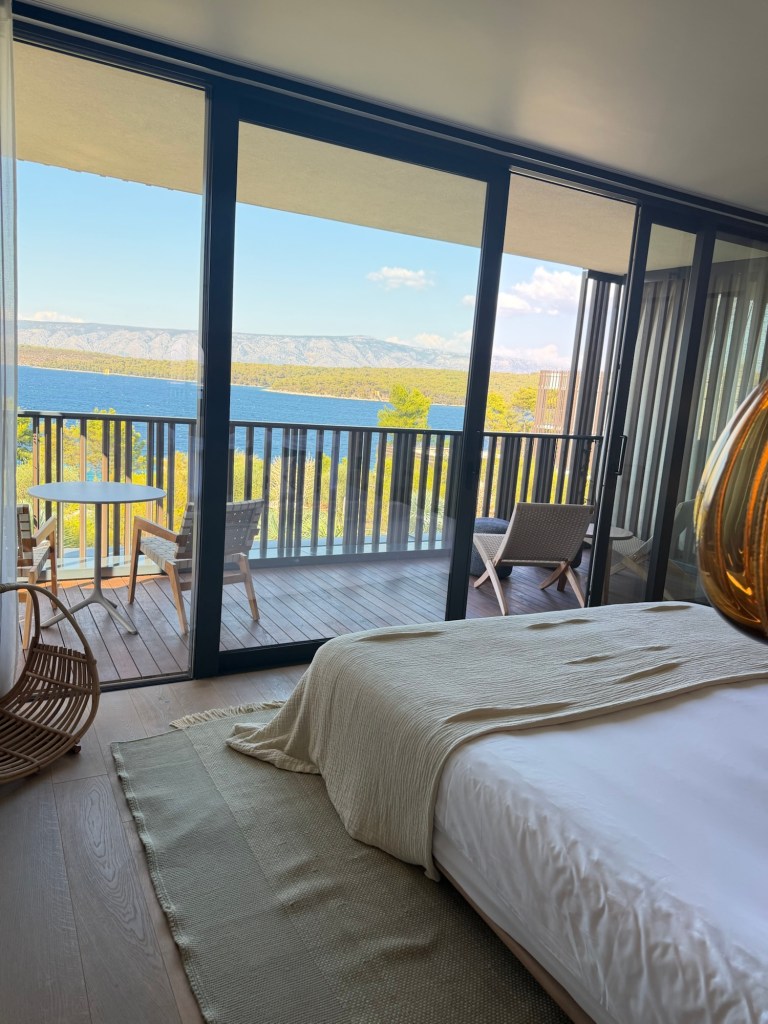
Our room presented an absolutely killer view of the Adriatic. Through the floor-to-ceiling windows and from our private terrace, we looked across the resort’s lush Mediterranean gardens and pine trees to the deep-blue bay, with Hvar’s rugged hills stretching across the horizon. It was the kind of view that immediately made us want to stop unpacking, sit outside and simply take it all in.
I had a quick visit tom the gym for some rowing with a view.

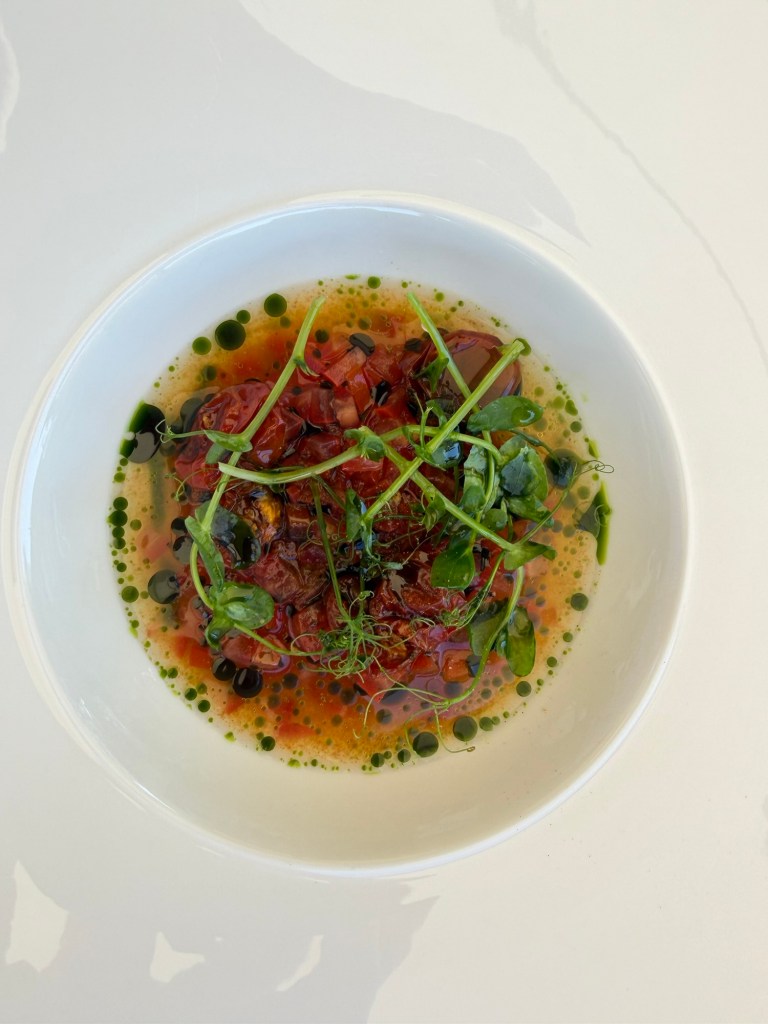
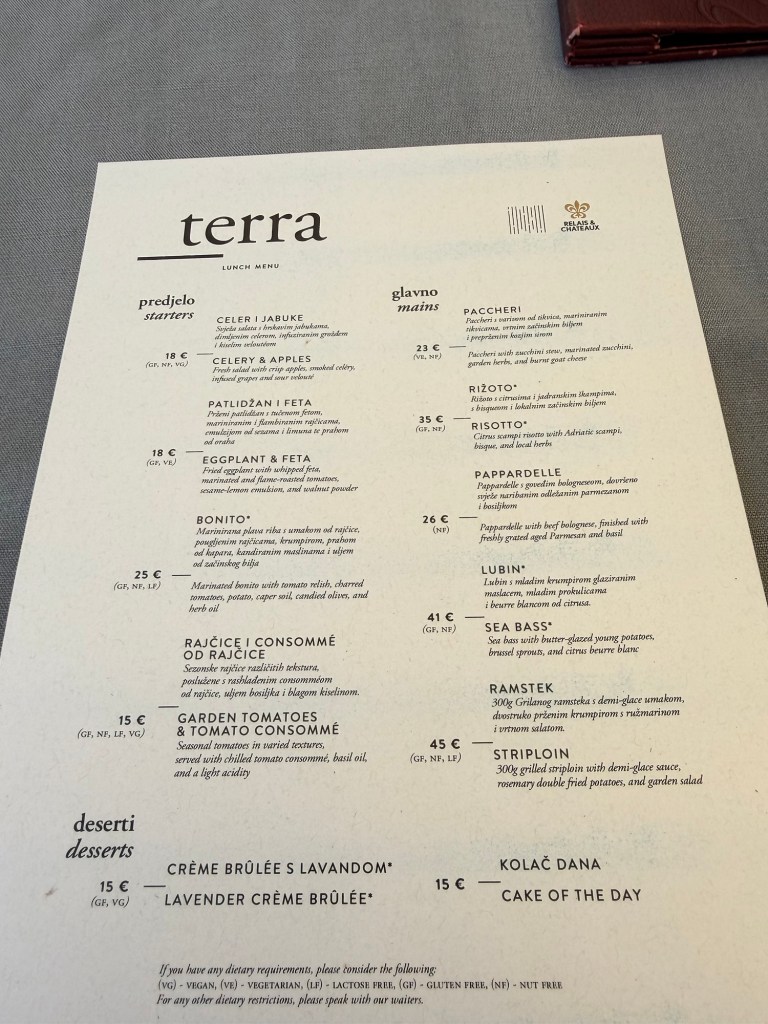
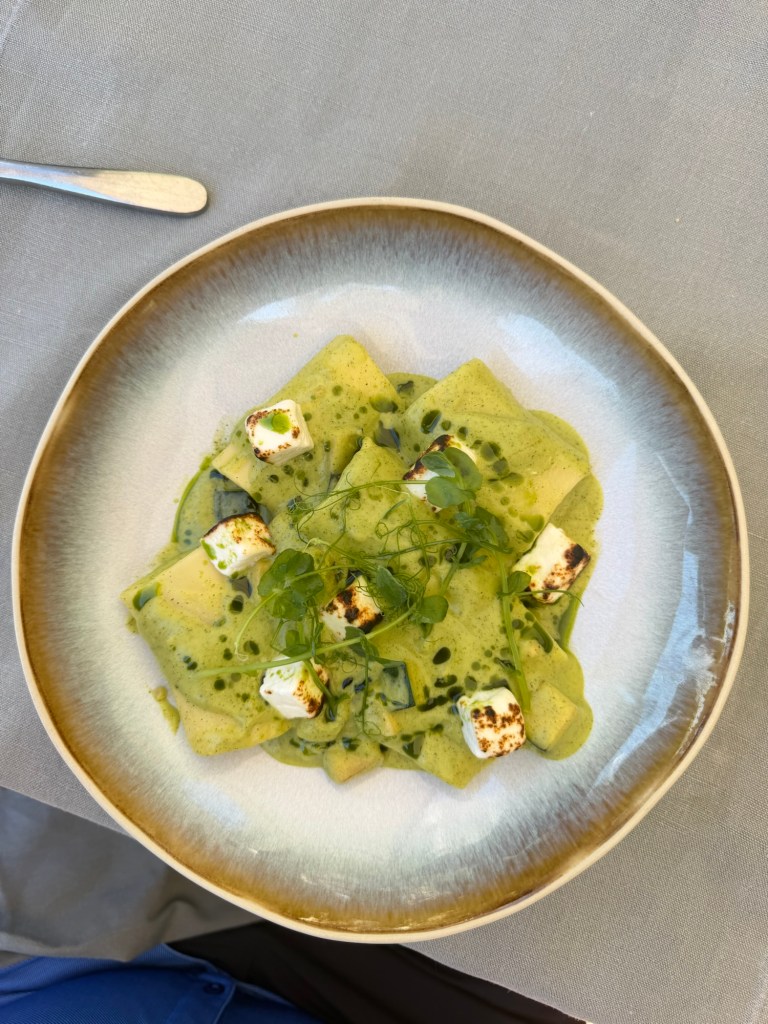
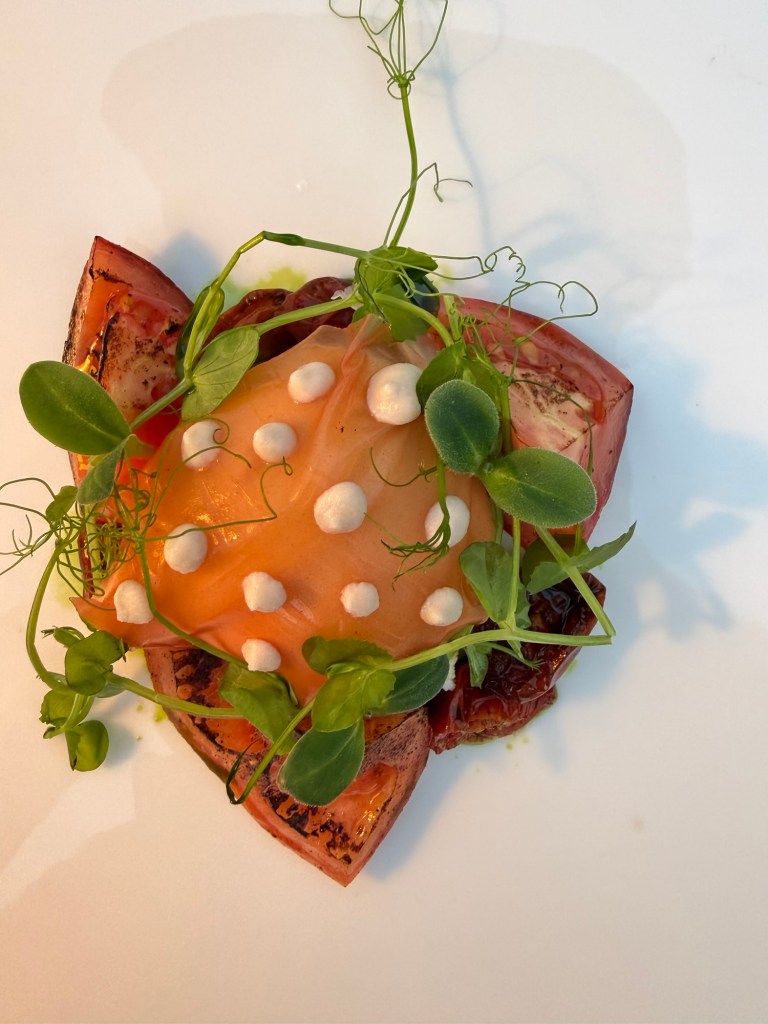
After that, we had a quick lunch at Terra, soaked in some sun by the pool, followed by dinner.