Our day would be a satisfying mix of Roman ruins and really serious eating, with a drive back to Rovinj for dinner to make sure no calories were left unaccounted for. We met our local guide, Rosanna, in the hotel lobby and set off for Pula, about 40 minutes southeast of Rovinj, toward the southern tip of the Istrian Peninsula.
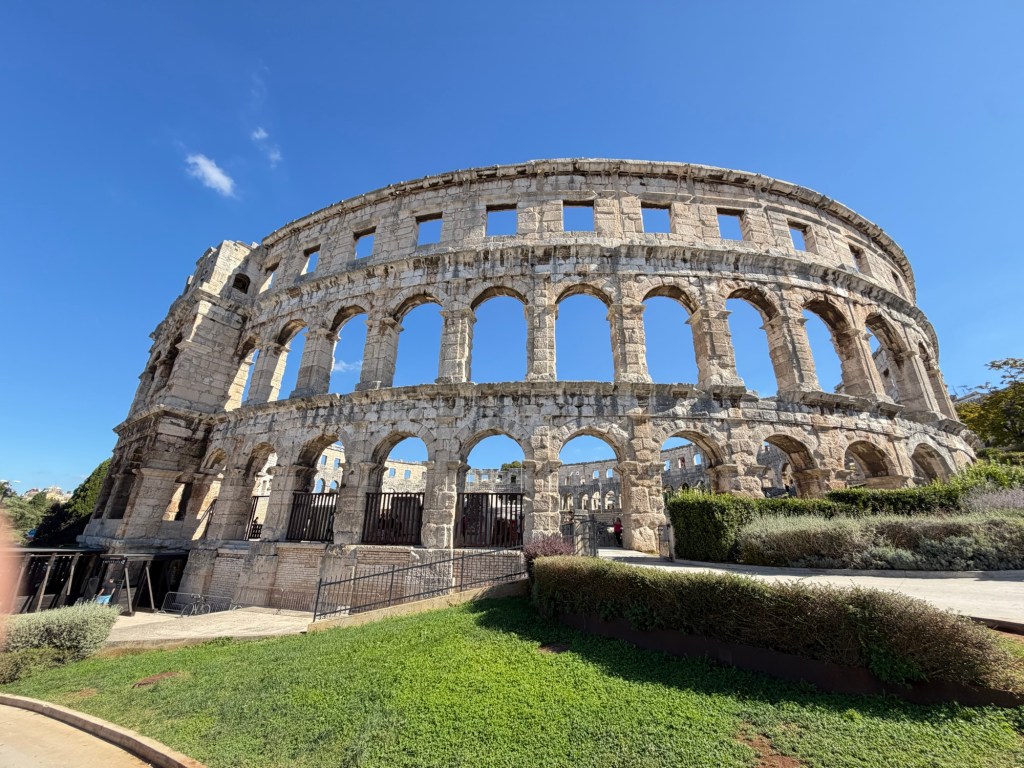
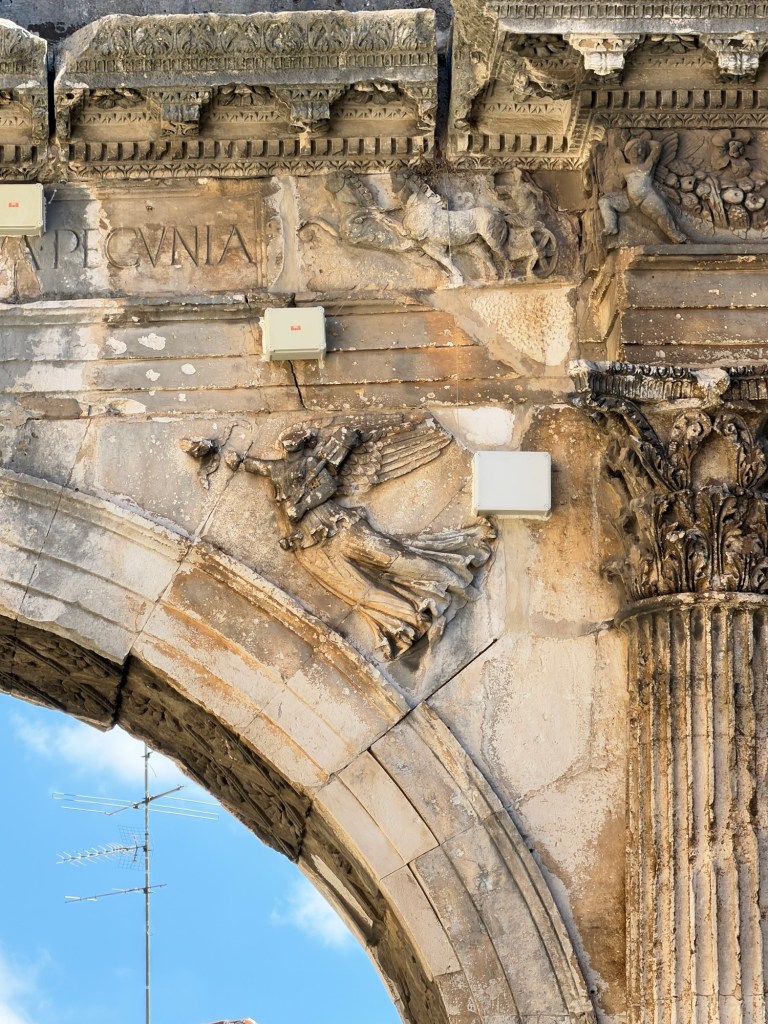
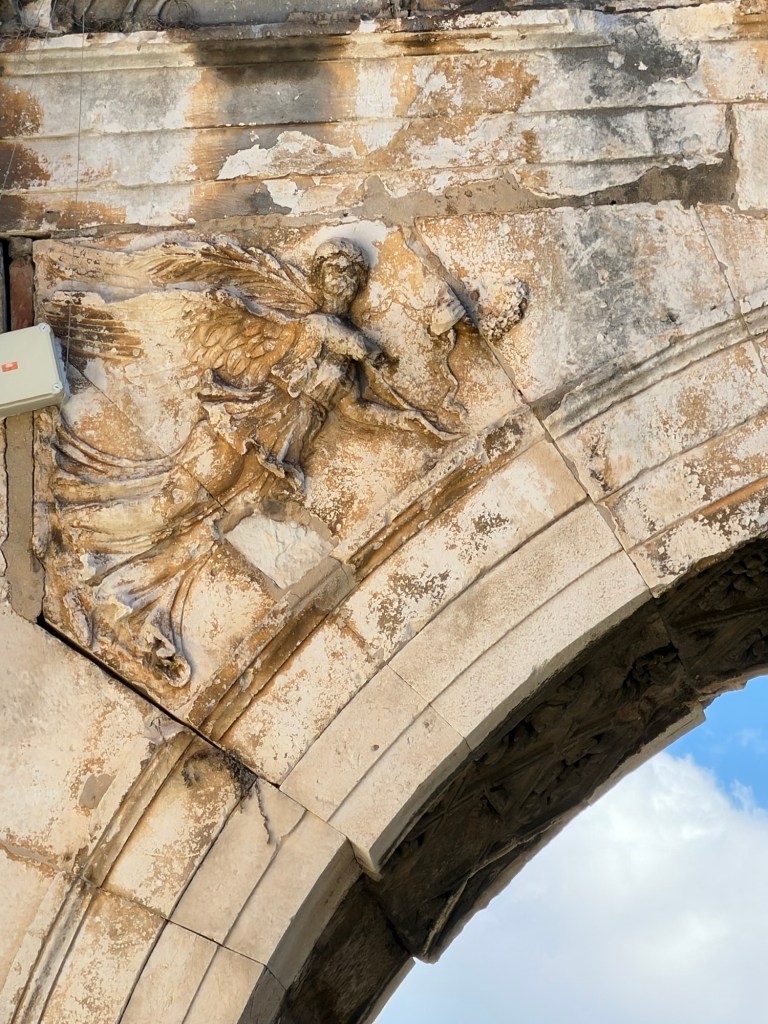
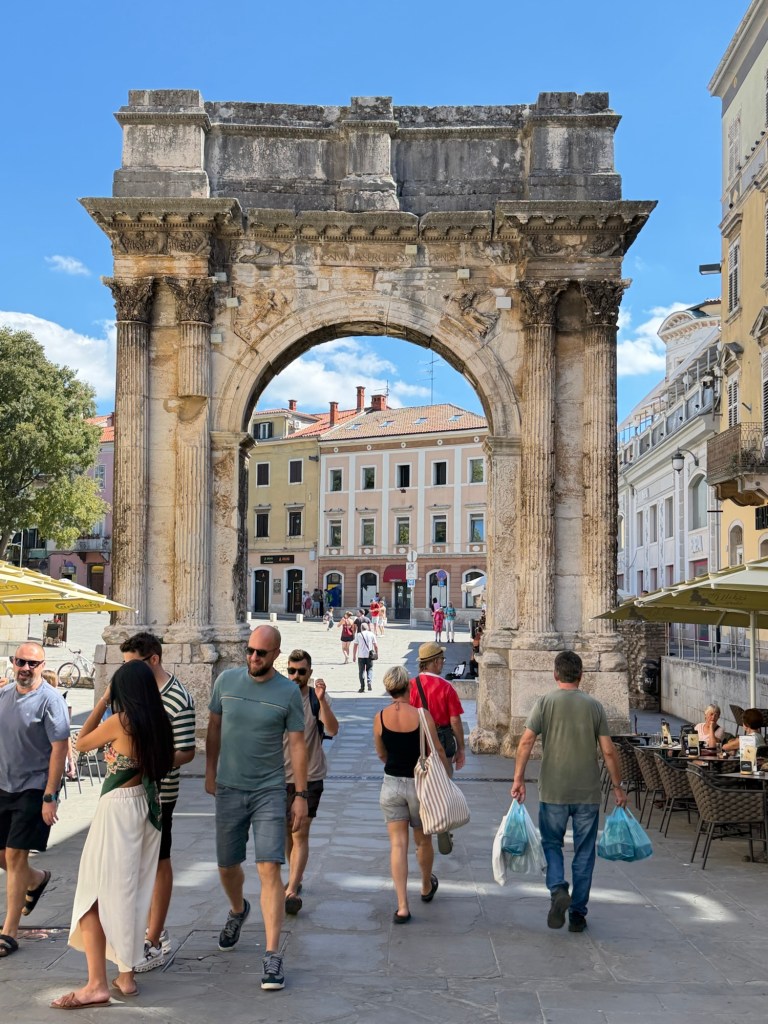
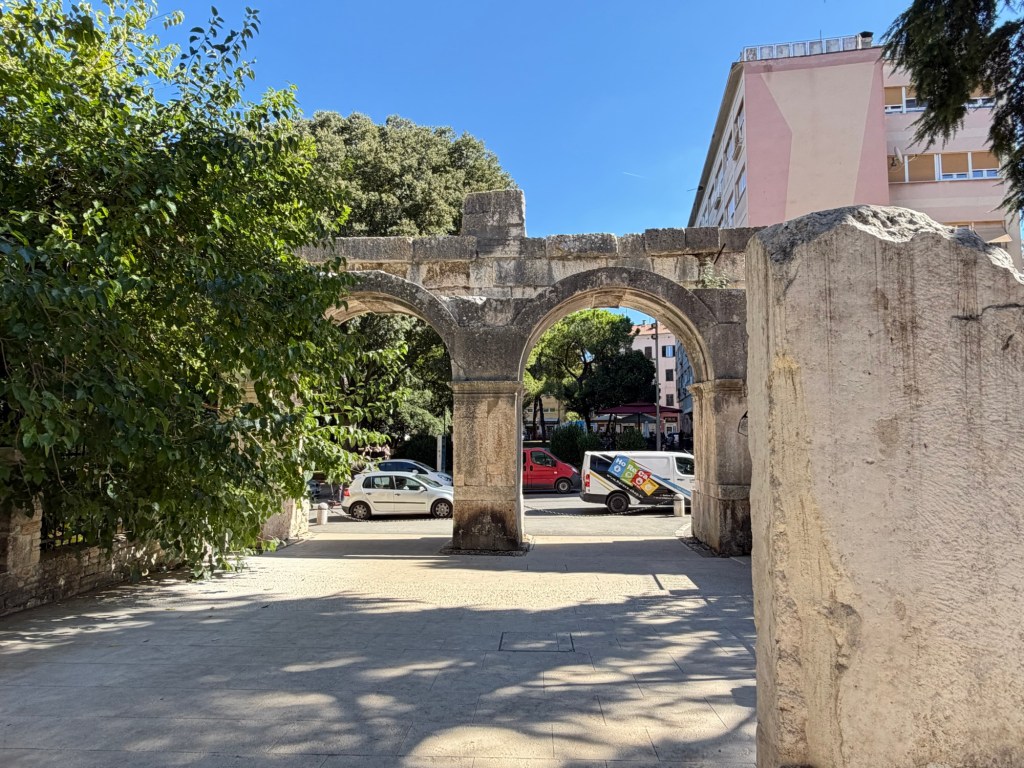
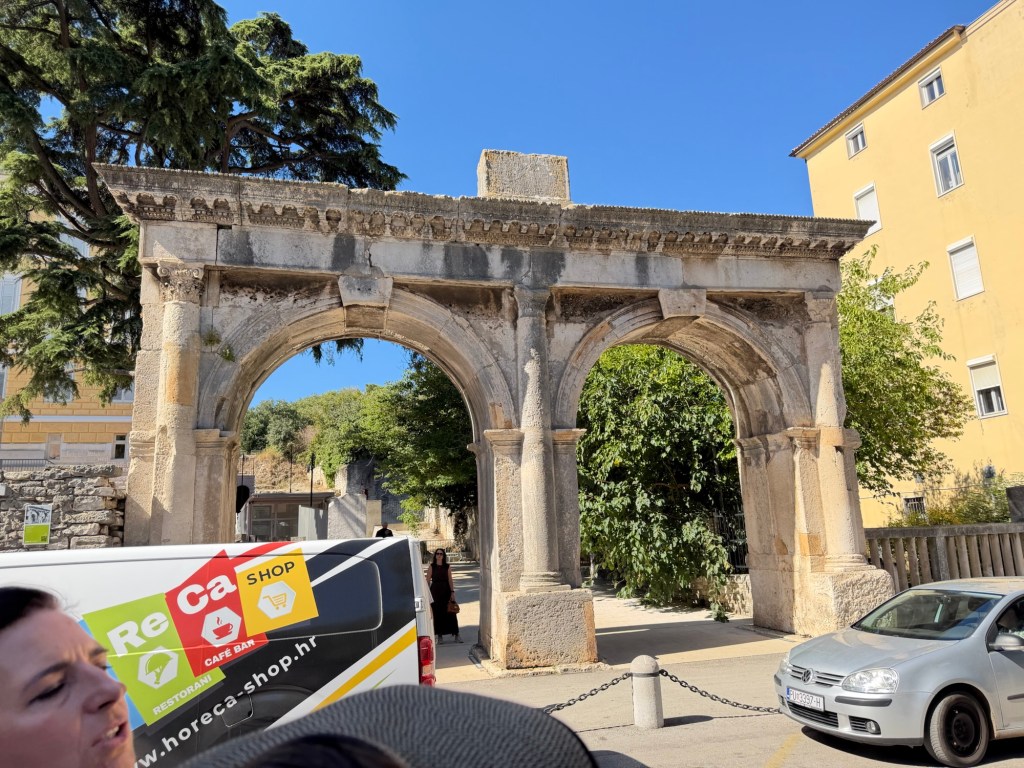
Few cities reveal the many layers of their past as vividly as Pula. Its story began more than 3,000 years ago as a fortified settlement of the ancient Histri, but it was under the Romans that the city flourished as an important Adriatic port. They endowed Pula with temples, triumphal arches and other imposing monuments, crowned by its magnificent first-century amphitheater. Built largely during the reign of Emperor Vespasian almost 2000 years ago, it remains one of the best-preserved Roman arenas in the world.
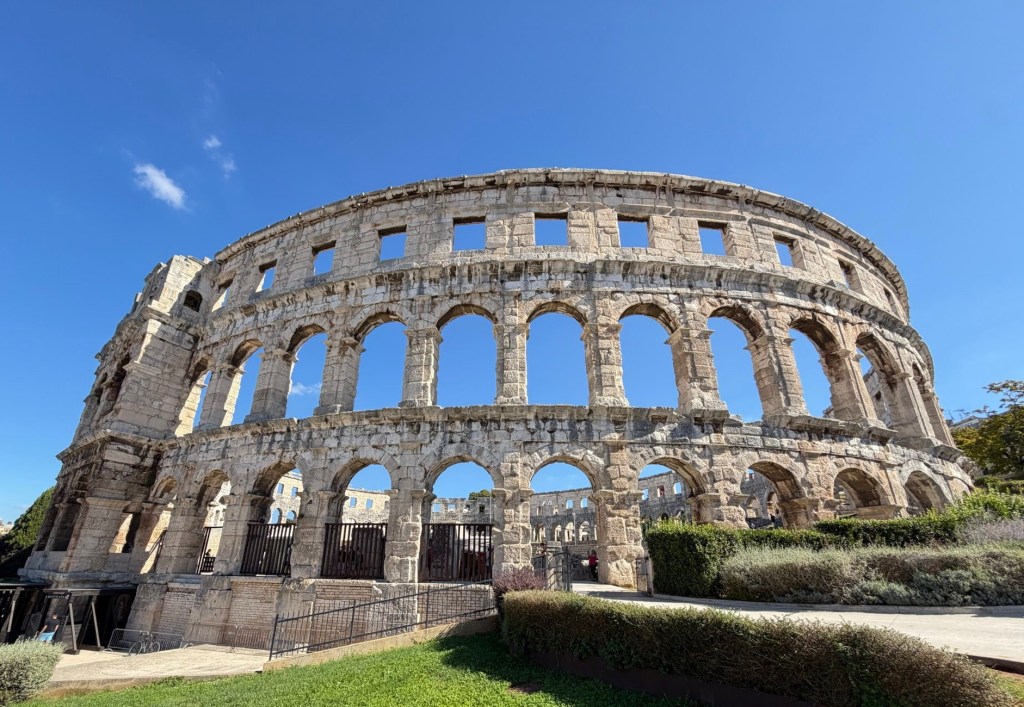
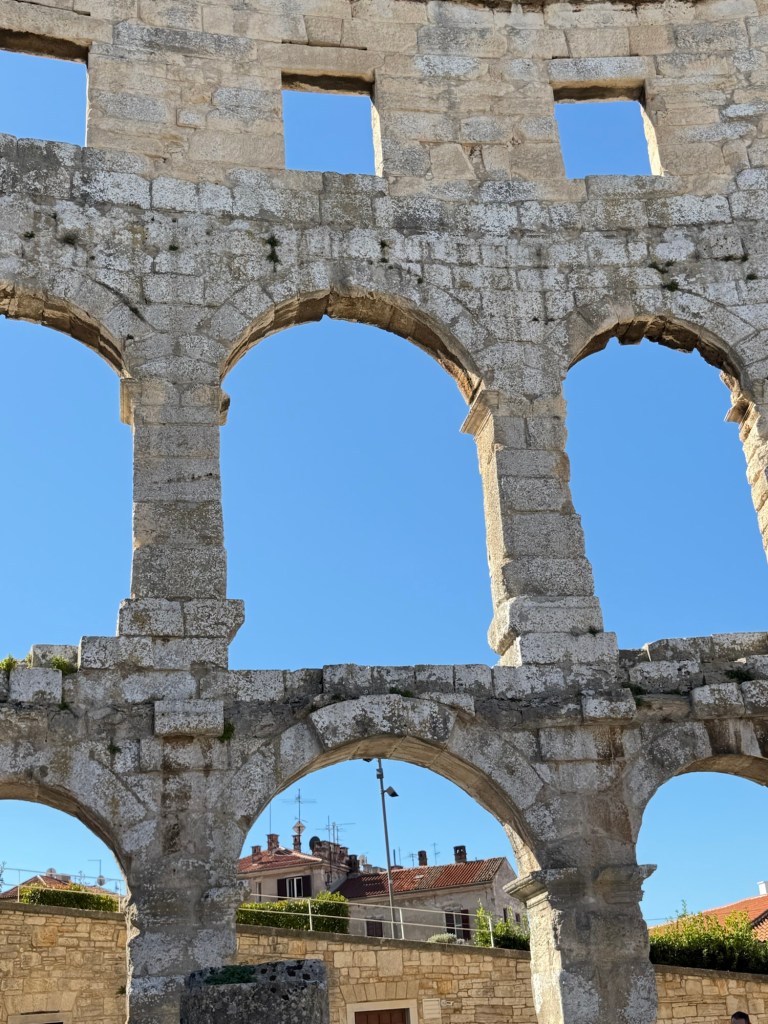
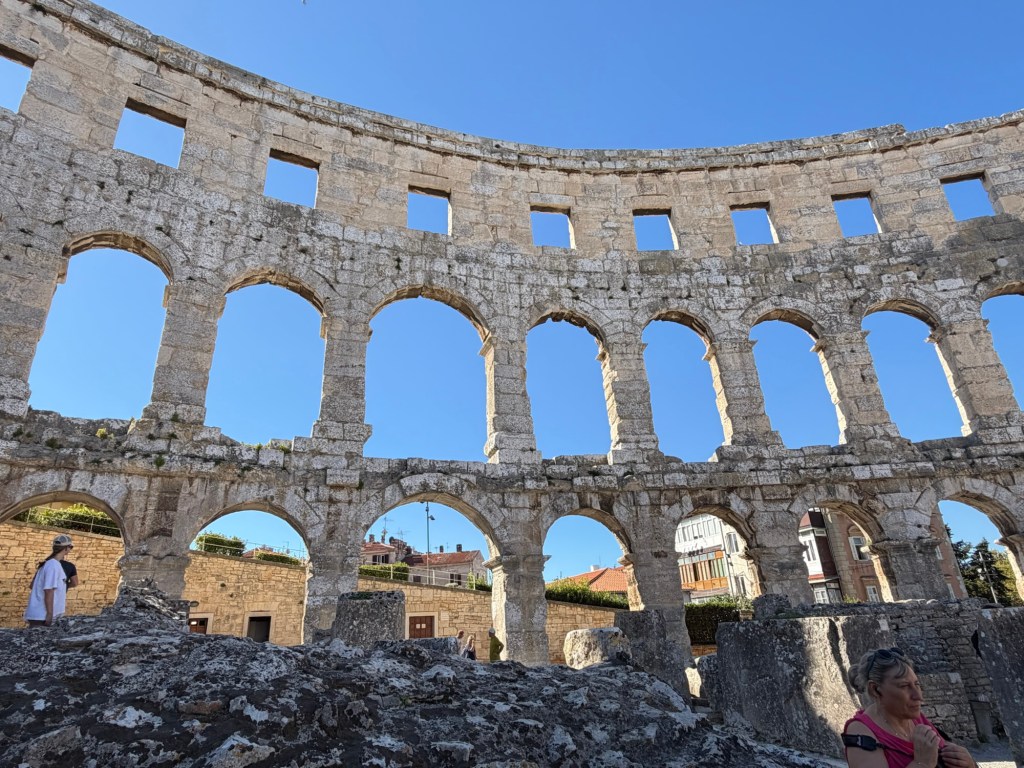
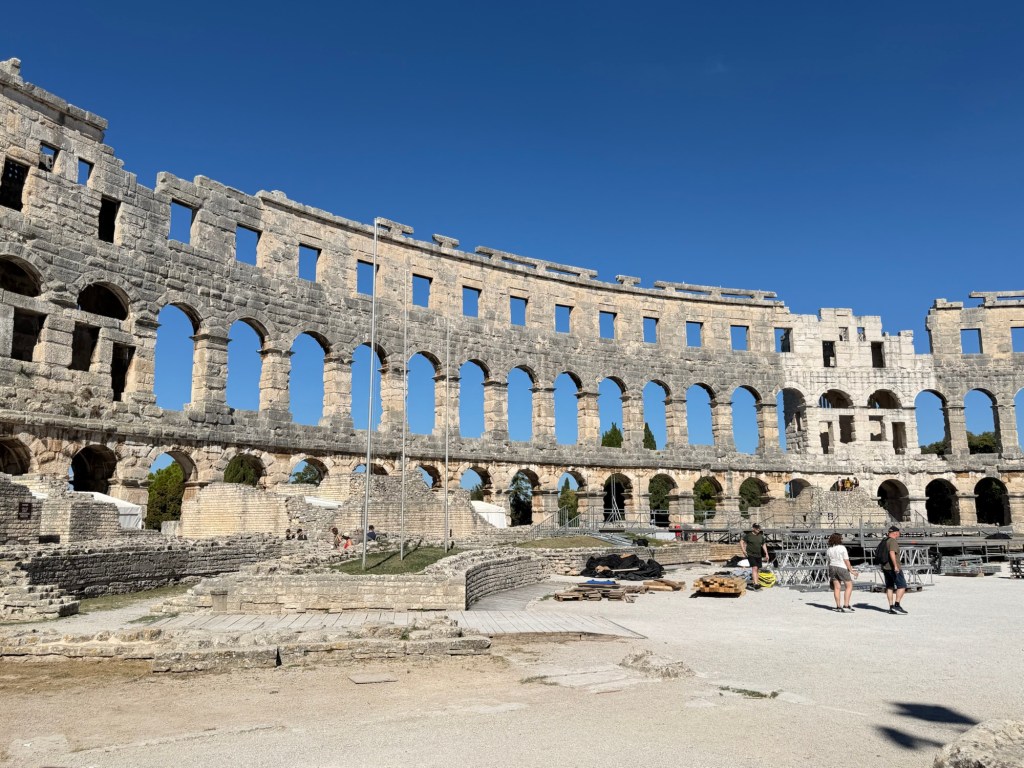
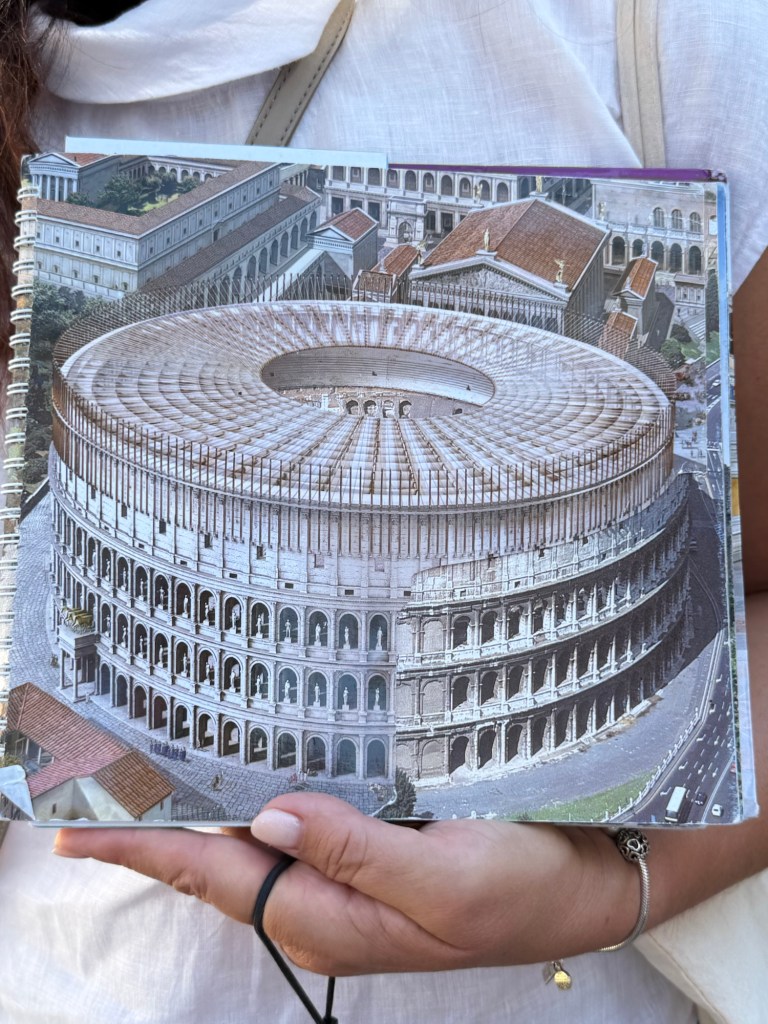
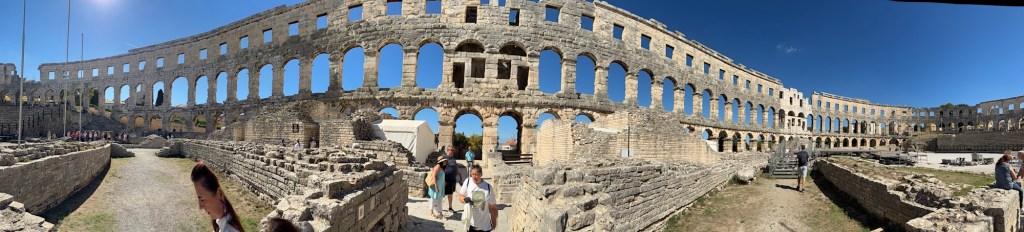
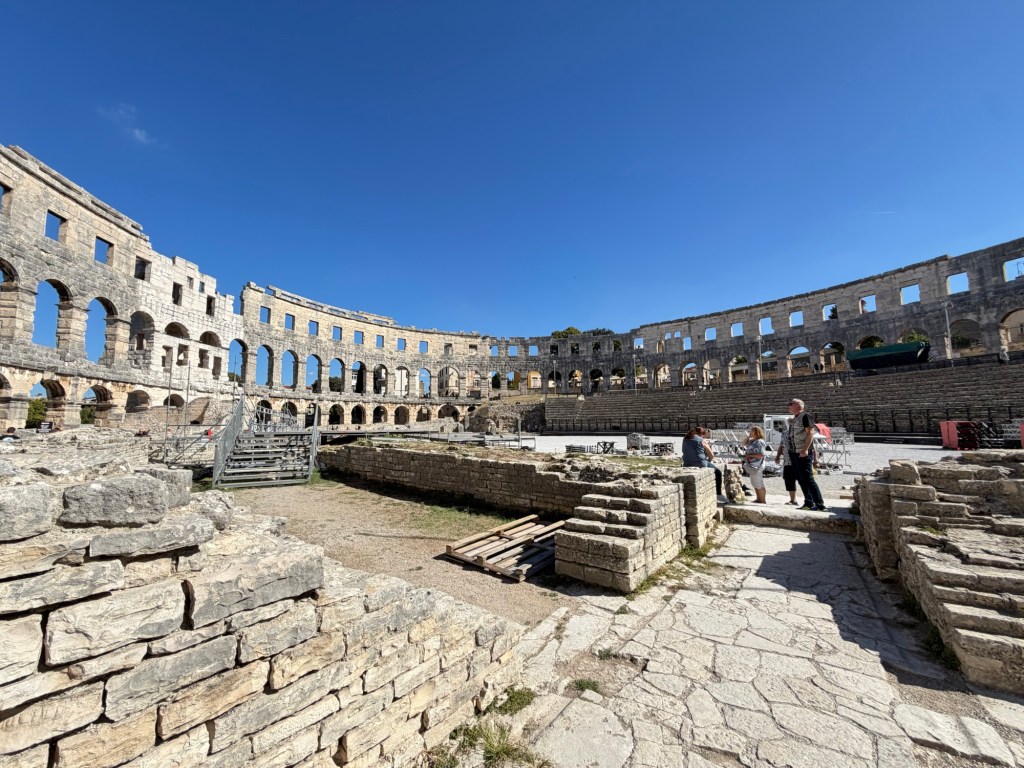
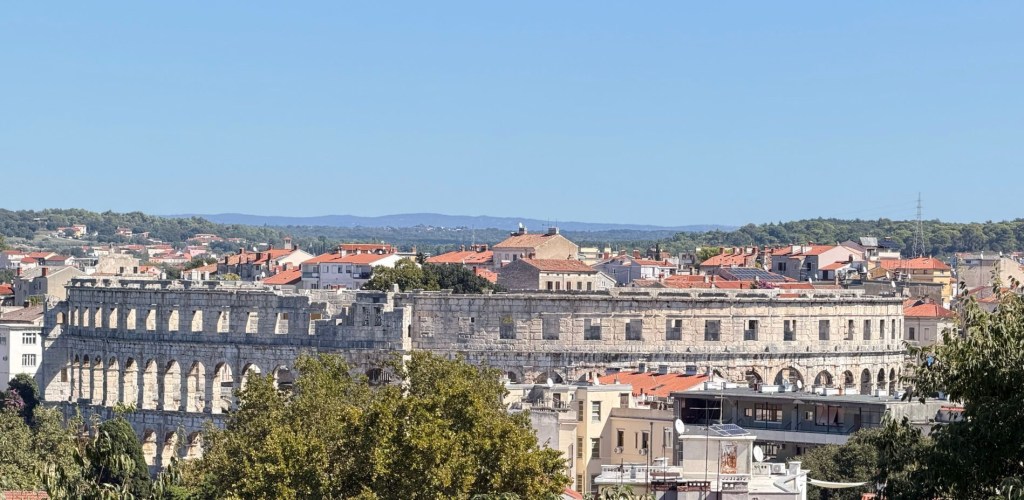
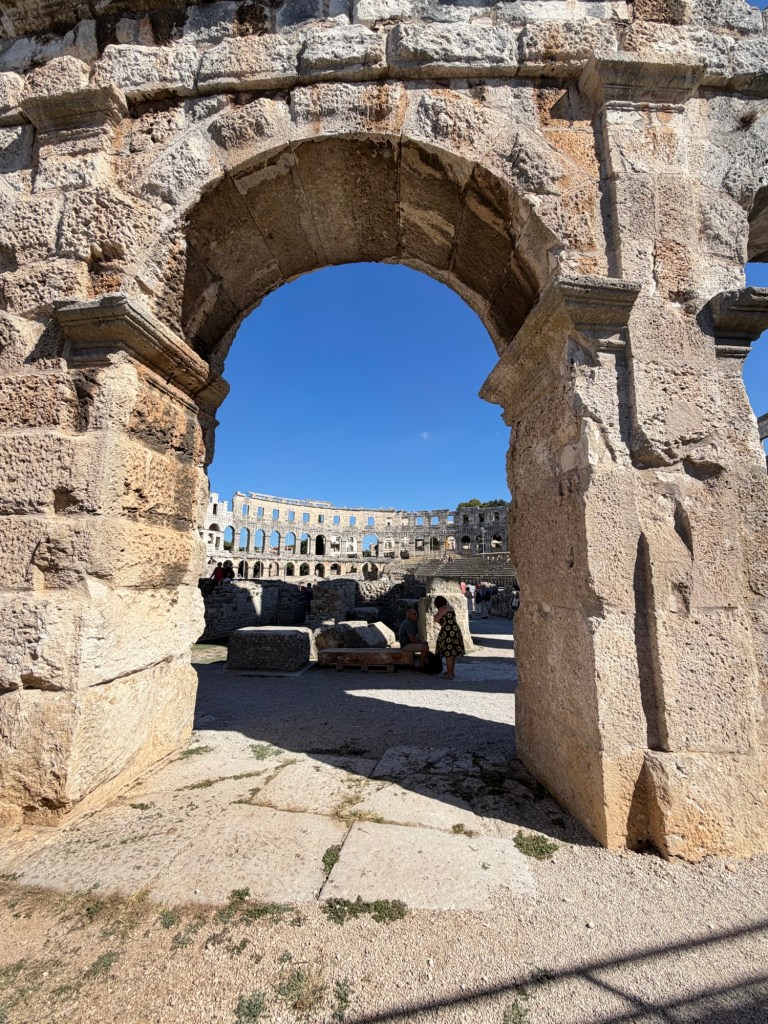
The amphitheater was built in the Roman monumental style around an enormous elliptical arena. Its exterior walls were constructed from massive blocks of locally quarried Istrian limestone, carefully cut and fitted together using a technique known as opus quadratum. Repeated rows of arches transferred the immense weight of the upper levels into heavy stone piers, while vaulted passageways supported the tiered seating and allowed thousands of spectators to move efficiently through the building. The Romans cleverly adapted the structure to the natural slope of the hillside, resting part of the seating directly on the ground and supporting the remainder with stone walls and vaults. Beneath the arena floor, underground passages accommodated gladiators, animals, scenery and equipment used during the spectacles.
Standing in the amphitheater, I found myself contemplating not only the architectural mastery but also the enslaved labor used to build such monuments, and the carnage that must have taken place within its walls. This was more than an architectural wonder; it was a place of death—a silent witness to the untold cruelty and barbarism once presented as public entertainment. Today, however, the arena has been reclaimed for a gentler purpose, serving as a dramatic setting for concerts, theatrical performances and other cultural events.
I was reminded of the final line of The Brutalist: “It is the destination, not the journey.” Despite the immense suffering involved in both creating monuments such as this and staging the brutal spectacles for which they were used, history tends to remember the beauty and grandeur of what remains, while forgetting the suffering that made—and once defined—them. But, can we admire a monument without forgetting the pain embedded within it—and does the finished work redeem that suffering, or merely conceal it?
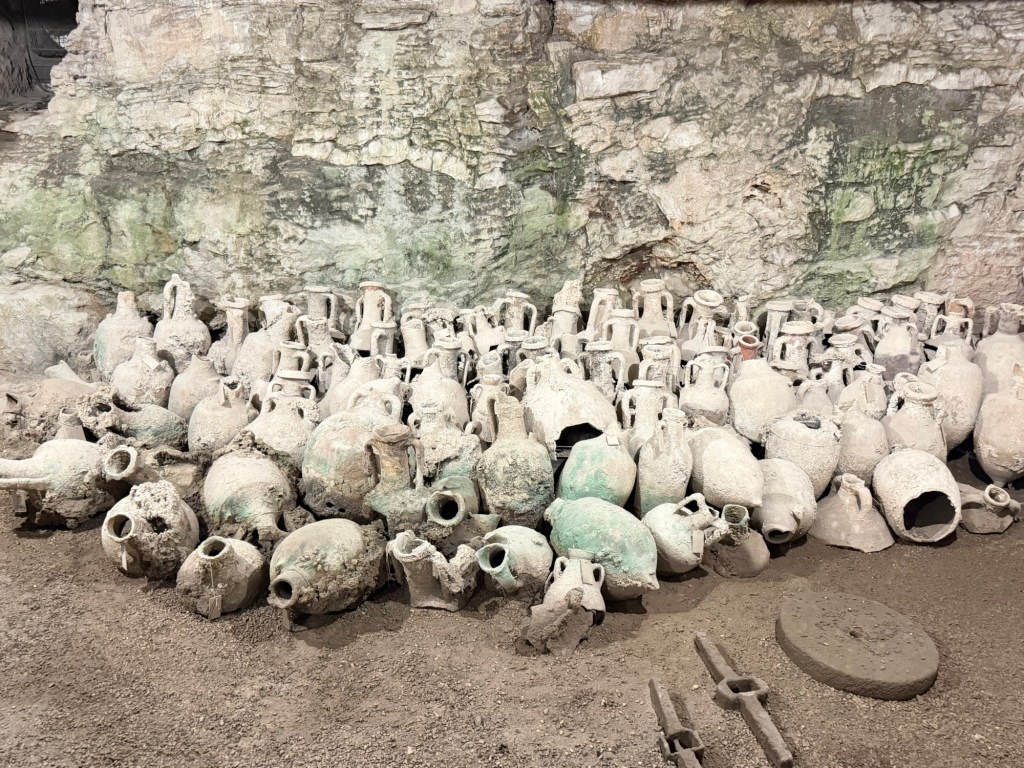
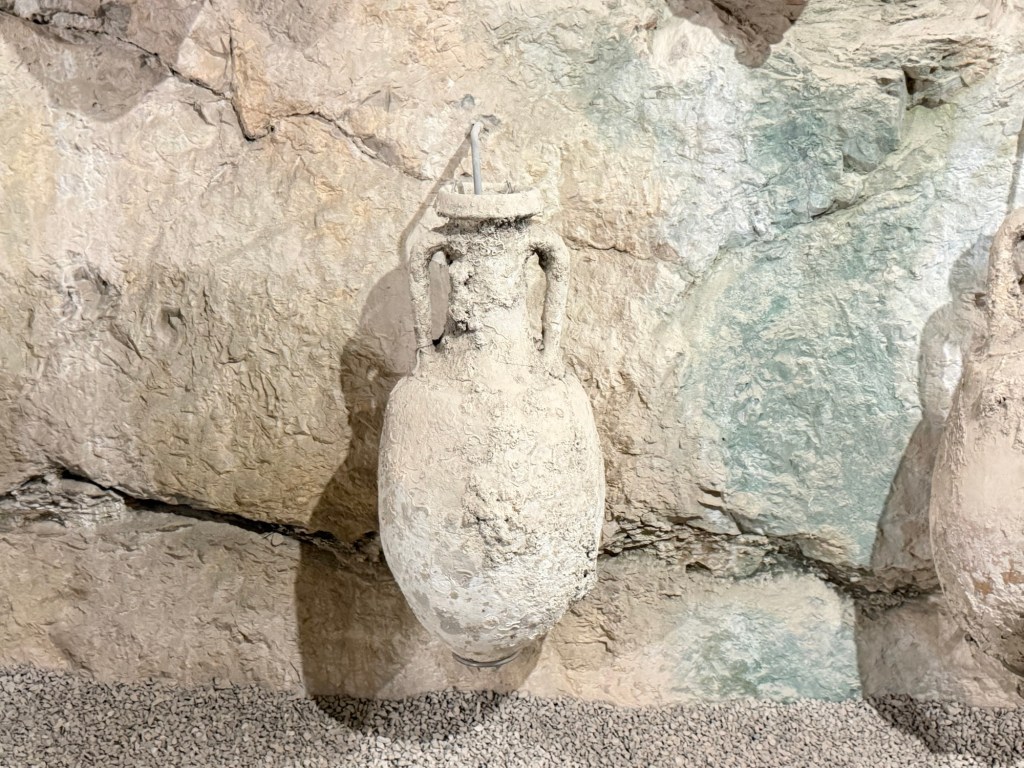
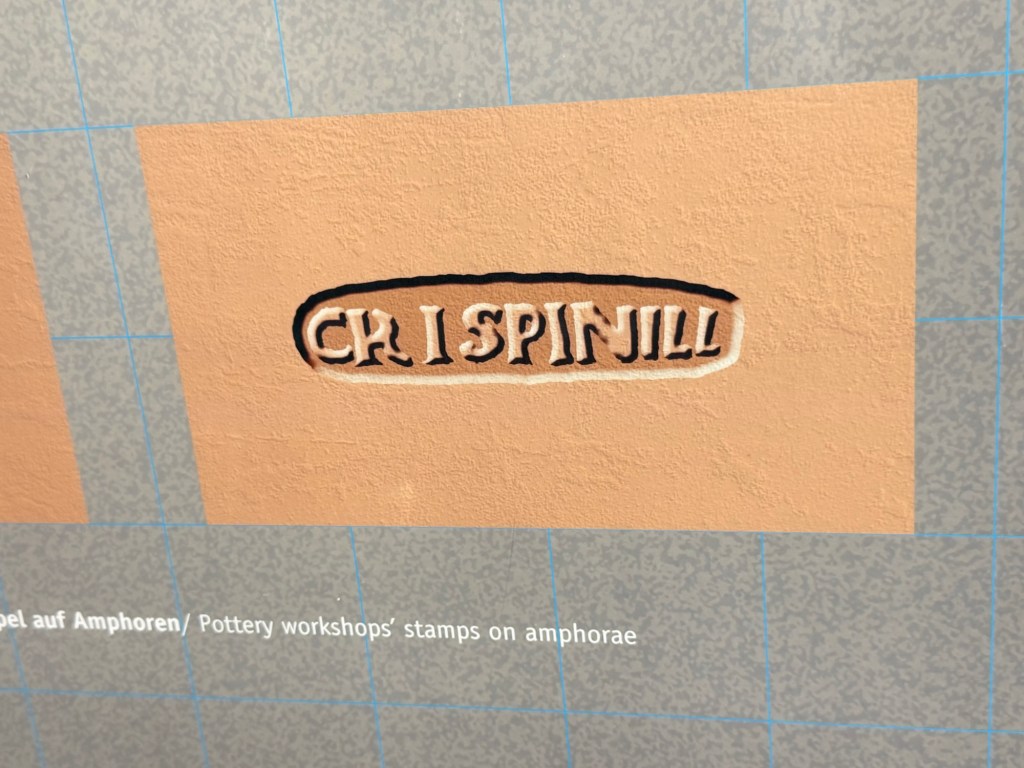
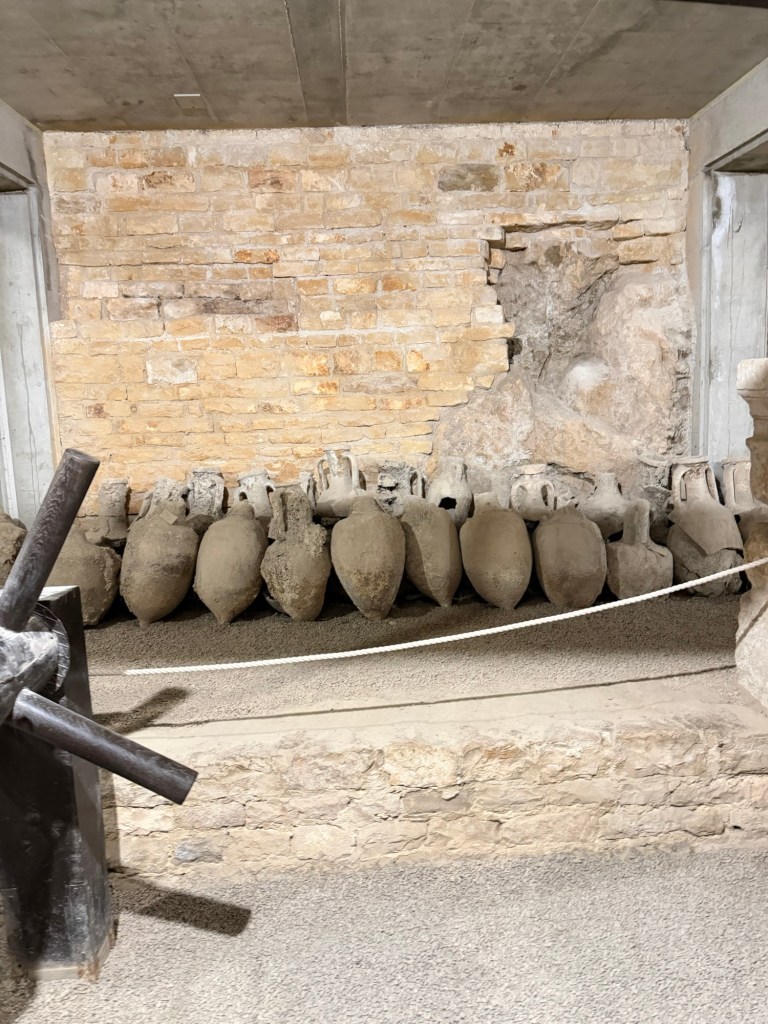
Under the amphitheater are subterranean galleries, once used by gladiators and for holding animals before they appeared in the arena, Today, this underground space contains exhibits devoted to life in Roman Istria, including an impressive collection of terracotta amphorae used to transport and store olive oil, wine and other goods.
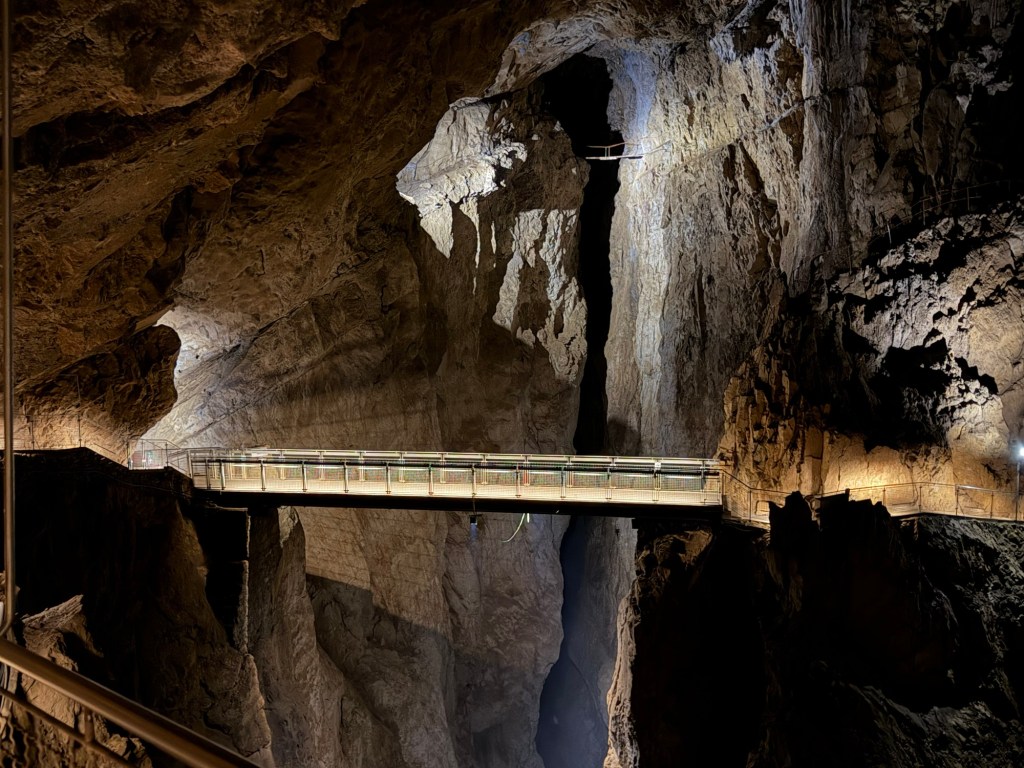
Long after the empire disappeared, Pula continued to reinvent itself, passing through Venetian and Austro-Hungarian rule before emerging as the principal naval base of the Austro-Hungarian Empire. Beneath Pula lies the Zerostrasse, a network of tunnels begun by the Austro-Hungarian authorities shortly before the First World War. Designed as air-raid shelters, ammunition depots and protected passageways, the tunnels were later expanded under Italian rule and again adapted as civilian and emergency shelters after the Second World War. Collectively, Pula’s underground shelters could accommodate more than 50,000 people—nearly the entire population of the city.
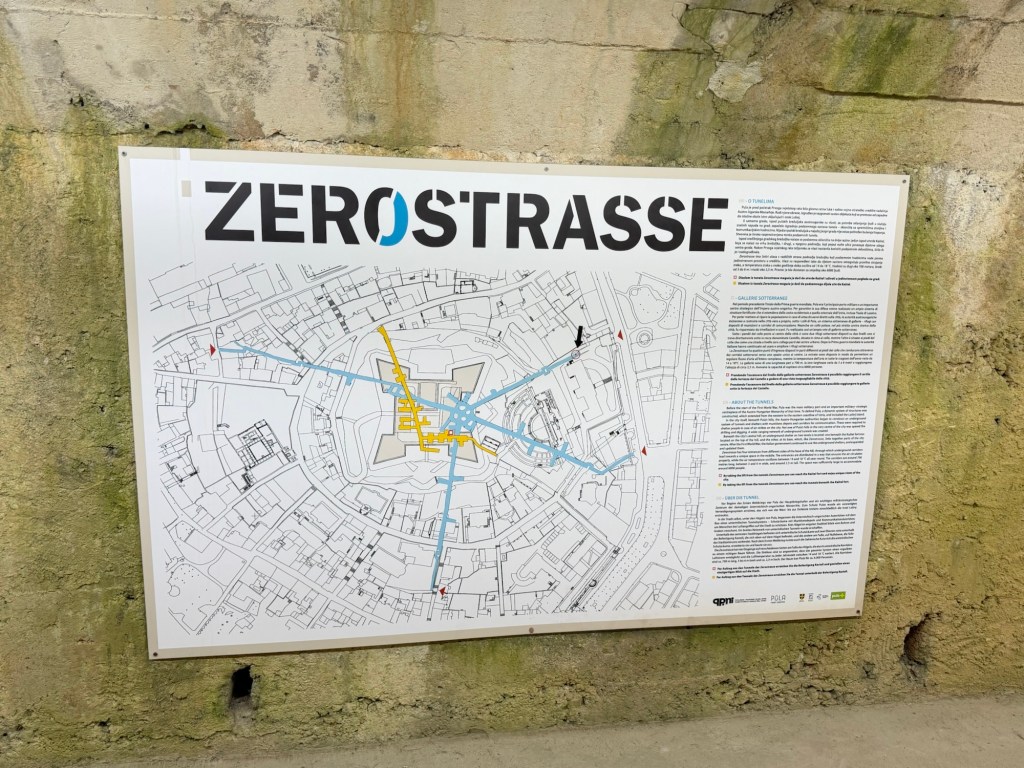
The Zerostrasse tunnels are broad, low-ceilinged passageways carved directly through the limestone beneath Pula. Rough rock remains exposed in places, while other sections have been reinforced with smooth concrete, giving the tunnels a stark, bunker-like appearance. Dim lighting, long shadowy corridors and a year-round cool temperatures. Beneath Kaštel Hill, four passages extend inward from different sides of the city and converge in a large central chamber, forming an underground crossroads.
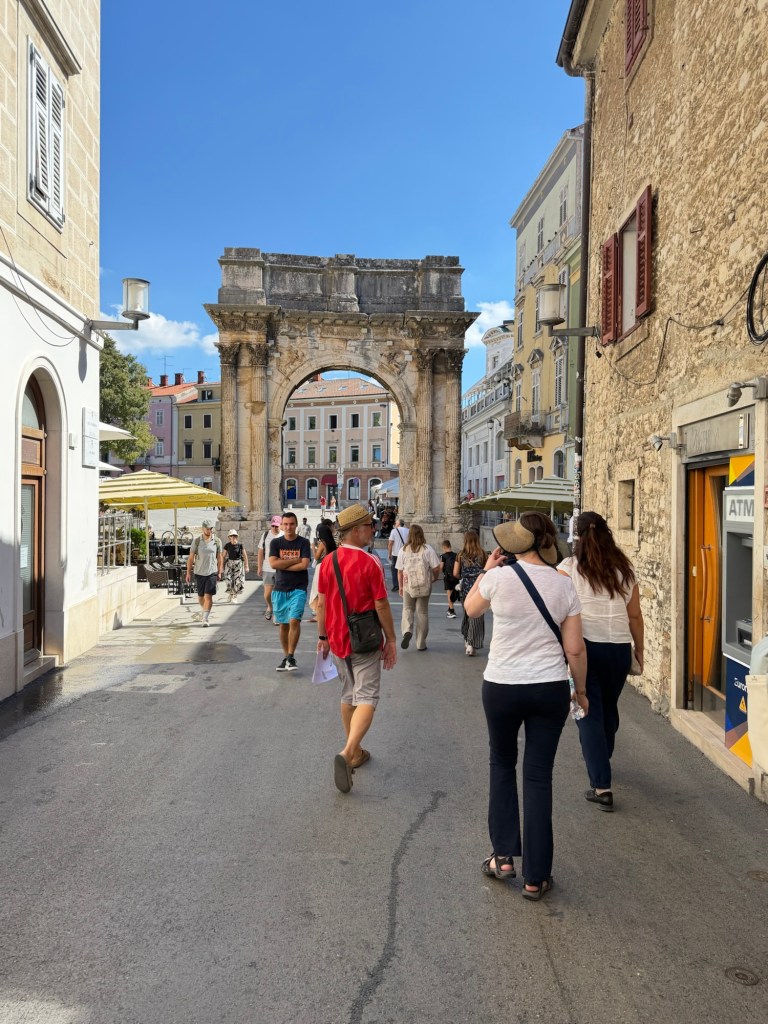
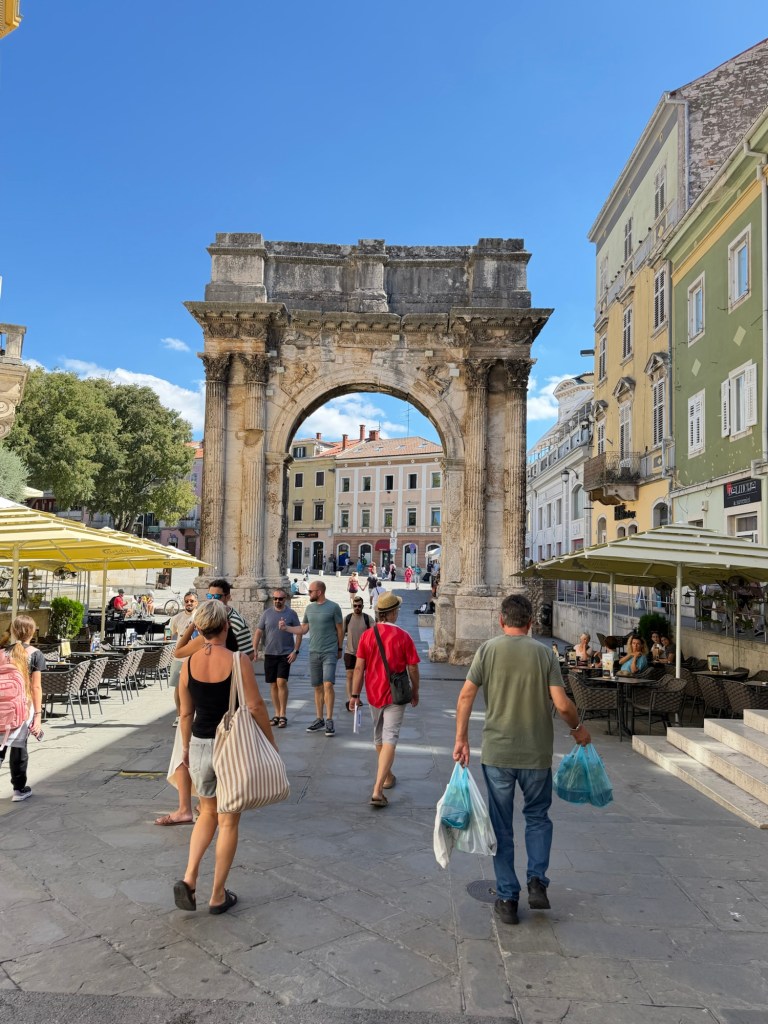
What I particularly liked about Pula was that it felt like a real, lived-in city. Beyond the amphitheater and the other Roman landmarks, people were heading to work, meeting friends, shopping, and carrying on with the ordinary rhythms of daily life.
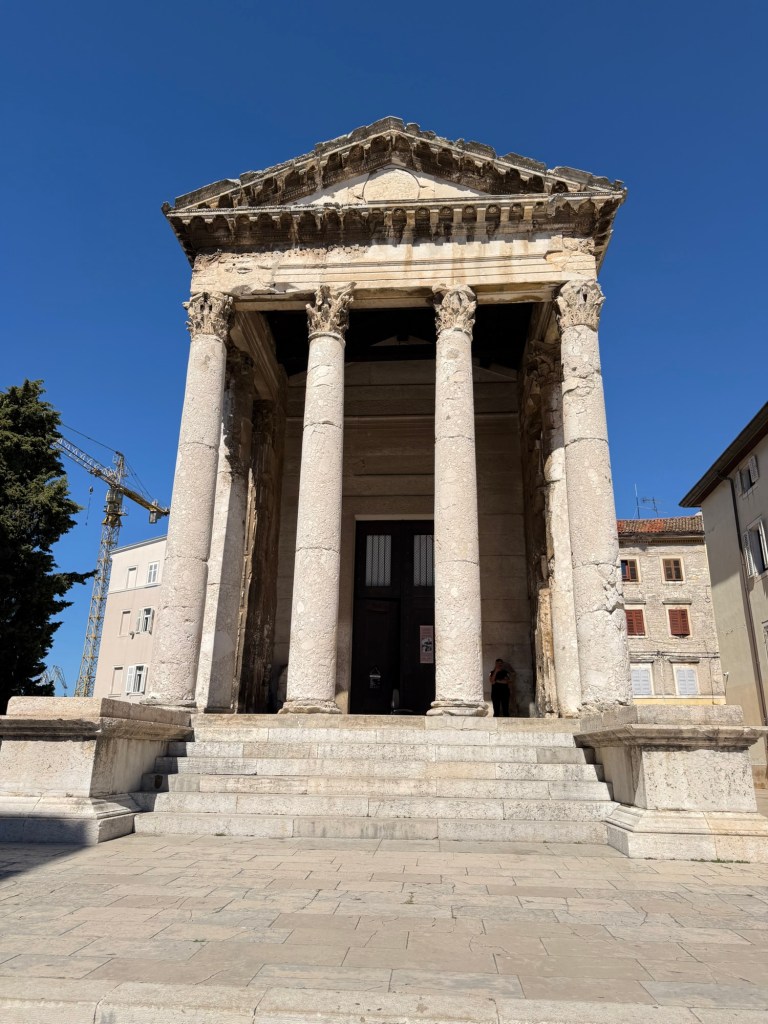
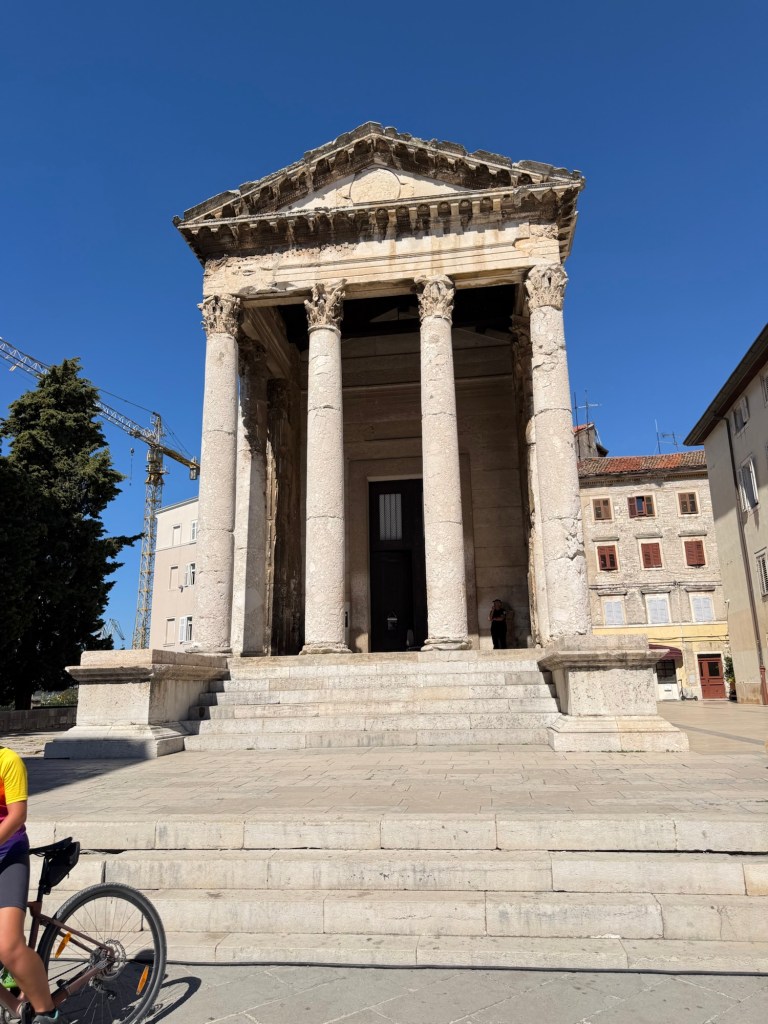
The Temple of Augustus has been standing for two thousand years, which is impressive—especially since it now has to share the square with apartment buildings, a construction crane, and a cyclist who clearly didn’t stop to admire it. Pula’s Roman history isn’t tucked away in a museum; it’s right there in the middle of daily life, quietly outlasting everyone.
The city’s history was all around us, but it didn’t feel as though the streets existed only for visitors. I hope Pula can preserve that balance and hold on to the local customs, character, and everyday life that give it a culture of its own.
Leaving Pula behind, we headed northwest with Rosanna to Fažana, a picturesque fishing town overlooking the Brijuni Islands. Once a seaside retreat for wealthy Romans, Fažana later developed a centuries-old fishing tradition centered particularly on sardines, which remain an important part of its identity.
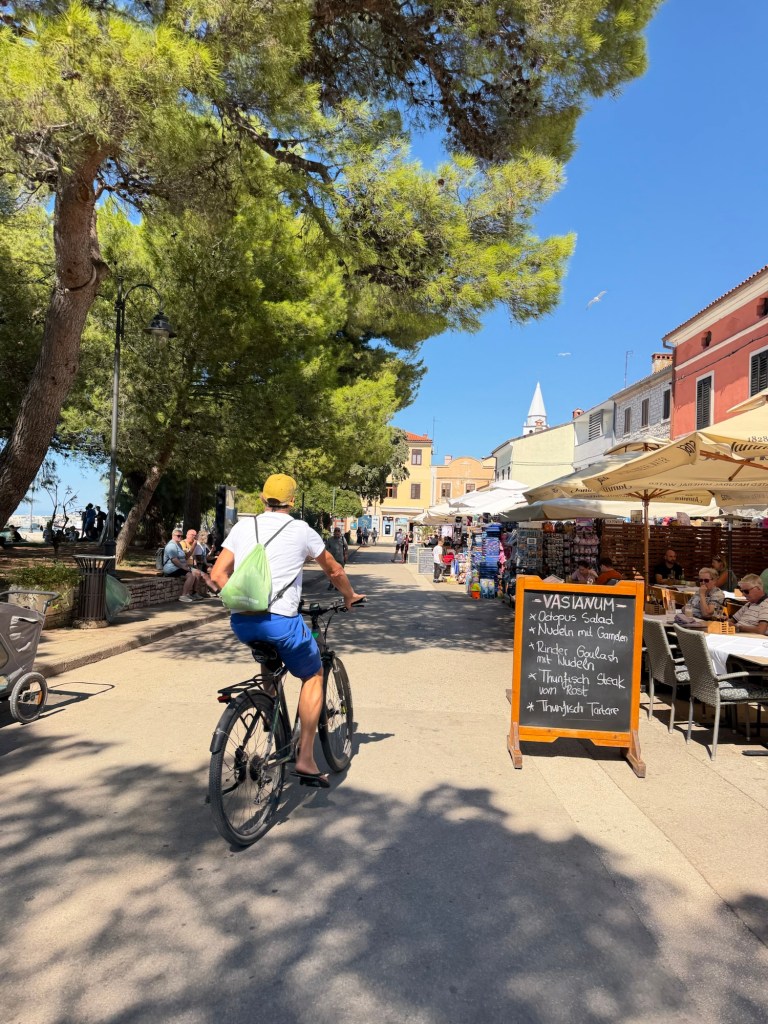
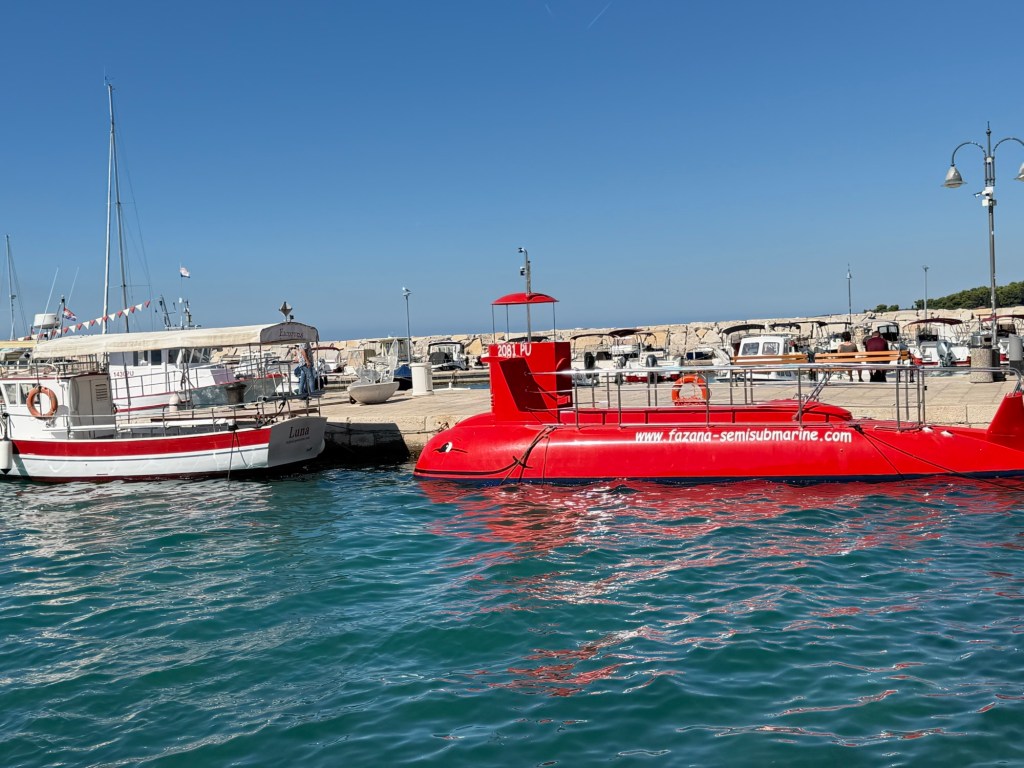
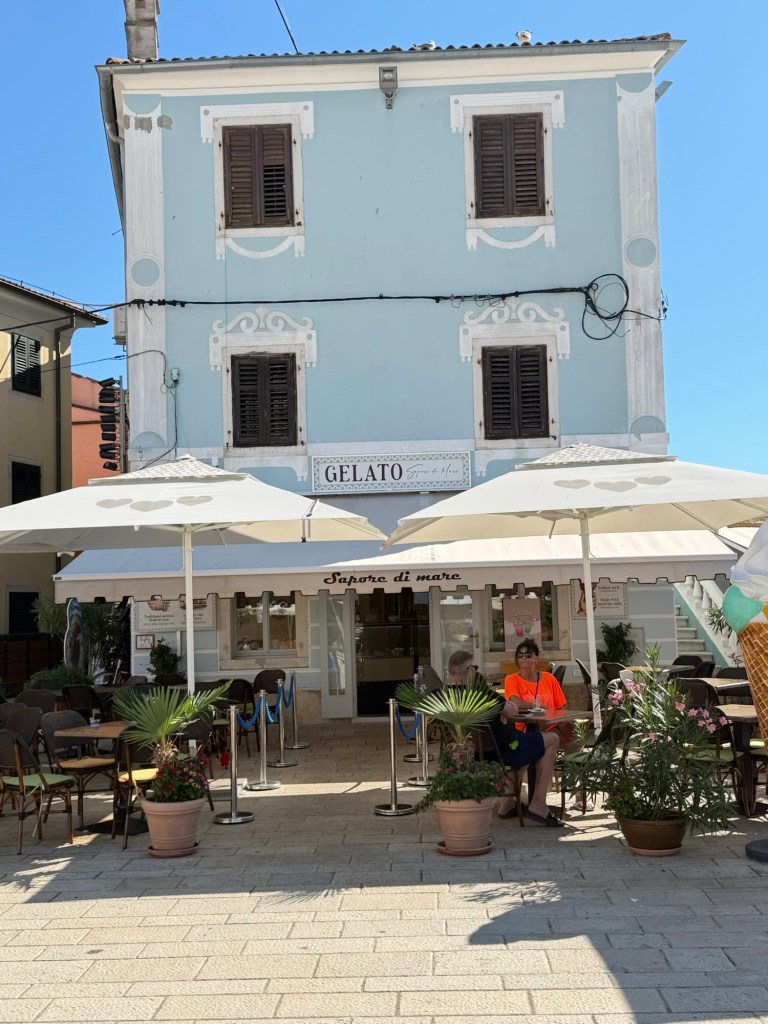
Today, its colorful waterfront, small harbor and narrow streets give it an easygoing Mediterranean charm, while its port serves as the principal gateway to Brijuni National Park. Rosanna brought us to one of her favorite restaurants, Sapore di Mare, set directly on the waterfront with views across the channel toward the islands.
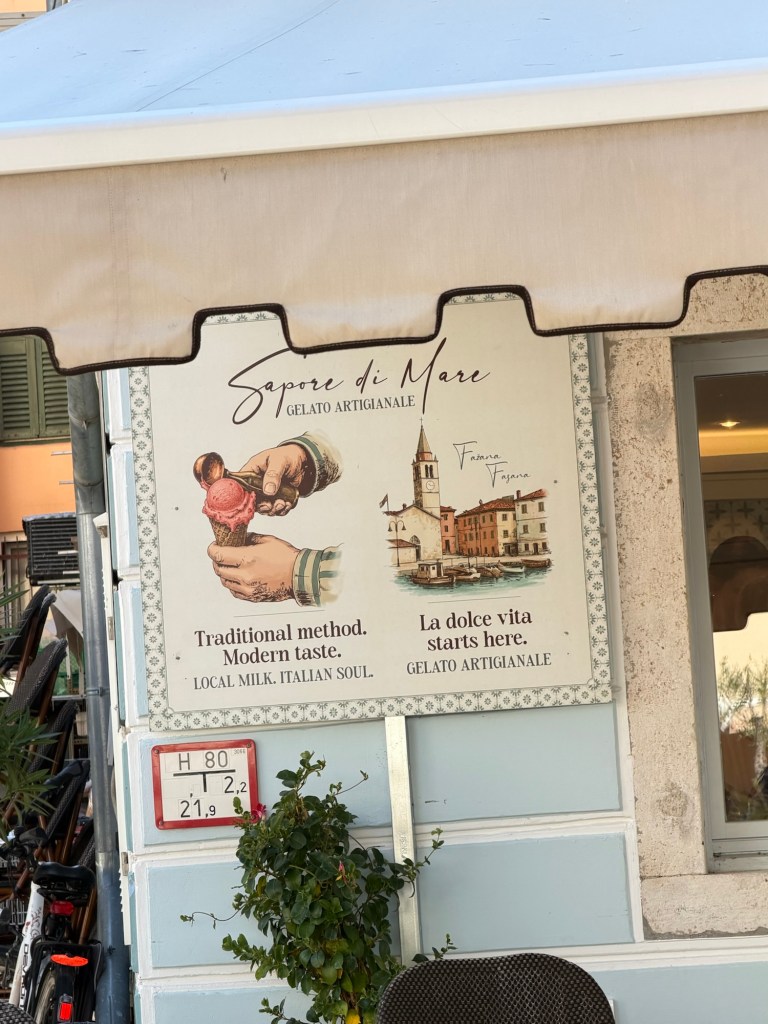
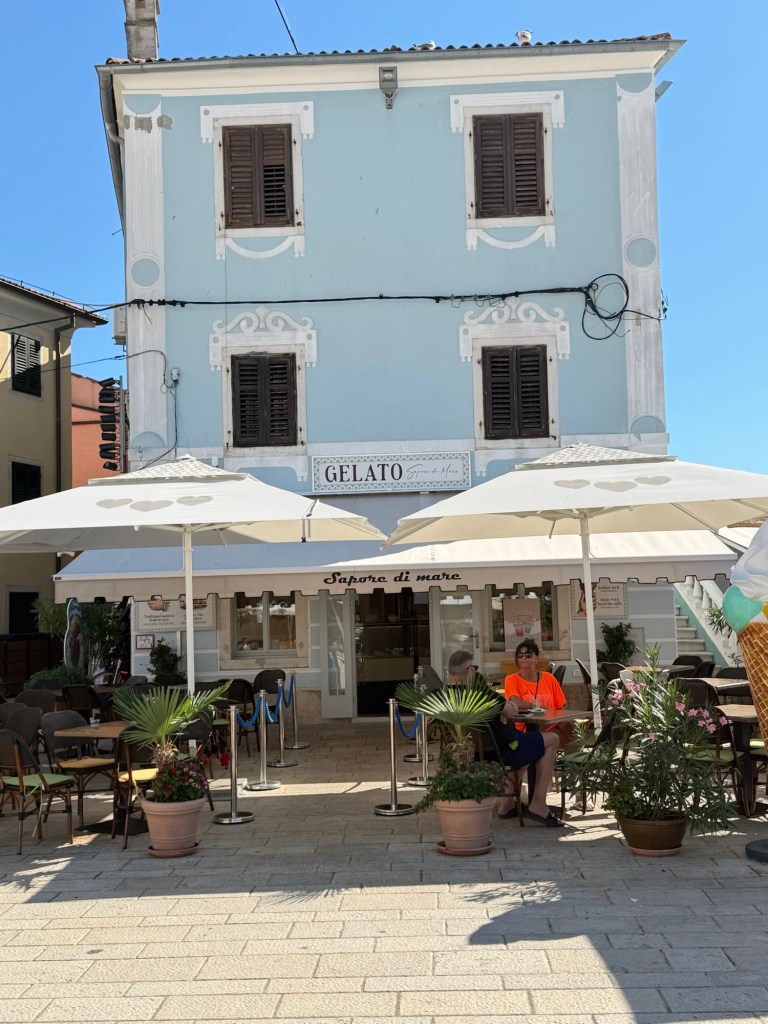
We began with gelato at Sapore di Mare, Rosanna’s favorite gelateria in Fažana, where traditional Italian-style gelato is handmade using fresh local milk. It was a delicious—and appropriately indulgent—start to lunch.
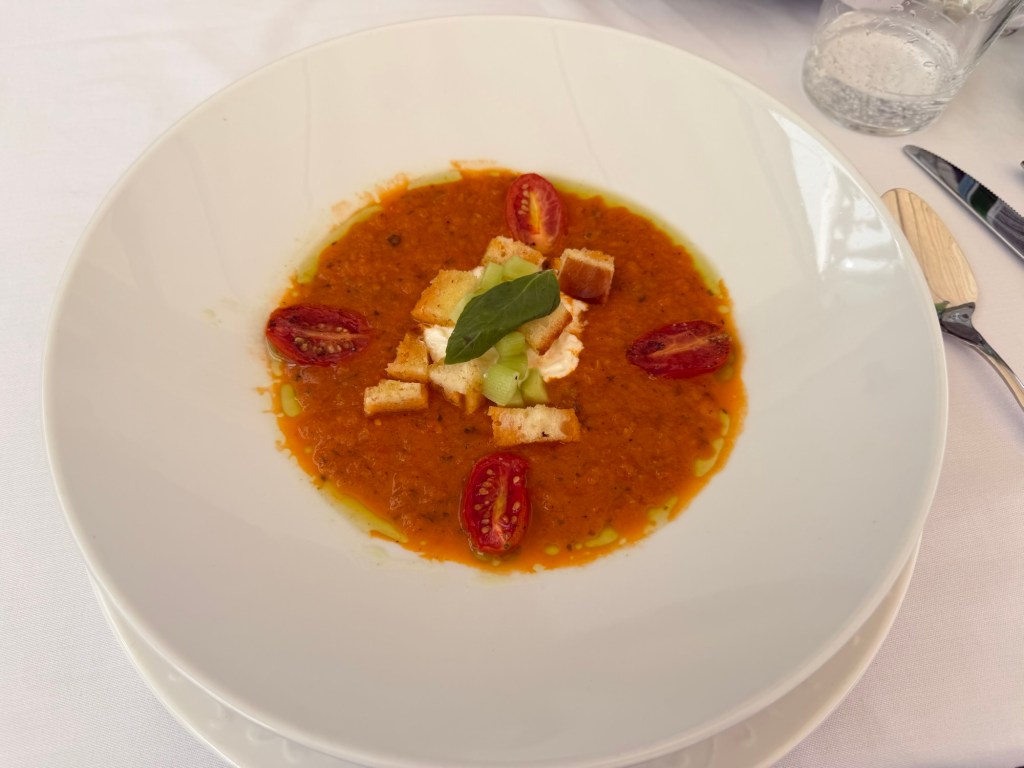
We then moved right next door for truly special food. We began with creamy burrata nestled in a rich tomato gazpacho and garnished with cucumber, basil, toasted croutons and roasted cherry tomatoes.
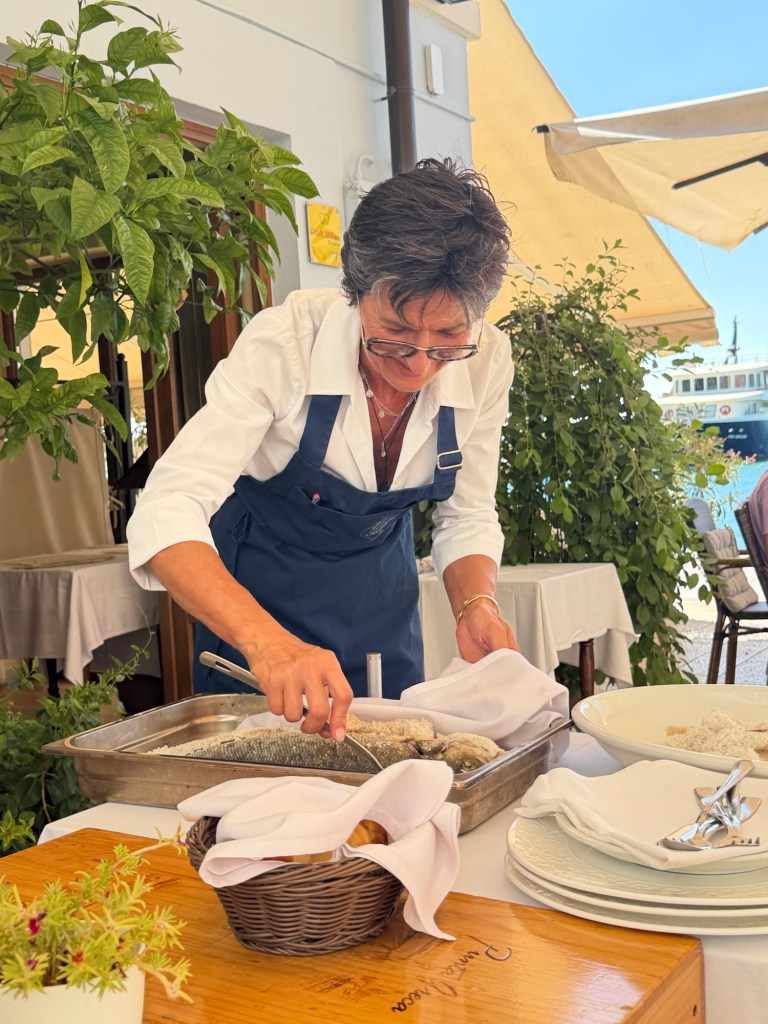
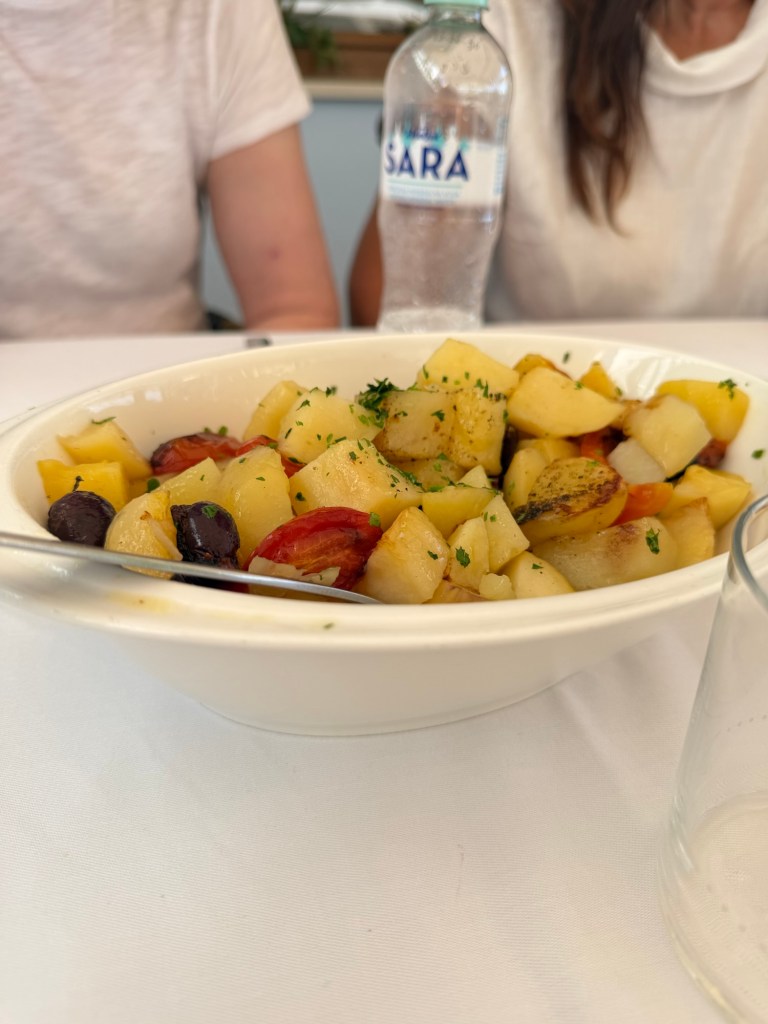
The main event was a whole branzino baked beneath a crust made from three kilograms of salt. It arrived at the table still completely encased, and our server broke open the hardened crust with a hammer before carefully deboning the fish and serving its remarkably tender, moist flesh alongside roasted potatoes, tomatoes and olives.
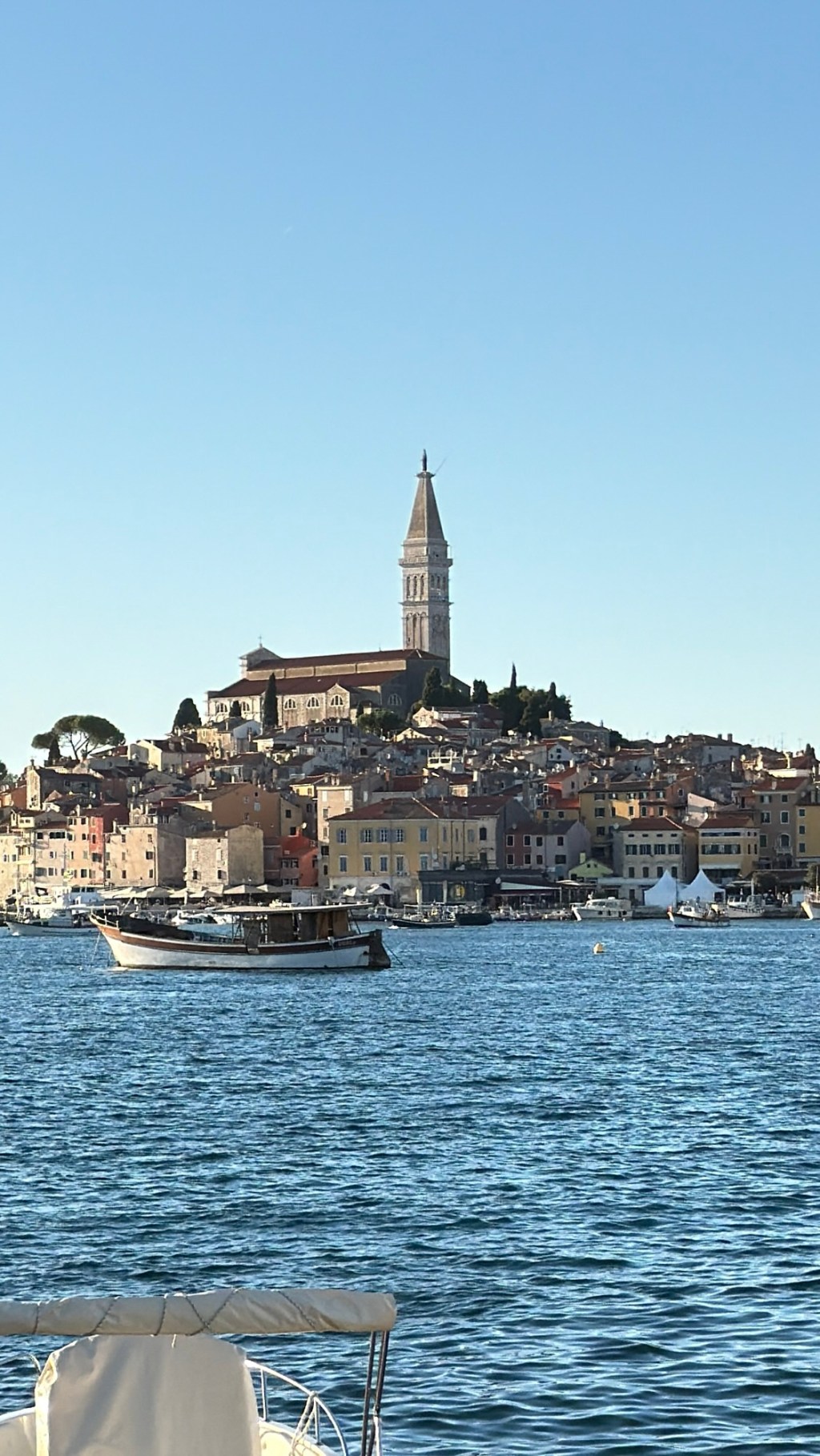
Several, but not enough, hours later, dinner arrived at La Puntulina, built into the rocky edge of Rovinj’s Old Town in Rovinj. Its intimate terraces descend toward the Adriatic, with tables perched only a few feet above the water and sweeping views of the nearby islands.
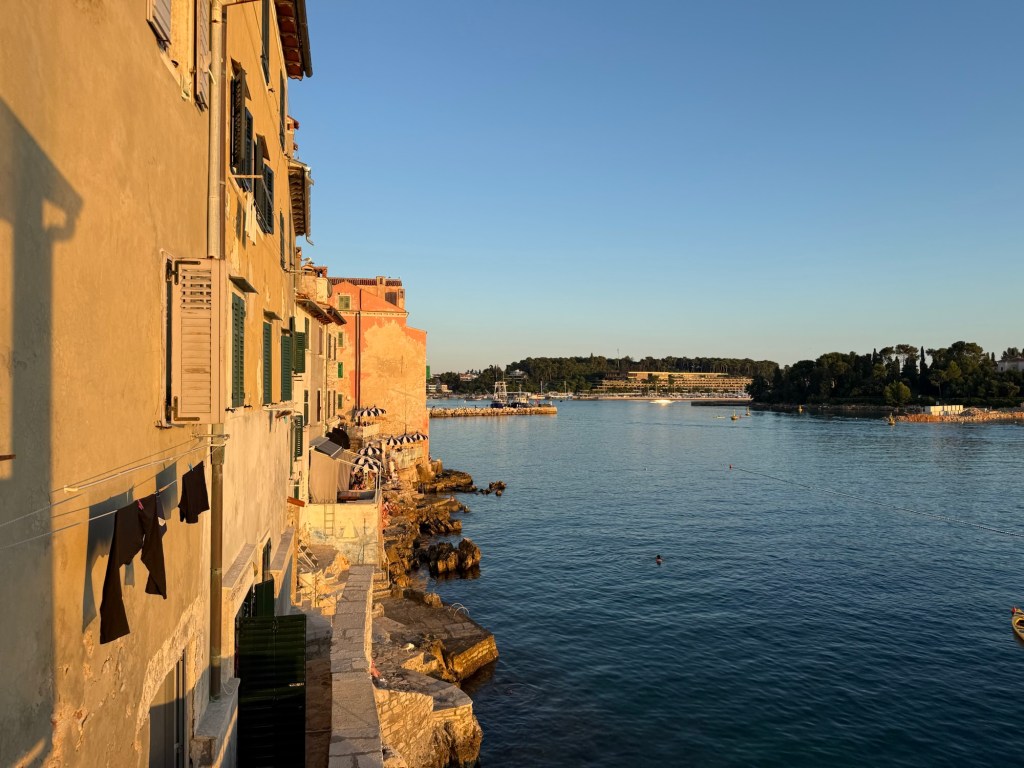
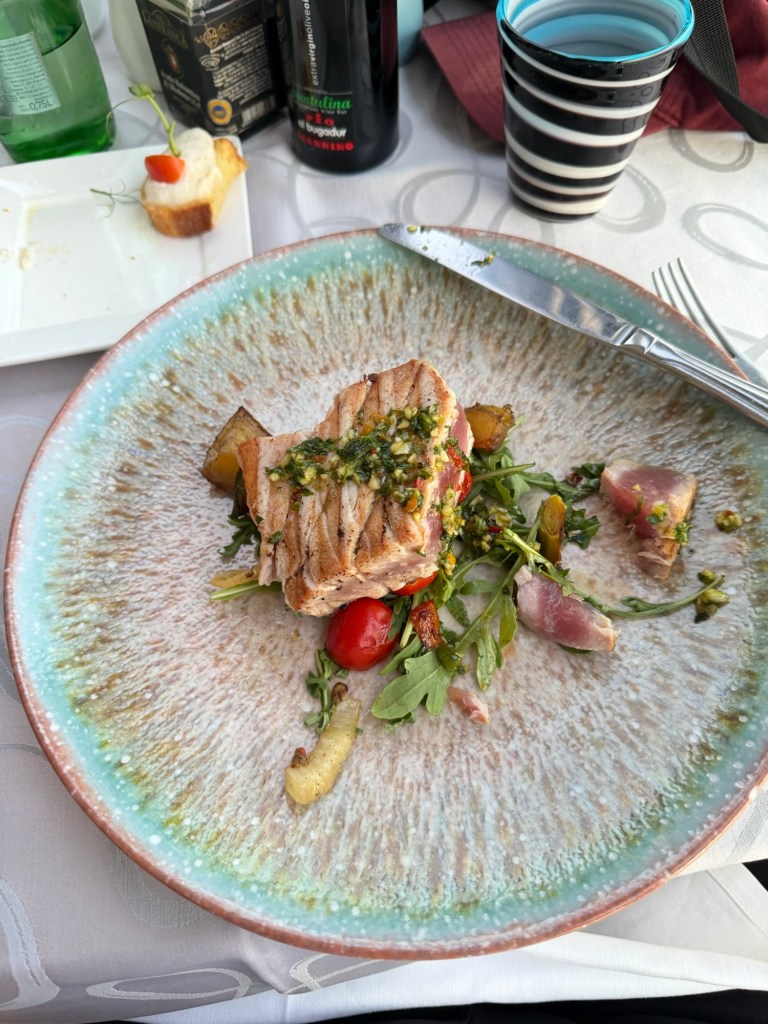
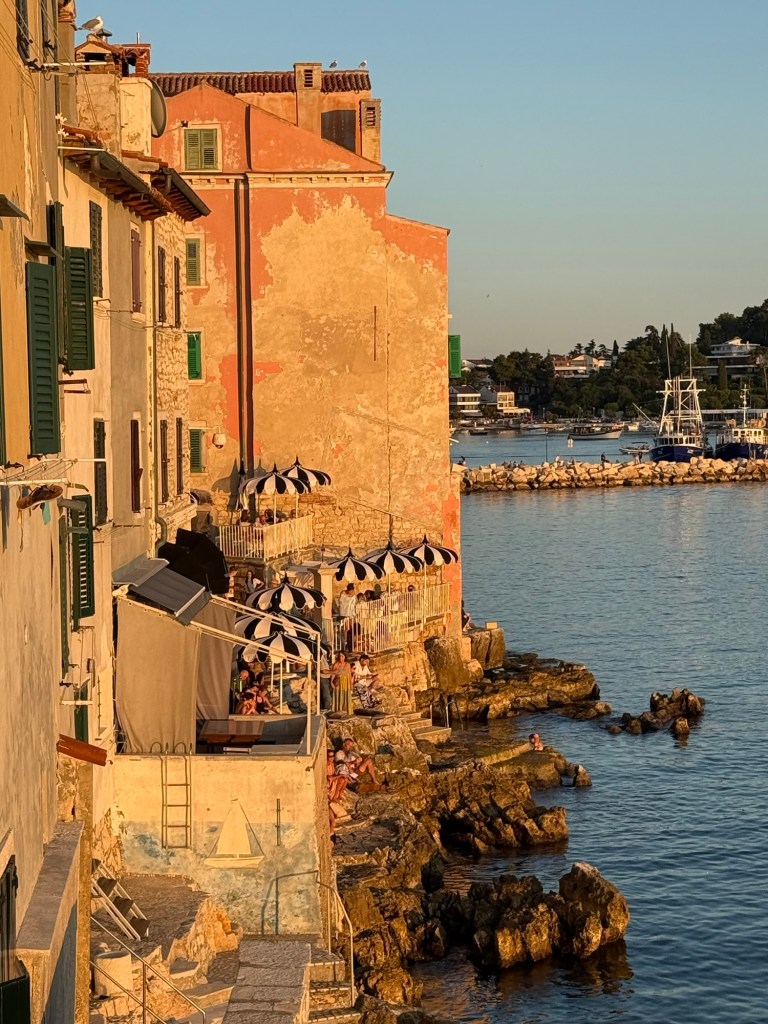
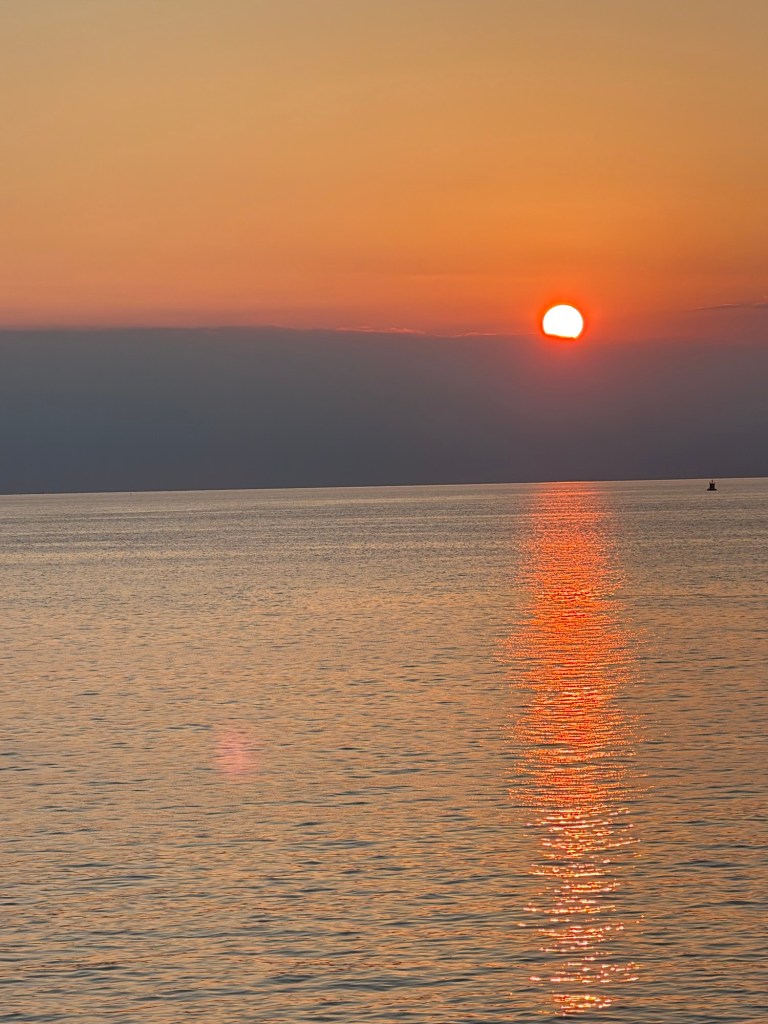
The restaurant specializes in refined Istrian cuisine with a strong Venetian influence. From our table, we watched a remarkable sunset spread across the Adriatic.
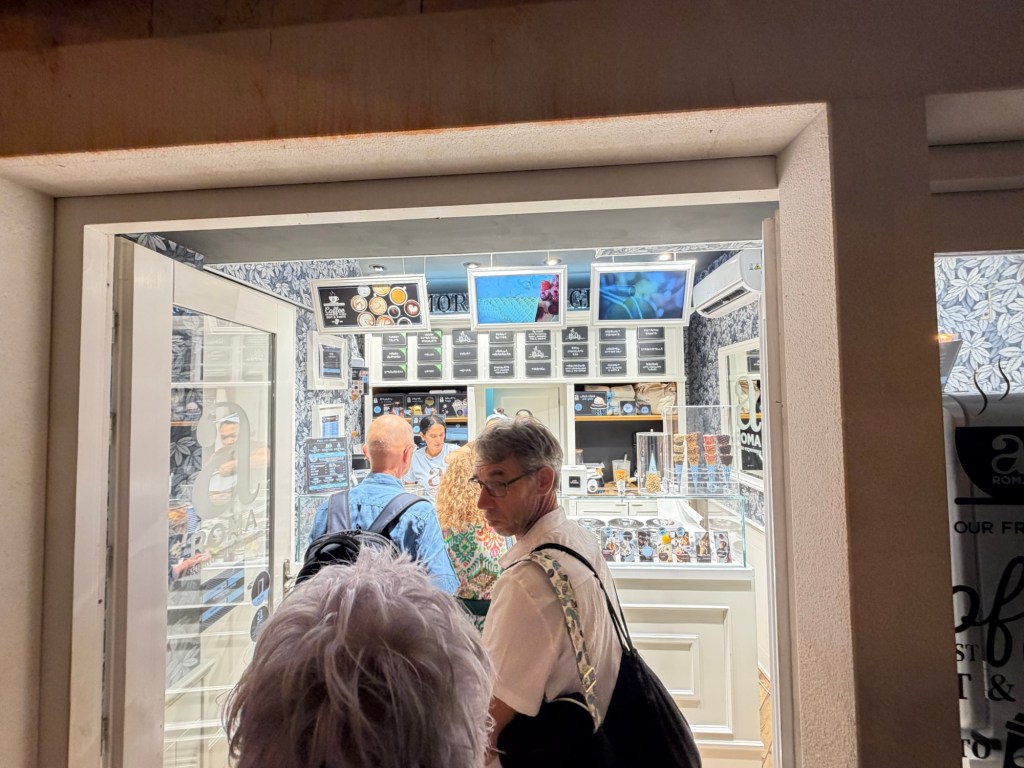
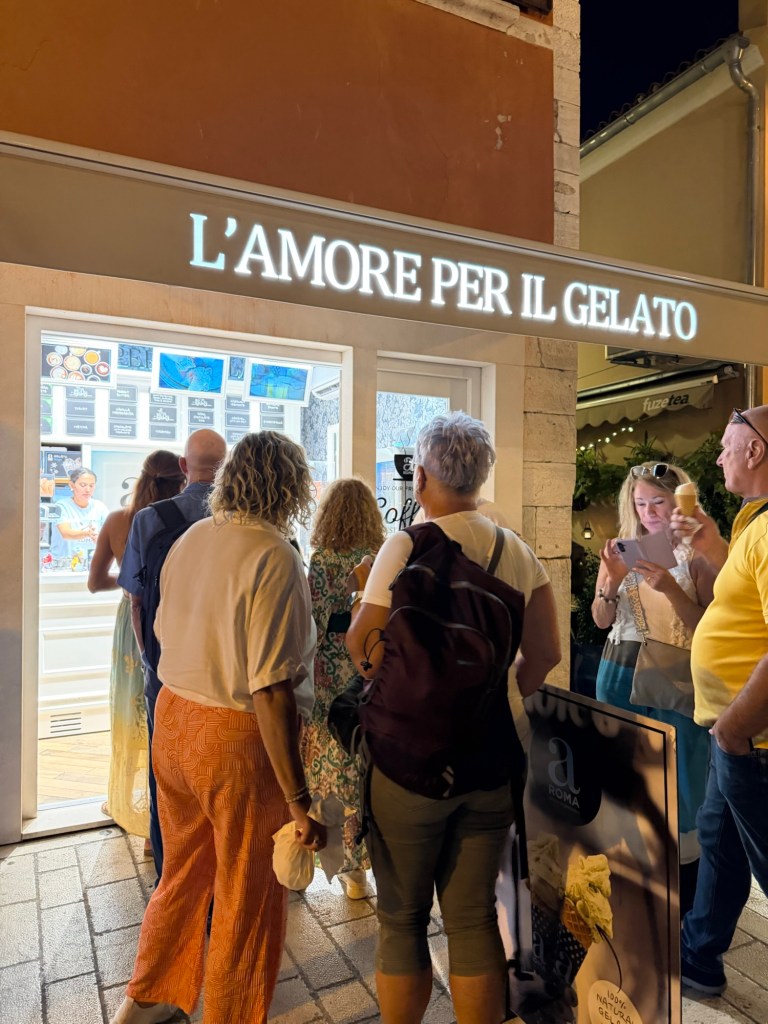
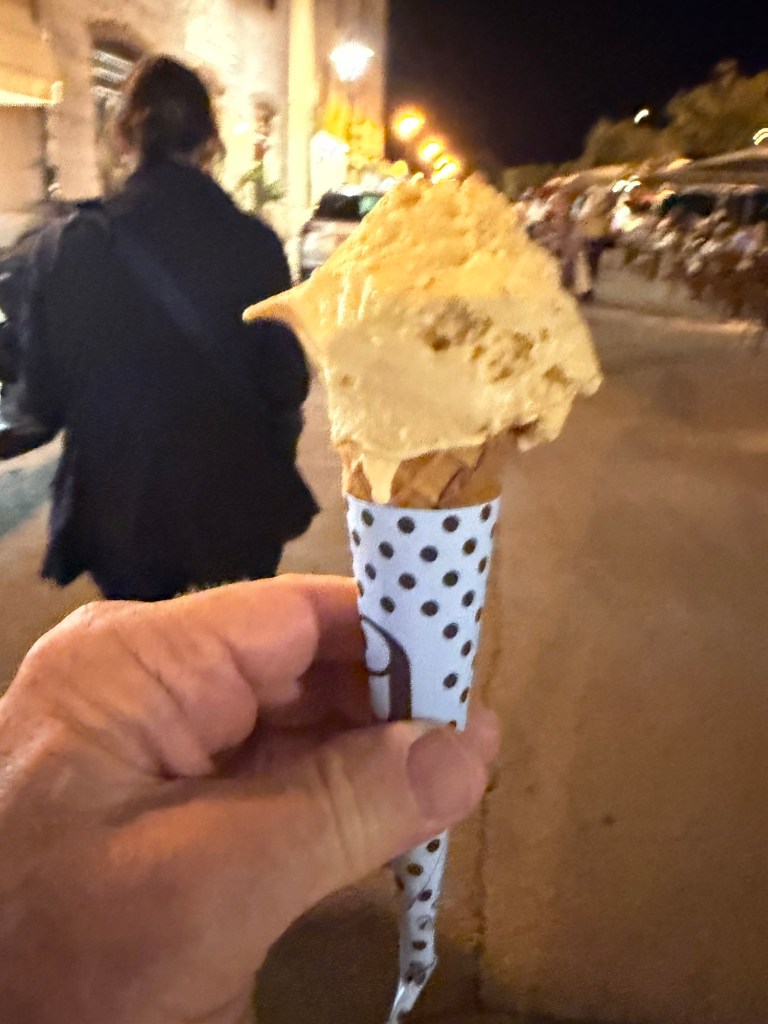
On the way back to the hotel, we stopped at Aroma, an award-winning gelateria whose motto—L’amore per il gelato, “the love of gelato”—made resistance seem almost impolite. I ordered another generously scooped cone, my second of the day. “The belt has several holes,” I reminded myself. “And, like traffic, they work in both directions, and must be exercised.”
Our time in Rovinj had come to a close. The following morning, we would leave the enchanting landscapes of Istria behind and continue south to Split, Croatia.
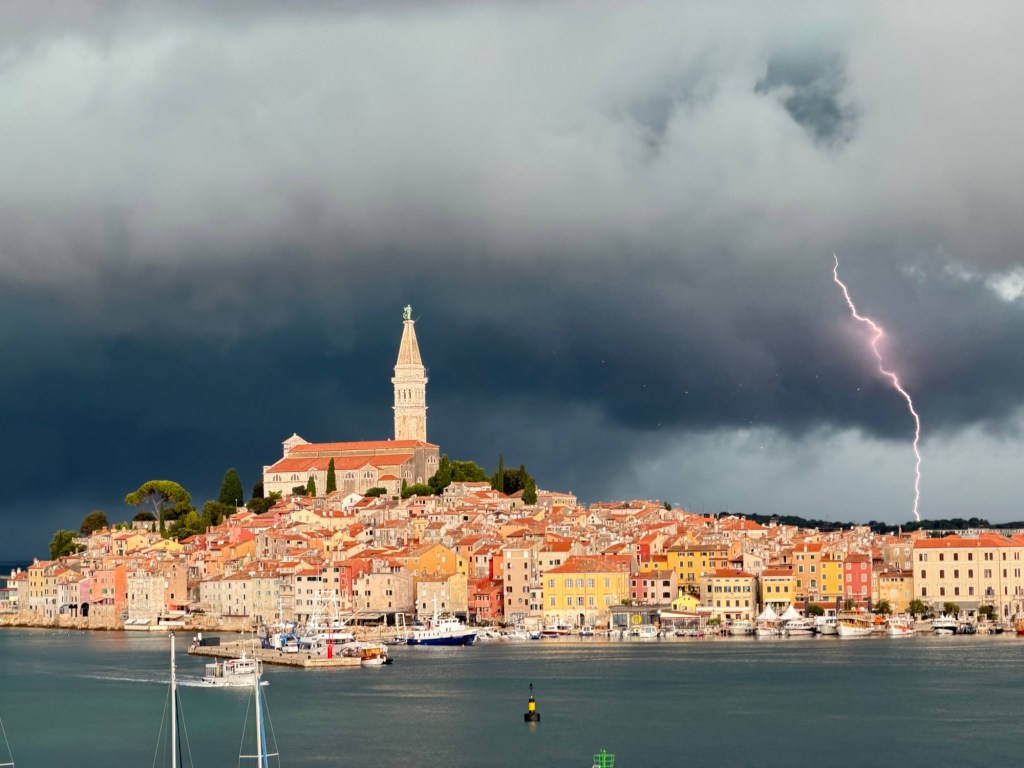
Just before we left, I managed to capture this extraordinary morning scene: warm light fell across the terracotta rooftops while a bank of dark storm clouds gathered over the town. Then a bolt of lightning flashed down beside it, making the view feel almost enchanted.
On our way to Split, we made one memorable stop in Zadar to see the Sea Organ, designed by Croatian architect Nikola Bašić.
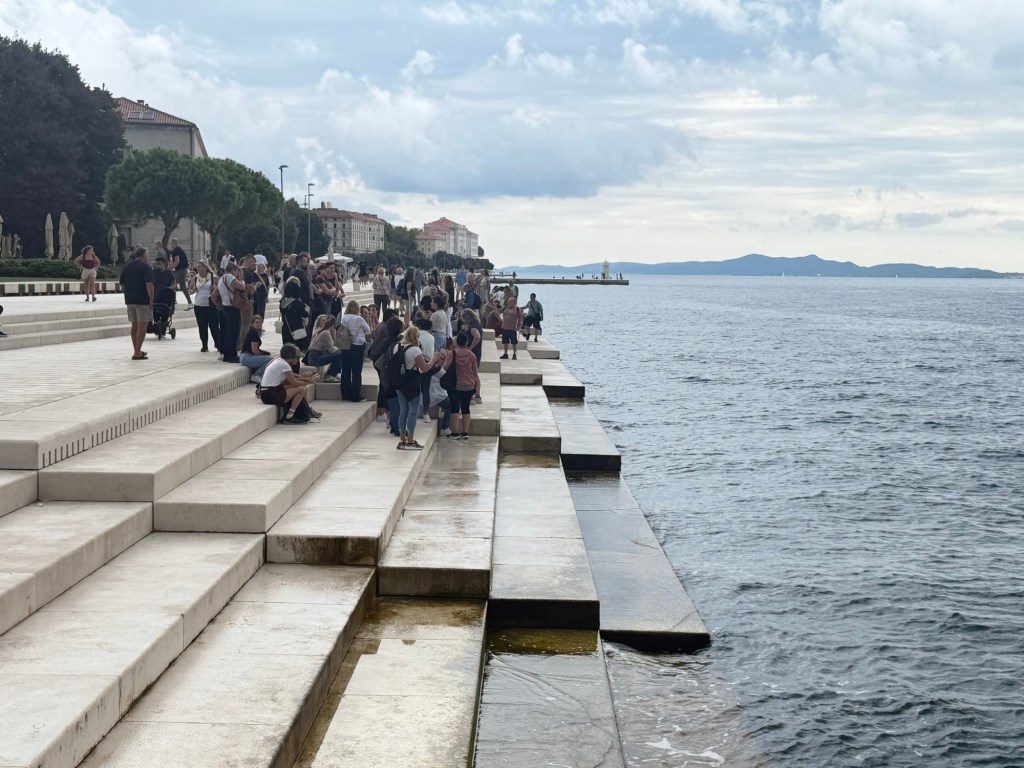
Built into the waterfront steps, it uses the movement of the waves to send air through hidden pipes, creating a haunting, ever-changing melody.
For a few minutes, the Adriatic seemed to be playing its own music.
More to follow from Split.