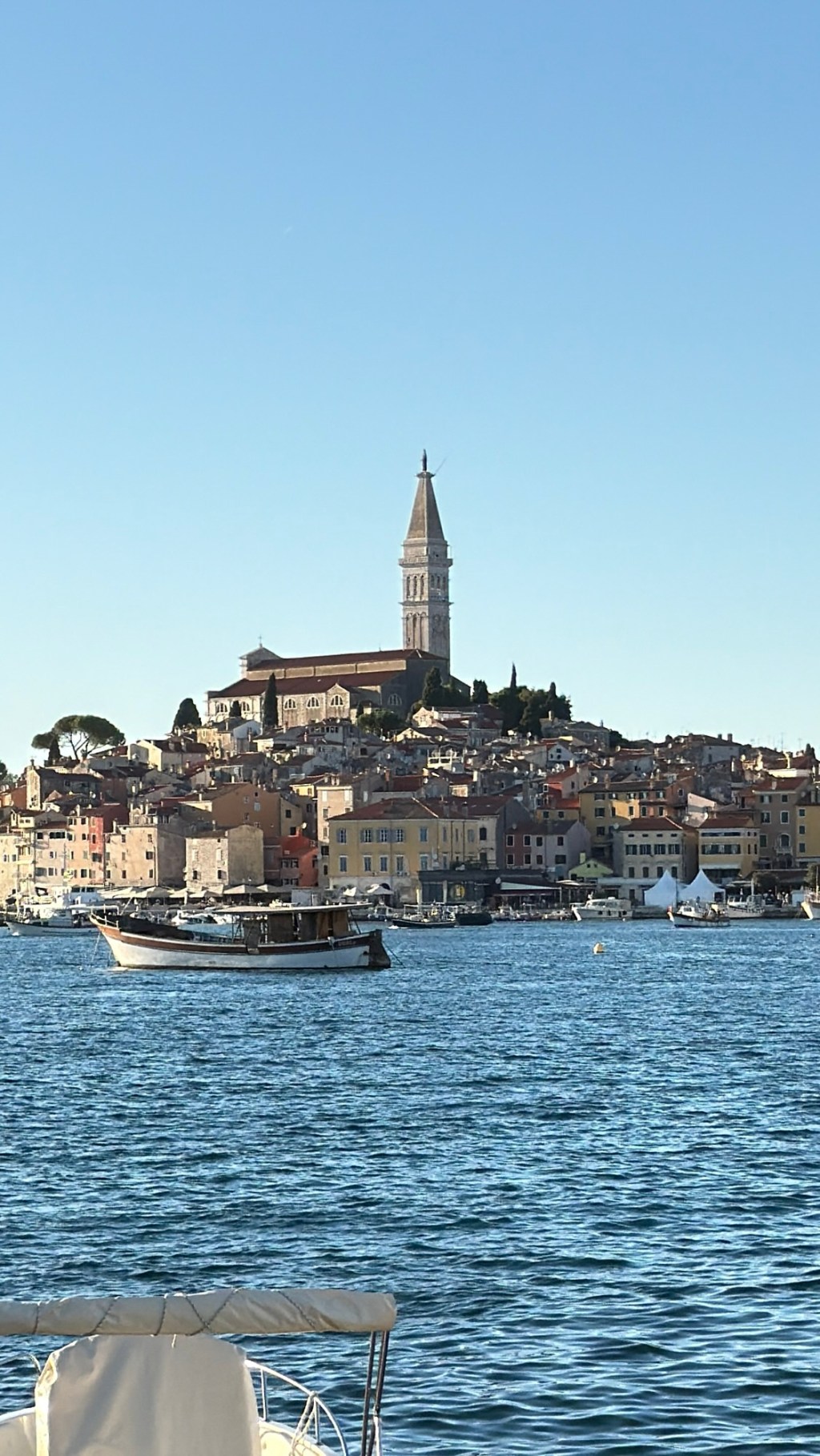
We arrived in Rovinj, a storybook town on the coast of Croatia’s Istrian peninsula, where colorful Venetian buildings rise above the sparkling Adriatic. Directly across the sea from Venice and close to the Slovenian and Italian borders, Rovinj feels like a captivating blend of all three worlds.
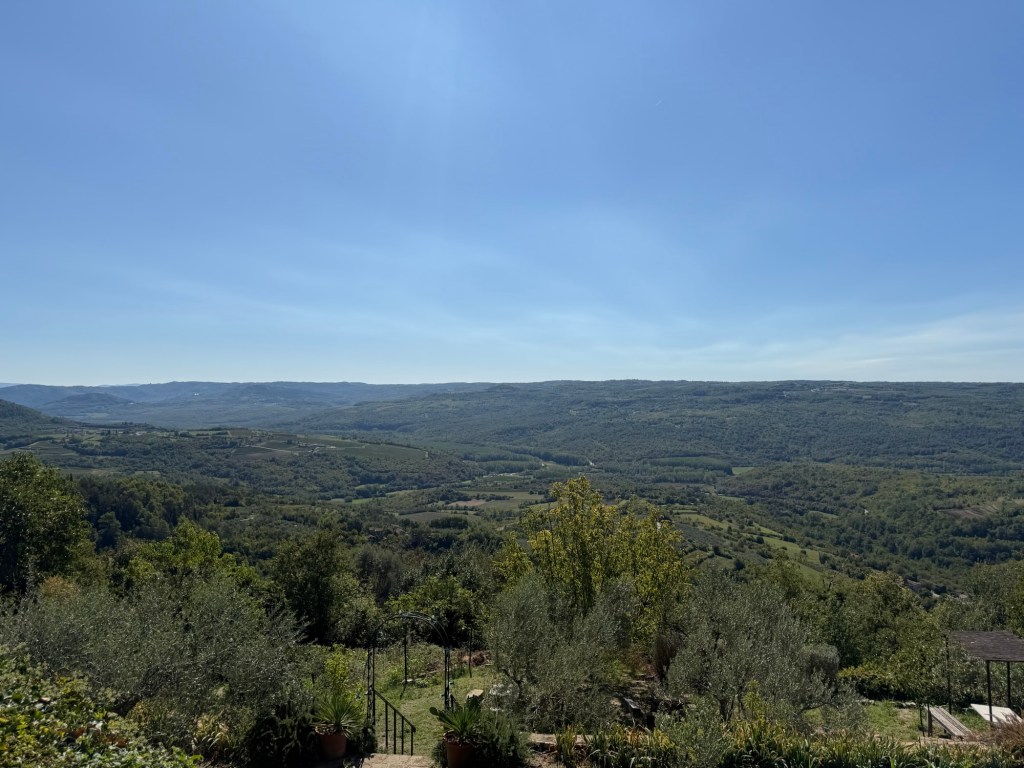
The Istrian Peninsula forms the heart-shaped northwestern corner of Croatia, where the Adriatic coastline gives way to rolling green hills, vineyards, olive groves and truffle-rich forests. The region is especially celebrated for its distinctive peppery olive oil.
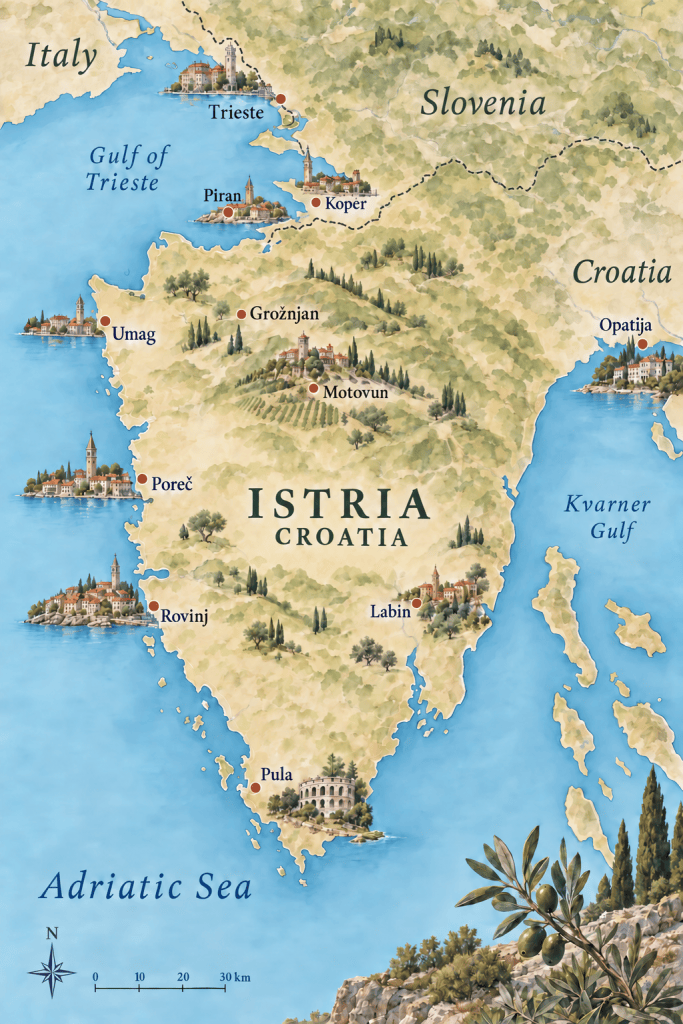
At times, walking through the narrow stone streets of Rovinj or sitting at a café overlooking the Adriatic, I could easily have imagined that we were still in Italy. Italian seemed to be everywhere—spoken in restaurants and shops, printed on signs, and reflected in the names of the towns themselves. Rovinj is also Rovigno, Pula is Pola, and Poreč is Parenzo.
It is not simply a coincidence. Centuries of Venetian rule left a profound imprint on Istria, shaping its architecture, food, language and culture. Although most of the peninsula is now part of Croatia, a recognized Italian community remains, and Italian continues to be widely spoken, particularly along the western coast.
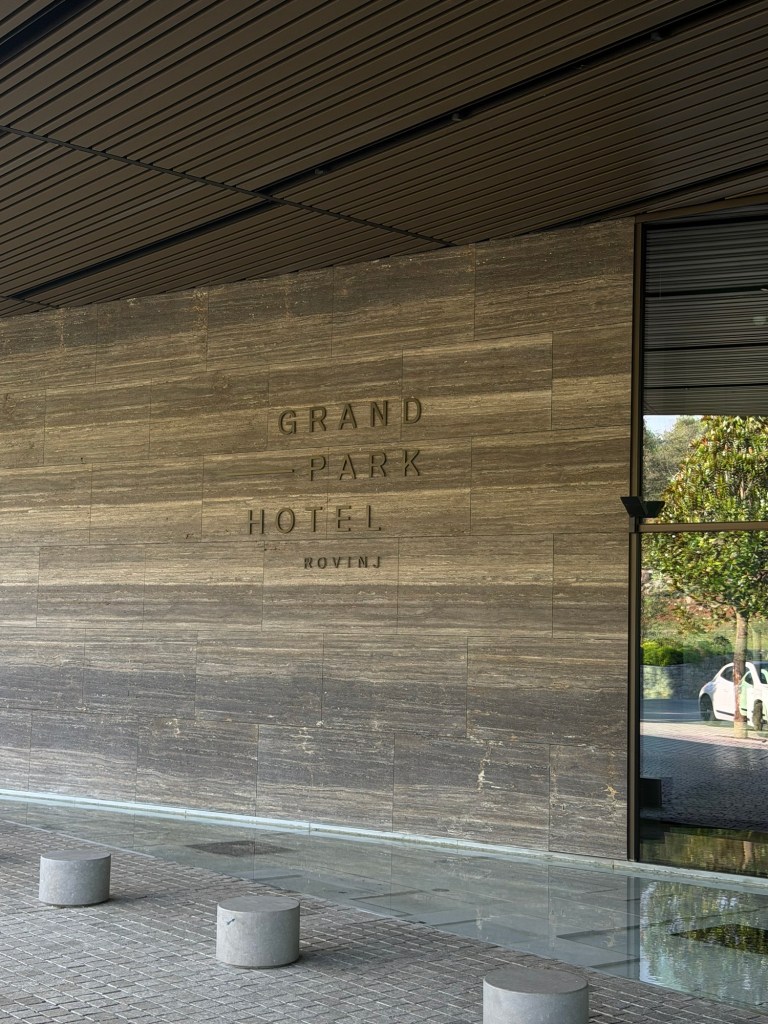
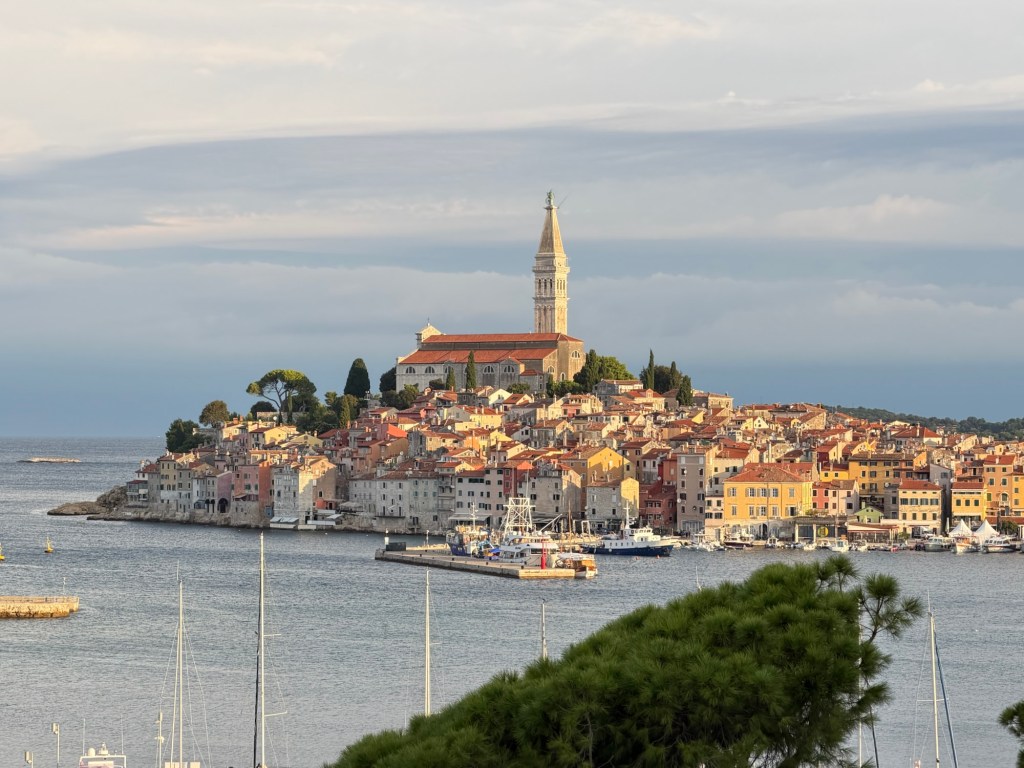
For three nights, we lodged at the Grand Park Hotel Rovinj, a strikingly modern resort built into a wooded hillside overlooking the marina and the old town.
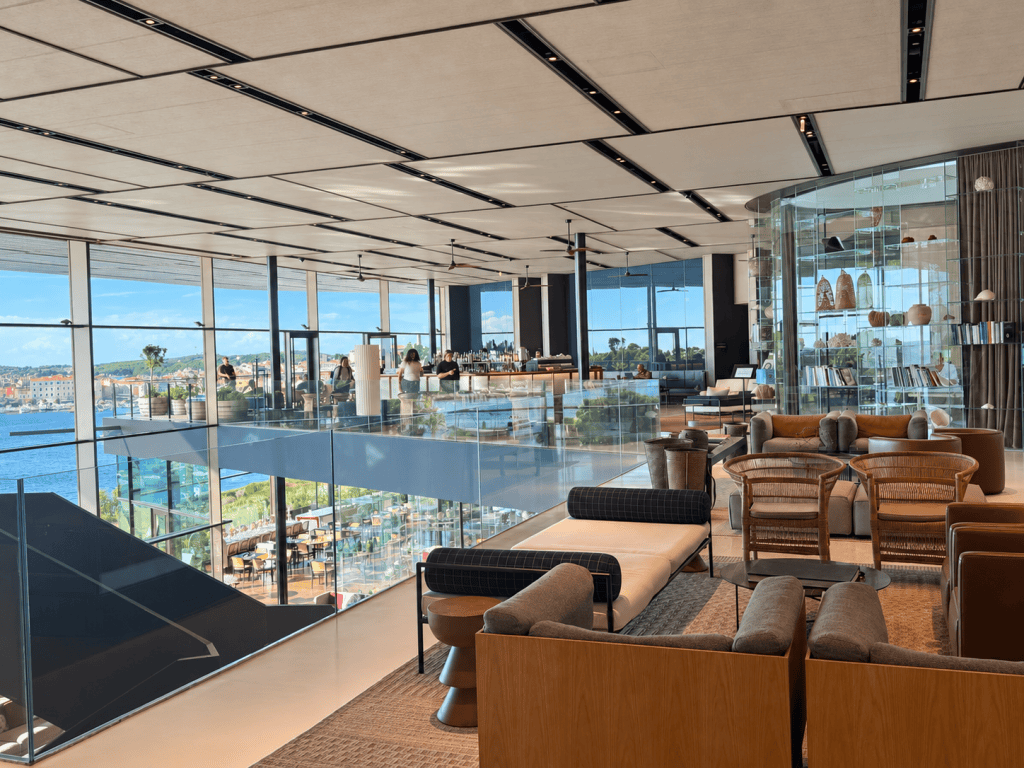
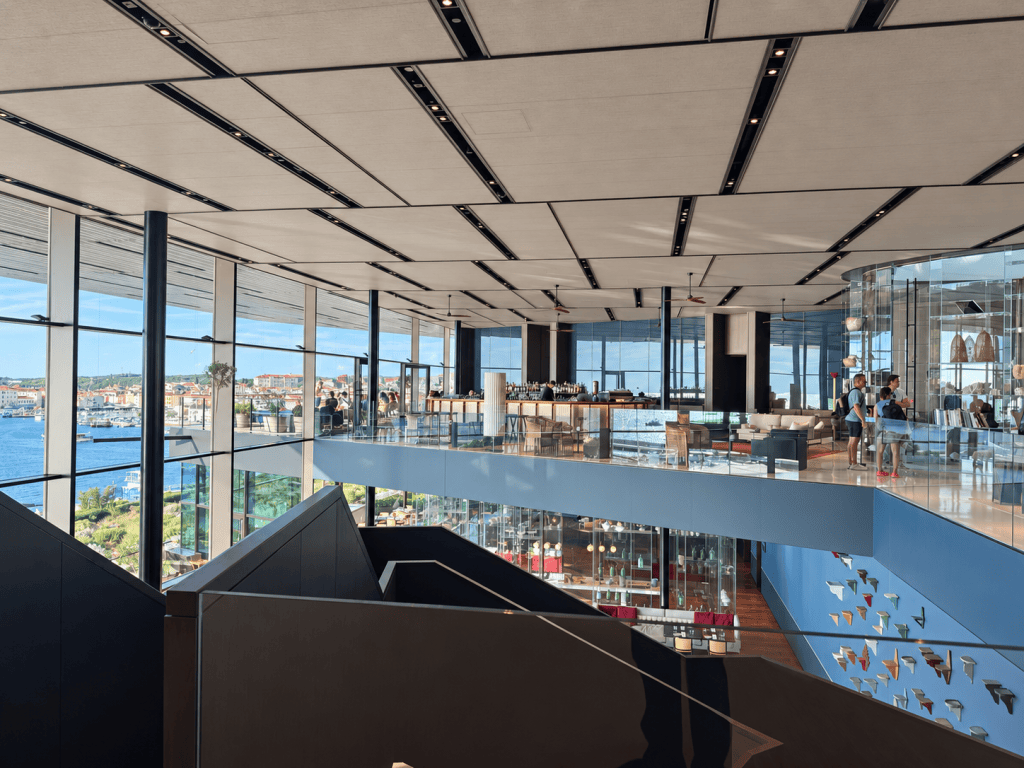
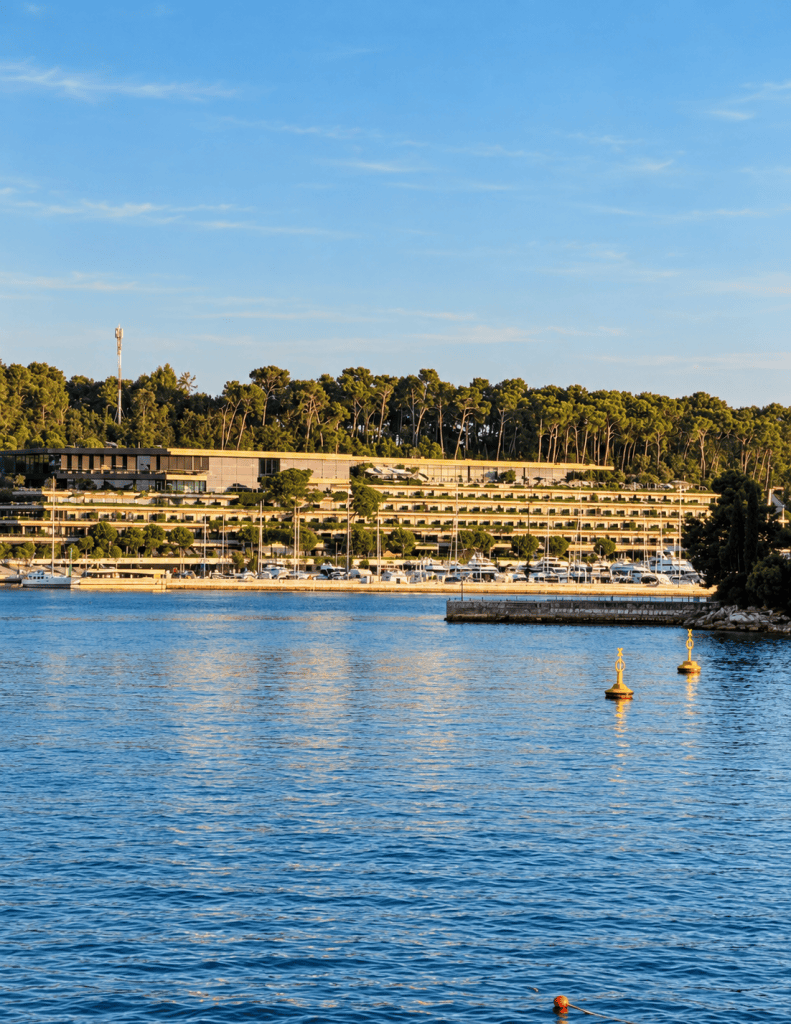
Rather than rising as one large block, its six levels descend toward the waterfront in a series of broad, garden-covered terraces, allowing the building to blend surprisingly well into the surrounding pine forest. From nearly every public space, the eye is drawn across the harbor to Rovinj’s tightly clustered pastel houses and the bell tower of St. Euphemia crowning the peninsula. Nearly every hotel window carries the same reminder: “Remember.” As if a view like this could ever be forgotten.
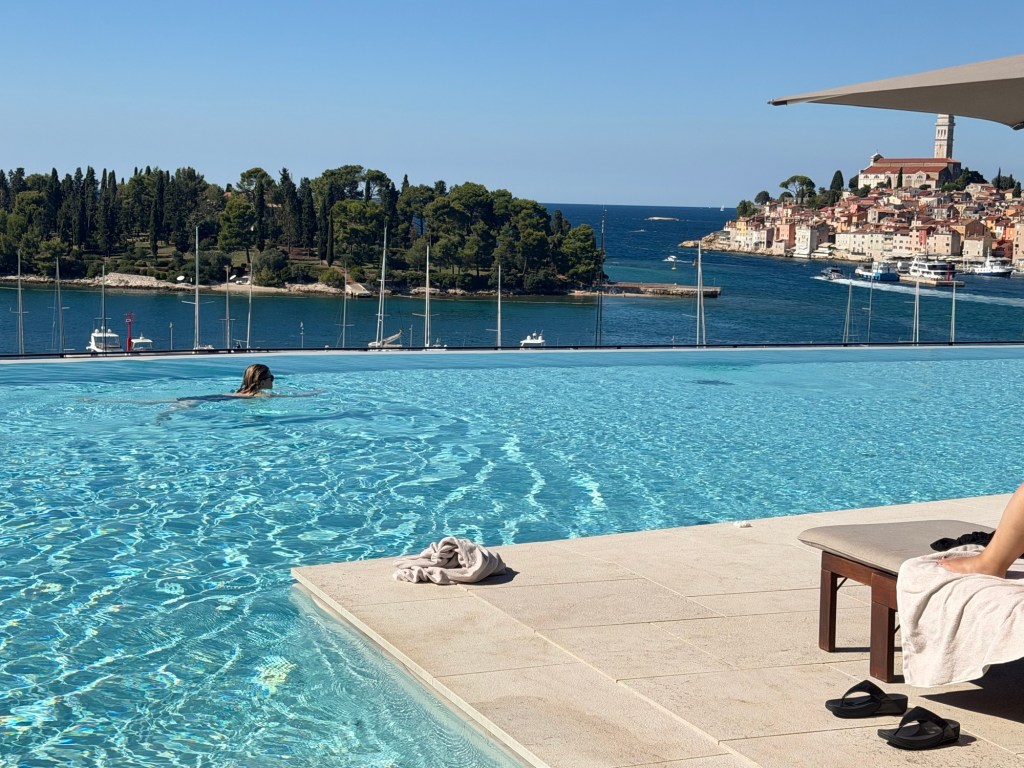
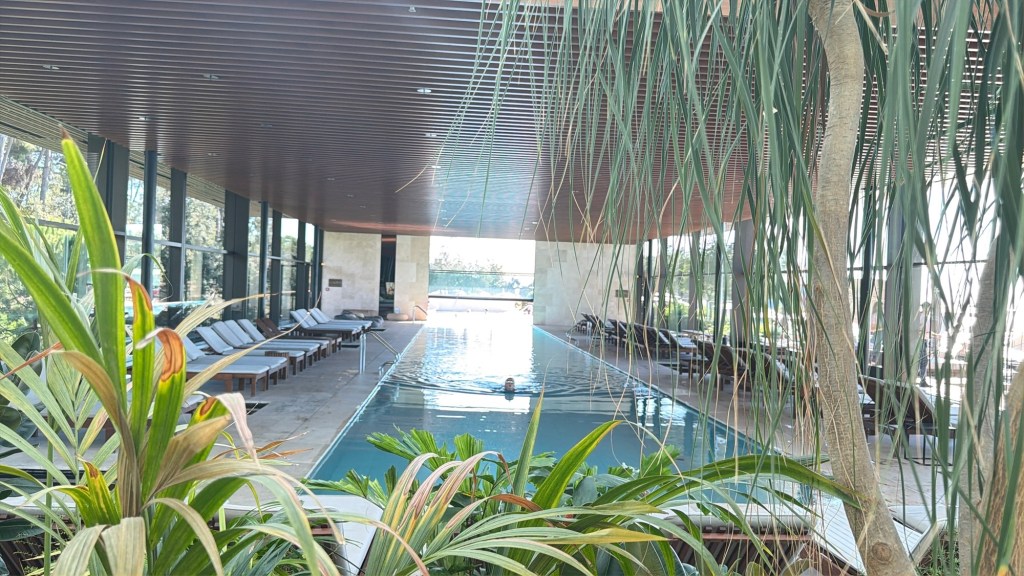
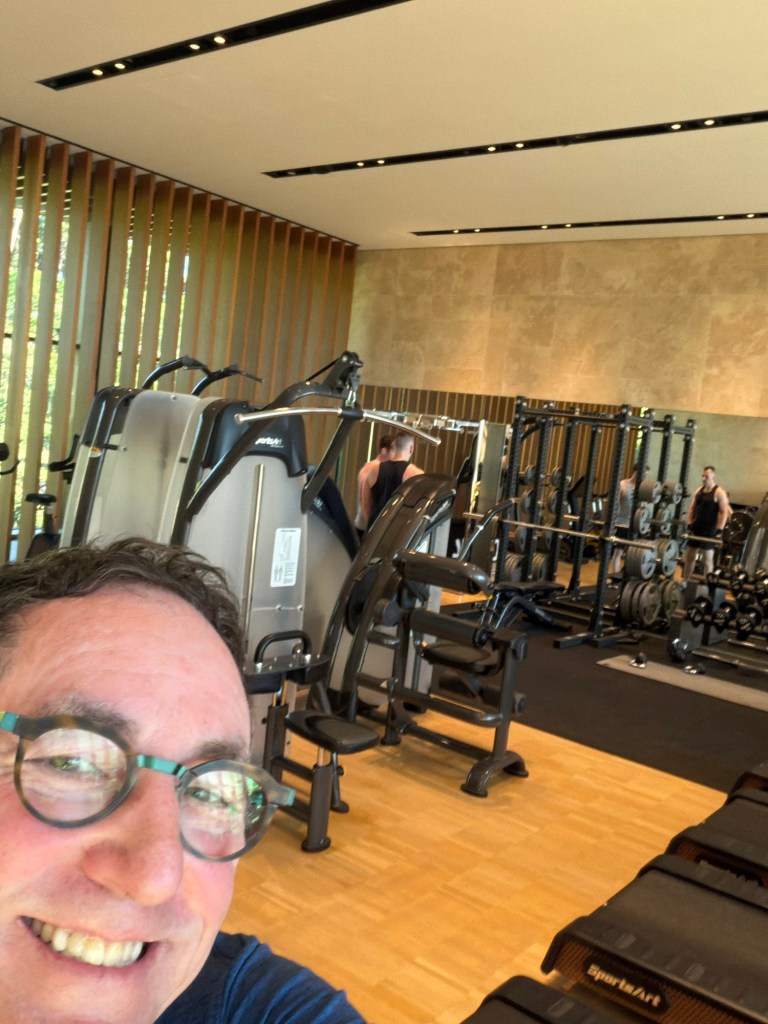
Among hotel’s many impressive facilities are a lush indoor pool, a fully equipped gym and an outdoor infinity pool with a spectacular view across the marina to Rovinj’s old town.
Our room reflected the hotel’s understated modern design, with clean lines, pale wood paneling, a raw concrete wall and frosted-glass partitions separating the sleeping area from the bathroom.
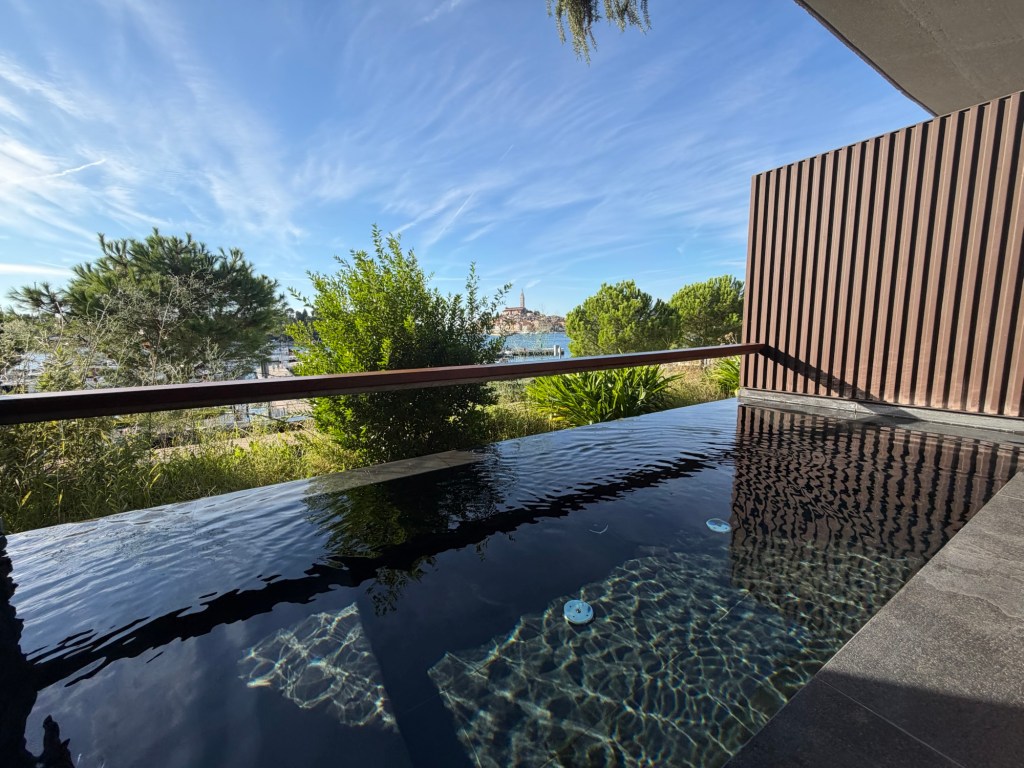
The real attraction, however, lay beyond the room. Our terrace included a private plunge pool overlooking the marina, with the historic peninsula of Rovinj rising across the water and the bell tower of St. Euphemia dominating the skyline. Framed by pine trees and Mediterranean greenery, it was a view that made the room feel like a private grandstand facing one of the most beautiful scenes on the Adriatic.
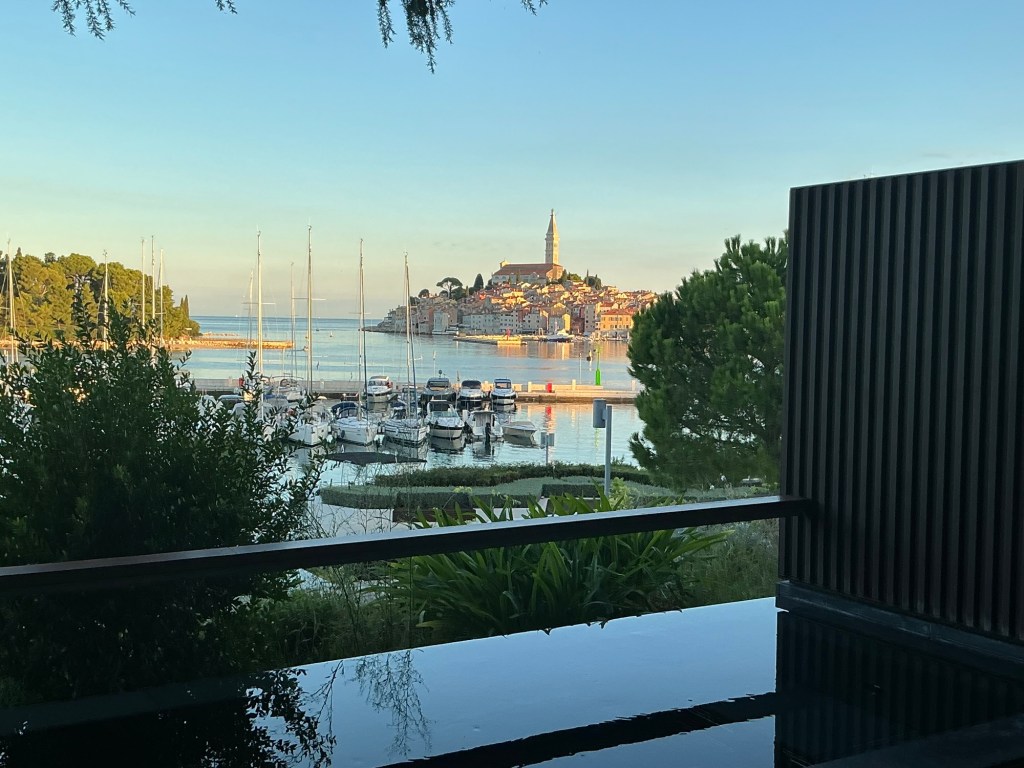
Grožnjan
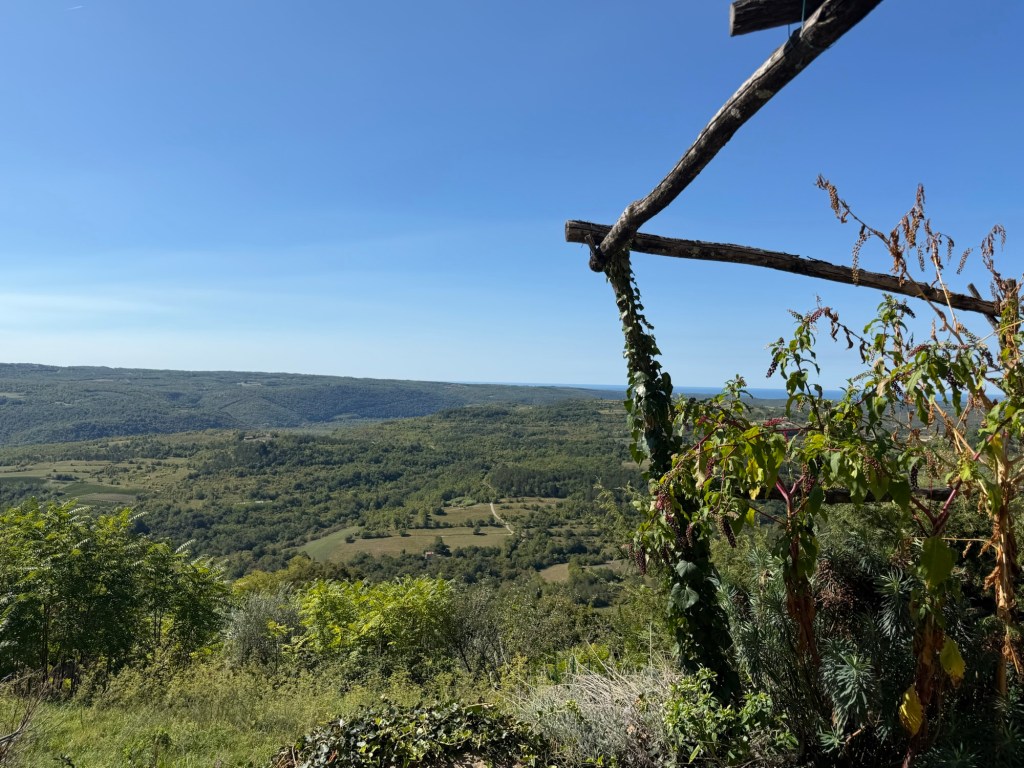
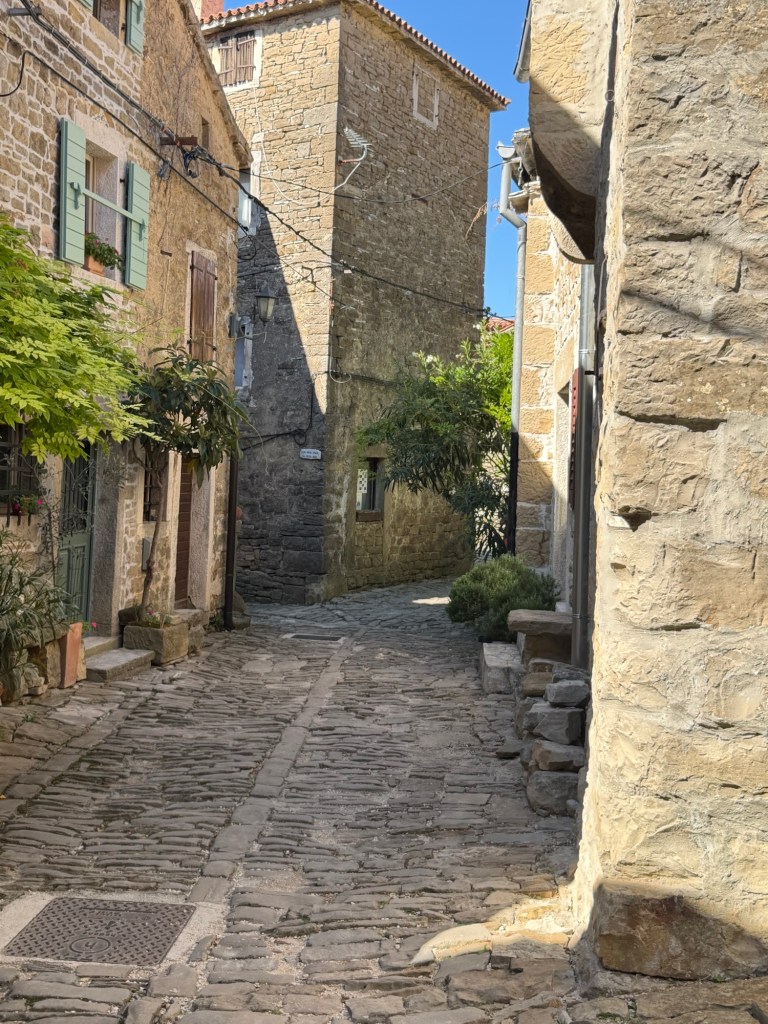
The following morning, we met our local guide, Rosanna, and set out to explore the rolling countryside of inland Istria. We chose to visit Grožnjan, a beautifully preserved medieval hill town in northwestern Istria.
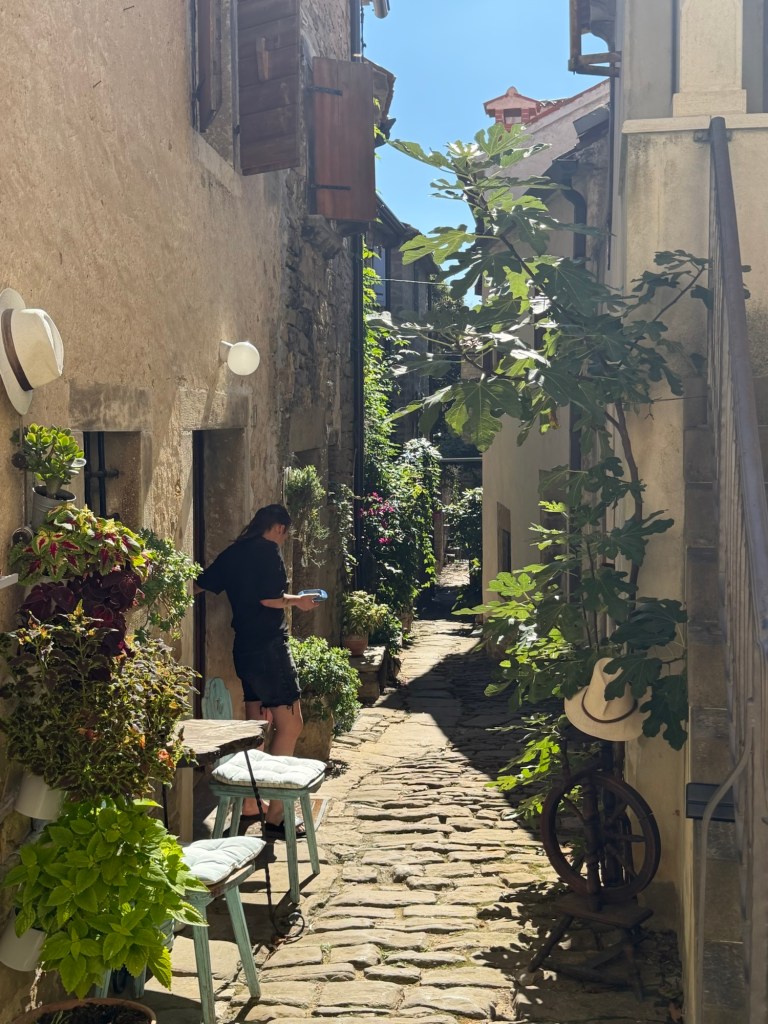
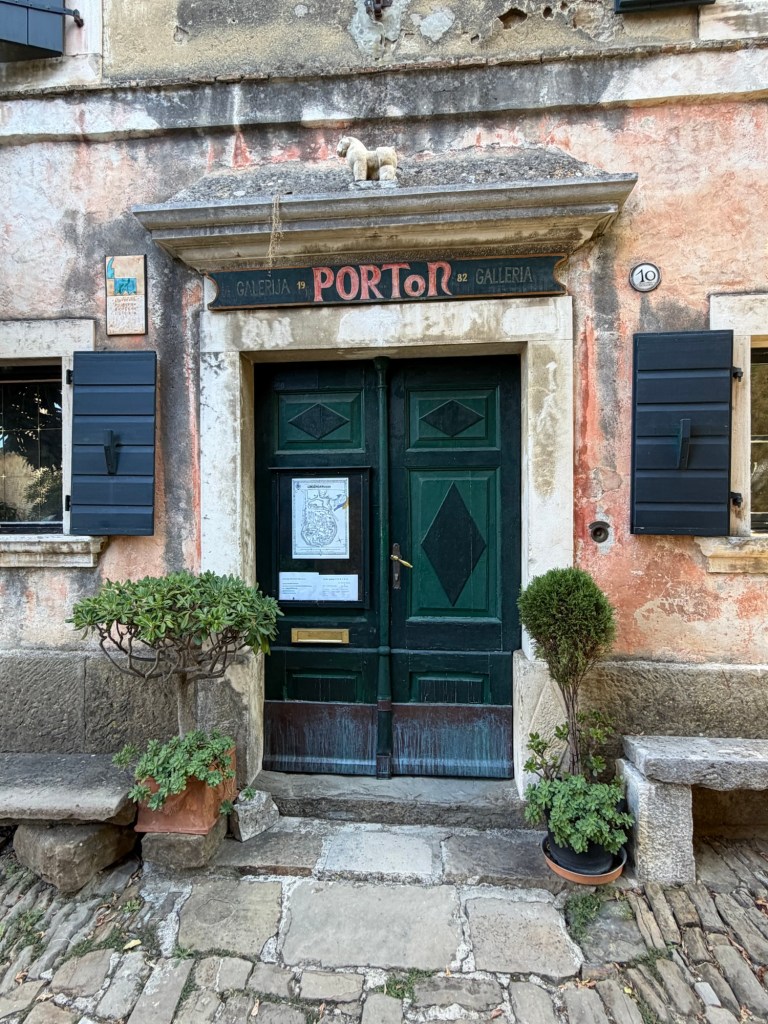
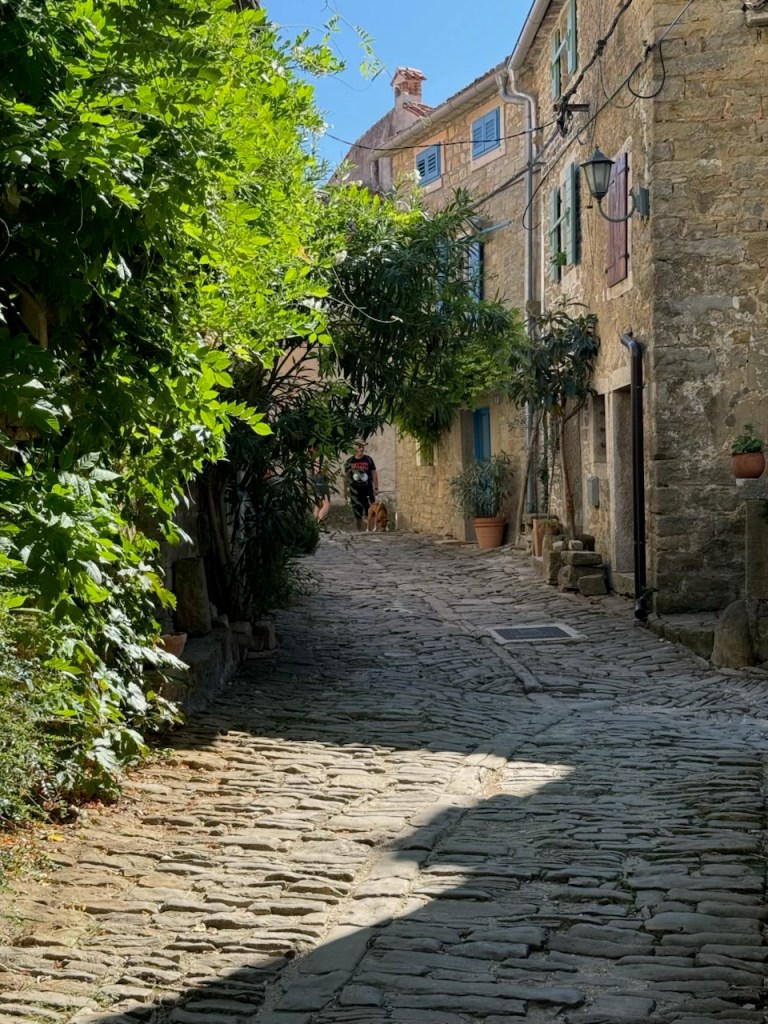
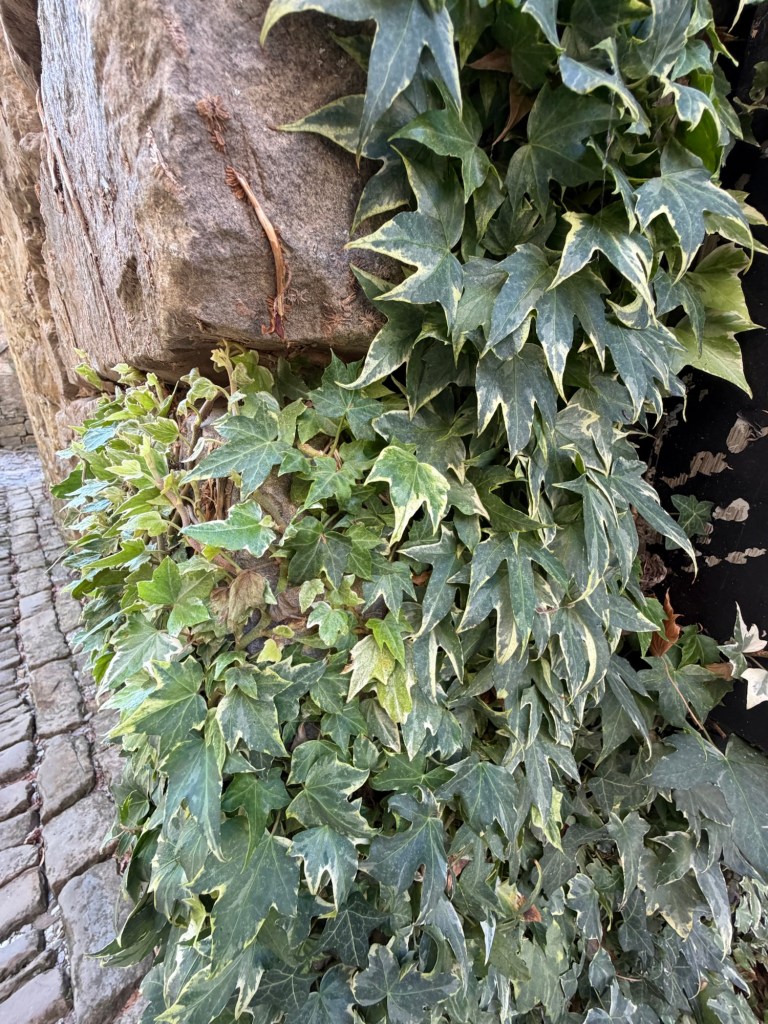
Grožnjan immediately felt like a village suspended in time. Its steep, uneven lanes wound between centuries-old stone houses softened by ivy, potted flowers and the occasional fig or olive tree. Small galleries and specialty shops occupied the old buildings, offering truffle products, local wines and award-winning olive oils.
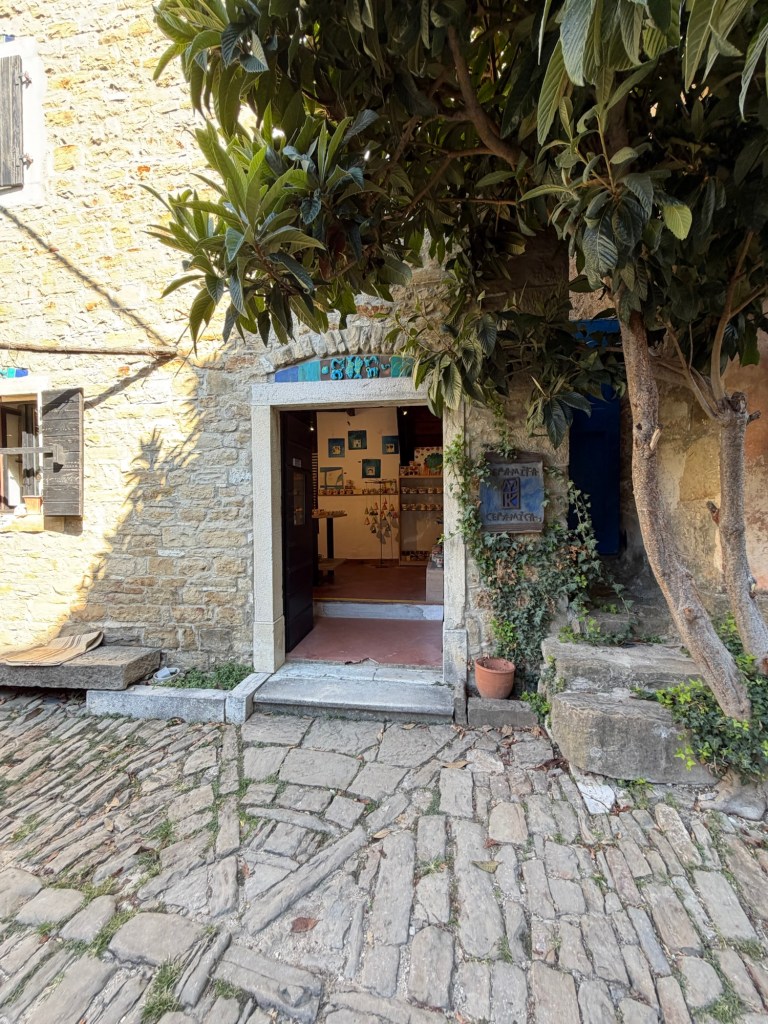
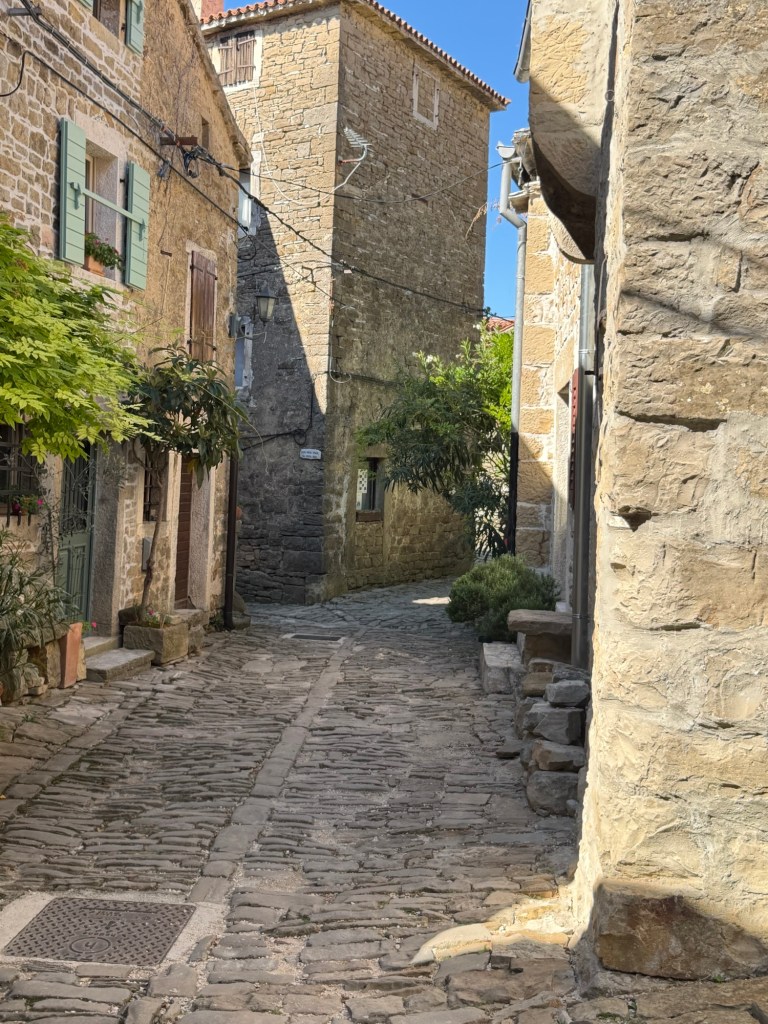
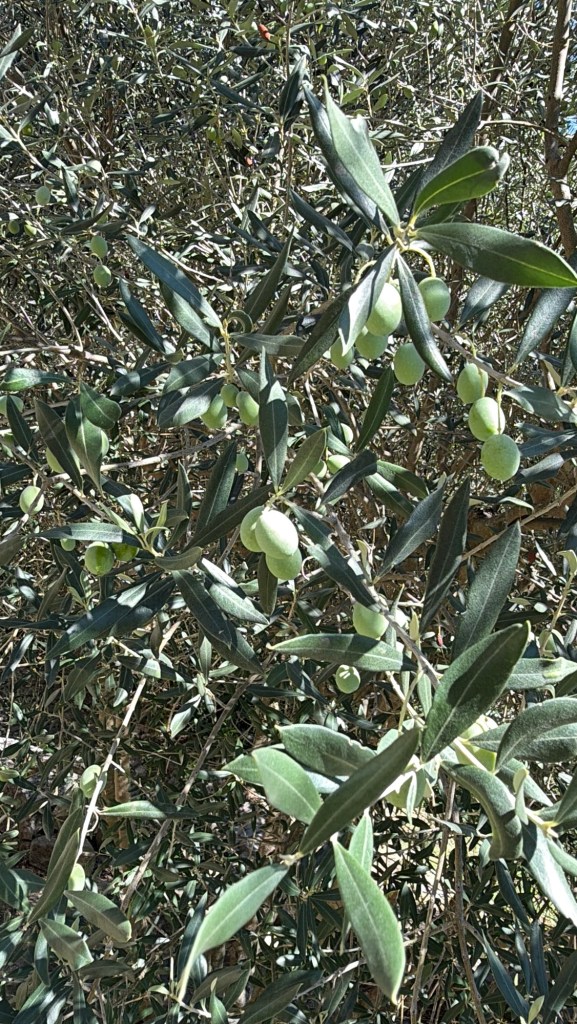
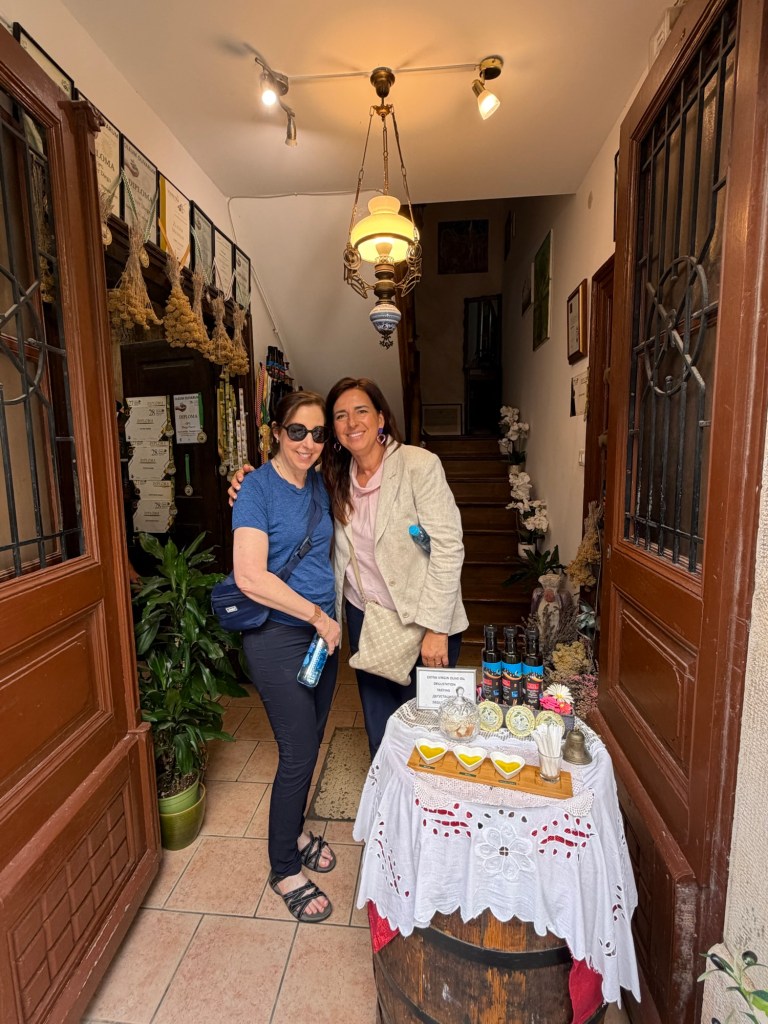
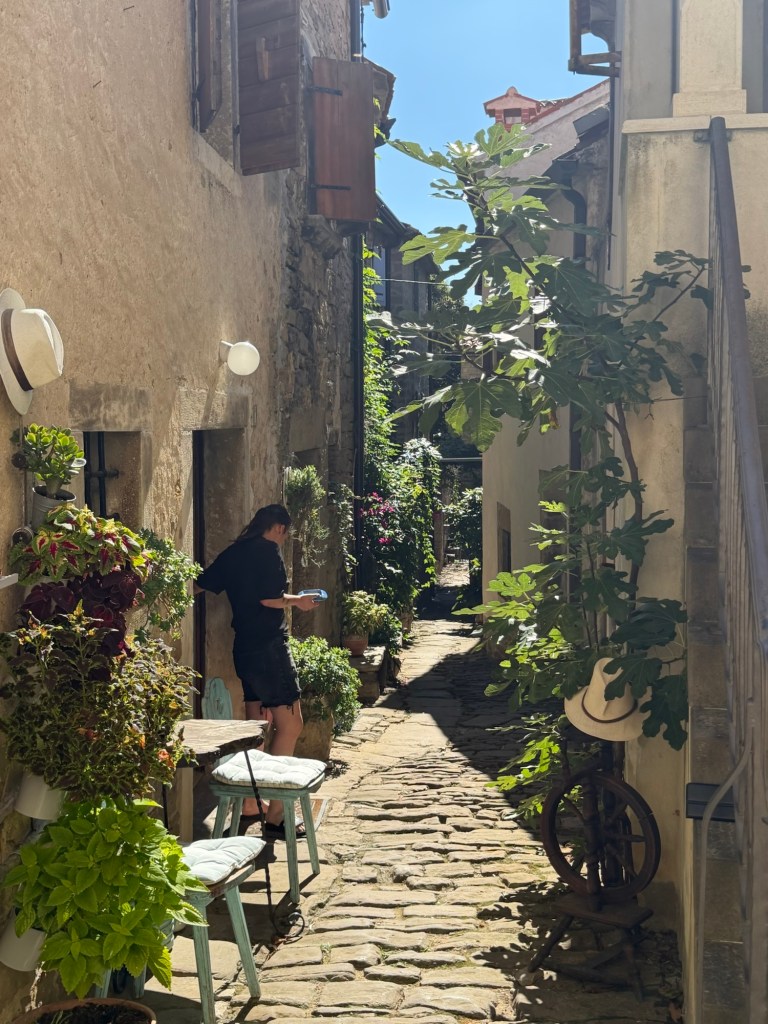
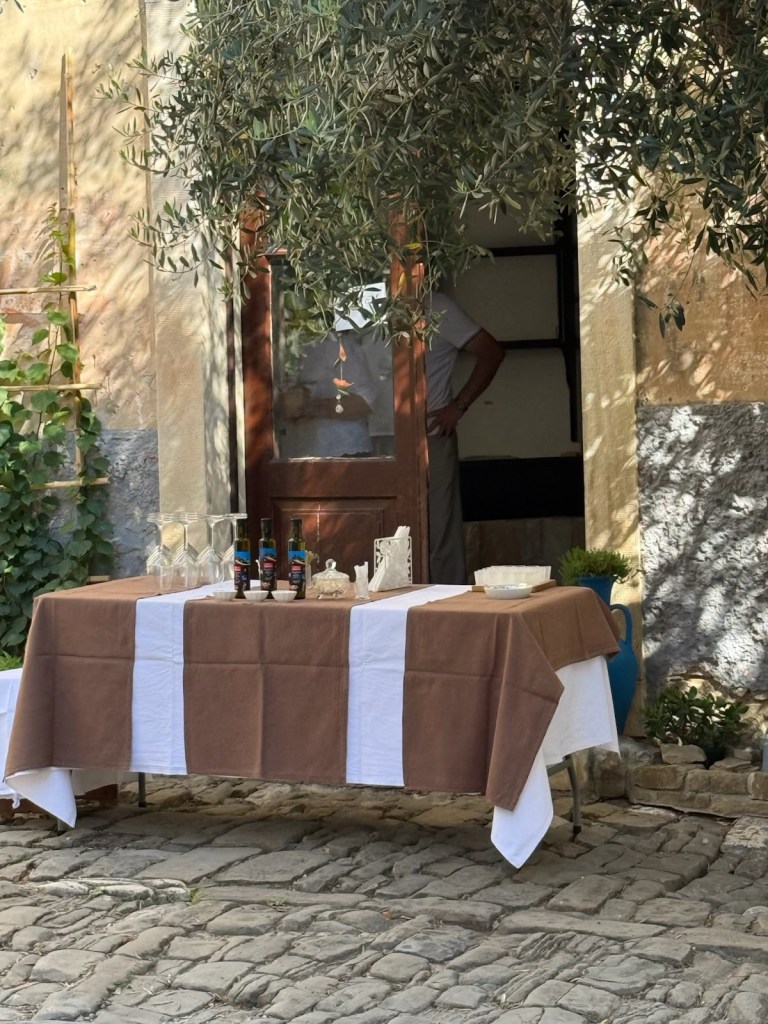
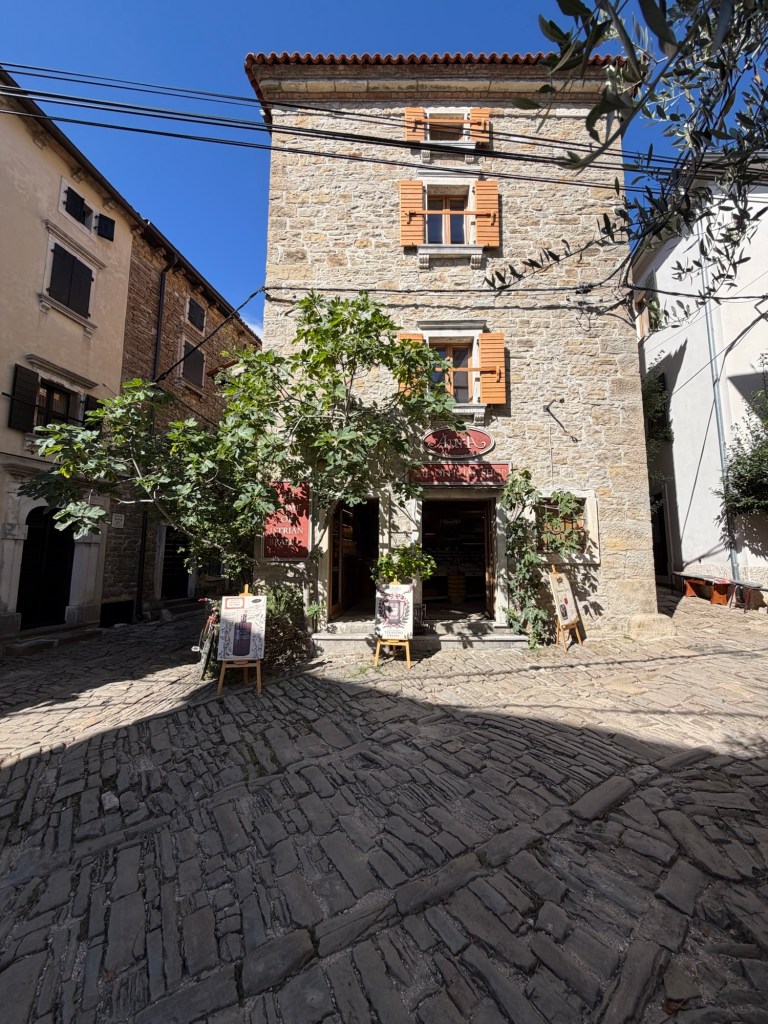
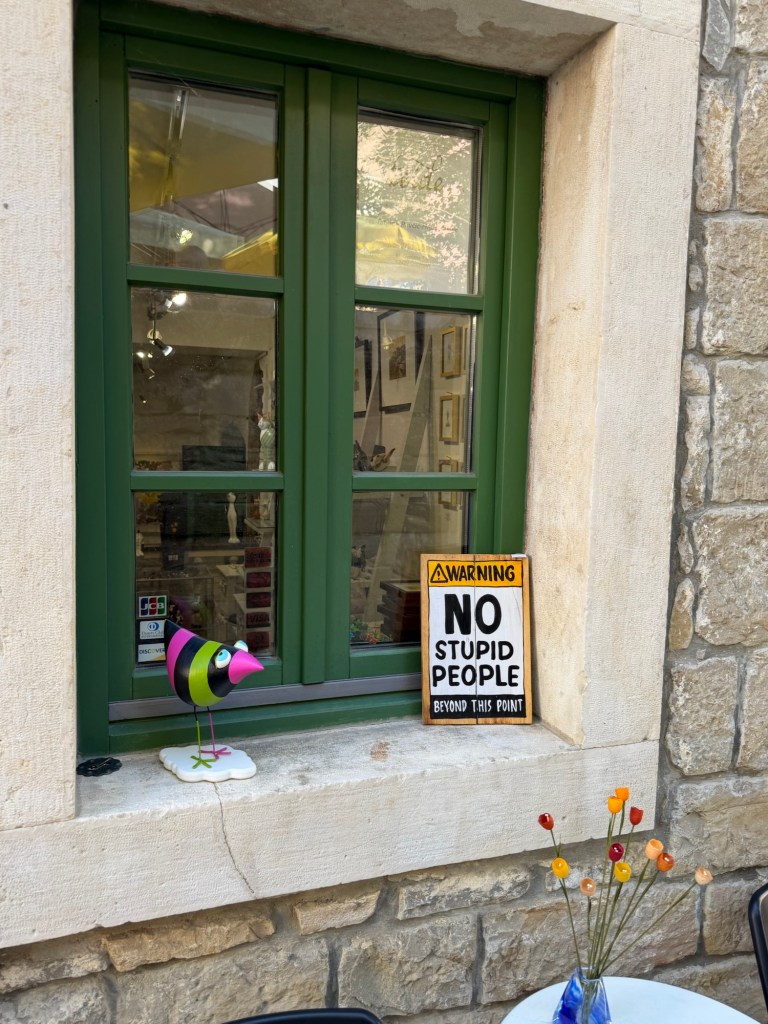
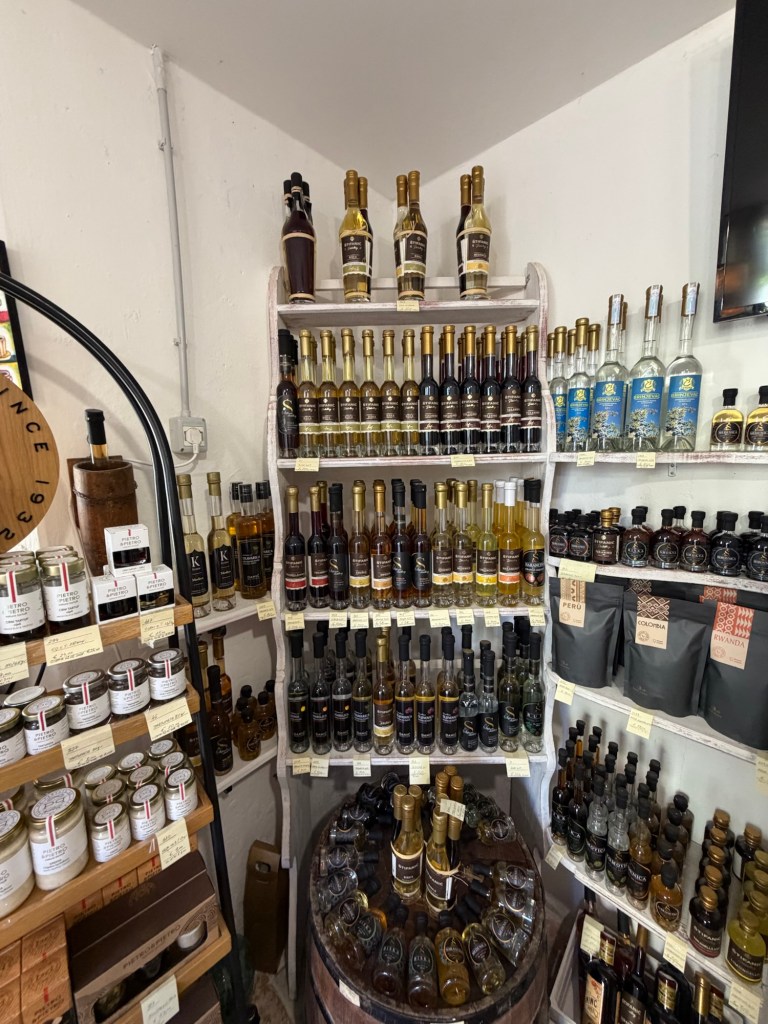
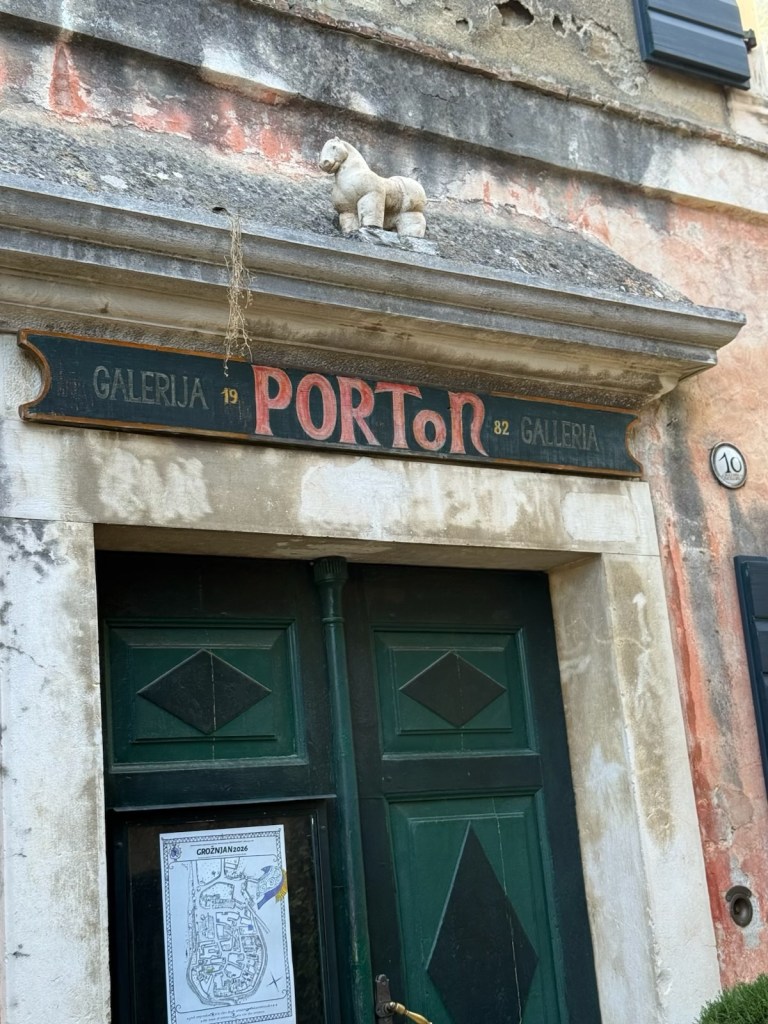
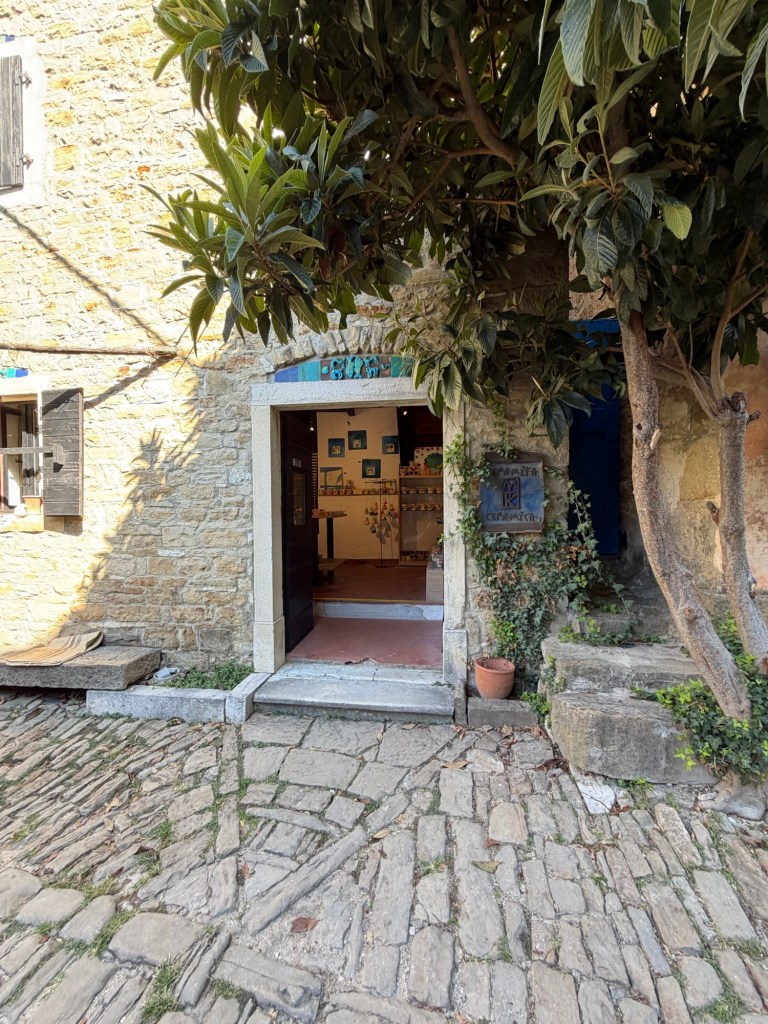
At one shop, we tasted our way through three extra-virgin olive oils. Each began with its own bright, fruity flavor, then finished with the pleasant bitterness and peppery kick that make Istrian oils so distinctive. We moved on to another shop for a different local treasure: truffles. There, we sampled several truffle specialties, discovering just how many ways the region finds to bring their earthy, unmistakable flavor to the table.
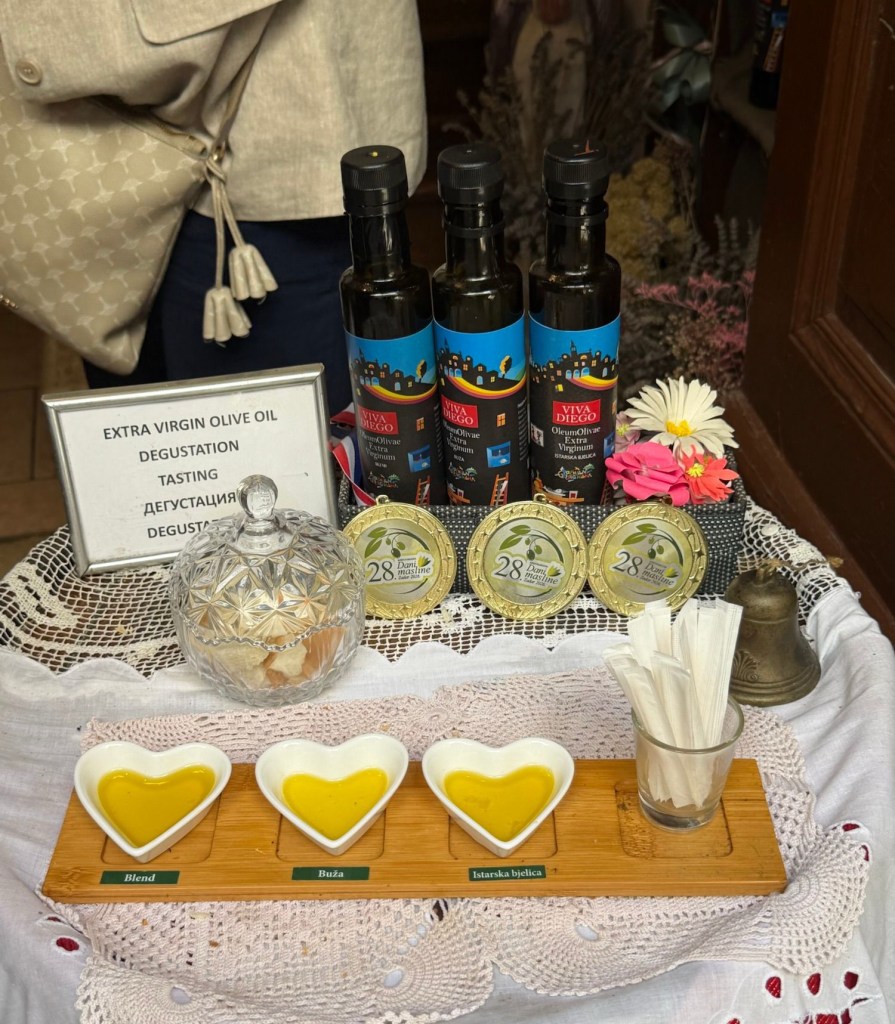
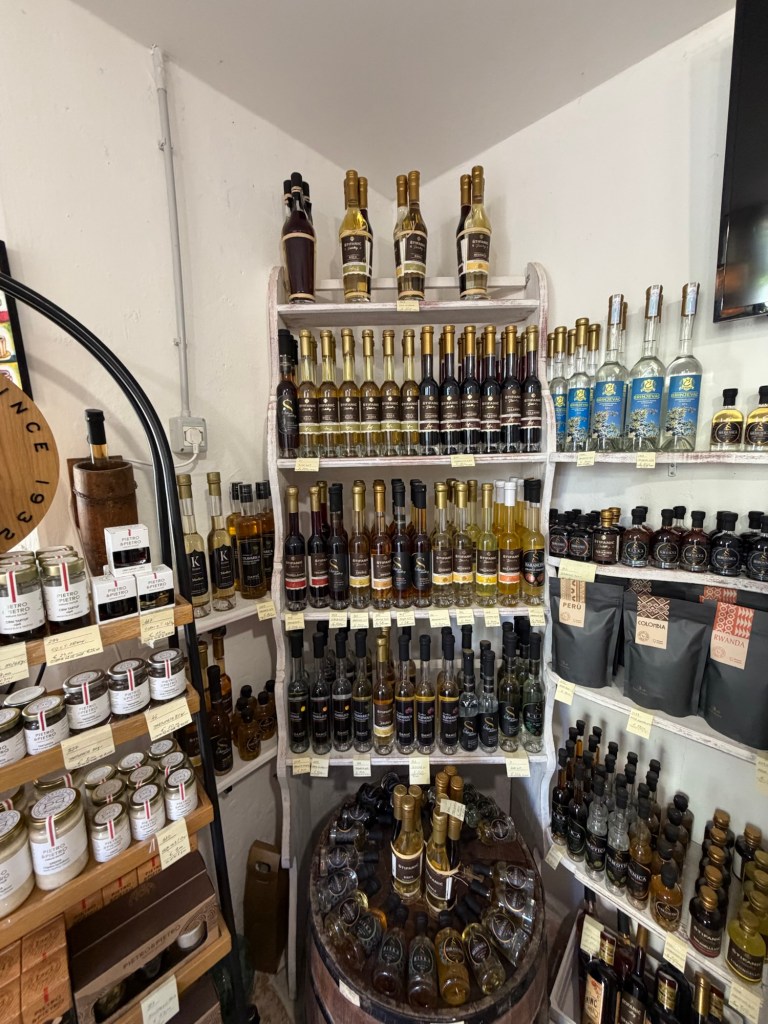
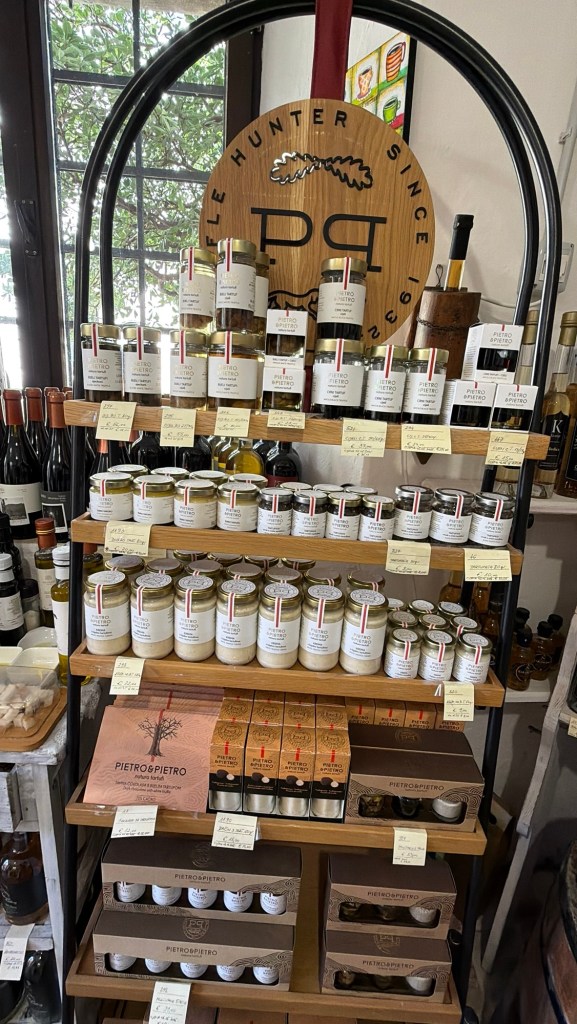
One of the most memorable moments of our visit came when we met Marko Brajković, an internationally exhibited artist, whose work we had come to see.
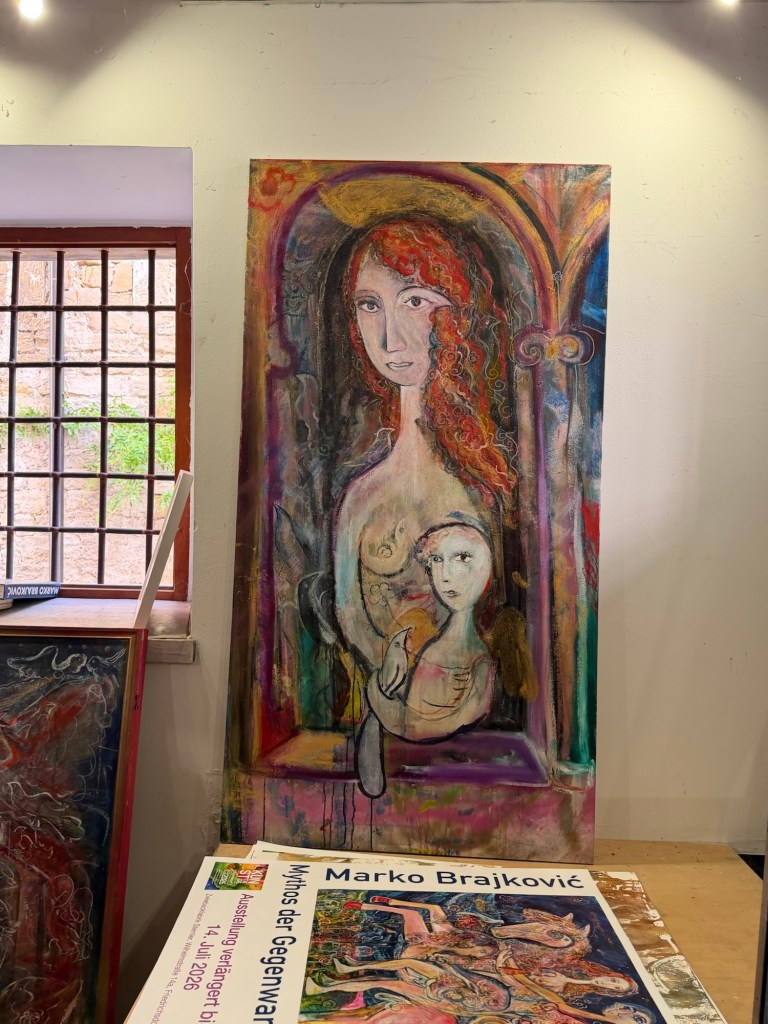
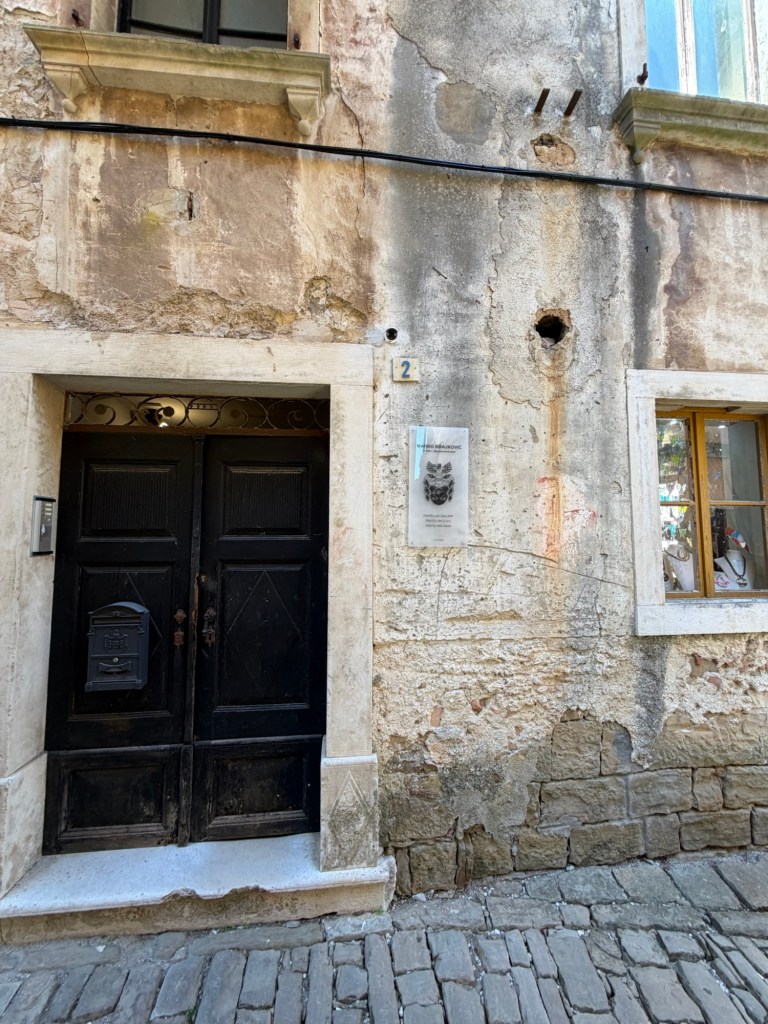
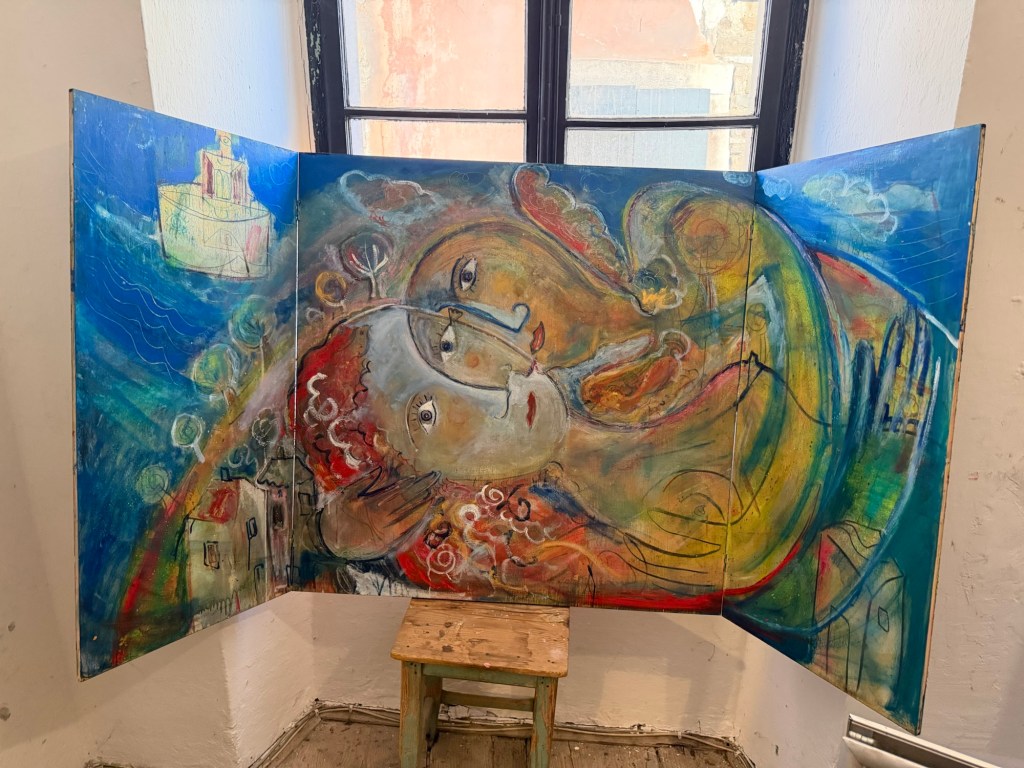
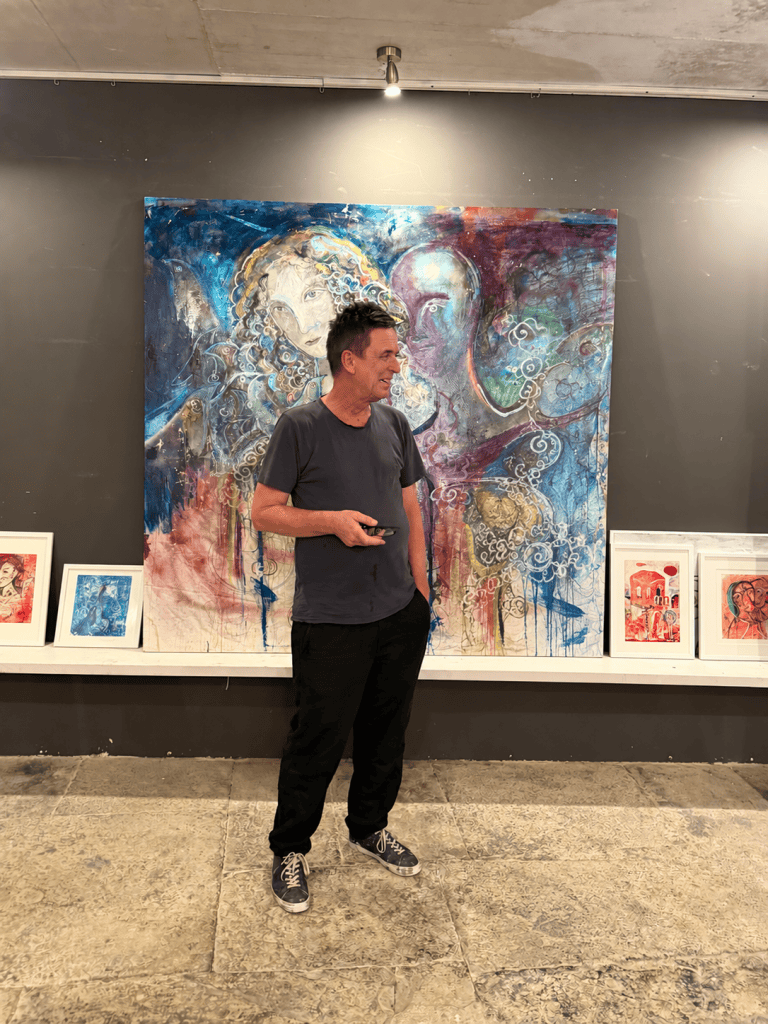
He invited us into his studio for a private tour, personally guiding us through rooms crowded with canvases depicting elongated human figures, horses, birds and dreamlike scenes rendered in rich blues, pinks and golds.
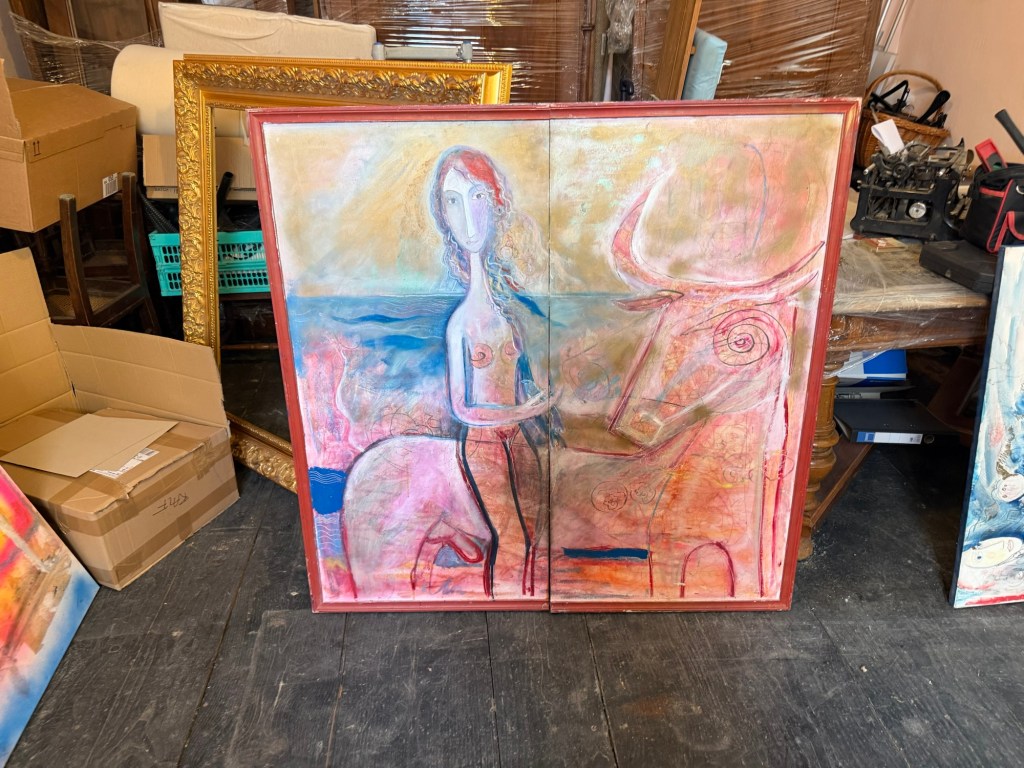
It was a rare opportunity to meet a remarkably accomplished artist in the intimate surroundings where his work is created.
Old Town
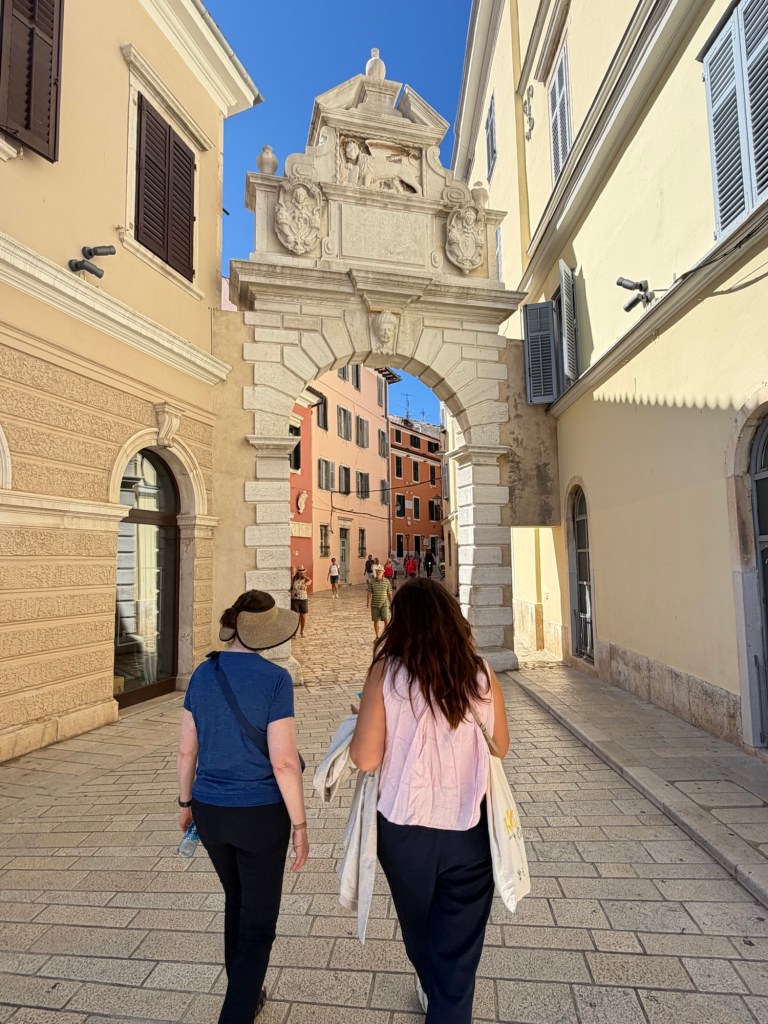
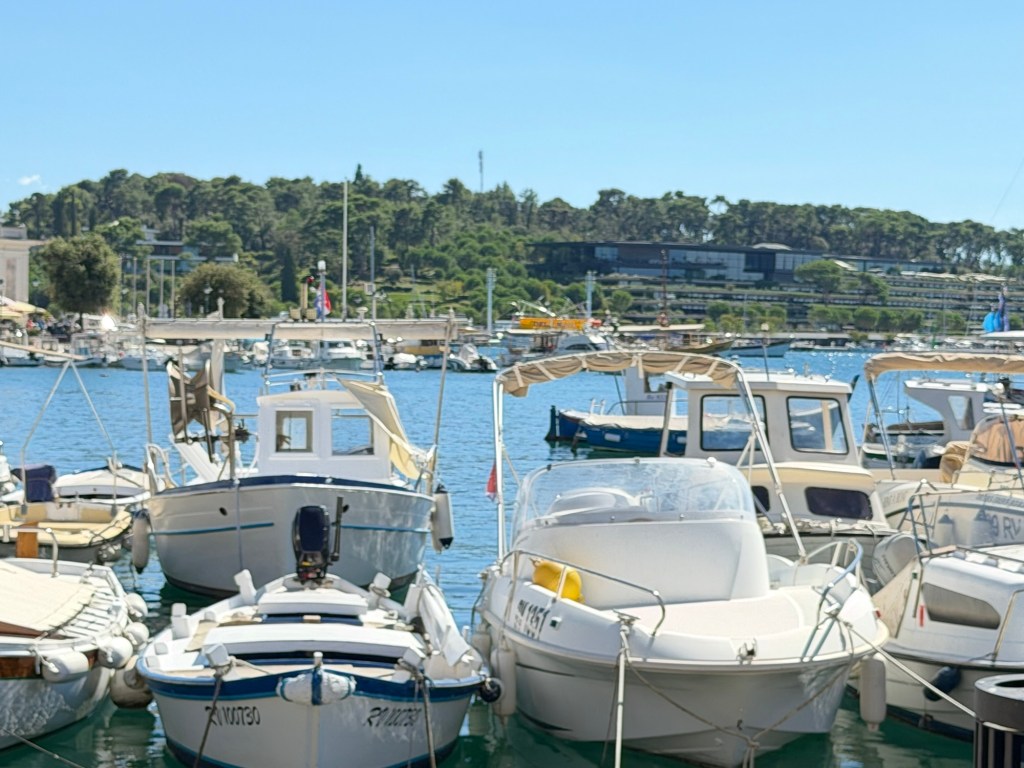
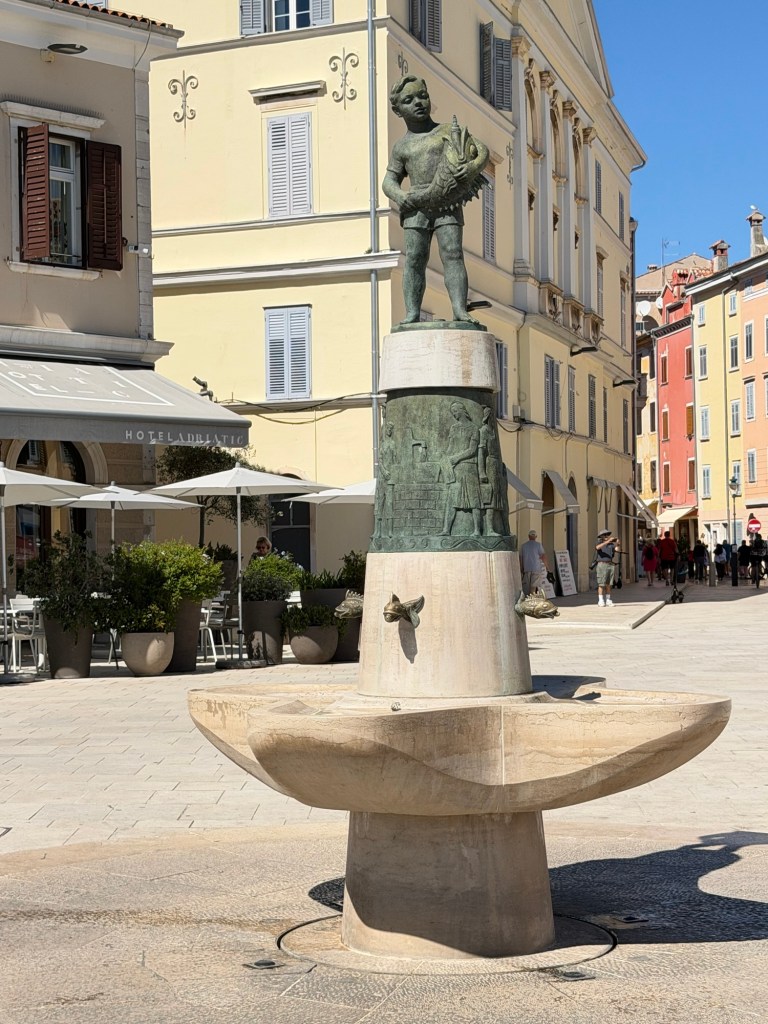
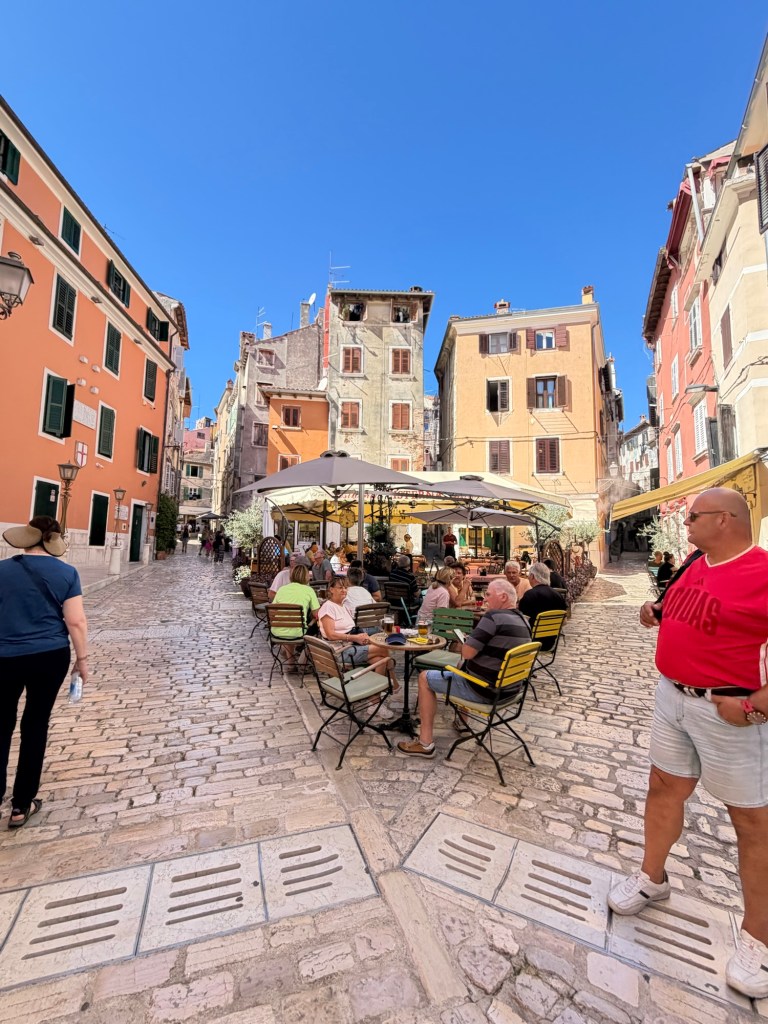
We then drove back to Rovinj, where Rosanna led us on a walking tour of the old town. Beginning beside the harbor, we crossed Marshal Tito Square, surrounded by pastel-colored façades and the small “Boy with a Fish” fountain, erected in 1959. From there, we passed beneath Balbi’s Arch, the ceremonial entrance to the old town, built around 1680 on the site of one of the original gates. Its winged Lion of St. Mark is another reminder that Rovinj belonged to the Venetian Republic for more than five centuries.
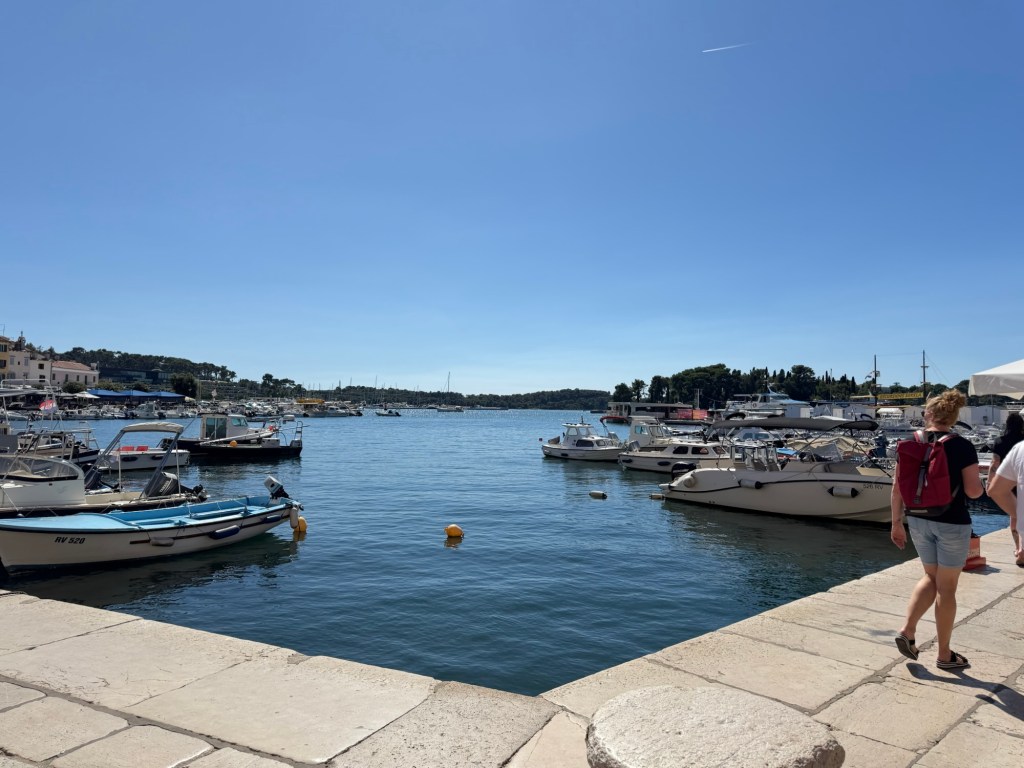
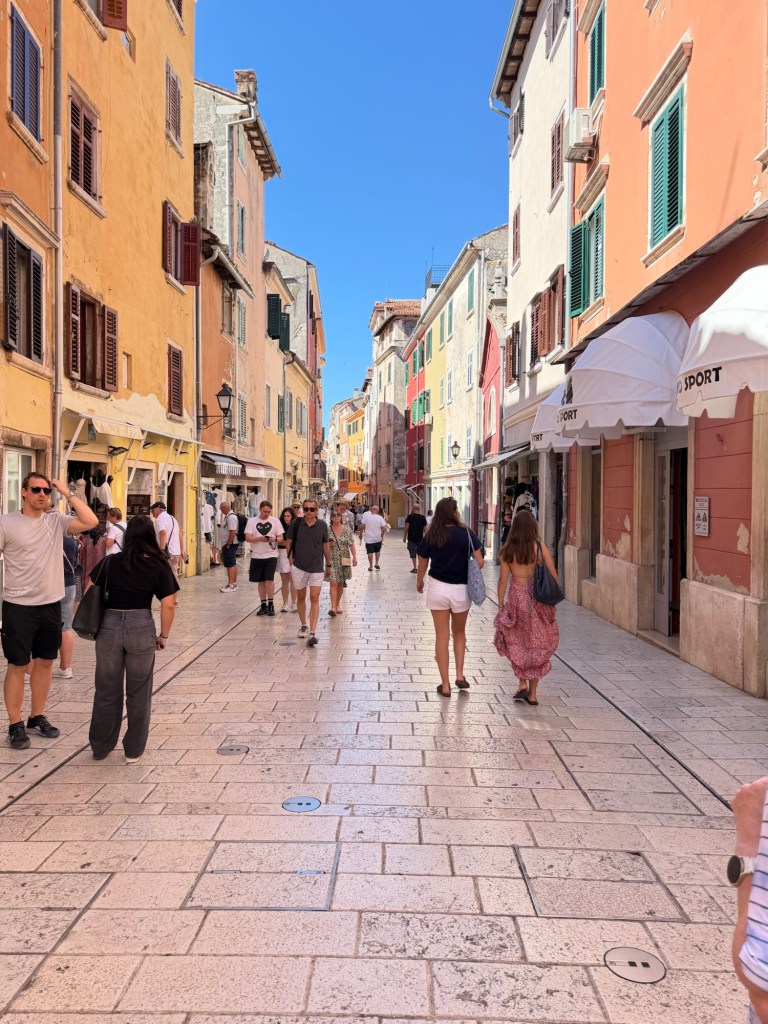
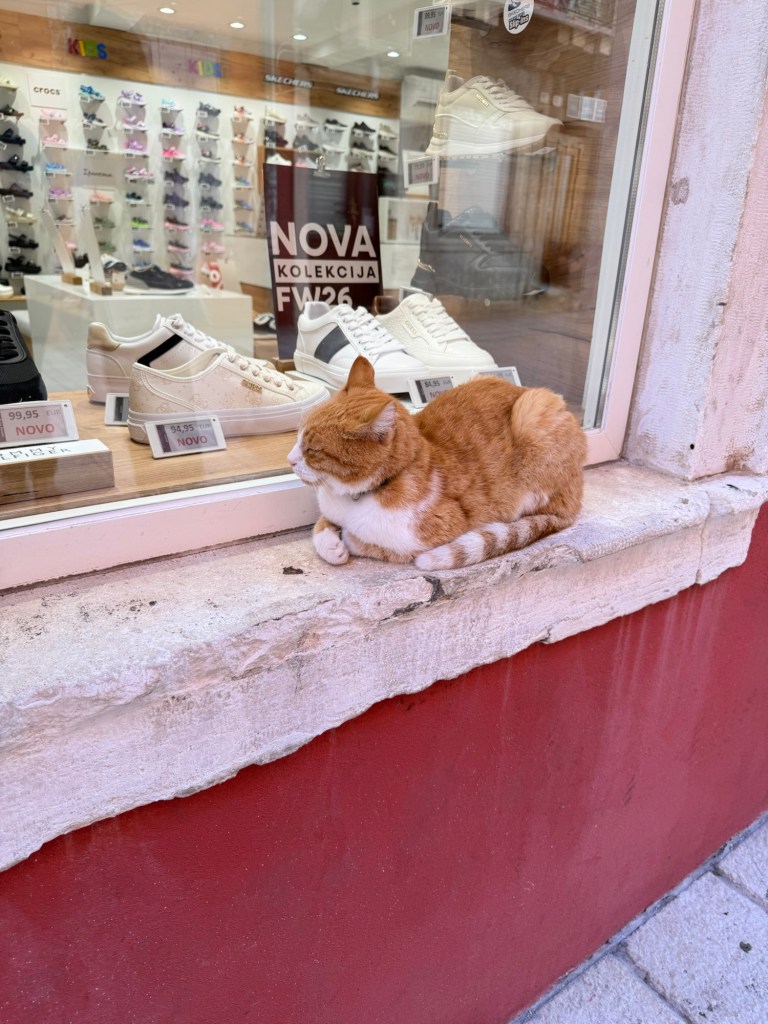
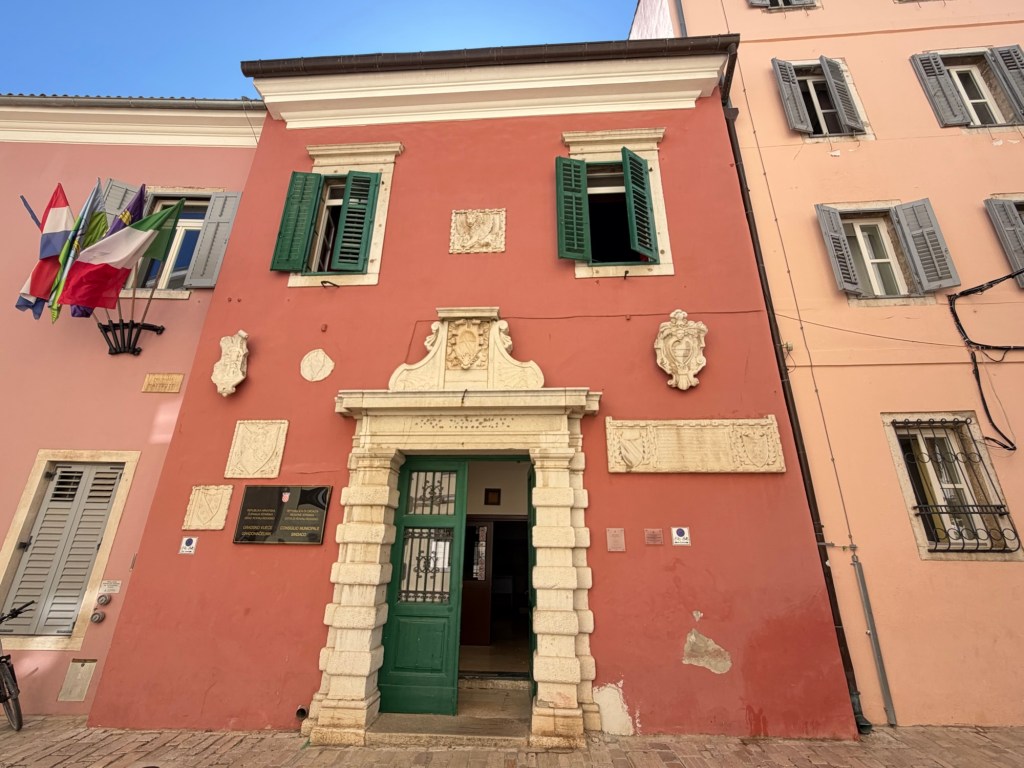
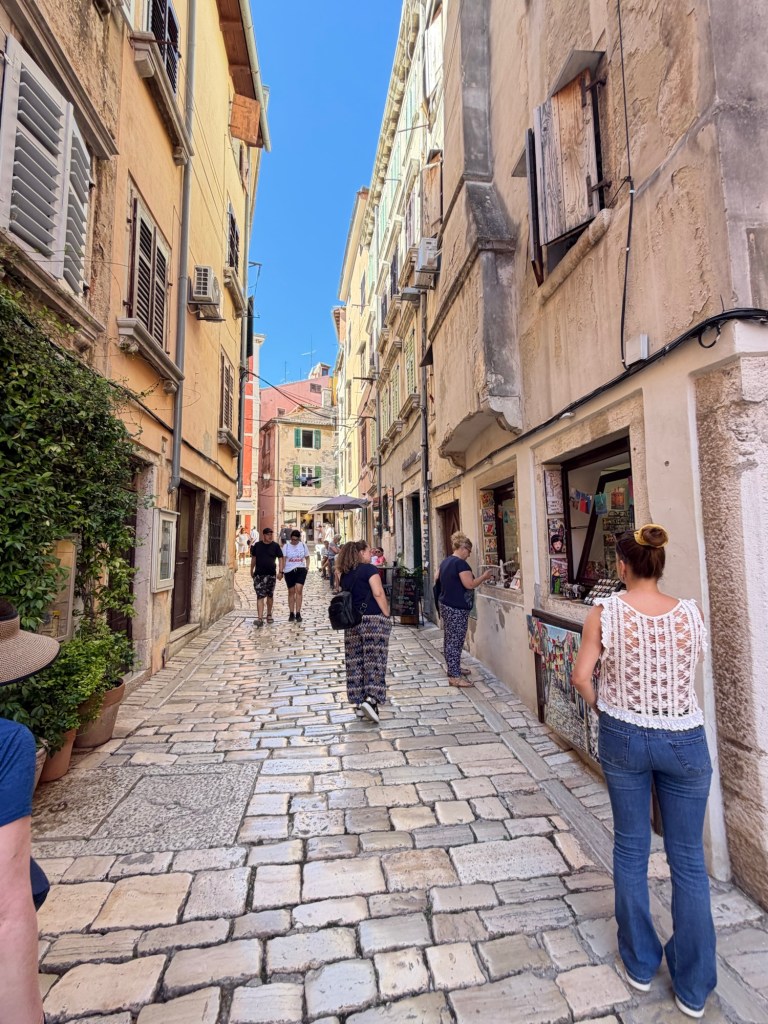
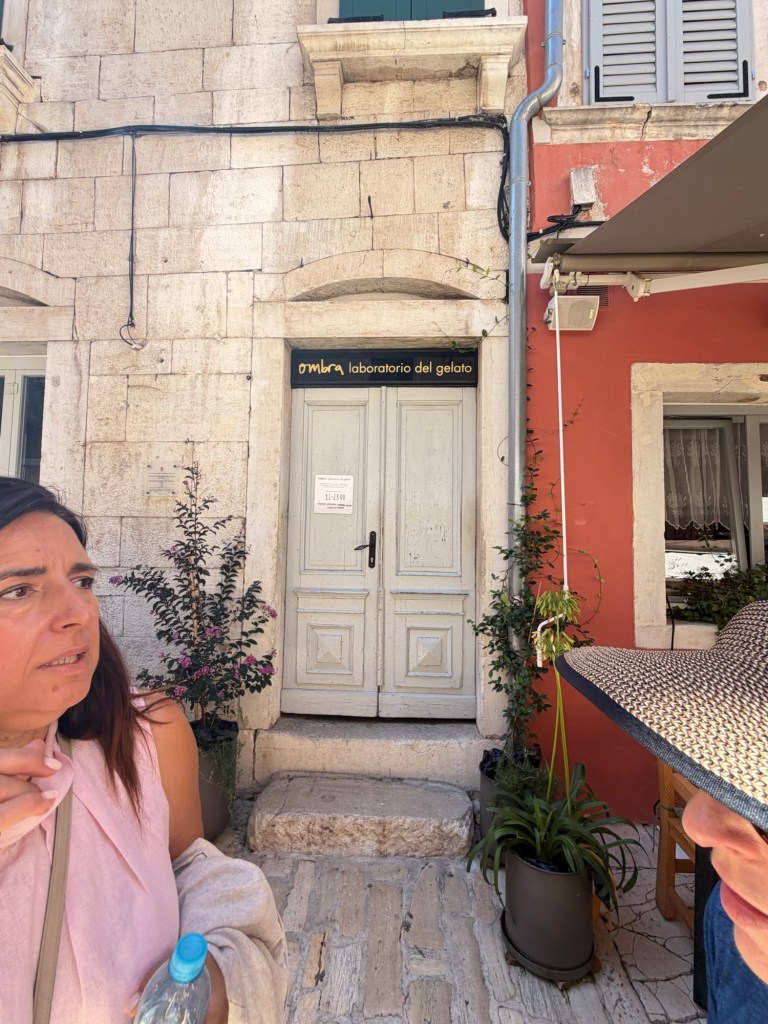
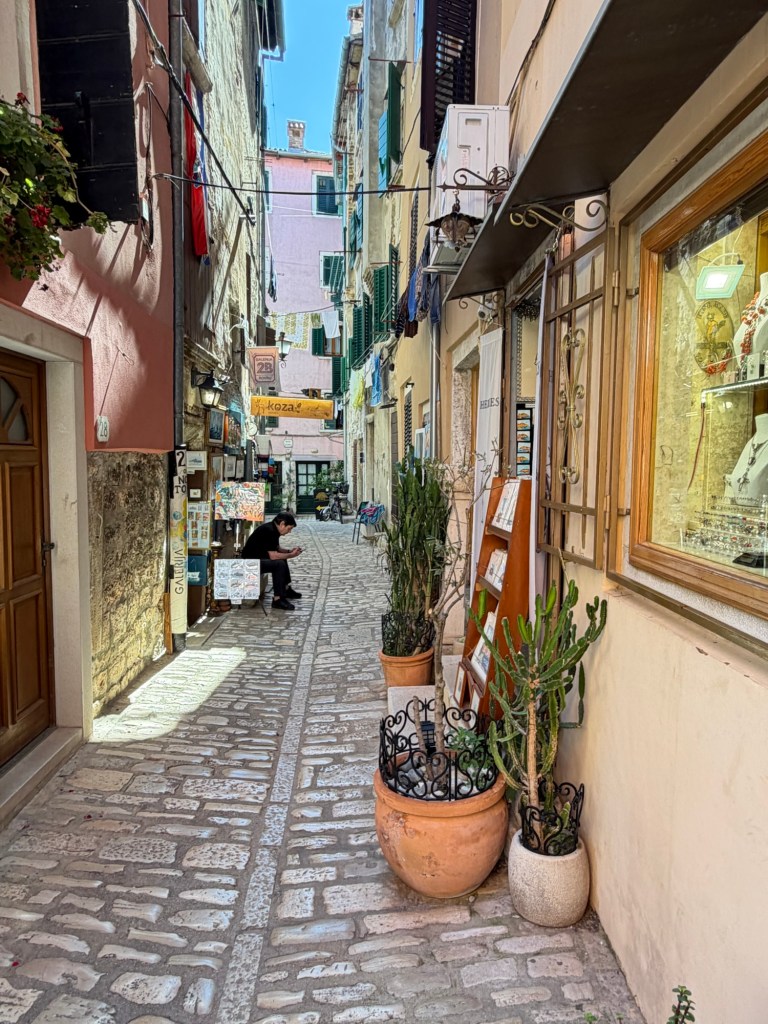
Just beyond stood the old Communal Palace, its red façade decorated with the coats of arms of Rovinj and its former Venetian officials. We then began climbing through the old town’s narrow cobblestone lanes, where weathered stone houses, brightly painted walls, wooden shutters, laundry lines, tiny galleries and gelato shops crowd together along streets polished smooth by generations of footsteps. The lanes felt less like a preserved historic district than a living neighborhood—one in which centuries of Venetian history remain woven into everyday life.
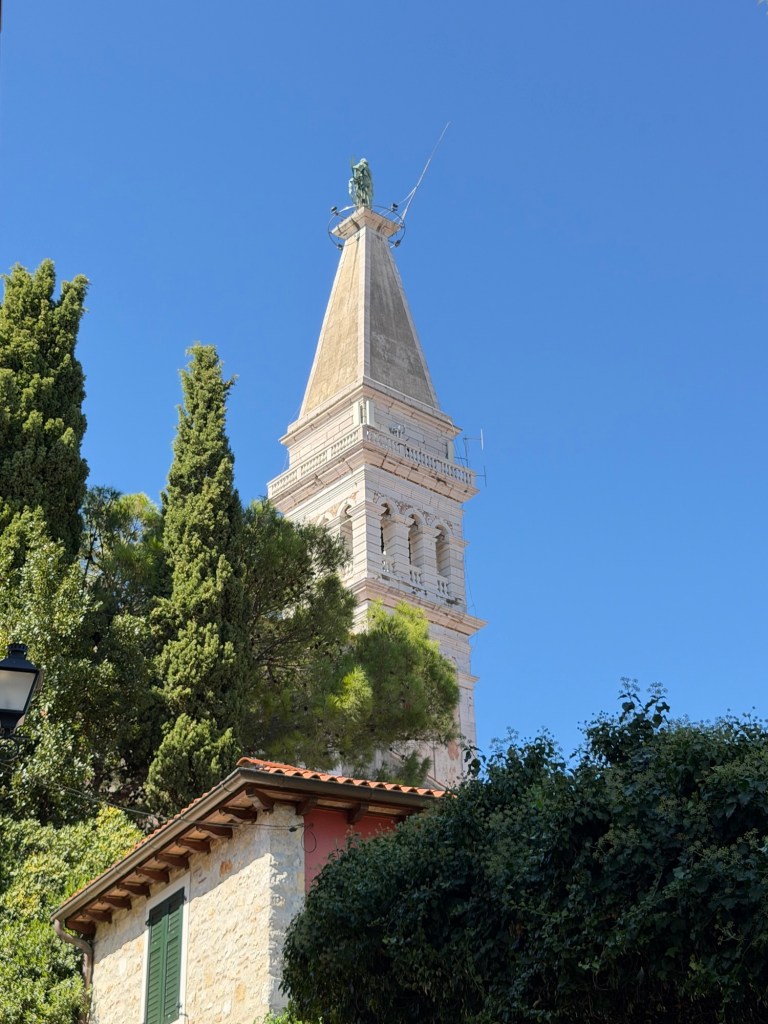
We continued climbing through Rovinj’s steep, polished cobblestone lanes until suddenly opened a broad, sunlit terrace overlooking the Adriatic. Standing at the summit was the Church of St. Euphemia, its massive stone walls rising above the sea and its elegant bell tower visible from almost everywhere in Rovinj. From the terrace, the view stretched across the brilliant blue water to the small islands scattered offshore.
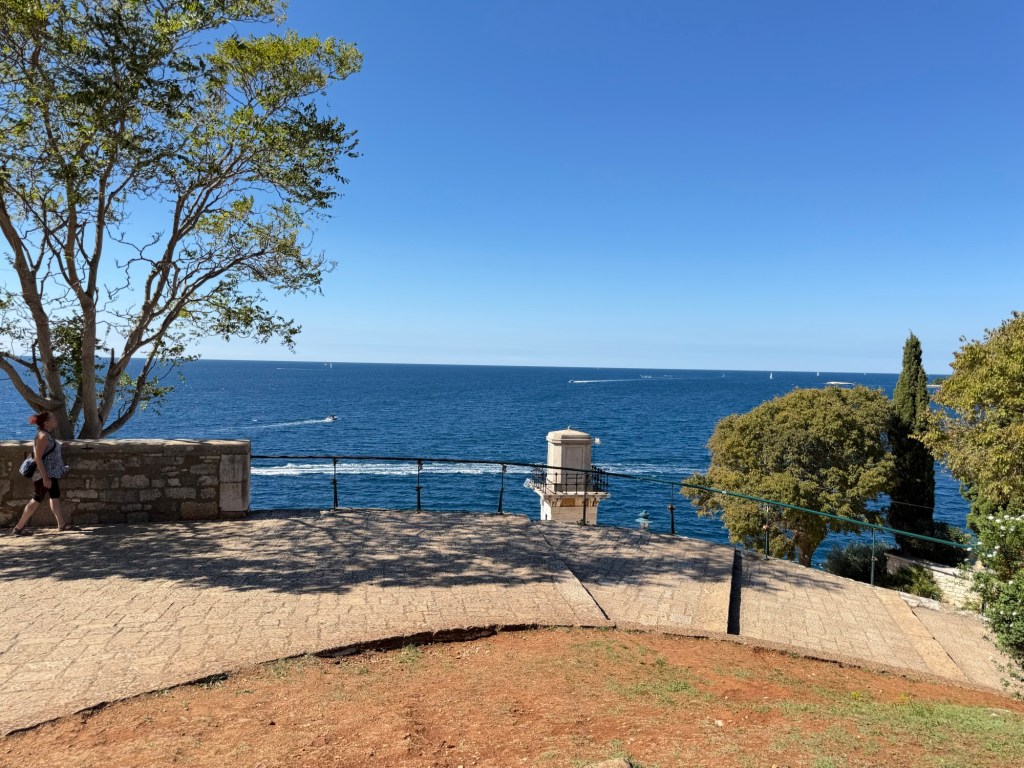
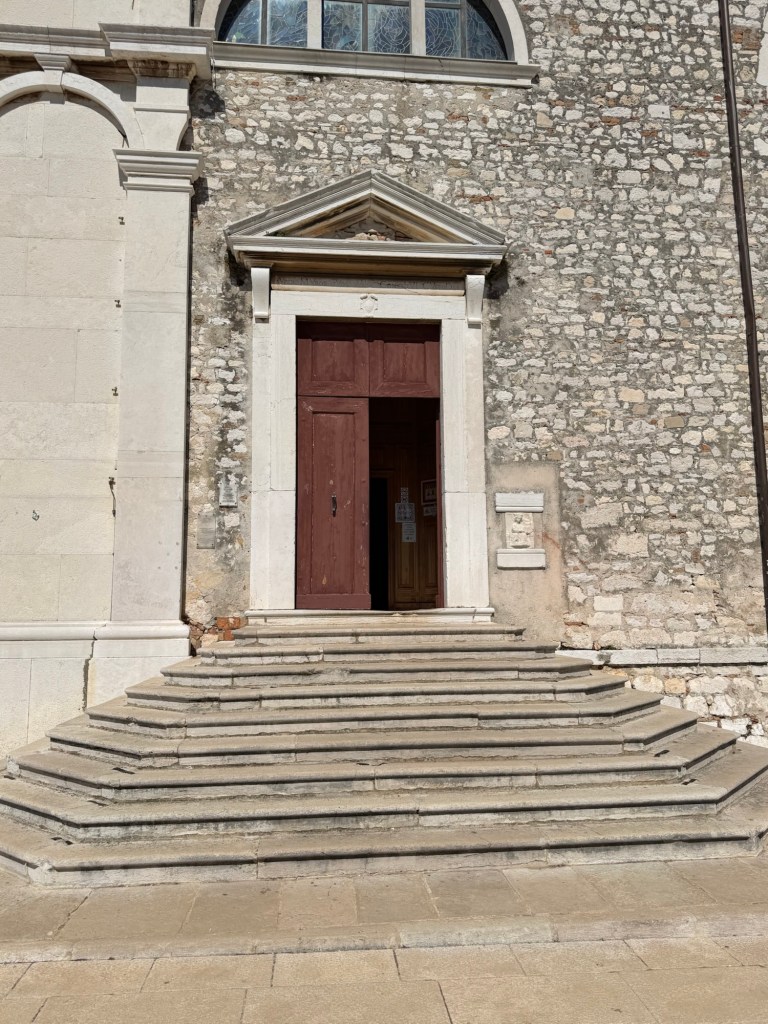
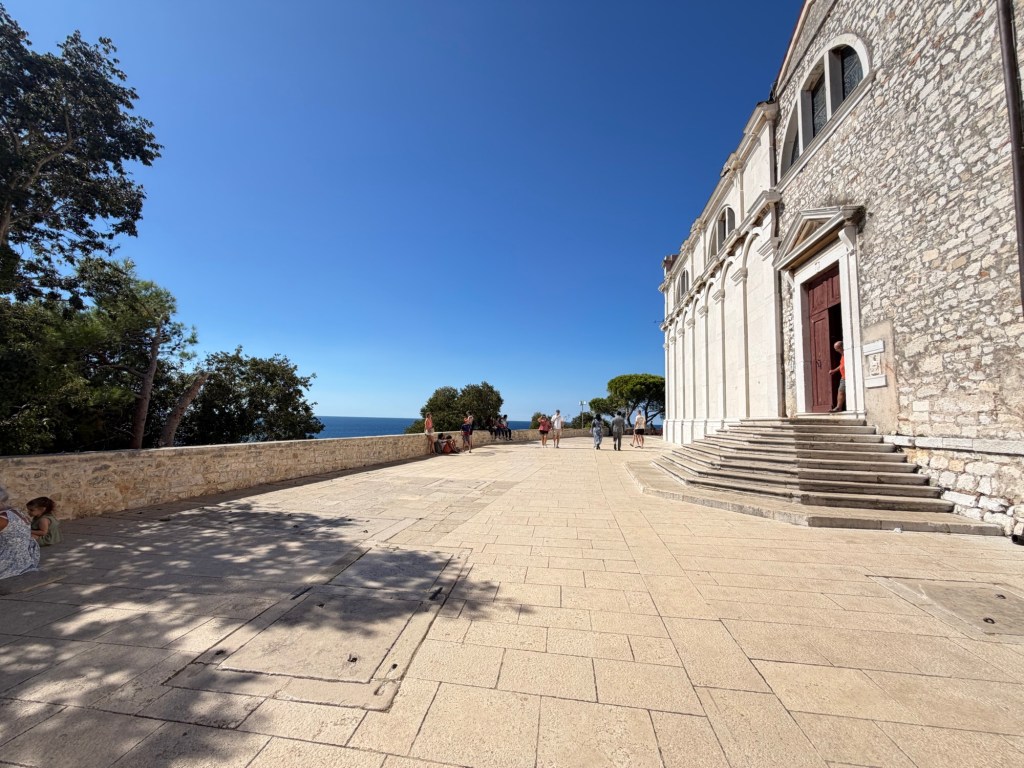
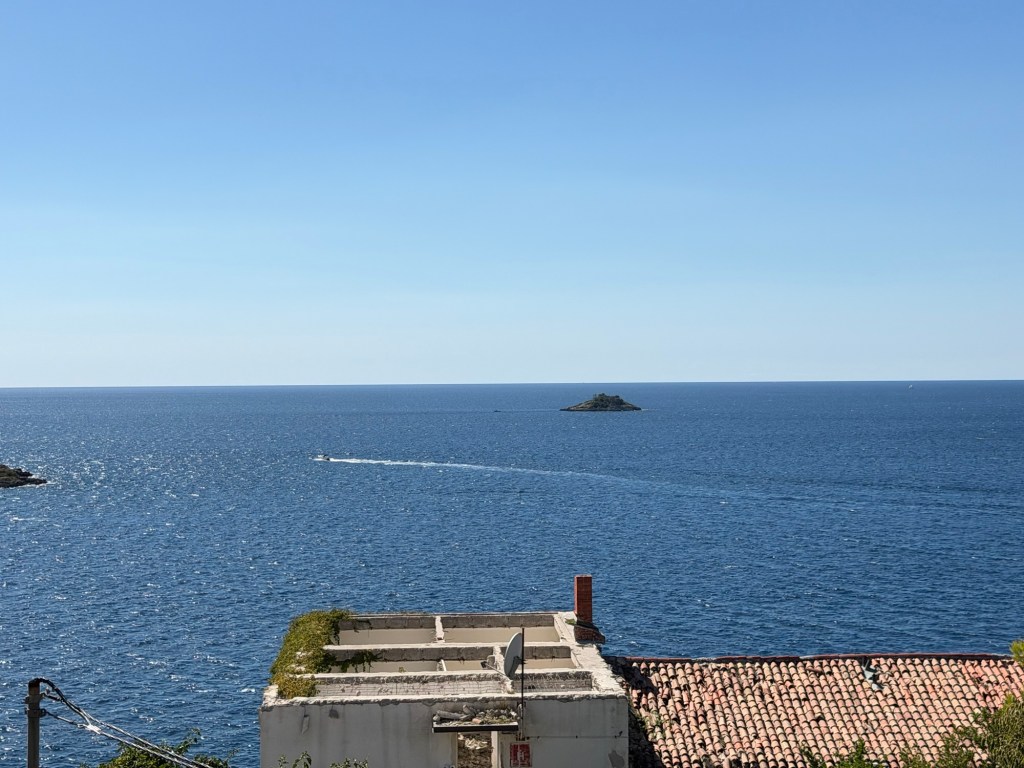
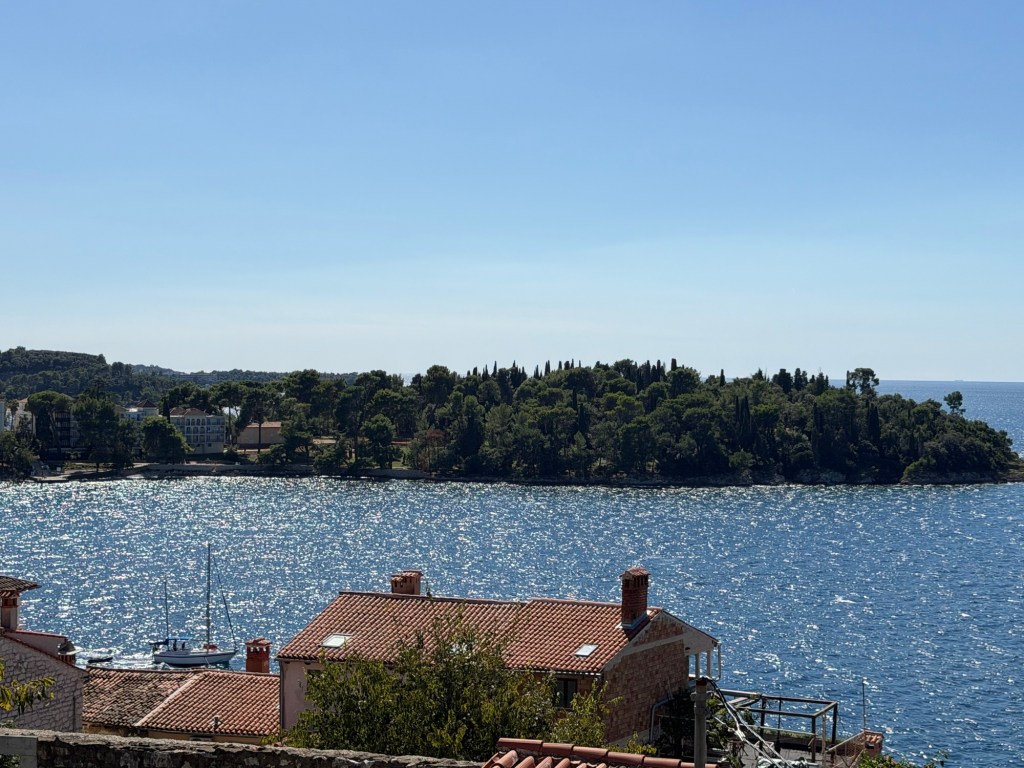
The present Baroque church was built during the 18th century on the site of earlier churches. Inside, the relative simplicity of the stone exterior gave way to an ornate Baroque interior filled with marble columns, painted vaults, gilded decoration and elaborate altars. A statue of St. Euphemia depicts her holding a martyr’s palm and a model of Rovinj, symbolizing her role as the town’s patron and protector.
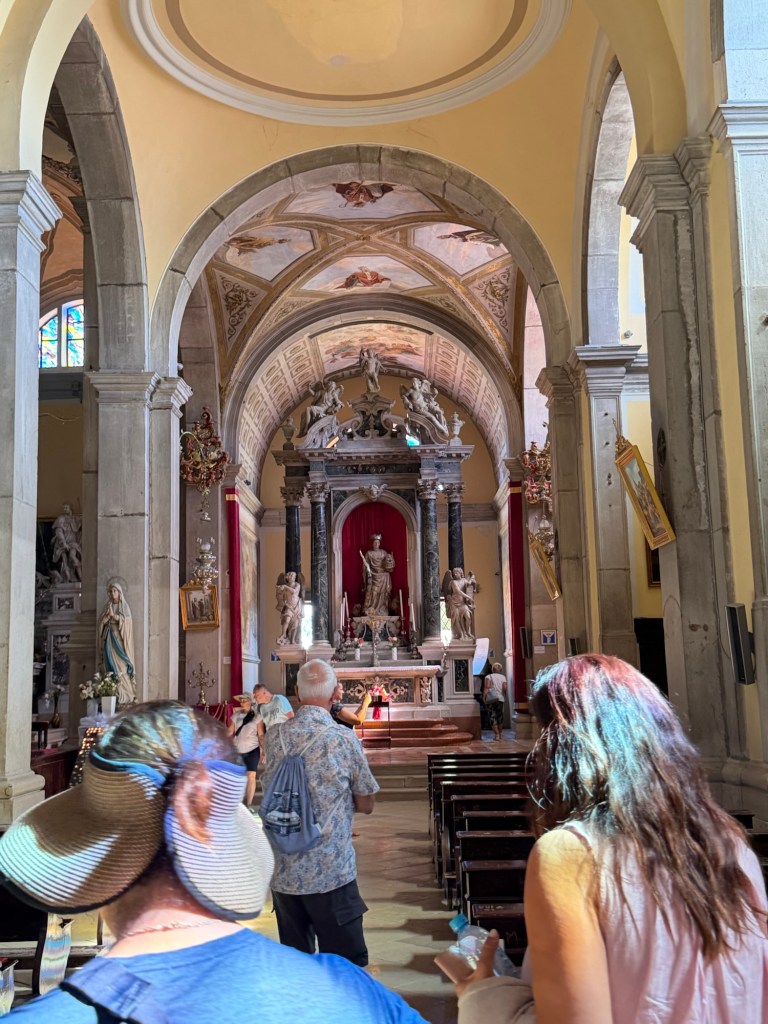
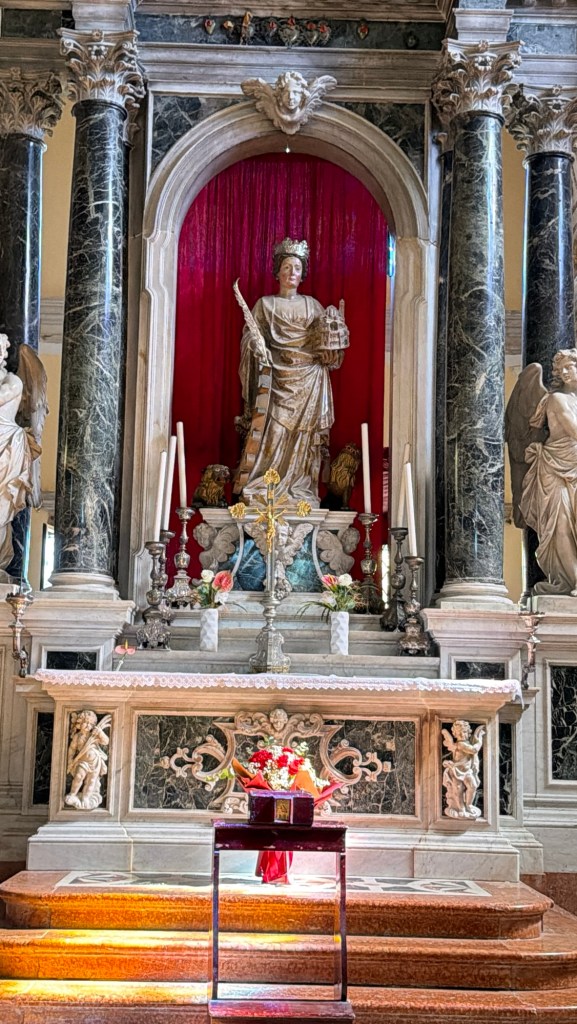
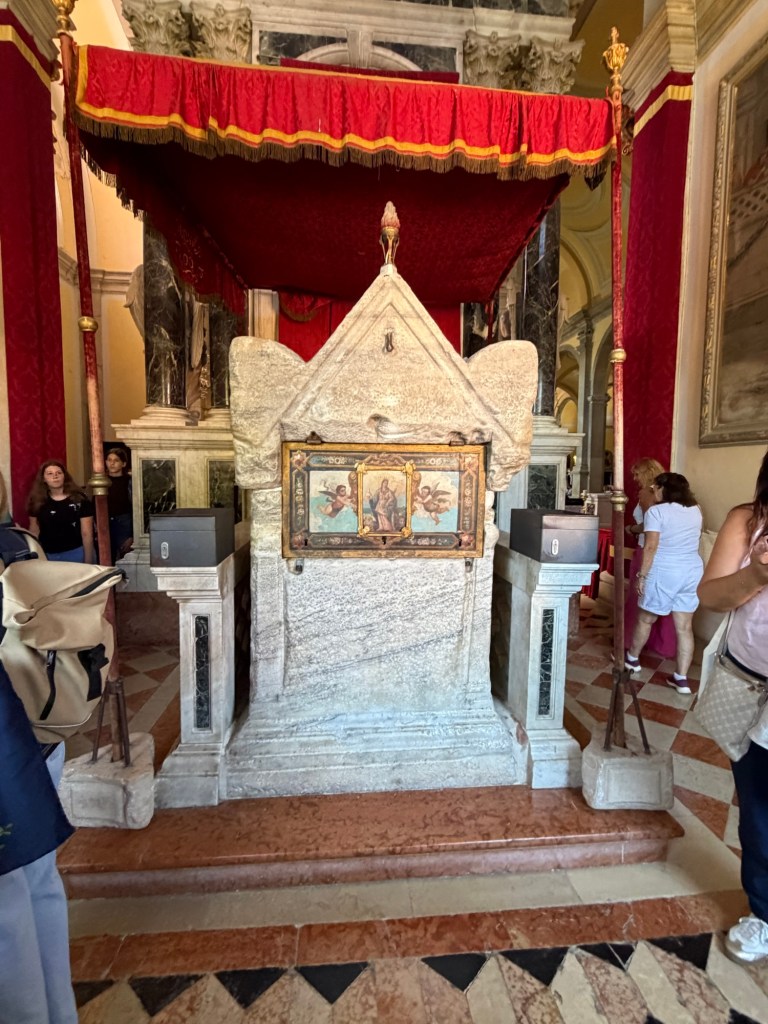
Euphemia was a young Christian woman from Chalcedon, near present-day Istanbul, who was tortured and killed during the persecutions of Emperor Diocletian around A.D. 304. According to local legend, her great stone sarcophagus mysteriously floated across the Adriatic and washed ashore at Rovinj around the year 800. The townspeople were unable to move it until a young boy, inspired by a vision of the saint, hauled it up the hill with the help of two calves.
The ancient sarcophagus preserved inside the church is believed to contain the remains of St. Euphemia, making the church both Rovinj’s most recognizable landmark and its spiritual heart. Only once each year, on her feast day, is the sarcophagus opened so that her remains may be seen. By sheer coincidence, we were there for the annual opening and had the rare opportunity to see her ourselves. I must say, she looked pretty good for a martyr who has been dead for more than 1,700 years.
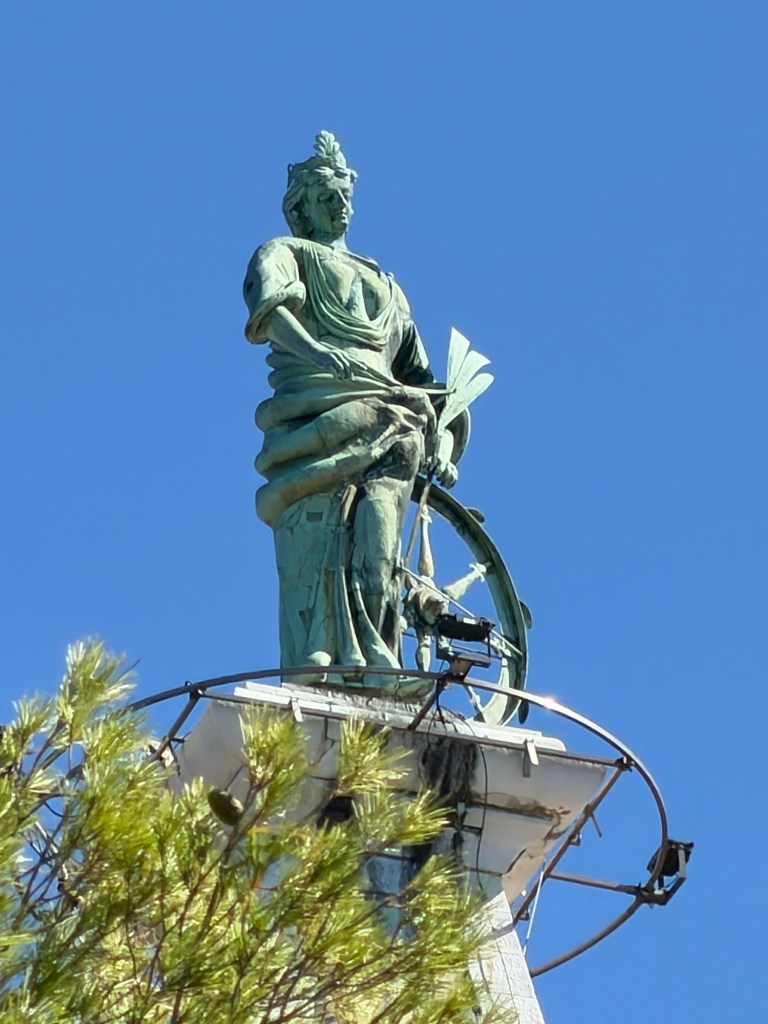
At the summit of the bell tower stands a copper statue of St. Euphemia. She holds the palm of martyrdom and the wheel associated with her torture and death. Mounted so that it can turn with the wind, the statue has watched over Rovinj and guided sailors approaching from the Adriatic for centuries.
Dolphins and Sunset
Later that day, we were booked on a private boat trip—or so the concierge assured us. The hotel concierge had no details, and he didn’t know who our skipper was, but he wasn’t going to let that get in the way. With the confidence of a man who considered facts a minor administrative detail, he led us on a long walk to the dock, where we began asking random skippers if they were expecting passengers. We didn’t know our skipper’s name, and he didn’t know ours. It was less a private cruise than a maritime blind date, arranged by someone who had forgotten to tell either party who was coming.
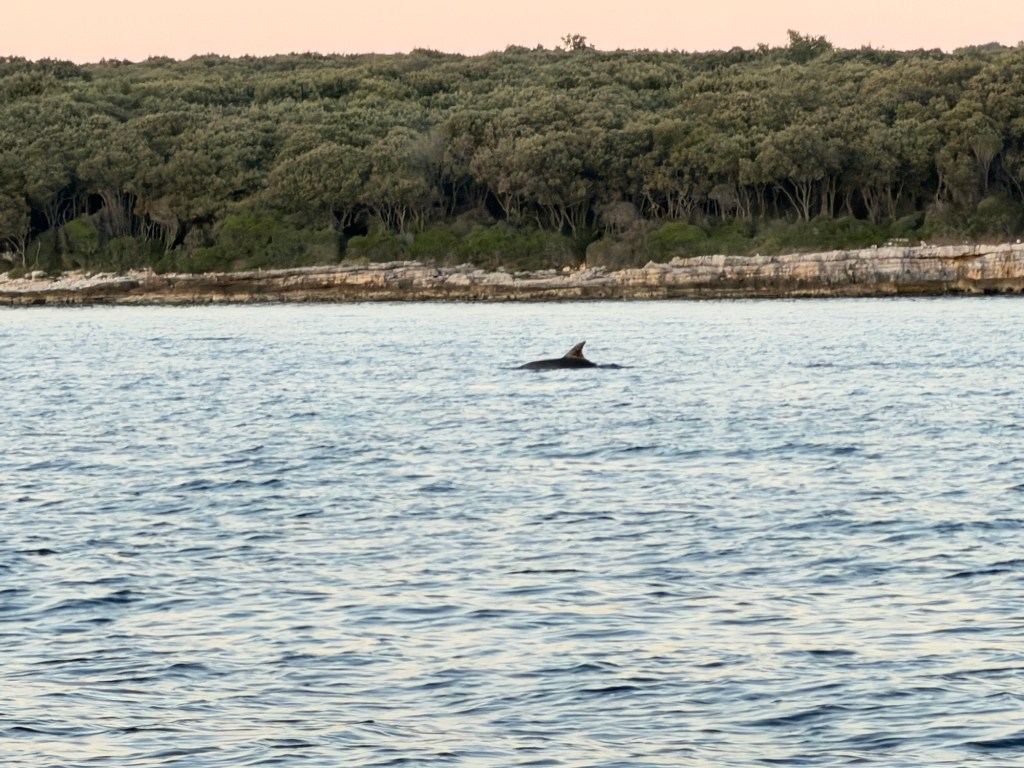
Eventually, we found each other and set off in search of dolphins, an Adriatic sunset, and Rovinj sparkling after dark. The sea was so choppy that our stomachs began drafting their own travel advisories. Our skipper moved closer to the harbor, hoping to keep everything in the boat. We stayed alert for dolphins, and several leapt through the waves—excellent timing, since they seemed to be the only ones enjoying the ride. We got the dolphins and a spectacular sunset. Our stomachs got a story of their own.
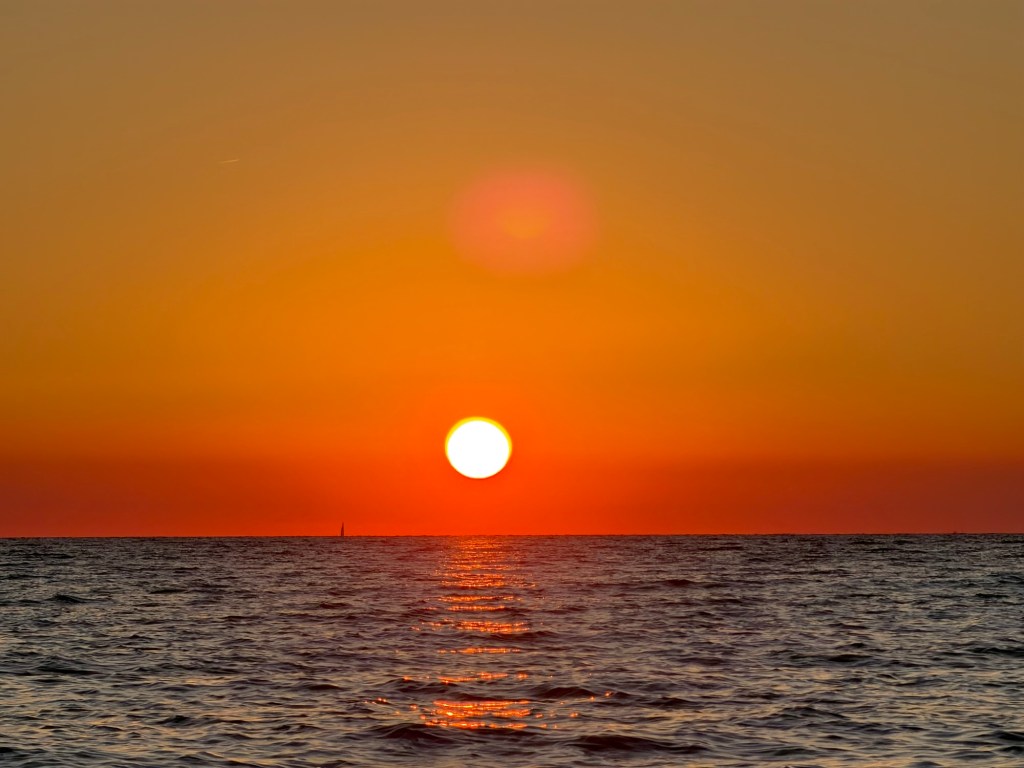
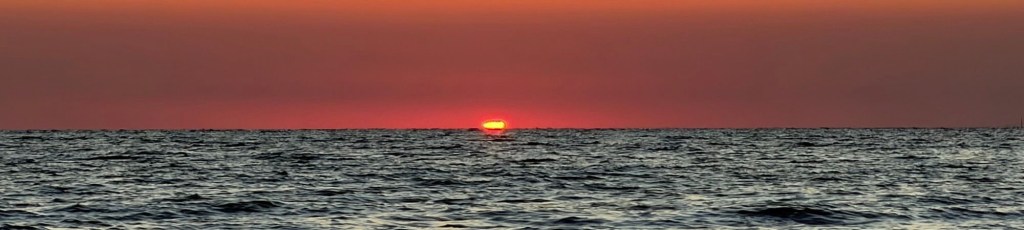
As the sun sank toward the horizon, the sky seemed to catch fire, shifting from warm gold to deep orange. The glowing band narrowed until the last sliver of sun slipped beneath the Adriatic, leaving the water and Rovinj washed in the fading light.
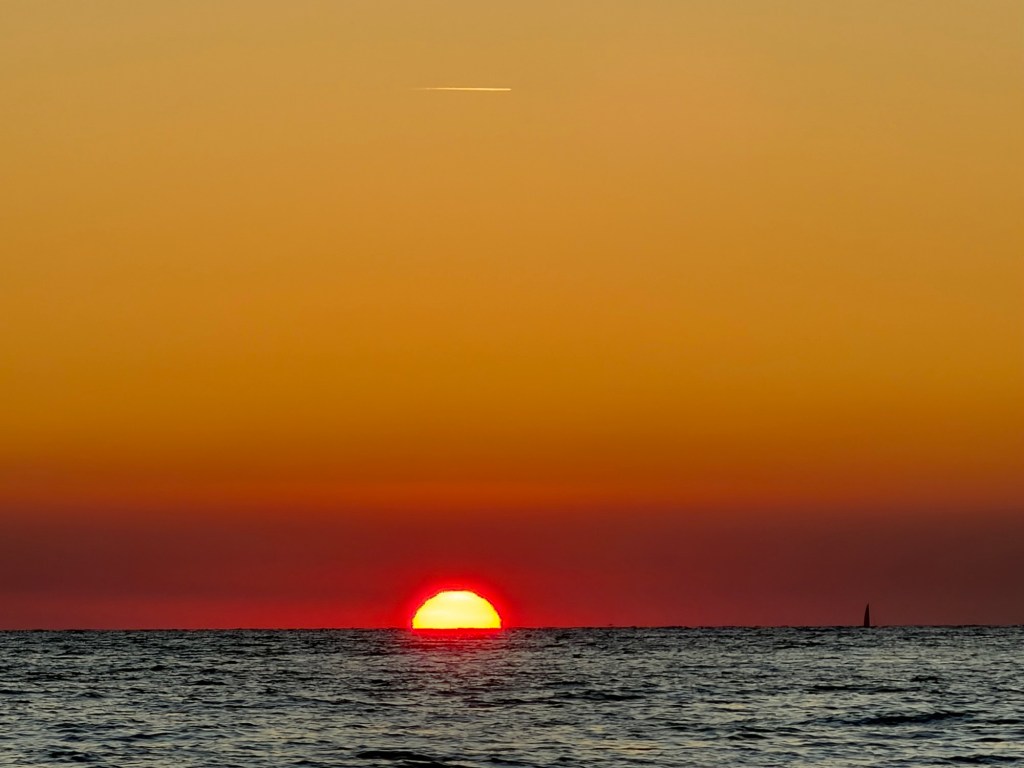
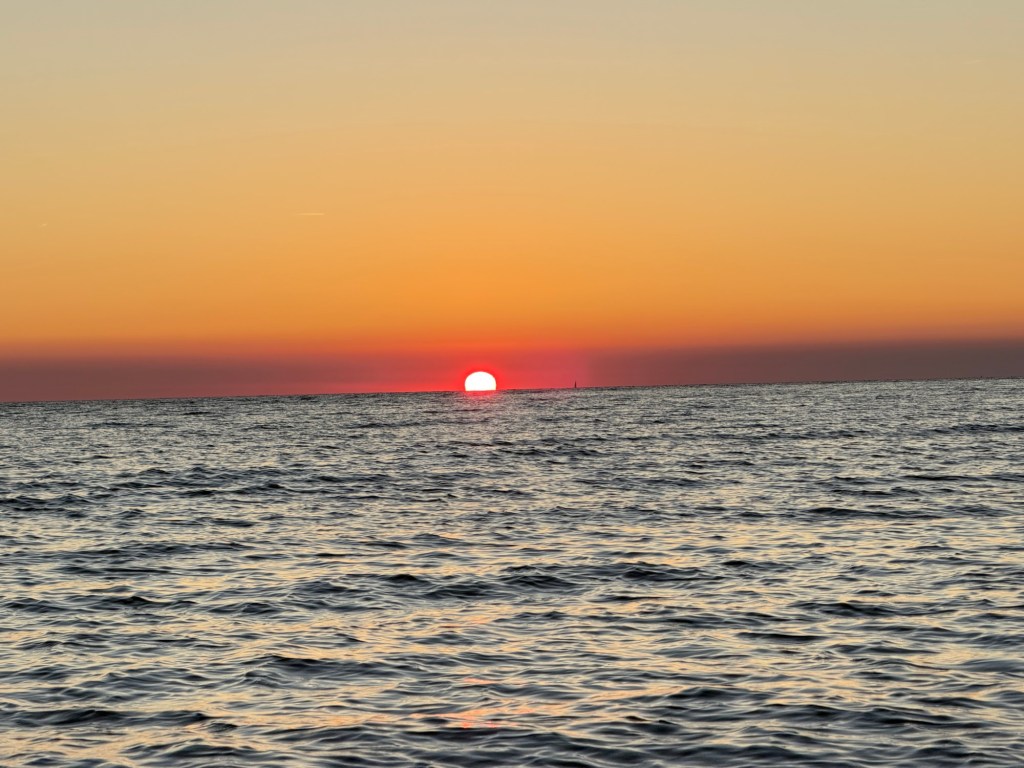
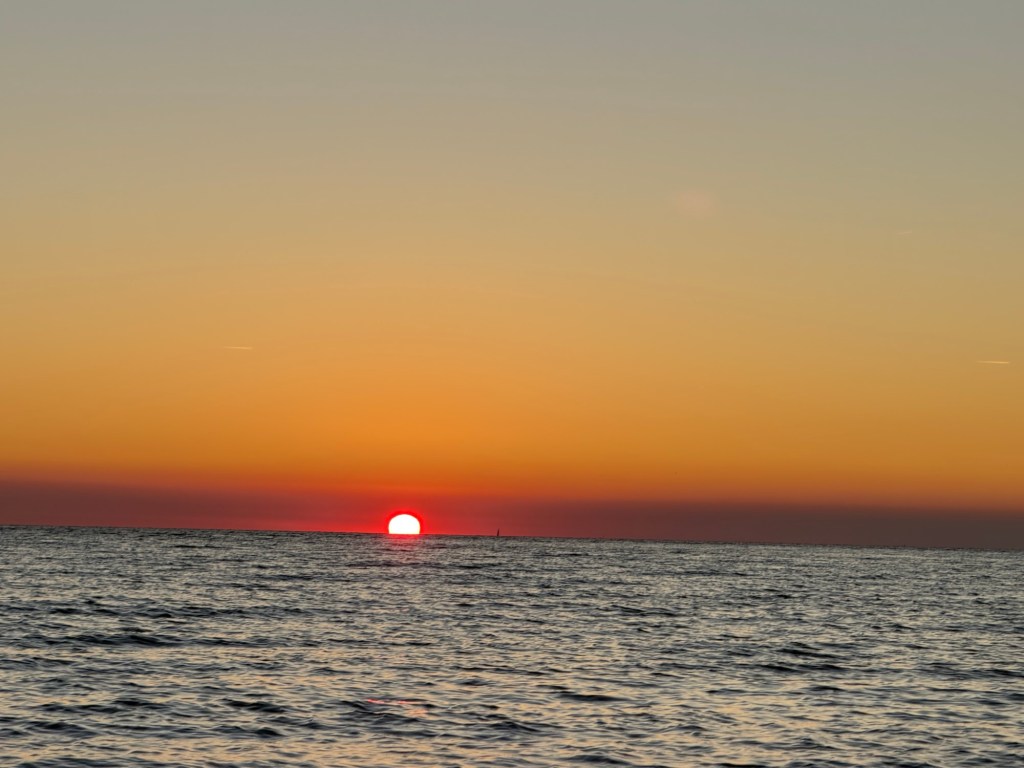
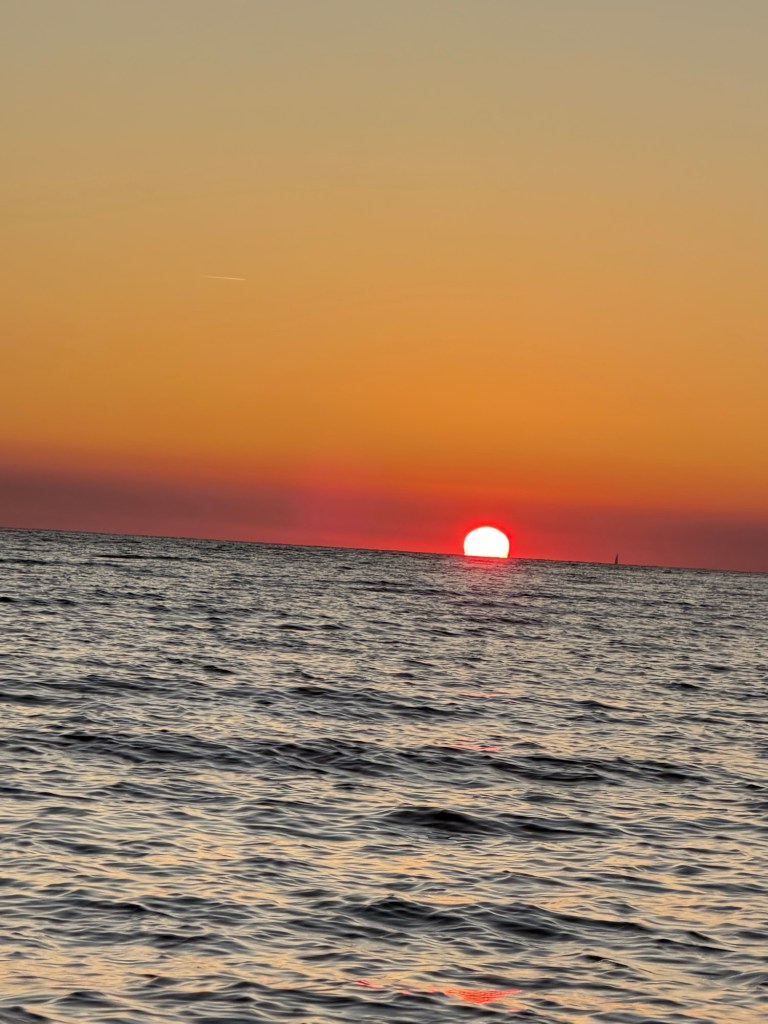
On our return, Rovinj appeared almost theatrical from the water: rows of warmly illuminated buildings rose from the shoreline, crowned by the Church of St. Euphemia and its soaring bell tower.
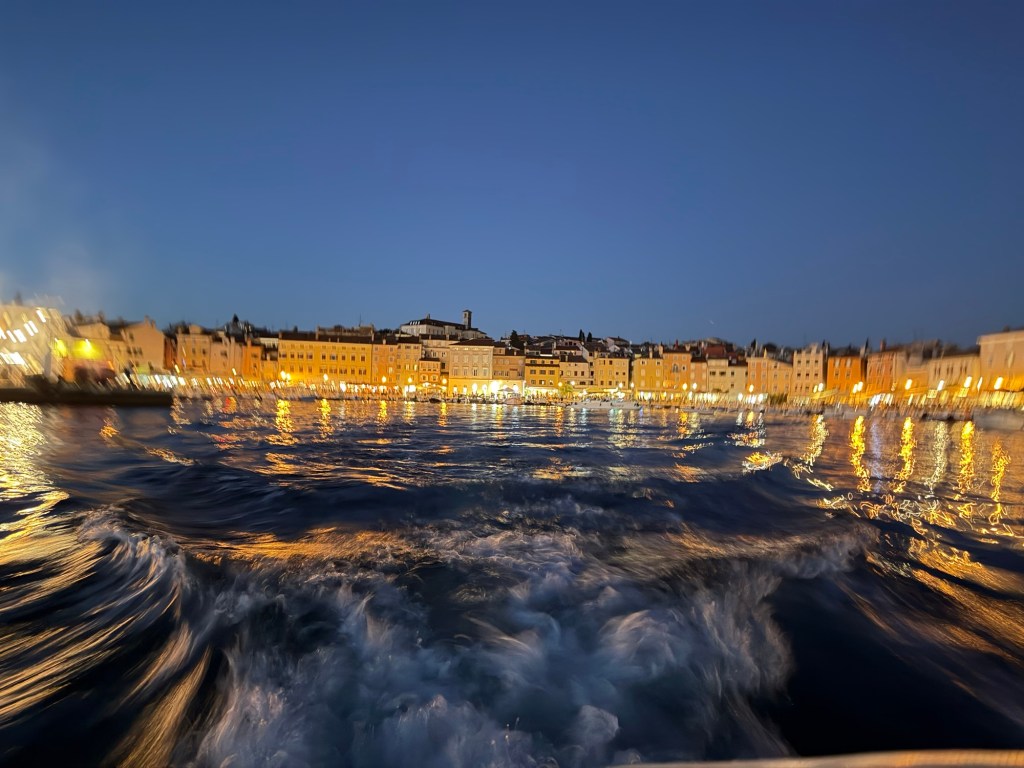
The lights shimmered across the restless water, creating a spectacular end to our “maritime” adventure.
Town Day Celebration
We finished the day with dinner on the hotel terrace, where we had a spectacular view across the harbor as fireworks erupted above Rovinj’s old town. The display celebrated Rovinj’s City Day and the Feast of St. Euphemia.
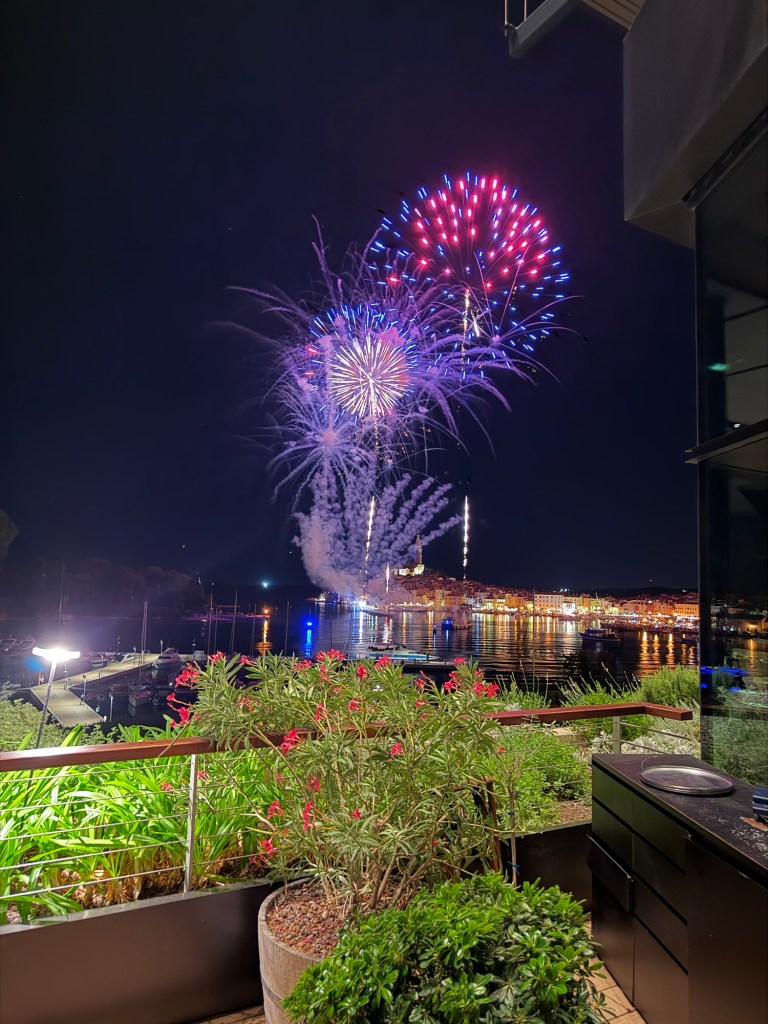
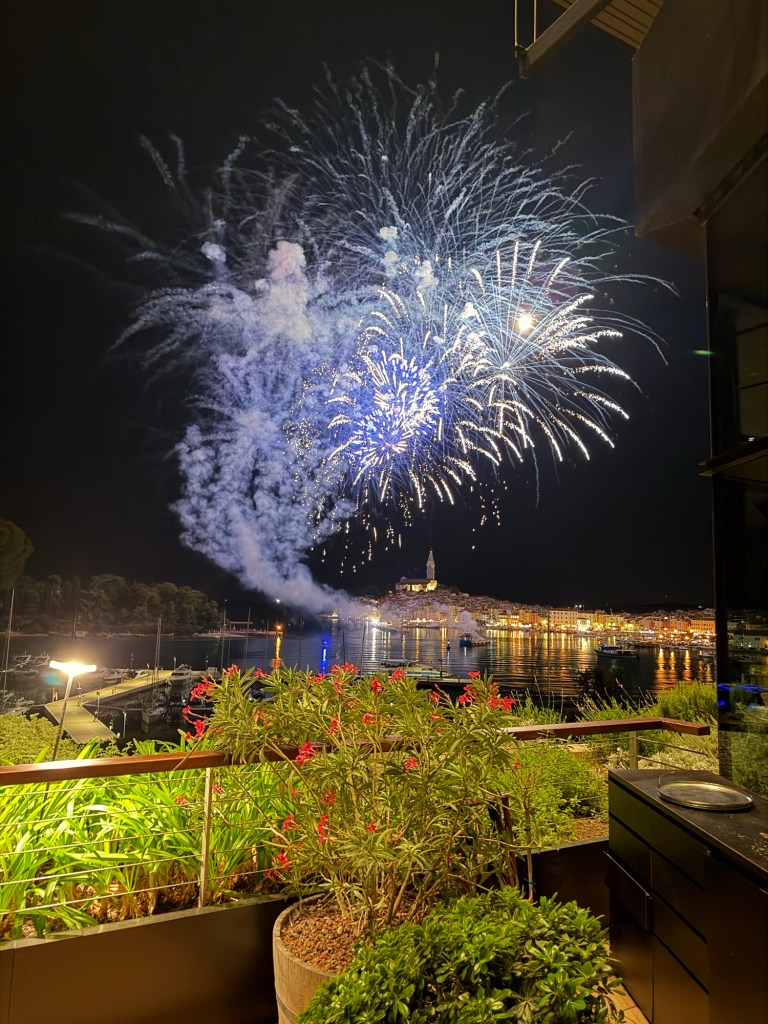
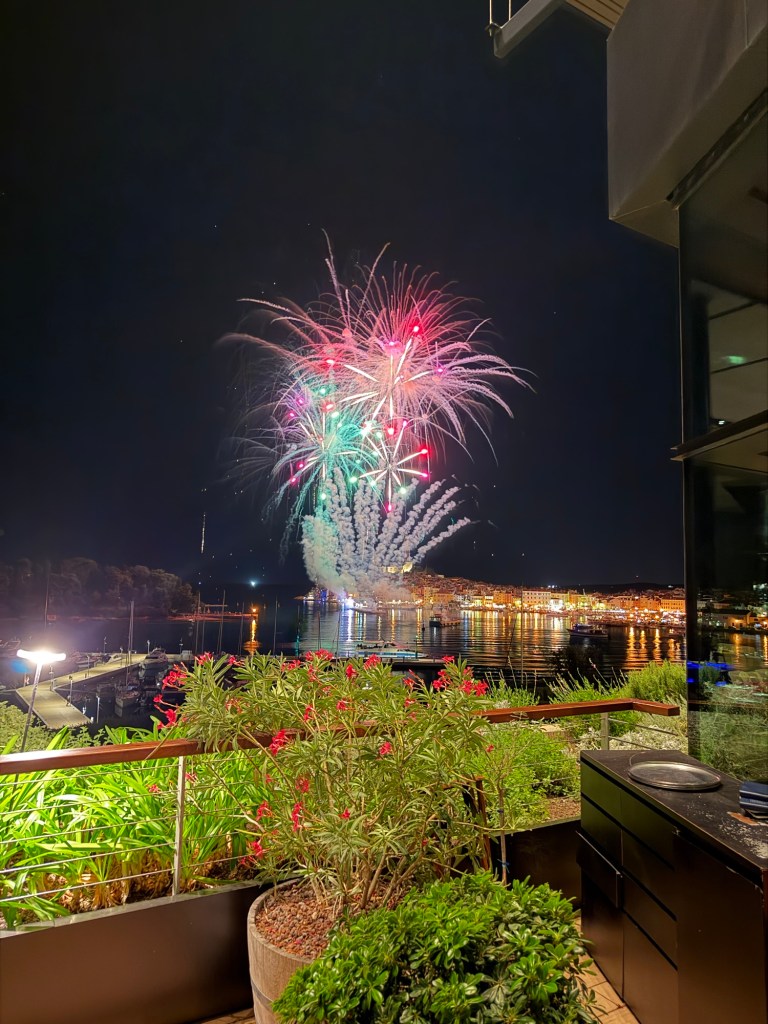
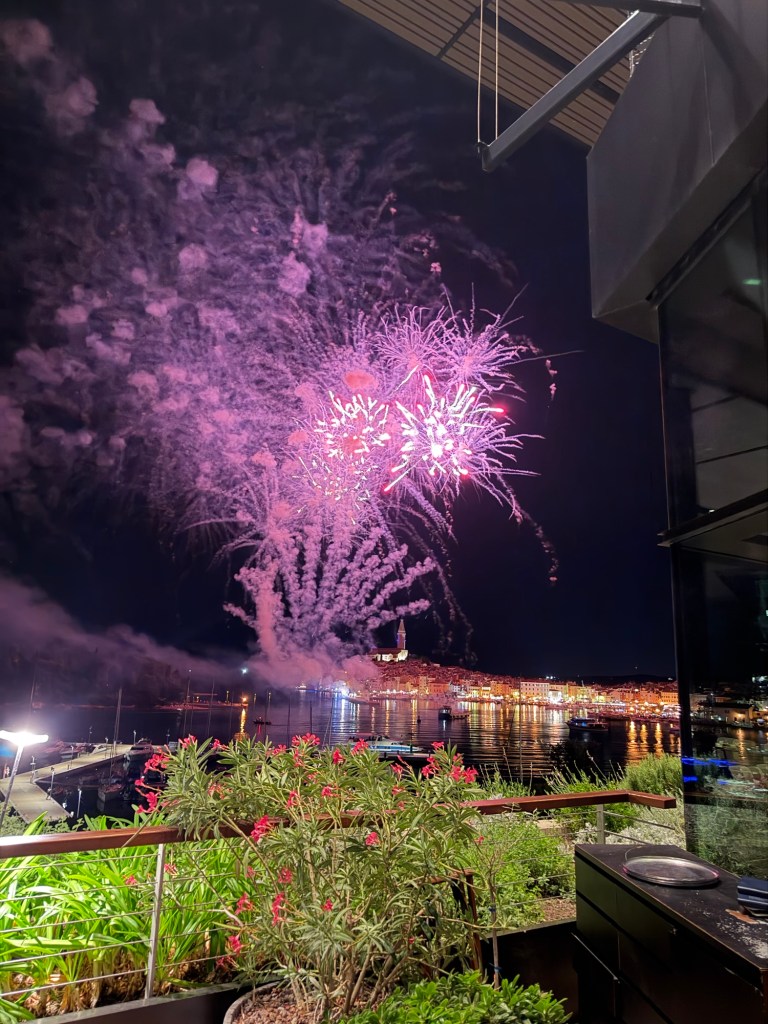
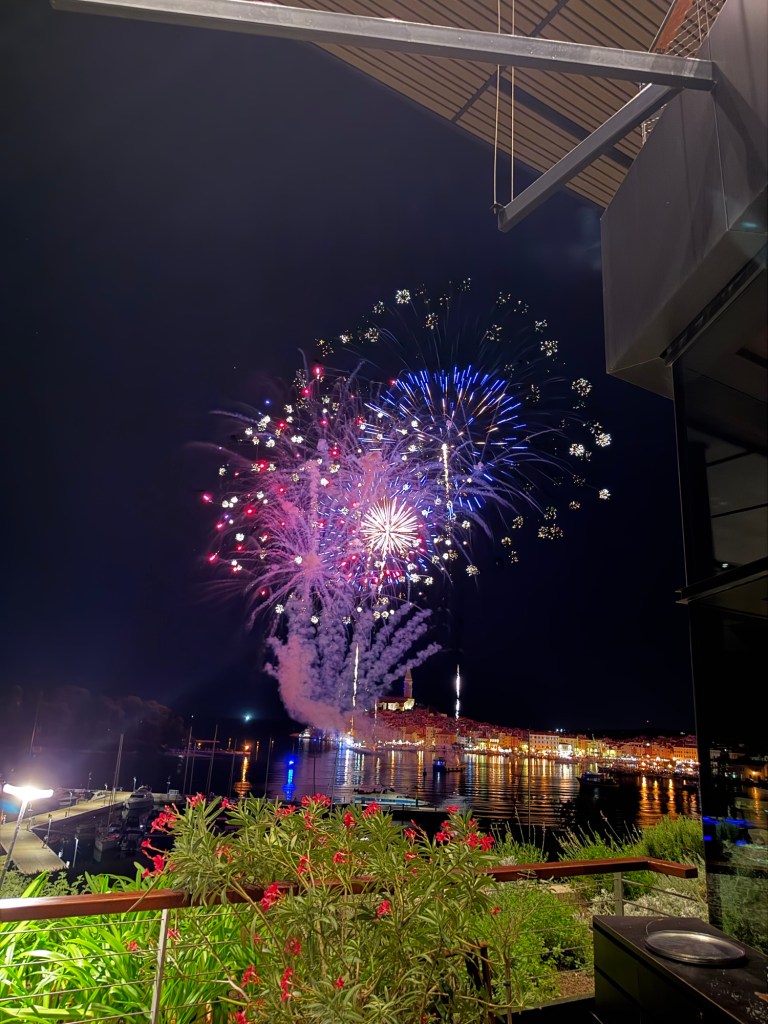
Bursts of red, blue, green and gold illuminated the Church of St. Euphemia and its bell tower, while their colors shimmered across the dark water below.
Rovinj’s Old Town is unmistakably proud of its heritage, and rightly so. Its history is not something tucked away in museums, but something that remains very much alive in its churches, narrow stone streets, weathered buildings and centuries-old traditions. How fortunate I feel to have been here, and to have experienced a small part of a place that has held so tightly to its past while remaining very much alive in the present.