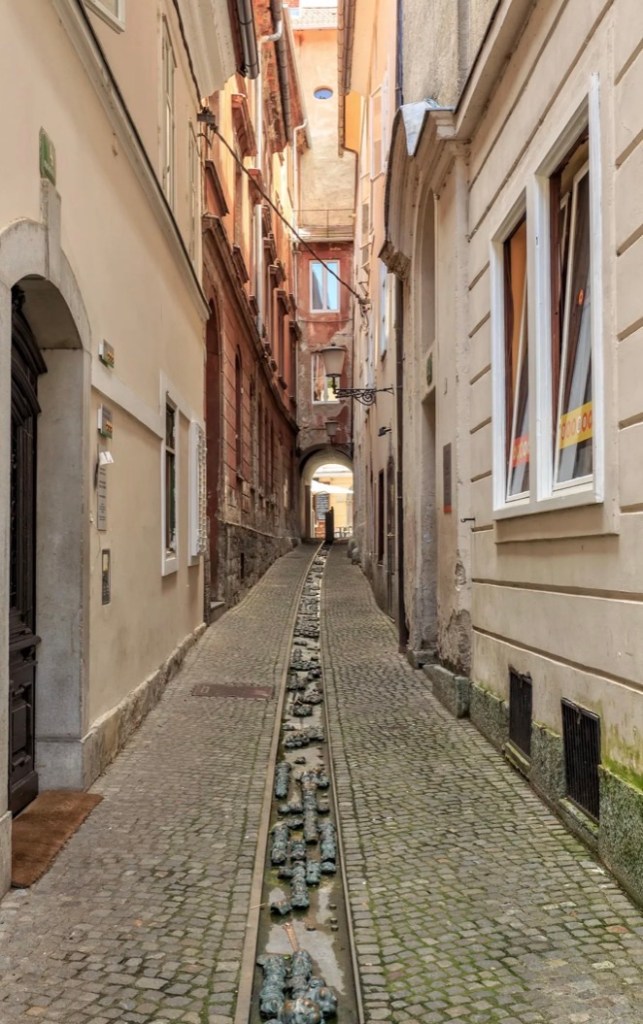
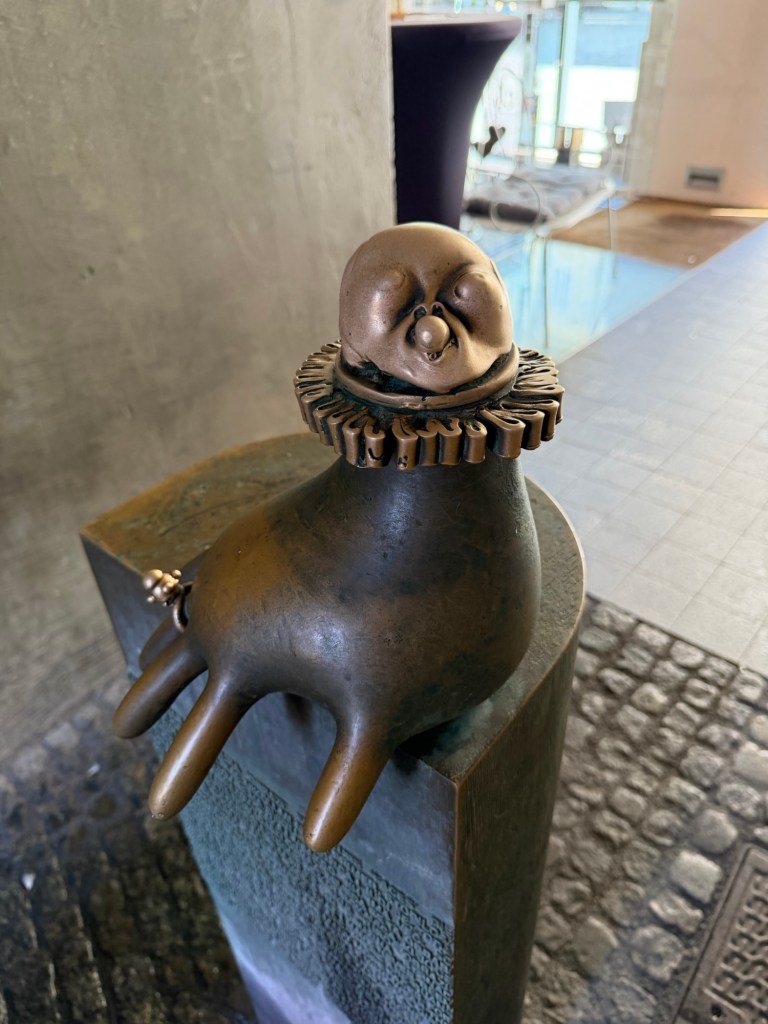
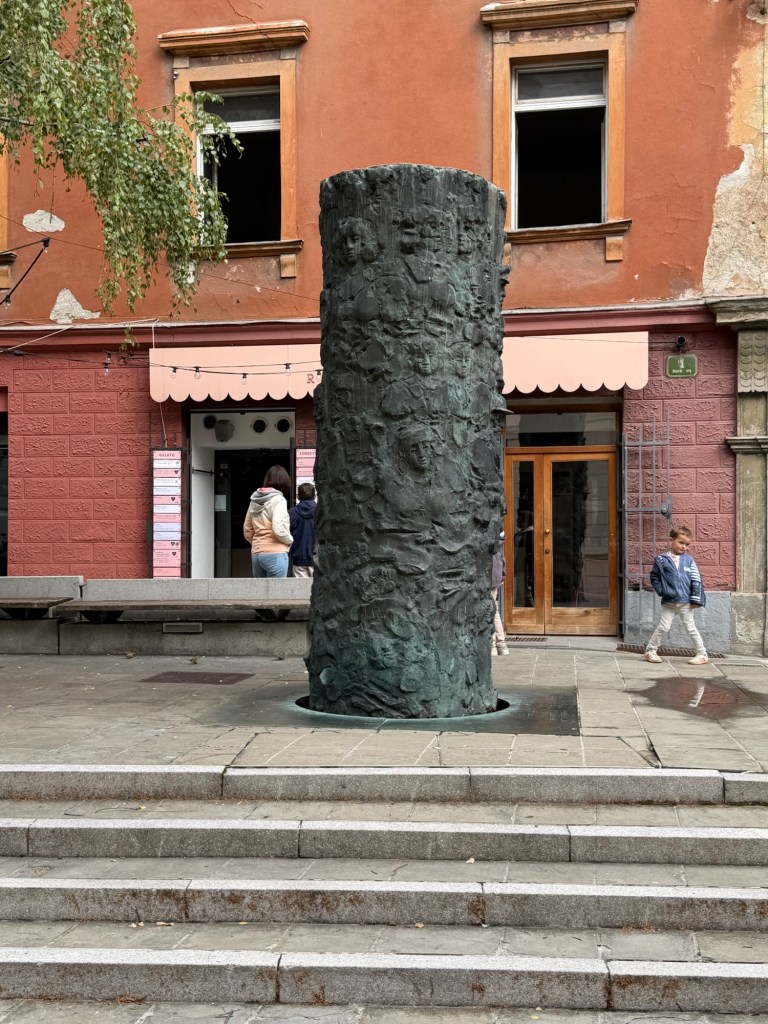
Hidden in Ljubljana’s Old Town, Ključavničarska ulica—Locksmith Street—is a narrow cobblestone alley with a startling secret. Nearly 700 bronze faces stare up from its central drainage channel, forming Faces, an installation by Slovenian sculptor Jakov Brdar. Some are solemn or anguished; others are playful, grotesque or absurd. Water trickles over them, making the faces appear to rise from—and sink back into—the street. At one end, a larger, distorted bronze figure stands guard over this strange and unforgettable open-air gallery.
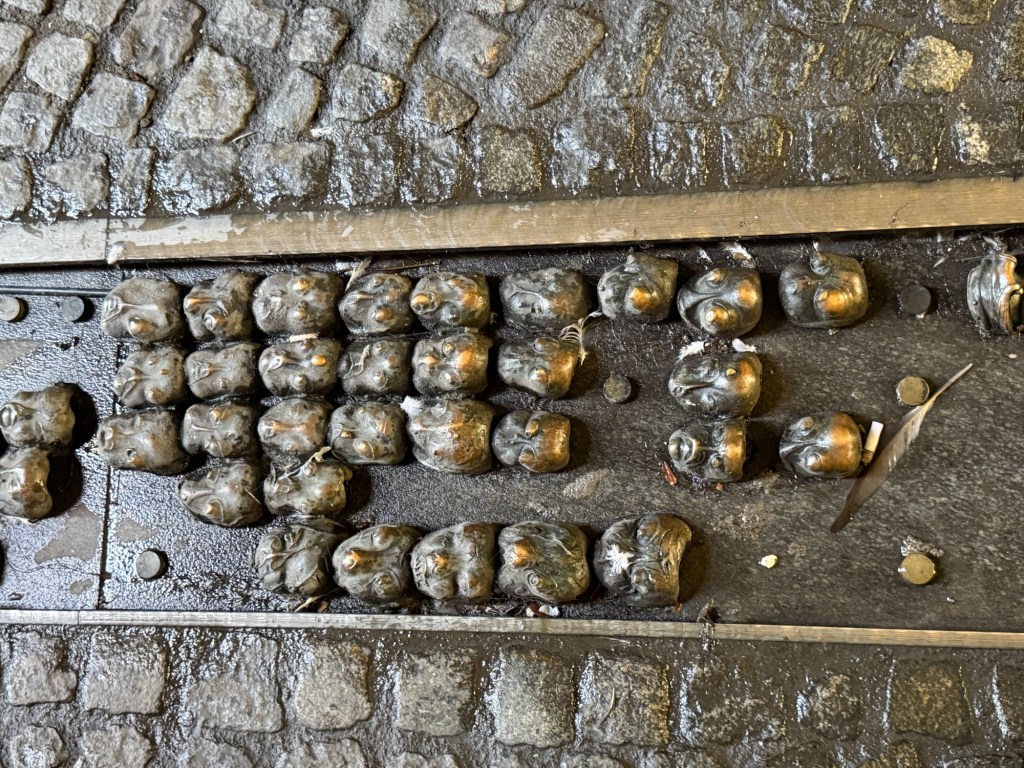
Faces invites more than one interpretation. Its shifting expressions may represent the many identities and emotions we carry within us. But the long procession can also be read as Slovenia itself—a nation shaped by centuries of foreign rule, war, occupation and, ultimately, independence.
That interpretation resonates with more than 5,000 years of Slovenia’s layered—and often turbulent—past. People inhabited this land long before recorded history, leaving behind settlements from the Stone, Bronze and Iron Ages. Illyrian and Celtic peoples followed before the Romans absorbed the region into their empire. Slavic peoples arrived in the sixth century, and the territory later passed under Frankish and then Habsburg rule. After World War I, Slovenia became part of the country eventually known as Yugoslavia. World War II brought partition and occupation, followed by four decades as one of socialist Yugoslavia’s six republics. Then, in 1991, modern Slovenia rose from the federation’s collapse, securing its independence in the Ten-Day War. It joined NATO and the European Union in 2004 and adopted the euro in 2007.
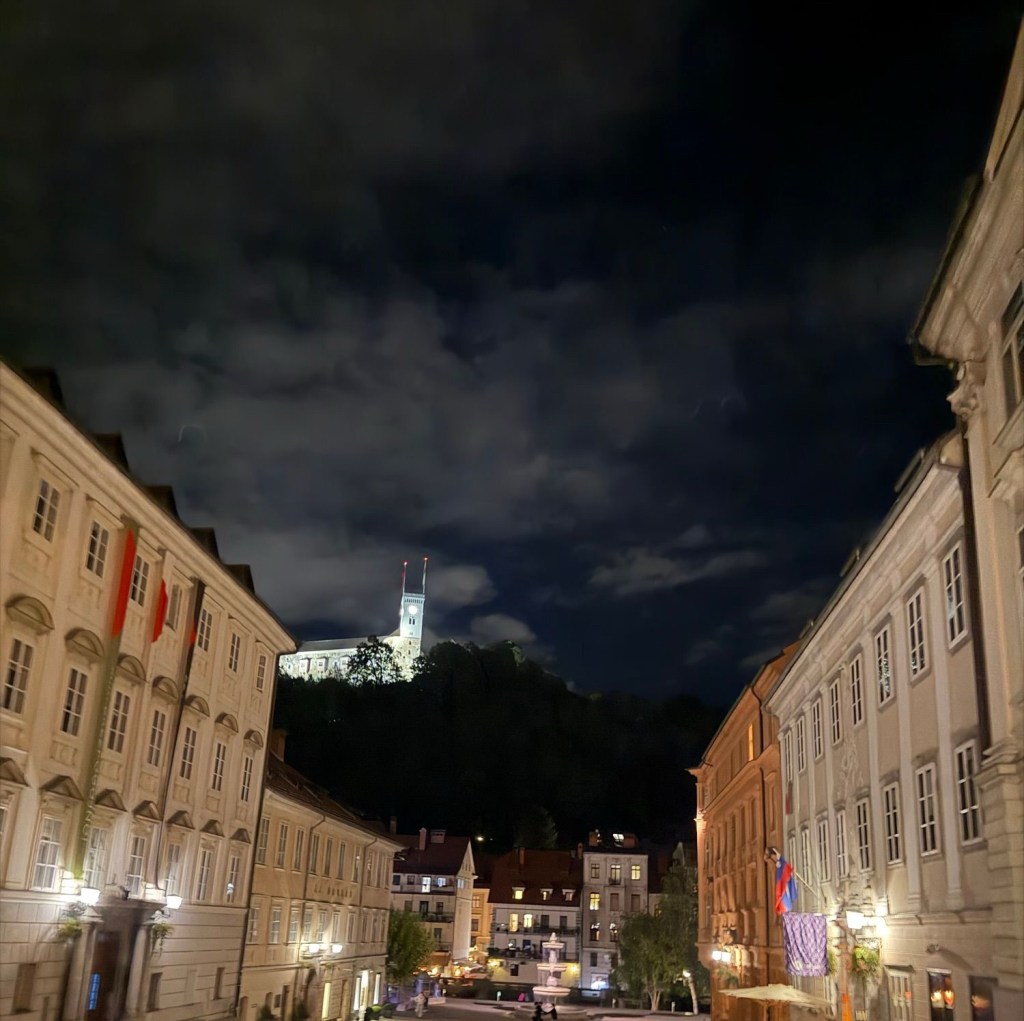
We arrived in Ljubljana, Slovenia’s capital city, after dark and made our way through the quiet, car-free streets of the Old Town to the Zlata Ladjica Hotel, our home for the next three nights.
Above us, Ljubljana Castle glowed against the night sky.
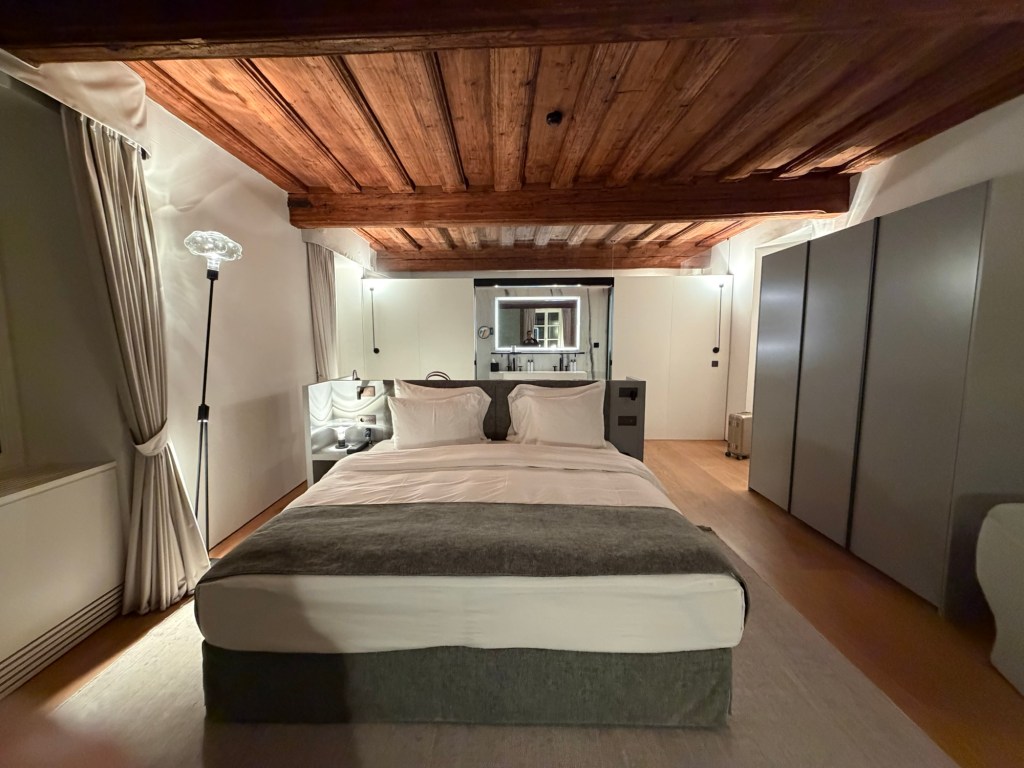
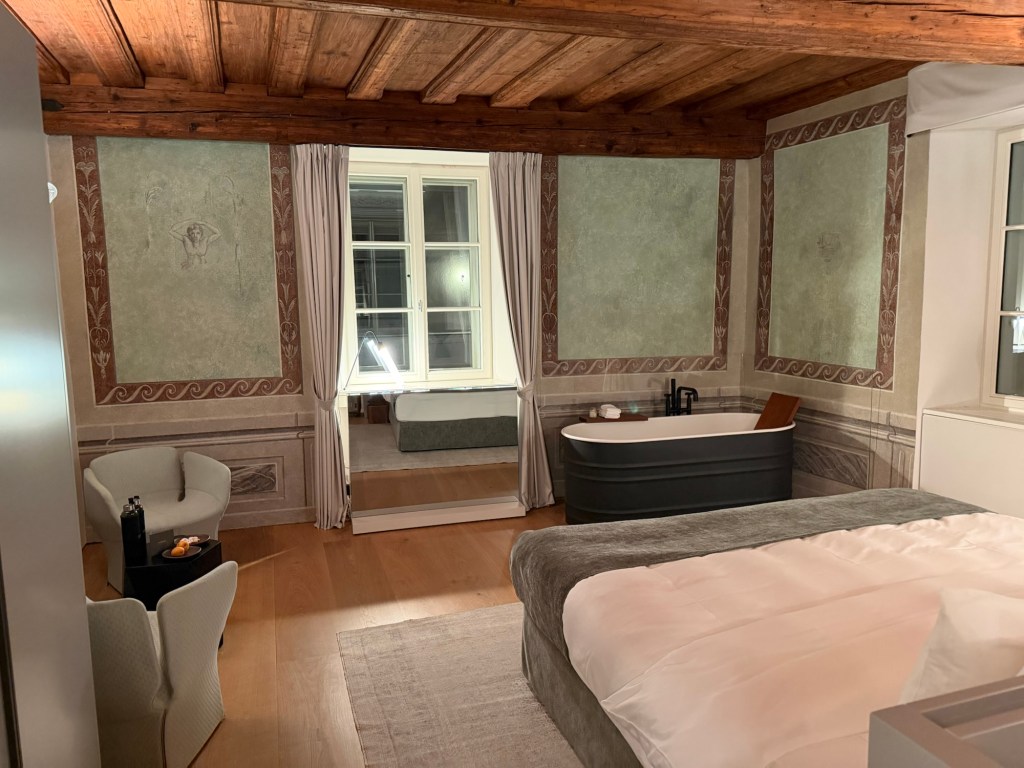
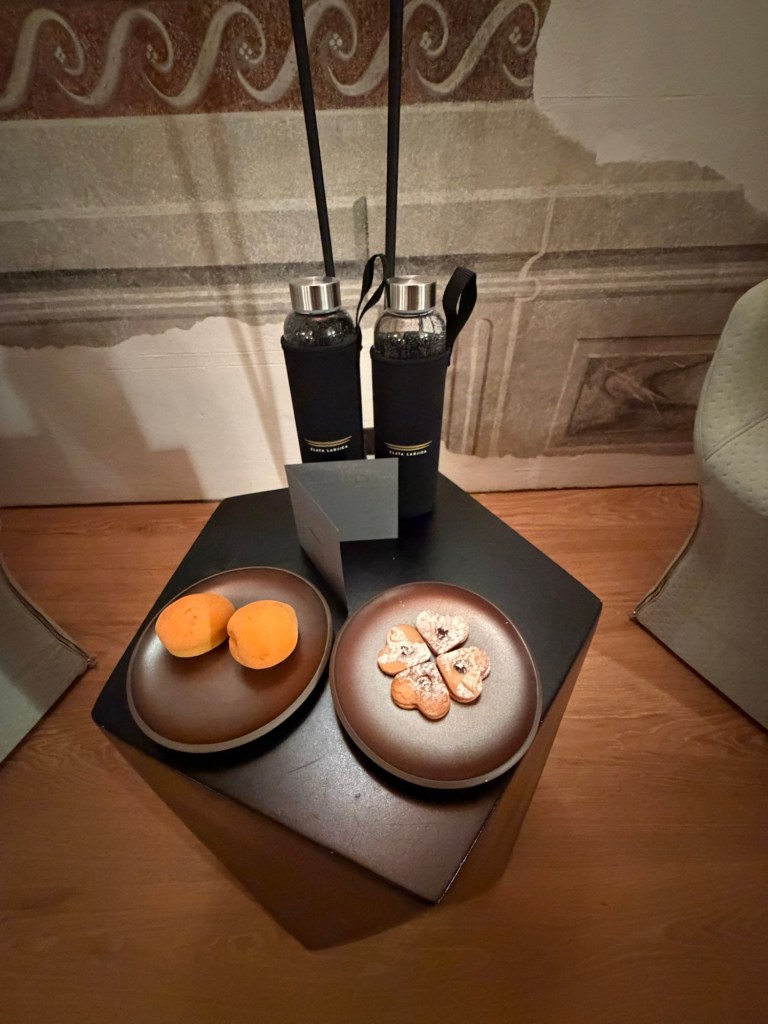
Our spacious room was a striking blend of old and new. Massive exposed wooden beams and delicate fresco-style wall paintings reflected the building’s historic character, while sleek gray furnishings, soft lighting, and a freestanding soaking tub gave it a distinctly modern feel. A welcoming tray of fresh fruit, cookies, and bottled water awaited us—a thoughtful finishing touch. After a quick dinner at the hotel, we settled in for the night—or so I thought. Jet lag was afoot, keeping me awake until nearly four o’clock in the morning.
The next morning we met our local guide Jasmina, who introduced us to the city.
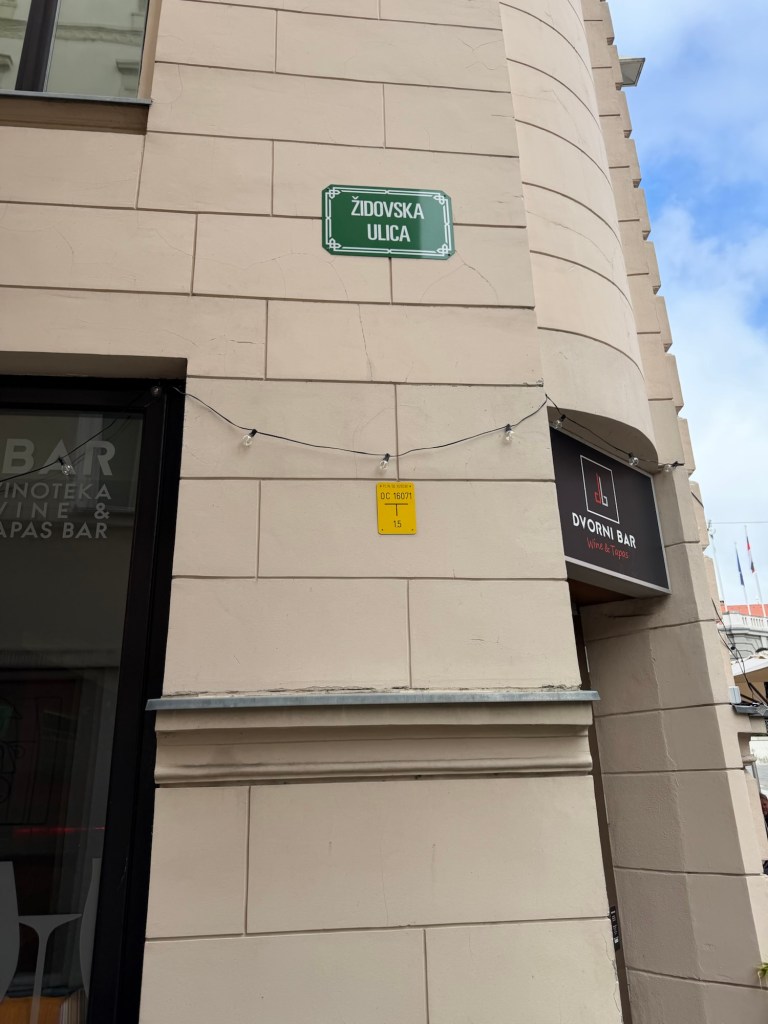
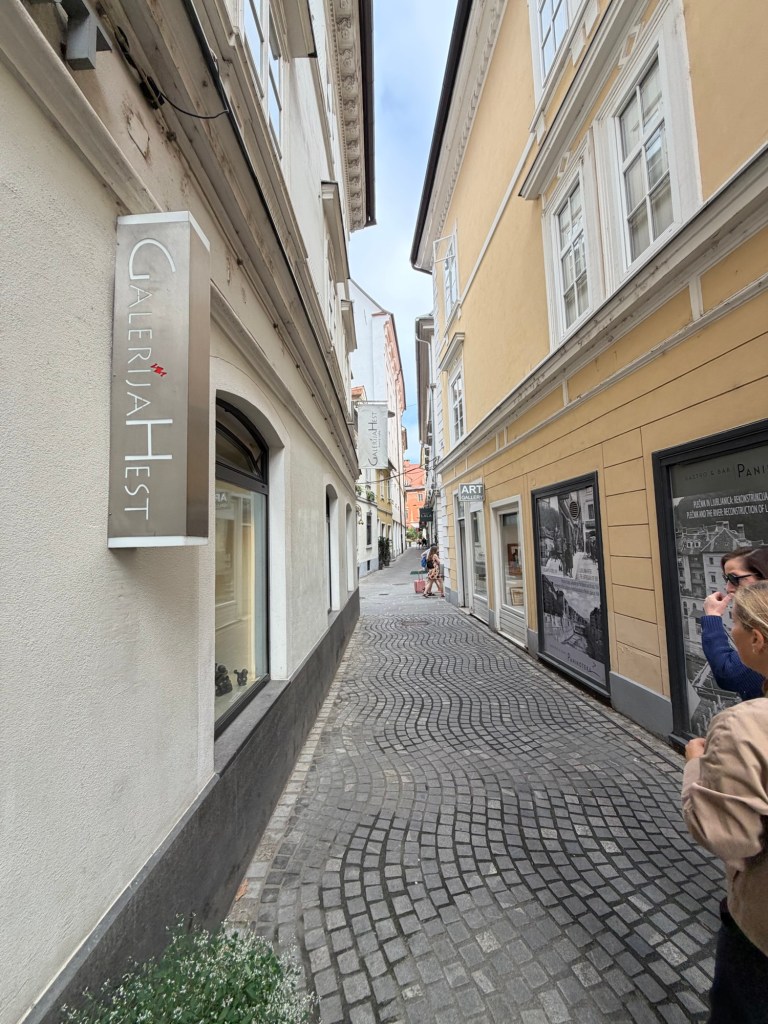
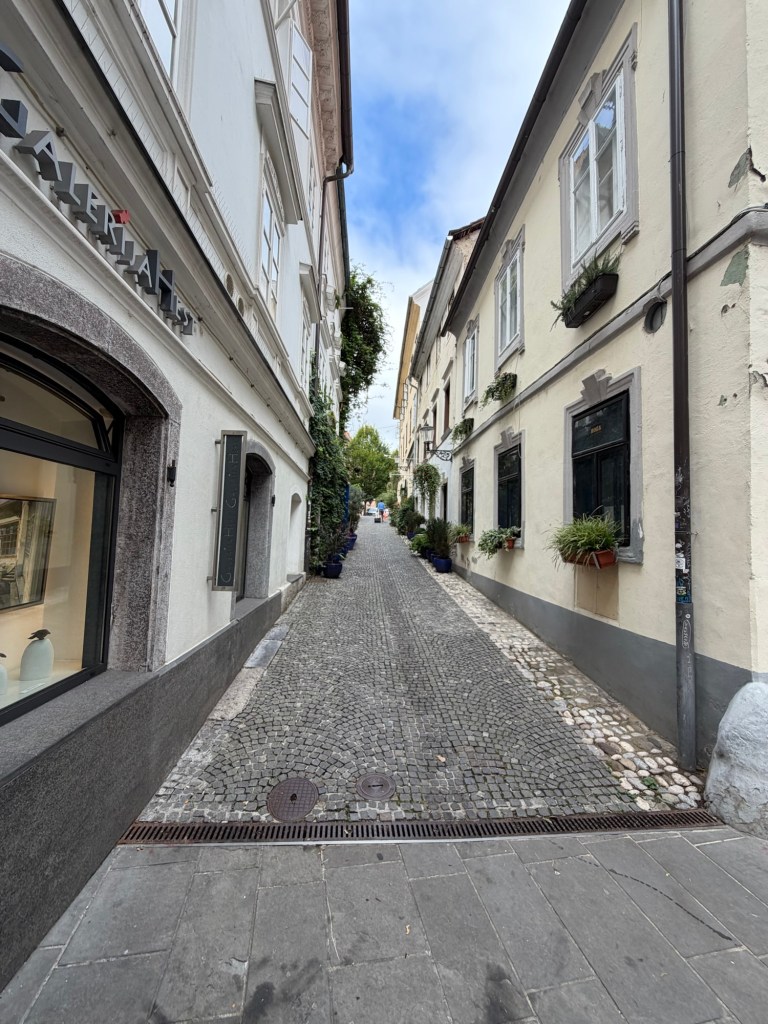
We began exploring Ljubljana’s Old Town, wandering very near the hotel along Židovska ulica—“Jewish Street.” The narrow cobblestone lane, lined with pastel-colored buildings, flower boxes, climbing vines, and small galleries, marks the heart of the city’s medieval Jewish quarter, once home to a synagogue, a school, and as many as 300 people. In 1515, Emperor Maximilian I expelled the Jews from Ljubljana at the urging of the city’s Christian residents. Although a small Jewish population eventually returned, the community never recovered its former size, and most of Slovenia’s Jews were later murdered during the Holocaust. Today, little remains of the medieval quarter beyond the names of Židovska ulica and nearby Židovska steza—“Jewish Lane.” The street’s quiet beauty stands in haunting contrast to the cruelty of its past.
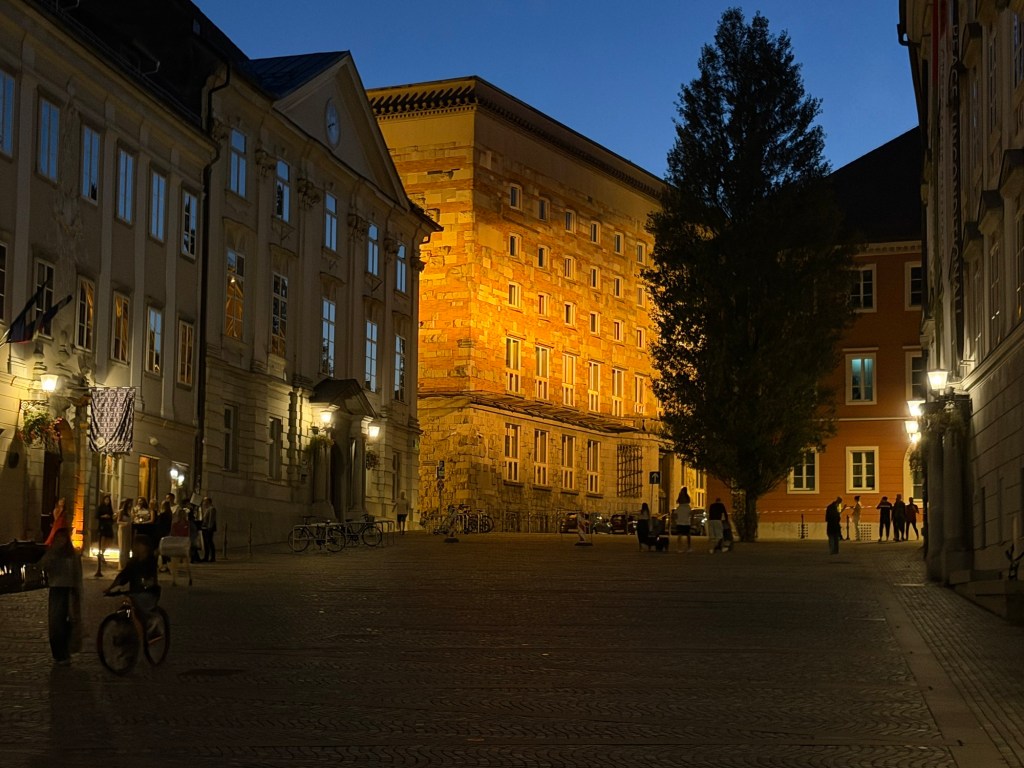
Next is the National and University Library of Slovenia, considered one of architect Jože Plečnik’s greatest works. Designed in the early 1930s and constructed between 1936 and 1941, the monumental building occupies the site of the former Ducal Court, which was damaged in Ljubljana’s 1895 earthquake and later demolished.
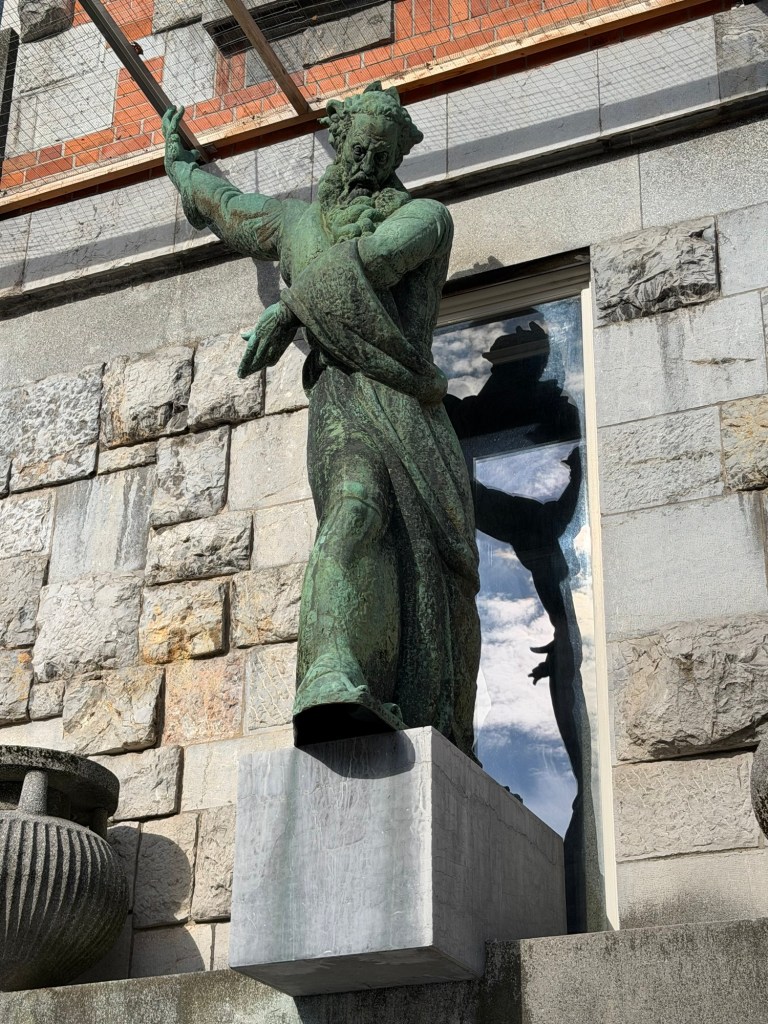
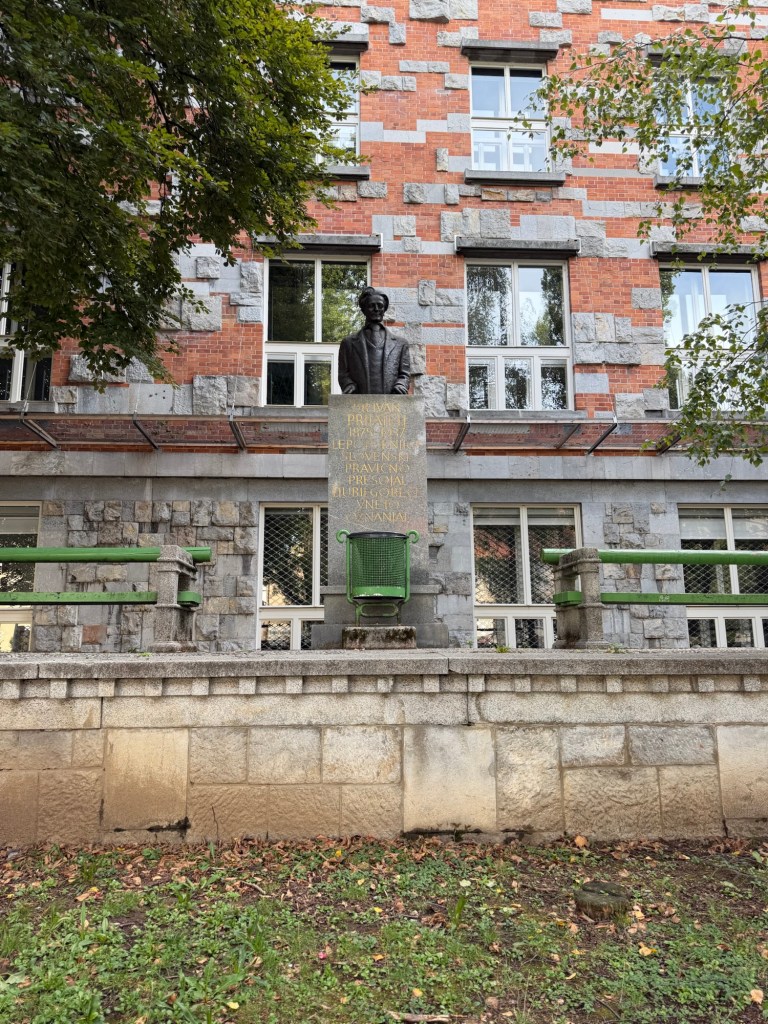
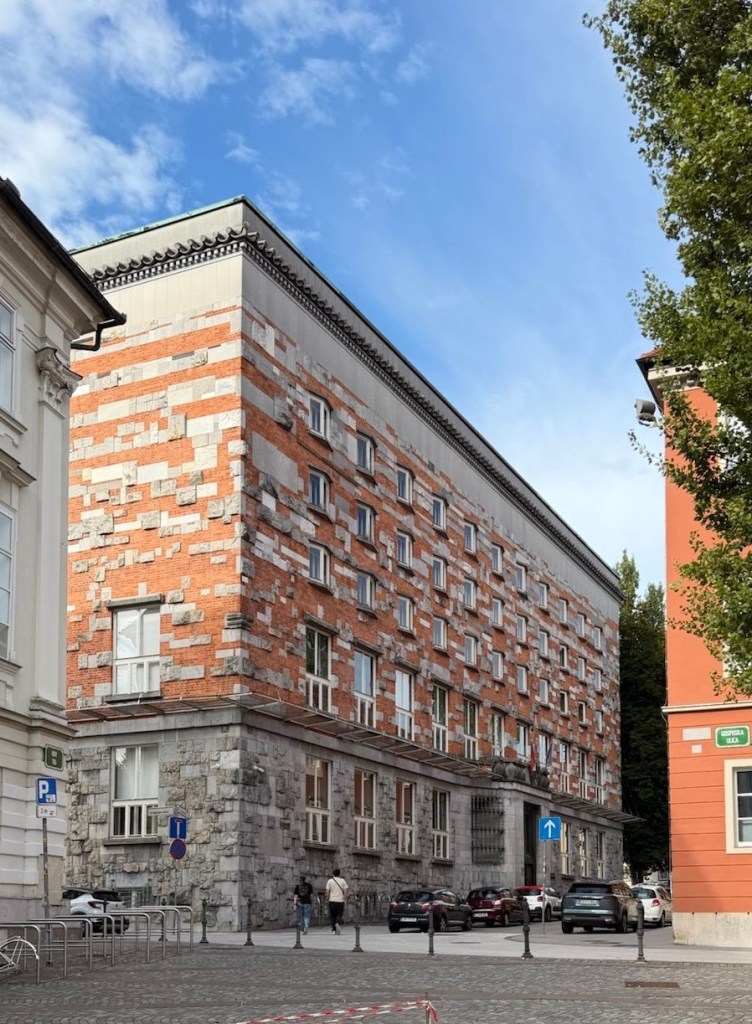
Plečnik treated the library as a “temple of knowledge.” Its imposing façade resembles an Italian Renaissance palace, but its surface is strikingly unconventional: rough gray stone blocks—some reused from earlier buildings—are scattered irregularly among bands of red brick. The apparently random masonry gives the wall the appearance of an ancient structure repeatedly built, damaged and reconstructed over centuries. The heavy stone base suggests strength and permanence, while the large windows introduce light into the otherwise fortress-like exterior.
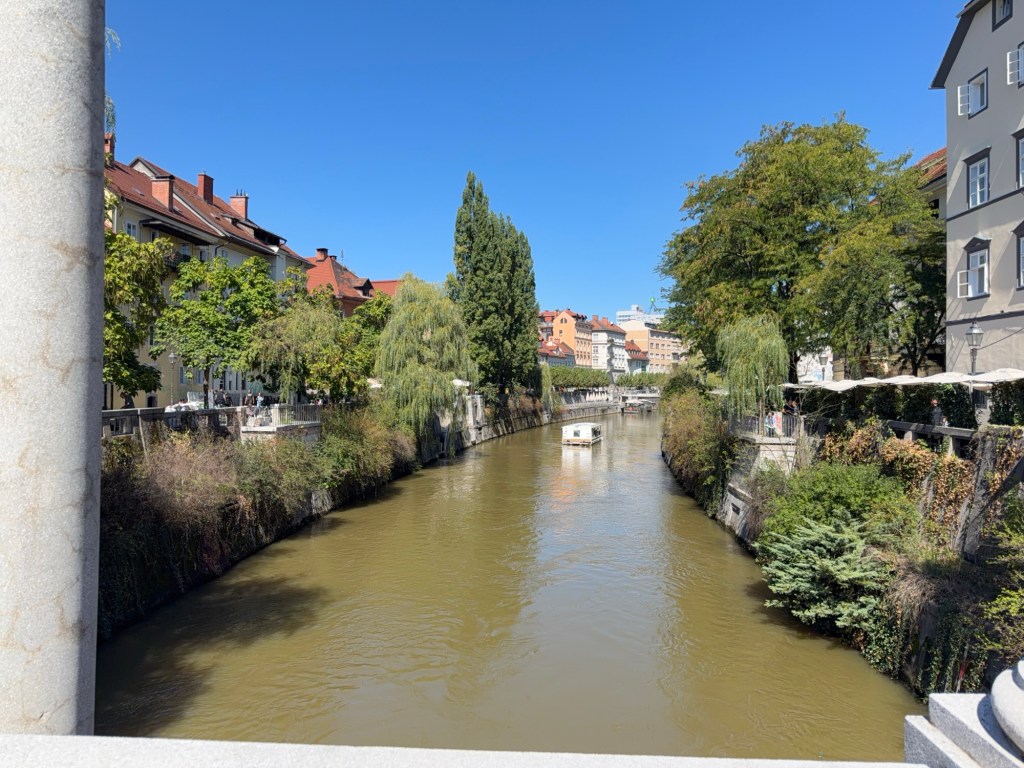
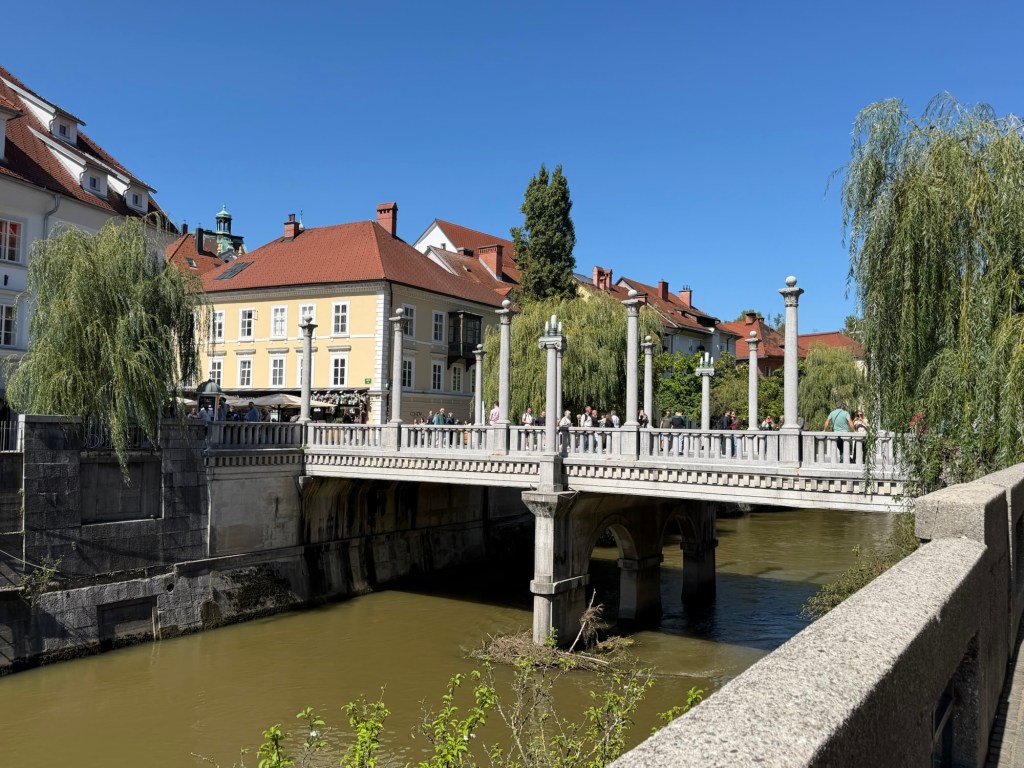
Ljubljana’s compact layout makes it an exceptionally easy city to explore on foot. The Ljubljanica River winds through its center, separating the medieval Old Town, nestled beneath Castle Hill, from the more modern city to the west. A series of bridges links the two sides, while broad public squares open unexpectedly among the narrow streets.
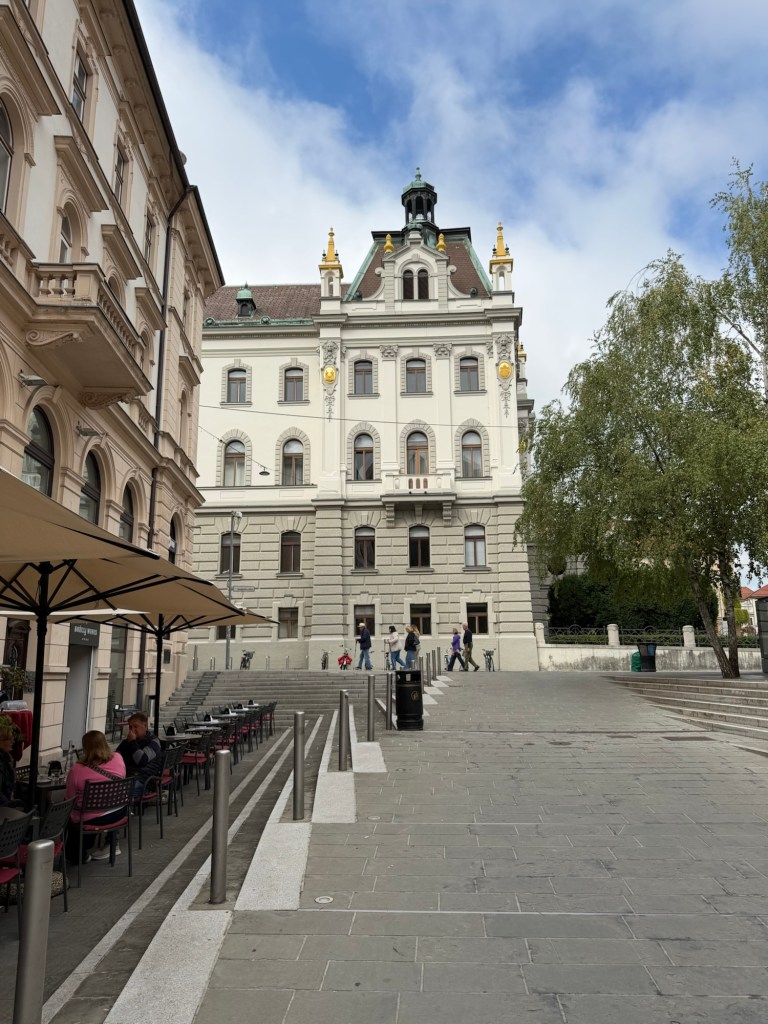
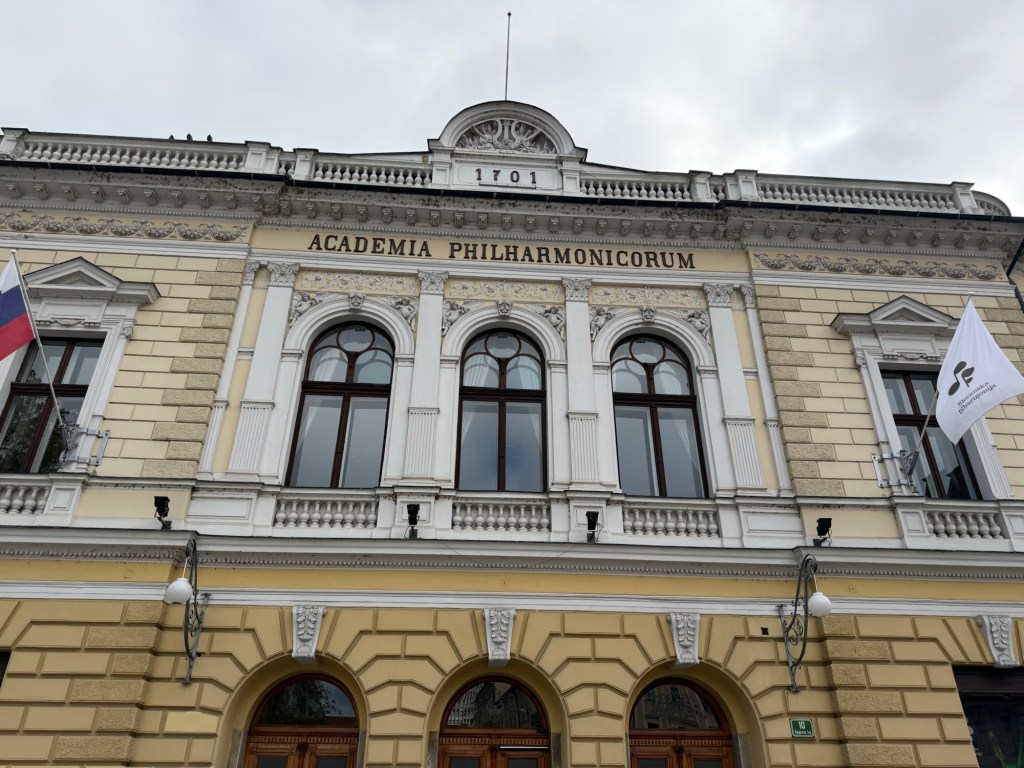
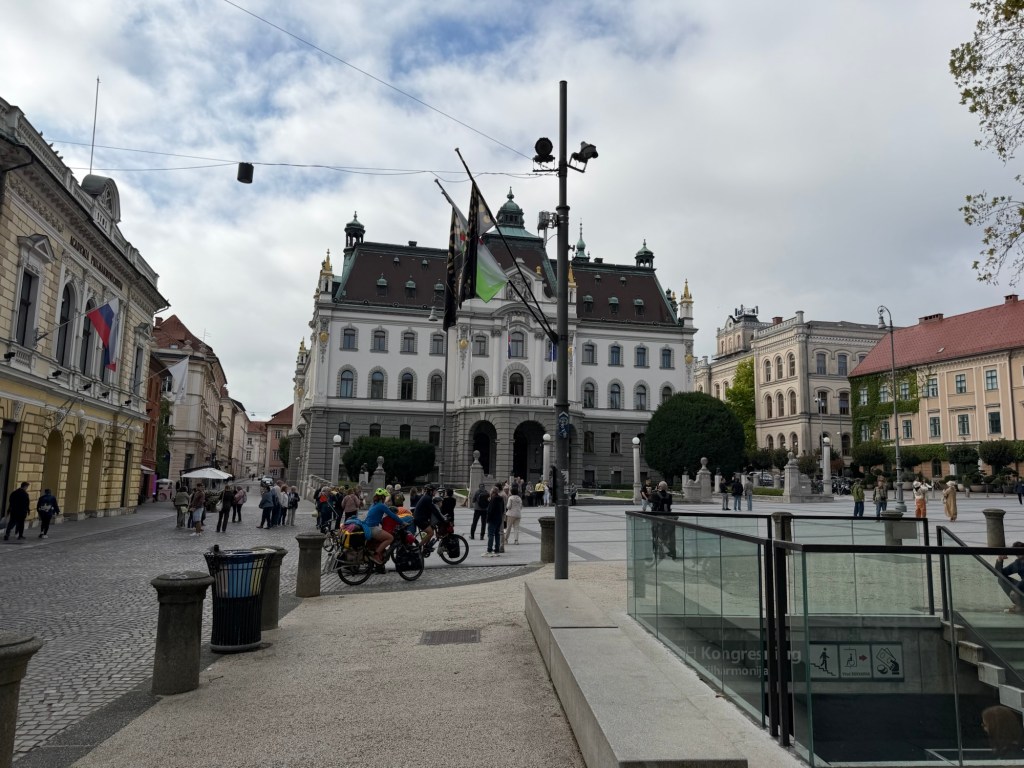
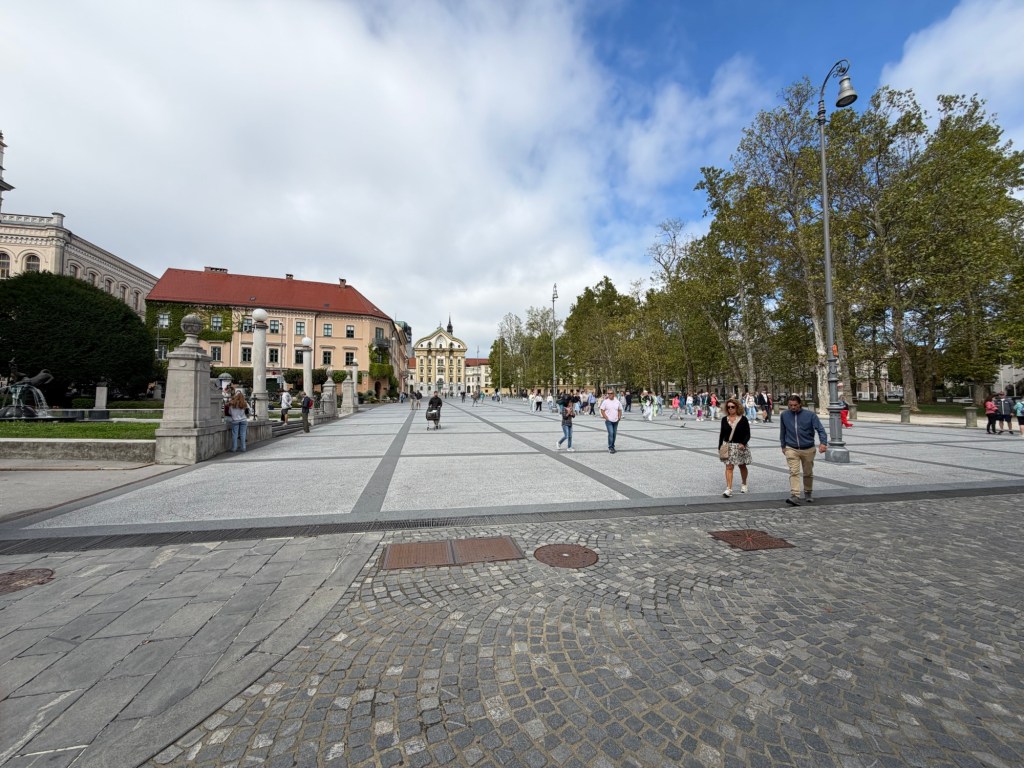
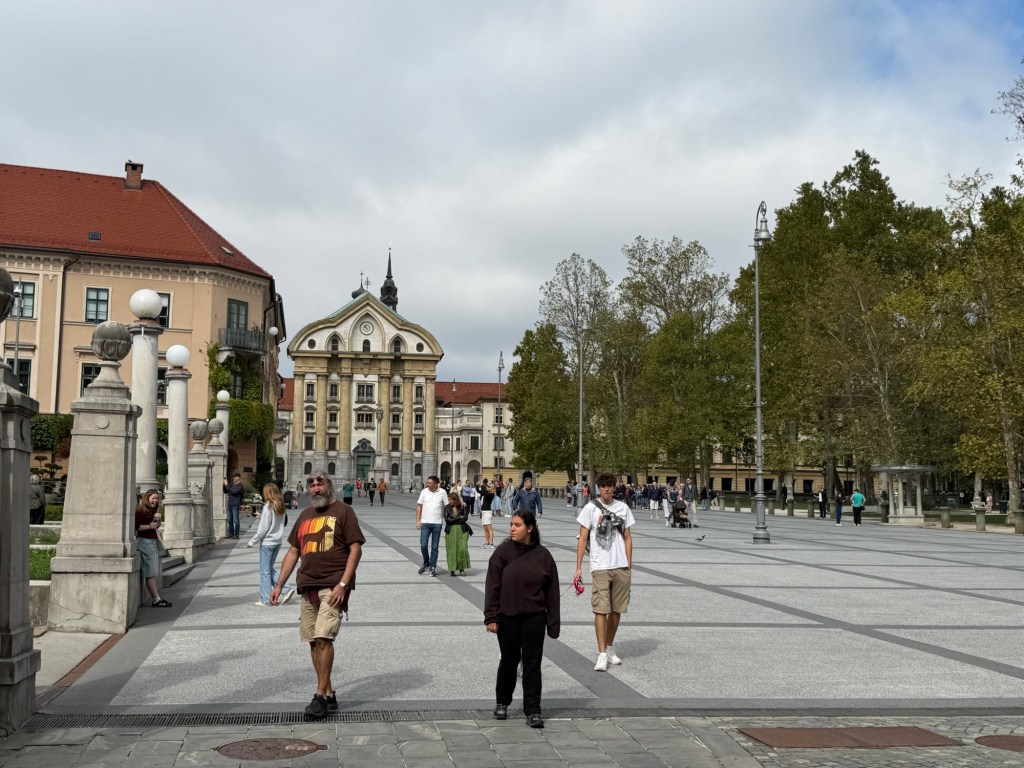
Congress Square, an expansive pedestrian plaza framed by some of the city’s most imposing buildings, includes the University of Ljubljana, the Slovenian Philharmonic, and the Ursuline Church of the Holy Trinity.
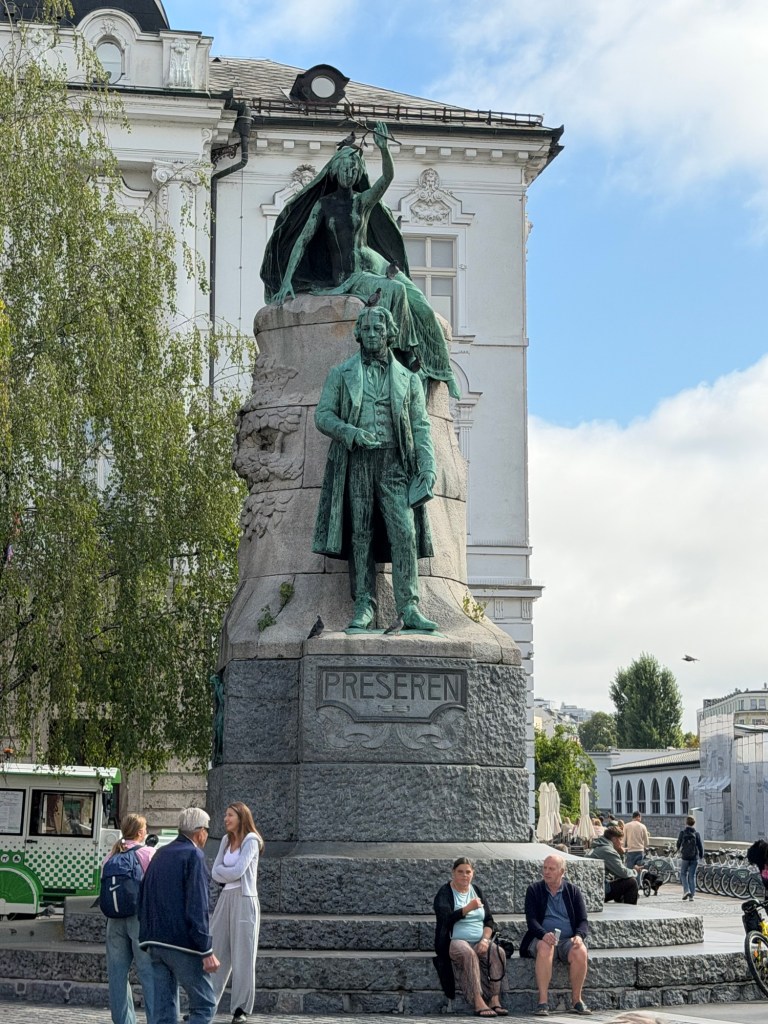
From there, it was only a short walk to Prešeren Square, the lively heart of the city. The square is dominated by the pink façade of the Franciscan Church of the Annunciation and a monument to France Prešeren, Slovenia’s revered national poet, watched over by the figure of his muse.
Prešeren best-known poem, Zdravljica—“A Toast”—expresses the hope that people everywhere might someday live in freedom and peace:
“Who long to see
That all men free
No more shall foes, but neighbours be.”
Those lines form part of Slovenia’s national anthem, making it unusual among anthems: rather than celebrating military victory, it offers a toast to friendship and harmony among all nations.
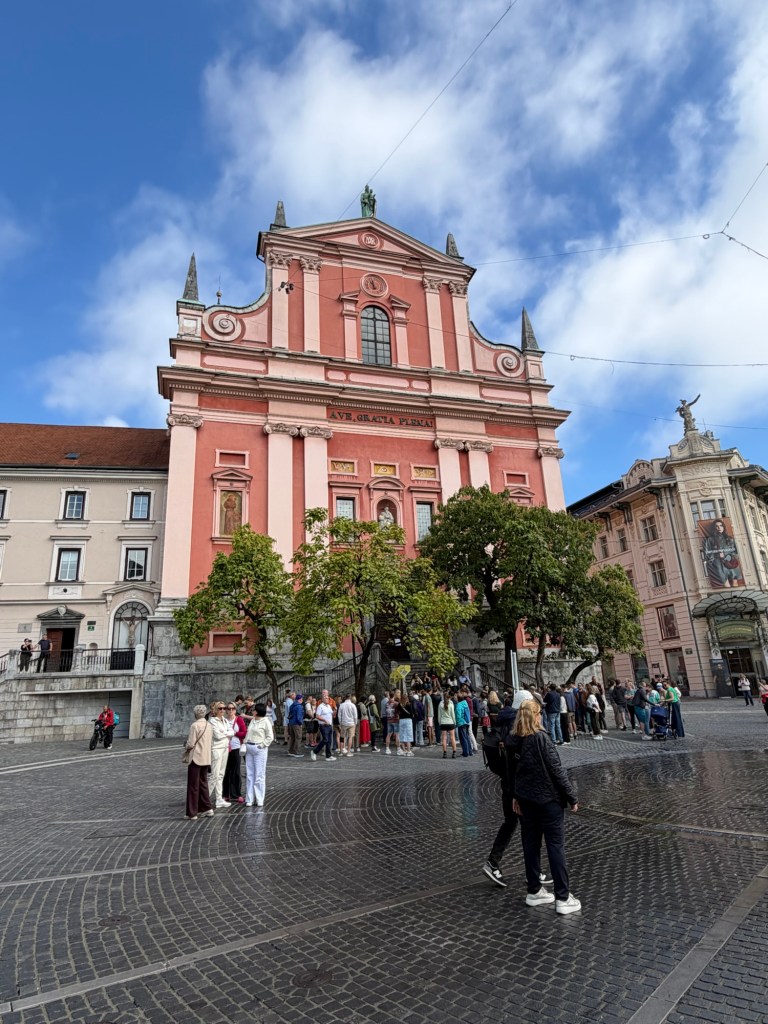
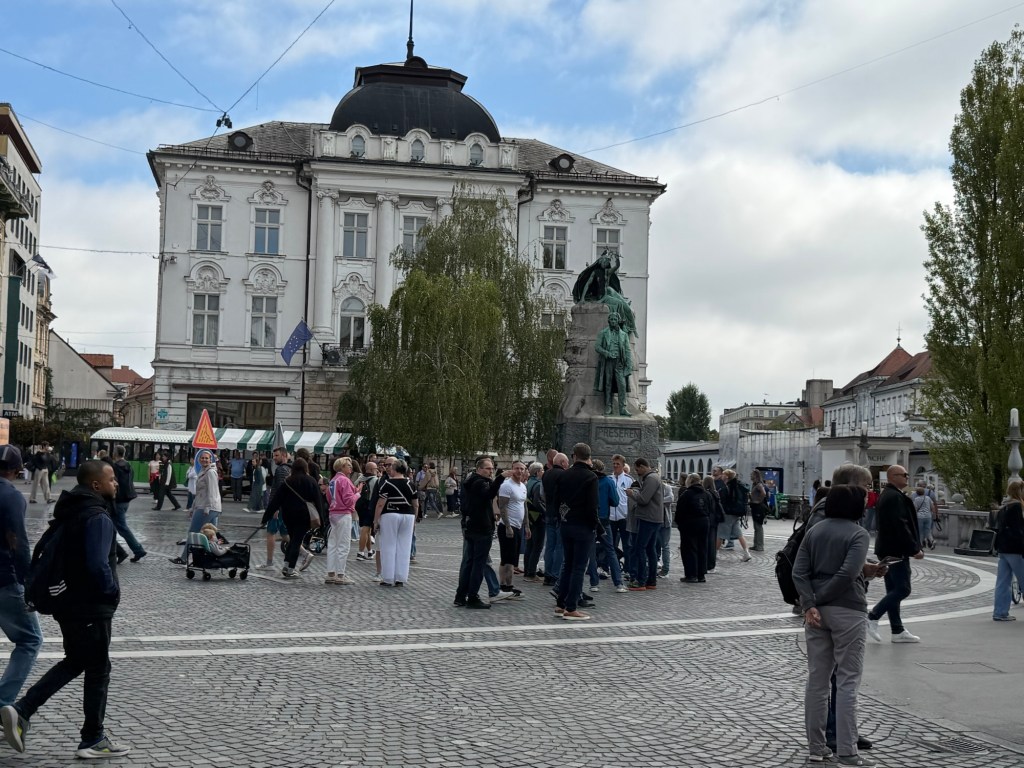
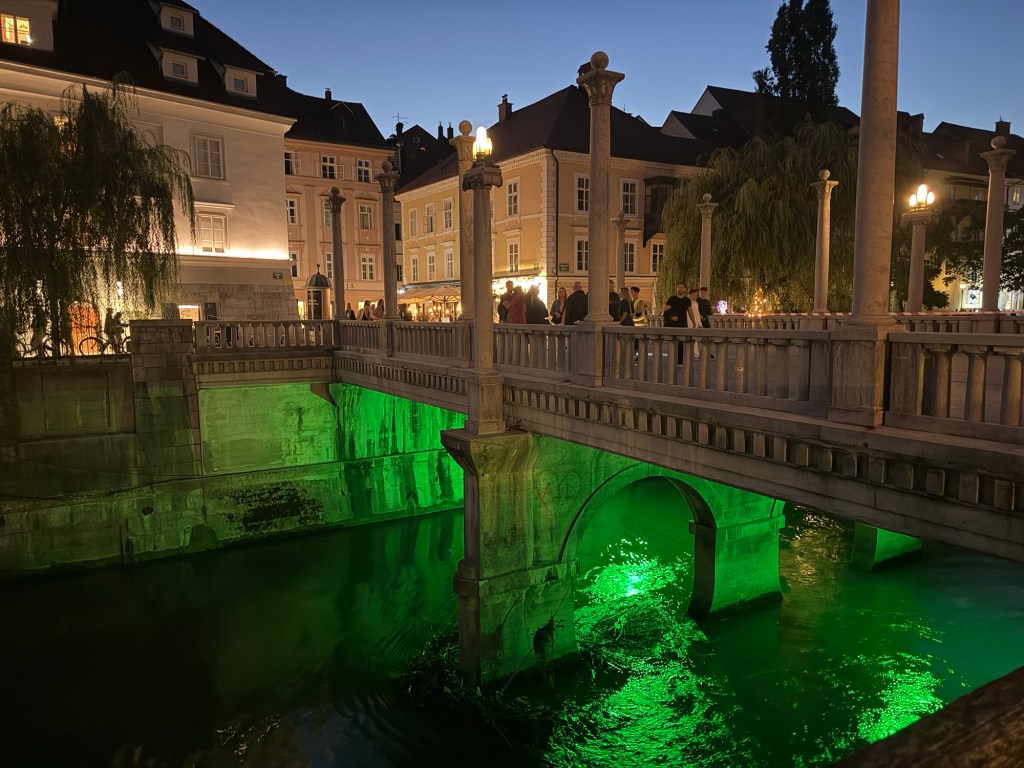
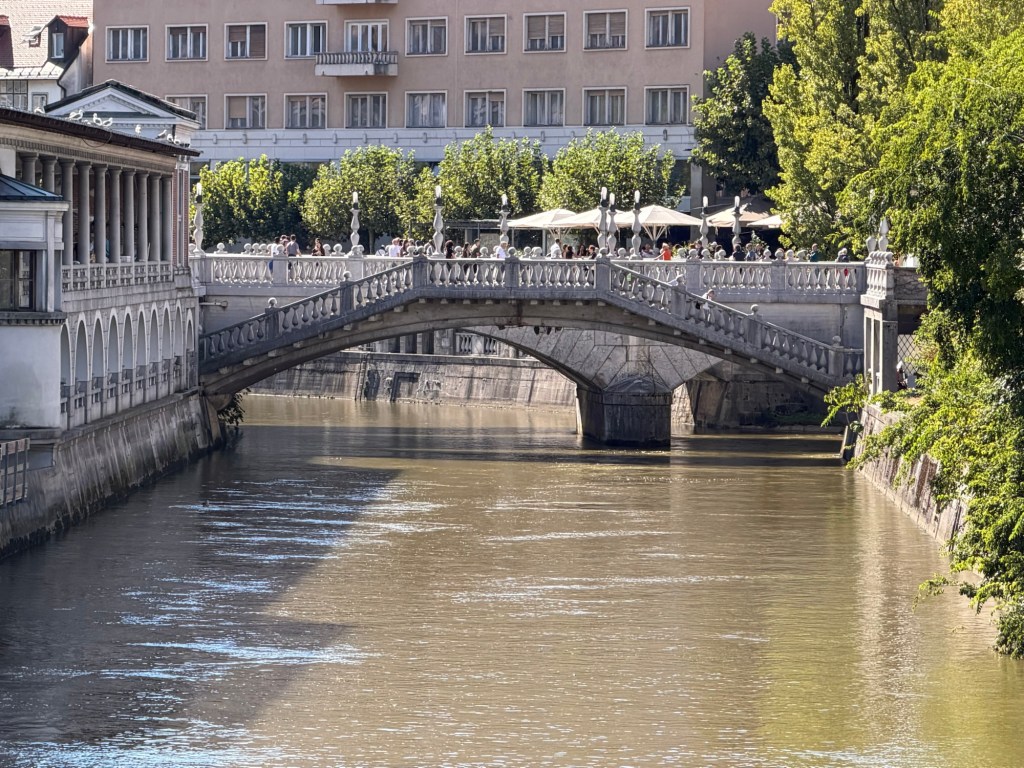
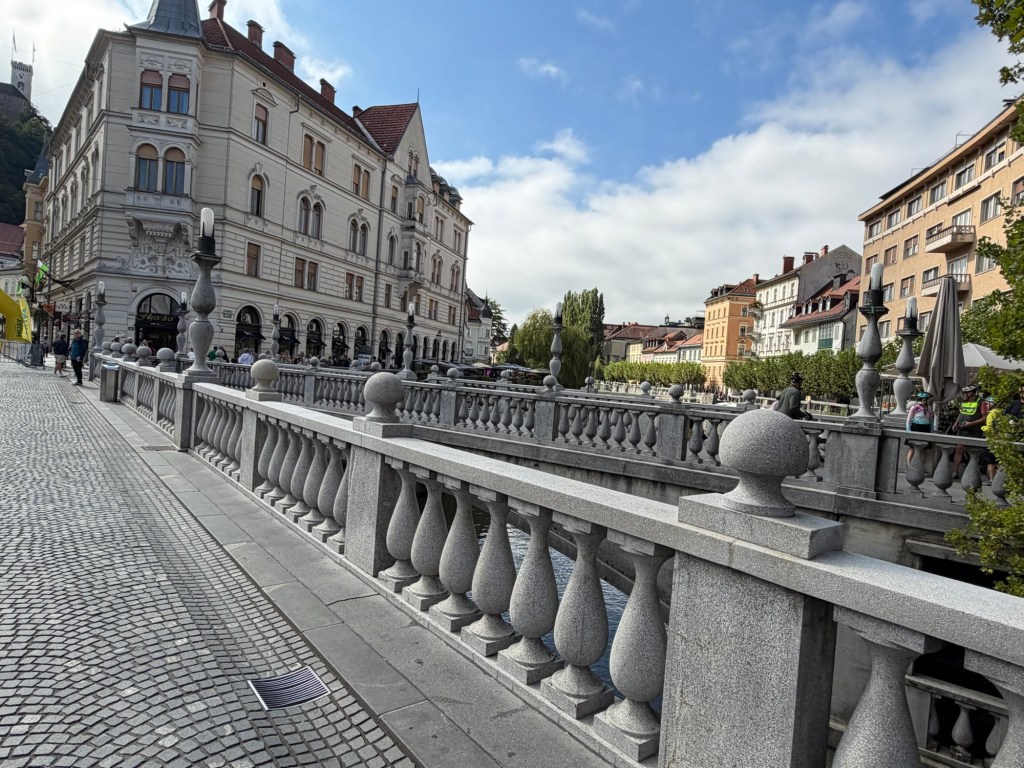
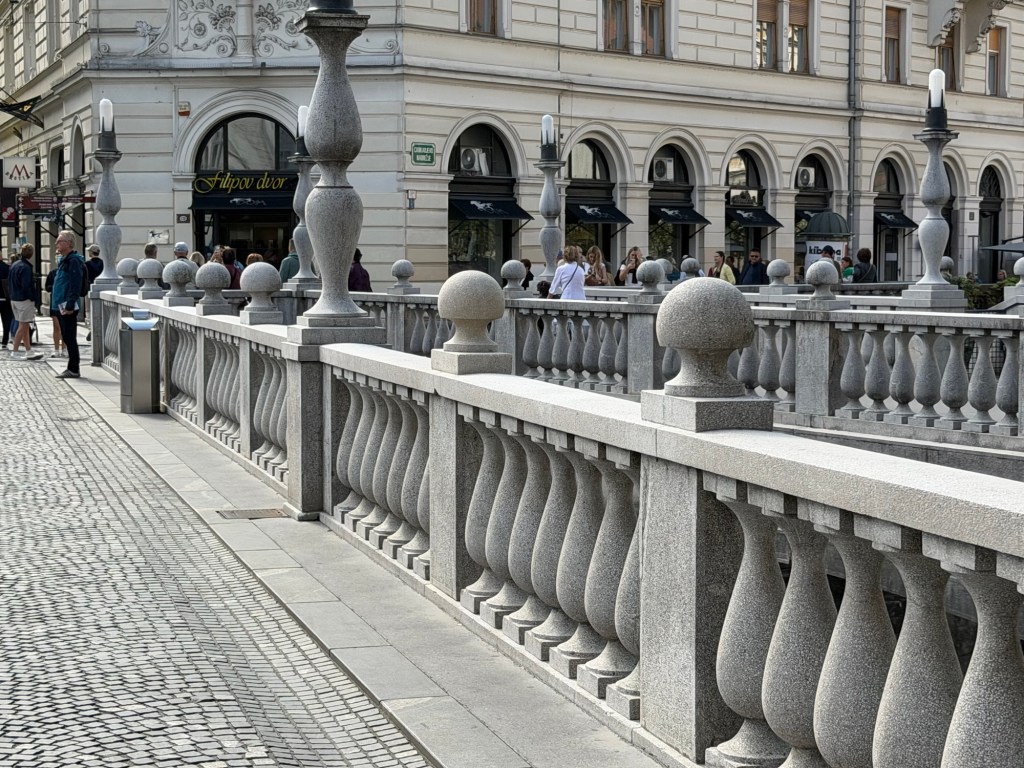
At the edge of the square, the Triple Bridge carries pedestrians across the Ljubljanica into the Old Town. Architect Jože Plečnik created this unusual arrangement by adding two pedestrian bridges to an existing nineteenth-century stone bridge, uniting the riverbanks in a design that feels both elegant and theatrical. Beyond the bridge, the streets lead toward the cathedral, the riverside arcades, and the Central Market, where food stalls and long communal tables filled the square with activity. The city’s principal sights are so closely connected that exploring Ljubljana feels less like following an itinerary and more like wandering naturally from one beautiful place to the next.
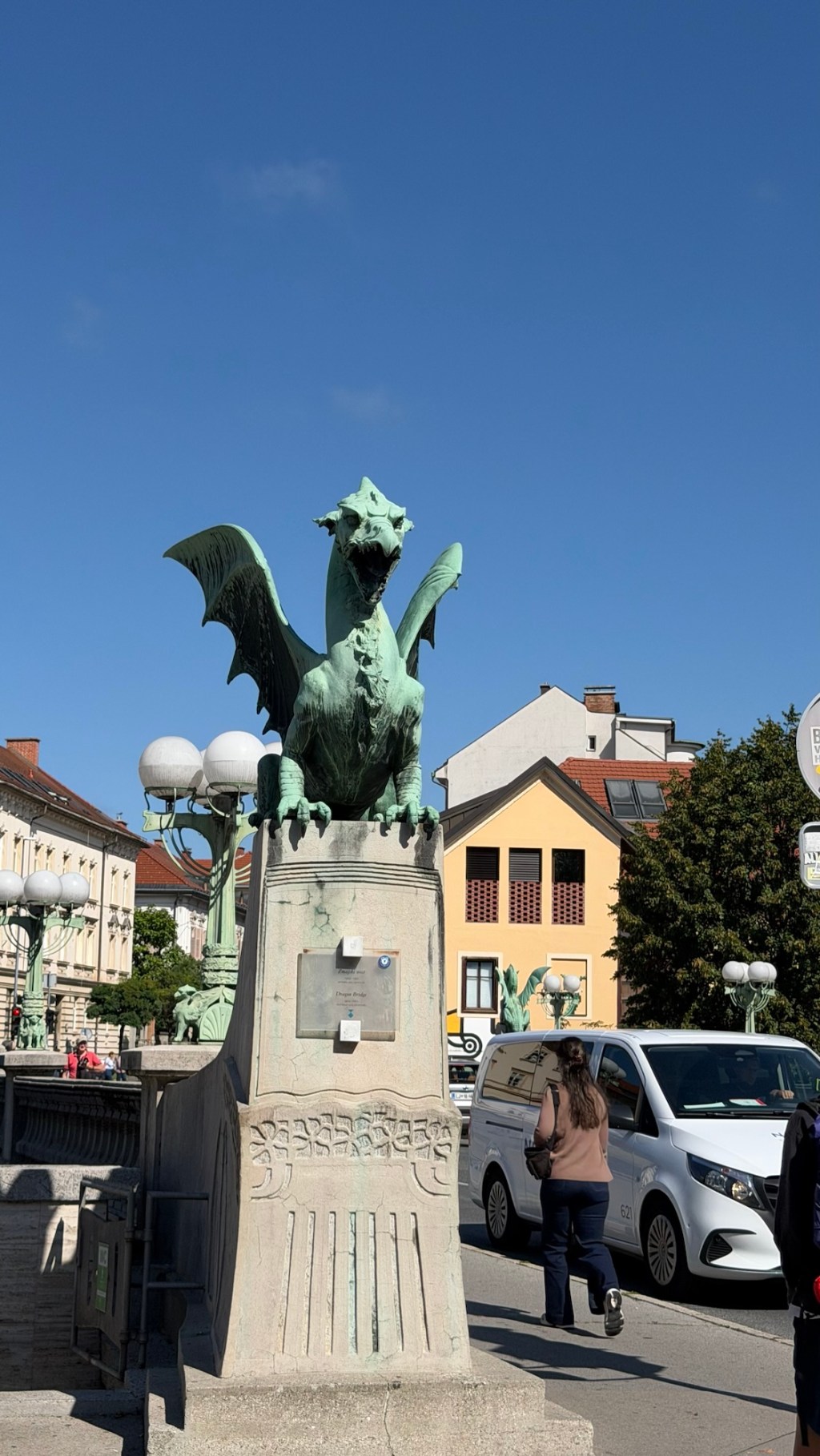
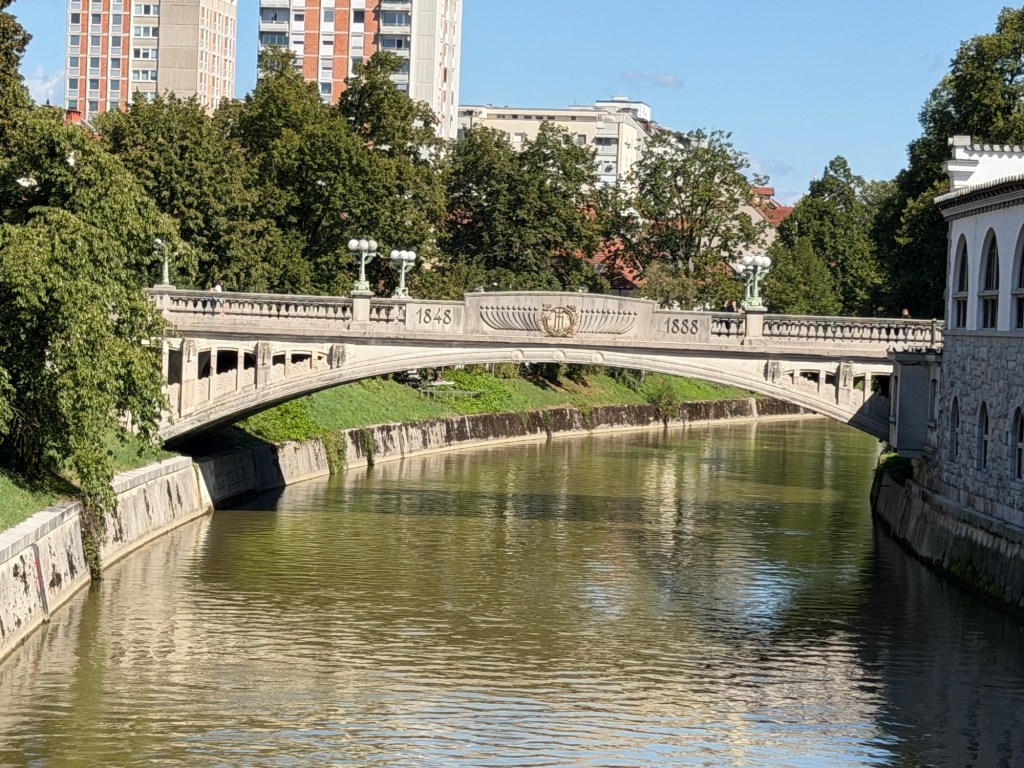
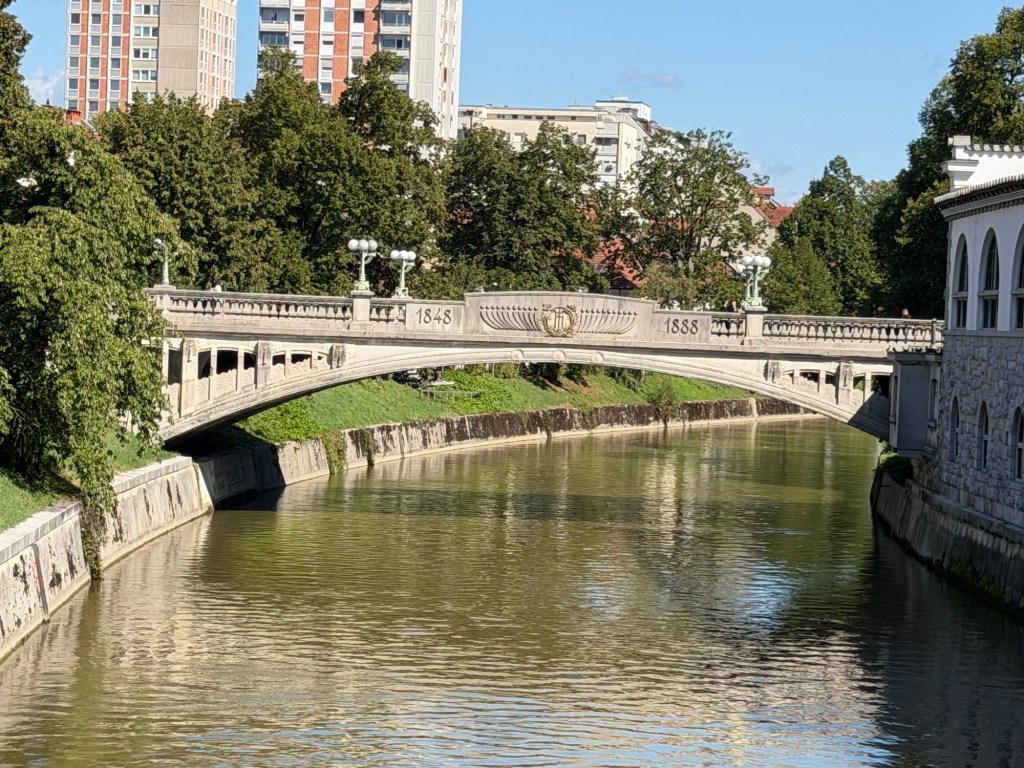
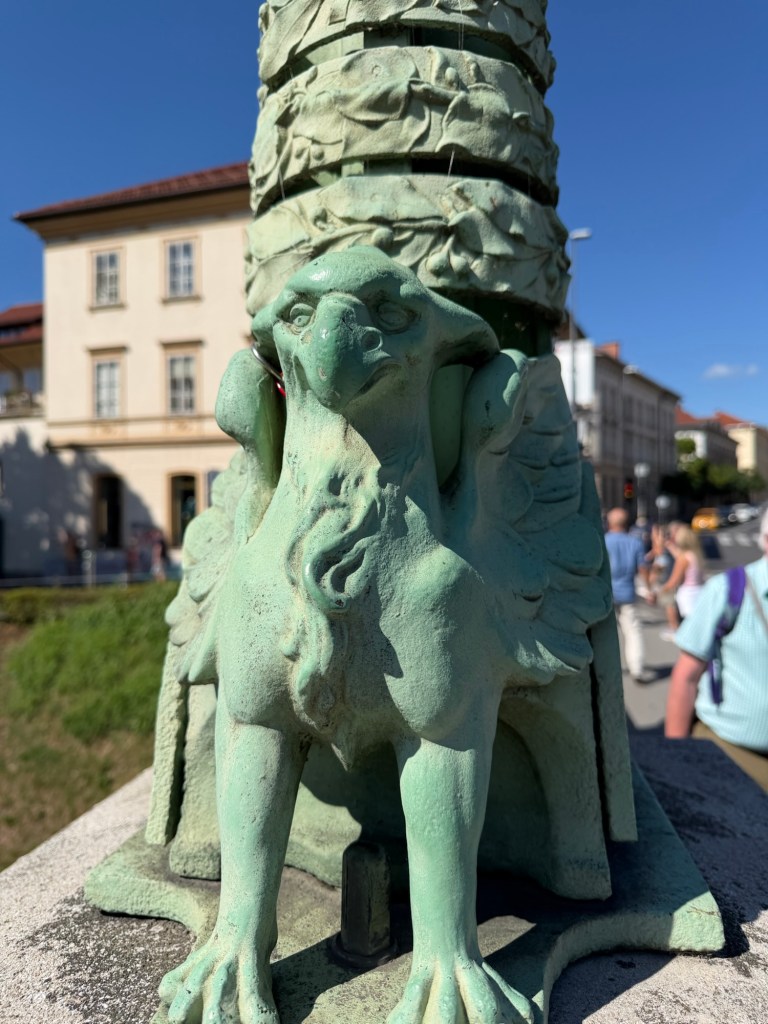
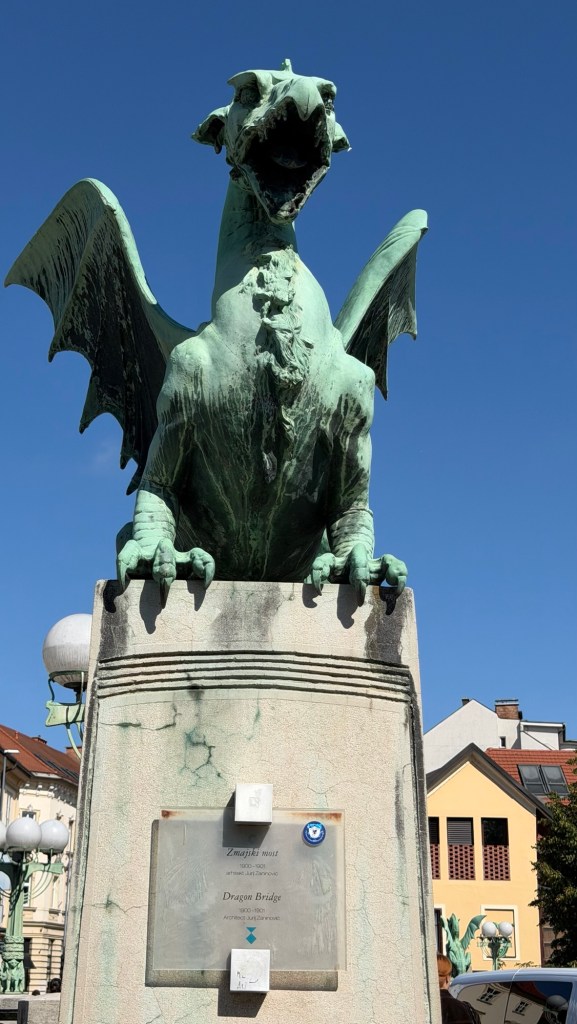
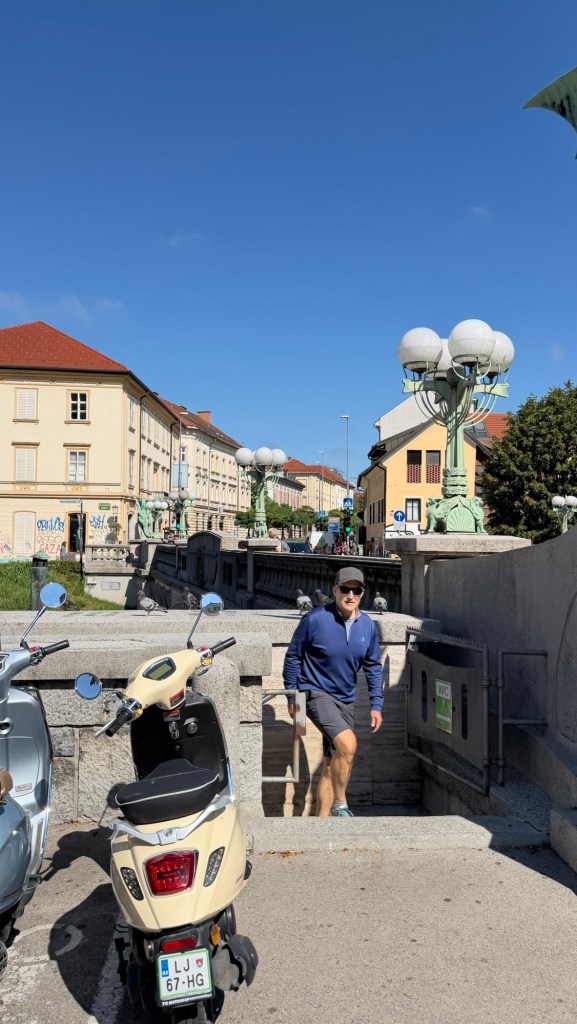
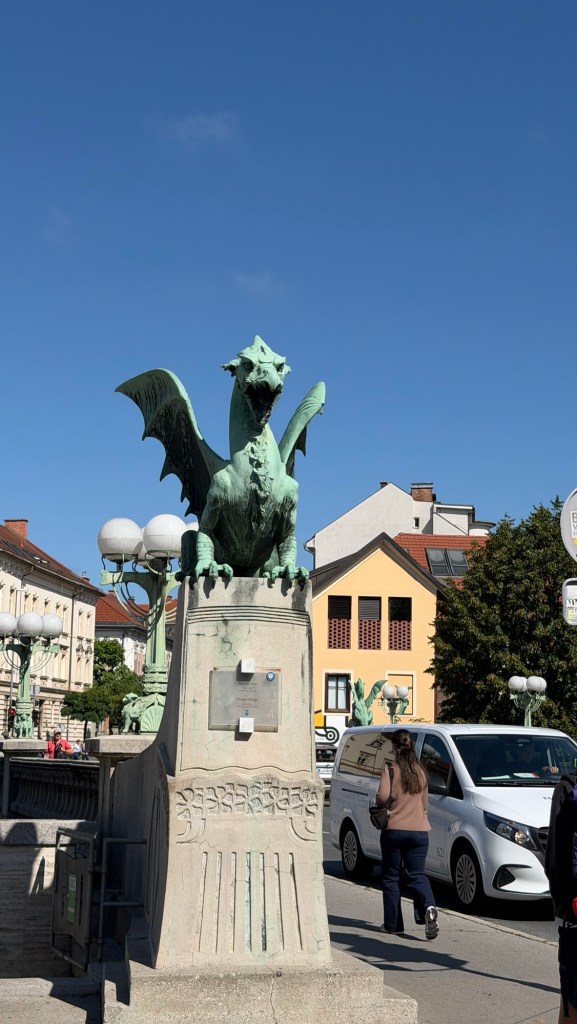
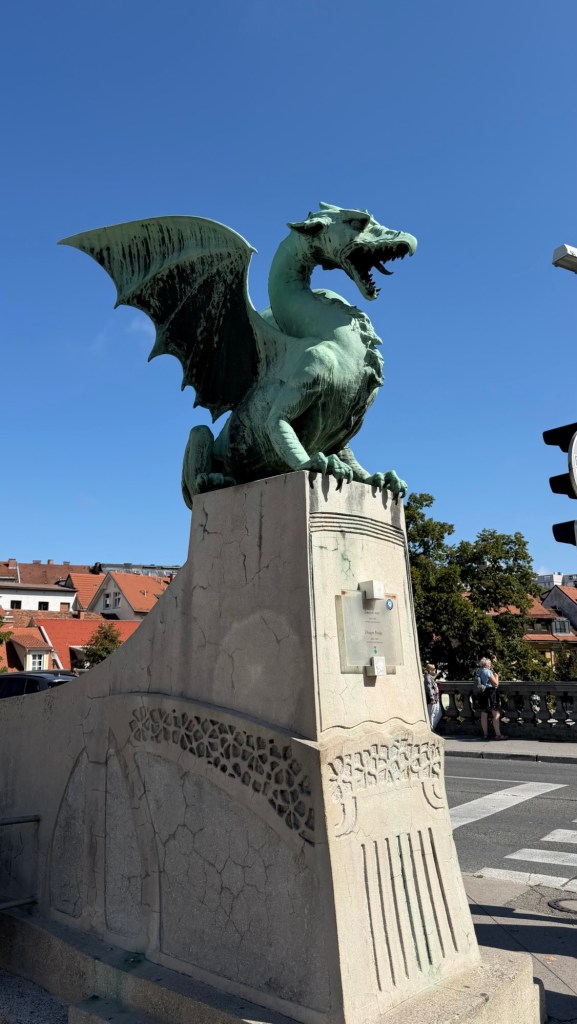
A short walk along the Ljubljanica river brought us to the Dragon Bridge, one of Ljubljana’s most recognizable landmarks. Built in 1901 in the Art Nouveau style, the bridge is guarded by four imposing copper dragons. The dragon, which appears on Ljubljana’s coat of arms, has become the enduring symbol of the city. According to legend, Jason and the Argonauts passed through this region on their journey home with the Golden Fleece, and Jason killed a dragon in the nearby marshes.
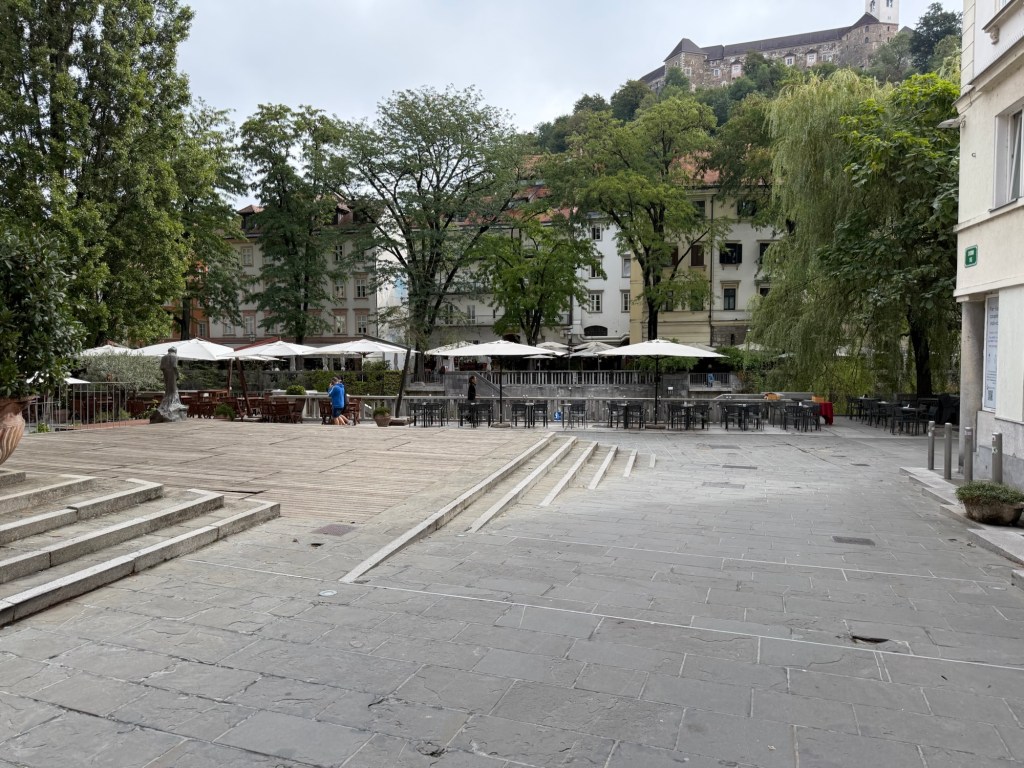
We wandered into Ljubljana’s lively Central Market, where rows of stalls stretched beneath broad white umbrellas and leafy trees. Local farmers displayed an abundance of seasonal produce—cabbages, leeks, onions, pumpkins, eggplants and freshly harvested grapes—alongside colorful piles of berries, plums, peaches and other fruit.
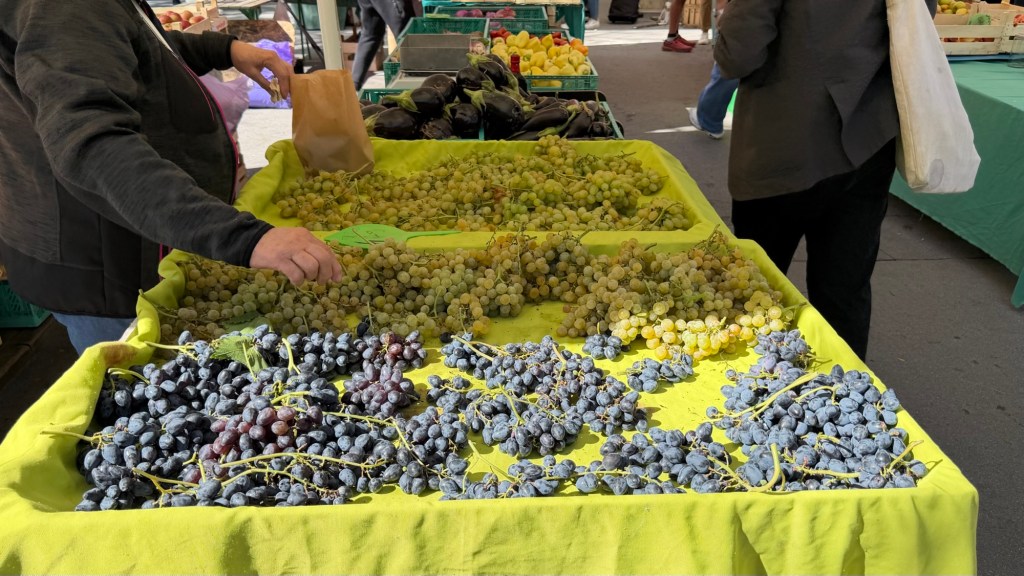
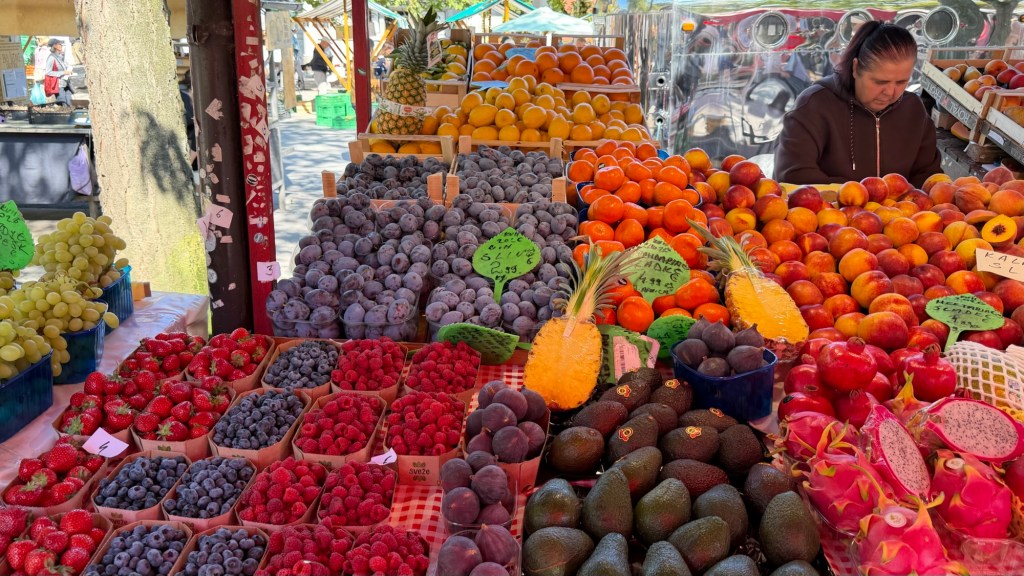
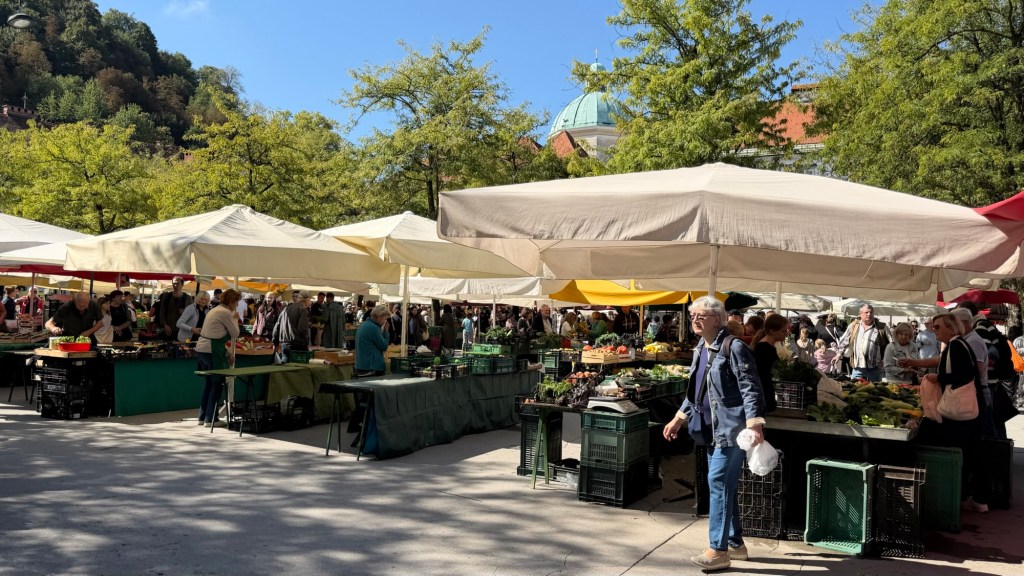
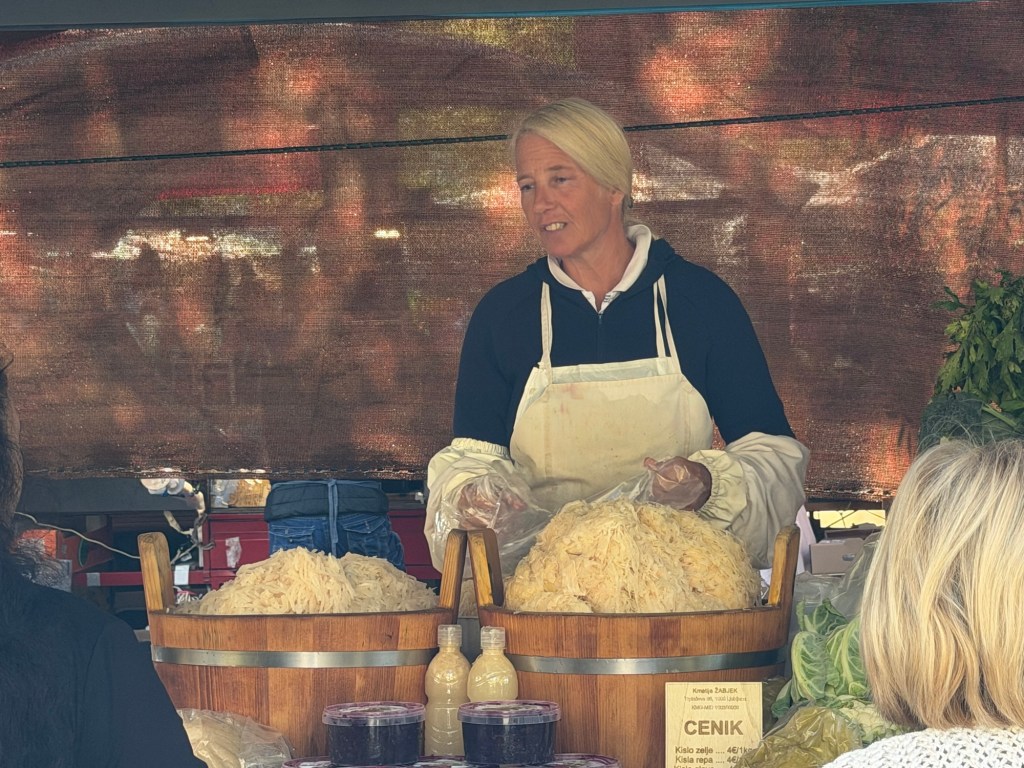
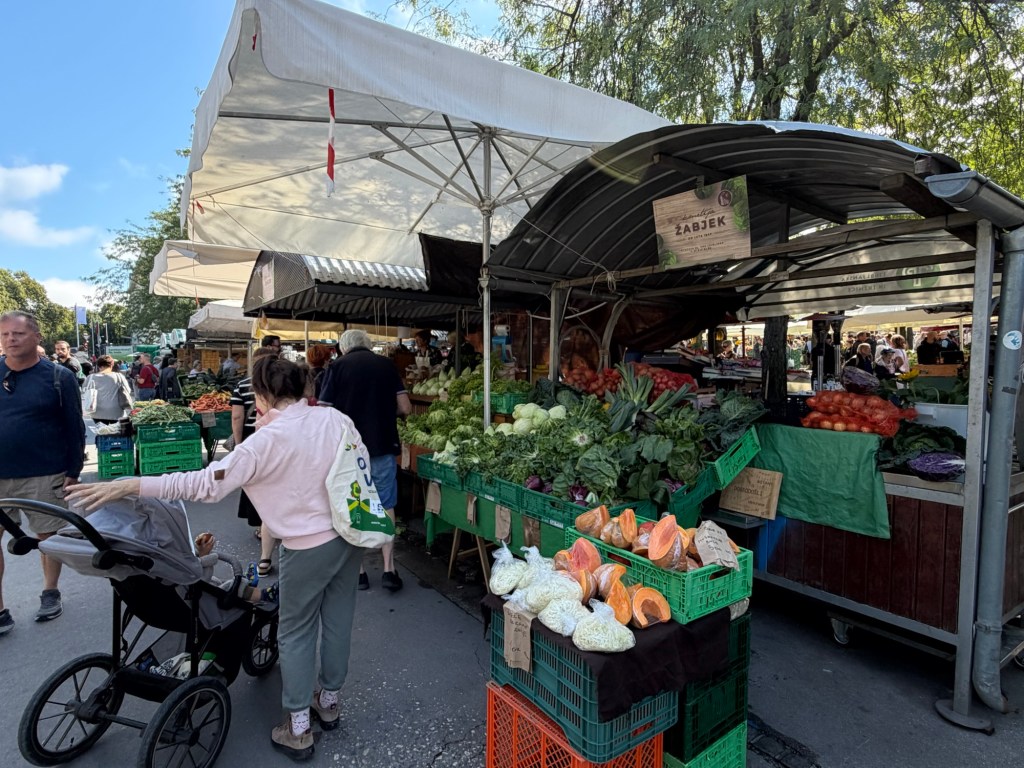
One vendor served sauerkraut directly from large wooden barrels, a reminder that this was not simply a tourist attraction but a working neighborhood market where residents still came to shop, exchange news and carry home the ingredients for the day’s meals.
Inside a nearby covered market, located on the ground floor of the former Seminary Palace, the atmosphere was quieter and more intimate. The Catholic seminary was closed by Yugoslavia’s Communist government after World War II, and part of the building was converted to secular use, including the market.
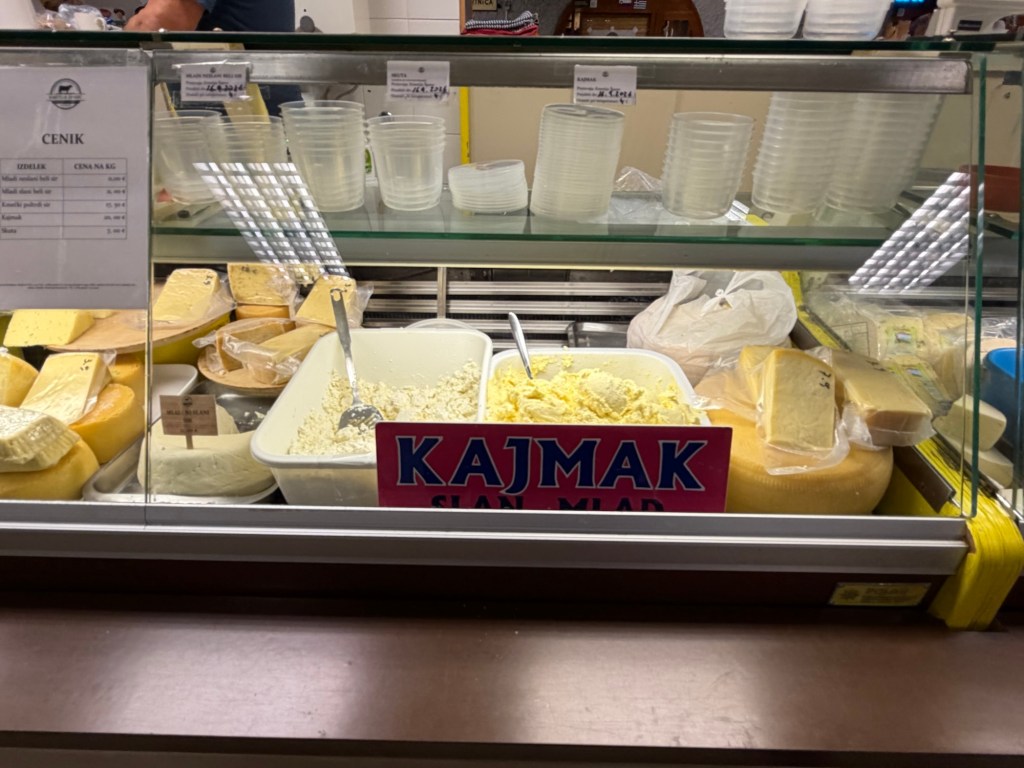
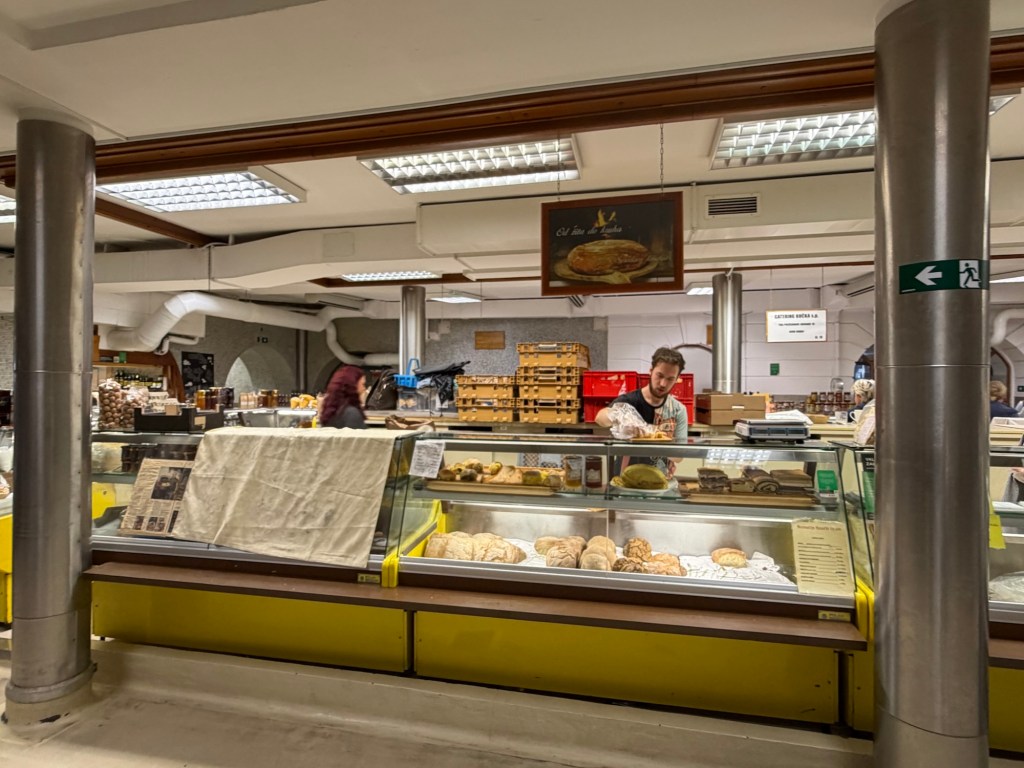
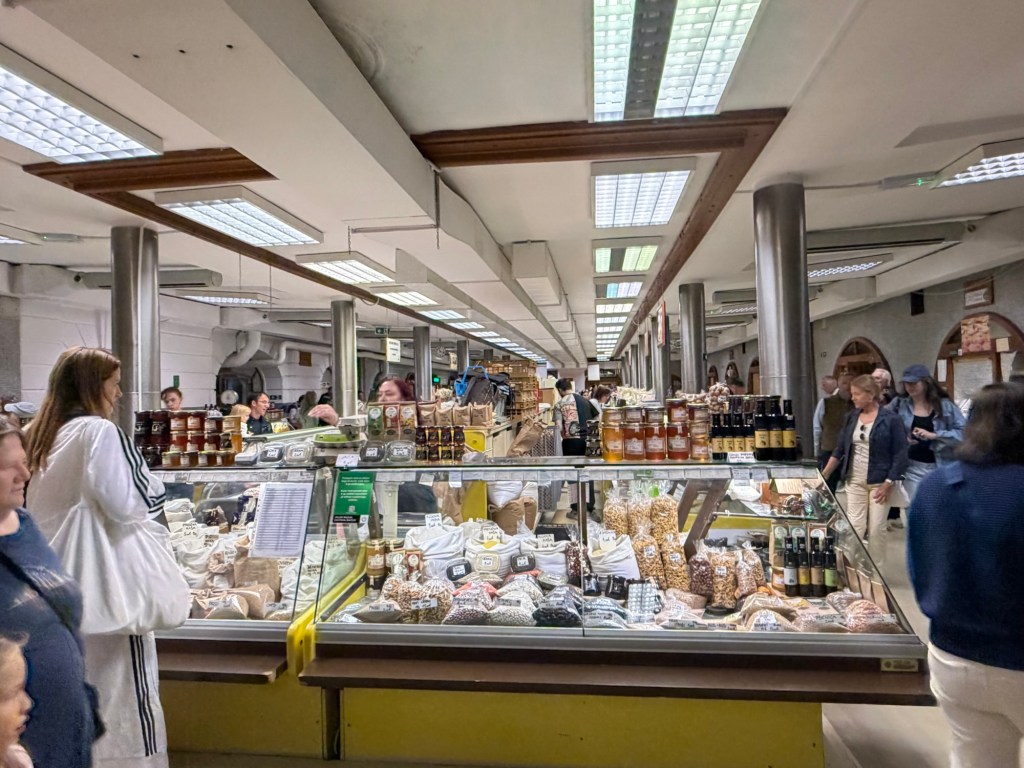
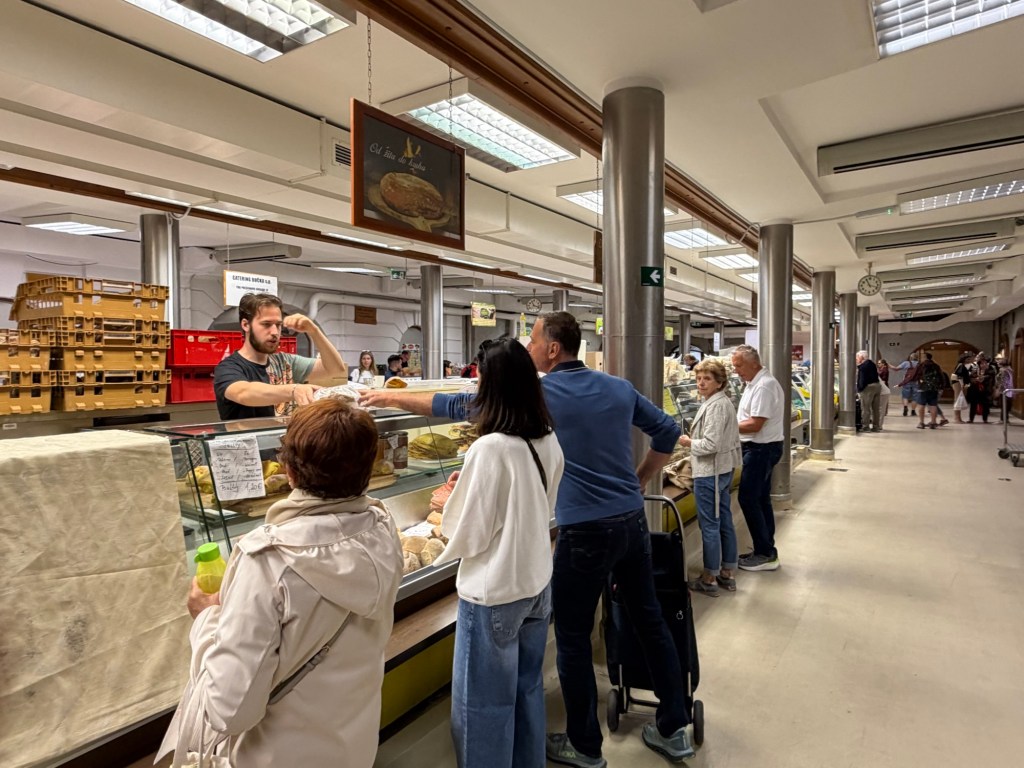
Glass-fronted counters were filled with homemade breads, regional cheeses and kajmak, the rich, creamy dairy spread popular throughout the Balkans, while other stalls offered honey, preserves, dried beans, nuts and local oils. The seminary eventually reopened, but the market remains—a curious reminder of the building’s complicated history under socialist rule.
Ljubljana’s Cathedral of St. Nicholas is one of the city’s finest Baroque monuments, immediately recognizable by its green copper dome and twin bell towers. The present church was constructed in the early 18th century, replacing an older medieval cathedral, and its lavish interior is filled with illusionistic ceiling frescoes, gilded ornament and richly colored marble.
Dominating the high altar of the Church of St. Nicolas is Pietro Liberi’s monumental 1674 painting of Saint Nicholas. Although once praised as the finest artwork in the cathedral, it was removed in 1822 as religious tastes became more conservative.
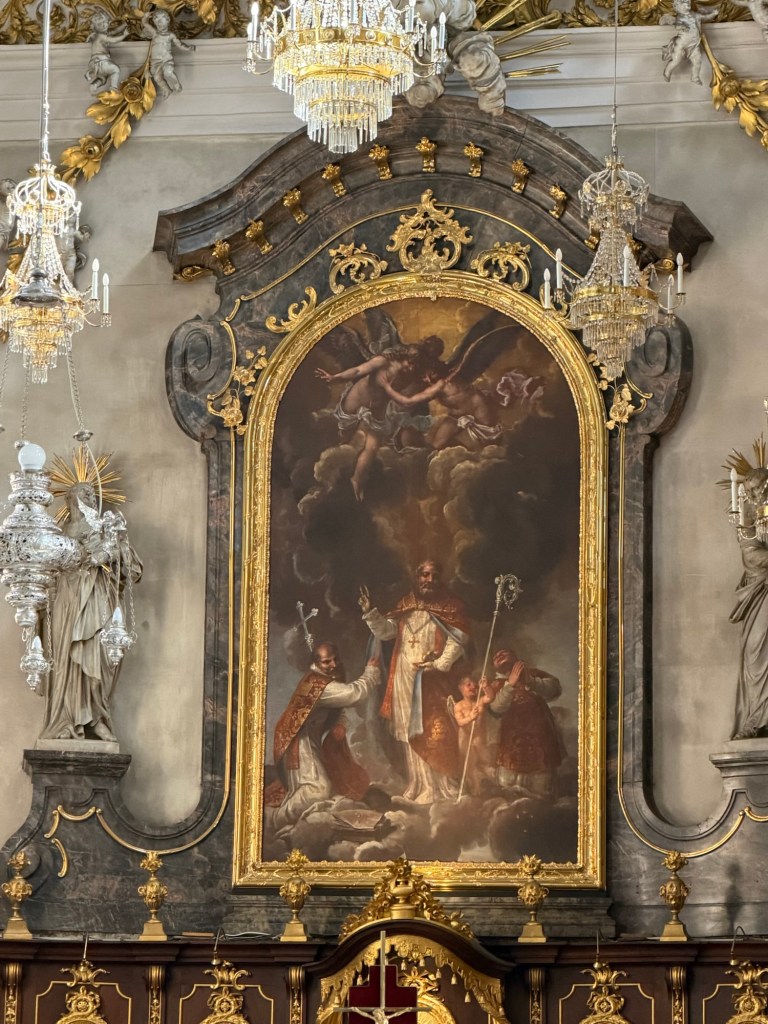
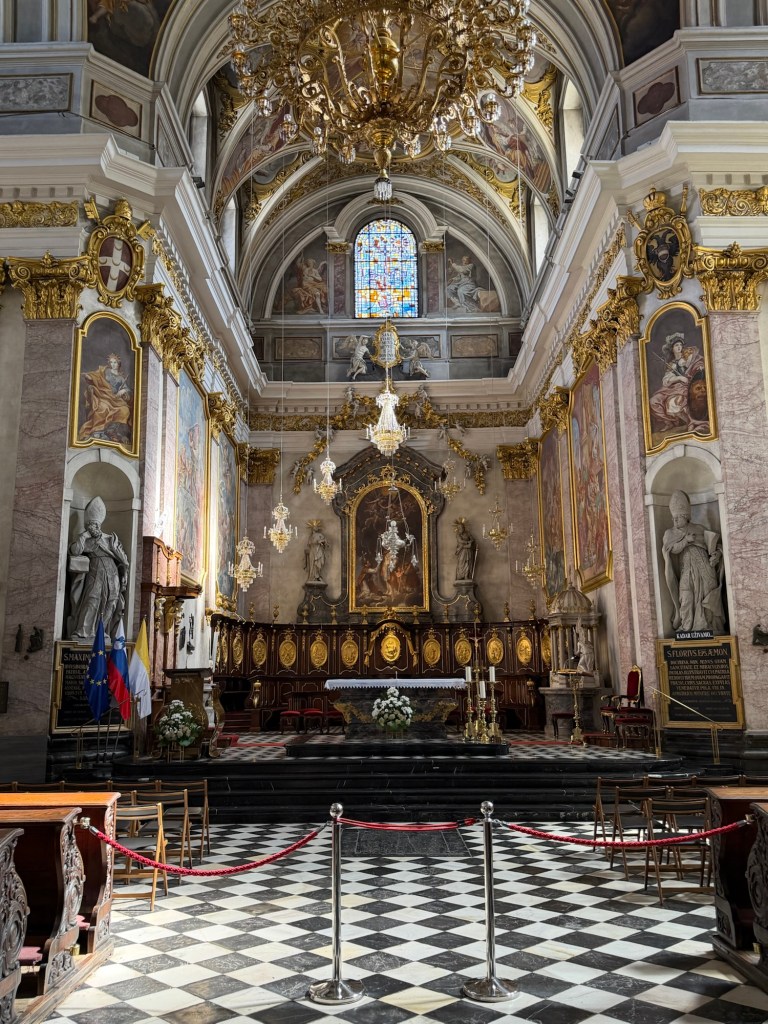
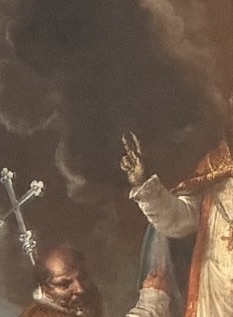
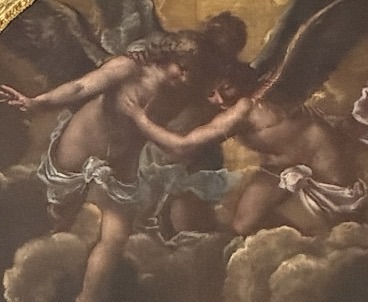
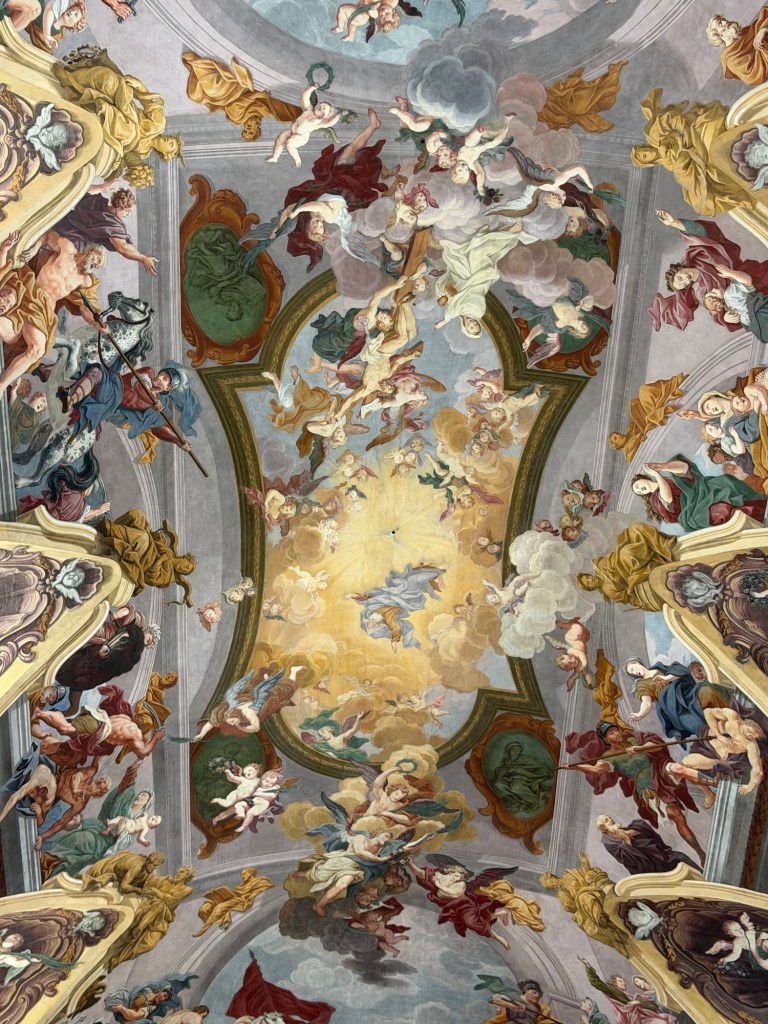
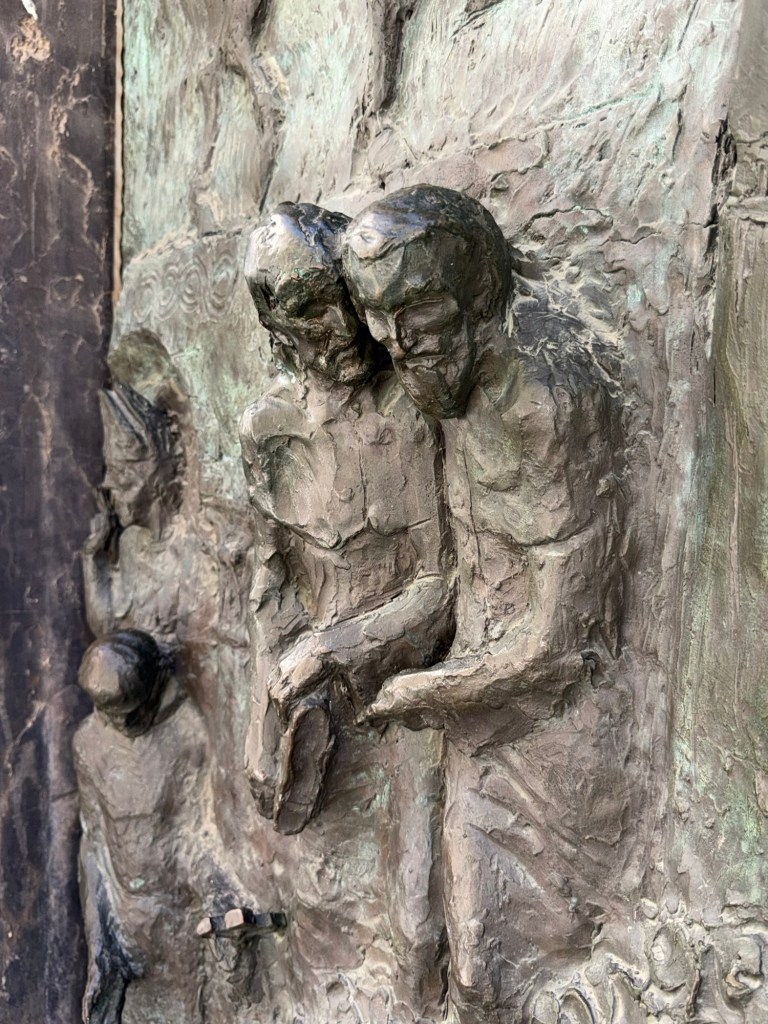
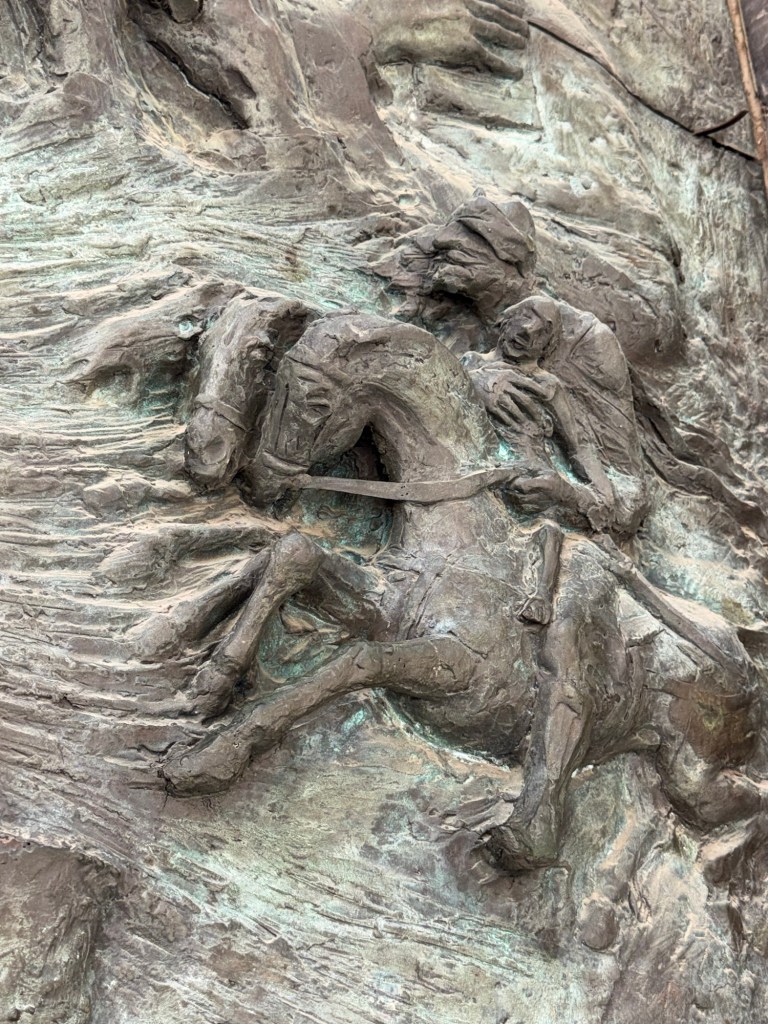
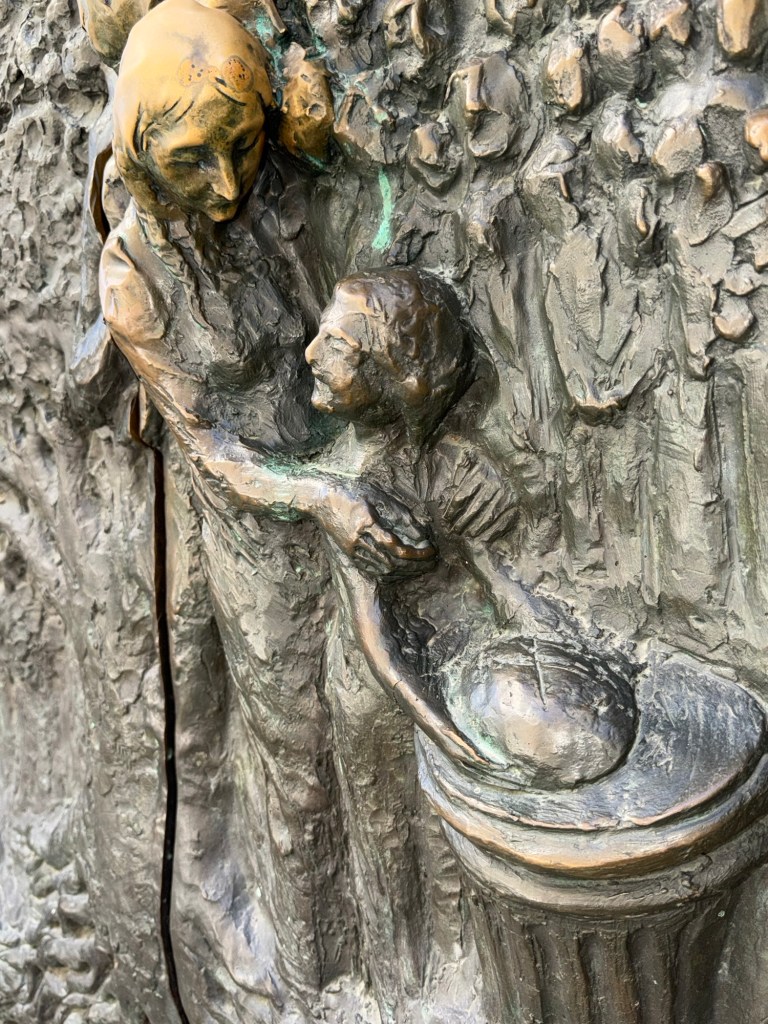
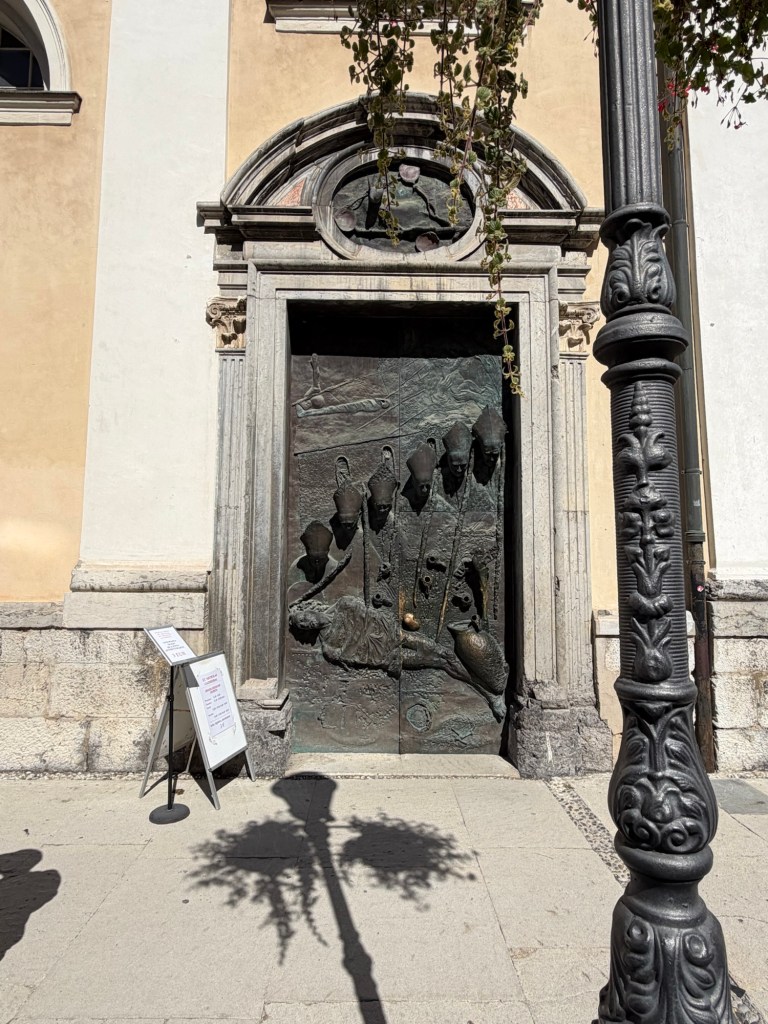
Our guide pointed out the saint’s strangely elongated, claw-like fingers, which were thought to have an almost demonic appearance. Equally troubling to 19th-century church authorities were the three nearly nude adolescent angels embracing in the clouds above him. The painting was replaced by a more restrained version and then largely forgotten. Nearly two centuries later, in 2004, the original canvas was discovered rolled up in the cathedral’s attic. After an extensive restoration, it was returned to the high altar in 2007. The great bronze doors were installed for Pope John Paul II’s 1996 visit and depict the history of Christianity in Slovenia.
Ljubljana Castle rises above the city from Castle Hill, a strategic position occupied since prehistoric times. Although a medieval stronghold stood here by the 12th century, much of the present fortress dates from the late 15th and 16th centuries, when the Habsburgs rebuilt and strengthened it against possible Ottoman attack. Its massive stone walls, defensive towers and enclosed courtyard give it the austere character of a working fortress rather than an elaborate royal residence.
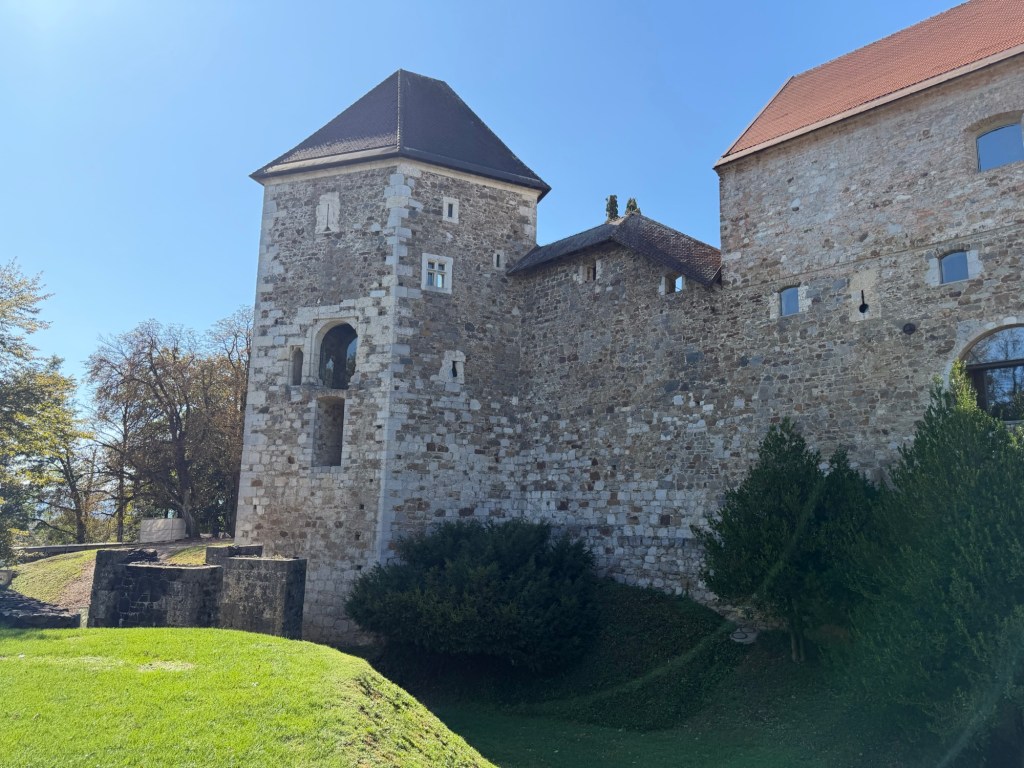
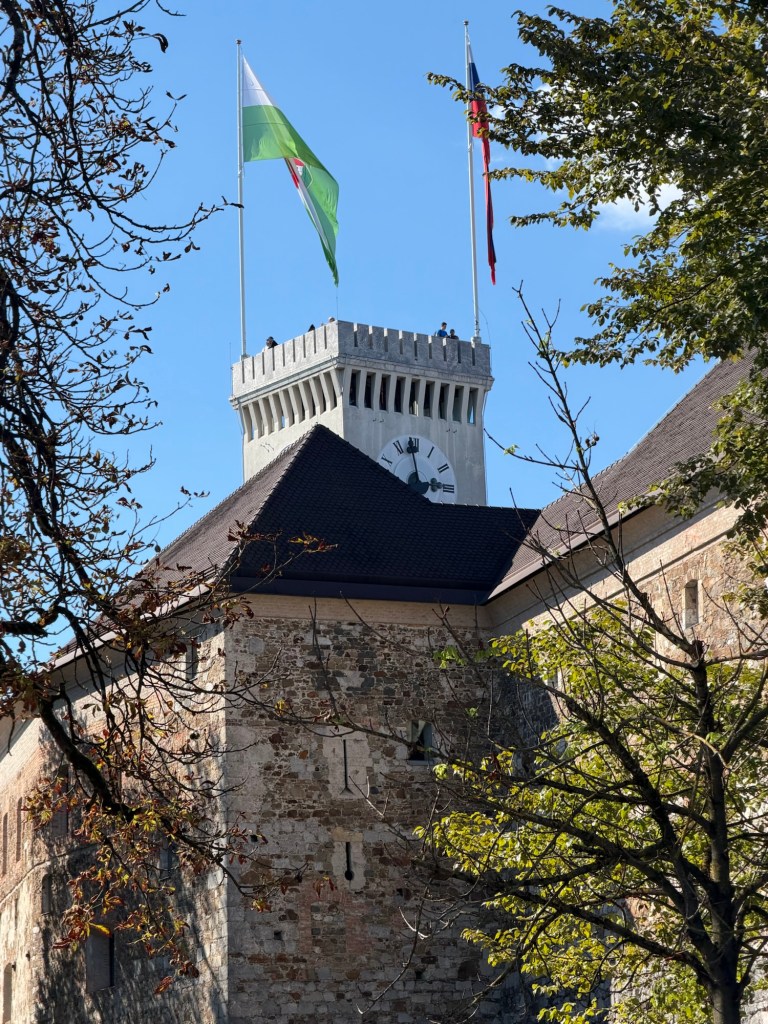
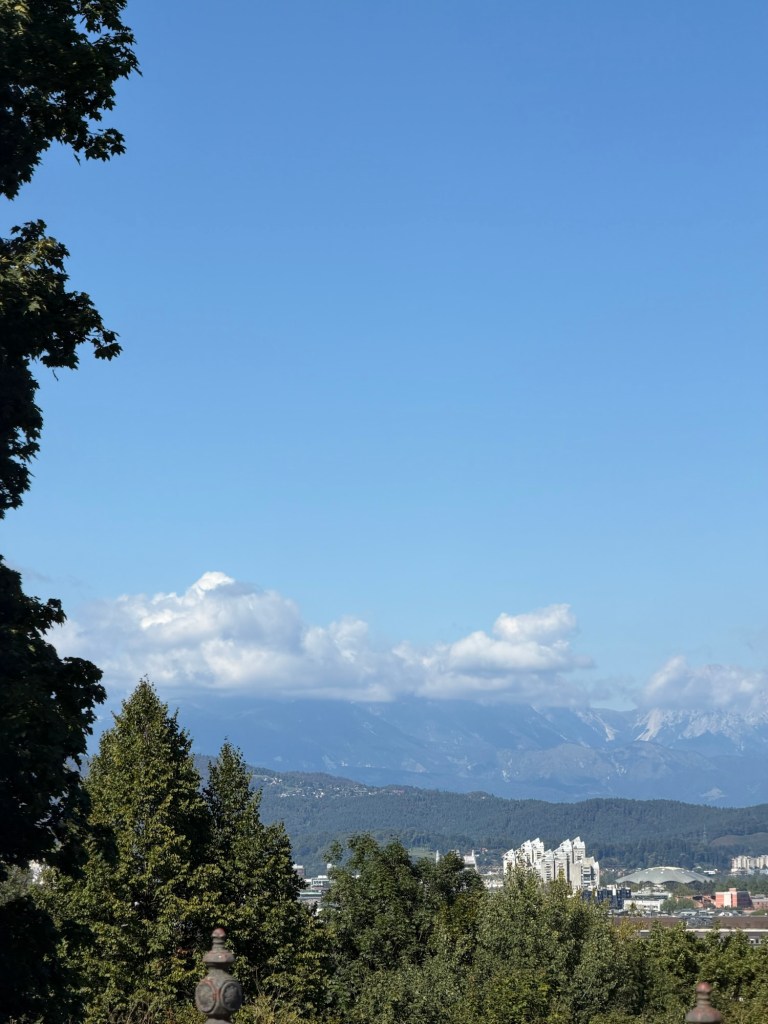

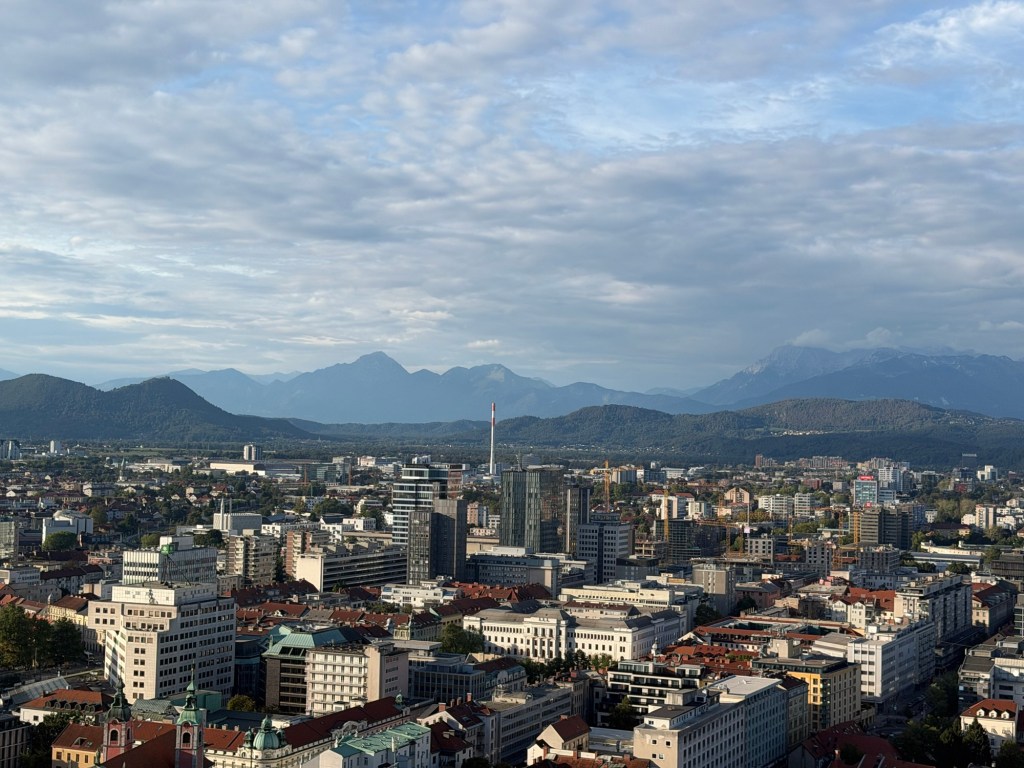
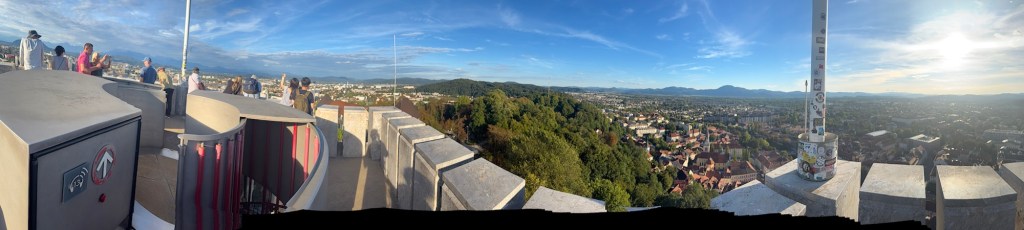
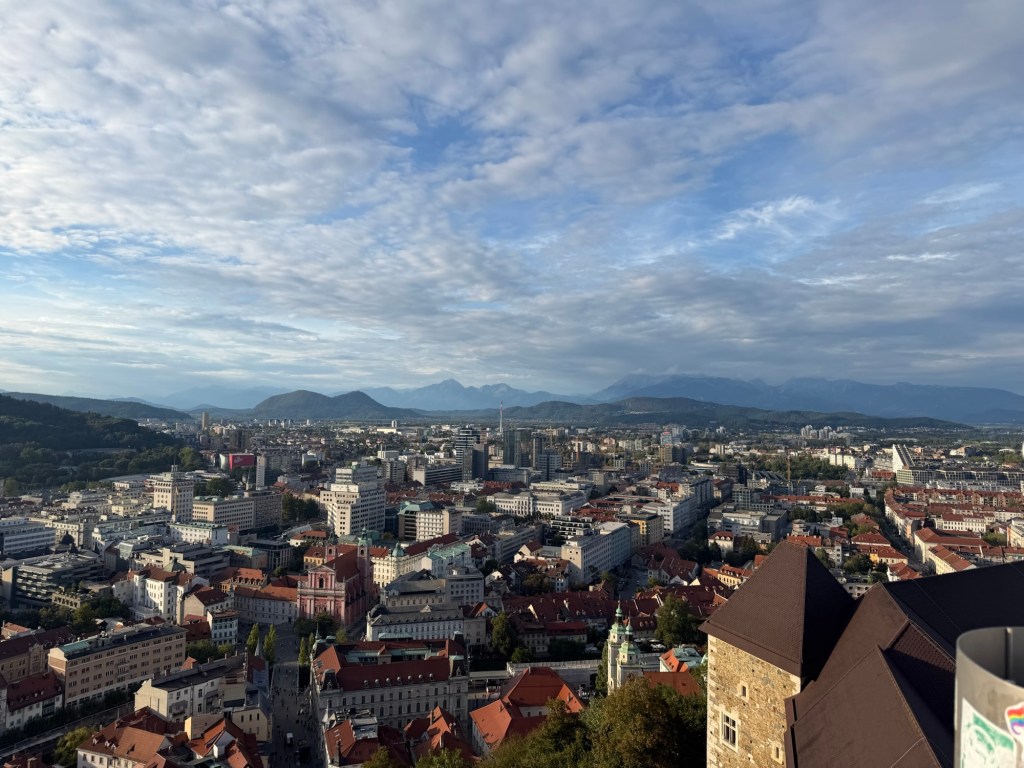
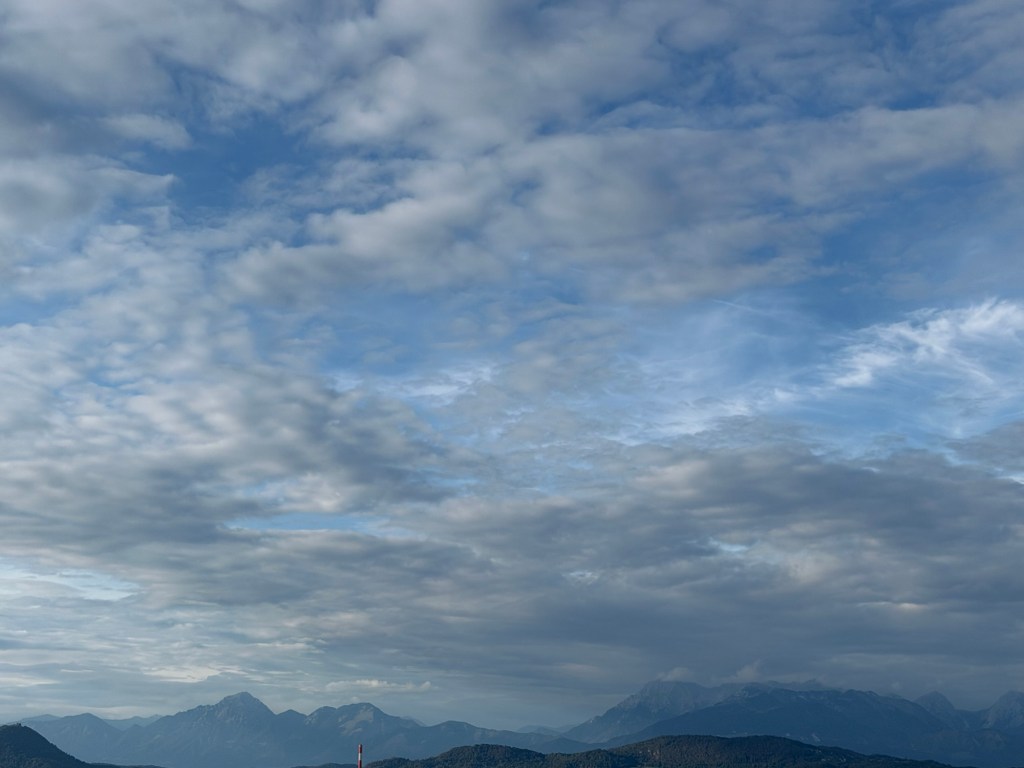
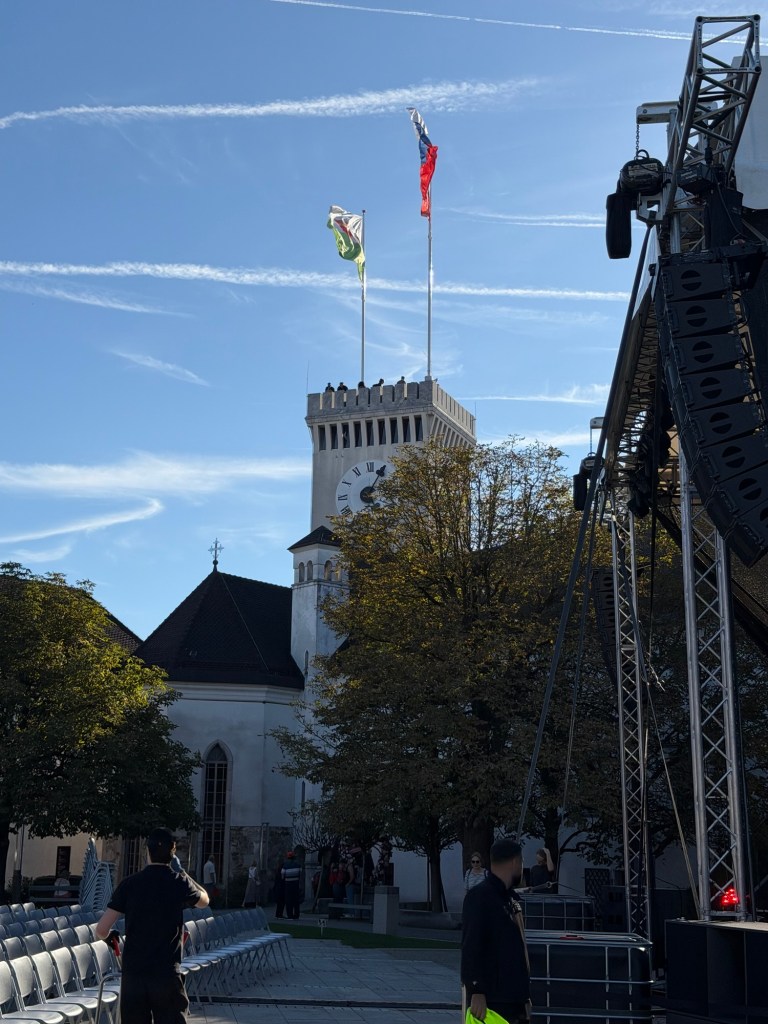
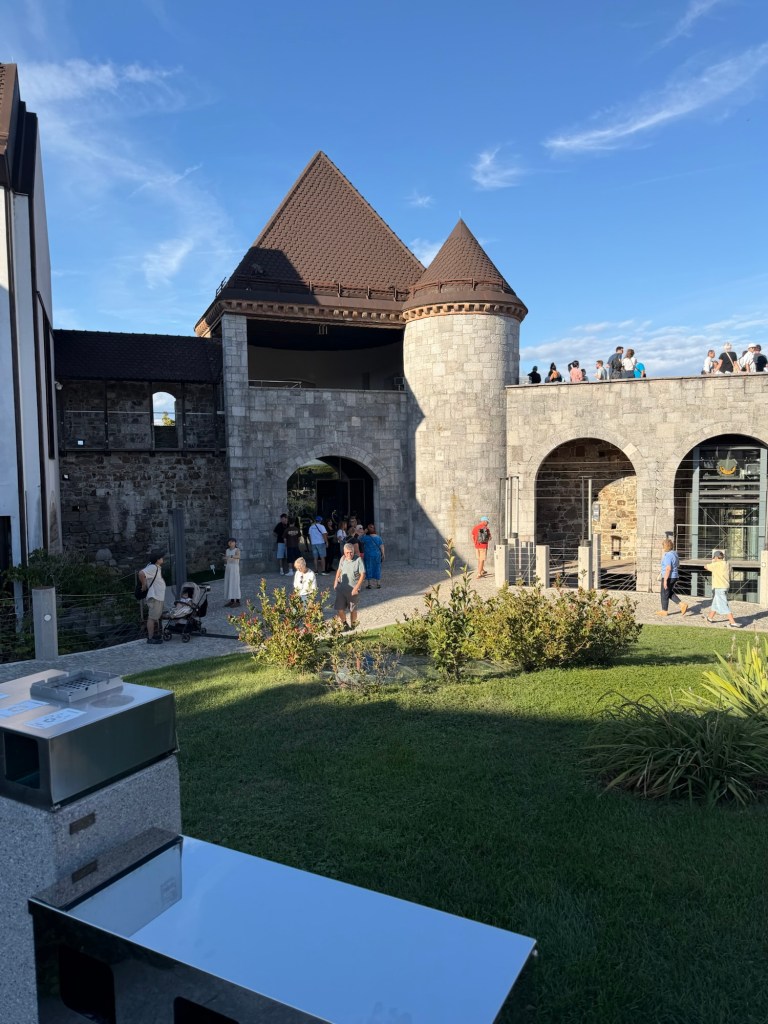
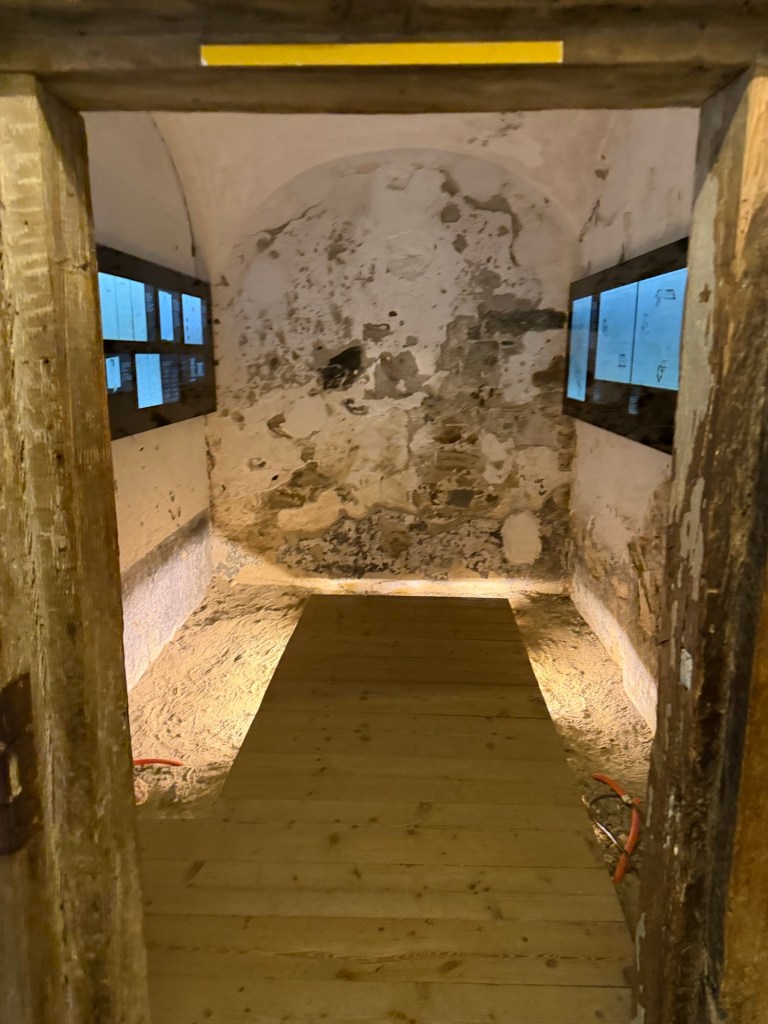
The castle’s role changed dramatically during the Napoleonic era. After the French occupied Ljubljana and made it part of Napoleon’s Illyrian Provinces, the castle was used as a military barracks and hospital. Following the restoration of Austrian—Habsburg—rule in 1815, it was converted into a prison, a grim function it retained for much of the 19th century. Today, its historic rooms contain exhibitions of weapons and artifacts, while the viewing tower offers a magnificent panorama across Ljubljana’s red roofs to the distant Alps.
The Chapel of St. George, one of the oldest surviving sections of Ljubljana Castle. Consecrated in 1489, the chapel was originally Gothic, with a wooden ceiling, tall pointed windows and an elevated gallery from which members of the nobility could attend Mass. Its slender proportions remain distinctly Gothic, but the interior was remodeled in the Baroque style during the 18th century.
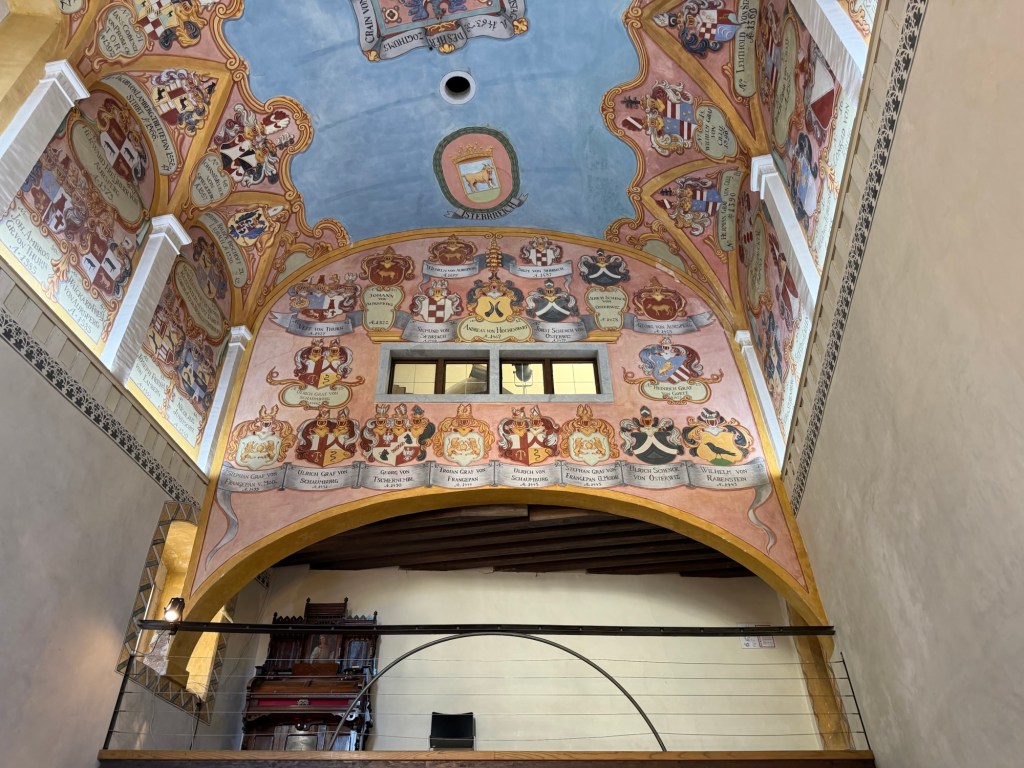
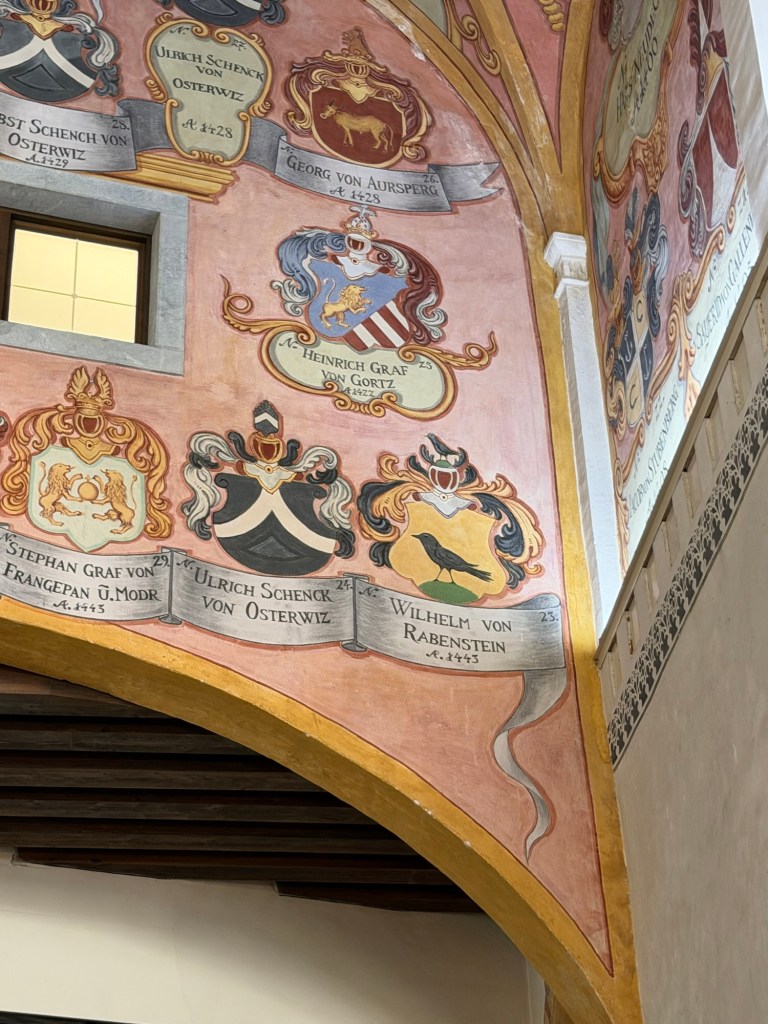
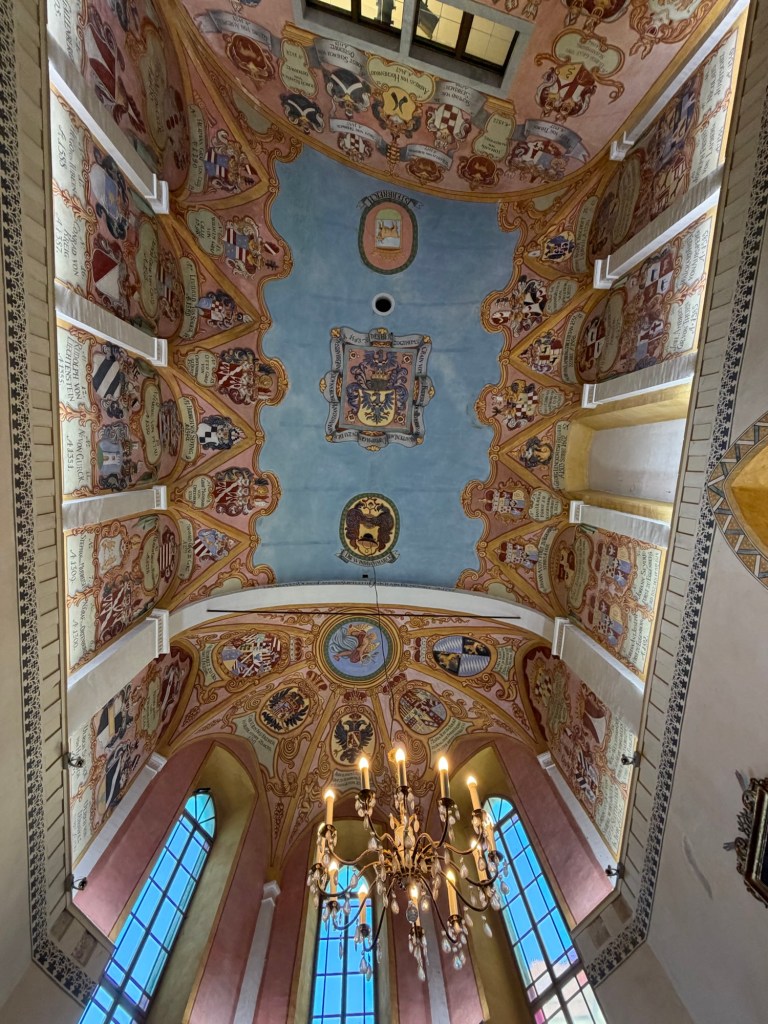
The chapel’s most remarkable feature is the extraordinary heraldic decoration covering its walls and vaulted ceiling. Painted in 1747 against fields of dusty rose, ochre and pale blue, approximately sixty elaborate coats of arms commemorate the provincial governors of Carniola who served between the 13th and 18th centuries. Each shield is surrounded by curling mantling, helmets, crests and inscribed scrolls giving the nobleman’s name and year of service. Among the families represented are the Auerspergs, Ortenburgs, Lambergs, Thurns and other dynasties that governed the region for the Habsburgs.
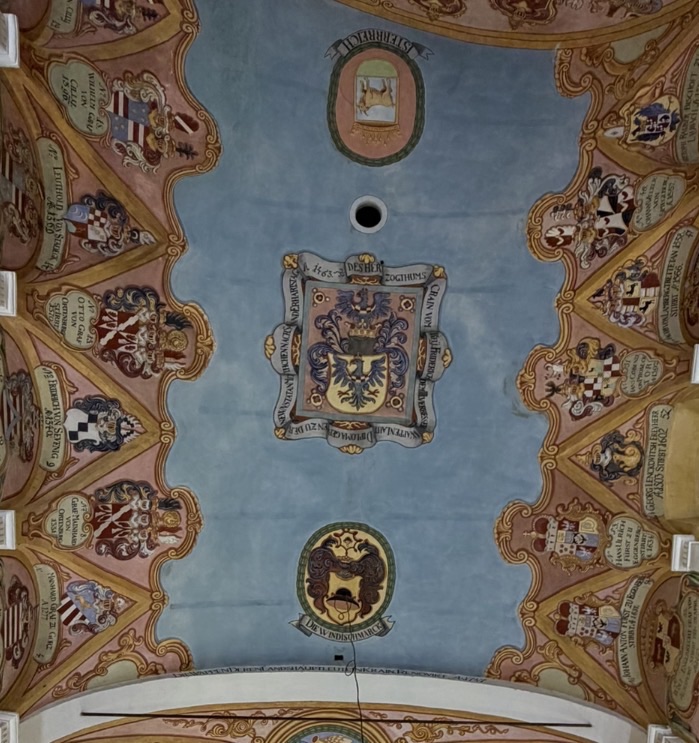
The long blue panels running through the center of the ceiling contain the larger arms of historic territories, including Carniola, Istria and the Slovene March, while the vaulted sanctuary displays the arms of Habsburg rulers. White projecting ribs and brackets divide the densely painted heraldic panels, emphasizing the chapel’s height. Tall Gothic windows admit cool natural light, while an ornate crystal chandelier provides a warmer glow below. The large rounded arch at the rear opens into a darker, timber-ceilinged gallery, creating a striking contrast with the brilliantly decorated vault above.
What makes the room especially unusual is that its imagery is overwhelmingly secular. Instead of the saints, biblical scenes and angels normally expected in a Catholic chapel, the interior functions almost as a monumental register of political power—recording the noble families and Habsburg officials who once governed Carniola. The castle describes it as a rare European sacred interior because of this extensive secular heraldic decoration. During restoration in 1992, traces of the chapel’s original Gothic paintings were also uncovered around the windows, entrances and former altars.
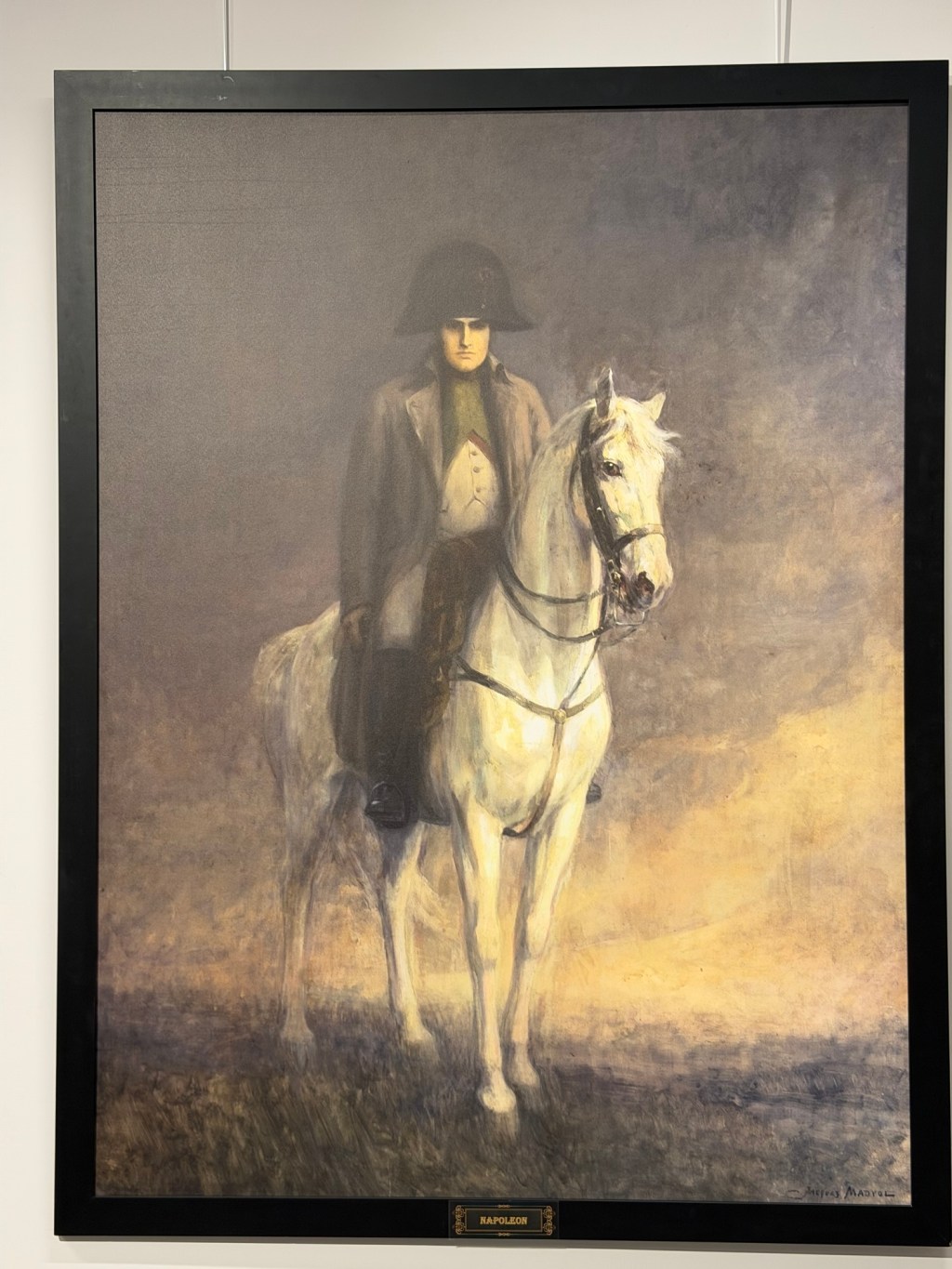
Slovenia’s lingering affection for Napoleon may seem surprising, but his brief rule occupies an important place in the country’s national story. From 1809 to 1813, Ljubljana served as the capital of Napoleon’s Illyrian Provinces. Although French occupation brought heavy taxes and military conscription, it also weakened Habsburg control, introduced modern legal and administrative reforms, and elevated the Slovenian language in government and education. Many Slovenians therefore remember Napoleon less as a conqueror than as an unlikely catalyst for their developing national identity.
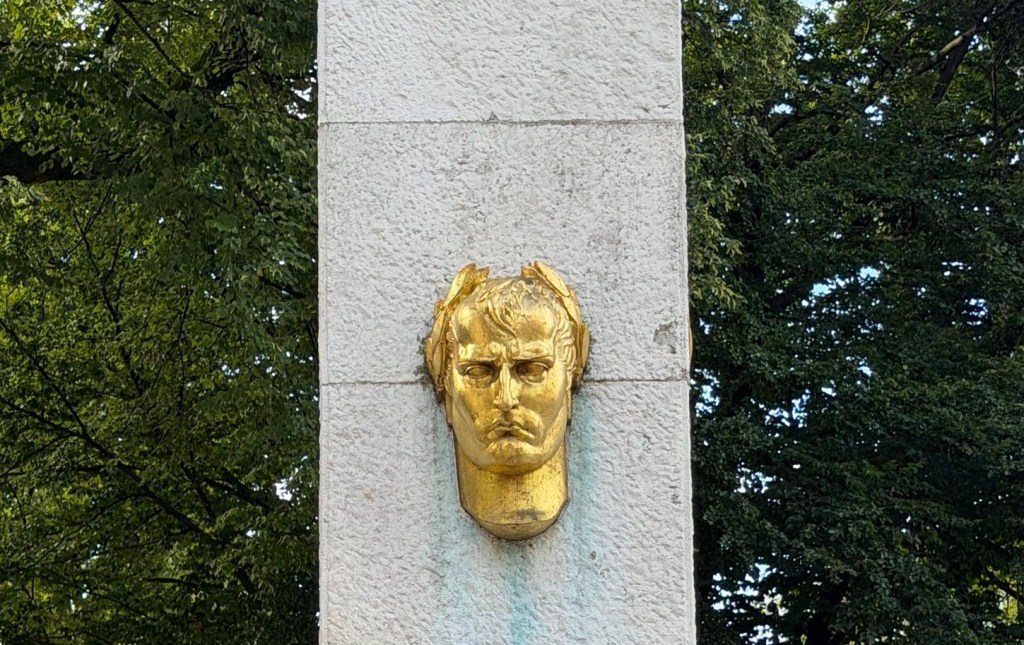
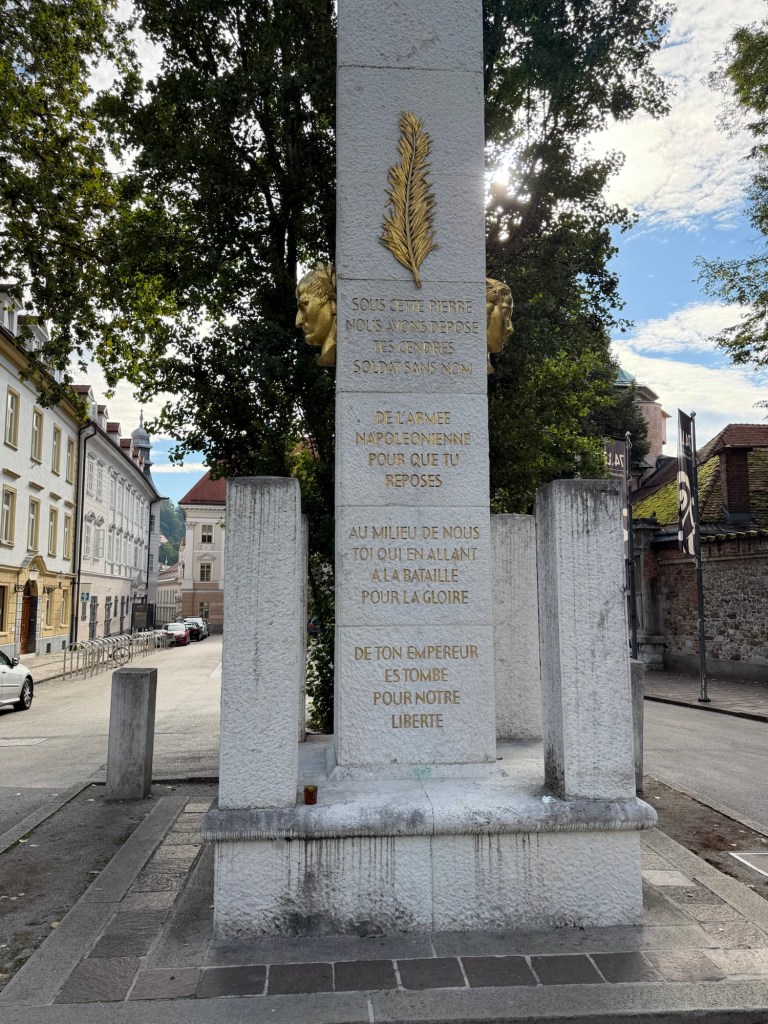
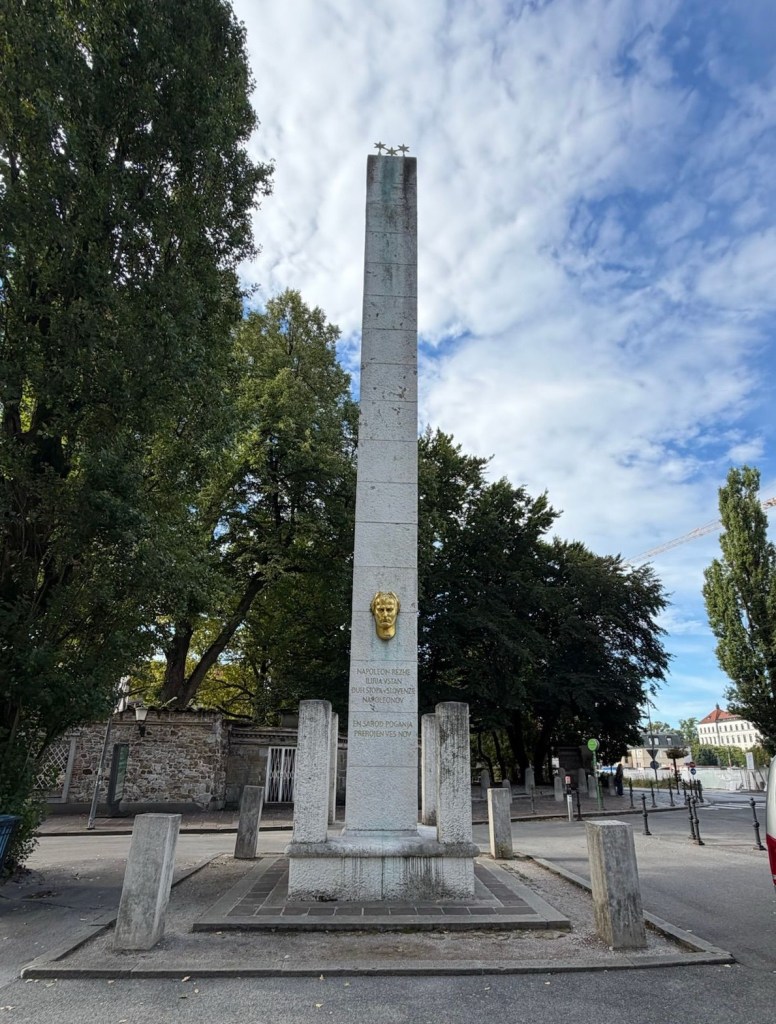
Ljubljana commemorated this period in 1929 with the Illyrian Provinces Monument, designed by Jože Plečnik and adorned with a gilded portrait of Napoleon. Beneath it lie the ashes of an unknown French soldier, honored by a French inscription declaring that he fell for the glory of his emperor—and for the freedom of the Slovenian people.
Although Slovenia is now prosperous and firmly rooted in democratic Europe, it still bears some of the damaging legacy of Tito-era collectivism. Decades of state ownership weakened individual initiative, discouraged private investment and fostered dependence upon government to maintain property and solve communal problems. Since independence, Slovenia has made remarkable progress, but remnants of that system remain visible in its bureaucracy, large state sector and occasional neglect of buildings and public spaces whose upkeep was once considered the responsibility of everyone—and therefore, too often, of no one.
What is most apparent about this small city is that it remains, above all, a place where people live and work. Jasmina told us that Ljubljana is not fully prepared for the recent onslaught of tourists now traversing its streets—a surge that sometimes threatens the quiet, everyday character that makes the city so appealing. I can only hope that Ljubljana retains its distinctive character, even as its many Faces continue to evolve.
 YouDontKnowJackTravels