Today marks our final full touring day of our Benelux adventure. After exploring the canals of the Netherlands, the medieval towns of Belgium, and the castles and valleys of Luxembourg, we set out this morning for one of the most famous battlefields in European history: Waterloo. I have to admit that I had not given much thought to Waterloo since high school history, except when hearing occasional references to someone’s “Waterloo moment” — the decisive defeat or setback from which there is no recovery.
We began the morning standing on the battlefield itself with our military historian guide David Jean Jacques (JJ), looking across rolling fields that today appear peaceful and unremarkable. Under gray skies and a light drizzle, freshly planted crops stretched across the gently undulating landscape. It was difficult to reconcile the quiet scene before us with the events of June 18, 1815, when more than 190,000 soldiers converged here in a struggle that would determine the future of Europe.
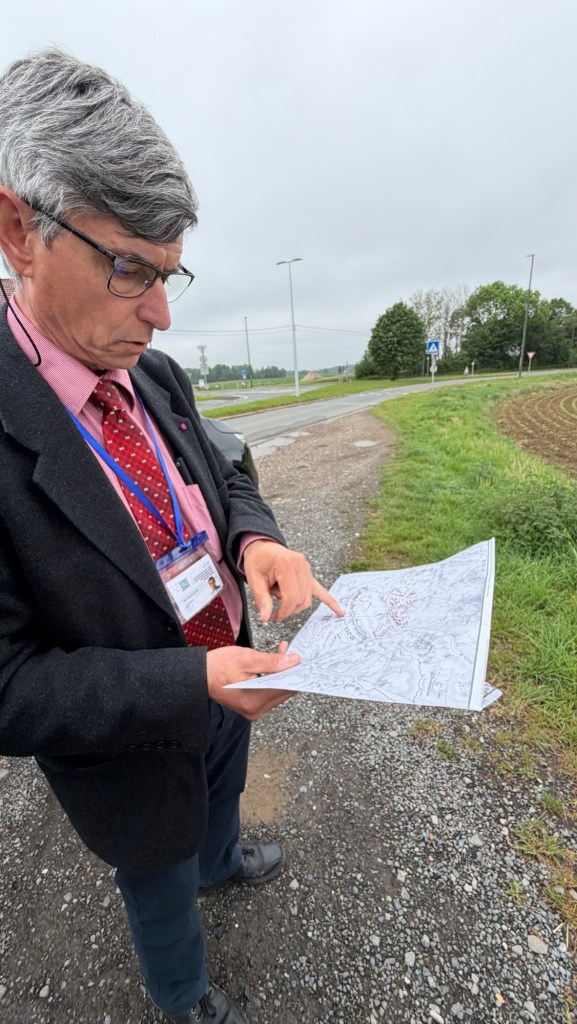
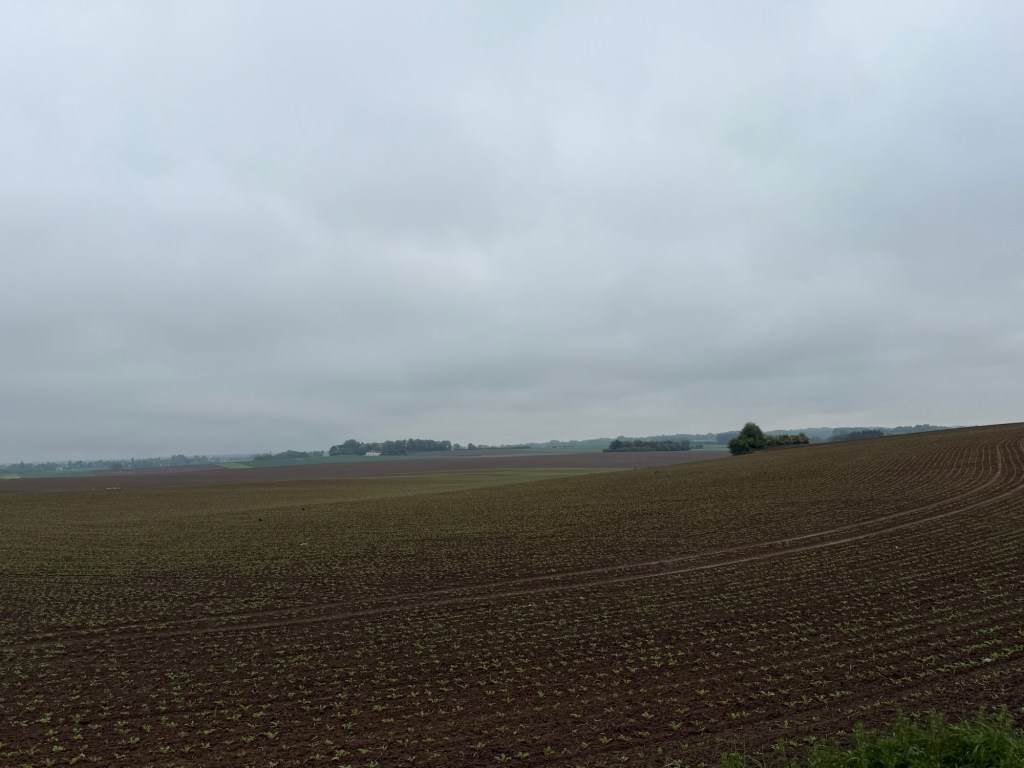
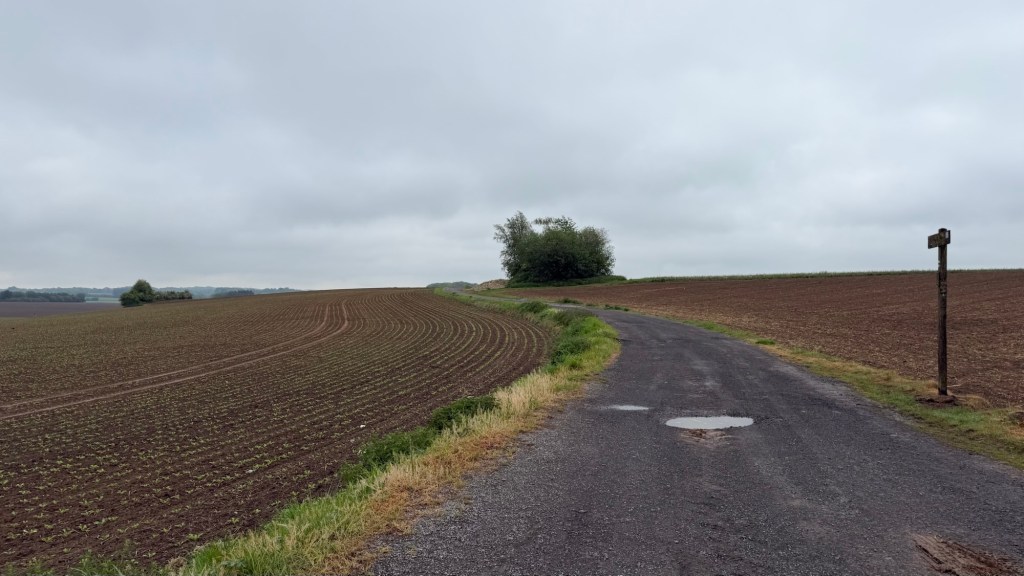
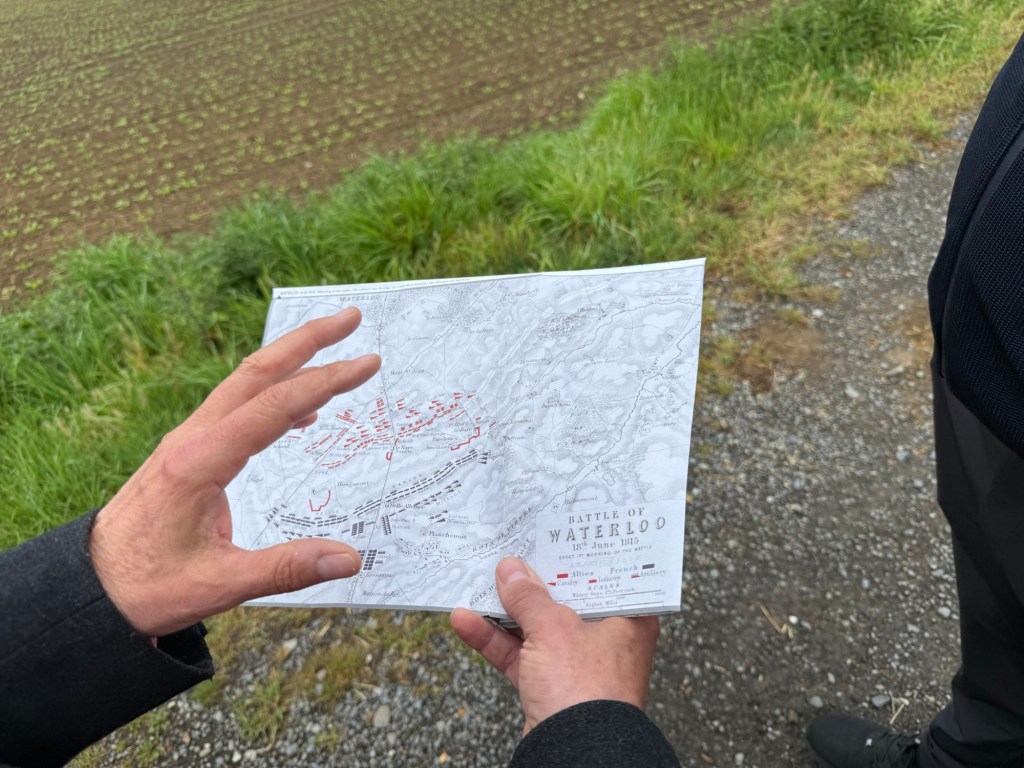
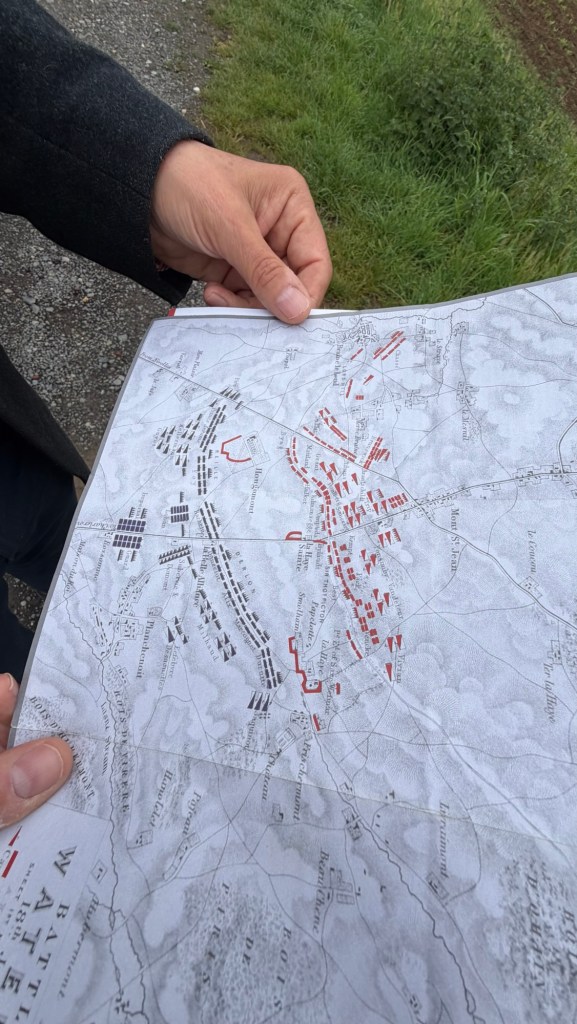
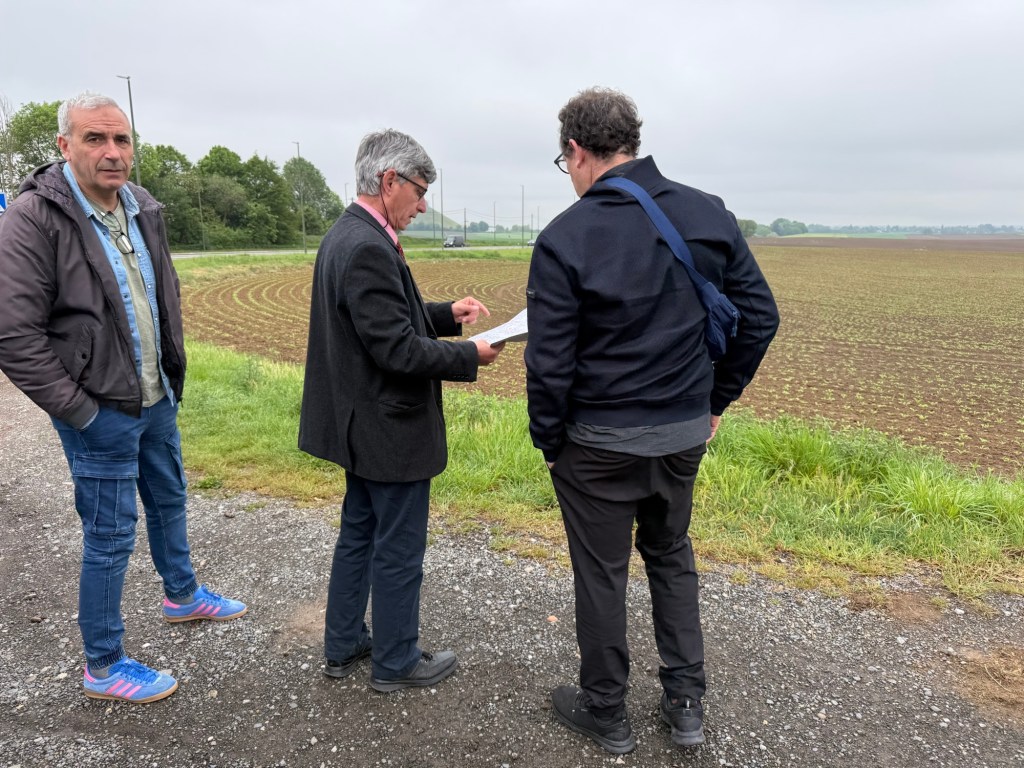
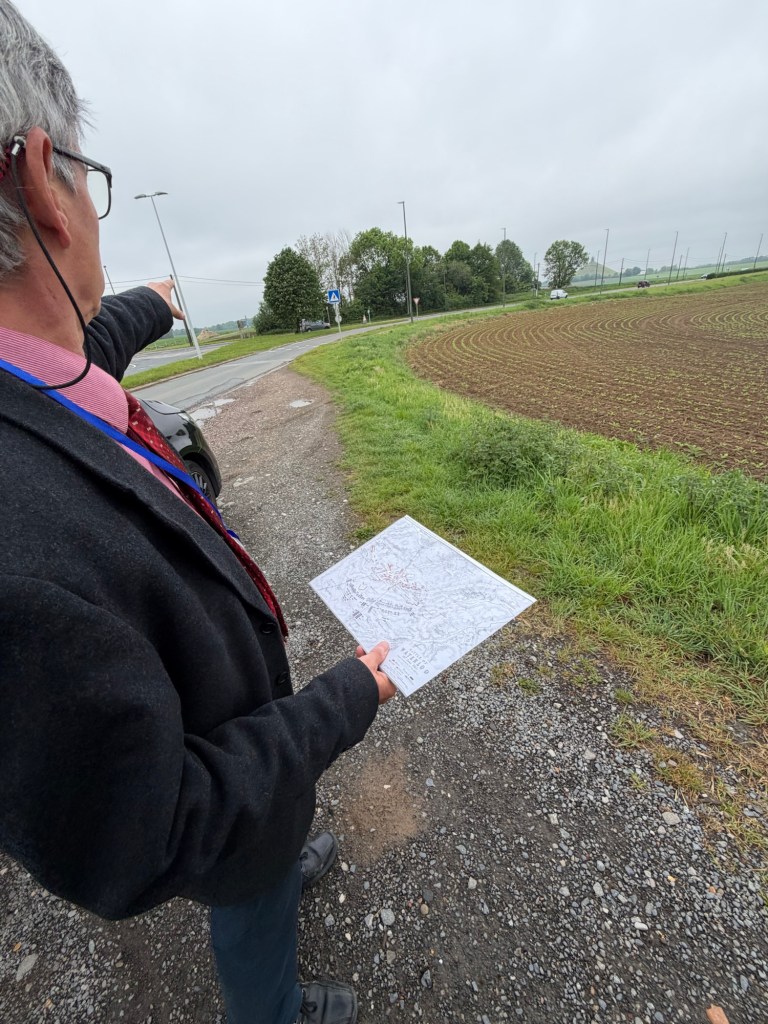
Using maps and the terrain itself, JJ helped bring the battle to life, pointing out how ridges, farm roads, and slight changes in elevation shaped the decisions of commanders and the movements of the Allied and French armies. What first appeared to be ordinary farmland gradually became a vast outdoor classroom where history unfolded before our eyes. More than two centuries later, the battlefield remains remarkably intact, allowing visitors to appreciate how this seemingly tranquil countryside became the setting for the final defeat of Napoleon Bonaparte and one of the most consequential days in world history.
One of the most dramatic moments of the Battle of Waterloo came when Napoleon realized that the troops appearing on the horizon were not reinforcements, but the advancing Prussian army under Field Marshal Blücher. Although the Prussians had been defeated just two days earlier at Ligny, they regrouped far more quickly than Napoleon expected. As thousands of Prussian soldiers arrived on the French right flank near Plancenoit, Napoleon was forced to divert precious troops away from his attack on Wellington’s army. Their timely arrival helped turn the tide of the battle and played a decisive role in ending Napoleon’s final campaign. Standing on the battlefield today, it is easy to appreciate how the appearance of those unexpected troops changed the course of European history.
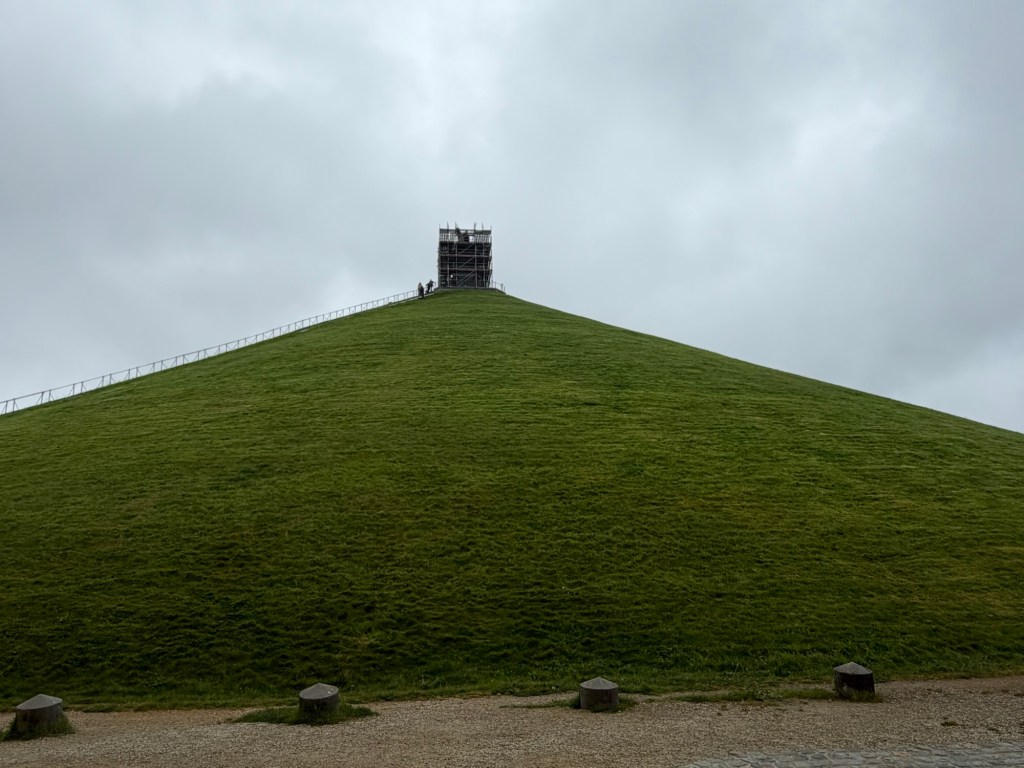
Our next stop was the heart of the Waterloo battlefield complex, dominated by the famous Lion’s Mound. The enormous artificial hill was constructed in the years after the battle and is topped by a lion symbolizing the victory of the Allied forces. Nearby stands a statue of Napoleon, a reminder that although his military genius shaped much of Europe, Waterloo would become the final chapter of his imperial ambitions.
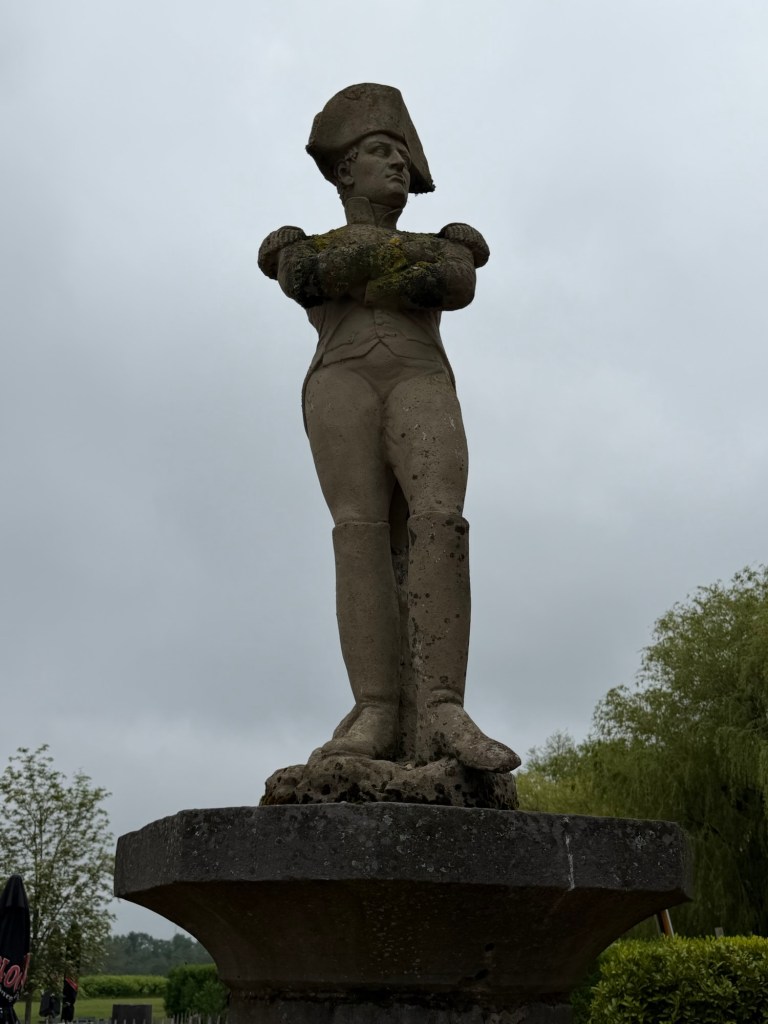
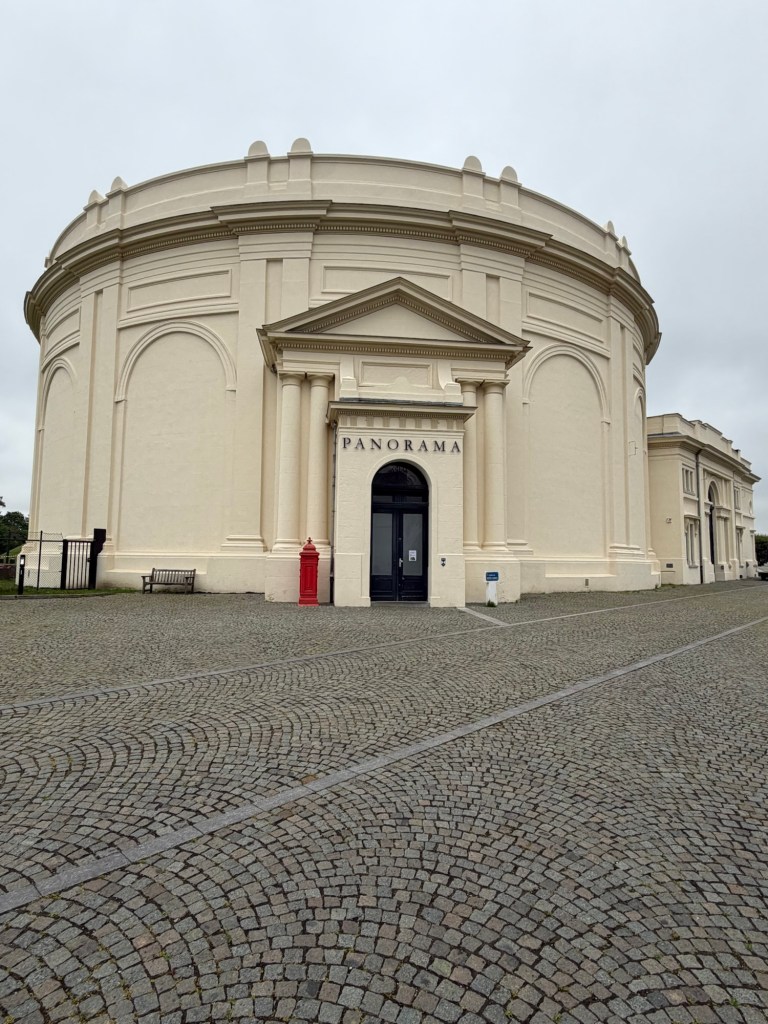
One of the most effective exhibits was the circular panorama building adjacent to the mound. From the outside, the structure appears rather plain, but inside visitors are surrounded by a massive 360-degree painting depicting the battle at its height. The artwork combines painted scenes with three-dimensional foreground elements, creating the illusion of standing amid the fighting itself.
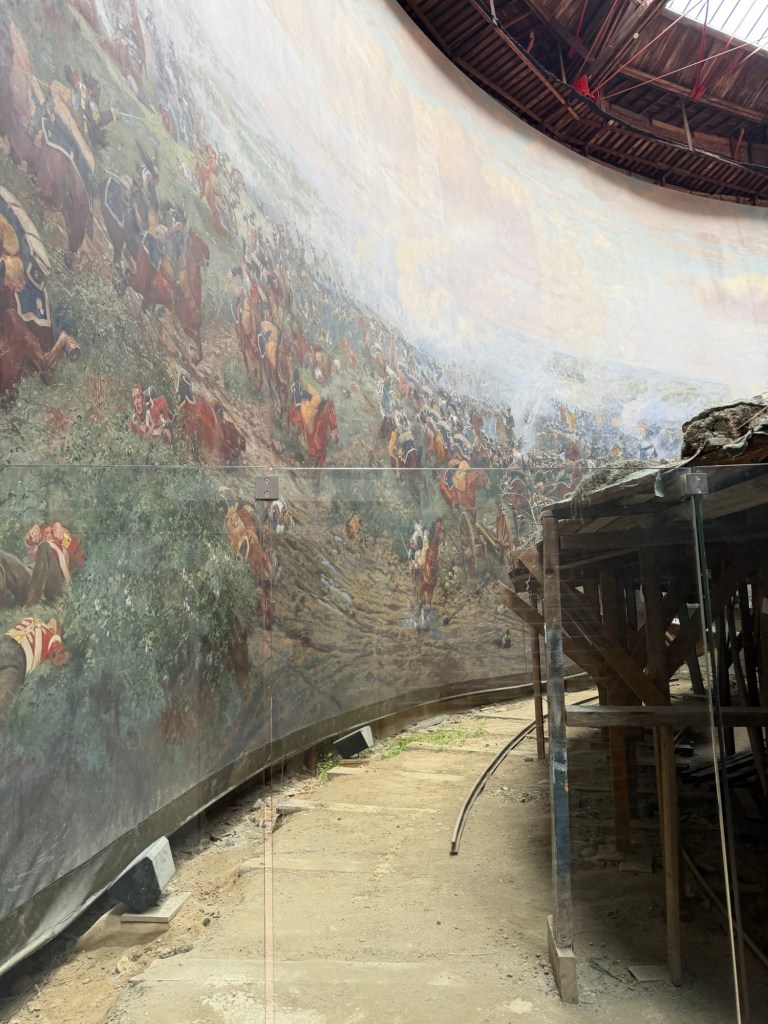
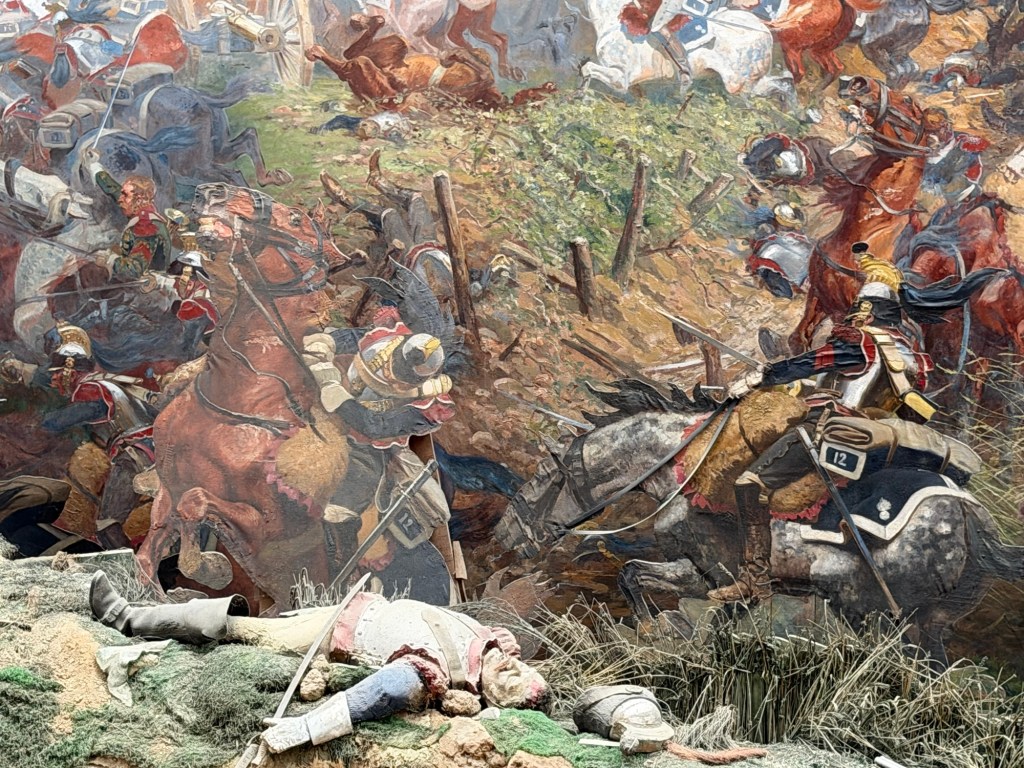
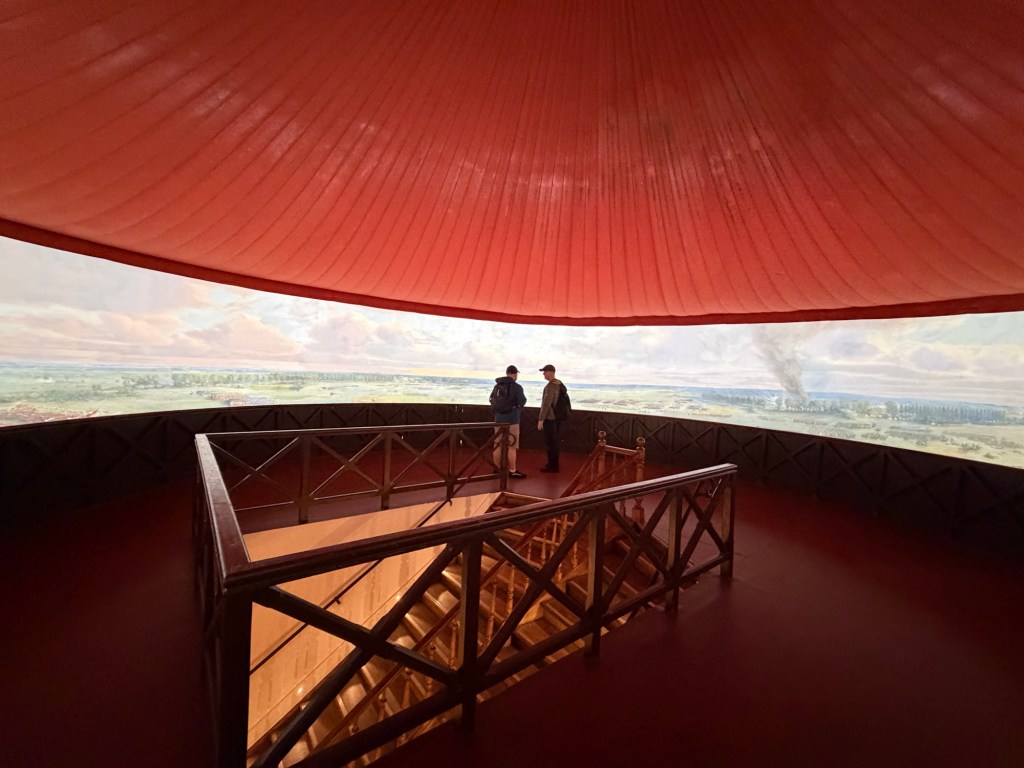
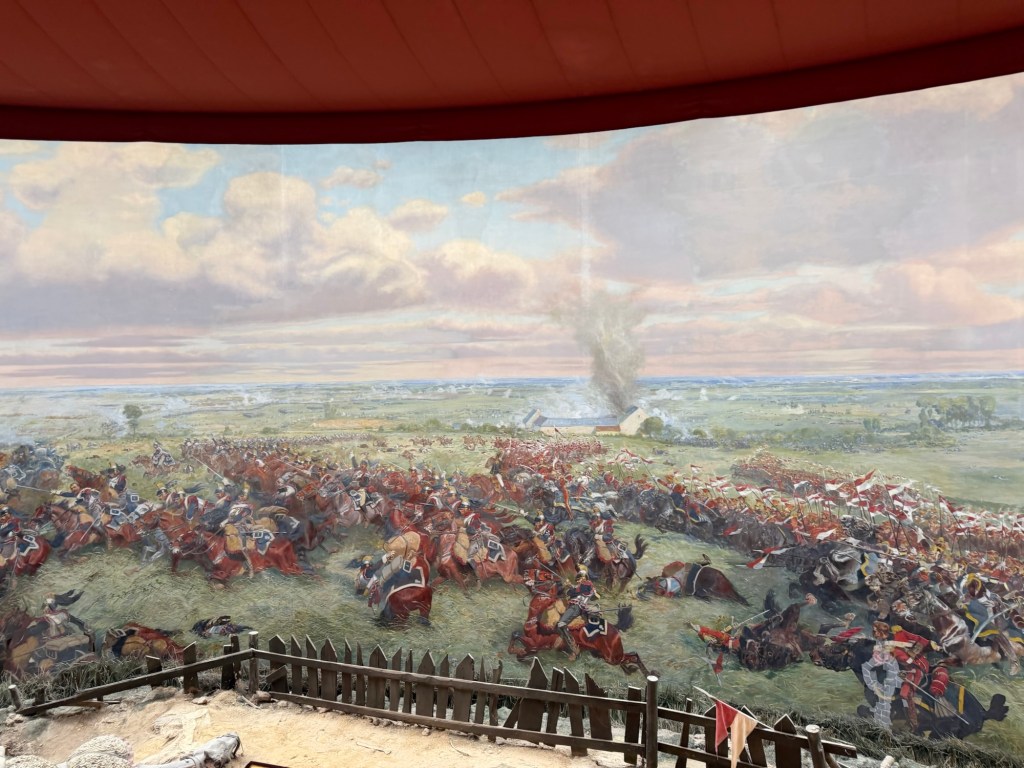
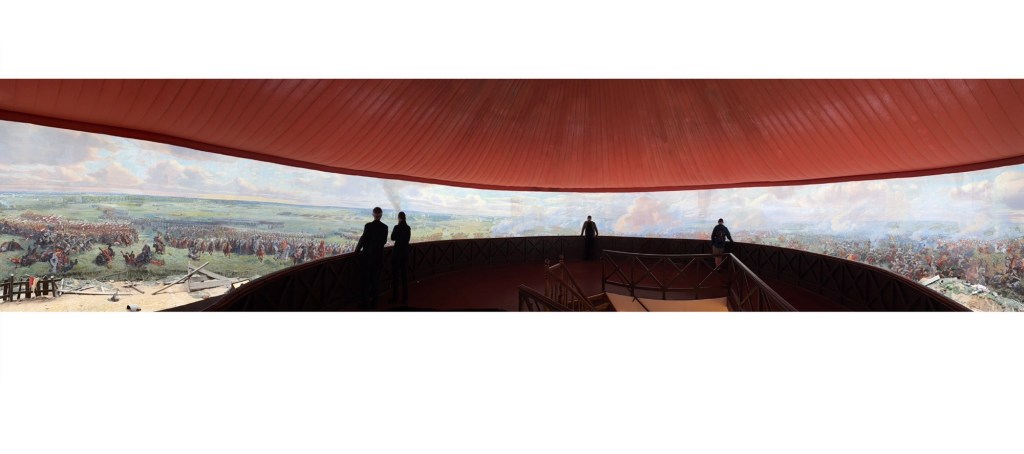
Looking across the panorama, it became easier to appreciate the scale and brutality of the battle. Cavalry charges thundered across the fields, infantry formations advanced through smoke and confusion, and artillery fire tore gaps in densely packed ranks.
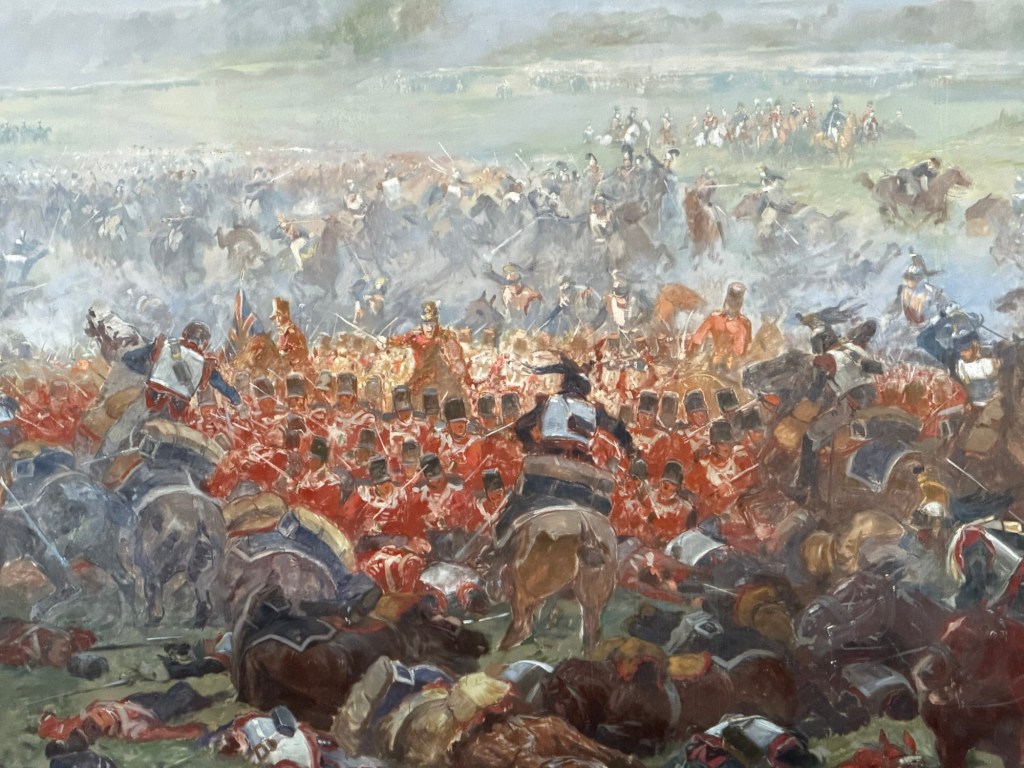
The panorama captures both the drama and the human cost of the struggle, with fallen soldiers and horses scattered across the battlefield. After standing earlier in the fields where the battle took place, the contrast was striking. On June 18, 1815, tens of thousands of men fought and died in a single day that altered the course of European history.
After exploring the battlefield and panorama, we made our way through the modern Waterloo Memorial Museum (https://waterloo1815.be). The exhibits do an excellent job of moving beyond troop movements and military tactics to tell the stories of the men who shaped the conflict and the tens of thousands who fought it.
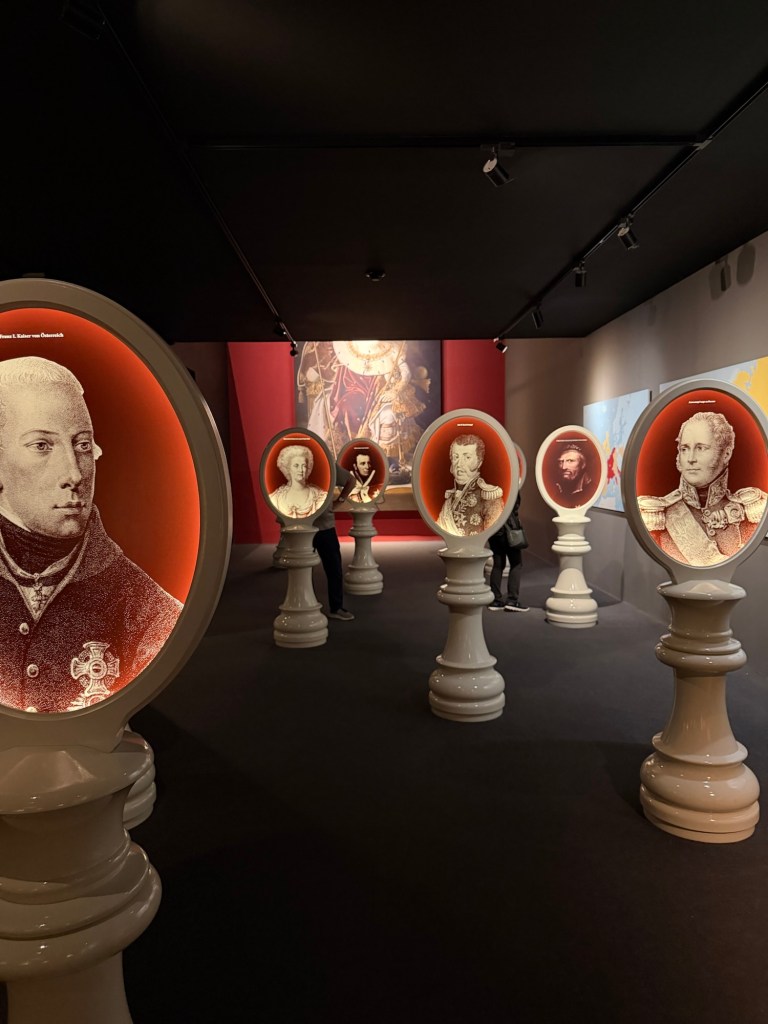
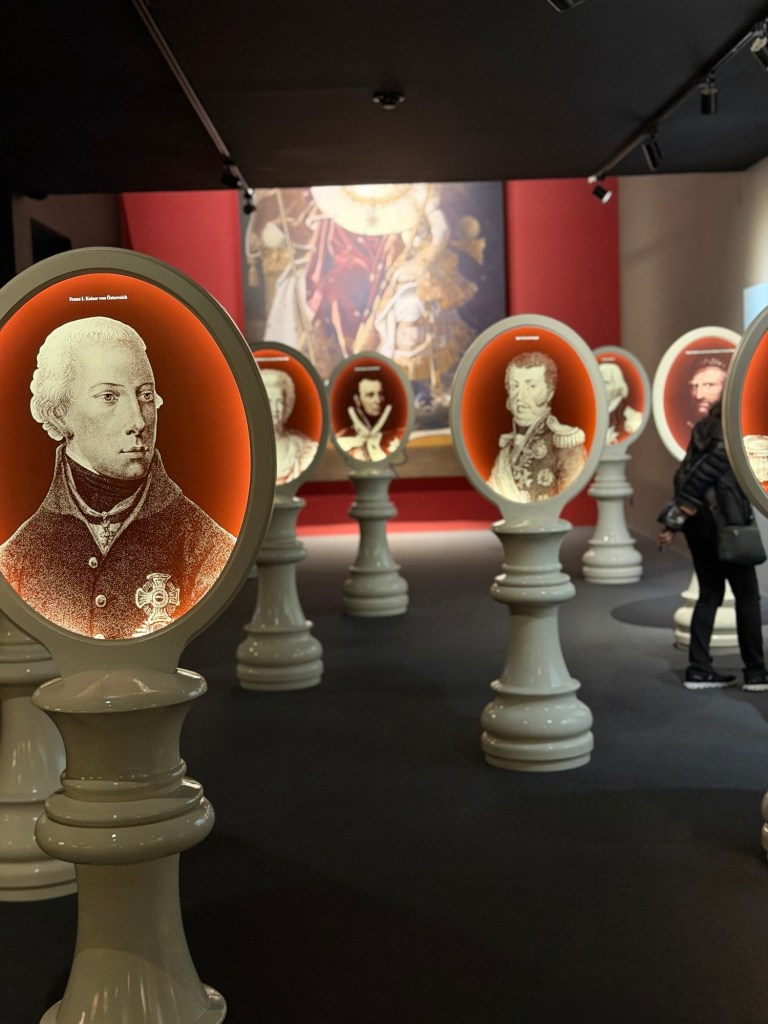
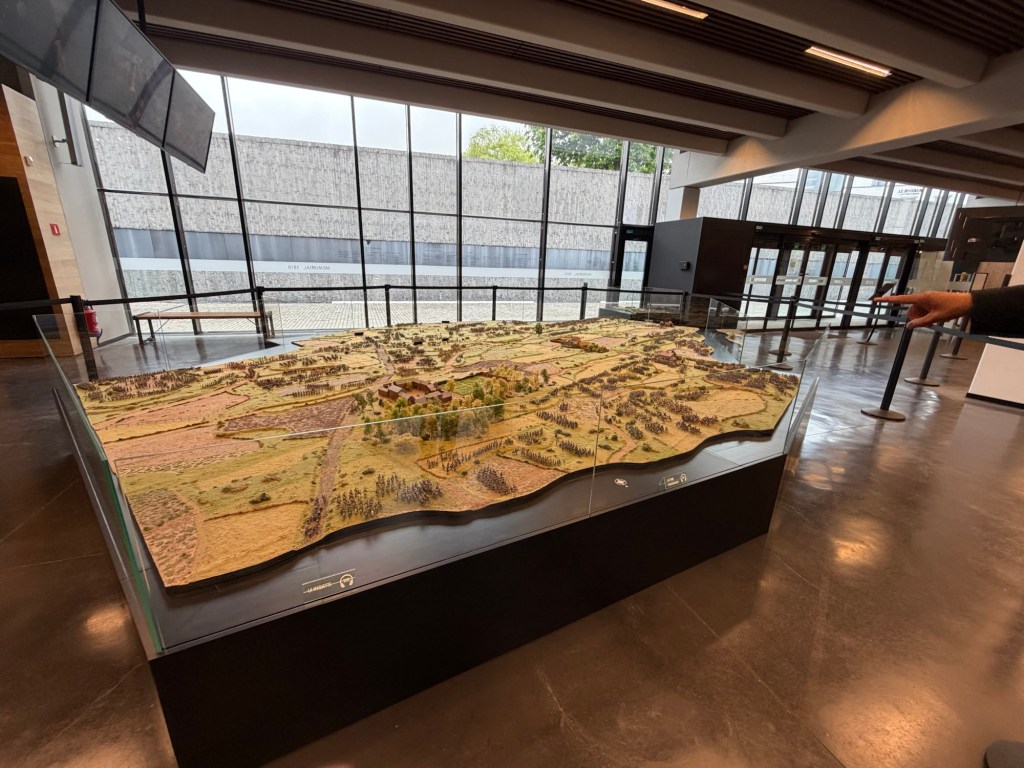
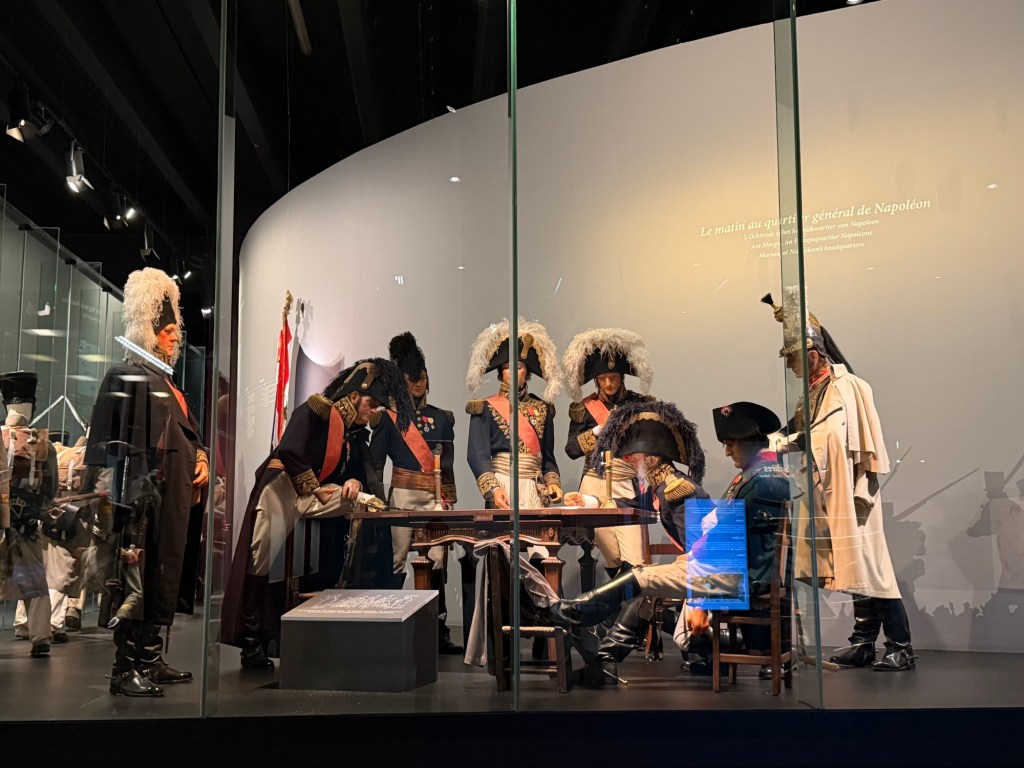
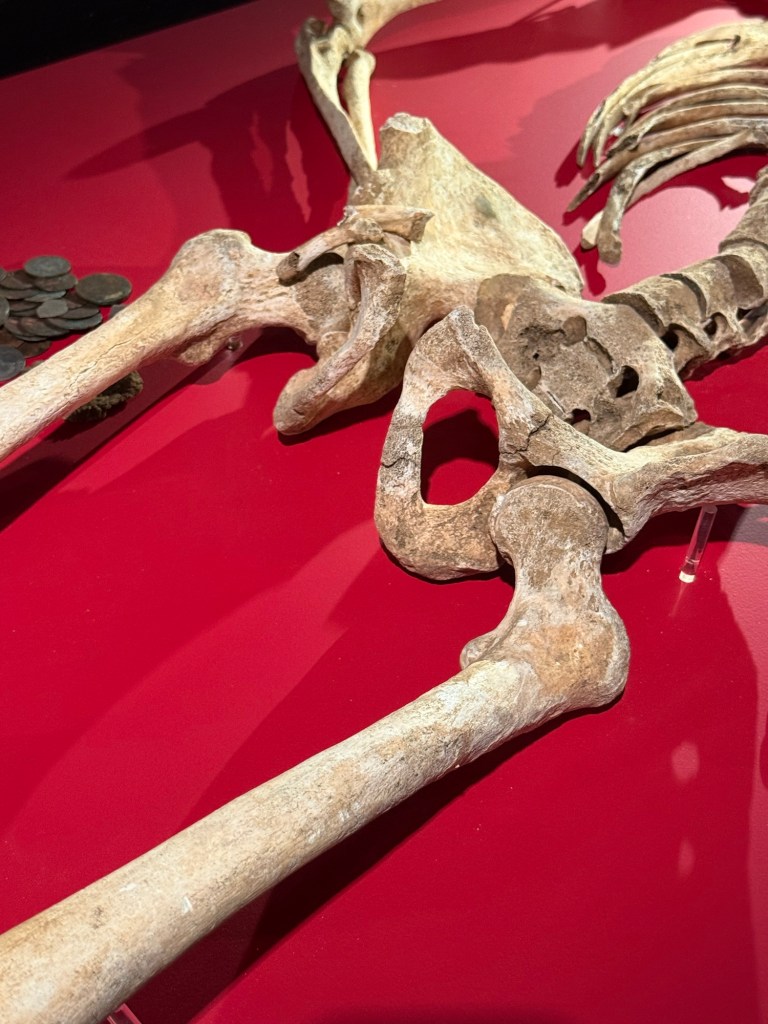
Detailed models of the battlefield helped us understand the complex choreography of armies maneuvering across a relatively small patch of Belgian countryside, while interactive displays introduced the commanders, political leaders, and rival coalitions whose ambitions collided at Waterloo.
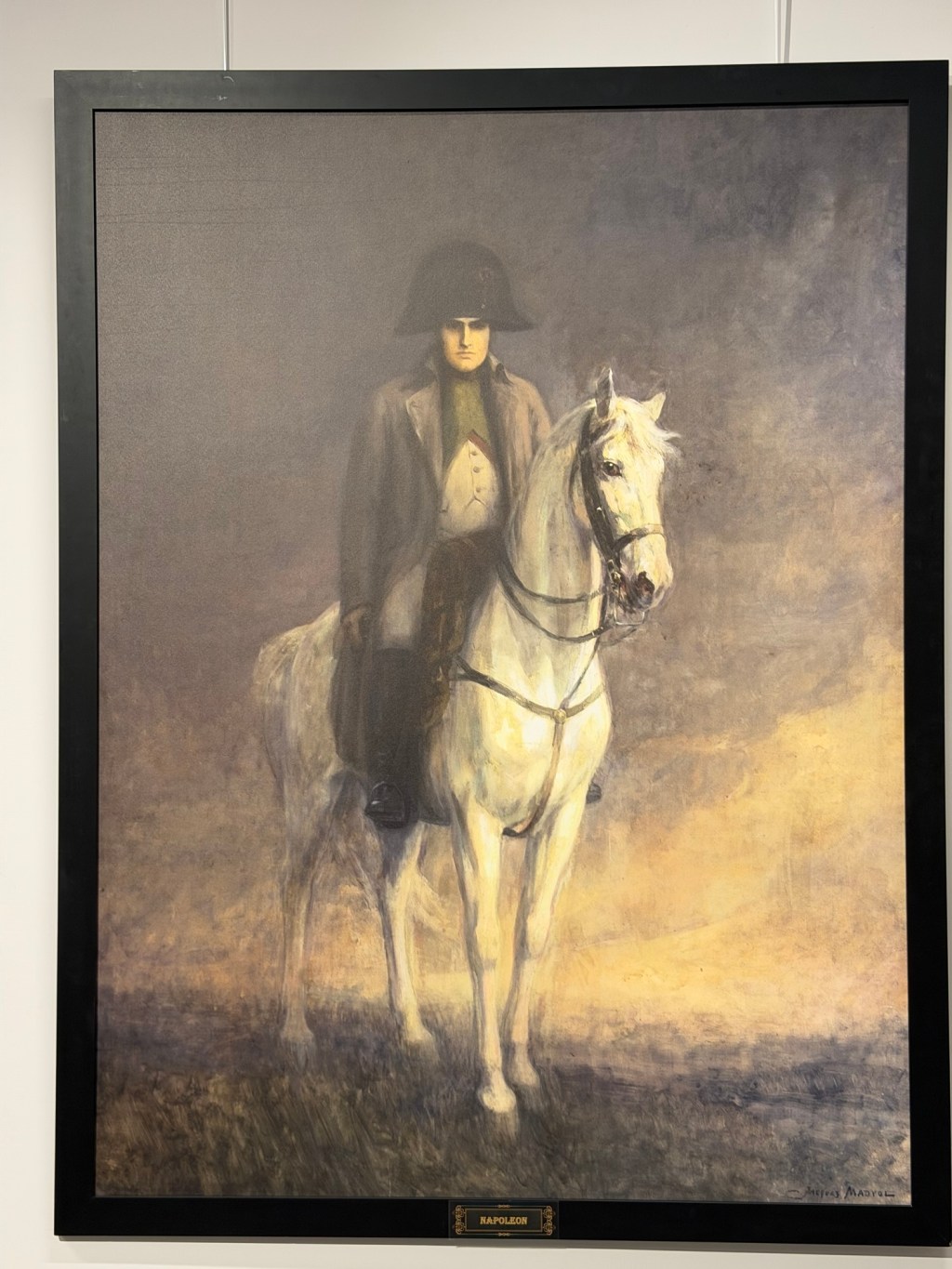
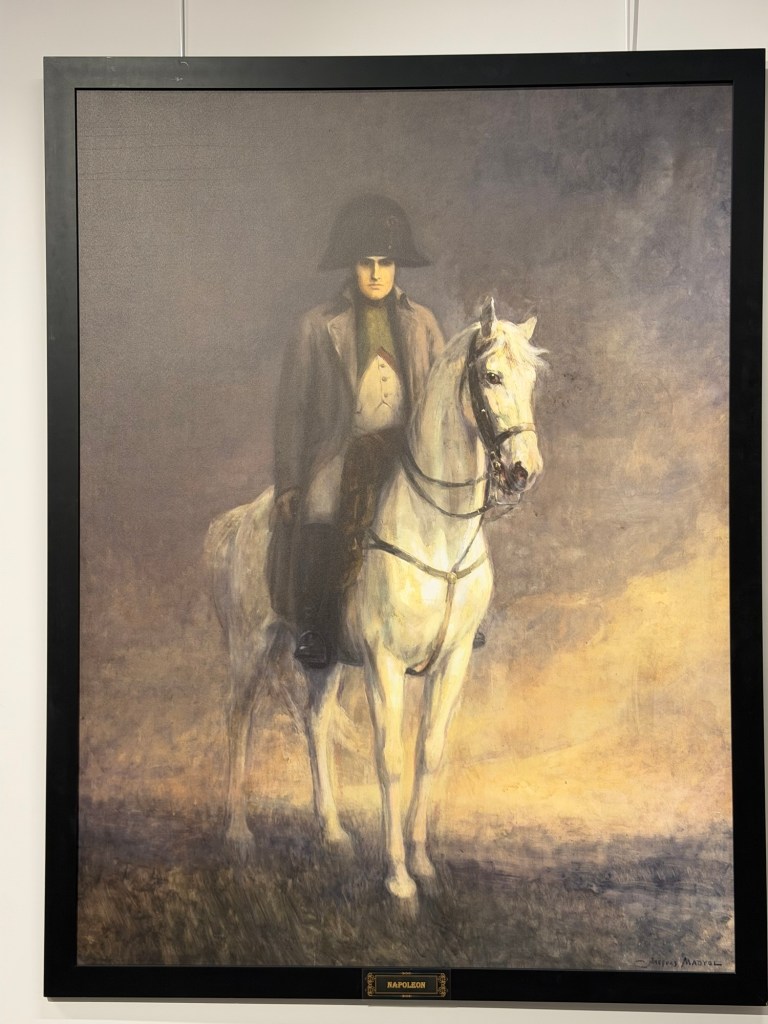
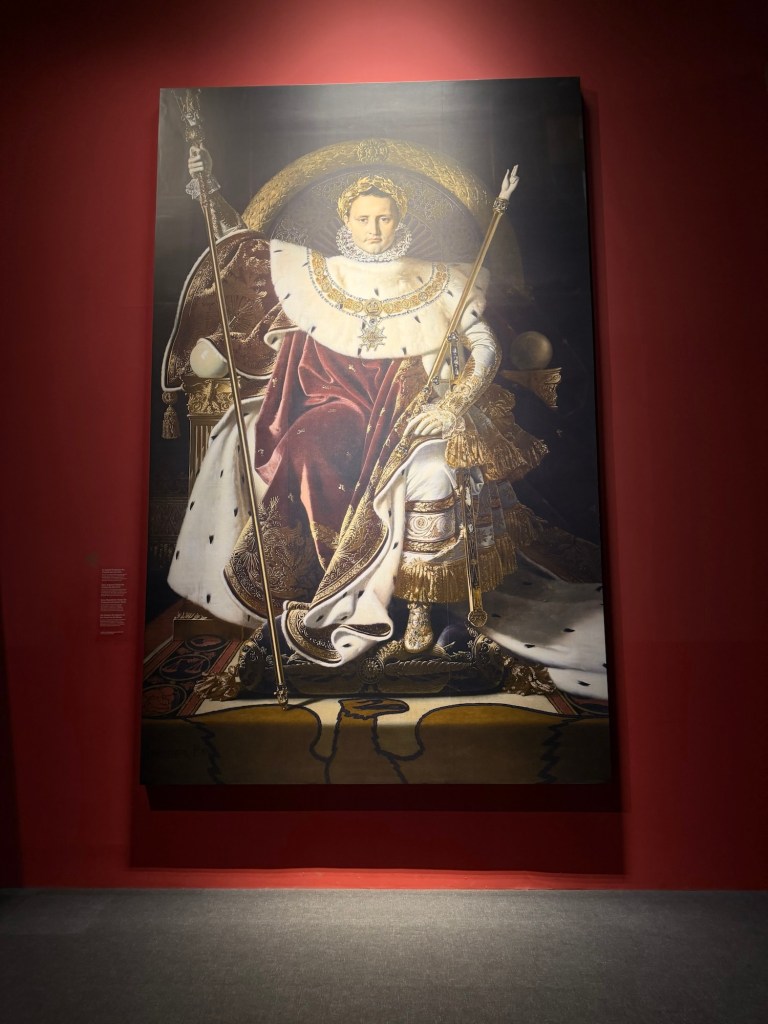
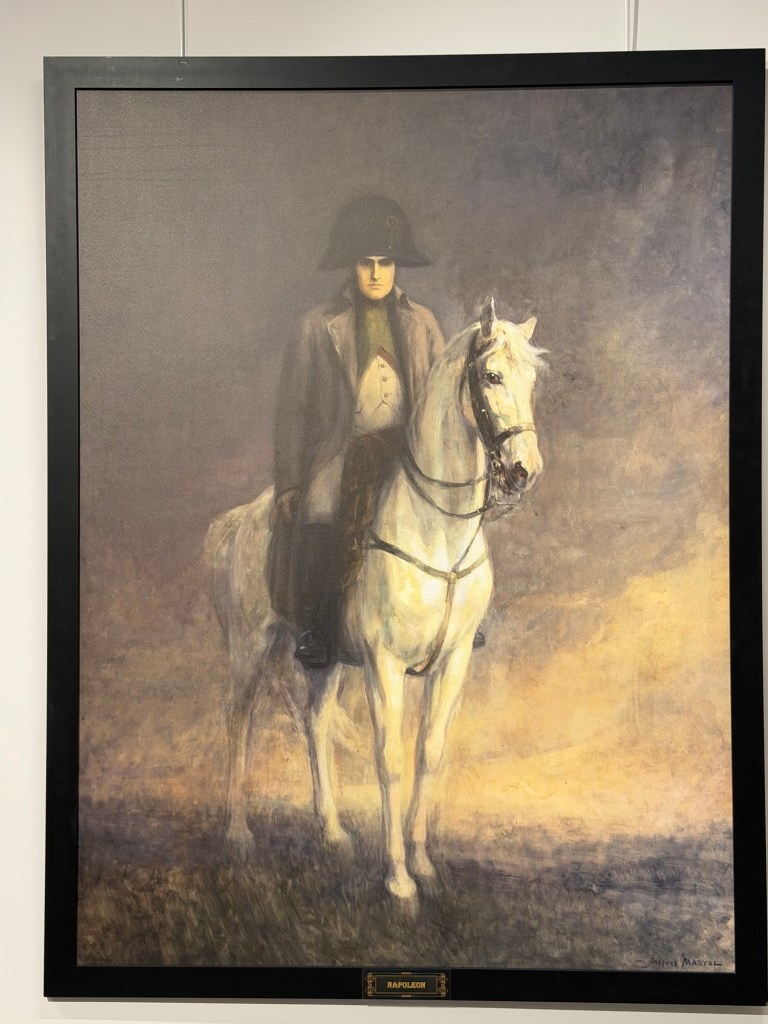
Not surprisingly, much of the museum focuses on Napoleon Bonaparte. Portraits depict him both as military genius and emperor, while the exhibits trace his astonishing rise from artillery officer to ruler of much of Europe. One display featured a striking image of Napoleon mounted on his white horse, projecting the calm confidence that inspired fierce loyalty among his troops.
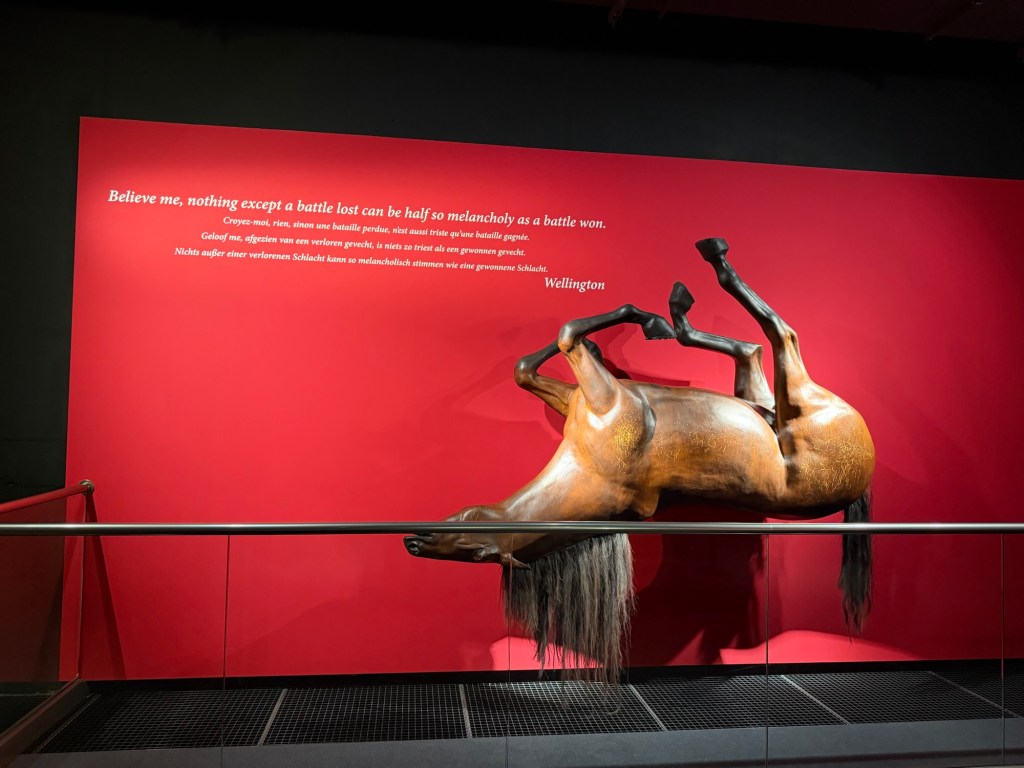
Yet the museum also makes clear that Waterloo was never simply the story of one man. The battle brought together soldiers from across Europe and pitted Napoleon against a coalition determined to end more than two decades of almost continuous warfare. Particularly memorable was a quotation from the victorious Arthur Wellesley, 1st Duke of Wellington: “Nothing except a battle lost can be half so melancholy as a battle won.” Standing before the sculpture of a fallen horse beneath those words, we were reminded that even victory came at a terrible cost.
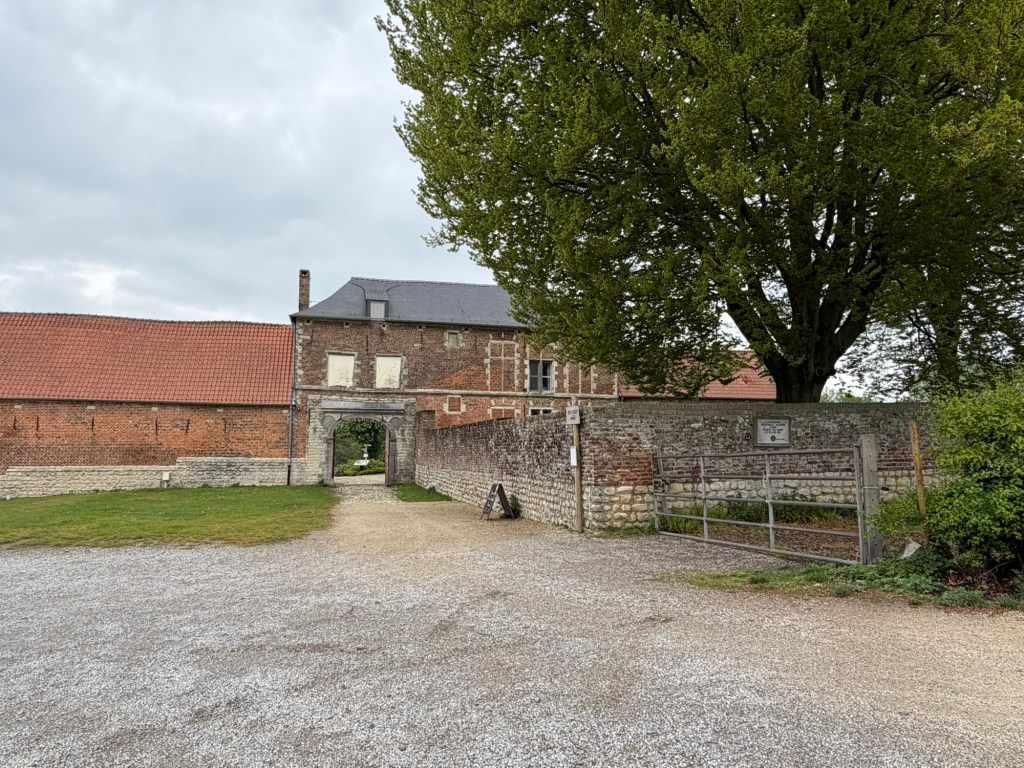
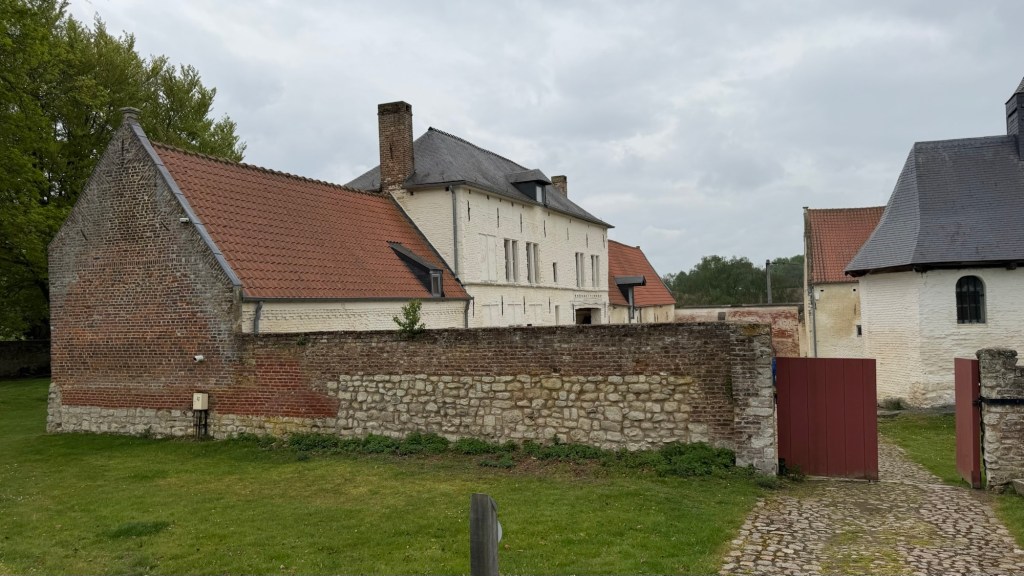
After leaving the museum, we visited Hougoumont Farm, a seemingly ordinary walled farmhouse that became one of the decisive locations in the Battle of Waterloo. Early on June 18, 1815, French forces launched repeated attacks against the complex in an effort to draw Allied troops away from Wellington’s main line. Instead, the defenders stubbornly held their ground throughout the day.
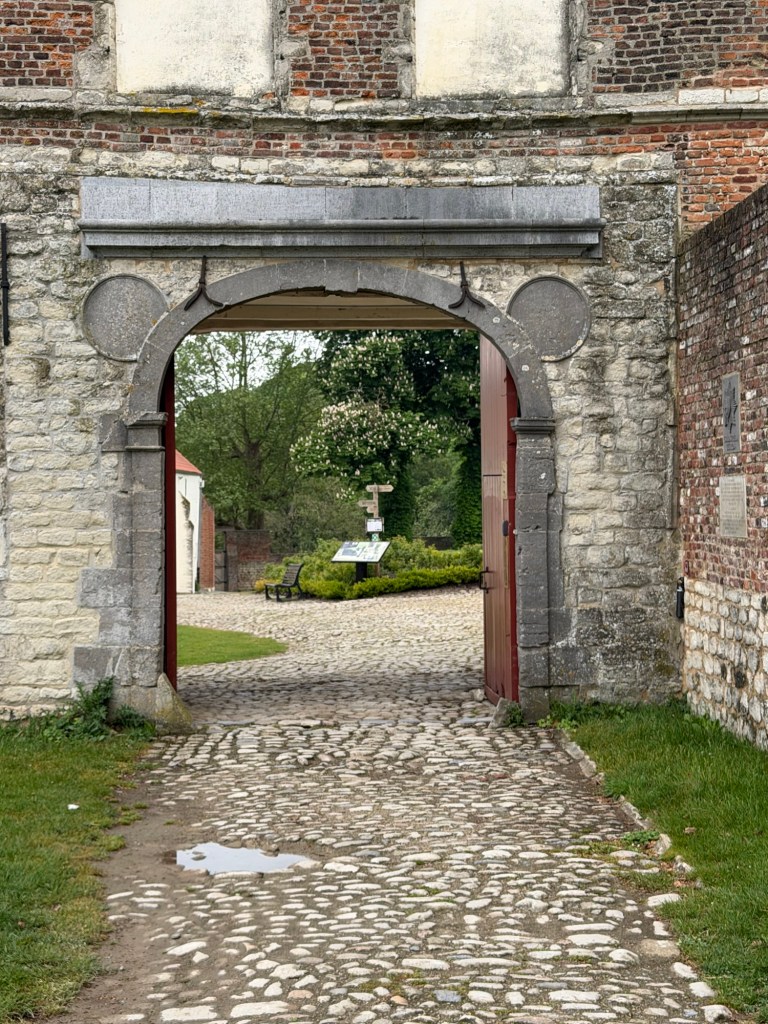
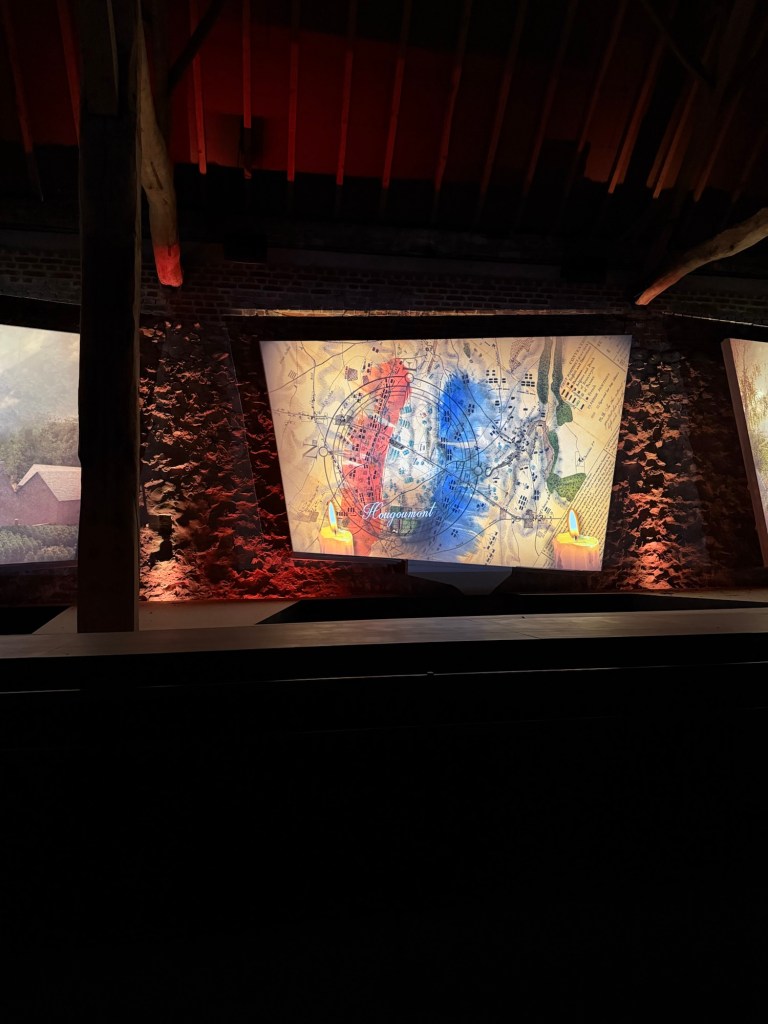
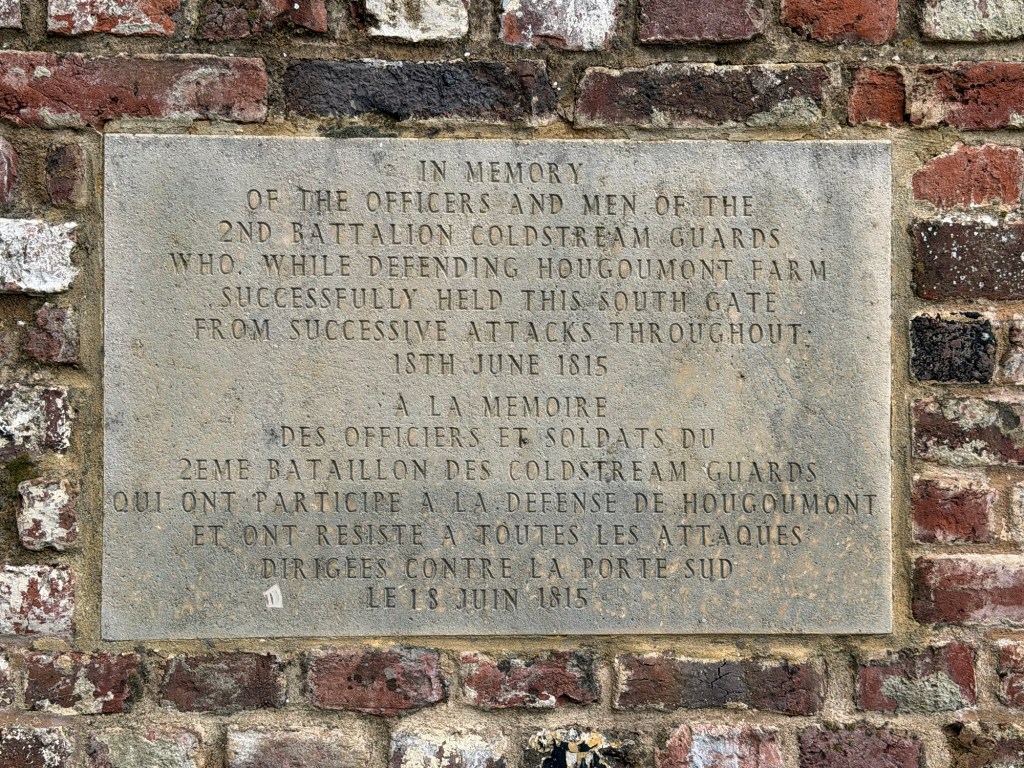
We first watched an immersive multimedia presentation in one of the restored barns. Using dramatic lighting, sound effects, projections, and historical narration, the program brought the battle to life and helped us visualize the chaos that unfolded here more than two centuries ago. It provided valuable context before we stepped onto the very ground where the fighting occurred.
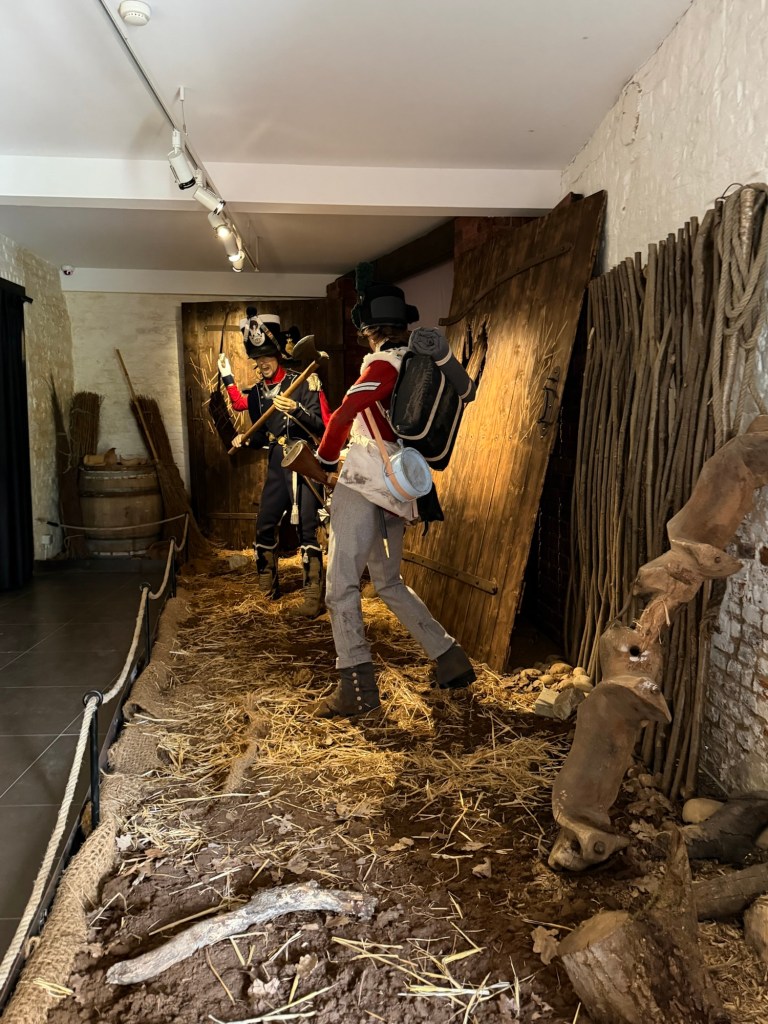
Standing inside the walls today, the ferocity of the fighting is hard to imagine. The peaceful courtyard, weathered brick walls, and restored buildings give little hint that thousands of soldiers once battled here at close quarters. One of the most famous moments of the battle occurred at the North Gate, where a small group of British Guards managed to force the gates shut after French soldiers briefly broke through. Wellington later remarked that the outcome of the battle depended upon the closing of those gates.
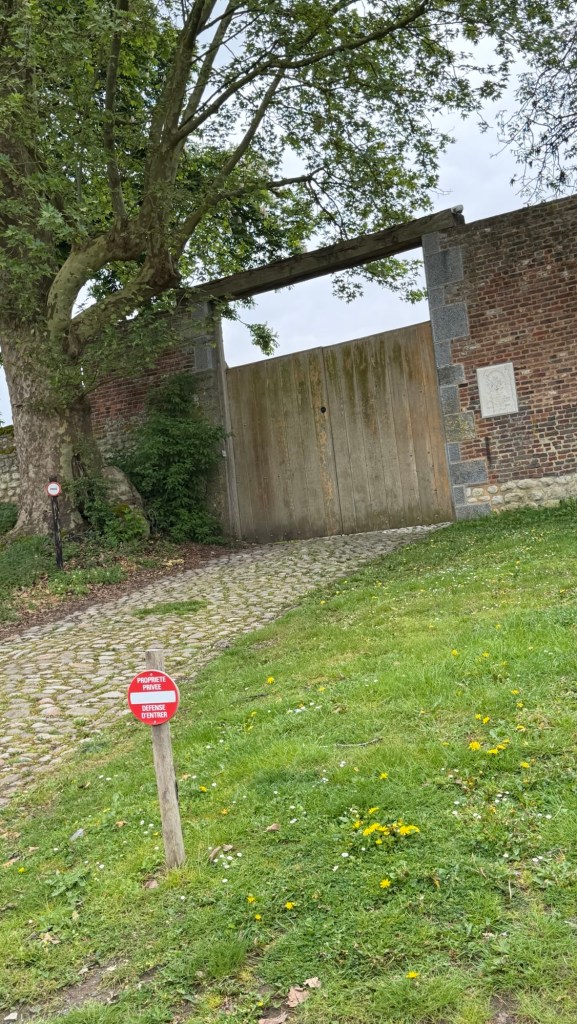
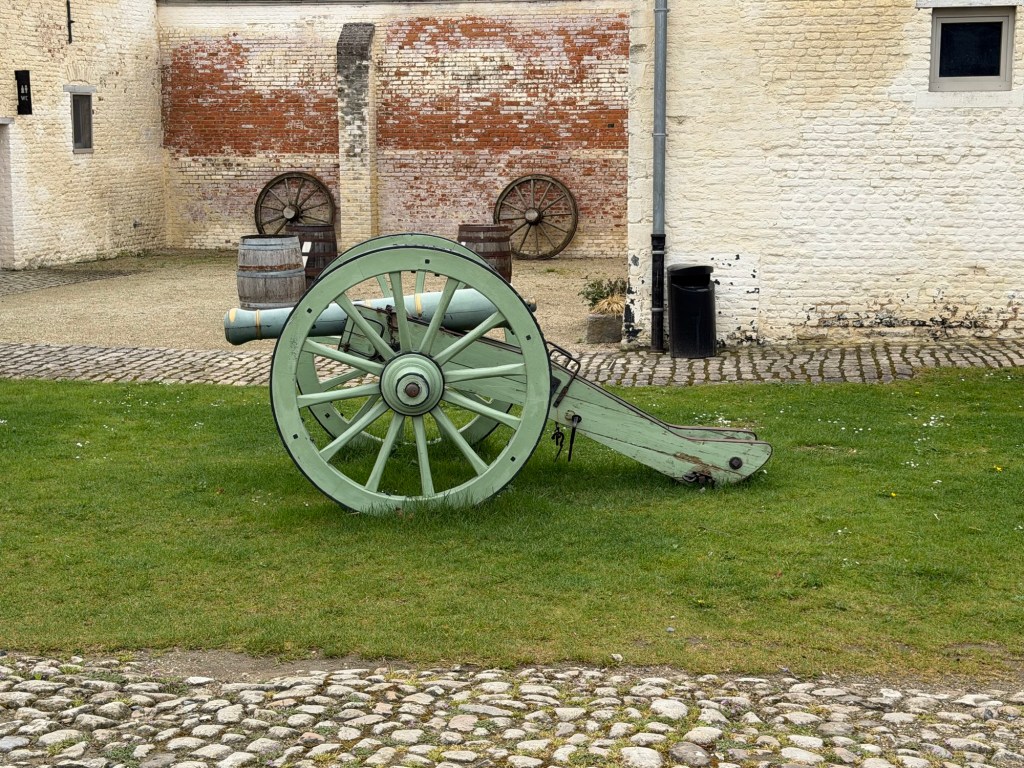
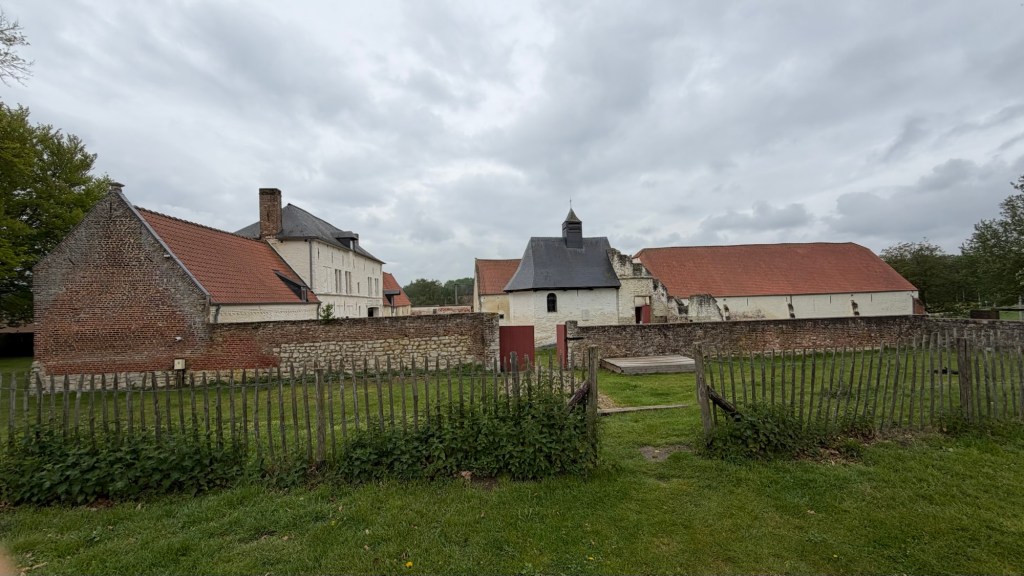
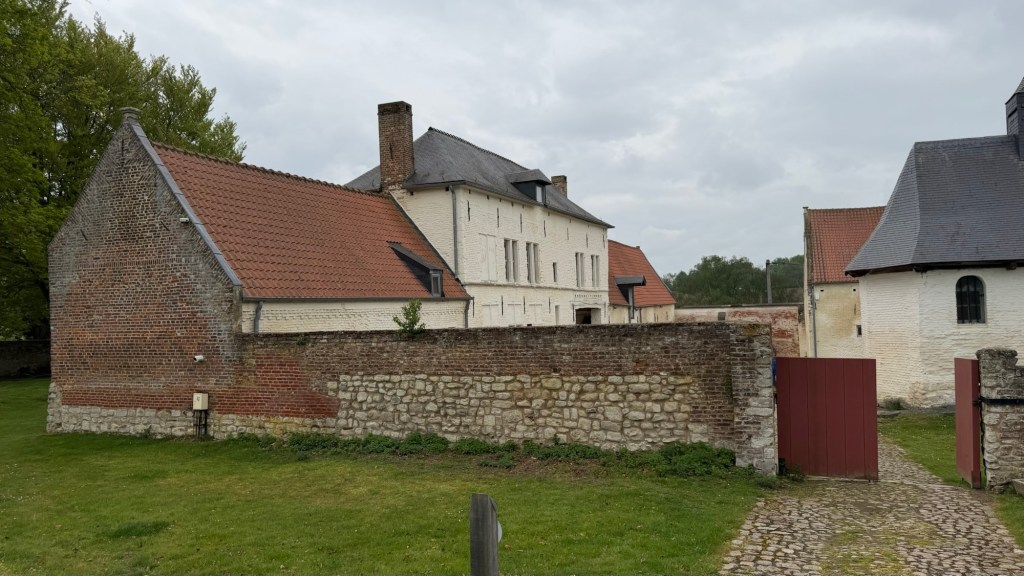
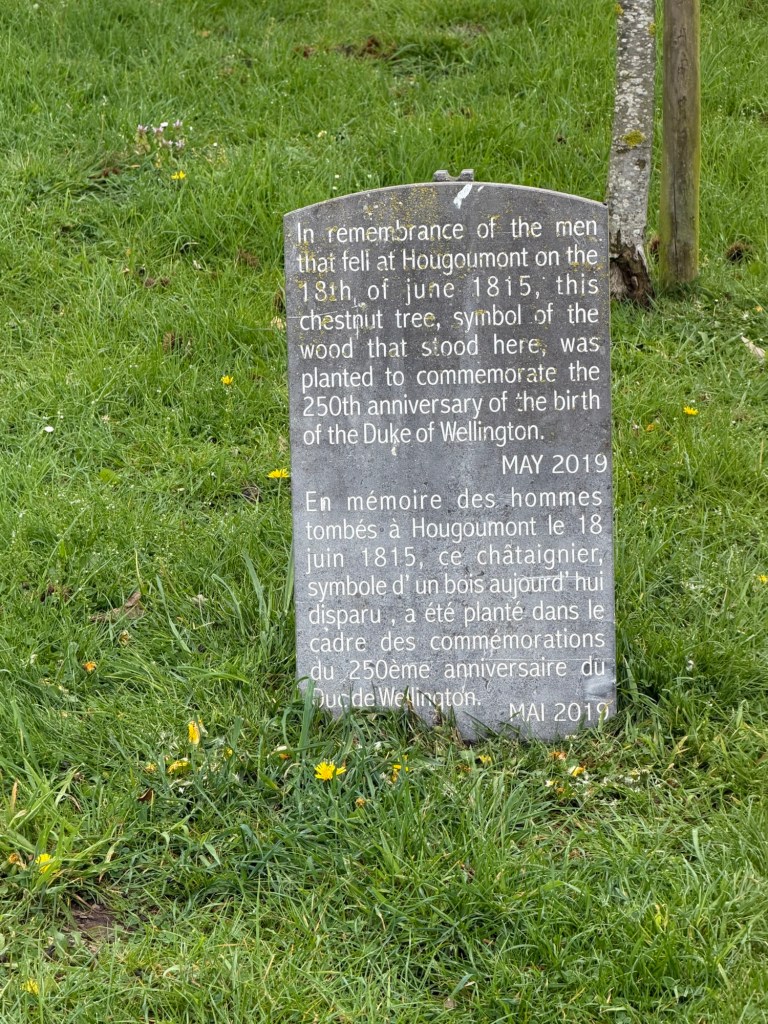
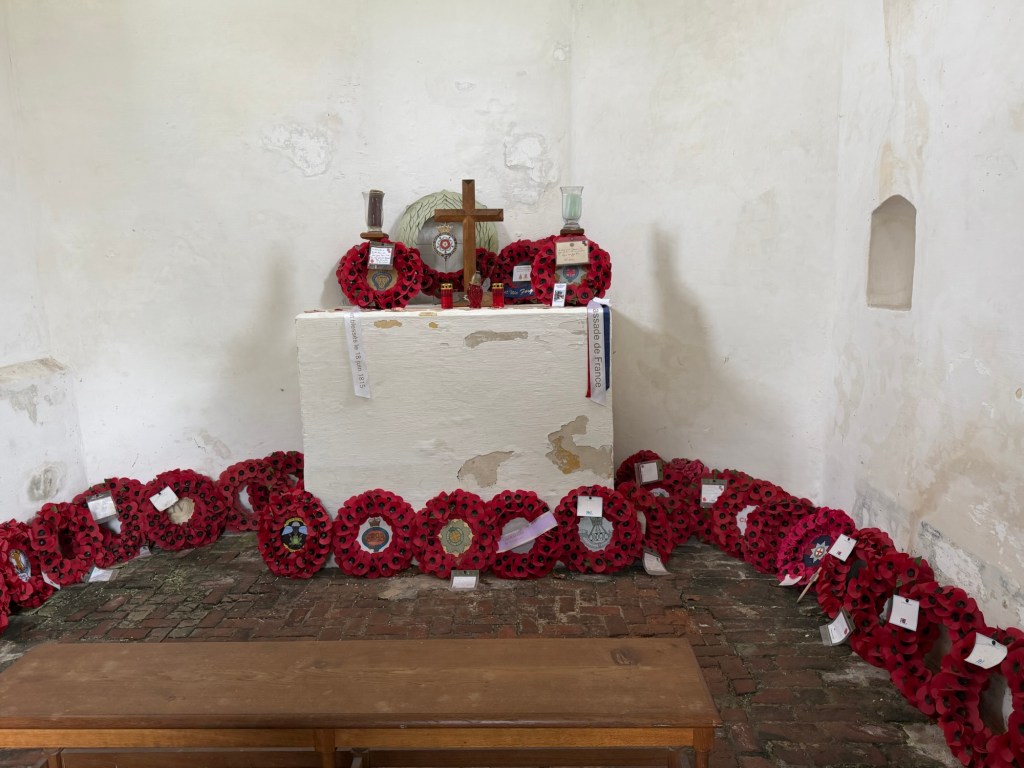
The restored chapel and memorials scattered throughout the farm serve as reminders that Hougoumont was more than a tactical objective. It was a place where hundreds of men lost their lives in a struggle that lasted nearly the entire day. The wreaths, plaques, and commemorative chestnut tree honor those who fell here, while the surrounding fields remain remarkably unchanged from the landscape the soldiers would have known in 1815.
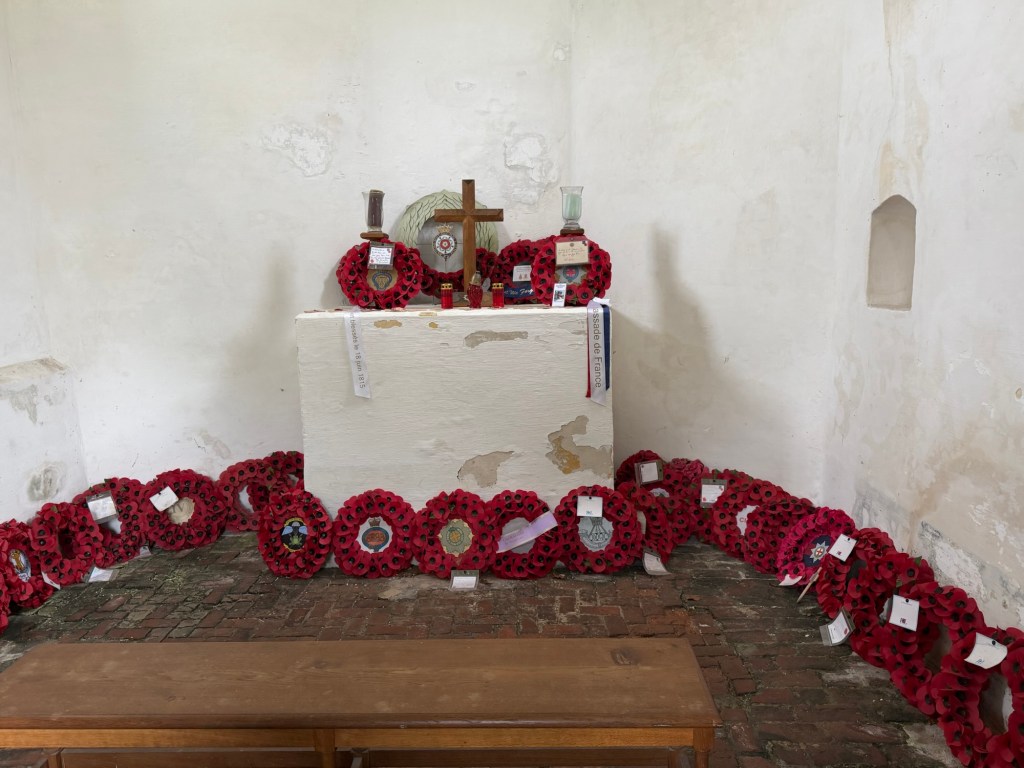
Of all the places we visited at Waterloo, Hougoumont may have been the most evocative. Away from the crowds and monuments, it offered a quiet and deeply human connection to one of the most consequential days in modern history.
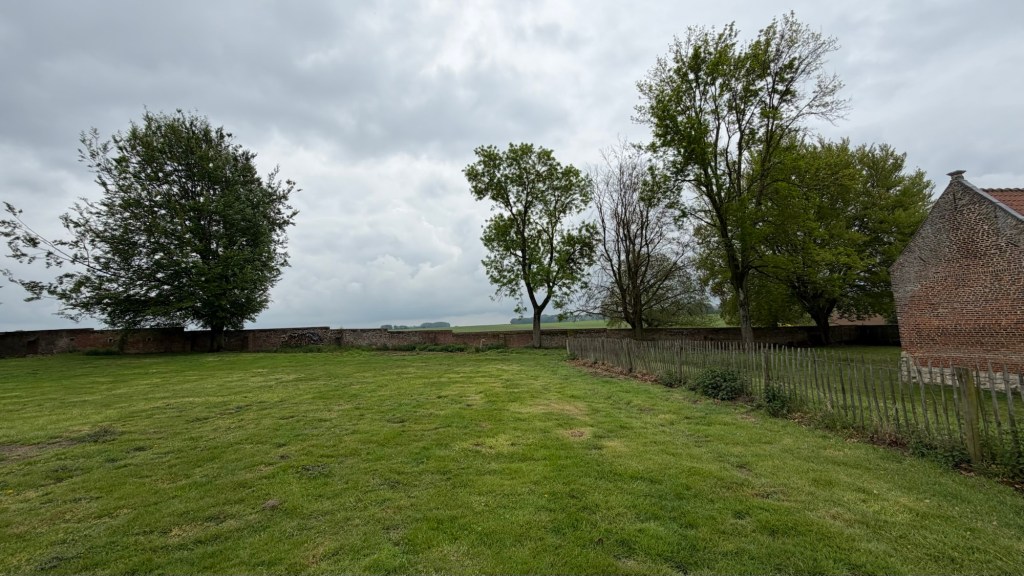
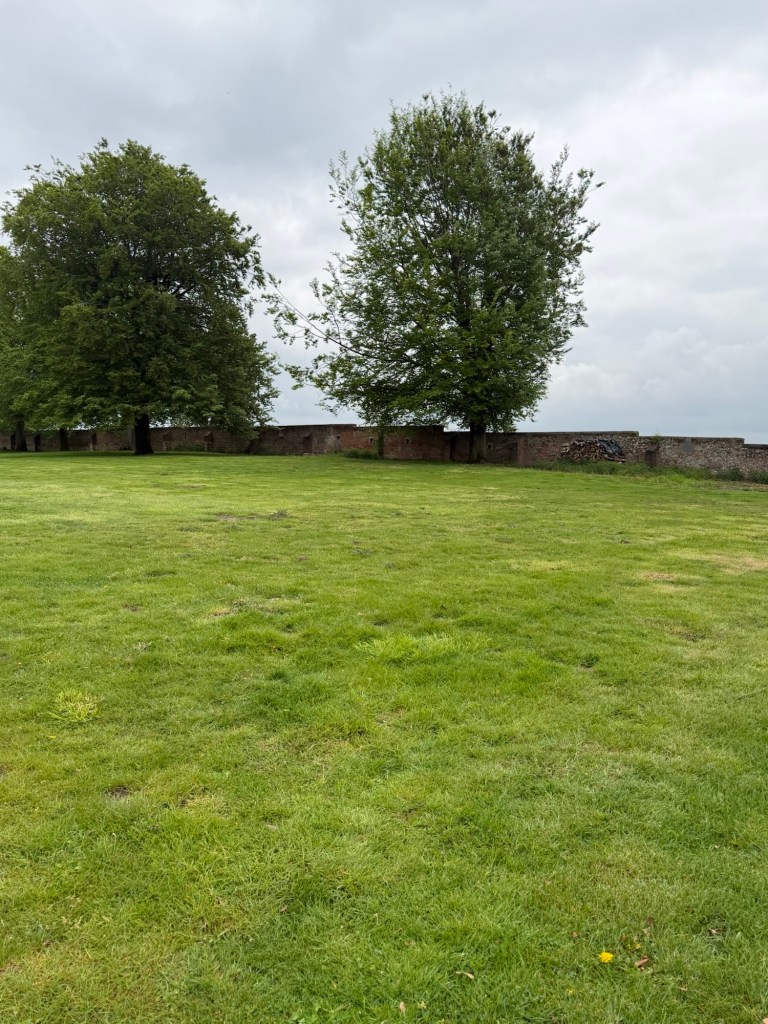
I particularly like the contrast in the photos between the solemn memorial-filled chapel and the tranquil green fields beyond the walls. It reinforces the idea that this peaceful farm was once the scene of some of the most intense fighting of the entire battle.
Here, history feels less like a grand military narrative and more like the story of ordinary soldiers fighting, surviving, and dying within a few acres of brick walls and trees.
Leaving the battlefields of Waterloo behind, we traded military history for one of Belgium’s most celebrated cultural traditions: chocolate.
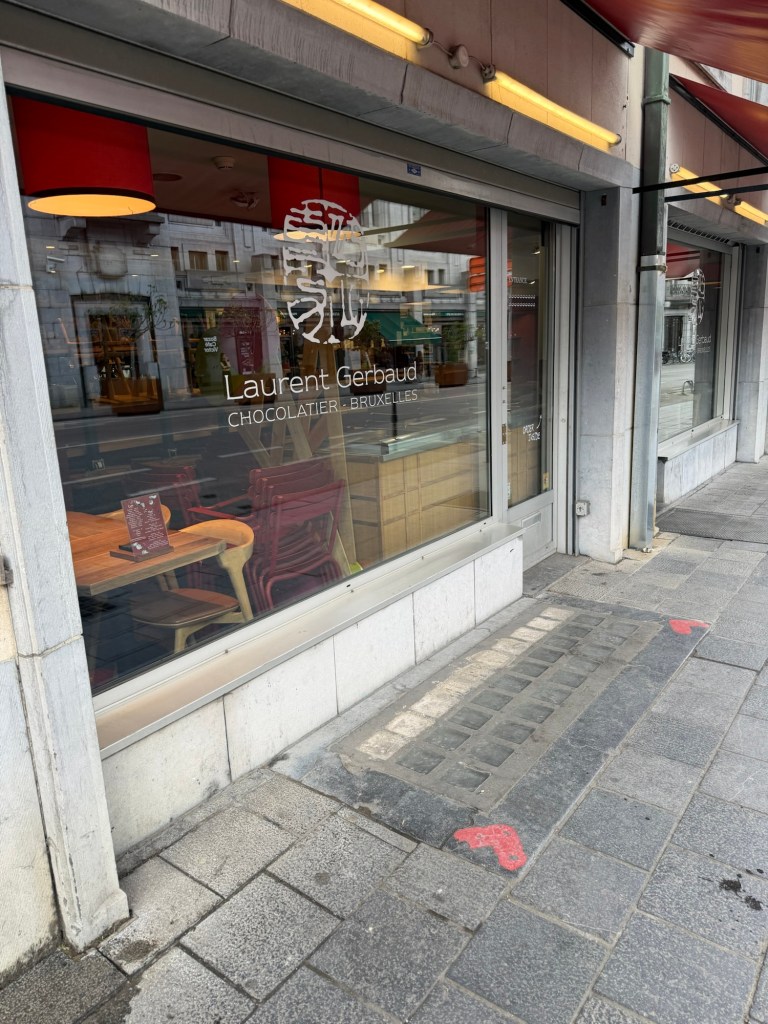
Before entering Laurent Gerbaud’s chocolate atelier, we paused to say goodbye to Mohammed, who had just driven us back to Brussels from Waterloo. Throughout our Benelux adventure, he had safely guided us across Belgium, Luxembourg, and the Netherlands with professionalism, patience, and good humor. Over the course of the trip, we learned that he was about to become a father for the first time, and we enjoyed sharing in his excitement as he looked forward to that new chapter in his life.
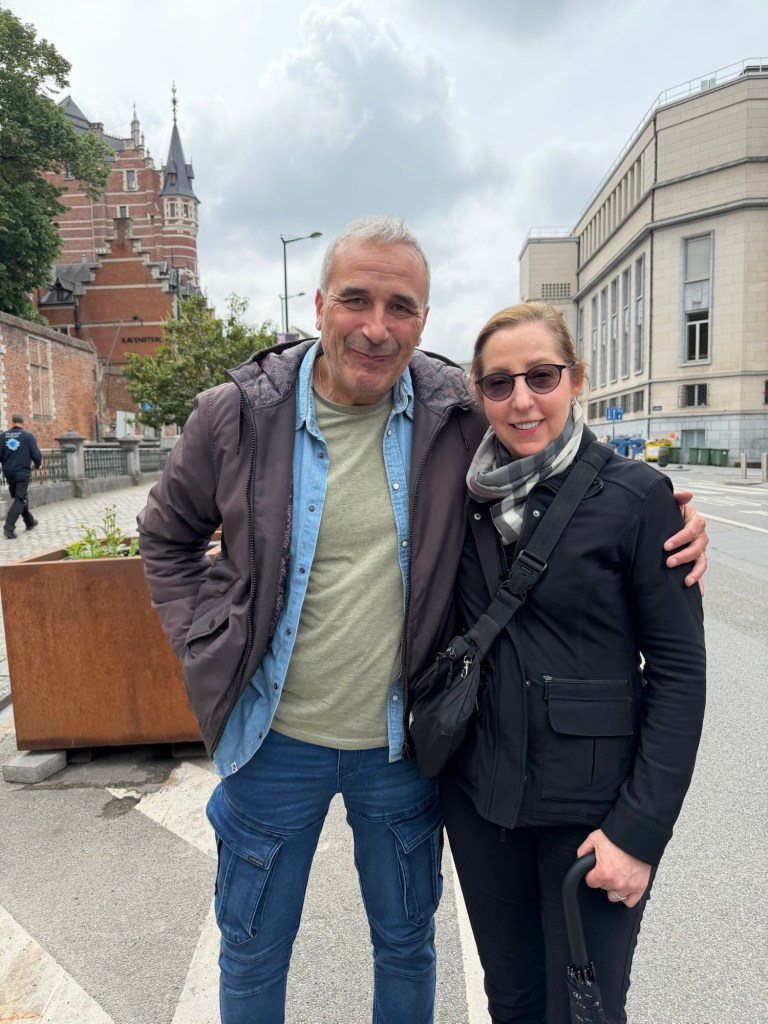
Our afternoon was spent with Laurent Gerbaud, one of Brussels’ most acclaimed chocolatiers and recipient of Gault & Millau’s Brussels Chocolatier of the Year award. chocolatsgerbaud.be/en/
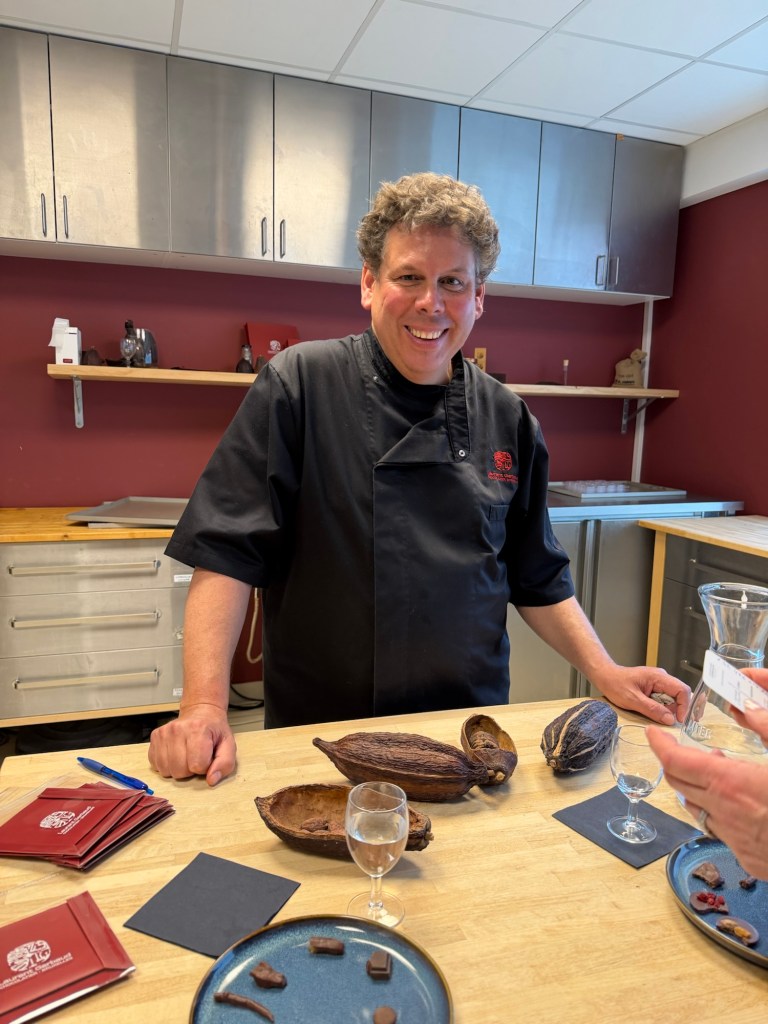
The experience began with an extensive tasting that challenged many of our assumptions about chocolate.
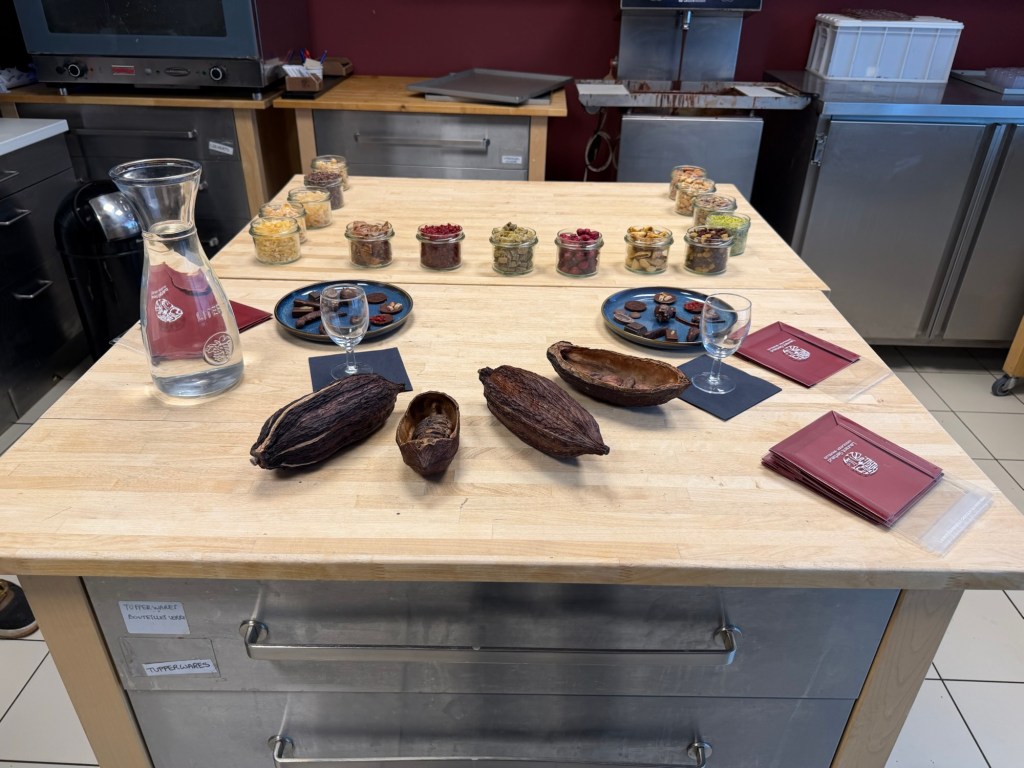
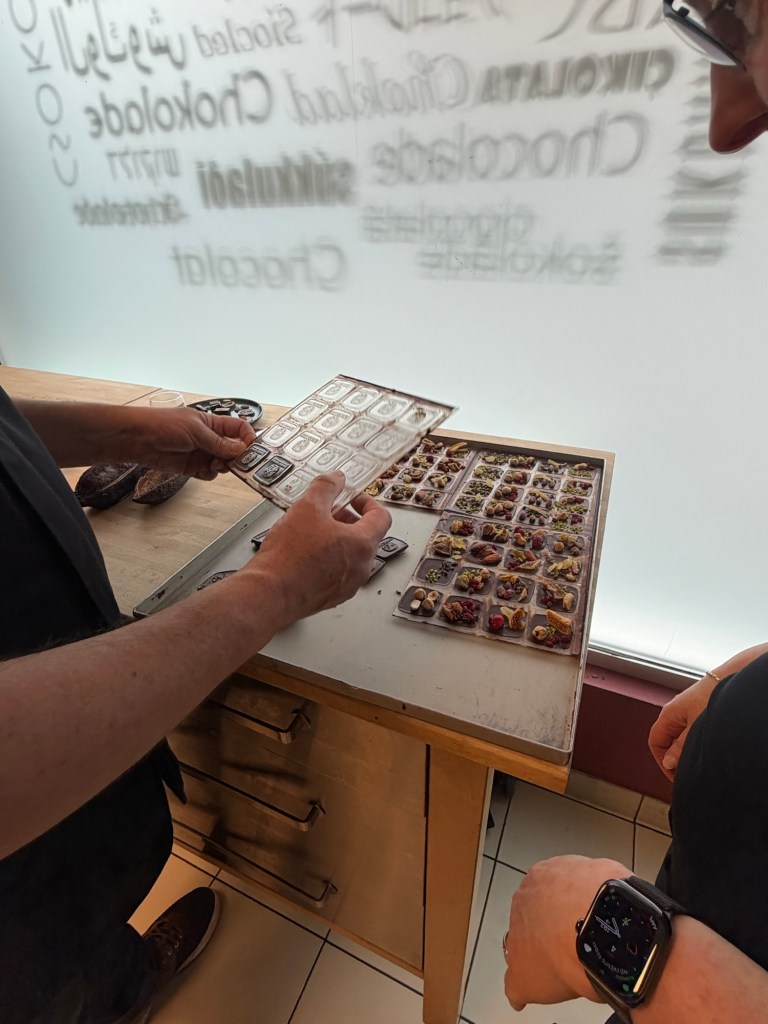
Surrounded by cacao beans, nuts, dried fruits, seeds, and spices, we sampled a remarkable variety of chocolates while learning how each ingredient influences flavor, texture, and aroma. Gerbaud’s philosophy emphasizes the natural character of cacao, often pairing it with fruits and nuts rather than relying on excessive sugar. The combinations ranged from familiar to unexpected, and each tasting revealed a different aspect of the chocolatier’s craft.
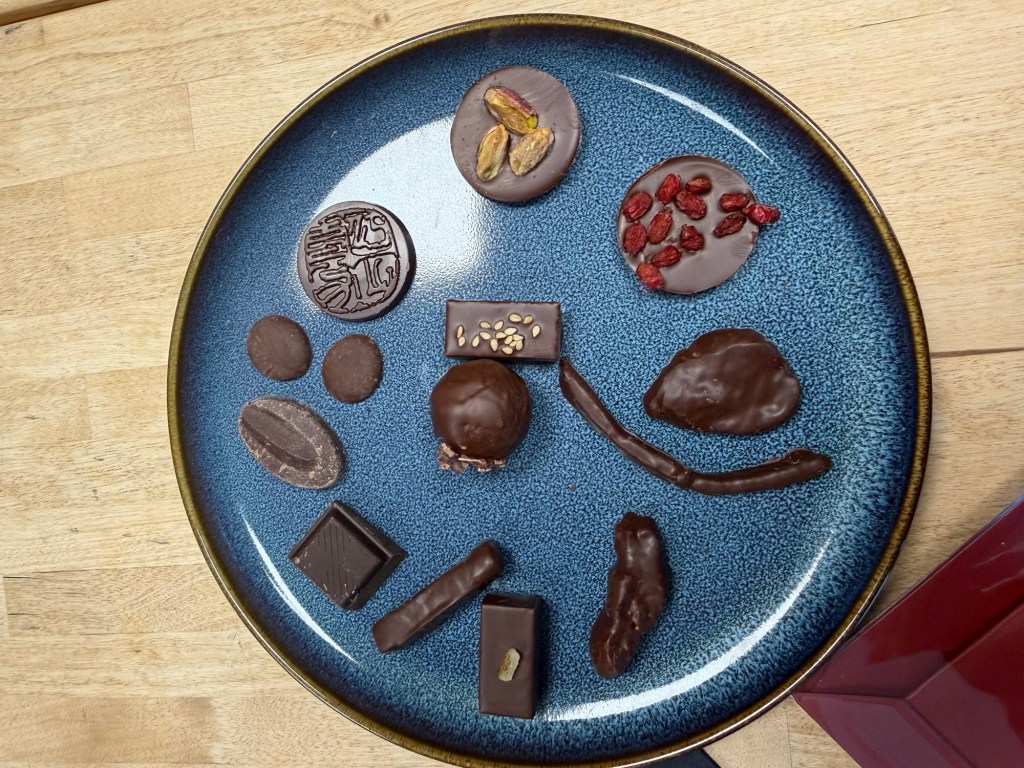
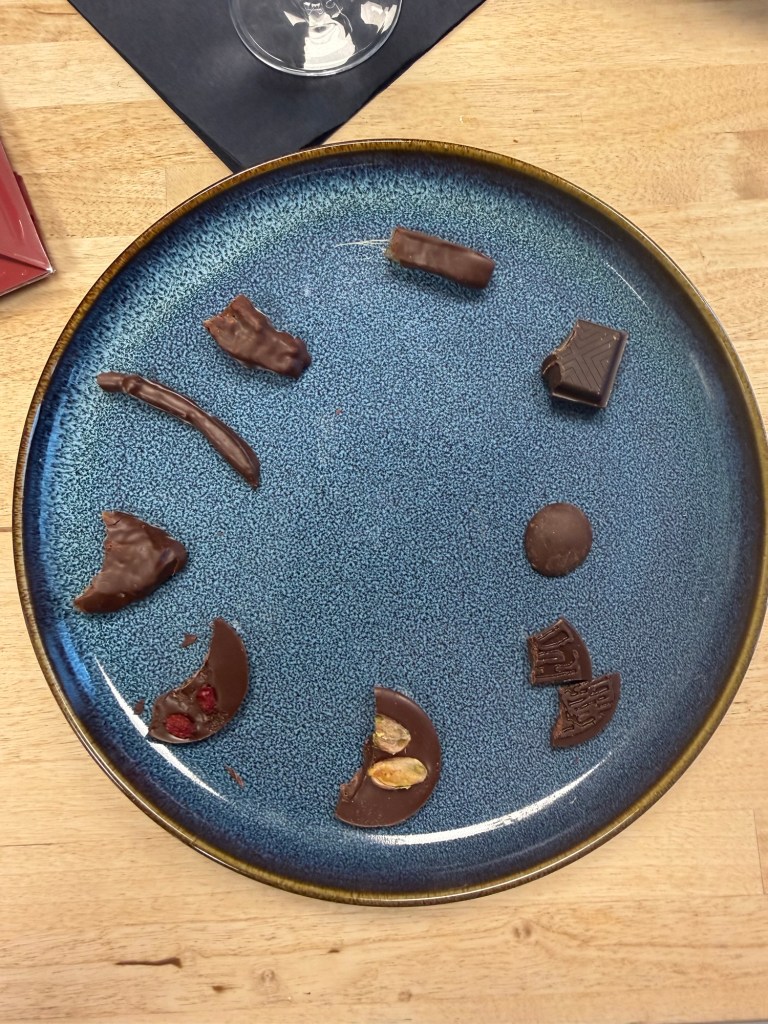
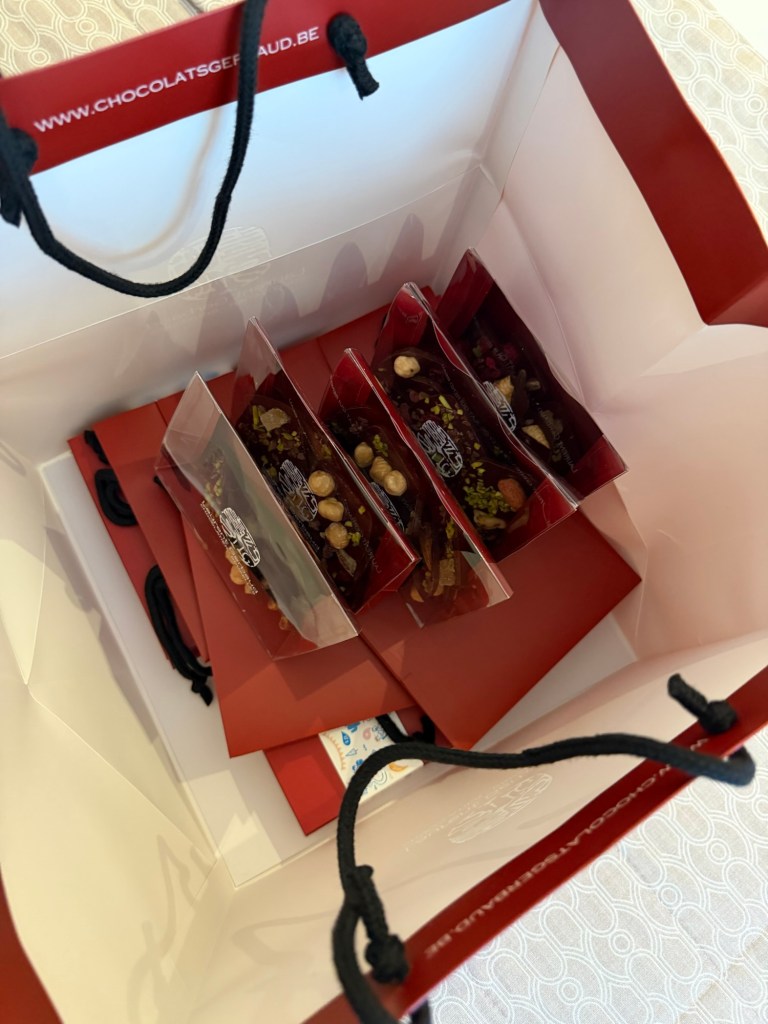
After the tasting, we were invited to create our own chocolates. Working with molds and an impressive assortment of nuts, fruits, seeds, and other ingredients, we designed personalized creations that would later be packaged for us to take home, as gifts. It was a fun, hands-on experience that offered a glimpse into the creativity behind the chocolatier’s art.
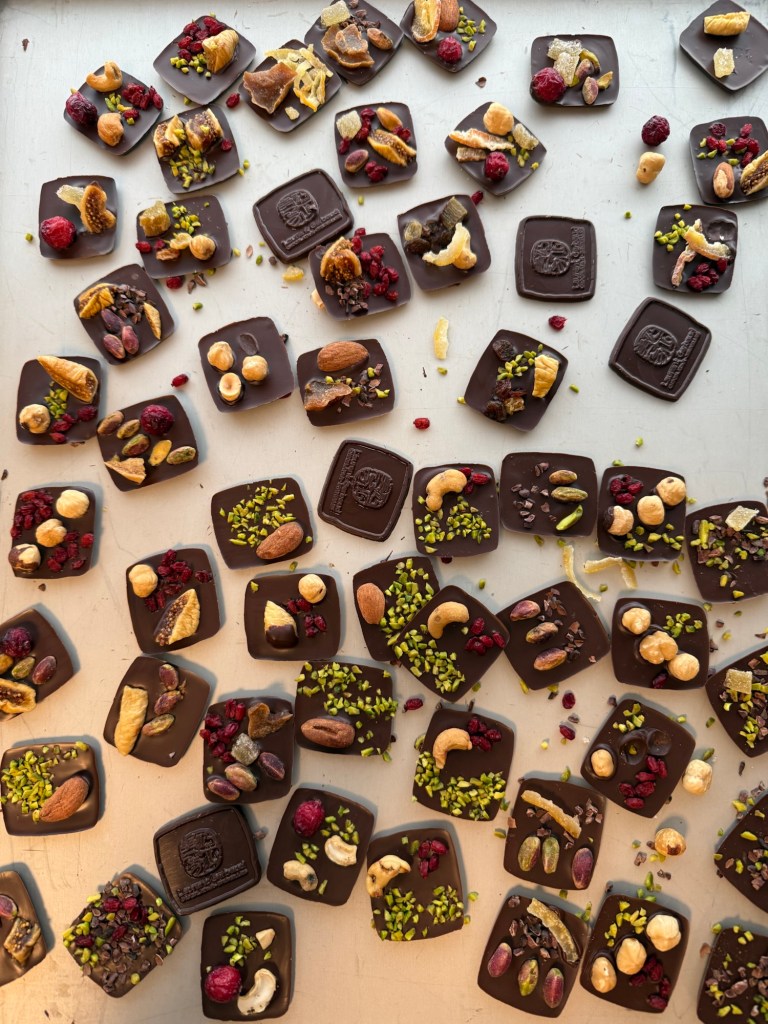
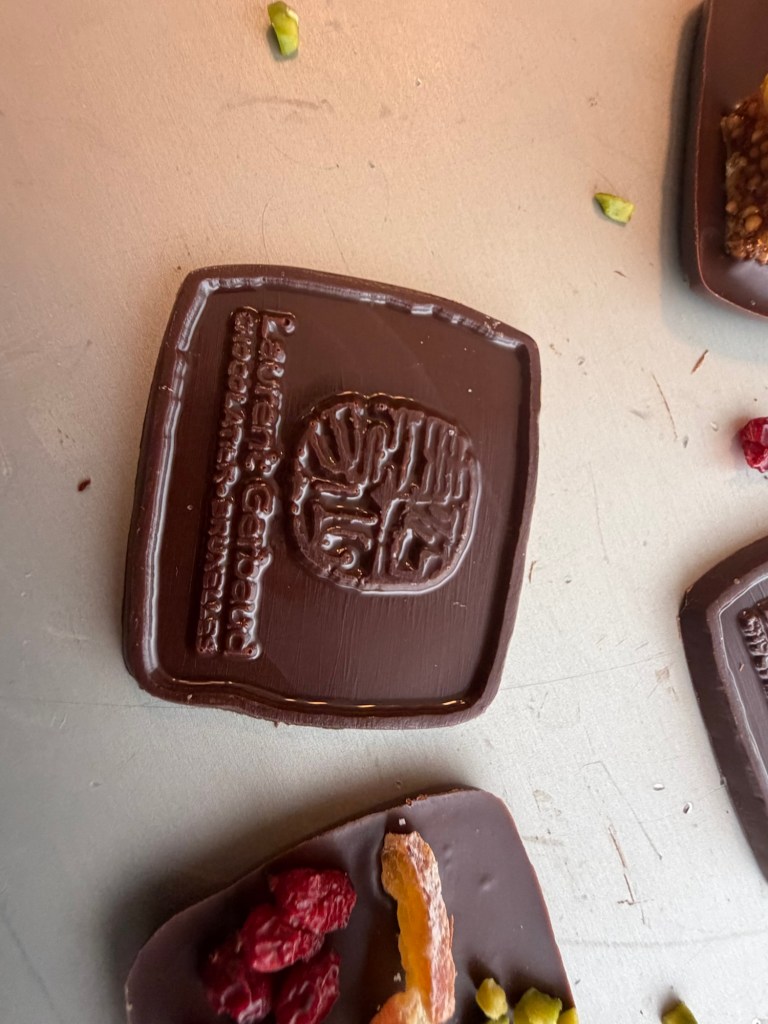
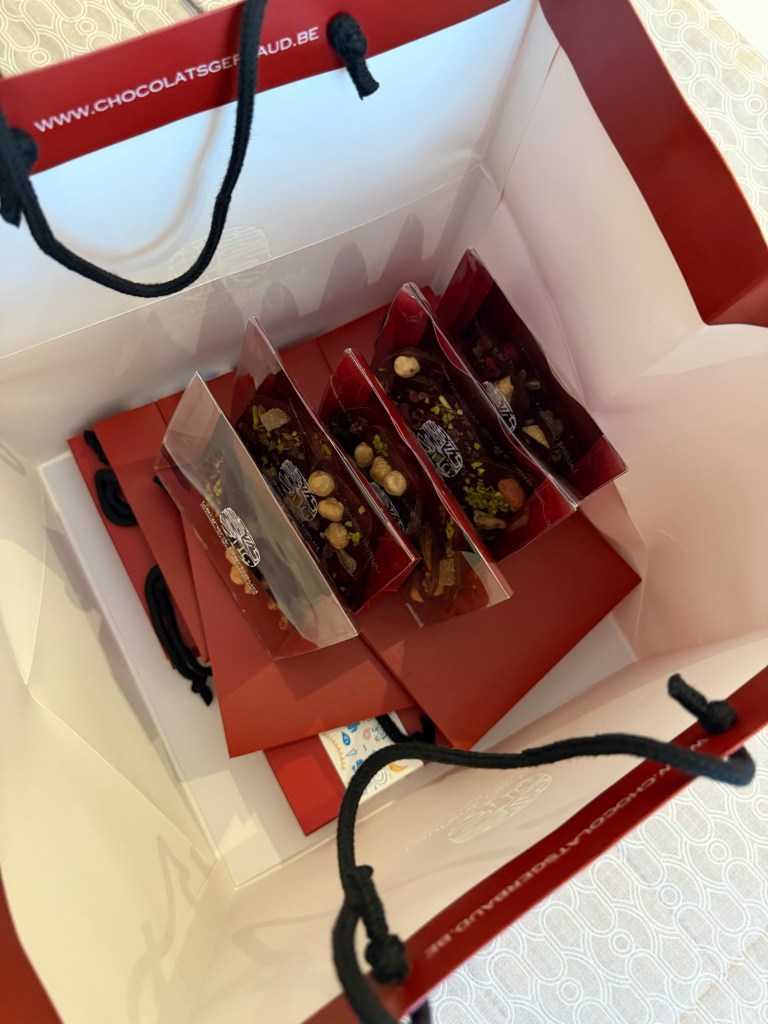
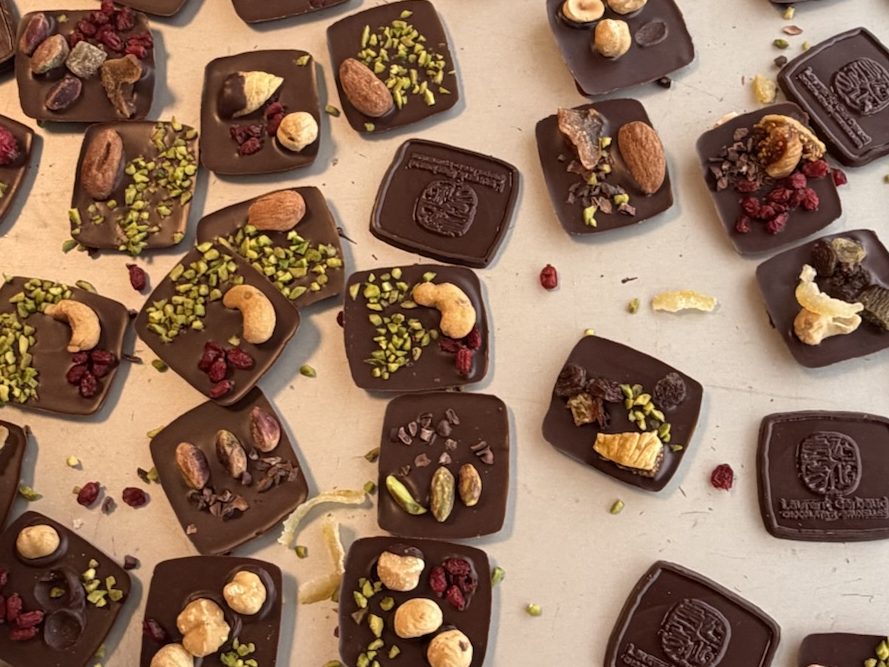
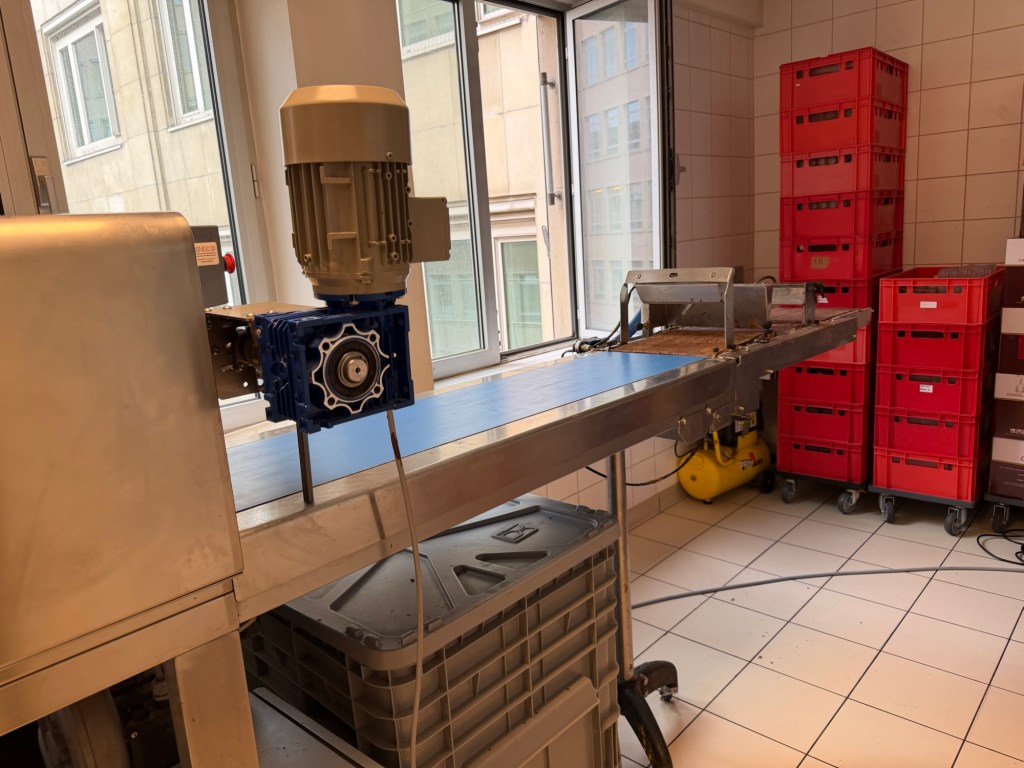
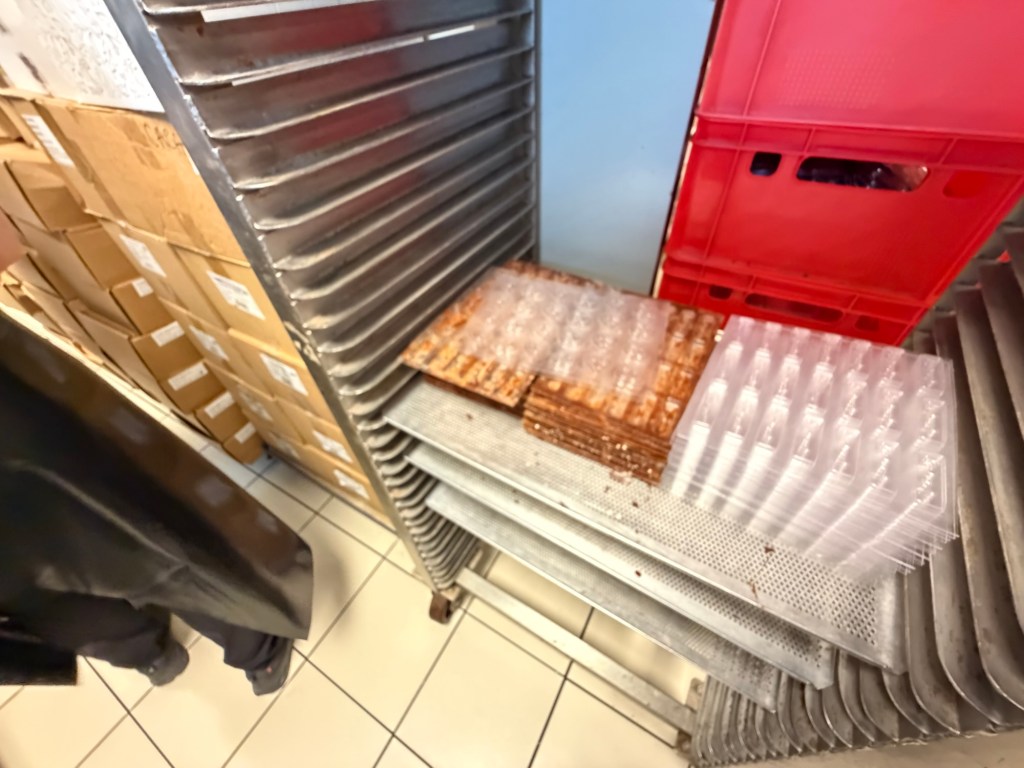
While our chocolates were setting, we toured the workshop itself, learning about the chocolate-making process and the specialized equipment used to transform cacao beans into the exquisite creations displayed in the shop. The visit offered a fascinating glimpse into both the artistry and precision that define Belgian chocolate making. By the end of the afternoon, we had gained a much deeper appreciation for the craft—and left with packages of our own handmade chocolates, along with a generous selection prepared by the shop, as delicious reminders of an unforgettable experience.
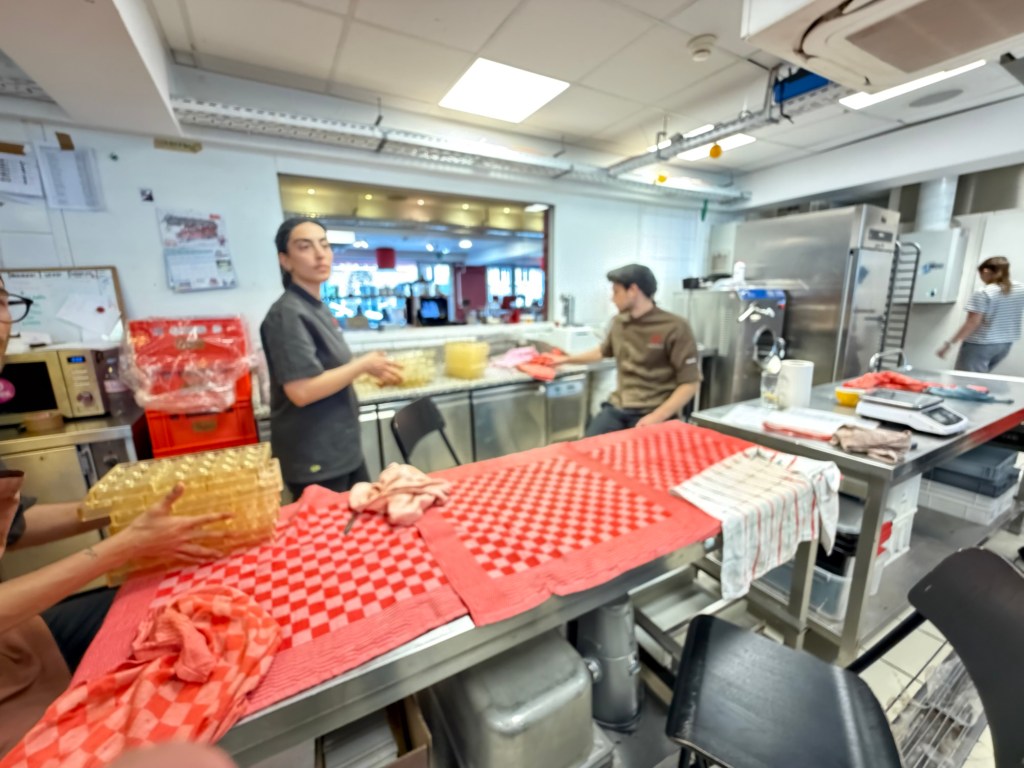
We also had the company of Boulette (meatball) the resident shop dog and unofficial assistant chocolatier.
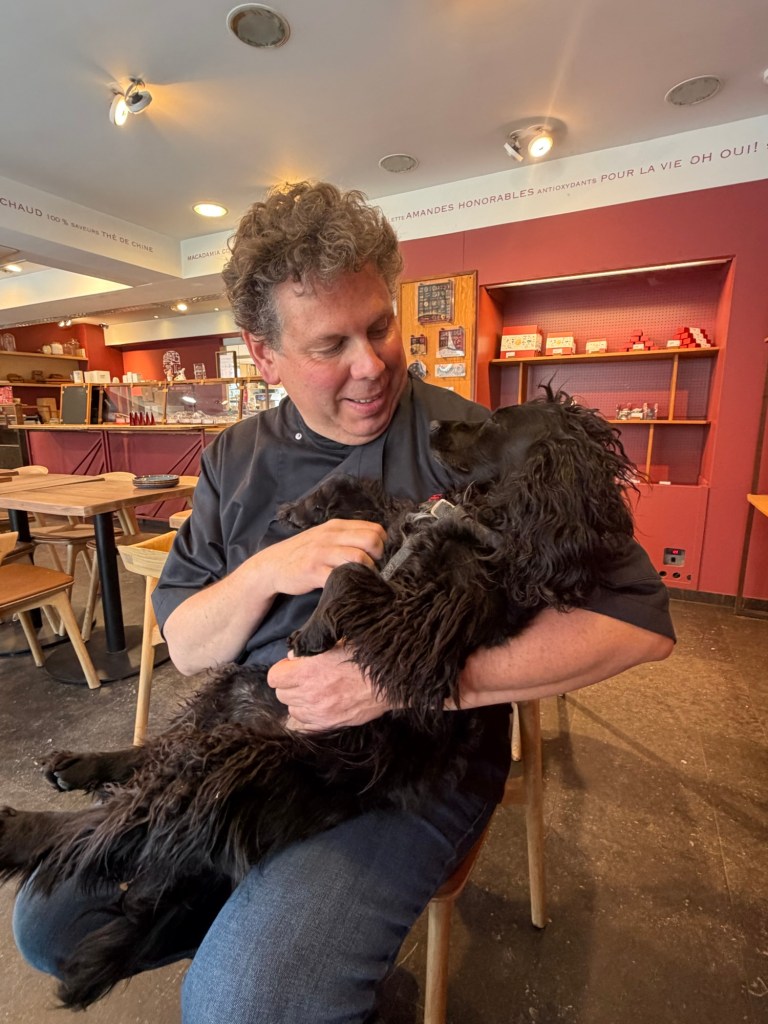
While Laurent explained the finer points of chocolate making, we also had the company of Boulette (meatball) the resident shop dog and unofficial assistant chocolatier. Boulette also spent a fair amount of time in my arms, a role he embraced as part of the tour.
Boulette quietly supervised the proceedings, happily accepting attention from visitors. By the end of the afternoon, he had accumulated almost as many admirers as his owner.
As we were finishing our visit, one final surprise awaited us. Tom Stinglhamber, of Brilliant Ideas Travel (Brilliantideas.travel), who planned our Benelux adventure, stopped by the chocolate shop to see us, this time on purpose. We spent time talking about the journey, sharing highlights from the past 18 days, and reflecting on the many unforgettable experiences along the way. For Benelux travel, Tom is the man!
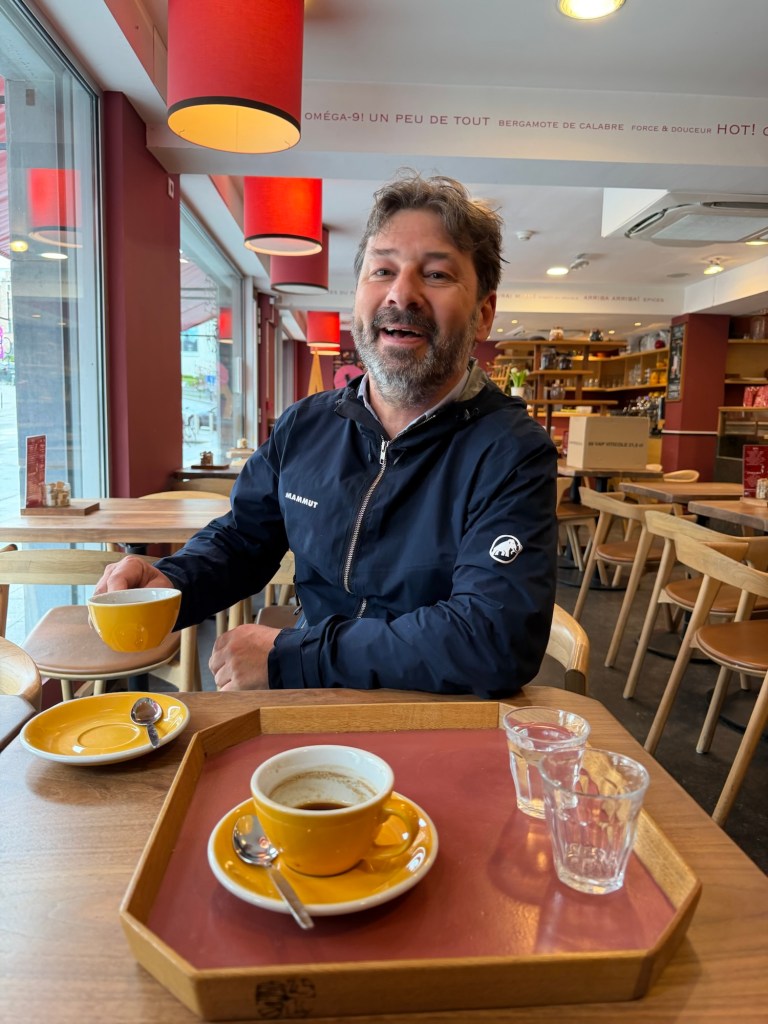
When it was time to leave, Tom walked us back to our hotel through the streets of Brussels.

It was a thoughtful and personal gesture that perfectly captured the warmth and care that had gone into every aspect of this remarkable trip, and a fitting conclusion to our final day in the Benelux countries. Thank you Tom, along with his colleagues, and guides. This really was a wonderful experience.
As we conclude our Benelux adventure, we are grateful to the many people who helped make it such a memorable journey.
Special thanks to Owen Beiny, The Points Partner, for helping us secure our flights, and to travel expert Wendy Perrin and her WOW List for leading us to our outstanding advisor, Tom. We are also deeply grateful to the guides, drivers, hotel staff, and countless local residents who shared their knowledge, kindness, and love of their countries with us along the way.
Travel broadens our horizons and reminds us how much we all have in common, no matter where we live.
We’ll be spending time with family and friends before embarking on our next adventure through Slovenia, Croatia, and Montenegro.
Thank you for traveling with us. Until next time, safe travels!
The trip is over!