We left Spa and traveled about two hours through the rolling countryside of the Belgium and Luxembourg, passing forests, small villages, and winding roads that made the drive feel far shorter than it actually was. Salah drove us comfortably and expertly the entire way, allowing us to simply relax and enjoy the scenery.
Villa Pétrusse
Once in Luxembourg City, we arrived at Villa Pétrusse, a beautifully restored historic villa that immediately felt both grand and intimate. Set behind wrought-iron gates and a cobblestone courtyard, the property combines classic Luxembourg elegance with warm contemporary luxury.
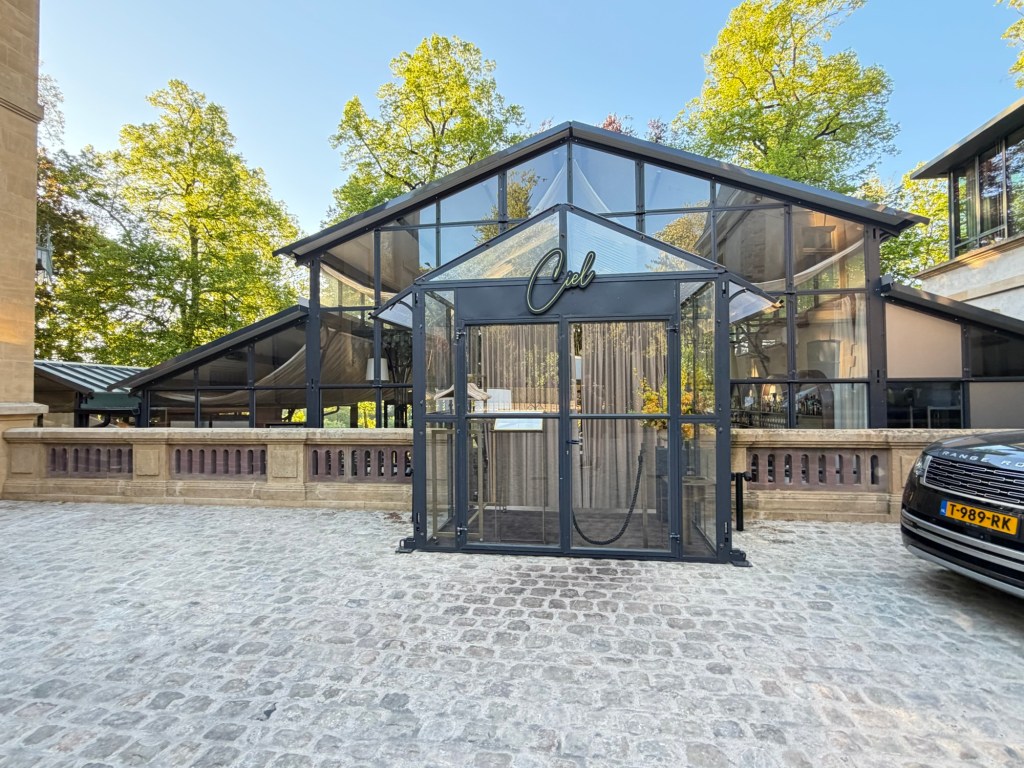
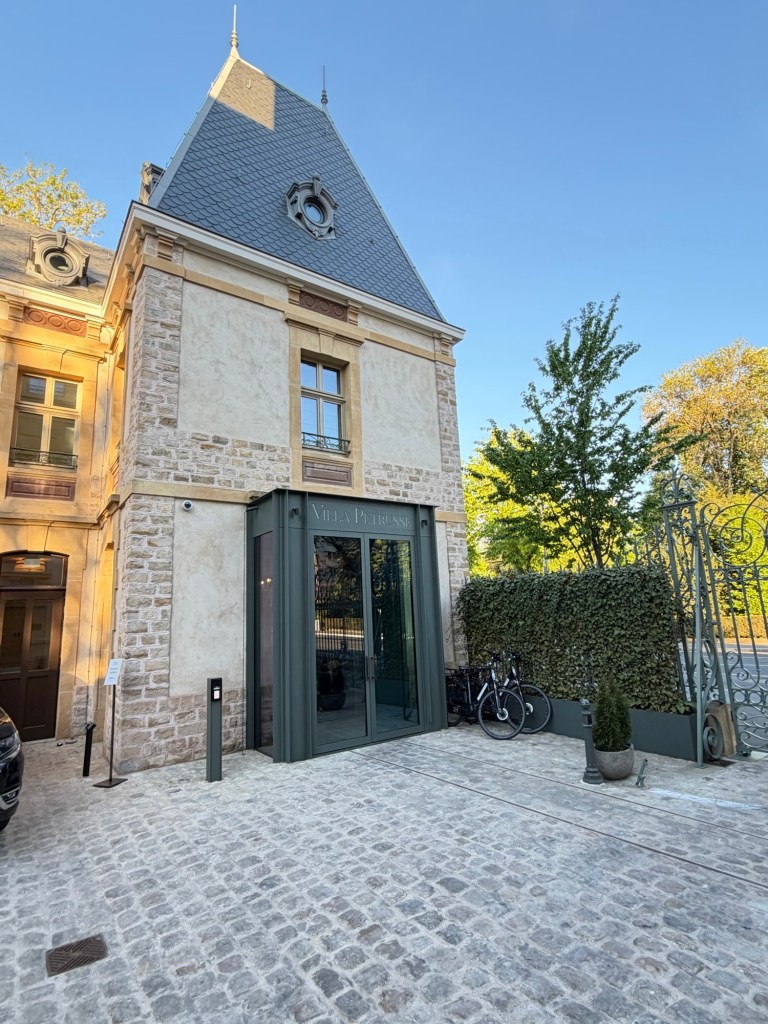
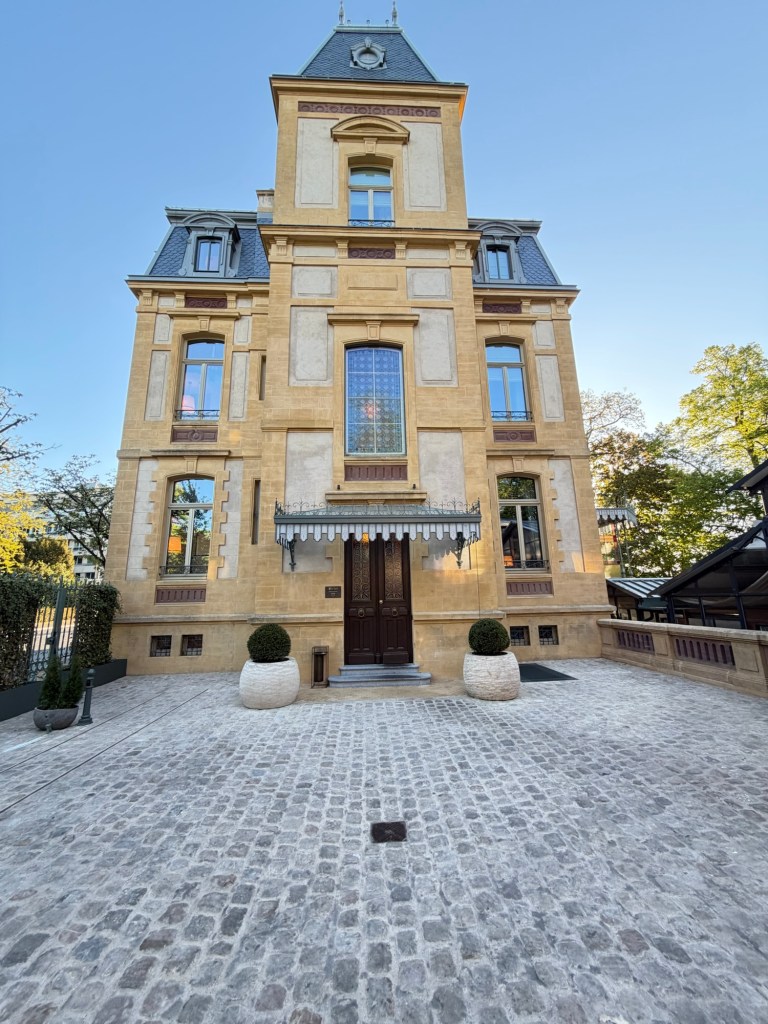
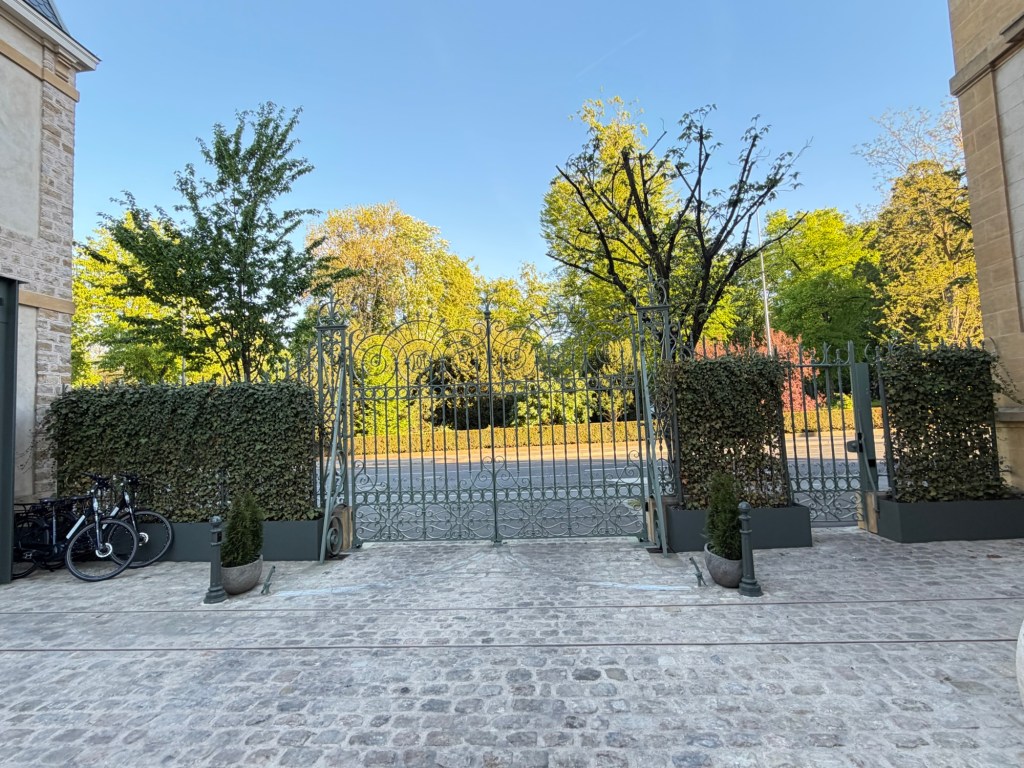
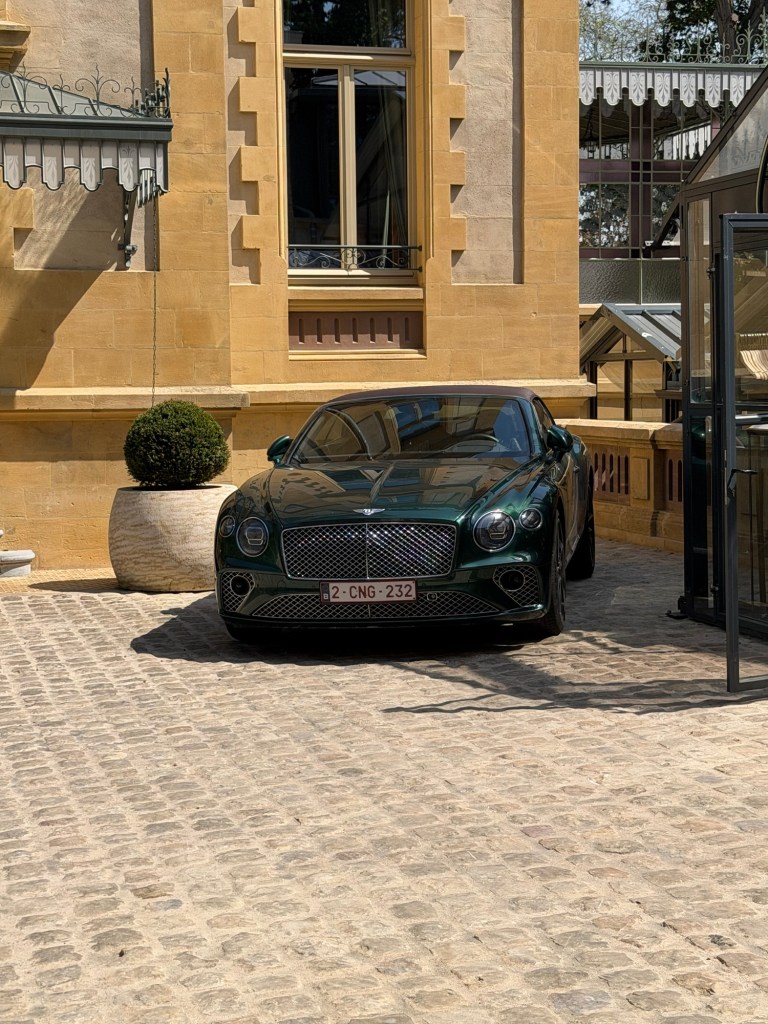
The villa itself is part of a protected UNESCO World Heritage area in Luxembourg City, and its history is as fascinating as its architecture. We were told that Henri-Eugène de Kerkho, the wealthy original owner was so prominent that a private rail car would actually pick him up inside the property itself — the kind of extraordinary detail that perfectly captures the grandeur of another era.
The exterior is striking, with its stately stone façade, steep slate rooflines, and tower-like center section giving it the appearance of a private château tucked into the city.
Inside, ornate ceilings, crystal chandeliers, carved woodwork, and richly decorated salons have been meticulously preserved, while modern furnishings and lighting add comfort without diminishing the villa’s historic character.
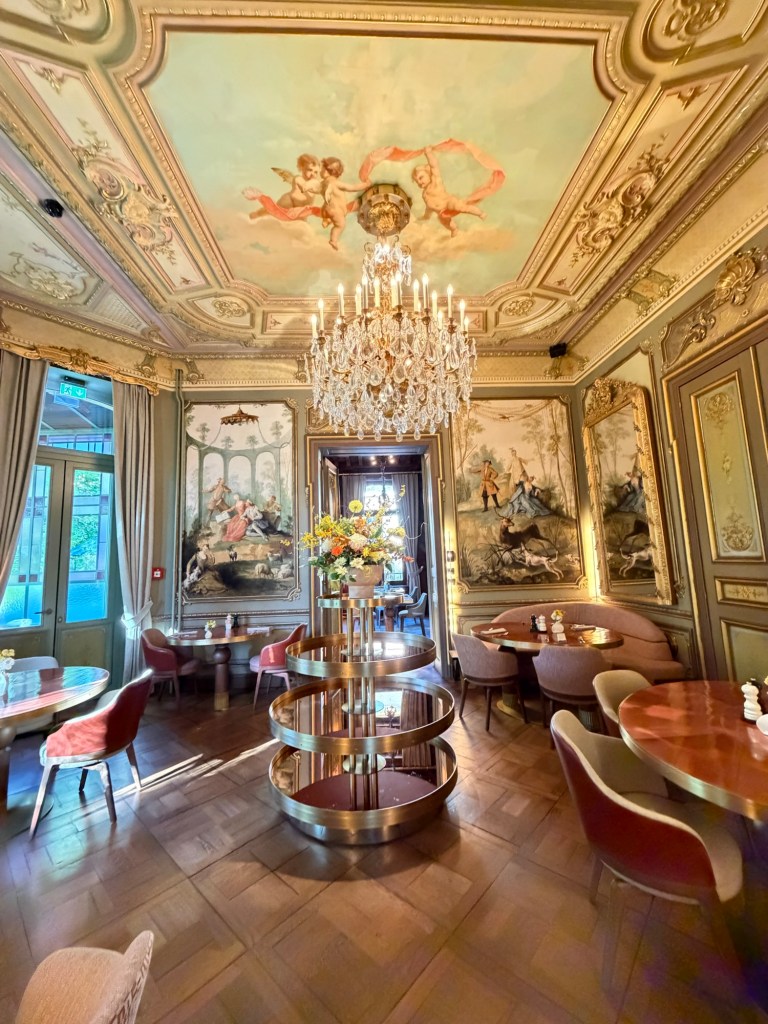
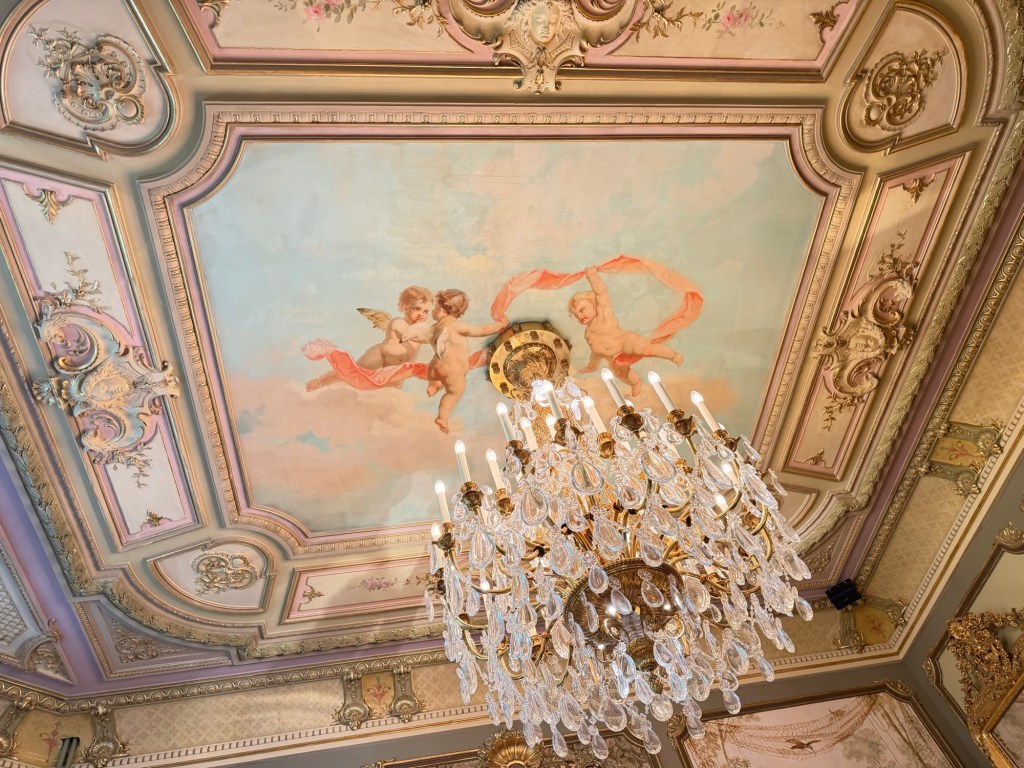
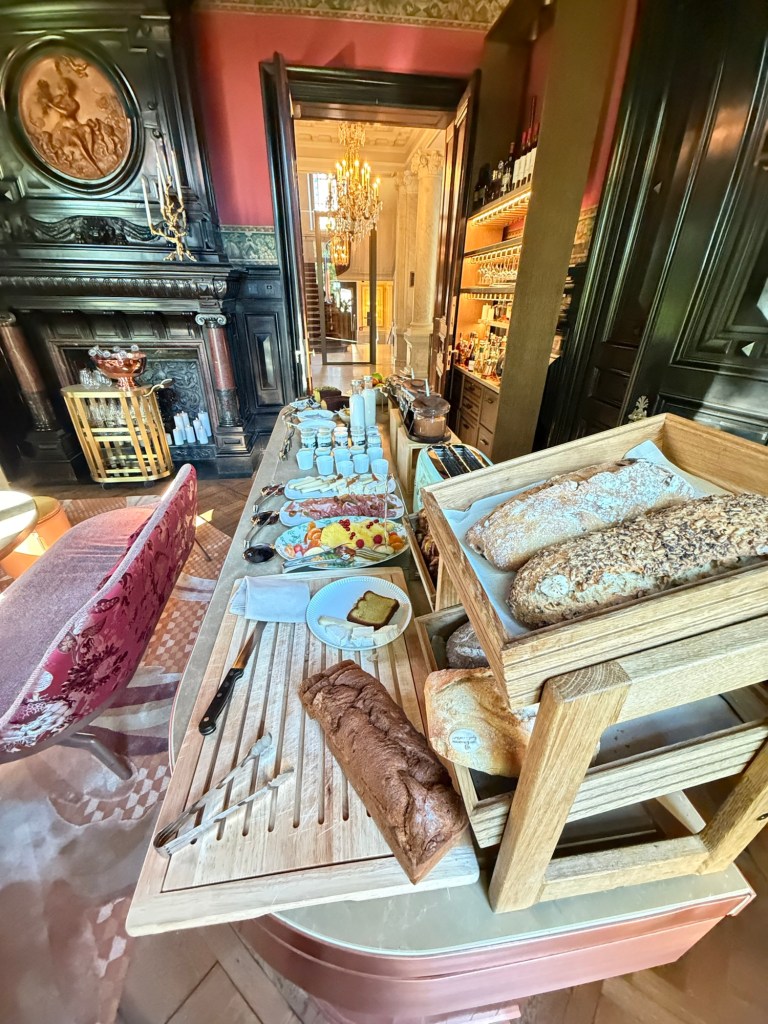
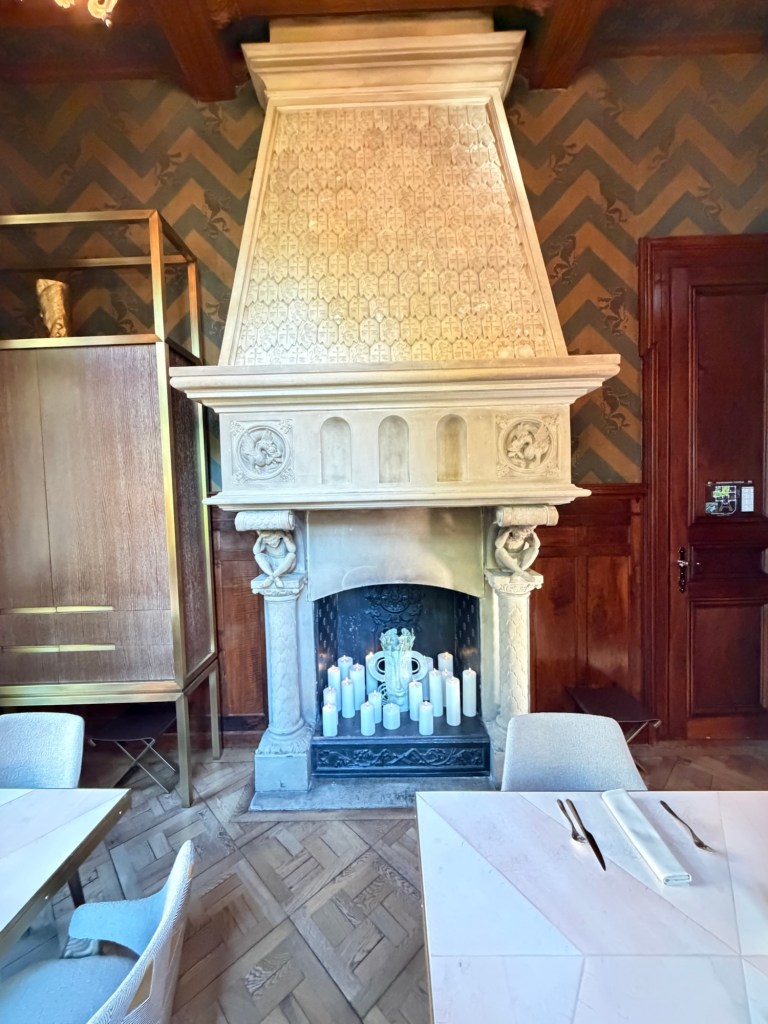
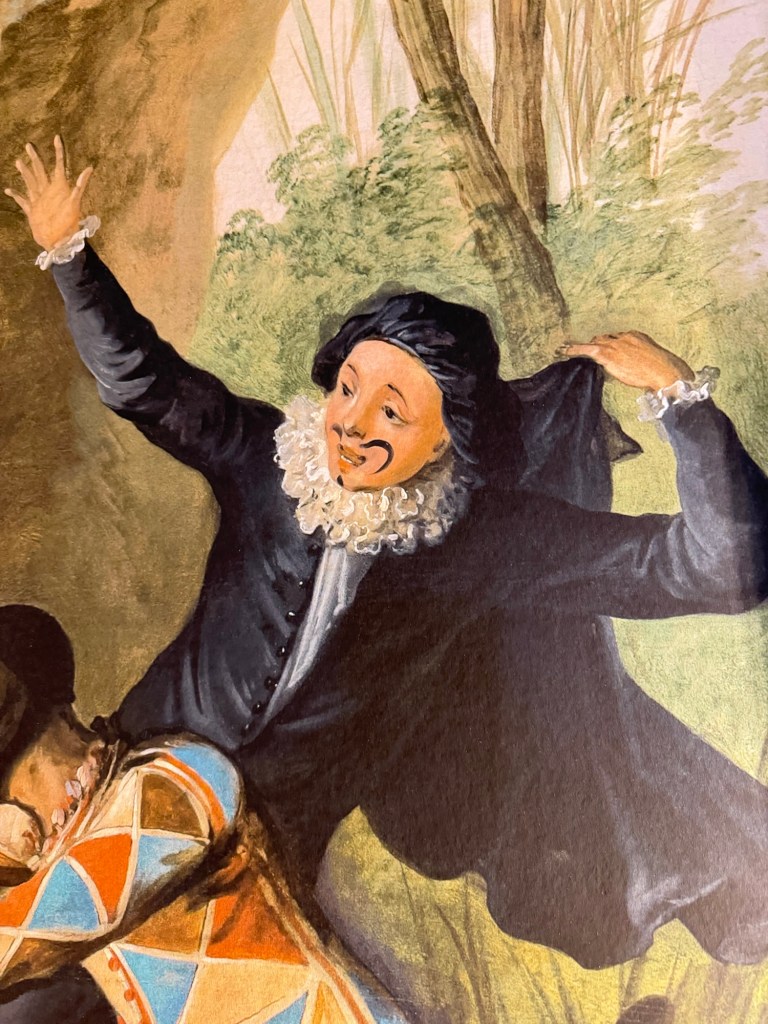
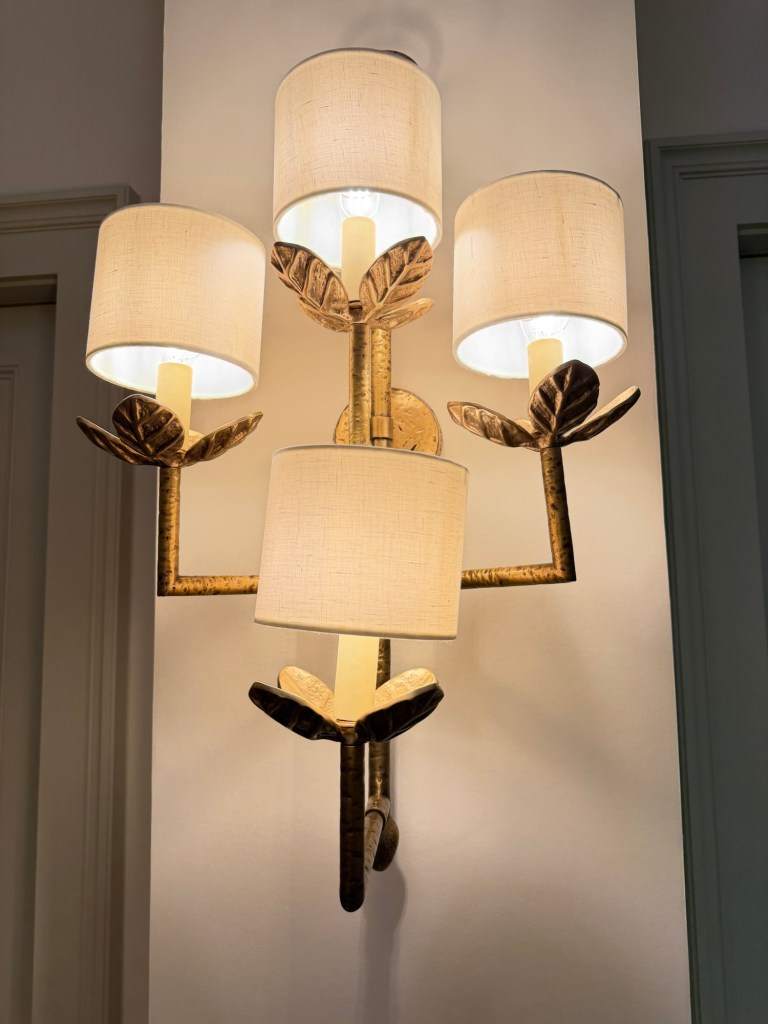
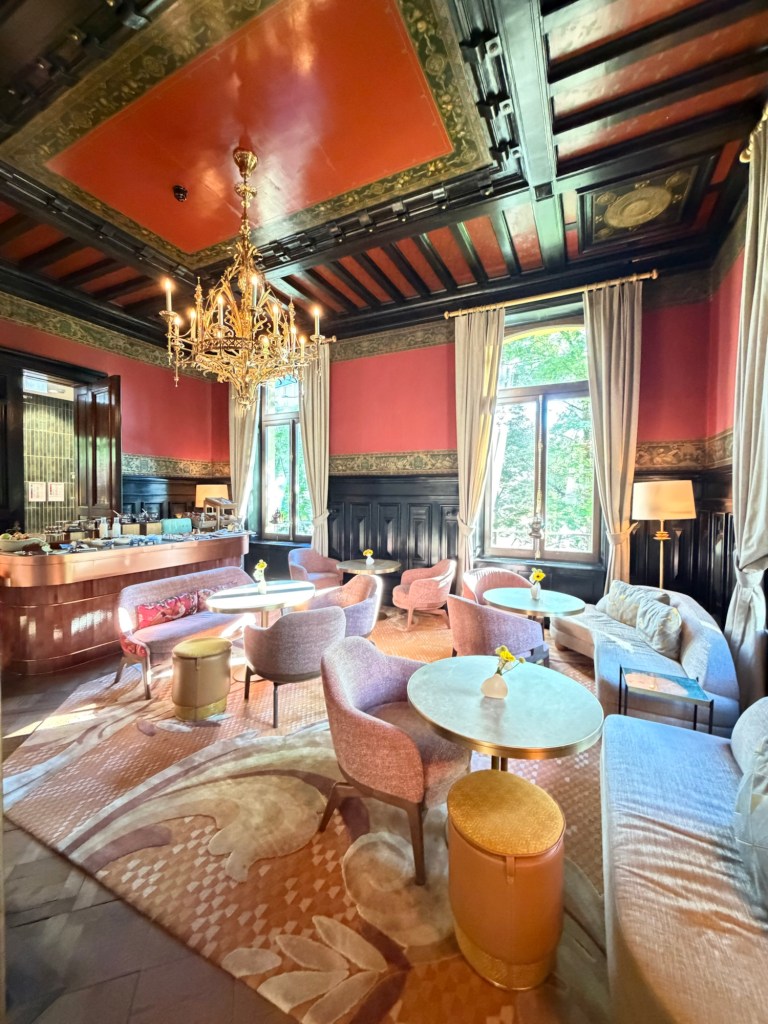
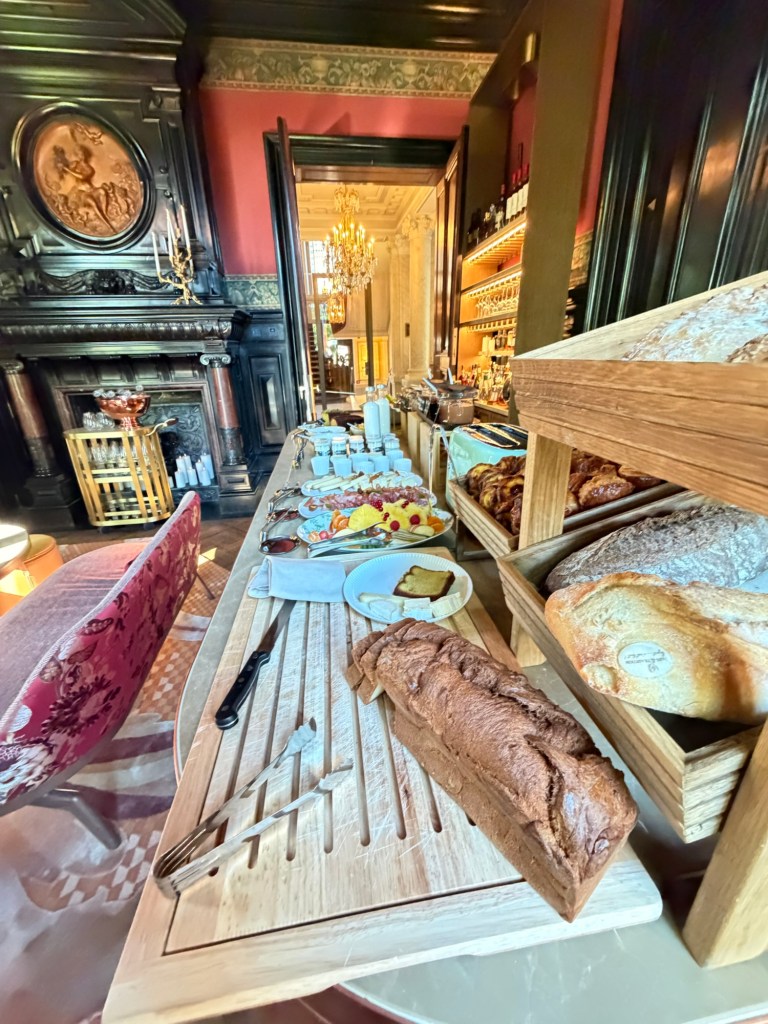
The breakfast and lounge areas were especially memorable, feeling more like the reception rooms of a grand private residence than a hotel. Rich colors, dramatic fireplaces, frescoed ceilings, and elegant dining rooms gave the villa an unmistakable old-world sophistication, while the newer glass-enclosed restaurant space blended beautifully with the historic architecture.
What a perfect base from which to explore Luxembourg.
Our room at Villa Pétrusse perfectly reflected the hotel itself — understated luxury with thoughtful design touches everywhere. The room blended warm contemporary decor with subtle references to Luxembourg’s landscape and history, including a mural behind the bed that echoed the city’s dramatic cliffs and valleys. Soft lighting, pale wood floors, elegant built-ins, and oversized windows overlooking the greenery made the space feel calm and sophisticated without being overly formal.
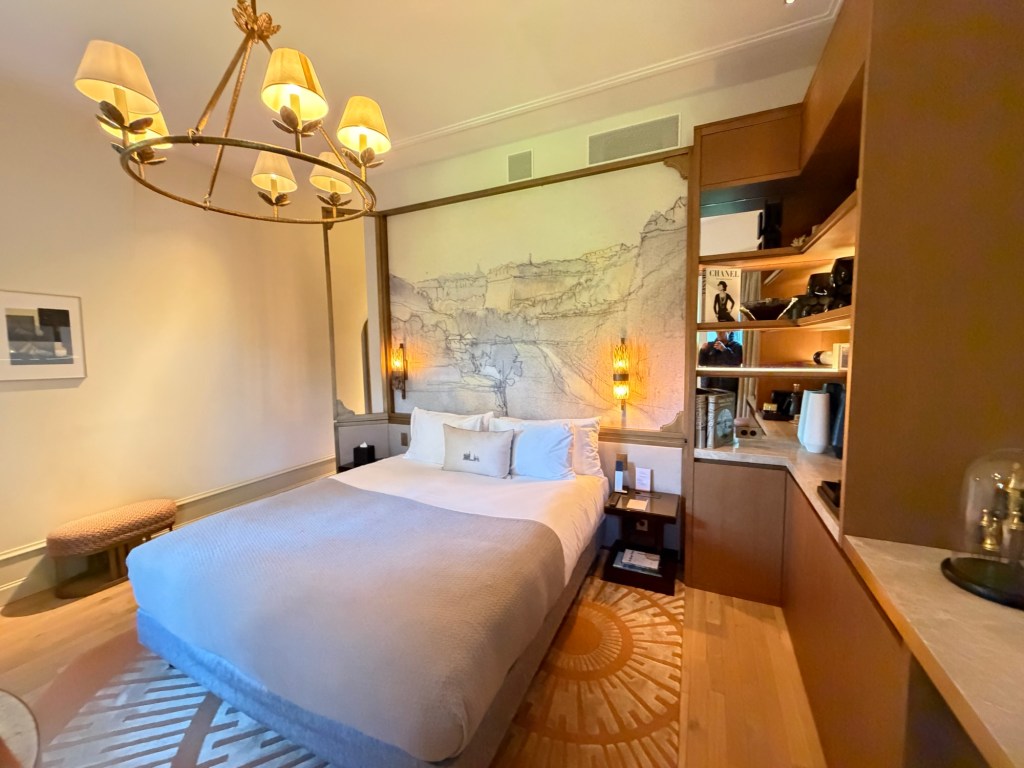
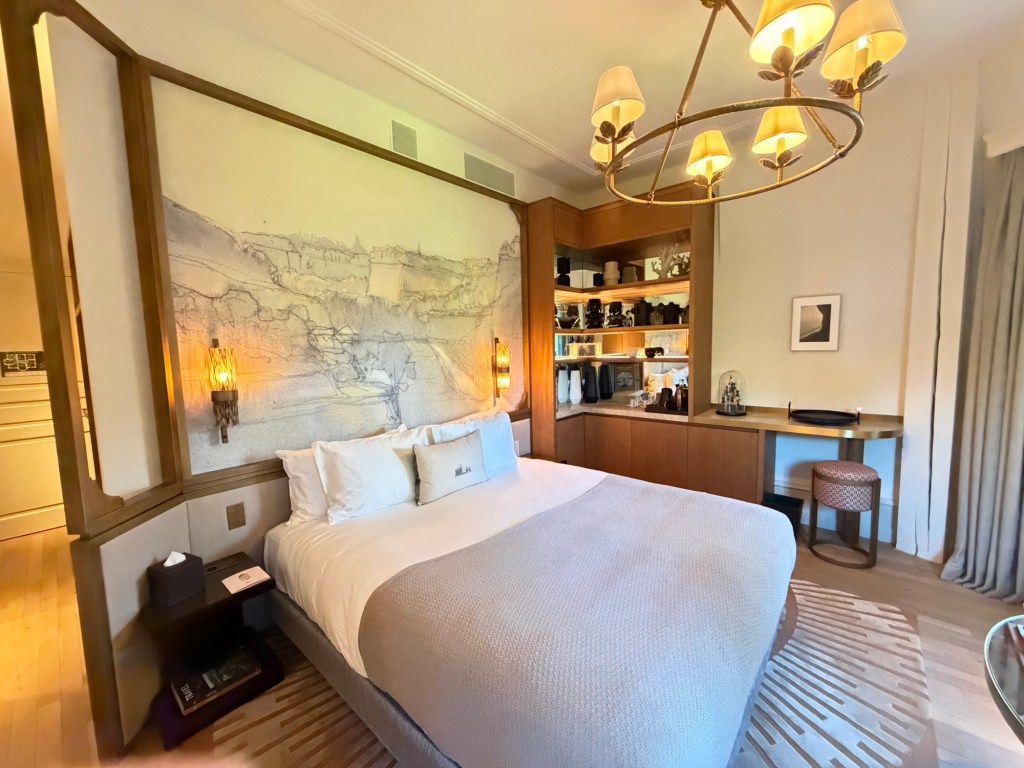
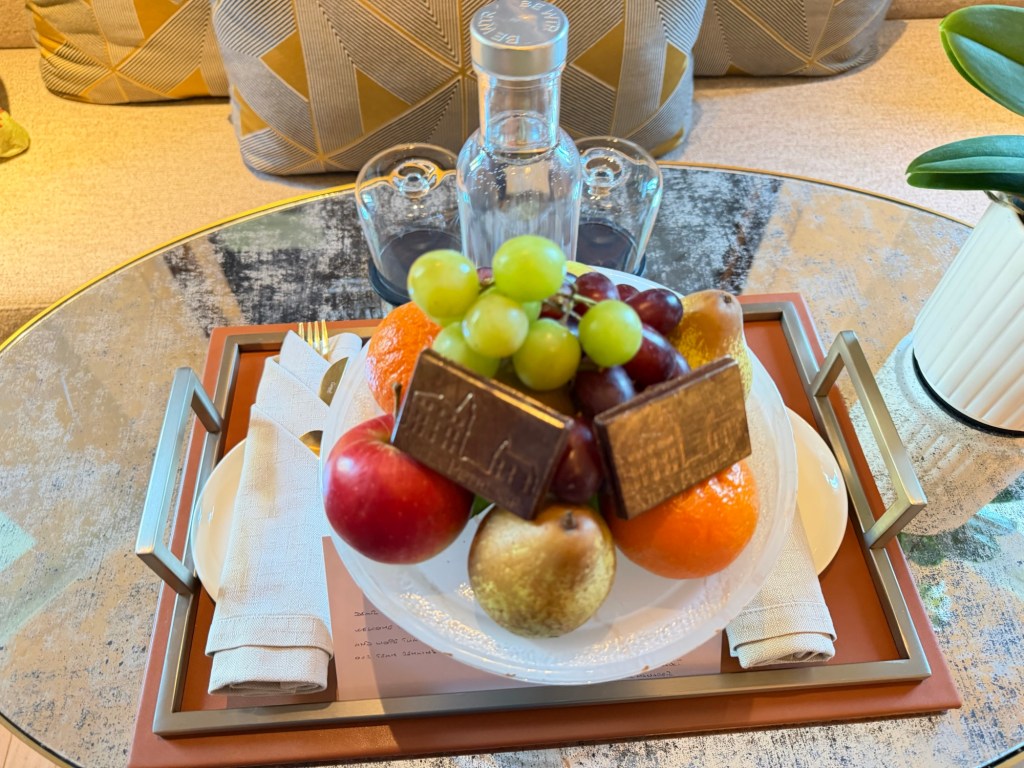
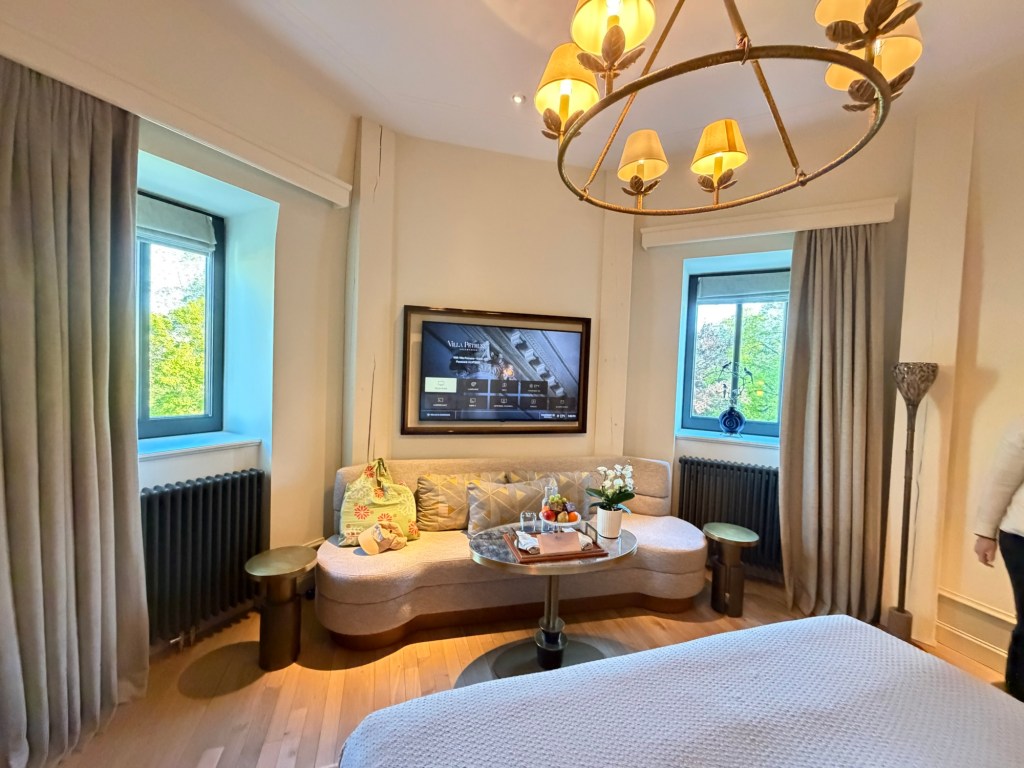
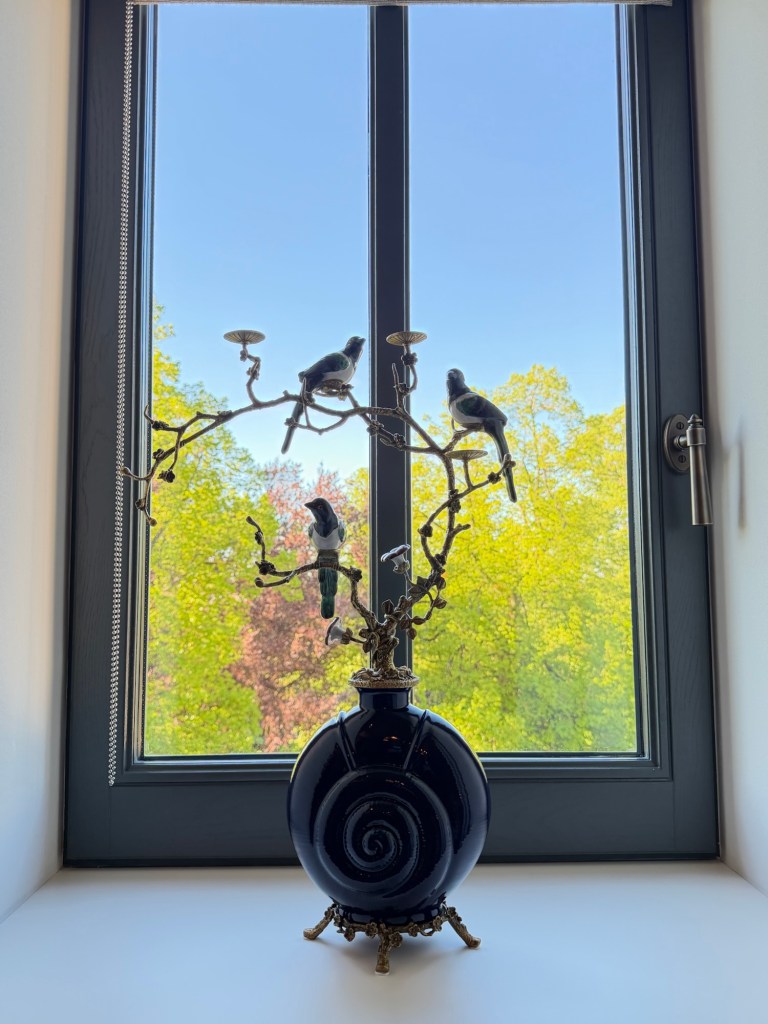
Waiting for us was a lovely welcome tray filled with fresh fruit and chocolates, a small but gracious touch that immediately made us feel at home. The sitting area was especially inviting, with curved modern furnishings and large windows that brought in the late afternoon light.
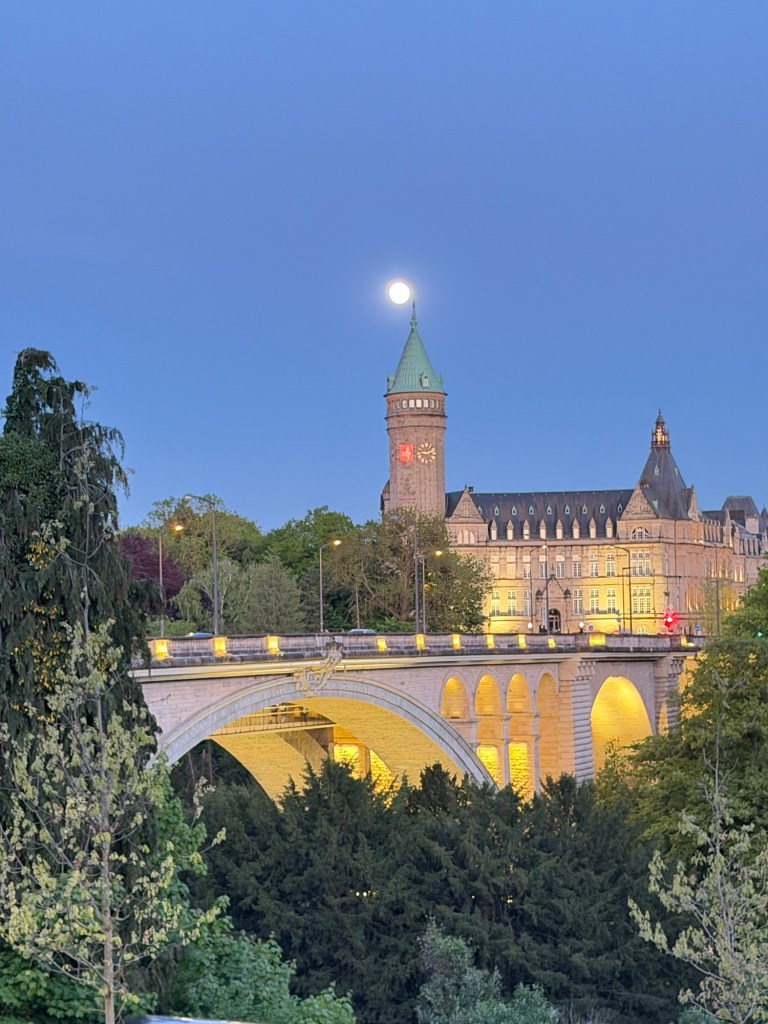
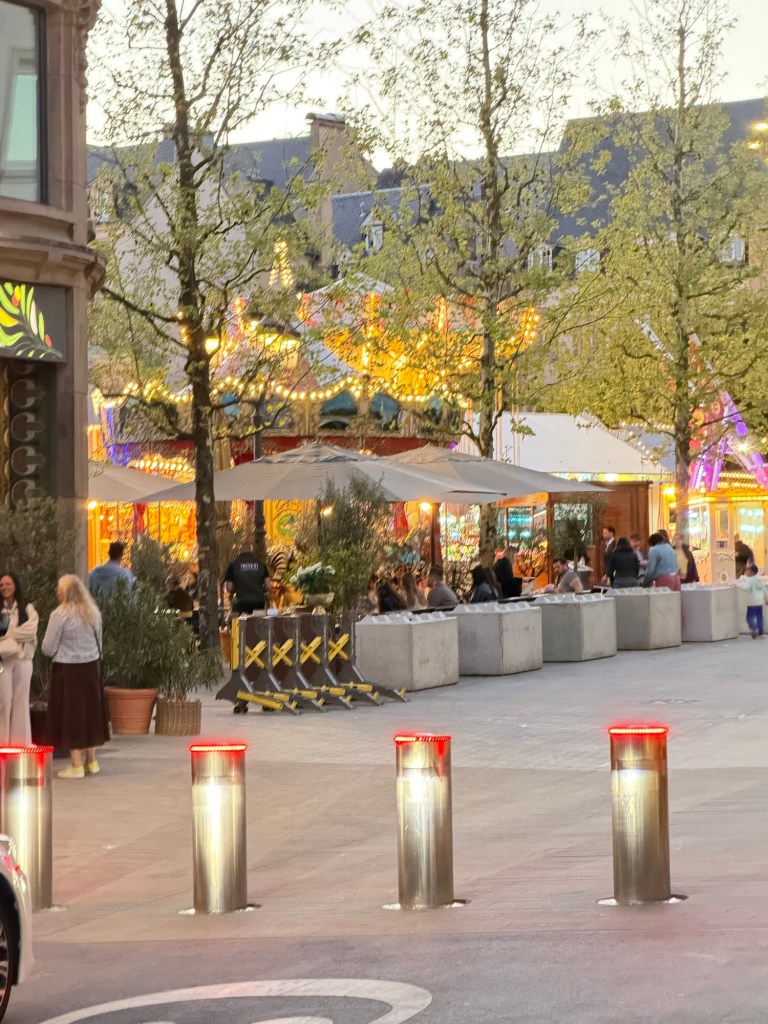
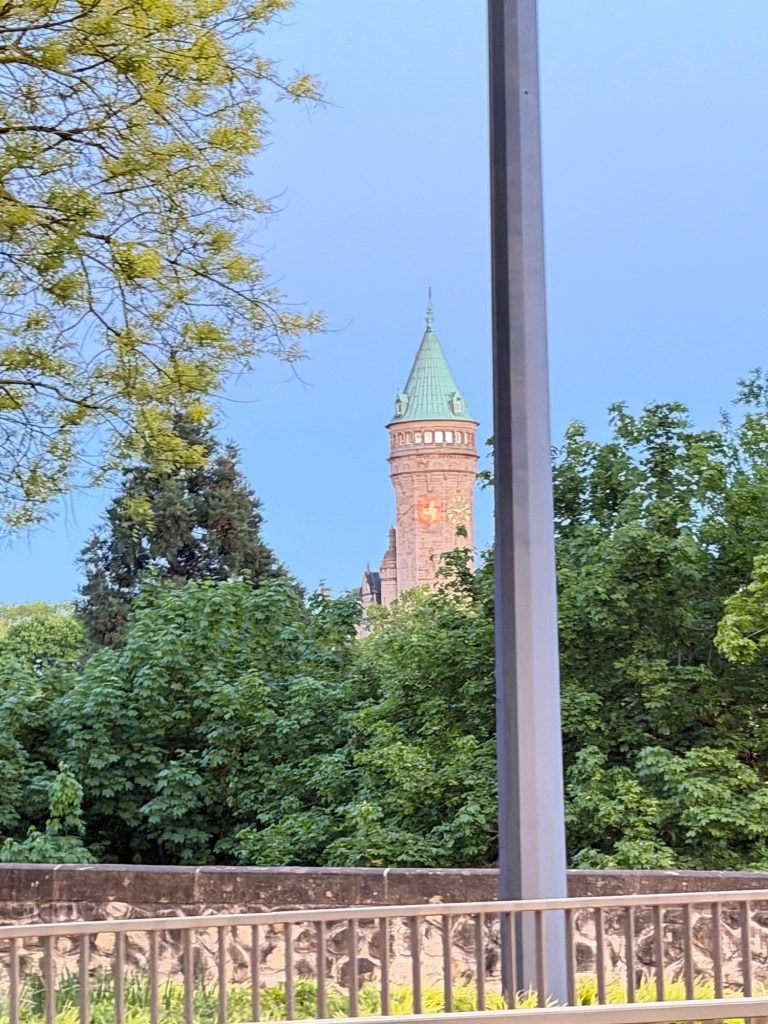
After settling in, we headed out for a dinner and an evening walk through Luxembourg City. The city was especially beautiful at dusk, with bridges, stone buildings, and illuminated towers rising above the deep valleys below. On our walk back to the hotel, we stopped several times simply to take in the views, including the glowing arches of the bridge and the beautifully lit historic buildings under the moonlit sky. It was one of those evenings that perfectly captures the quiet elegance of Luxembourg City.
After breakfast, we left Luxembourg City with our guide, Andre Pierre Rosa, and Salah once again at the wheel, heading north through the rolling Luxembourg countryside toward our first stop, the famed Vianden Castle. Andre was an old-school guide, impeccably dressed in a jacket and ascot, with the gracious manner and quiet formality of old Luxembourg — the sort of man who seemed almost analog in a digital age, preferring paper maps to cell phones and GPS.
Vianden Castle
As we approached the town of Vianden, the castle gradually appeared high above the valley, rising dramatically over the rooftops and forests below. Andre explained that Vianden Castle is considered one of the most important and best-restored feudal castles in Europe, with origins dating back to between the 11th and 14th centuries.
Before entering Vianden Castle, we watched a short introductory film that brought the history of the place to life. What looks today like a perfectly preserved medieval castle was, at one point, nearly a ruin before Luxembourg painstakingly restored it over decades.
The castle itself dates back to the Middle Ages and was once home to the powerful Counts of Vianden, among the most influential noble families in the region. Standing inside afterward, it gave the entire visit a different perspective — less like touring a museum, and more like stepping into a thousand years of Luxembourg history.
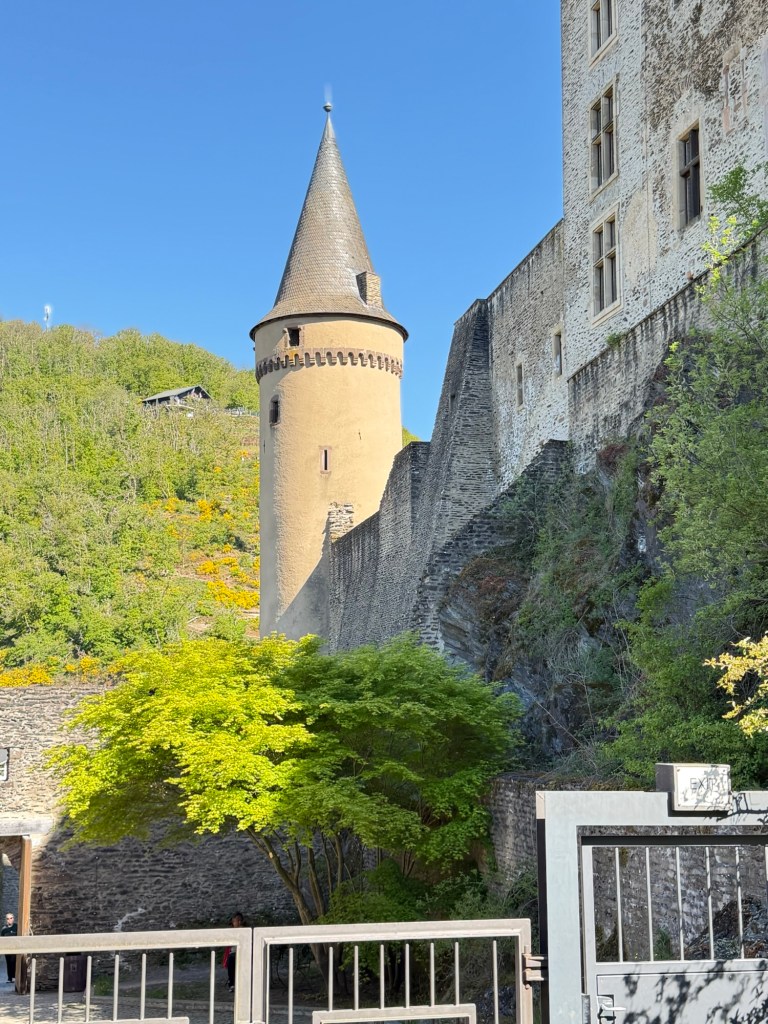
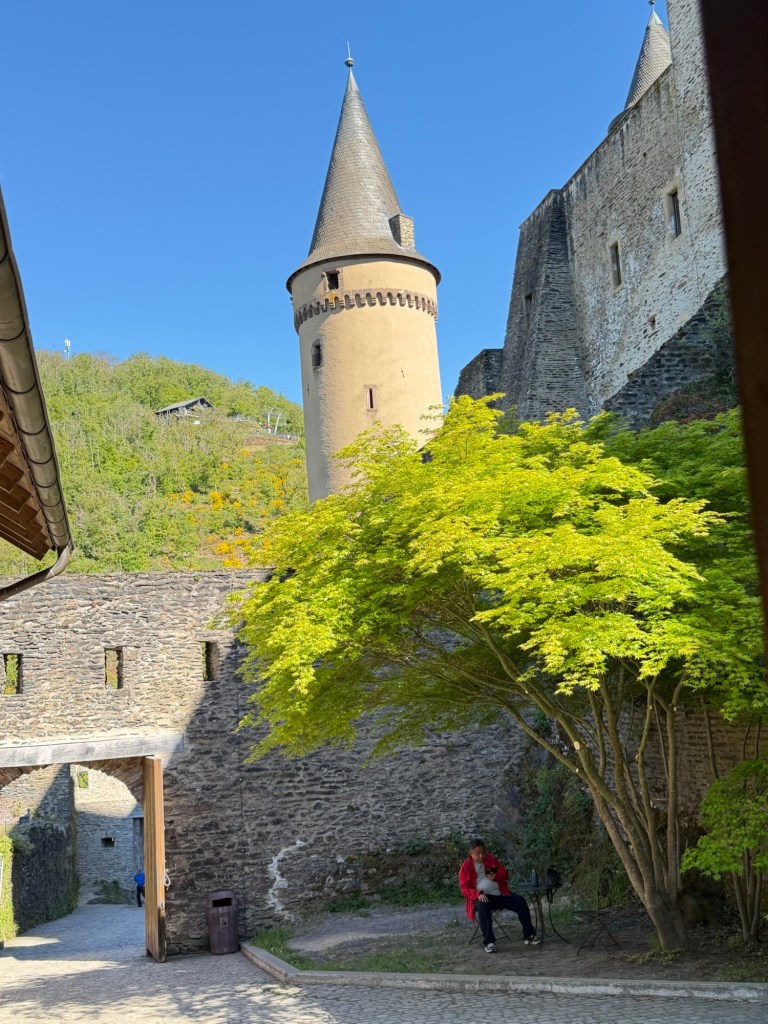
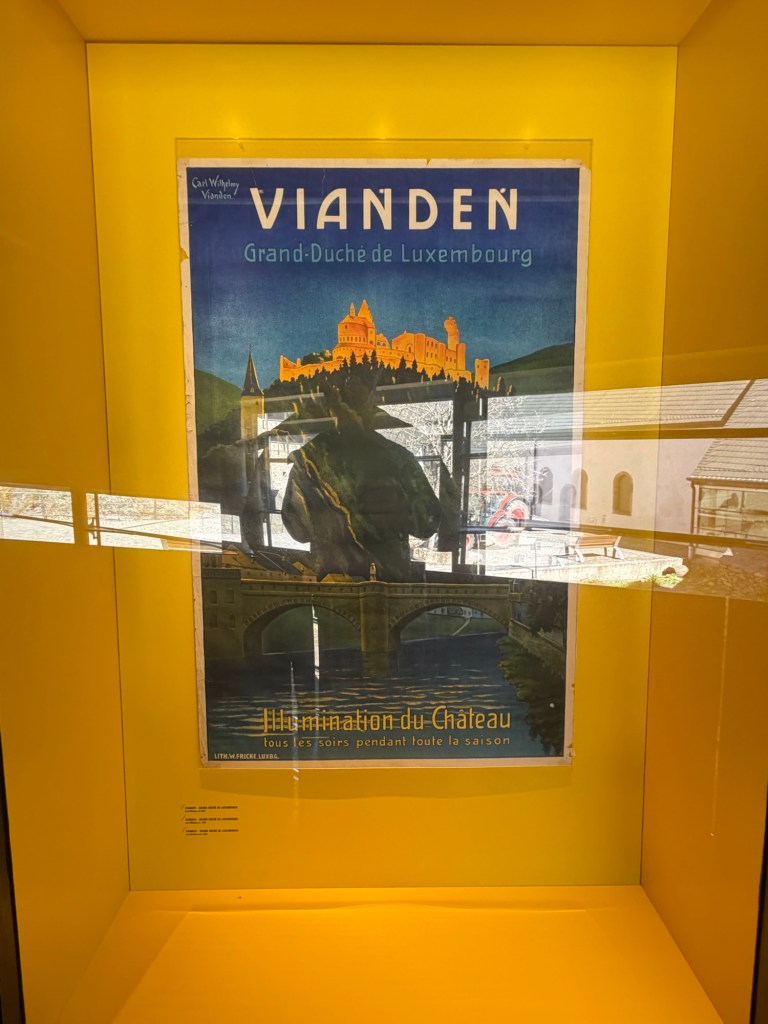
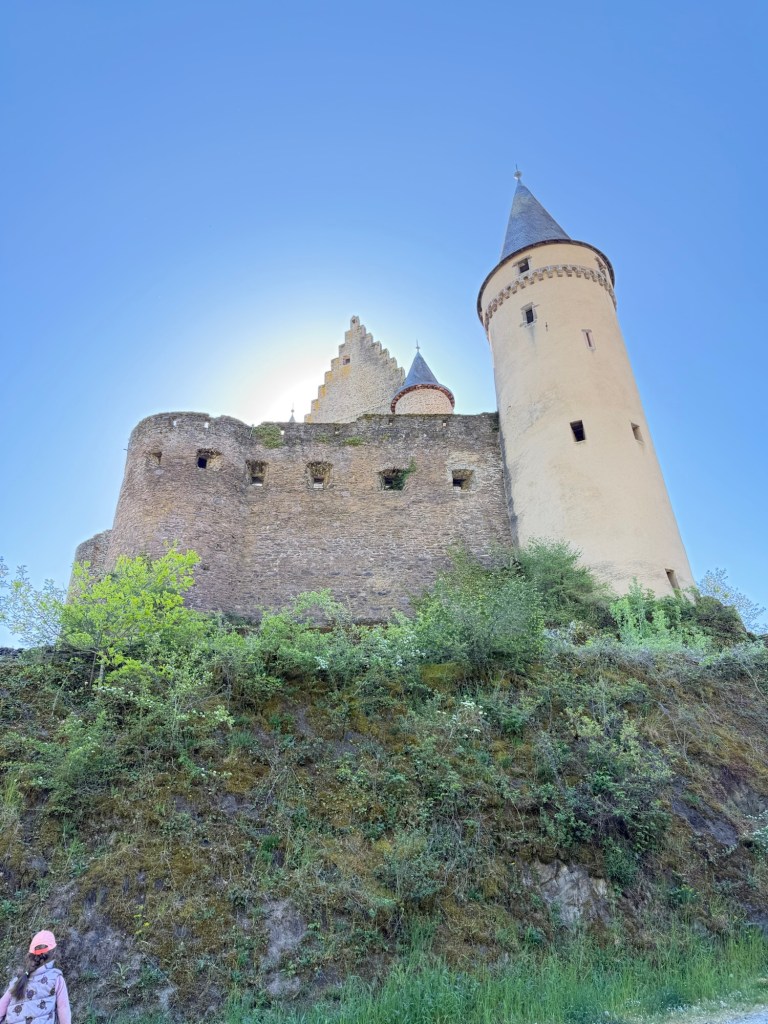
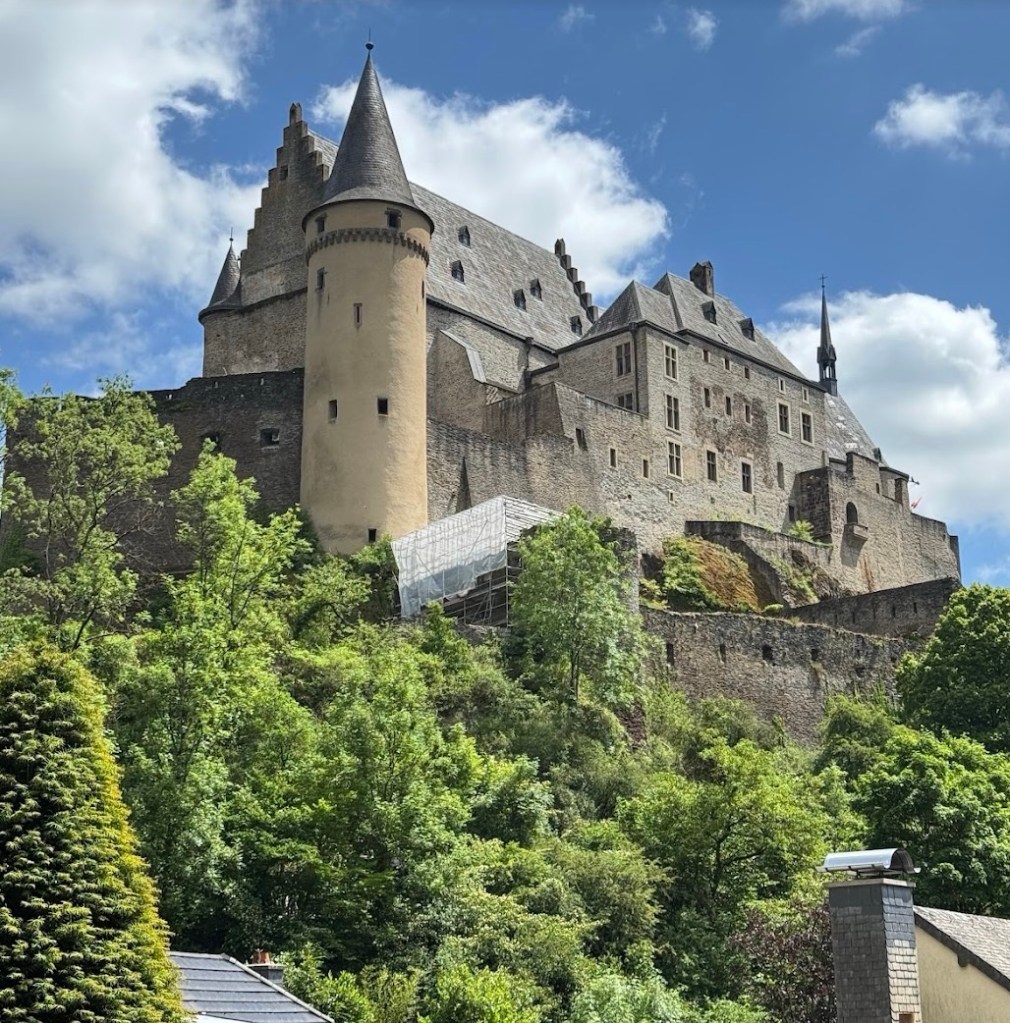
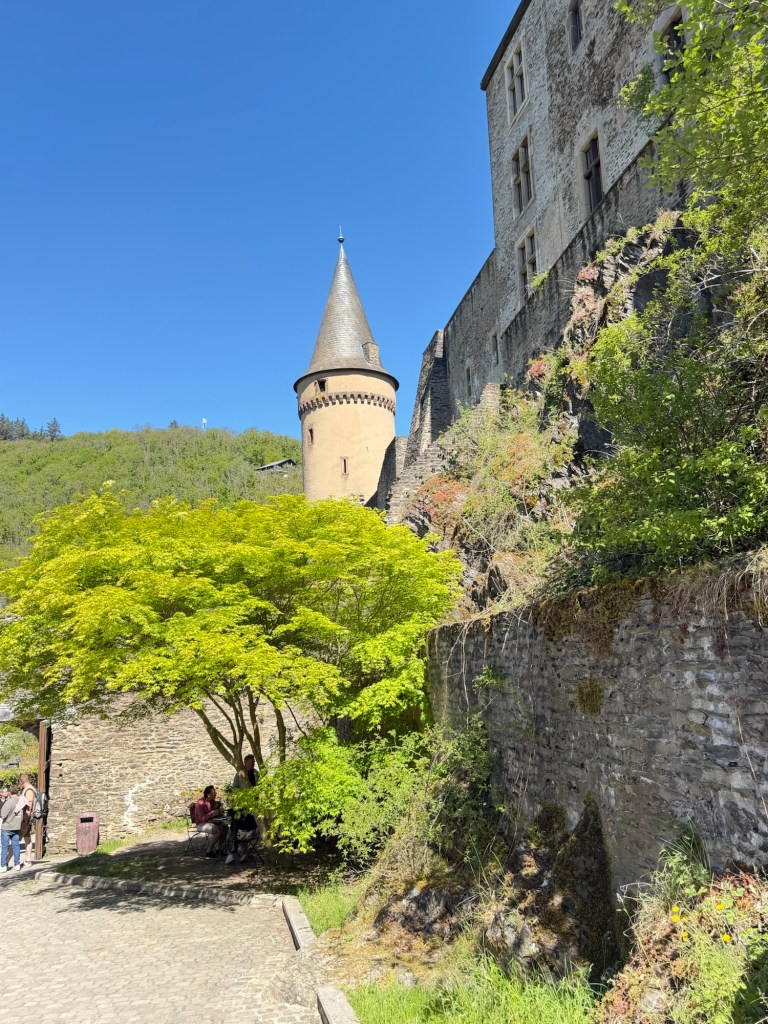
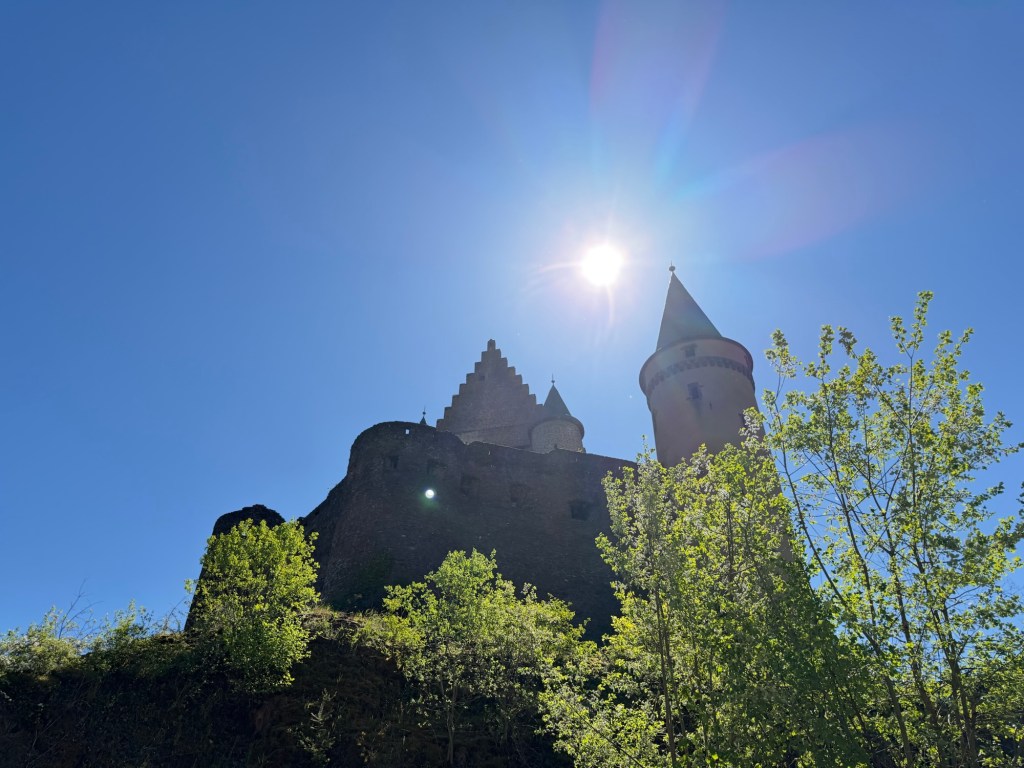
Inside the castle, massive stone walls, courtyards, towers, and medieval halls brought Luxembourg’s history vividly to life. Suits of armor, historic displays, and panoramic views over the valley made it easy to imagine the strategic importance the fortress once held. At the same time, the setting was remarkably peaceful, surrounded by rolling green hills and forests under brilliant blue skies.
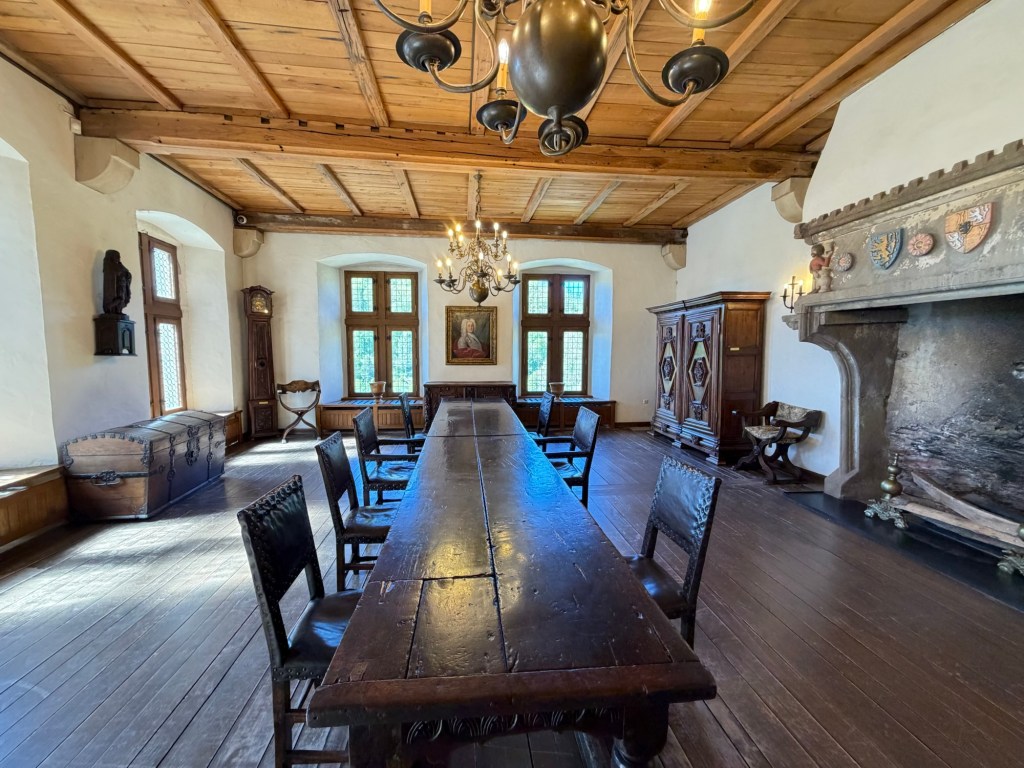
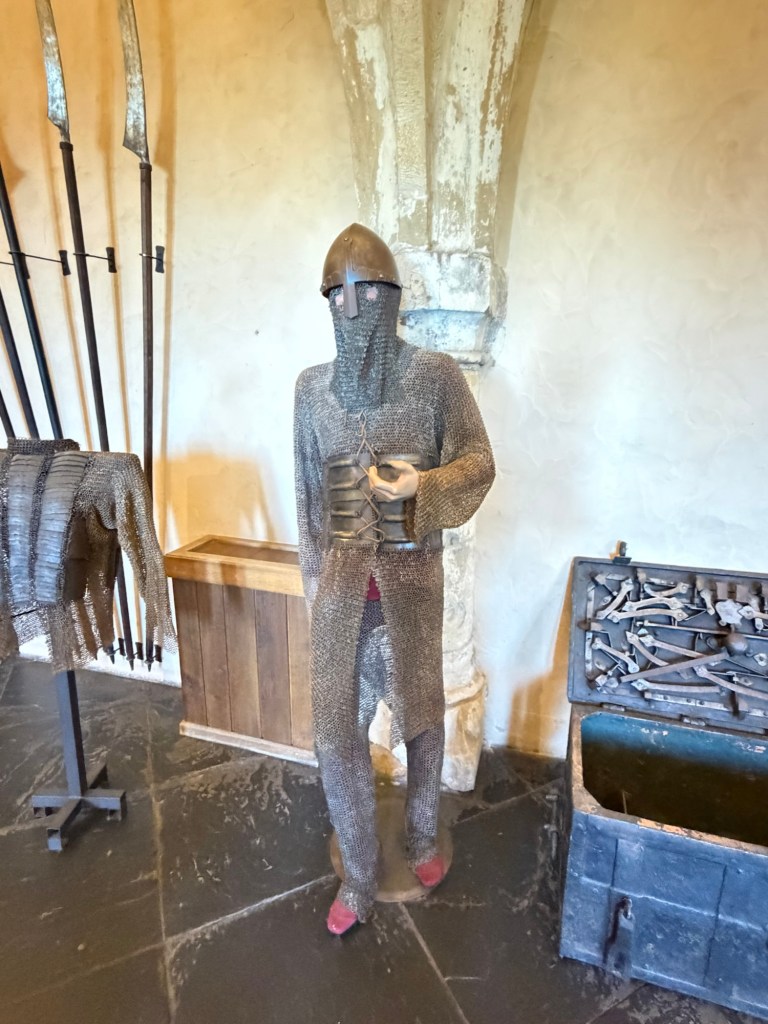
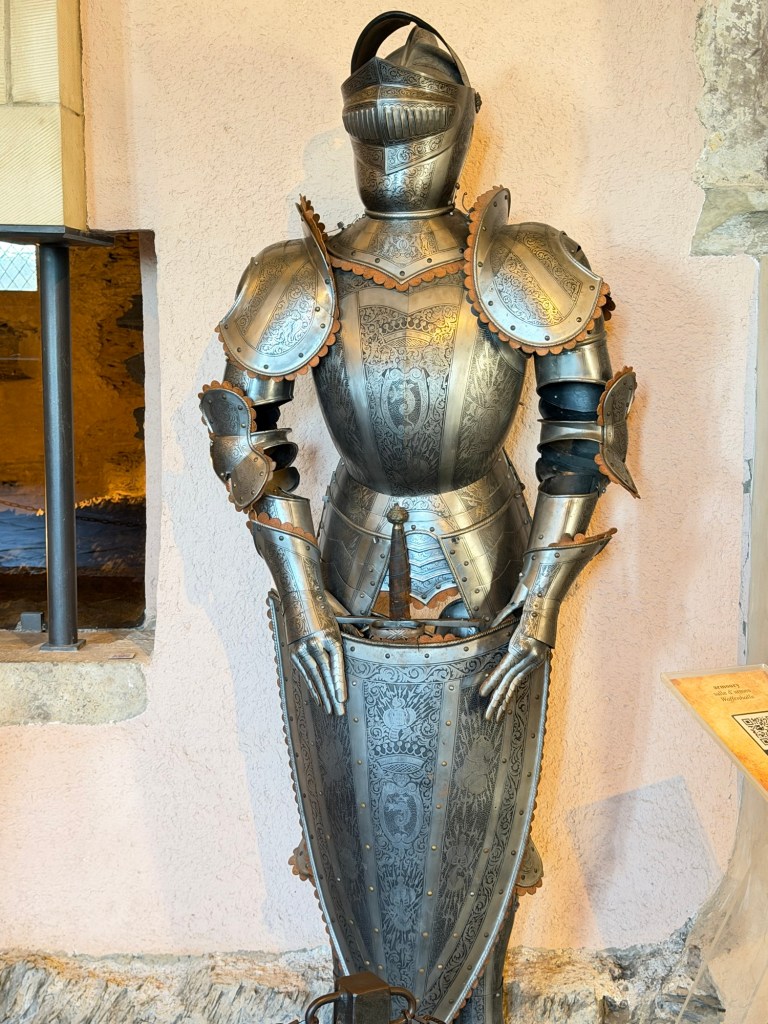
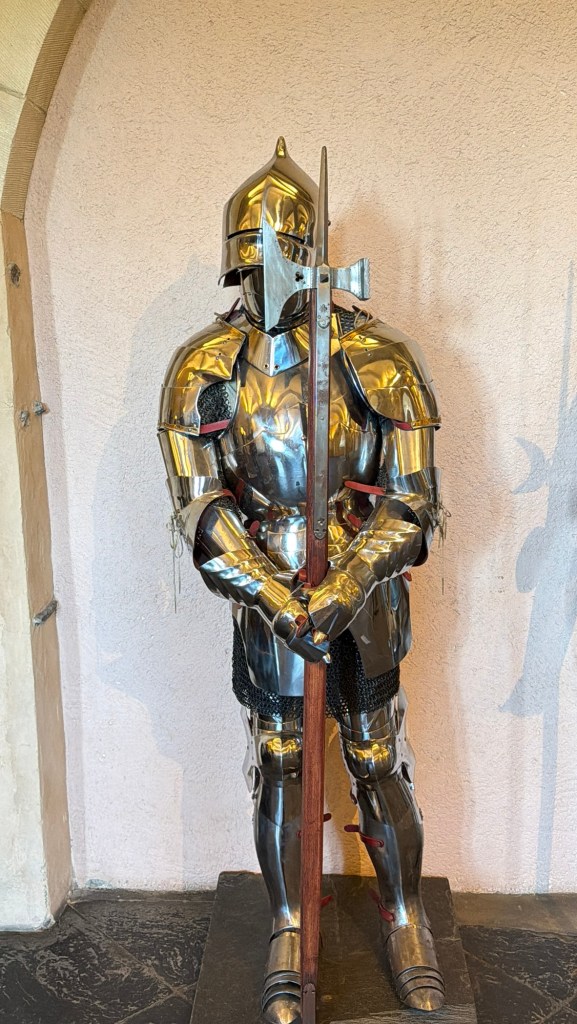
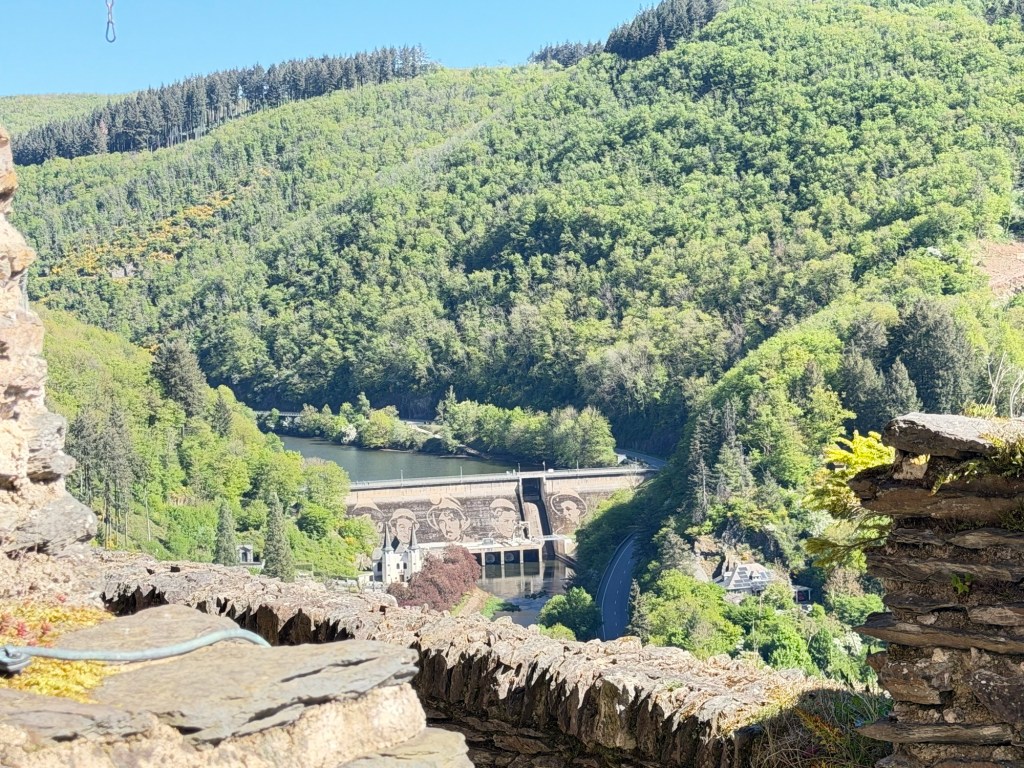
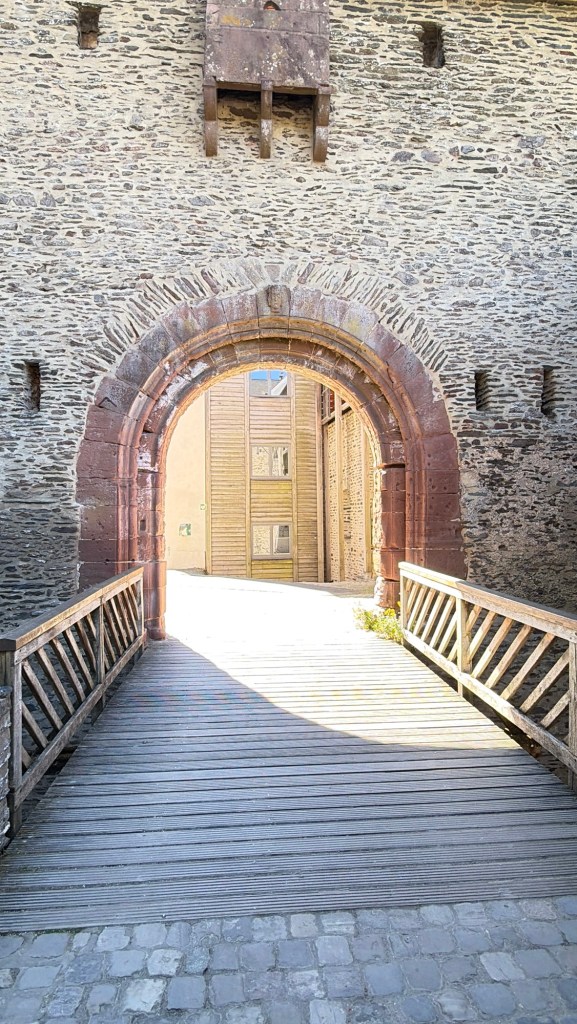
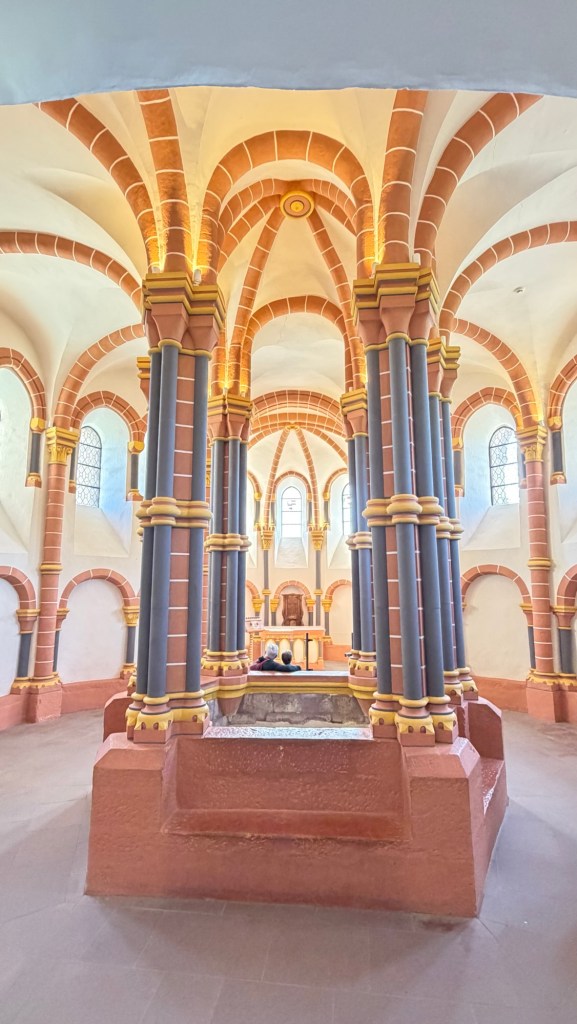
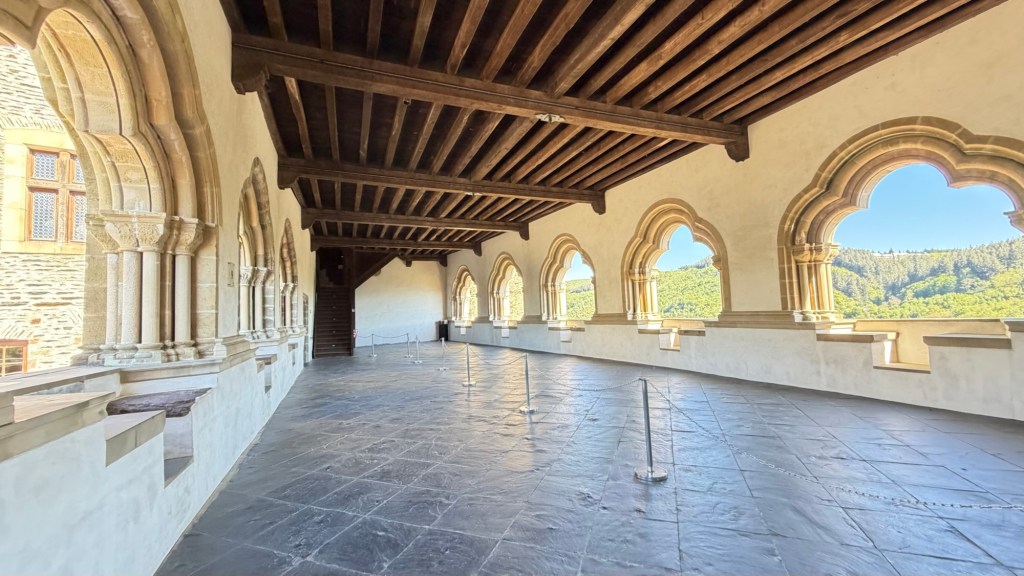
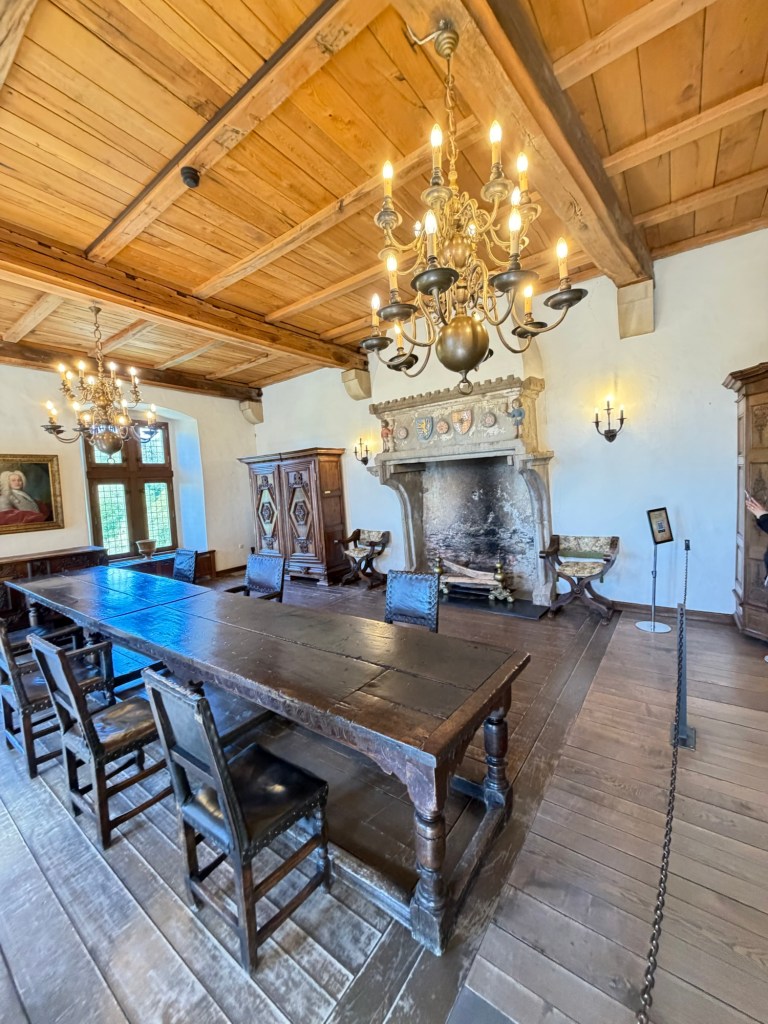
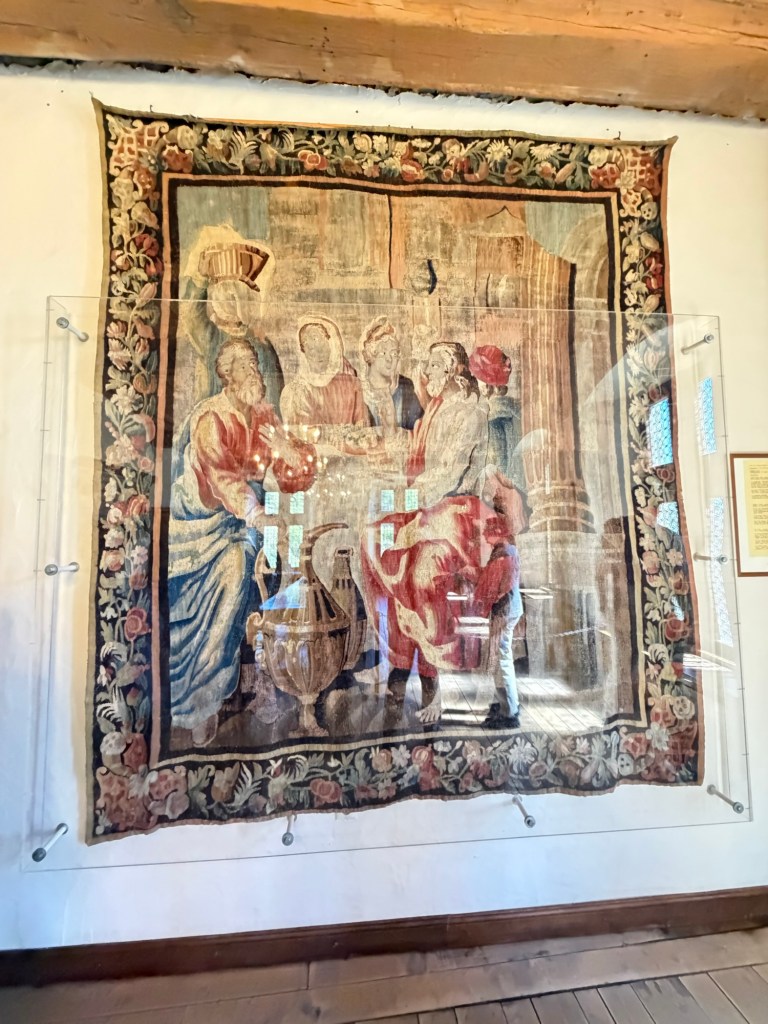
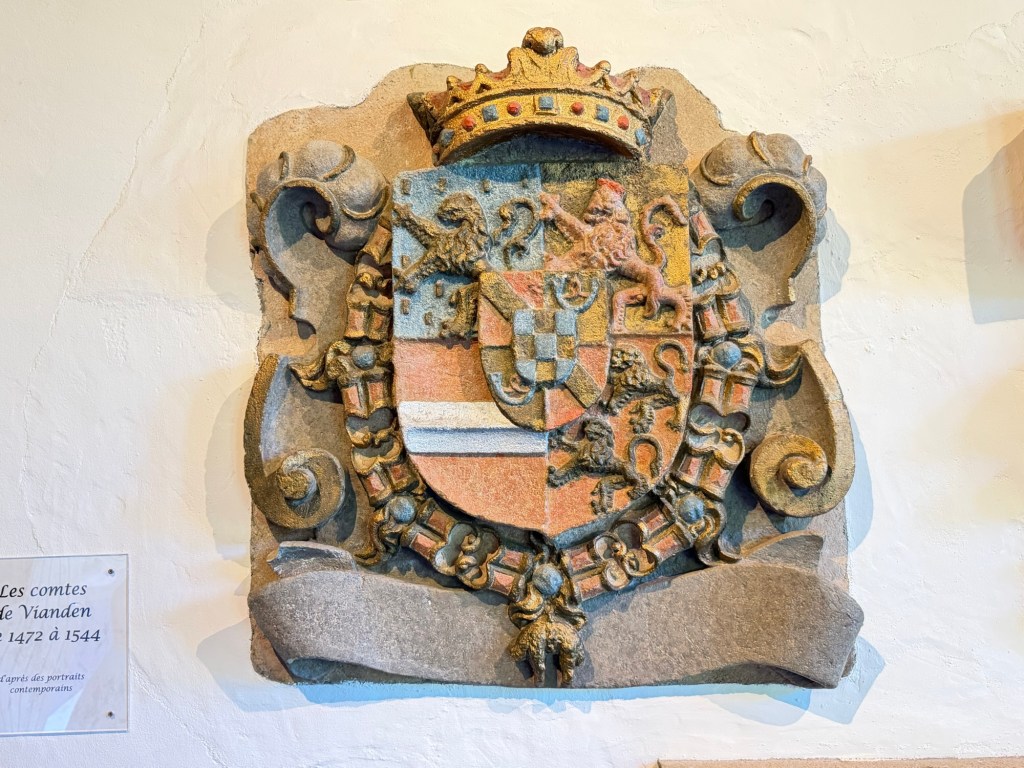
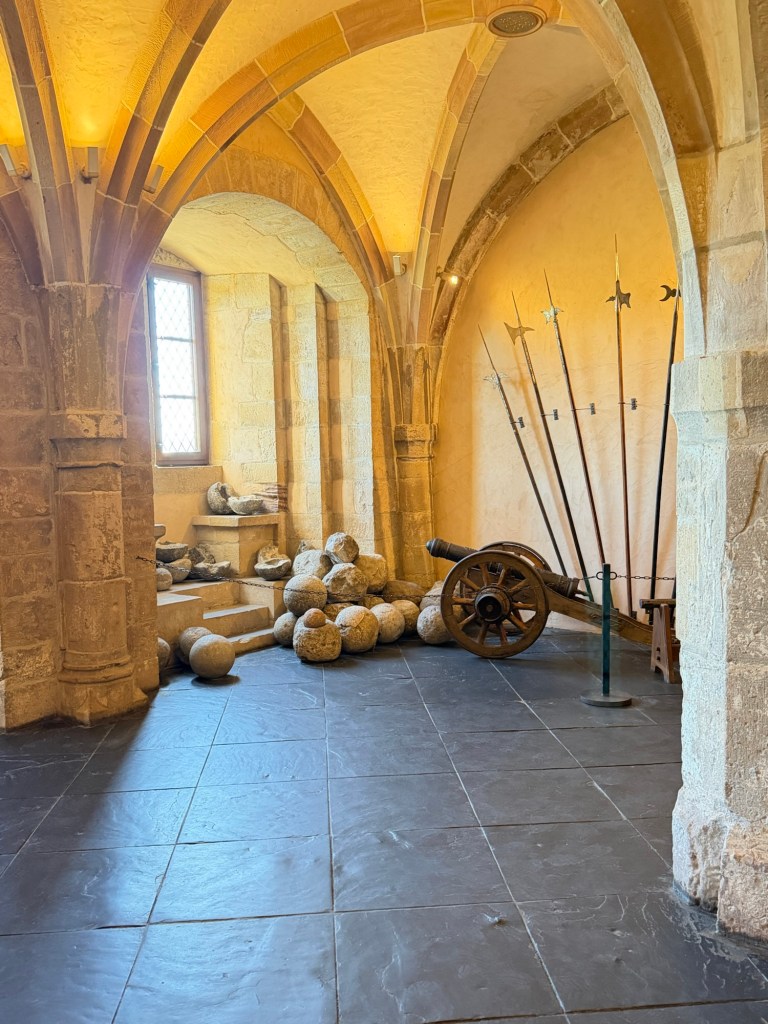
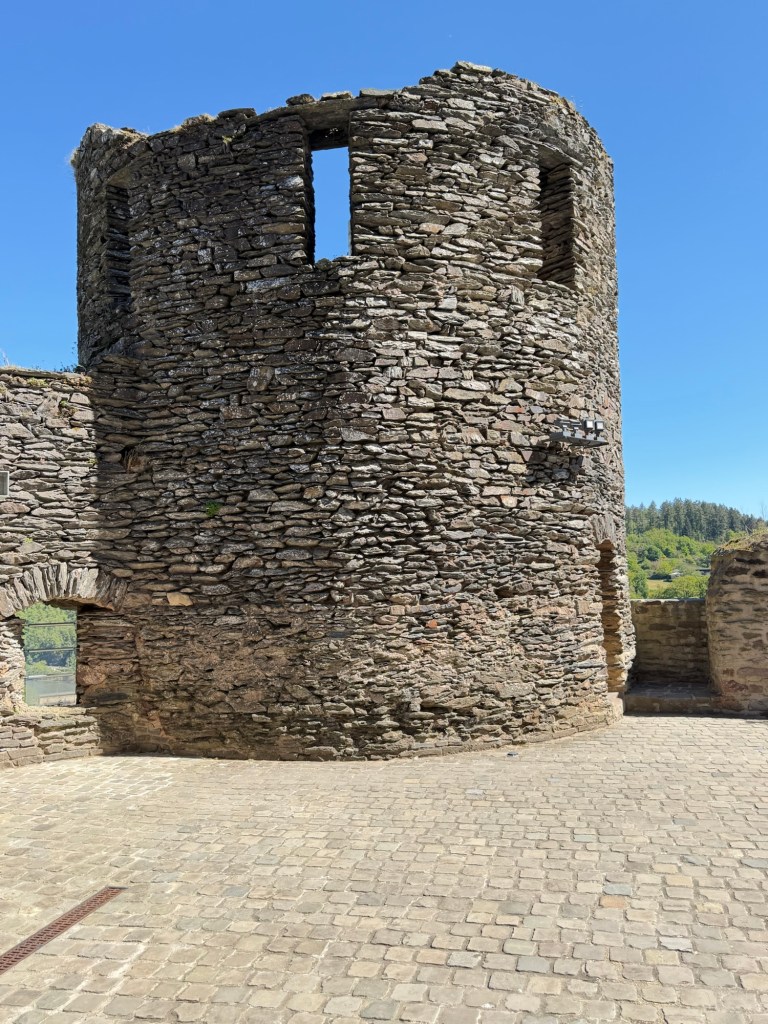
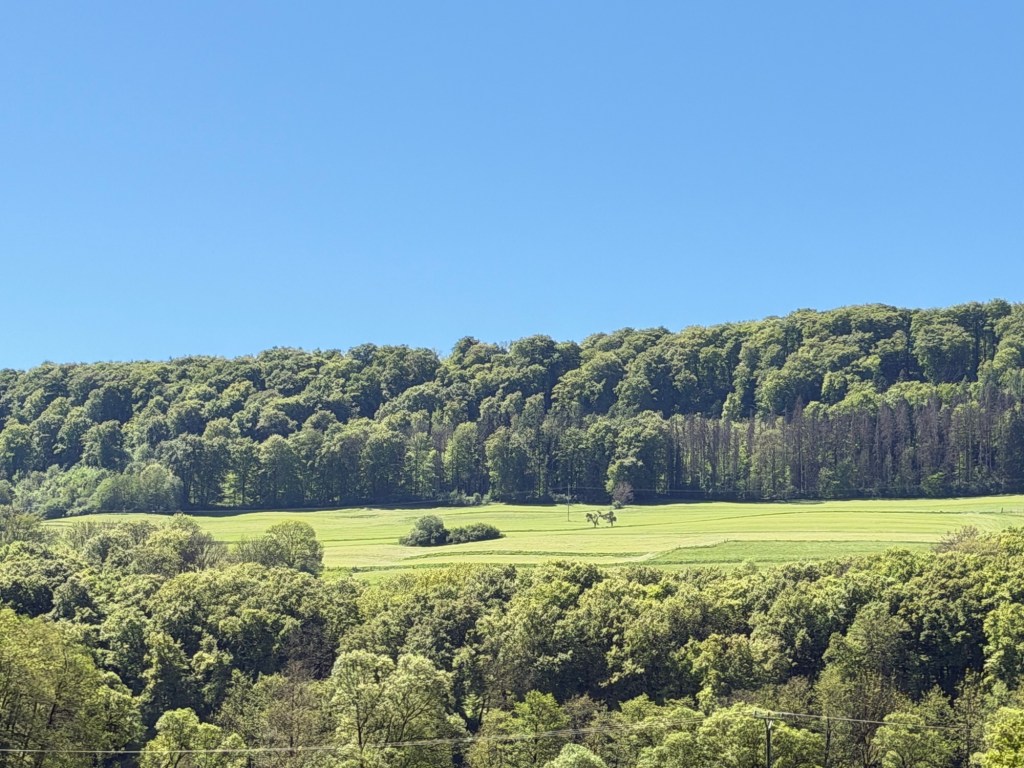
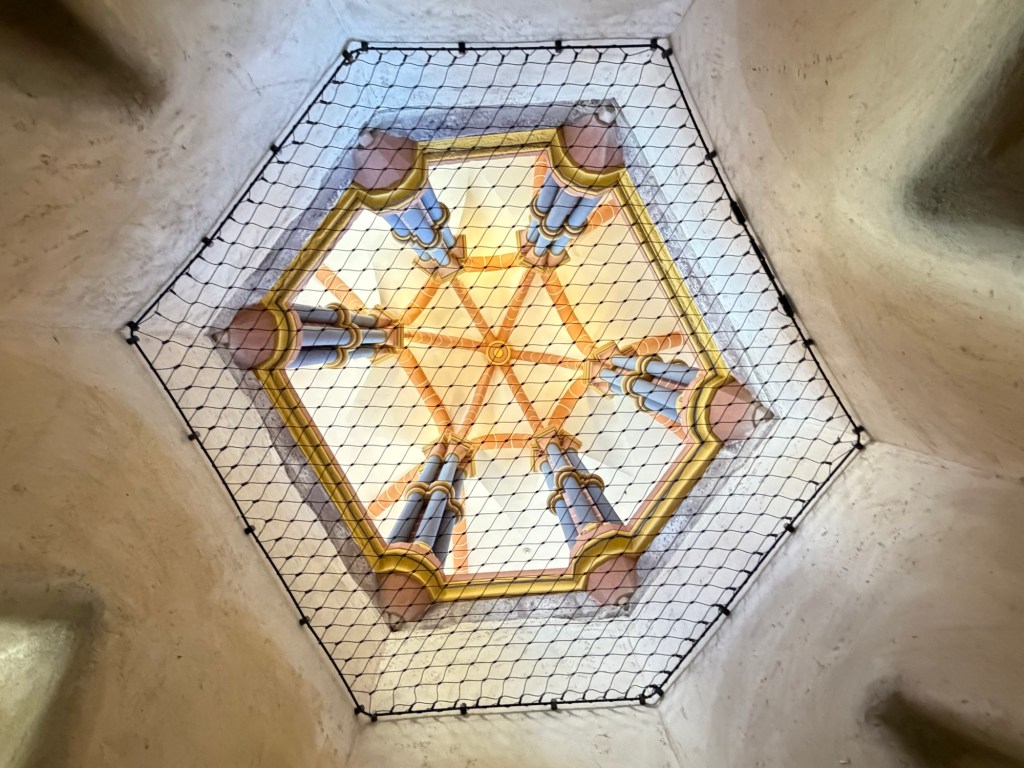
Walking the ramparts and courtyards, it was clear why Vianden Castle remains one of Luxembourg’s great treasures.
Beaufort Castle
Our next stop brought us deeper into Luxembourg’s medieval past as we arrived at the hauntingly beautiful ruins of Beaufort Castle. Surrounded by forests and rolling countryside, the stone fortress seemed to emerge naturally from the landscape itself, its weathered towers and crumbling walls telling the story of centuries of battles, noble families, and changing fortunes.
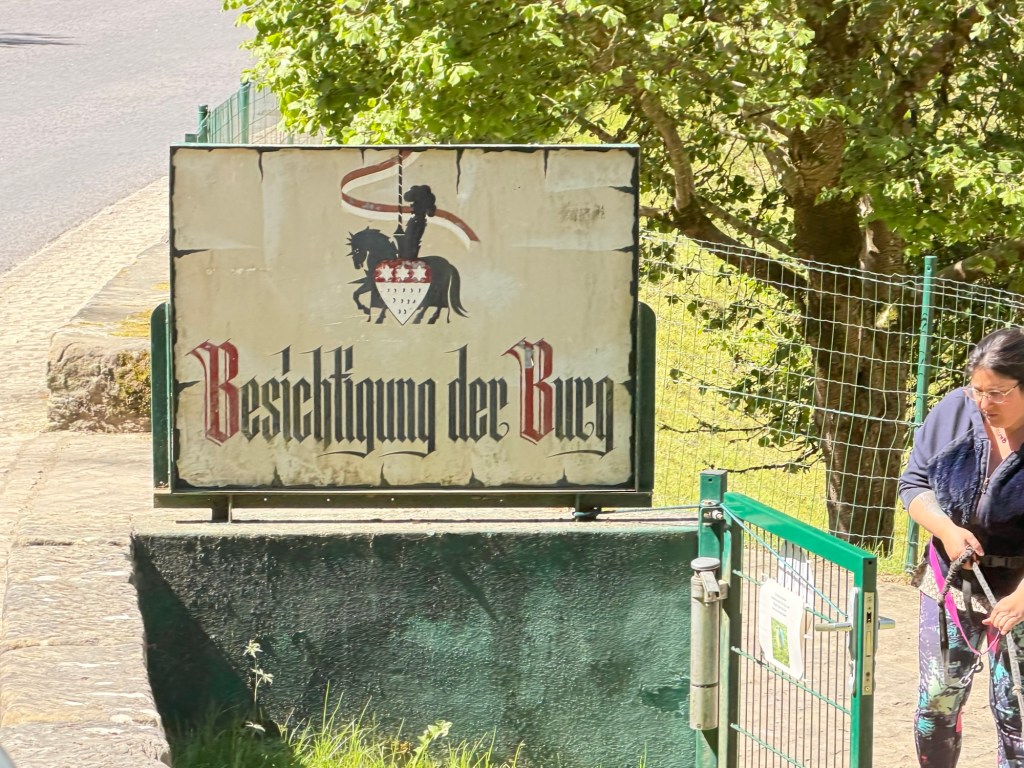
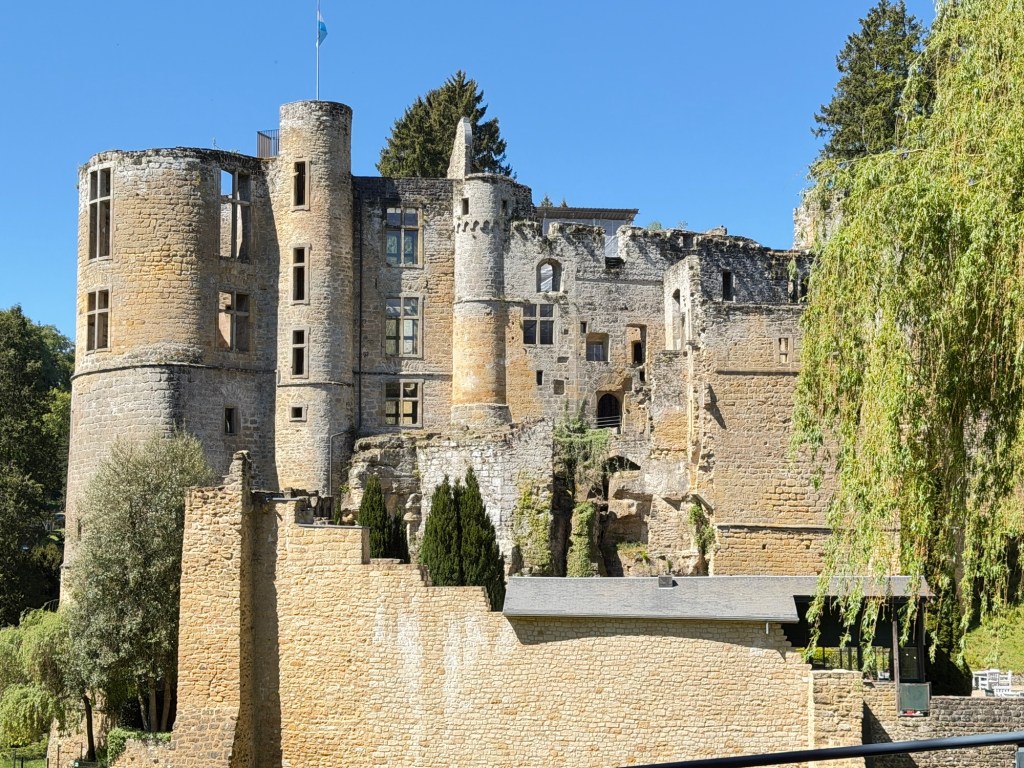
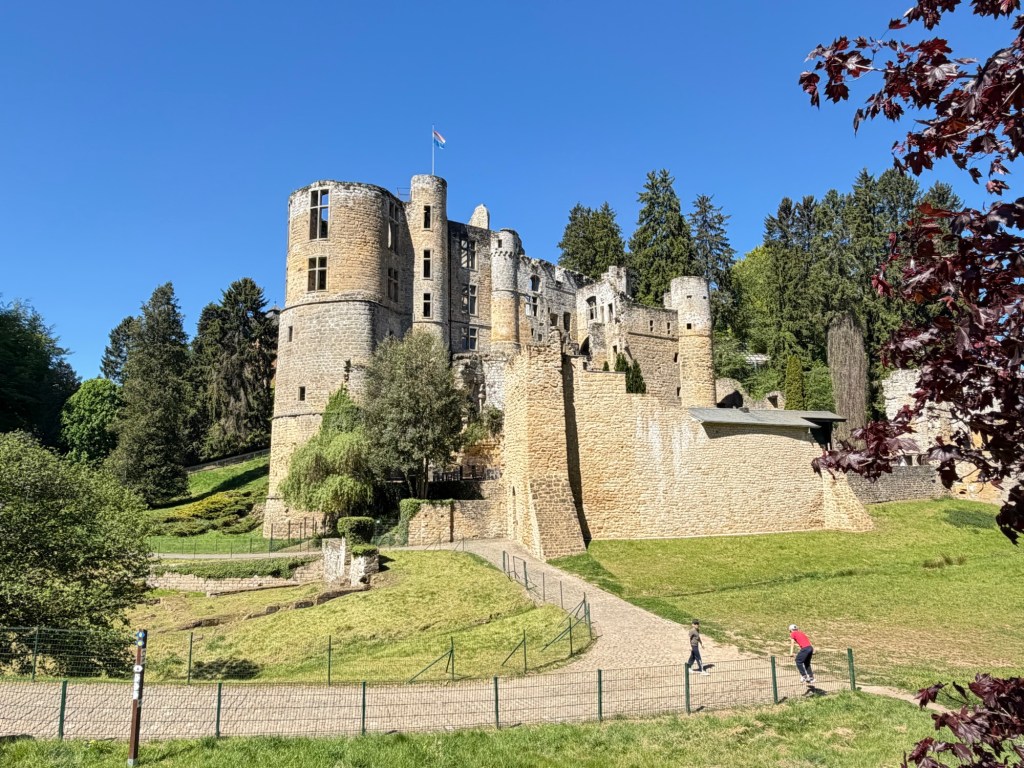
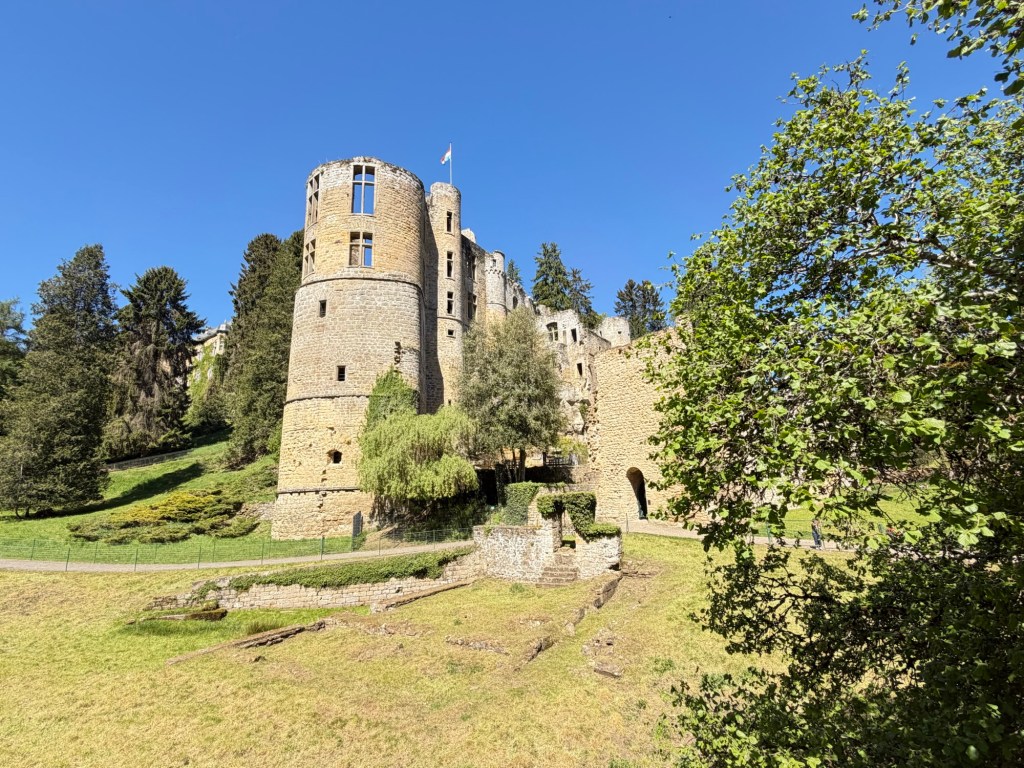
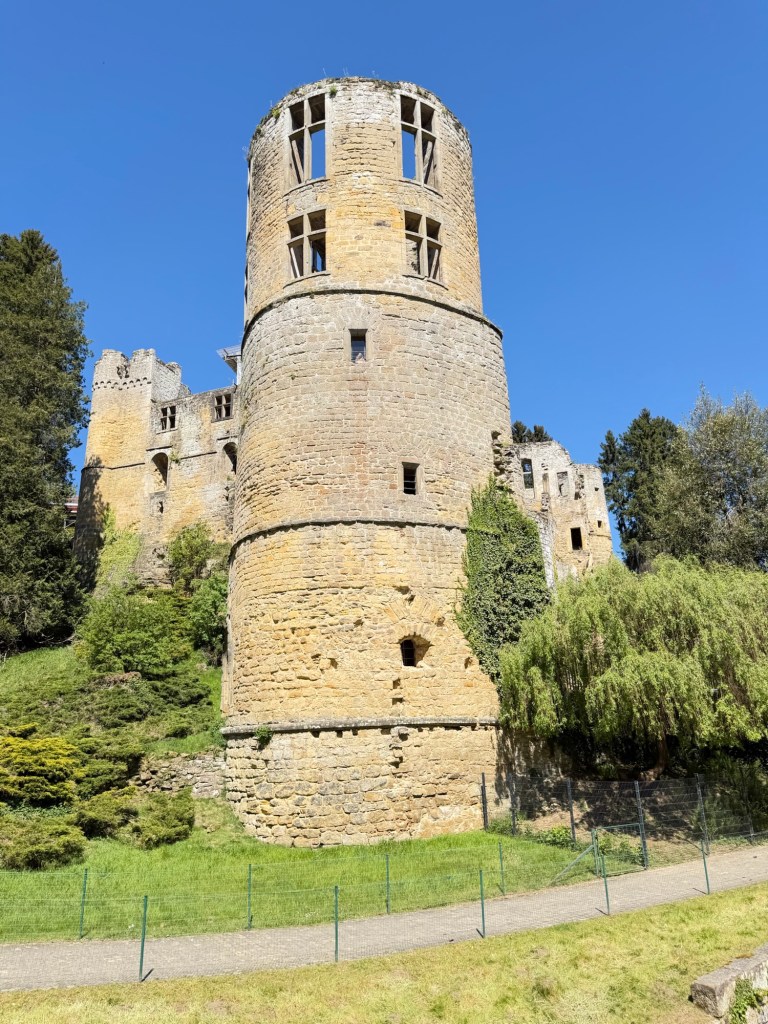
Unlike the more fully restored grandeur of Vianden Castle, Beaufort had a far more romantic and atmospheric feel. Walking through the ruins, with sunlight pouring through empty windows and vines creeping along ancient stone walls, felt almost cinematic. Andre explained how portions of the castle date back to the 11th century, while later Renaissance additions reflected the changing styles and needs of its aristocratic owners.
The setting itself was equally memorable. Nestled among trees and open green spaces, the castle had a peaceful quality that contrasted sharply with the defensive role it once played. Massive round towers, surviving stairways, and thick stone ramparts offered glimpses into medieval life while still preserving the feeling of a genuine ruin rather than a polished reconstruction.
It was one of those places where history felt wonderfully tangible — quiet, atmospheric, and deeply connected to the Luxembourg countryside surrounding it.
Trier, Germany
From the forests and castles of Luxembourg, we crossed into Germany and arrived in the ancient Roman city of Trier, one of the oldest cities in Germany and a place where layers of Roman, medieval, and modern history coexist almost effortlessly.
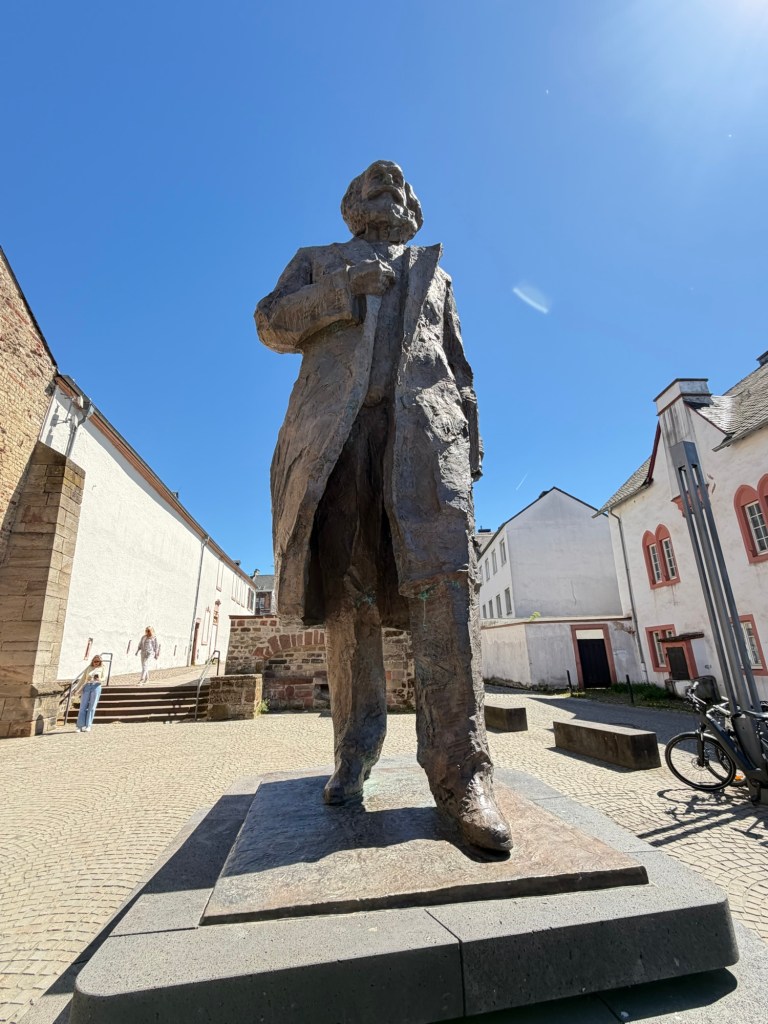
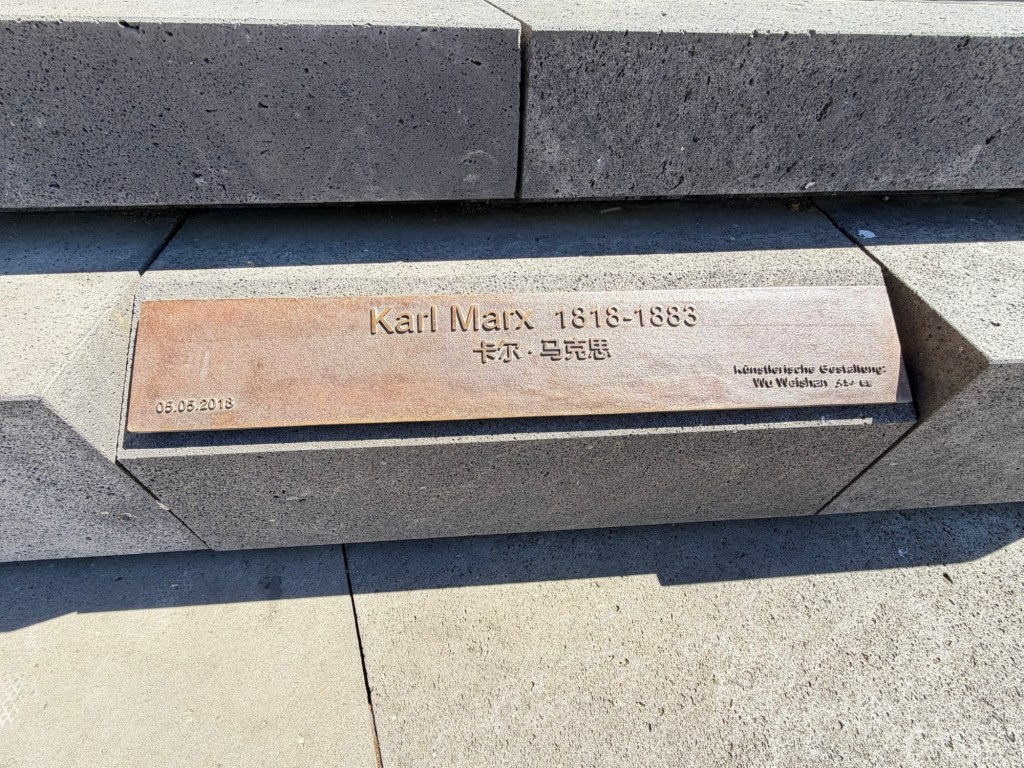
One of our first stops was the imposing statue of Karl Marx (donated by the Chinese), who was born in Trier in 1818. Towering over the square, the monument served as a reminder of the city’s connection to one of history’s most influential and controversial political thinkers.
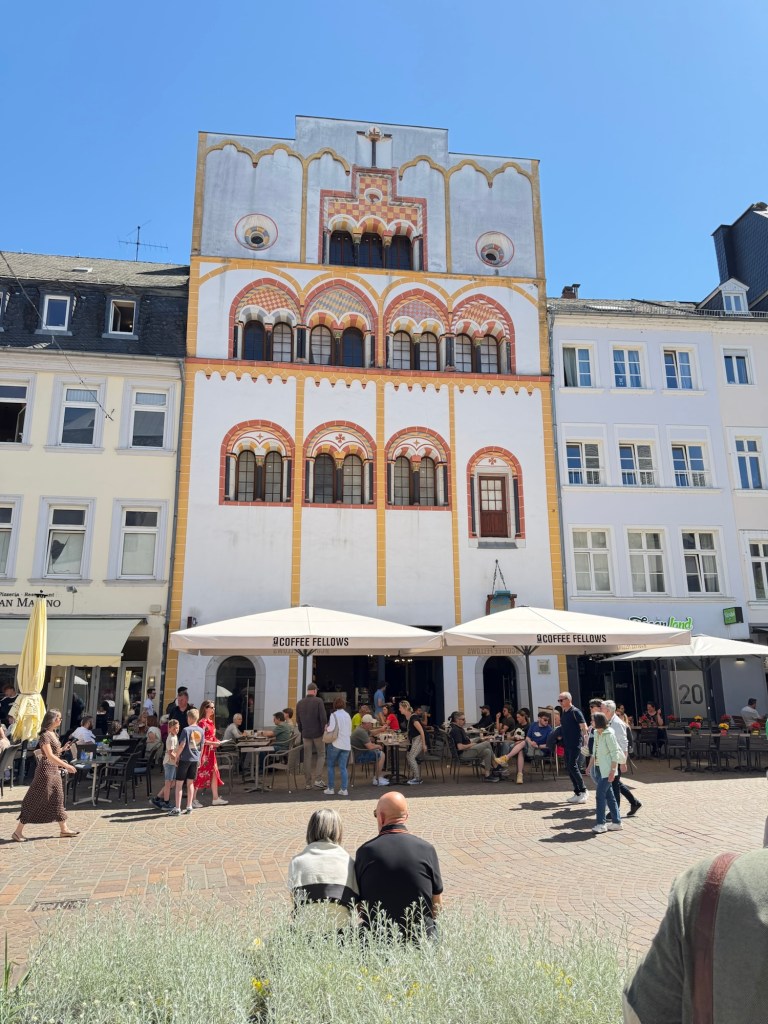
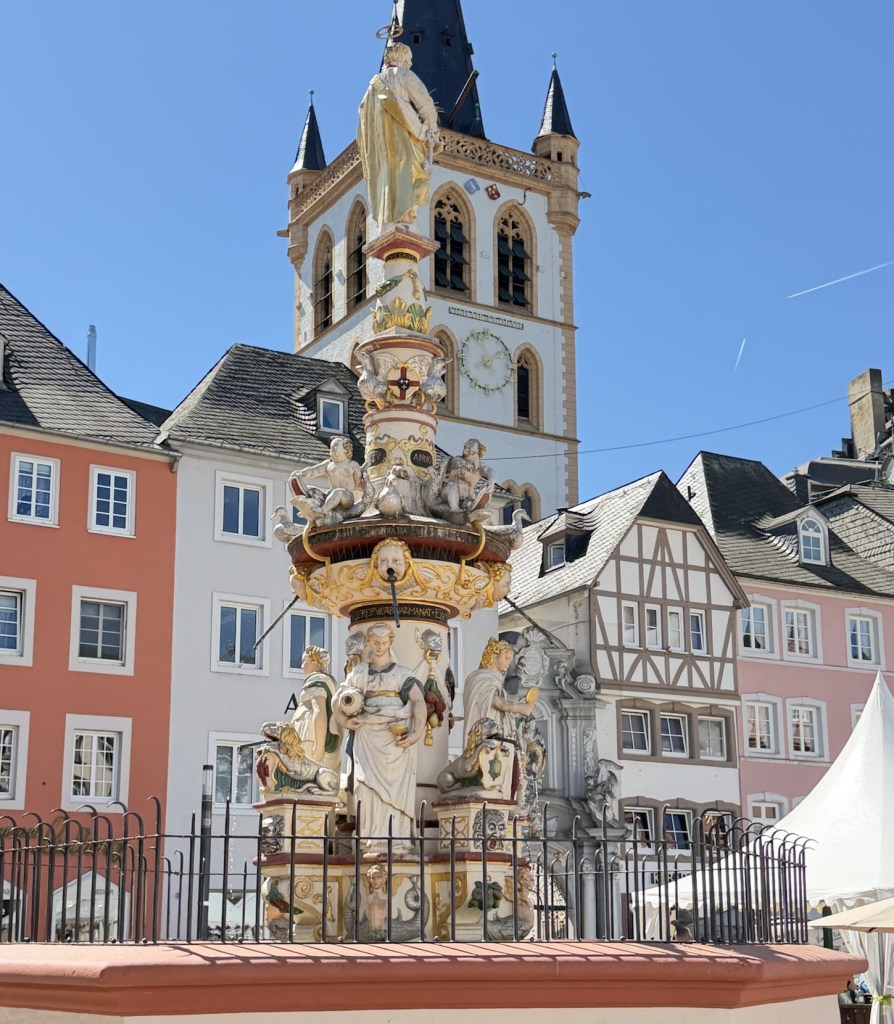
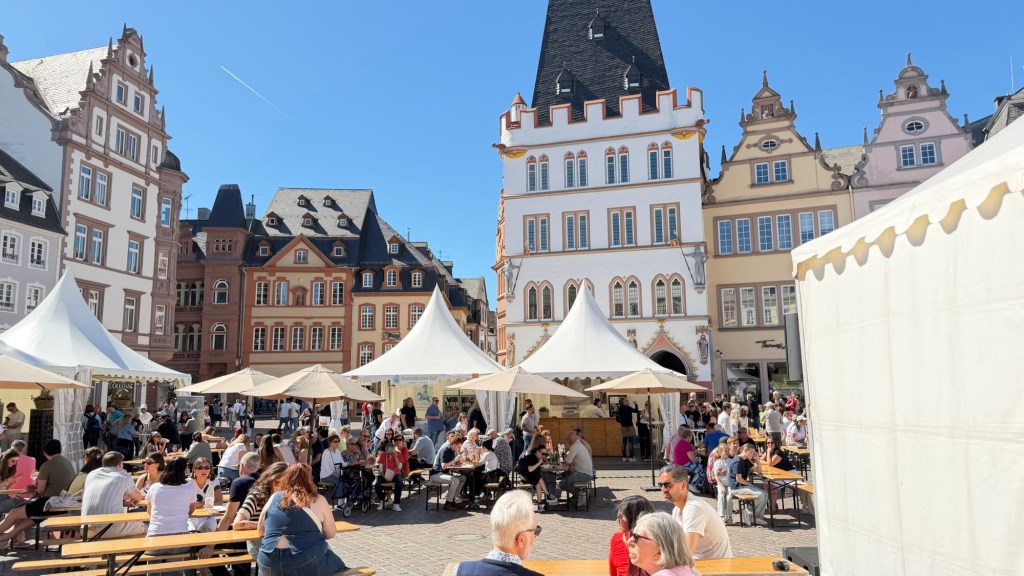
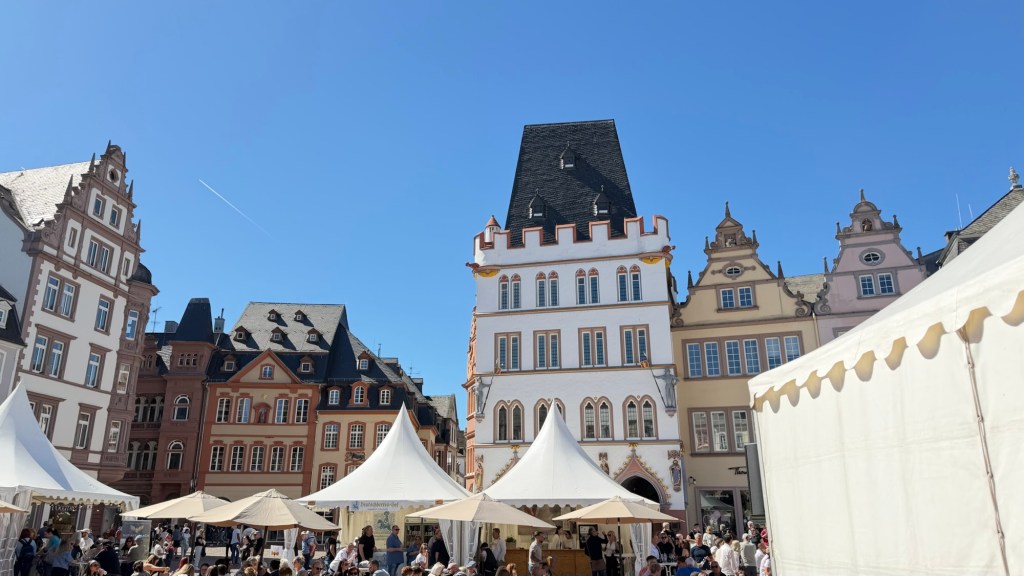
From there we passed through the main market square in Trier — the historic Hauptmarkt. It’s one of Germany’s oldest city squares and was the medieval commercial center of Trier. The colorful façade of the Steipe (red arches) overlooking Trier’s Hauptmarkt was one of the highlights: a beautifully restored medieval merchant building standing at the heart of a square that has been alive with trade and conversation for hundreds of years.
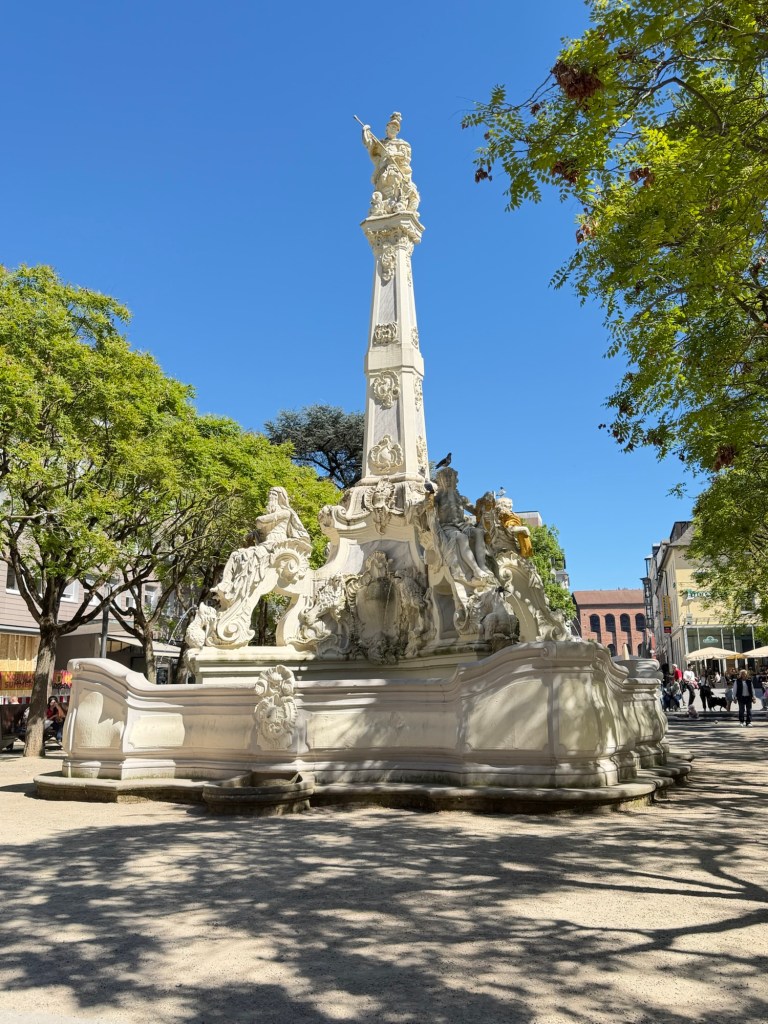
We next visited the breathtaking Basilica of Constantine, also known as the Aula Palatina.
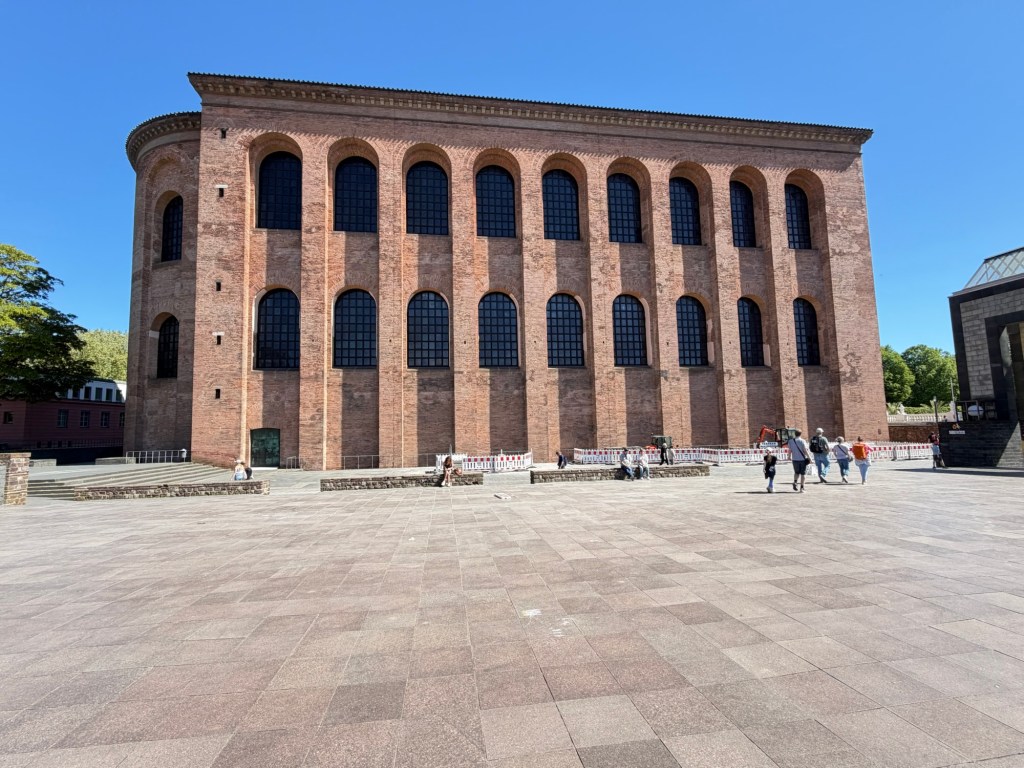
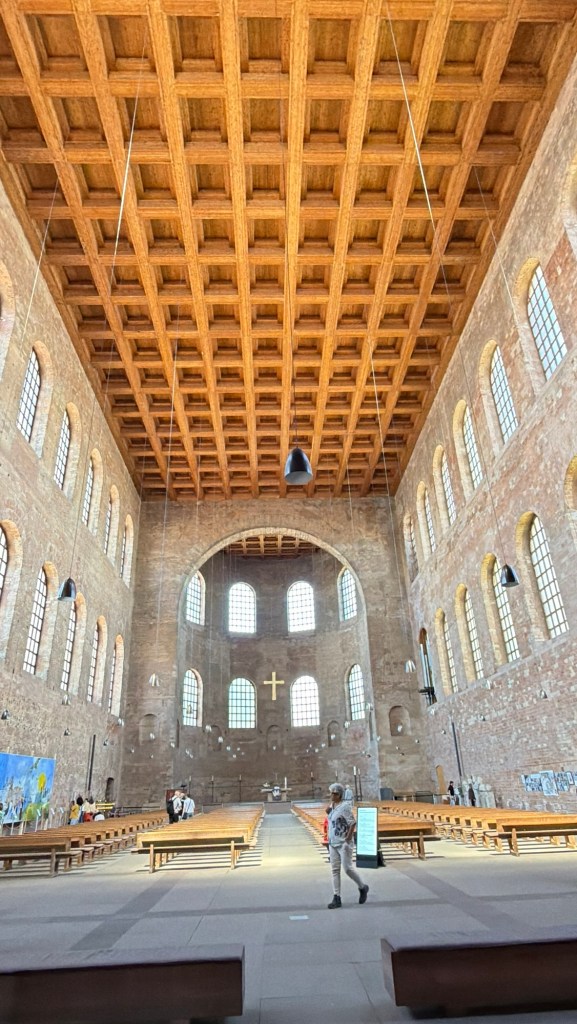
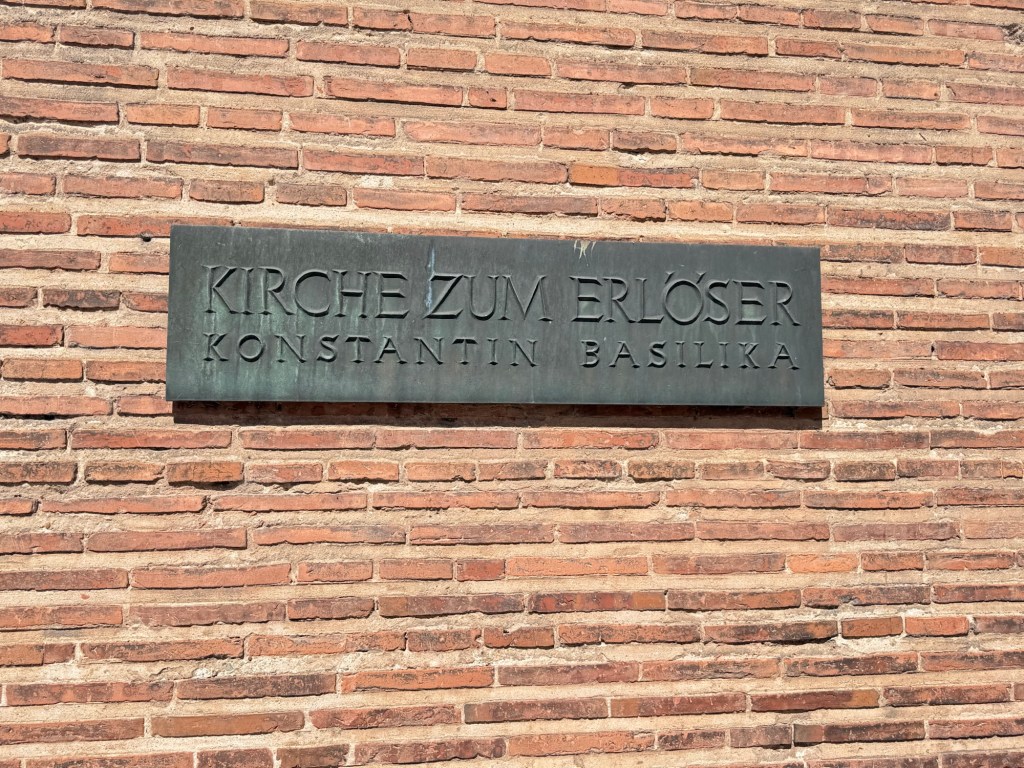
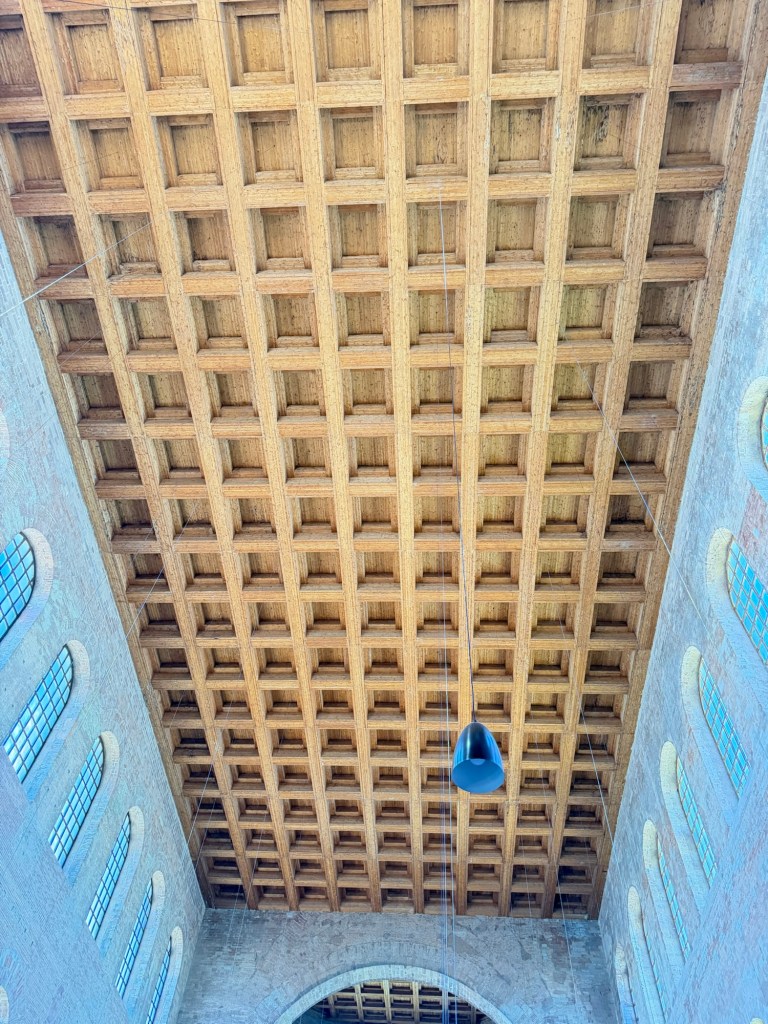
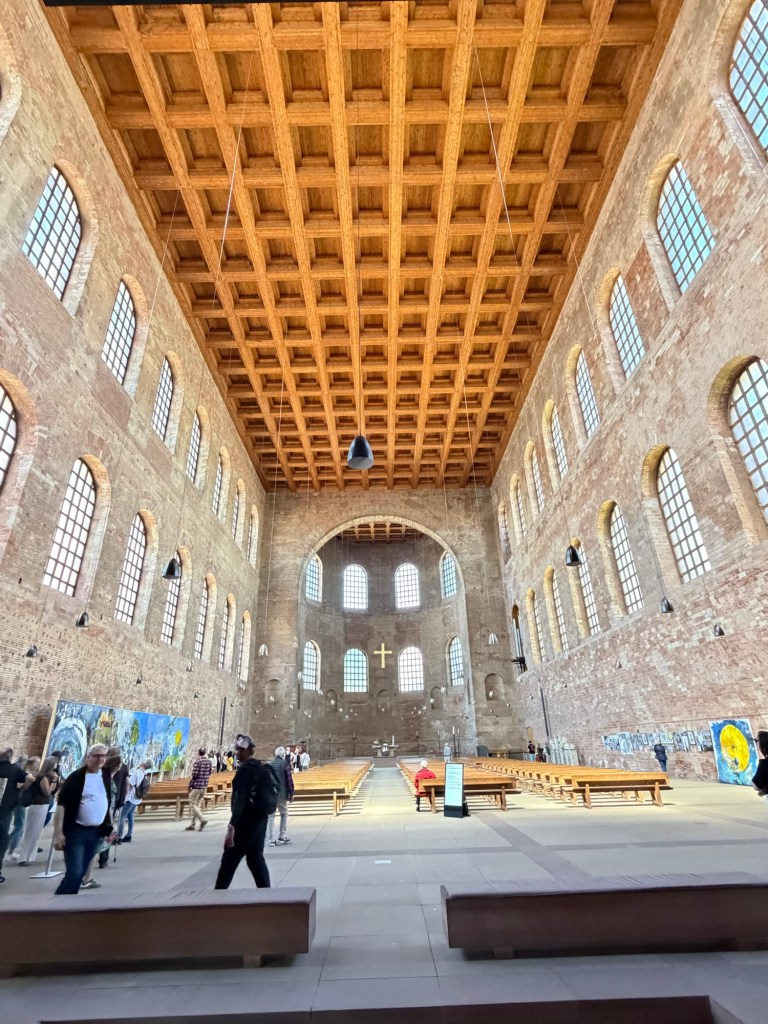
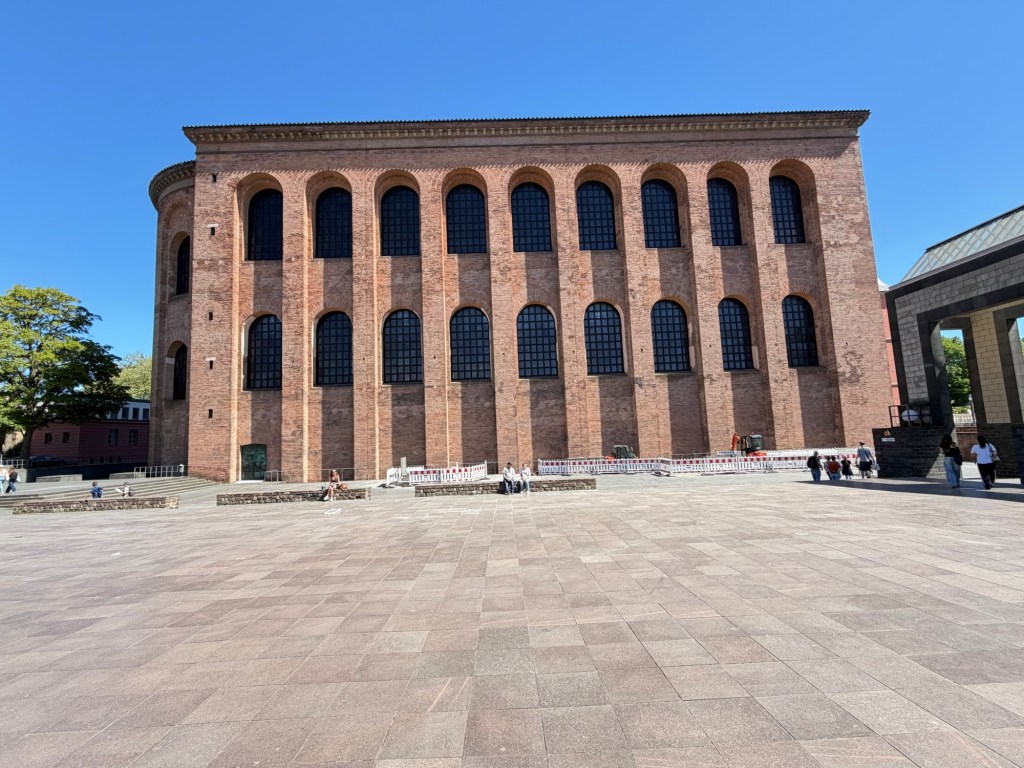
The massive brick structure, built by the Romans during the reign of Emperor Constantine the Great in the early 4th century as his imperial throne hall, was astonishing in both its scale and simplicity. Inside, the enormous open interior, soaring windows, and warm wooden ceiling created a space that felt both ancient and remarkably modern at the same time. Andre explained how the basilica is considered one of the best-preserved examples of Roman secular architecture anywhere in the world.
We continued deeper into Trier, where Roman grandeur gradually gave way to the elegance of the Baroque period. One of the city’s architectural gems was the magnificent Electoral Palace, considered one of the finest Rococo palaces in Germany.
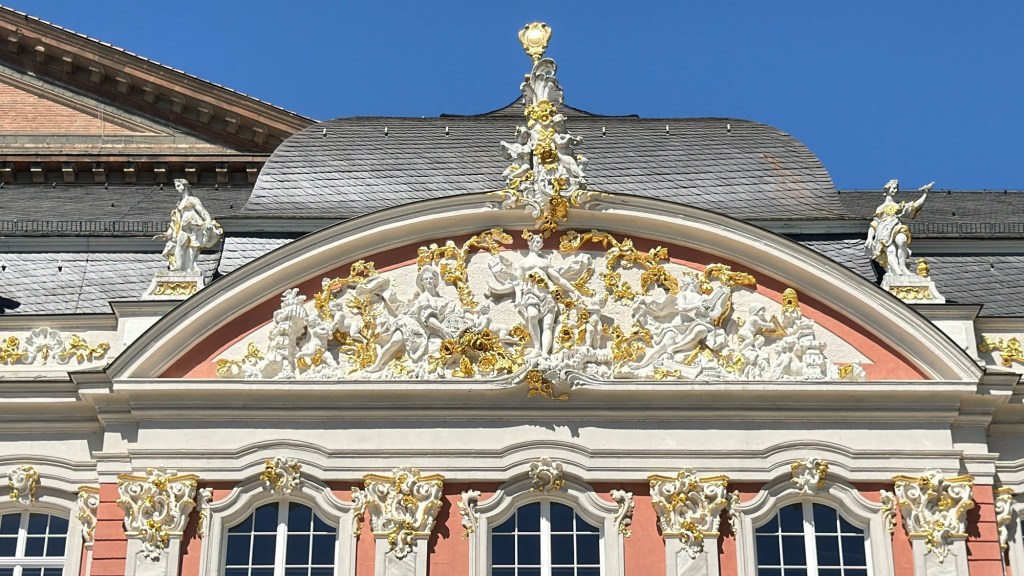
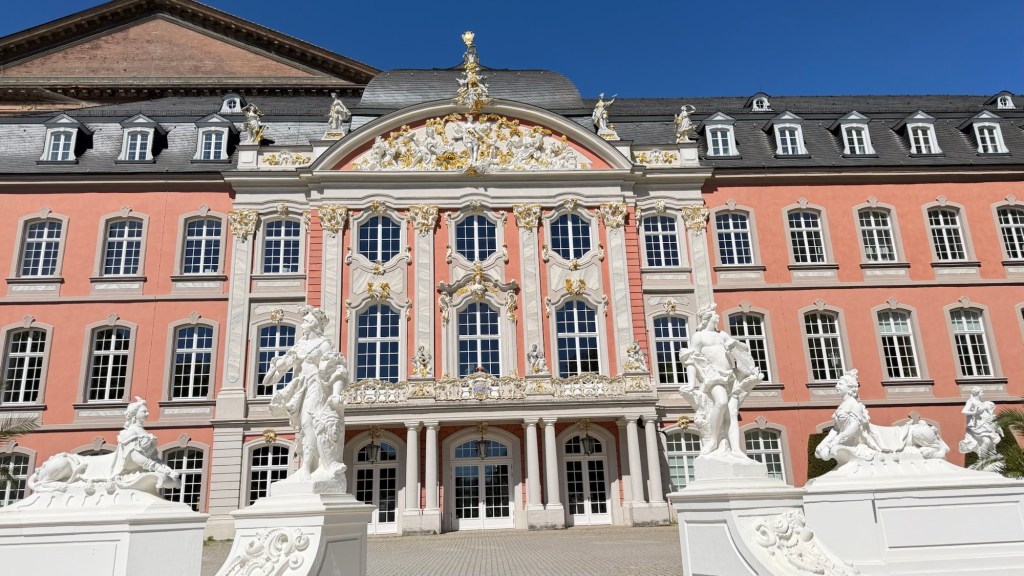
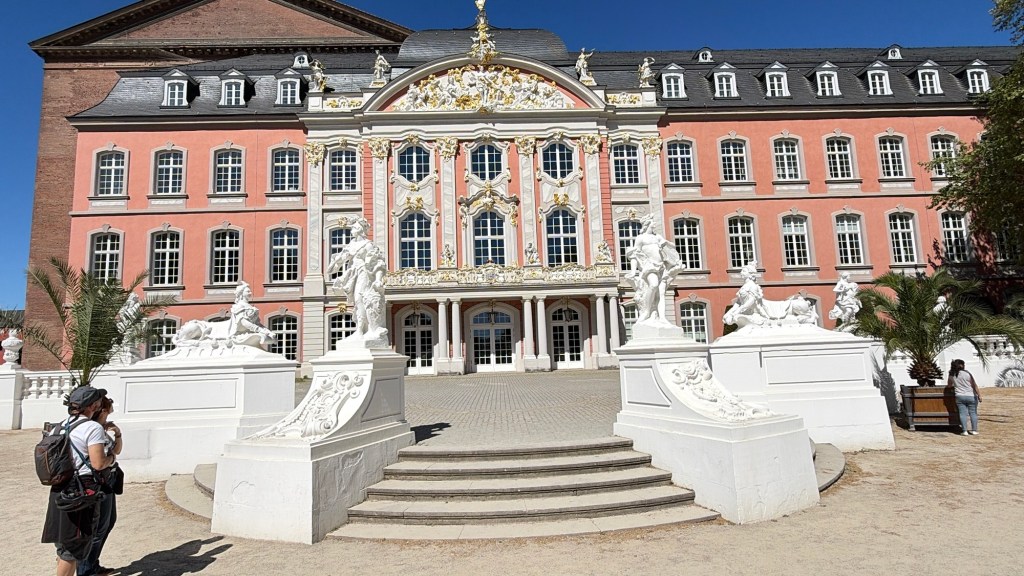
Its soft pink facade, elaborate white stucco work, and shimmering gold accents almost seemed to glow in the afternoon sun. Andre pointed out the extraordinary decorative details above the central entrance — a riot of sculpted figures, flowing curves, and gilded ornamentation that reflected the wealth and power of Trier’s prince-electors during the 18th century. Framed by statues, sweeping staircases, and manicured grounds, the palace provided a striking contrast to the nearby Roman monuments .
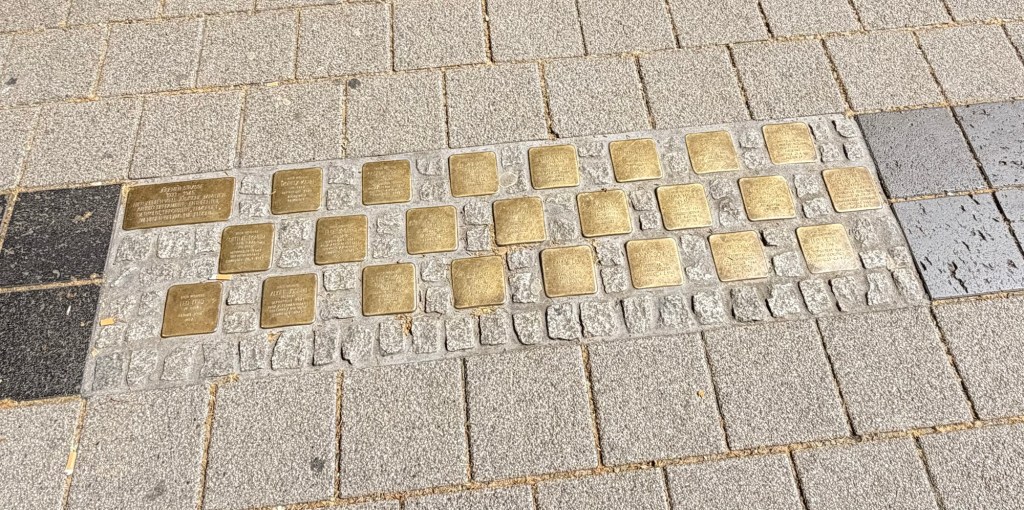
The brass plaques in the streets are commemorative “Stolpersteine” (“stumbling stones”), memorial markers for Holocaust victims who once lived nearby. Before the Holocaust, Trier had a Jewish community numbering in the hundreds, with roots going back to Roman times. During the Nazi era, most of Trier’s Jews were deported to ghettos and extermination camps, especially after 1941. Most were murdered.
Nearby stood perhaps Trier’s most iconic landmark, the magnificent Porta Nigra. Built around 170 A.D. during the reign of the Roman Emperor Marcus Aurelius, the enormous Roman city gate has survived nearly two thousand years of wars, invasions, and political upheaval.
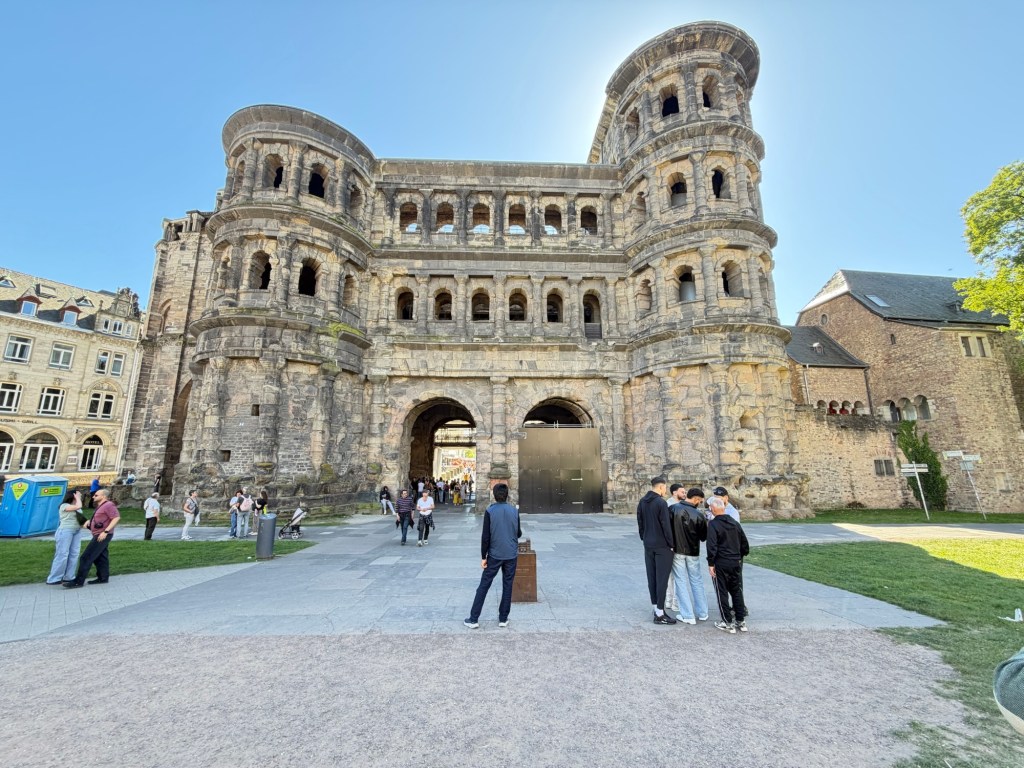
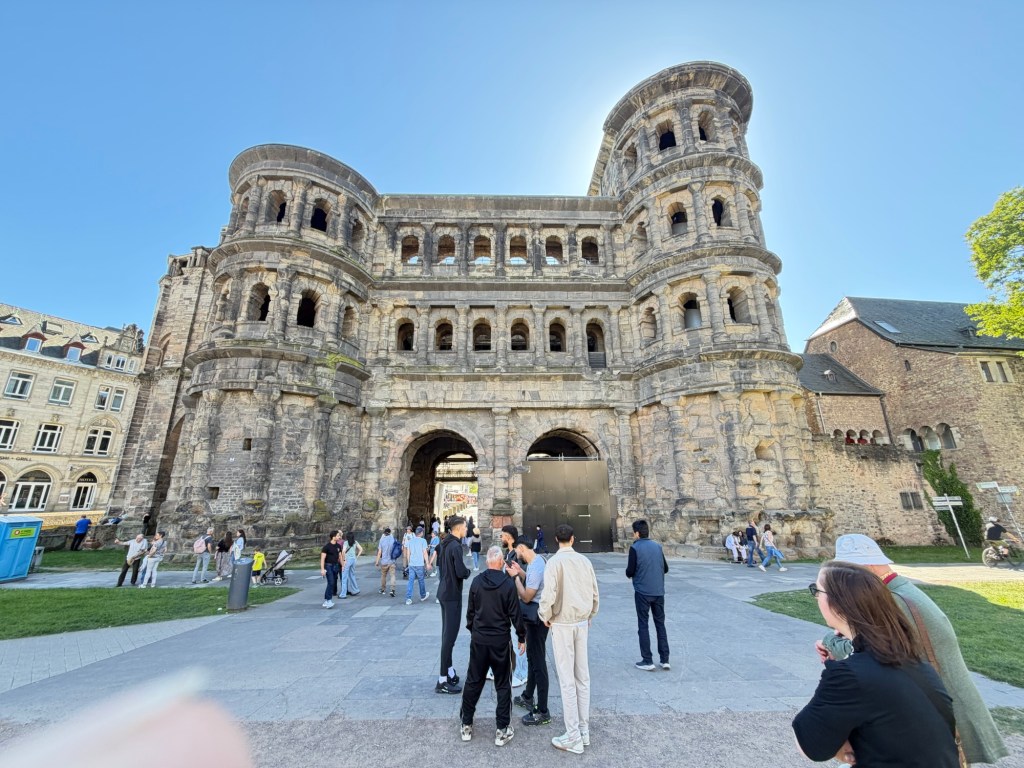
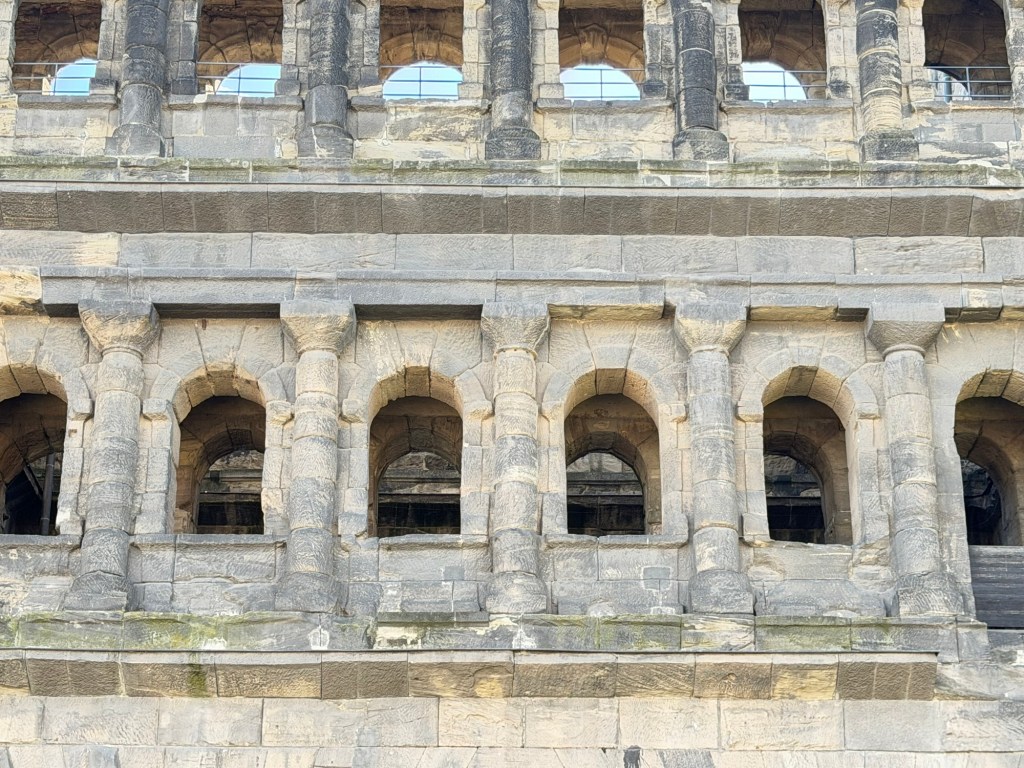
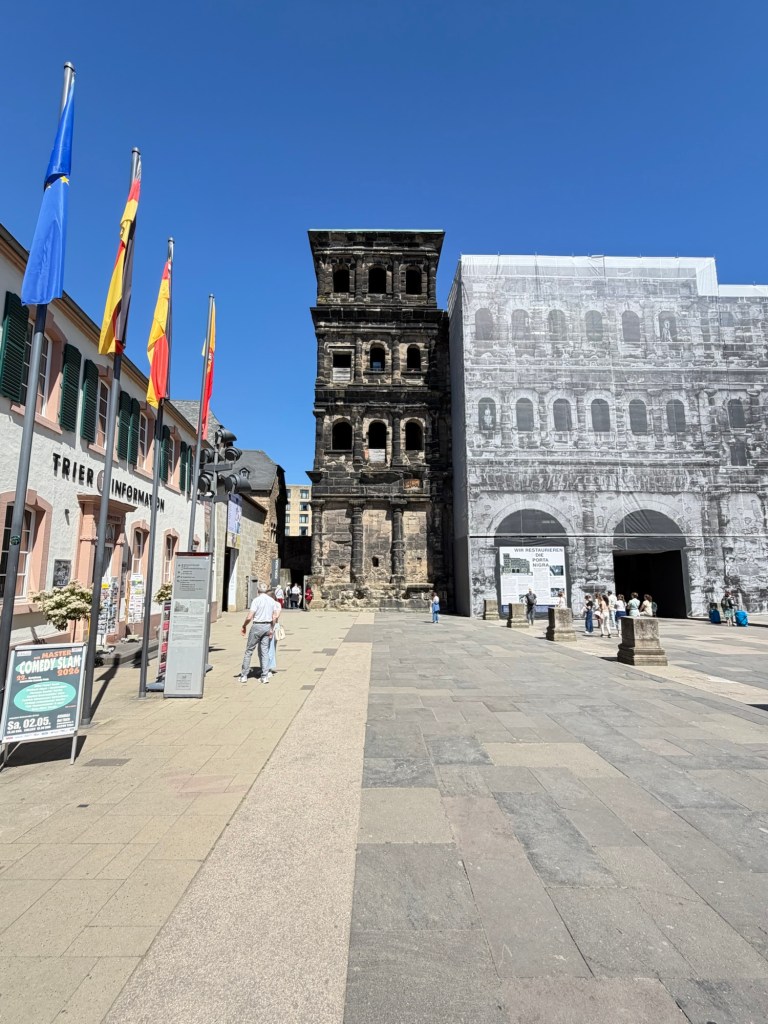
During the Middle Ages, the structure was incorporated into a church complex, which ironically helped preserve it over the centuries. In the early 1800s, after visiting Trier, Napoleon Bonaparte ordered the later church additions removed, restoring the Porta Nigra much closer to its original Roman appearance. Its darkened stone facade, weathered arches, and layered arcades gave it an almost timeless presence. Standing before it, it was easy to imagine Trier during the height of the Roman Empire, bustling with merchants, soldiers, and travelers moving through the gateway into one of Rome’s most important northern cities.
Kirchberg district
Our last stop of the day brought us back to the striking Philharmonie Luxembourg in the Kirchberg district, the modern face of Luxembourg City and home to many of the institutions of the European Union.
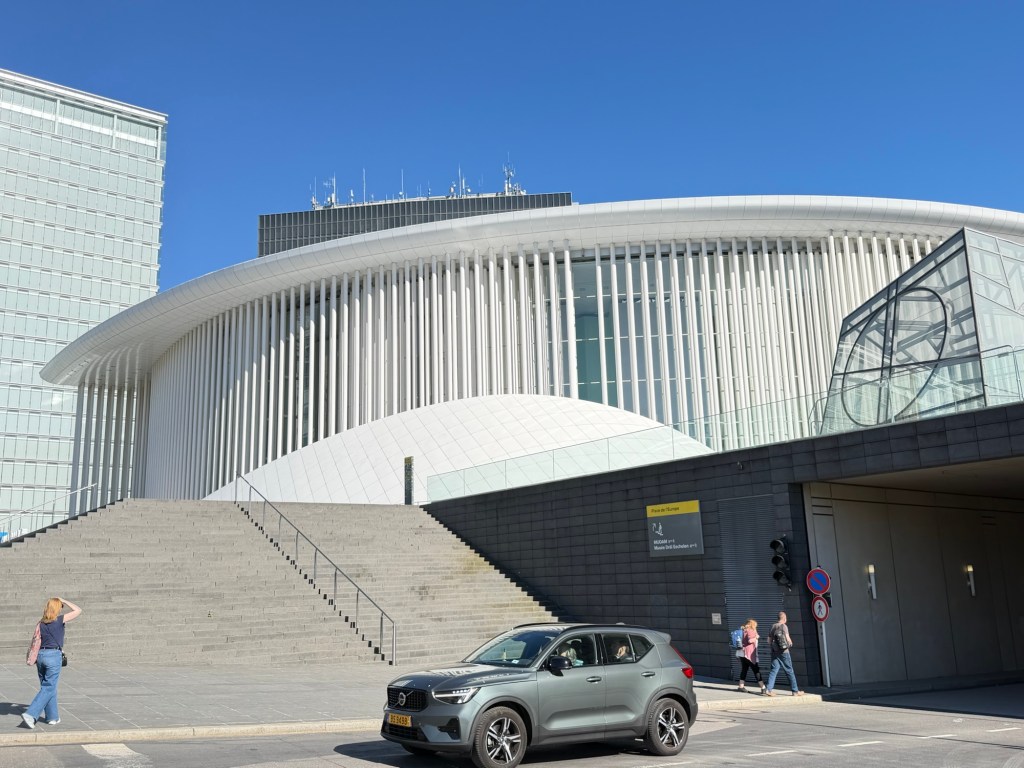
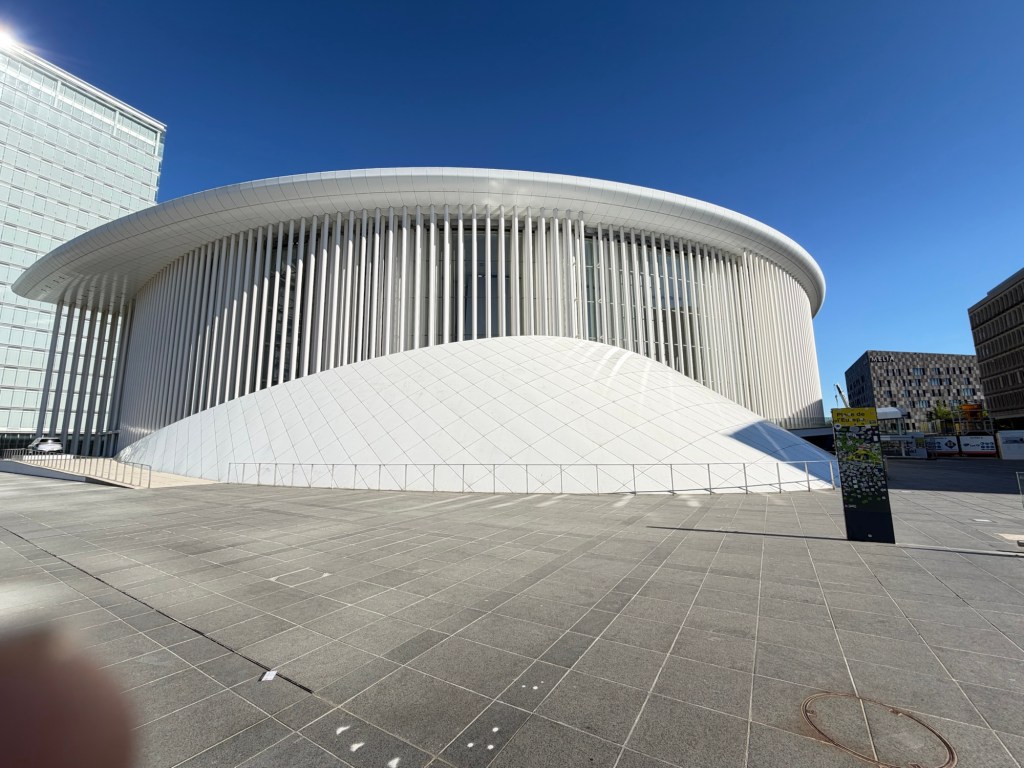
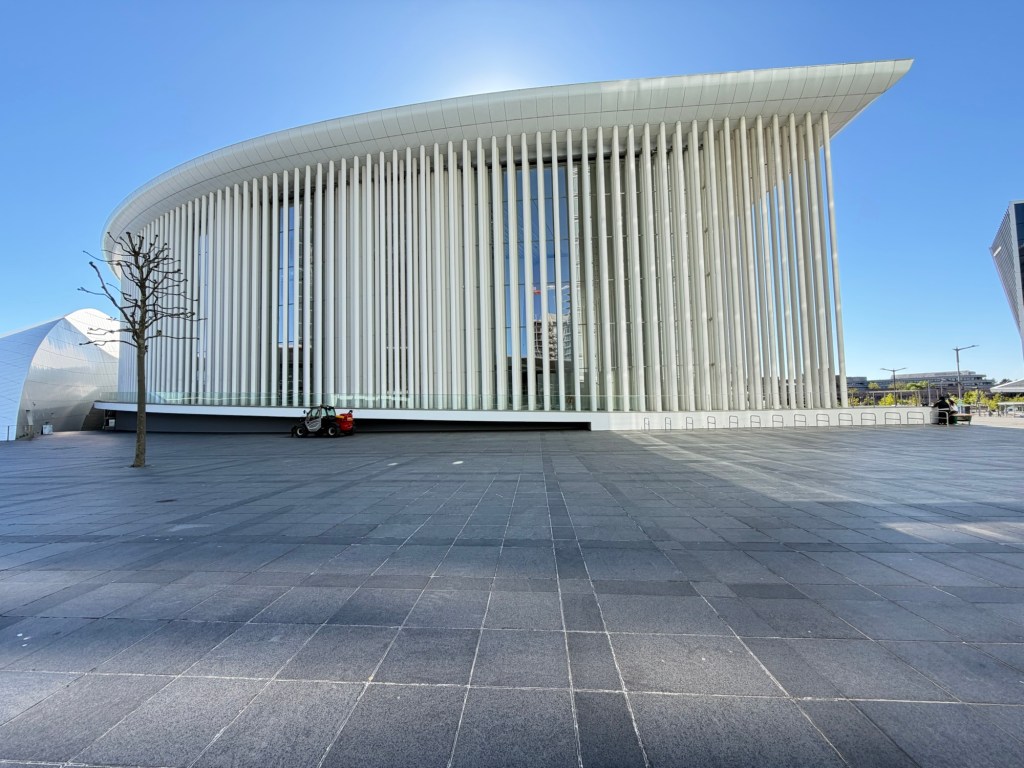
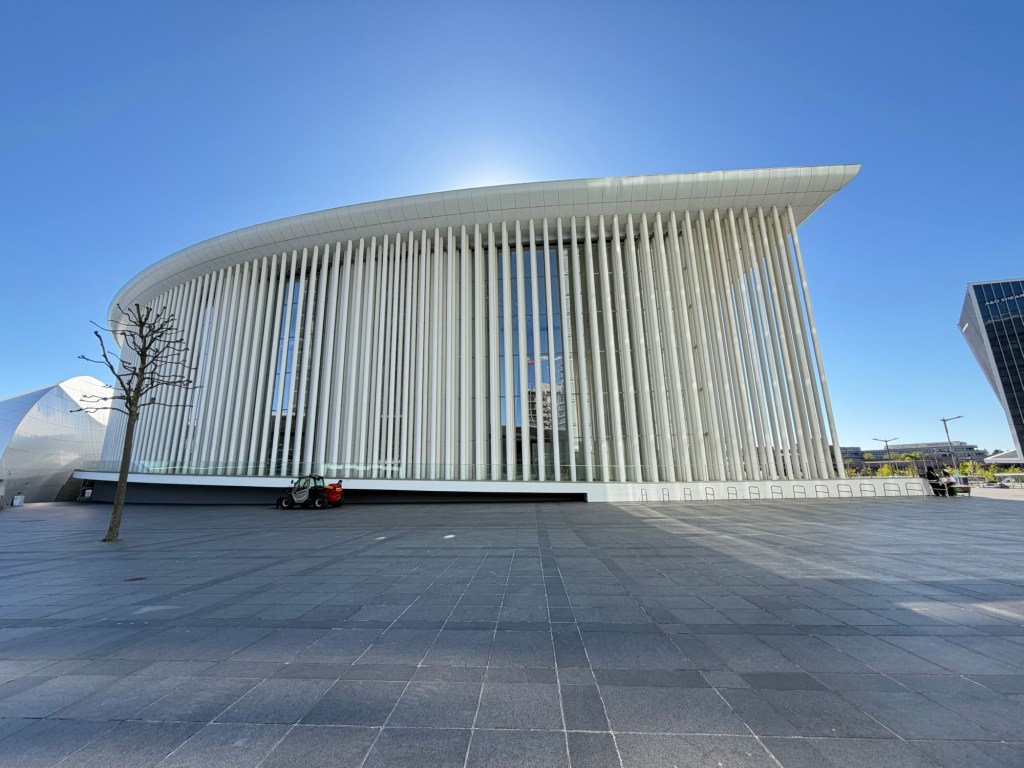
Designed by French architect Christian de Portzamparc, the Philharmonie is wrapped in a forest of elegant white columns that give the building both a classical and futuristic feel at the same time. Unfortunately, we did not attend a performance or even go inside the building.
Luxembourg City Tour
The next morning, we met Andre for a tour of the city that would last nearly four hours. Early in our walk through Luxembourg City, Andre stopped at an old section of the Fortifications of Luxembourg, unfolded an ordinary paper tourist map, and began sketching the history of Luxembourg directly onto it with a marker — tracing the old fortifications, the growth of the city, and the shifting lines of history by hand. Rather than relying on a tablet, GPS, or prepared visuals, he quite literally drew the story for us as he spoke.
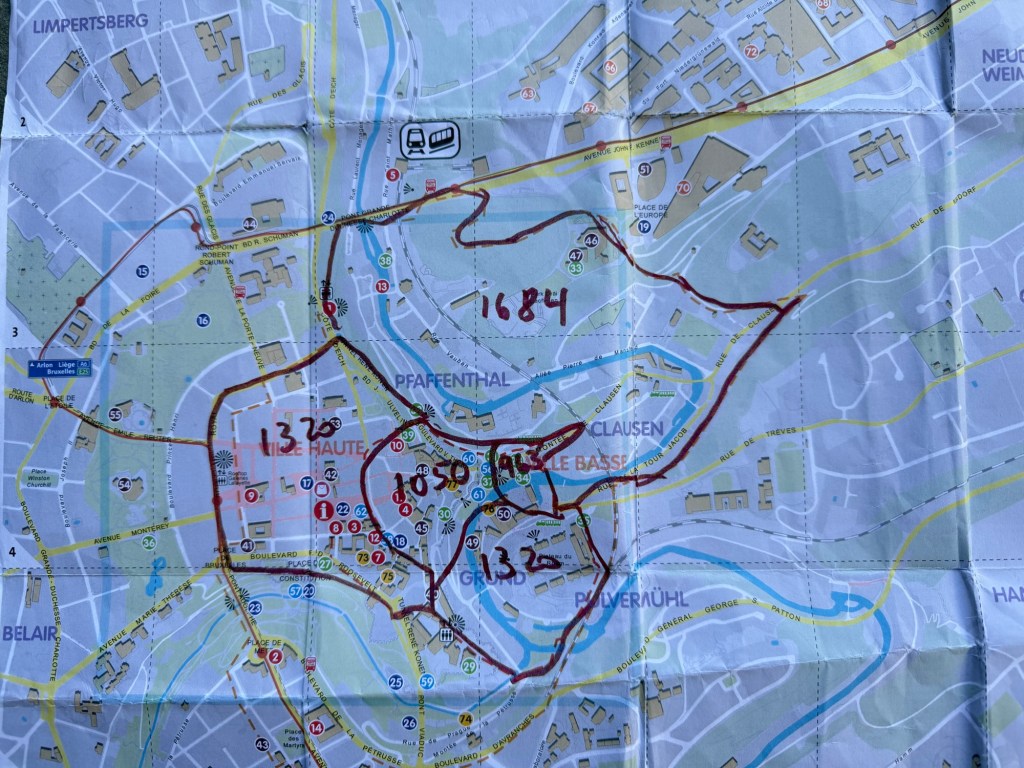
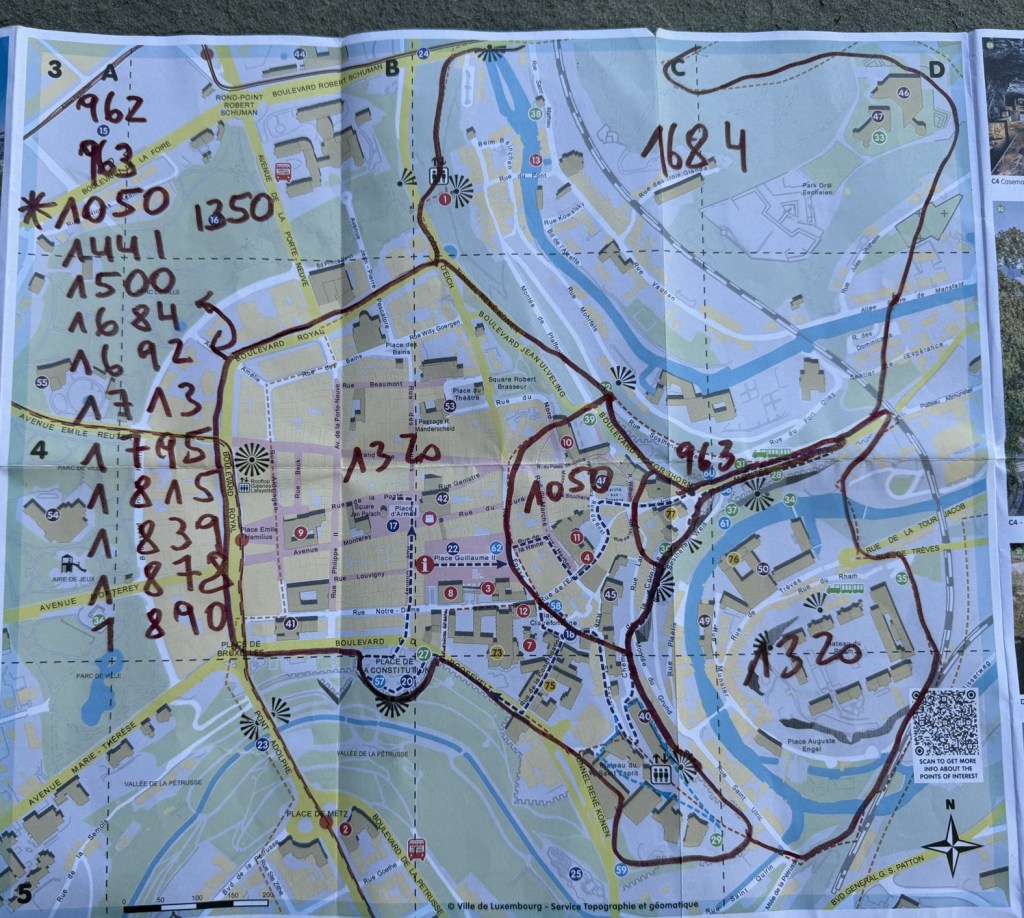
It was an unexpectedly charming and deeply analog touch, perfectly in keeping with a guide who seemed to belong to another era.
As part of marking up the map, Andre continued explaining the military history that shaped the city for centuries.
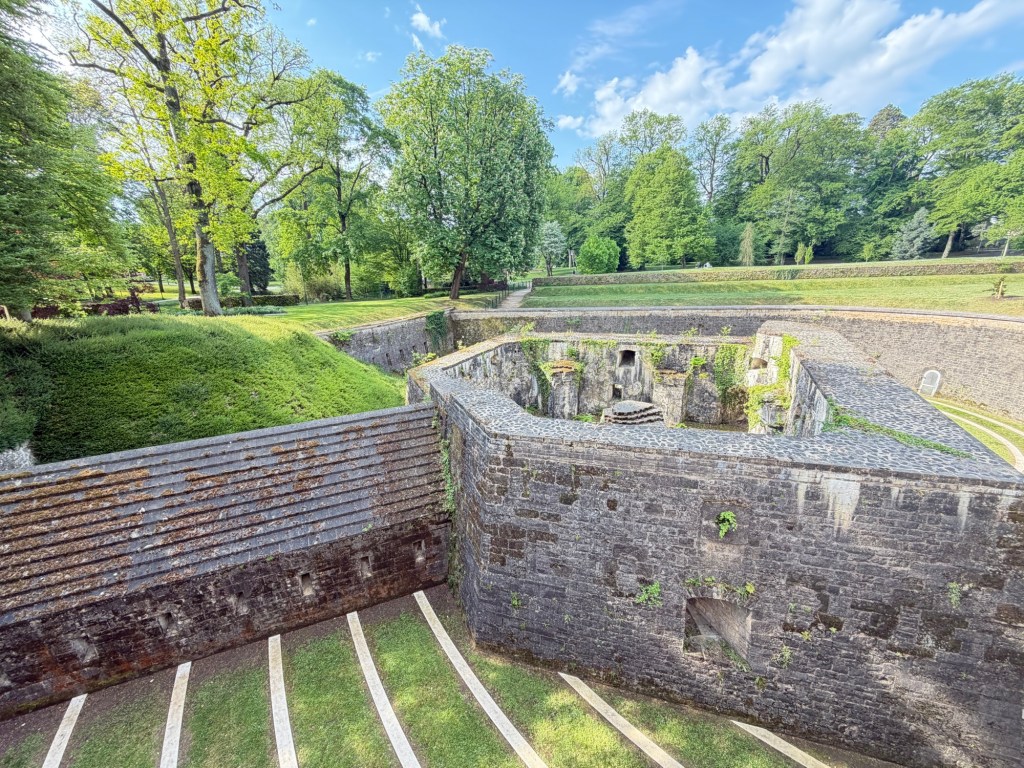
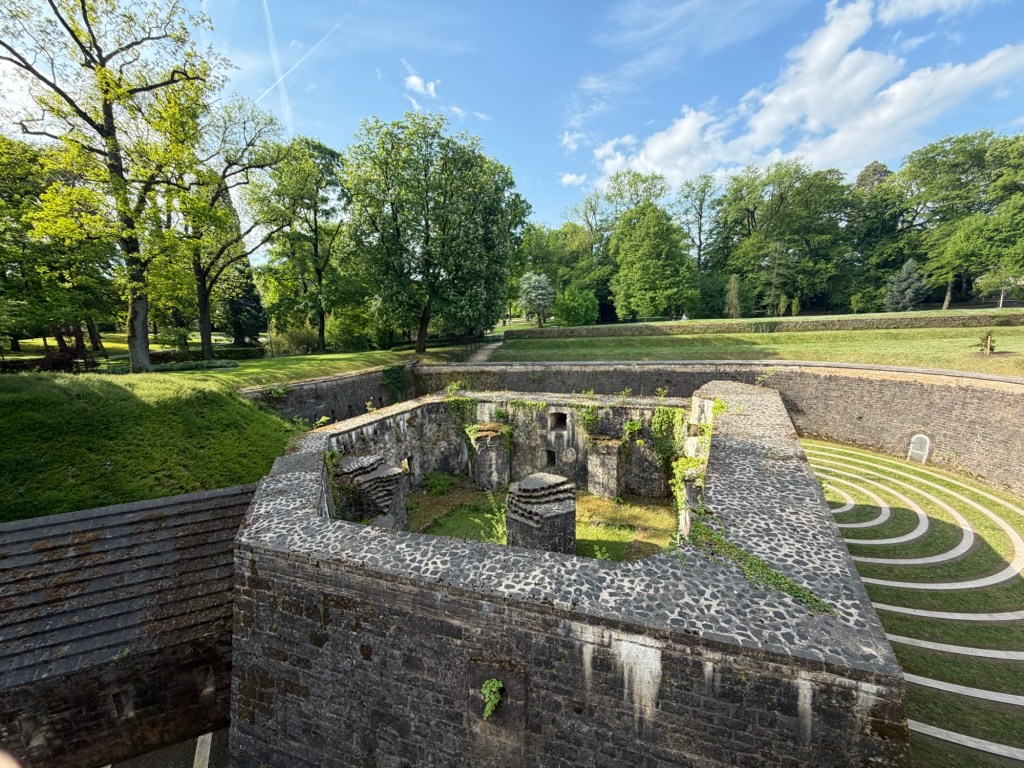
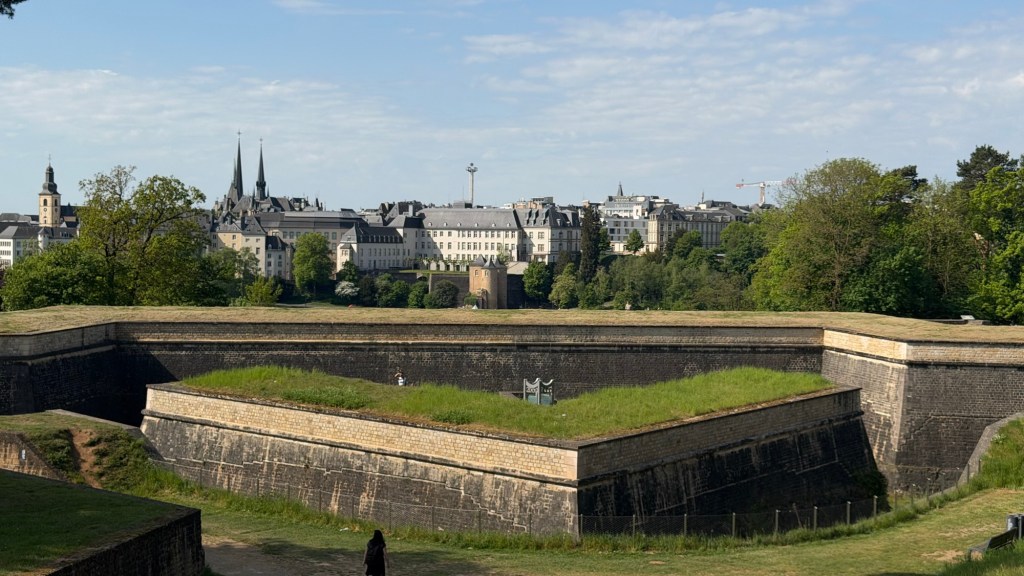
Again and again throughout the day, the story of Luxembourg’s fortifications would resurface — the walls, bastions, tunnels, and defenses that once made the city one of the great strongholds of Europe. Standing among the old stone ramparts, with parks and quiet greenery now covering what had once been heavily defended ground, it was hard to imagine the strategic importance this small city once commanded.
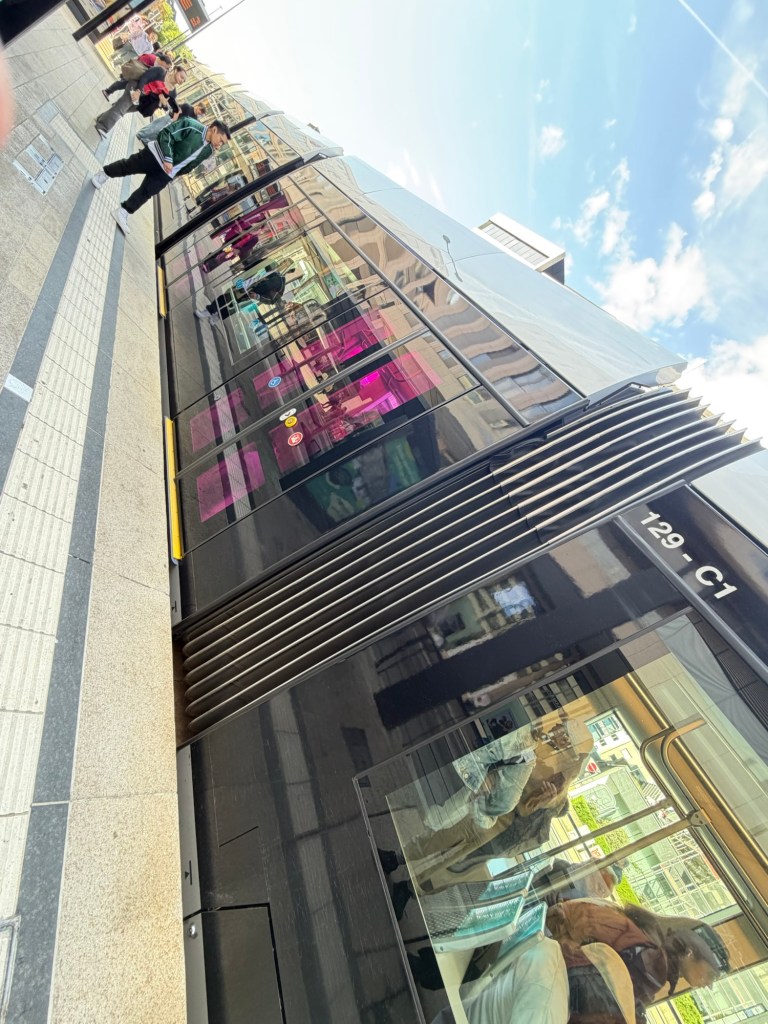
Andre then again took us by tram into a completely different part of Luxembourg City — Kirchberg, the modern northeastern section of the city across the Grand Duchess Charlotte Bridge. The contrast from the old city could not have been greater. Instead of narrow medieval streets and fortifications, there were sleek tram stations, glass office towers, museums, and European institutions.
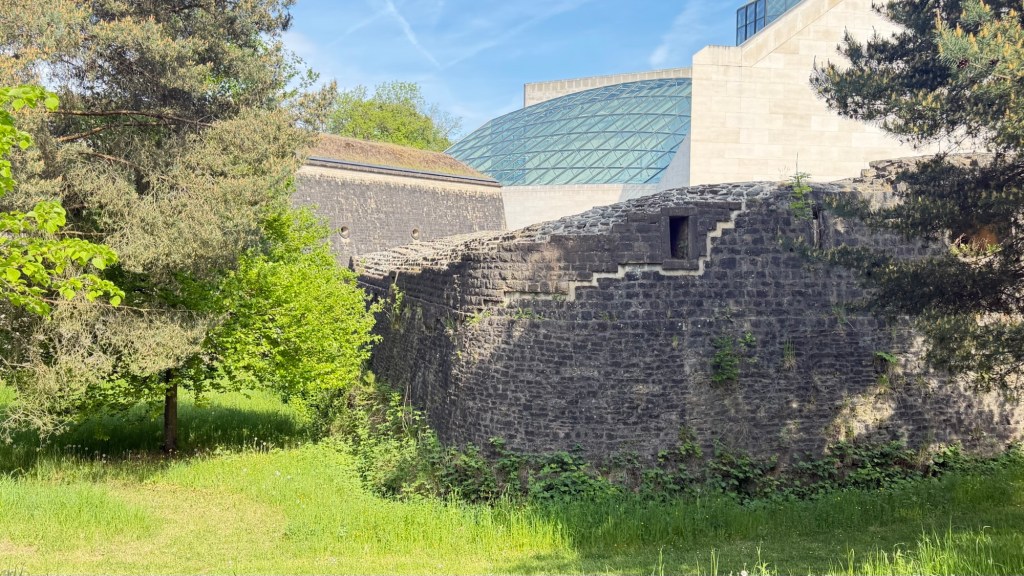
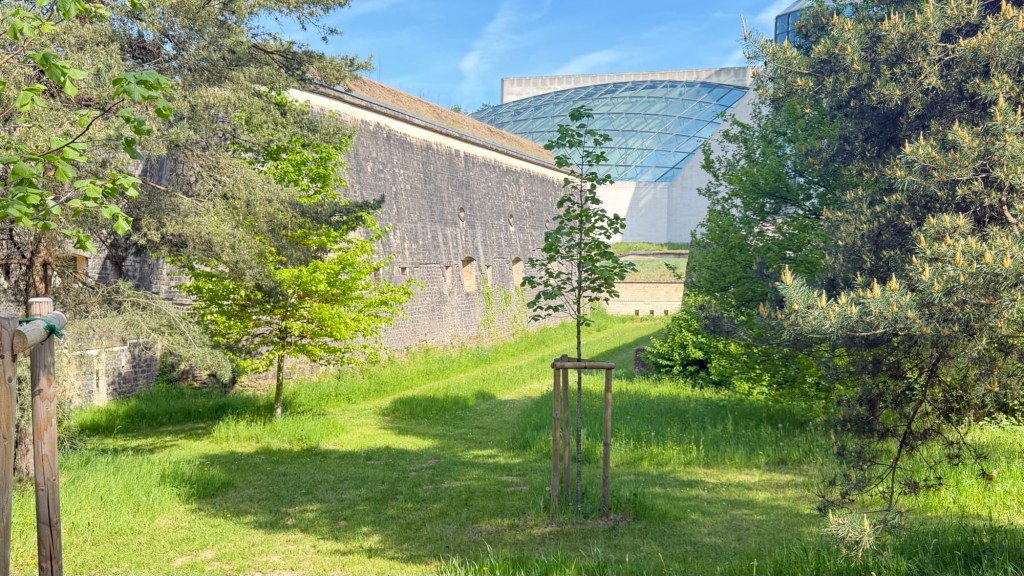
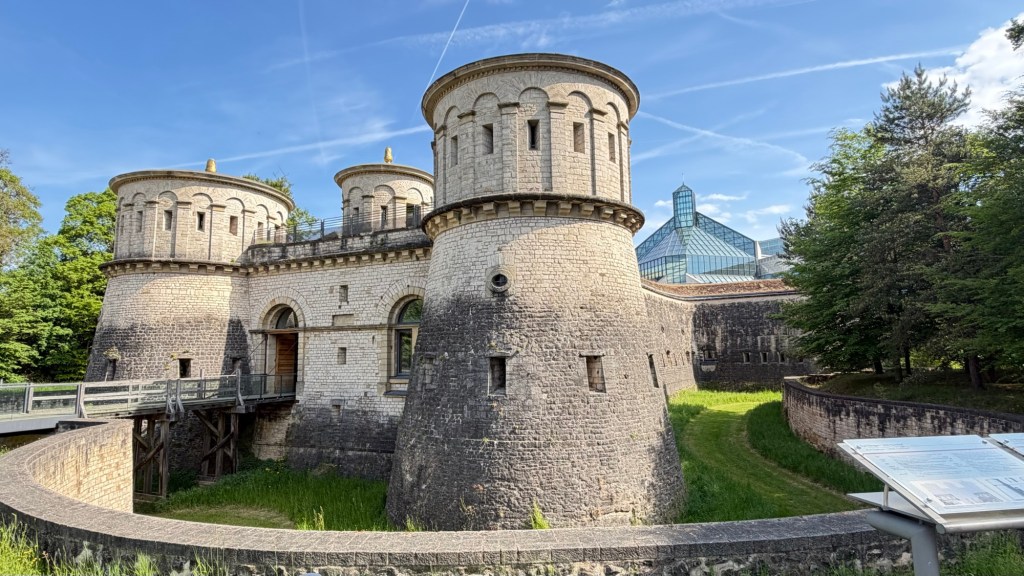
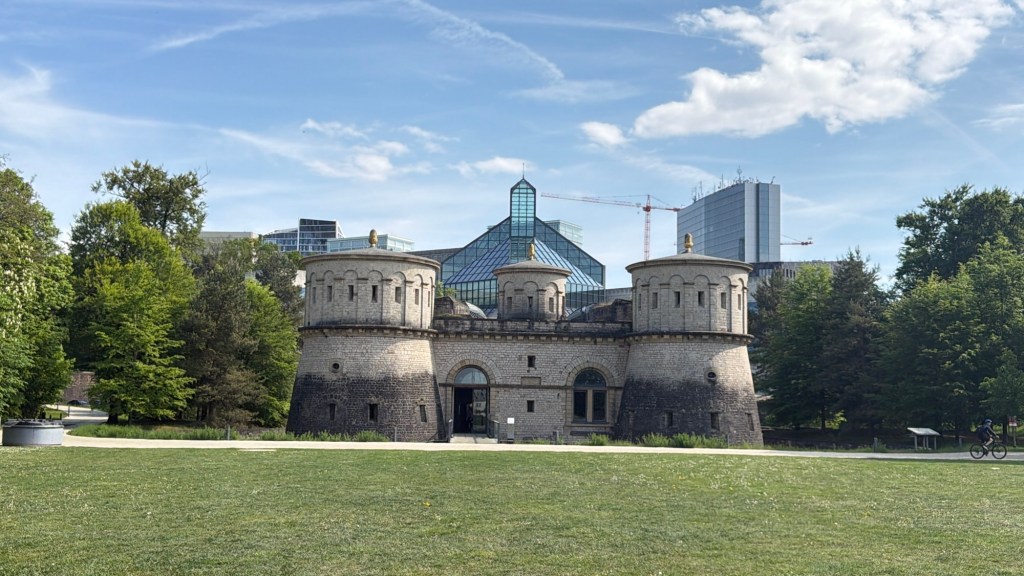
One of the more interesting parts of the afternoon was seeing how Luxembourg blended the old and the new almost on top of one another. We walked through the remains of Fort Thüngen, with its massive stone ramparts and grassy defensive works, and then directly into Mudam Luxembourg, the city’s modern art museum designed by I. M. Pei. From certain angles, the glass roof of the museum almost seemed to rise out of the old fortress itself.
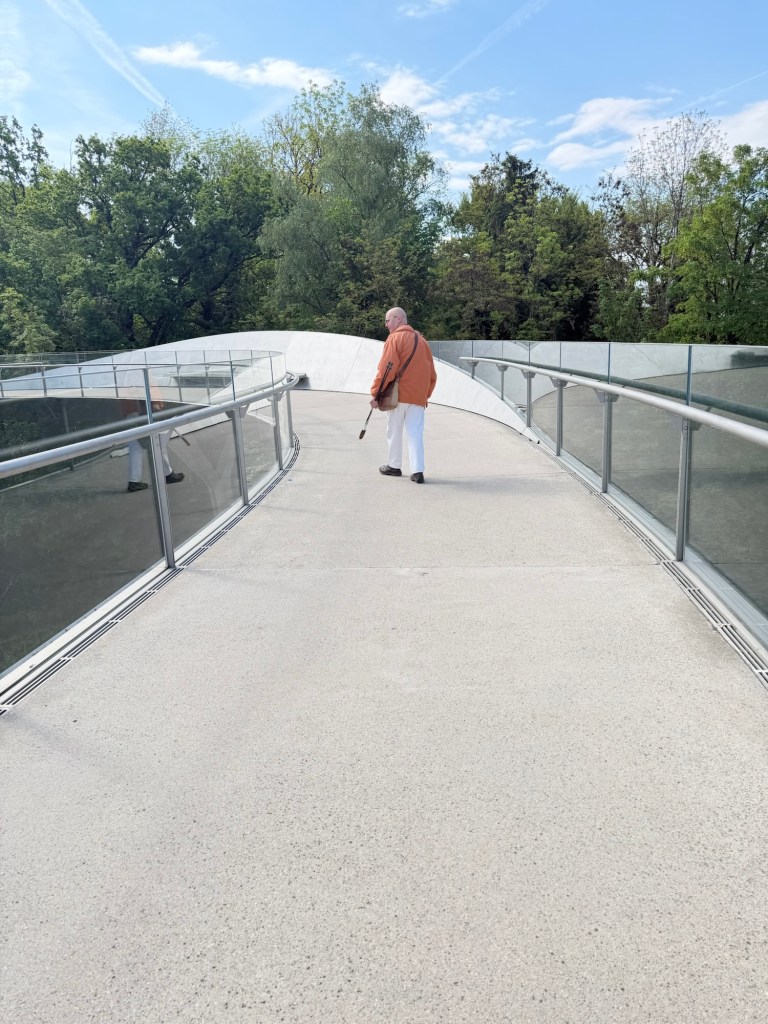
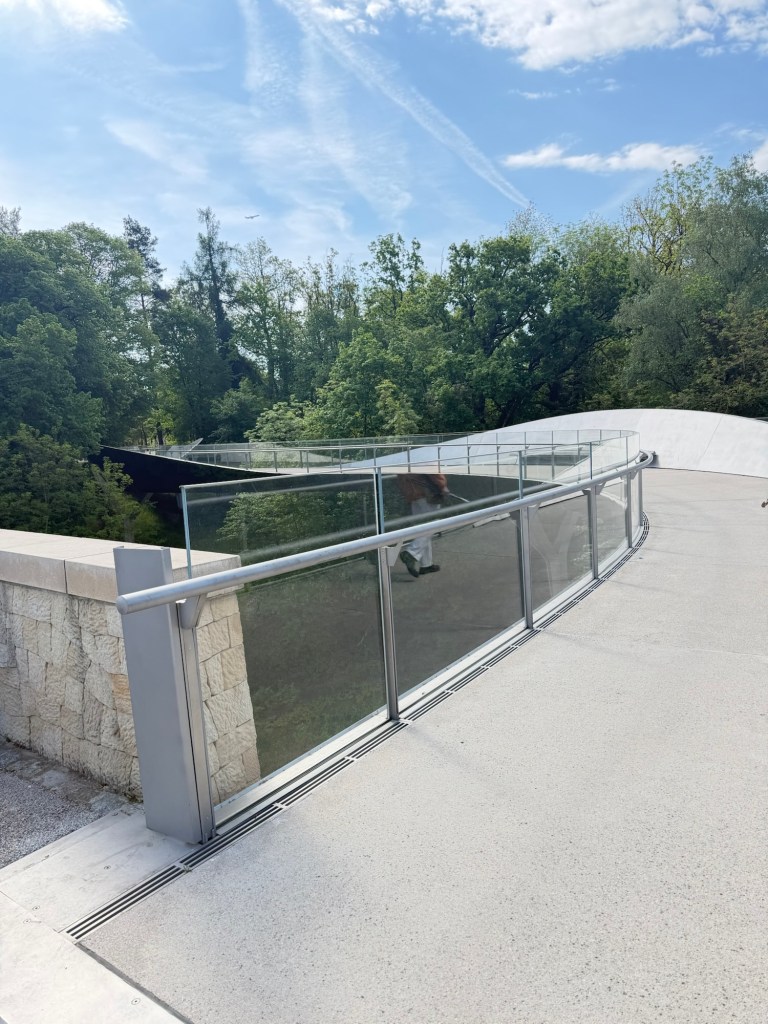
At several points Andre stopped so we could look back across the valley toward the old city skyline, where church spires and centuries of history stood in the distance. It was one of those moments where Luxembourg suddenly made sense geographically — a fortified medieval city surrounded by deep valleys, with a thoroughly modern European capital growing just beyond it.
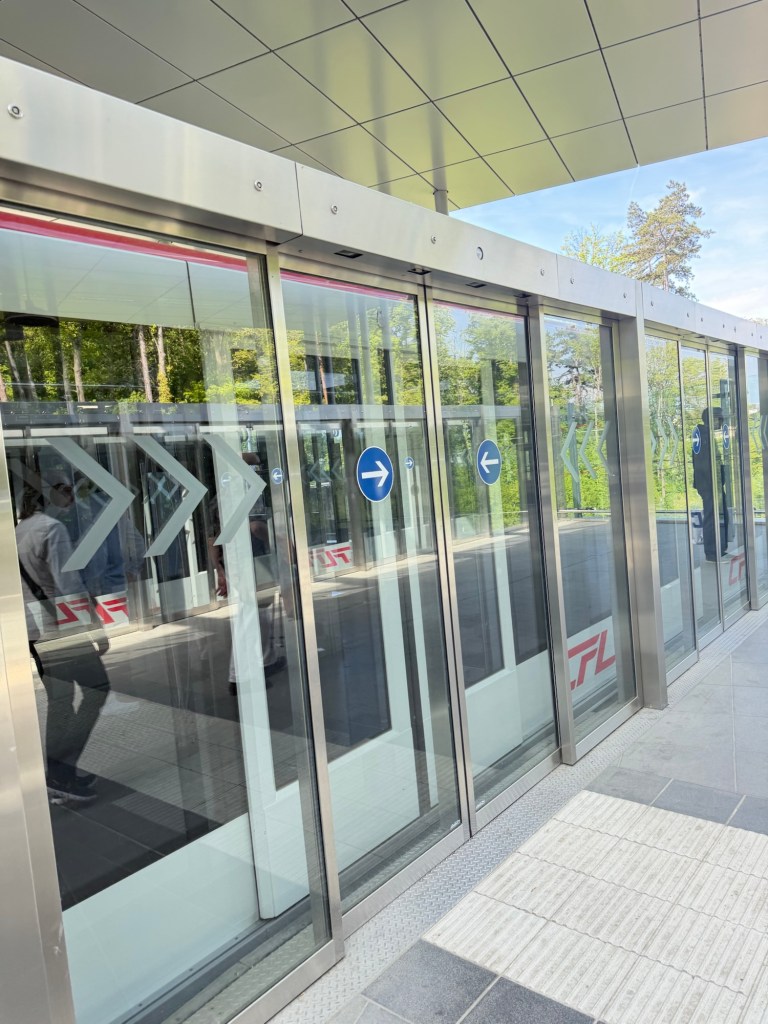
The tram ride itself was part of the experience. Clean, quiet, and completely free, it tied together the old city and Kirchberg in just a few minutes. By the end of the afternoon, it felt as though we had seen not one Luxembourg, but several layered on top of each other.
Below afew more scenes from the lower city of Luxembourg after we took the little train down from the art museum.
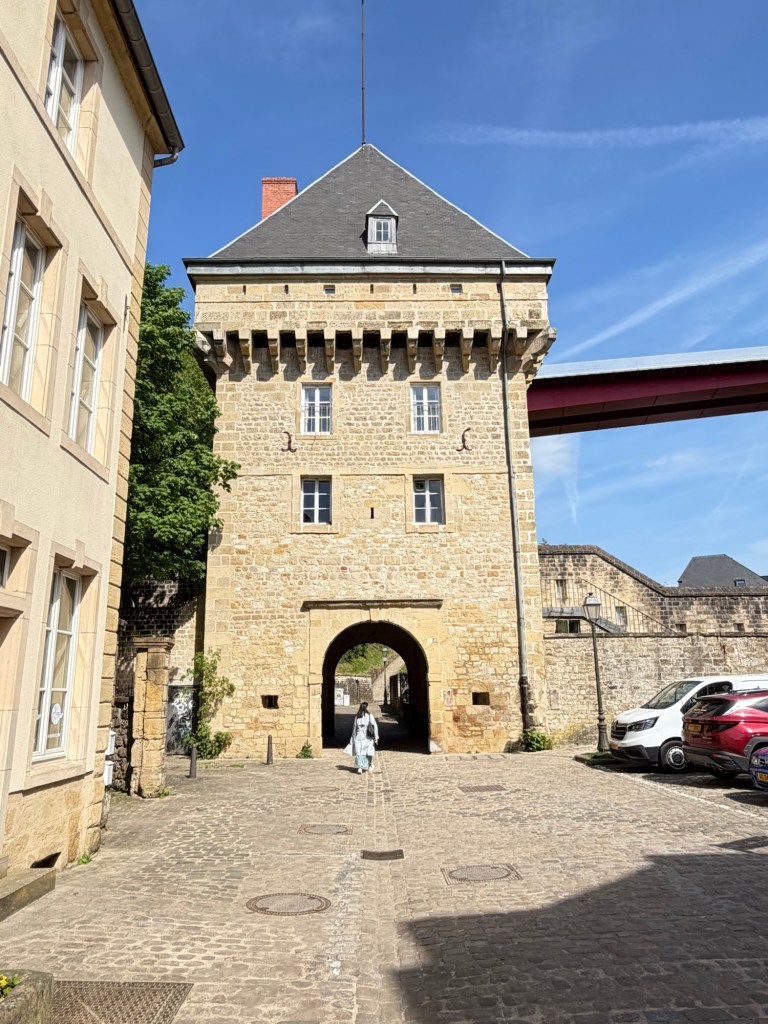
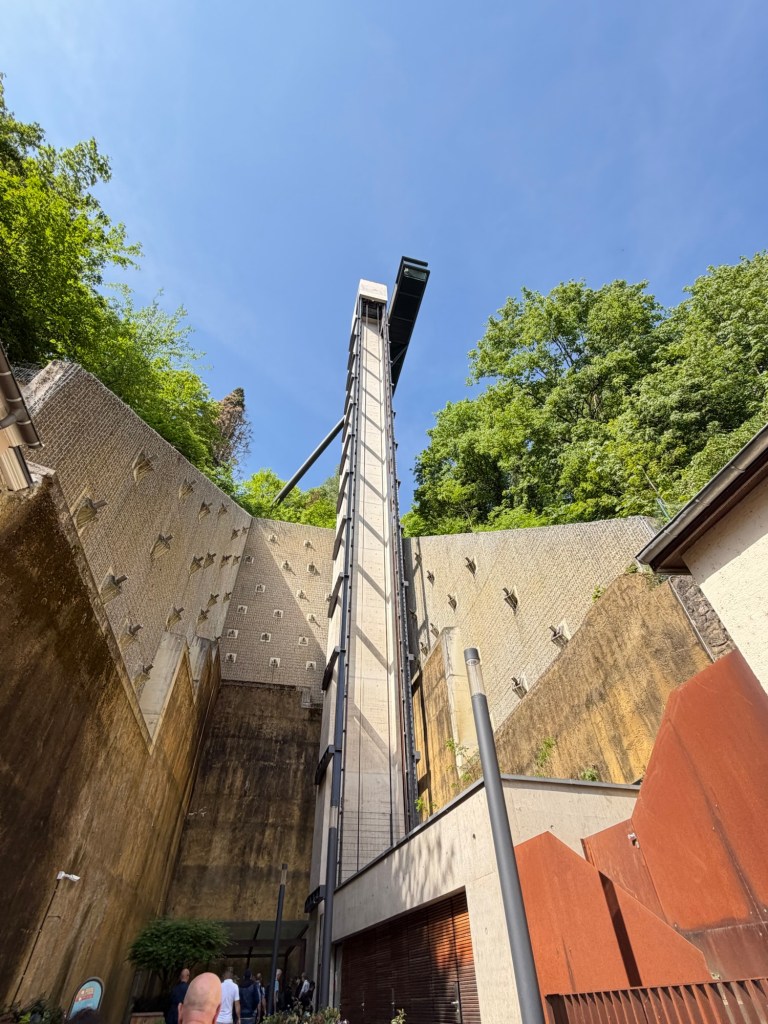
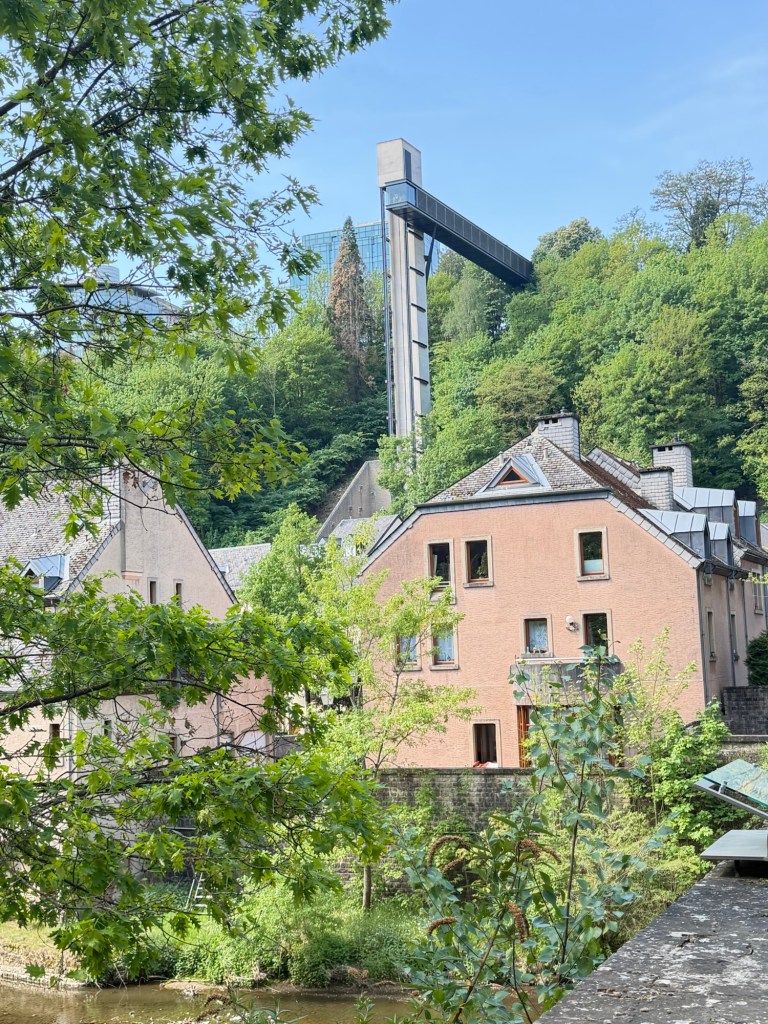
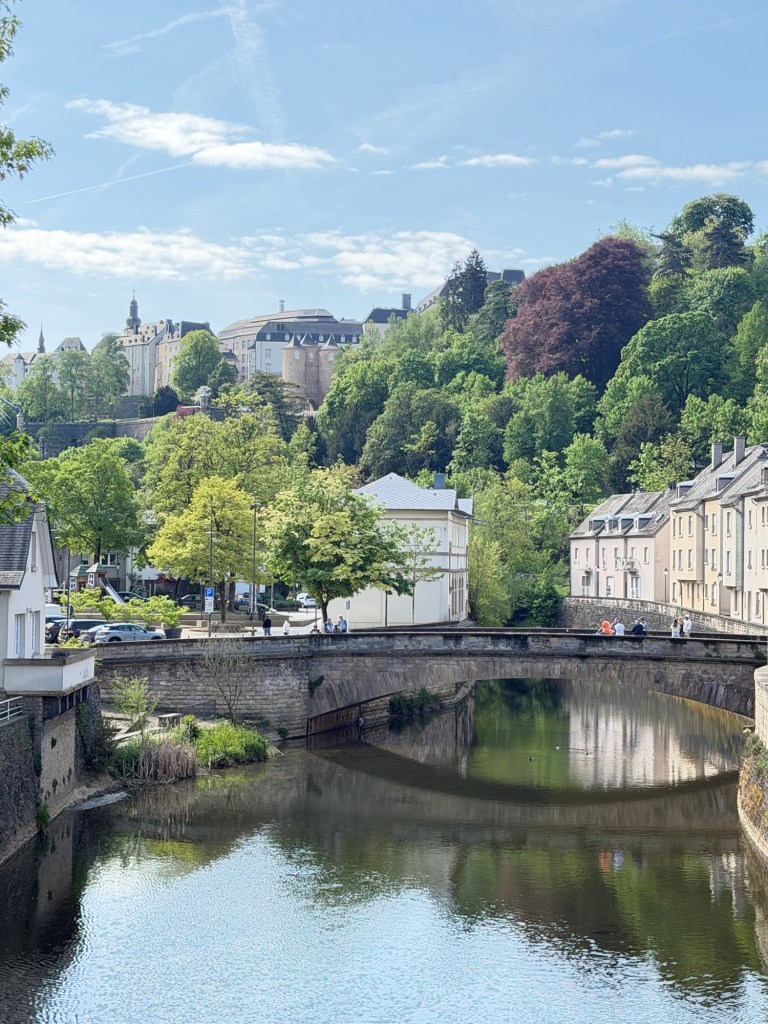
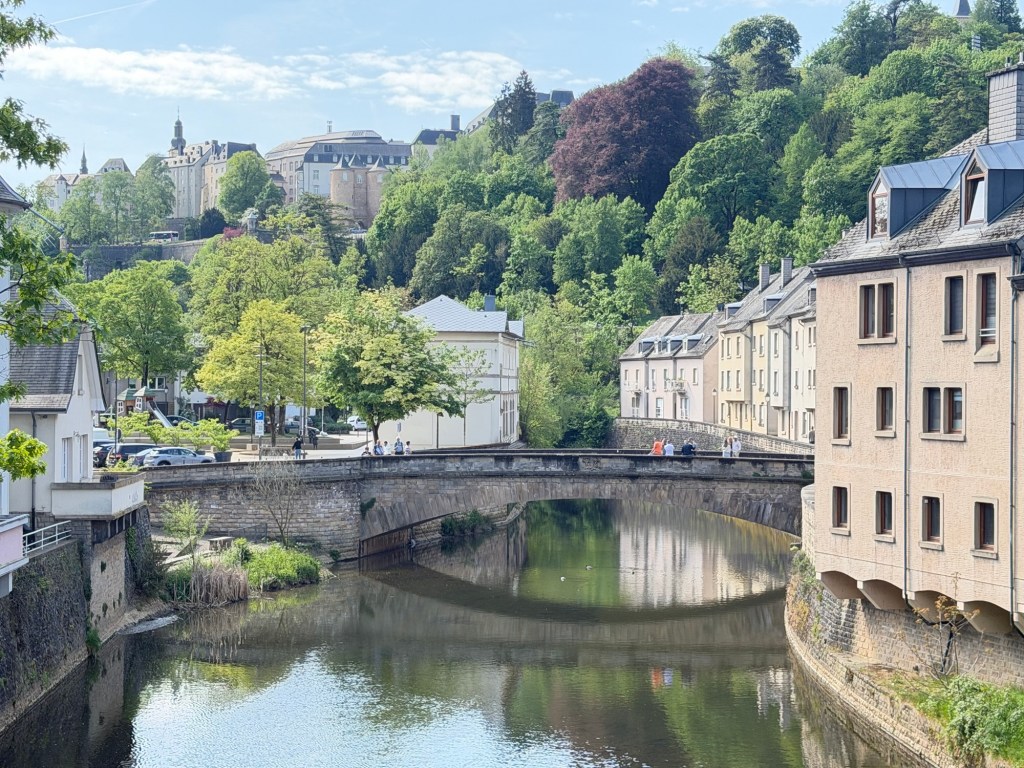
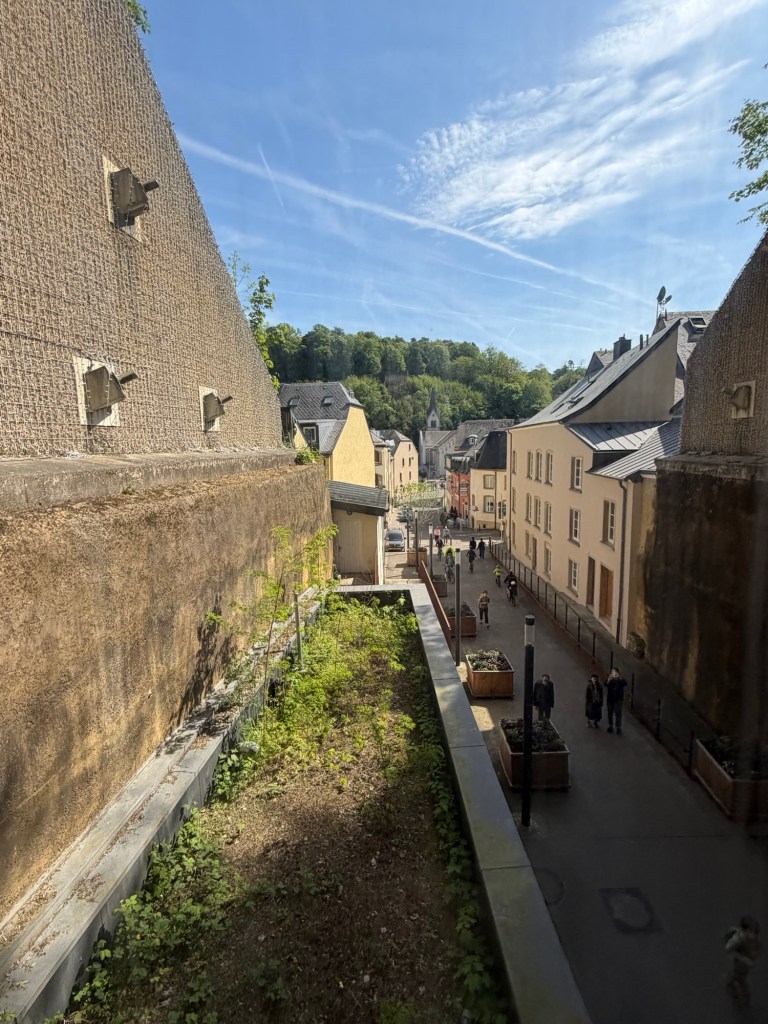
One minute you pass through a medieval gate that once guarded the fortress city, and a few minutes later you are standing along the Alzette River looking up at a modern glass elevator climbing the cliffs above. Luxembourg really does feel layered — fortress, village, and financial capital all at once.
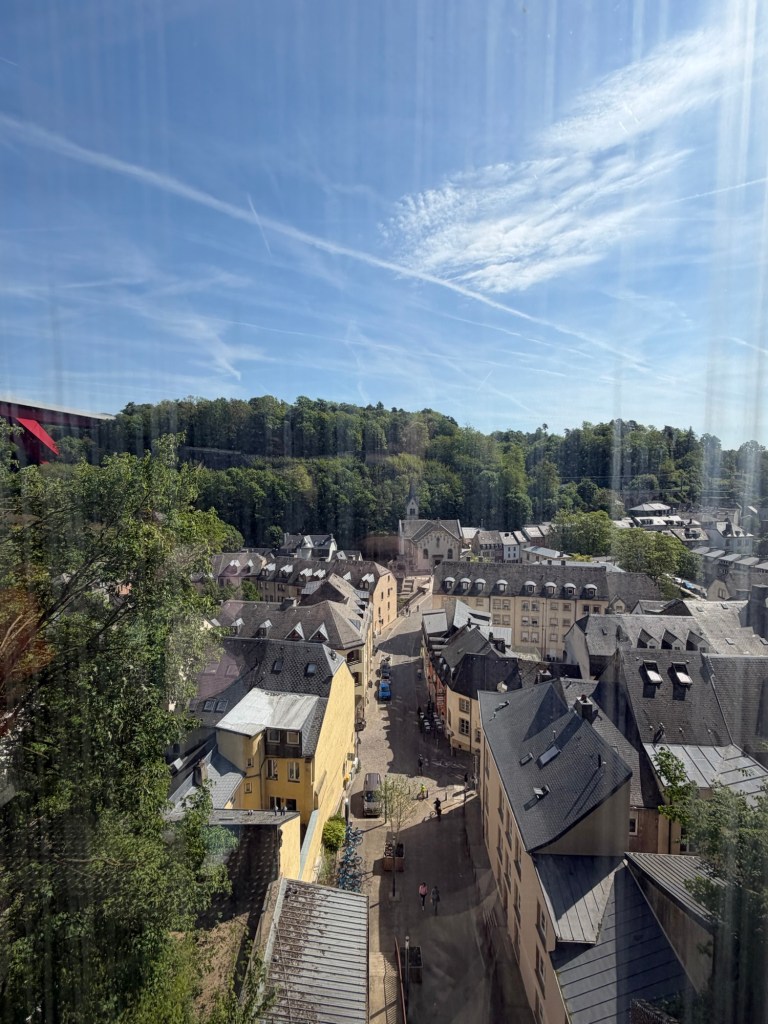
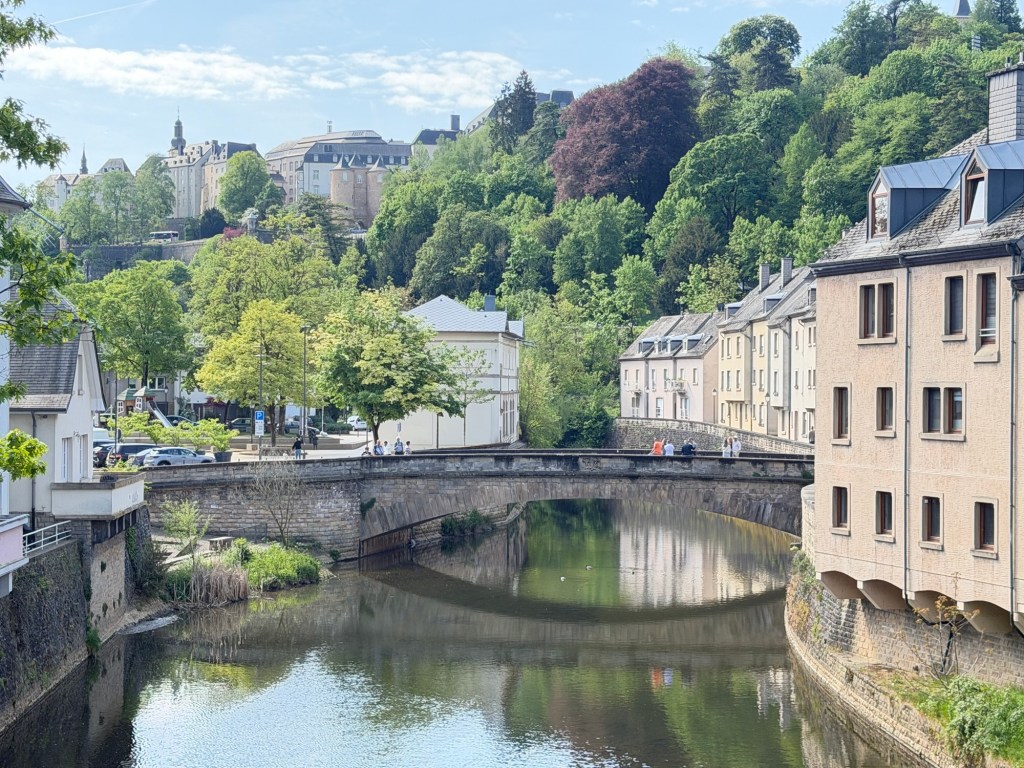
The lower valley may have been my favorite part of the city. Quiet, green, and almost storybook-like, with old stone bridges, reflections on the water, and the feeling that history is everywhere you look.
Once back in the upper city, we spent the rest of our time with Andre wandering through more of Luxembourg’s layers of history.
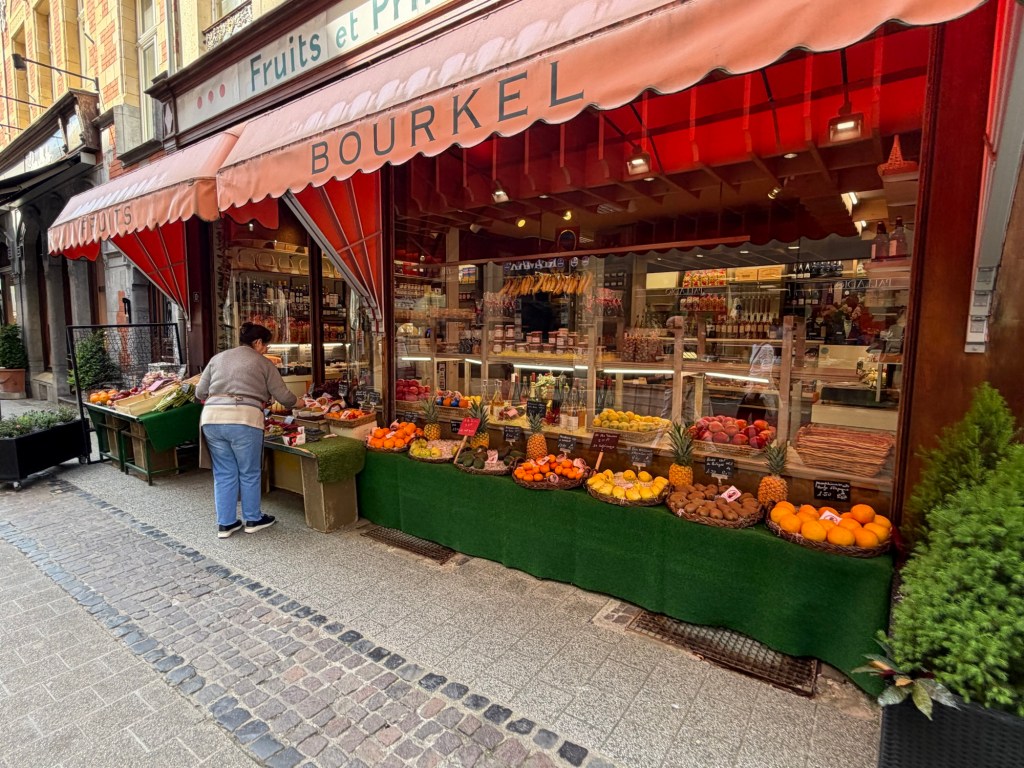
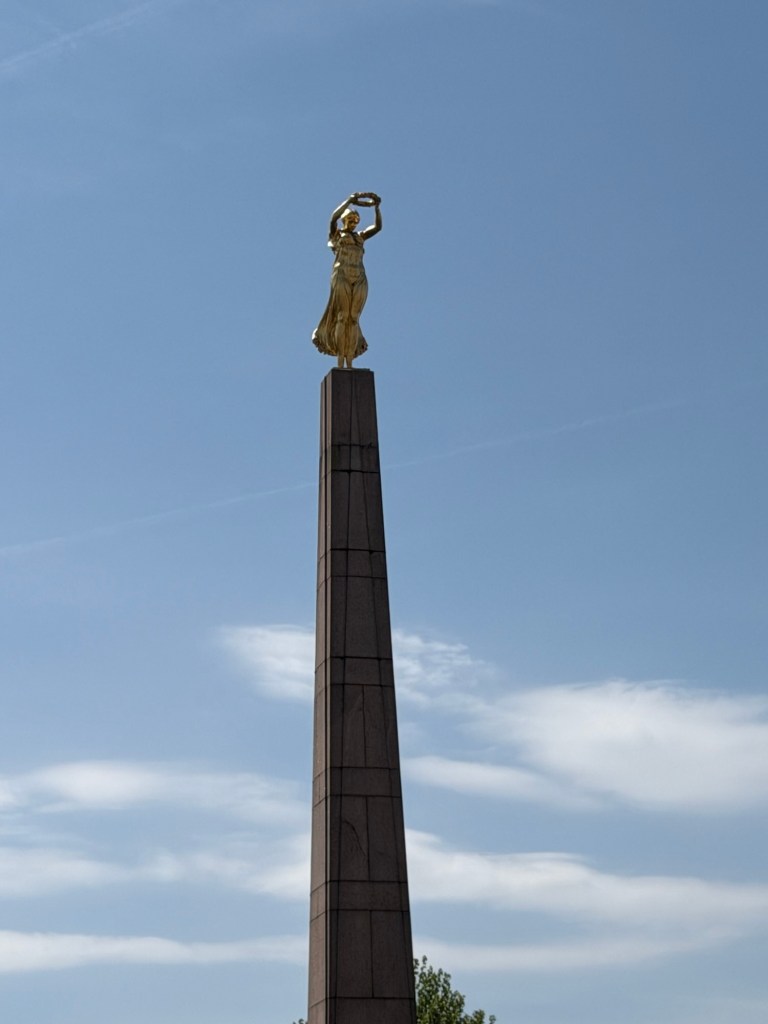
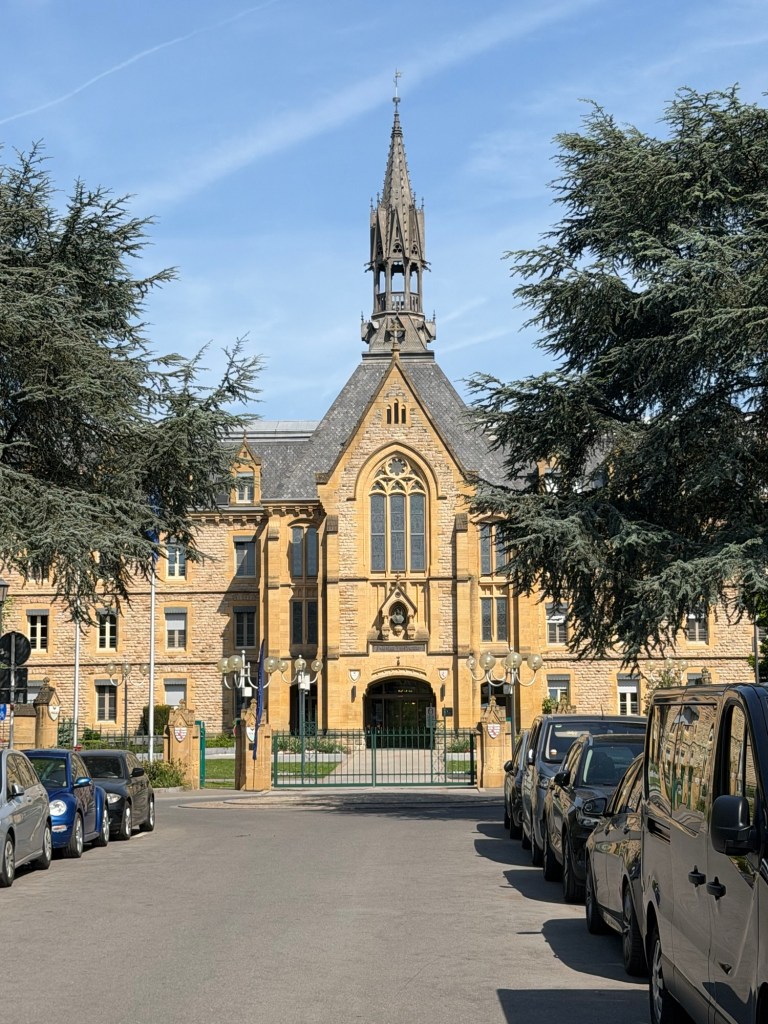
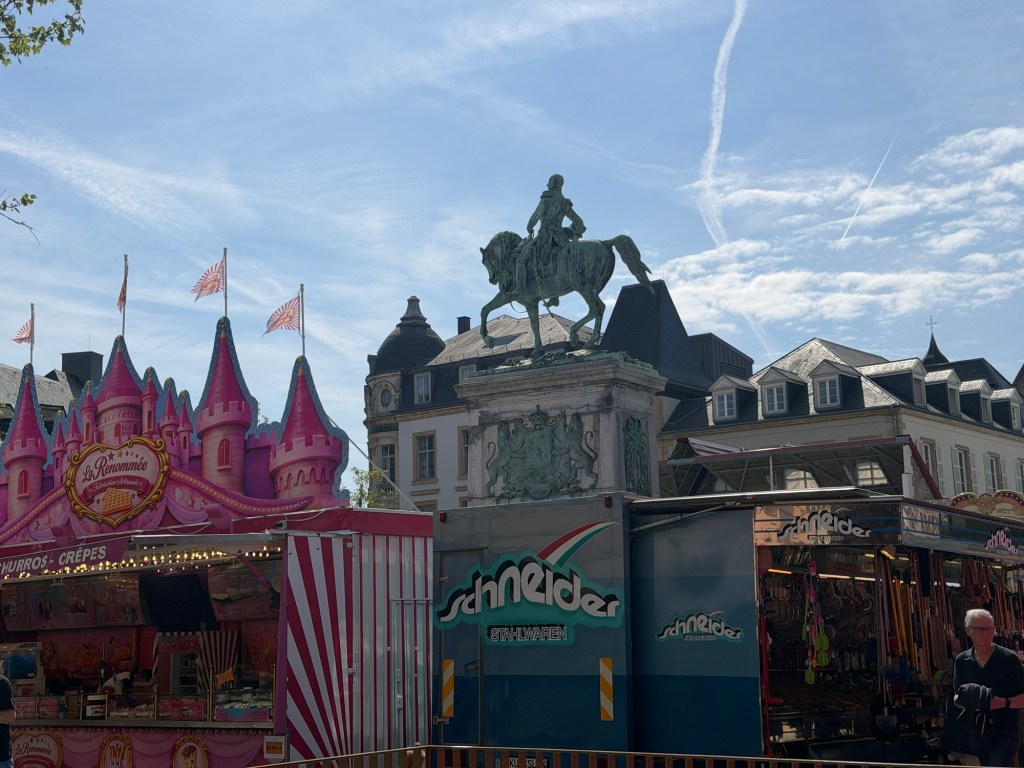
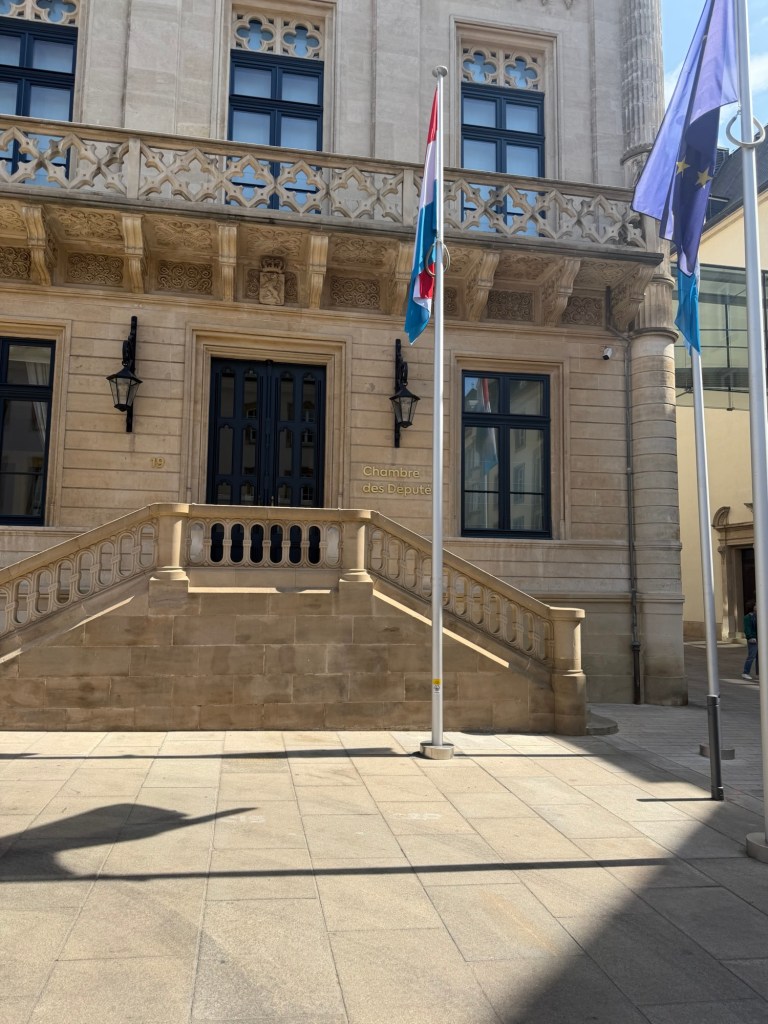
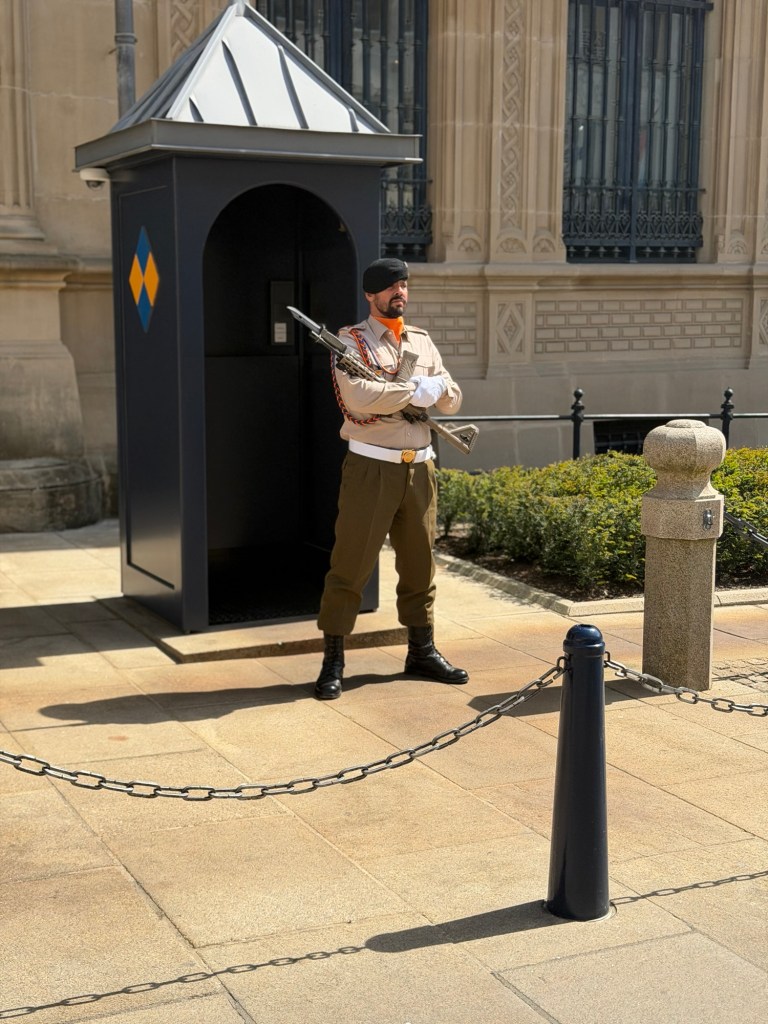
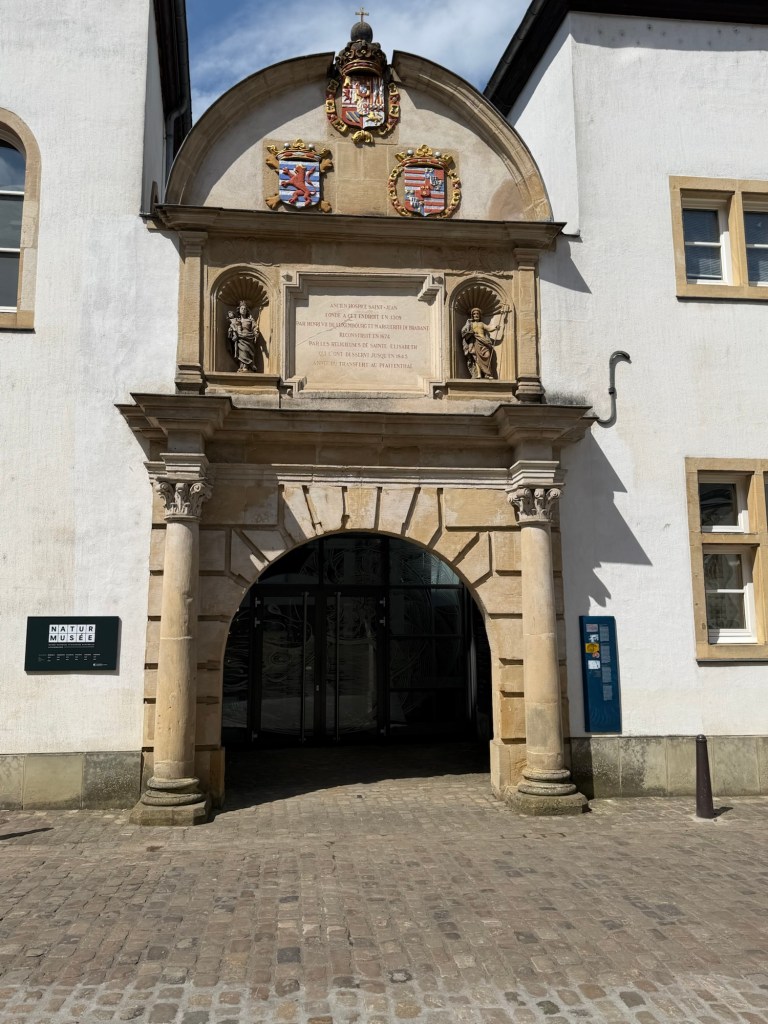
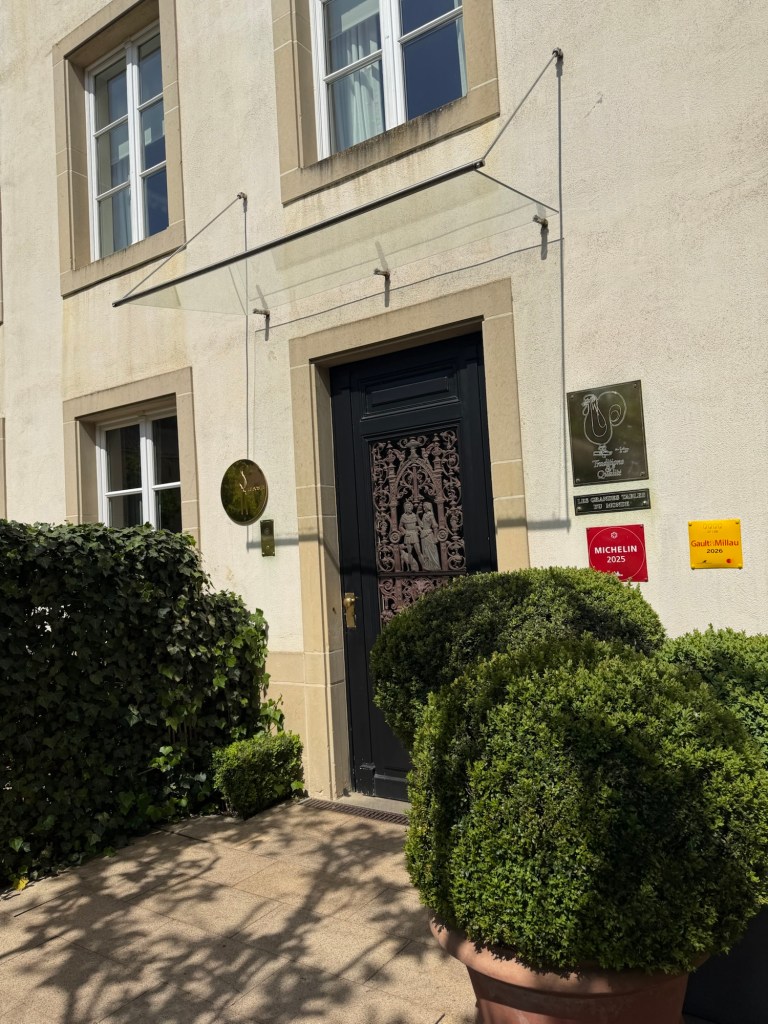
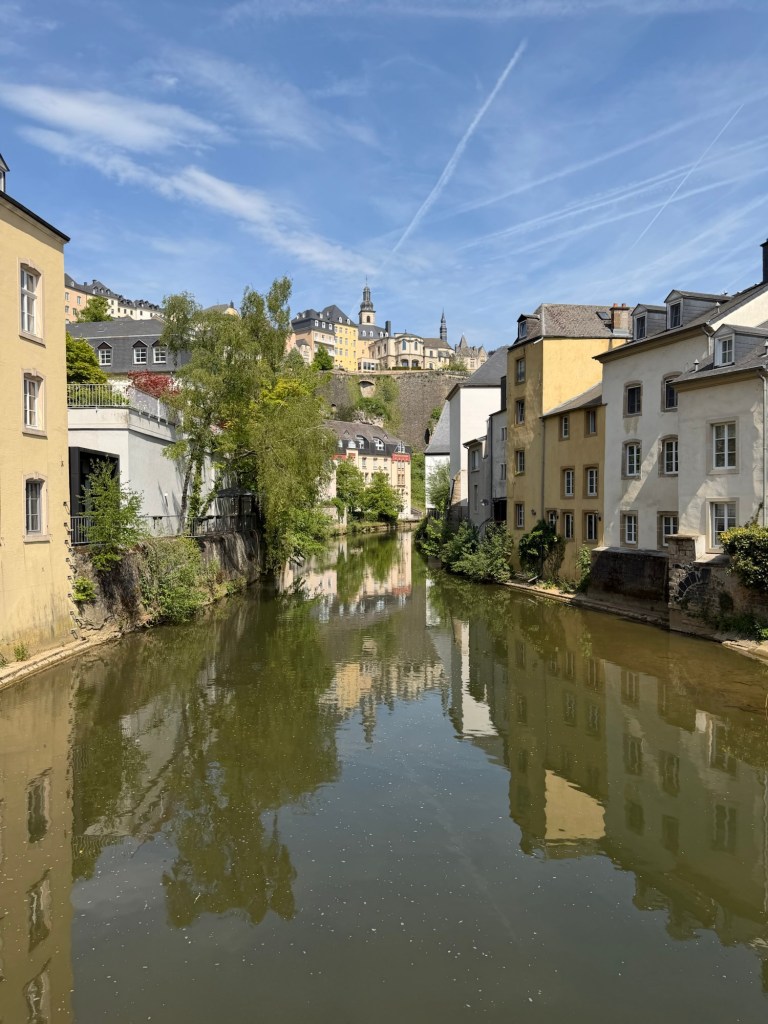
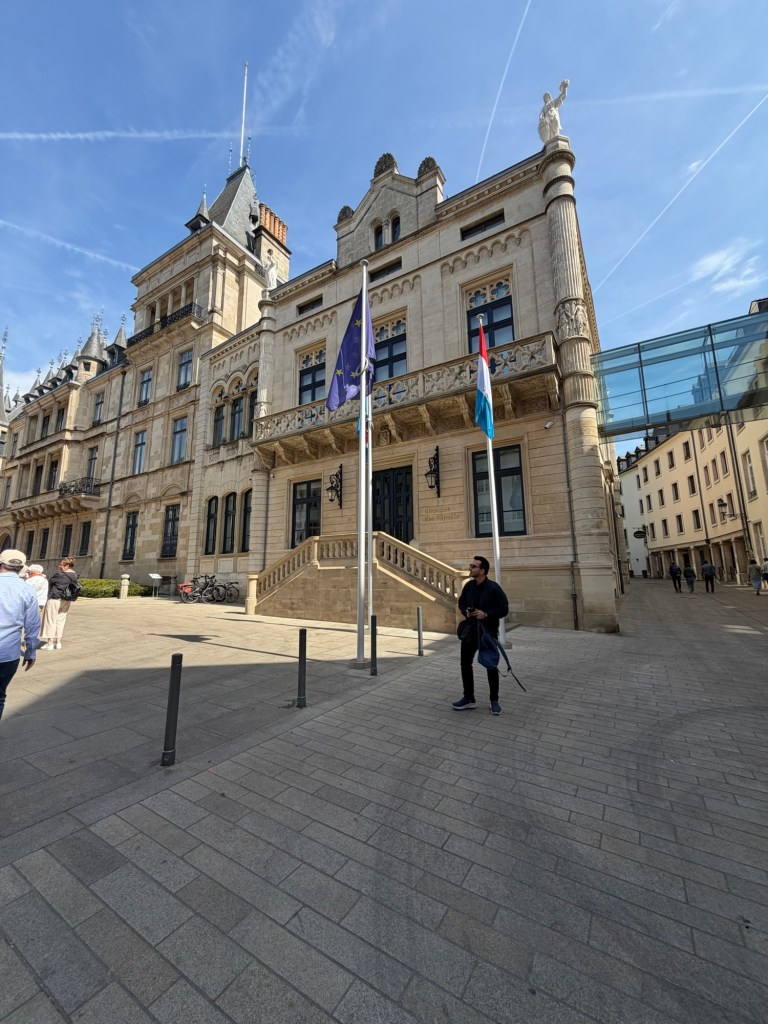
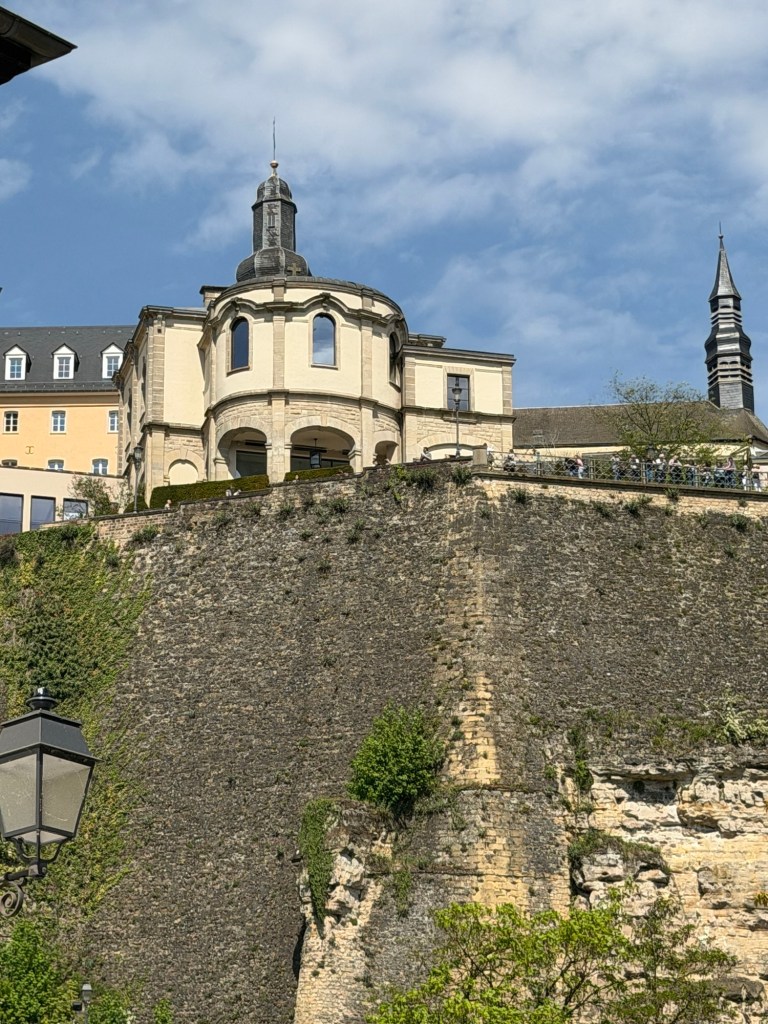

There were reminders everywhere that this is still a Grand Duchy — the palace guard standing watch outside the Grand Ducal Palace, monuments to Luxembourg’s independence and wartime sacrifices, and elegant government buildings tucked into quiet streets that suddenly open into squares and plazas.
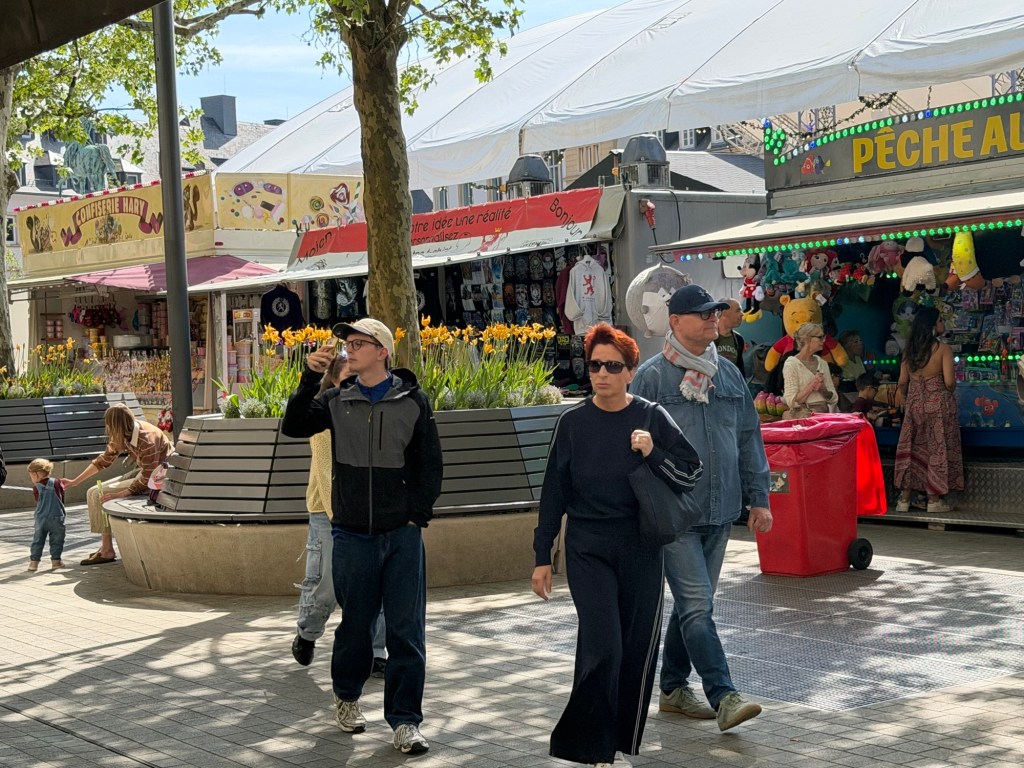
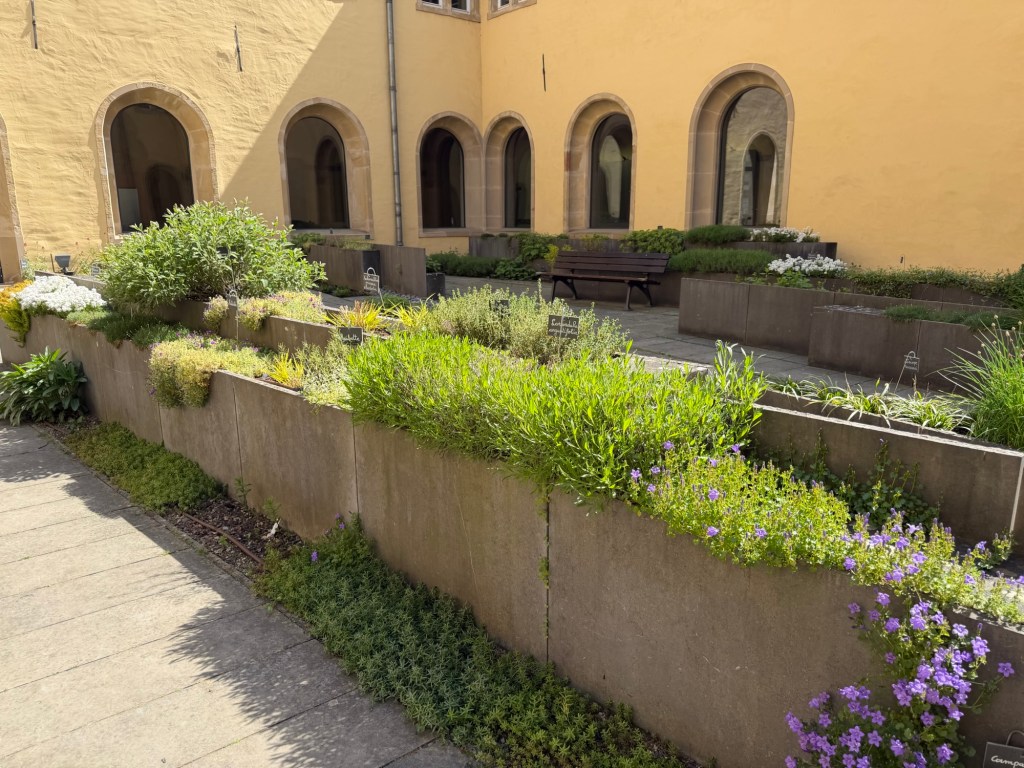
At one point we walked past a fair being set up right beside statues and centuries-old buildings, which somehow felt very Luxembourg — medieval, modern, formal, and relaxed all at the same time. Even the old monastery courtyards and gardens felt perfectly maintained without seeming overly polished.
It’s a small capital city, but it has an outsized sense of history.
And of course, no visit to Luxembourg was complete without stopping for the famous Lea Linster madeleines.
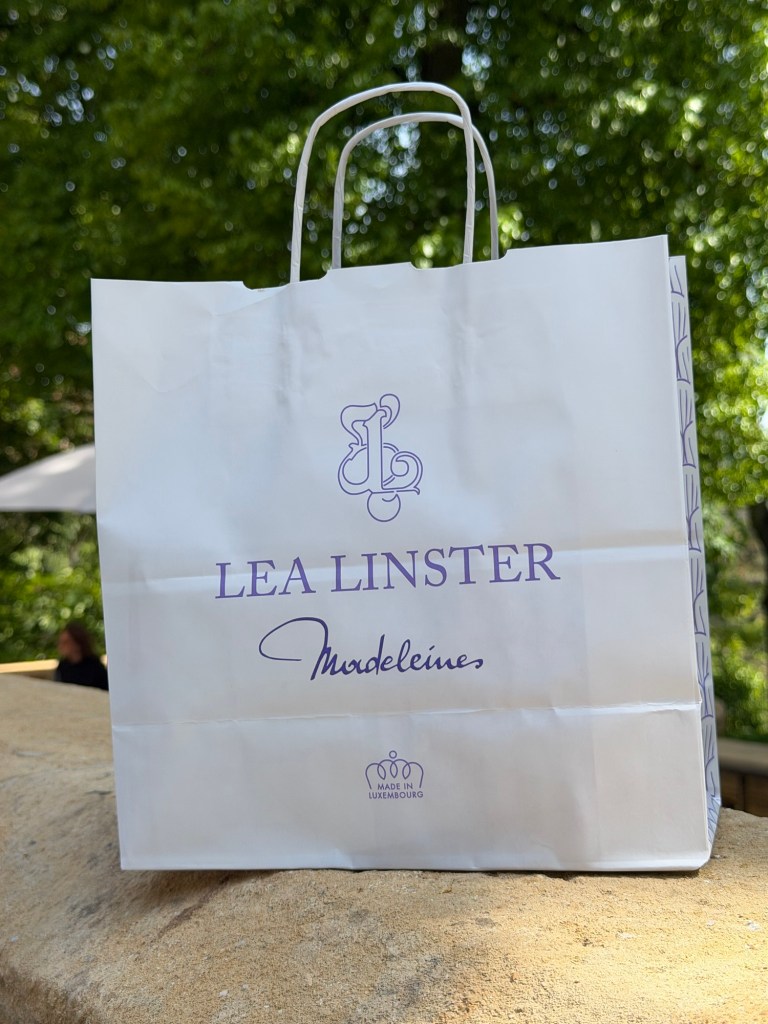
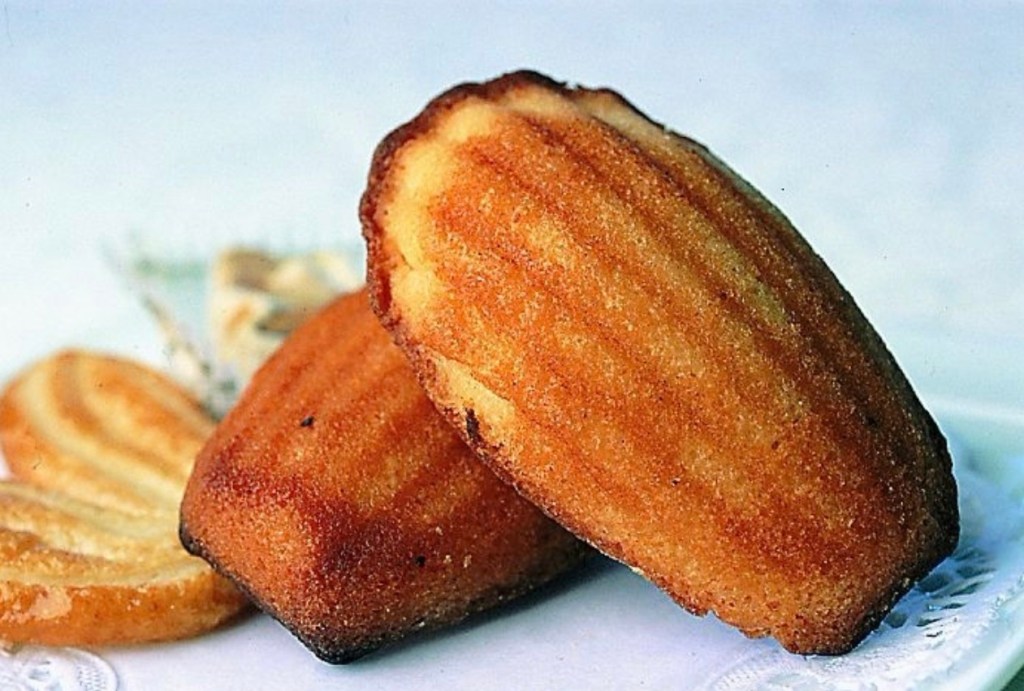
And yes — the Lea Linster madeleines may have been the most dangerous purchase of the trip. Warm, buttery, light, and somehow impossible to stop eating once the bag was opened. Luxembourg’s version of “I’ll just have one” absolutely did not work out.
One of the small things I loved about Luxembourg was how much pride there seemed to be in local specialties — whether it was pastries, wine, architecture, or even the way the city presents itself. Small country, but very self-assured.
We said our goodbyes to Andre back at the hotel after two memorable days exploring Luxembourg with him. Old-school in the best sense — jacket, ascot, paper maps, and stories that made the city come alive.
Soon afterward, we departed for Brussels. And by that point, our good friend Muhammad was back behind the wheel, guiding us north once again as we left the Grand Duchy behind.