The rainy 2½-hour drive from Luxembourg City to Brussels gave us time to reflect on another memorable chapter of our journey, as Mohammed drove us north toward Belgium.
Arriving at Hotel Amigo, just steps from the Grand-Place, we checked into one of Brussels’ most celebrated hotels. Elegant yet welcoming, the Amigo blends contemporary luxury with unmistakable Belgian character, and its warm, understated atmosphere immediately made us feel at home in the heart of the city. That said, while the hotel retains its charm, we felt some areas were beginning to show their age and could benefit from a thoughtful refresh.
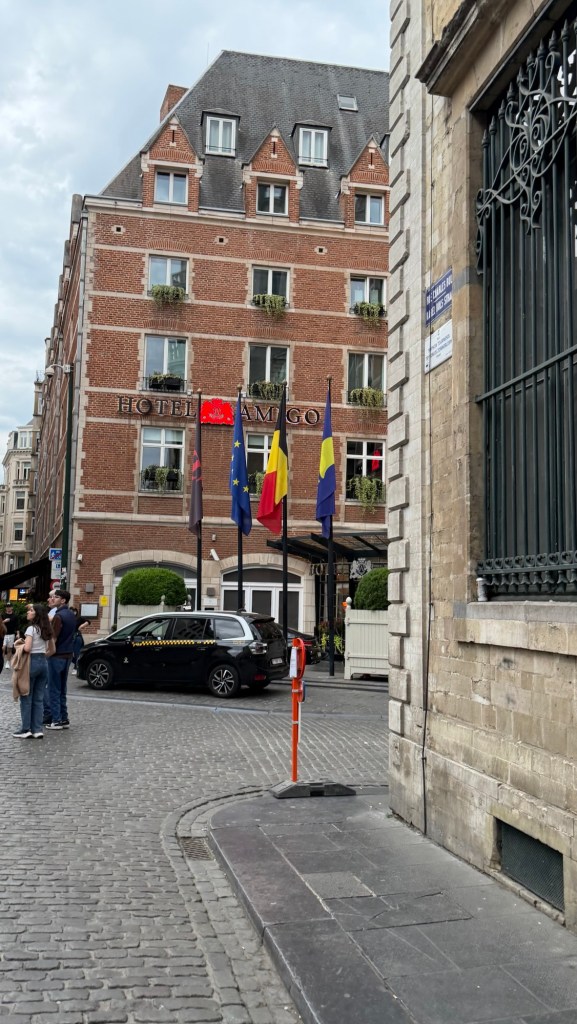
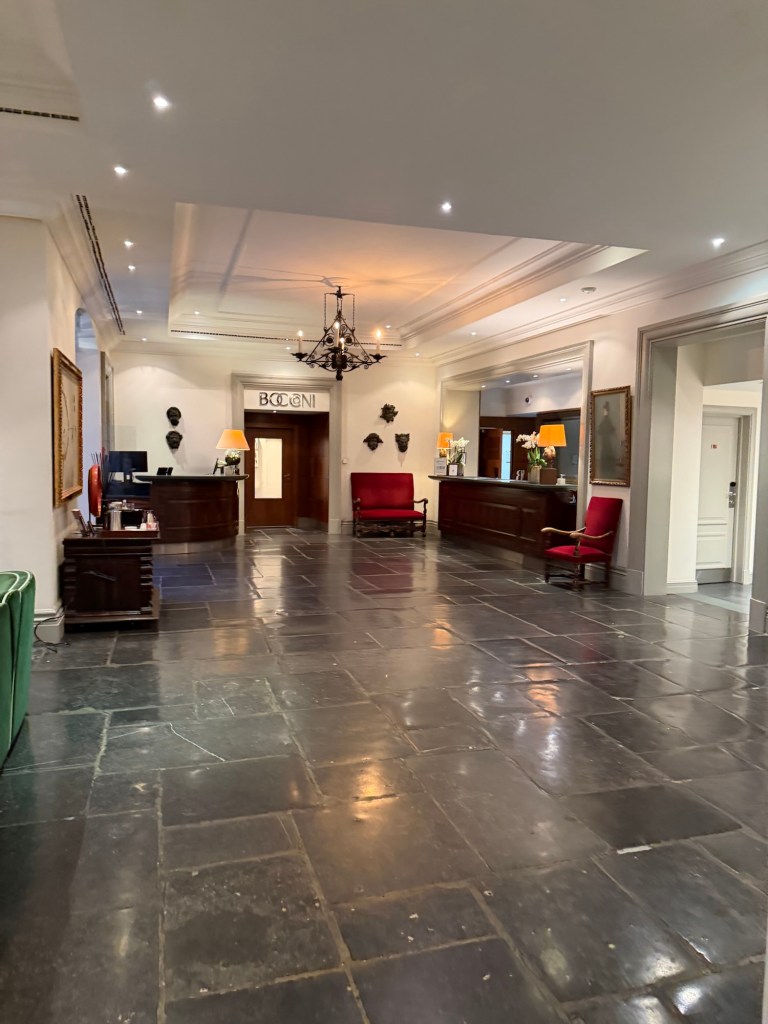
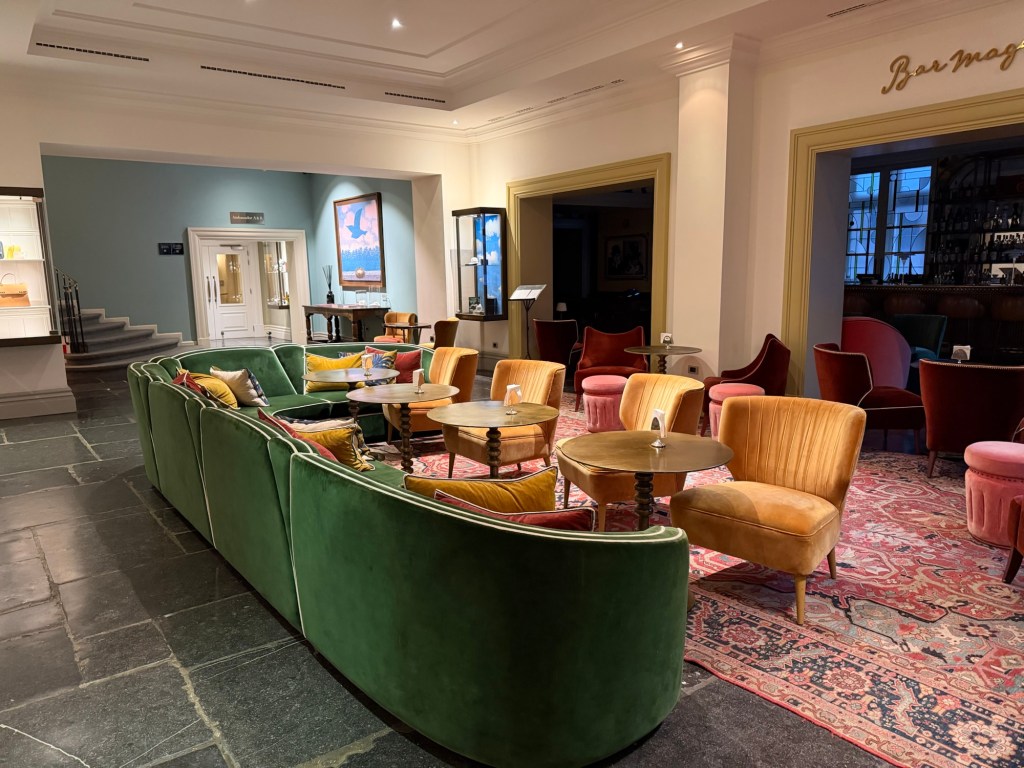
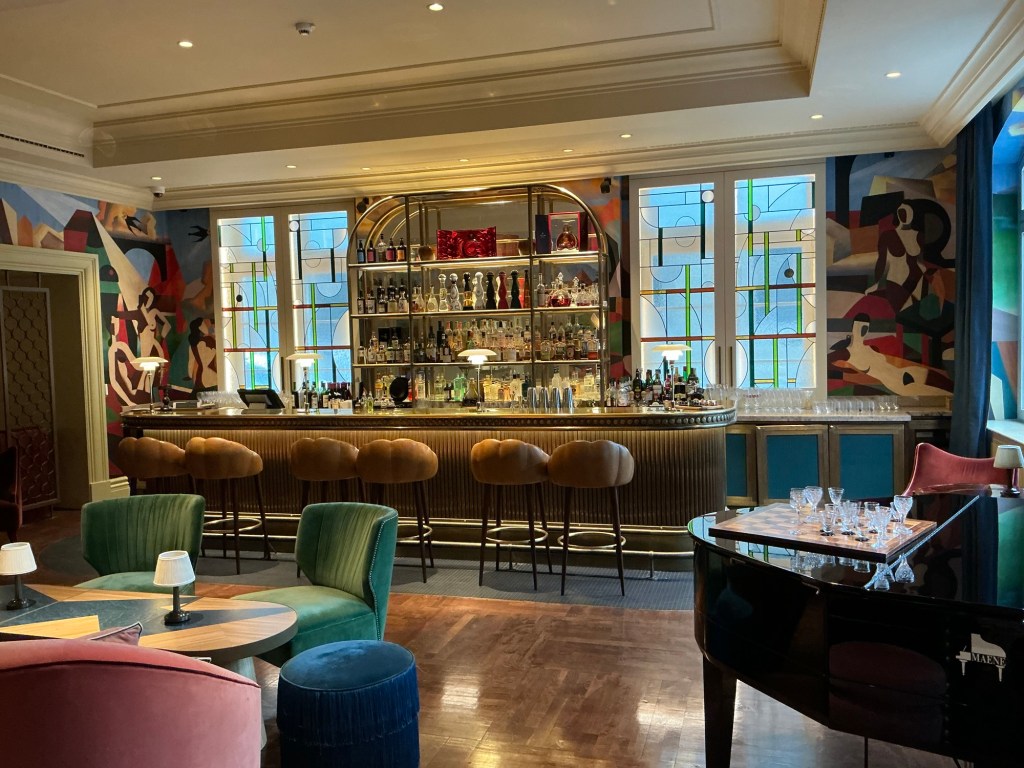
After a rainy walk and dinner just off the Grand-Place, at Aux Armes de Bruxelles, we retired for the evening.
Early the next morning, we met our guide, David Jean Jacques (david.jj@belgacom.net), who was waiting for us in the hotel lobby and immediately invited us to call him JJ. We would spend the next two days exploring Brussels with him. It quickly became apparent that JJ was truly “a guide’s guide.” A former navigator in the Belgian Air Force, serving on AWACs planes, he moved through the city effortlessly, even in the rain, seeming to know every street, shortcut, hidden passageway, and overlooked corner by instinct. Whether leading us through bustling squares, quiet neighborhoods, or tucked-away courtyards, he combined an encyclopedic knowledge of Brussels with an engaging storytelling style that brought the city’s history and culture vividly to life. Within minutes, we knew we were in exceptionally capable hands.
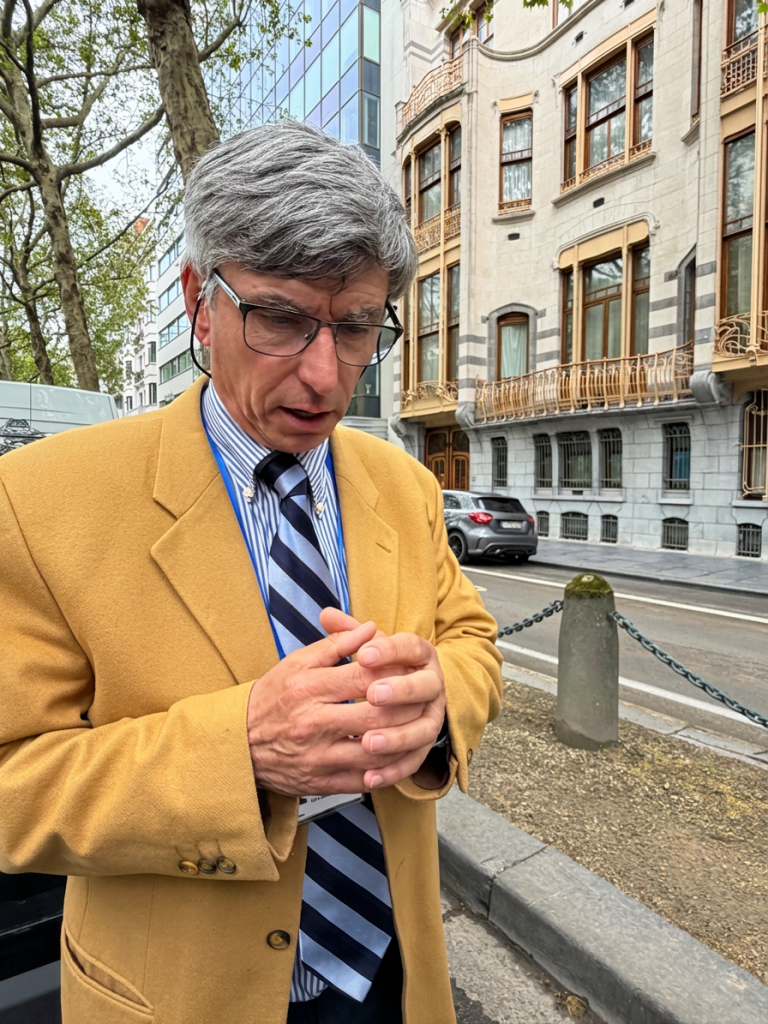
What made JJ especially remarkable, however, was not just his ability to navigate Brussels, but the extraordinary depth of his knowledge. Whether discussing history, architecture, politics, art, or culture, his understanding seemed limitless. Spending time with him transformed a simple city tour into an immersive master class on Brussels and Belgium itself.
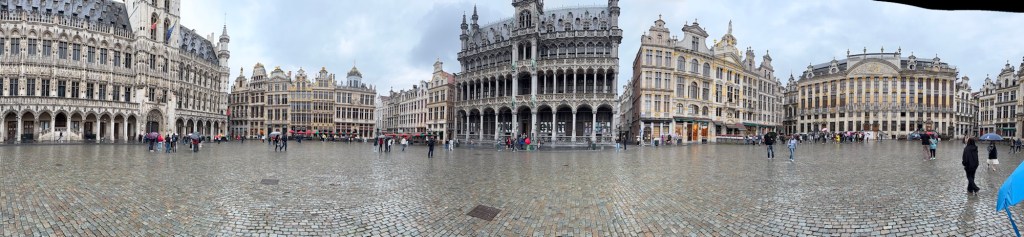
Our first stop that morning with JJ was the magnificent Grand-Place, one of the great public squares of Europe and unquestionably the historic heart of Brussels.
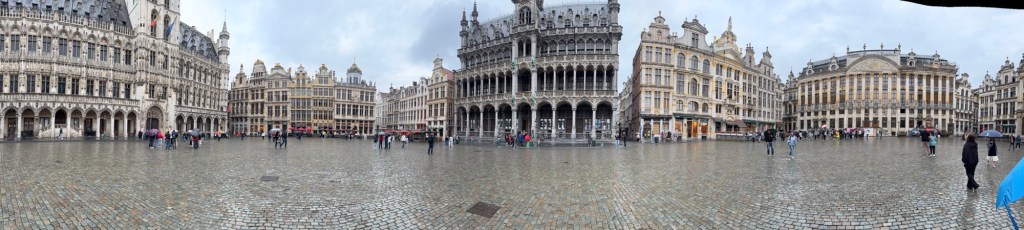
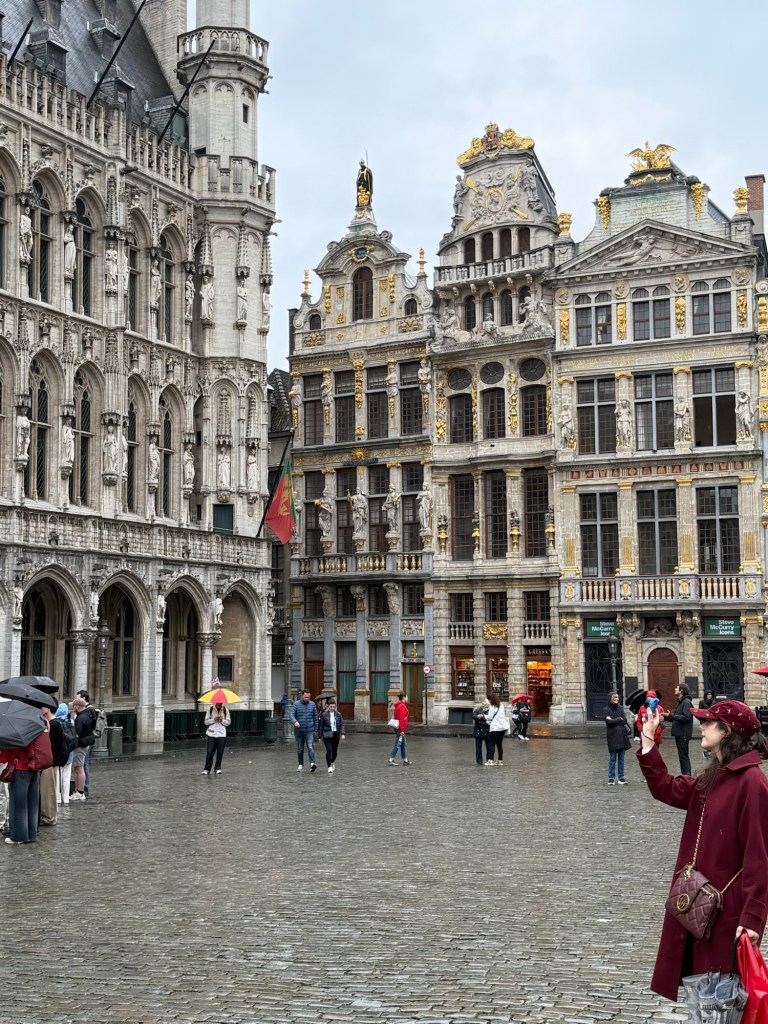
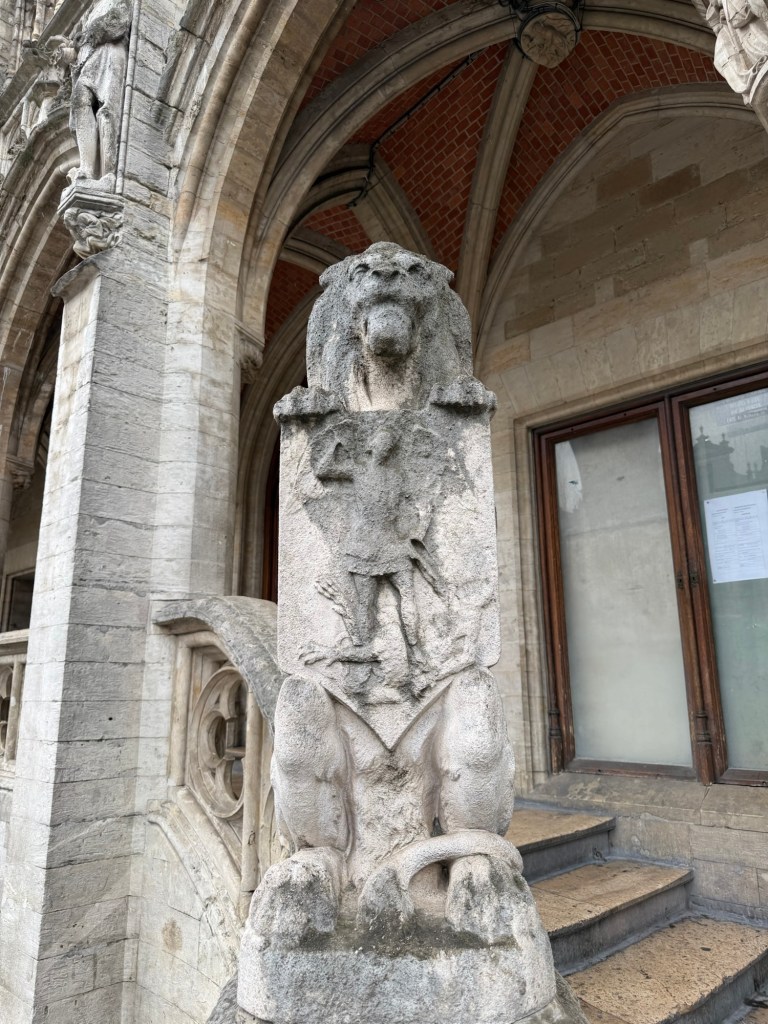
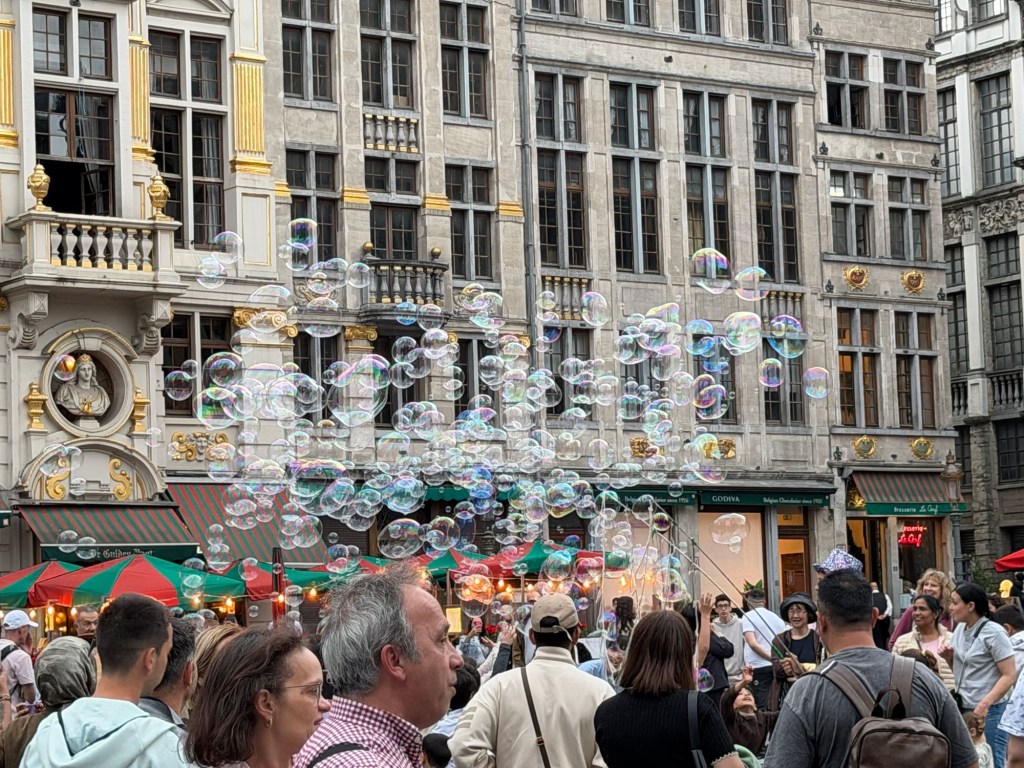
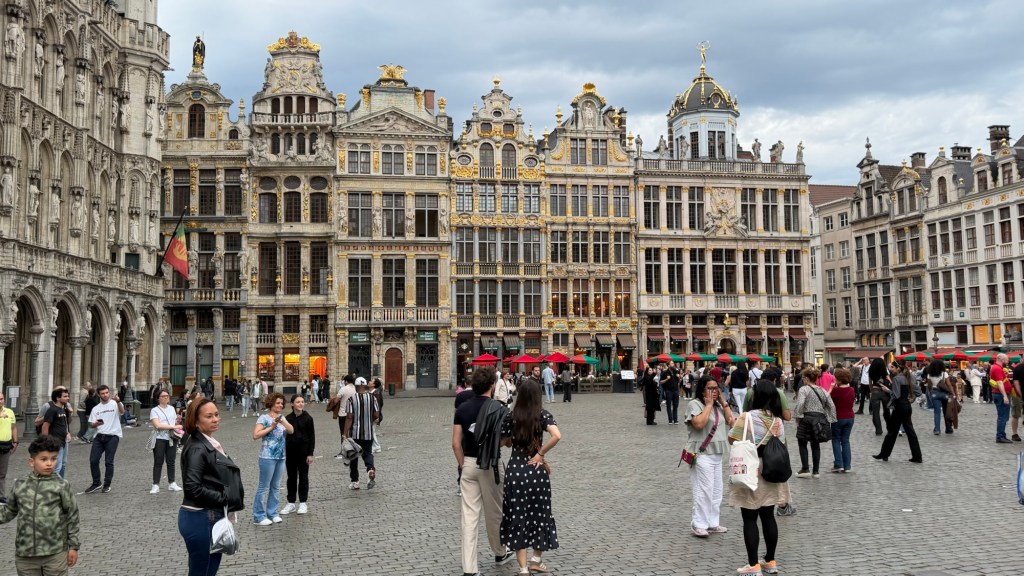
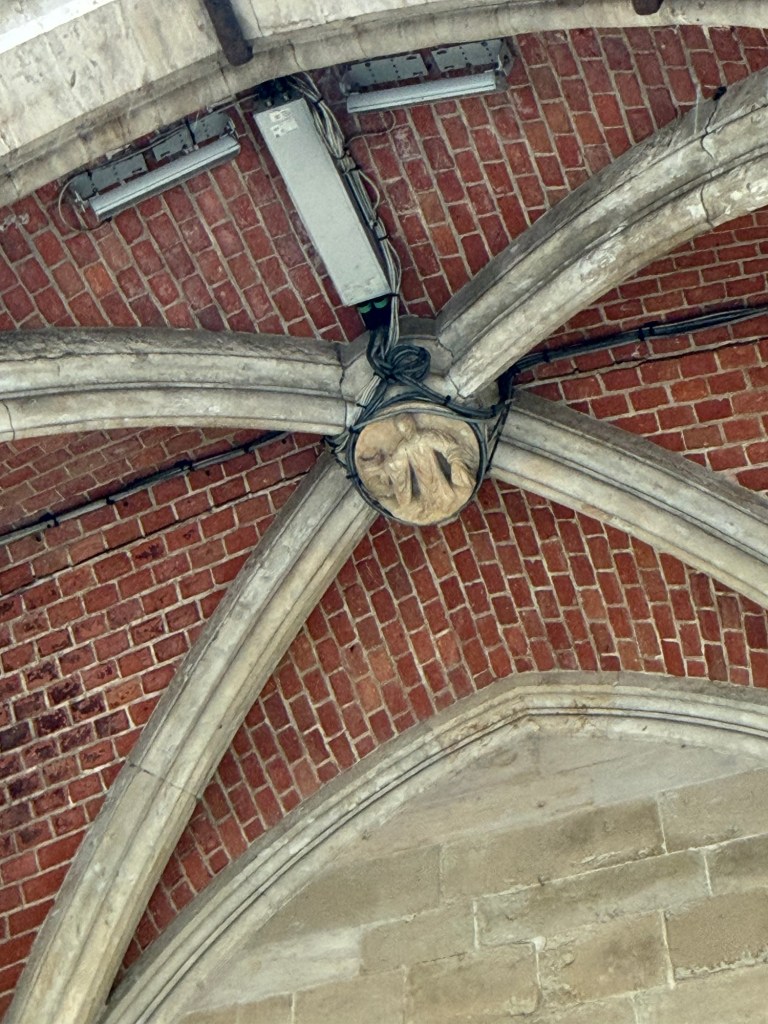
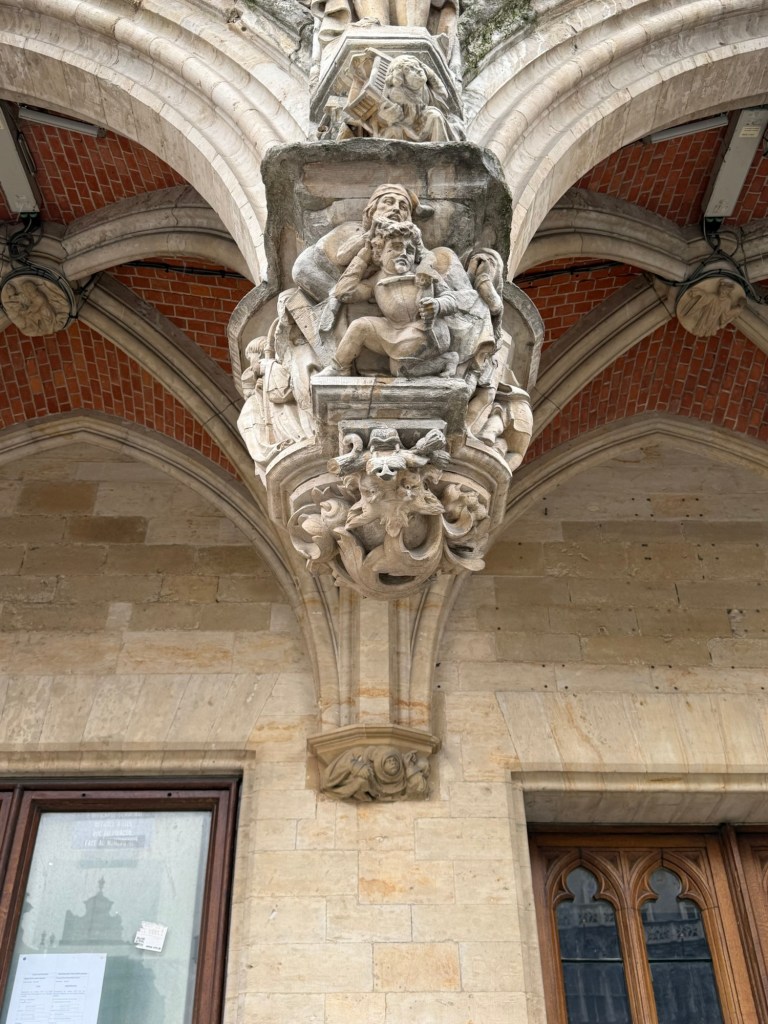
Even in the rain, the square was breathtaking. The soaring Gothic Town Hall, completed largely in the 15th century, stood in dramatic contrast to the richly ornamented guild houses whose gold-leaf details glowed against the gray Belgian sky.
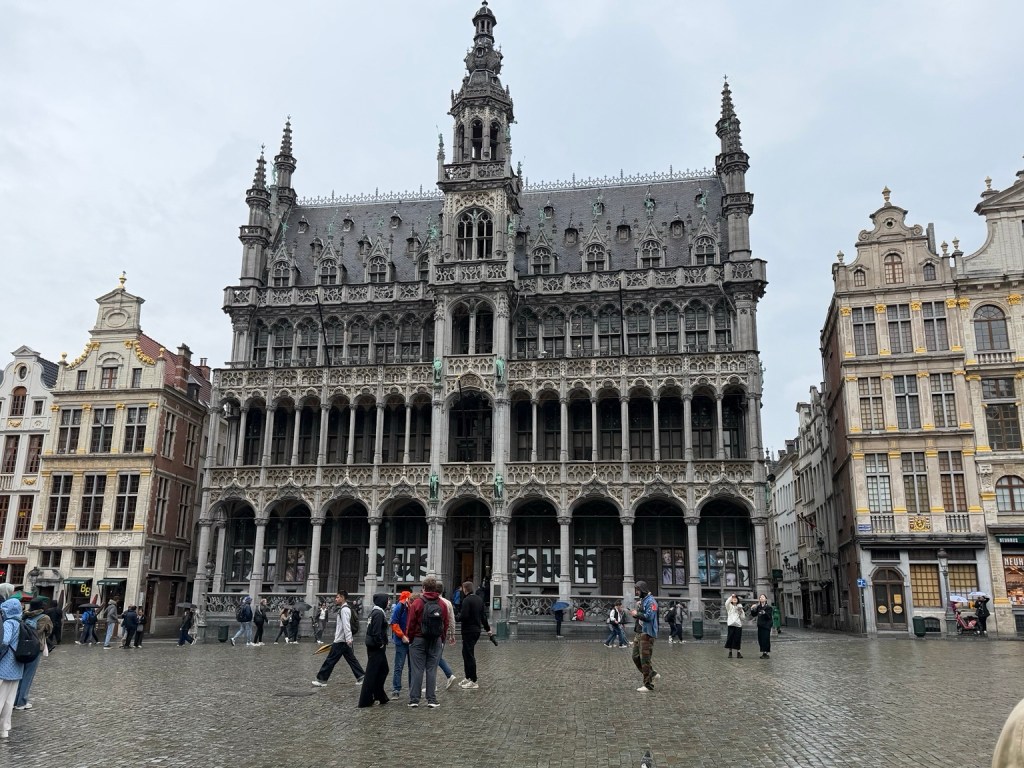
As JJ explained, although the square feels medieval, much of what we see today was rebuilt after the French bombardment of Brussels in 1695, when most of the Grand-Place was destroyed by the artillery fire ordered by Louis XIV. Remarkably, the guilds rebuilt the square in only a few years, creating the extraordinary collection of Baroque façades that now define Brussels. Each guild house reflected the profession and wealth of the organization that occupied it — brewers, boatmen, bakers, and merchants all competing architecturally with one another.
At one point, hundreds of bubbles floated through the square, briefly transforming the solemn historic setting into something whimsical and almost surreal. Rain slicked the cobblestones, umbrellas drifted through the square, and the buildings shimmered in the soft light, making Brussels feel less like a museum and more like a living work of art.
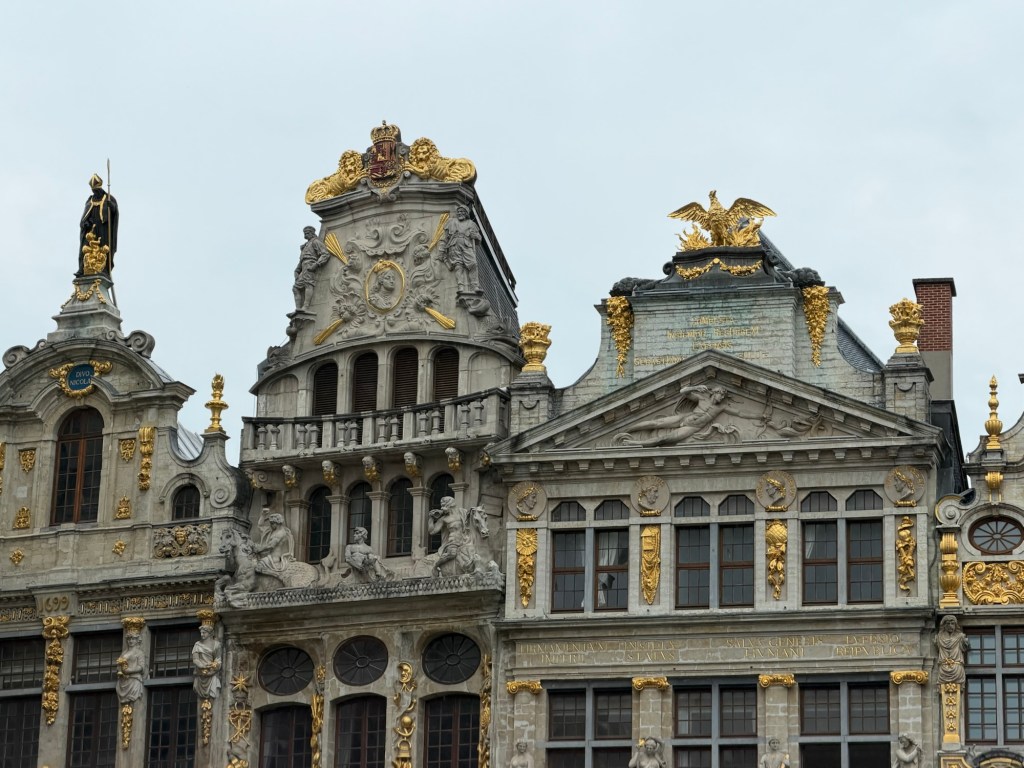
One of the architectural highlights JJ pointed out in the Grand-Place was the remarkable Maison de la Louve (“House of the Wolf”). Rebuilt after the devastating 1695 French bombardment, the building once served as the guild house of the archers. Like so many structures surrounding the square, its façade is filled with symbolism meant to project power, prestige, and civic pride.
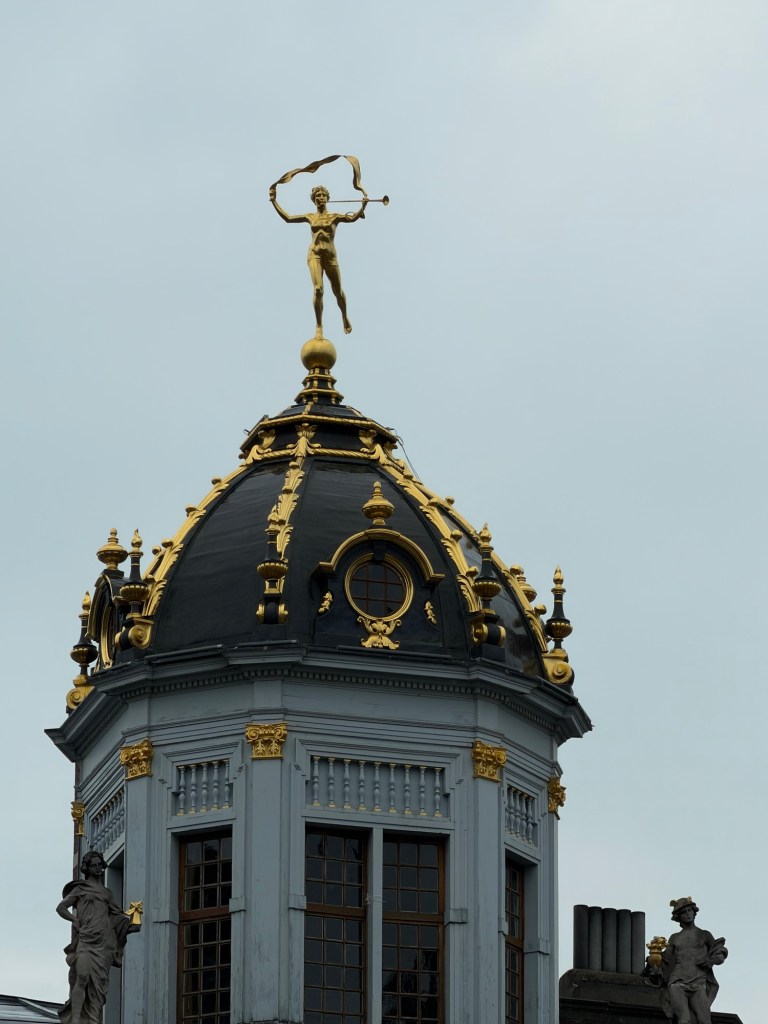
What immediately caught our attention was the dramatic black-and-gold dome crowned by a gilded figure of Fame blowing a trumpet into the Brussels sky. Against the gray skies and rain-soaked stone, the gold accents throughout the square seemed almost to glow from within. JJ explained that this ornamentation was far more than decorative vanity.
Throughout the square, statues, crests, mythological figures, scrollwork, and architectural flourishes shimmered above the wet cobblestones, giving the Grand-Place a richness and theatricality unlike almost any other public square in Europe. Standing there, it became easy to understand why the Grand-Place is considered one of the world’s great urban spaces.
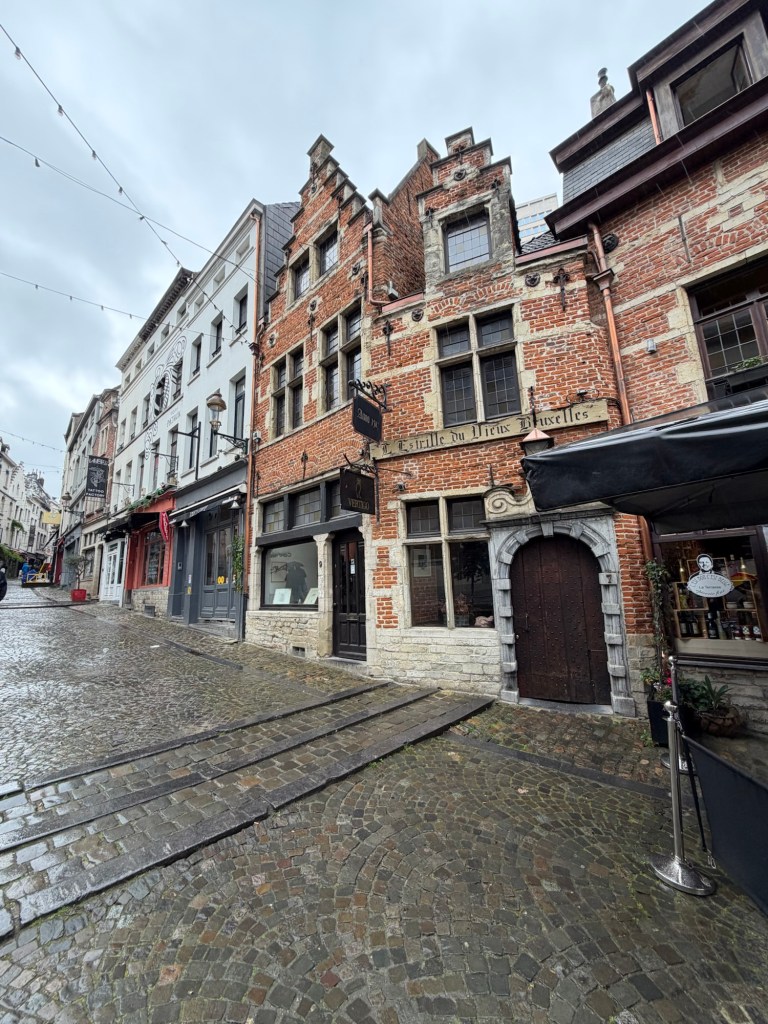
Leaving the Grand-Place with JJ felt like turning the page from monumental Brussels to intimate Brussels. Within only a few streets, the city shifted from grand Gothic façades and gilded guild houses to winding lanes filled with comic art, eccentric cafes, medieval brick buildings, and unexpected surprises around nearly every corner.
Of course, one stop had to be Manneken Pis, the city’s famously irreverent little fountain that somehow became one of Belgium’s great cultural symbols.
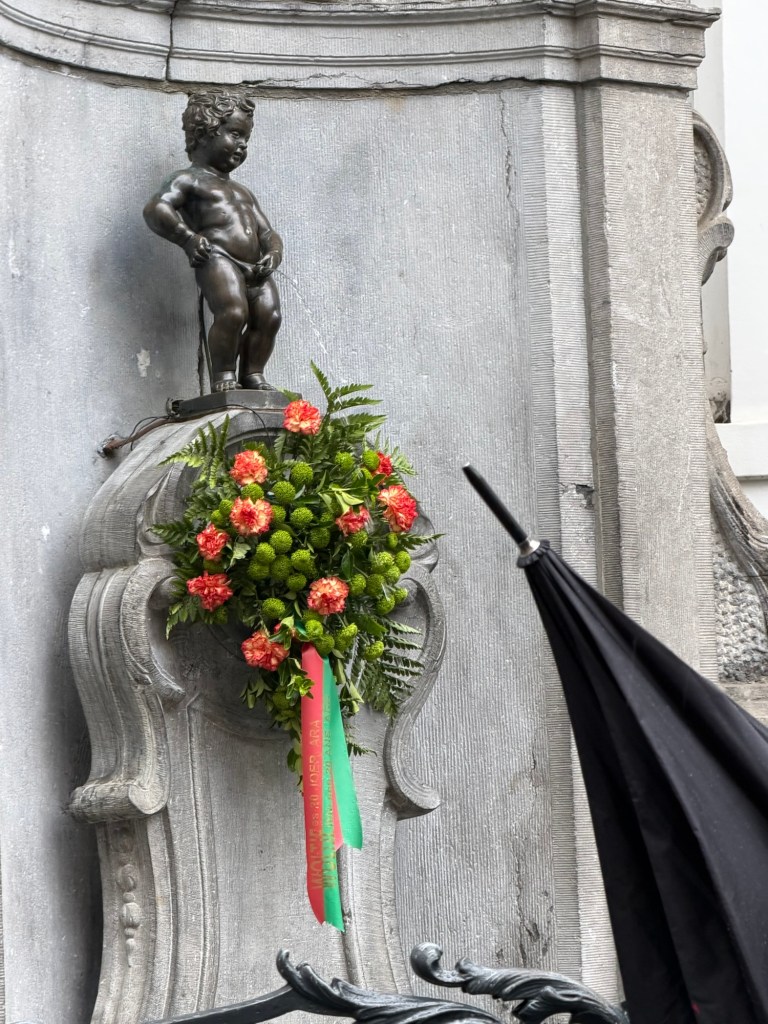
JJ explained that the tiny bronze figure reflects a very Belgian sense of humor — playful, self-deprecating, and resistant to taking itself too seriously. Despite its size, crowds gathered around it in the rain as if visiting a national monument.
Legend says that during a siege of Brussels, enemies placed explosives near the city walls. A small boy named Julien supposedly noticed the burning fuse and saved the city by urinating on it, extinguishing the flame before the explosives detonated. The statue became a symbol of civic bravery mixed with distinctly Belgian humor.
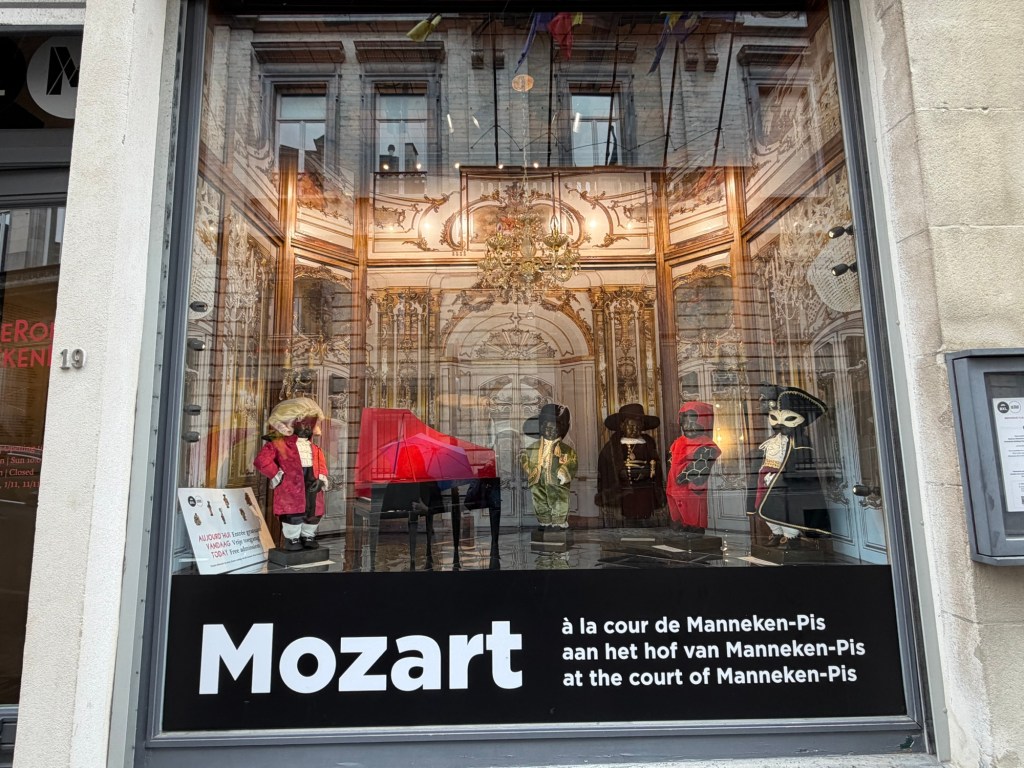
The Museum of the City of Brussels houses a remarkable collection of more than a thousand costumes that have been presented to the little statue over the centuries. Far from being merely museum pieces, many of these outfits are regularly placed on the statue according to an official dressing schedule. The costumes commemorate national holidays, cultural celebrations, visiting dignitaries, sporting events, and countless other occasions, reflecting the city’s history, humor, and enduring affection for one of its most beloved symbols.
Nearby, Brussels’ love affair with comic art was everywhere. Giant murals featuring Tintin and other beloved Belgian comic characters transformed ordinary buildings into enormous canvases.
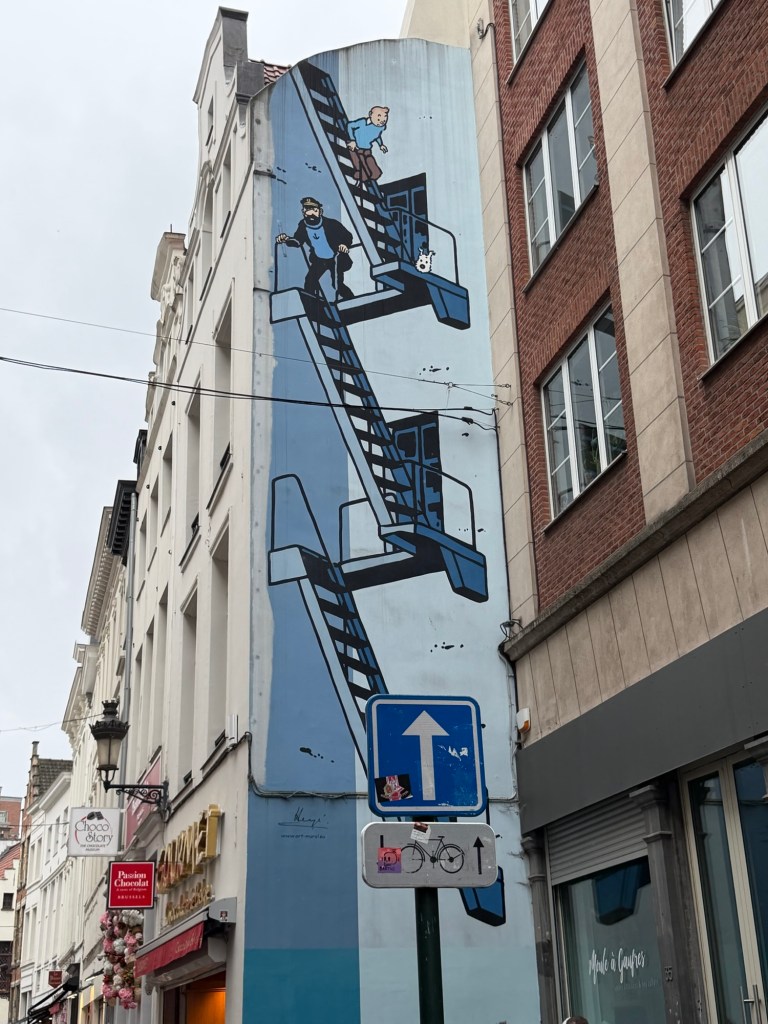
JJ reminded us that Belgium gave the world some of its most iconic comic traditions, and throughout the city these murals make Brussels feel unexpectedly youthful and alive.
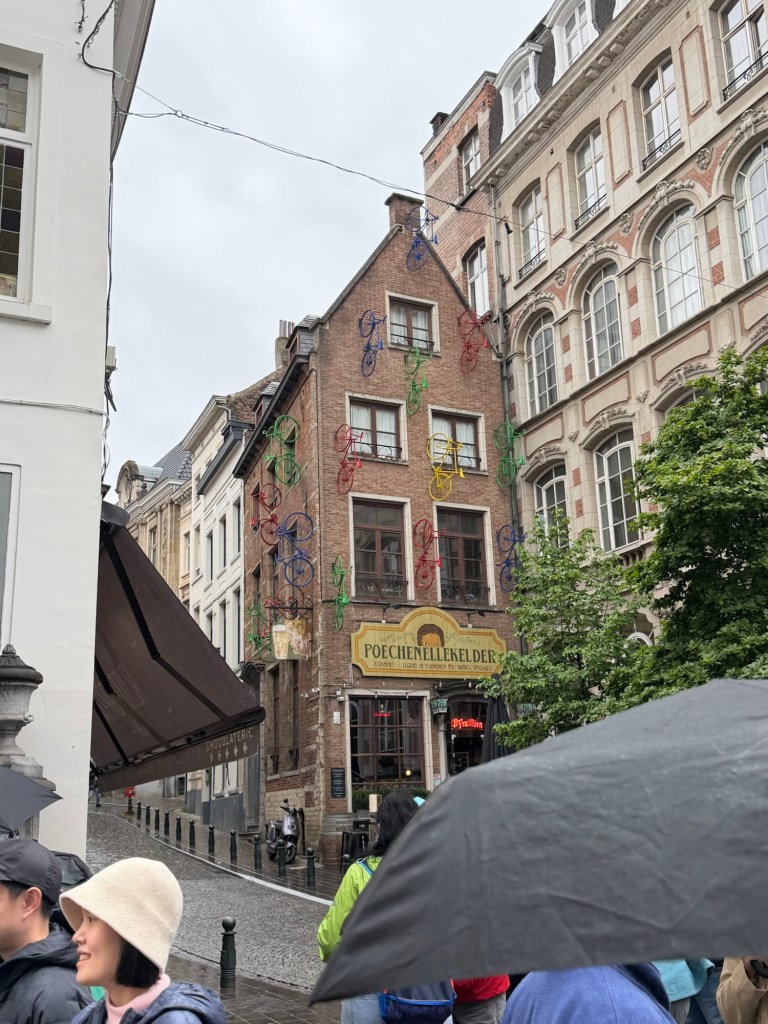
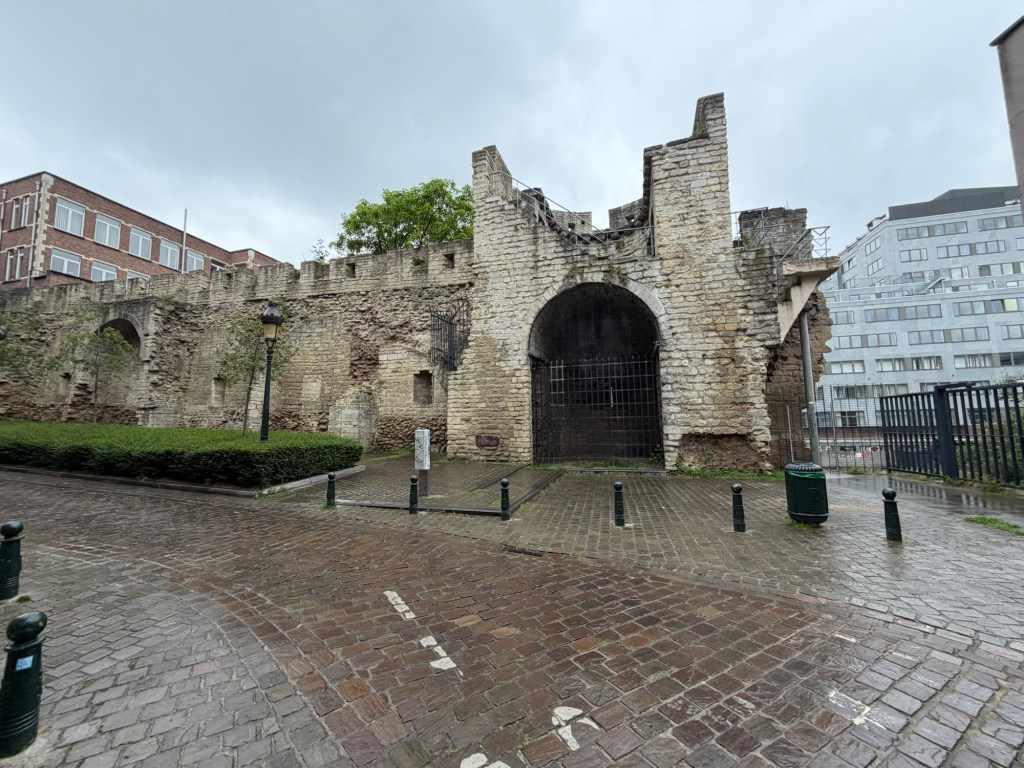
We also wandered past steep-gabled medieval houses, quirky bicycle-covered façades, hidden courtyards, and the weathered remains of the city’s ancient defensive walls. Even in the rain, Brussels never felt gray. It felt layered — medieval, artistic, humorous, elegant, and just slightly eccentric all at once.
Stepping inside Eglise Notre Dame du Sablon felt like entering another world. Inside, soaring Gothic arches lifted the eye heavenward while shafts of light filtered through magnificent stained-glass windows. Massive stone columns rose like a forest of pale granite, supporting ribbed vaults that seemed impossibly high above us. The windows were particularly striking, filled not only with biblical scenes but also with colorful heraldic shields representing centuries of noble families, guilds, and benefactors connected to the city.
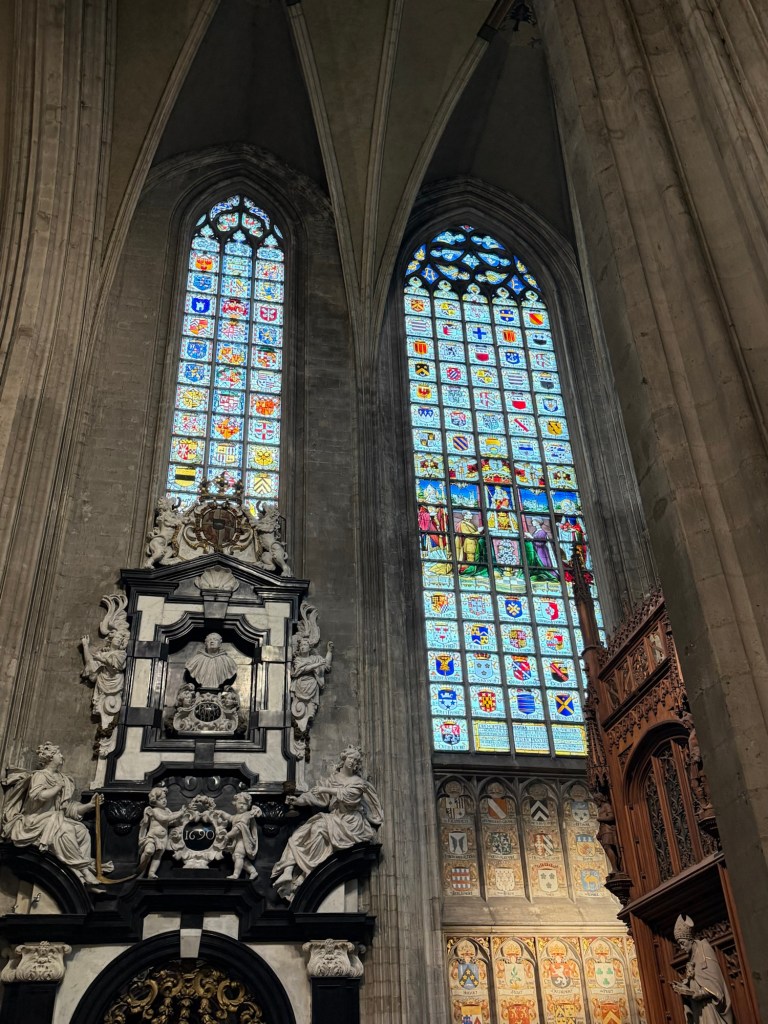
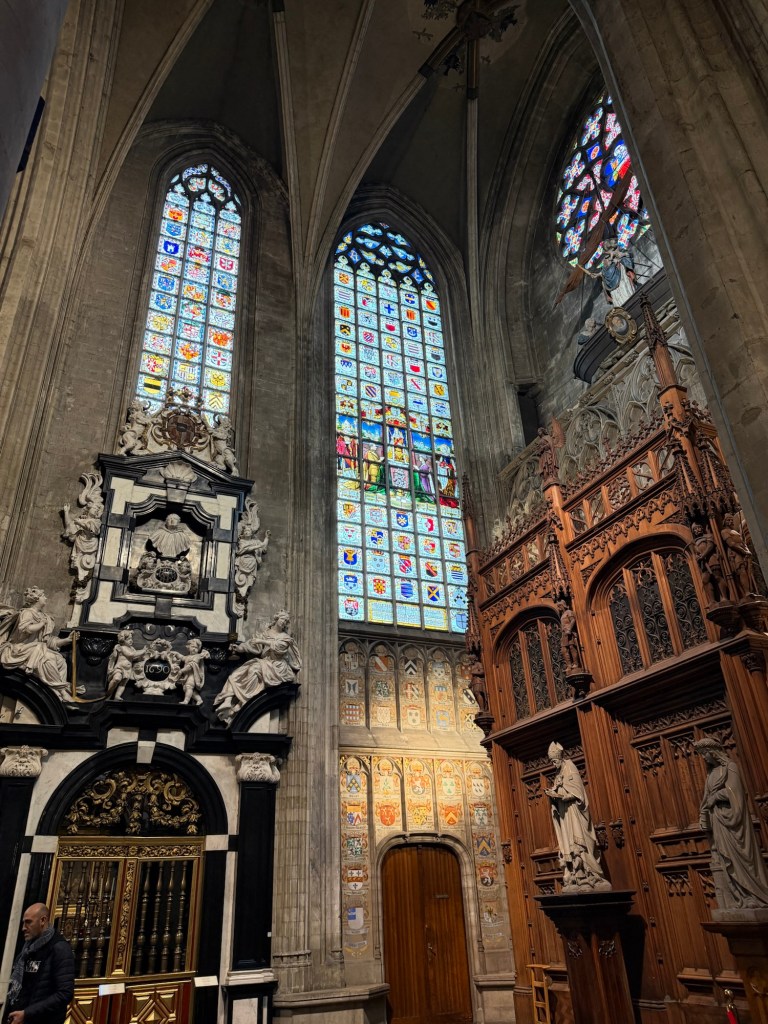
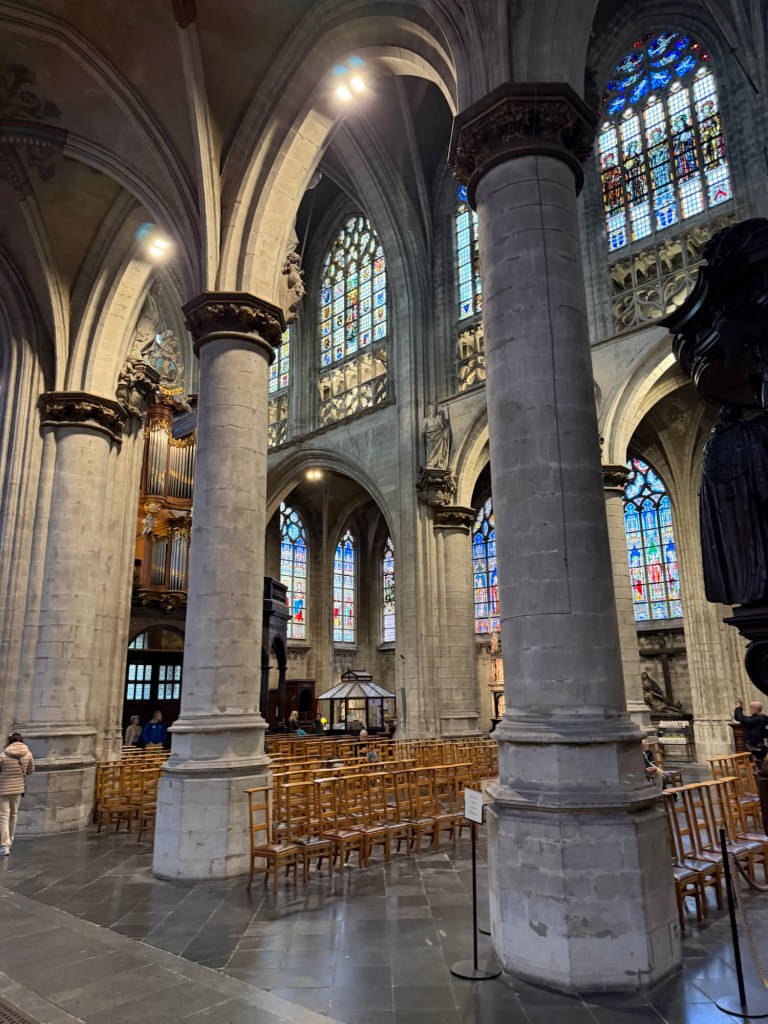
As we wandered through the cathedral, we paused to listen to the soaring voices of a choir echoing through the vast interior. These voices drifted beneath the vaulted ceilings and filled the nave, creating a sense of peace and timelessness. The richly carved wooden choir stalls, elaborate monuments, and brilliant stained glass reflected the wealth, faith, and artistic achievement that shaped Brussels over many centuries. It was a welcome refuge from the rain and one of the most memorable architectural experiences of our day in the Belgian capital.
Across the rain-slicked streets of Brussels, we came upon the elegant gardens of the Petit Sablon, one of the city’s most beautiful public spaces. Framed by ornate wrought-iron fencing and meticulously trimmed hedges, the garden centers on the monument to Count Egmont and Count Horn, two noblemen whose execution by Spanish authorities in 1568 helped ignite the revolt that would reshape the Low Countries. Bronze soldiers stand guard at the entrance, while statues representing Brussels’ historic guilds line the perimeter of the garden.
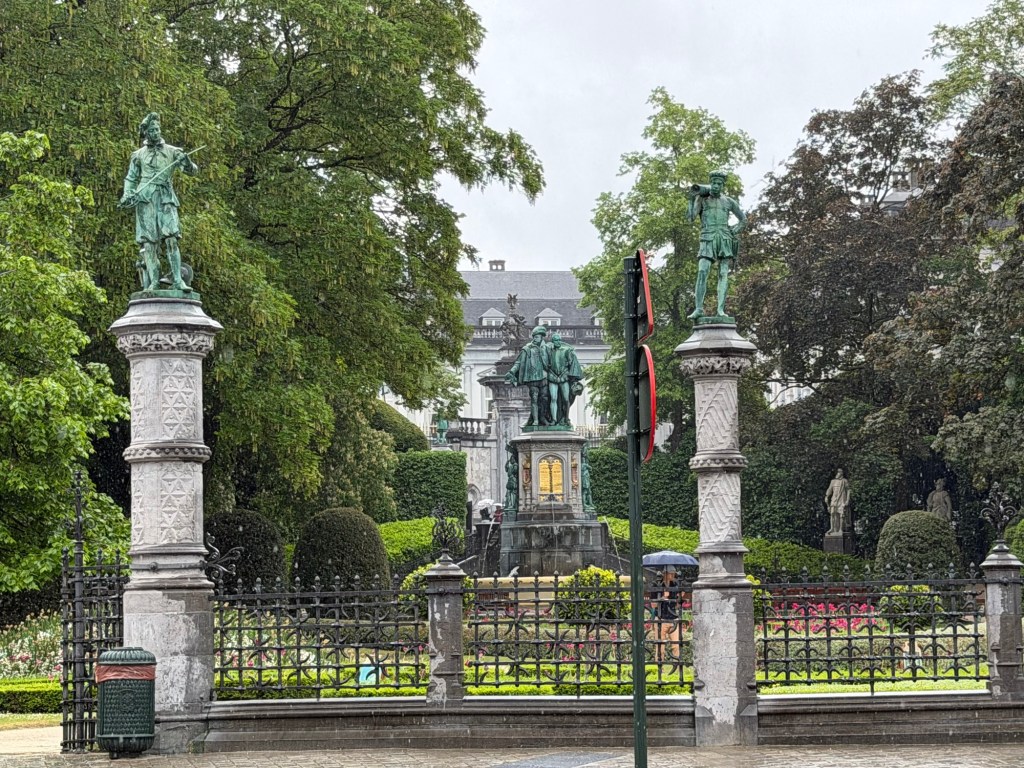
The steady rain lent the scene a special atmosphere. The bronze monuments glistened with moisture, the deep green hedges appeared almost luminous, and the colorful flower beds provided a welcome contrast to the gray Belgian sky. With umbrellas dotting the pathways and few visitors about, the garden felt peaceful and reflective—a fitting setting for a monument dedicated to figures whose sacrifice became part of the region’s struggle for freedom and identity
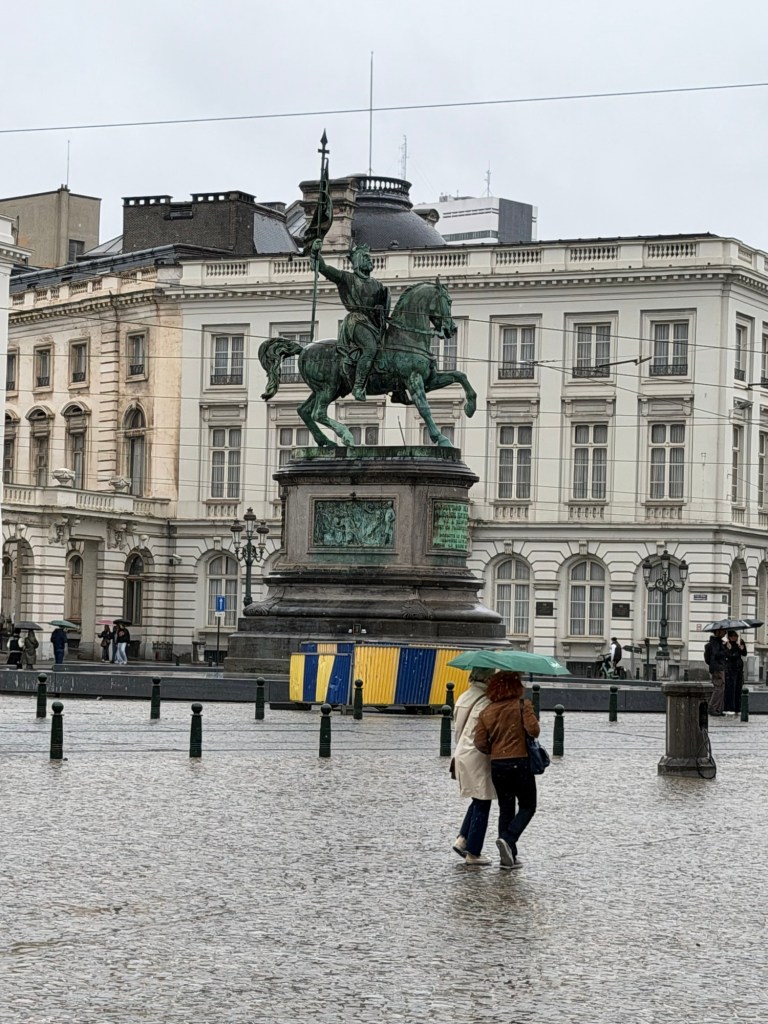
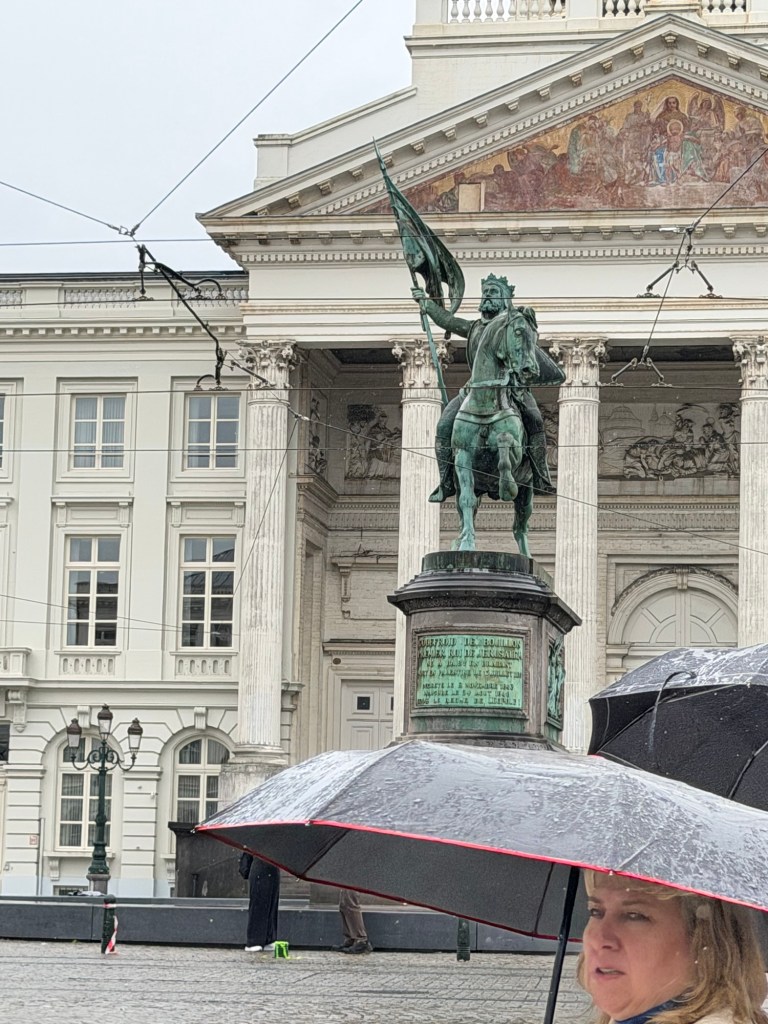
Standing in Brussels’ Royal Quarter, we found ourselves face-to-face with the imposing equestrian statue of Godfrey of Bouillon in the center of the Place Royale. Godfrey, a medieval nobleman born in what is now Belgium, led the First Crusade and became the first ruler of Jerusalem after its capture in 1099. Cast in bronze and elevated high above the square, he raises his banner triumphantly while his horse appears poised to charge forward.
We continued our exploration of Brussels with a visit to the magnificent Bozar – Centre for Fine Arts. The transition could not have been more striking. Having spent the morning surrounded by medieval arches, stained glass, and centuries of religious history, we now found ourselves immersed in the world of twentieth-century Art Deco.
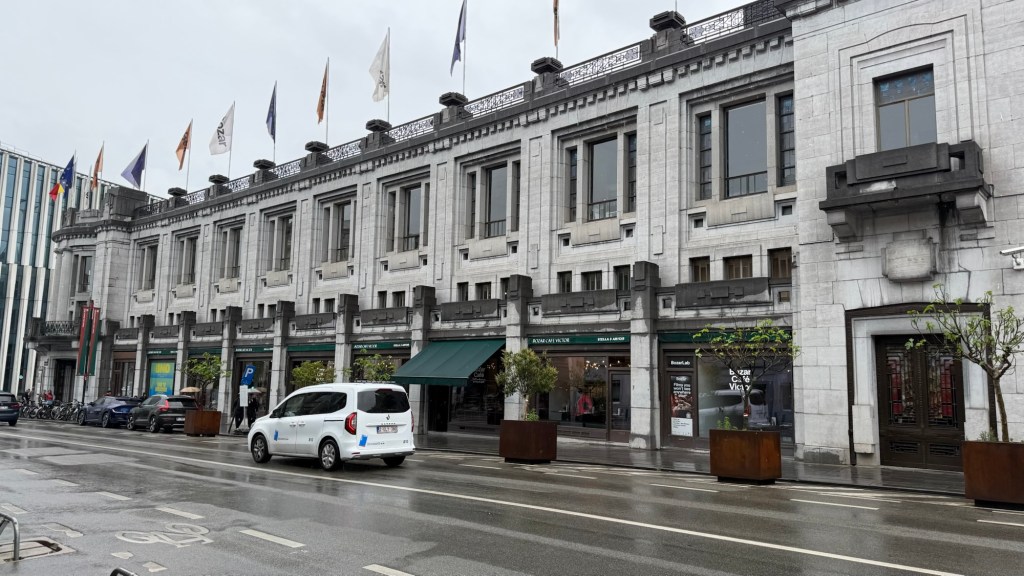
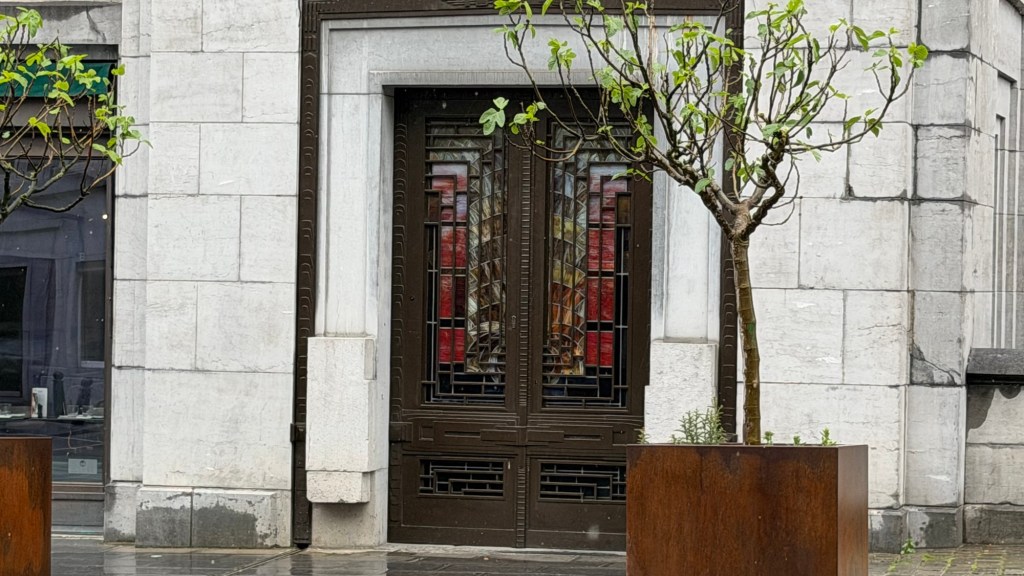
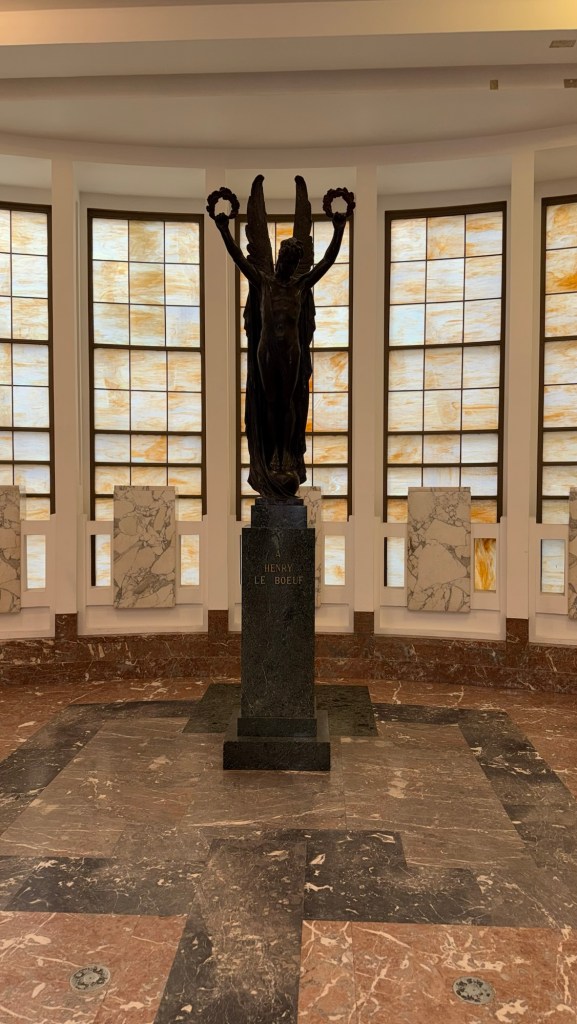
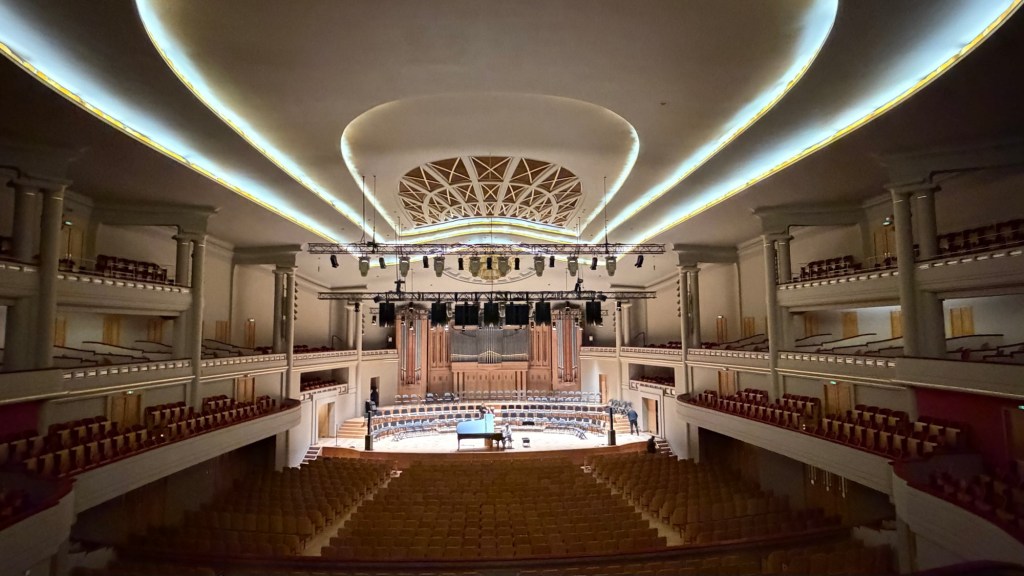
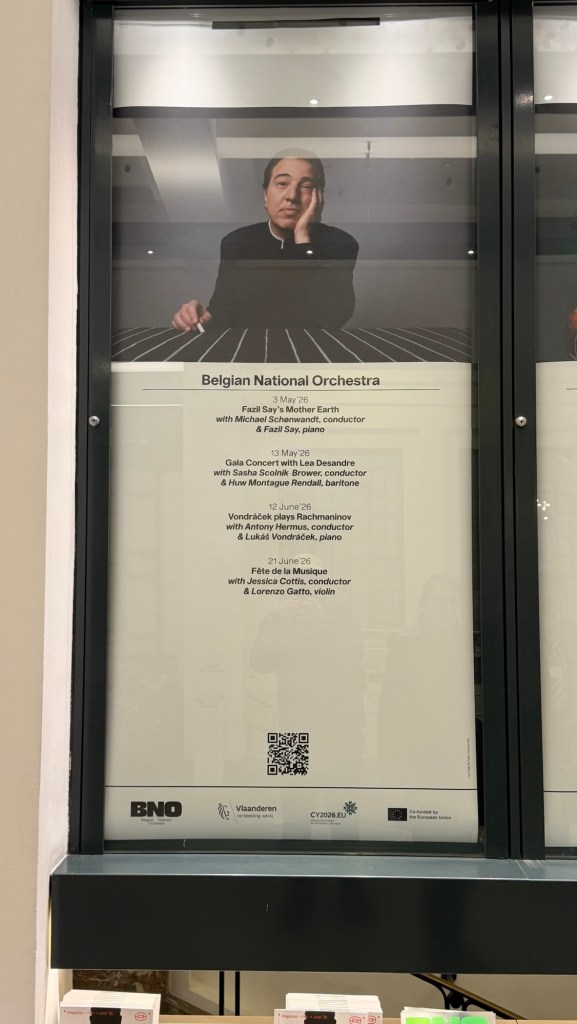
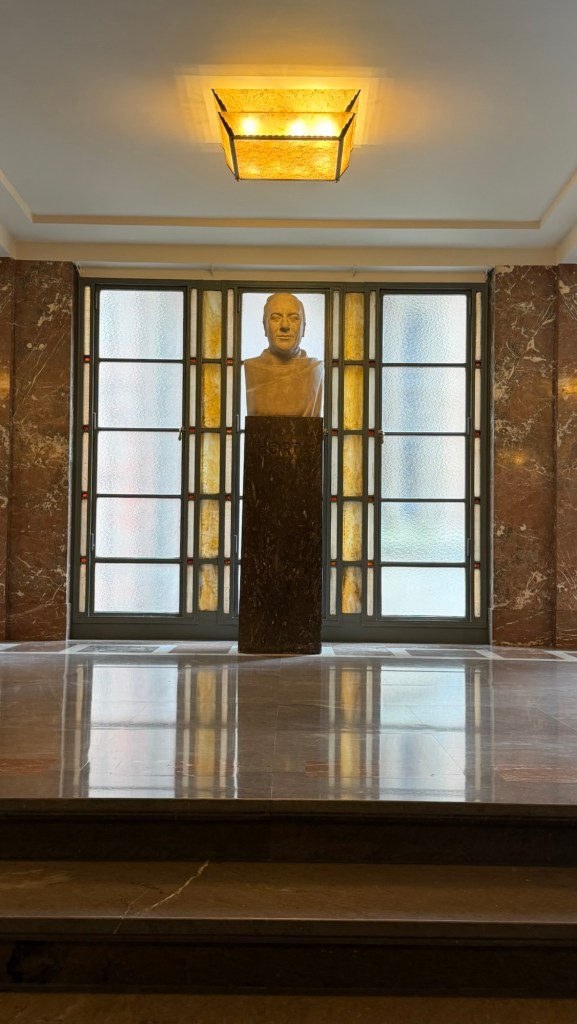
Bozar was designed by the celebrated Belgian architect Victor Horta (head bust above), whose influence we would encounter repeatedly throughout Brussels. While Horta is best known for the flowing lines and organic forms of Art Nouveau, Bozar represents his ability to adapt to a more restrained and monumental style while still maintaining his extraordinary attention to light, proportion, and detail. Throughout the building, richly veined marble, bronze accents, sculptural lighting, and geometric stained-glass panels reflected his architectural genius.
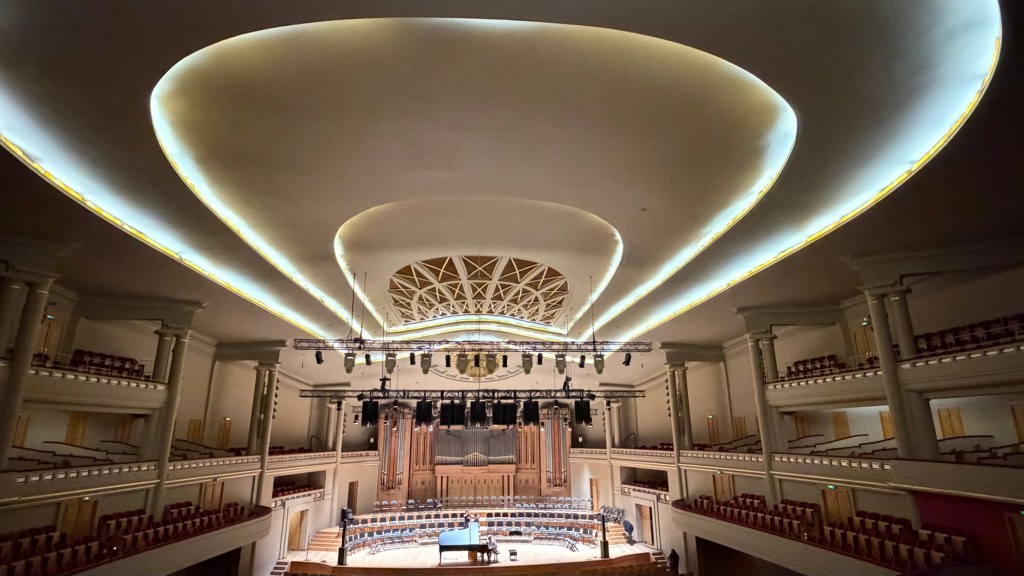
The highlight of our visit was a rare opportunity to tour the Royal Box overlooking the Henry Le Bœuf Concert Hall, an area normally closed to the public. From this privileged vantage point, we could admire the hall’s elegant proportions, sweeping balconies, and magnificent organ. Even empty, the space possessed a remarkable sense of grandeur. A lone pianist rehearsing on stage provided a glimpse of the hall’s true purpose, filling the vast room with music while our guide explained why the venue is considered one of Europe’s finest concert halls.
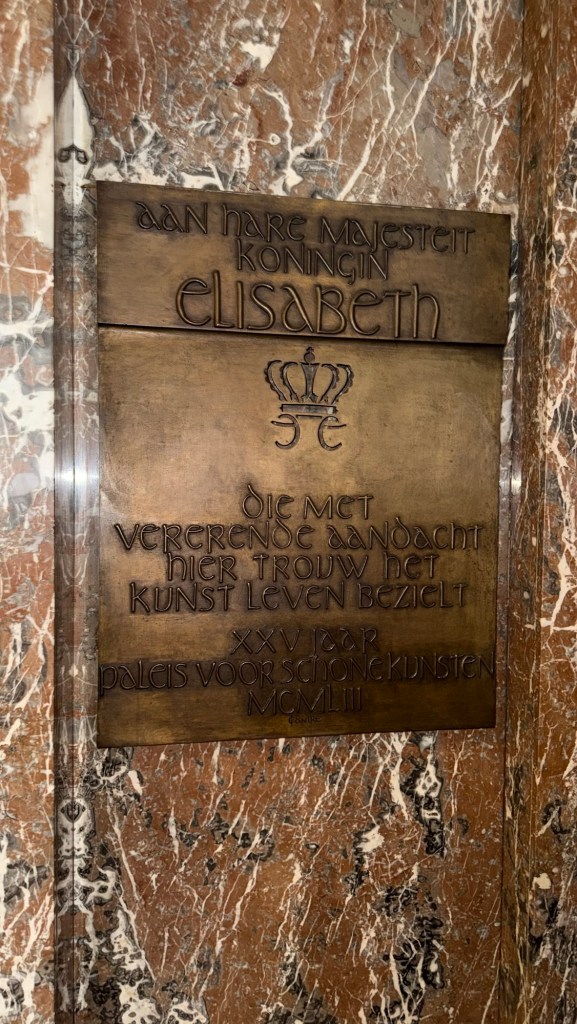
After, we enjoyed lunch in the restaurant attached to the concert hall, surrounded by the same marble, bronze, and warm amber glass that characterize Horta’s design.
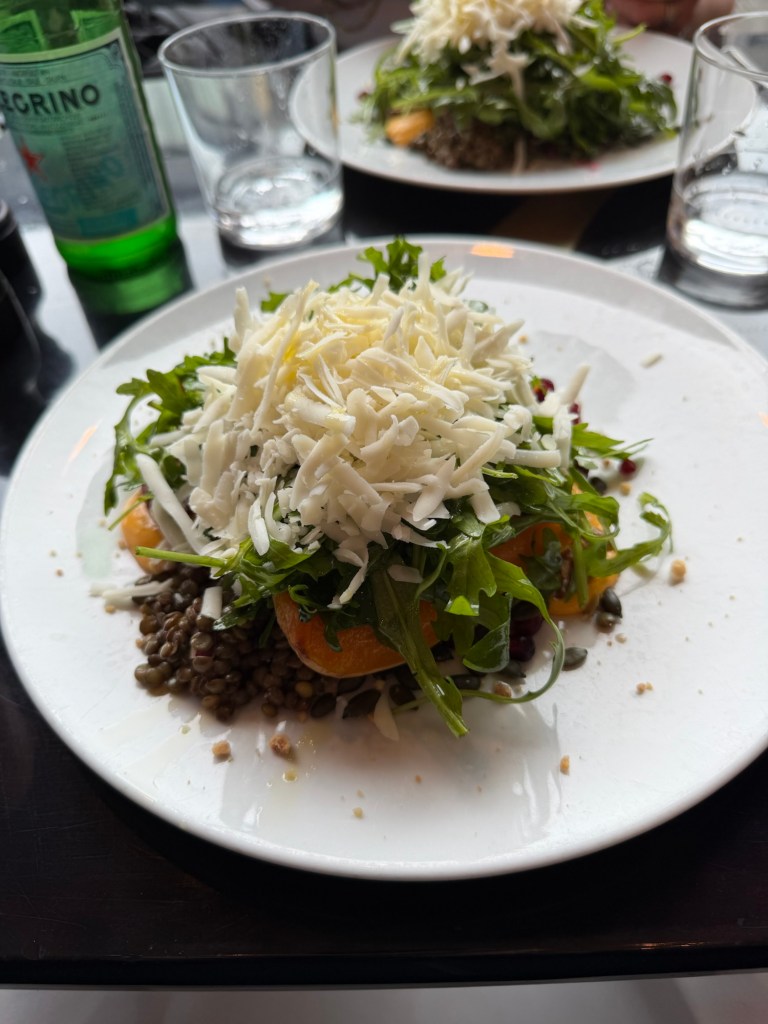
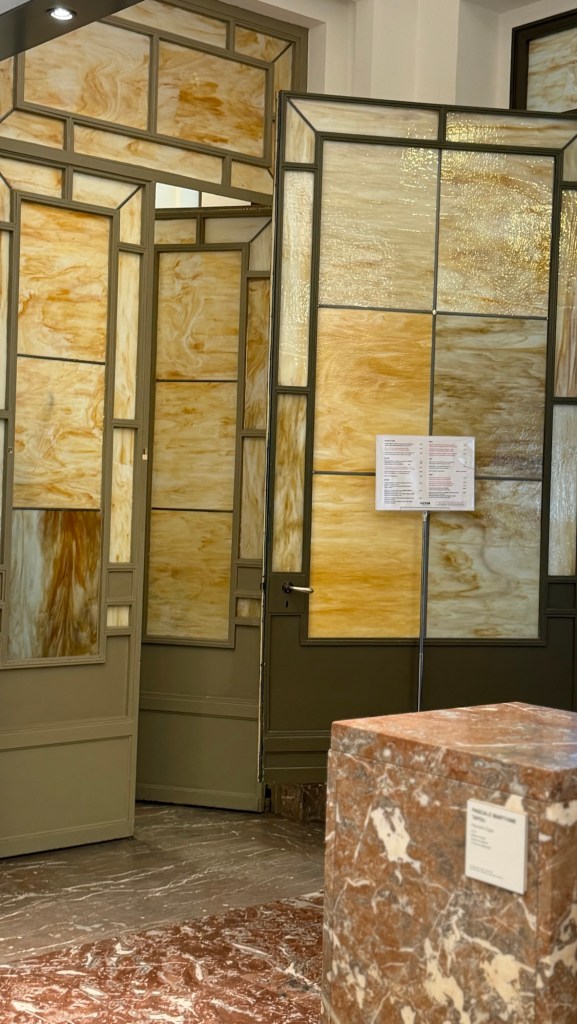
As we lingered over lunch, it became clear that Bozar was far more than a concert venue. Like so much of Brussels, it reflected the city’s ability to blend art, architecture, and daily life into a single experience. The visit also provided a fitting introduction to Victor Horta, whose architectural legacy revealed itself later in the afternoon.
One of the unexpected pleasures of our rainy day in Brussels was discovering how the city’s grand monuments and buildings seemed almost more dramatic beneath gray skies. Leaving the Art Deco elegance of Bozar and the Henry Le Bœuf Concert Hall, we made our way back toward the soaring towers of the Cathedral of St. Michael and St. Gudula. Rising above broad stone steps and rain-darkened cobblestones, the cathedral’s twin towers dominate the Brussels skyline and serve as one of the finest examples of Brabantine Gothic architecture in Europe.
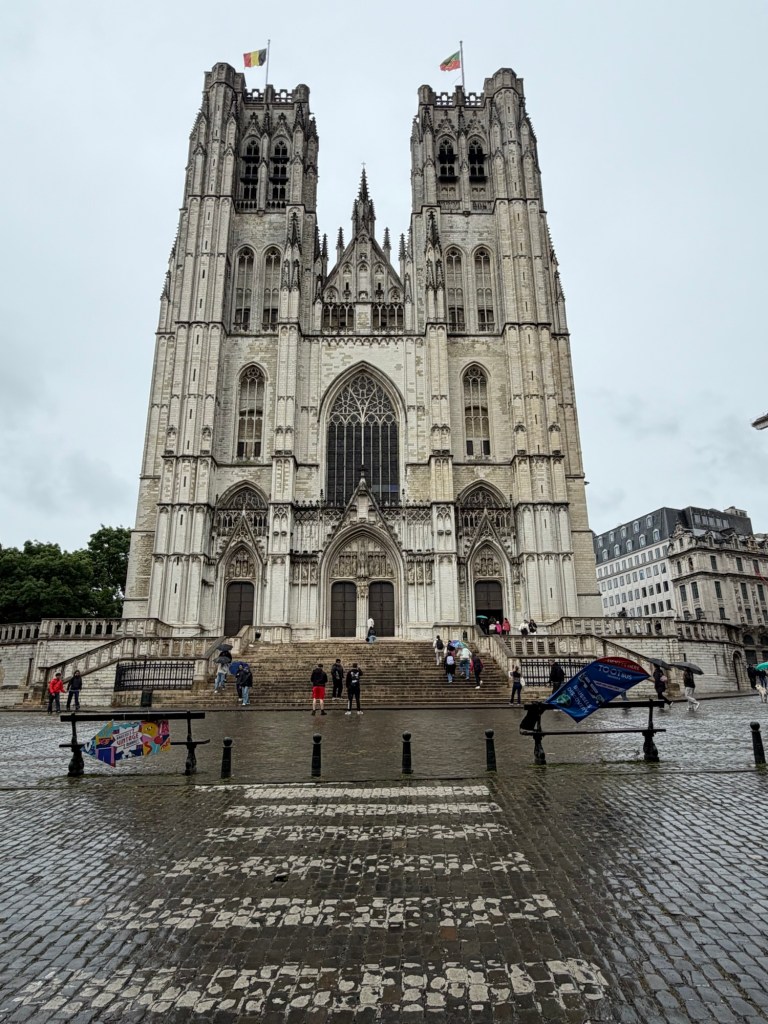
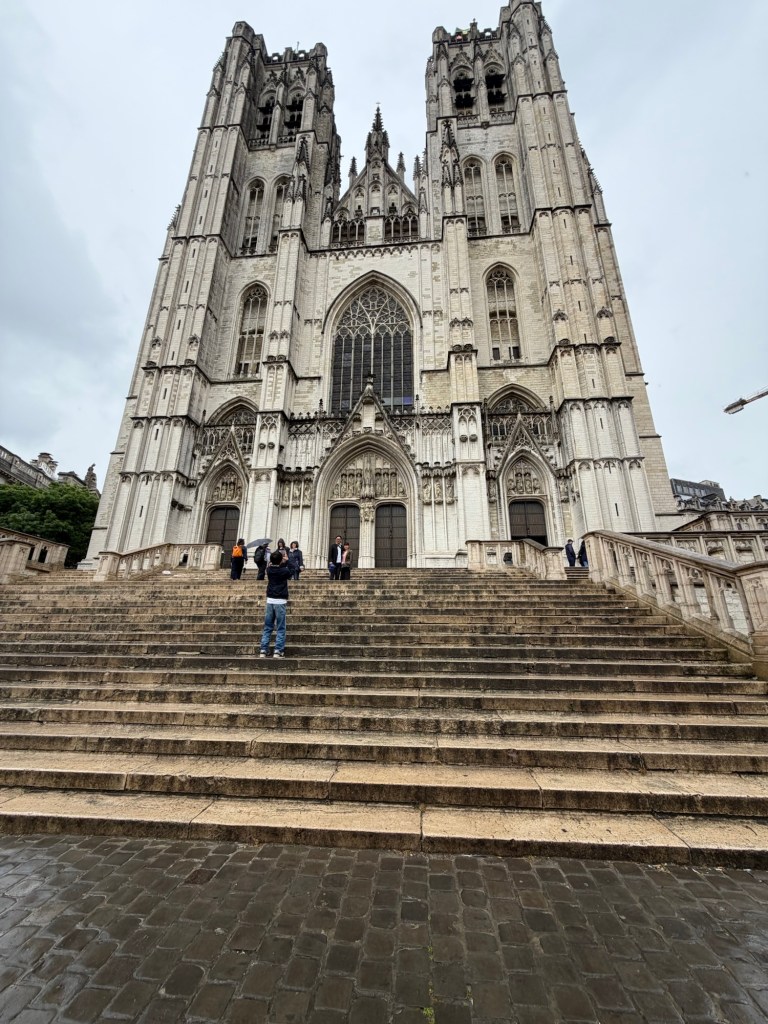
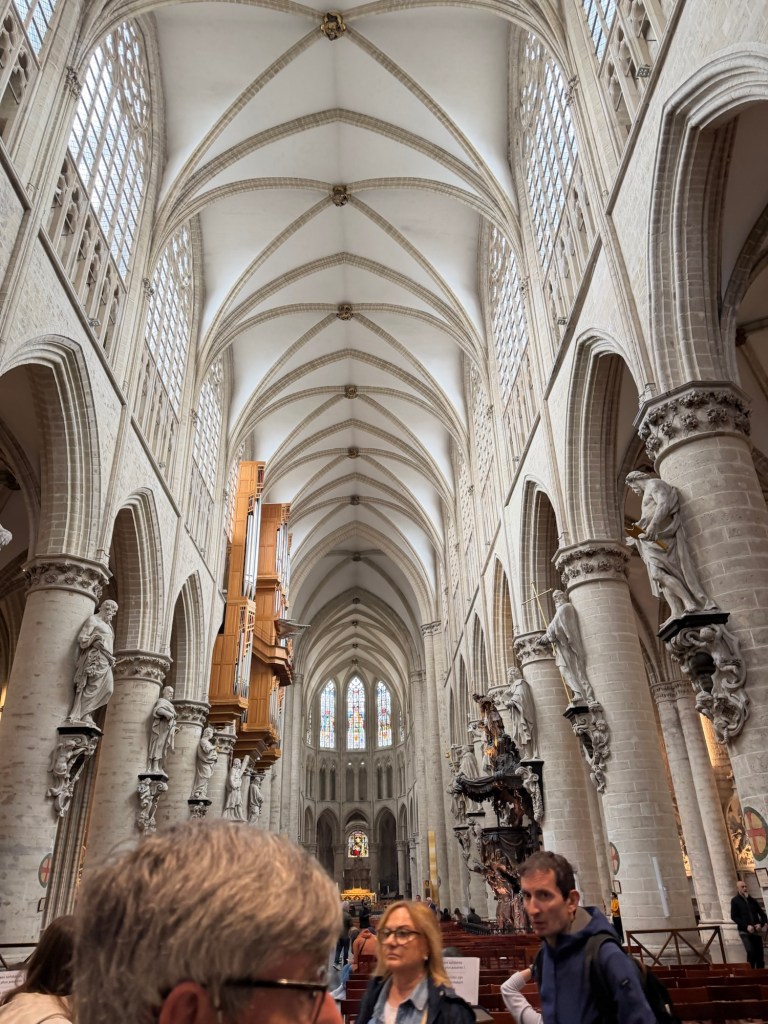
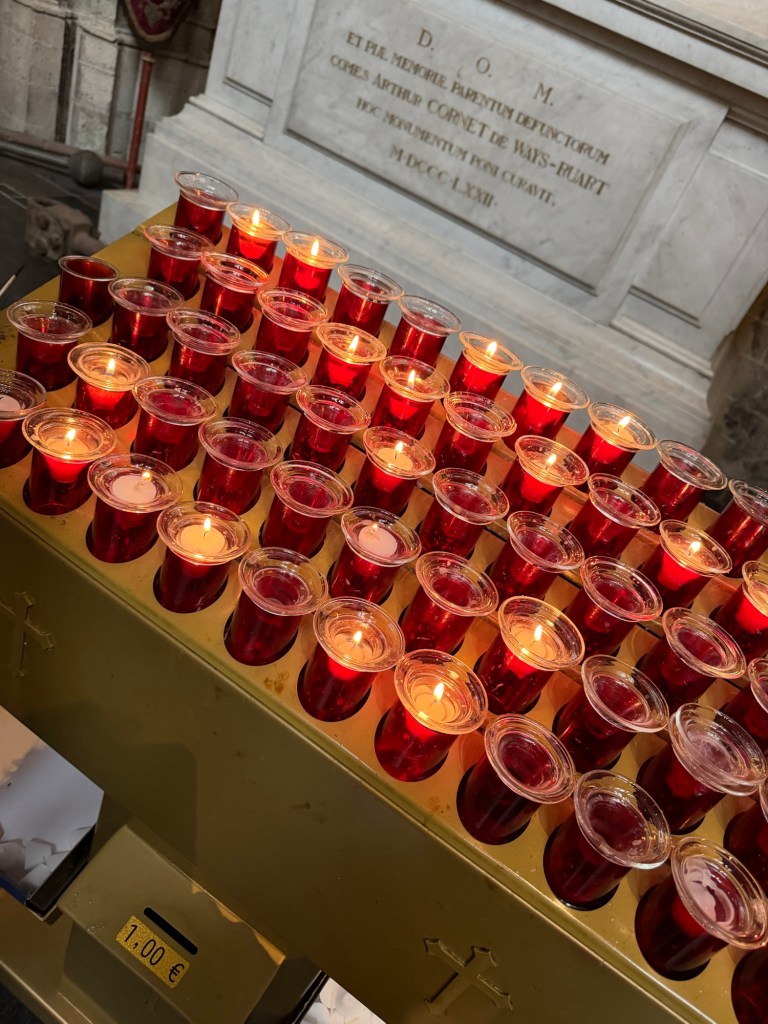
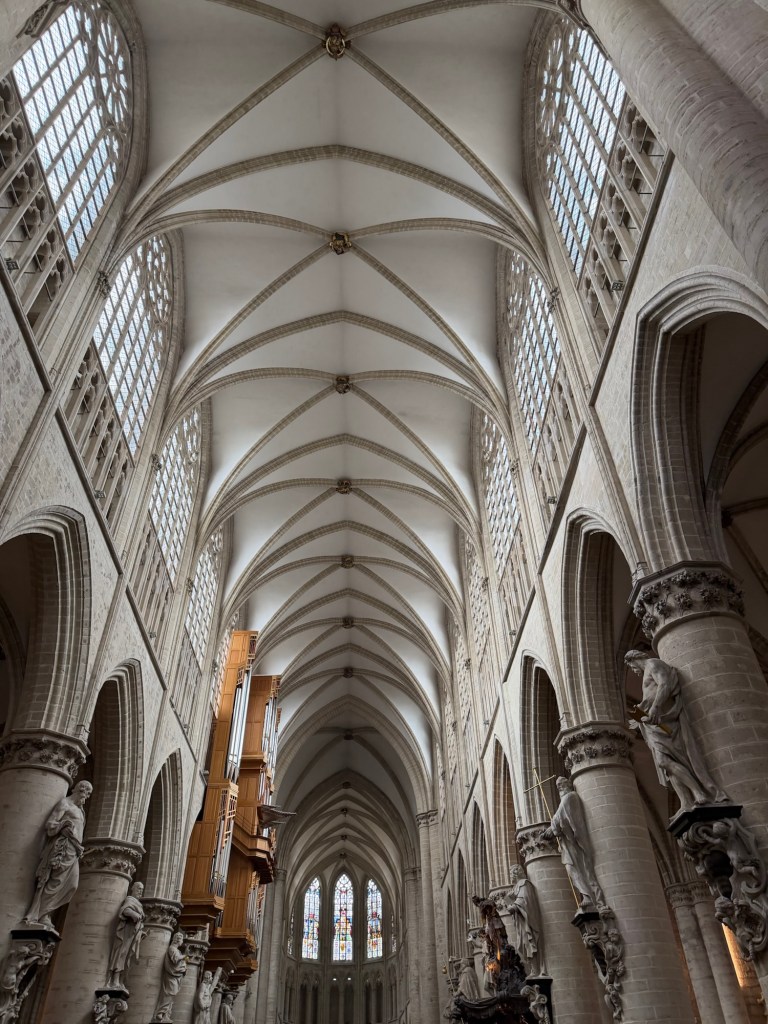
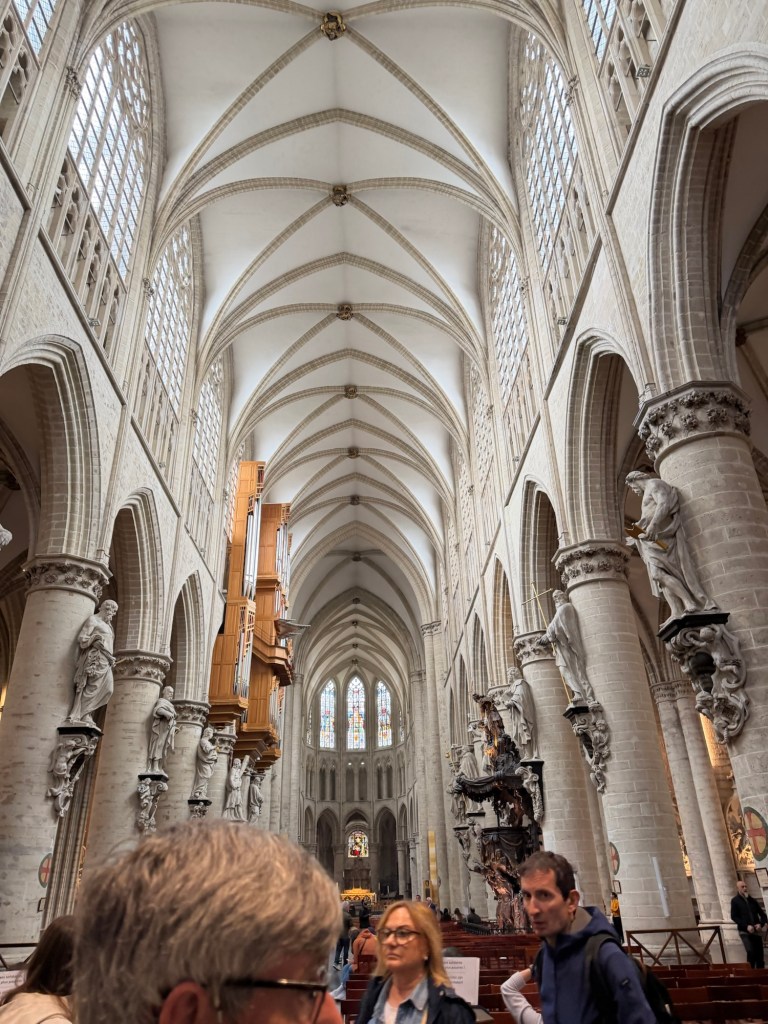
Inside, the vast nave stretched before us in a breathtaking display of symmetry and light. Pale stone columns rise to support graceful ribbed vaults, while statues of the Apostles stand high above the aisles as silent guardians of the space. The scale is impressive, yet the cathedral somehow retains an atmosphere of serenity. Rows of votive candles flickered softly beneath memorials and chapels, their warm glow providing a striking contrast to the cool gray light filtering through the stained-glass windows. We light a candle for an ill friend.
The cathedral offers a reminder that some of Europe’s greatest architectural achievements were designed to inspire awe, reflection, and wonder. Even after centuries, St. Michael and St. Gudula continues to accomplish all three.
After leaving the cathedral, we ducked into the magnificent Galeries Royales Saint-Hubert, one of Europe’s oldest and most elegant covered shopping arcades. Opened in 1847, the galleries were revolutionary for their time—a grand indoor promenade sheltered beneath a soaring glass-and-iron roof that stretches the length of the arcade like a crystal barrel vault. Even on a gray afternoon, the diffused light filtering through the vast canopy illuminated the marble pilasters, decorative moldings, and elegant shopfronts lining both sides of the passageway.
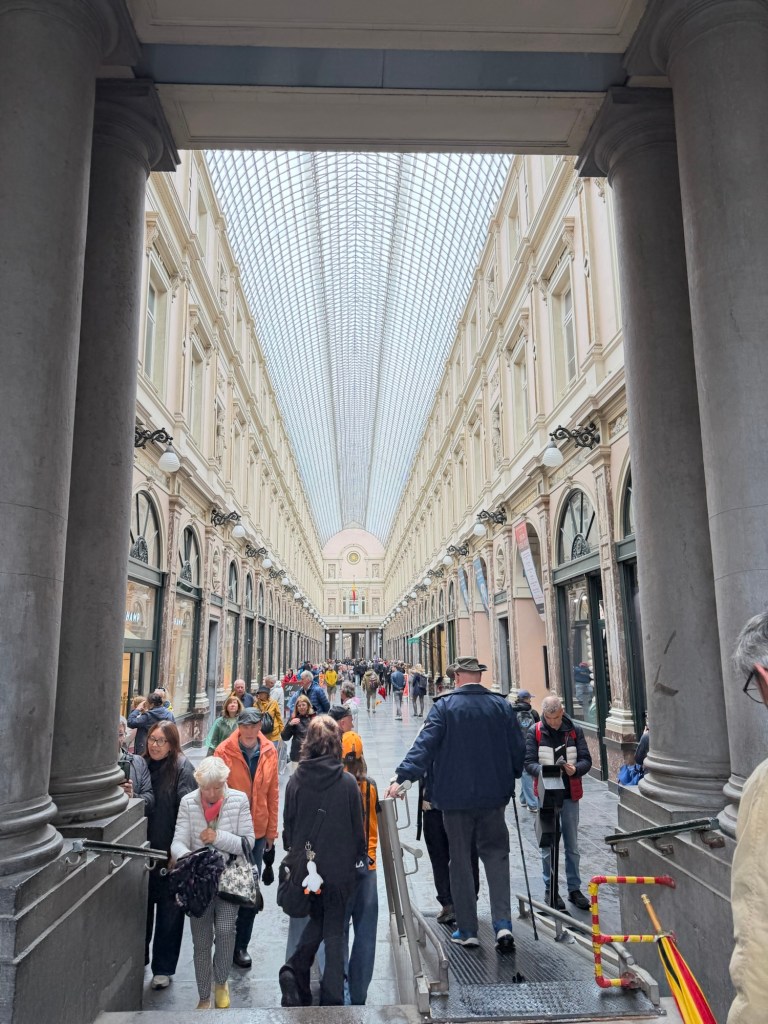
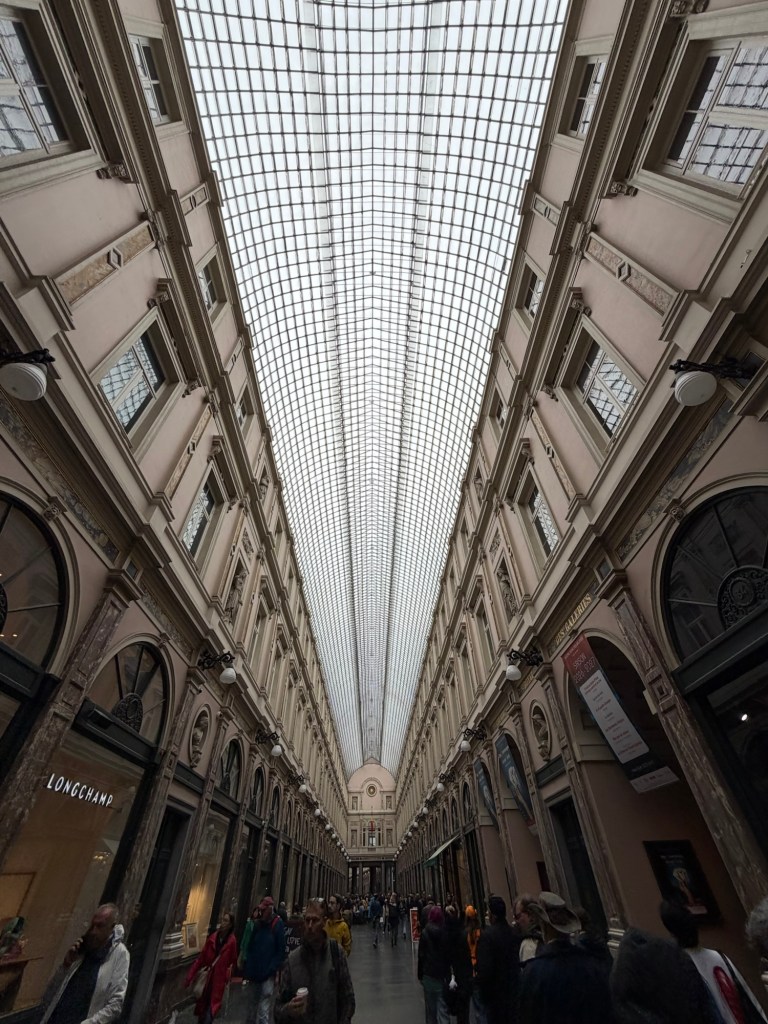
The galleries felt like a natural continuation of the architectural journey we had begun earlier at Bozar. While Victor Horta would later redefine Brussels architecture with the flowing lines of Art Nouveau, the Galeries Royales represented an earlier nineteenth-century vision of modernity: a place where commerce, culture, and architecture merged into a single sophisticated urban experience. The result remains every bit as impressive today as it must have been nearly two centuries ago.
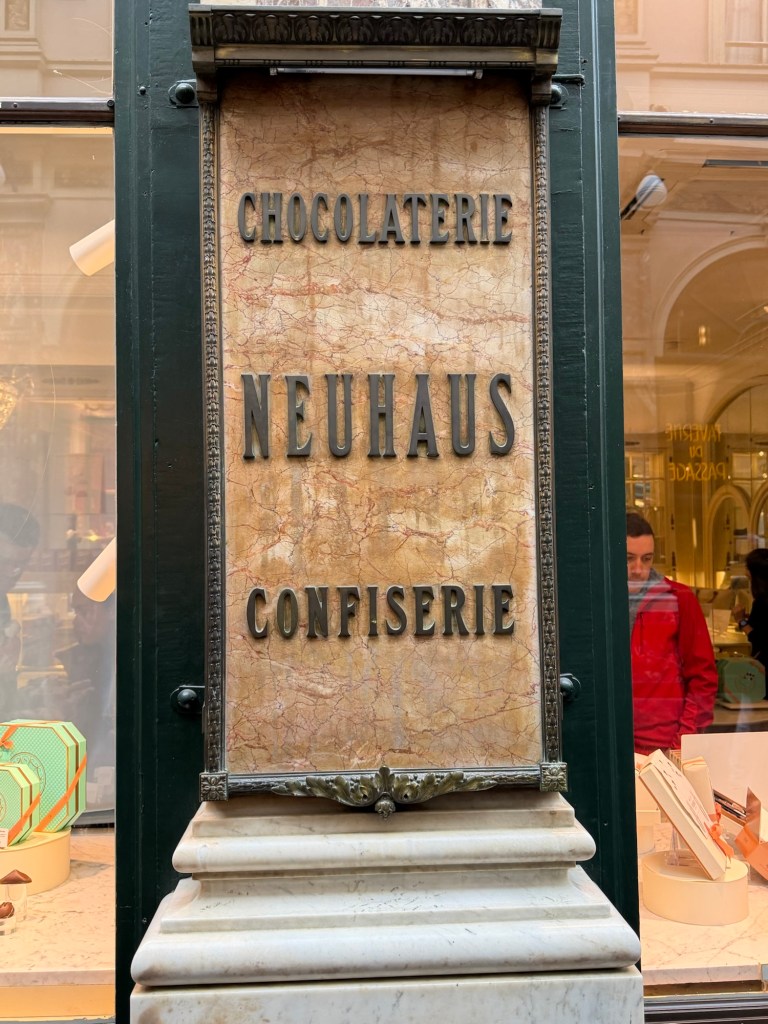
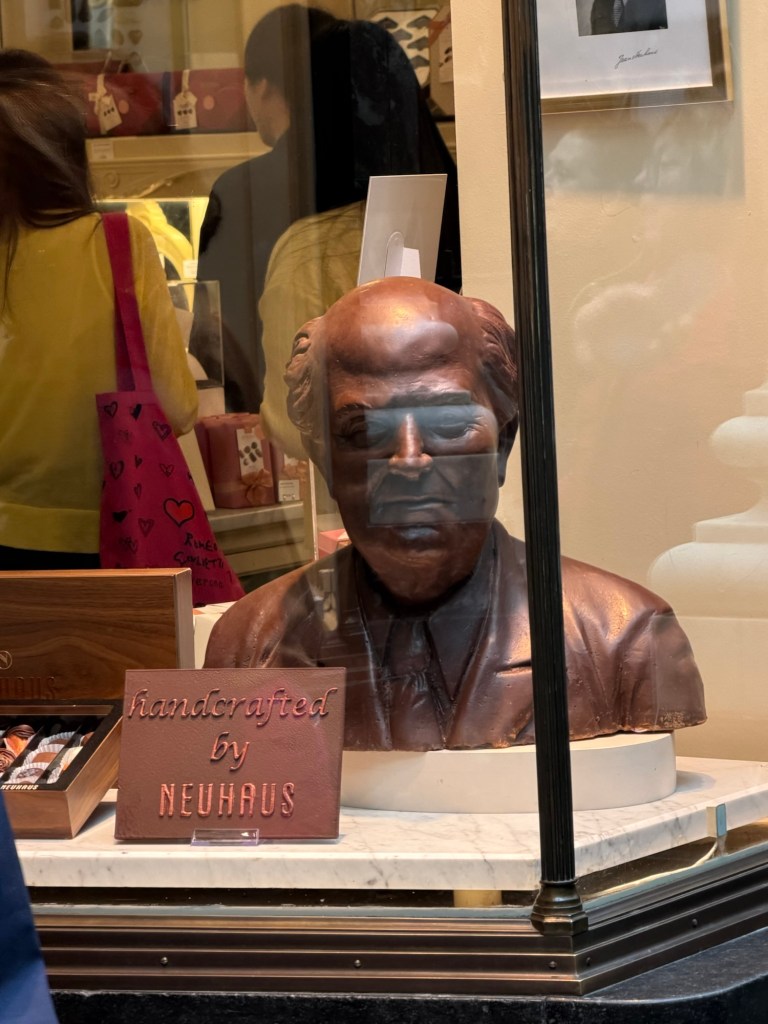
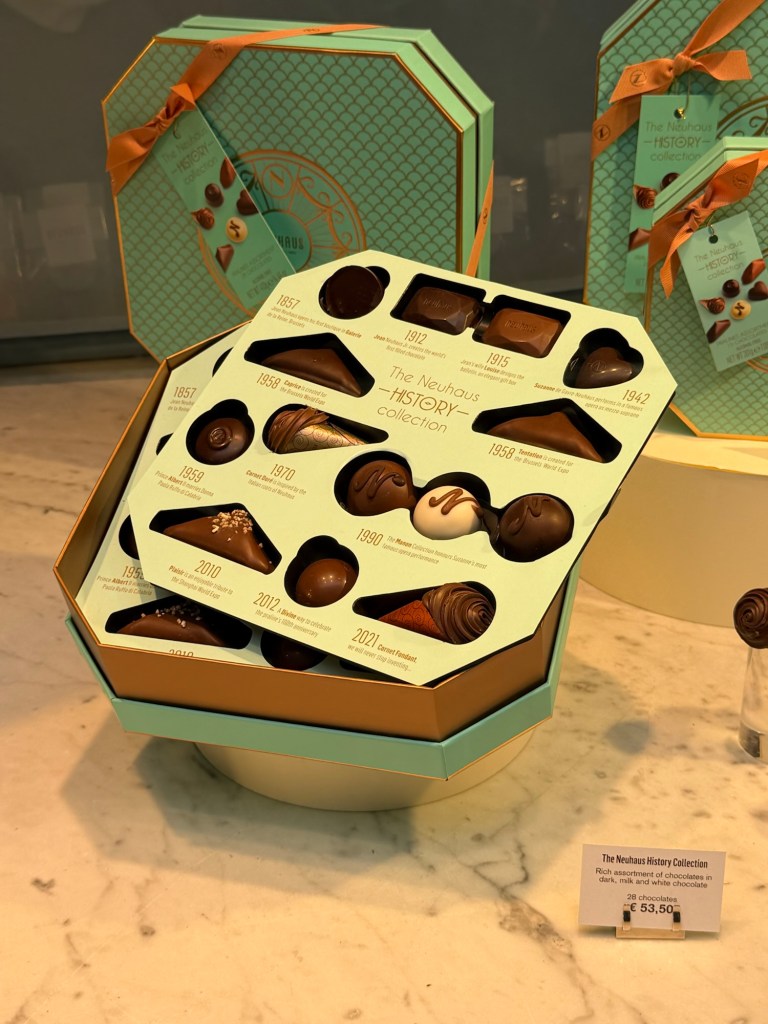
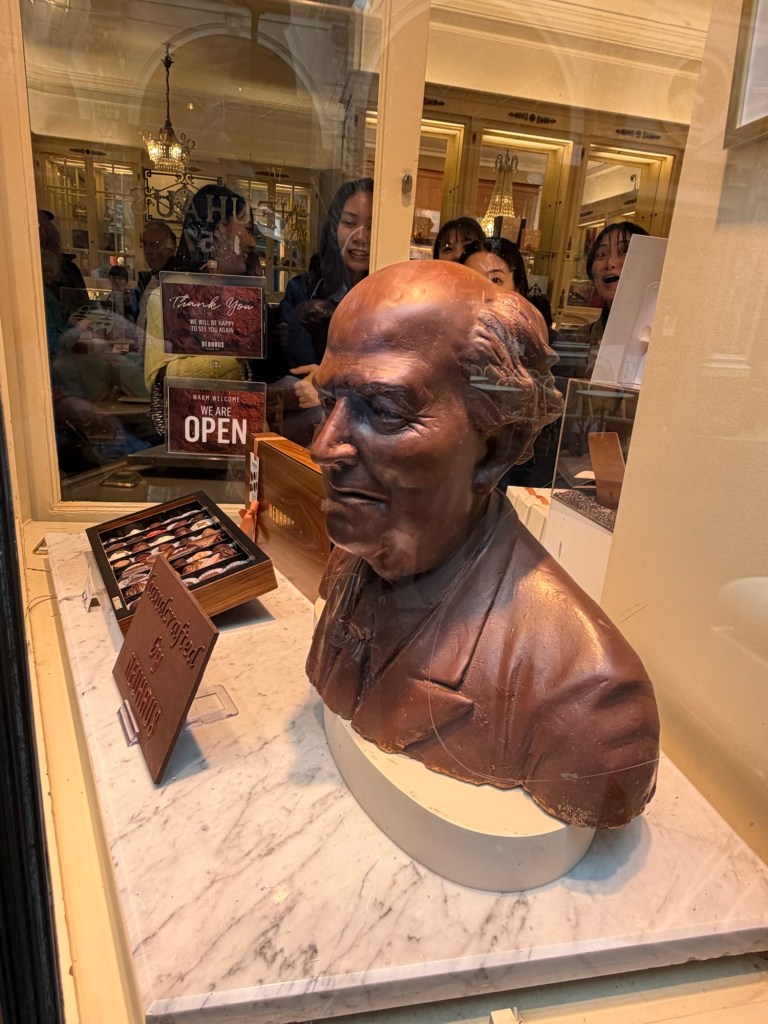
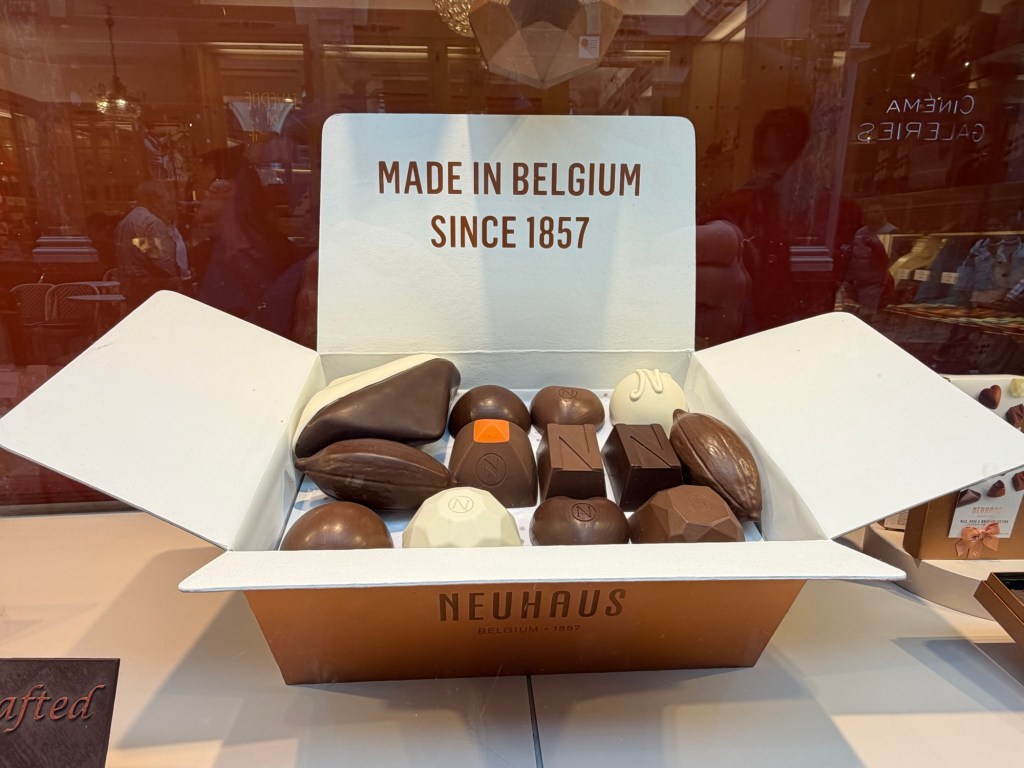
Among the most famous establishments in the arcade is Neuhaus, widely credited with inventing the Belgian praline. Display windows showcased elaborate chocolate creations, including a larger-than-life chocolate bust of founder Jean Neuhaus and a collection tracing the company’s history from its founding in 1857. It was impossible not to pause and admire both the craftsmanship and the temptation. As the rain continued outside, we joined fellow visitors strolling beneath the glass roof, enjoying one of Brussels’ most beloved traditions—combining great architecture with great chocolate.
The galleries provided a fitting bridge between the city’s grand monuments and its everyday pleasures. Protected from the weather yet still connected to the life of the city, they offered one more reminder that Brussels excels at turning even a rainy afternoon into an unforgettable experience.
One of the most unexpected highlights of our time in Brussels was a visit to the remarkable Laeken Cemetery, located beside the Church of Our Lady of Laeken. Often called the “Père Lachaise of Belgium,” the cemetery is less a burial ground than an open-air museum filled with extraordinary funerary art, elaborate family mausoleums, and monuments honoring many of Belgium’s most prominent citizens.
Walking through the rain-soaked grounds, we came upon one of the cemetery’s most famous treasures: an original bronze cast of Auguste Rodin’s The Thinker.
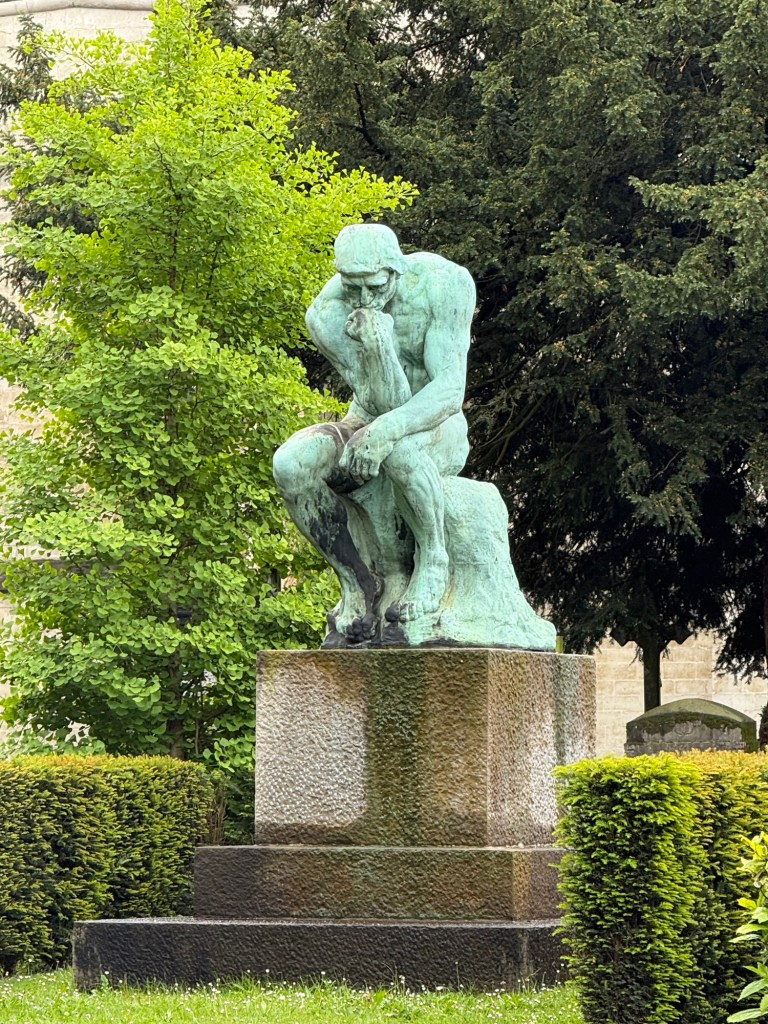
Most people associate the sculpture with museums, but seeing it here among tombs and towering trees gave it an entirely different meaning. The solitary figure, deep in contemplation, seemed perfectly at home in a place devoted to memory, loss, and reflection.
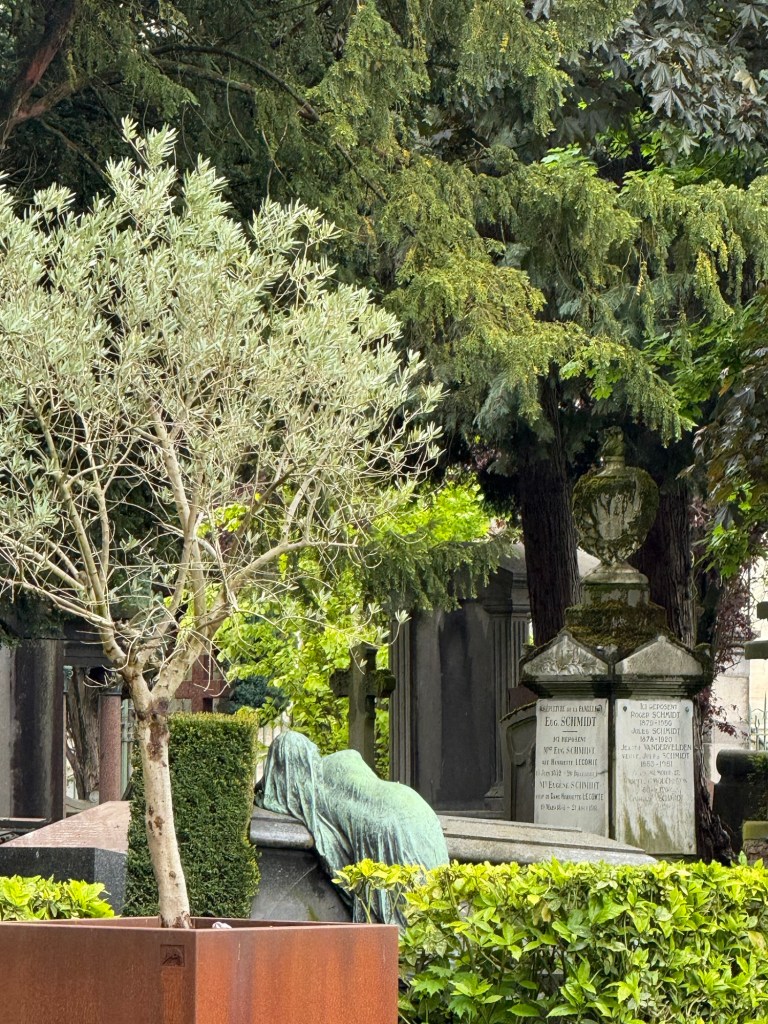
Elsewhere in the cemetery, graceful bronze mourners knelt beside family tombs, draped figures leaned over monuments in sorrow, and elaborate stone mausoleums rose among carefully clipped hedges. Every turn revealed another work of art.
The weather made everything atmospheric, darkened the stone, and deepened the green patina of the bronzes, and created a quiet, reflective mood throughout the grounds.
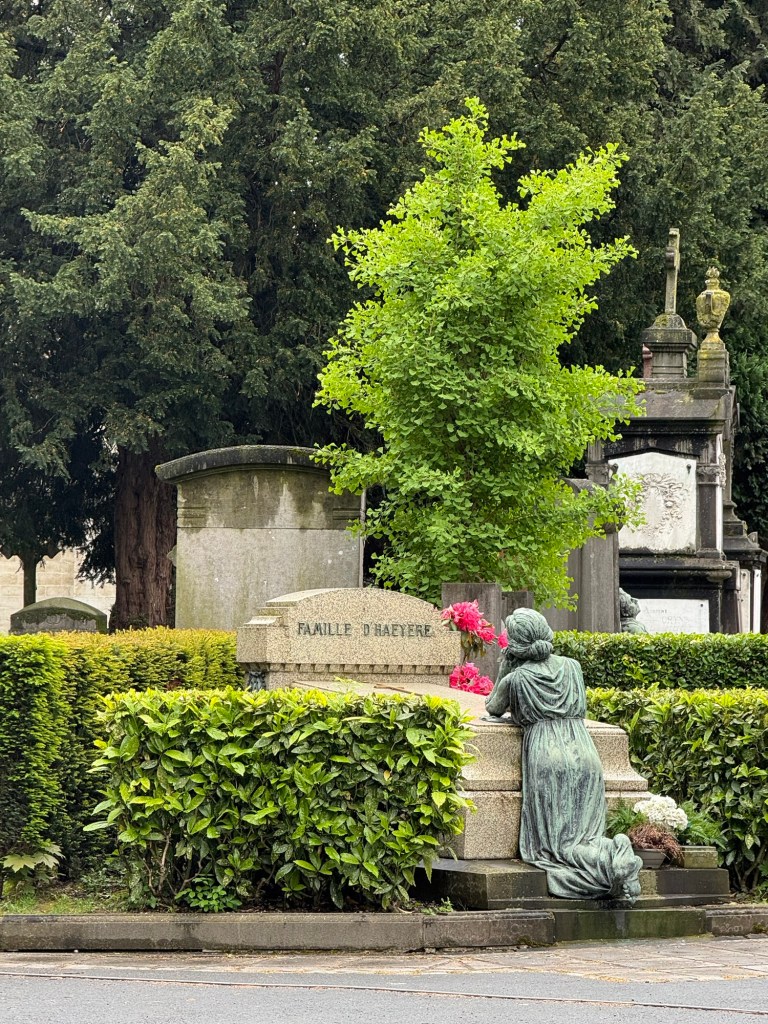
Behind it all stood the Church of Our Lady of Laeken, whose royal crypt serves as the burial place of the Belgian royal family. Together, the church and cemetery form one of Brussels’ most fascinating and beautiful historical sites—a place where art, architecture, history, and remembrance come together in a uniquely moving way.
The Atomium is one of those landmarks that seems familiar from photographs, yet seeing it in person is an entirely different experience. Built for the 1958 Brussels World’s Fair, the structure represents an iron crystal magnified 165 billion times and was designed to showcase the optimism, innovation, and scientific progress that characterized the postwar era.
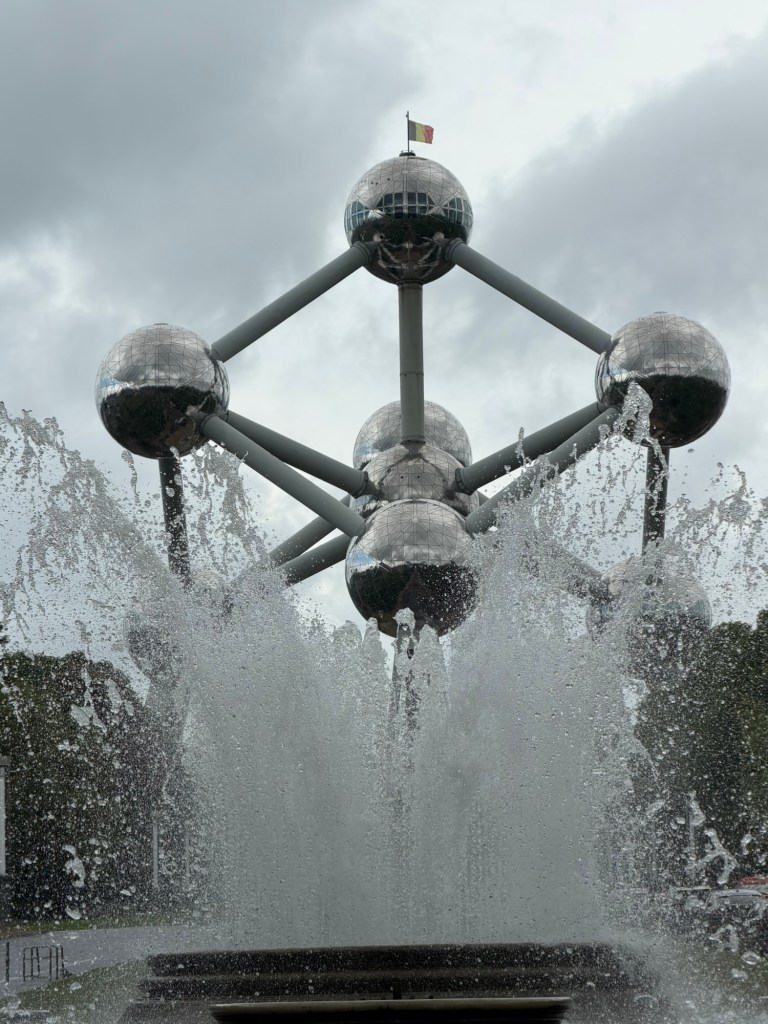
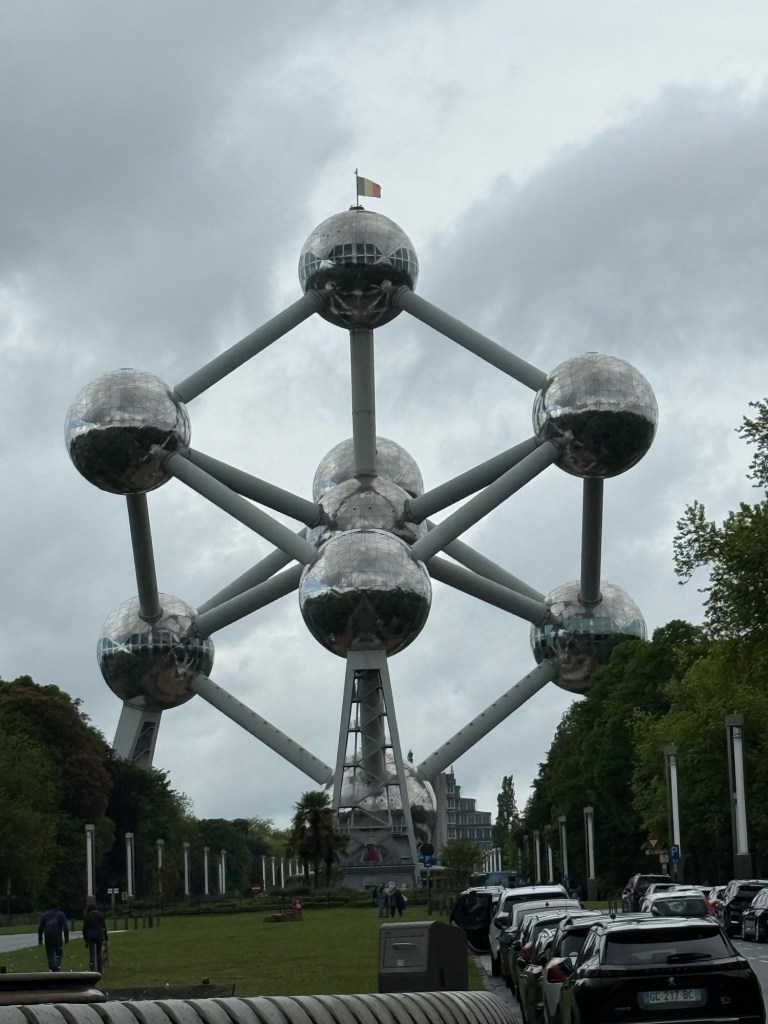
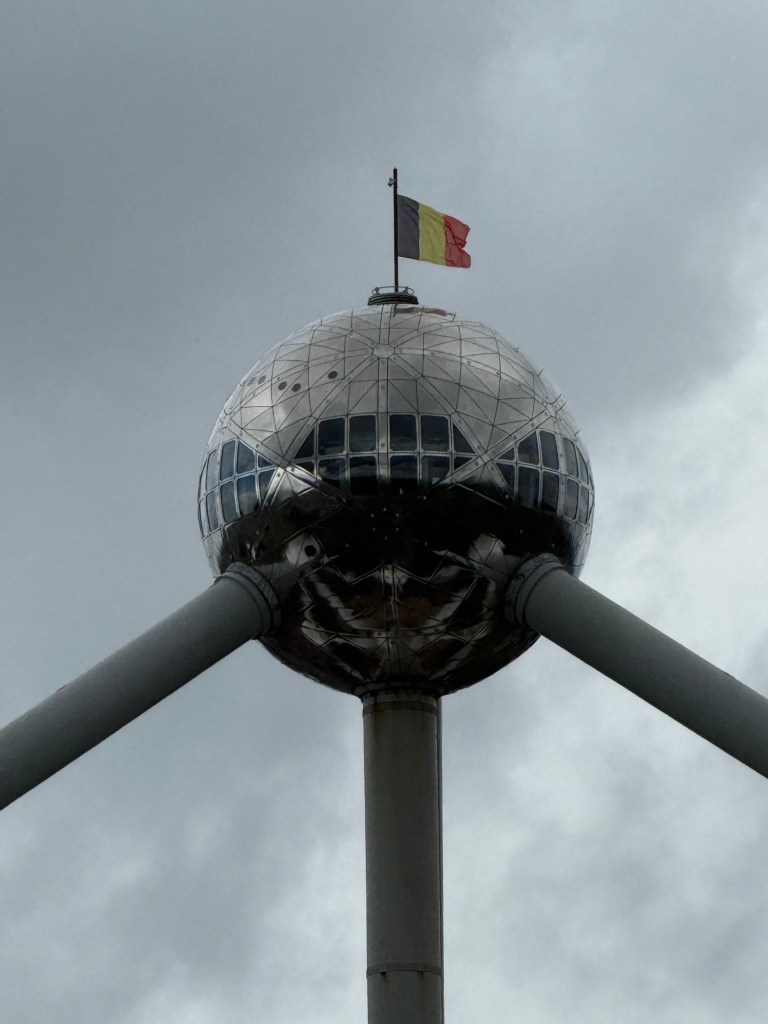
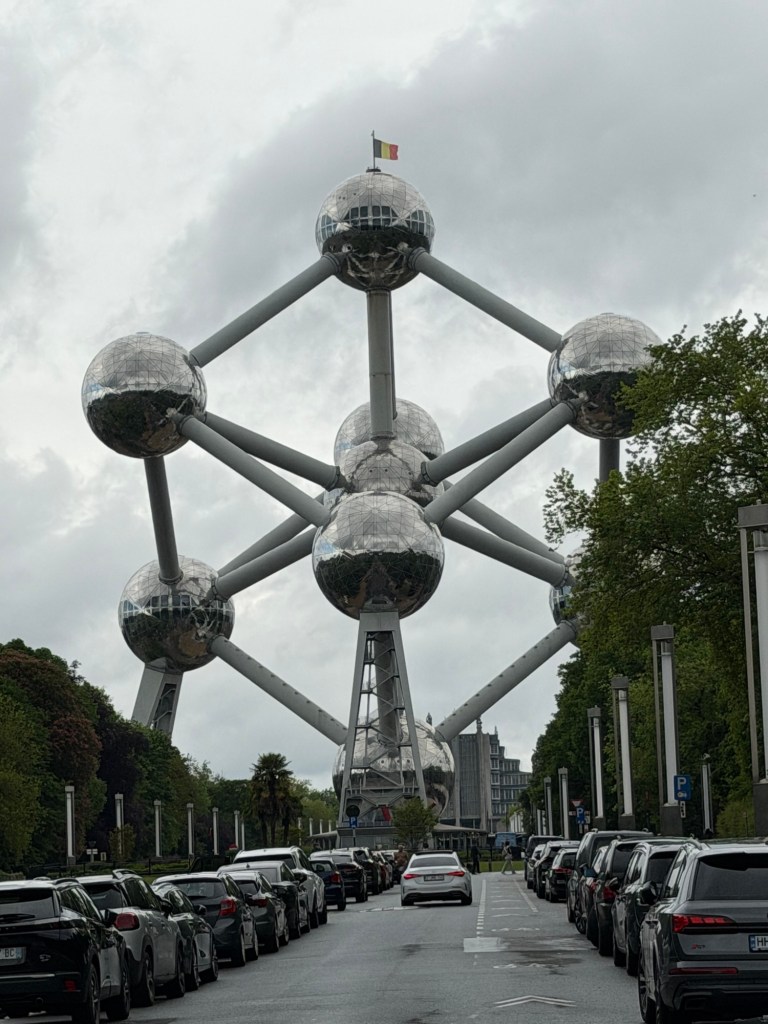
Dark clouds hung overhead as the polished stainless-steel spheres reflected the changing sky. Standing directly beneath the structure, looking up at the network of interconnected spheres and massive support tubes, it felt less like a building and more like a giant futuristic sculpture rising above the city.
A fountain in front of the Atomium added another dimension to the scene, sending bursts of water into the air against the backdrop of gleaming steel. The contrast between the movement of the water, the geometric precision of the structure, and the moody Belgian sky created a dramatic setting that seemed perfectly suited to photography.
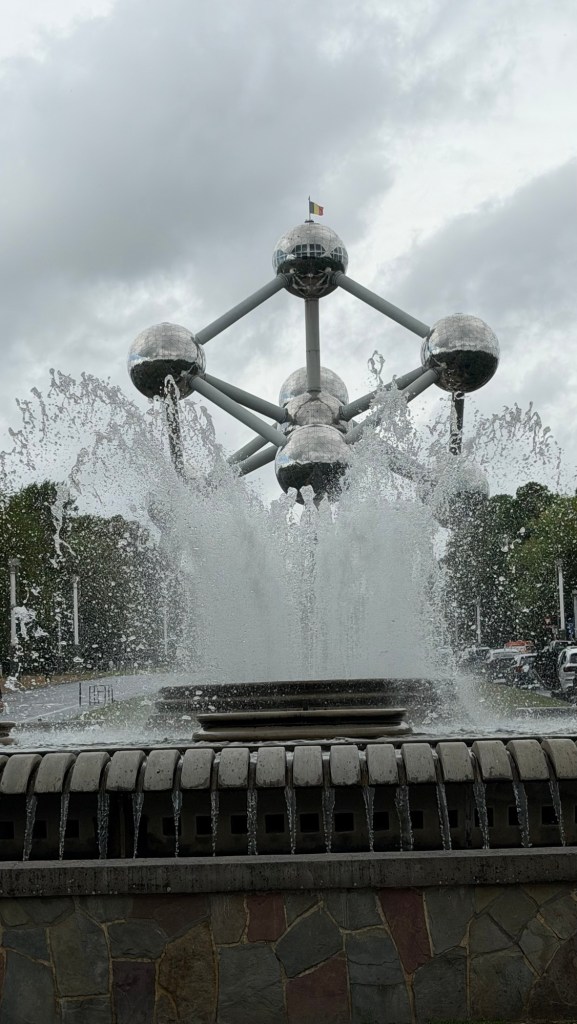
While Brussels is often associated with medieval guild houses, Gothic churches, and historic squares, the Atomium offers a completely different perspective on the city. More than sixty years after Expo 58, it remains a powerful symbol of Belgium’s confidence, creativity, and willingness to embrace the future. Even in the rain, it was impossible not to be impressed.
Yet another highlight was JJ’s whirlwind tour of the city’s remarkable Art Nouveau architecture. While Victor Horta is the name most visitors may know, JJ introducted us to a much broader cast of architects and craftsmen who helped transform Brussels into one of the world’s great centers of Art Nouveau at the turn of the twentieth century.
With Mohammed behind the wheel on the streets of his hometown and JJ directing us from one neighborhood to another, we managed to see nearly twenty buildings in just a few hours. The experience felt less like a sightseeing tour and more like a master class in architecture. JJ seemed to know every detail of every building—who designed it, who commissioned it, how it was used, and what made it significant.
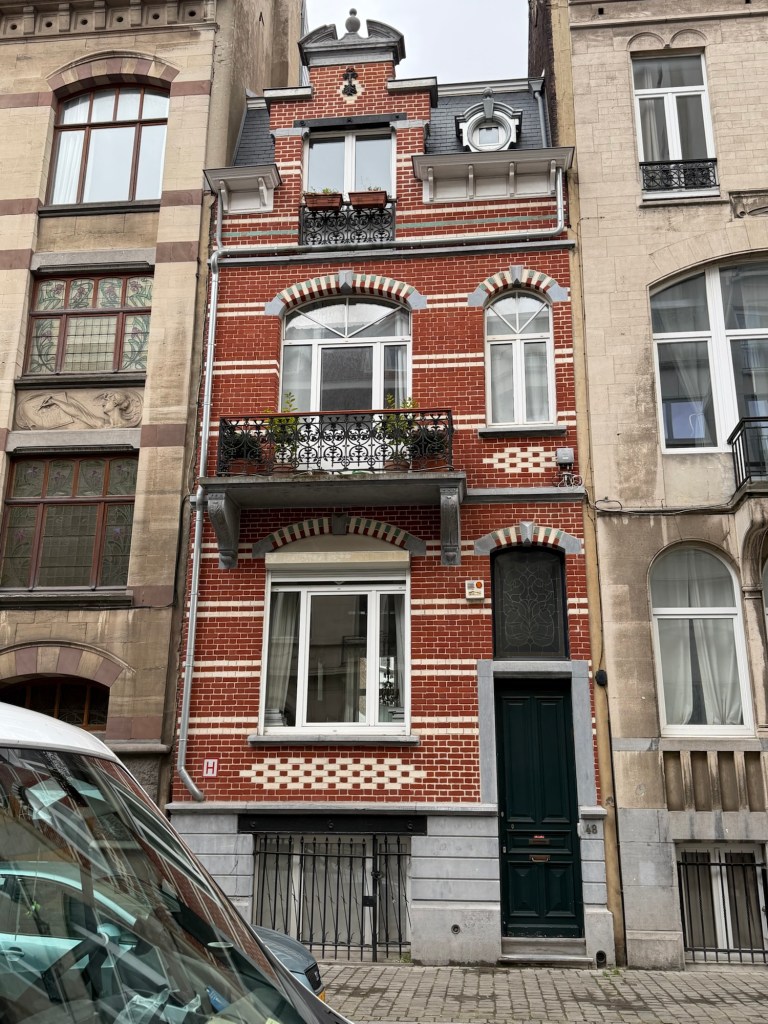
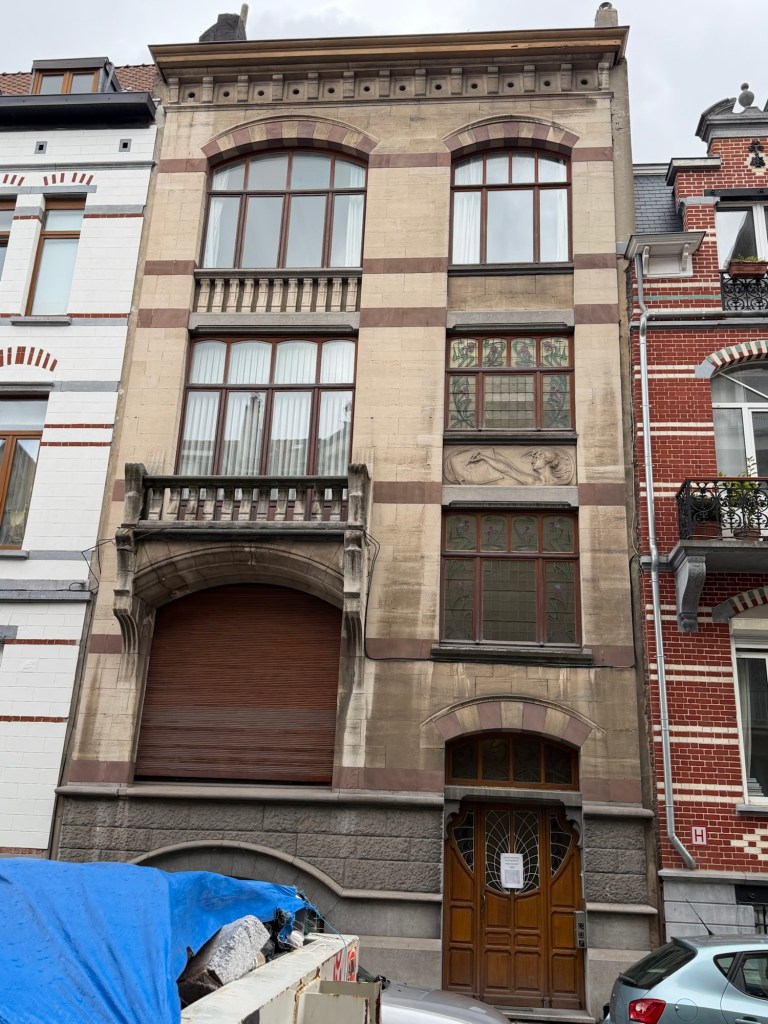
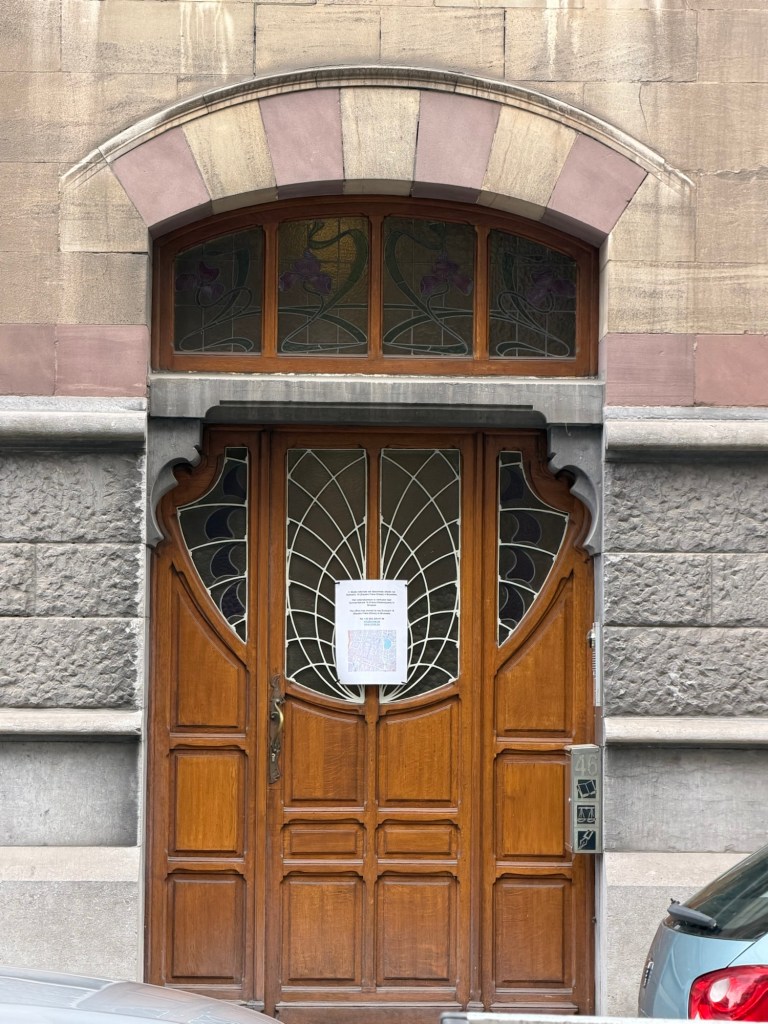
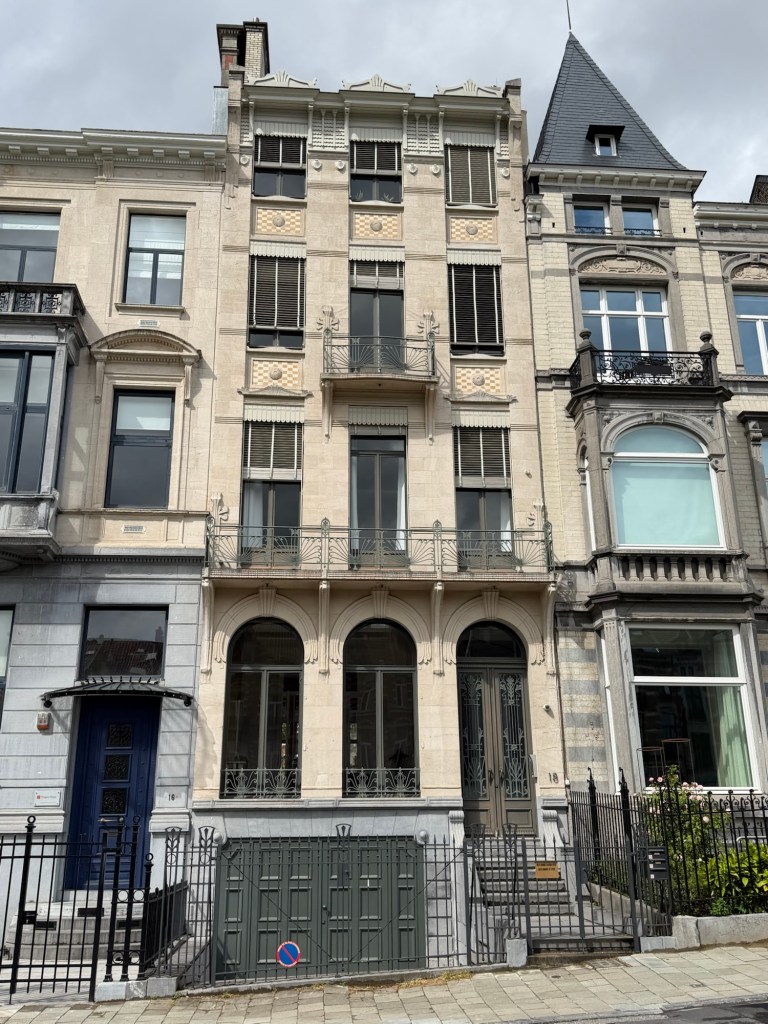
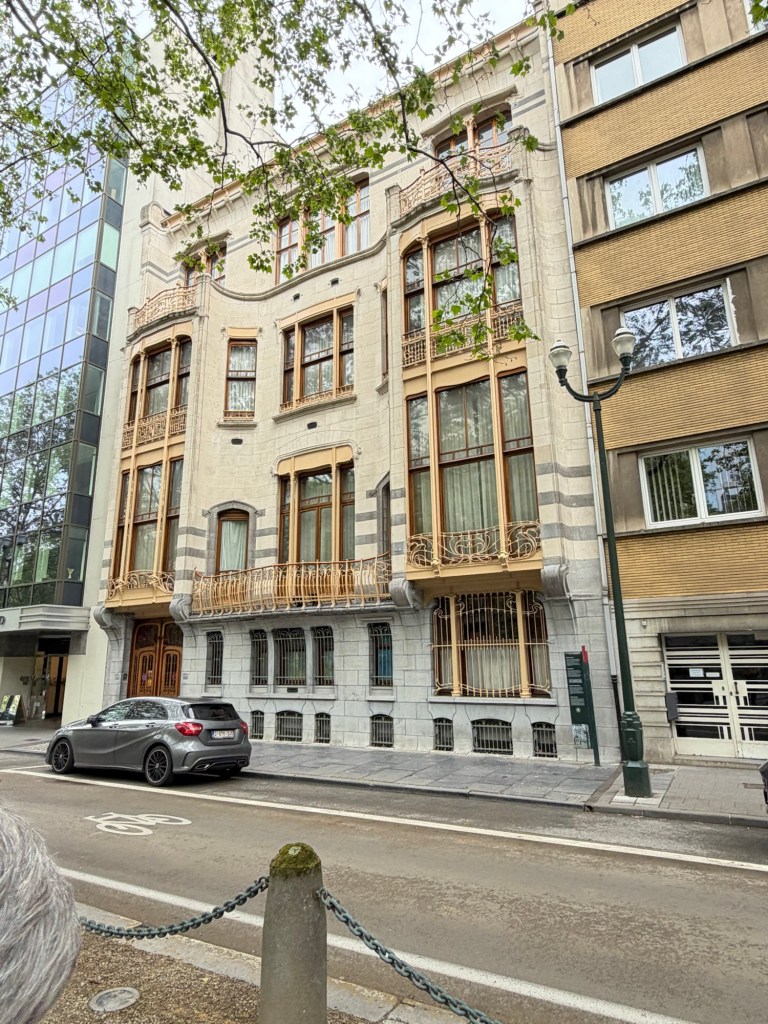
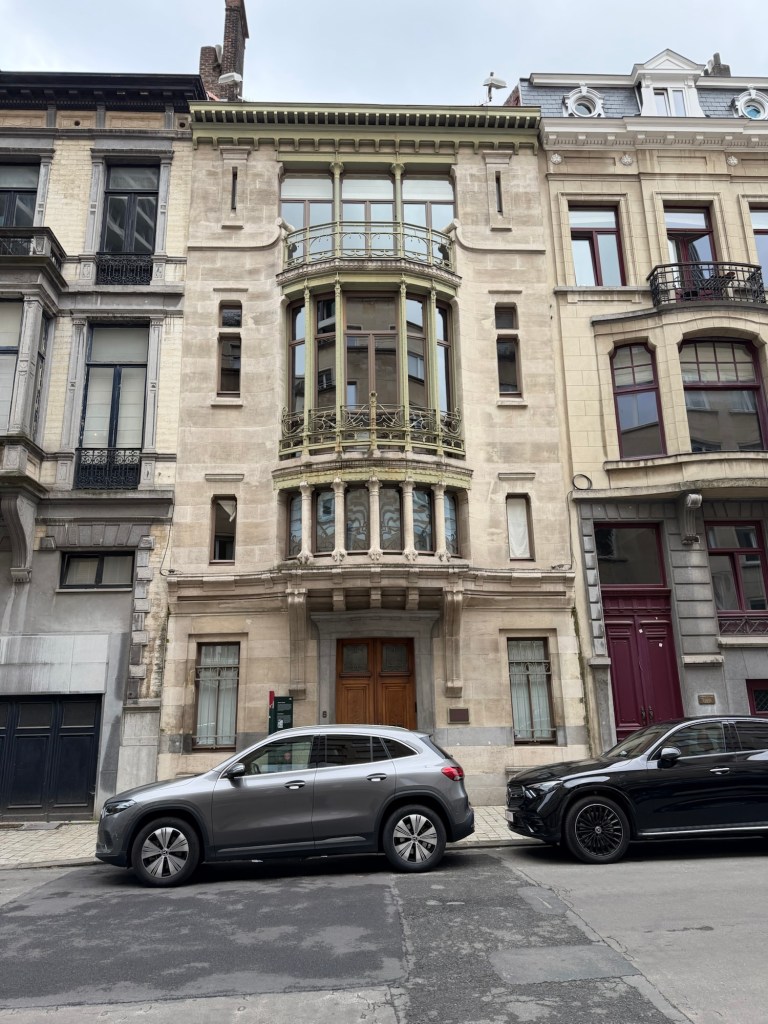
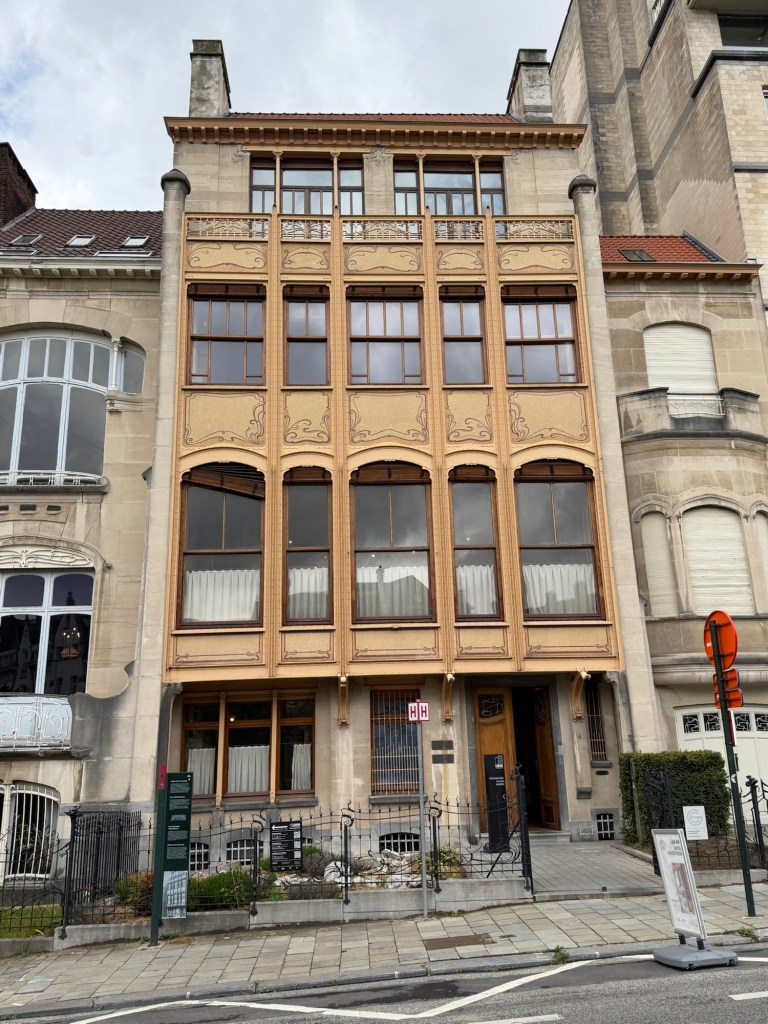
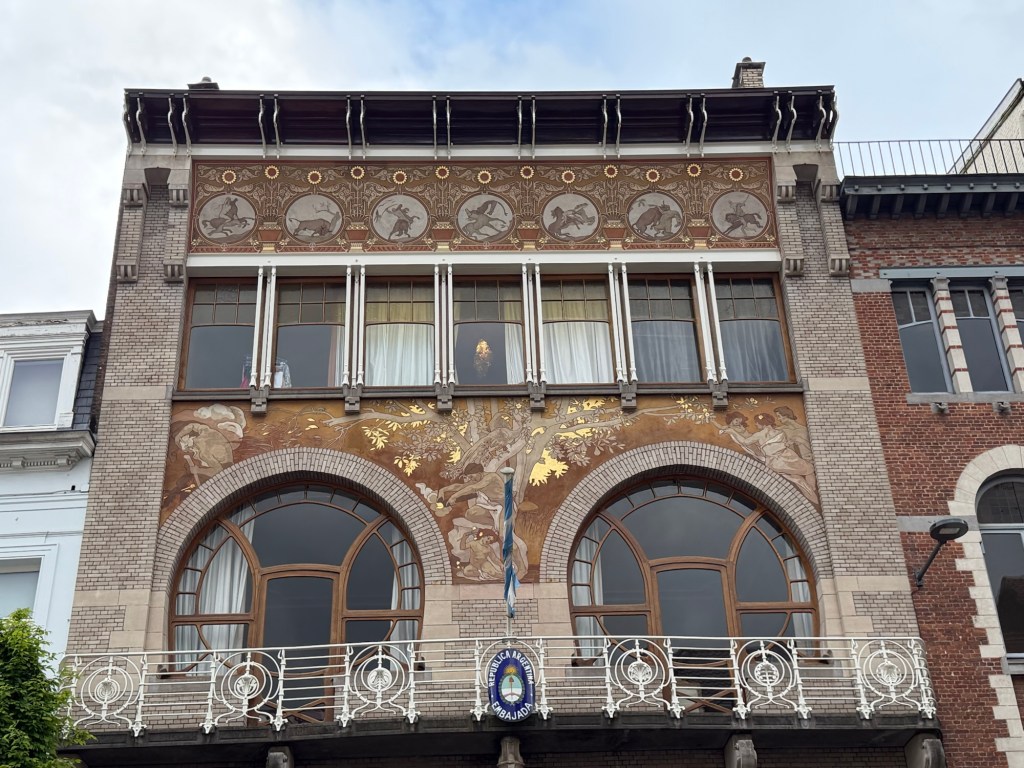
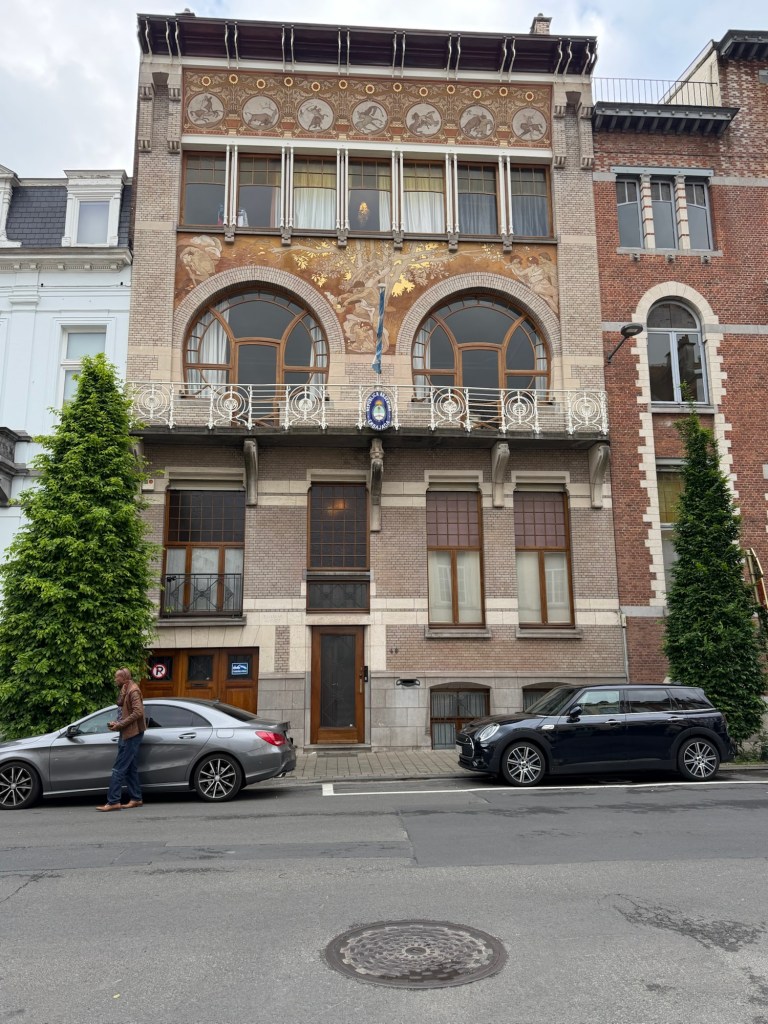
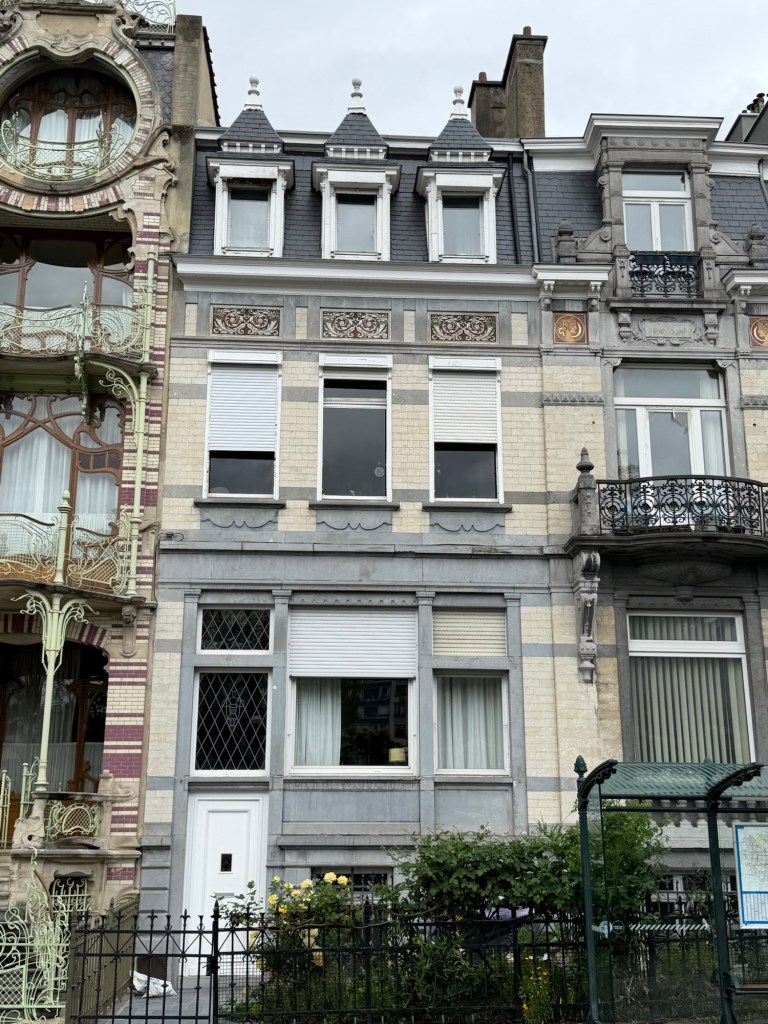
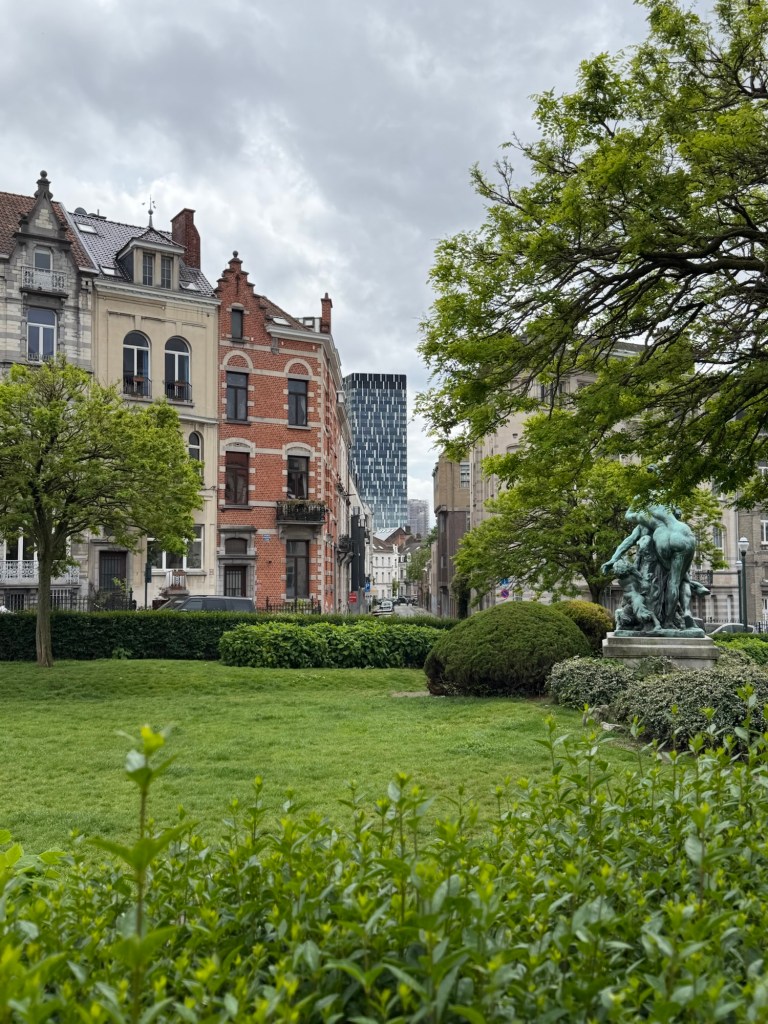
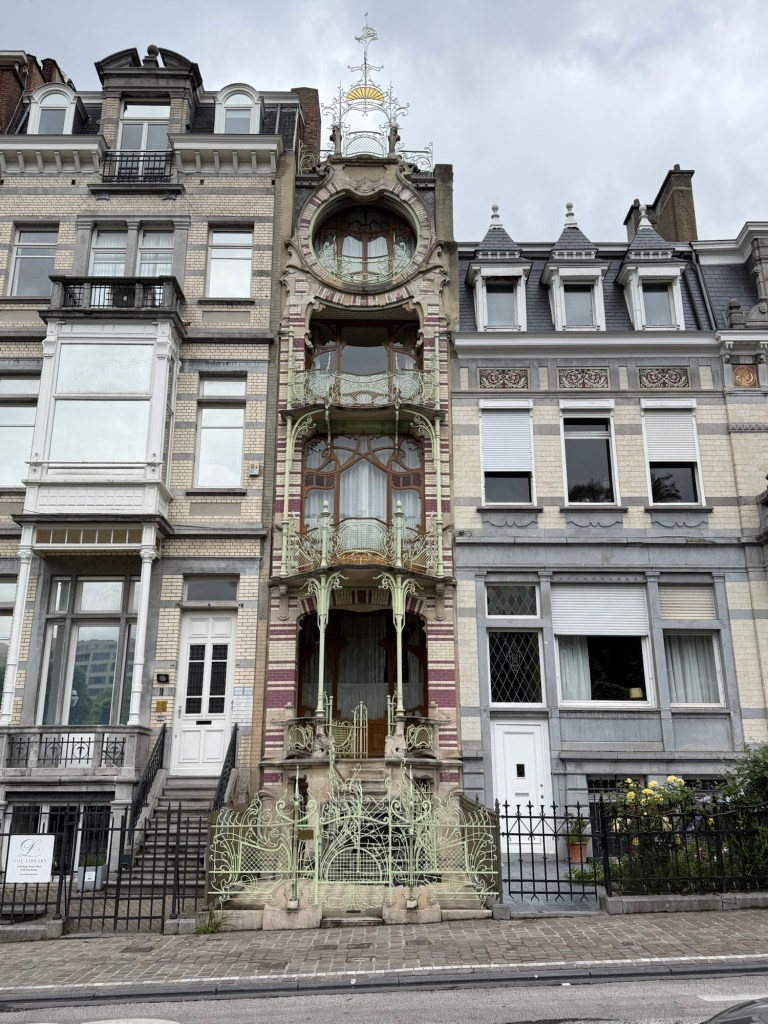
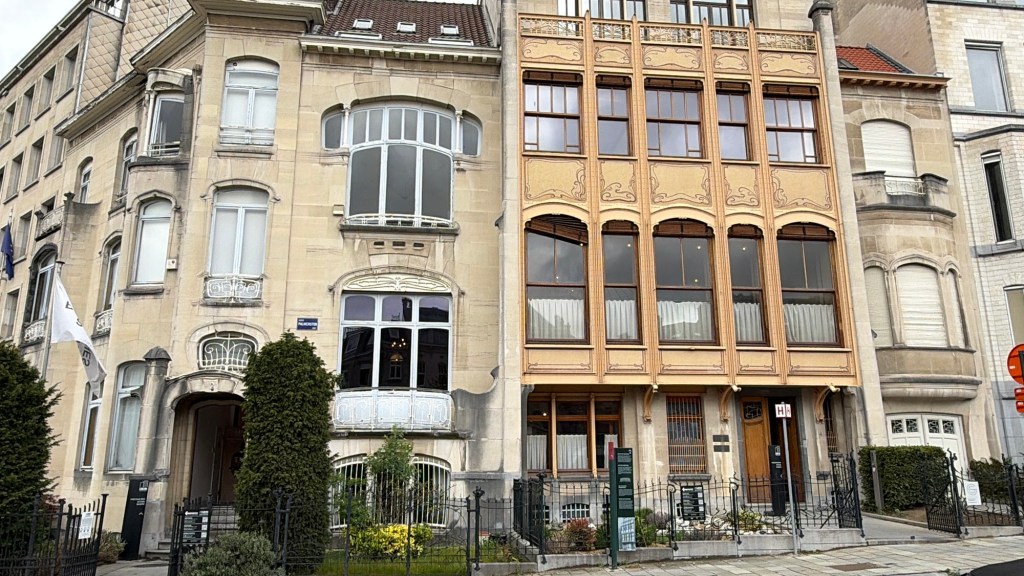
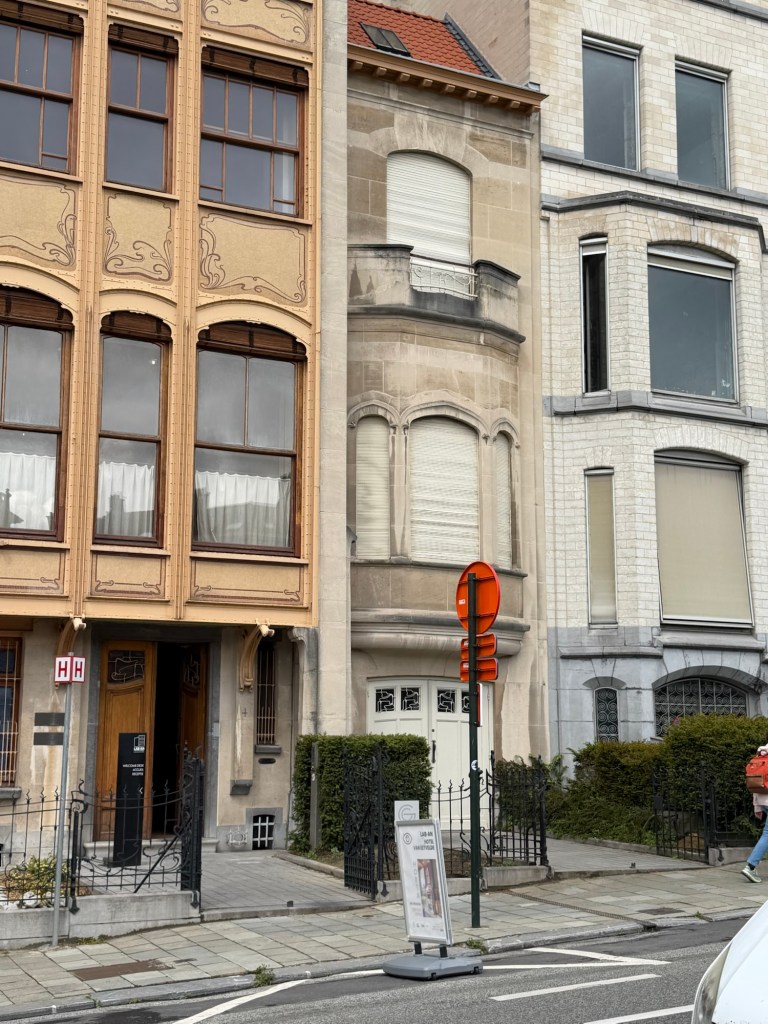
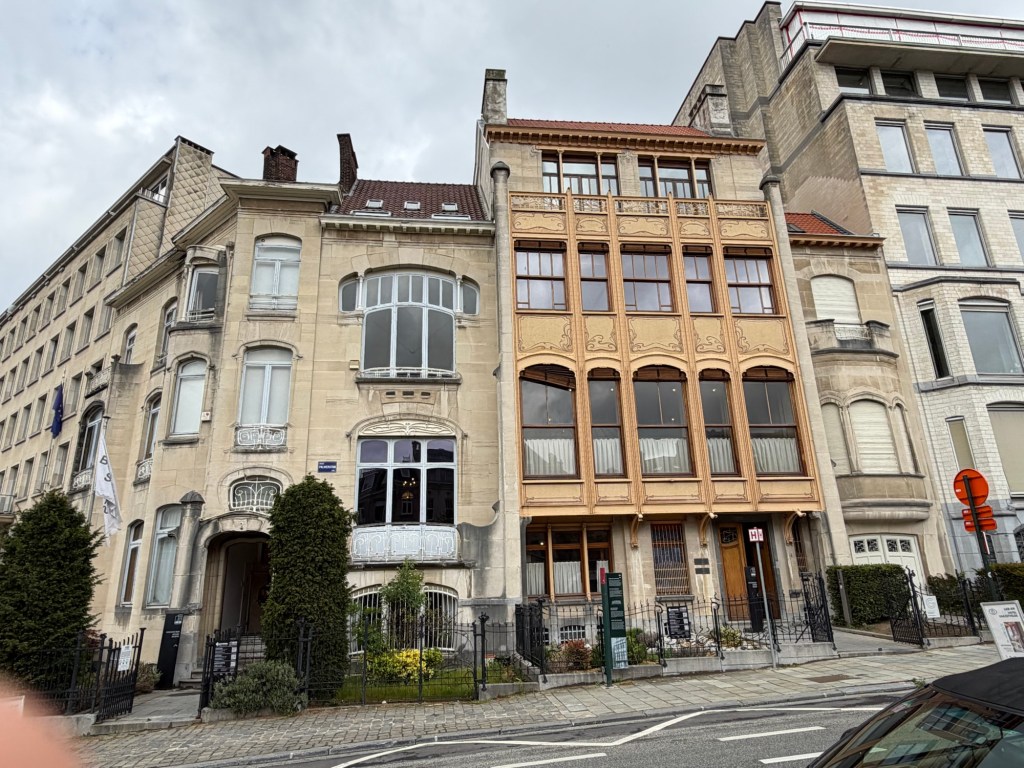
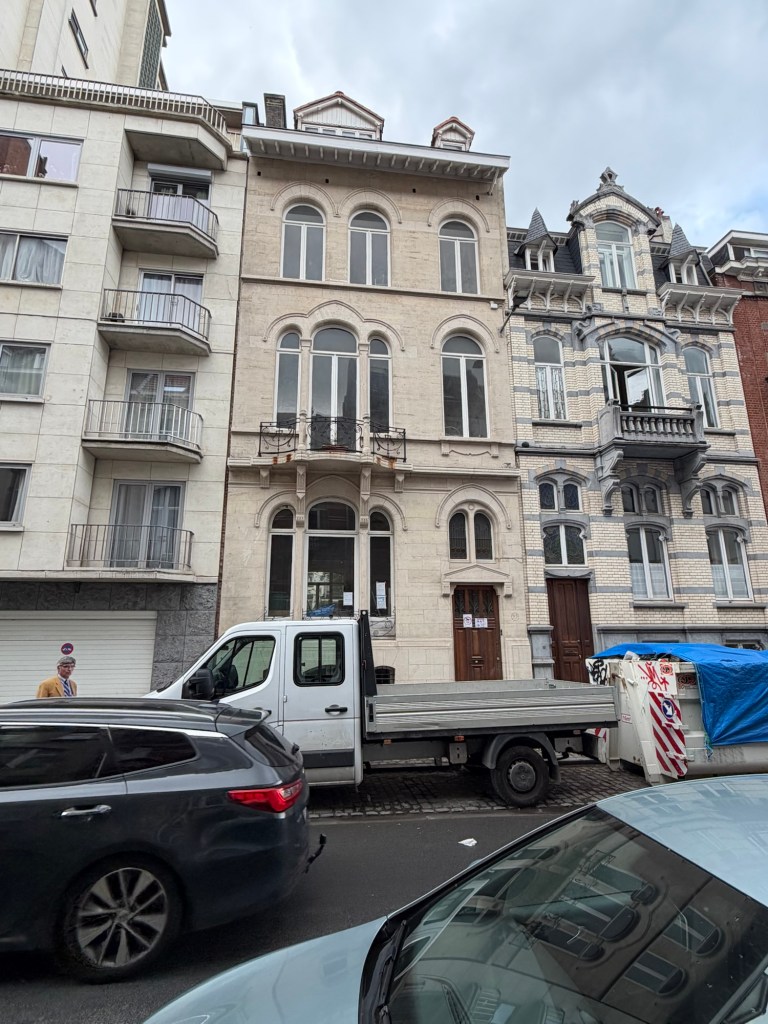
As we moved from one façade to the next, a fascinating pattern emerged. Flowing wrought-iron balconies, curving window frames, floral motifs, intricate stone carvings, decorative tiles, and elaborate sgraffito murals transformed ordinary townhouses into works of art. Some buildings displayed the graceful organic forms that made Horta famous, while others reflected the interpretations and innovations of the architects who followed in his footsteps.
Of the array of buildings we visited, one demanded my attention more than any other: the former home and studio of Paul Cauchie. While many Art Nouveau buildings express themselves through ironwork and curving façades, this one announces itself through a spectacular sgraffito mural that transforms the entire building into a work of art.
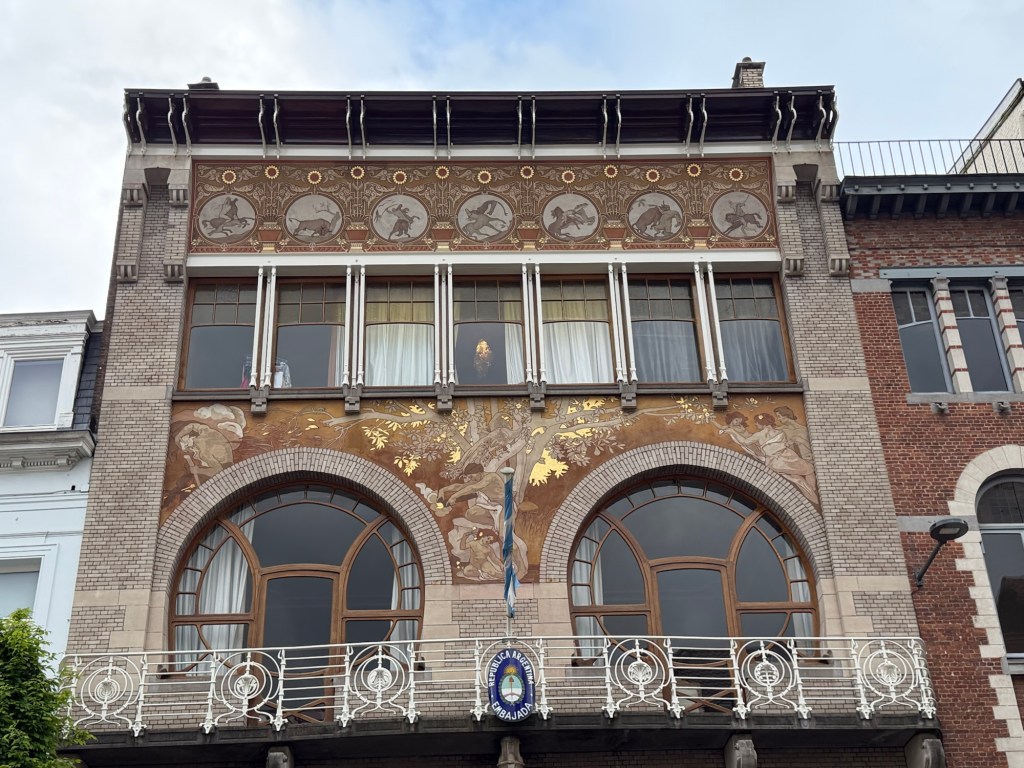
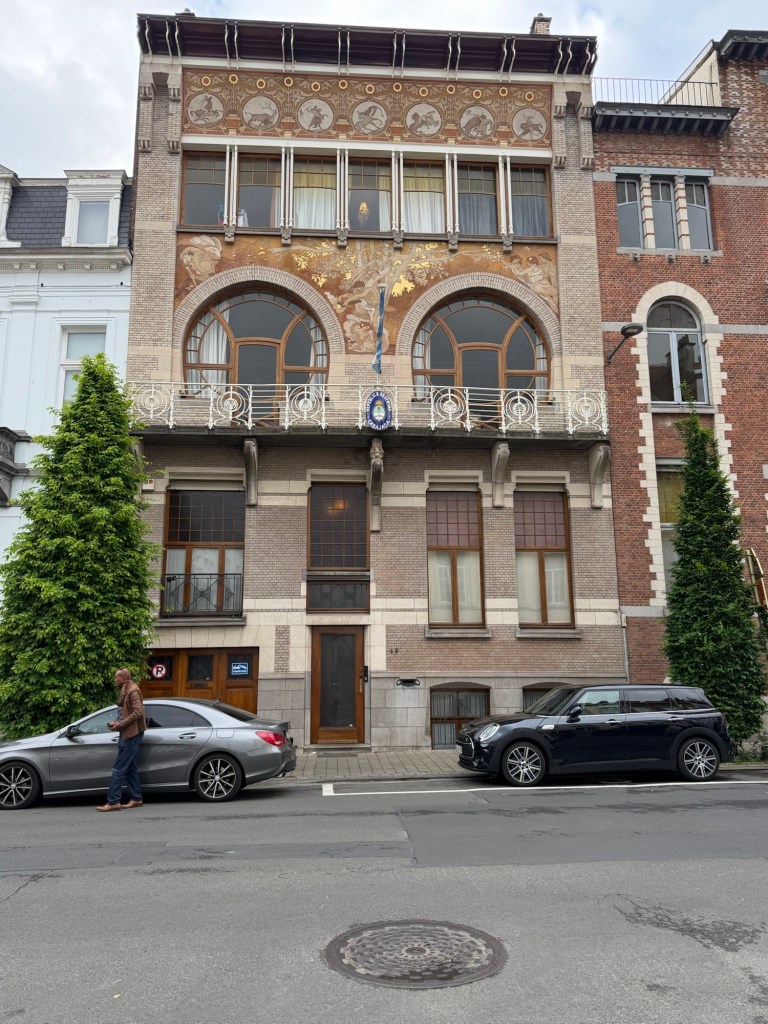
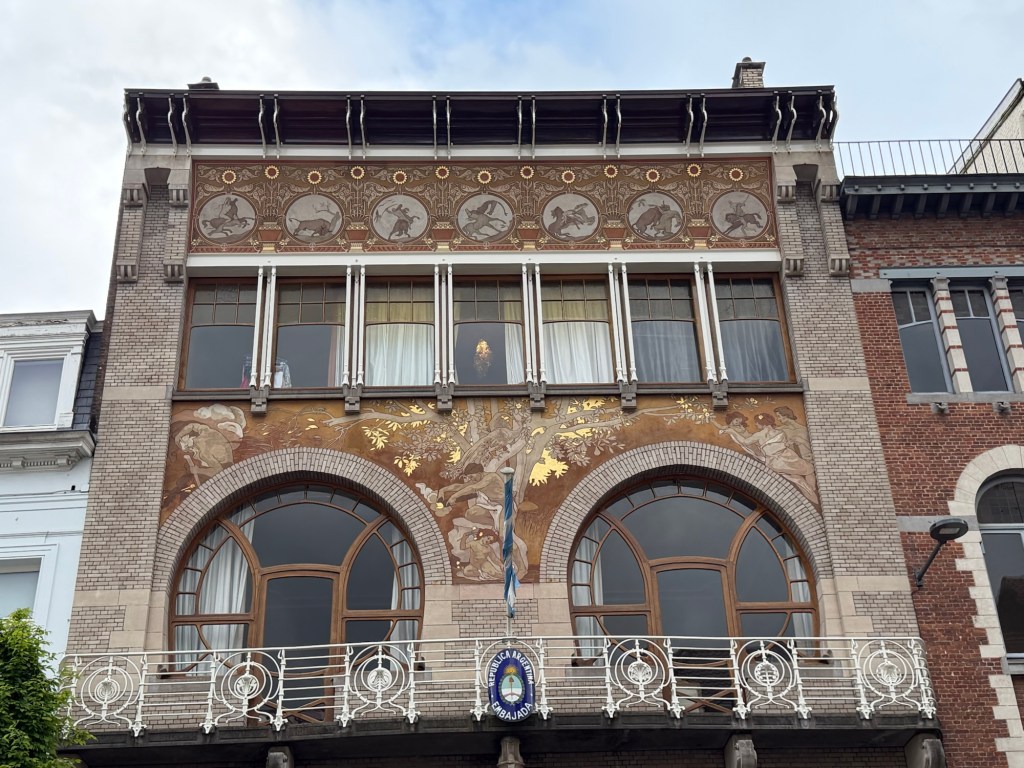
The golden figures, geometric patterns, decorative lettering, and symbolic imagery create a façade unlike anything else we saw in Brussels. Standing across the street in the drizzle, I found it impossible to look away. More than a century after it was built, the house remains a stunning reminder that Art Nouveau sought to erase the boundaries between architecture, painting, decoration, and everyday life.
What made the tour especially memorable was learning to see details we would have otherwise walked right past. A balcony railing became a work of sculpture. A window frame echoed the shape of a plant stem. Decorative ironwork revealed the hand of a master craftsman. By the end of the afternoon, Brussels itself felt like an open-air museum, with masterpieces hidden along ordinary residential streets.
It was one of those experiences that changed the way we looked at the city. After spending time with JJ, we no longer saw rows of buildings—we saw stories, artistic ambitions, and the extraordinary creativity that made Brussels one of the birthplaces of Art Nouveau.
To cap off a day that had taken us from medieval guild houses to Art Nouveau masterpieces and futuristic landmarks, we stopped at several sites that reflected Brussels’ role on the European stage.
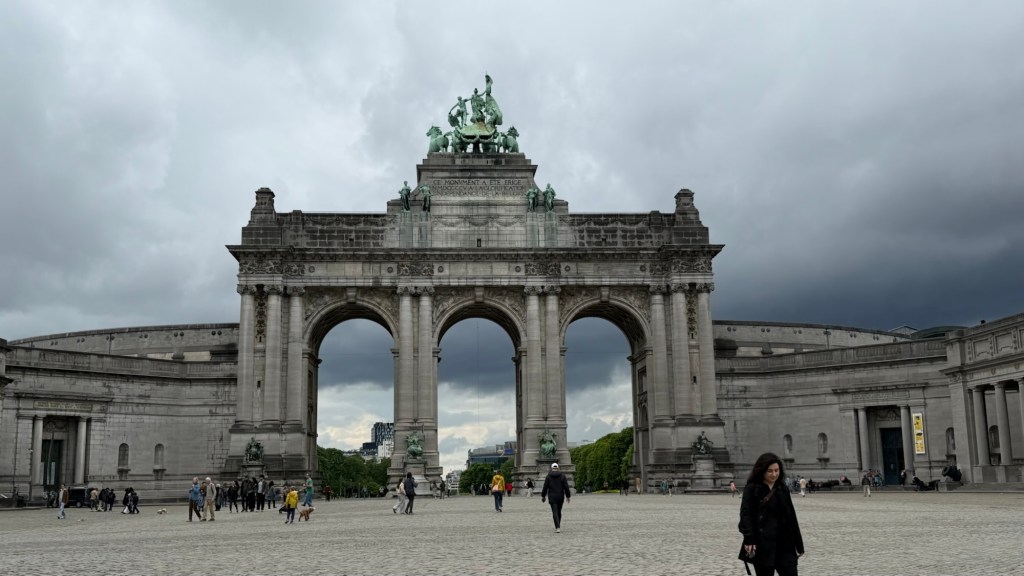
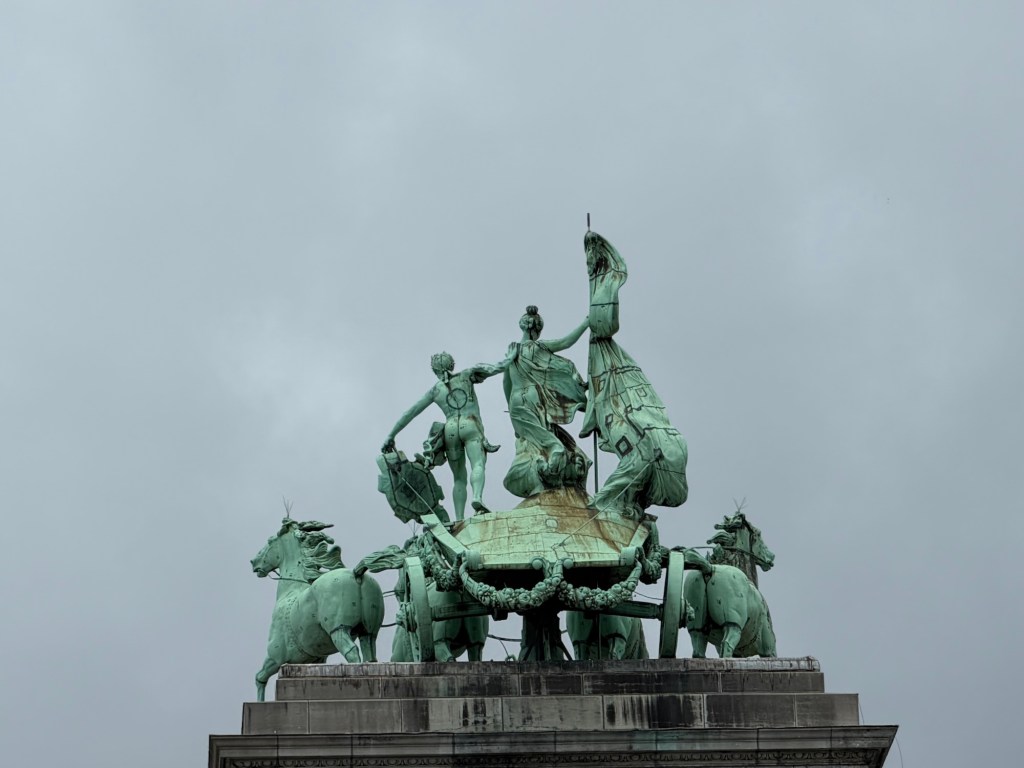
The imposing triumphal arch at Cinquantenaire Park was built to commemorate the fiftieth anniversary of Belgian independence. Beneath darkening skies, its massive arches and bronze quadriga seemed almost theatrical, a fitting symbol of a young nation’s confidence and ambition.
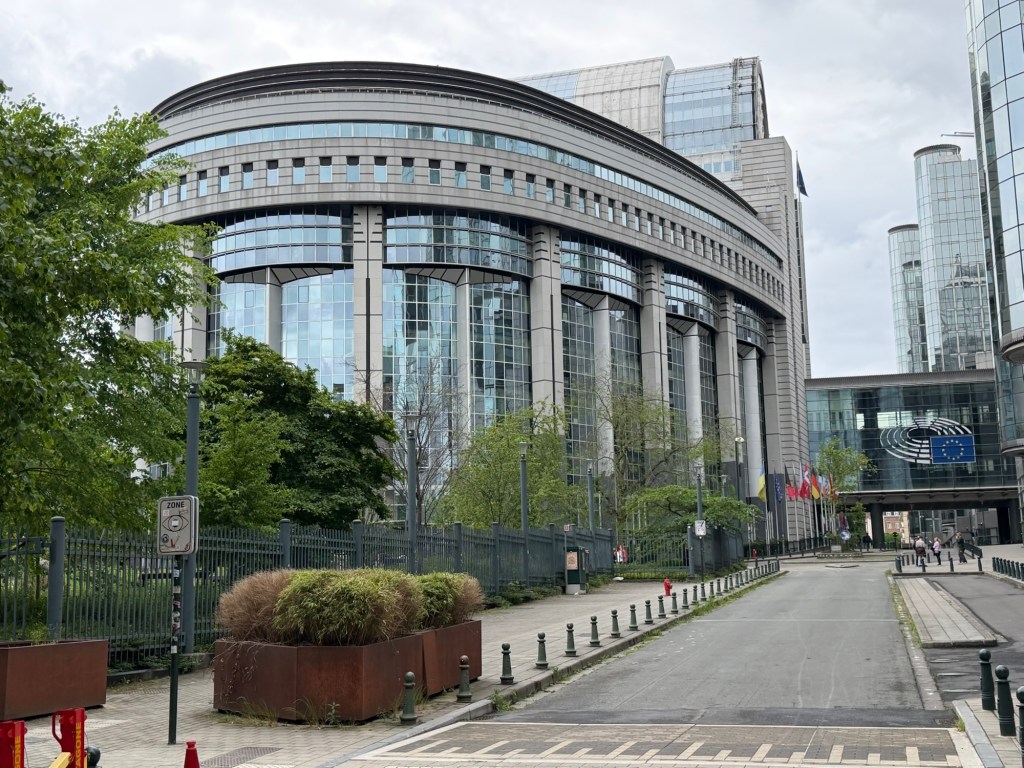
From there we continued into the European Quarter, where the sleek glass and steel headquarters of the European Parliament offered a striking contrast to the historic architecture we had spent the day admiring.
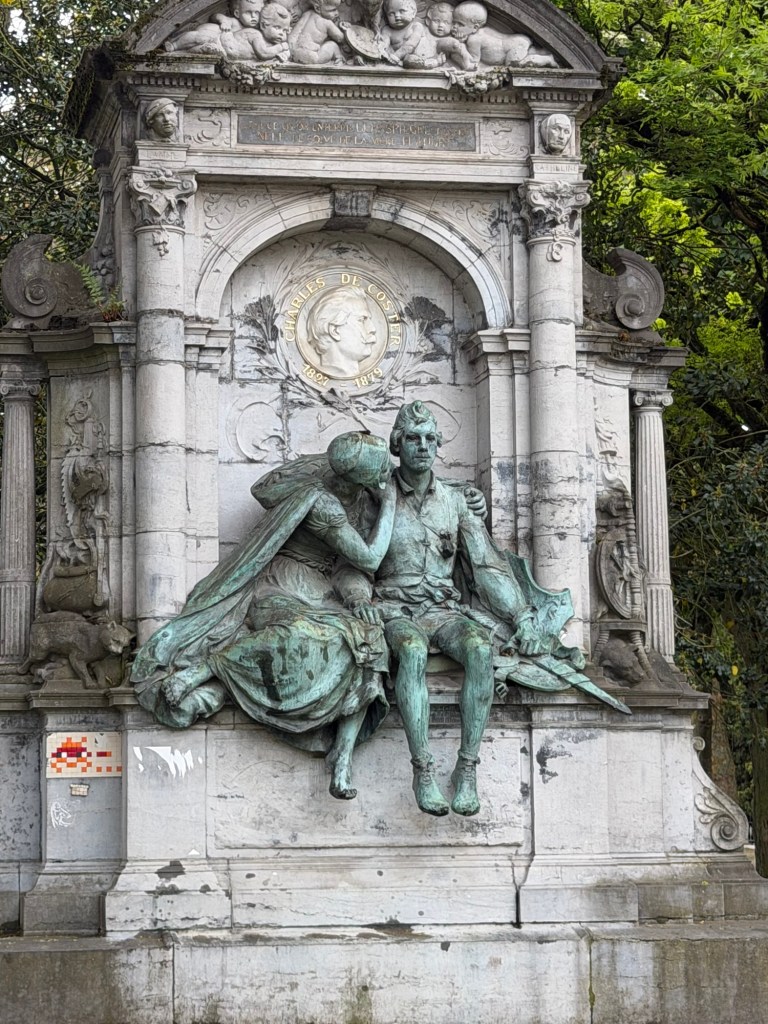
One final stop brought us back to the artistry that seems to appear around every corner in Brussels. A beautifully sculpted monument honoring the Belgian painter Charles de Coster combined classical stonework with expressive bronze figures, creating another memorable intersection of history, art, and storytelling.
It was a fitting conclusion to a day that revealed Brussels as a city of remarkable contrasts—medieval and modern, monumental and intimate, historic and forward-looking—all woven together into a uniquely Belgian tapestry.
One more day remains in our Benelux adventure, and if the past weeks are any indication, Brussels still has a few surprises left for us.