From Ghent, we made our way east toward Spa, Belgium, our home for the next two nights. The drive — with Mohammad’s nephew Salah at the wheel — gradually traded the medieval skylines and canals of Flanders for the rolling forests and winding roads of the Ardennes, a quieter and very different side of Belgium.
Spa is a town whose name became synonymous with wellness itself. Long before “spa” became a generic term, people traveled here to “take the waters,” drawn by mineral springs believed to possess restorative powers. European royalty, aristocrats, writers, and politicians all passed through these hills over the centuries, transforming this small Ardennes town into one of the continent’s earliest and most fashionable resort destinations.
Its decline came slowly. By the late nineteenth and early twentieth centuries, Europe’s elite had more choices — Alpine resorts, seaside destinations, and rival spa towns elsewhere on the continent. Then came two world wars that devastated Belgium and shattered much of the old European social order that had sustained places like Spa. After the wars, modern medicine diminished the almost mystical reputation of mineral cures, while air travel and changing lifestyles pulled travelers toward entirely different forms of tourism.
And yet Spa never disappeared.
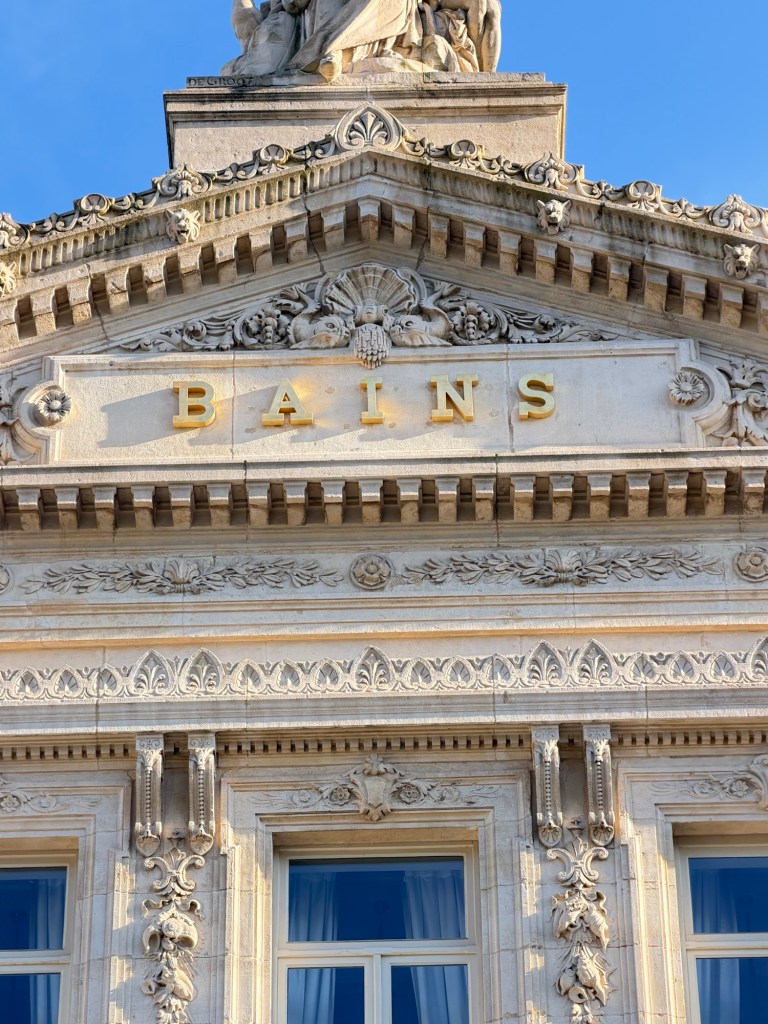
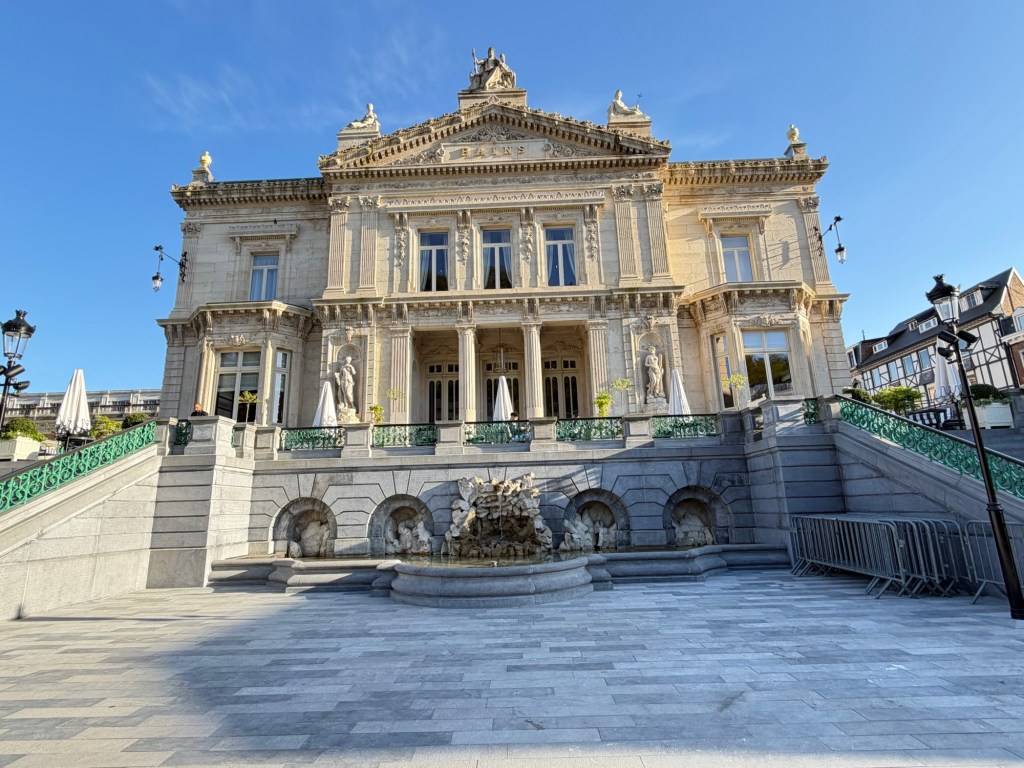
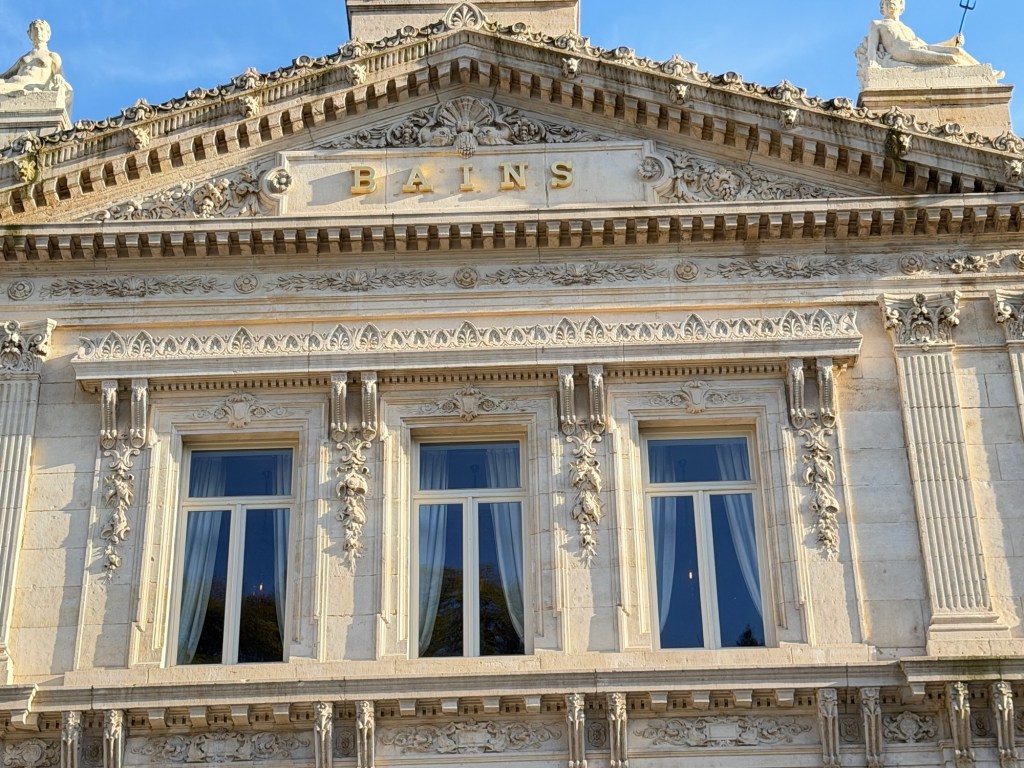
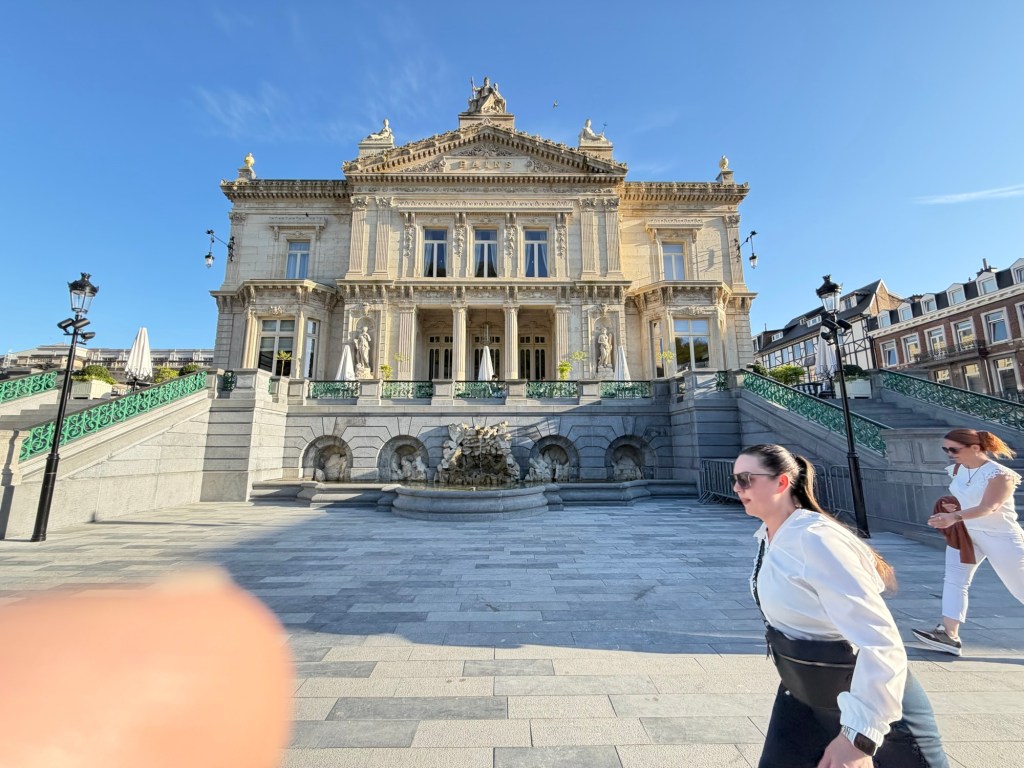
Our hotel’s elegant “Bains” façade still speaks to that earlier era, when visitors arrived not simply for leisure, but in pursuit of health, ritual, and society (www.lesbainsdespa.com/en/).
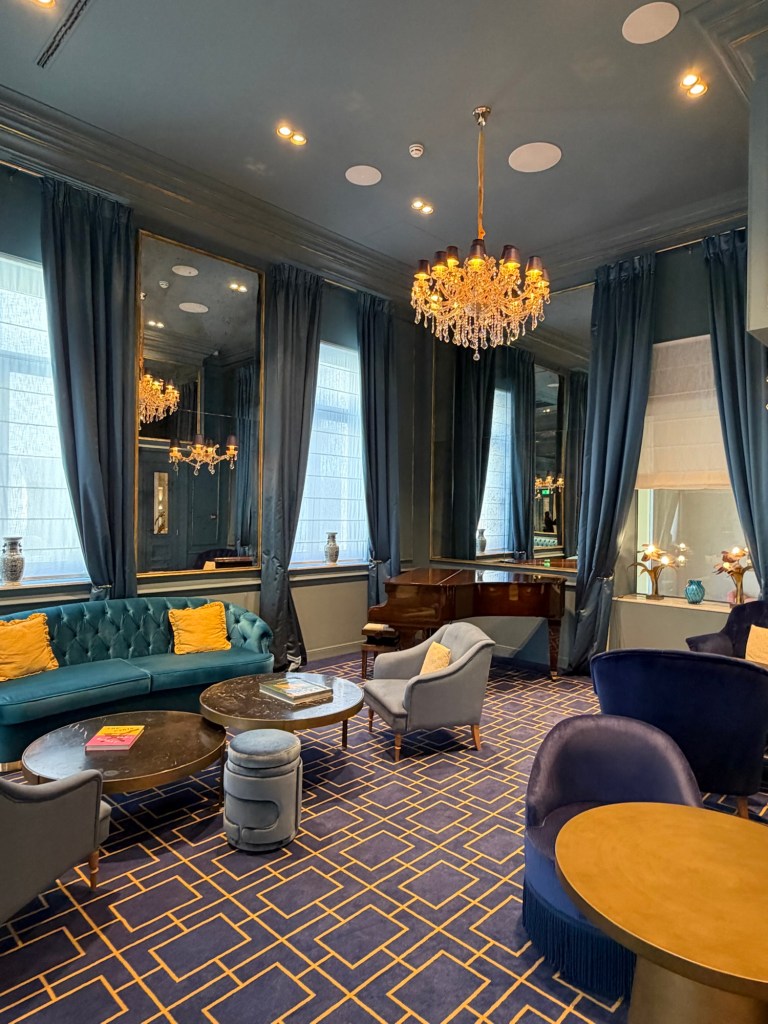
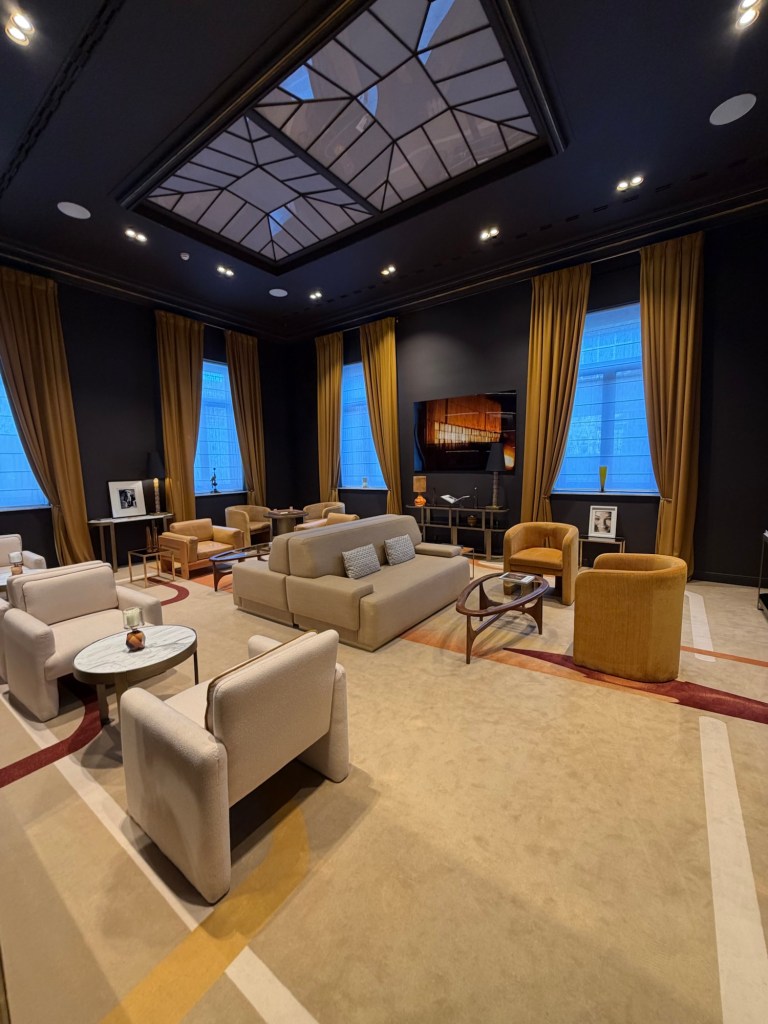
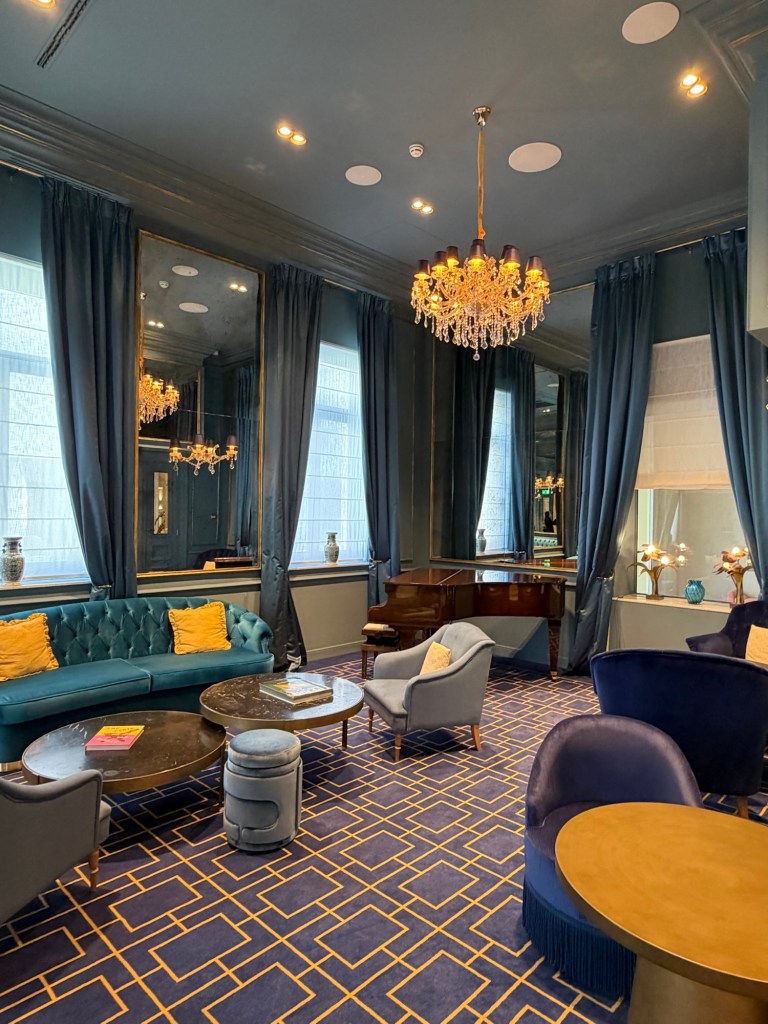
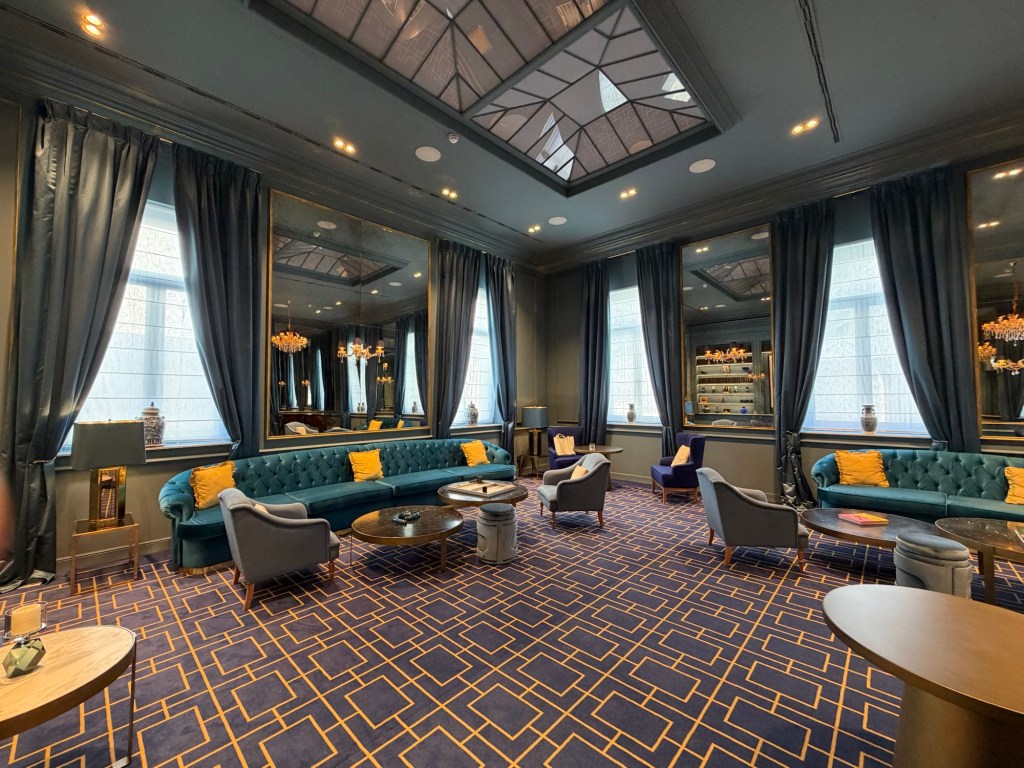
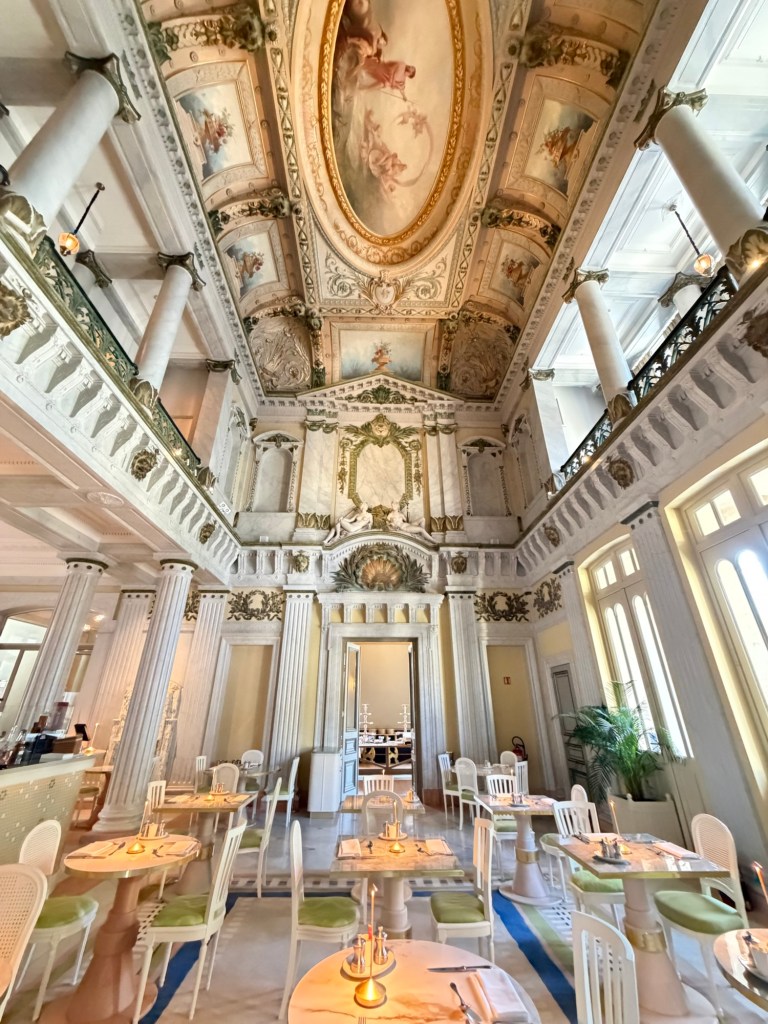
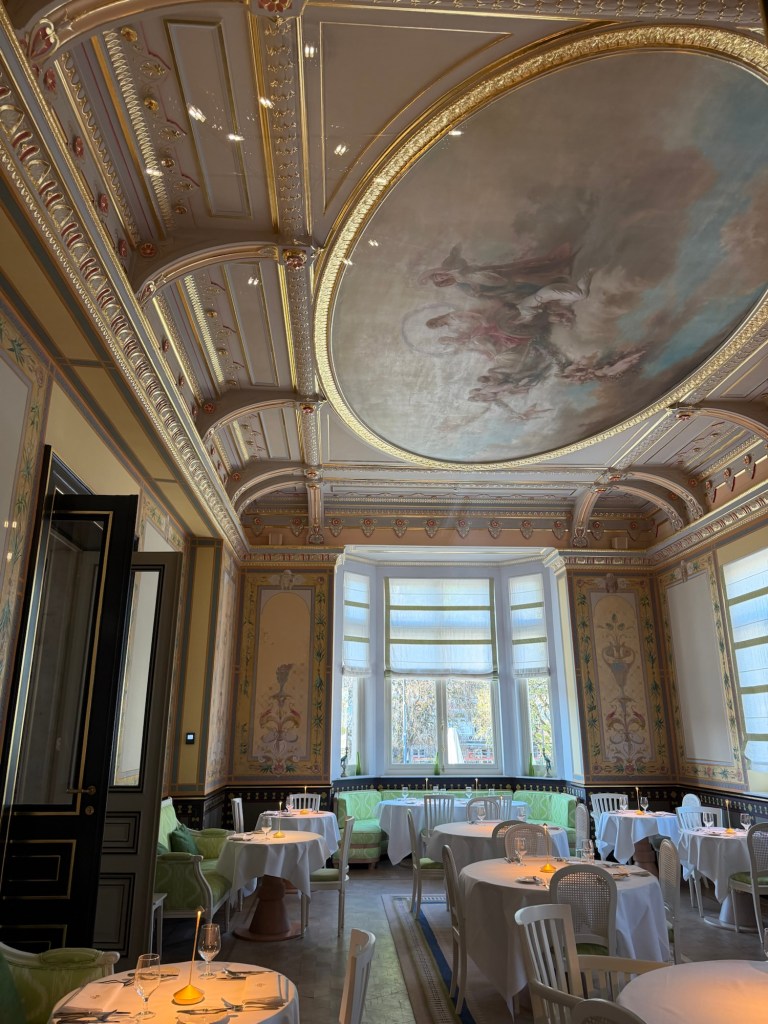
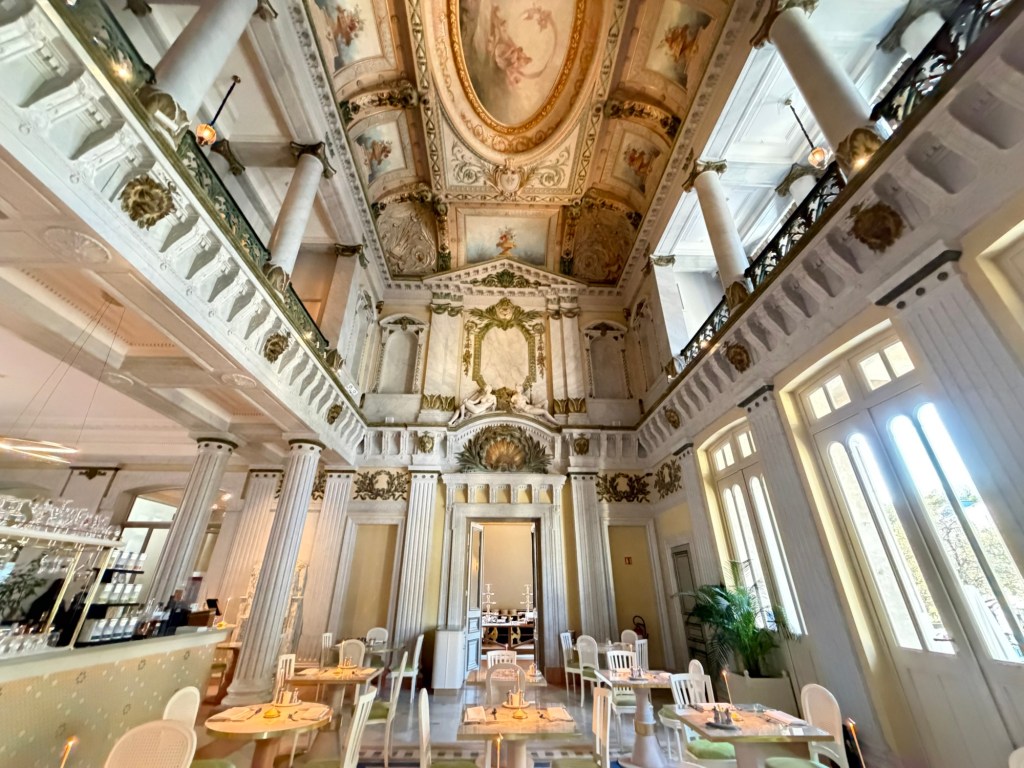
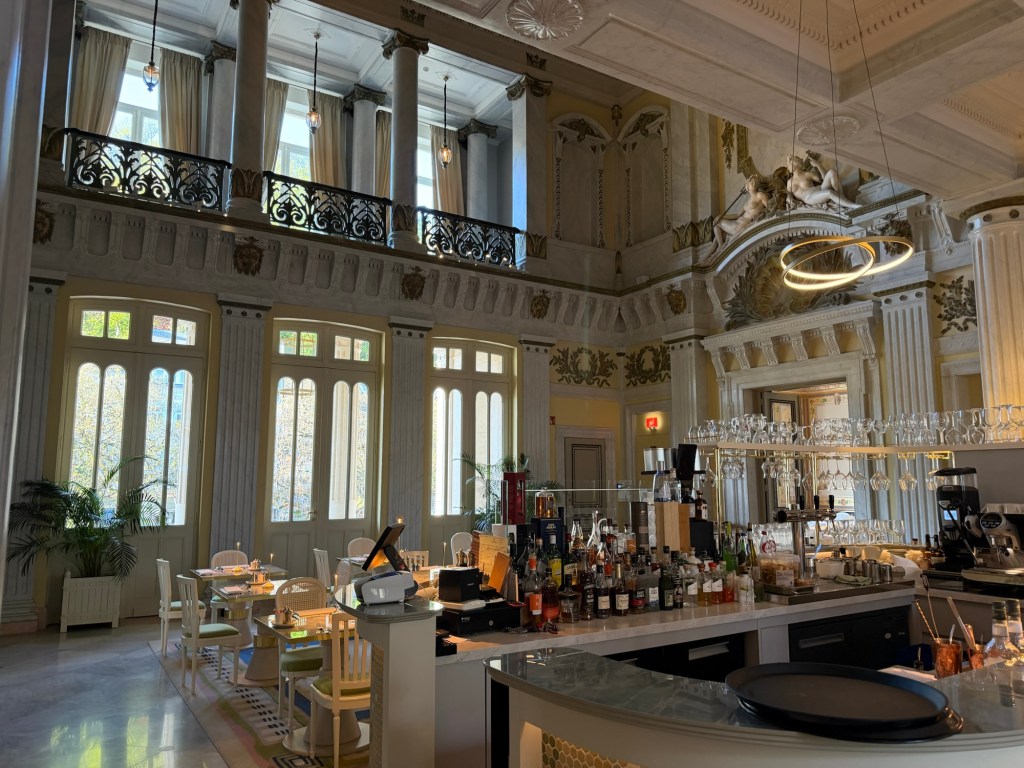
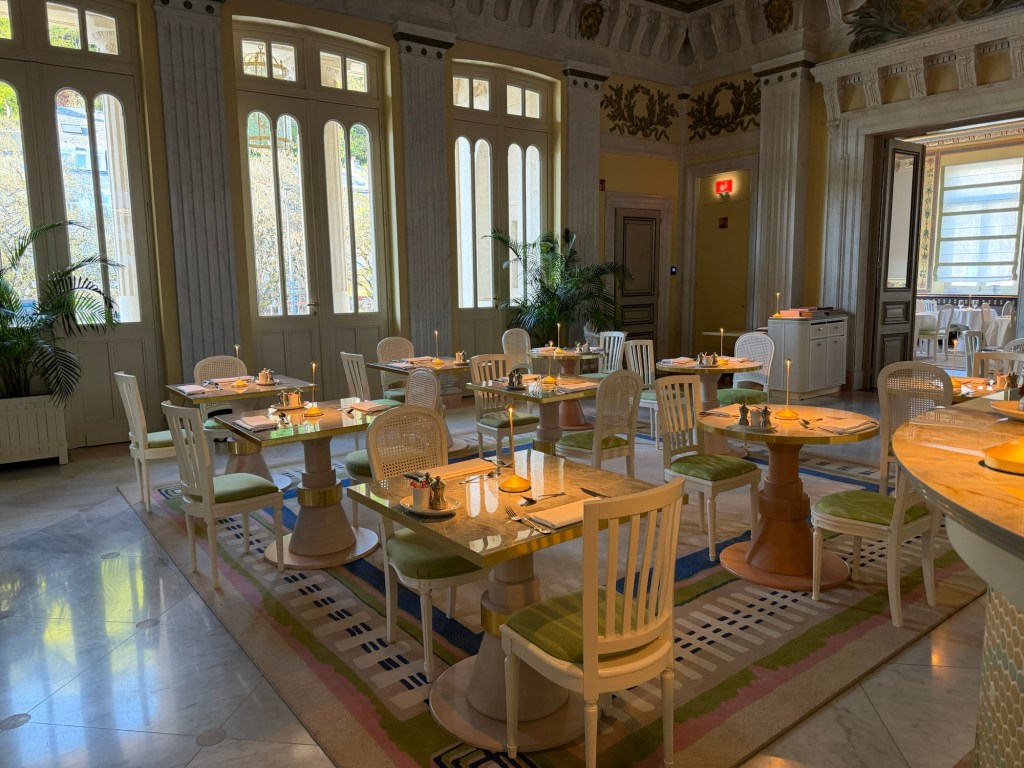
Today, after careful restoration and modernization, Les bains de Spa reflects both its historic grandeur and the expectations of contemporary luxury. Behind the classical exterior are richly updated interiors: deep velvet seating, mirrored salons, chandeliers, and carefully restored architectural details that preserve the atmosphere of another century while quietly accommodating the present.
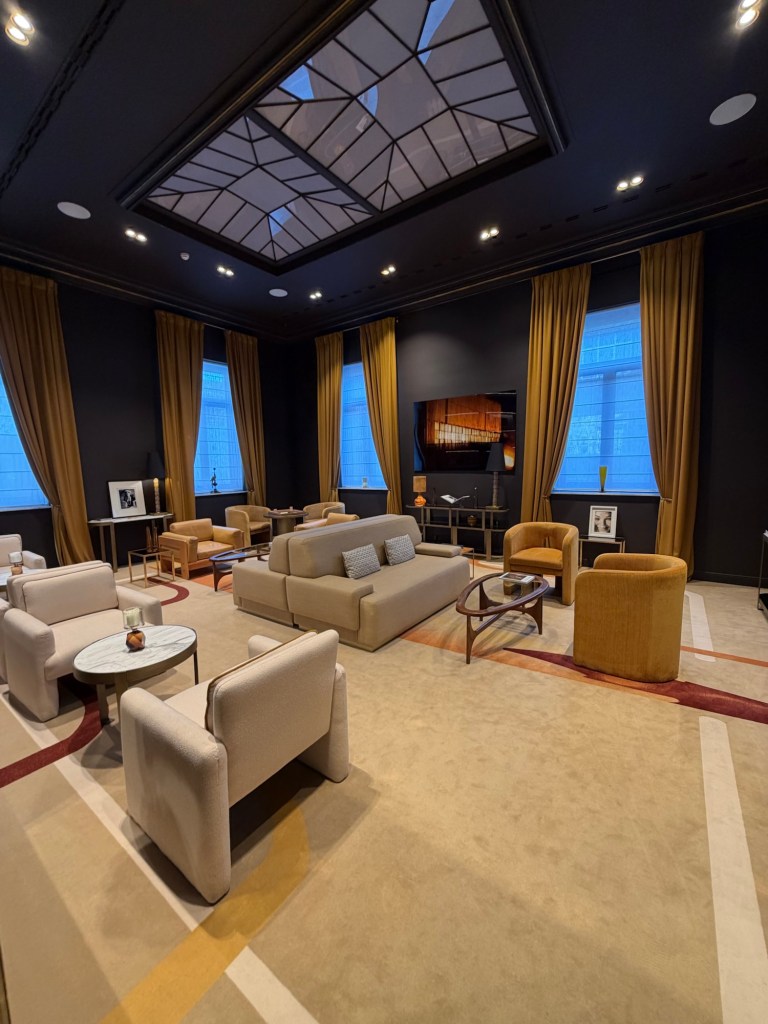
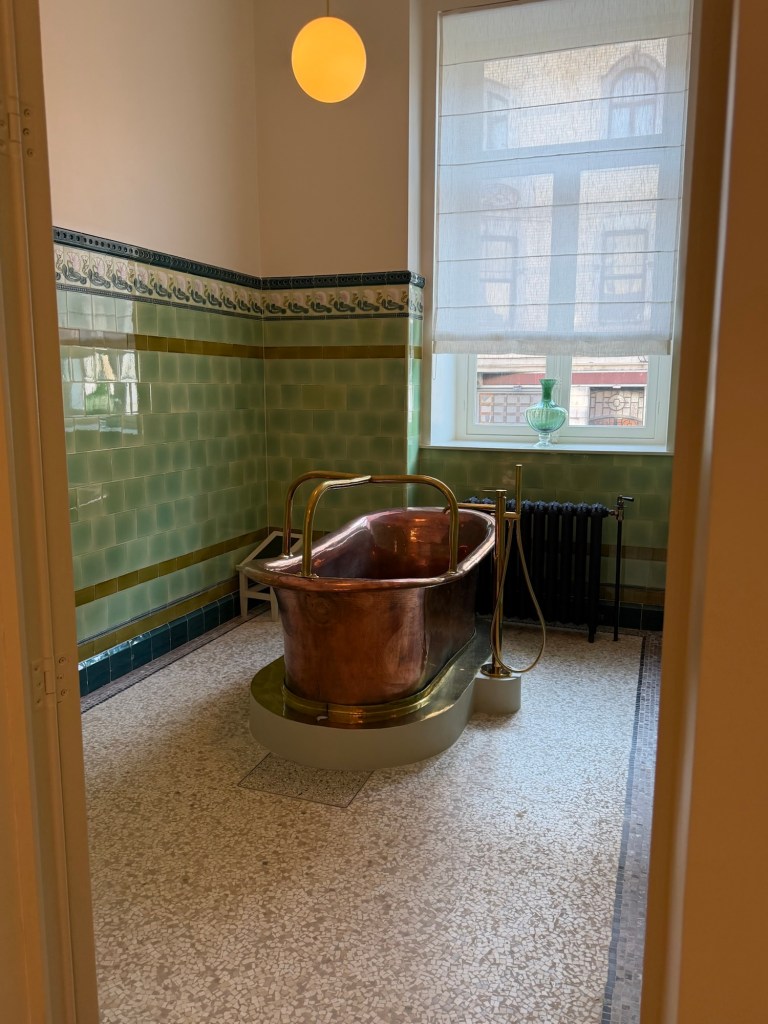
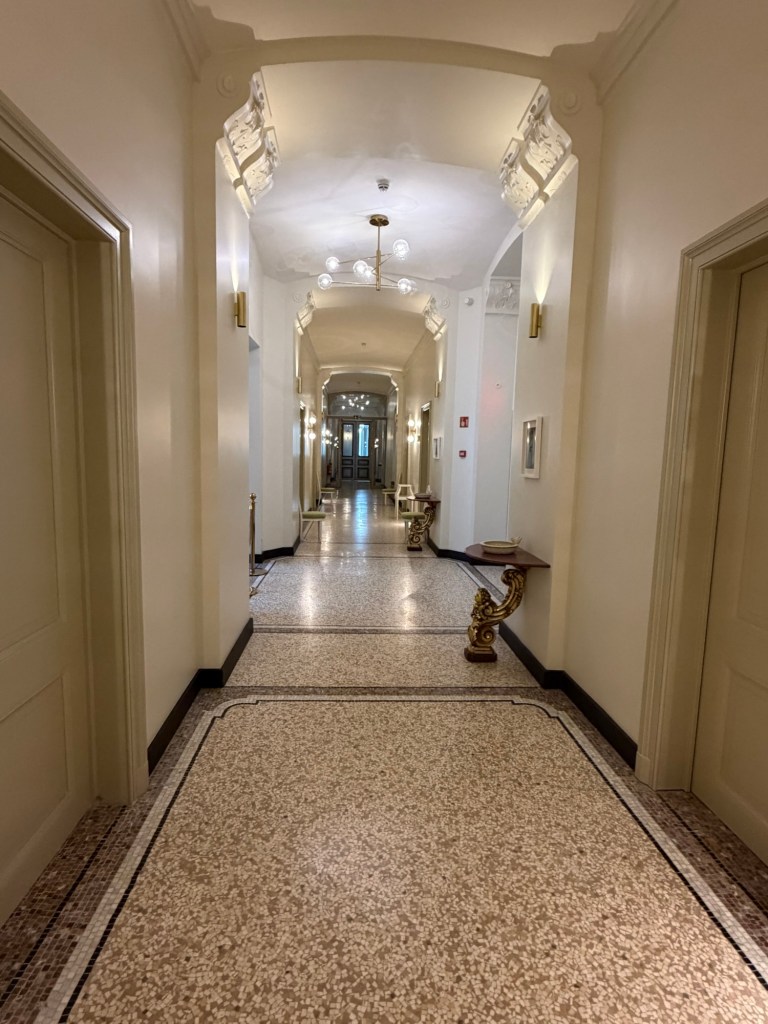
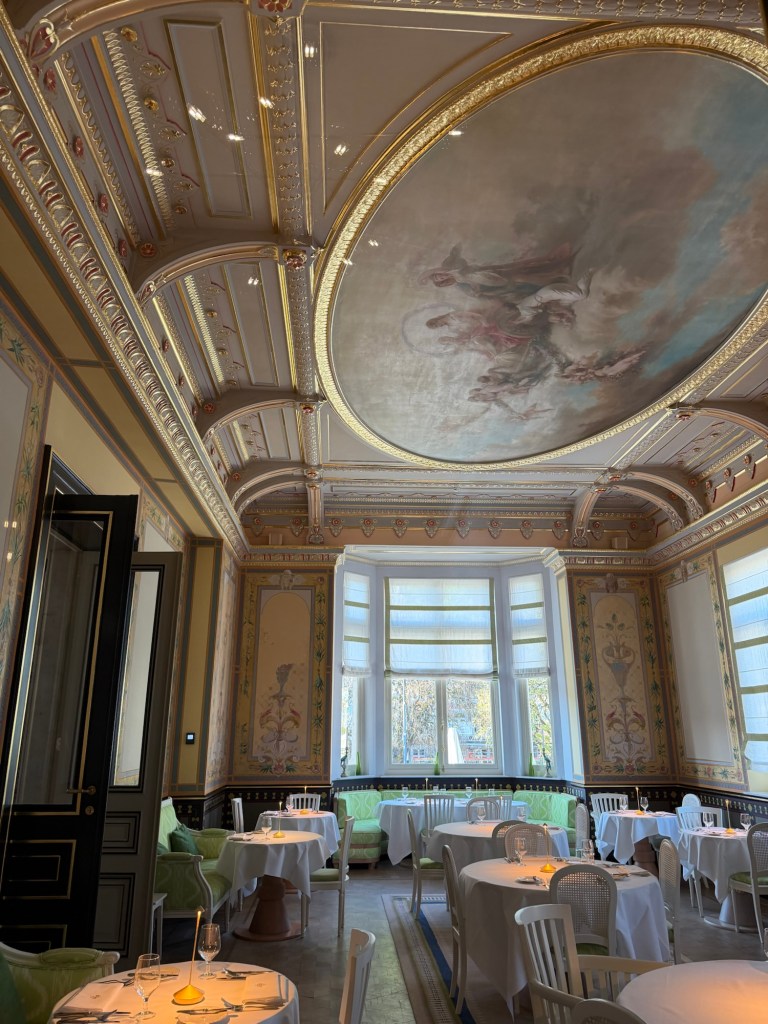
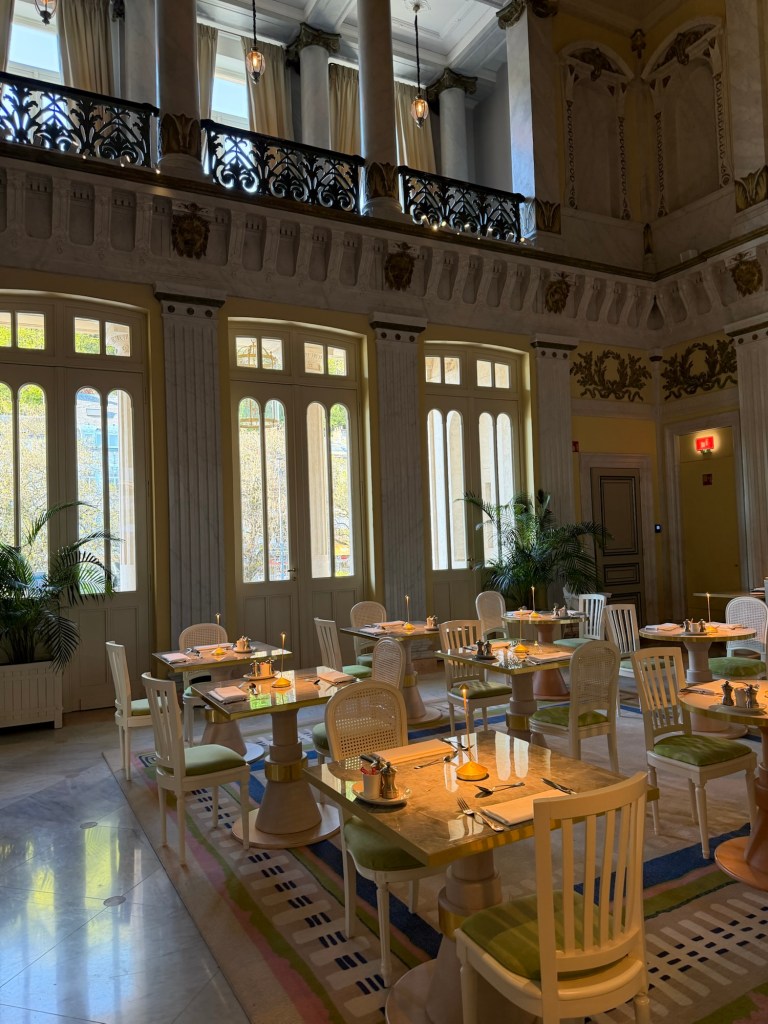
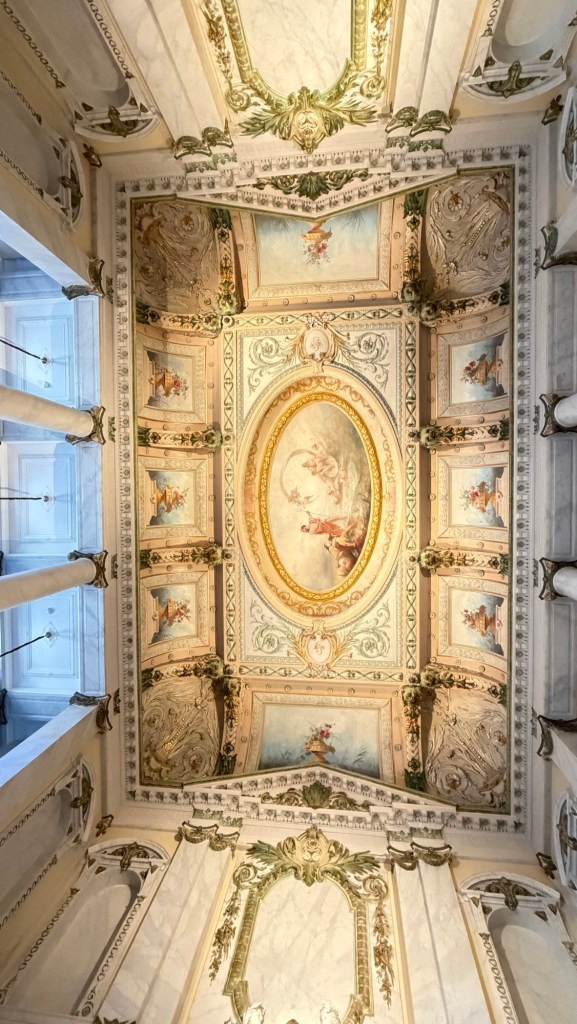
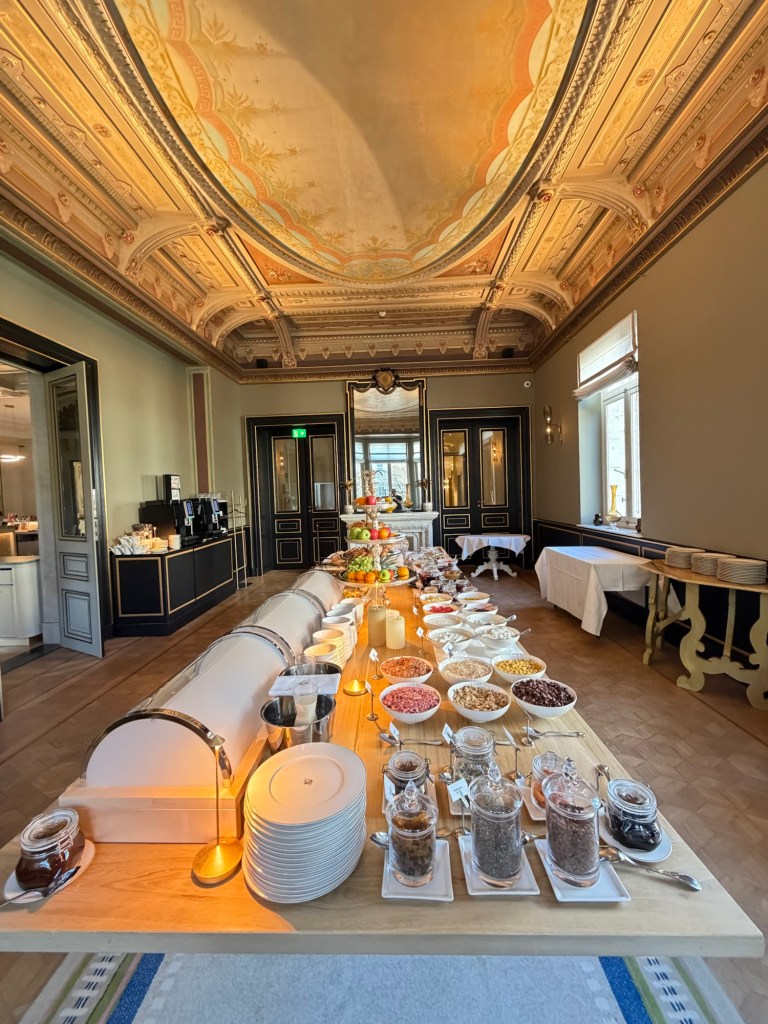
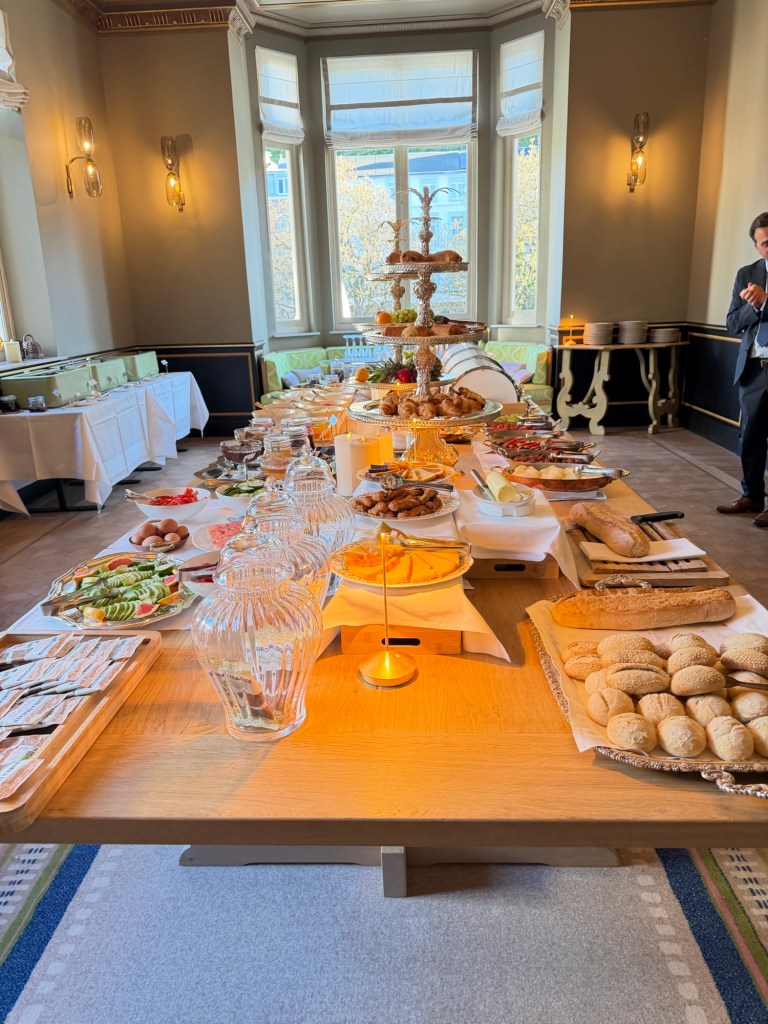
Even breakfast feels ceremonial here. Beneath soaring ceilings and allegorical paintings, guests sit quietly in rooms that once reflected the confidence and sophistication of continental Europe at its height. The architecture carries the memory of another century — refined, theatrical, and unapologetically grand.
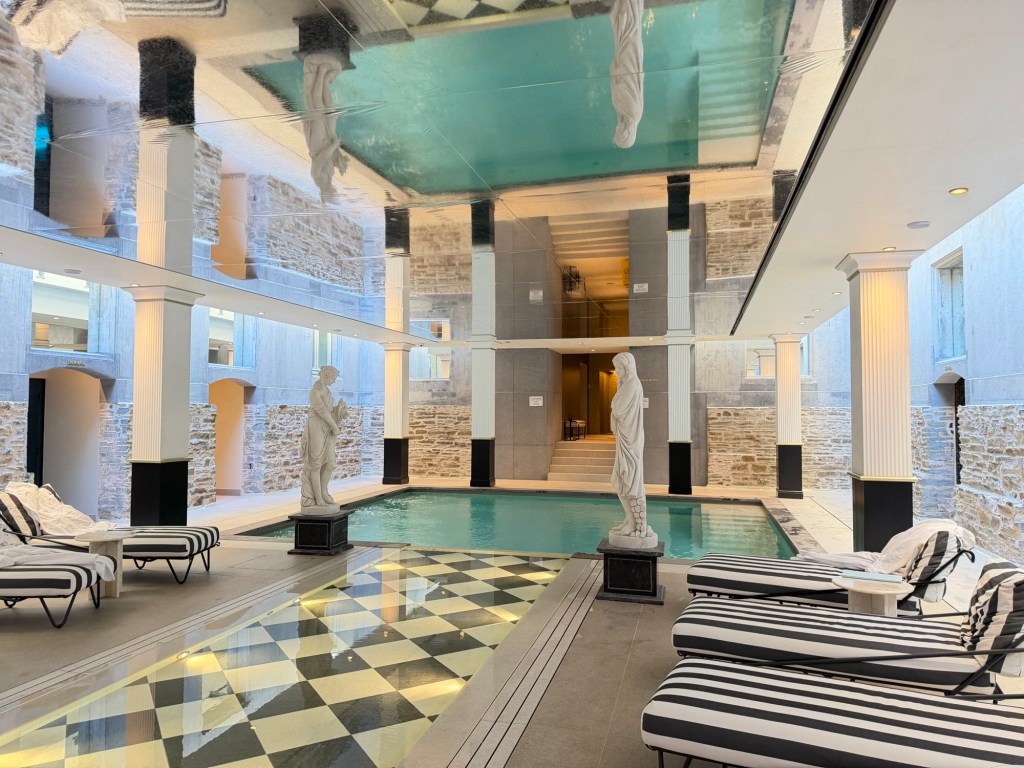
Below this historic splendor lies something entirely different, though perfectly connected to it: a remarkably elegant spa that feels like a modern interpretation of ancient Roman baths. Descending the stairs into the spa is like slipping beneath the surface of the hotel into a quieter hidden world. Stone walls, mirrored ceilings, still water, and classical statues create a setting that feels simultaneously ancient and contemporary.
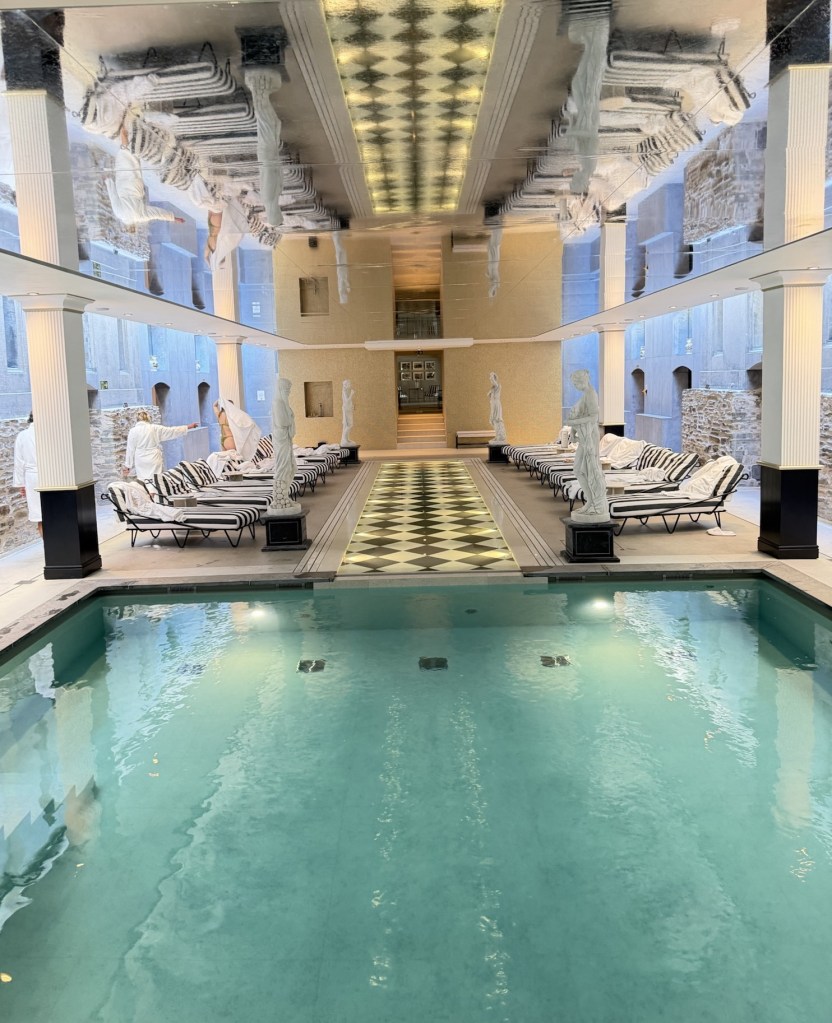
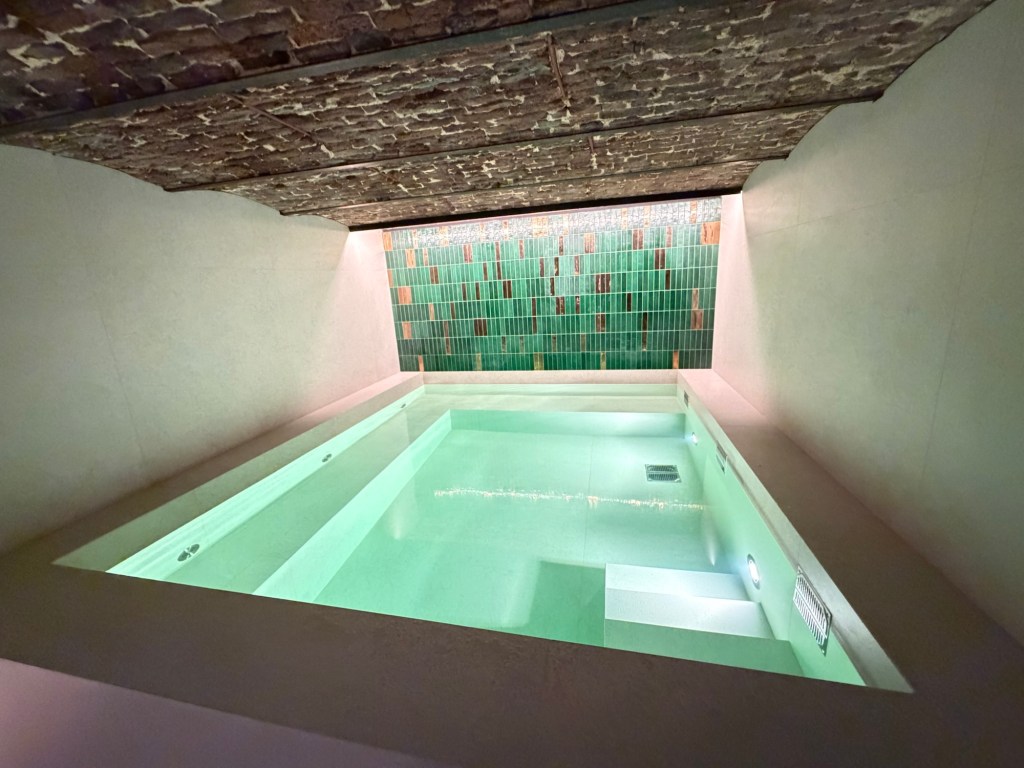
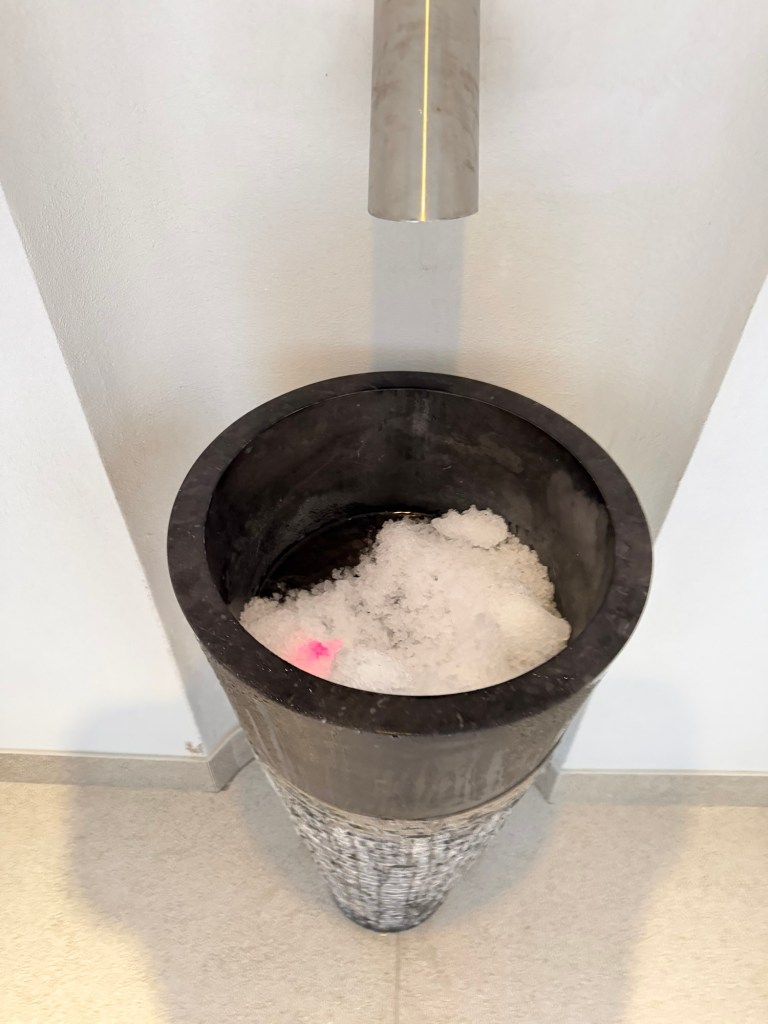
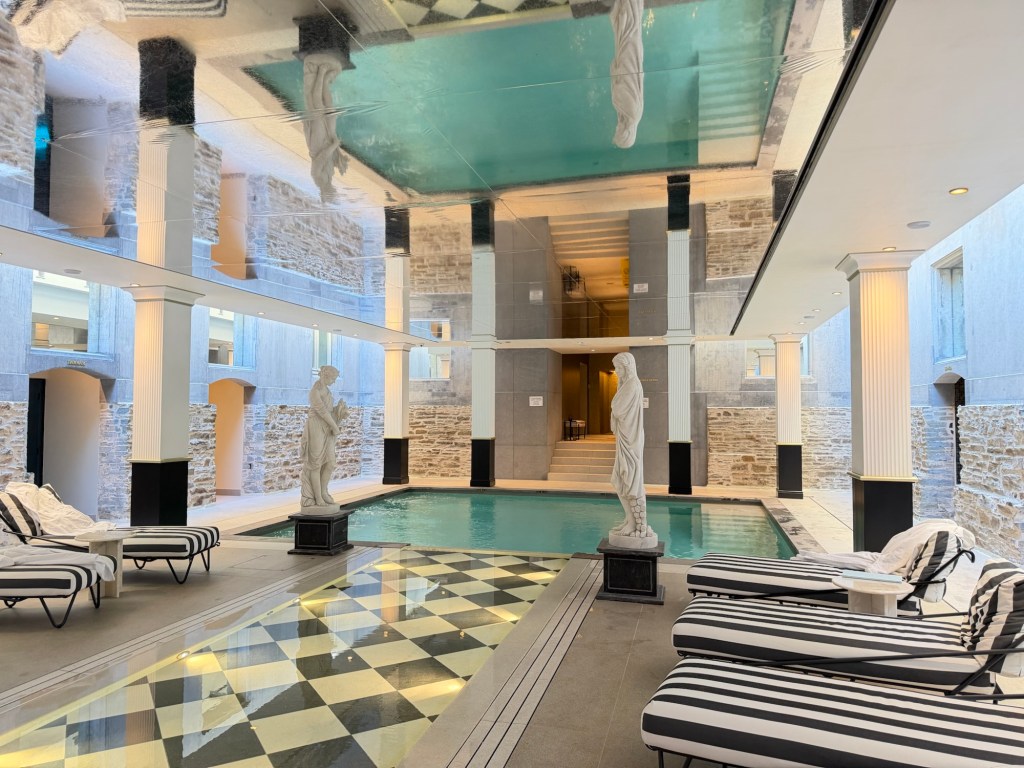
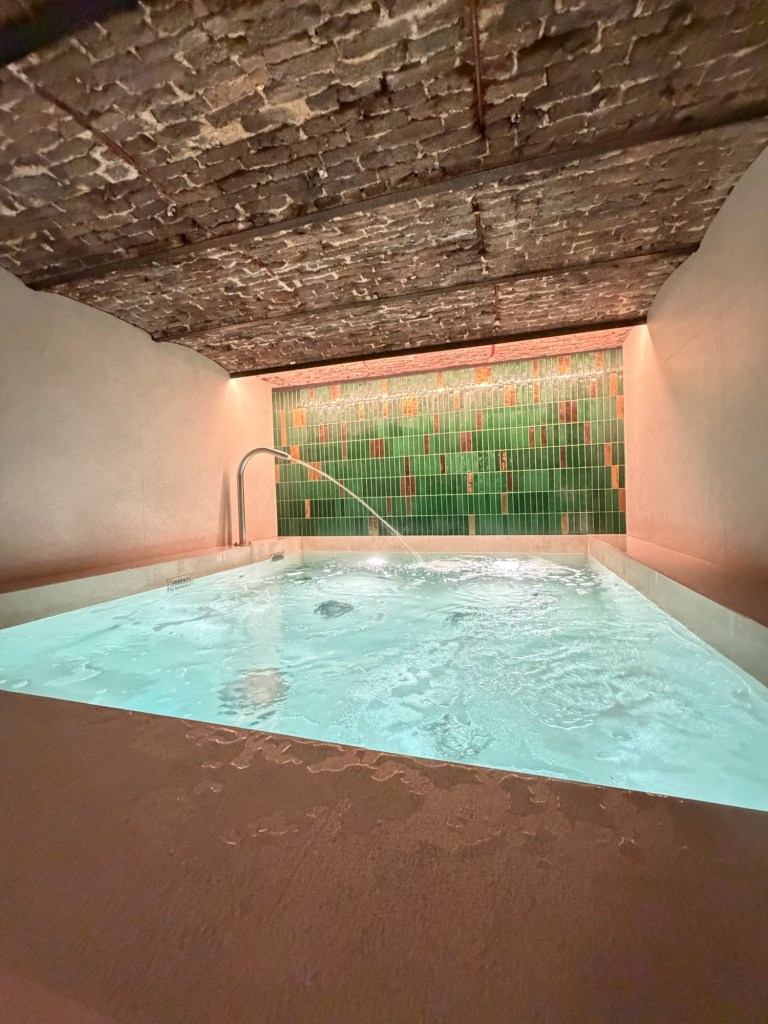
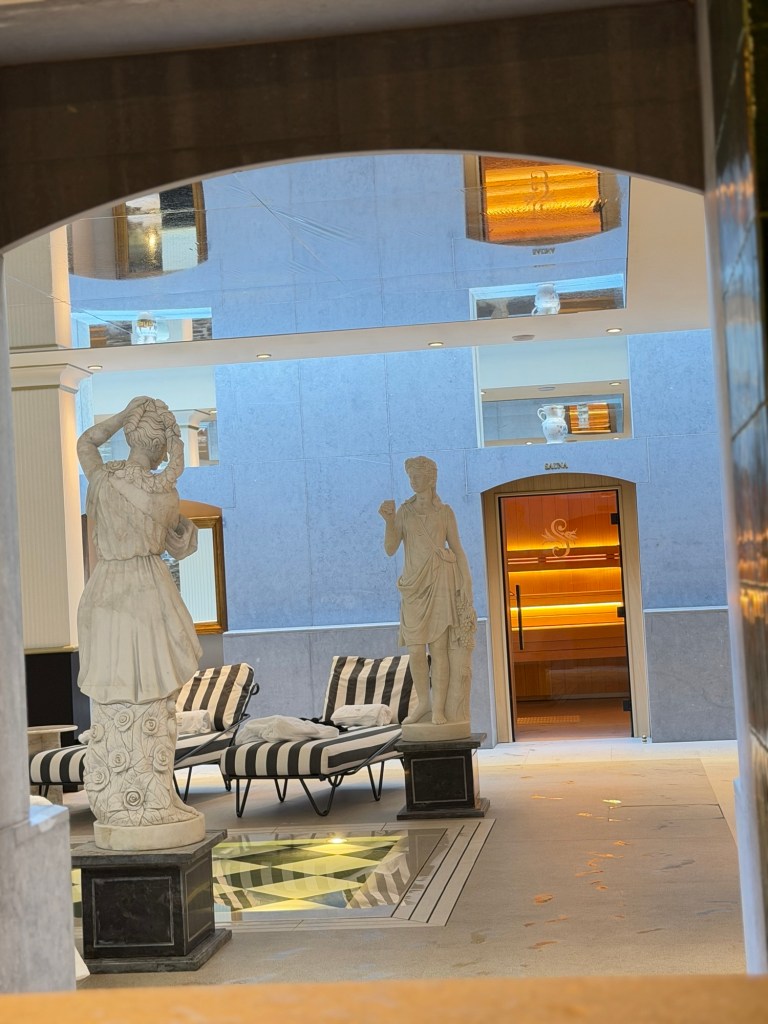
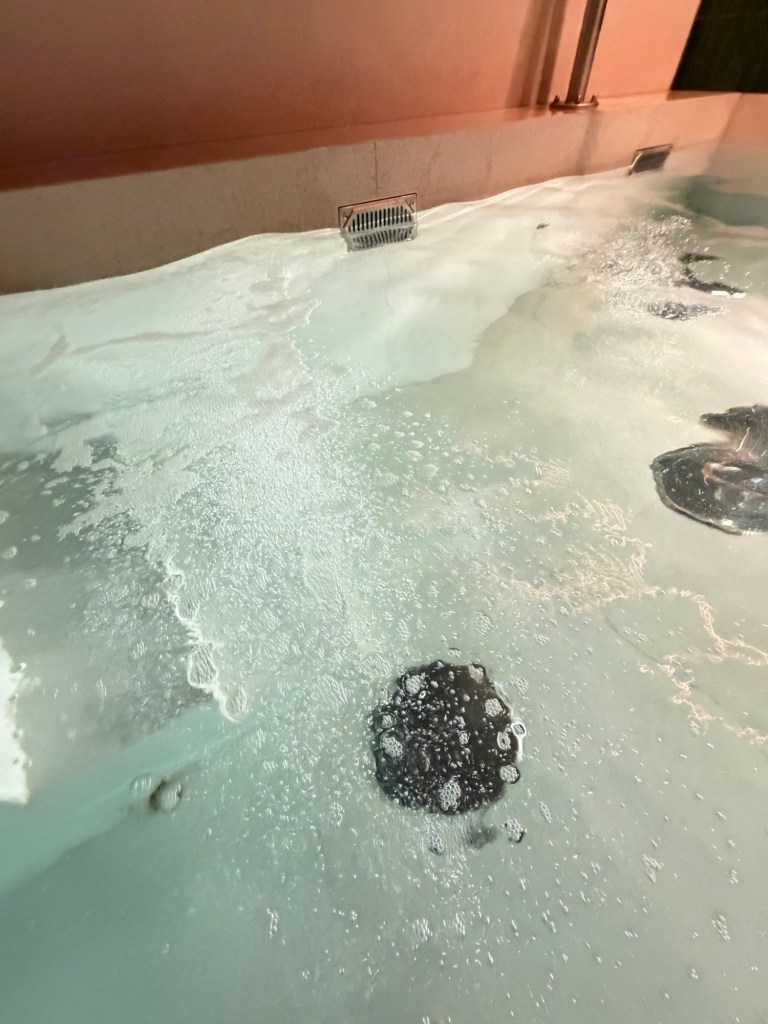
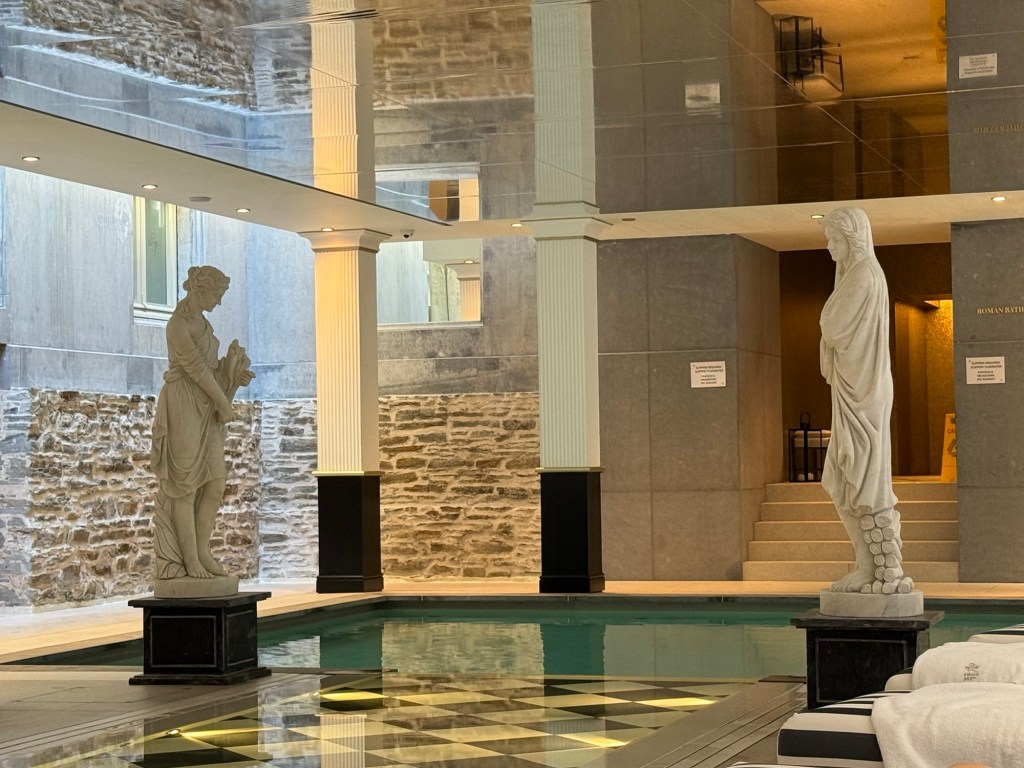
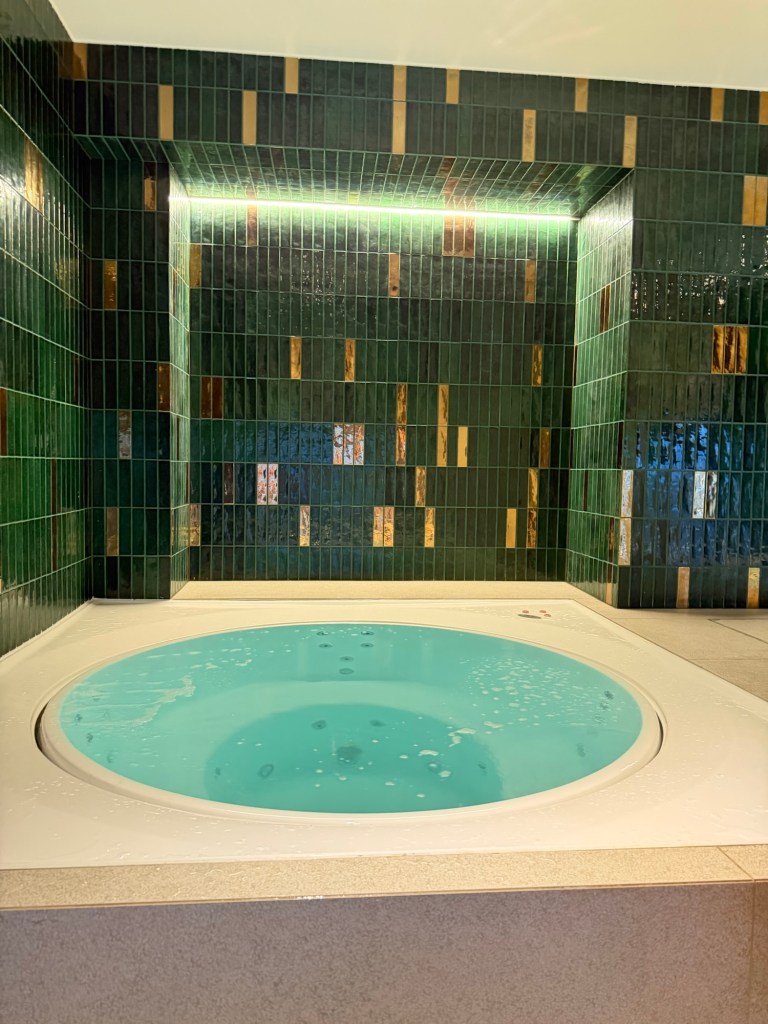
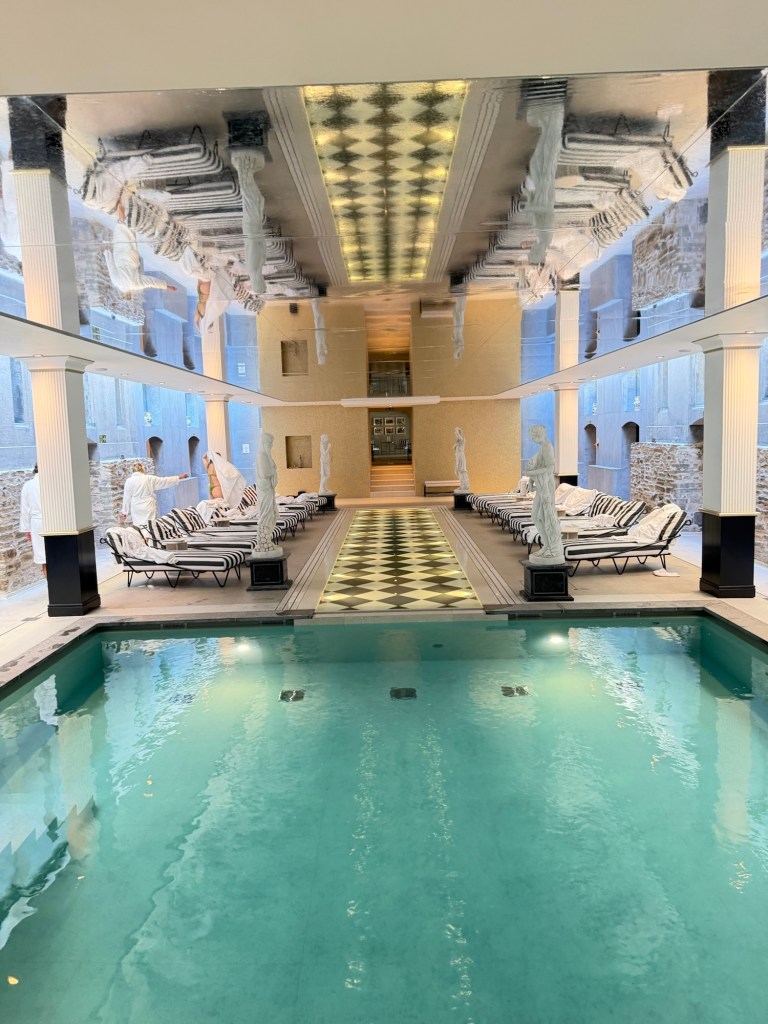
Guests move slowly through a ritual of heat, cold, rest, and renewal that has existed for centuries. There are steam rooms where dense warmth gives way to sudden cold water, thermal baths tucked beneath old brick vaults, an ice room with its sharp restorative chill, and a shallow wading room meant not for swimming but for quiet, deliberate movement through cool water. Reflections ripple across mirrored ceilings while soft lighting glows against stone and water.
What makes the experience especially remarkable is its restraint. Access is limited to only fourteen guests at any one time. There are no crowds, no noise, no rush for loungers or pools. The silence itself becomes part of the architecture. Water echoes softly. Conversations fall to whispers. The entire spa feels less like a hotel amenity and more like a private sanctuary hidden beneath the old palace above.
In many luxury hotels, grandeur competes with activity. Here, grandeur is paired with stillness. The result is something rare: a place where the elegance of Europe’s historic spa tradition has not merely been preserved, but quietly reborn.
The Les bains de Spa is itself charming, and its setting could hardly have been better, but we did come away feeling it fell short in two respects. The room finishes lacked some of the refinement and detail we would normally expect from a true five-star property, and the breakfast, while perfectly adequate, did not quite rise to the level suggested by the hotel’s ambitions or pricing. Neither issue ruined the stay, but both stood out enough to keep the experience from fully matching the setting.
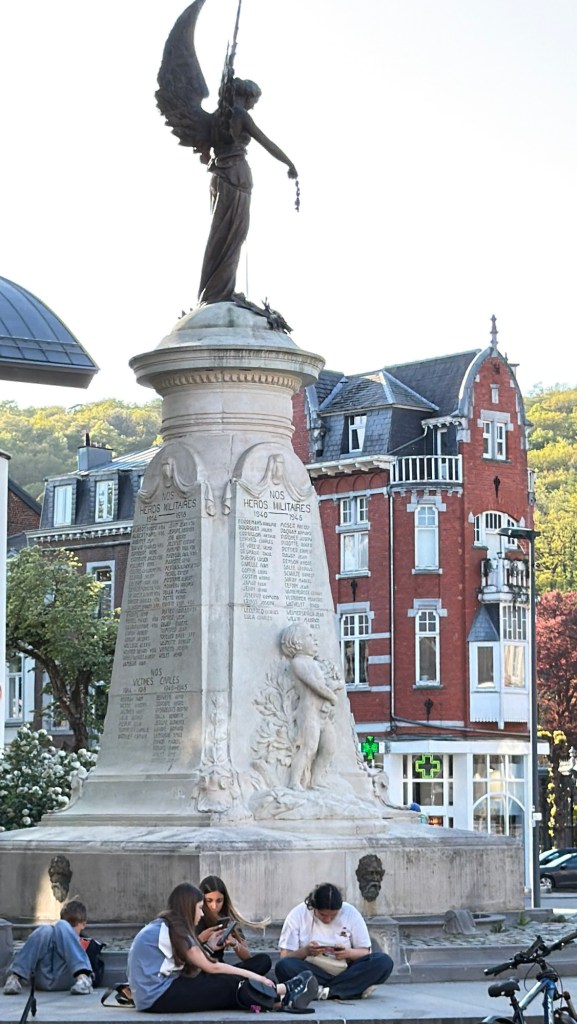
Spa is a town where layers of history sit side by side. In the center stand memorials to the dead of two world wars, reminders that this peaceful resort town did not escape the upheavals that swept across Europe. The monuments and older architecture speak to Spa’s long past as a gathering place for visitors seeking health, leisure, and escape in the Ardennes hills.
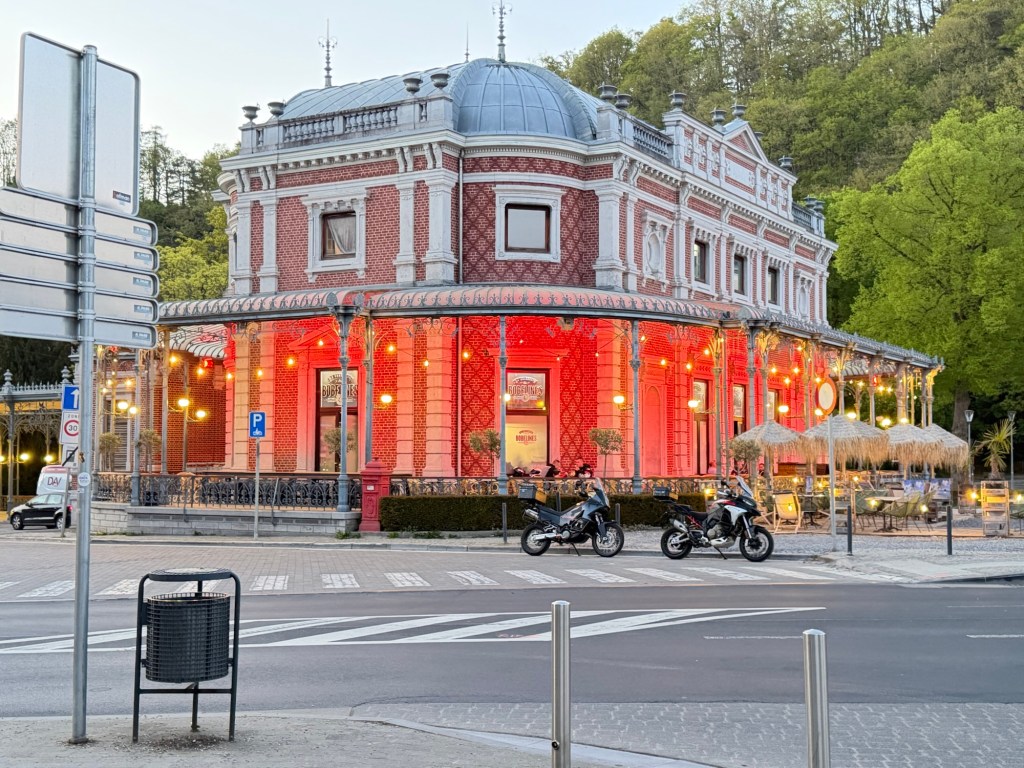
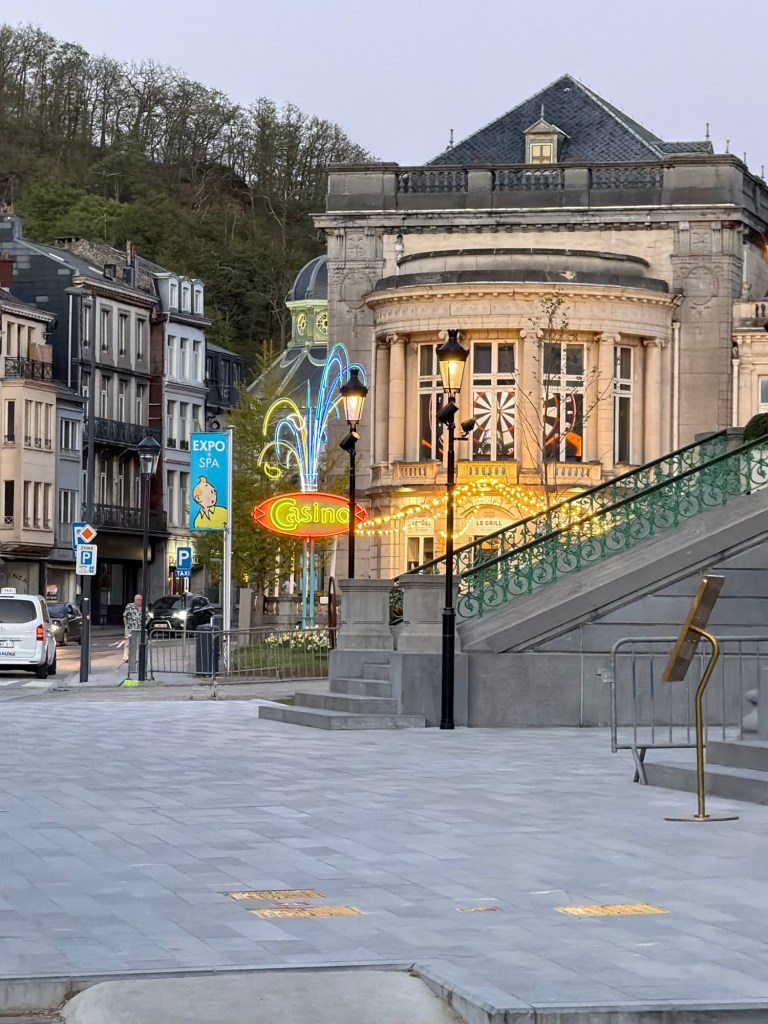
But Spa is not frozen in history. The town also lives in the modern imagination through speed and motorsport. Just beyond town lies Belgian Grand Prix at the legendary Circuit de Spa-Francorchamps, one of the most revered tracks in Formula 1. Even in town, hints of that identity appear everywhere — performance cars parked along quiet streets, racing-themed art, and tributes to drivers and automotive culture woven into daily life. Les bains de Spa caters to Formula 1 fans, even providing elegant garaging called the “Paddock” for those guests who arrive in their supercars.
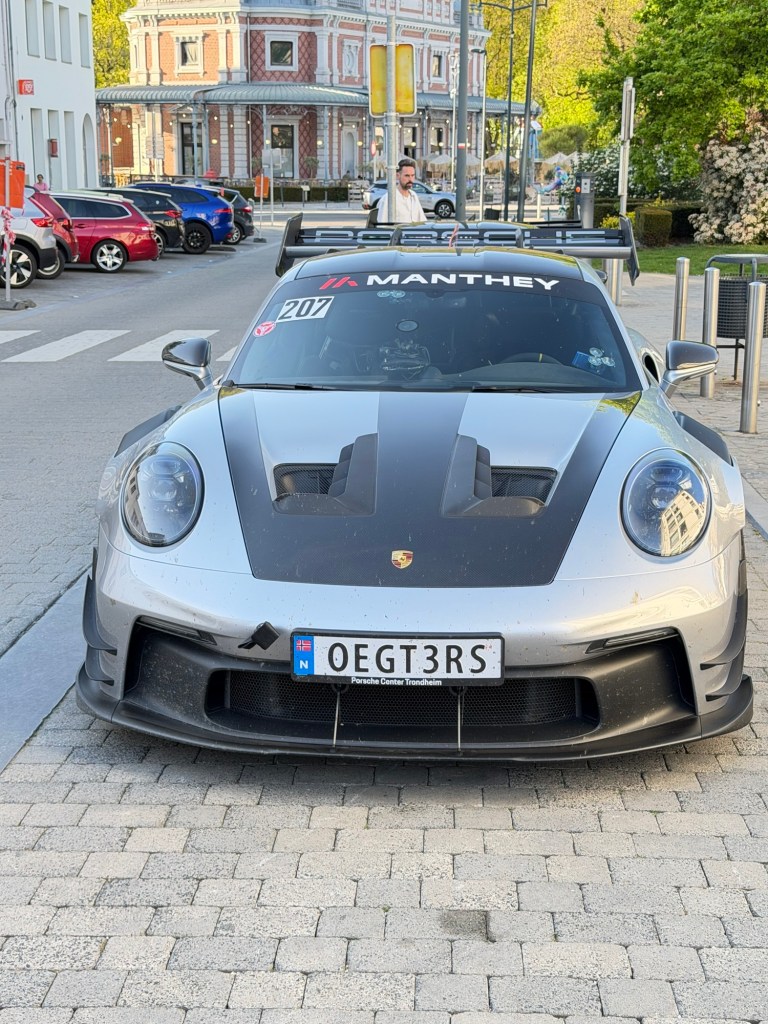
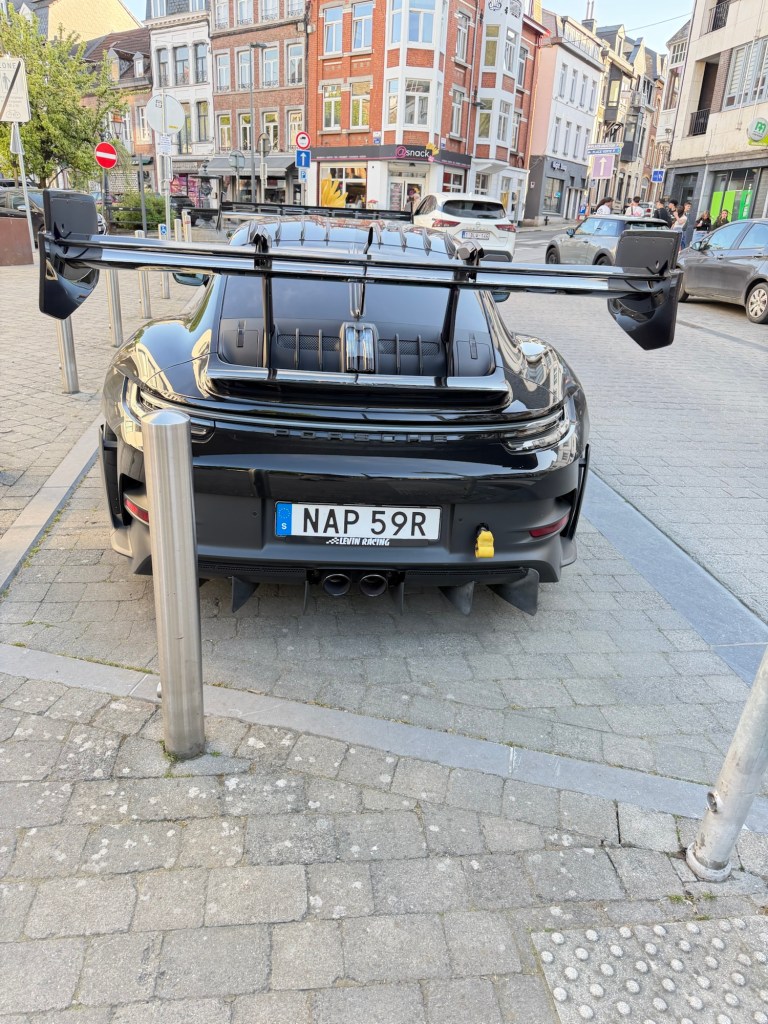
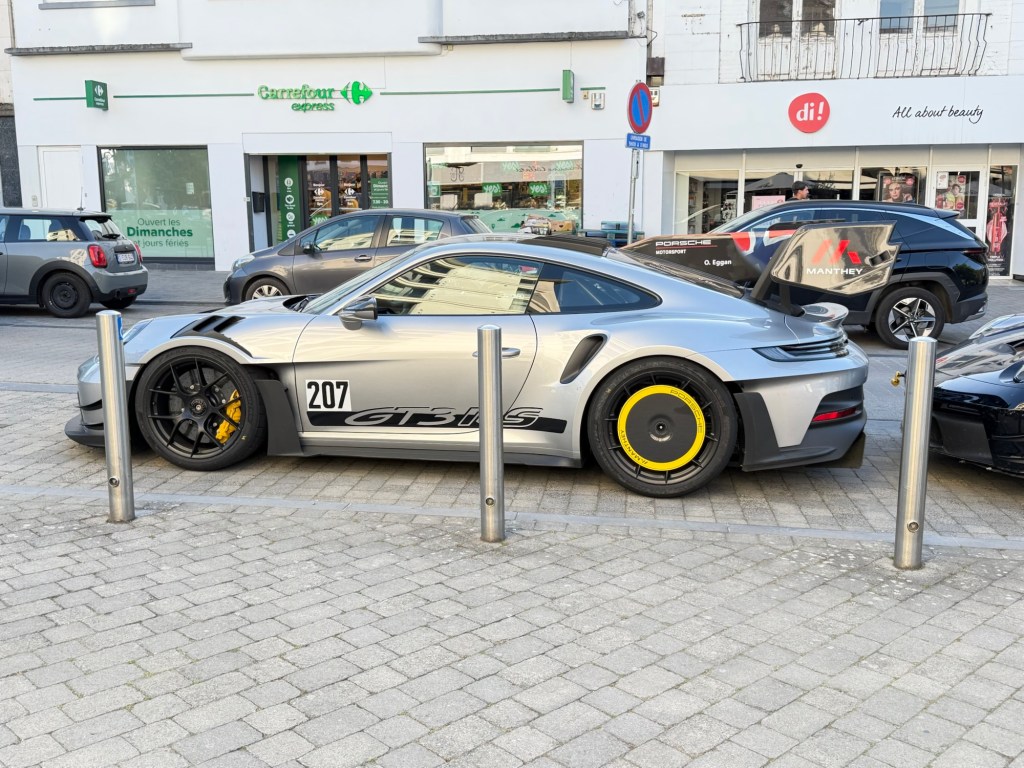
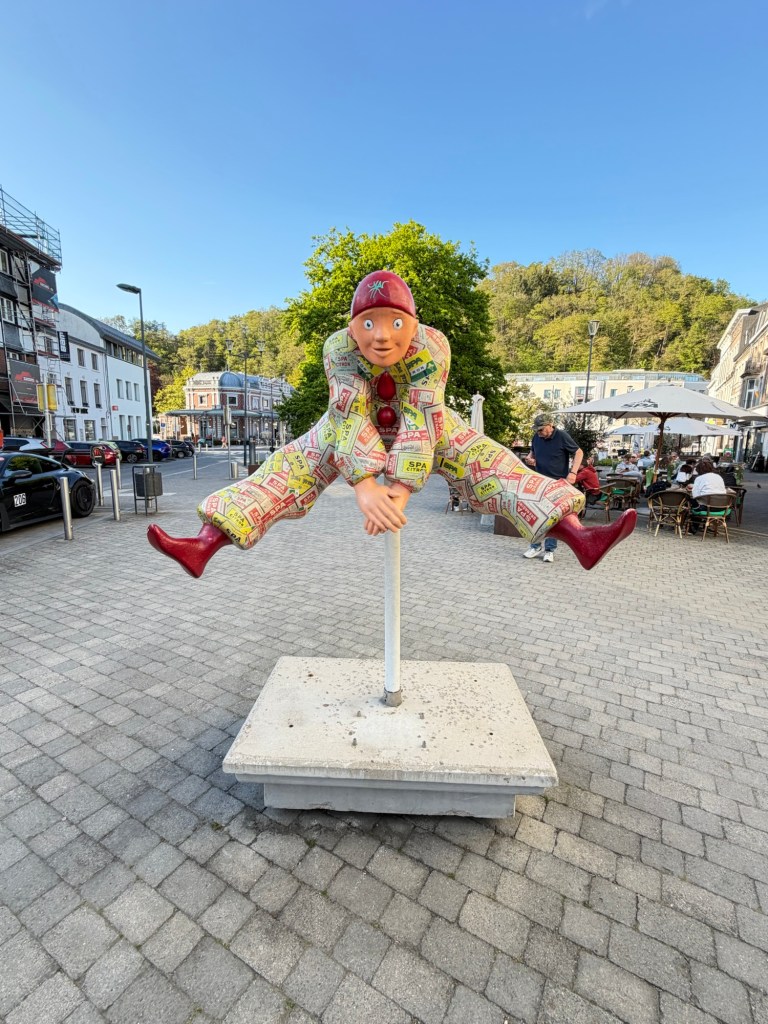
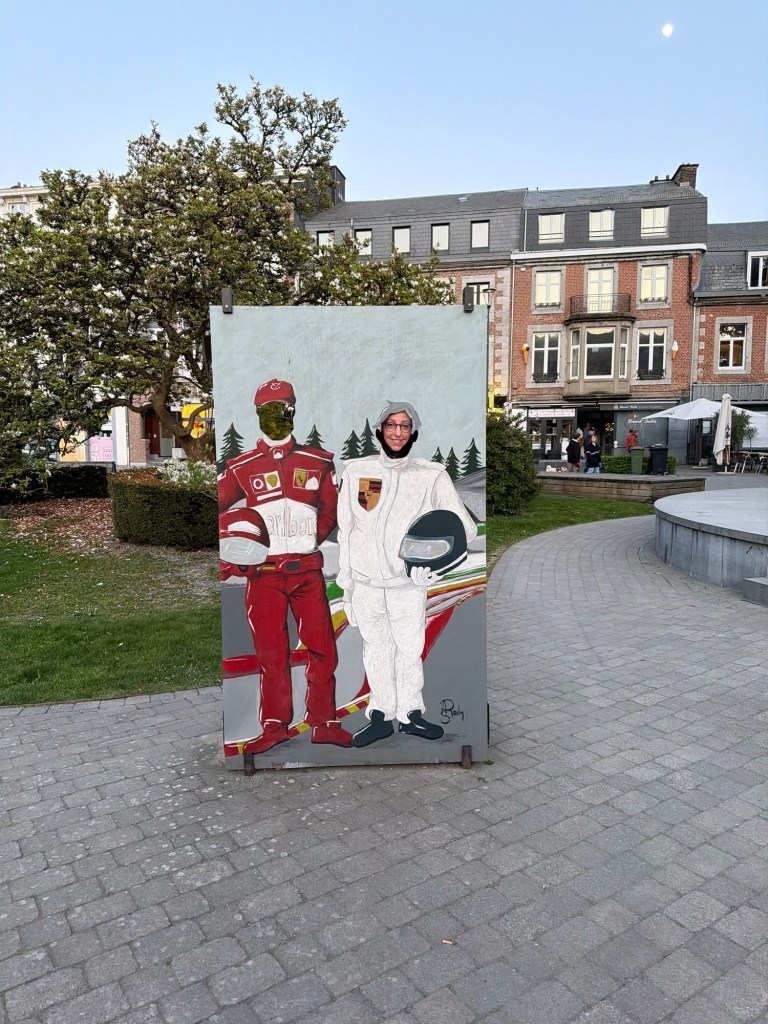
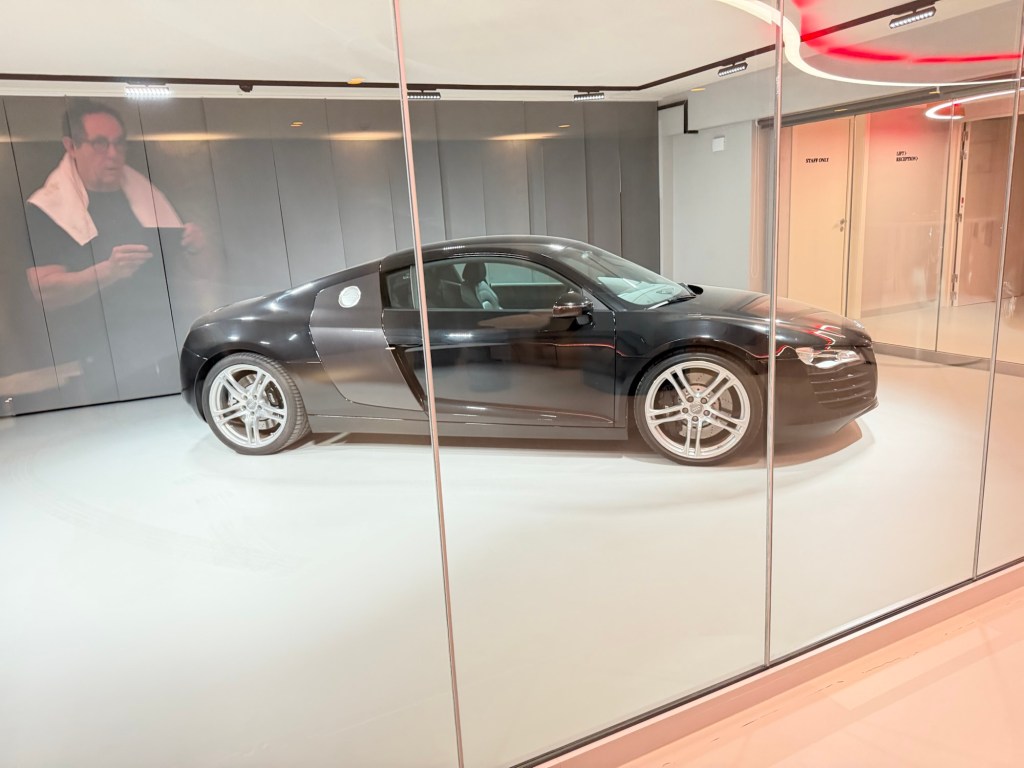
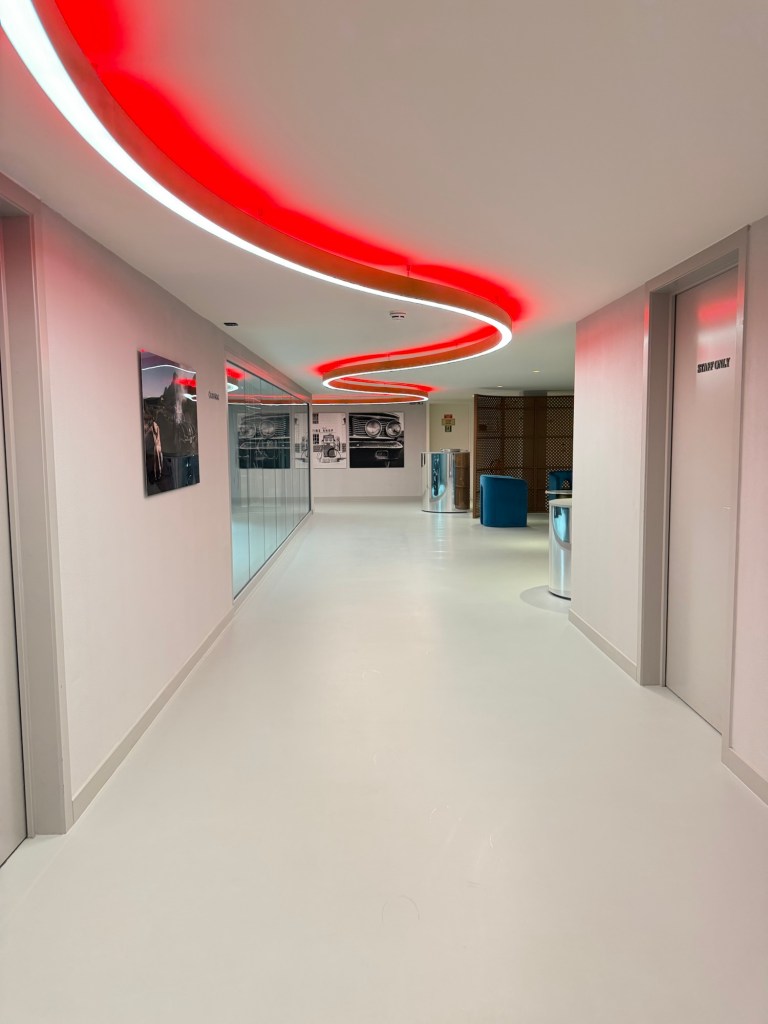
It creates an unusual and fascinating contrast: elegant thermal baths and Belle Époque façades on one hand, and the unmistakable presence of horsepower and racing heritage on the other. Spa manages to feel both refined and slightly restless, a historic resort town with the sound of engines never very far away.
In the morning, Salah drove us to a pre-planned spot to meet Evelyn Konings, our local guide for the day, who would show us the area.
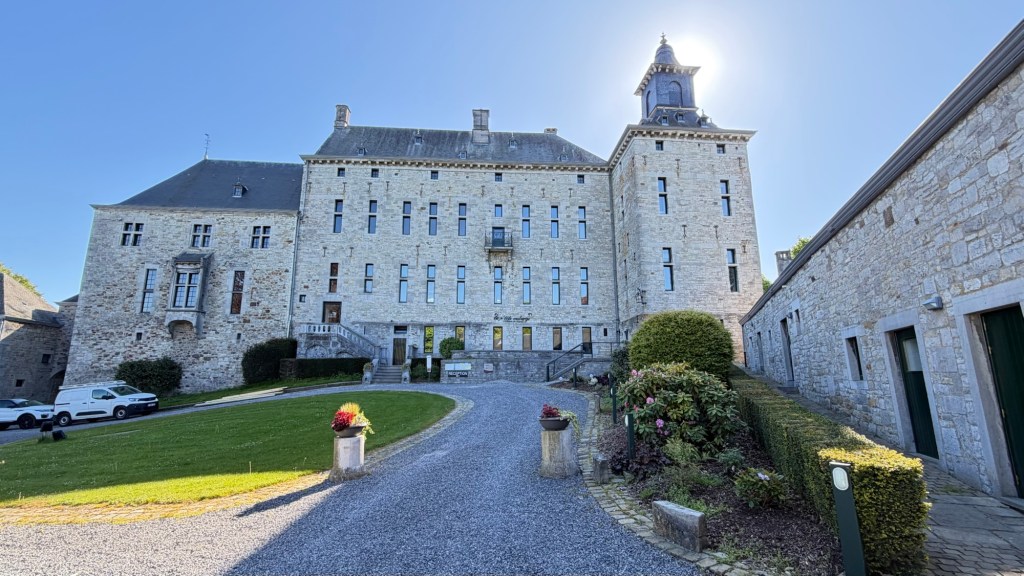
Our first stop with Evelyn was the historic Harze Castle (www.chateaudeharze.be), a fortified Ardennes estate whose massive stone walls and working mill buildings reveal centuries of rural life in the region.
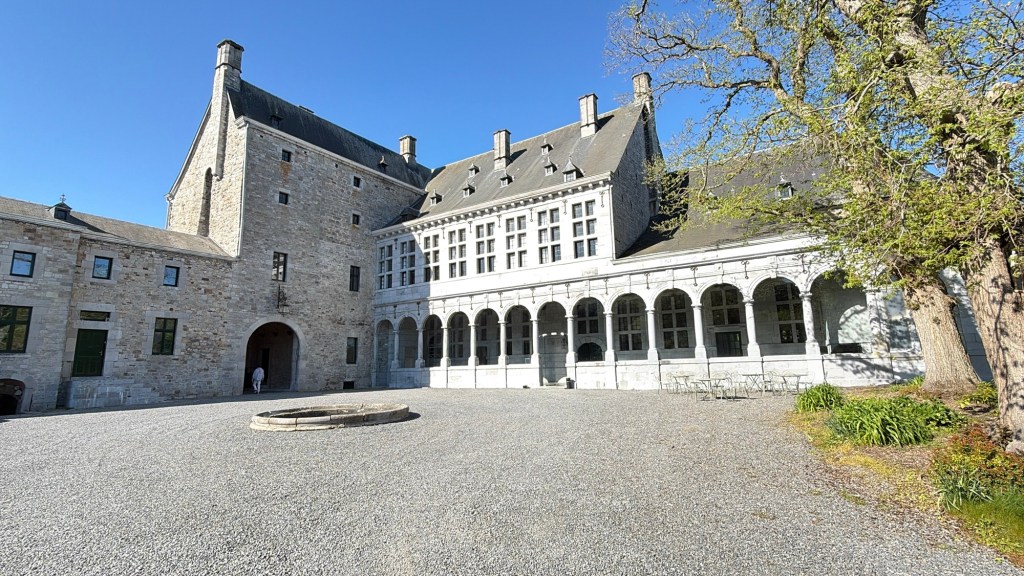
At first glance, the chateau appears severe and defensive — thick gray masonry, narrow windows, steep slate roofs, and a square tower rising above the courtyard. But as we walked deeper into the complex, the site revealed something more layered: not only a castle, but a living record of how people in the Ardennes once worked, produced food, and survived.
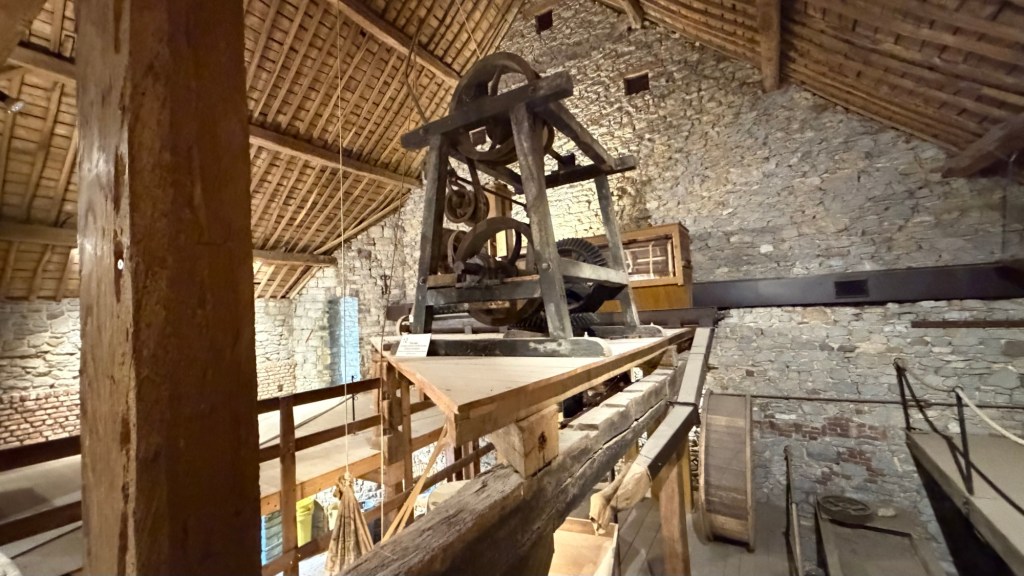
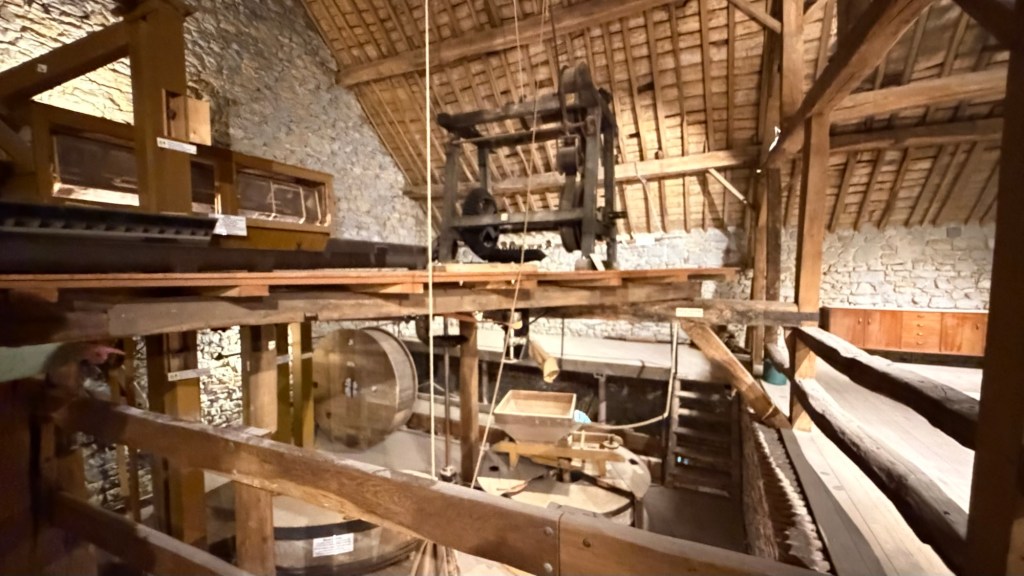
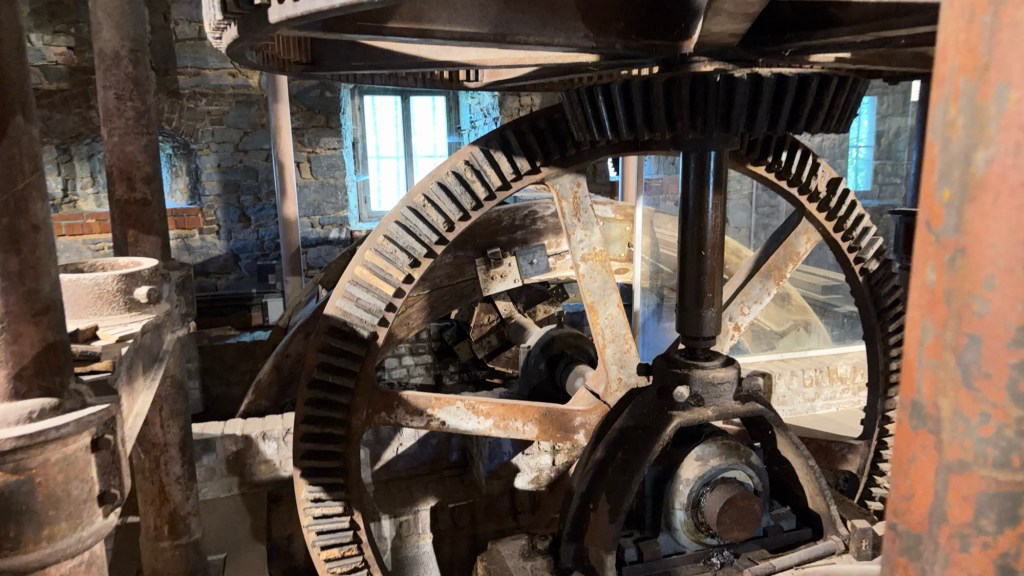
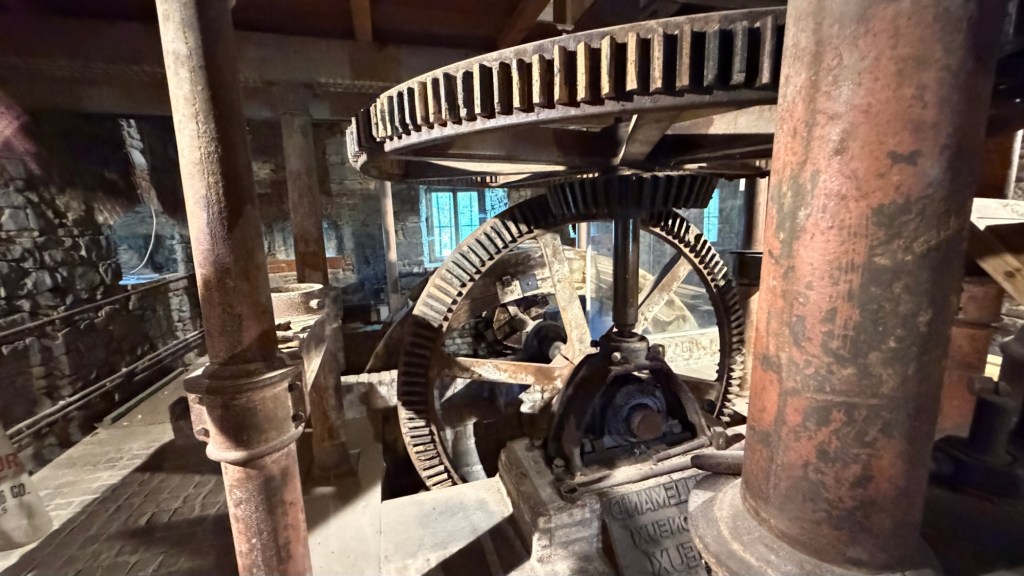
One of the most fascinating parts was the preserved milling machinery housed within the old stone buildings. Enormous iron gears, grinding wheels, timber shafts, and belt-driven mechanisms remain remarkably intact. The machinery feels almost sculptural now, but these systems once powered the practical rhythms of daily life — grinding grain, processing flour, and sustaining entire communities. Standing among the gears and wooden beams, you could almost imagine the constant rumble of the mill in operation, echoing through the stone walls.
Outside, the courtyard was peaceful in the morning light. A fountain sat at the center of the gravel drive, framed by centuries-old buildings whose architecture evolved over time from medieval fortress to Renaissance residence and later working estate. The contrast between elegance and utility seemed very Wallonian: beautiful, but built to endure.
The stop also carried deeper historical resonance. During the closing months of World War II, the castle reportedly served as headquarters for elements of the American XVIII Airborne Corps during the Battle of the Bulge, placing this quiet Ardennes landmark directly within one of the defining battles of the war.
Our next stop —- the tiny Ardennes town of Durbuy — proudly known as “the smallest city in the world.” Whether or not that is technically true hardly mattered once we stepped into its narrow cobbled lanes.
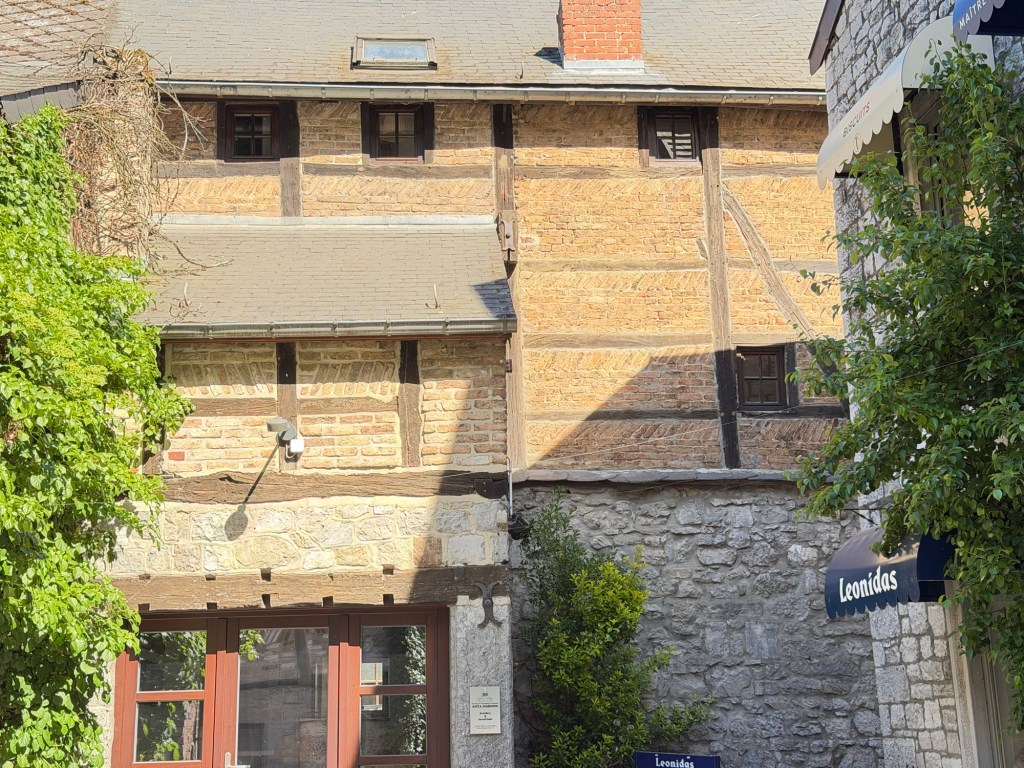
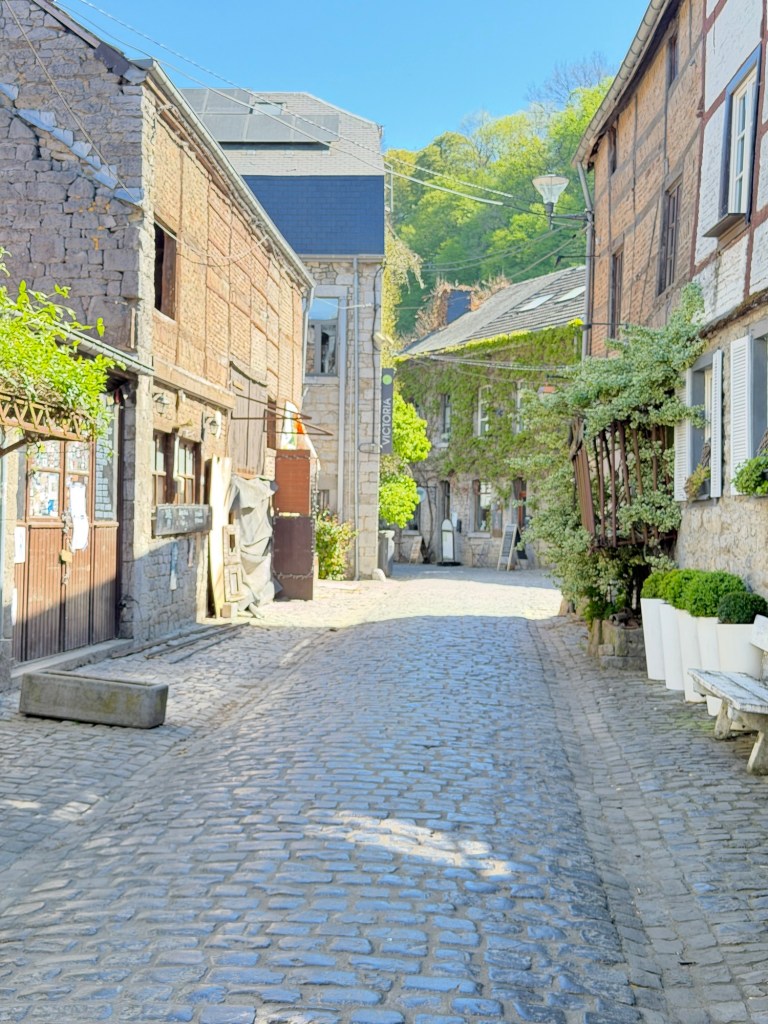
It feels like a preserved fragment of medieval Europe tucked into a green river valley. Stone houses lean gently toward winding streets. Timber-framed facades, ivy-covered walls, and slate roofs weathered by centuries of Ardennes winters give the town a quiet, storybook beauty.
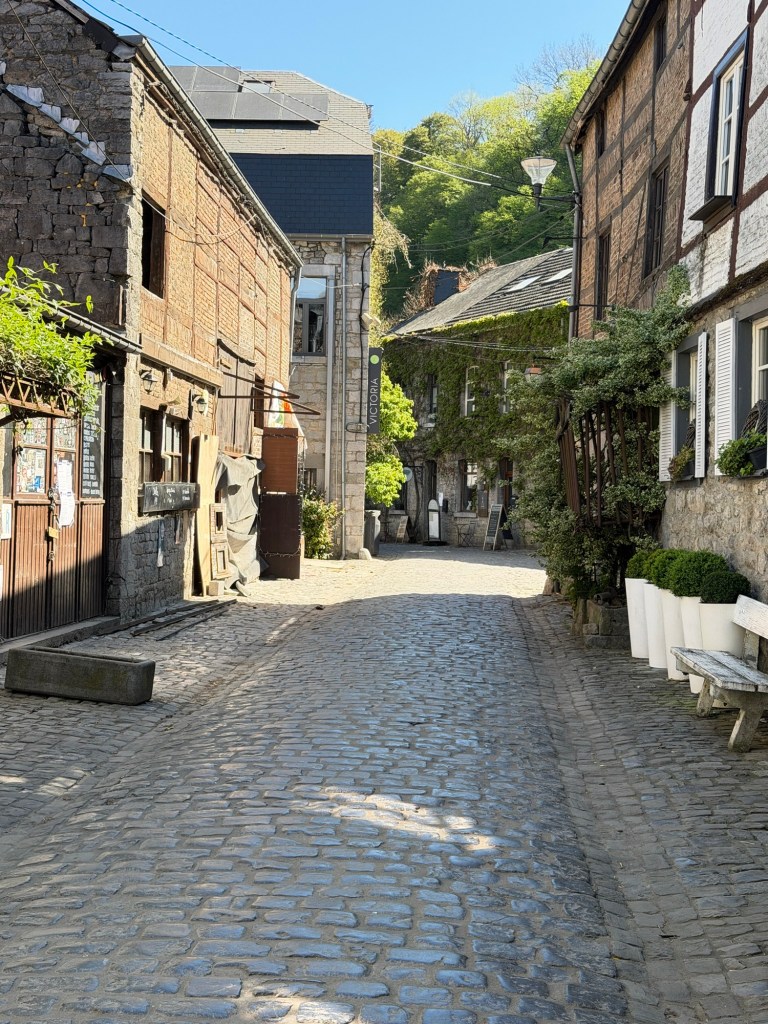
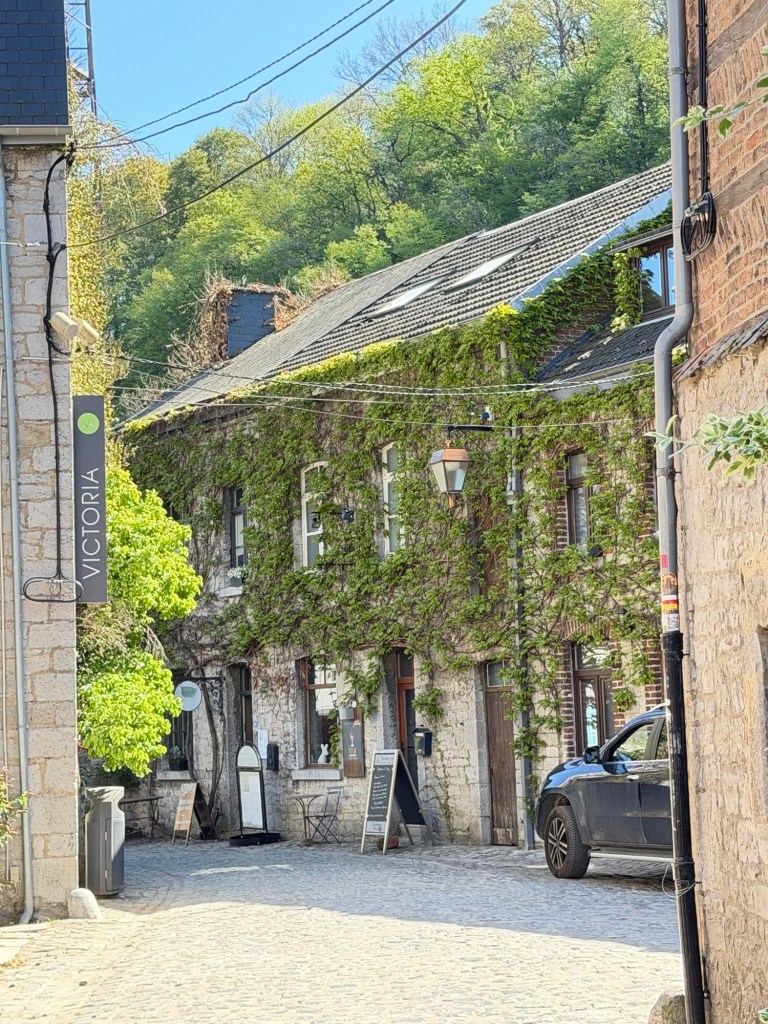
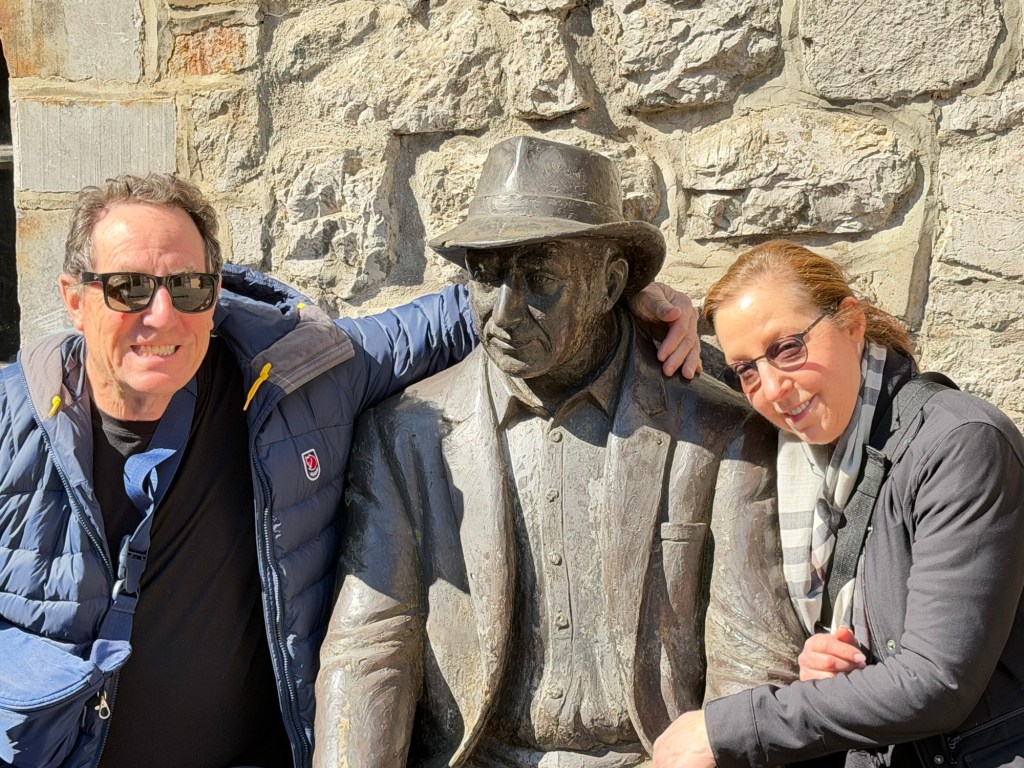
Small cafes and chocolate shops occupy buildings that look as though they have barely changed since the Middle Ages. Even the signs seem restrained, allowing the architecture itself to speak.
Above the town rises the chateau of Durbuy, partly hidden behind trees and rooftops, its towers still watching over the valley. The whole setting feels intimate rather than grand. Unlike larger tourist centers, Durbuy still carries the atmosphere of a lived-in Ardennes town rather than an outdoor museum.
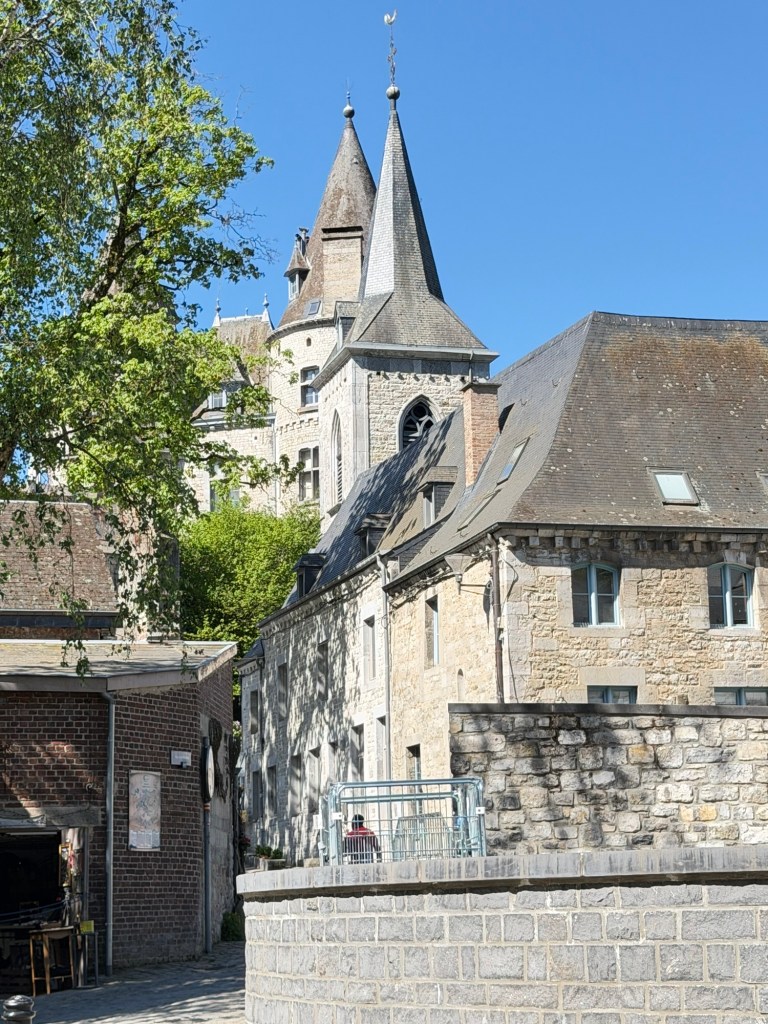
Evelyn explained how the town has undergone significant modern development in recent years, much of it driven by private investment aimed at turning Durbuy into a year-round destination. New hotels, restaurants, wellness projects, and outdoor attractions have brought fresh energy and tourism to the region while trying to preserve the town’s historic character. In many ways, that is the challenge facing places like Durbuy across Europe. There must be enough development to survive economically and remain vibrant, but not so much that the very character people come to experience is destroyed. Here, at least for now, that balance still seems largely intact.
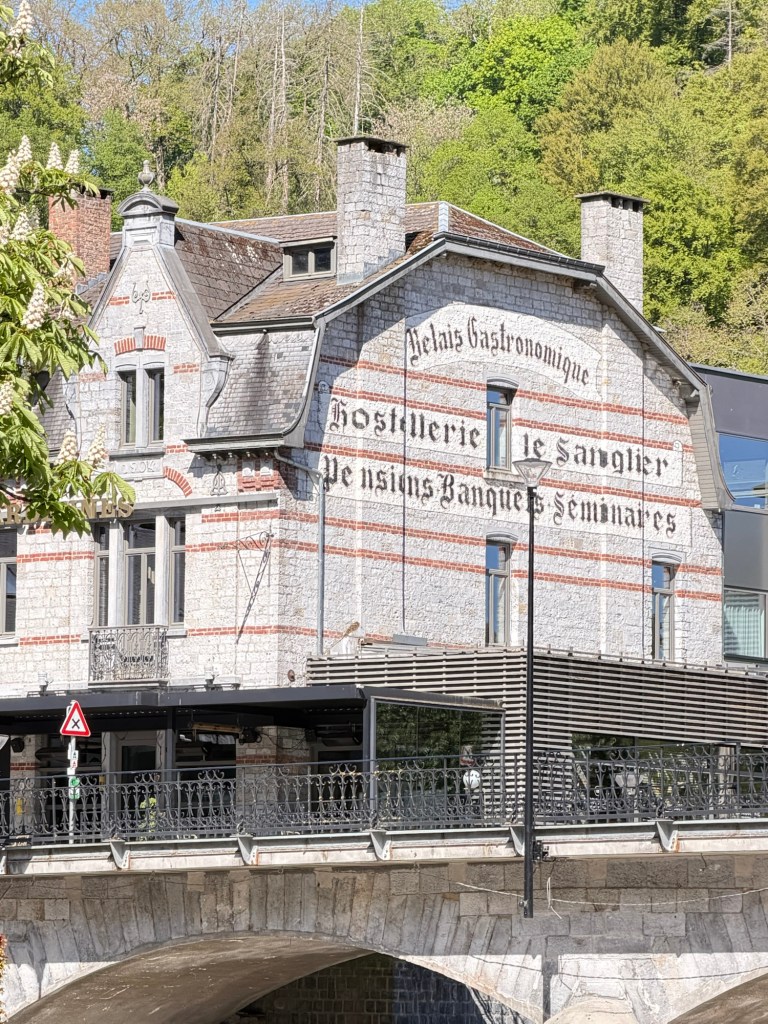
What struck me most was the texture of the place: uneven cobblestones polished by countless footsteps, old stone glowing warm in the morning sun, ivy creeping across walls, and quiet side streets where almost no one seemed to be in a hurry. Even a faded painted advertisement on an old inn building — “Hostellerie Le Sanglier” — felt like part of the town’s layered memory rather than decoration.
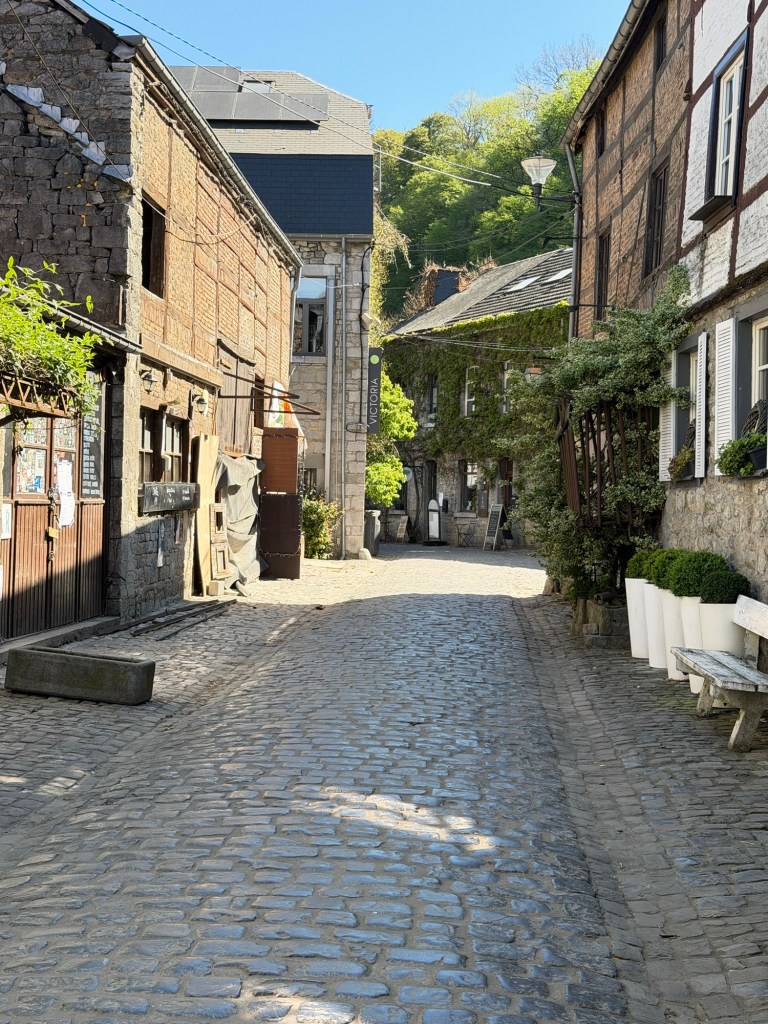
Evelyn guided us through at an easy pace, explaining how Durbuy grew from a medieval settlement into a modest but enduring center of regional life. Today it welcomes visitors from around the world, yet somehow still feels deeply connected to the forests, rivers, and rural landscape surrounding it.
Our next stop brought us to Hotton, a quiet town along the Ourthe River whose peaceful appearance conceals a violent wartime history. Today the river moves calmly beneath modern bridges lined with the flags of Belgium, the United Kingdom, the United States, and the European Union. But in late 1944 and early 1945, this valley sat directly in the path of the Battle of the Bulge.
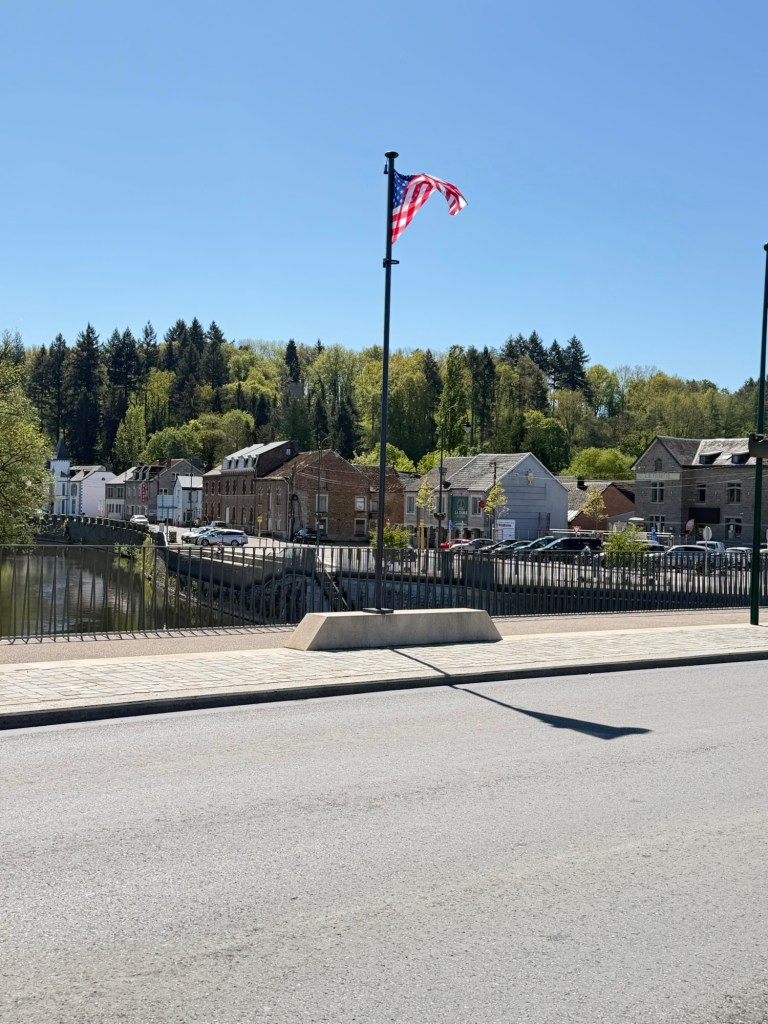
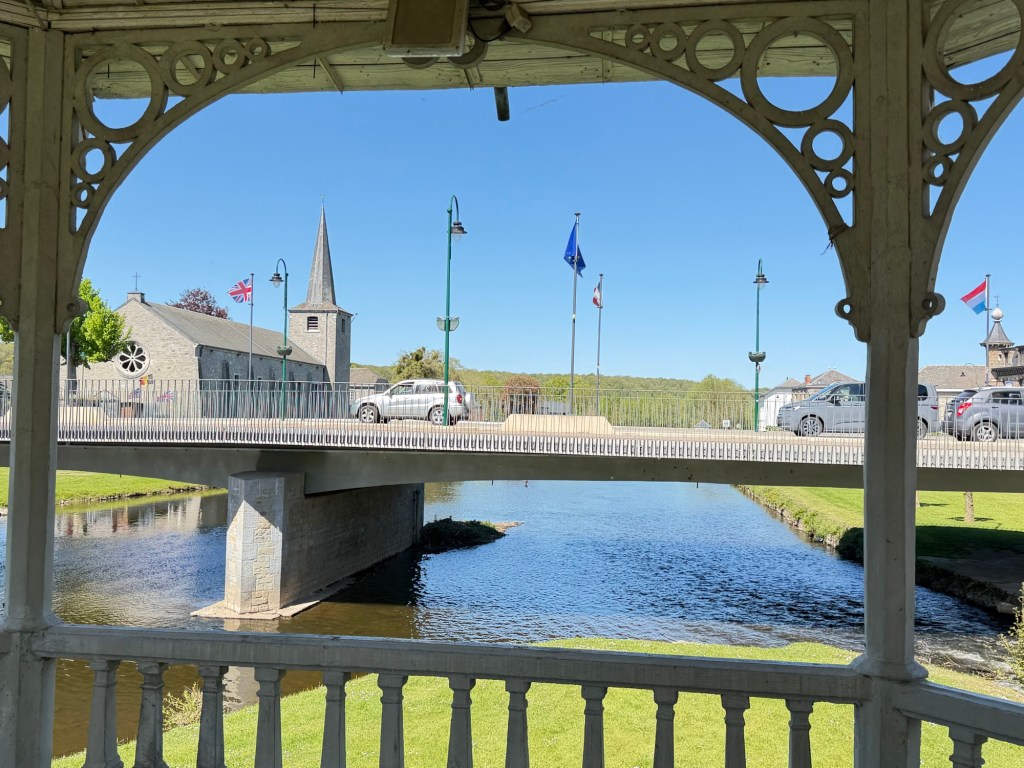
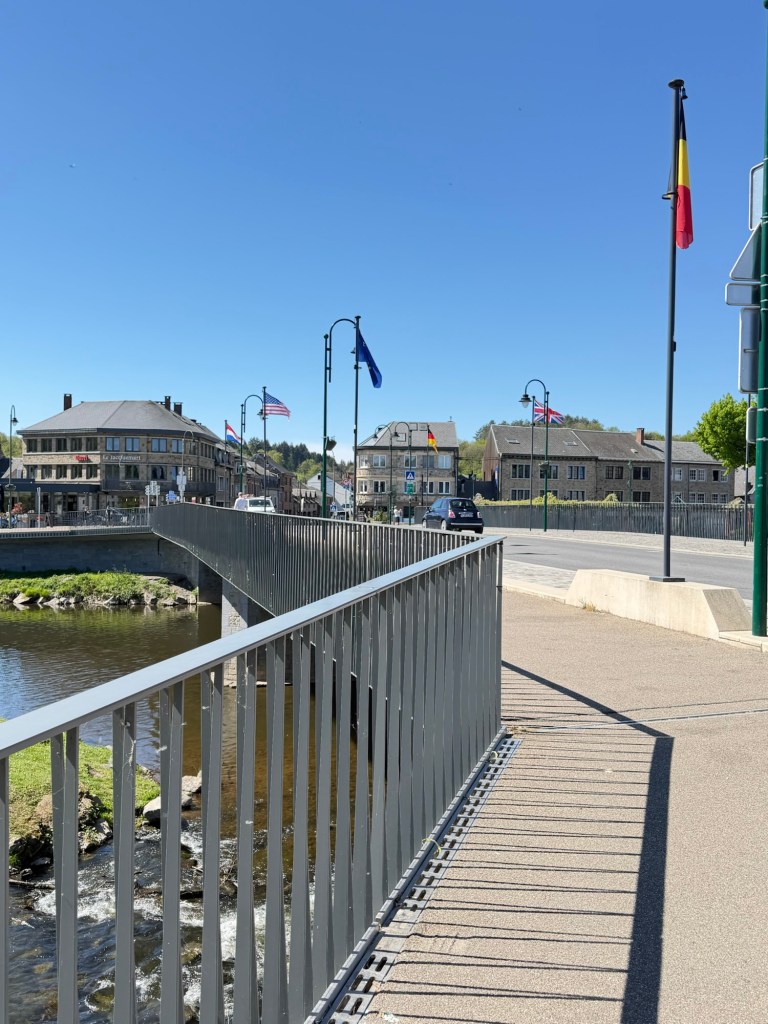
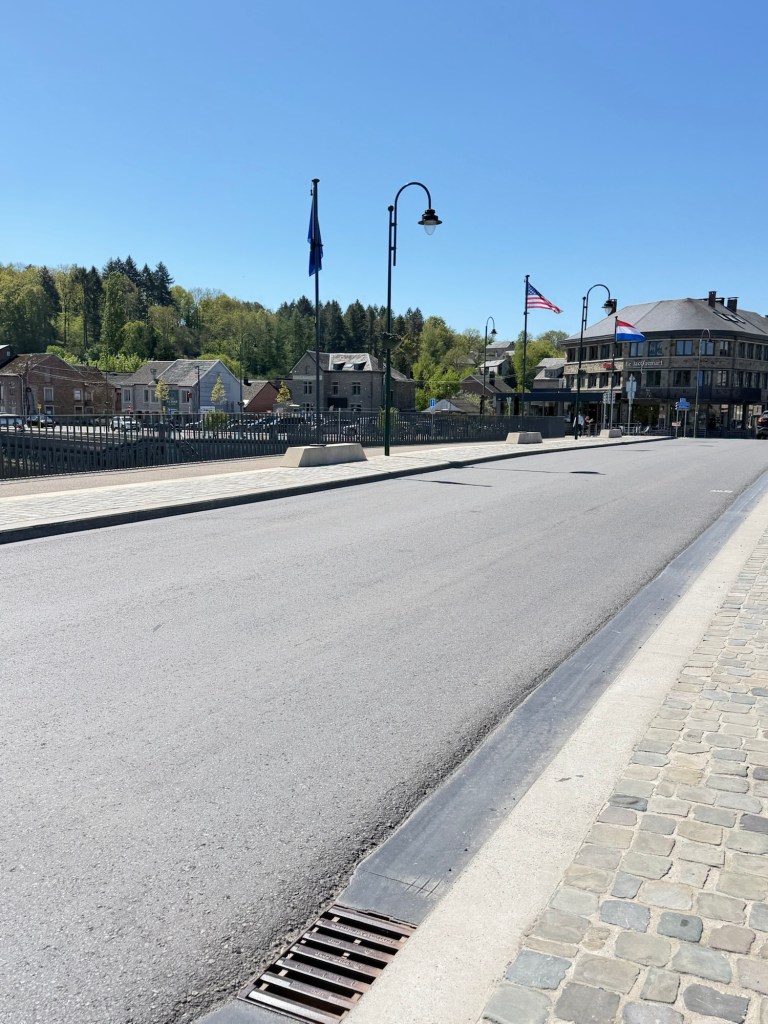
The bridge at Hotton (known simply at the “bridge”) became strategically critical during the German Ardennes offensive. American forces fought fiercely to hold crossings like this one, preventing German armored units from pushing farther west toward the Meuse River. The surrounding hills and forests, now bright green and tranquil in the spring sun, once echoed with artillery, gunfire, and exploding bridges.
Near the river stands a memorial marking the liberation years — 1940 to 1945 — and honoring the sacrifices made here. The monument sits between the Belgian, British, and American flags, a quiet acknowledgment that the Ardennes campaign was fought by allied forces from many nations under brutal winter conditions.
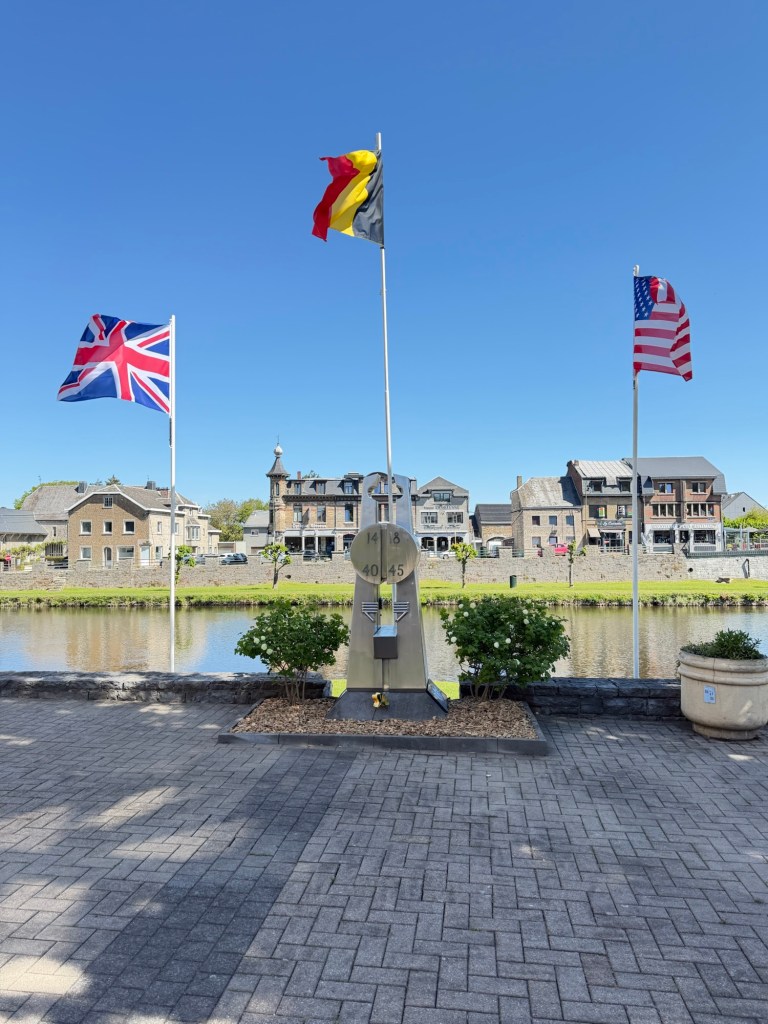
Hotton suffered heavily during the war. The informational marker nearby describes how German forces burned homes in September 1944 and requisitioned church bells to be melted down for the war effort. Even here, in what appears today to be a small and serene riverside town, the occupation and liberation left deep scars.
Standing on the bridge, it was impossible not to think about the contrast between then and now. Families pushed strollers along the riverwalk. Cafes overlooked the water. Cars crossed the bridge without a second thought. Yet eighty years ago this same crossing represented survival, retreat, resistance, and liberation.
One of the striking things about traveling through Wallonia is how naturally history exists beside ordinary life. The war is not hidden away in distant museums. It remains woven into these towns — into memorials, rebuilt churches, preserved bridges, and the collective memory of places that endured occupation and battle.
We stopped for lunch at Demelenne (www.maisondemelenne.be) in Hotton. Demelenne feels very much like the kind of cafe that belongs naturally in a small Ardennes town rather than a polished tourist chain. The atmosphere is casual and local — a combination bakery, tearoom, chocolate shop, and lunch cafe where hikers, cyclists, day-trippers, and residents all seem to drift through during the day.
And then this. A British Commonwealth war cemetery tucked quietly into the Ardennes countryside, its perfect rows of pale headstones standing in sharp contrast to the violence that once consumed this region. The setting was almost impossibly peaceful — green grass, spring flowers, birdsong, and tall trees moving gently in the breeze. Yet each stone marked a life abruptly ended in the winter of 1944–45.
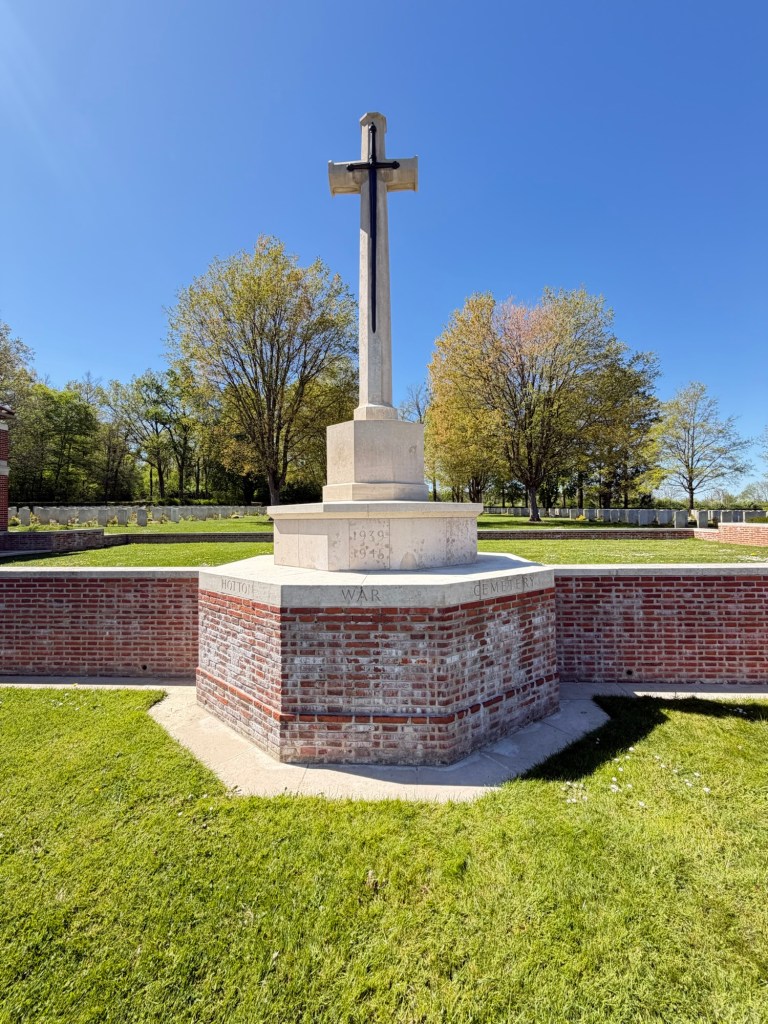
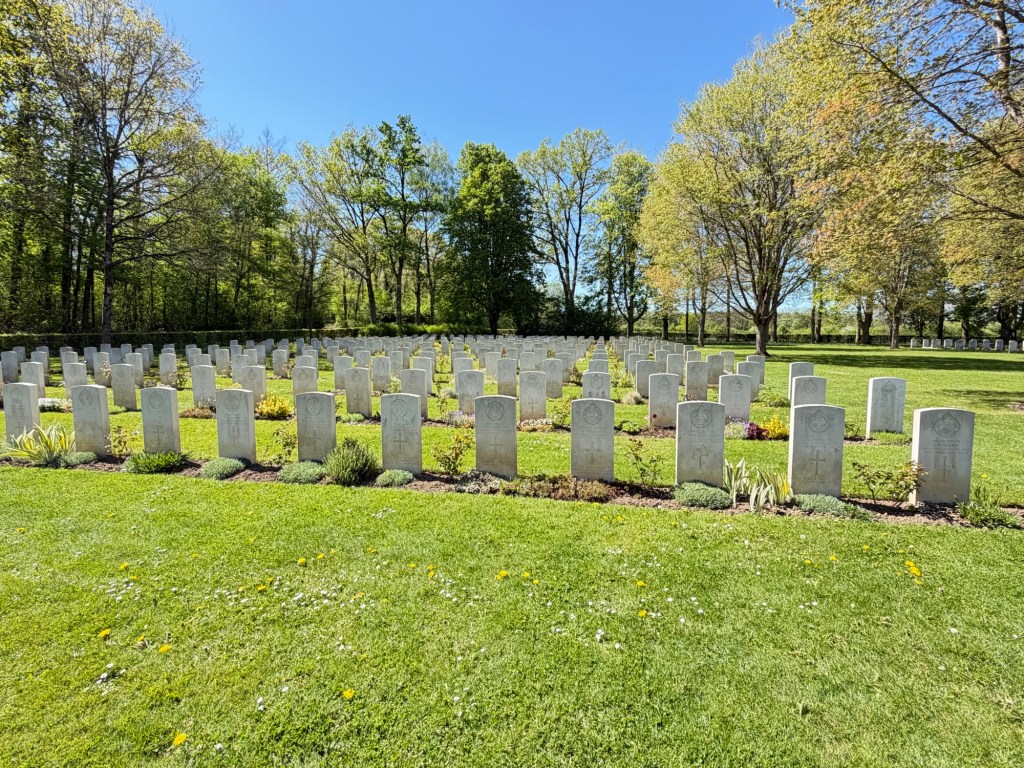
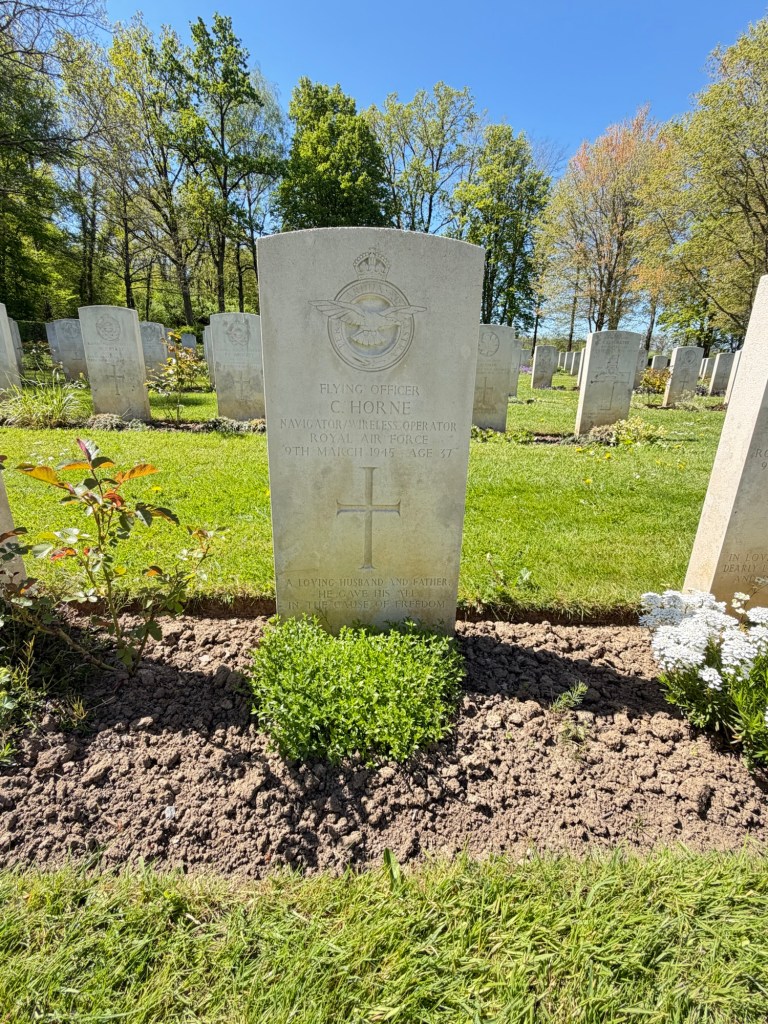
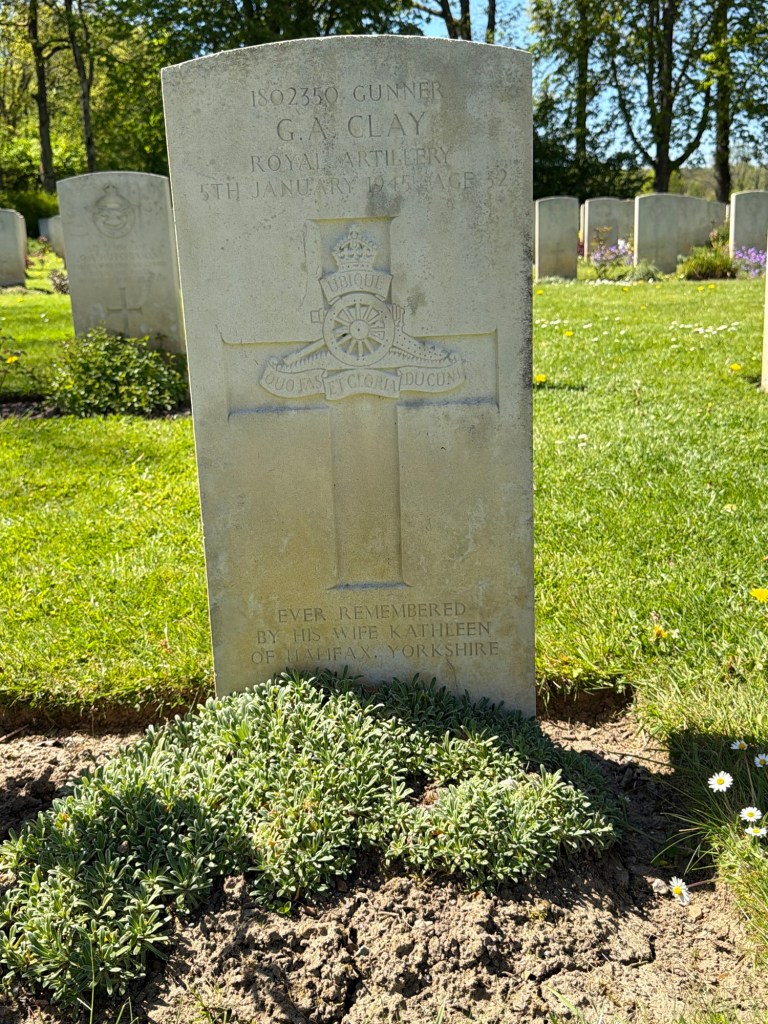
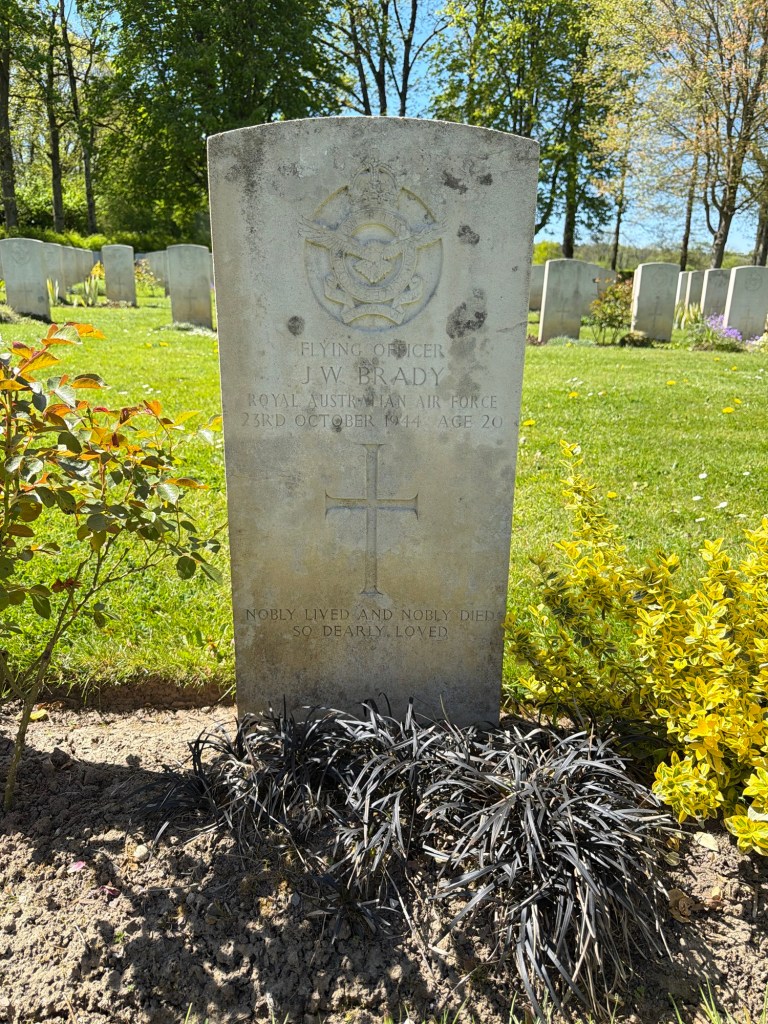
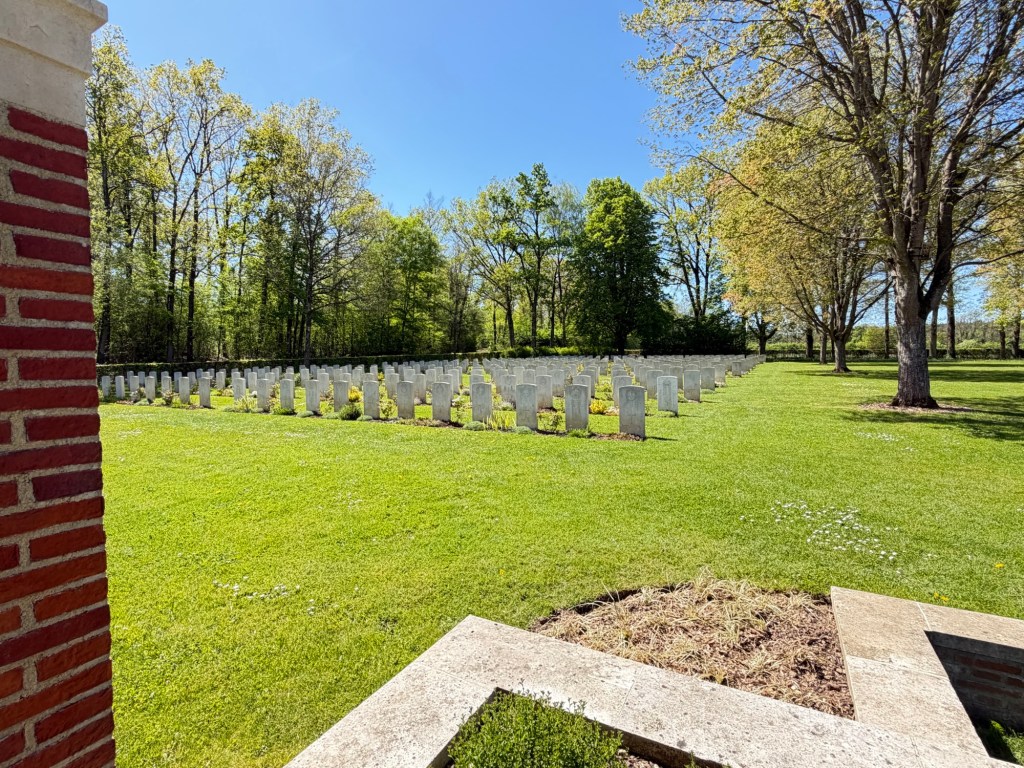
Walking among the graves, the scale of the loss slowly revealed itself. Most of the men buried here were extraordinarily young — many barely older than boys. Gunners, infantrymen, engineers, and tank crews, the British and Commonwealth soldiers, who died during the Battle of the Bulge and the fighting that followed as Allied forces pushed eastward into Germany.
Among the rows of white stones in the quiet Commonwealth cemetery, one grave stopped me completely.
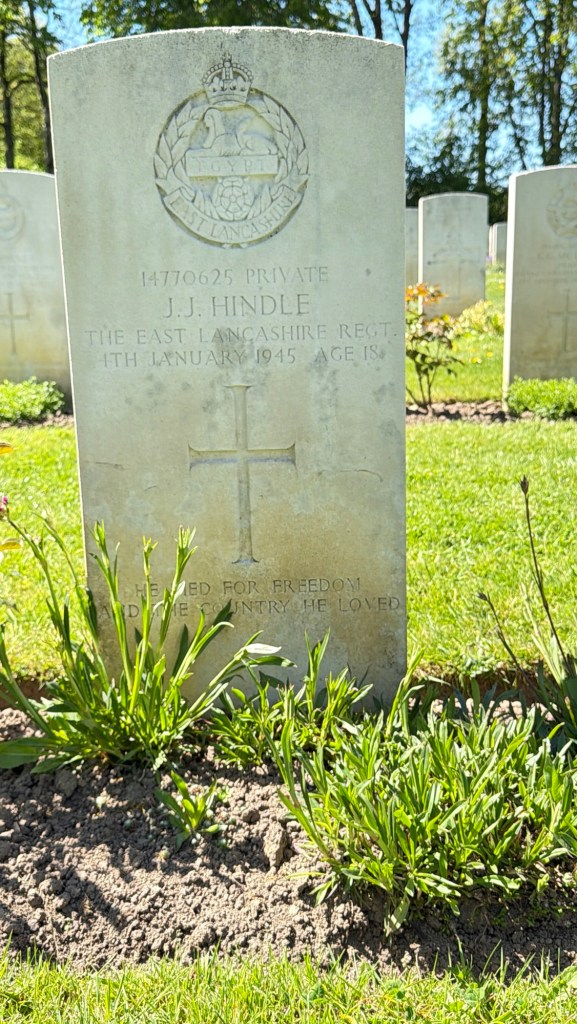
Private J. J. Hindle. East Lancashire Regiment. Killed January 4, 1945. Age 18.
Eighteen.
At that age most people today are only beginning to imagine their future. Yet here, beneath the trees and open sky of Europe, rests a young man who never had the chance to live the life waiting for him beyond the war.
The grave itself is simple and dignified,, carefully tended grass, flowers planted at its base, sunlight filtering through the trees overhead. There is no attempt at grandeur. The power comes from the restraint.
January 1945 was still a brutal time in Europe. The Battle of the Bulge had only recently ended, and fighting across the Ardennes region remained savage even though the war’s conclusion was finally coming into view. Young men like Hindle were still dying in the closing months of the conflict.
At the bottom of the stone, his family left a simple inscription:
“He died for freedom and the country he loved.”
Standing there, it was impossible not to think about how many futures disappeared in these fields and forests. One young man from Lancashire, buried far from home, now cared for with extraordinary devotion by people generations removed from the war itself.
Places like this do not glorify war. They humanize it. What a price was paid for freedom. We owe these war dead our gratitude.
Toward the end of the day with Evelyn, we stopped at Chocolatier Defroidmont (www.chocolatier-defroidmont.be/), a warm timbered shop tucked into the countryside, where the scent of cocoa, honey, roasted nuts, and fruit preserves hangs in the air the moment you walk inside. Wooden beams, rough stone, baskets, jars of local honey, and shelves lined with handmade chocolates made the place feel less like a store and more like an old farm kitchen that slowly evolved into a chocolatier.
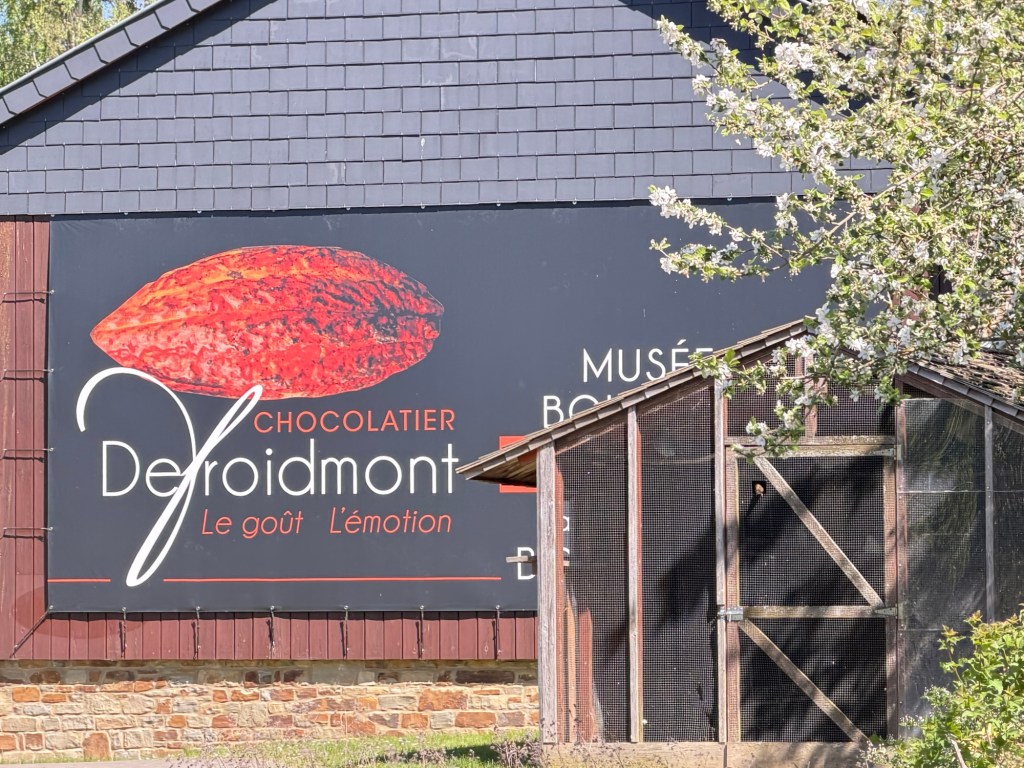
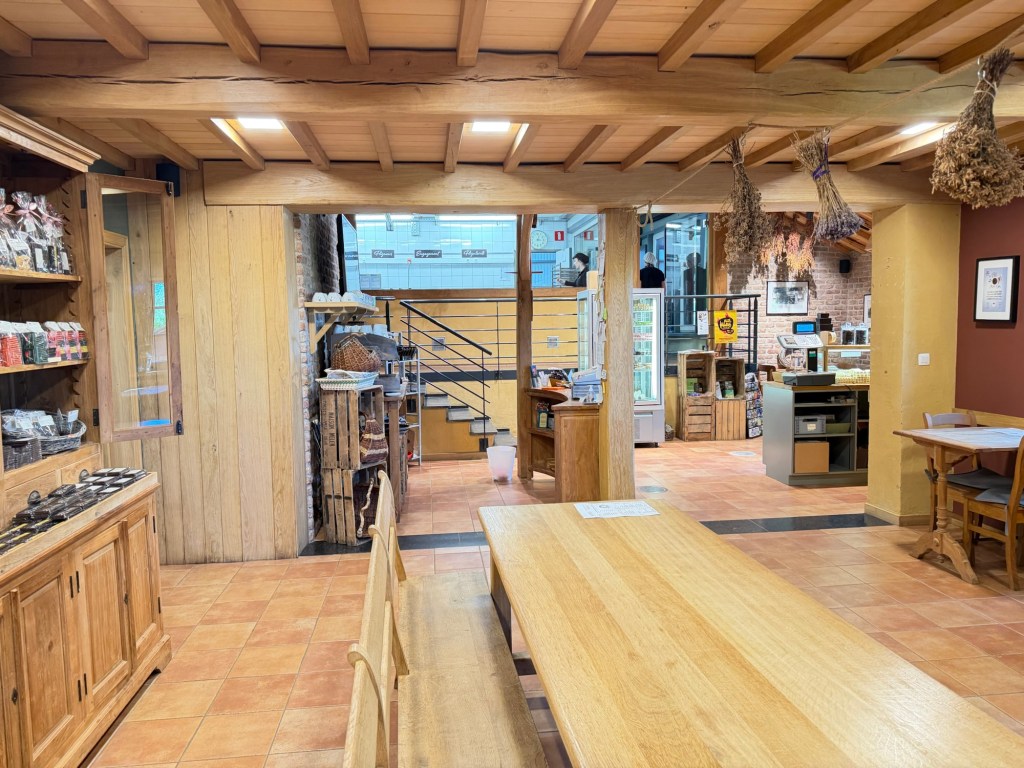
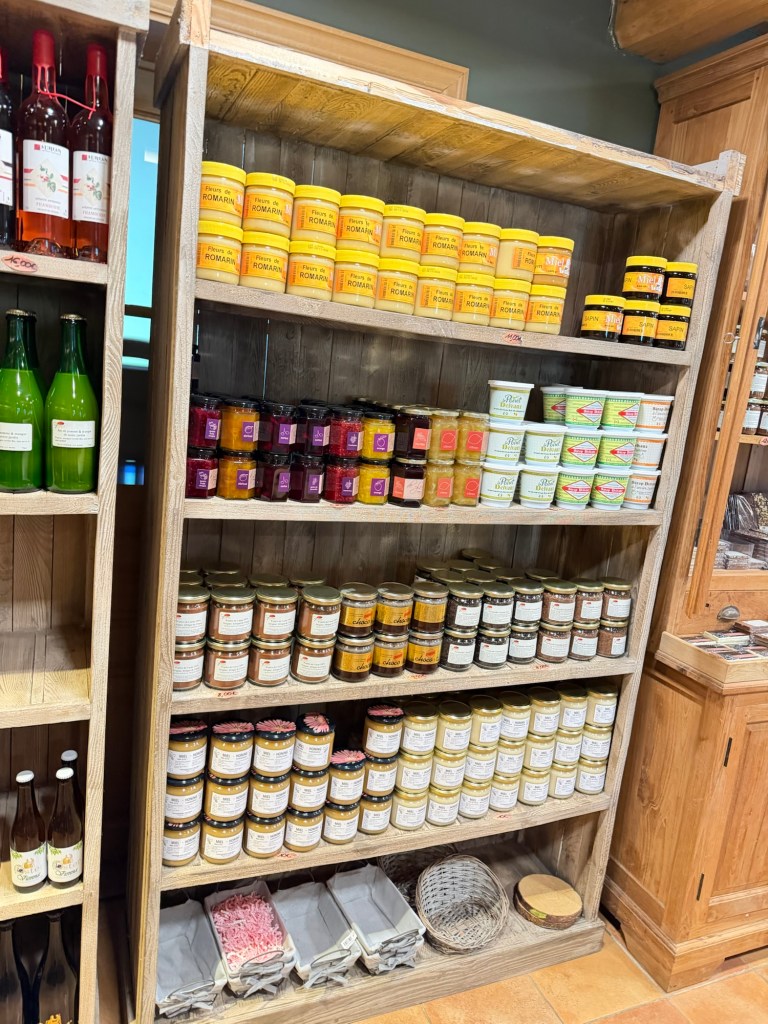
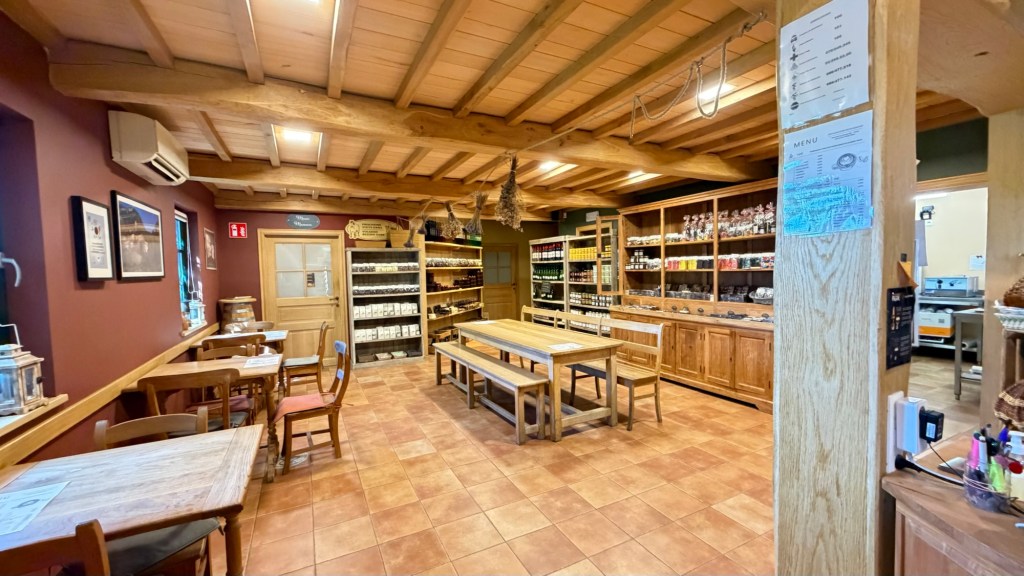
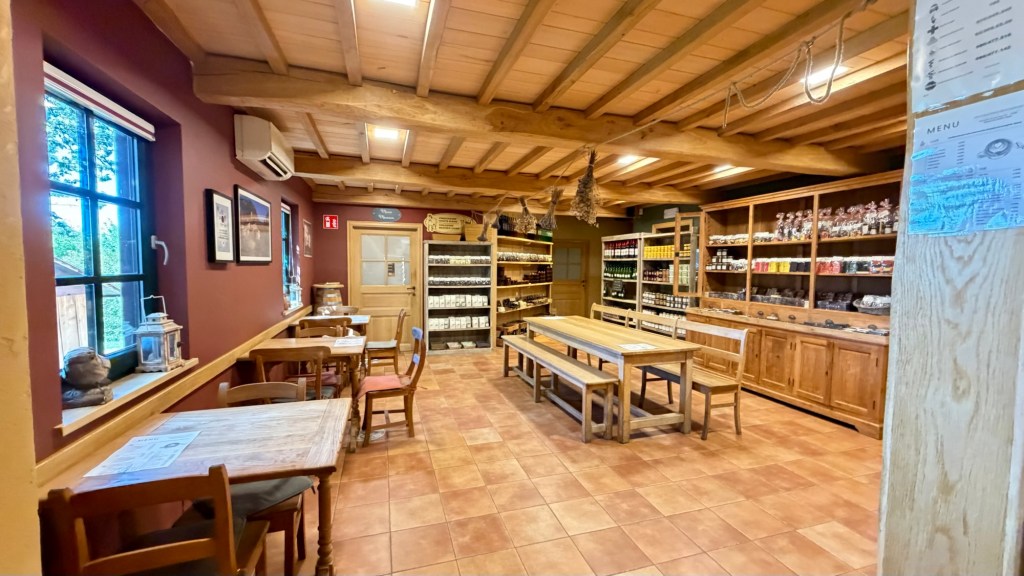
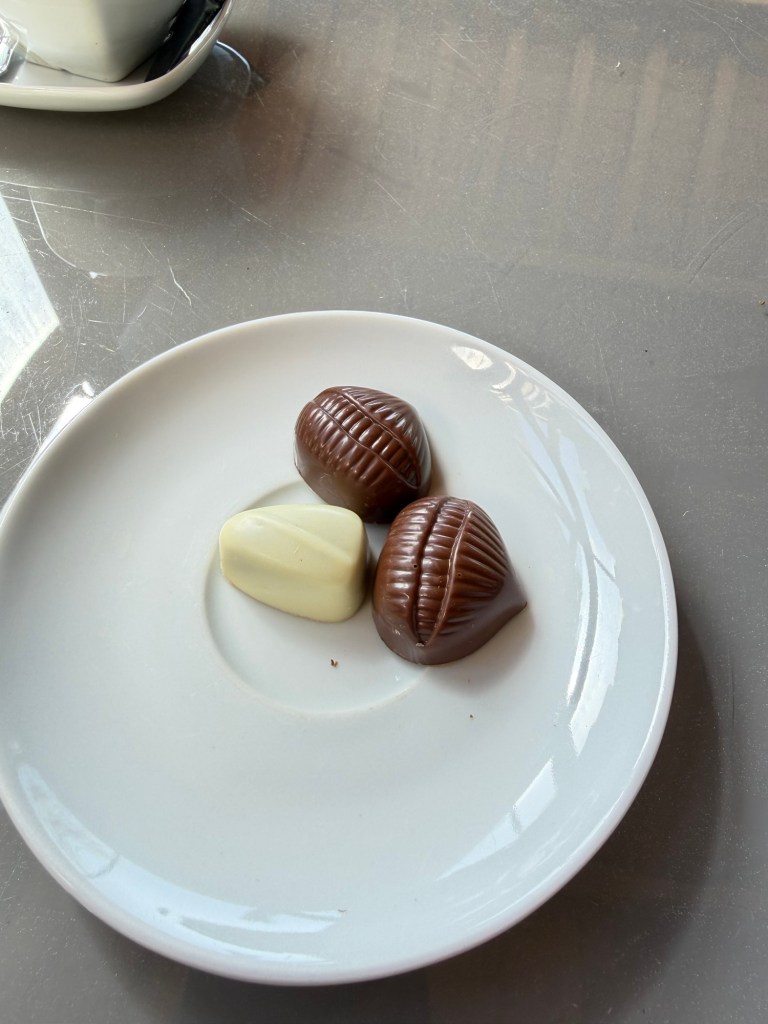
Outside, the large cocoa pod painted across the building announces the place proudly, but inside everything becomes quieter and more intimate. There were coffee cups on wooden tables, trays of chocolate disks waiting to become pralines, rows of preserves and regional products, and visitors lingering far longer than they intended. We ordered coffee which came with pralines. Some local patrons arrived by horse.
Belgium’s chocolate tradition is often associated with the grand names in Brussels or Bruges, but places like this remind you that much of the country’s culinary identity still lives in small villages and family workshops. Here in the Ardennes, chocolate feels tied to the landscape itself: forests, farms, rivers, and long winters that seem made for coffee and something rich beside it.
By evening it was finally time to slow down. After a day spent moving through battlefields, cemeteries, memorials, and villages still marked by the history of the Ardennes, we returned to the Baines hotel and enjoyed the spa, and then headed out to dinner.
Dinner in Spa felt perfectly in character with the town itself — relaxed, unhurried, and quietly elegant. At La Table de Spa (www.latabledespa.be/), even the sign at the entrance seemed to capture the spirit of the place:
“It is certainly necessary not to waste time, but it is even more necessary to know how to take it.”
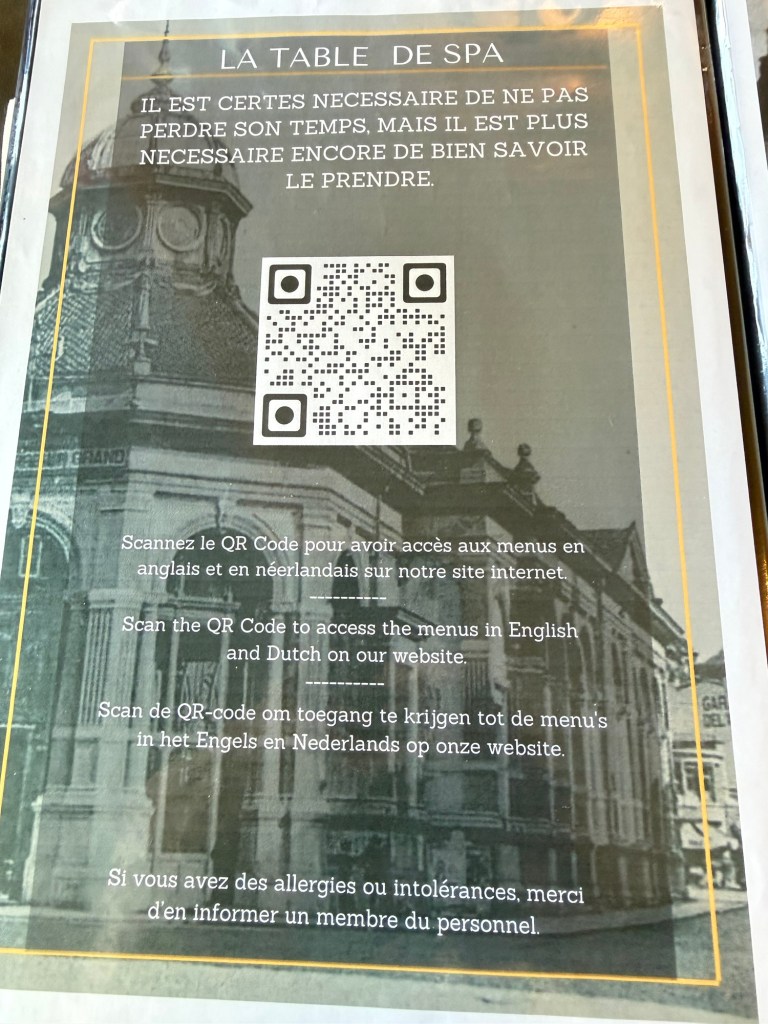
After a long day moving through the Ardennes — cemeteries, memorials, wartime museums, river towns, chocolate shops, and winding forest roads — that idea landed differently. Belgium, especially this part of it, seems to understand something about pacing life that Americans often forget.
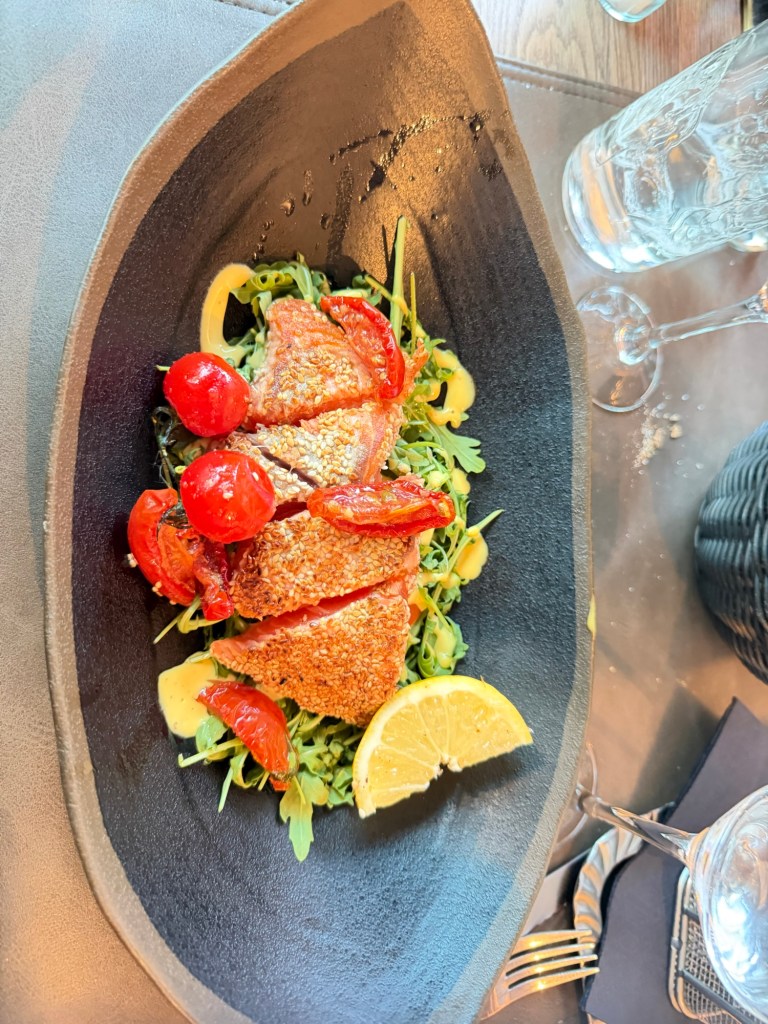
Dinner itself was beautifully done without being pretentious. A lacquered salmon dish arrived over arugula with roasted tomatoes and a light sauce, simple ingredients treated carefully and presented with restraint rather than excess. The mineral water, appropriately enough in Spa, came from the local springs whose name traveled the world.
Outside, the town had settled into evening. Inside, conversation slowed, glasses clinked softly, and nobody seemed eager to rush the night along. After the weight of the day’s history, there was something restorative about ending it not at another monument or museum, but at a table — warm light, good food, and the quiet comfort of simply being present in the moment.