Day three in Bruges—and for the first time, no guide, no schedule, no agenda.
It’s Monday, which means many of the monuments are closed. But in a city like this, that turns out to be a gift. The crowds thin, the pace softens, and what’s left feels more real.
We made our way back to the town center—Market Square and the Belfry of Bruges—and found something unexpected: space. No crowds, no lines, just the square opening up in a way you rarely see.
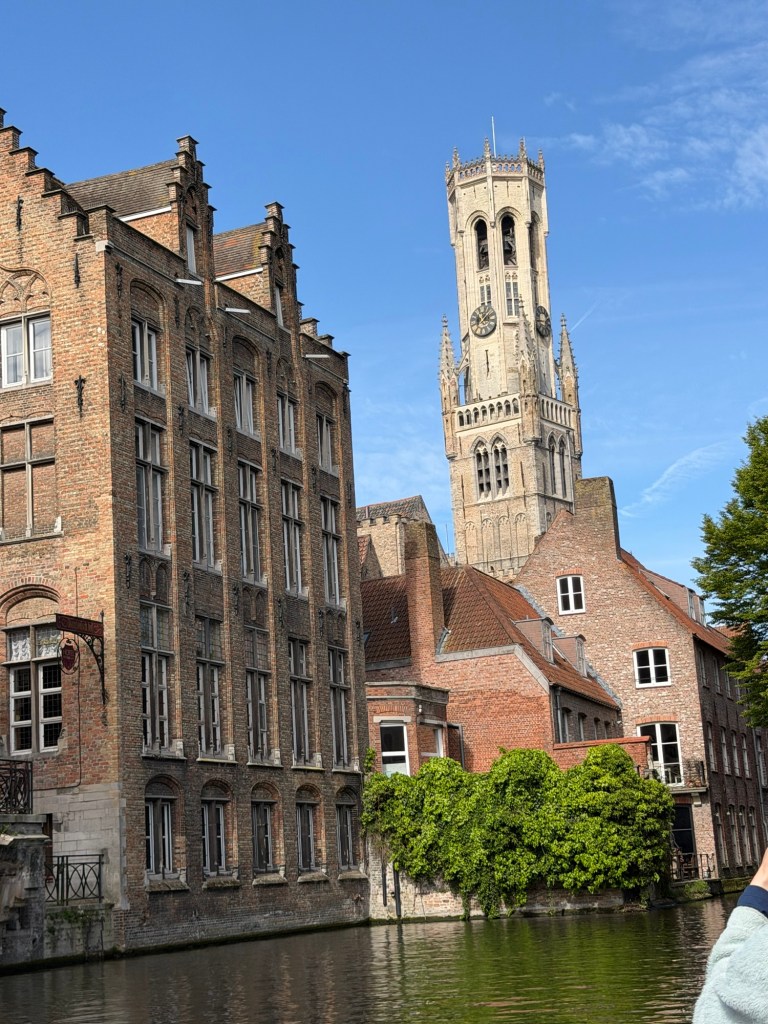
As we walk into the square, an orchestra is playing.
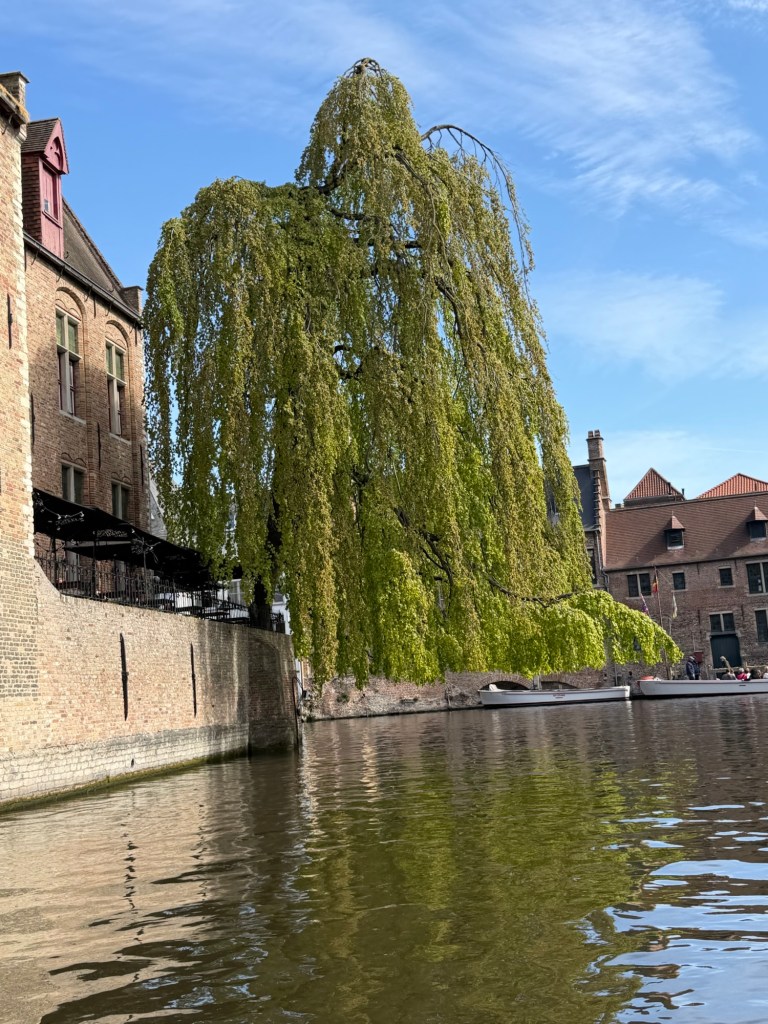
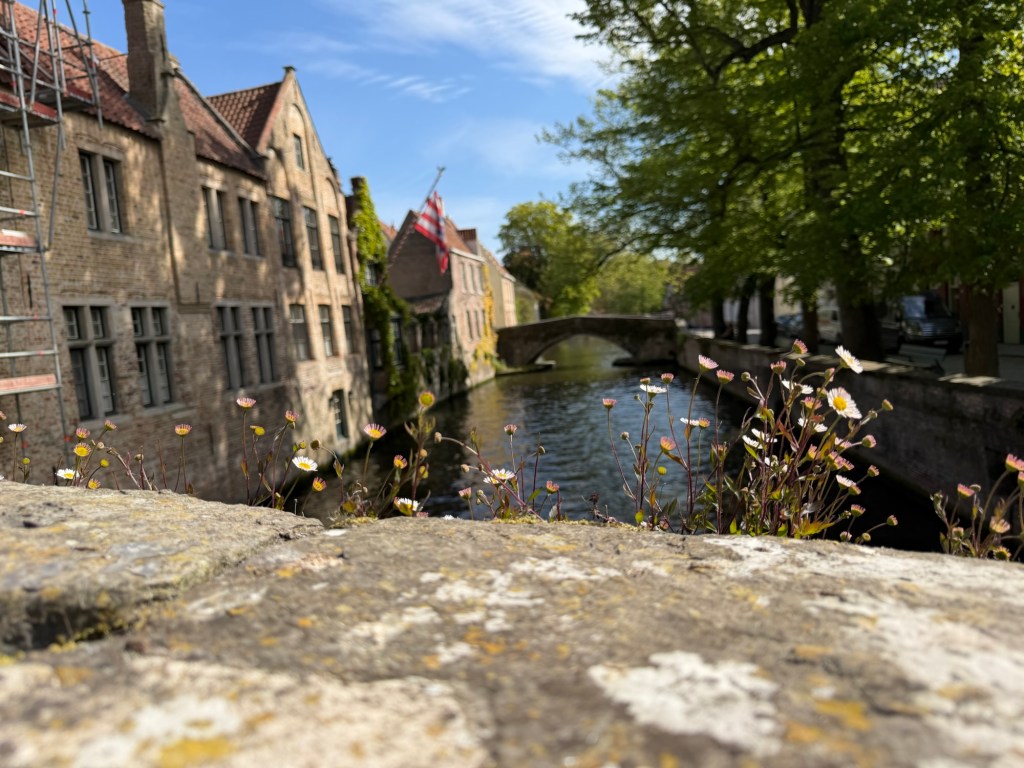
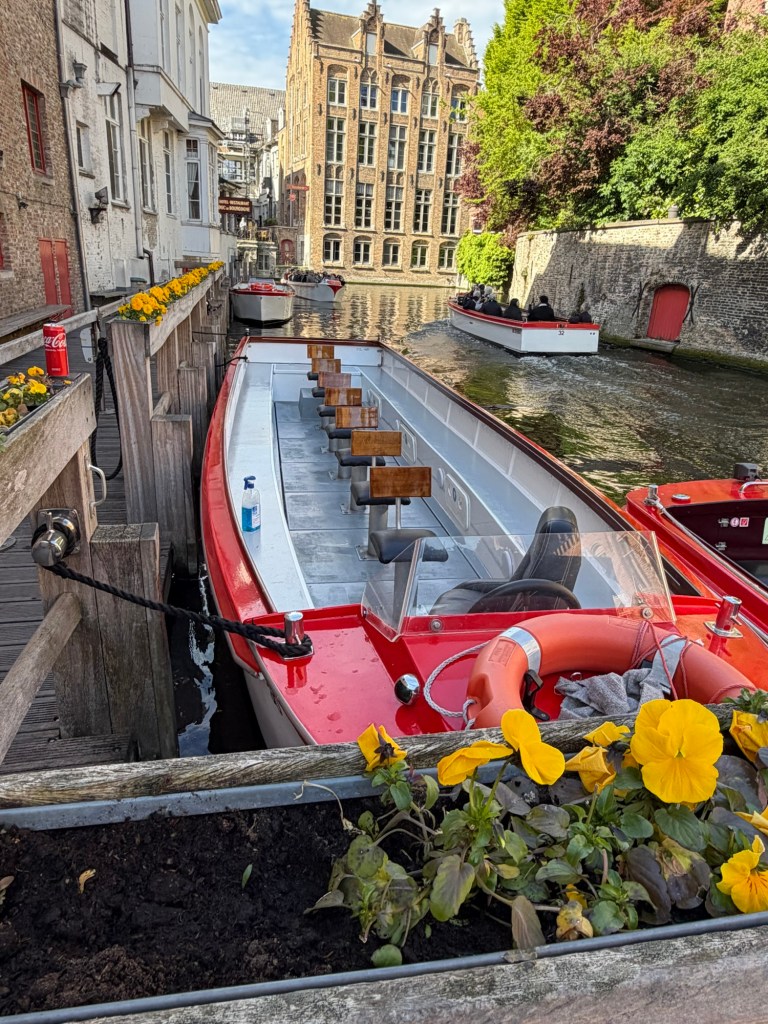
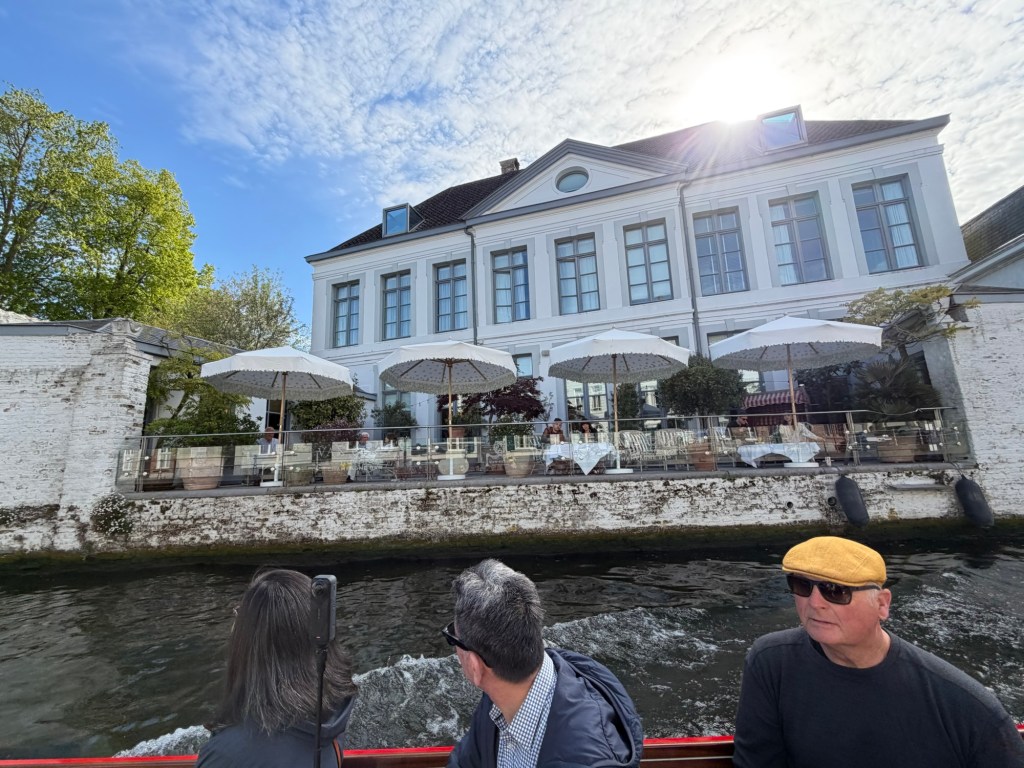
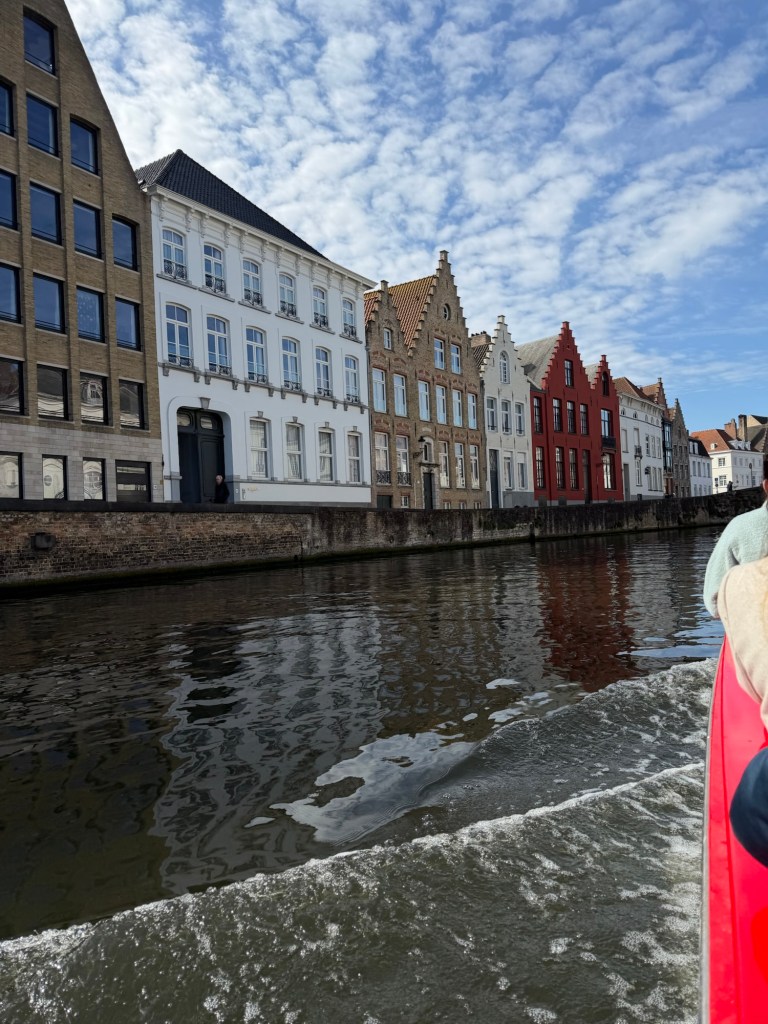
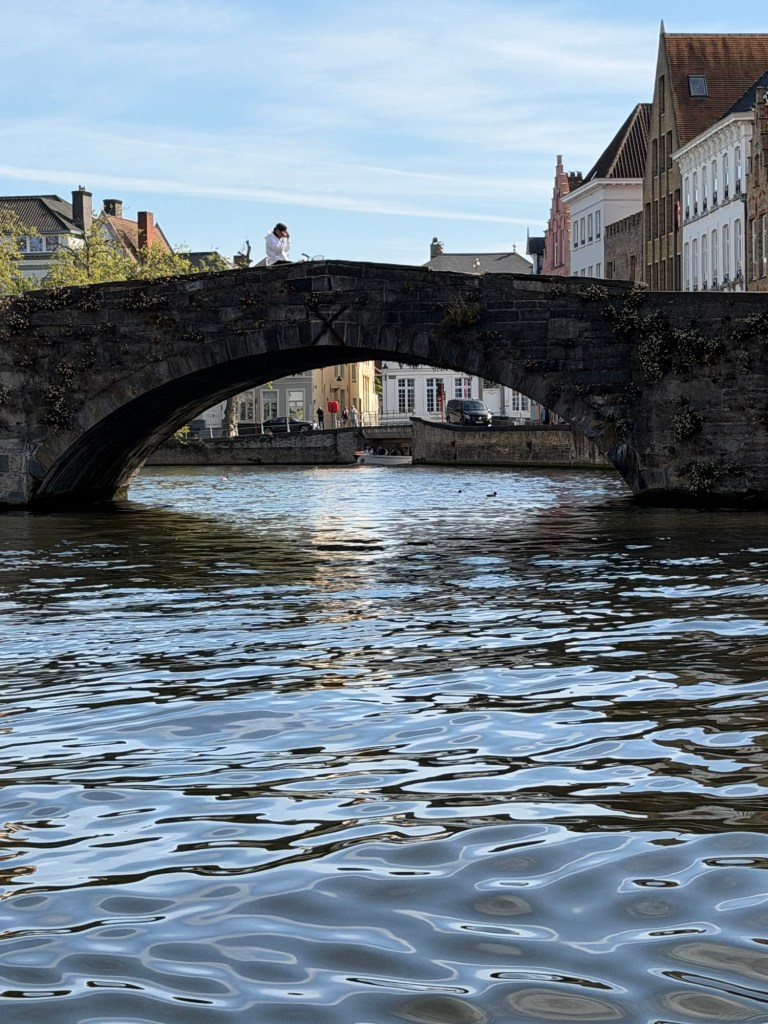
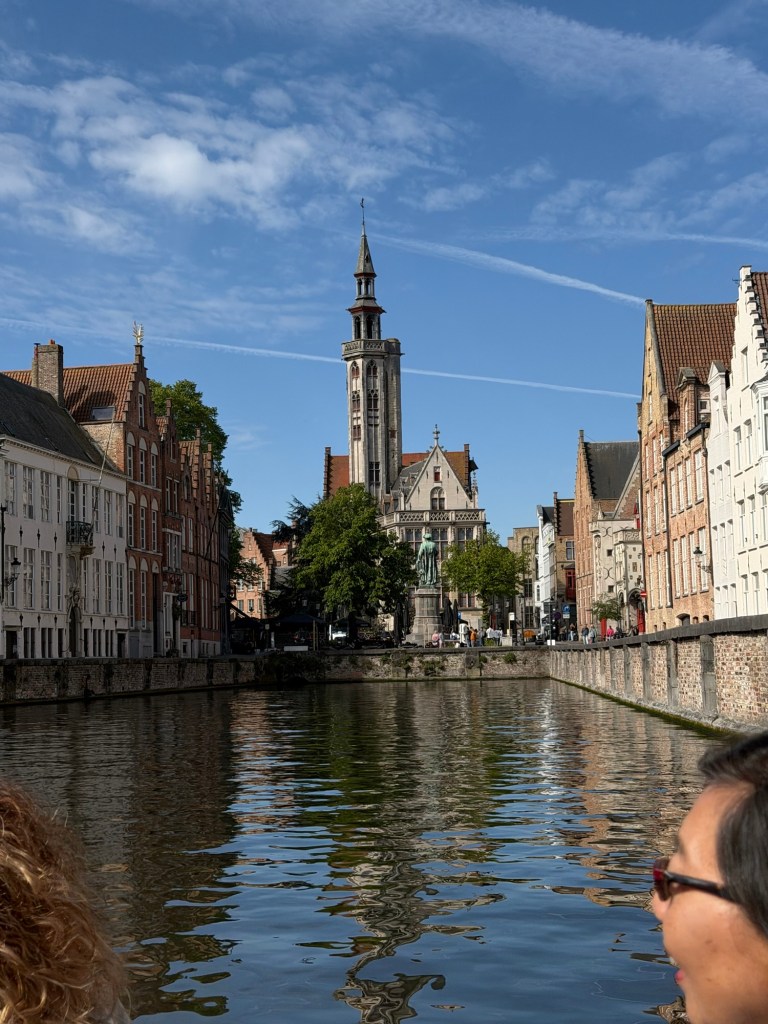
Then we leaned into it and did the tourist thing—a half-hour boat ride through the canals. The boat ride gave us the opportunity to see the city from a completely different perspective—the backs of buildings, low bridges, and quiet corners you’d never find on foot. We even floated right past Hotel Van Cleef—our home for these few days.
After a relaxed canal-side lunch, we set off for two more stops—and found something far more intimate than any landmark: the Adores Domain (www.adornes.org).
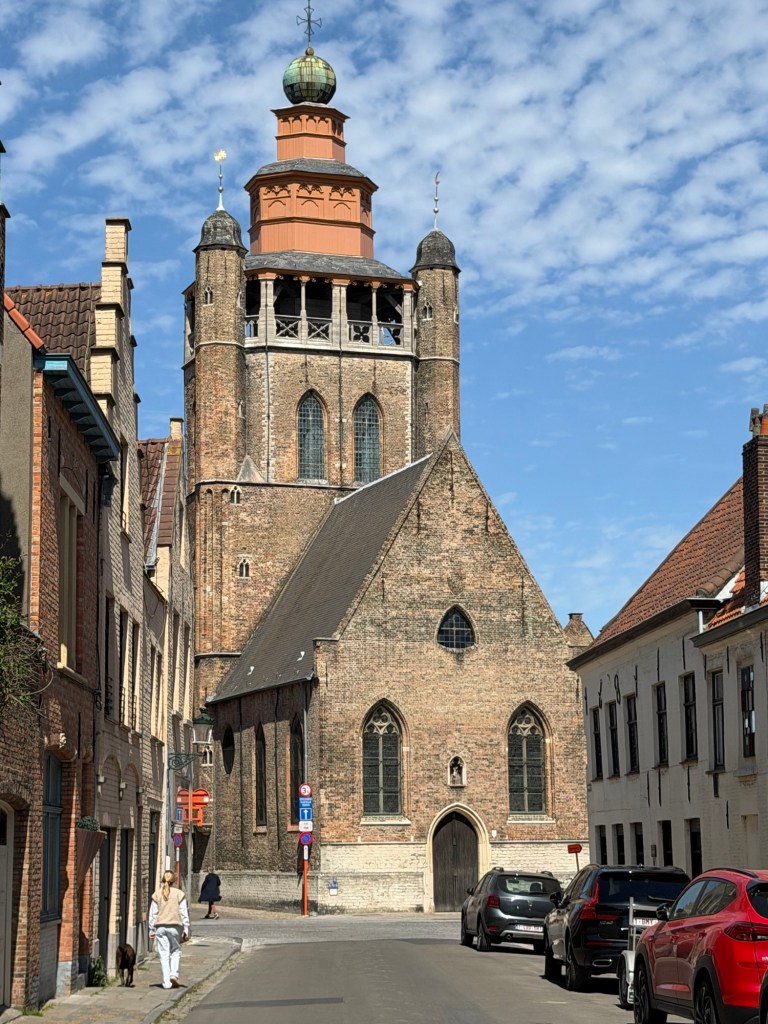
Still owned by the same family after centuries, it feels less like a museum and more like stepping into a living story. At the center of it all is Anselm Adornes—merchant, traveler, and something of an early observer of the wider world. He also built his wealth through trade, including the import of alum, a critical material in the medieval textile industry that helped make Bruges a major commercial center.
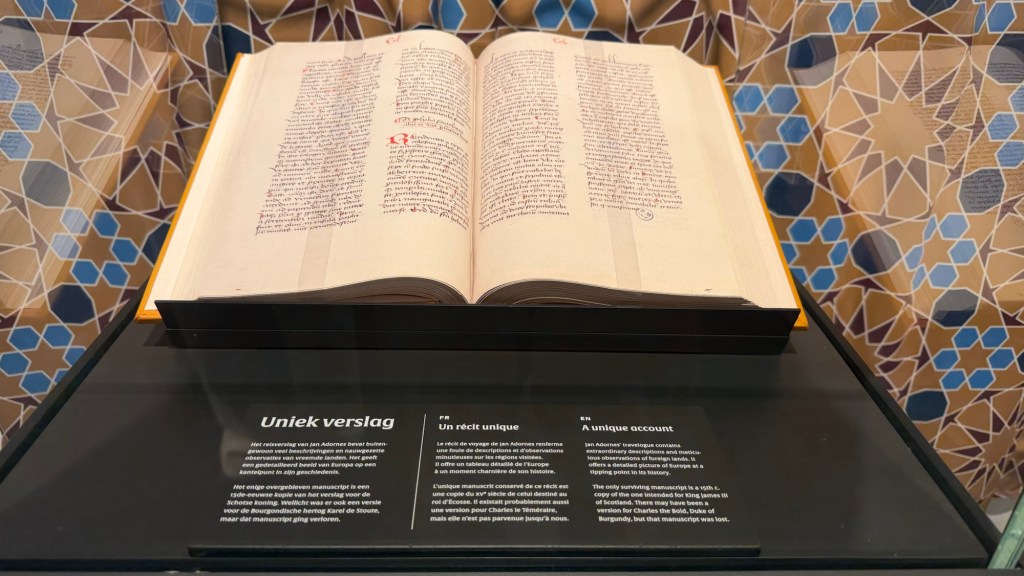
Before entering the chapel, a series of rooms quietly unfolds his life—artifacts, maps, and personal objects tracing his journey across Europe and to the Holy Land, along with the manuscript that reads like one of the earliest travel logs.
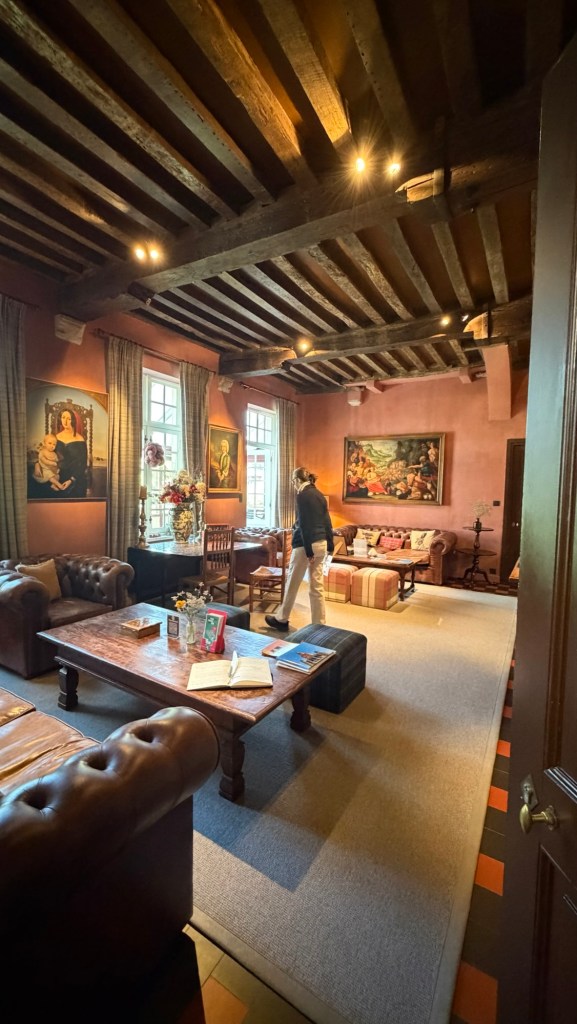
A “Scottish room” adds another layer, reflecting his ties to Scotland and the court of James III of Scotland.
And then you step into the Jerusalem Chapel itself.
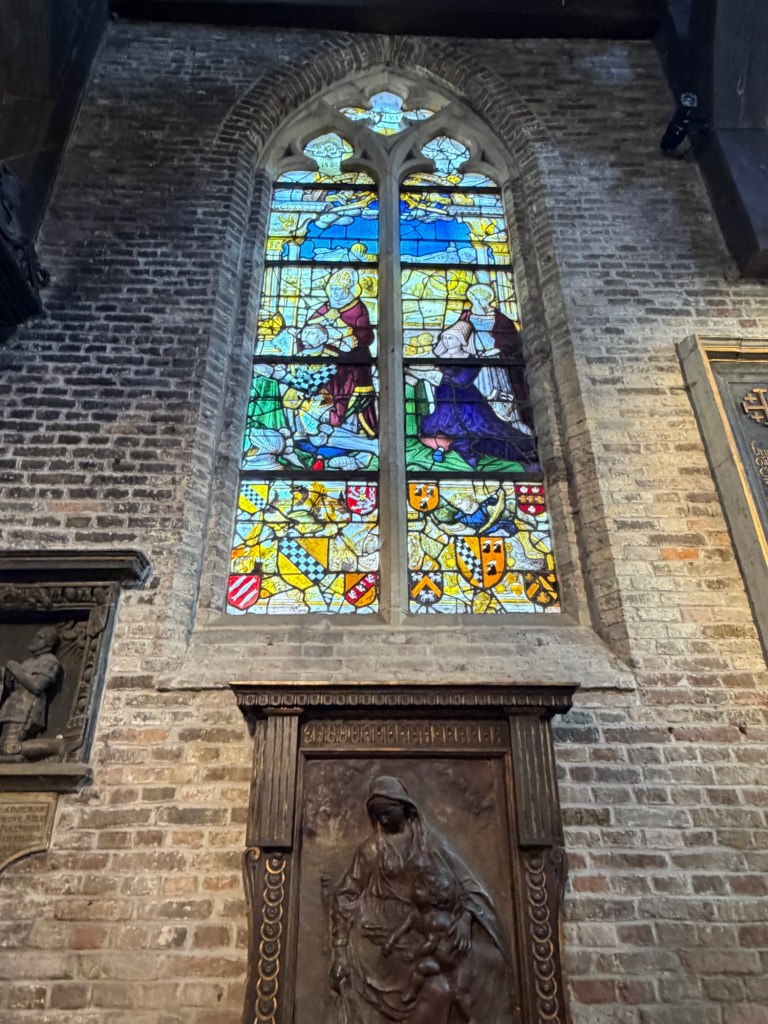
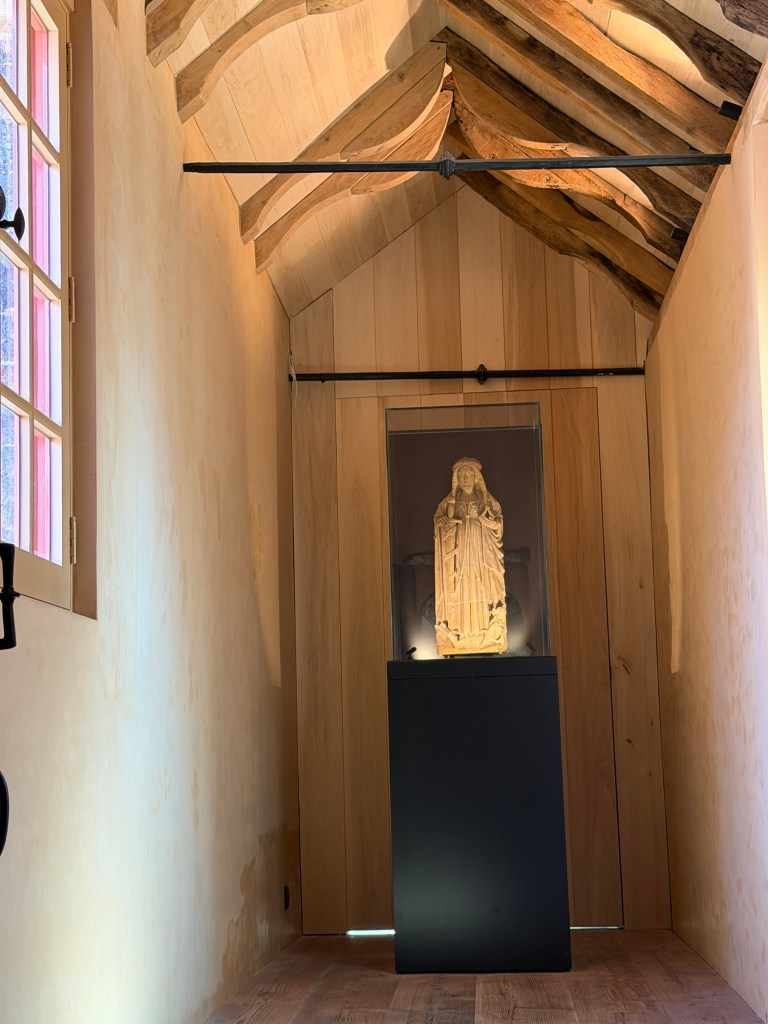
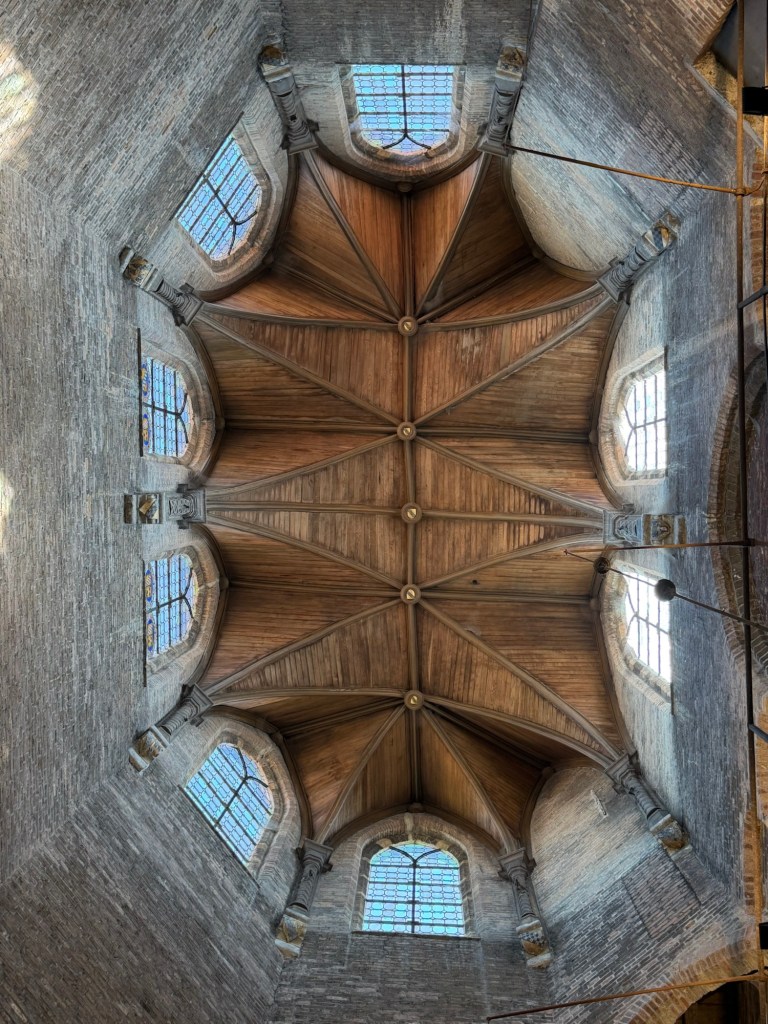
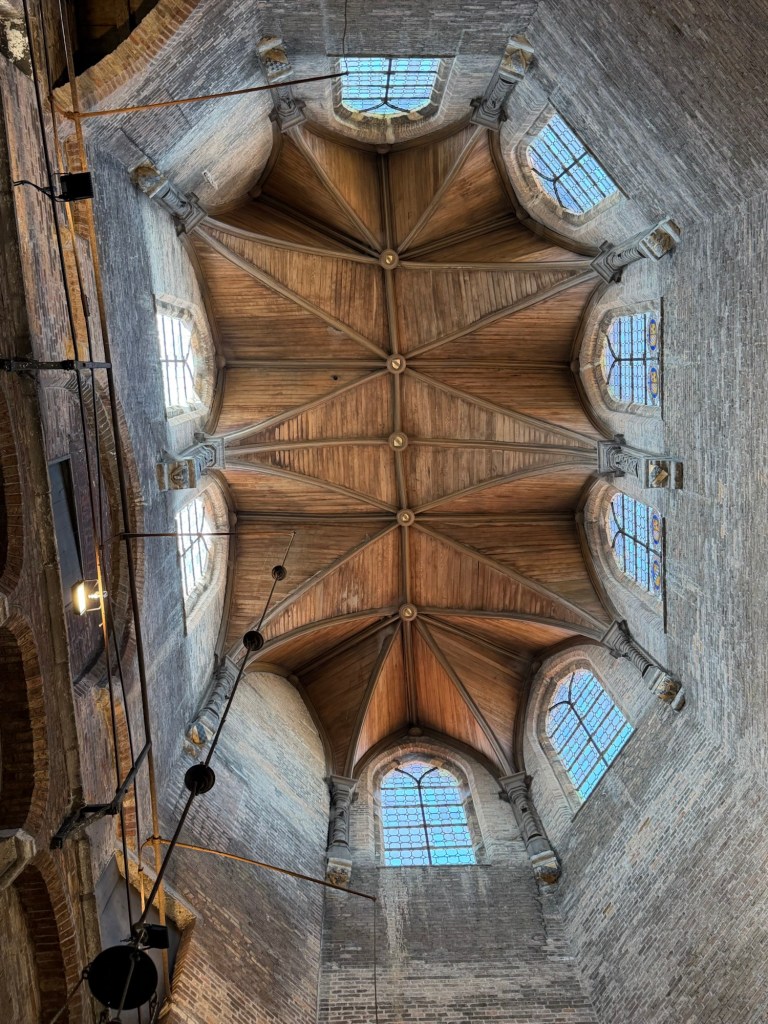
It’s smaller than you expect, and that’s what makes it powerful. A quiet, brick-walled space where everything feels intentional—the worn stone floor in a simple checkered pattern, stained glass casting soft color across the walls, and a carved wooden ceiling above that radiates outward like a geometric star. The light is gentle, filtered, never overwhelming. It doesn’t demand attention—it invites it.
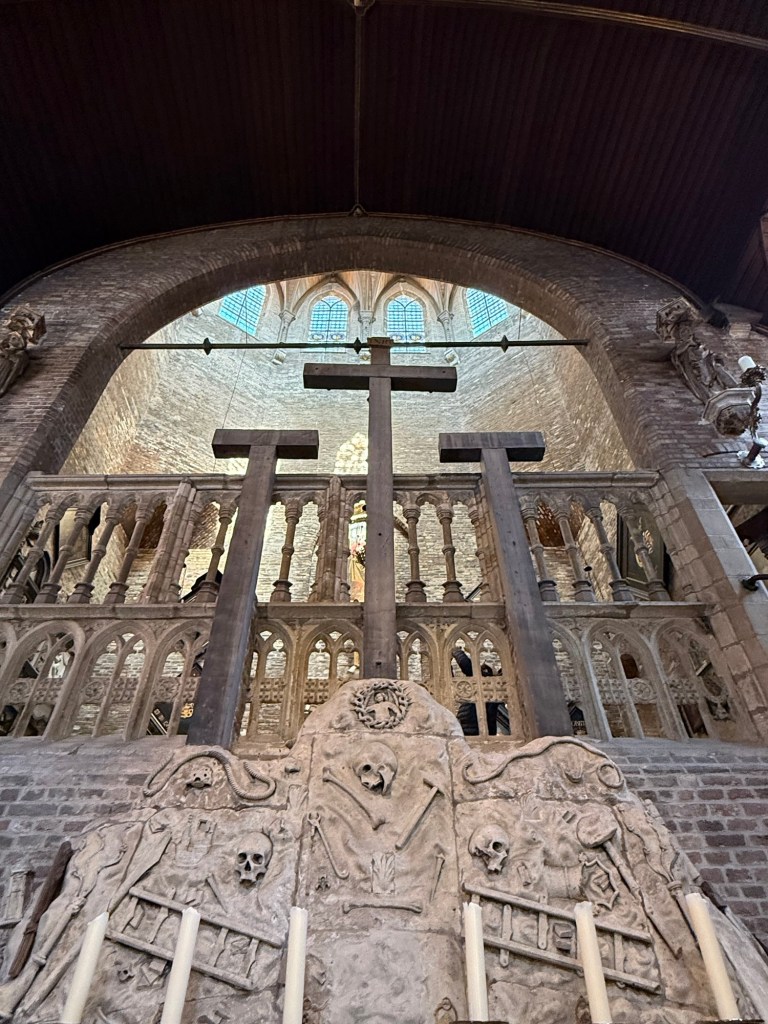
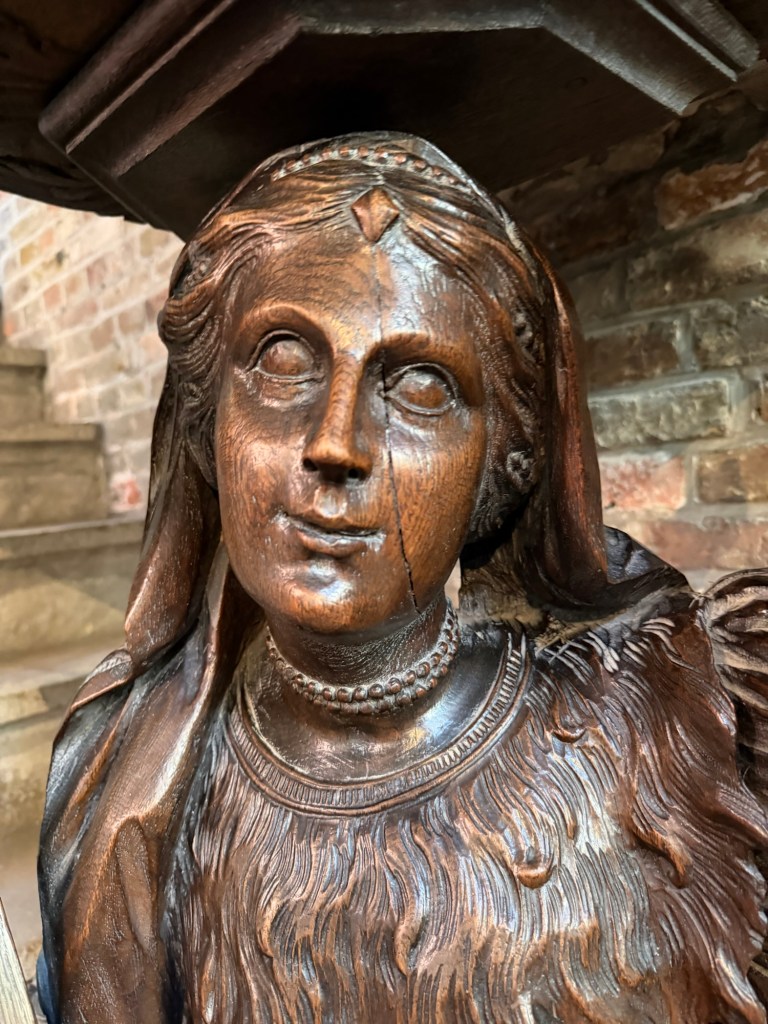
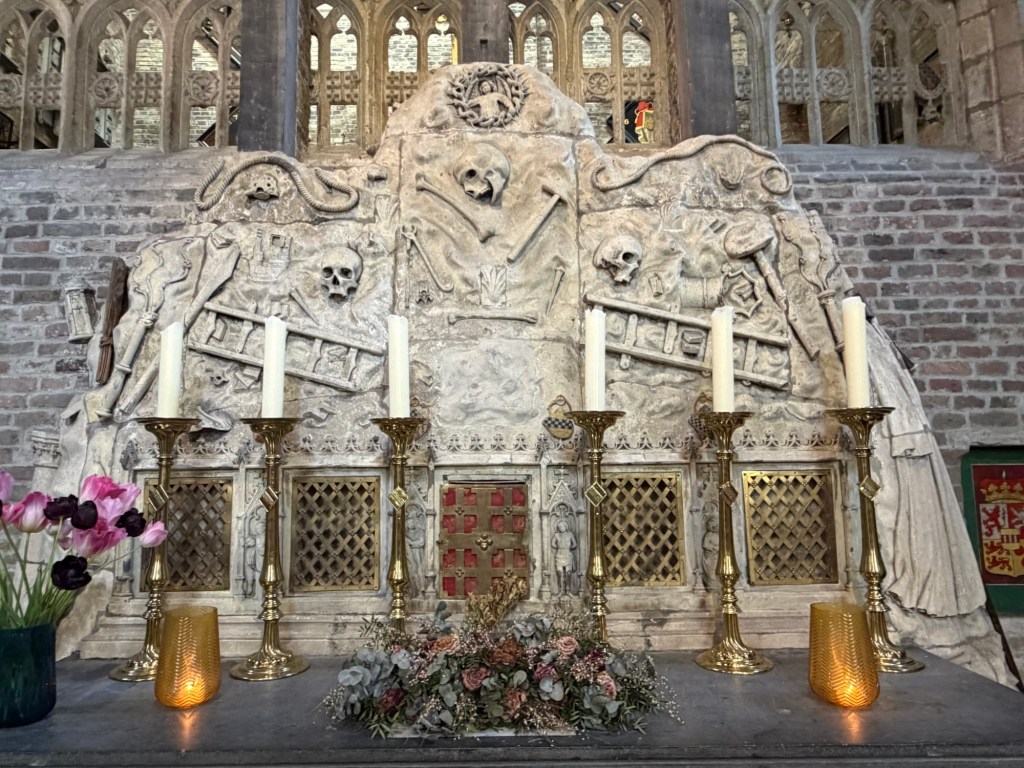
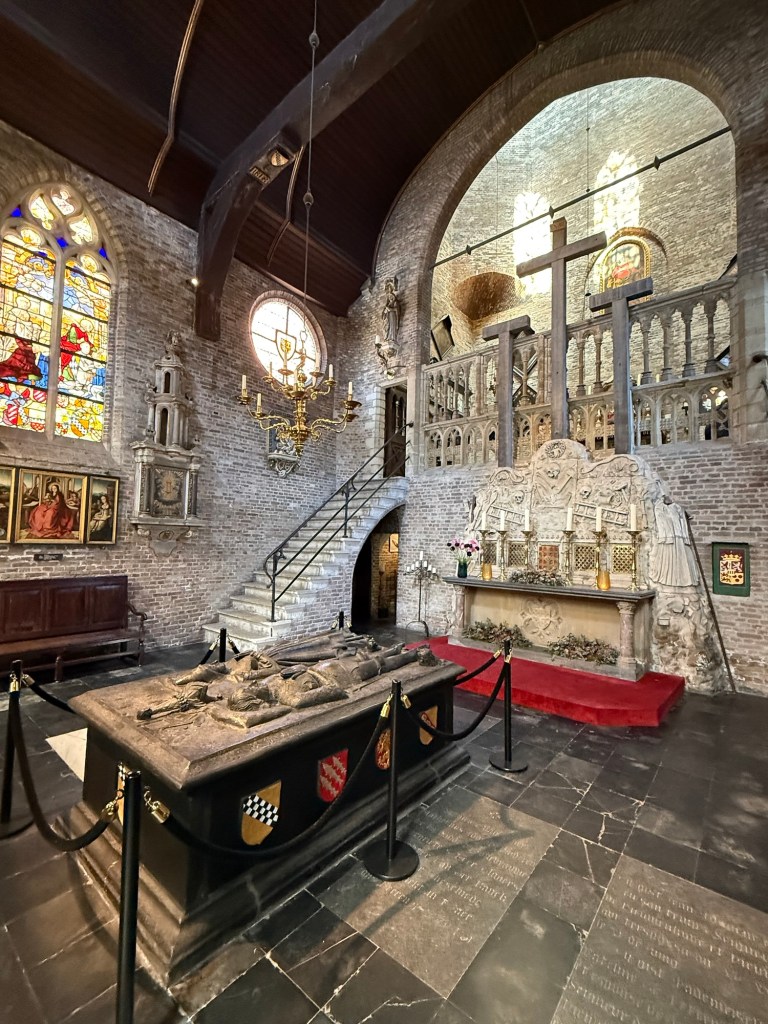
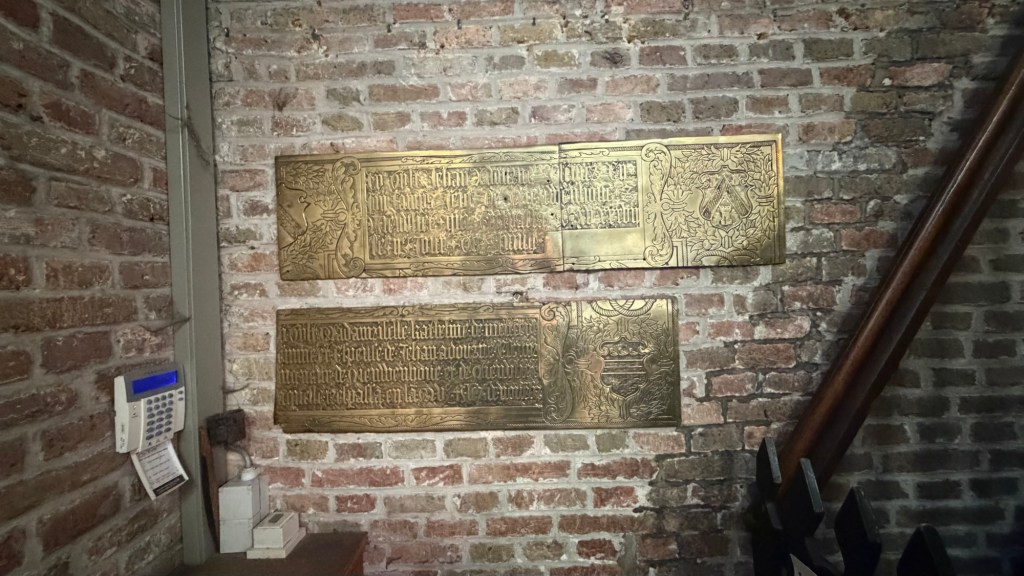
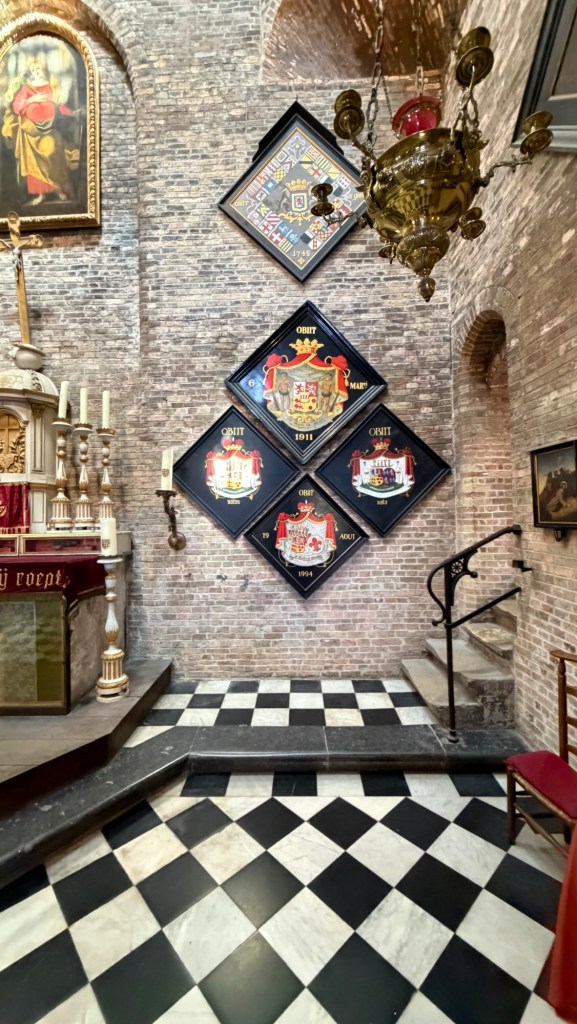
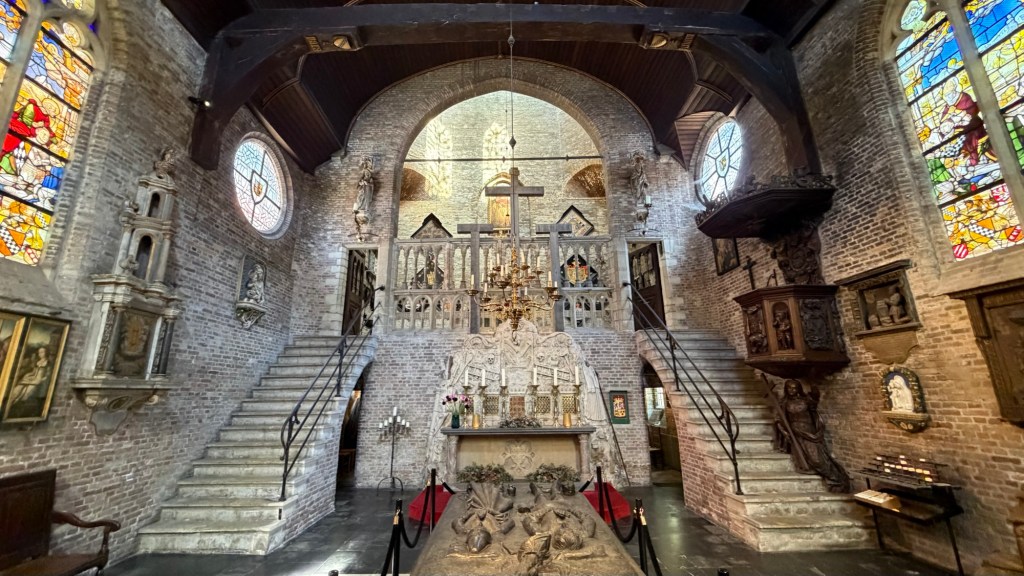
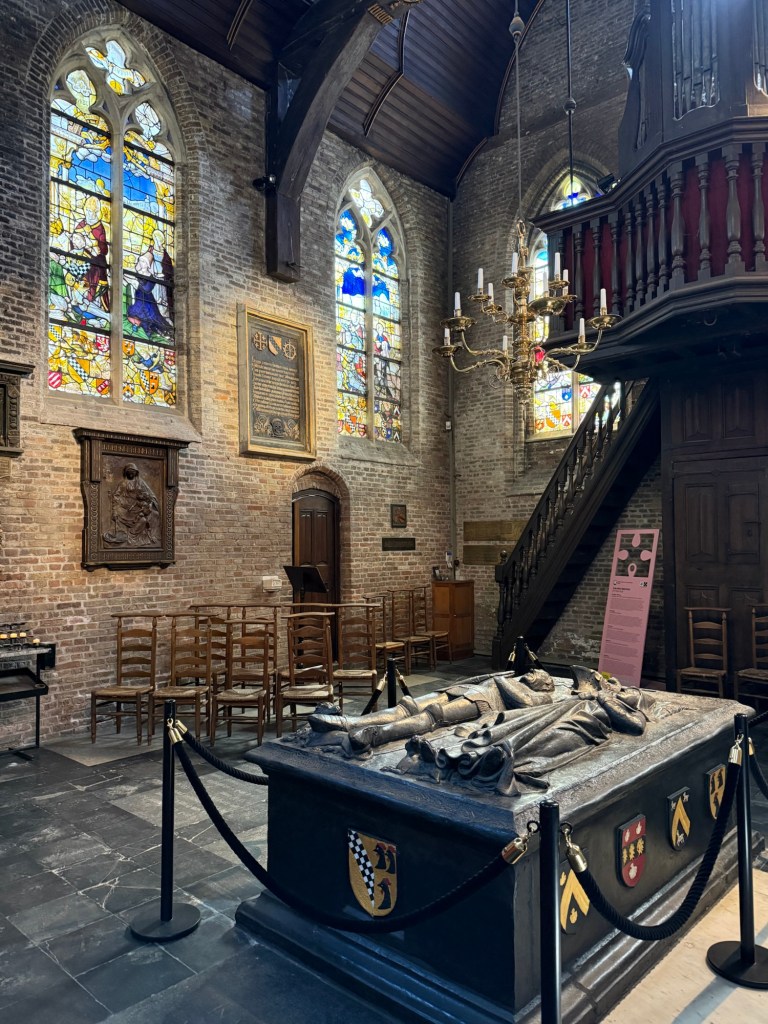
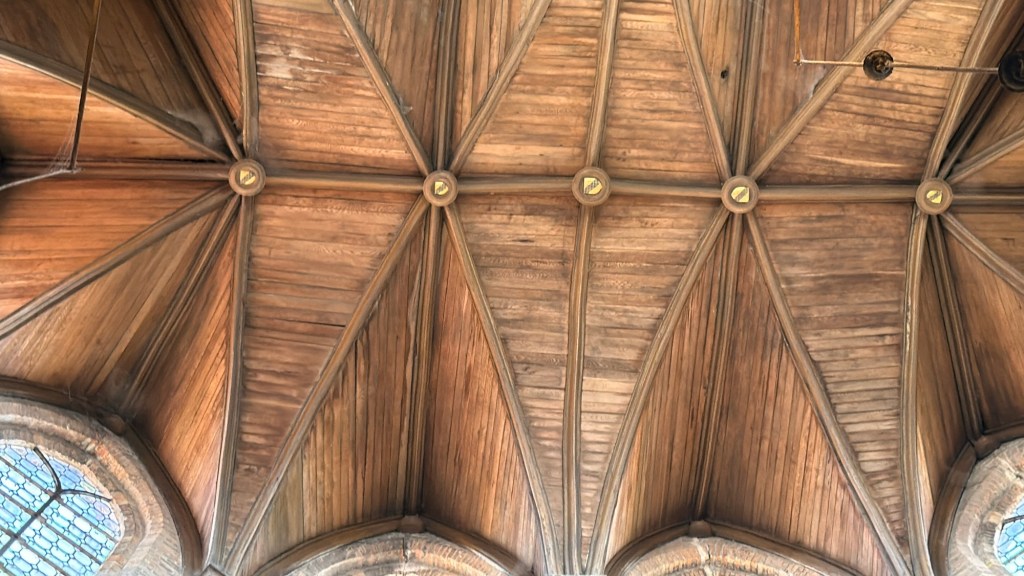
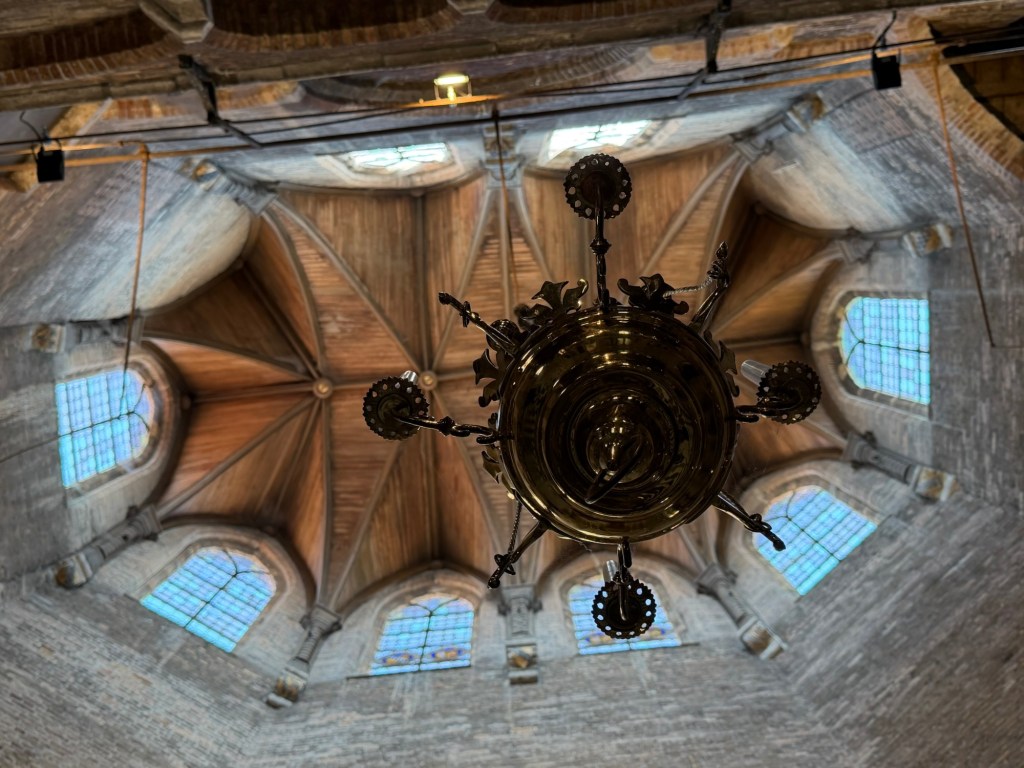
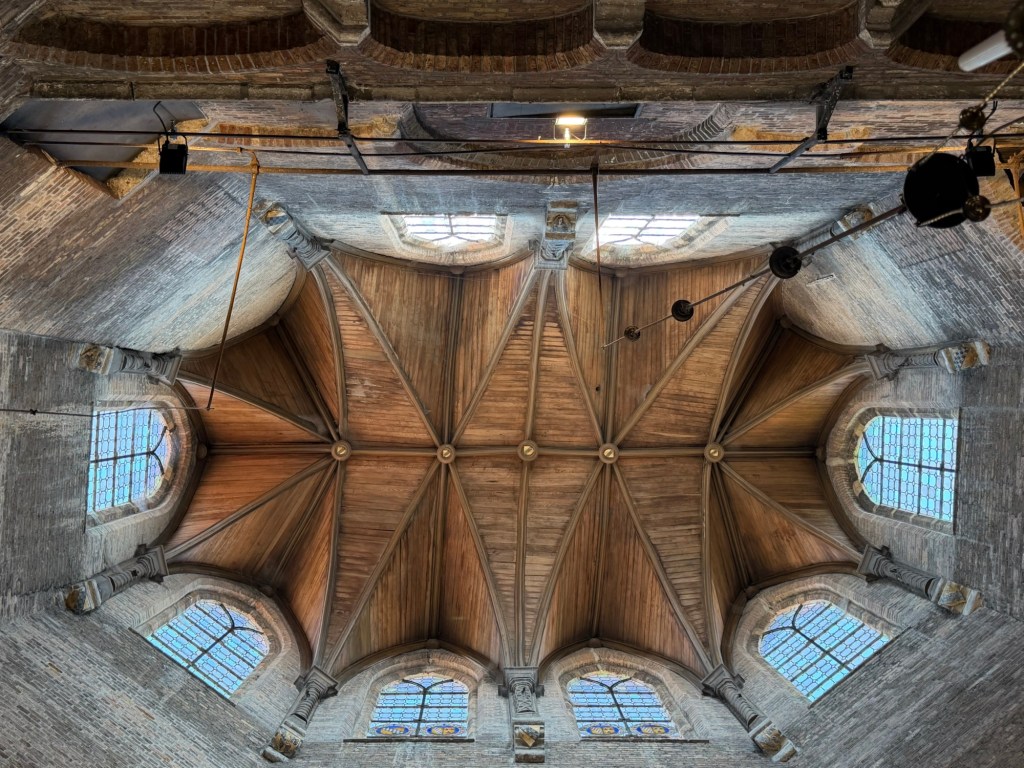
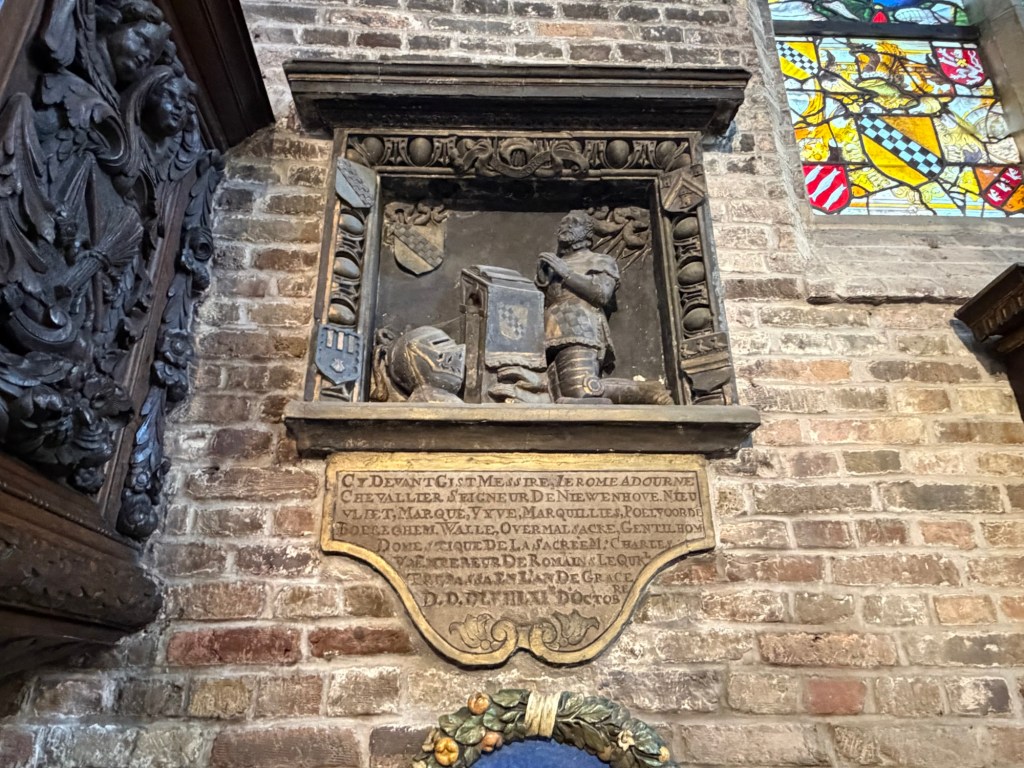
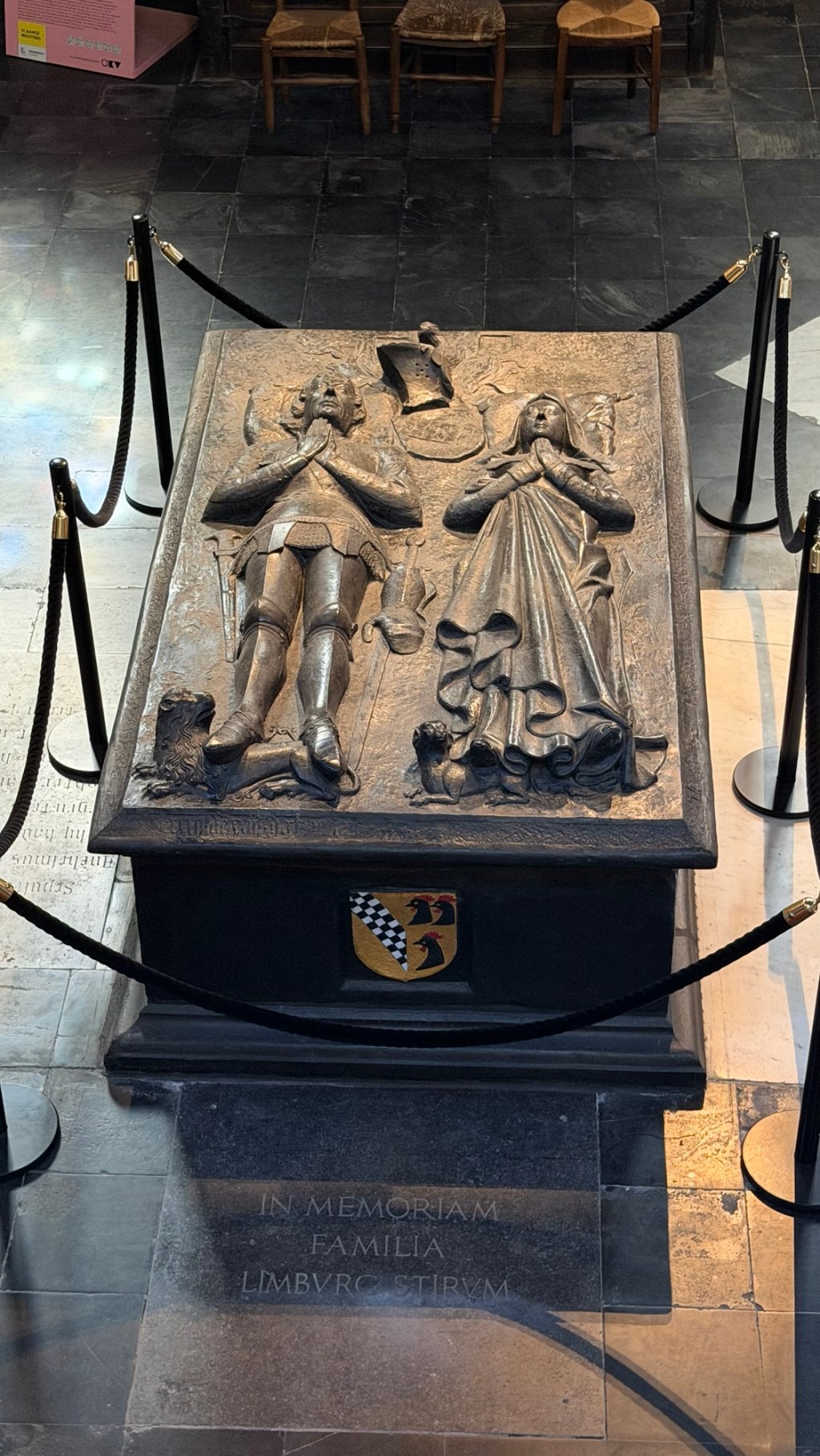
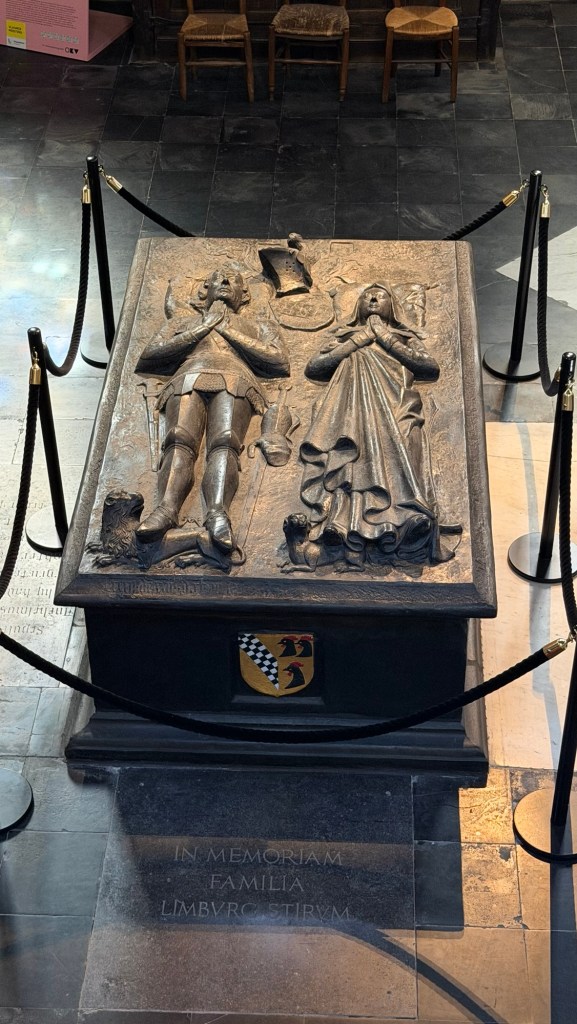
At the center lies the tomb of Anselm and his wife, best understood from above—two figures perfectly aligned, hands folded in prayer. His armor is composed and restrained; her gown falls in deep, sculpted folds. At his feet, a lion; at hers, a dog—strength and loyalty, side by side.
In 1483, while on a diplomatic mission in Scotland, he was caught in a political uprising and killed. A man who had traveled across Europe and to the Holy Land—only to meet his end in the unrest of a royal court.
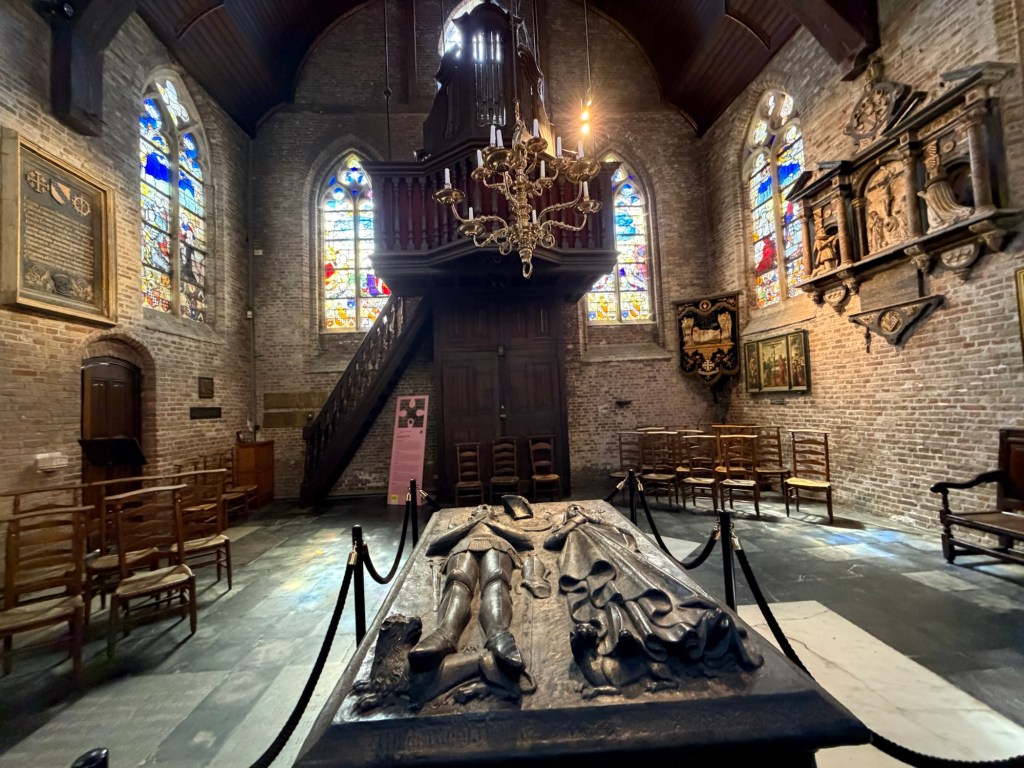
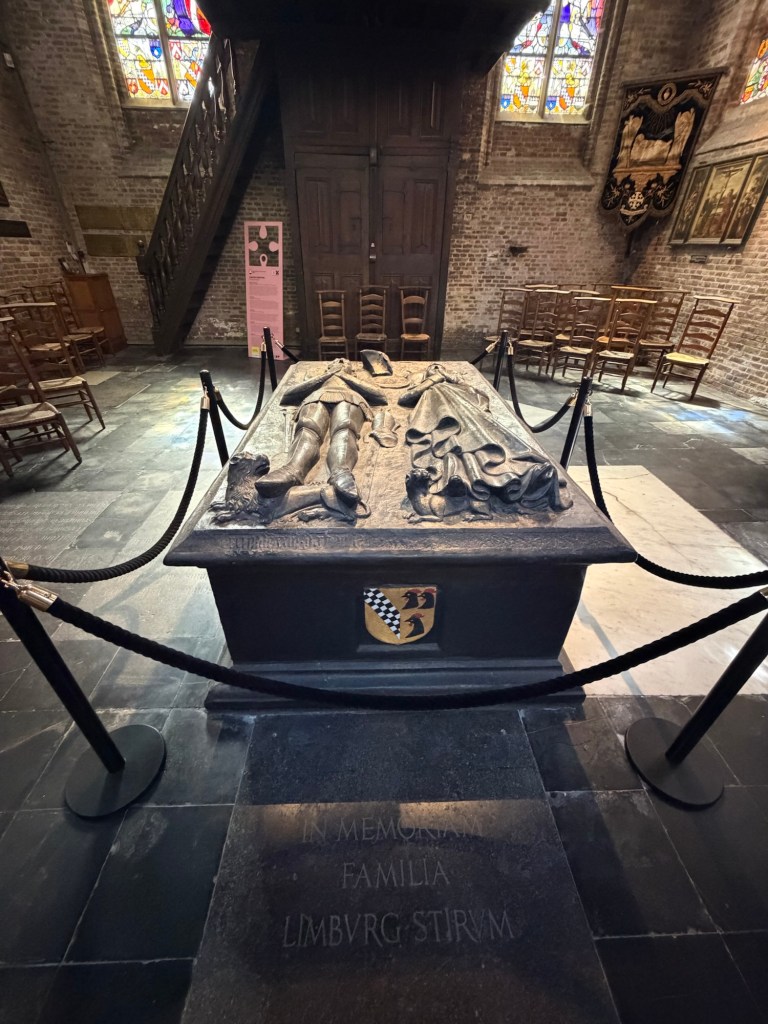
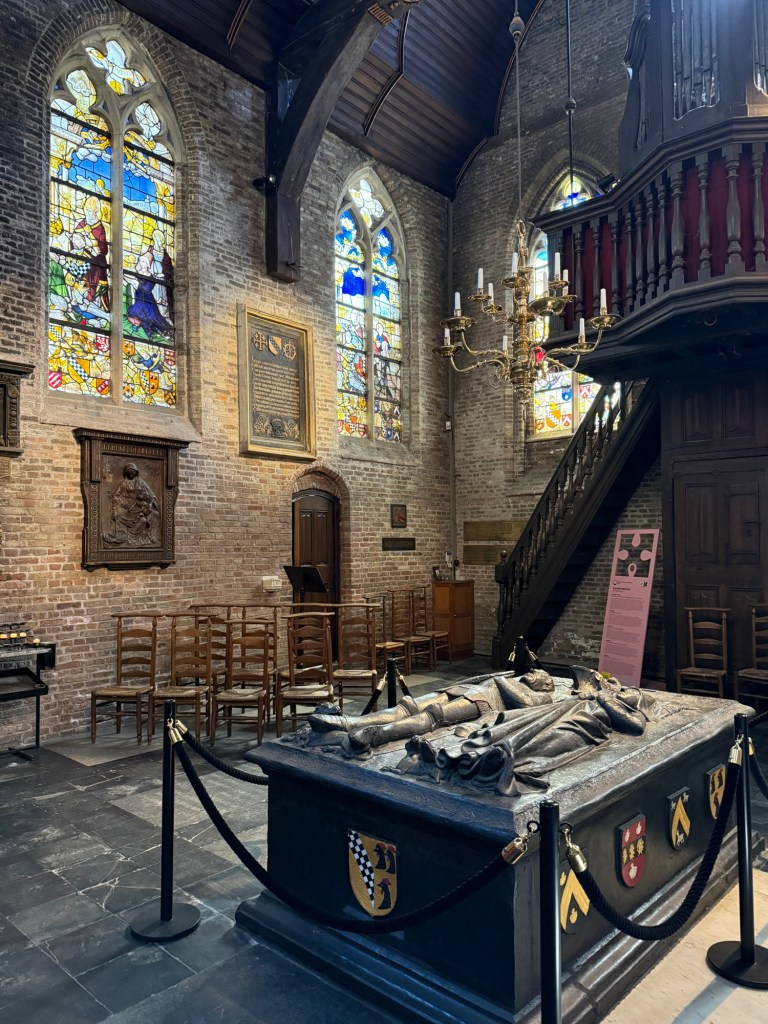
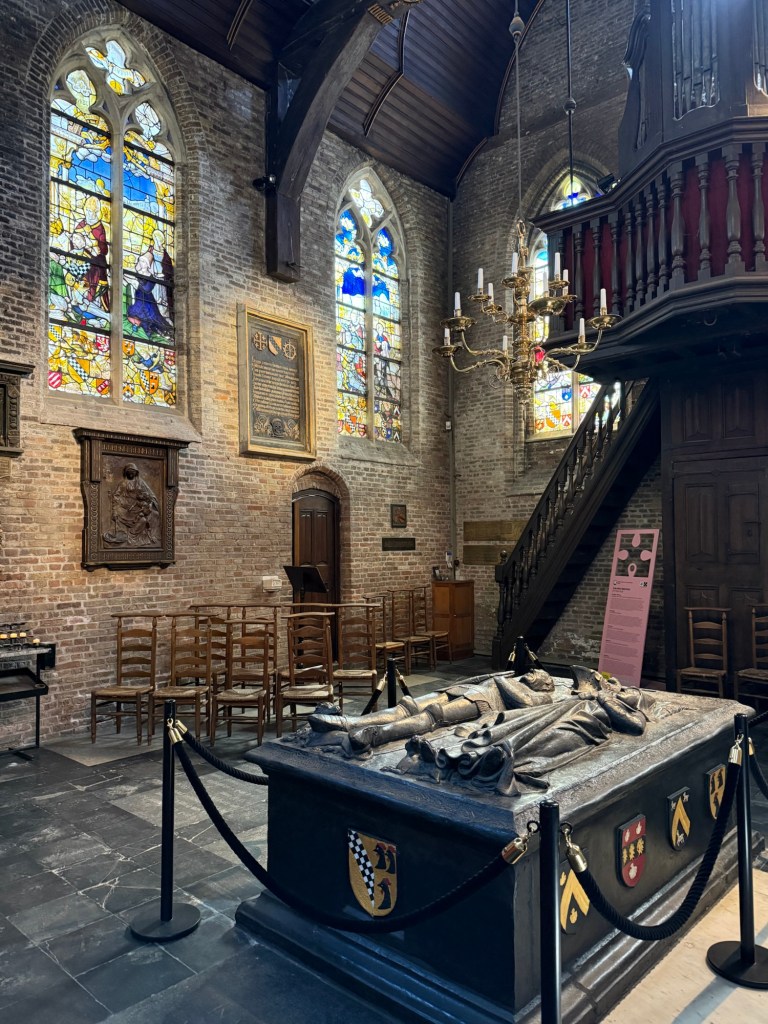
The name makes sense here. Inspired by the Church of the Holy Sepulchre, this chapel was meant to echo Jerusalem—a place of reflection, memory, and continuity.
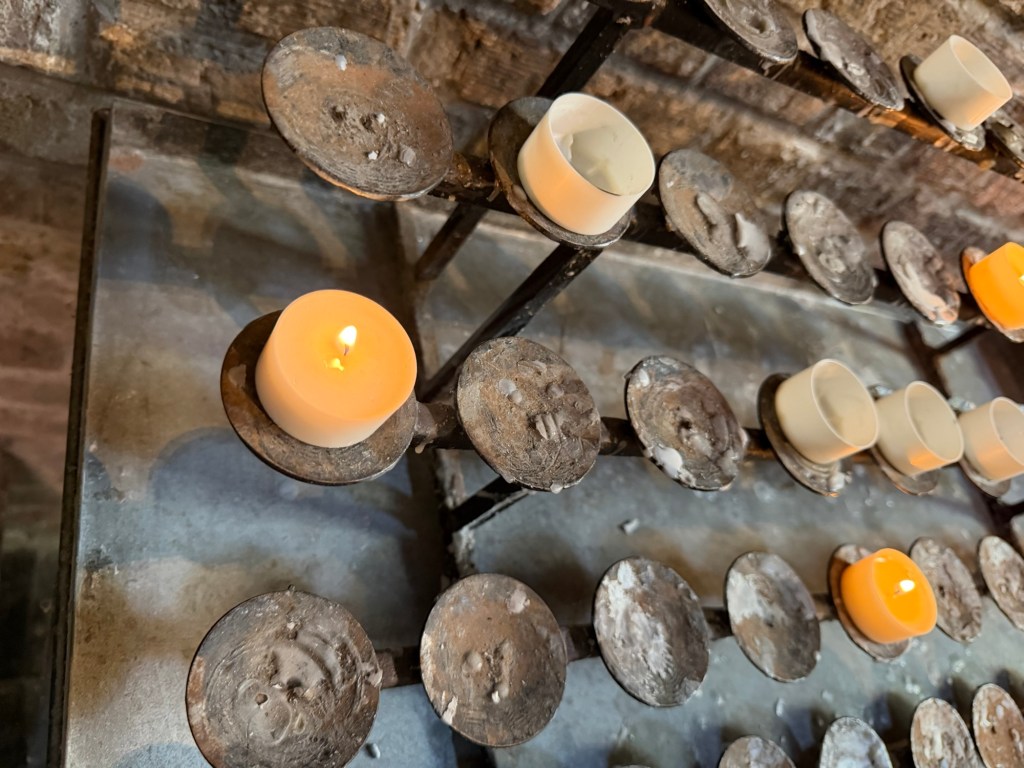
While we were there, we lit a candle for a dear friend who is ill—someone for whom we have great affection. In that quiet space, it felt like the most natural thing in the world.
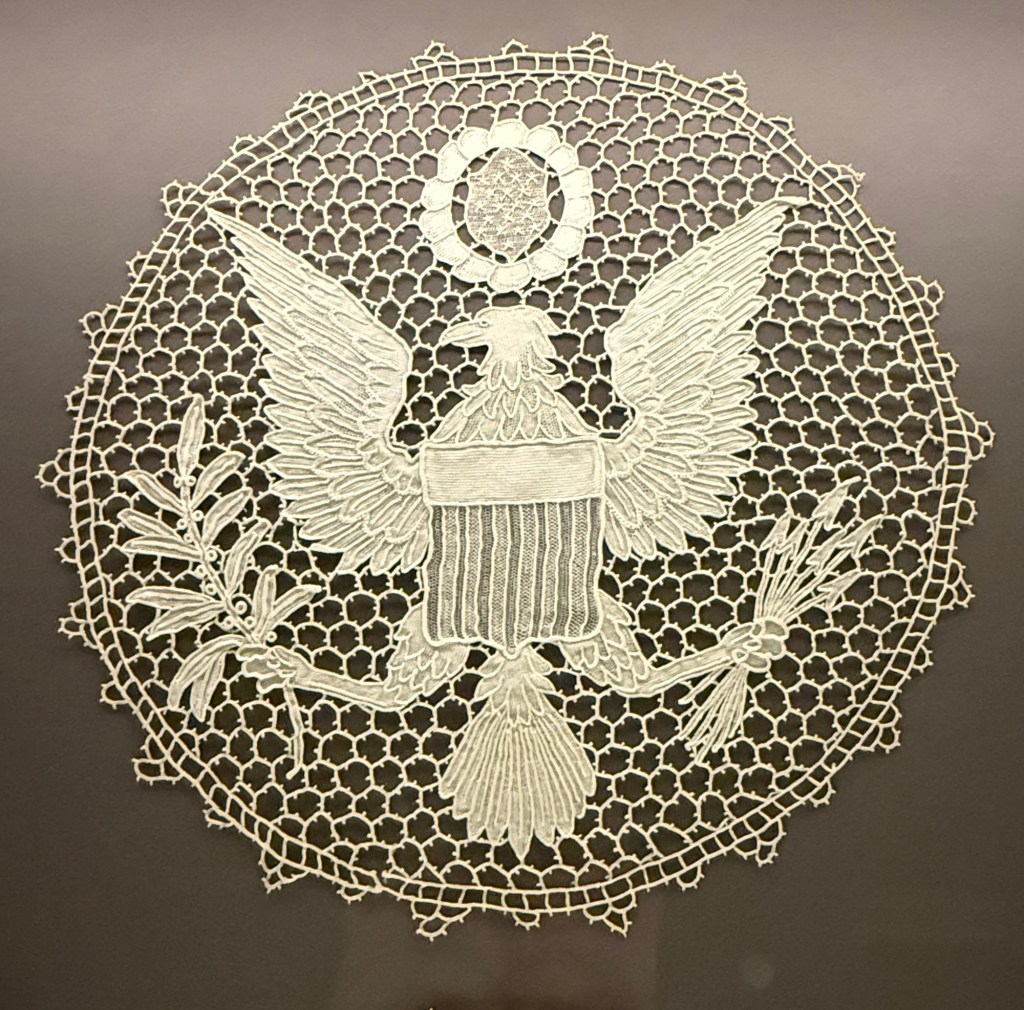
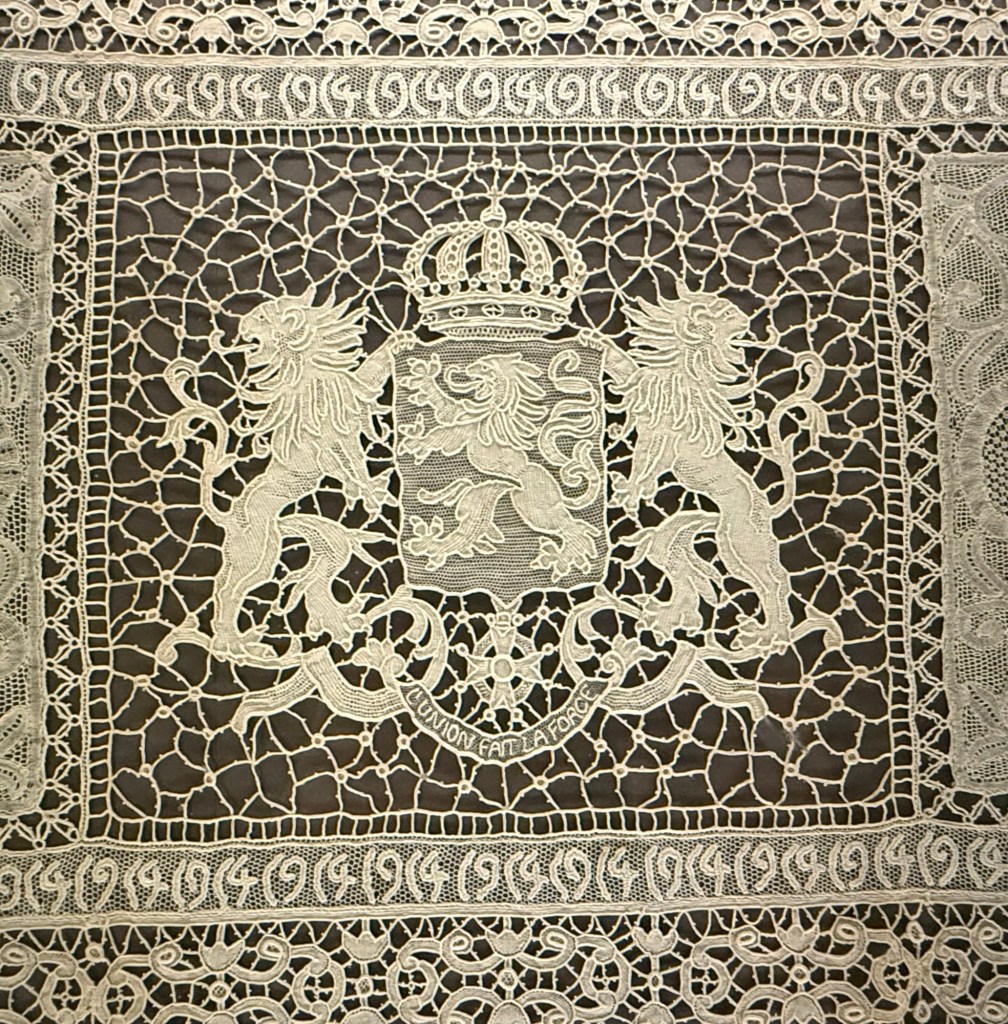
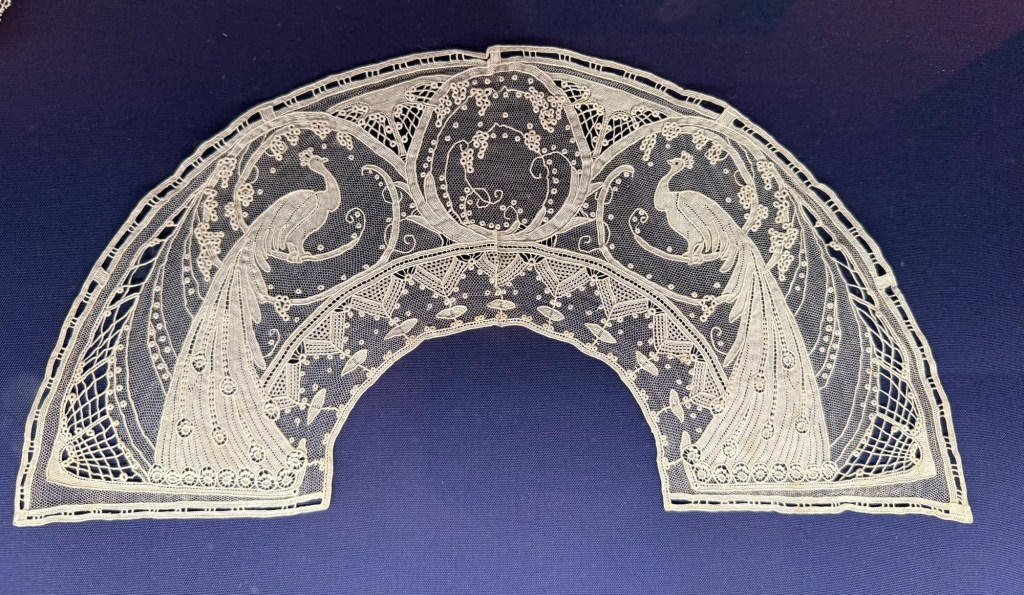
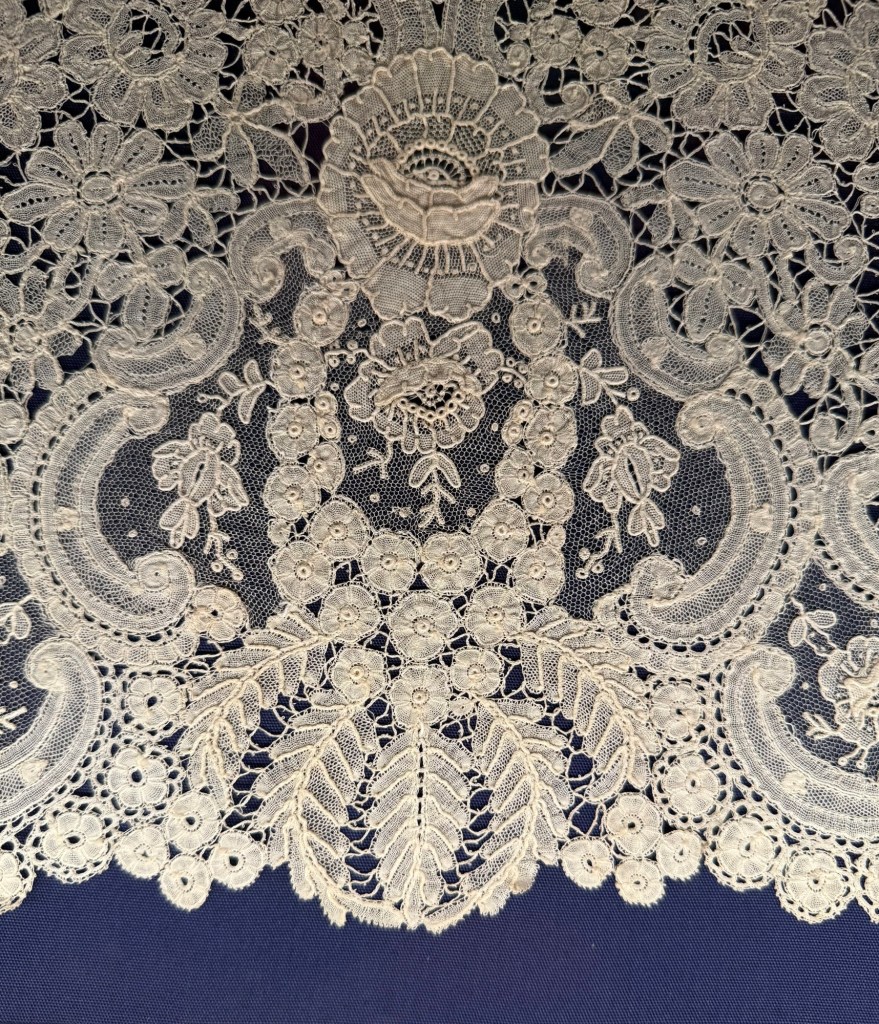
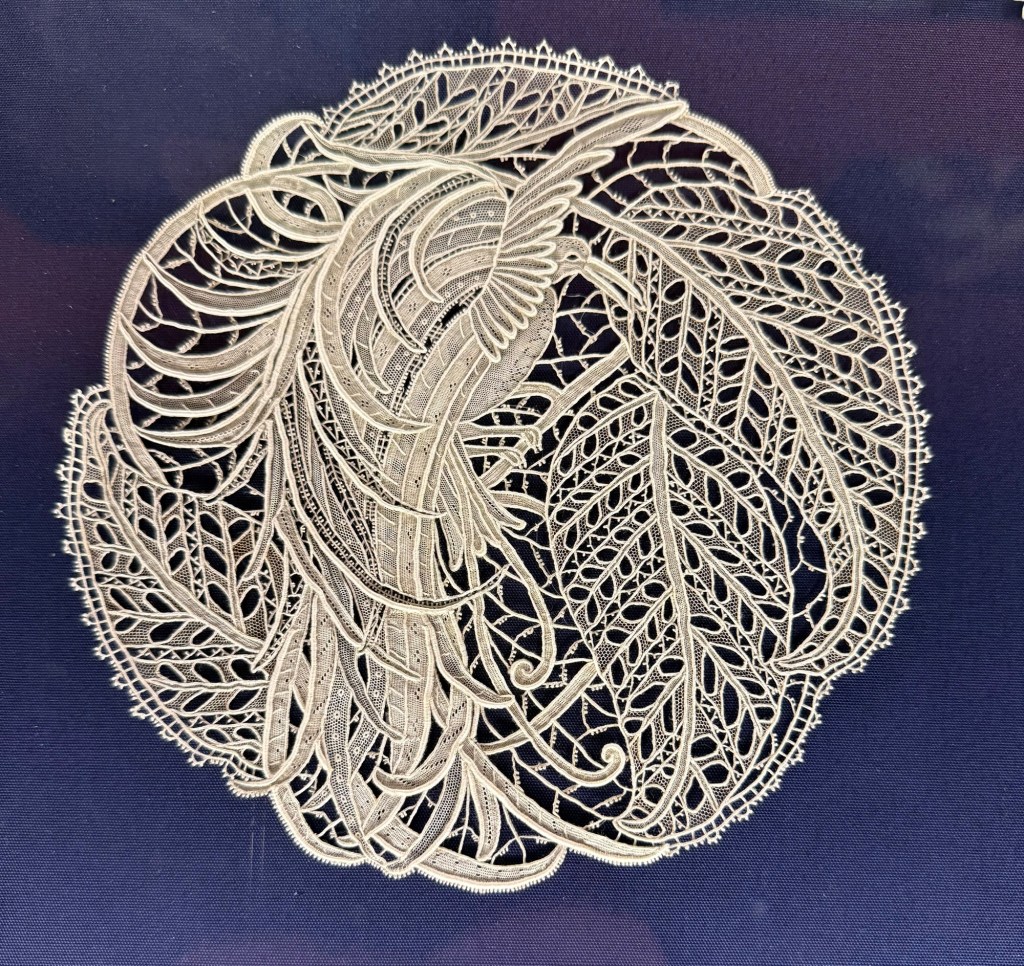
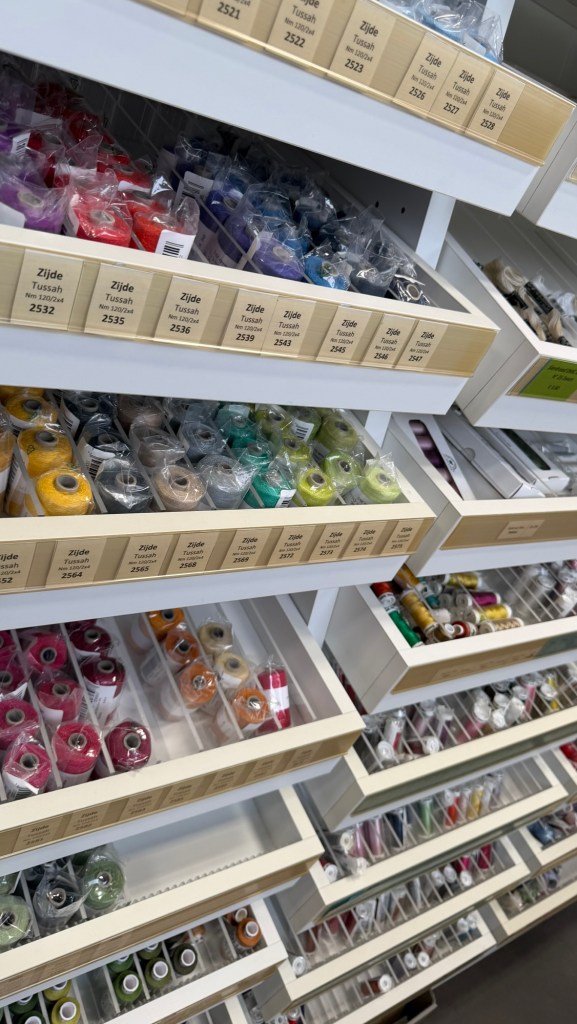
And just down the road, another thread of Bruges reveals itself at the Kantcentrum Lace Museum (www.kantcentrum.eu). Once the lace capital of Europe, Bruges built a reputation on this delicate craft. Inside, it’s not just history on display—you can watch lace being made by hand, thread by thread, bobbins moving in a quiet, practiced rhythm. It’s taught, practiced, and passed on, just as it has been for generations.
No crowds, no rush—just the city revealing itself, one story at a time.
Sometimes the best days are the ones you don’t plan.