For the longest time, I didn’t like museums. My eyes glazed over and I zoned out after a minute or two. But then—something shifted.
Maybe it was the light catching a painting just right, or the way a single piece seemed to pull me in and hold my attention longer than I expected. Instead of rushing from room to room, I slowed down. I stopped trying to “see everything” and started noticing something.
One painting. One detail. One story.
So when Mohammed, our same driver, pulled up to the KMSKA, I was really looking forward to it.
The KMSKA doesn’t ease you in; it announces itself. Massive columns rise with quiet authority, the kind of architecture that instinctively slows your pace. Above, bronze figures are caught mid-motion—horses straining forward, a winged figure lifting skyward—as if the museum isn’t just something you enter, but a story already in progress.
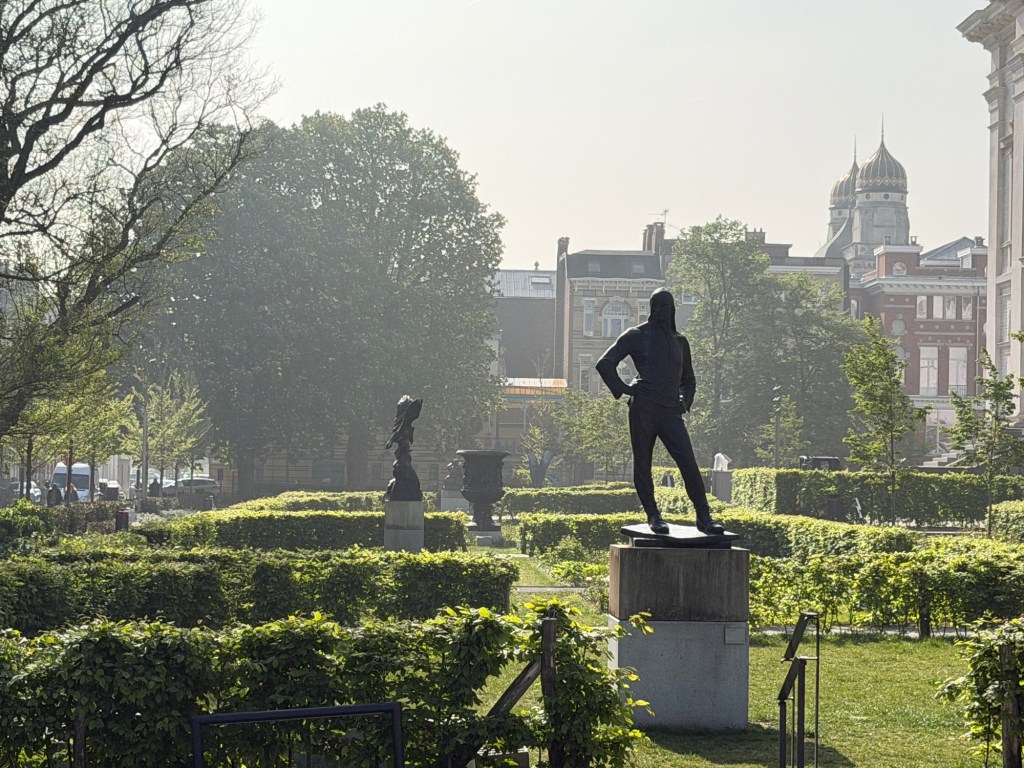
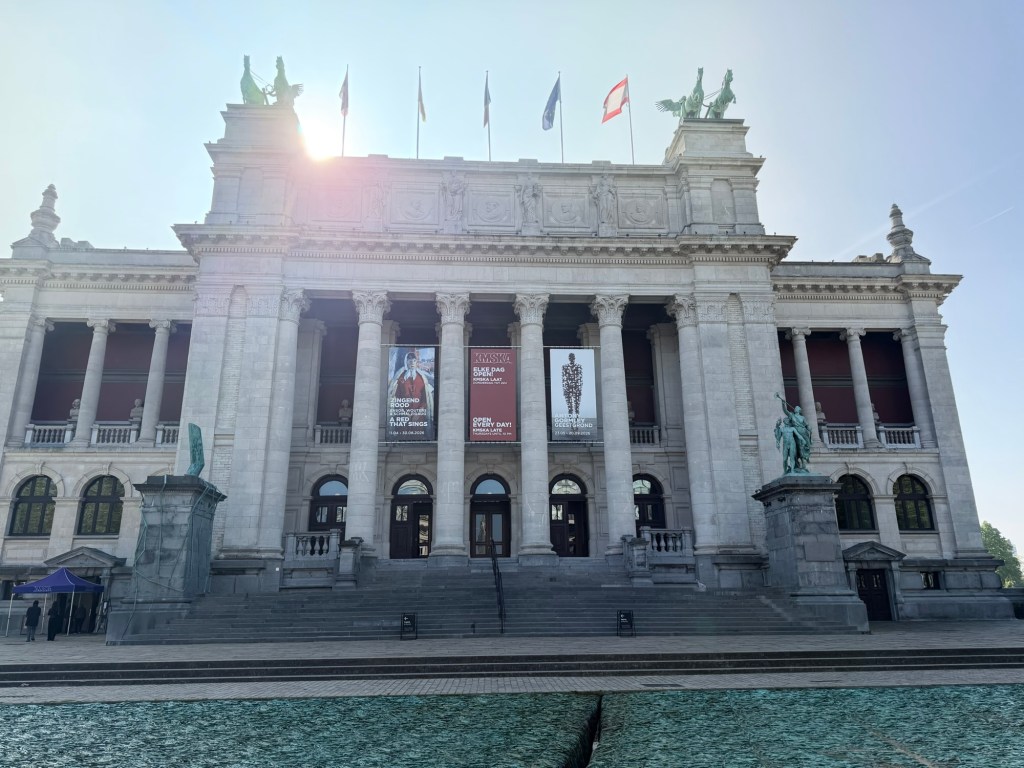
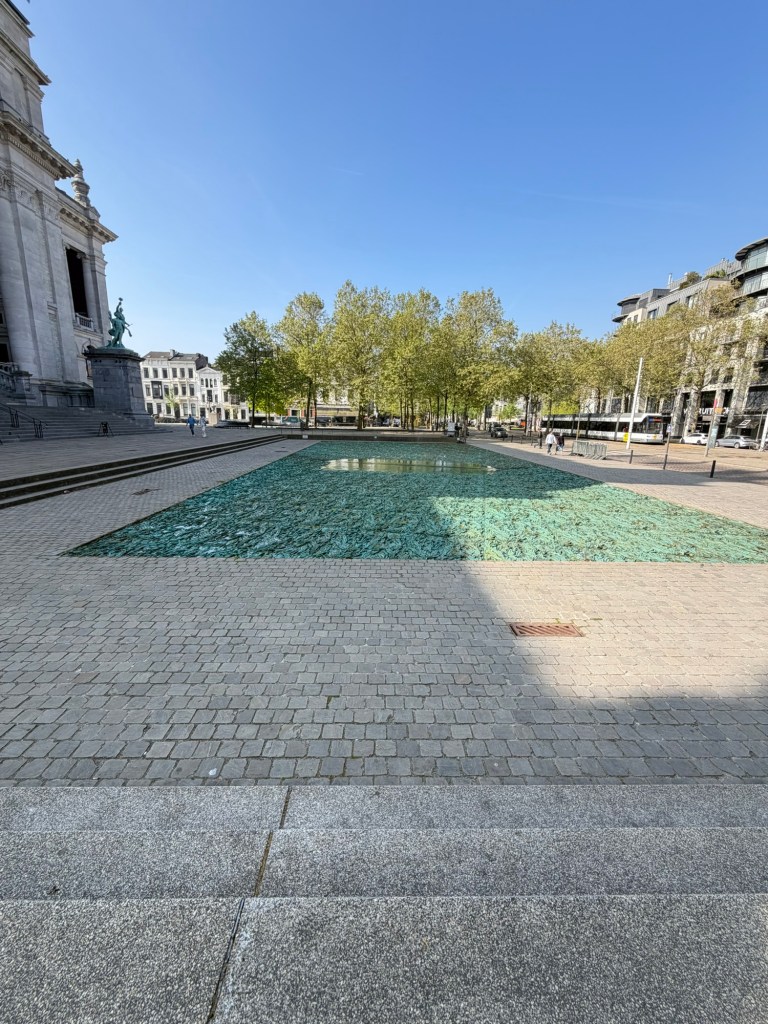
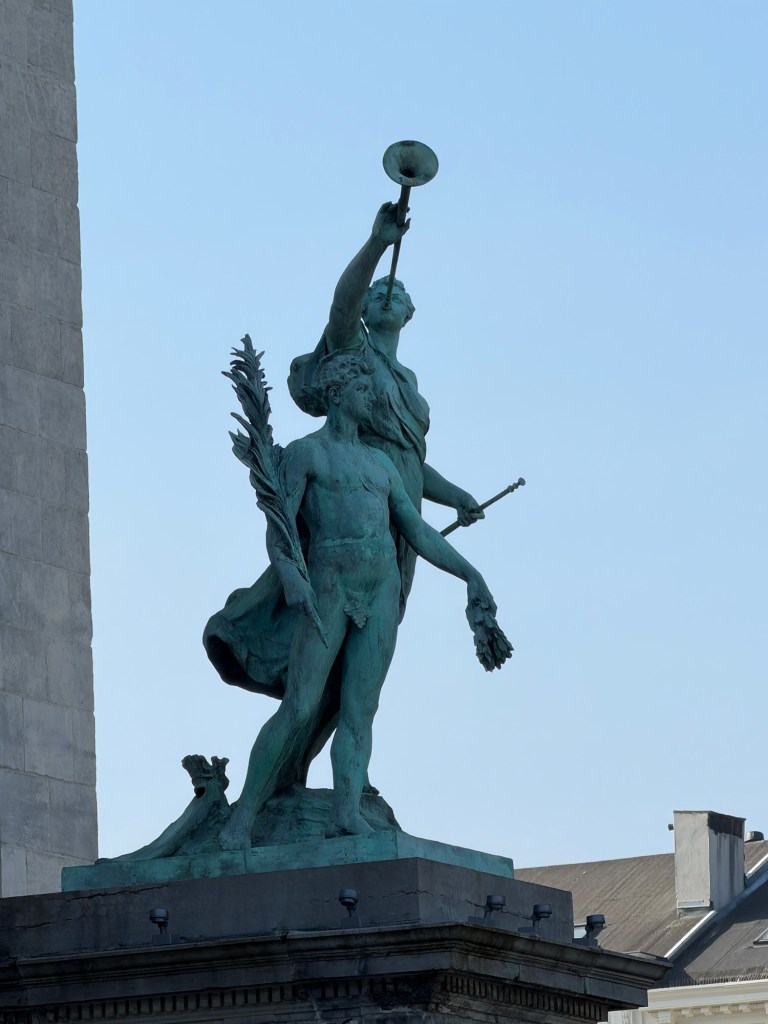
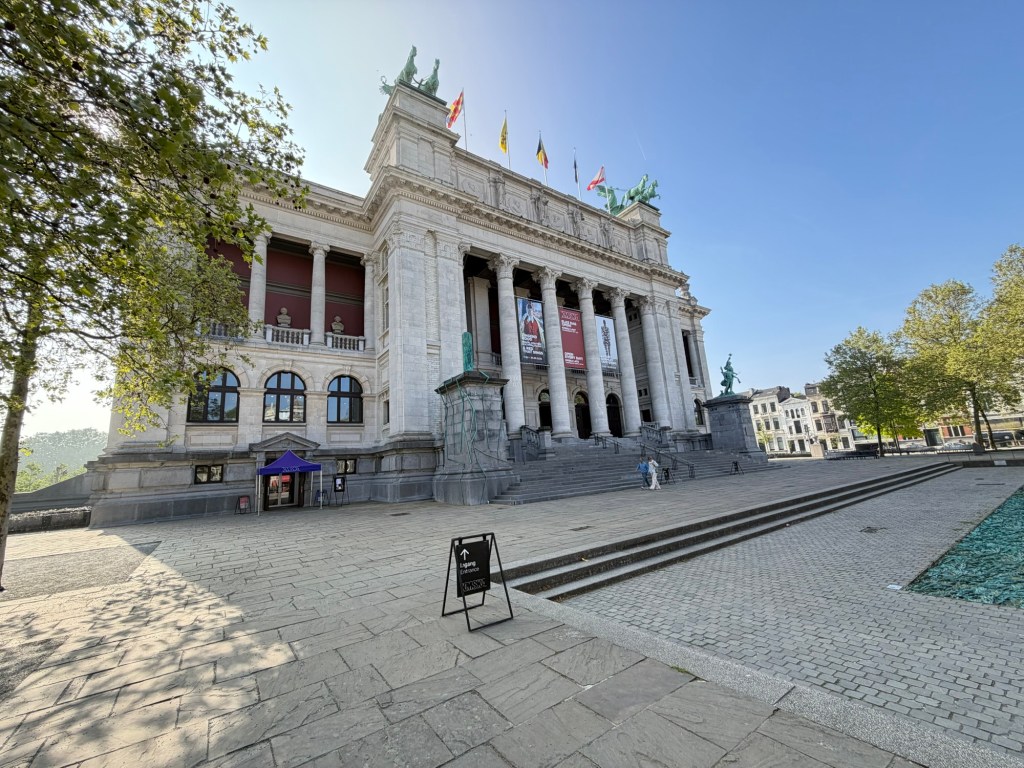
Even before stepping inside, there’s a sense that this isn’t going to be passive. The sculptures demand a look. The scale demands a pause.
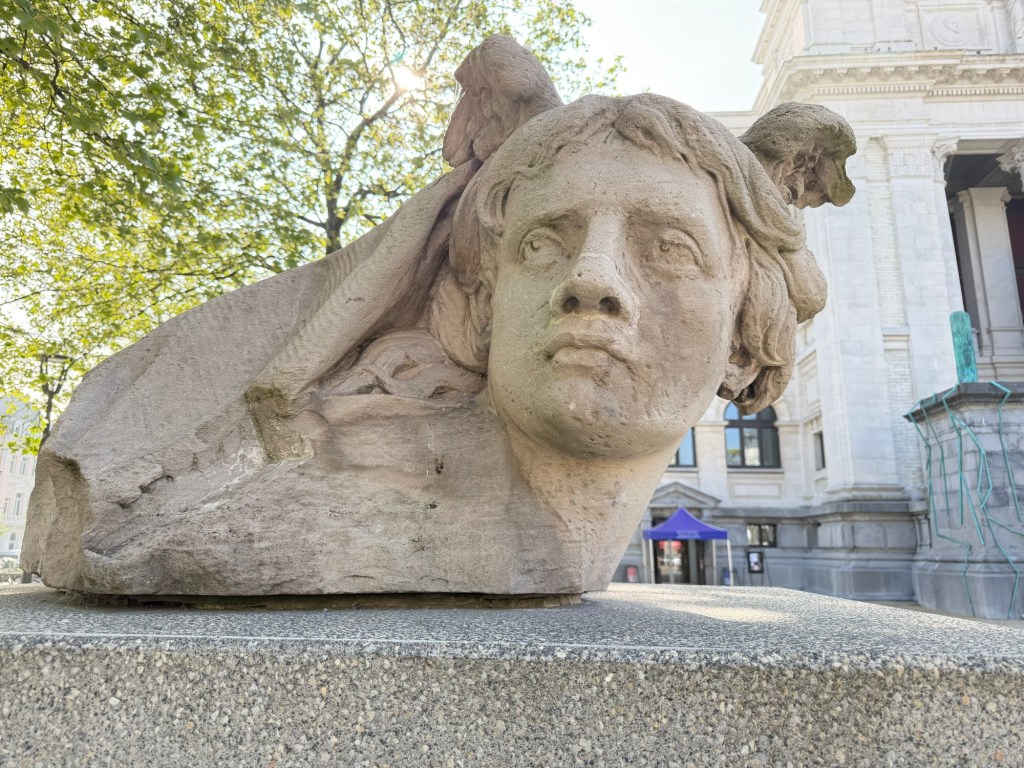
Mohammed led us inside, and after a bit of confusion, we found Ann, our museum guide. With just an hour and a half to explore, I was counting on her to choose wisely.
Ann led us into the grand entrance, and almost immediately I felt it—the shift. This wasn’t just a passageway into the museum; it was part of the experience itself.
The eye is pulled upward first. A luminous ceiling filters light into the space, framed by ornate panels and classical figures that seem to hover between decoration and narrative. Below, monumental paintings stretch across the walls, grounding the room with a sense of history and scale. You don’t simply walk through—you pause, whether you mean to or not.
I found myself doing exactly that.
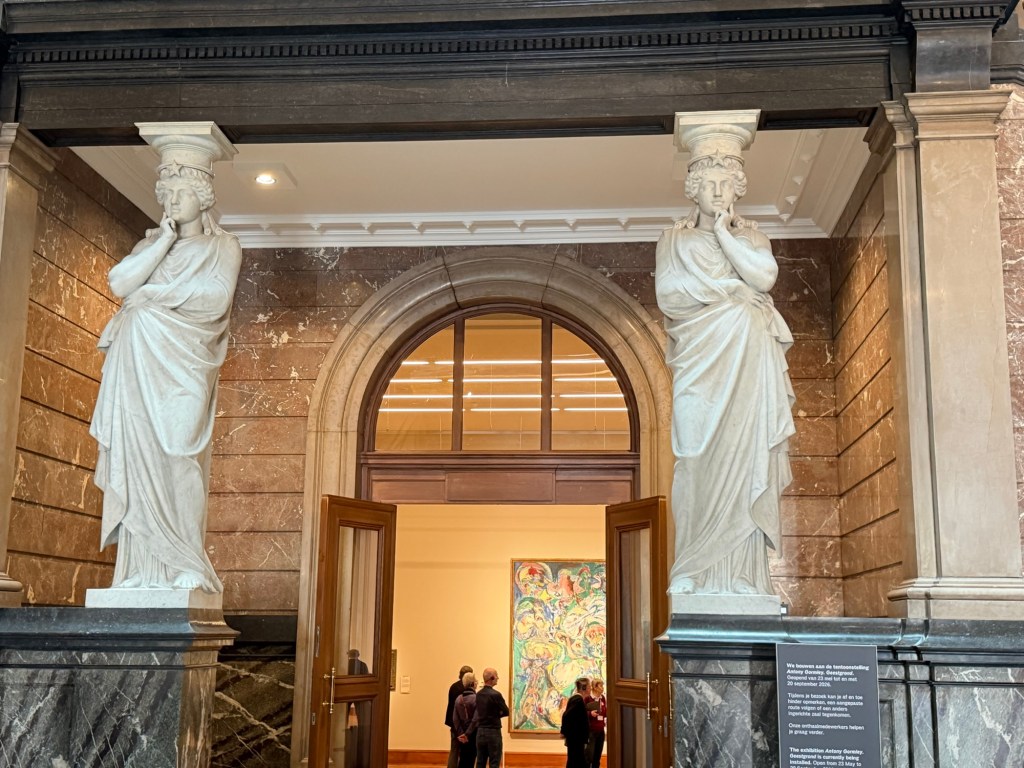
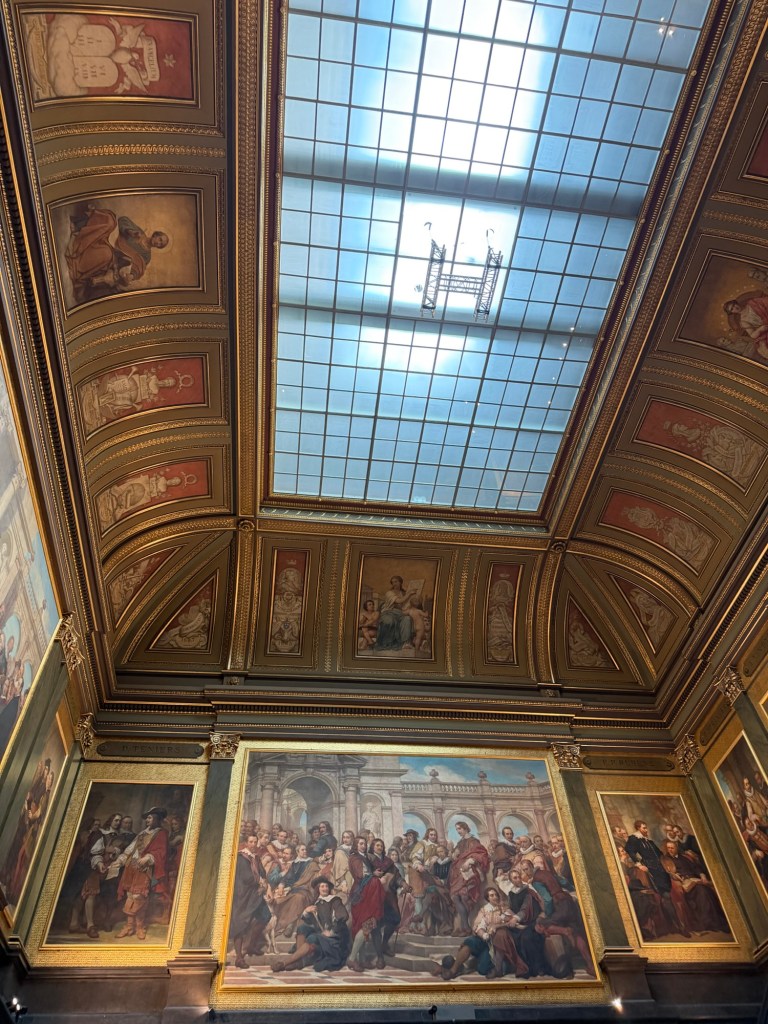
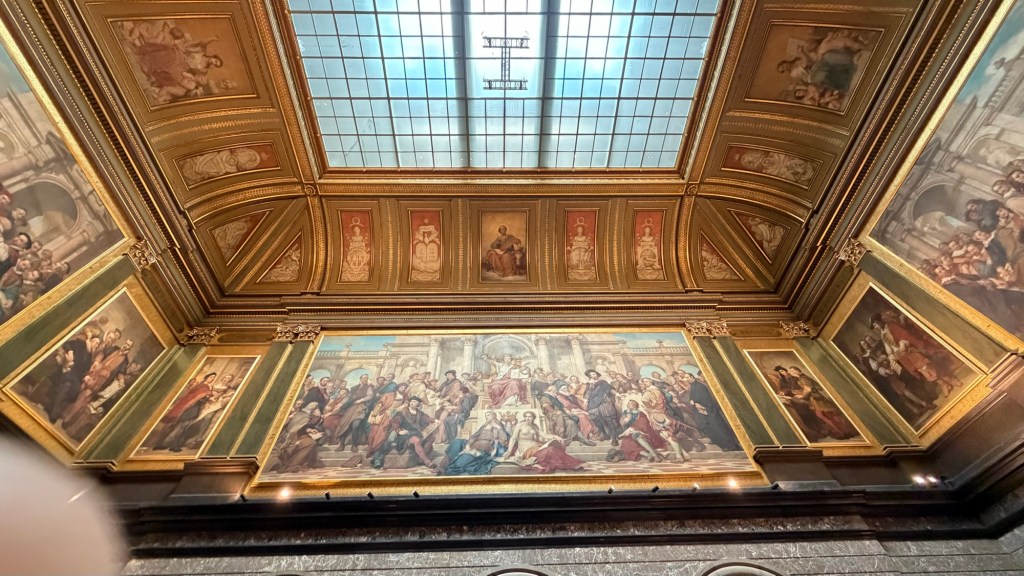
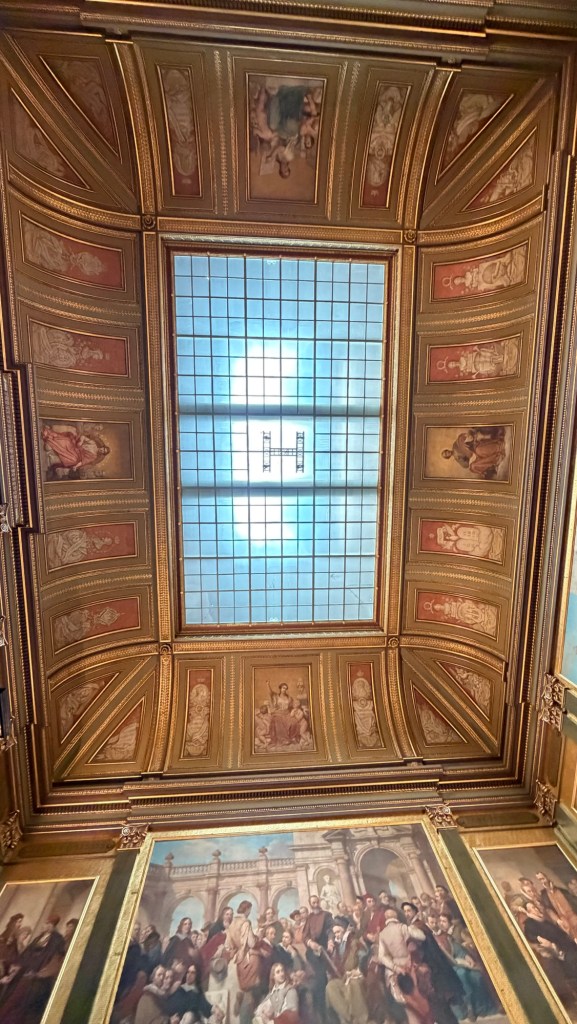
In that moment, it became clear. The building isn’t separate from the art. It is the art—setting the tone before a single gallery is even entered.
And that idea carries through into the galleries themselves. There is a deliberate emphasis on overhead light—but this isn’t a modern invention. The museum was designed this way from the beginning, long before electricity arrived in the 1970s. Rather than replace that approach, the restoration architects preserved it—and made it better.
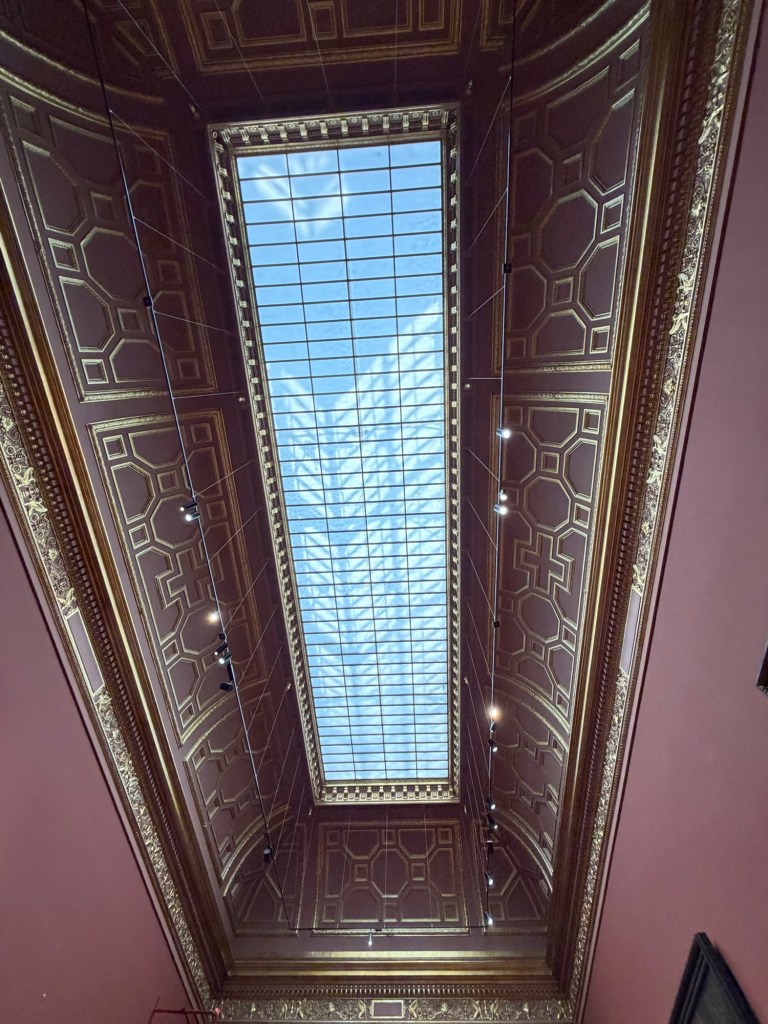
The result is a soft, natural illumination that feels both historic and remarkably effective. Less like lighting, more like atmosphere.
The first gallery we visited held several works by Peter Paul Rubens, including one of the most important—The Adoration of the Magi (1624) —unfortunately for us under restoration.
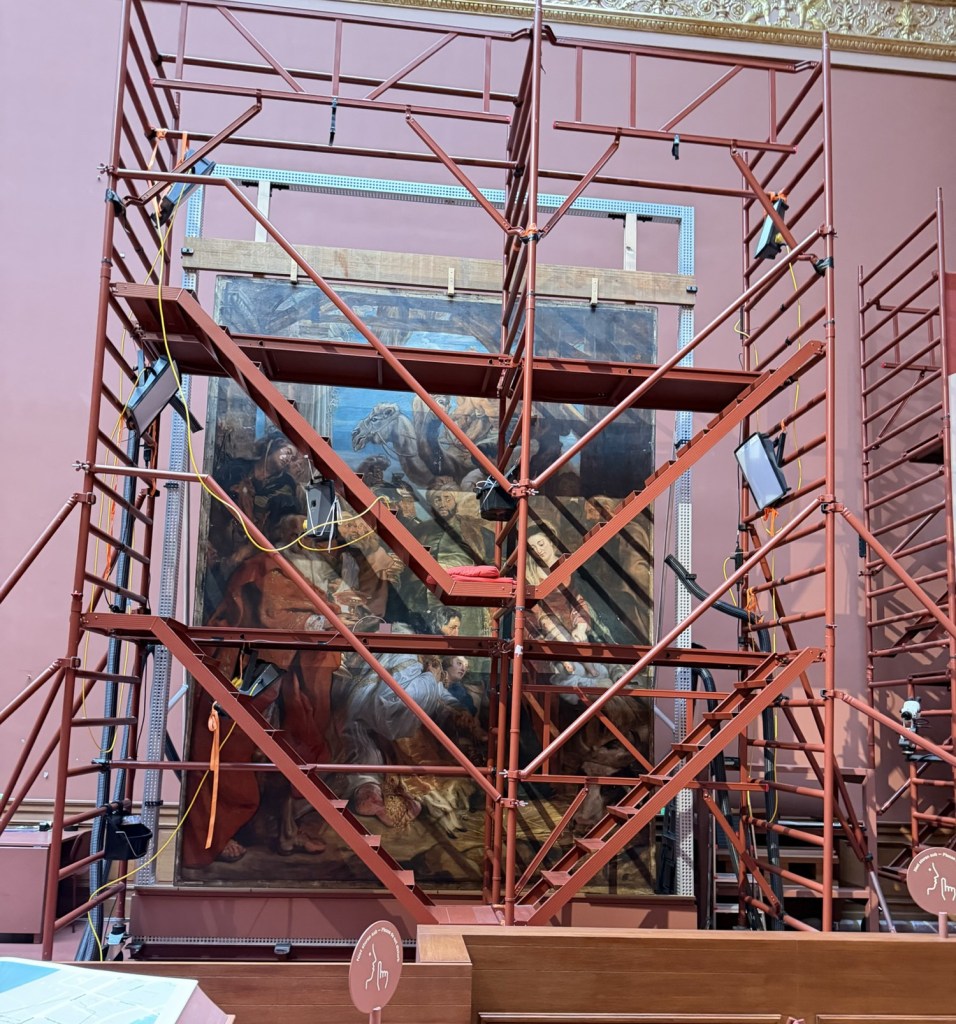
Scaffolding stood between us and the full composition, but it didn’t diminish the moment. If anything, it changed it. Instead of taking in the painting all at once, I found myself drawn to what I could see.
The scene, based on Matthew 2:11, captures the bibical moment the three Magi arrive. But in Rubens’ hands, it isn’t quiet or orderly. Rather, it’s alive—crowded with soldiers, attendants, onlookers, and travelers from distant lands, all pulled into the gravity of the moment.
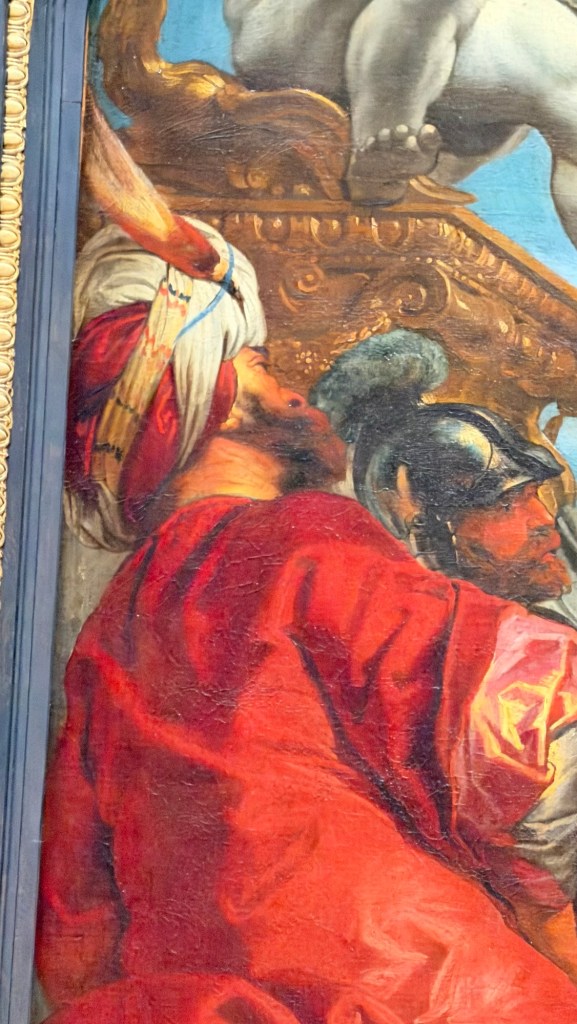
And then this guy popped out, visible from the scaffold.
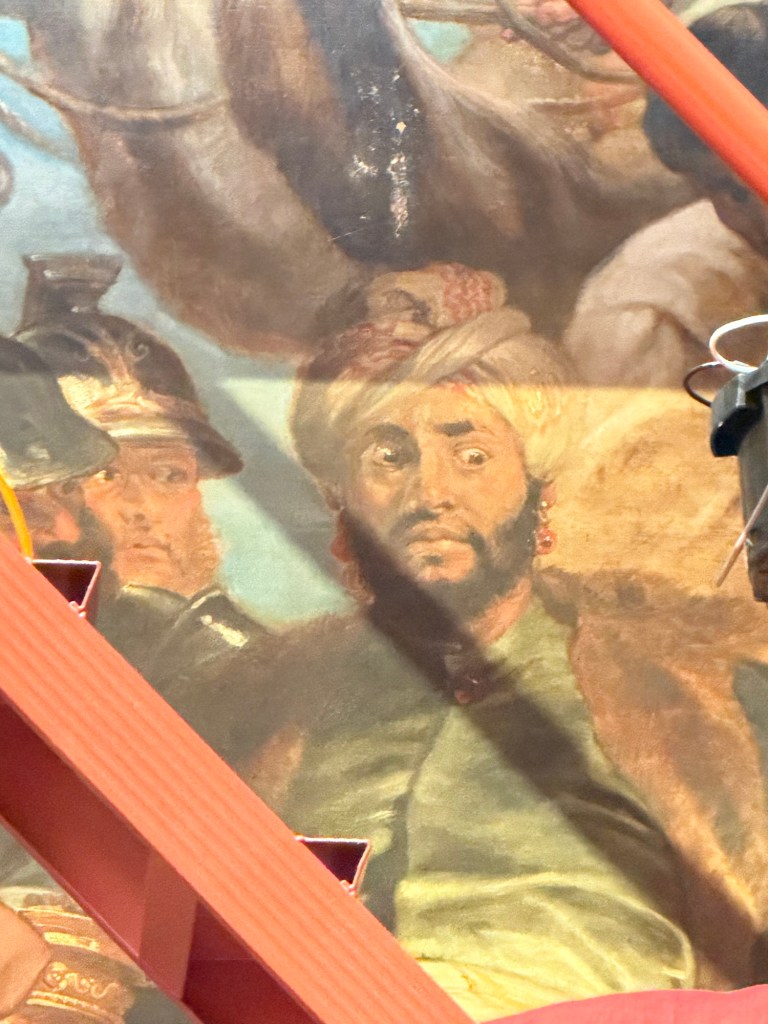
A single figure, partially revealed through the scaffolding—a man in a turban, eyes wide, almost startled. Not one of the kings, not named, just part of the crowd. And yet, impossible to ignore.
Up close, he felt less like a background figure and more like a witness. Maybe even a stand-in—for anyone drawn into something they don’t fully understand, but can’t look away from.
It was a reminder that these works aren’t just preserved—they’re cared for, continuously, layer by layer. And even in fragments, Rubens still commands the room.
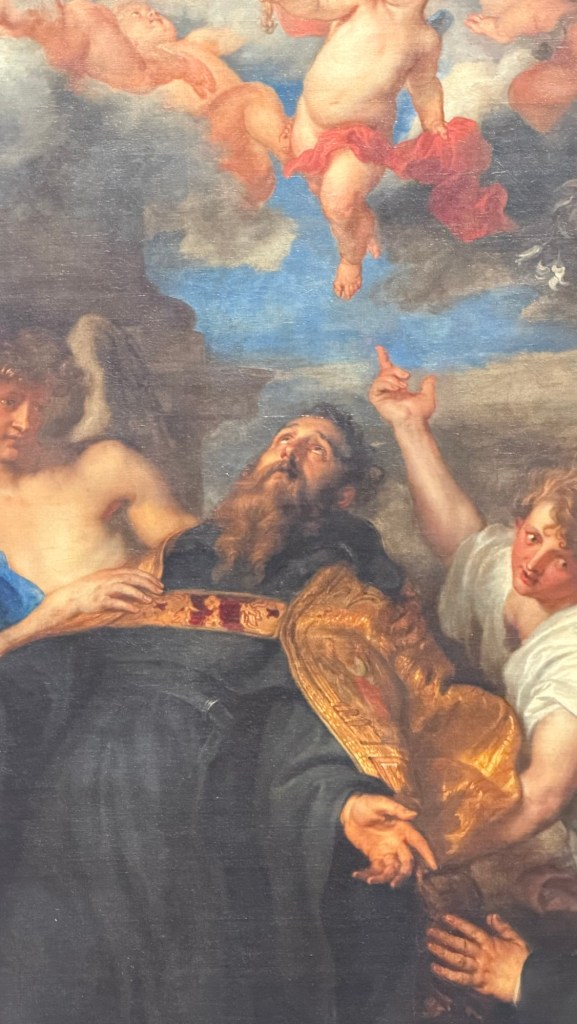
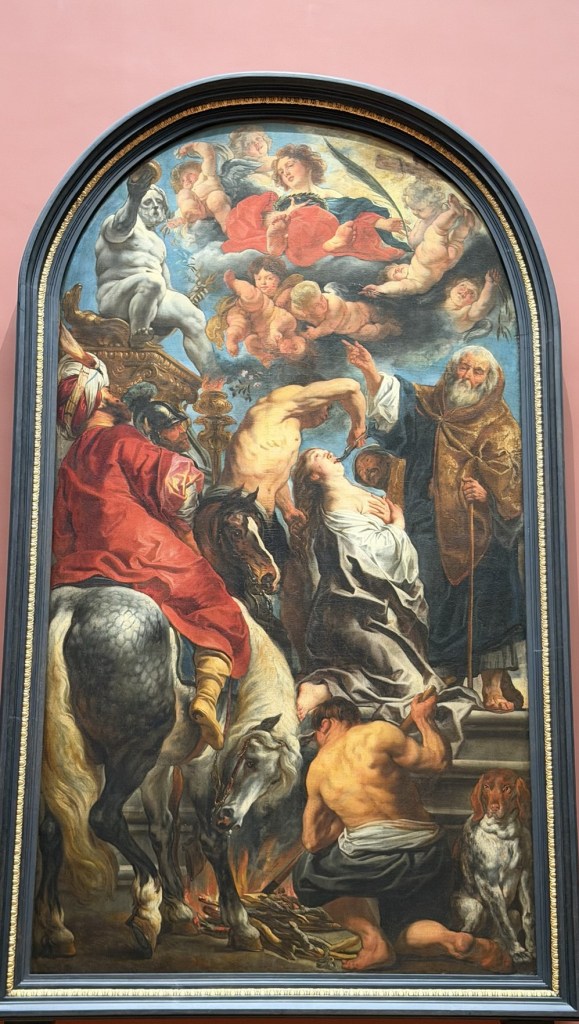
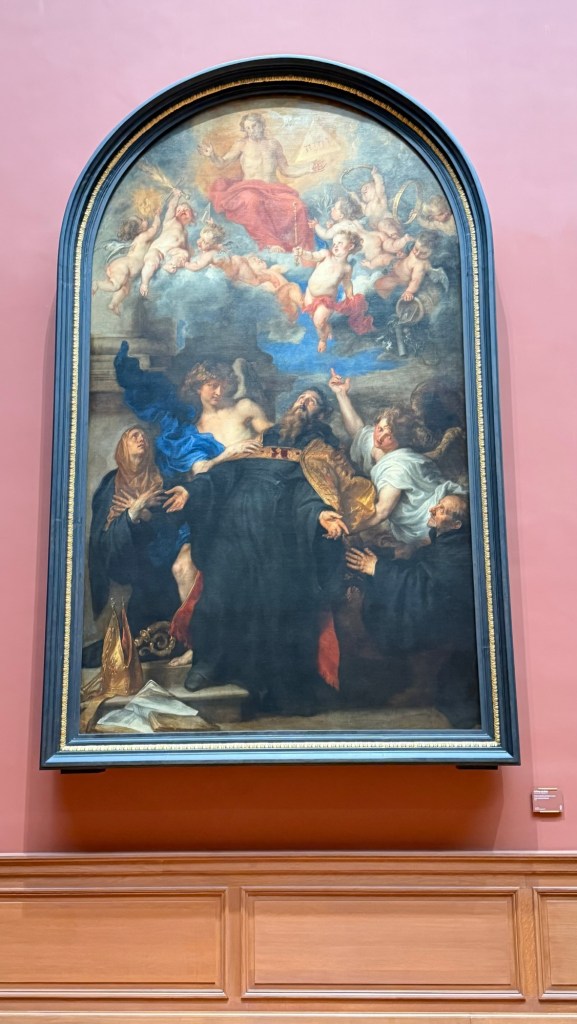
Many of the paintings here press religious themes, drawn from the scriptures of faith. Whether or not you share that faith almost doesn’t matter. The stories are a starting point, but the experience is broader: human emotion, power, devotion, doubt.
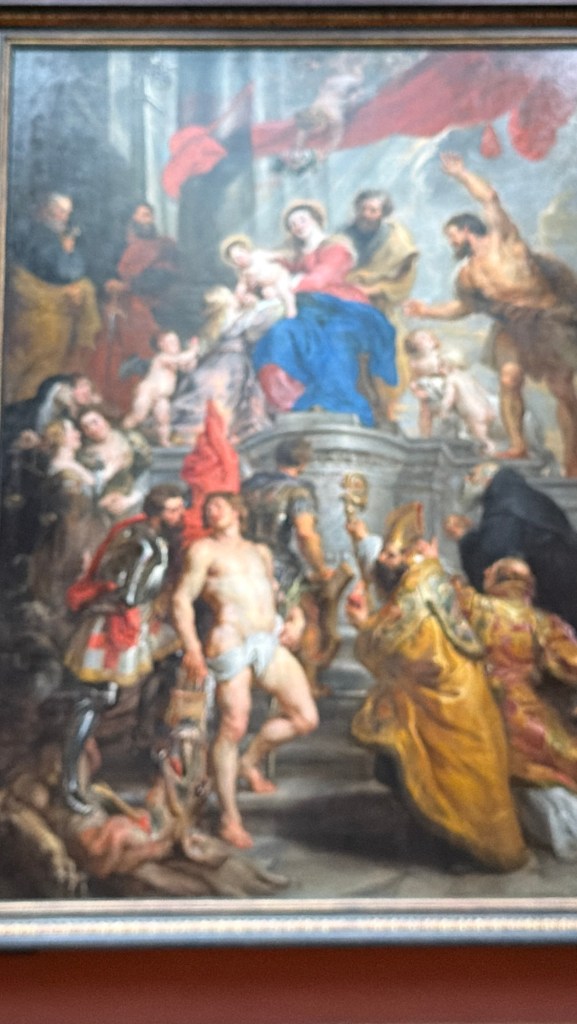
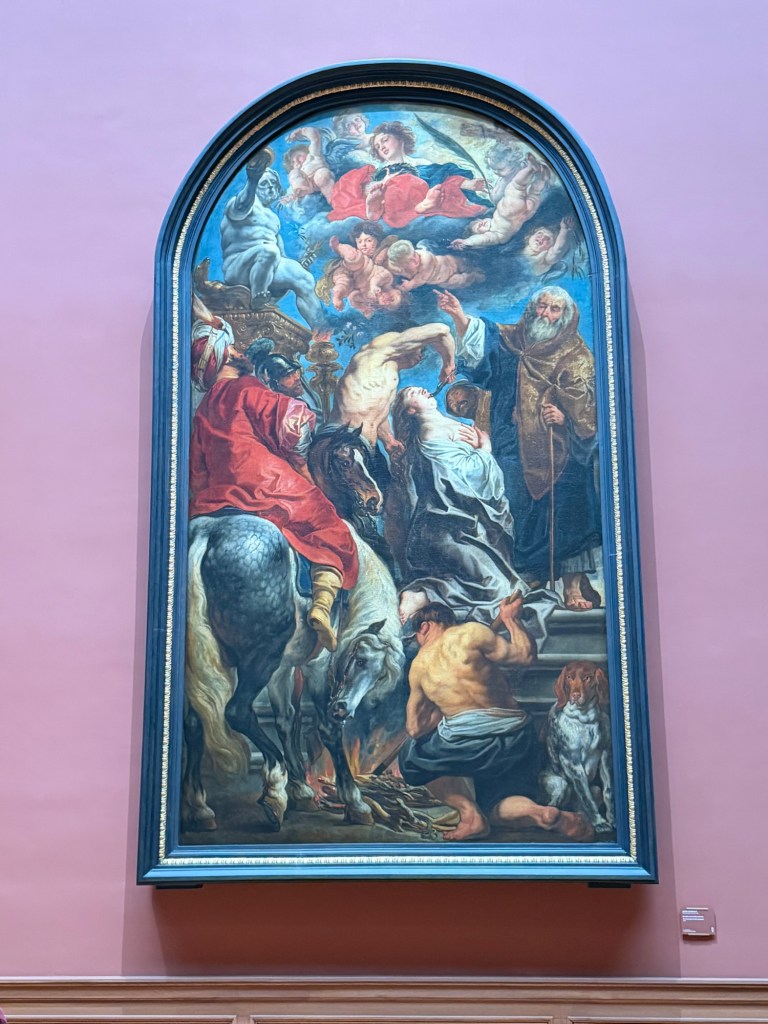
To turn away from them simply because they may clash with your own belief system accomplishes nothing, other than to reinforce a closed mind.
As time was slipping by, Ann led us into another gallery—and with it, into a completely different world.
Gone was the theatrical scale. In its place: stillness, precision, and an almost meditative quiet.
I sat on a bench within a foot of Saint Barbara by Jan van Eyck (1437)—drawn on oak plank line by line. I was fascinated with this work and could’ve staring at it for hours . Barbara sits reading, calm and composed, while behind her rises the tower where, according to legend, she was imprisoned by her father for her Christian faith. (And, later in the trip, I’ll be heading to Ghent to see van Eyck’s most famous work—the Adoration of the Mystic Lamb.)
And yet, none of that violence is visible here. Instead, Van Eyck offers something quieter: devotion, patience, an interior life. Even the tower—so central to her fate—feels less like a prison and more like a structure of belief itself.
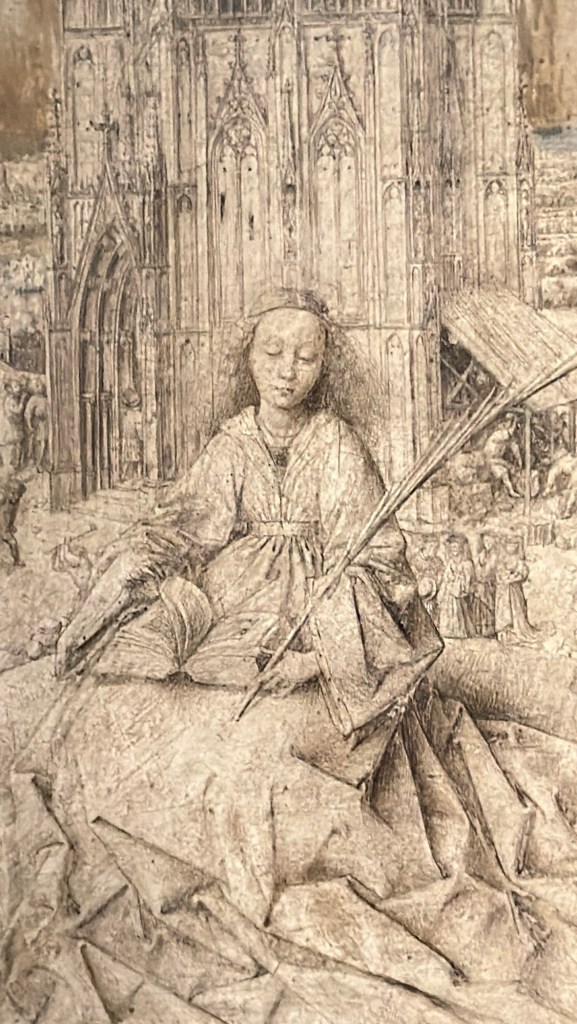
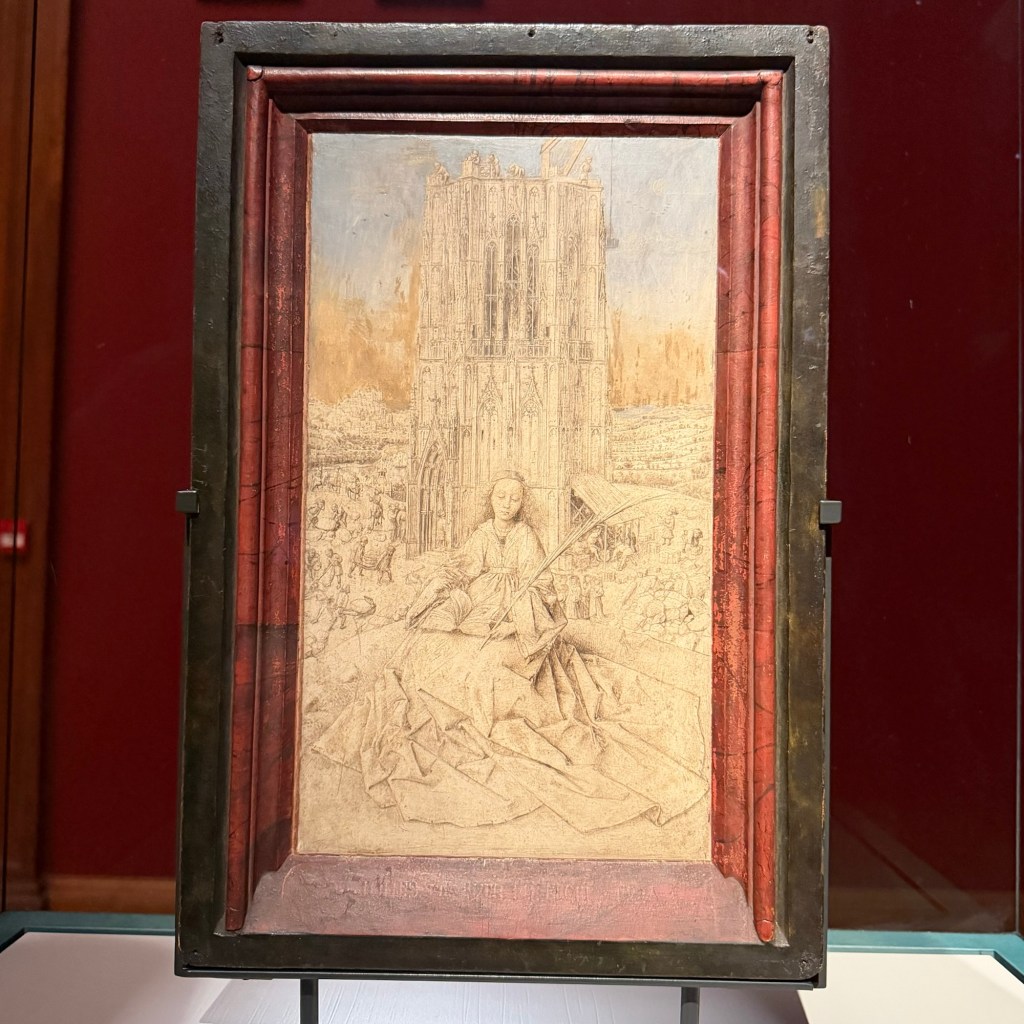
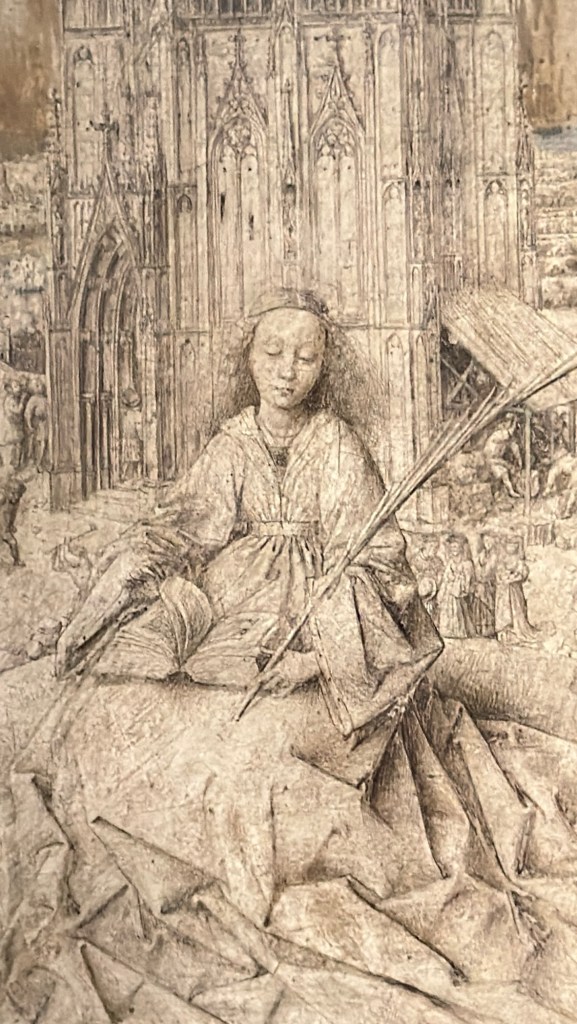
The story is stark. He worshipped the Roman gods; she converted to Christianity. For that, in the end she was executed.
Nearby, a portrait of a young man in prayer—hands pressed together, rosary slipping between his fingers—echoed that same inward focus. No spectacle, no crowd. Just a single moment of connection.
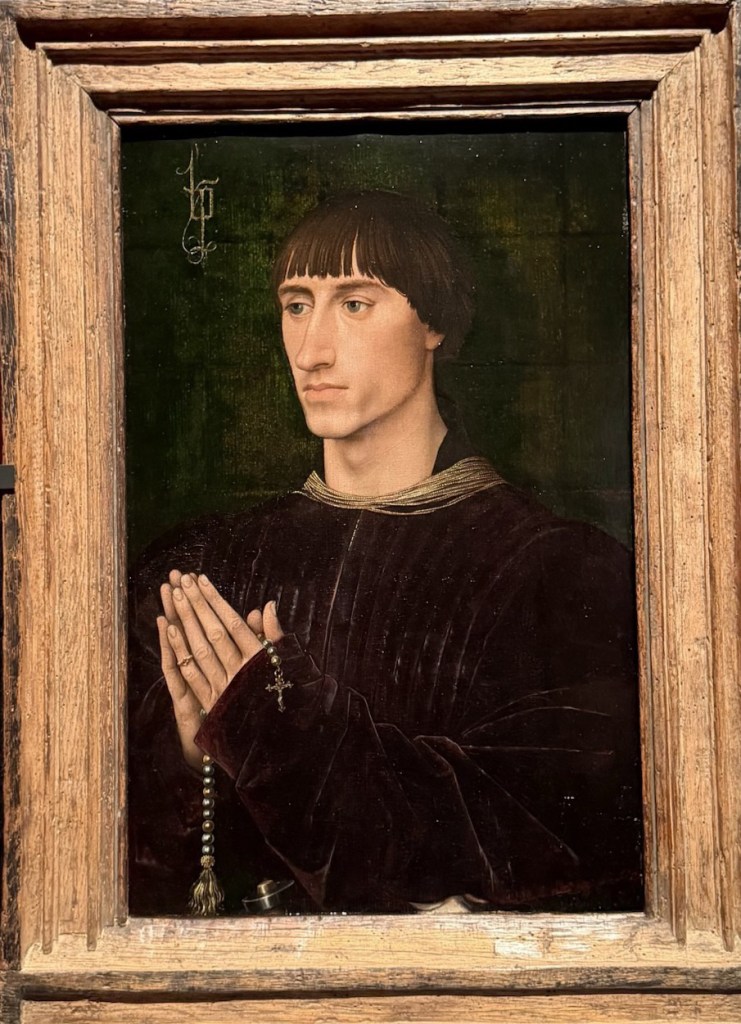
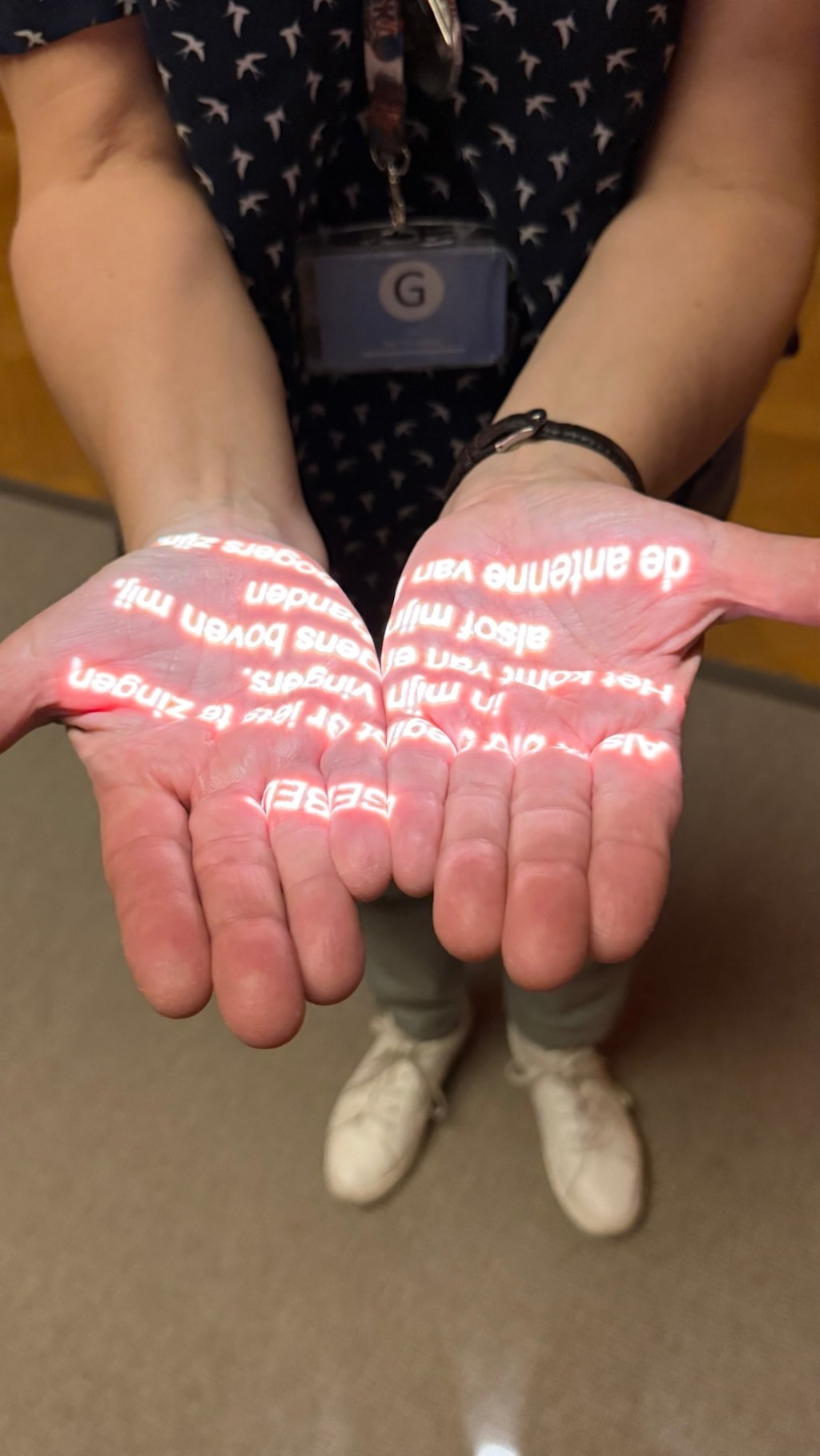
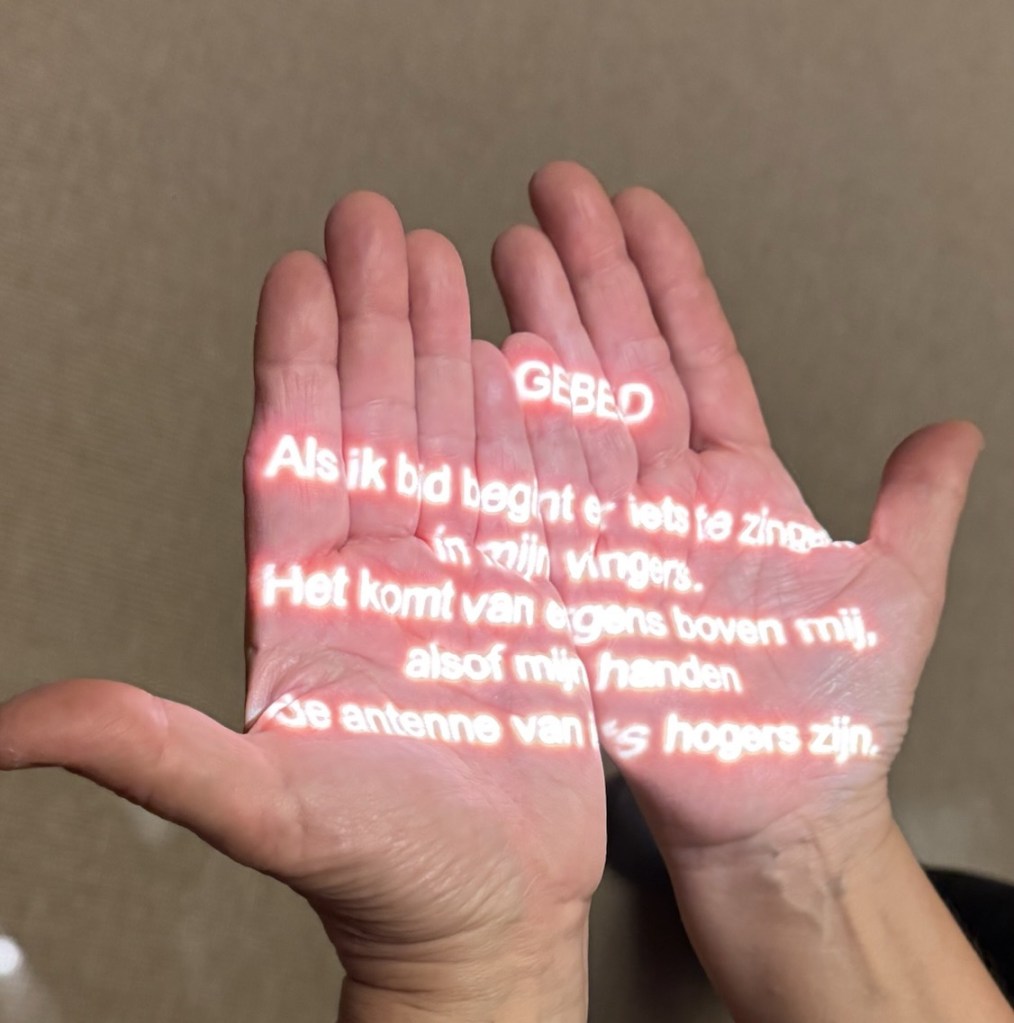
From above, a cylindrical light hangs from the museum’s ceiling, projecting words directly onto open hands:
Gebed
Als ik bid begint er iets te zingen in mijn vingers.
Het komt van ergens boven mij,
alsof mijn handen de antenne van iets hogers zijn.
When I pray, there is a soft singing in my fingers.
It comes from somewhere above me,
as though my hands are reaching
for something beyond me.
For a moment, what we had just seen in paint—devotion, stillness, interior life—felt translated into something immediate. Not just observed, but experienced.
Behind glass, open to anyone who walks by, was the museum’s restoration studio. It’s a fascinating concept—art not just displayed, but treated in full view. The painting mounted on the easel almost looked like a hospital patient. A band stretched across it, lights angled in, tools laid out with precision. For a moment, it felt clinical.
And in a way, it is.
Conservators approach these works like doctors: diagnosing cracks, stabilizing fragile wood panels, preserving what time has worn down—without ever changing the artist’s original hand. The painting isn’t just being shown; it’s being cared for, studied, and quietly brought back to life.
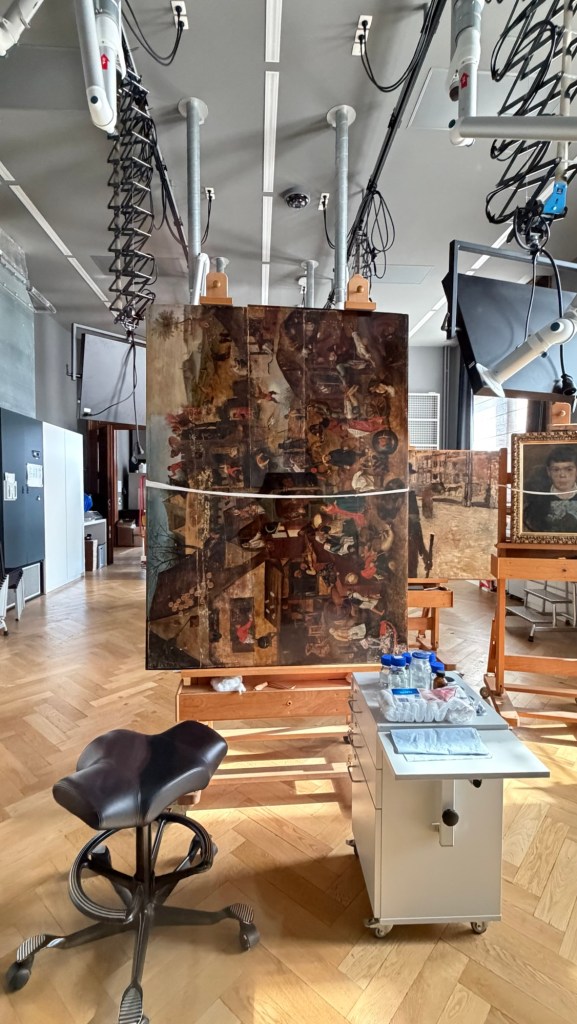
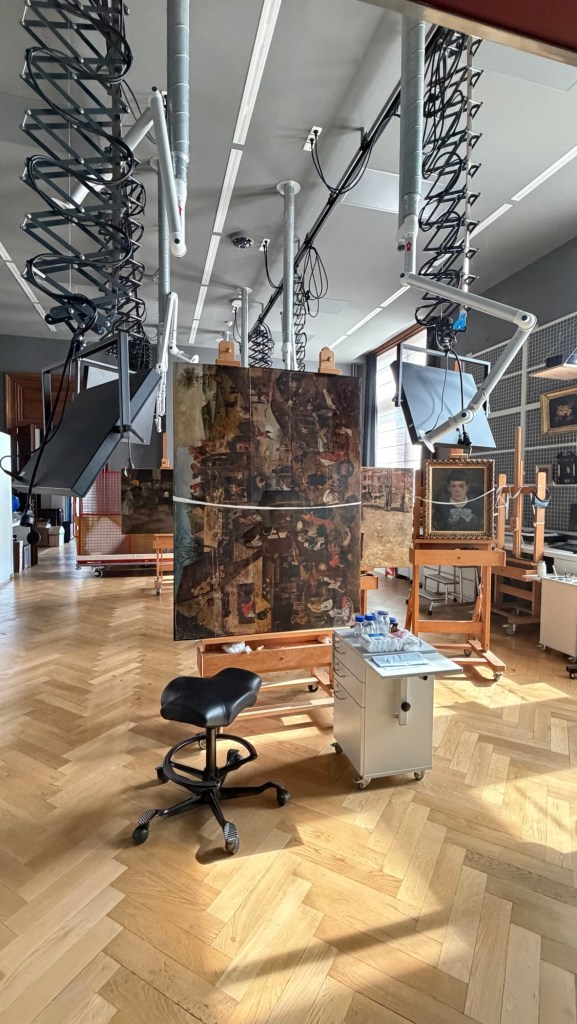
It’s a different way of exhibiting—one that reminds you these works aren’t static. They’ve lived for centuries, endured damage, movement, neglect, and reverence. And they require ongoing care to survive.
Then, almost seamlessly, the museum brought that same idea into the present. We entered the multimedia like room, where details from the museum works were magnified across the walls. Gold thread from details in a painting became landscape.
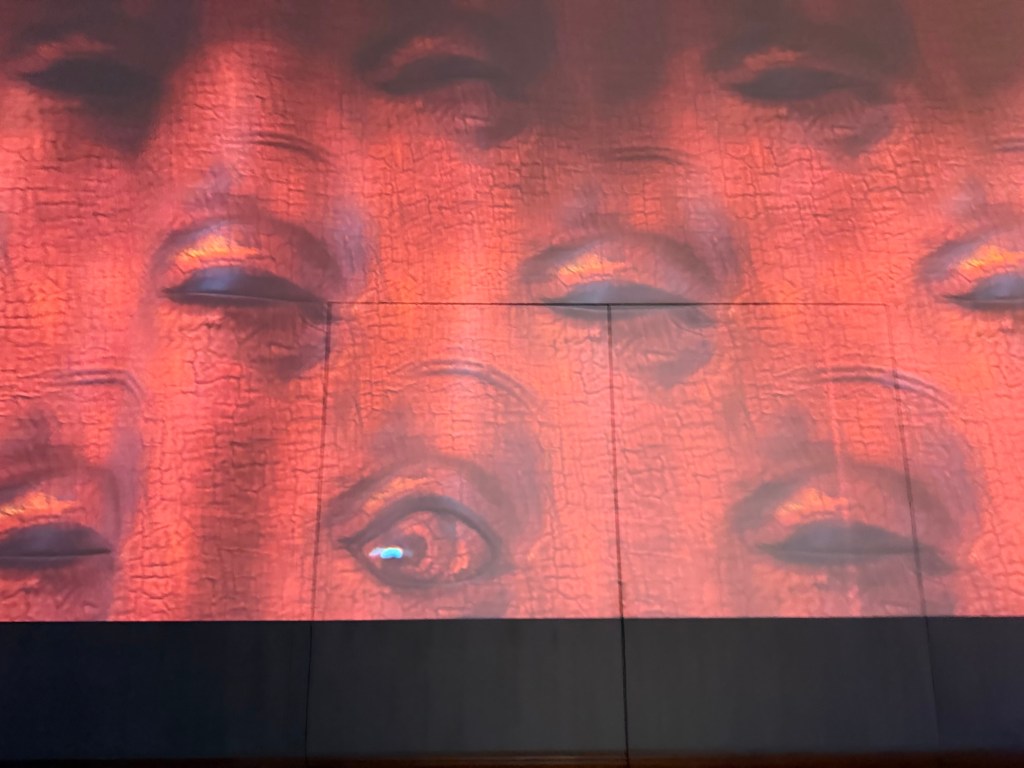
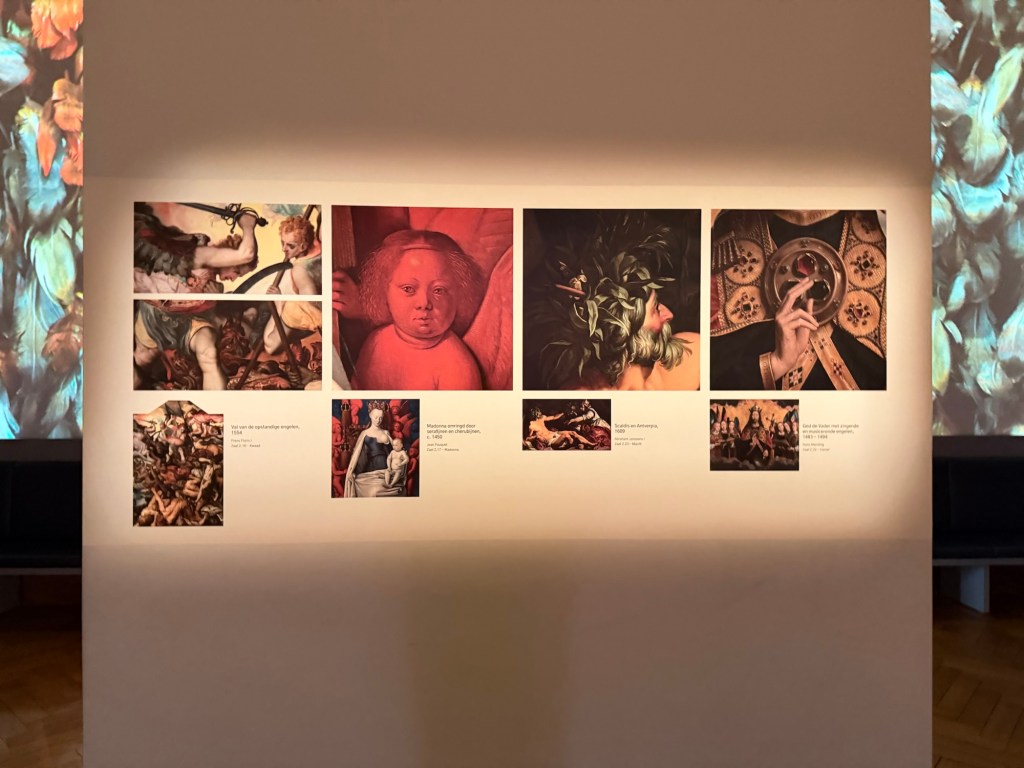
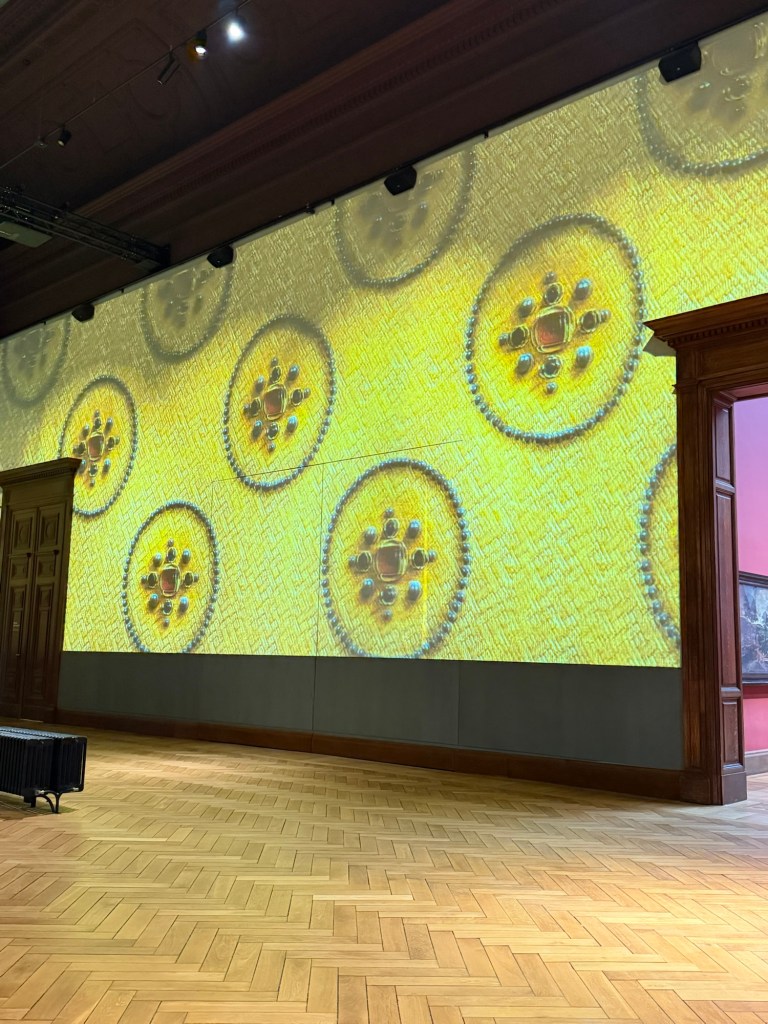
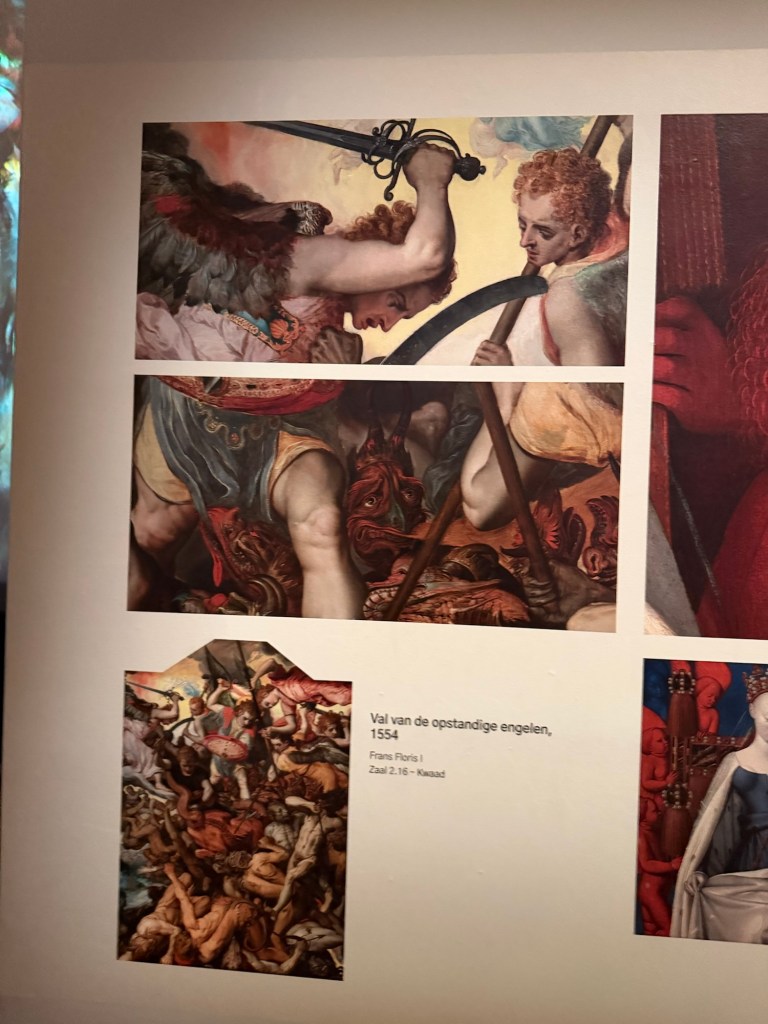
Faces dissolved into texture, then reassembled as something human again. A single eye, enlarged and repeated, felt less like observation and more like being observed.
From there, we returned to painted worlds—landscapes and daily life.
In Landscape with the Flight into Egypt by Joachim Patinir, the biblical story nearly disappears into the land itself. Mary, Joseph, and the child are there—but small, almost incidental.
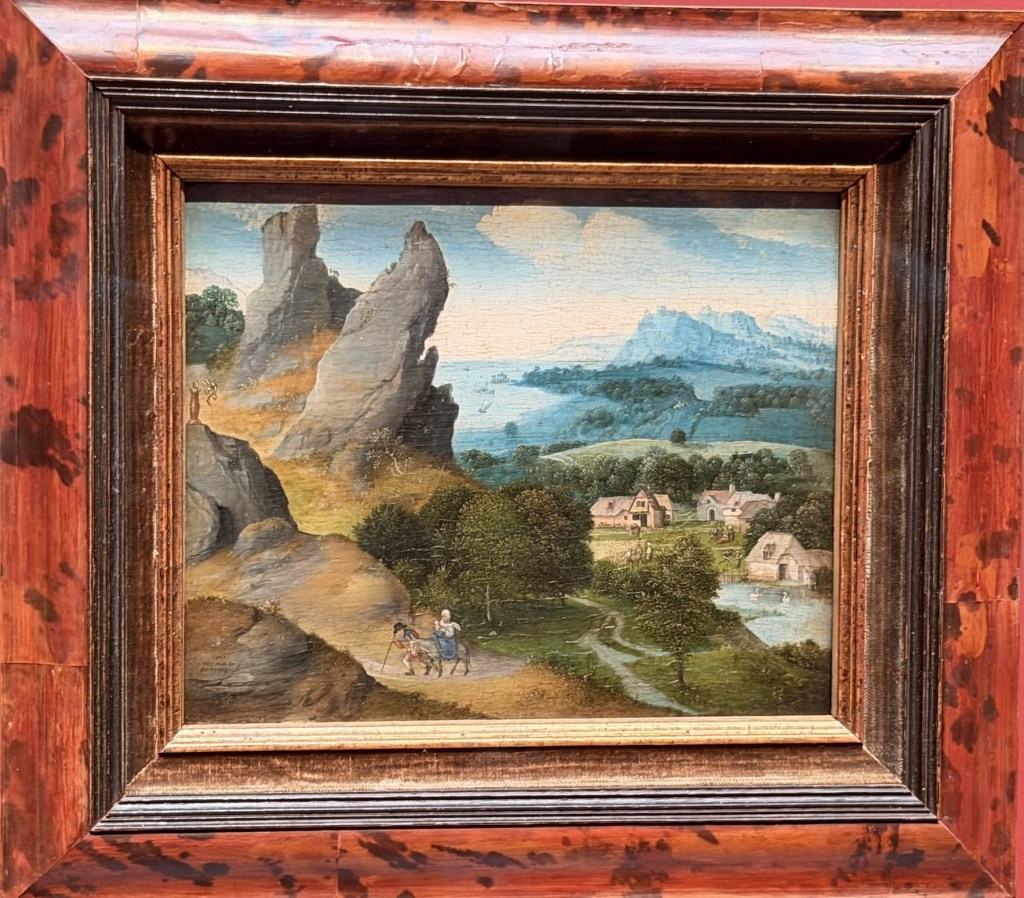
The real subject is the world around them, stretching from earthy browns to distant blue horizons. It’s less about the event, more about the journey.
Nearby, life unfolds in a completely different rhythm. In works like Peasant Dance by Pieter Bruegel.
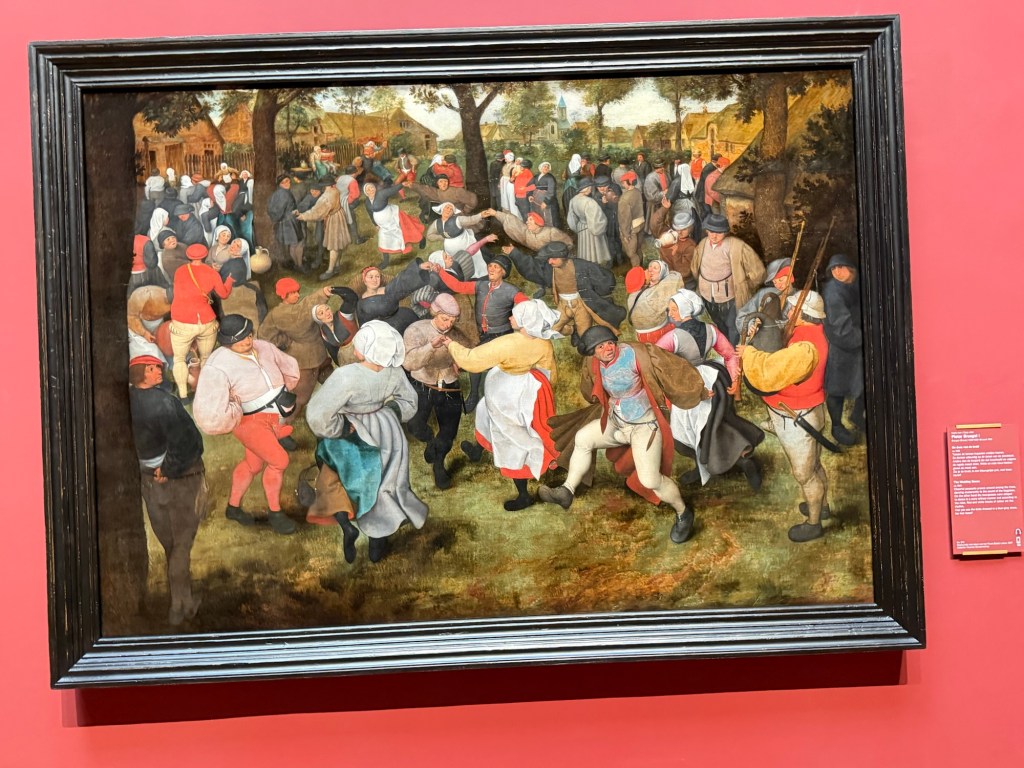
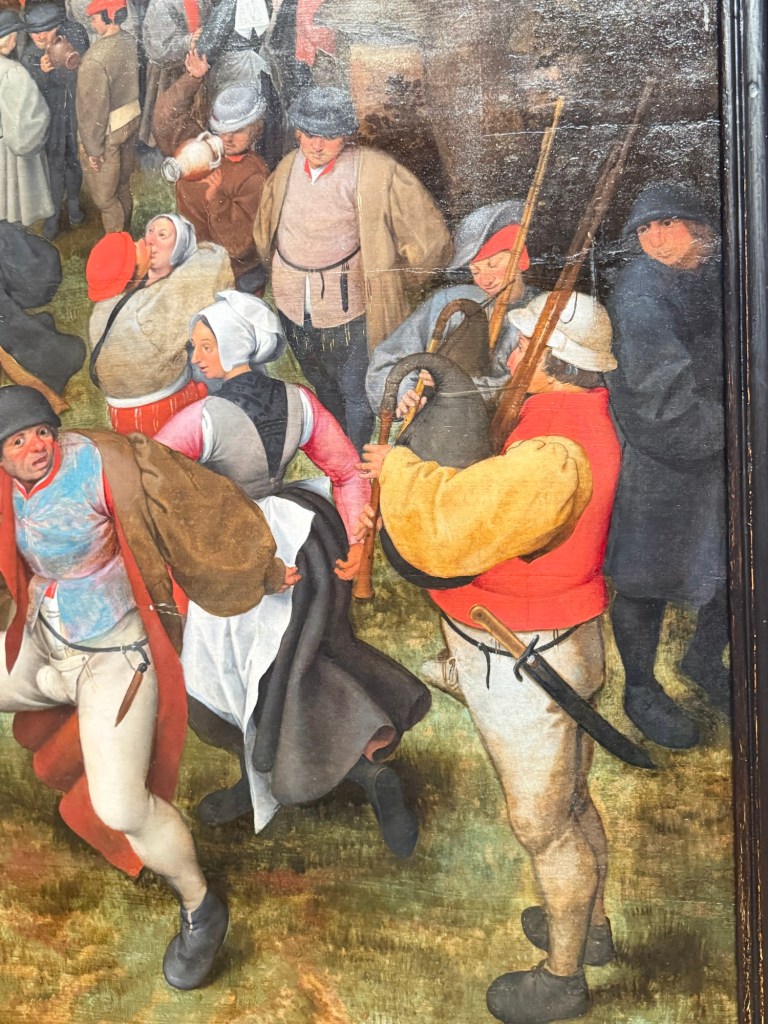
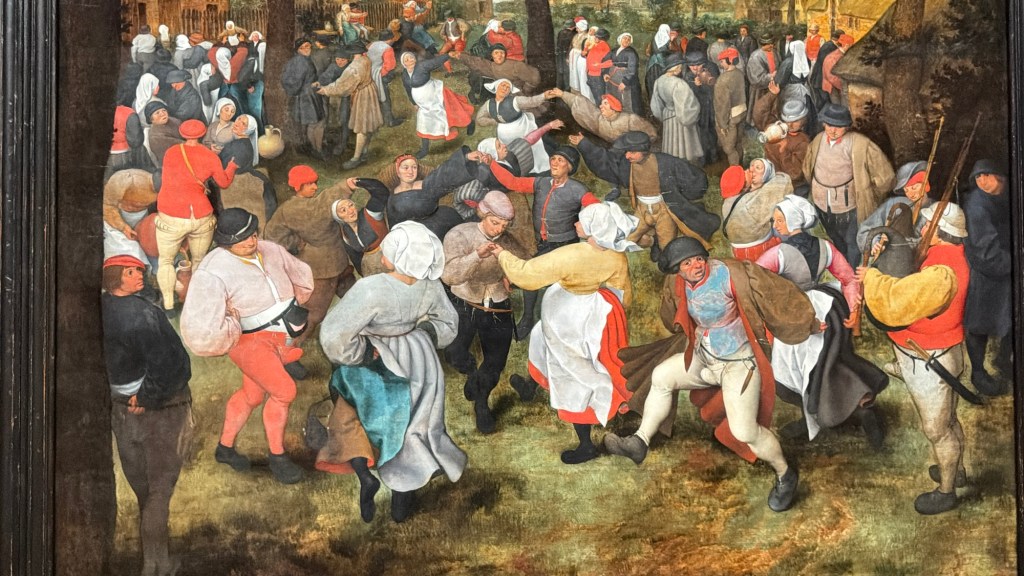
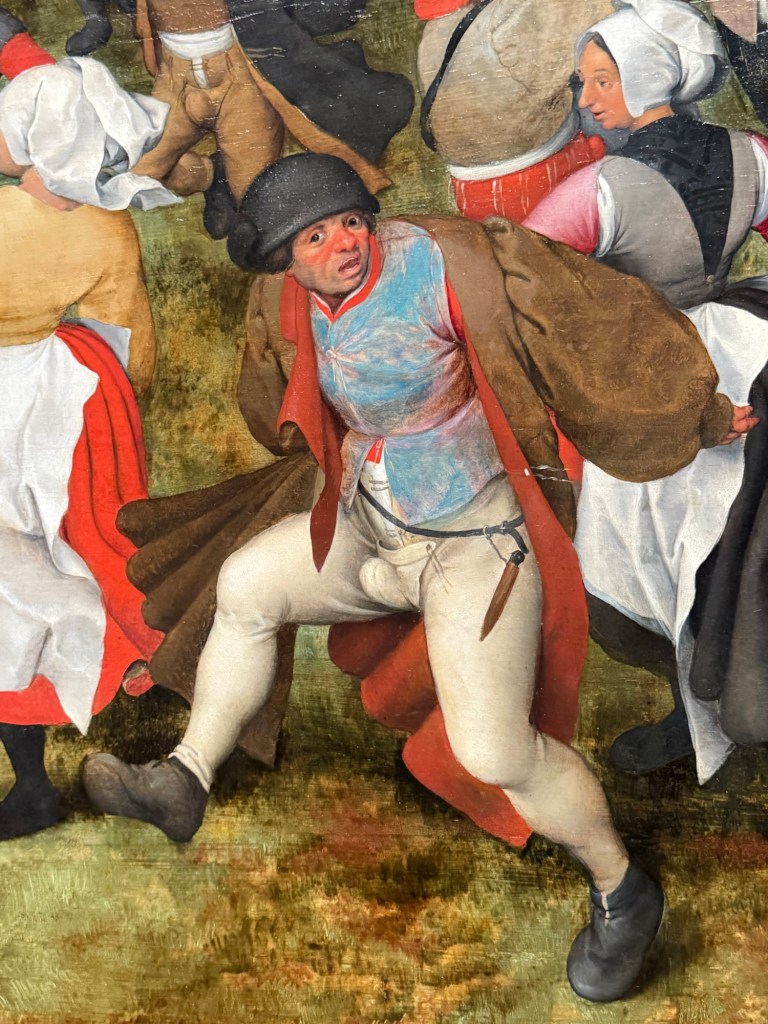
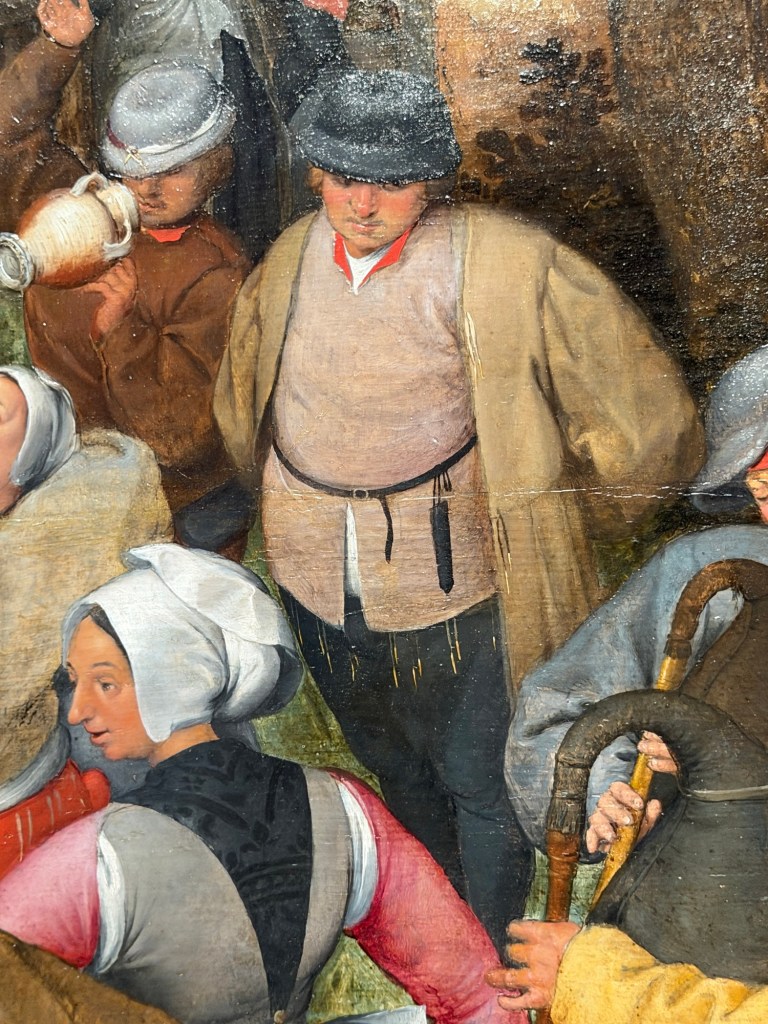
Elder villagers dance, drink, and celebrate—an entire community alive with movement. The sacred gives way to the everyday, and yet nothing feels lesser. It’s all part of the same human story.
And then, our final stop.
We stood before Virgin and Child (Melun Diptych) by Jean Fouquet—and it stopped me in my tracks.
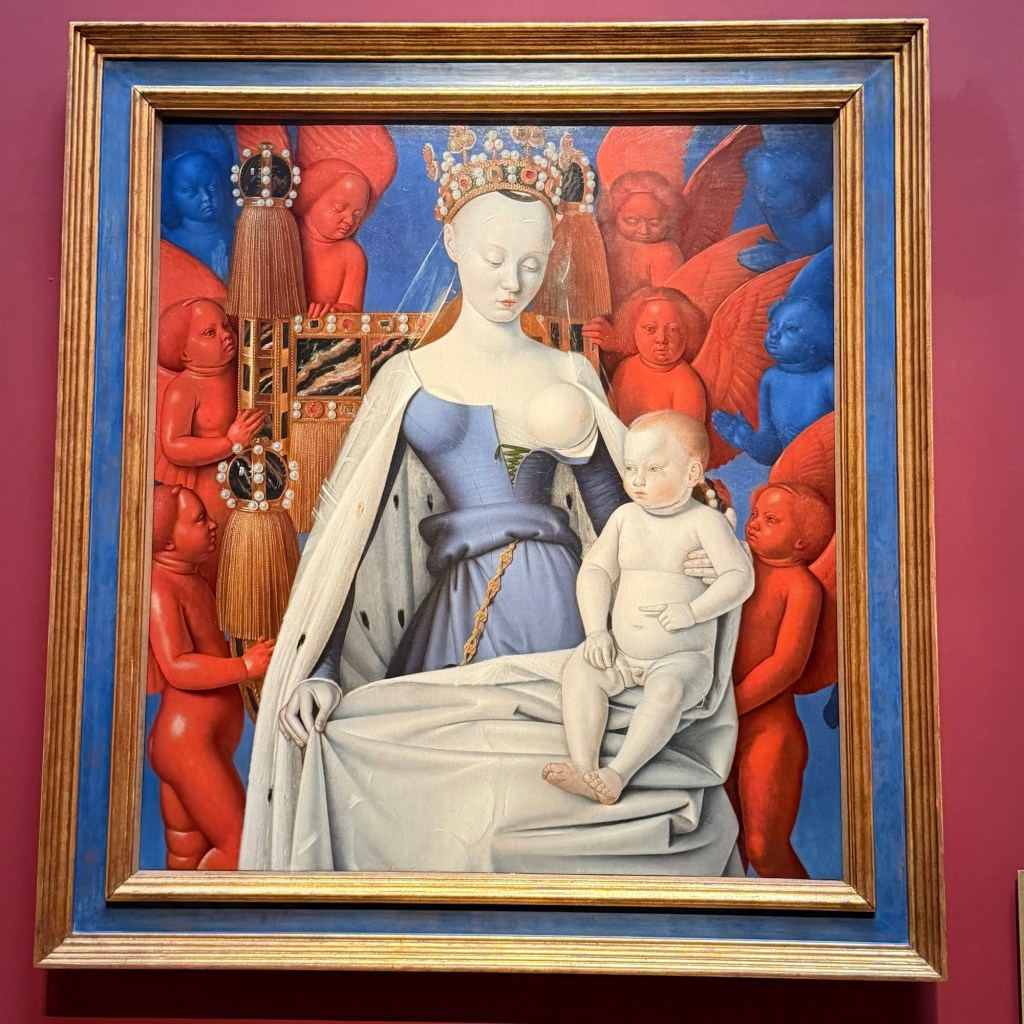
After everything we had seen, this felt… different.
The Virgin, impossibly pale, almost sculptural, sits crowned and serene, holding the Christ child. Around her, angels press in—bold, almost surreal figures in vivid reds and deep blues. The contrast is jarring at first, then mesmerizing.
There’s a stillness to her, a perfection that feels almost otherworldly. Less human, more icon.
And yet, the child grounds the image—anchoring it in something real.
It felt like the perfect ending.
We said our goodbyes to Ann and climbed back into the van with Mohammed. We are on our way to Bruges.
As we pulled away, I couldn’t shake the feeling that I had only scratched the surface. There was so much more here—rooms unseen, works passed too quickly, details I hadn’t yet noticed.
The kind of place that doesn’t feel finished when you leave it.
Just paused.
And with that, a quiet hope to return someday.
 YouDontKnowJackTravels