We left the hotel in The Hague with our driver, Mohammed, for a roughly 2.5-hour drive. Along the way, we made two memorable stops: Royal Delft—the historic home of Delft Blue pottery—and the iconic windmills of Kinderdijk.
Royal Delft
At Royal Delft (museum.royaldelft.com) formally known as De Koninklijke Porceleyne Fles—we stepped into a place where centuries of craftsmanship are still very much alive. Founded in 1653 during the Dutch Golden Age, it is the last remaining Delftware factory from a time when dozens operated across the city, producing the iconic blue-and-white ceramics inspired by Chinese porcelain.
Ironically, this tradition, too, is tied to the Dutch colonial era. Its roots lie in the global trade networks of the Dutch East India Company, including a famous early 17th-century incident in which Dutch forces seized a Portuguese trading ship—the Capture of the Santa Catarina—loaded with Chinese porcelain. When that cargo was auctioned in Europe, it ignited enormous demand and helped inspire Dutch artisans to develop their own blue-and-white ceramics, which evolved into Delftware.
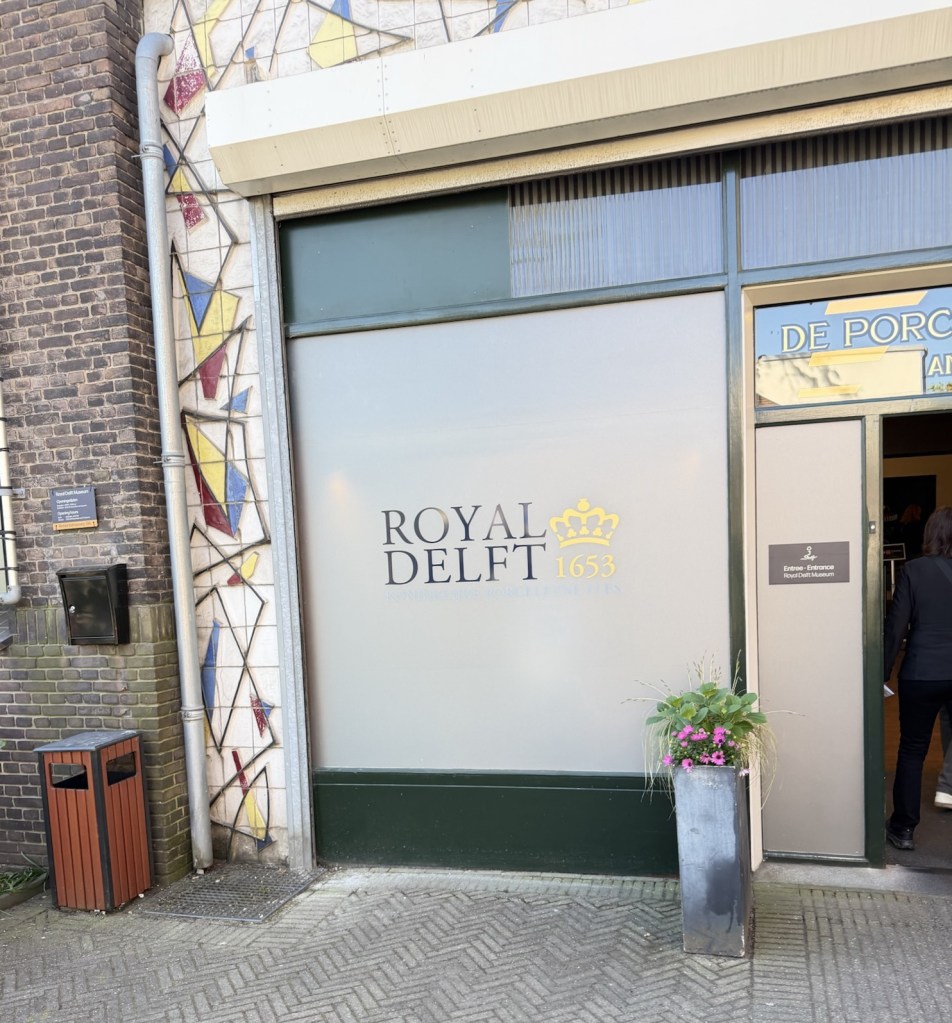
Inside, the museum bridges past and present seamlessly. Displays of dishes, vases, and hand-painted tiles dating back to the 1600s sit alongside contemporary works, showing how designs have evolved while remaining rooted in tradition.
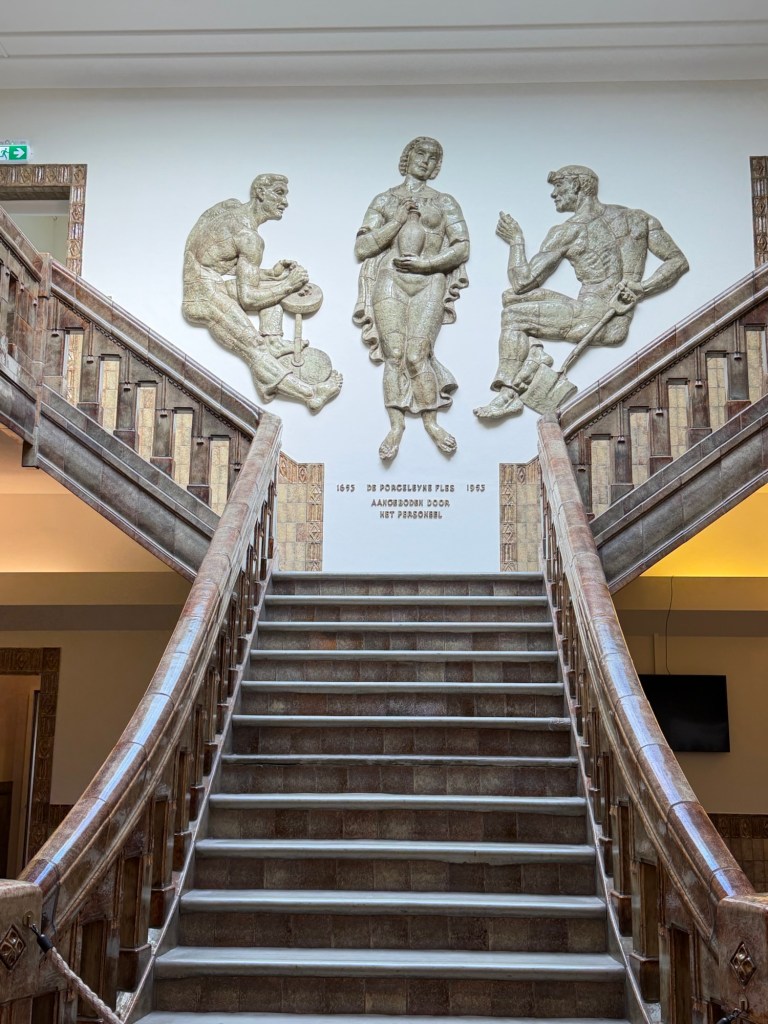
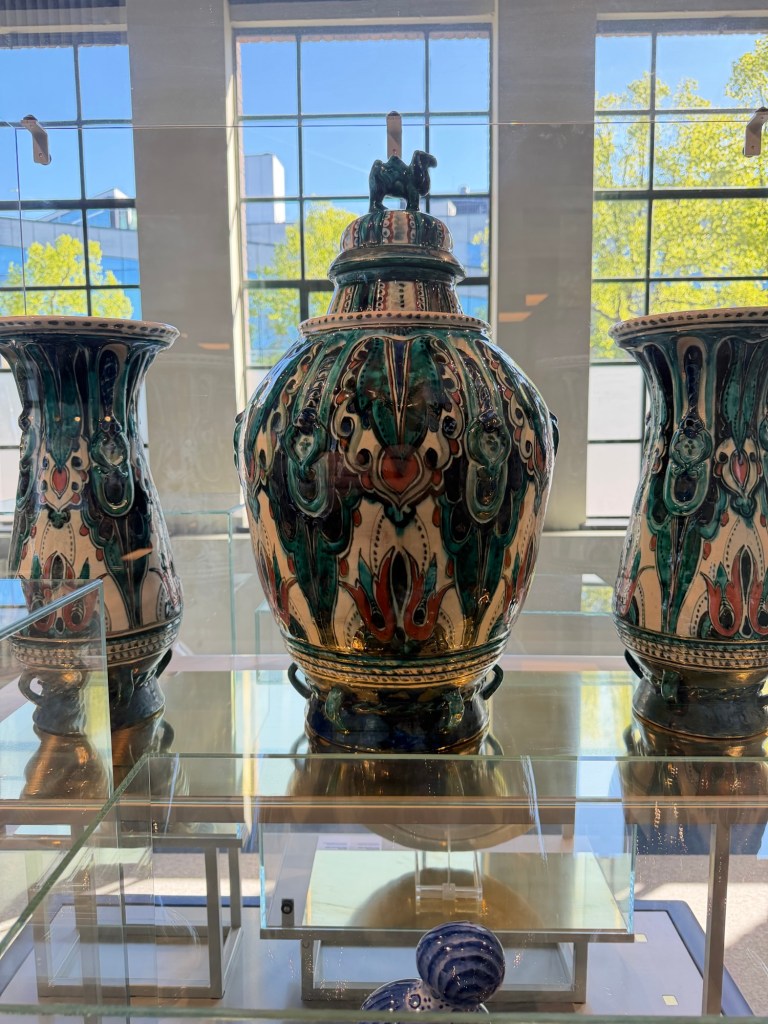
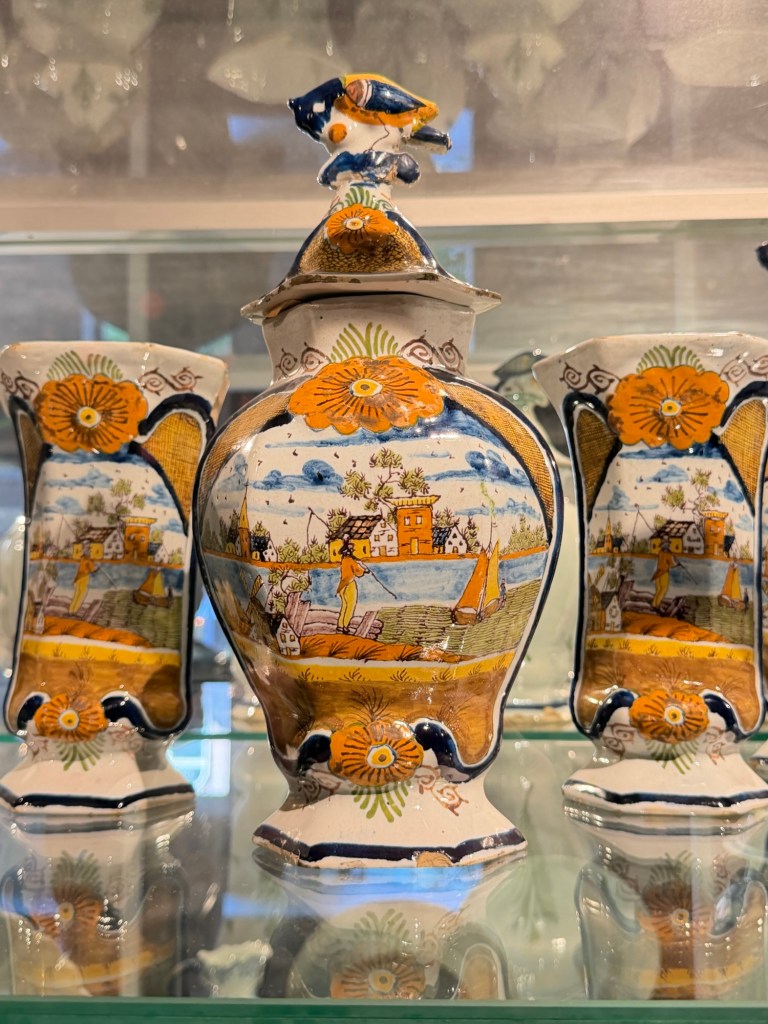
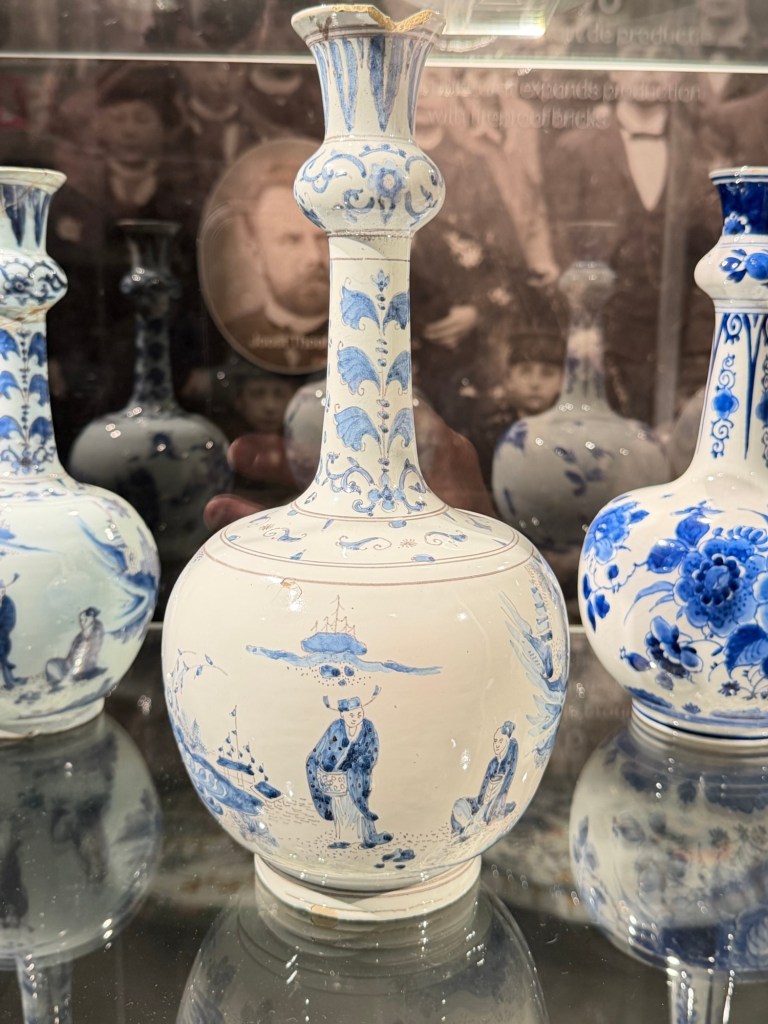
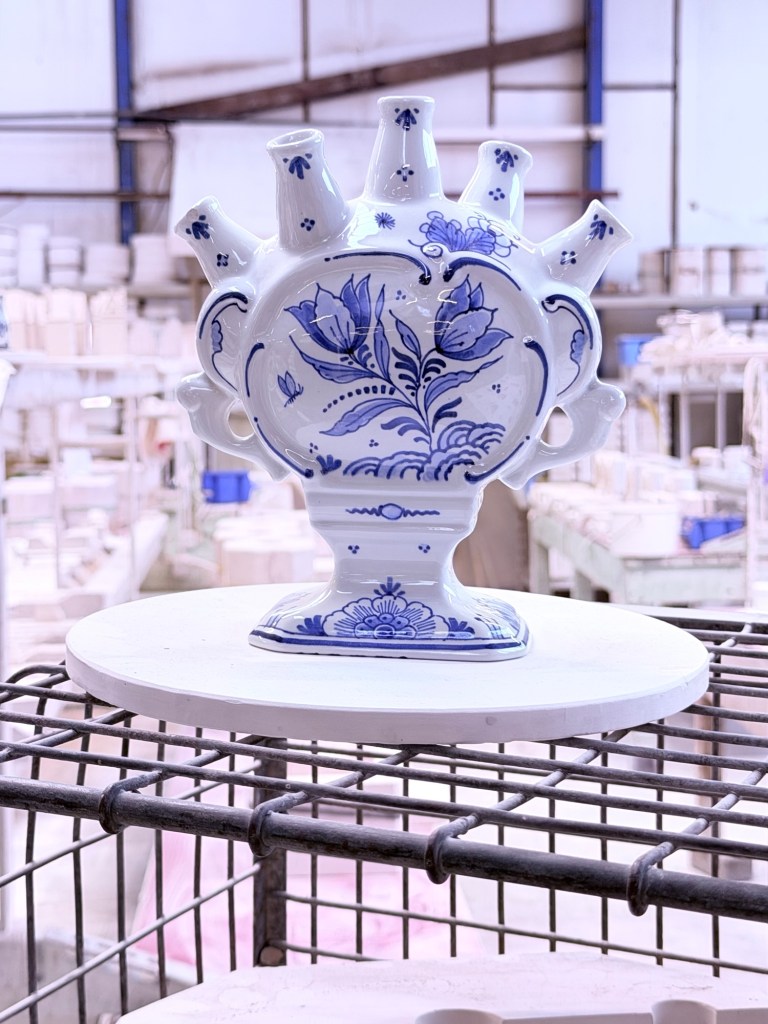
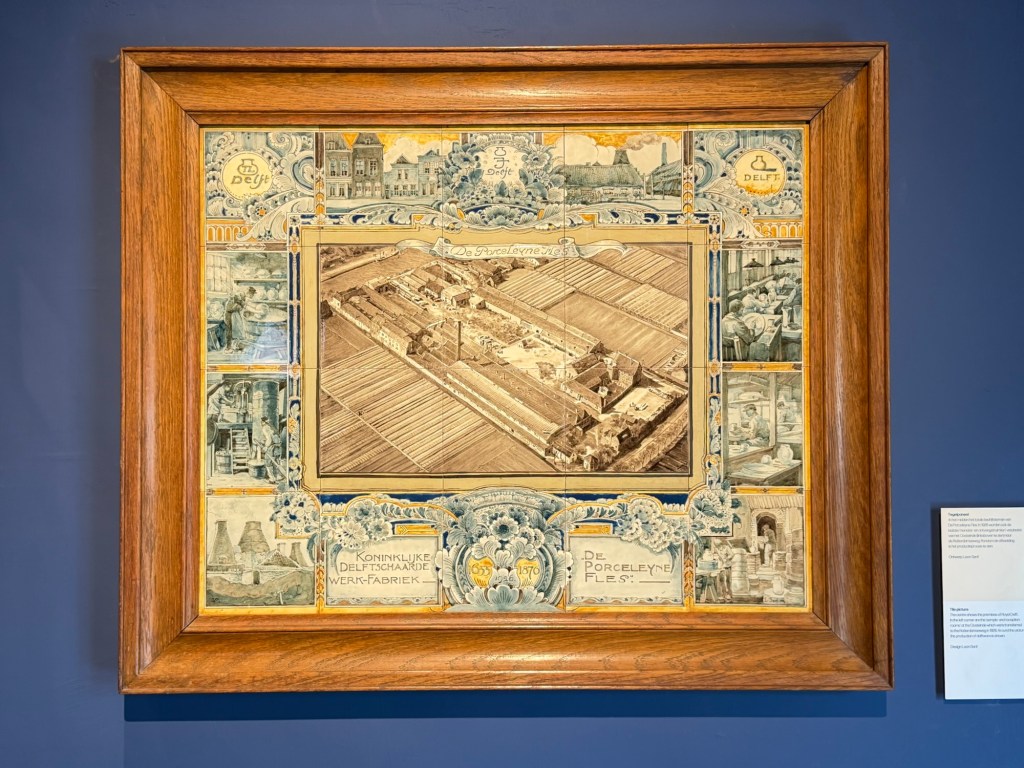
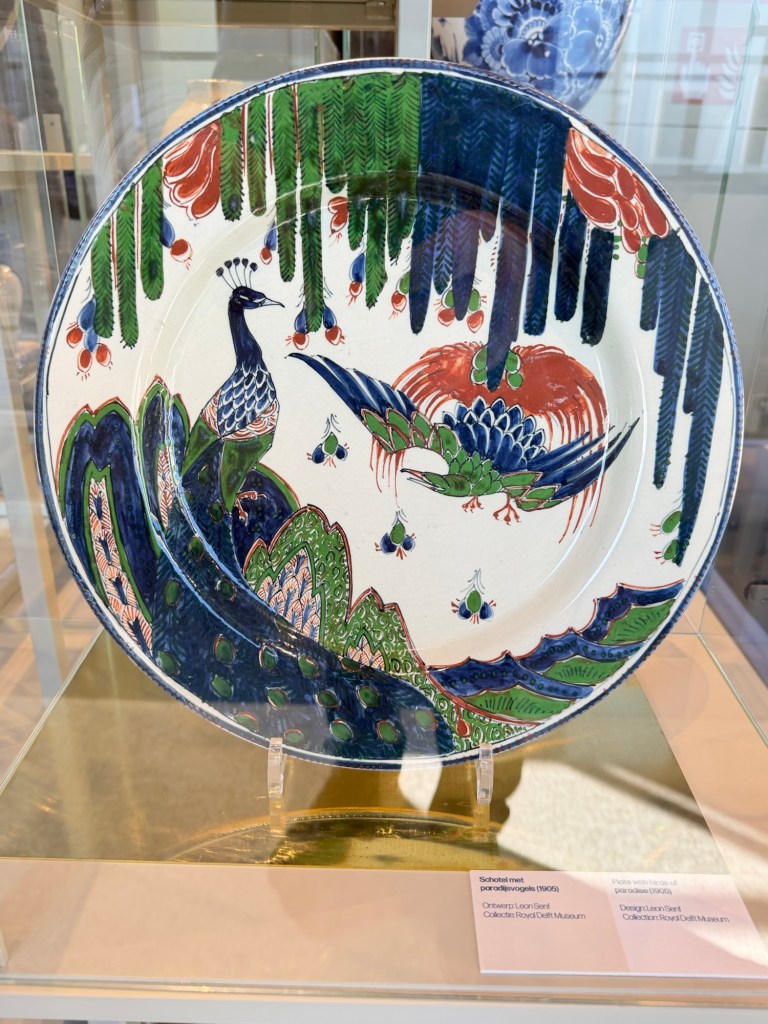
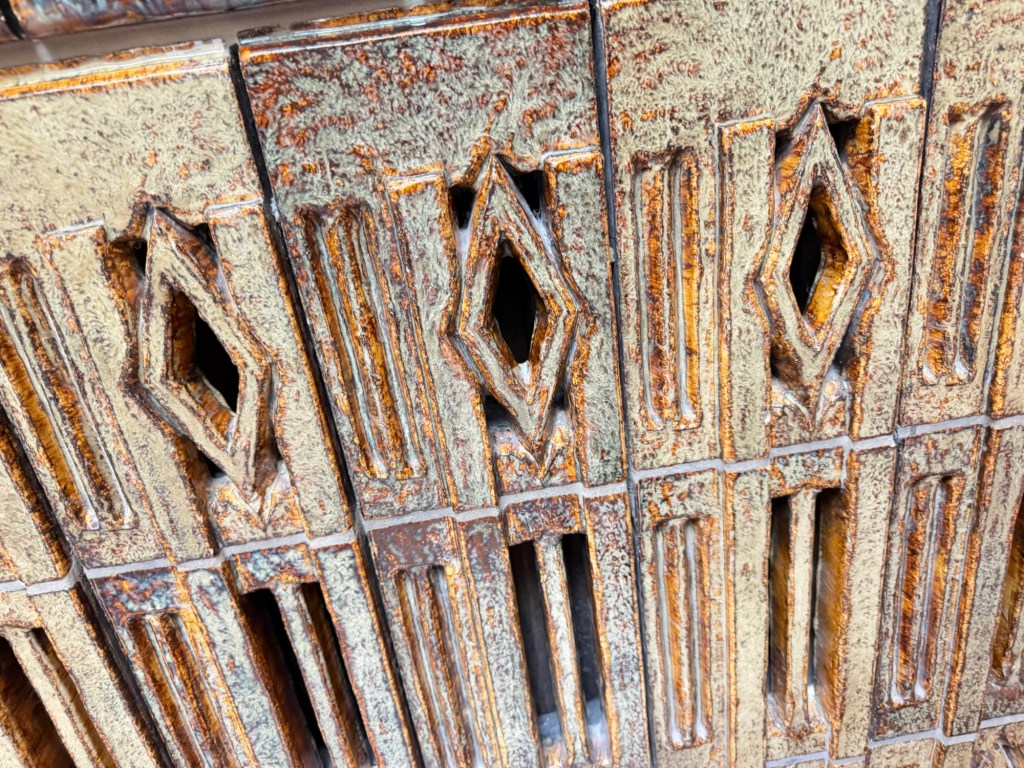
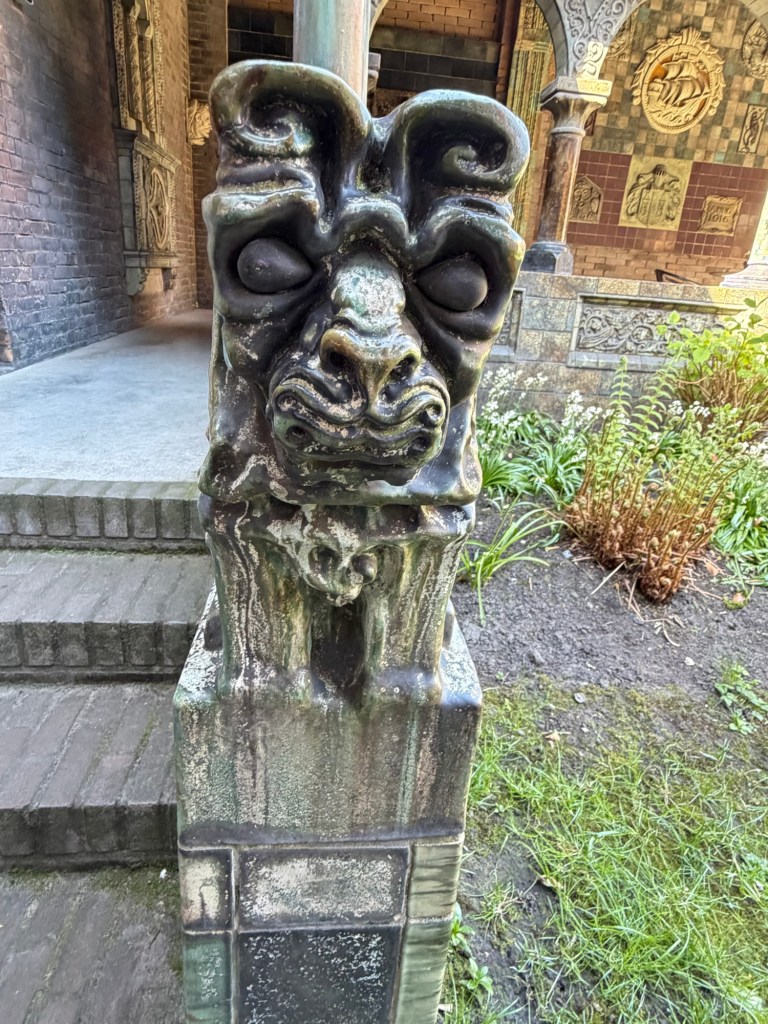
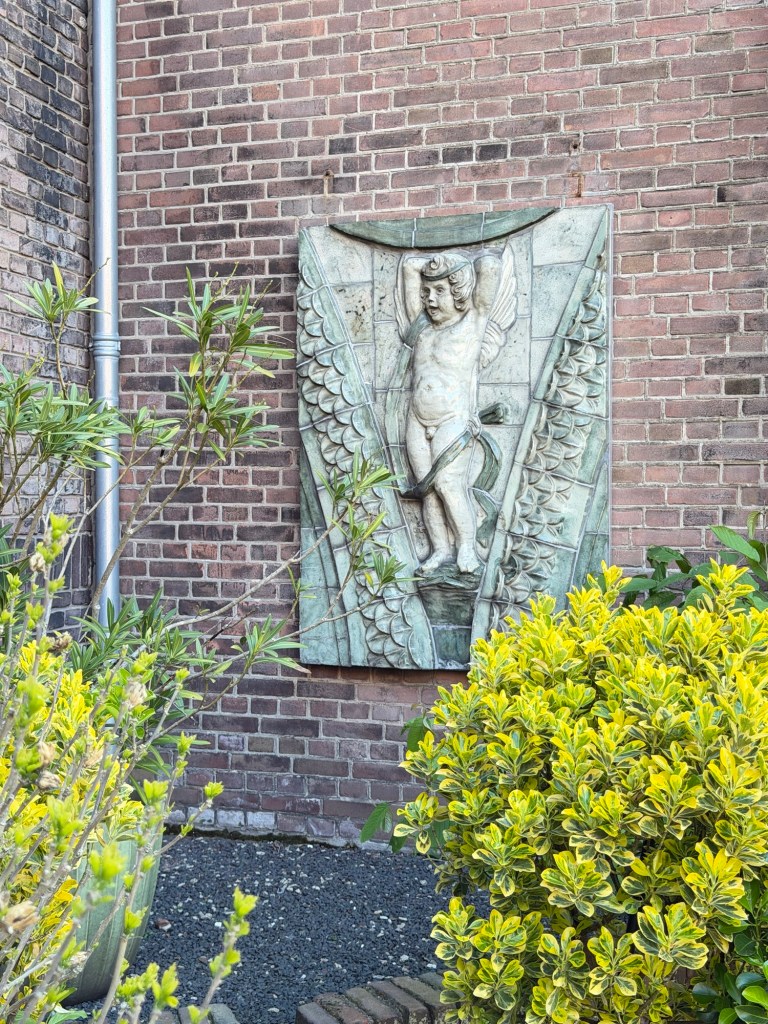
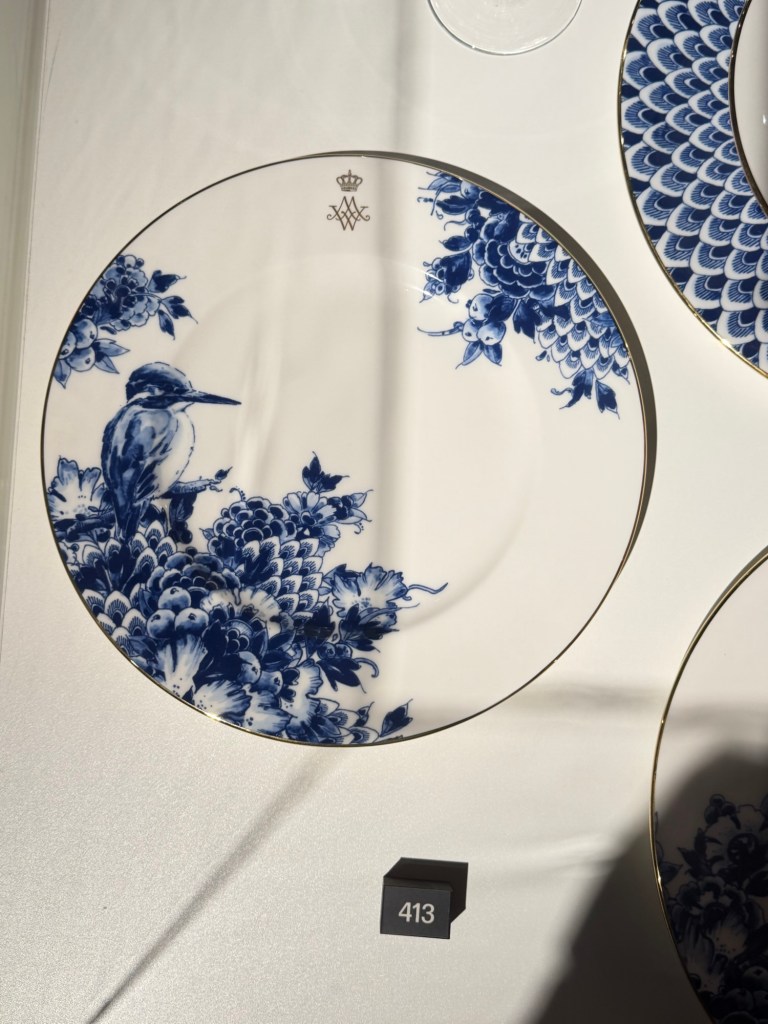
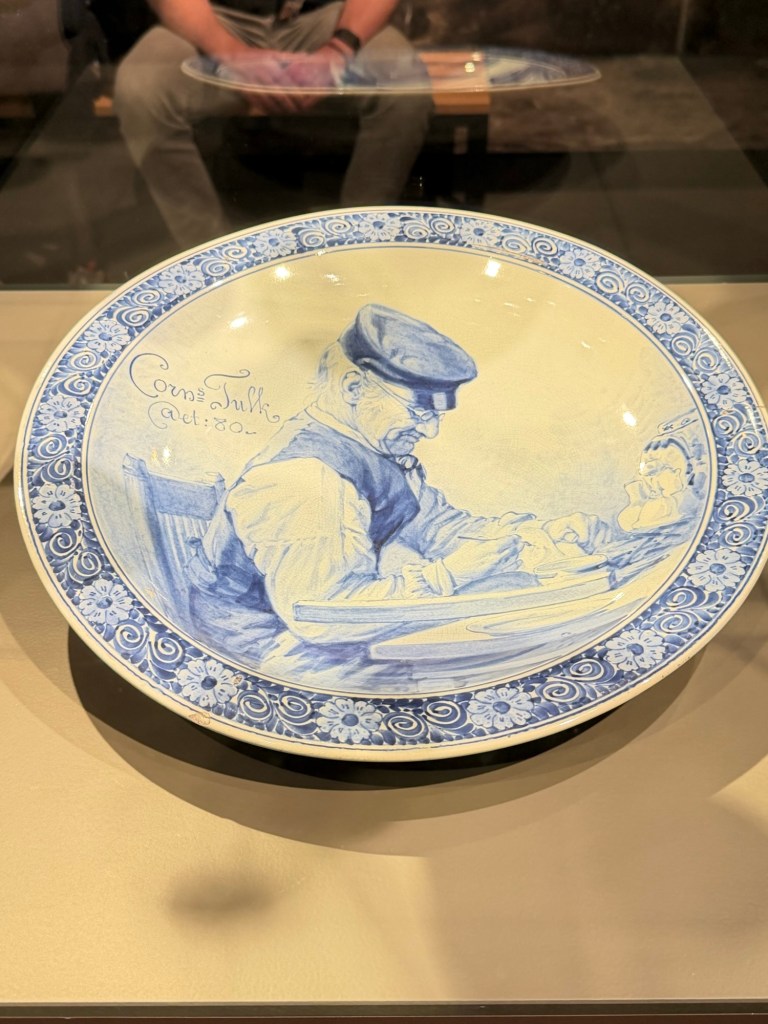
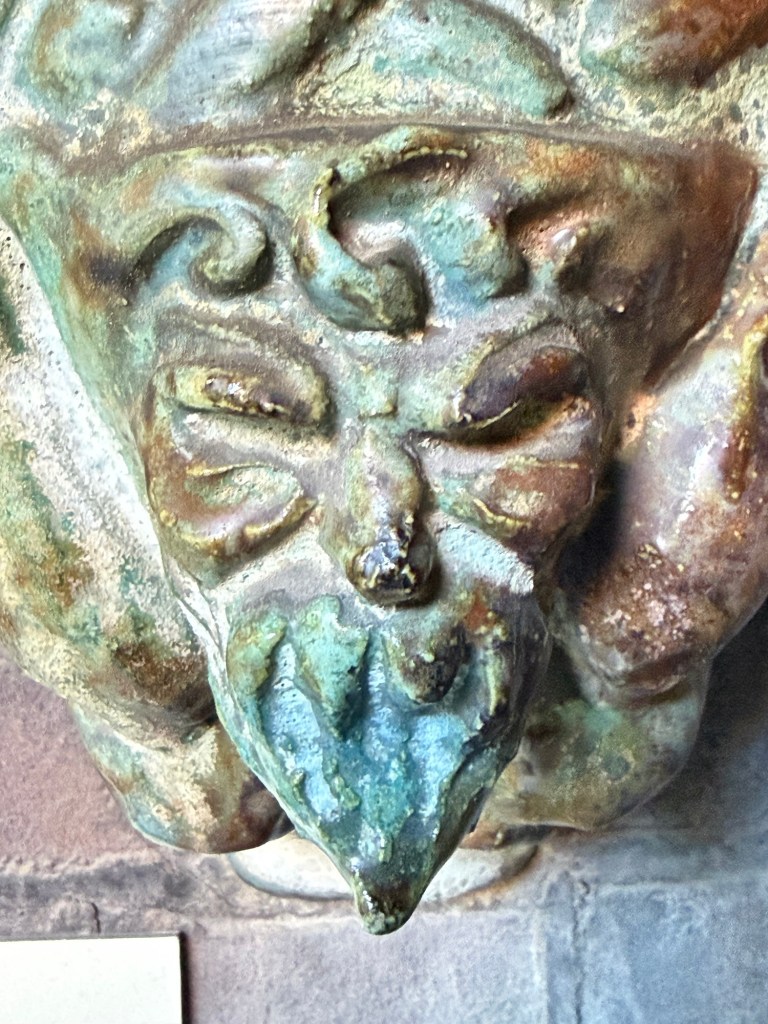
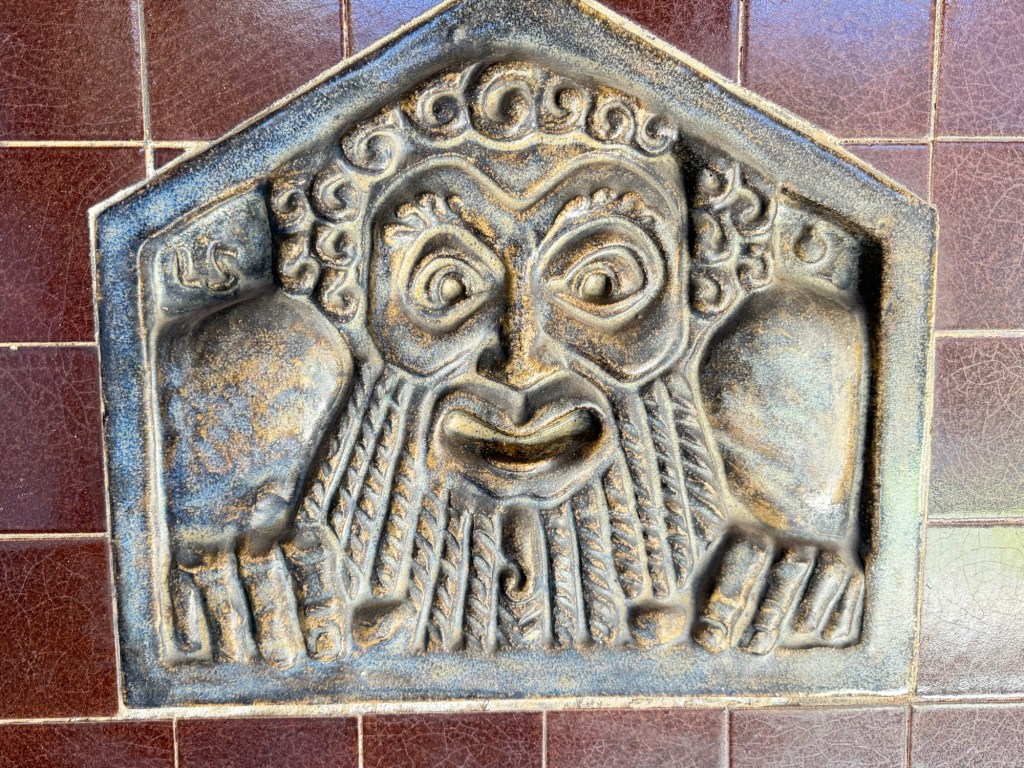
There is a central garden that includes significant tiles and artistic works from the company’s Golden era past.
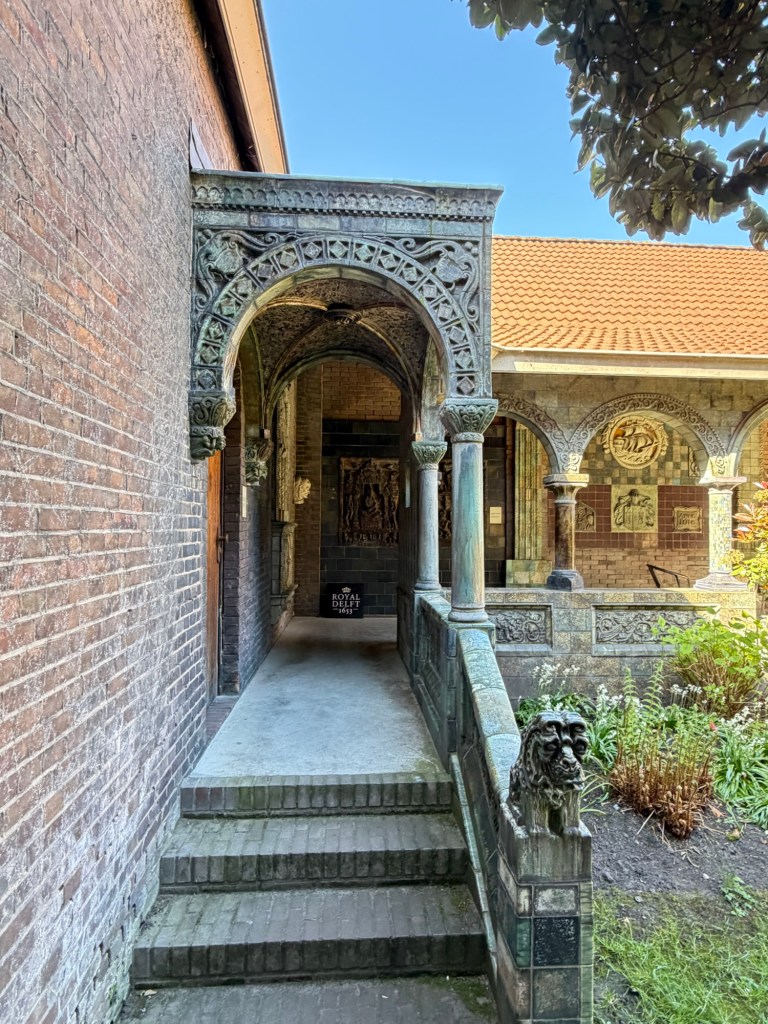
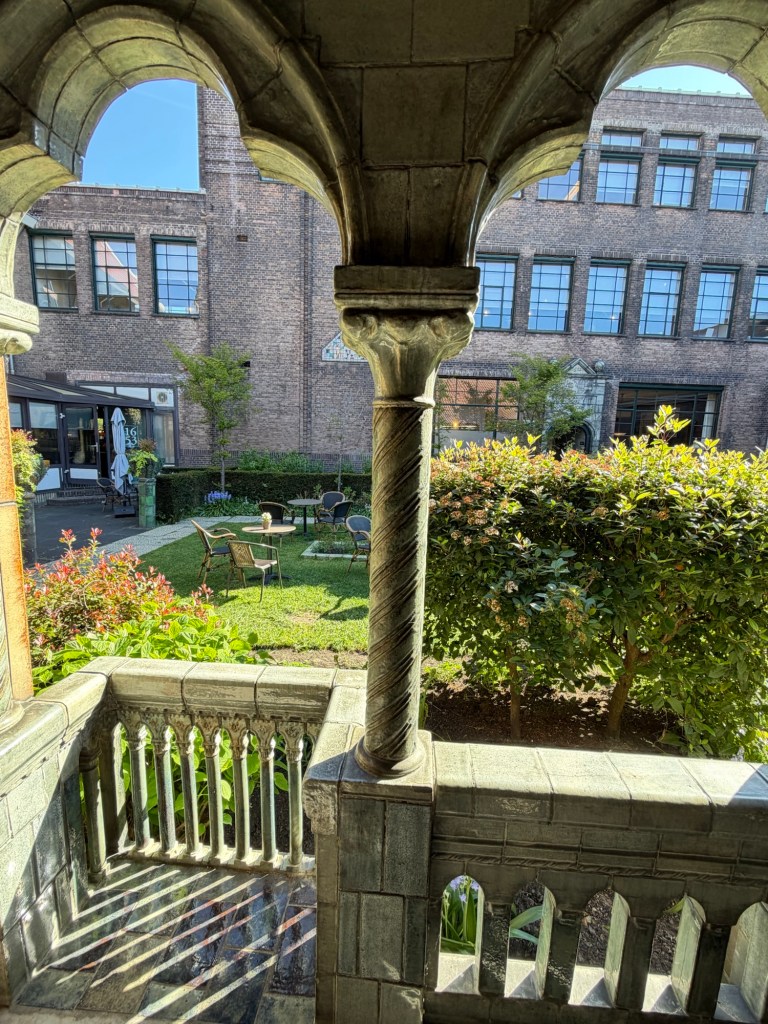


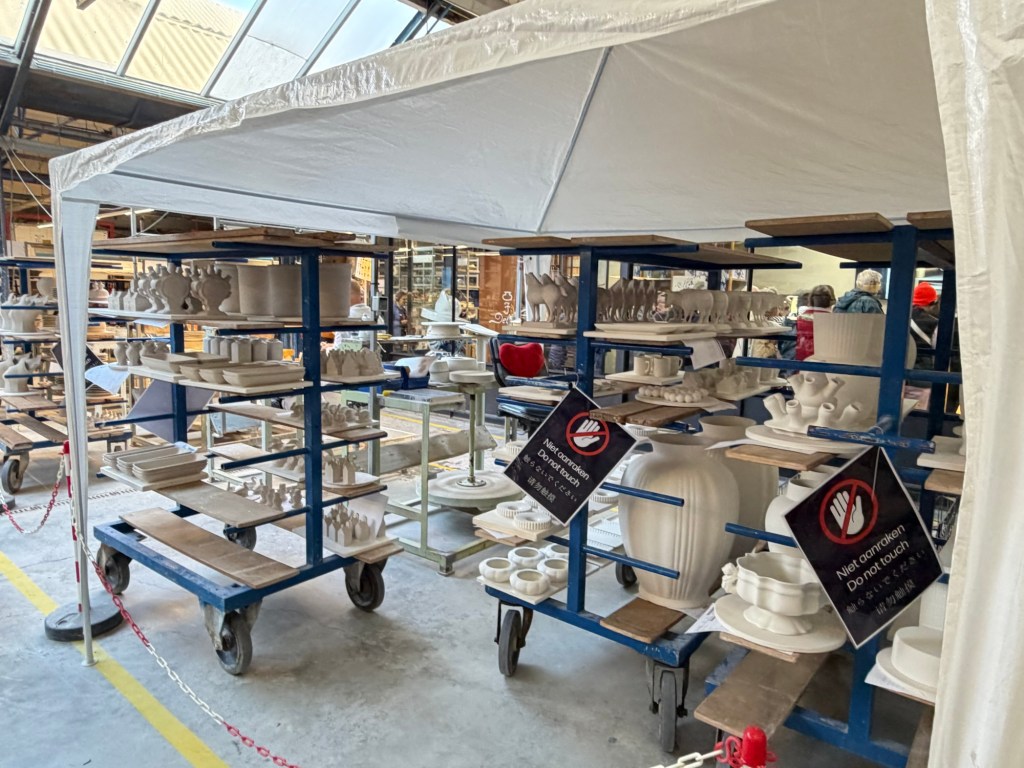
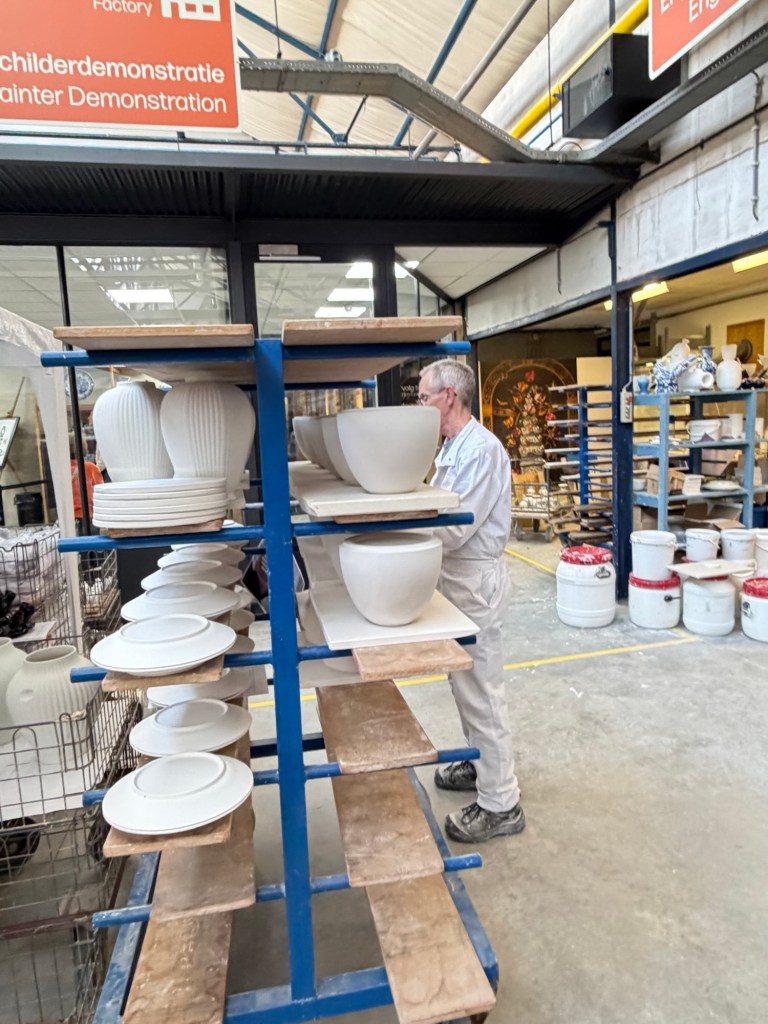
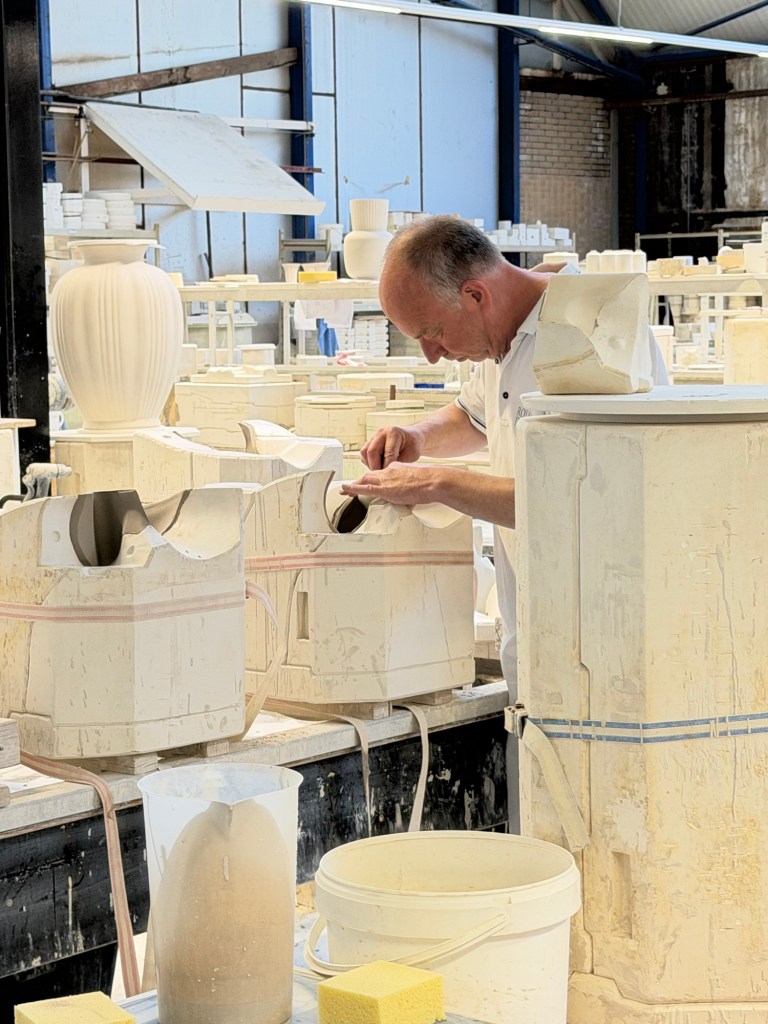
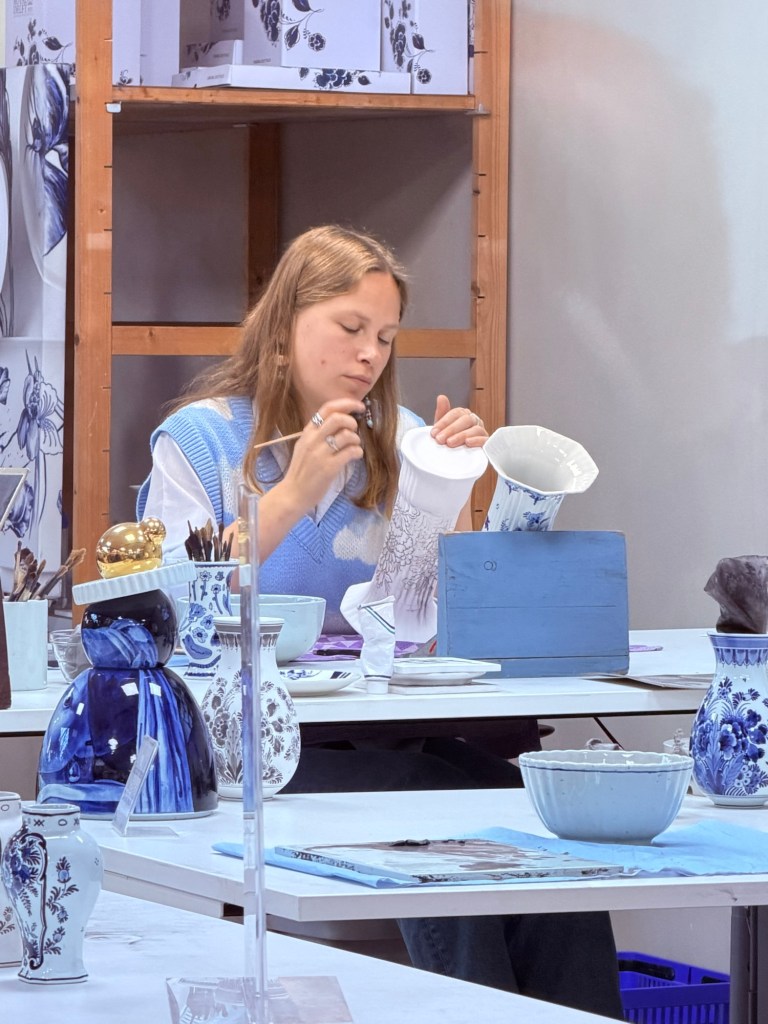
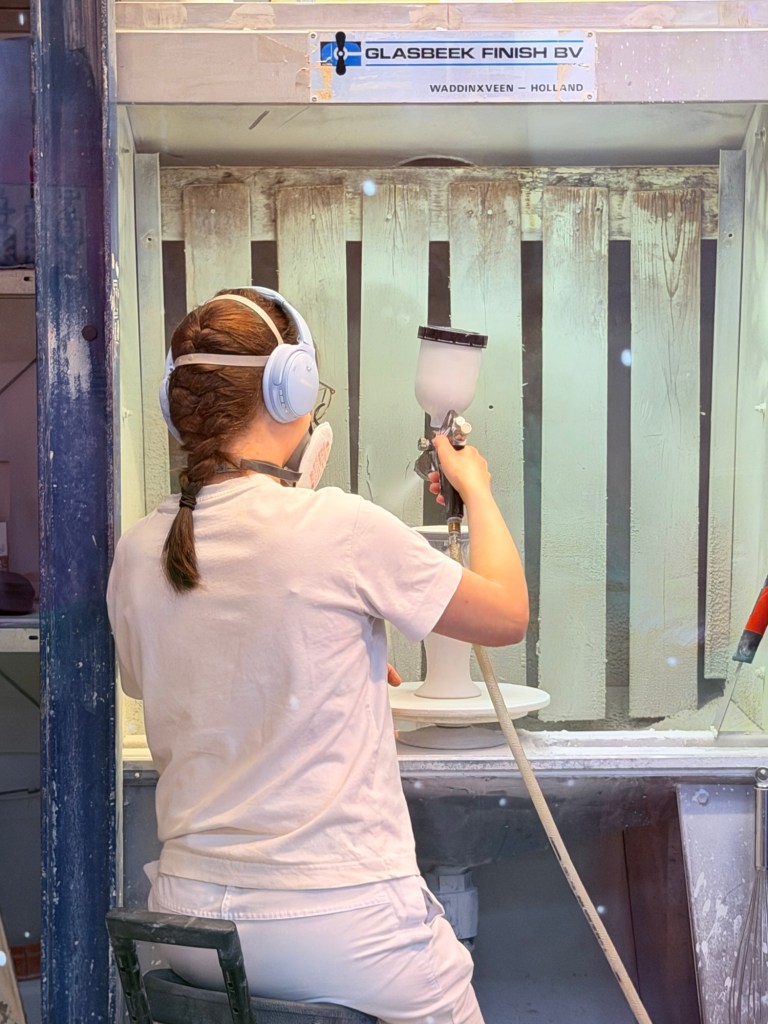
Just steps away, visitors can watch skilled artisans at work—painters carefully applying intricate patterns by hand, keeping alive techniques that have been passed down for generations.
It’s not just a museum, but a working workshop where history isn’t preserved behind glass—it’s still being created in real time.
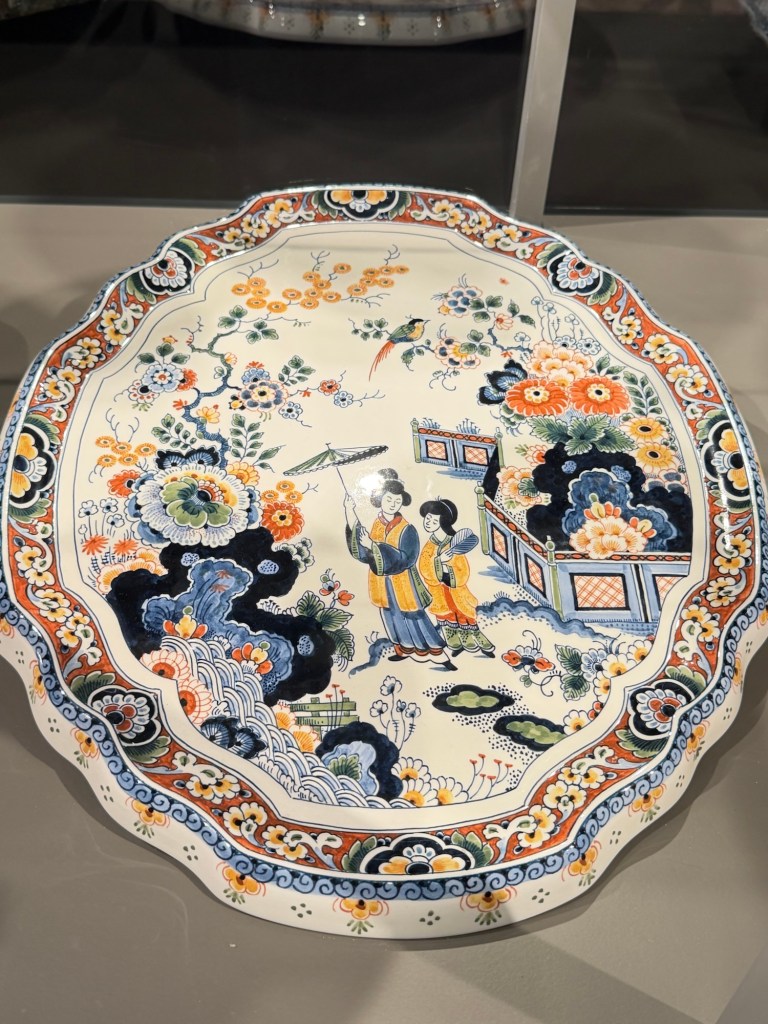
One historical piece stood out: a vibrant dish where East meets West—its central scene of figures, florals, and a garden pavilion echoing Asian design, yet unmistakably rendered in the Dutch tradition.
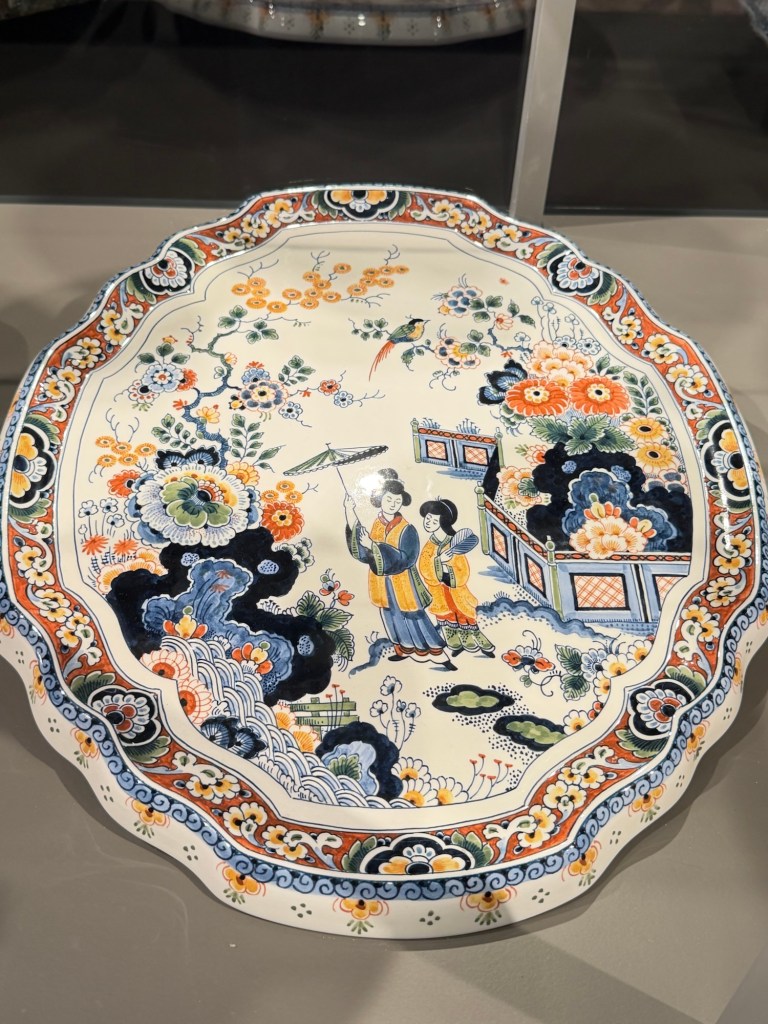
The composition reflects how Dutch artisans interpreted Chinese and Japanese motifs, not by copying them exactly, but by reimagining them through a European lens. The result is something distinctly Delft: a blend of global influence and local craftsmanship, where 17th-century trade and artistic exchange are still visible in every brushstroke.
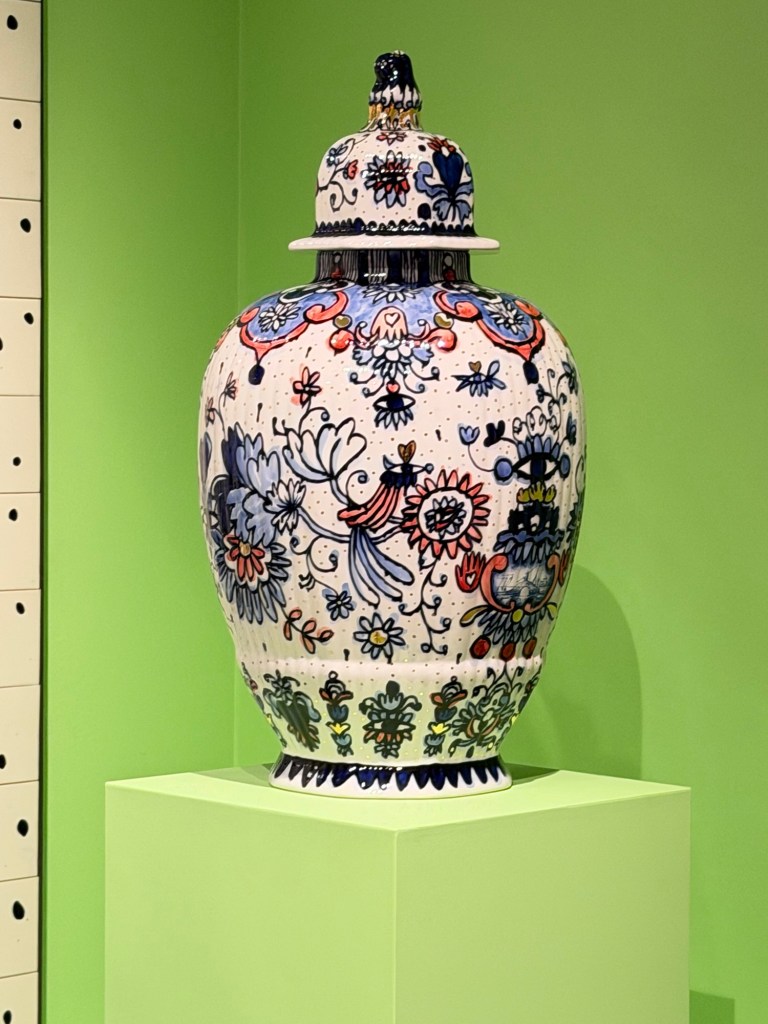
One piece caught my eye: a striking lidded vase that felt both ancient and completely modern. Its blue-and-white surface is filled with intricate, almost graphic patterns—figures, animals, and symbols arranged in bands that echo traditional Delftware, yet with a bold, contemporary edge. Set against a backdrop of oversized tile motifs, it becomes clear that Royal Delft isn’t just preserving history—it’s actively reinterpreting it.
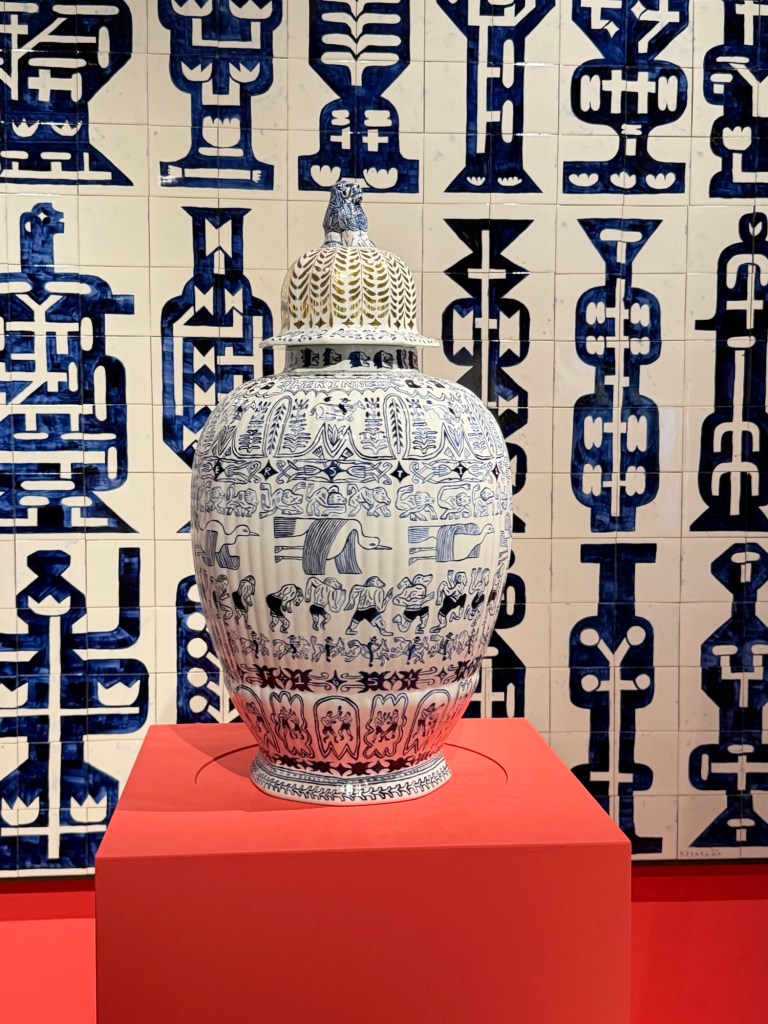
The company’s collaborations with contemporary artists bring new energy to centuries-old techniques, proving that this craft isn’t frozen in time. Instead, it continues to evolve, blending tradition with modern design in ways that feel both unexpected and entirely at home.
Kinderdijk
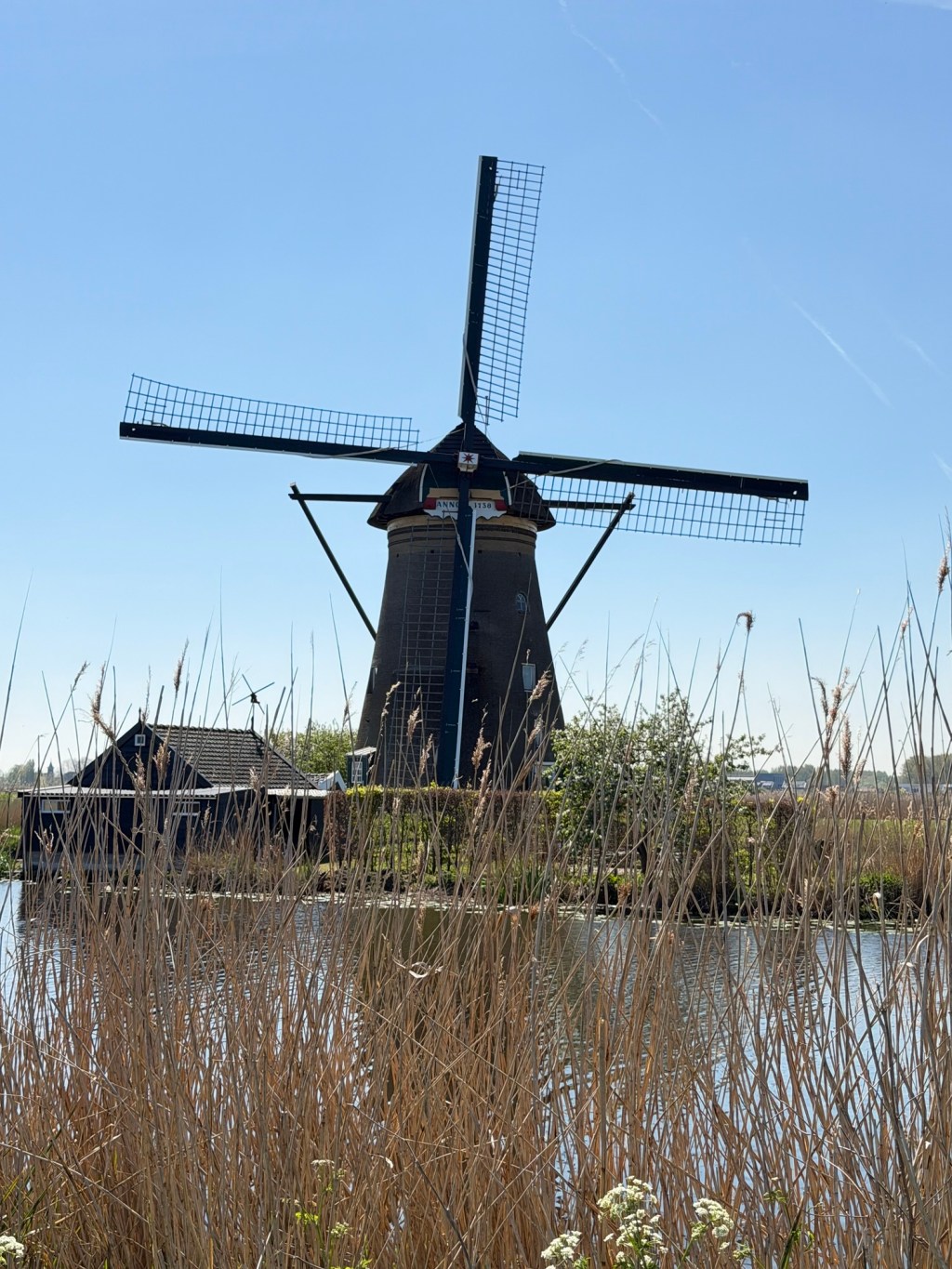
We then drove what seemed like a short distance to Kinderdijk (kinderdijk.nl), located in Molenlanden, where the landscape opens into a quiet, almost otherworldly scene. Long rows of 18th-century windmills stretch along narrow canals, their reflections mirrored in the still water, with footpaths tracing the tops of the dikes.
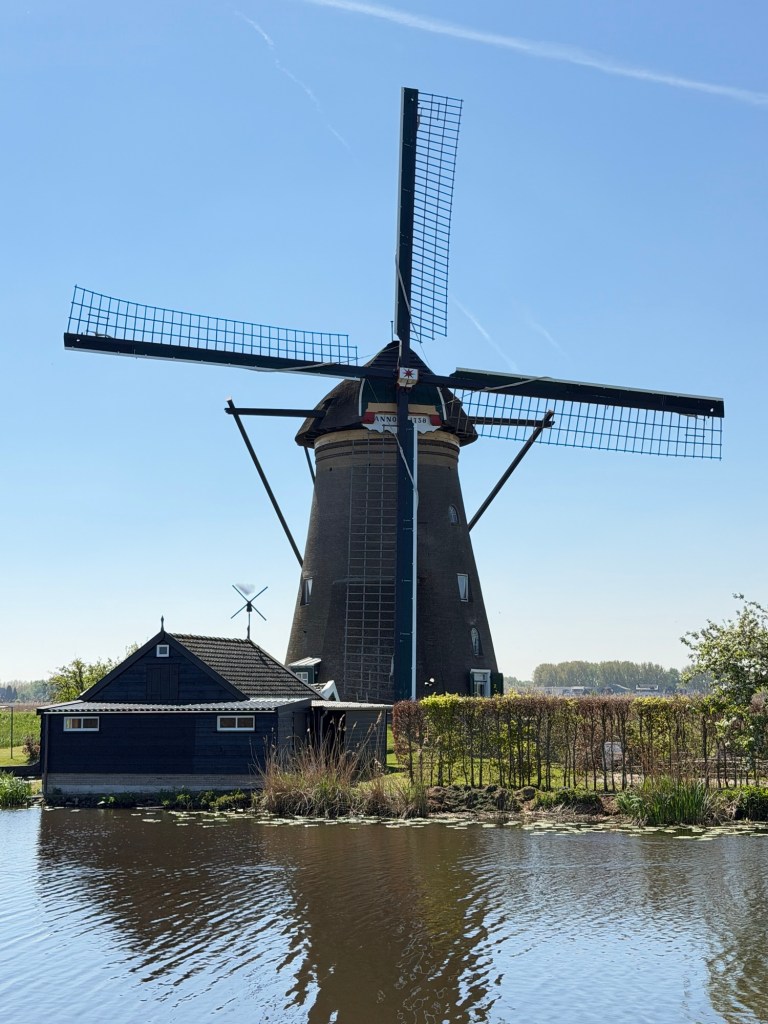
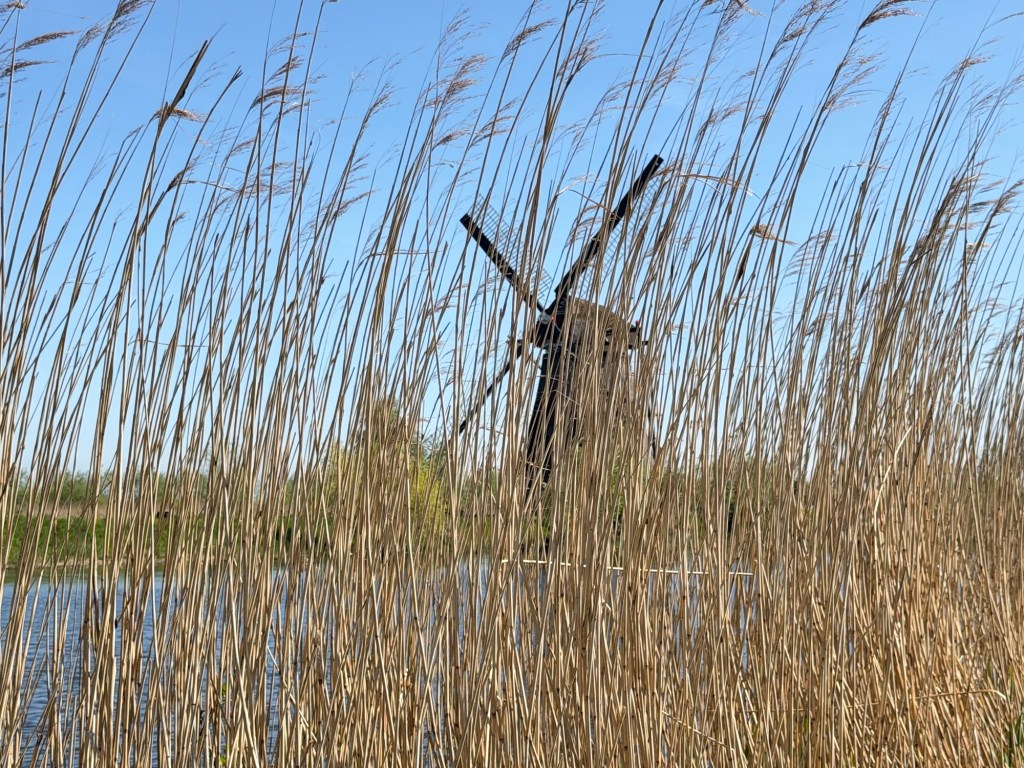
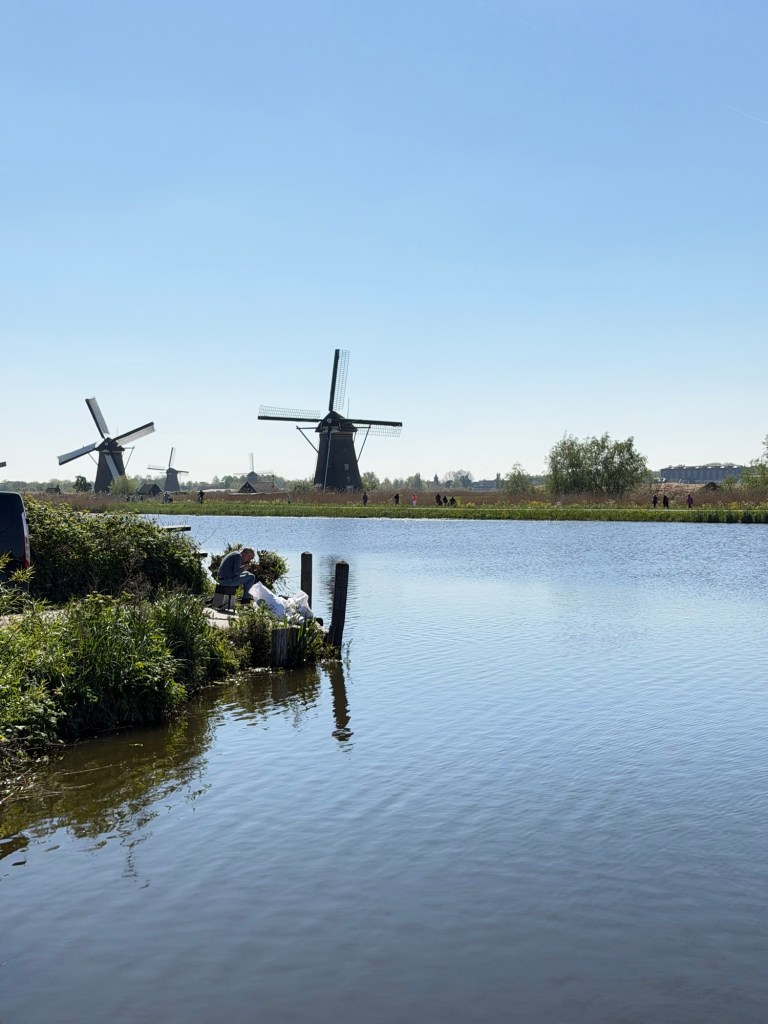
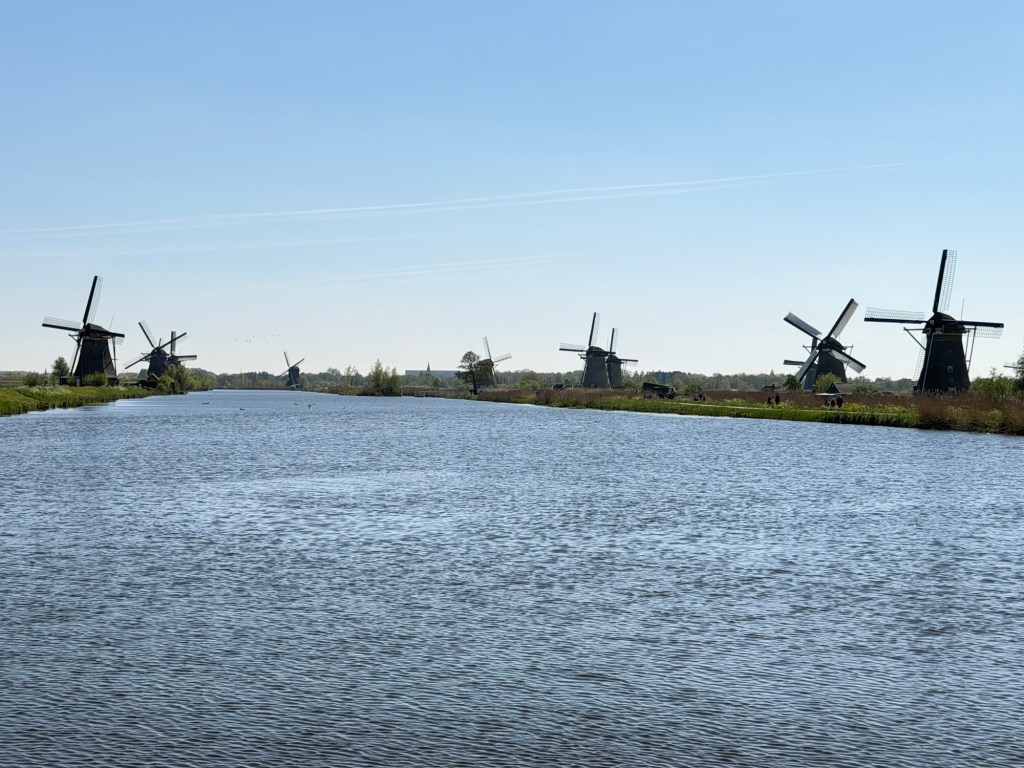
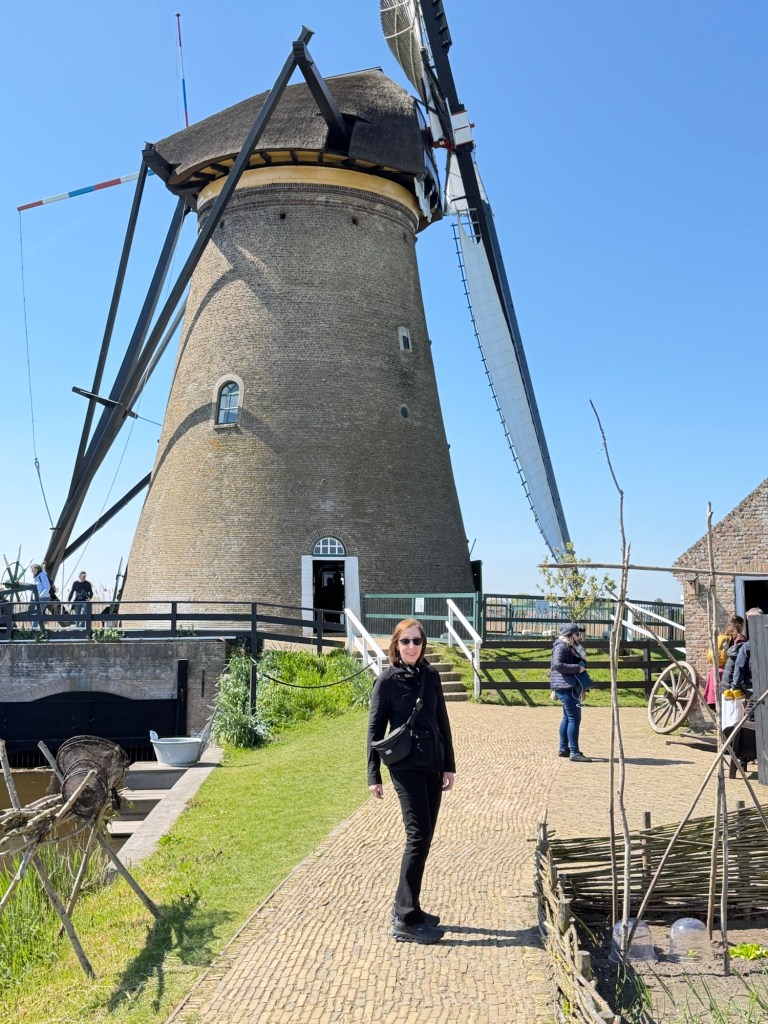
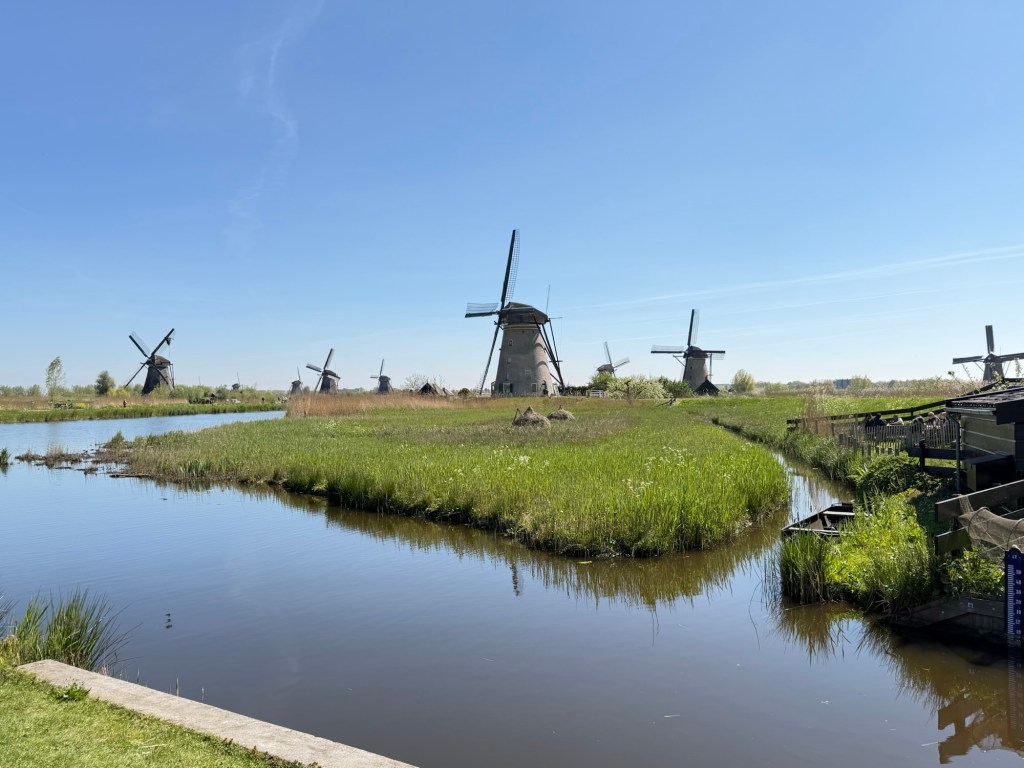
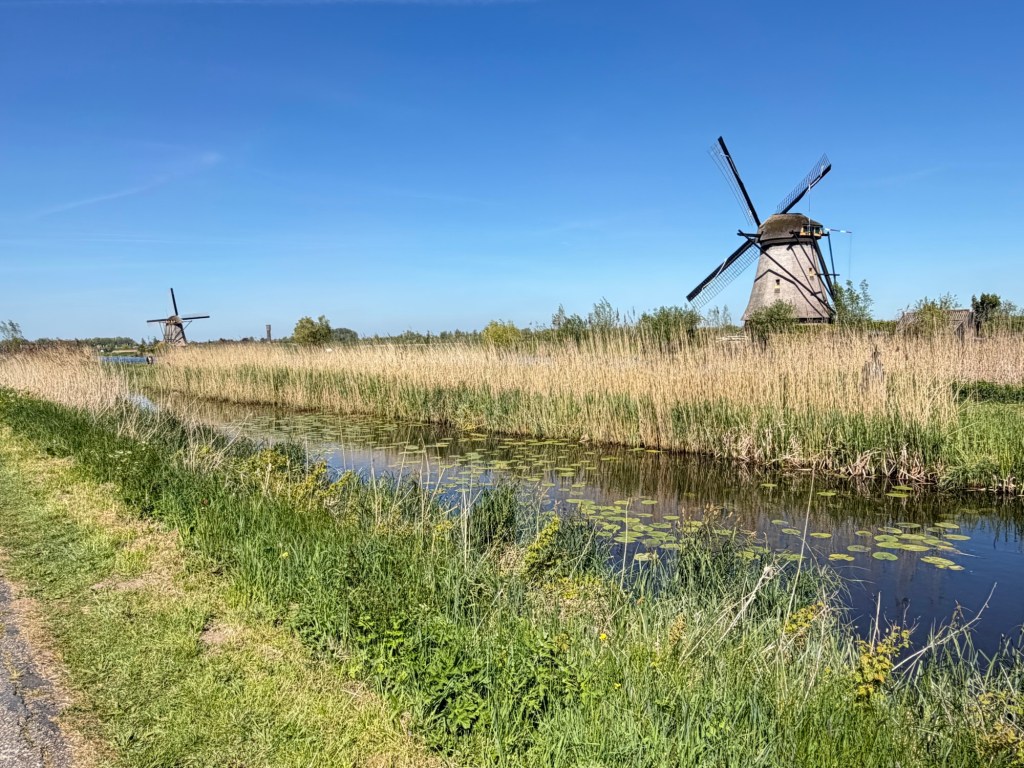
These windmills were never just decorative—they formed part of an ingenious system to control water levels in a country that has always lived at the edge of the sea. Whole families once lived inside them, maintaining the machinery and tending the waterways, and some still appear to be inhabited today.
There is something rhythmic—and almost mesmerizing—about the place: the slow turning of the sails, the repetition of forms along the canal, the steady balance between land and water creating a sense of calm that draws you in. You can’t help but liger, in an almost giddy peace.
And the story doesn’t end there: the site also incorporates later pumping stations and modern technologies, showing the next iterations of that same mission.
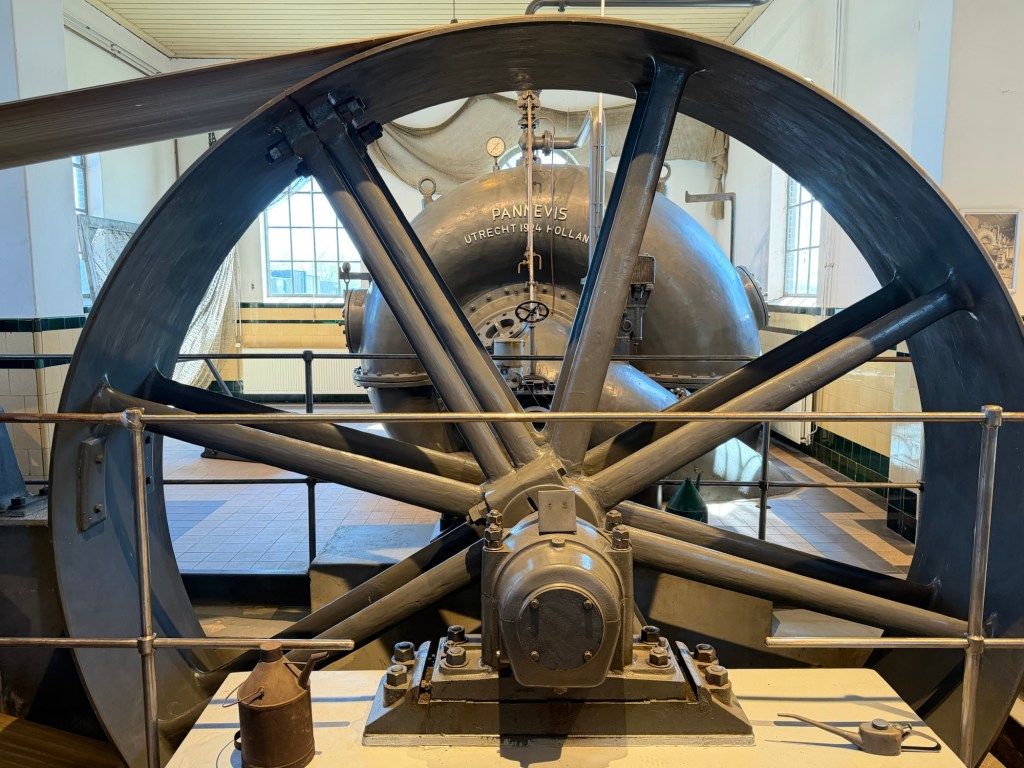
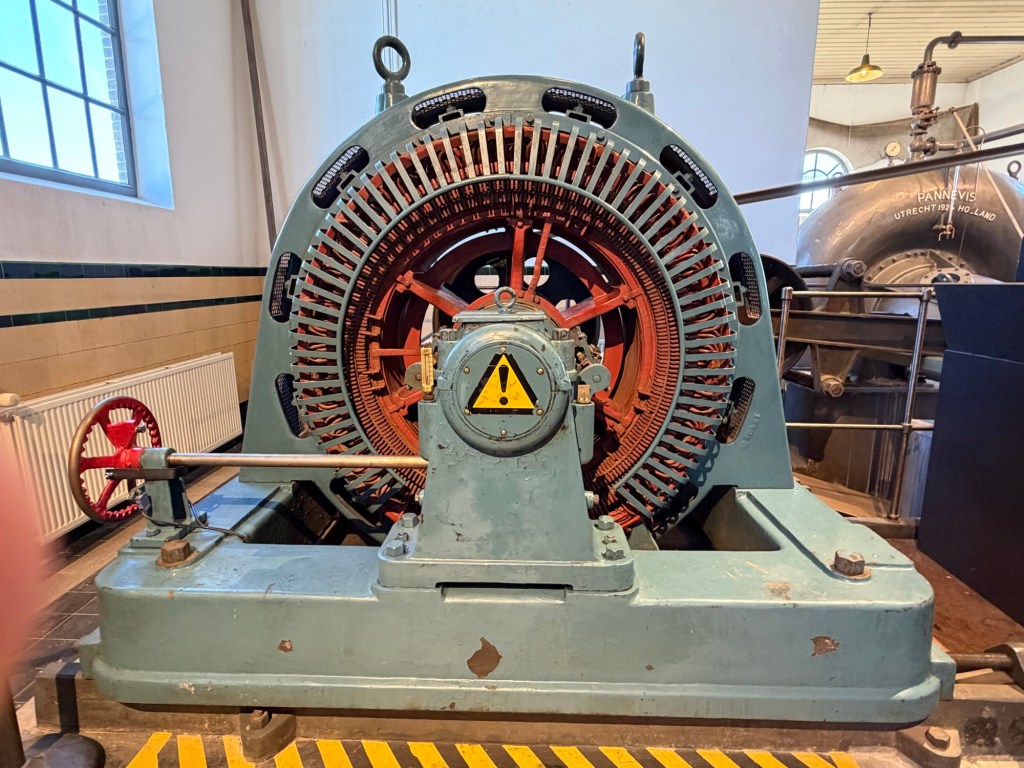
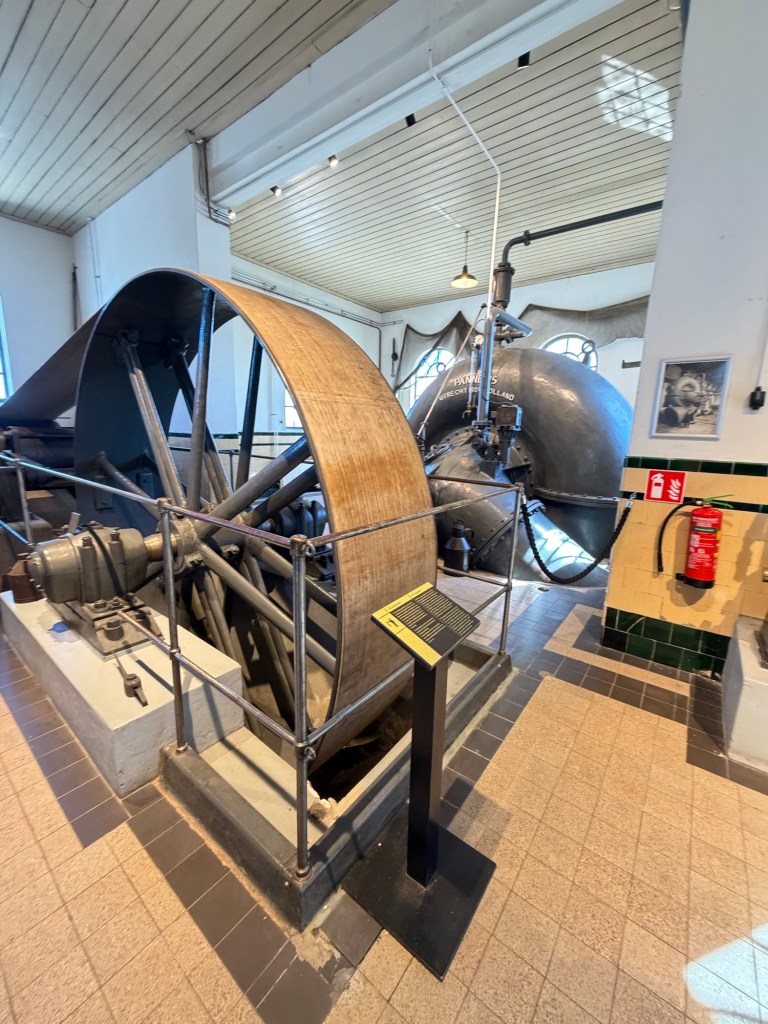
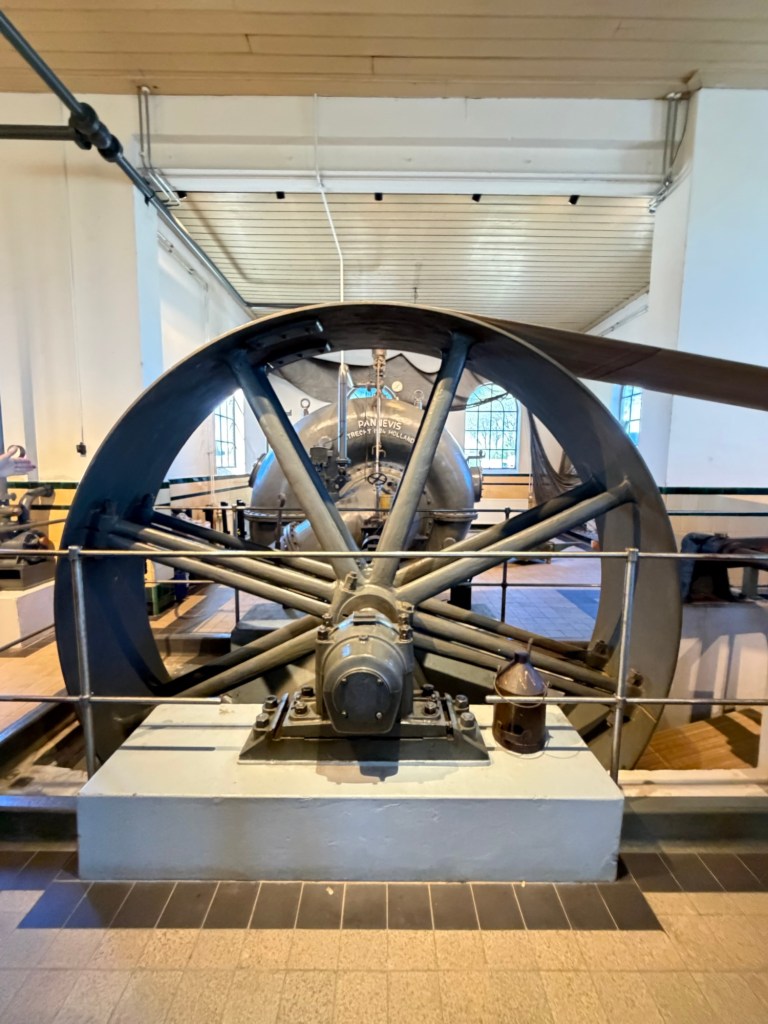
Together, they form a continuous thread of innovation—from wind-driven mechanics to contemporary engineering—all devoted to keeping the land dry.
I picked a stroopwaffel from a street vendor while leaving Kinderdijk.
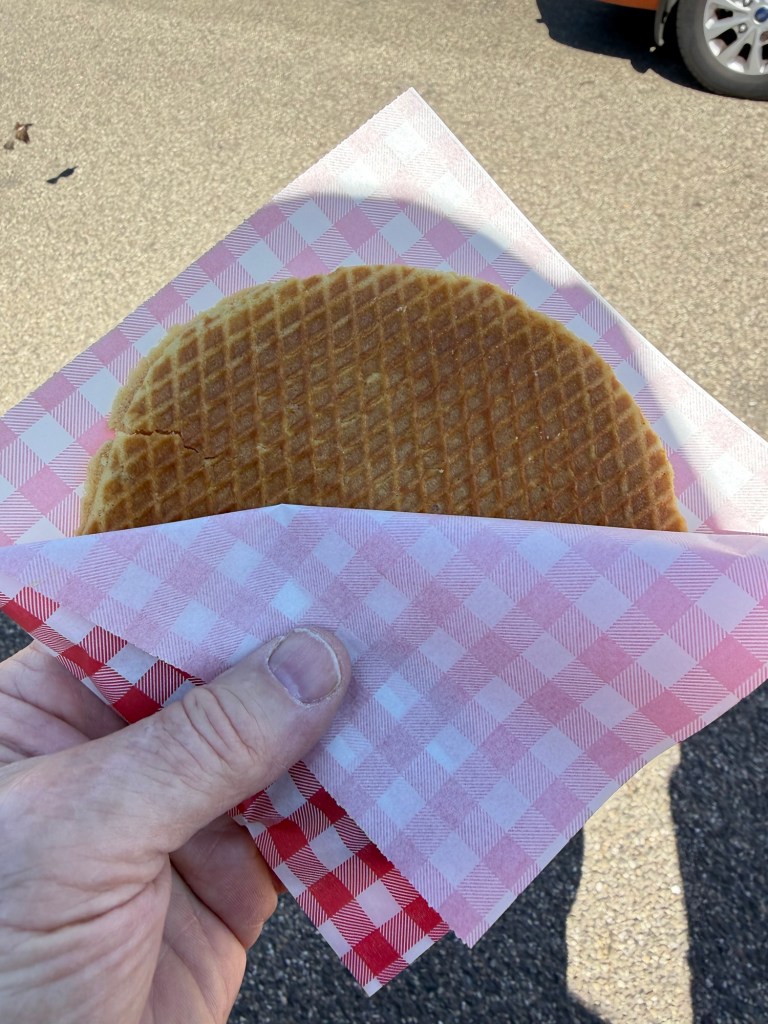
Two thin waffle layers, barely thicker than a cookie, pressed together with a ribbon of warm caramel syrup at the center. Fresh off the iron, it was lightly crisp on the outside and soft—almost molten—within.
It didn’t look like much at first. Perfectly round, neatly patterned, tucked into a simple paper sleeve. But one bite told the story: sweet, yes, but balanced by a toasted, buttery depth that made it hard to stop at just one. This not only added to the experience, but I fear it also made a quiet, lasting impression on my waistline.
Mohammed, Beth and I now heading to Antwerp, Belgium. See you tomorrow.