Tucked quietly behind the rhythm of the city, the Botanic Sanctuary Antwerp (www.botanicantwerp.be) feels less like a hotel and more like a rediscovered secret—one that has been patiently waiting for centuries to be noticed again.
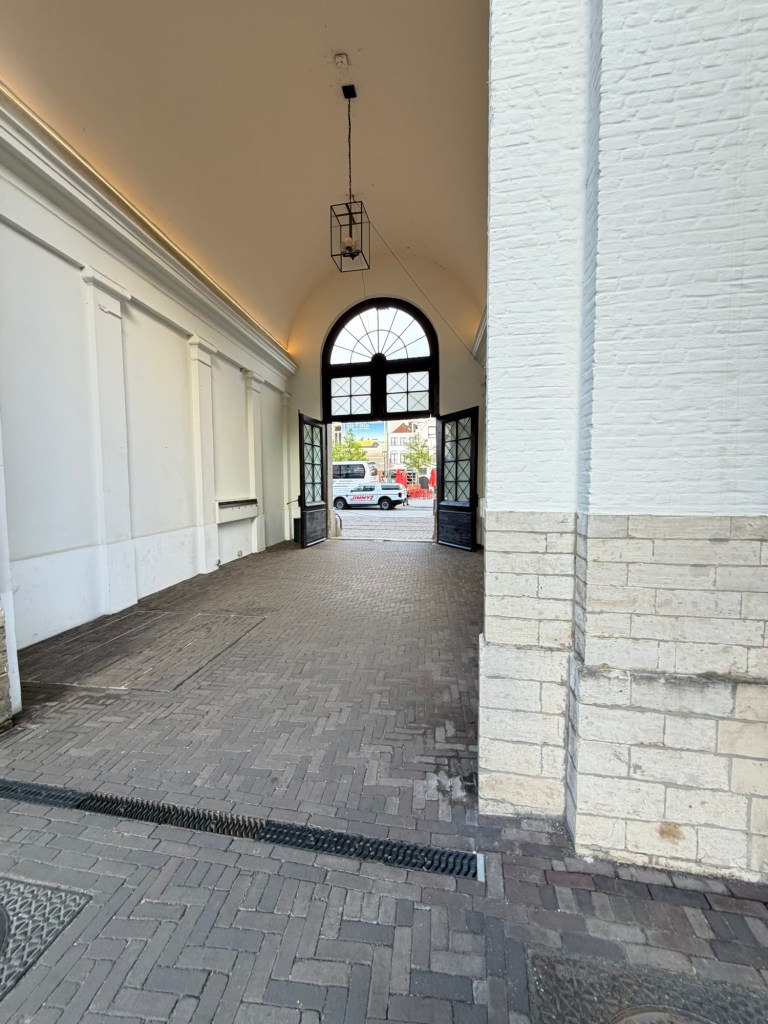
The moment you step inside, Antwerp seems to fall away. What takes its place is a world of cloisters, brick passageways, and hushed courtyards that whisper of another time. This was not always a place of leisure. Founded in 1238 as a hospital, the complex spent centuries devoted to healing—first the body, and perhaps just as much, the spirit.
That history is not something relegated to plaques or guided tours. It lingers in the architecture itself. You pass through former infirmaries now reimagined as serene spaces, beneath timbered ceilings that have seen more than most cities can remember. A chapel stands intact, quiet and contemplative, a reminder that care here once extended beyond medicine.
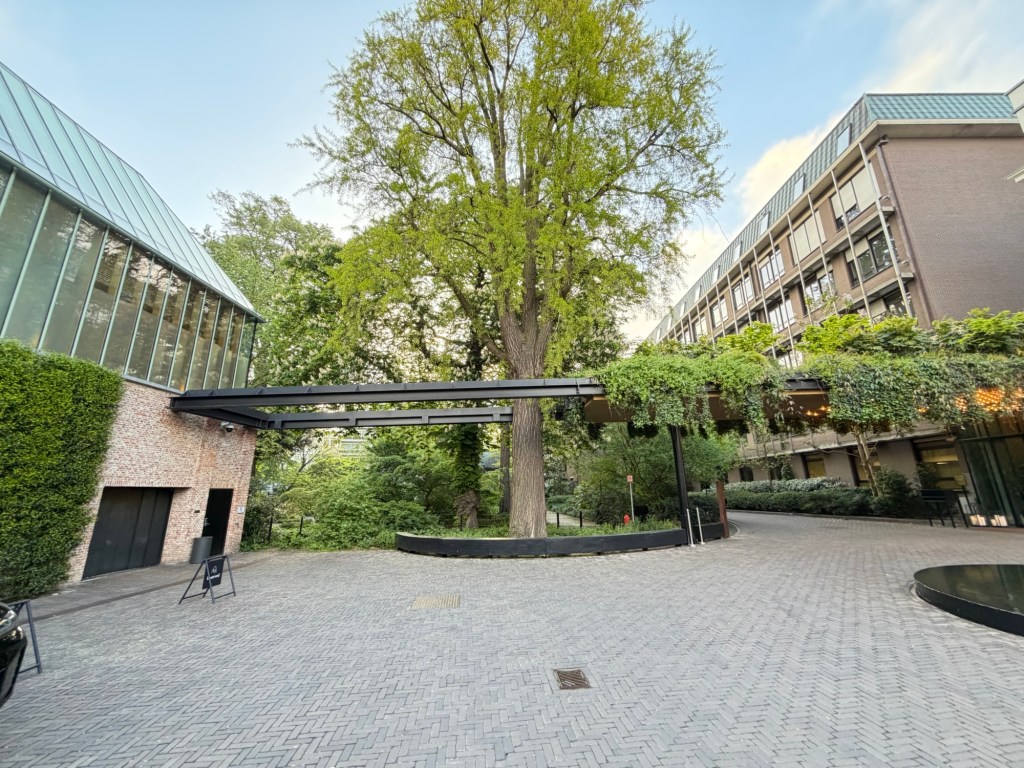
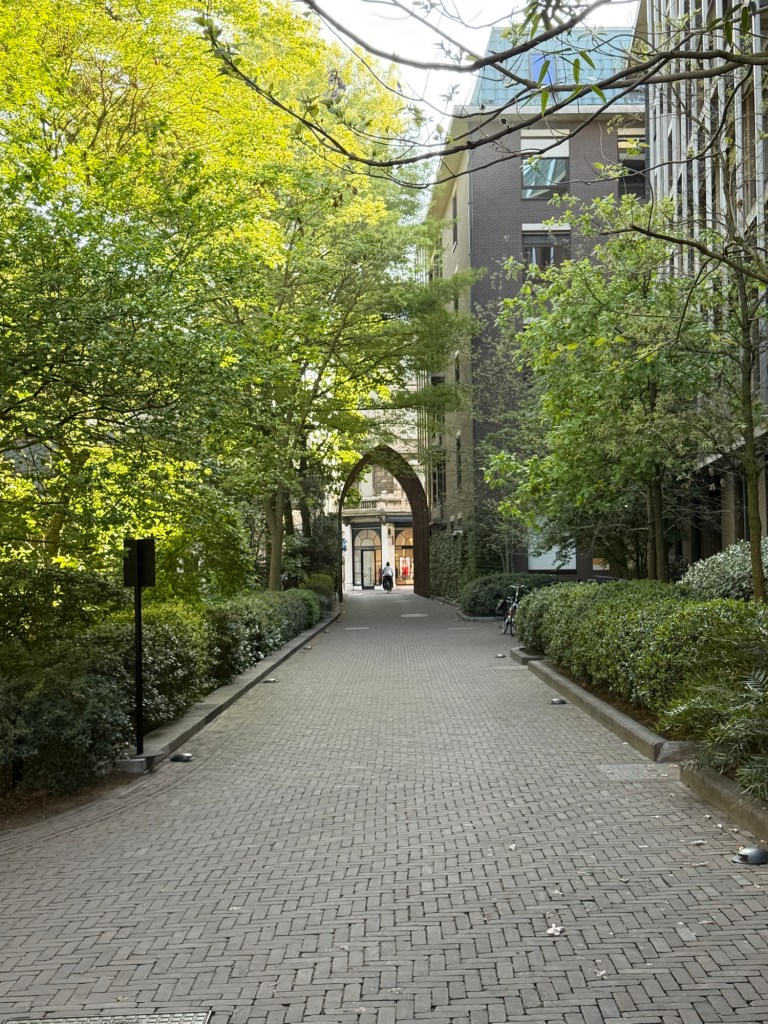
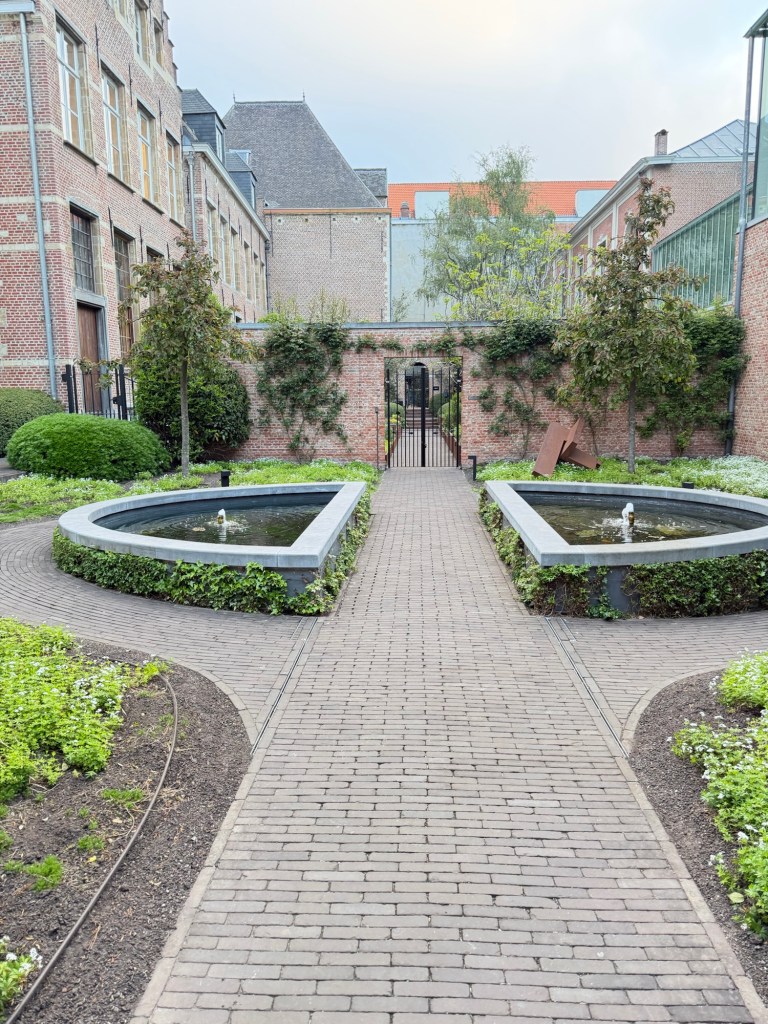
Step outside, and the connection deepens. Just beyond the walls lies Den Botaniek, the city’s botanical garden, rooted in the same tradition of medicinal plants that once supplied the hospital’s apothecary. Even now, the presence of greenery feels purposeful—less ornamental, more restorative.
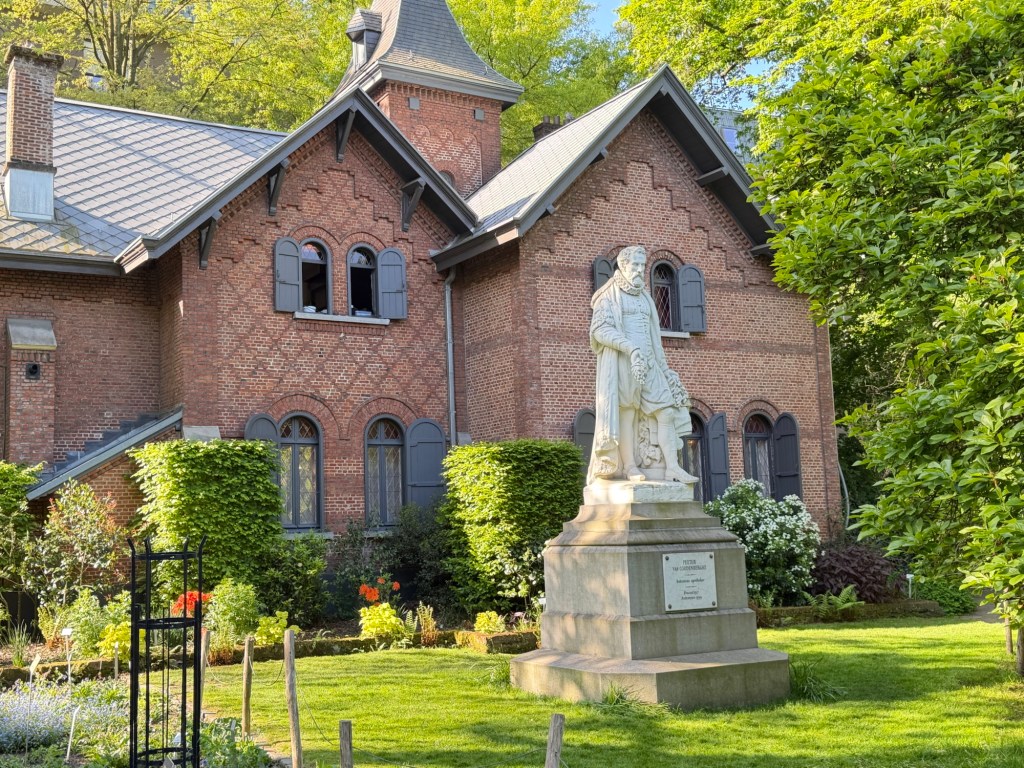
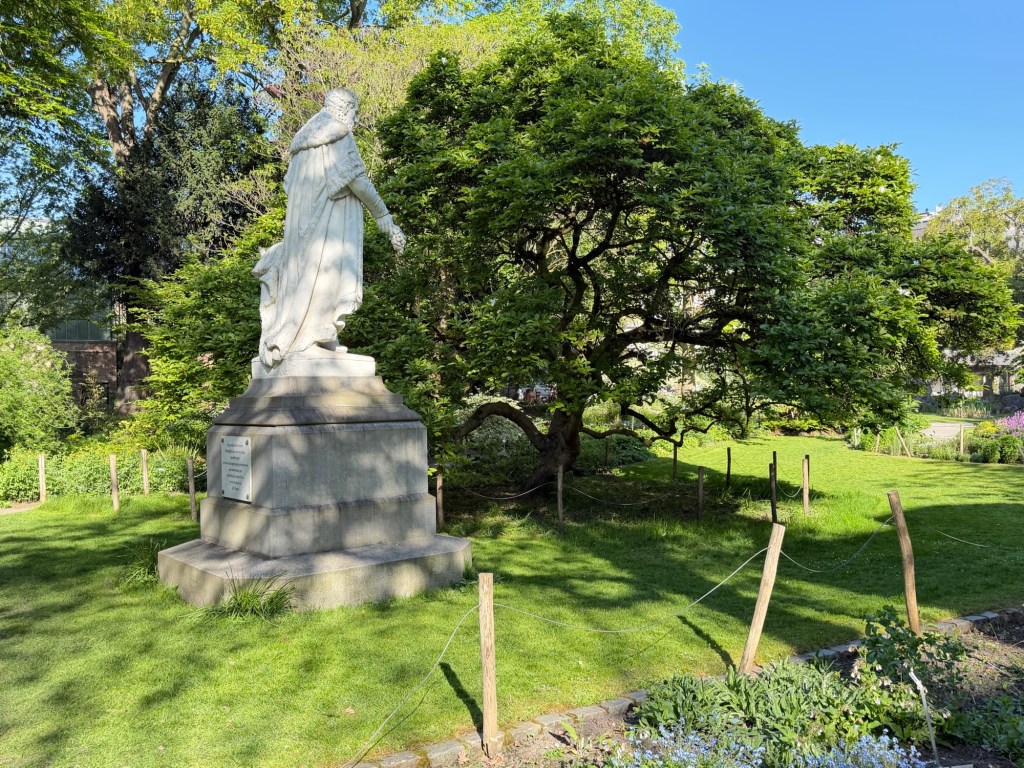
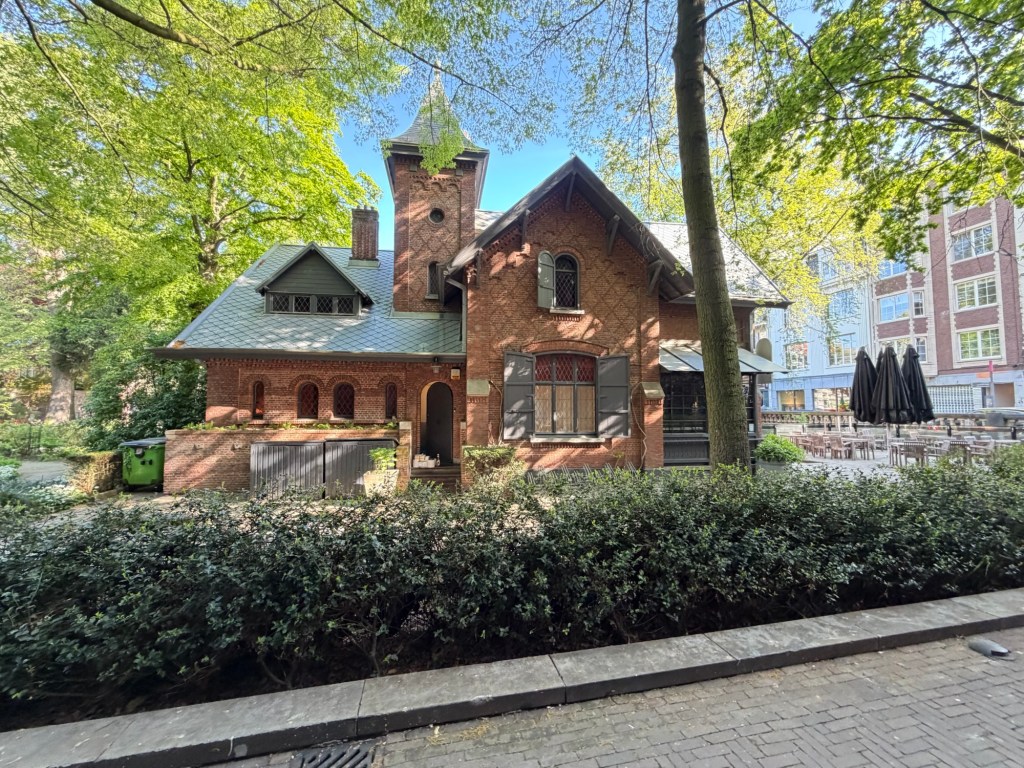
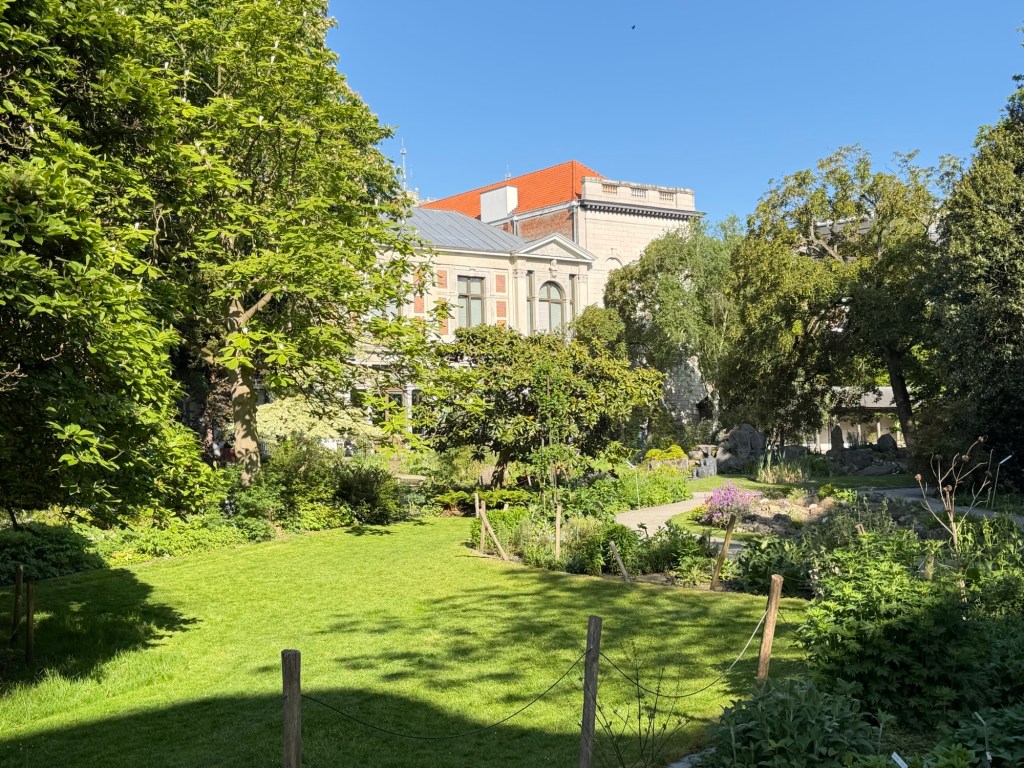
And then, just as you transition between these worlds, something unexpected appears.
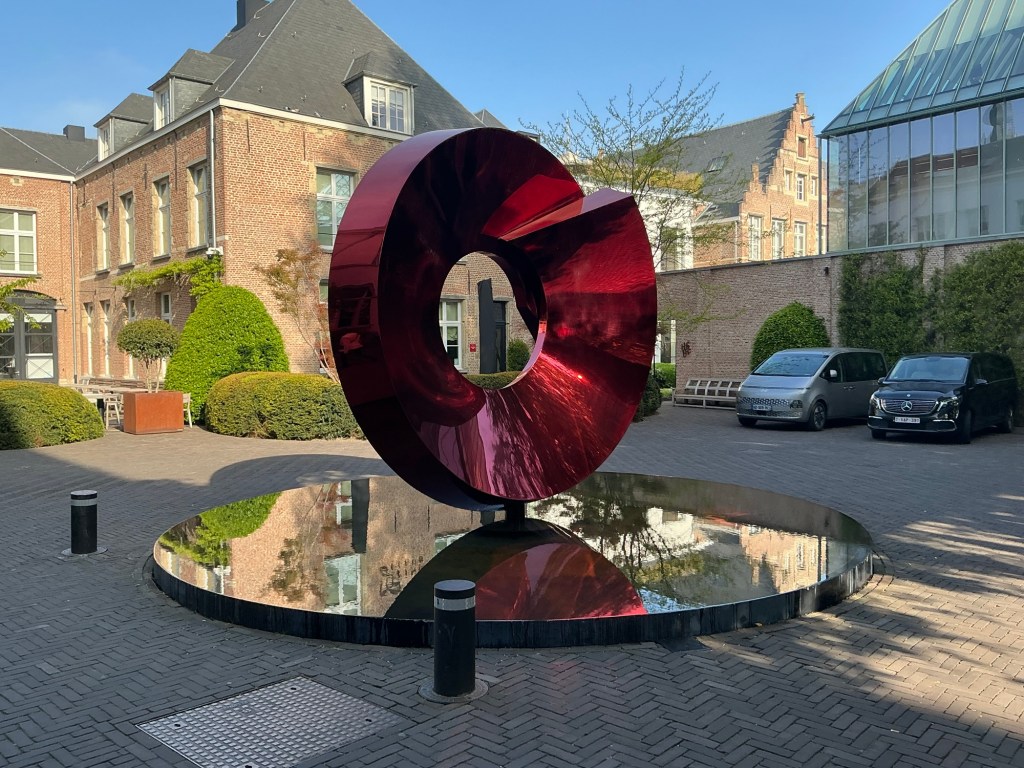
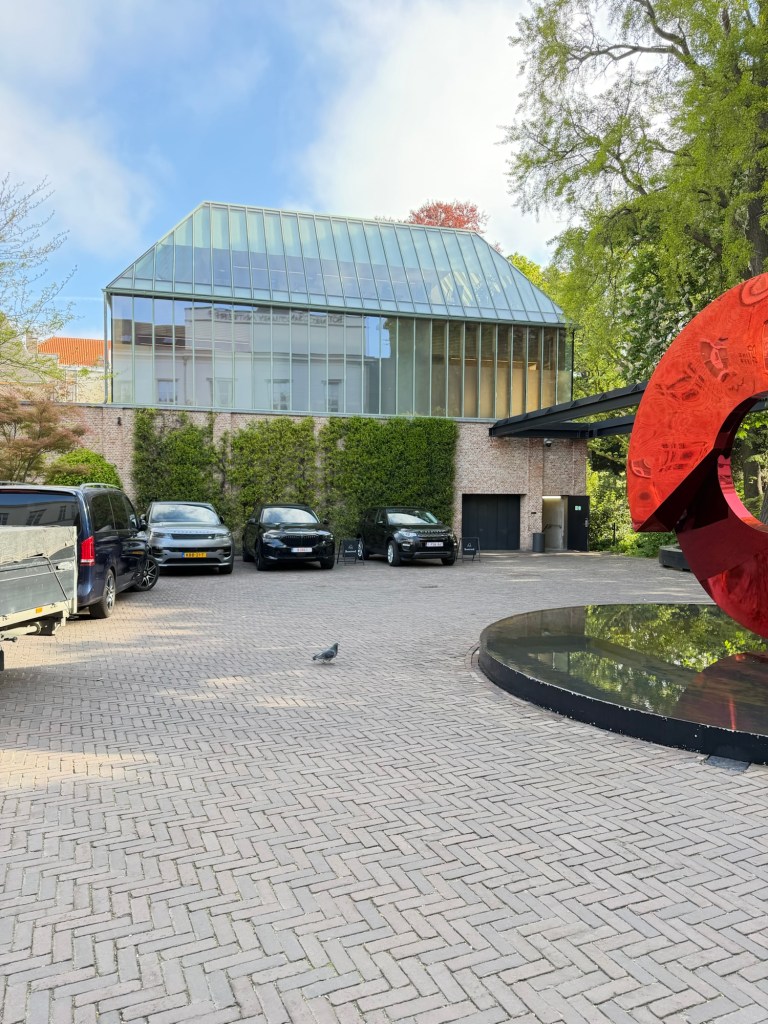
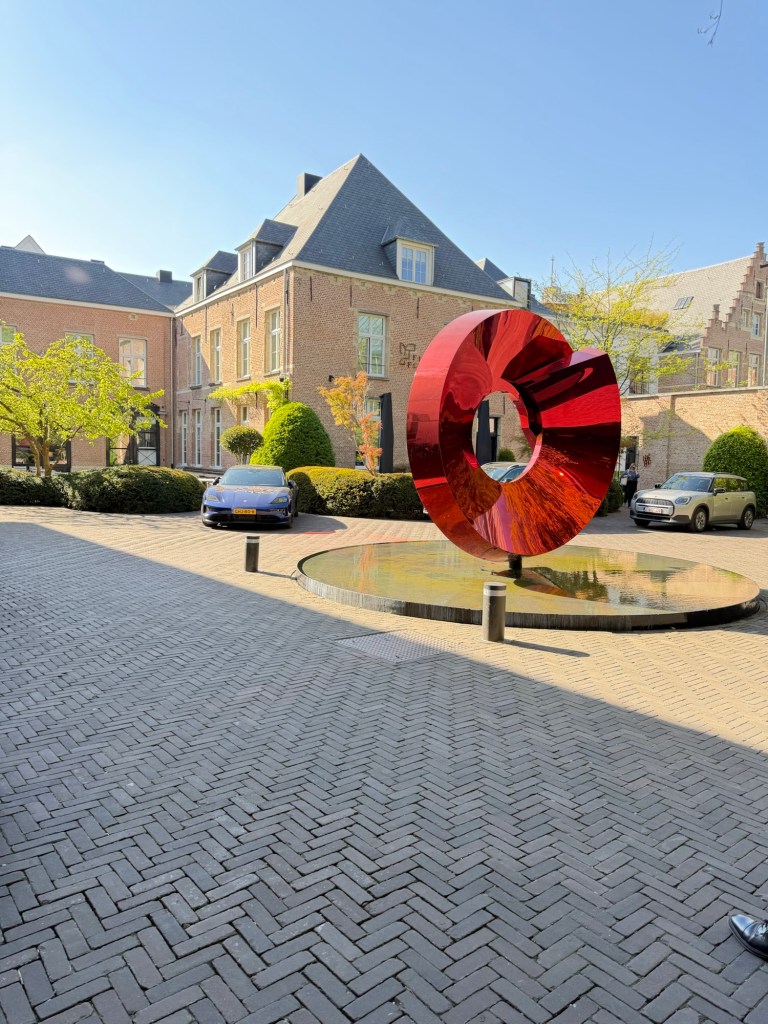
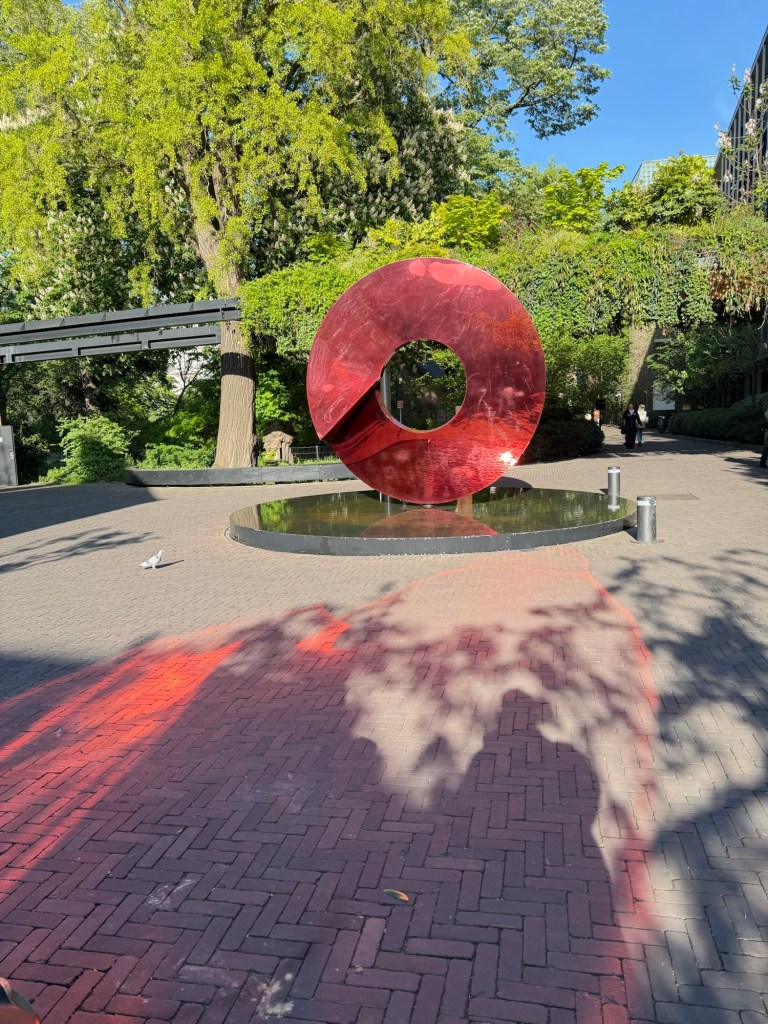
A vivid red sculpture rises from a shallow reflecting pool—a polished circular form with a hollow center, almost like a portal suspended in space. It catches the sunlight and throws it back in shifting tones, pulling the surrounding trees, sky, and passersby into its surface. Modern, abstract, and unapologetically bold, it feels at first like an interruption.
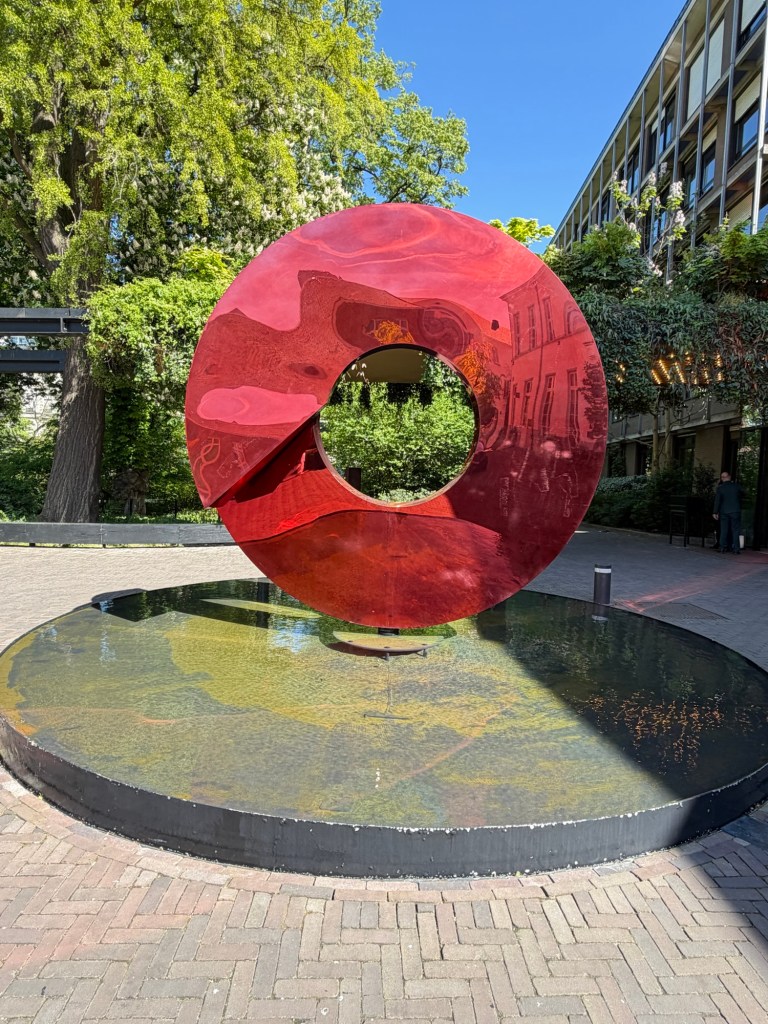
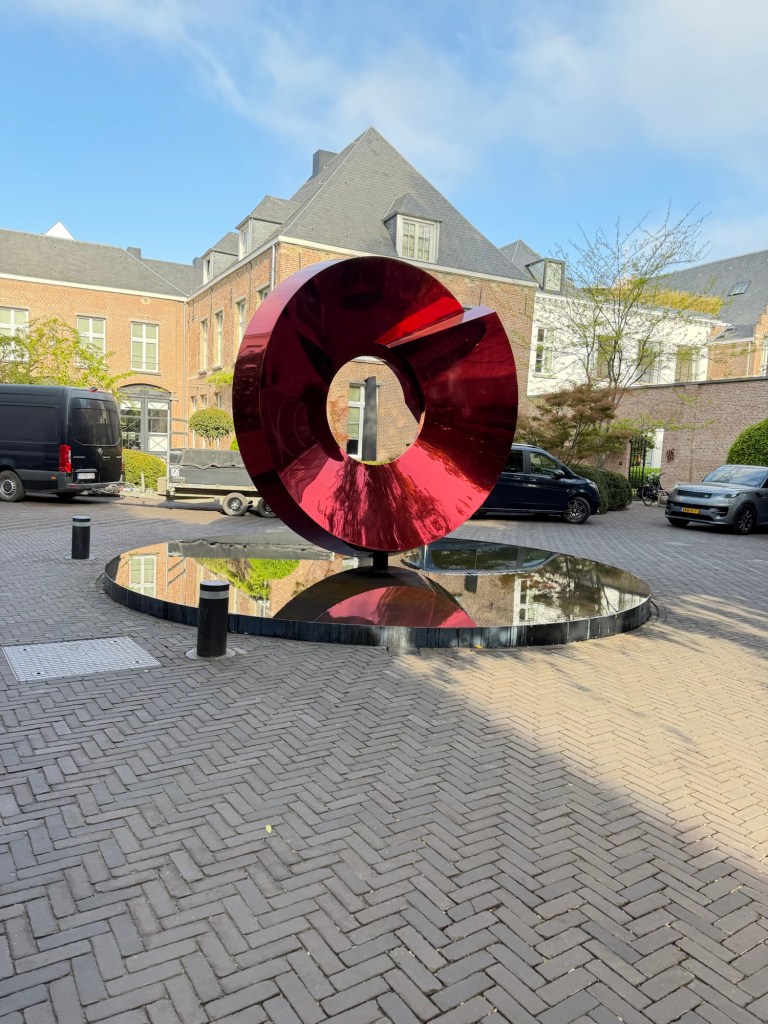
But the longer you stand there, the more it begins to make sense.
Positioned between the centuries-old sanctuary and the living garden, the sculpture becomes a kind of bridge—a reminder that this place is not preserved in amber. The Botanic Sanctuary Antwerp is not just about history; it’s about continuity. Healing once meant herbs and prayer. Today, it might mean stillness, design, or simply stepping out of time for a while.
The contrast is what gives the place its energy. Quiet cloisters give way to open sky. Medieval walls meet contemporary form. Reflection—both literal and figurative—sits at the center of it all.
And then comes the reception.
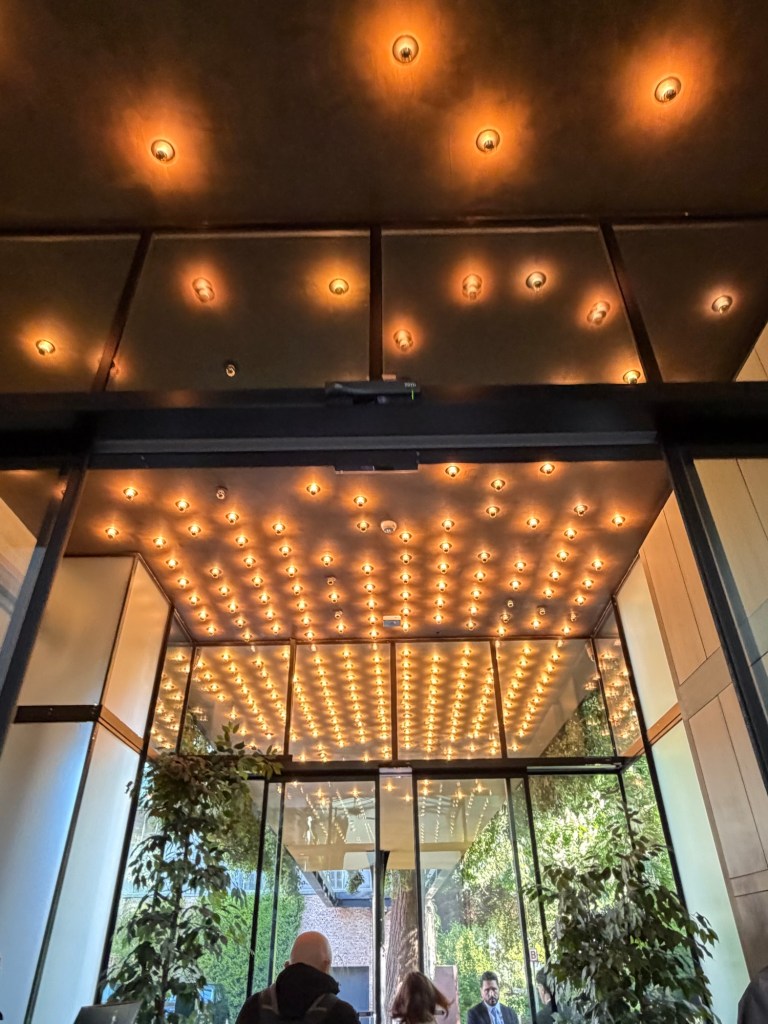
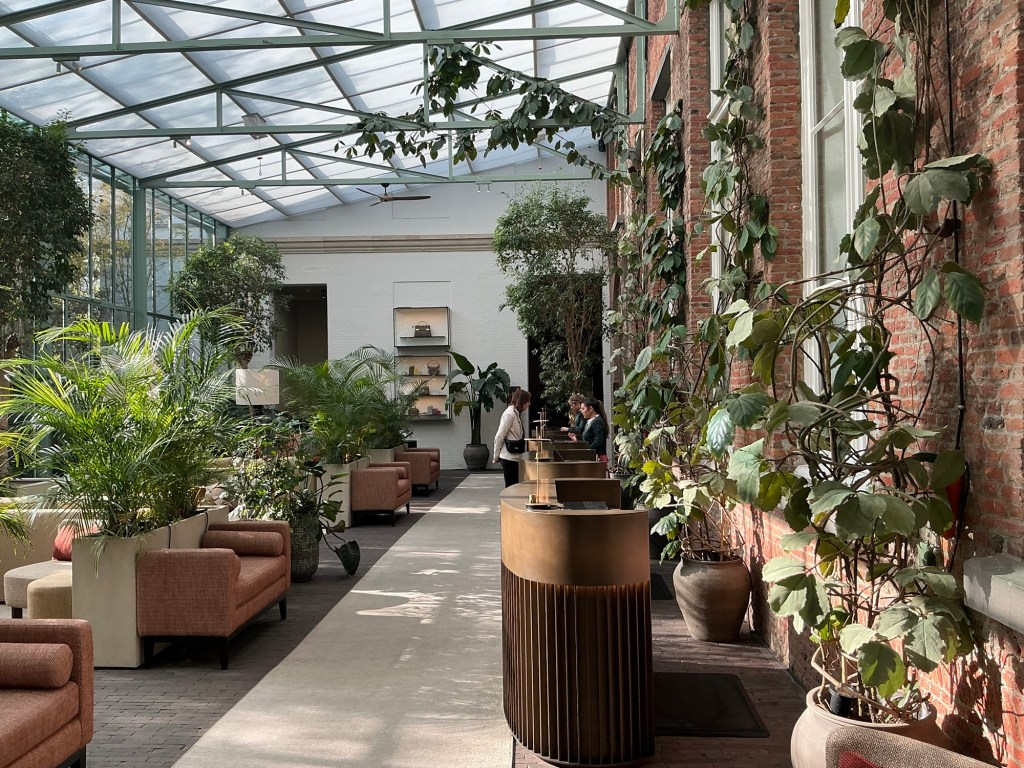
At first glance, it’s modern. But look a little longer, and it reveals itself as something more layered. Overhead, a ceiling of small, warm lights stretches outward in a grid—almost like a constellation brought indoors. The effect is surprisingly intimate, casting a soft glow that feels closer to candlelight than anything overtly contemporary.
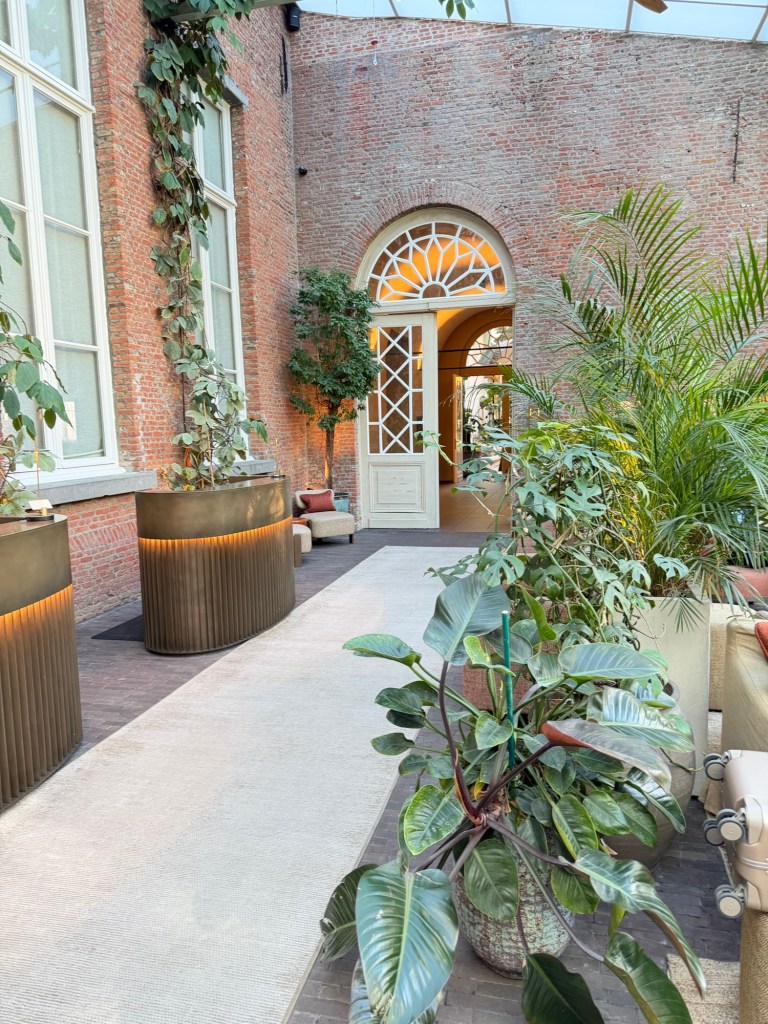
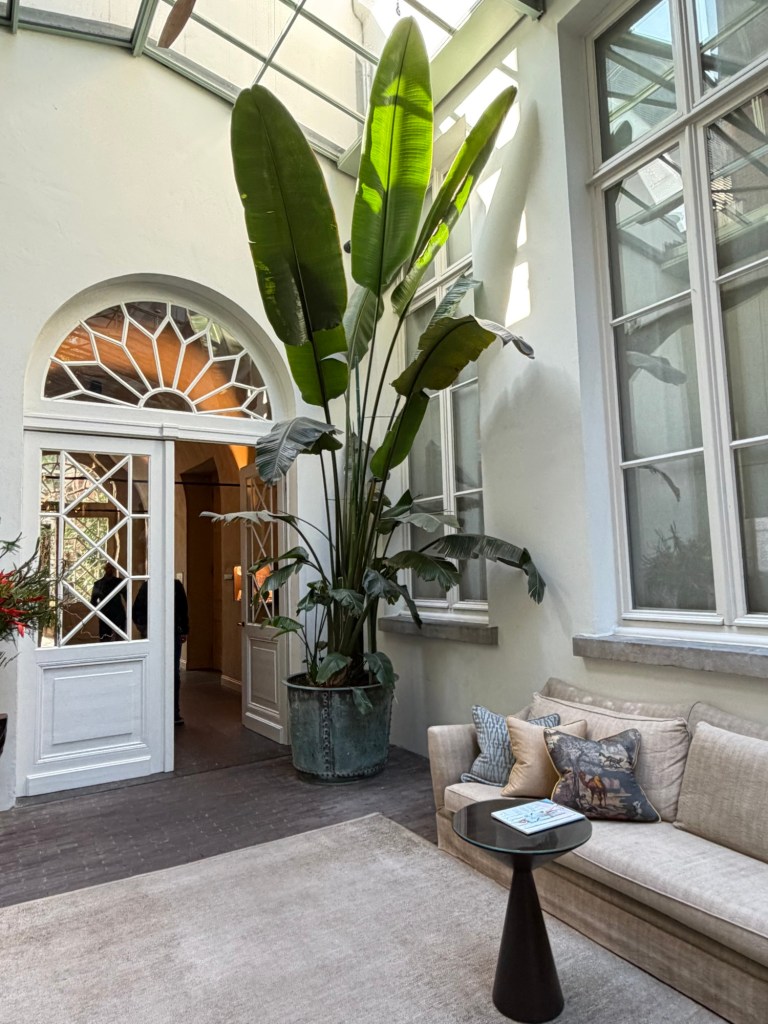
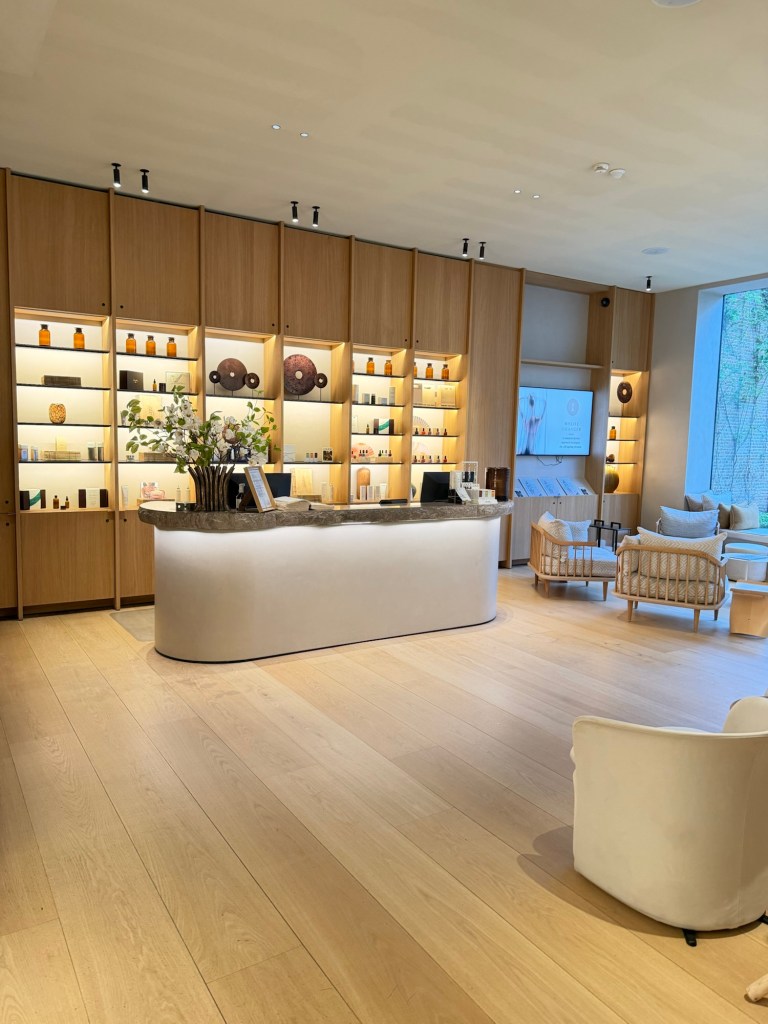
Below, the space opens into a courtyard-like reception area where brick walls, glass, and greenery coexist with ease. The desk itself doesn’t dominate; instead, it blends into the environment, allowing the architecture to lead. Large potted plants soften the edges, reinforcing the connection to the nearby Den Botaniek and the sanctuary’s botanical roots.
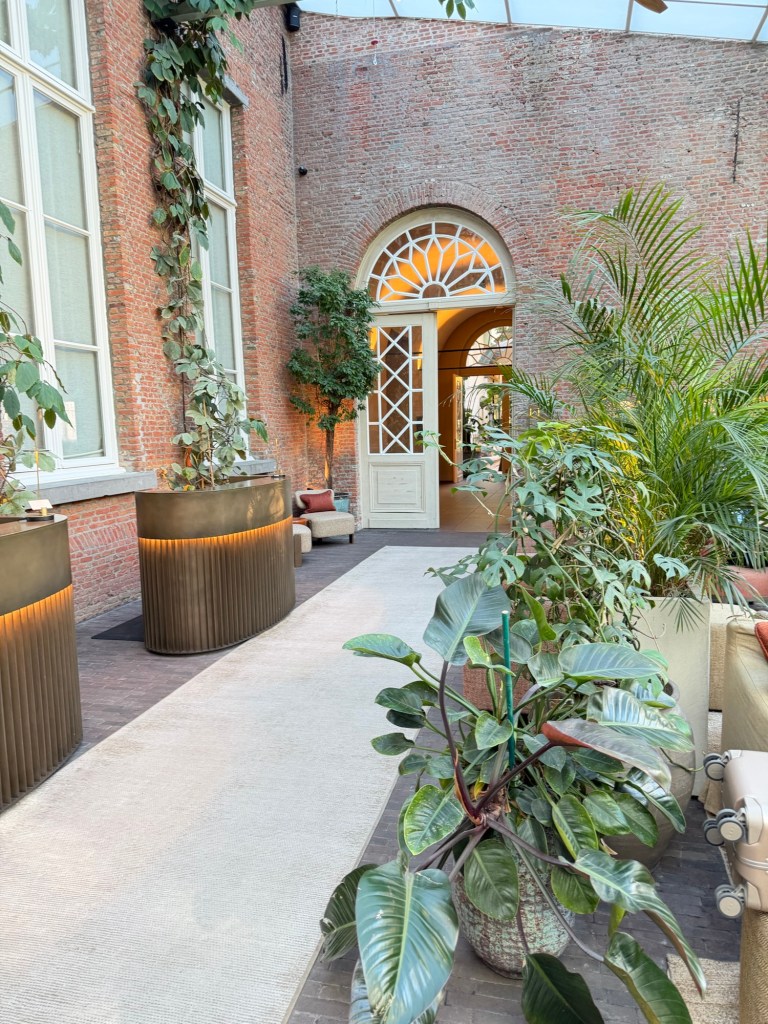
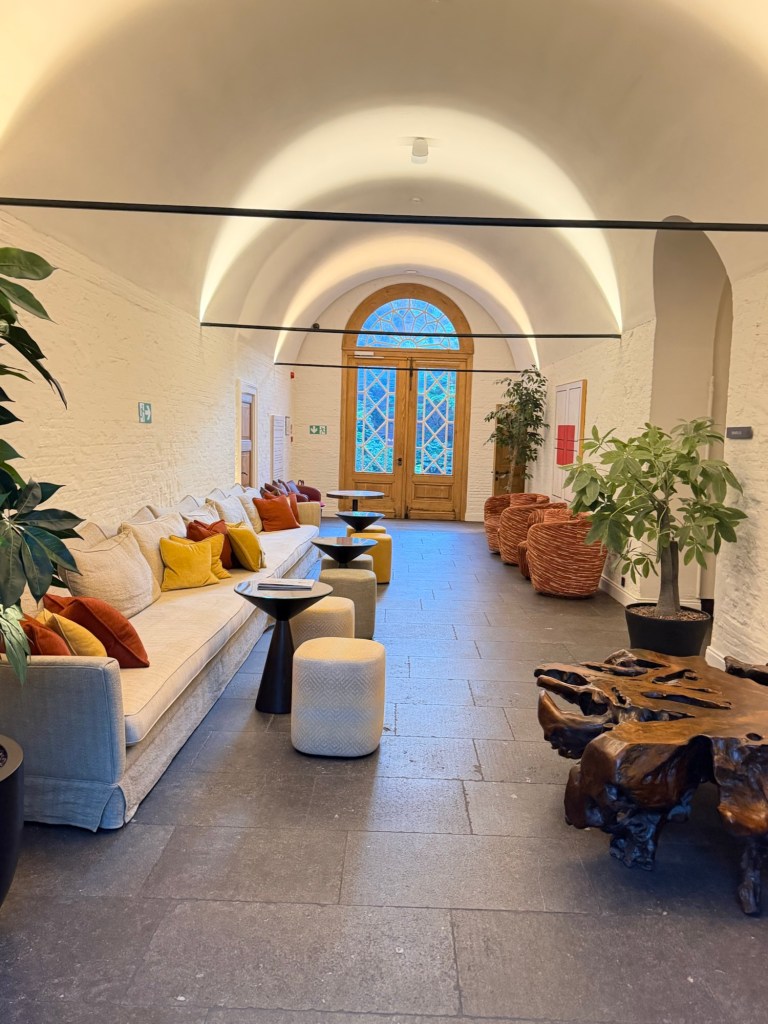
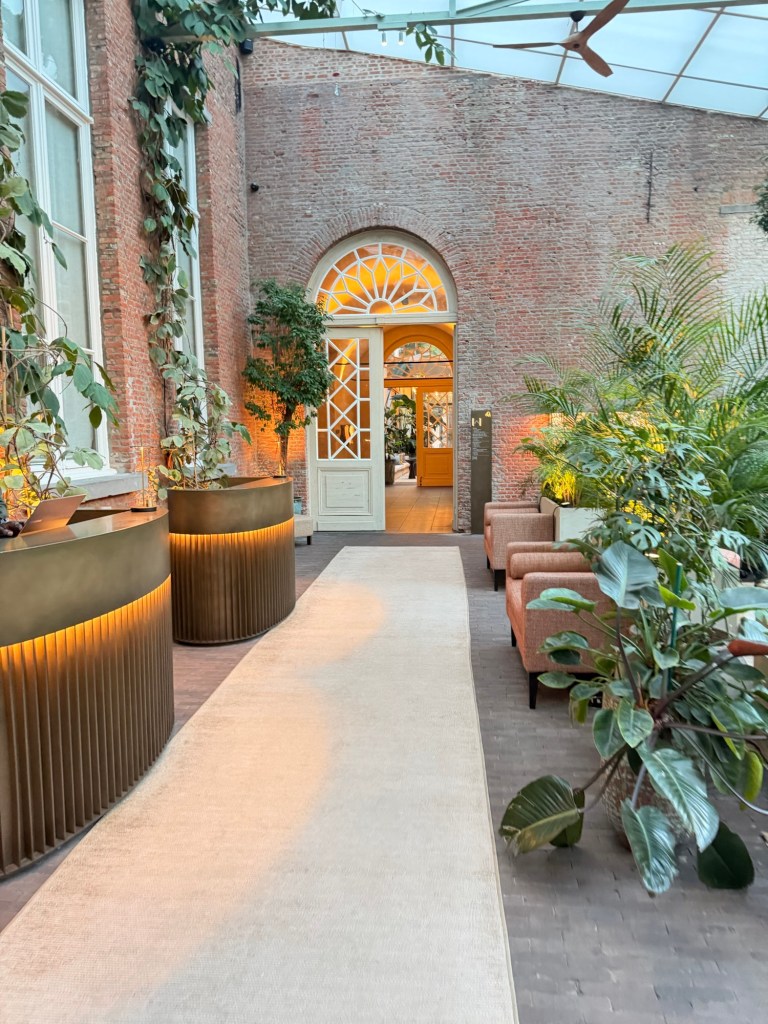
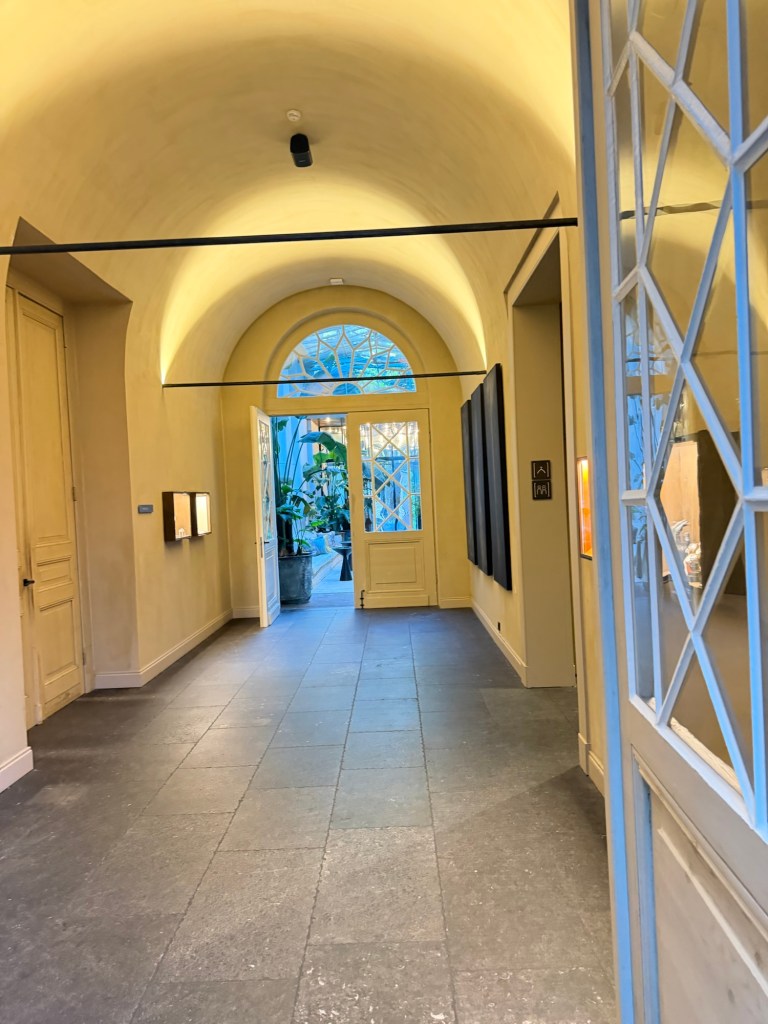
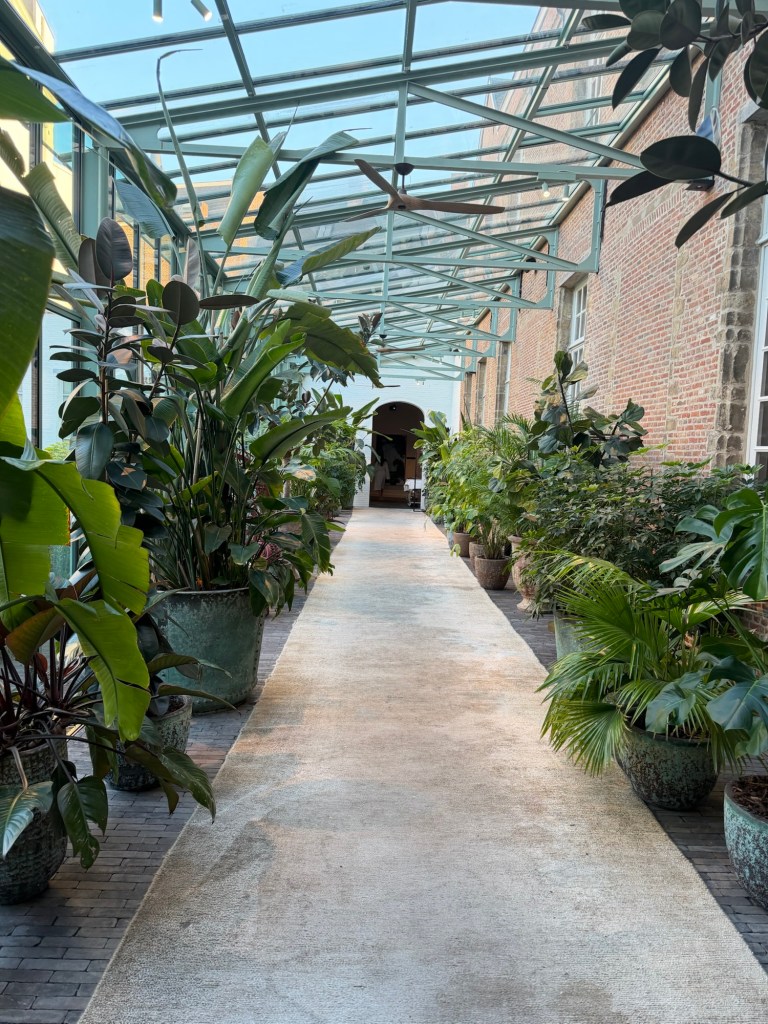
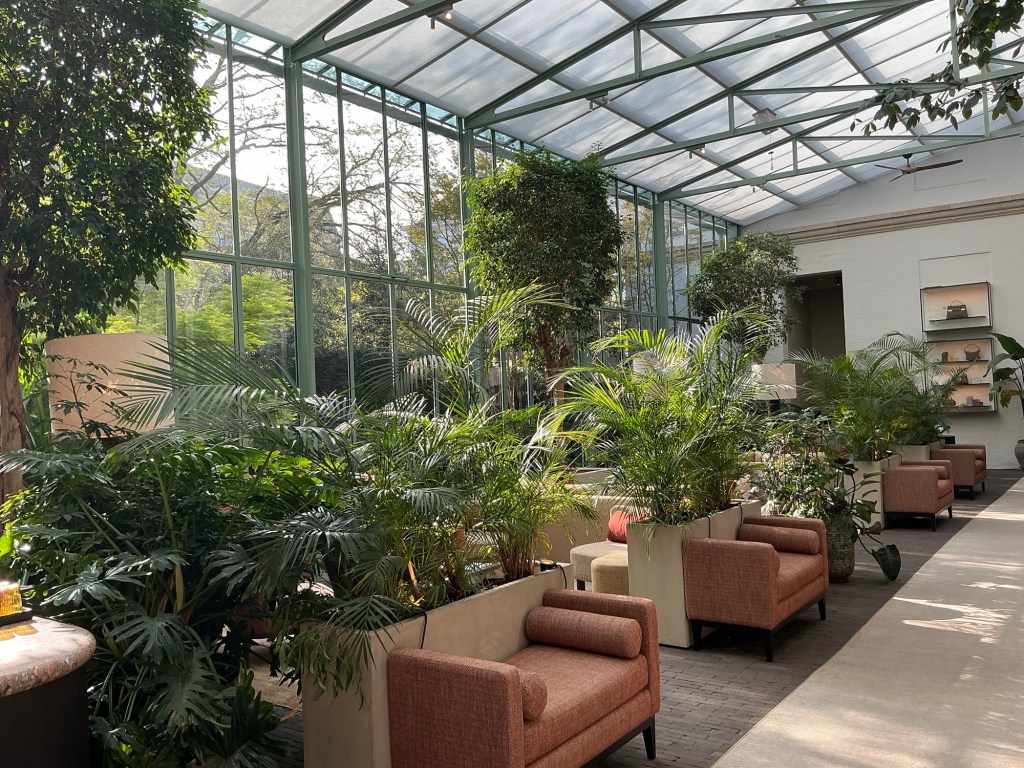
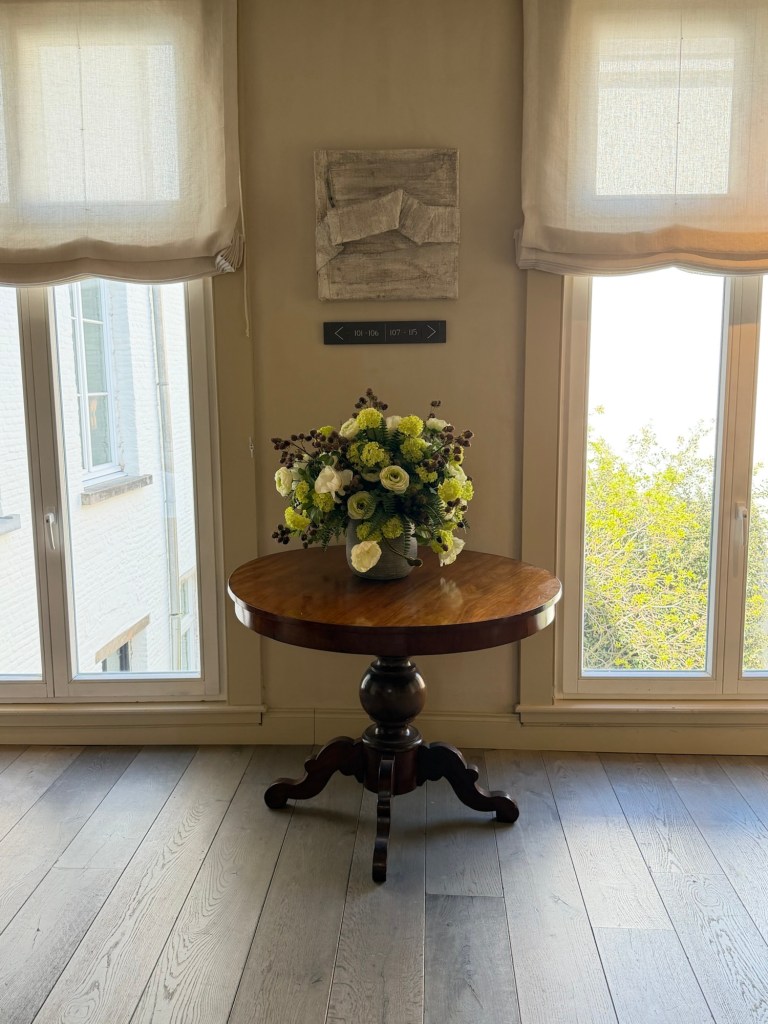
Move a bit further, and the experience shifts again. Arched hallways—once purely functional—have been transformed into lounge-like spaces. Low seating, textured wood, and carefully placed lighting create pockets of calm that invite you to pause rather than pass through.
Room 108 continues that theme. From the hallway, it’s almost anonymous, a door you could easily pass without a second thought. But inside, it opens into something altogether different. The room unfolds in layers—a soft, neutral palette, a bed that anchors the space, and a sitting area that invites you to stay awhile.
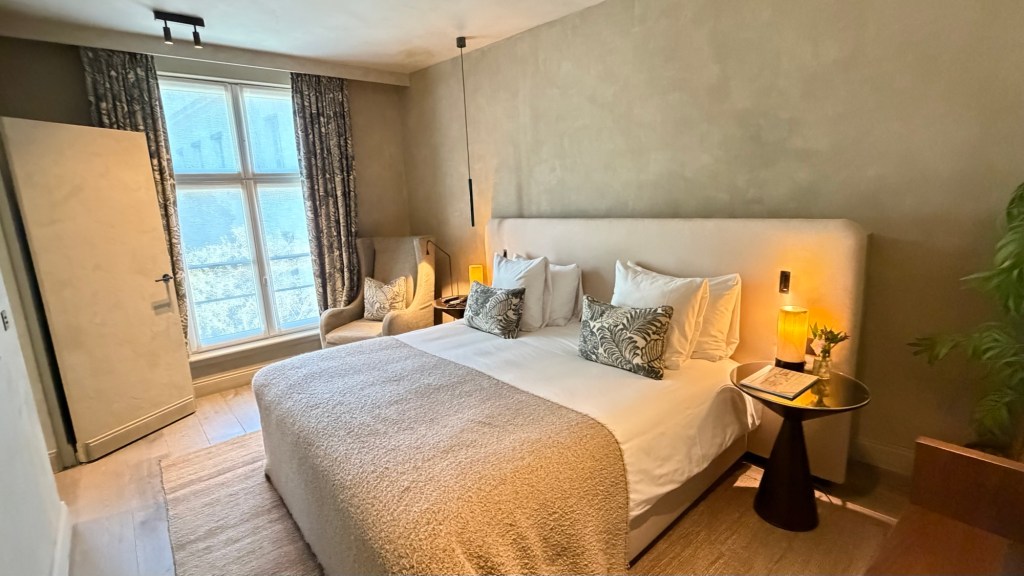
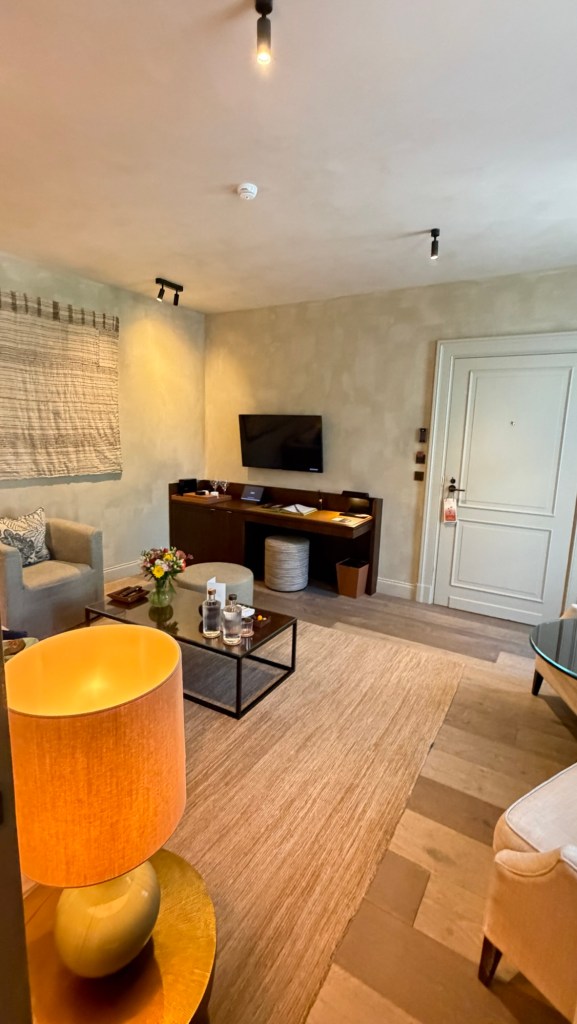
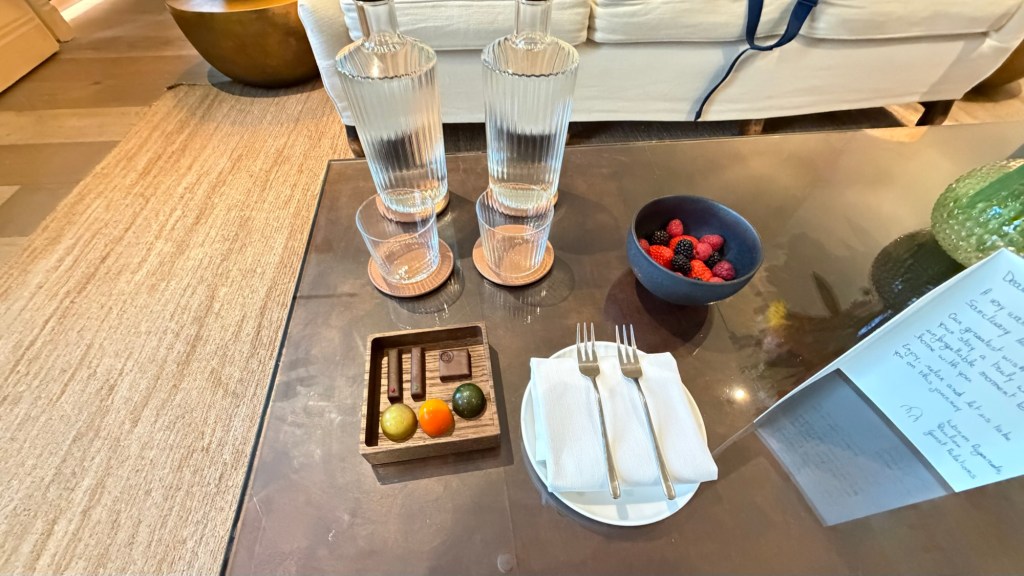
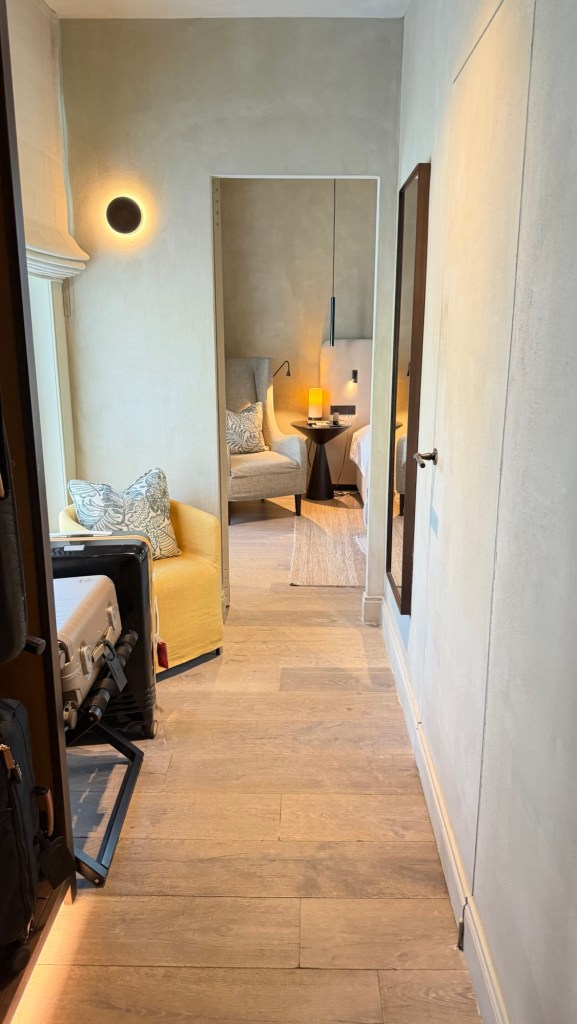
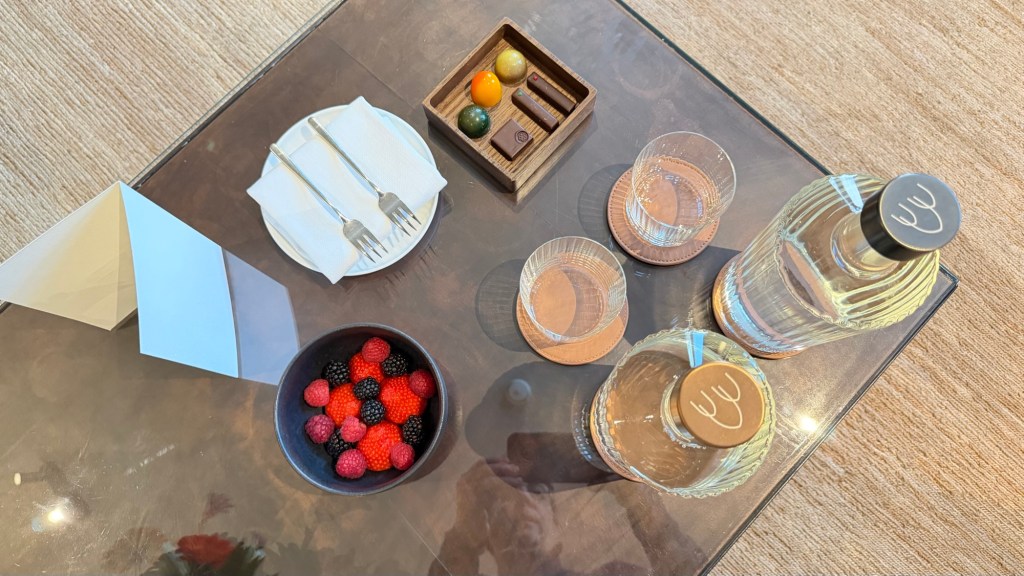
Nothing shouts for attention, yet everything feels considered. Waiting on arrival was a small but memorable welcome: Belgian chocolates alongside fresh berries and a handwritten note—simple, thoughtful, and perfectly in keeping with the setting. And then, in the evening, another layer reveals itself. Turndown service is done with quiet precision—the room subtly refreshed, lighting softened, and a pair of slippers placed neatly by the bed, waiting. It’s a small gesture, but one that captures the hotel’s attention to detail. The room doesn’t just welcome you once; it welcomes you back.
Mornings begin in the breakfast room, where the scale expands but the mood remains consistent. High ceilings, exposed beams, and warm wood tones create a space that feels both expansive and intimate.
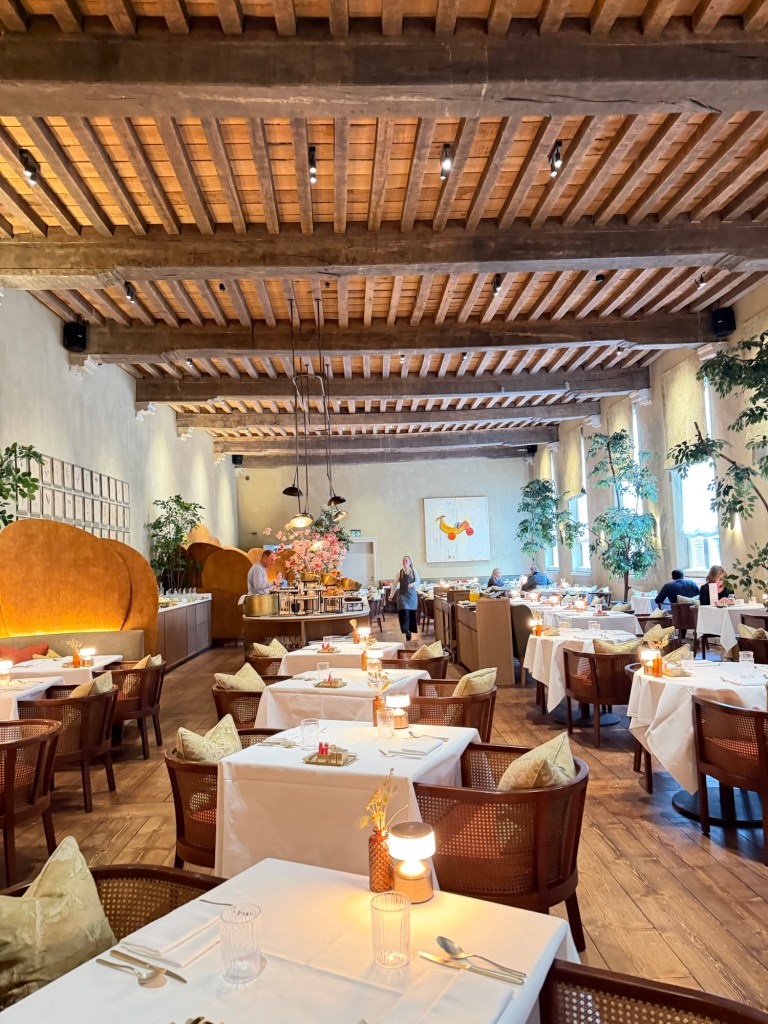
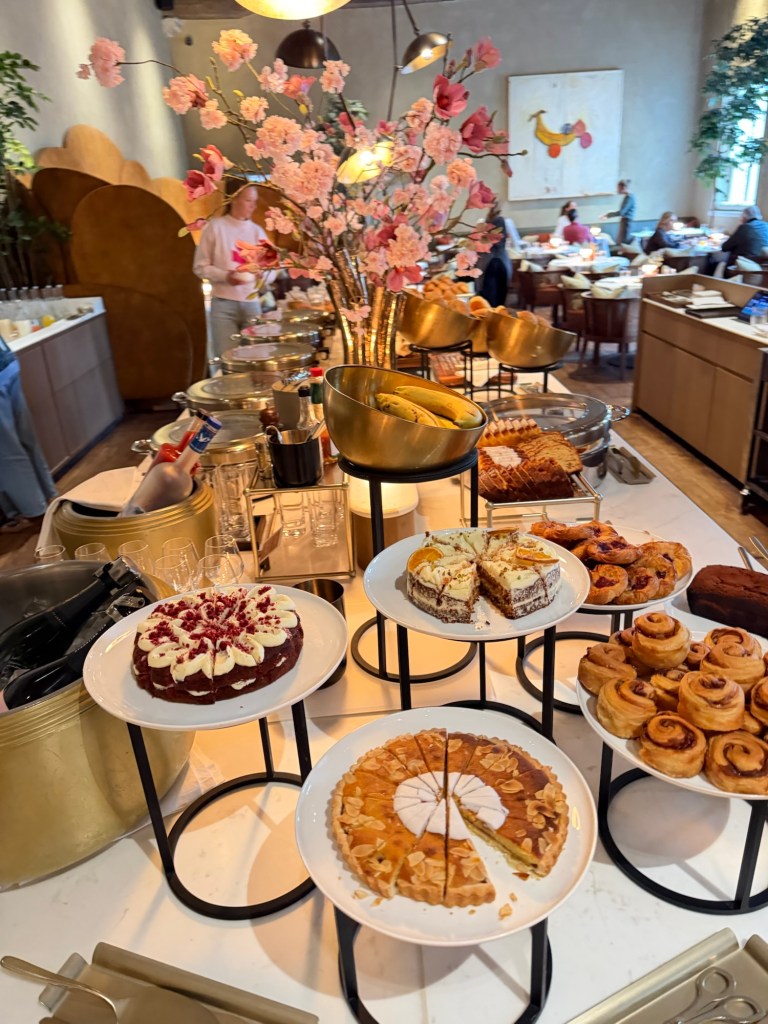
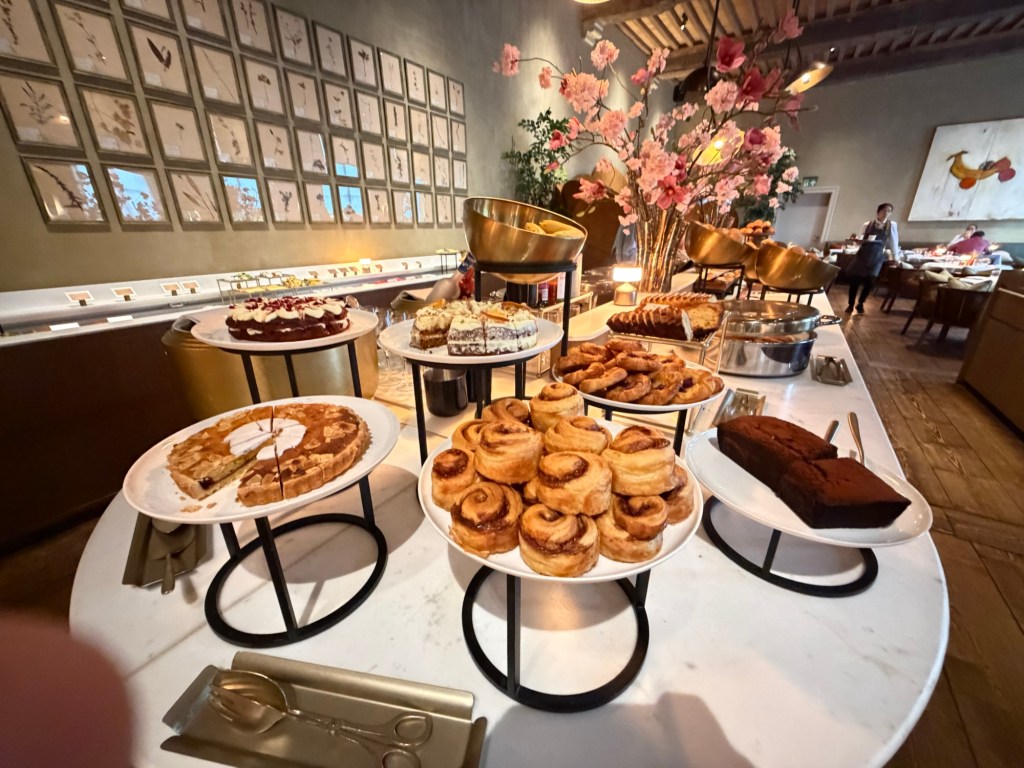
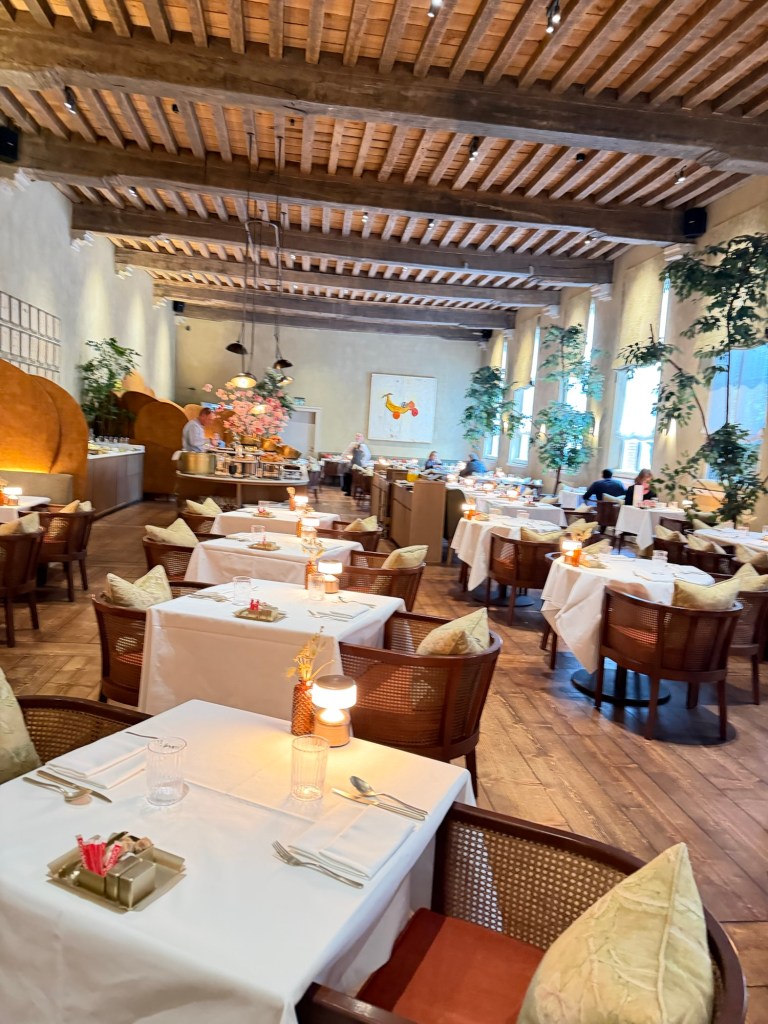
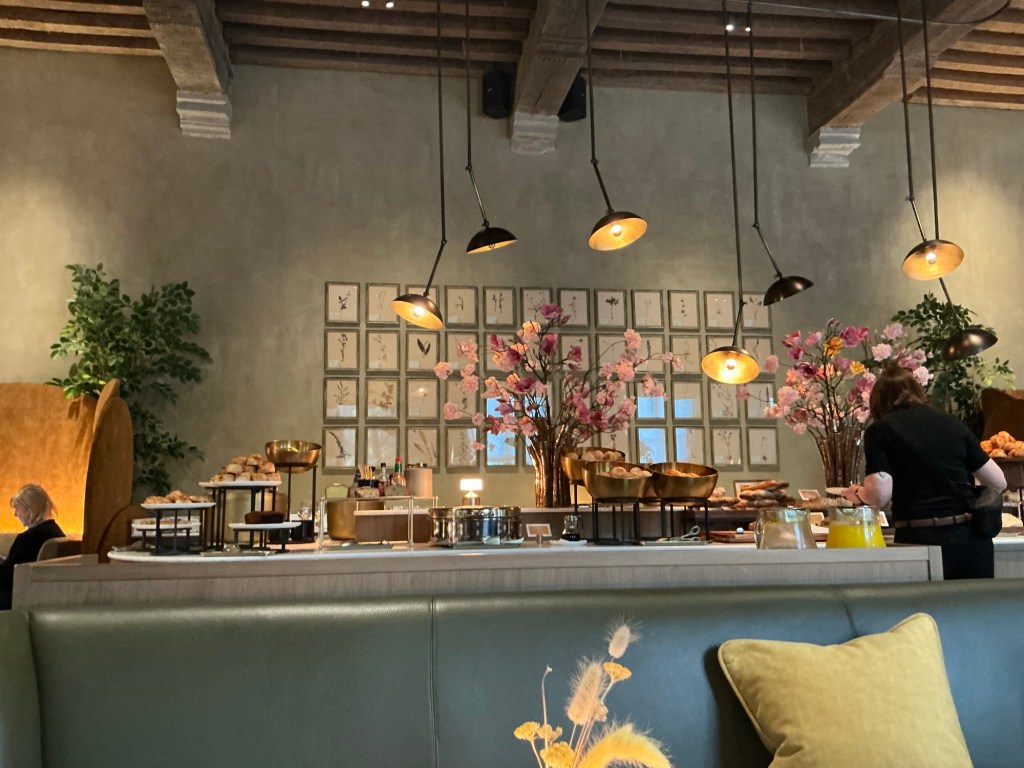
The buffet is thoughtfully composed—fresh breads, pastries, cheeses, and small details that elevate the experience without overwhelming it. It’s the kind of place where you intend to have a quick breakfast and instead find yourself lingering.
The fitness center, pool, and spa soon become part of the daily rhythm. I found myself there early—often right at 6 a.m.—when the spaces were at their quietest. The gym, filled with natural light from its glass roof, makes even a simple workout feel restorative.
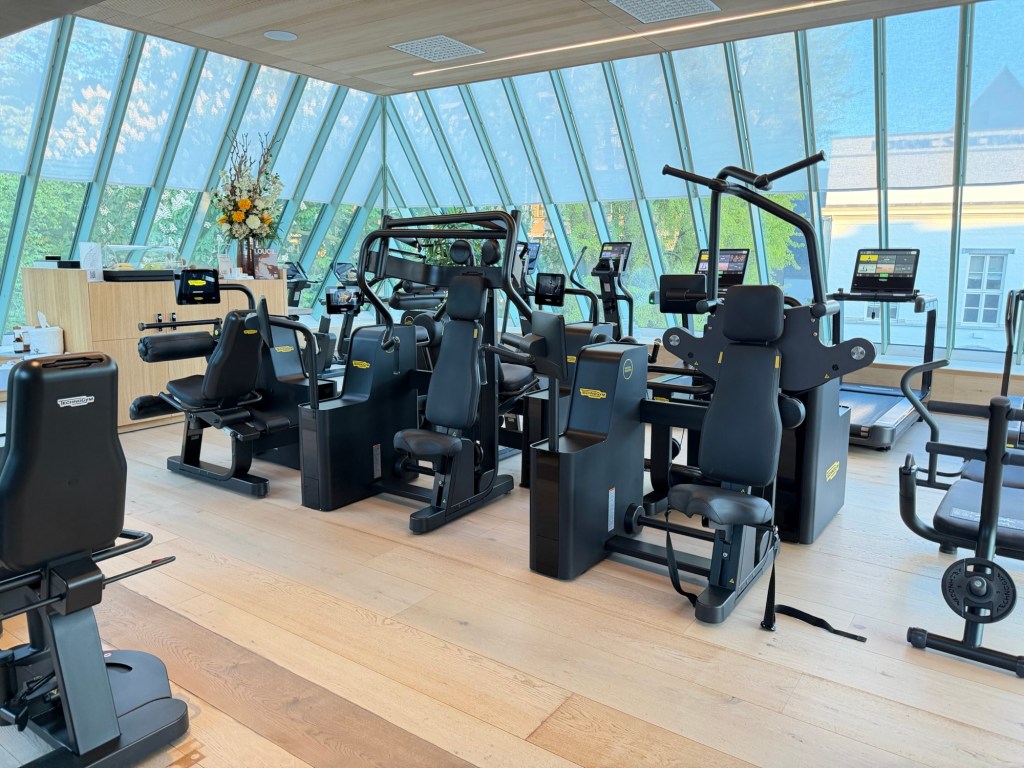
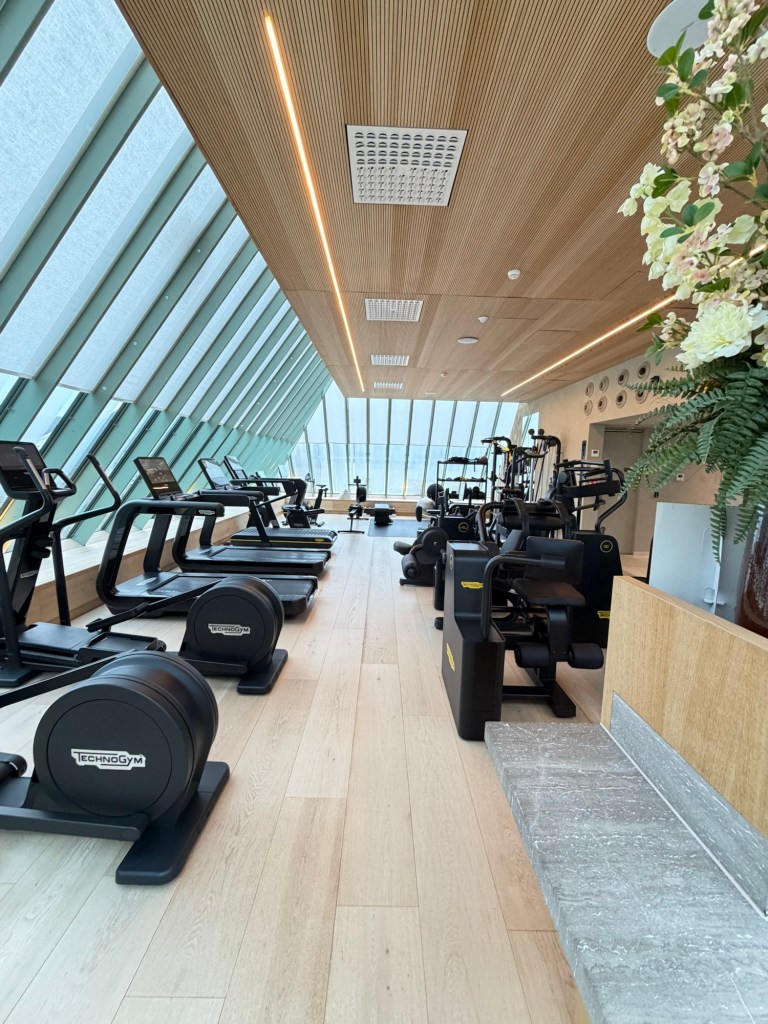
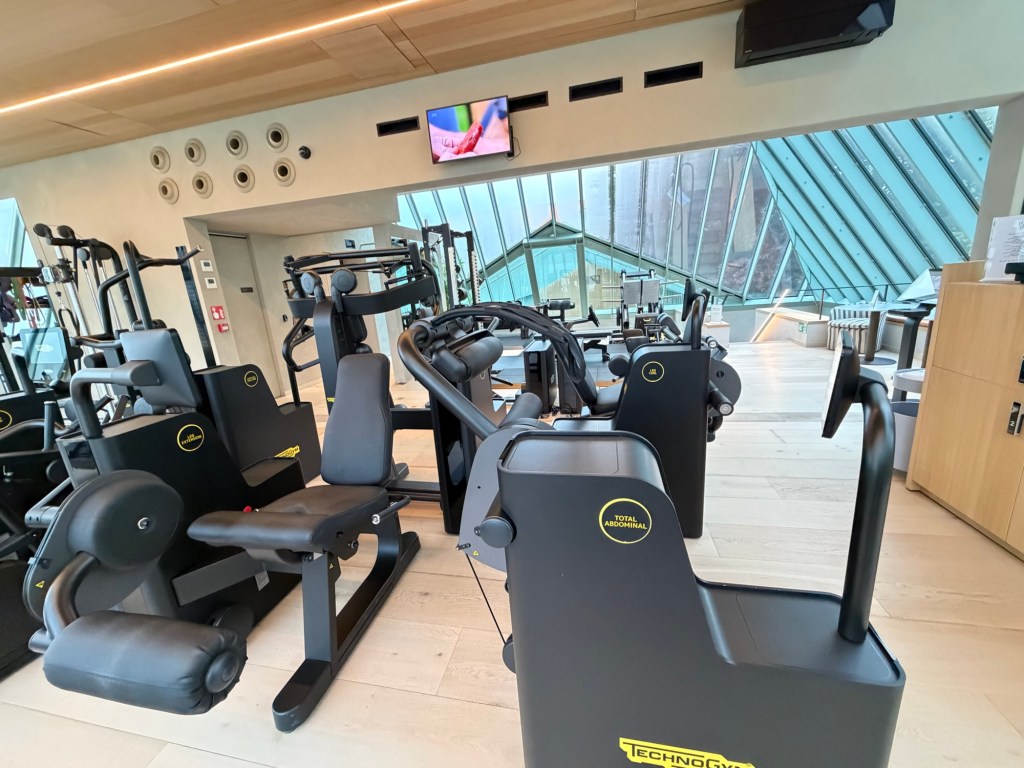
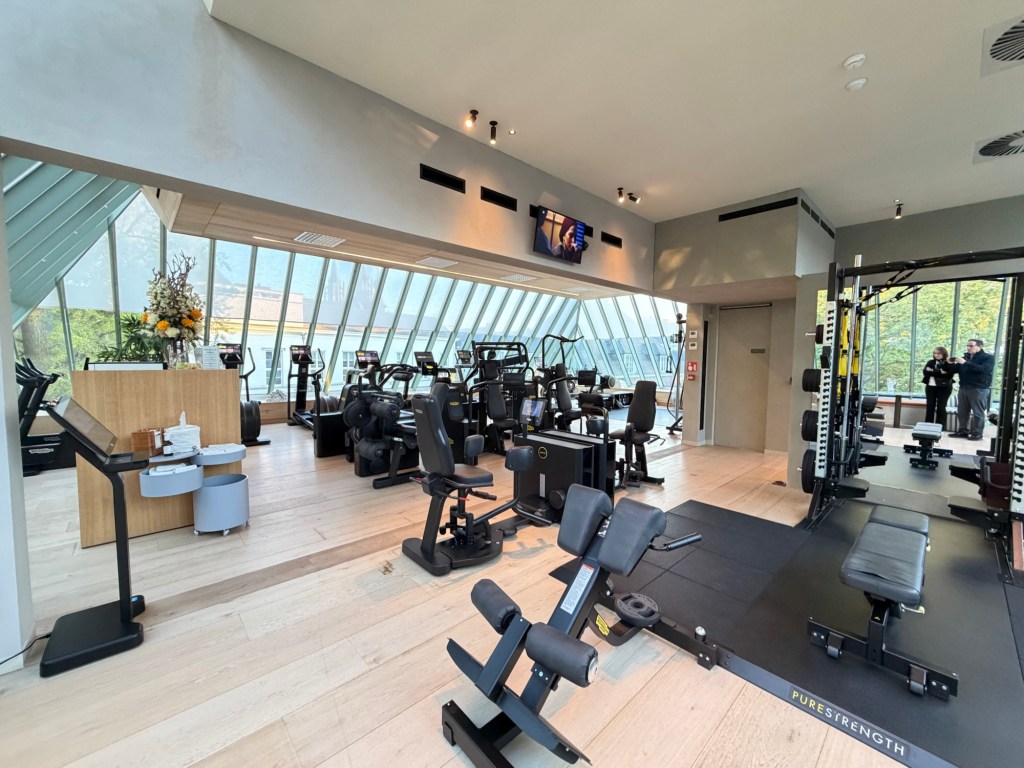
The pool carries that same calm, long and still, more about easing into the day than measuring effort.
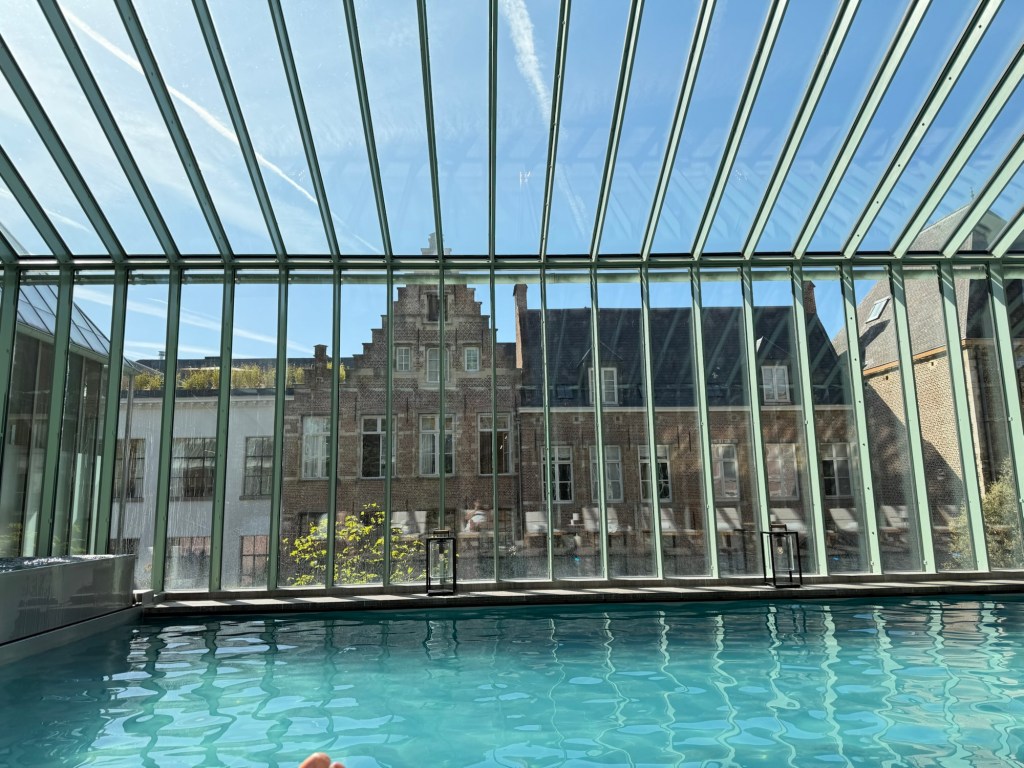
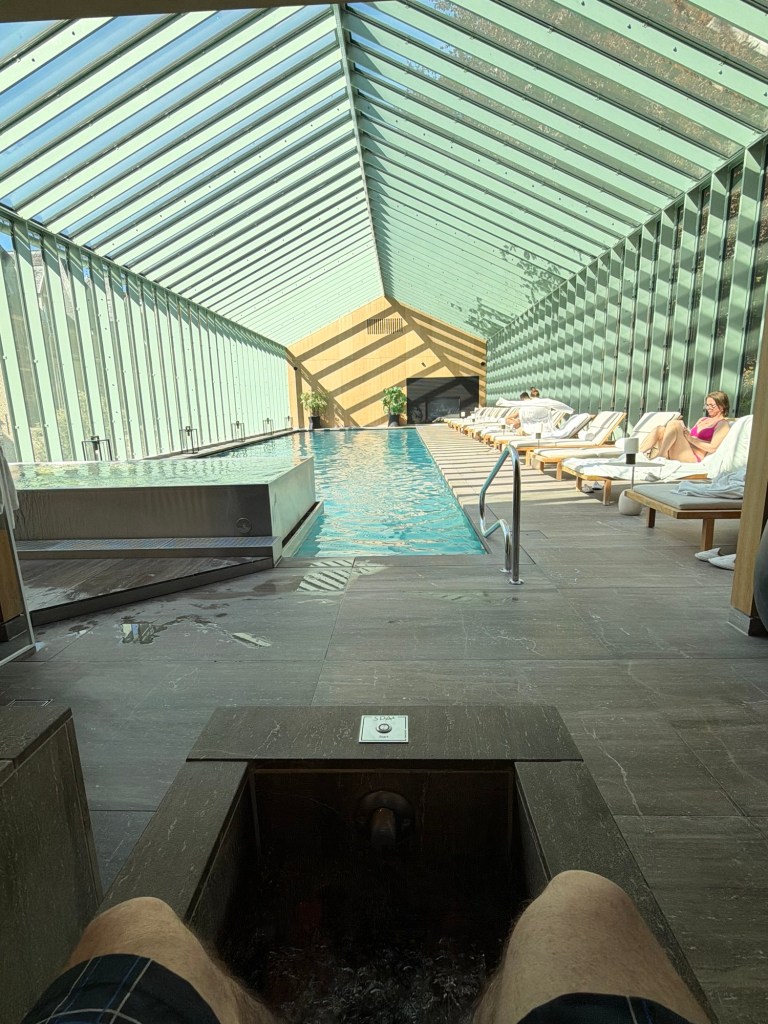
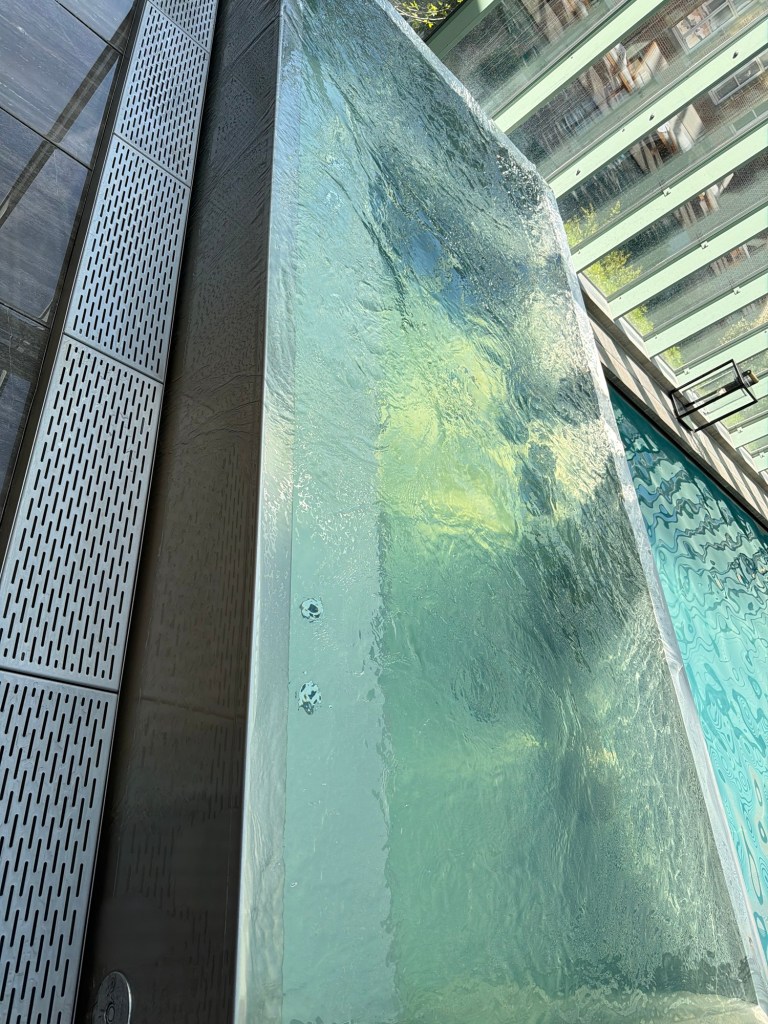
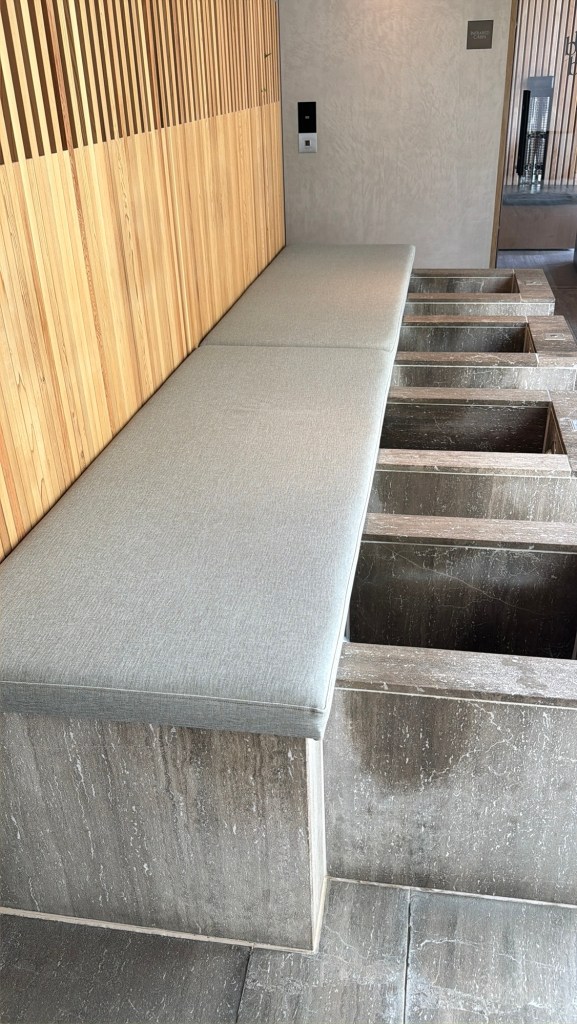
The spa is carefully curated: a deep steam room that fully envelops you, a lighter steam you can settle into, and a sauna that delivers heat without intensity for its own sake. It’s not an extensive list, but it’s exactly what you want—and it all flows naturally. I even went back a second time some days, less out of discipline than out of habit.
Connecting everything is the underground tunnel, a detail that quietly enhances the entire stay. What could have been purely functional is instead immersive—a corridor wrapped in a continuous mural of greenery and soft color, turning a simple walk into something almost transportive.
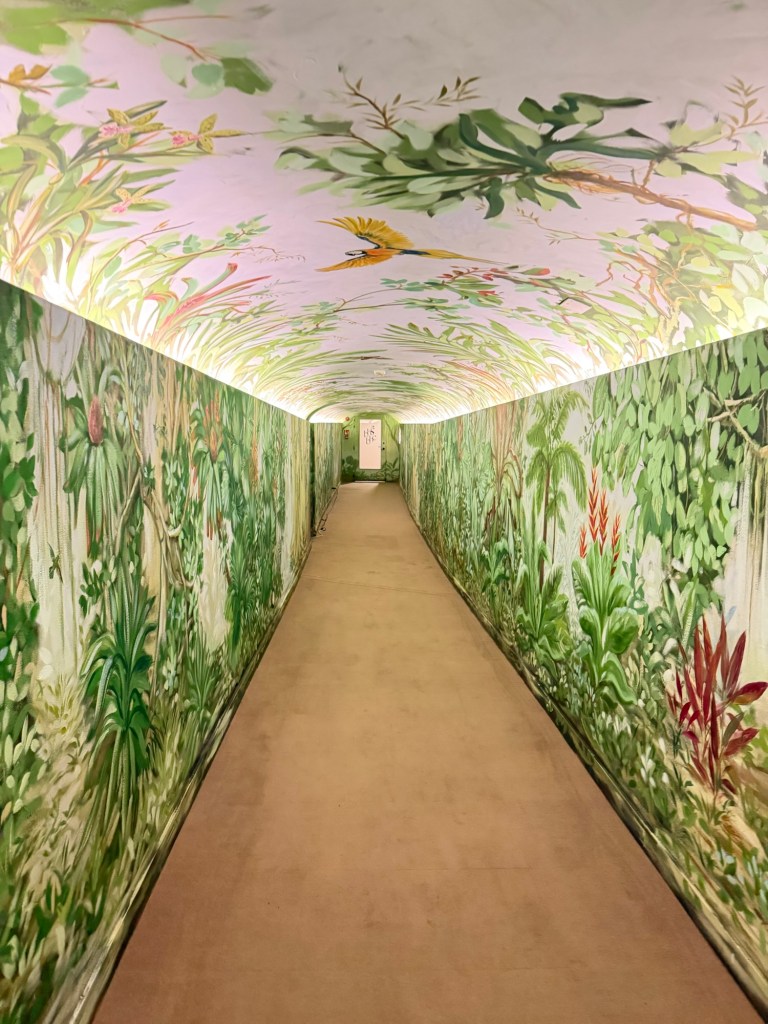
Practically, it allows you to move from room to spa to gym without ever stepping outside. But more than that, it makes the hotel feel unified, as if everything is thoughtfully stitched together just beneath the surface.
And throughout it all, the service defines the experience. It’s polished but never stiff, attentive without being intrusive. The staff seem to genuinely enjoy what they do, and that comes through in small, consistent ways—an easy conversation, a thoughtful gesture, a sense that nothing is too much trouble. It never feels scripted, and it never needs to. By the end, it’s not just the spaces you remember, but how effortlessly everything worked—and how naturally you felt taken care of.