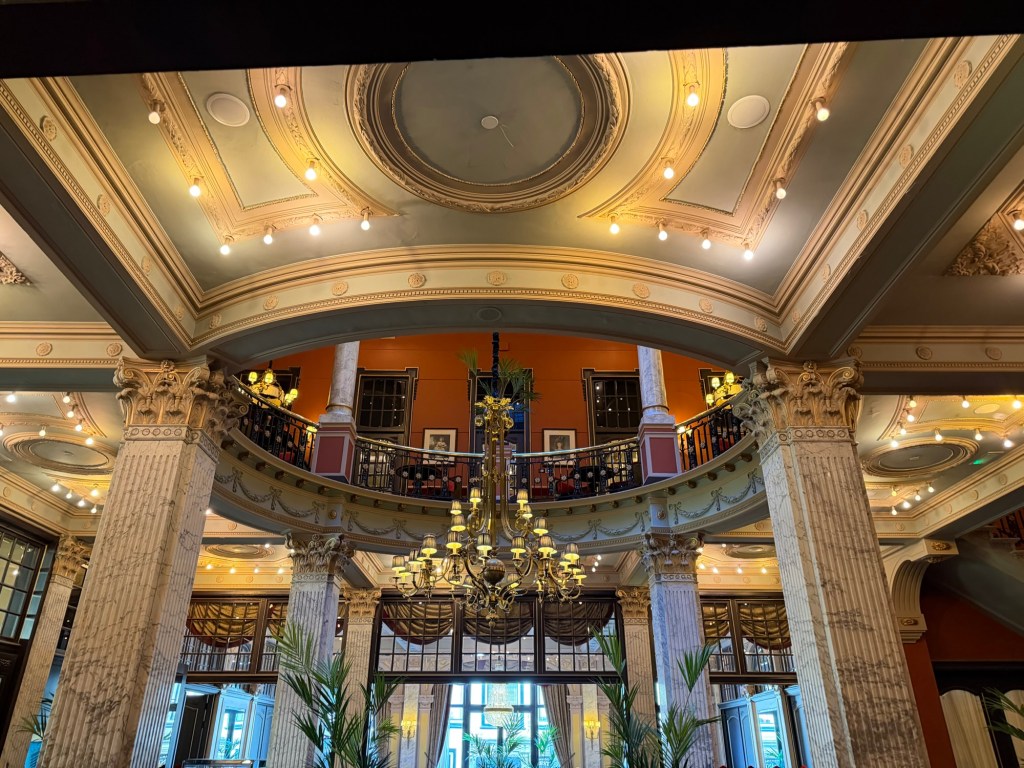
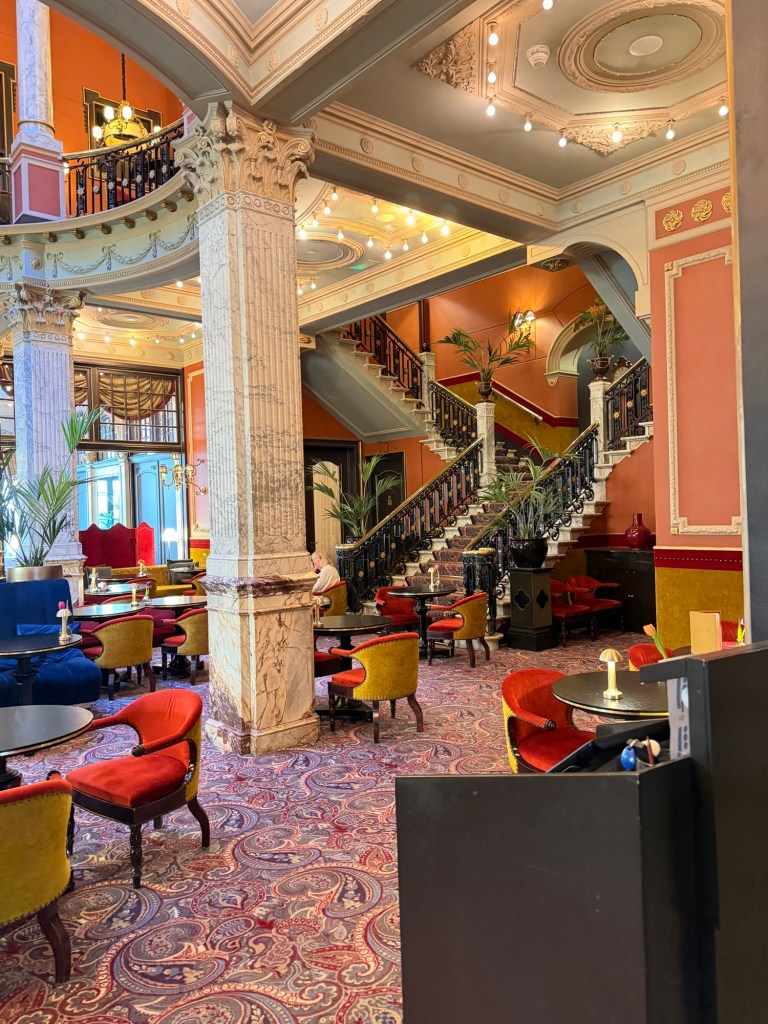
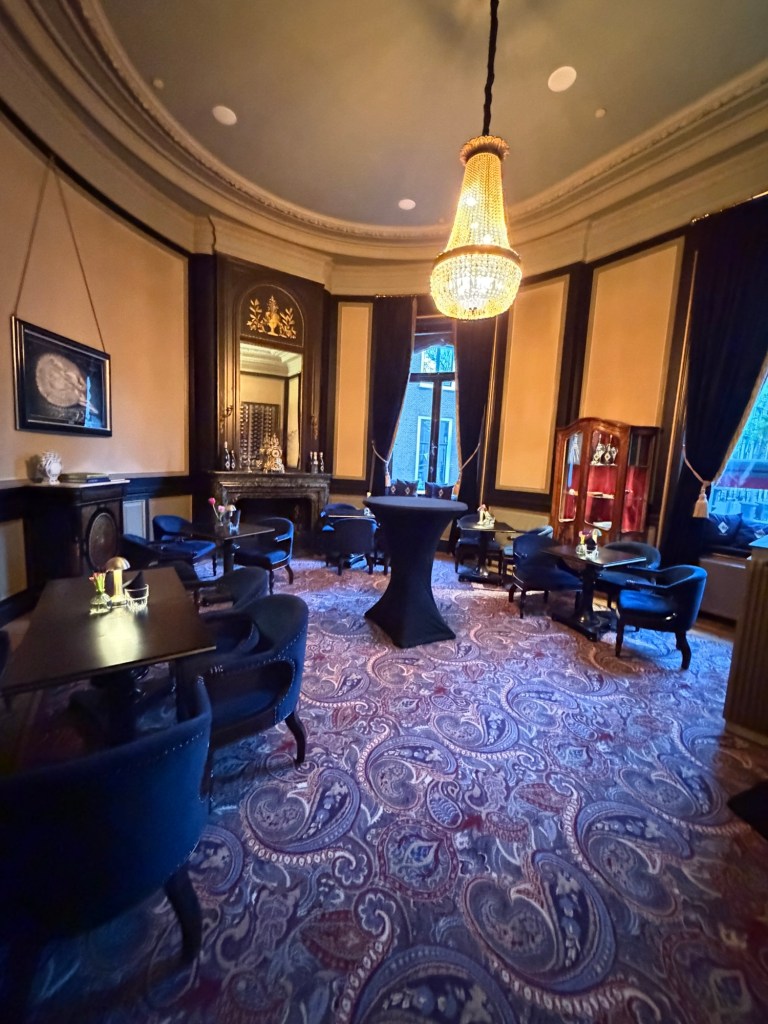
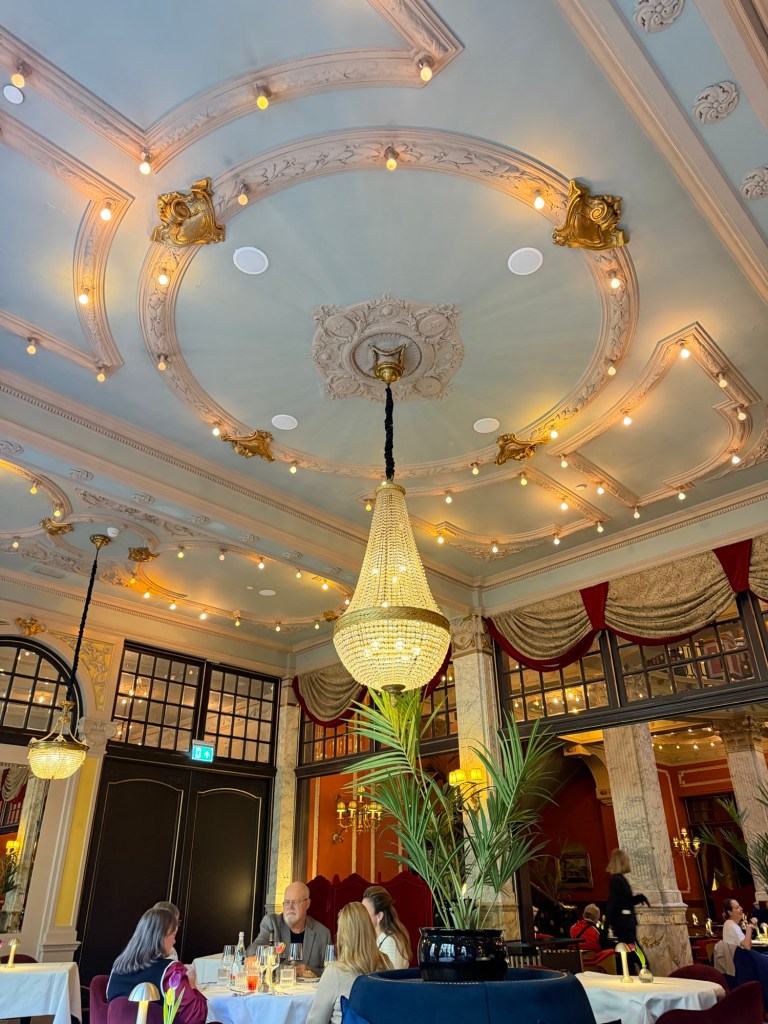
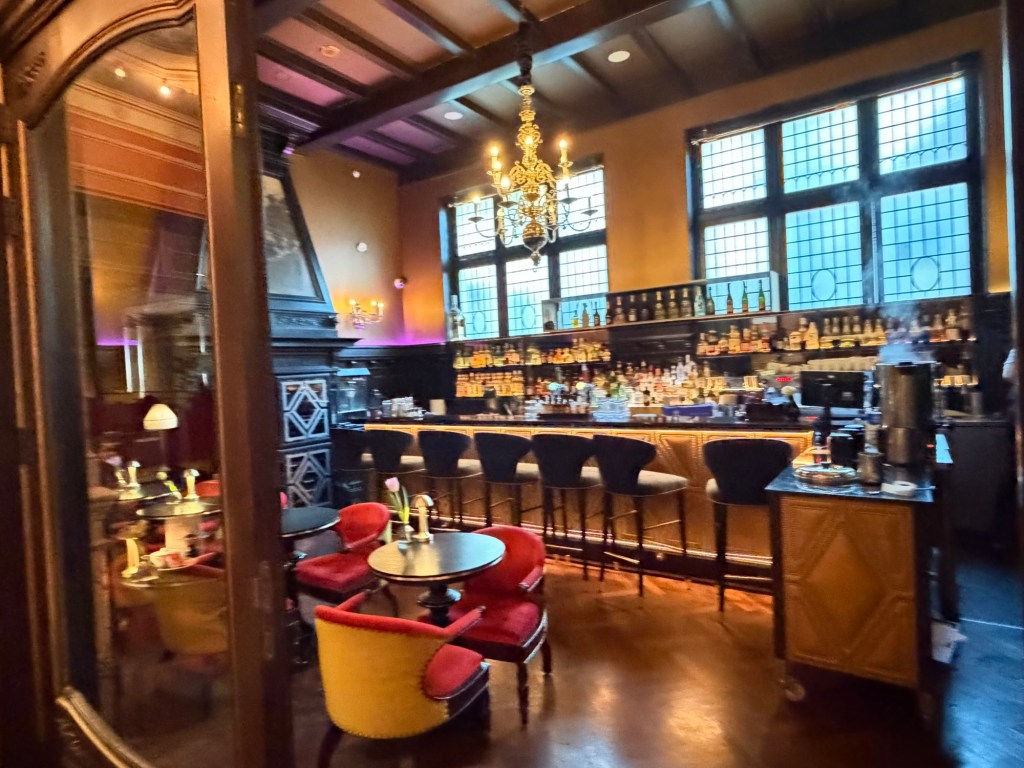
We said our goodbyes to Joris van Vuure (guideinholland.com)and made our way to The Hague, a short trip that delivered us to the stately Hotel Des Indes (hoteldesindesthehague.com)—once a royal palace.
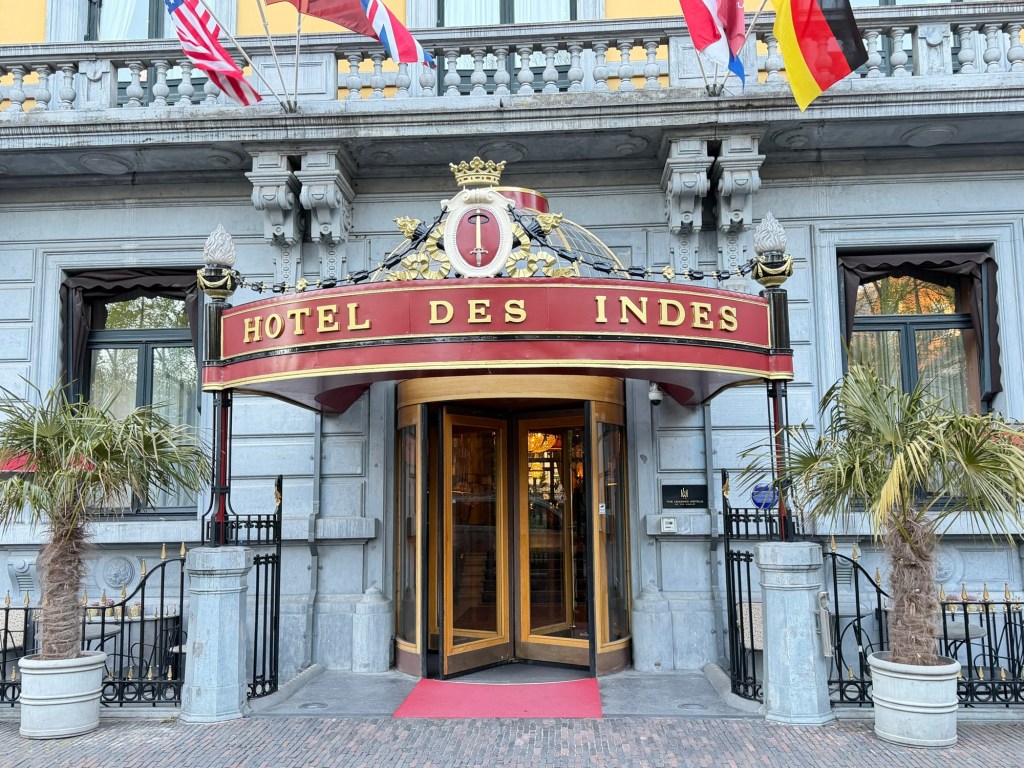
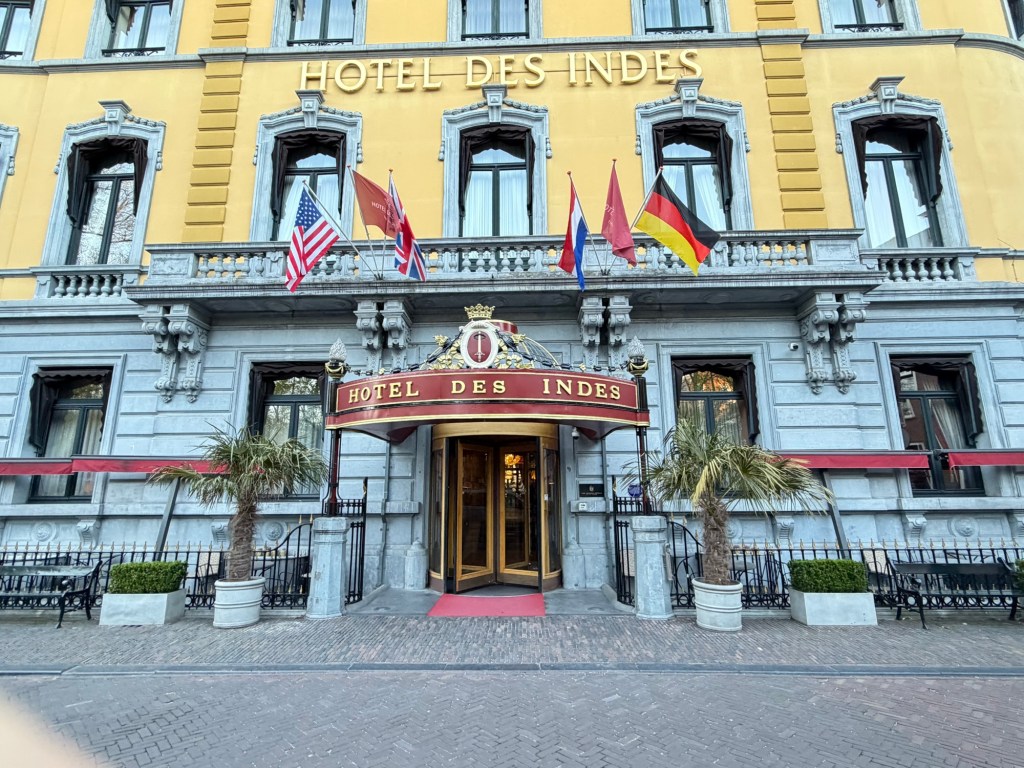
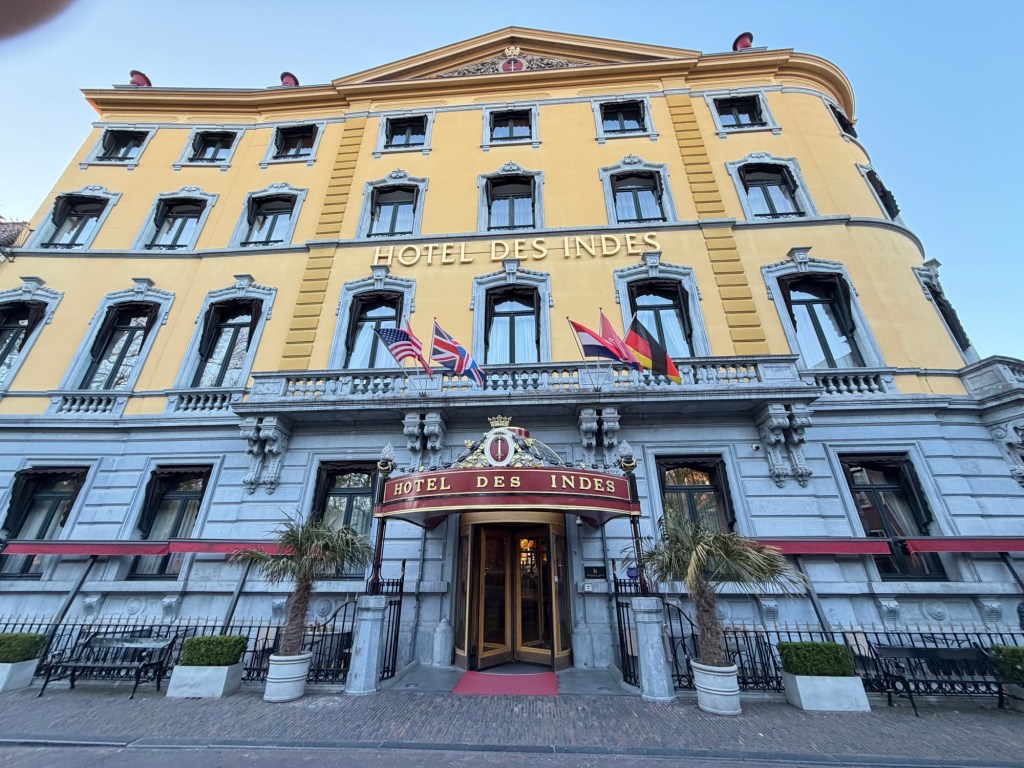
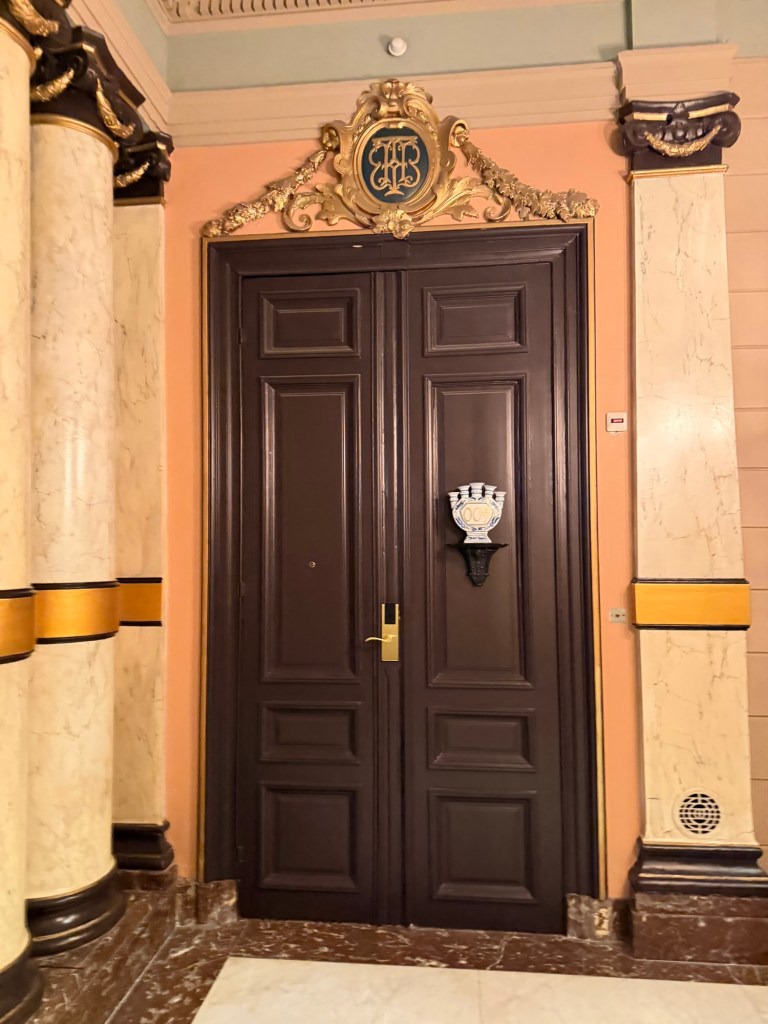
Originally built in 1858 as a residence for Baron van Brienen, it later became a gathering place for diplomats and royalty, a legacy that still shapes its character today. (“Des Indes” translates to The Indies, a reference to the Netherlands’ former colonial empire in Southeast Asia.) Even the Baron’s presence still lingers—his carved initials sit above doorways, easy to overlook at first, but once seen, they seem to follow you from room to room.
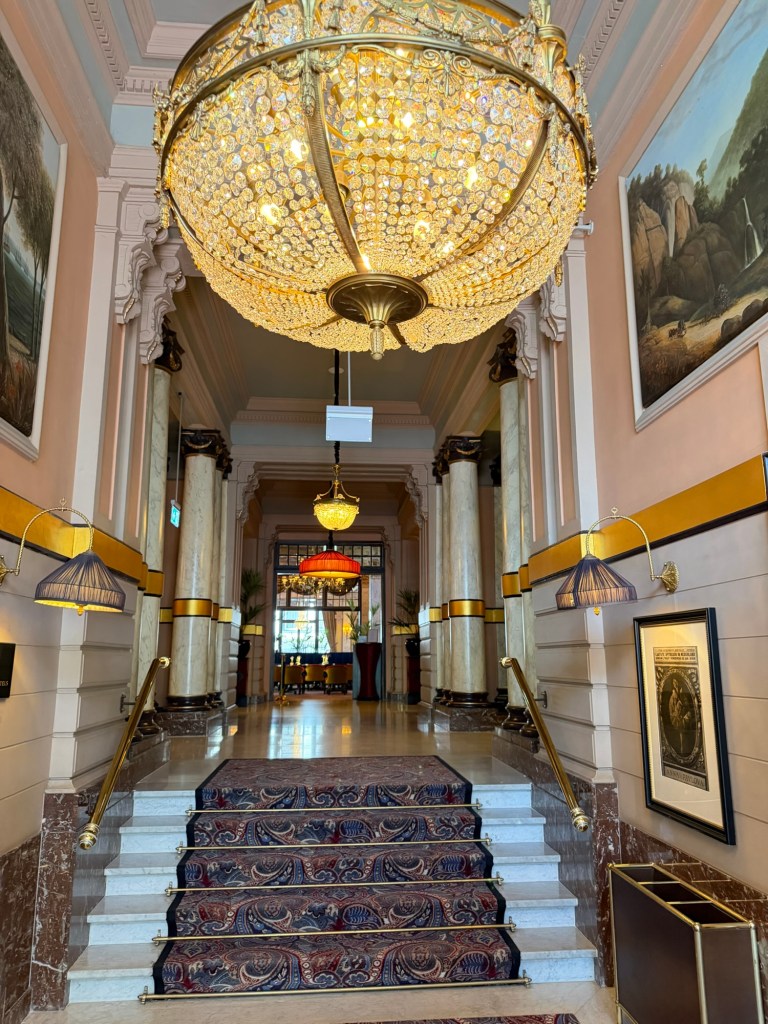
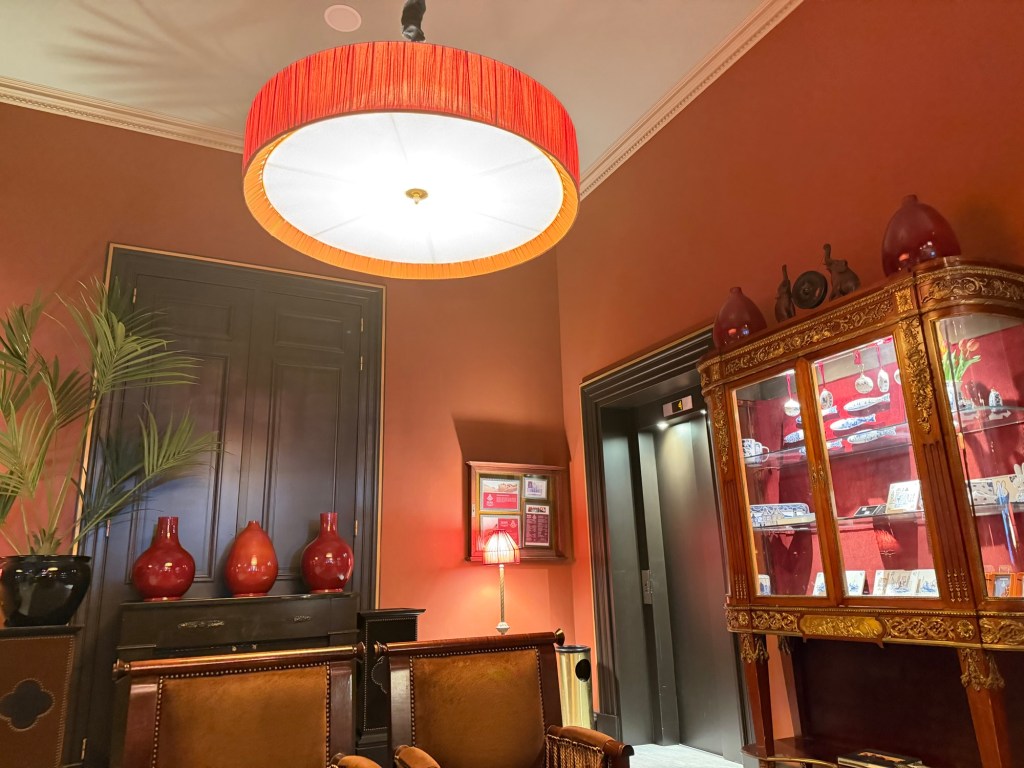
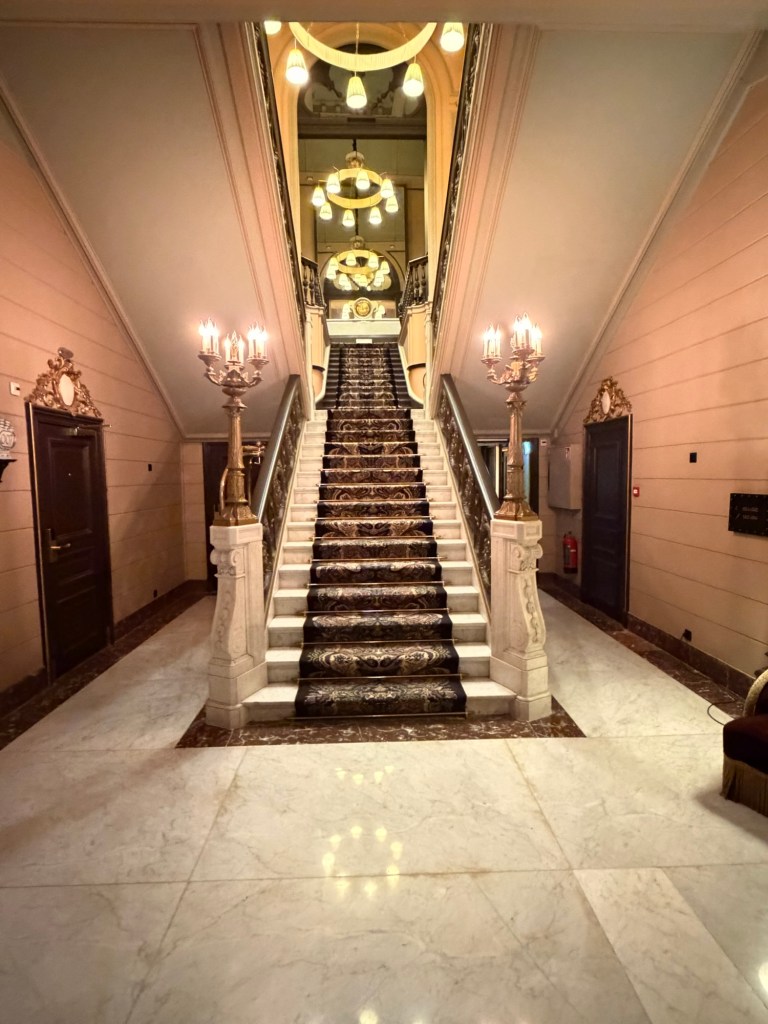
From the moment we stepped inside, the history was unmistakable. Marble columns, sweeping staircases, and glittering chandeliers give the place the feel of a grand residence rather than a hotel. It’s the kind of place where you half expect a royal to appear around the corner.
We turned in early, eager for the next day—and a long-awaited meeting with a Girl.
In the morning we met Linda Beekman, our guide, in the lobby, for a Hauge city tour. She laid out the plan—literally—spreading out a map and tracing our route with the ease of someone who knew every corner of the city. She had also thoughtfully allotted time along the way, leaving space not just to see the sights, but to take them in.
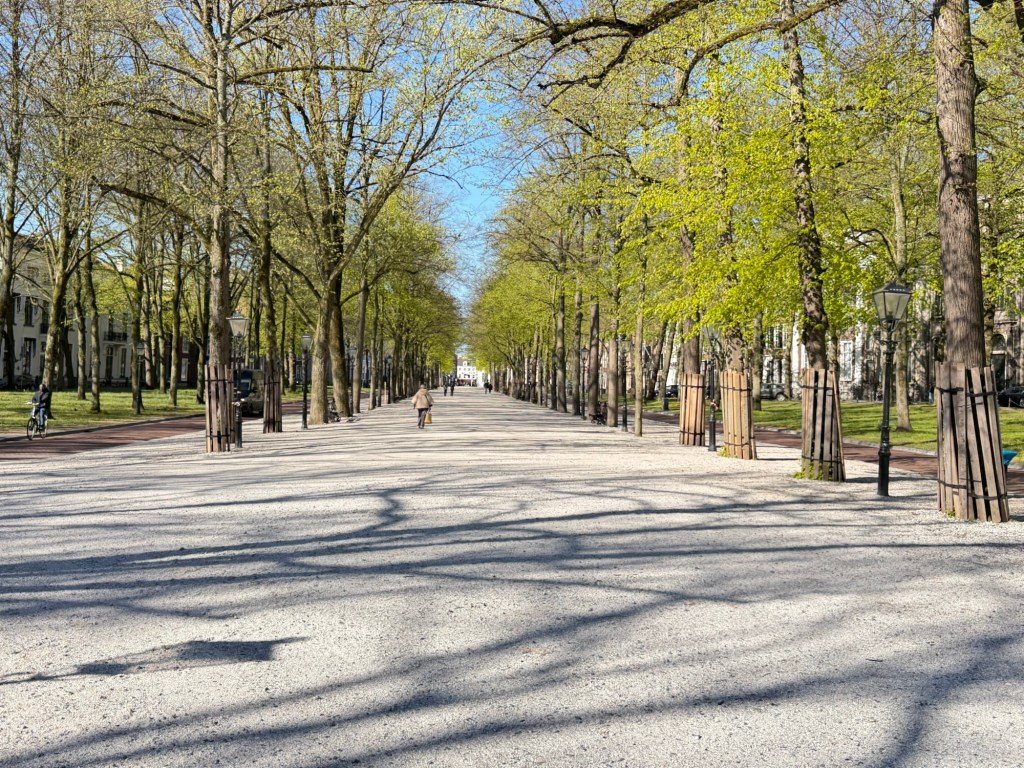
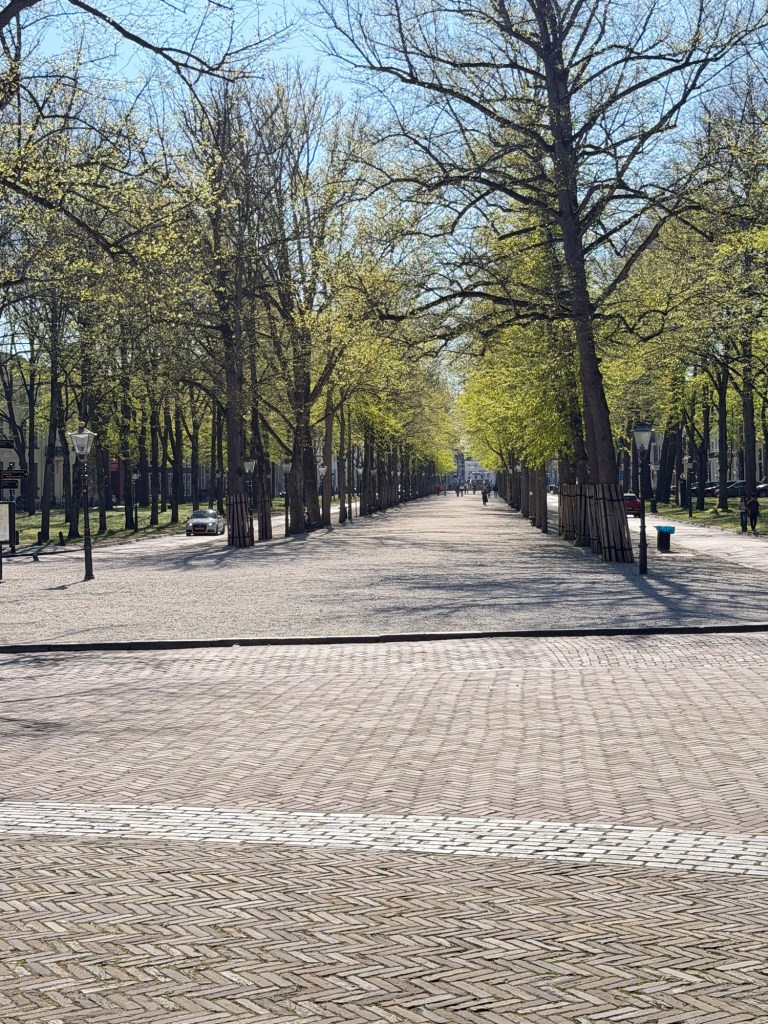
The first stretch took us along the elegant Lange Voorhout, a broad, tree-lined promenade just beginning to turn green for spring. The gravel path, dappled with light and shadow, felt almost ceremonial—framed by rows of tall trees and stately buildings that seemed to whisper rather than announce their history.
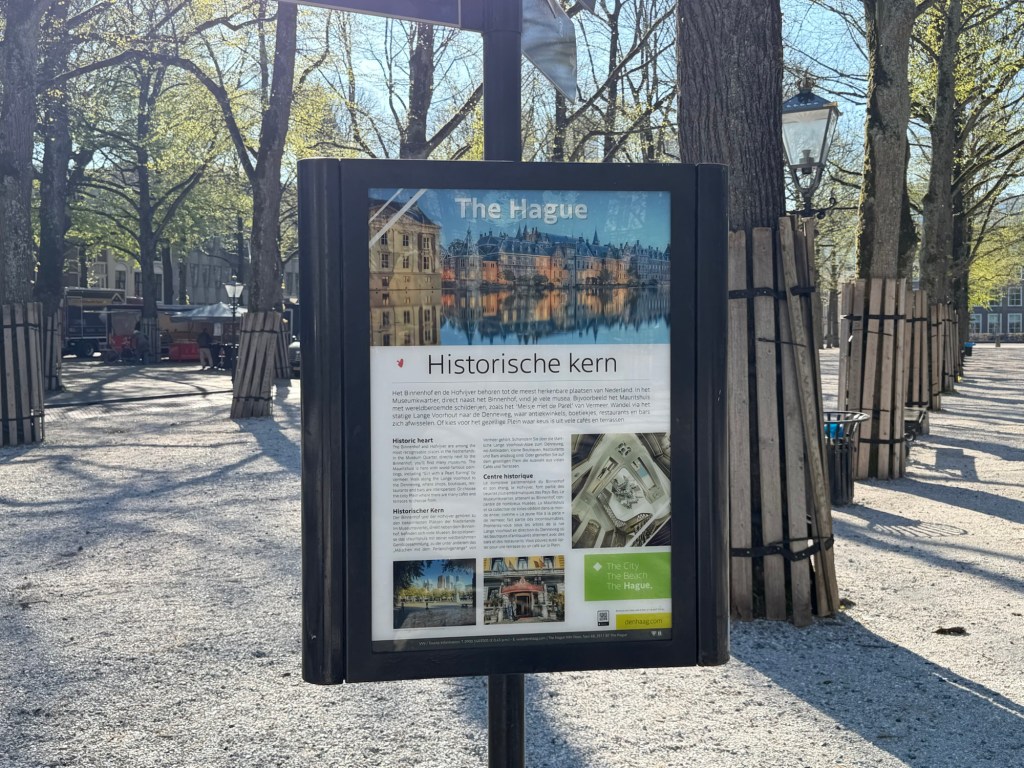
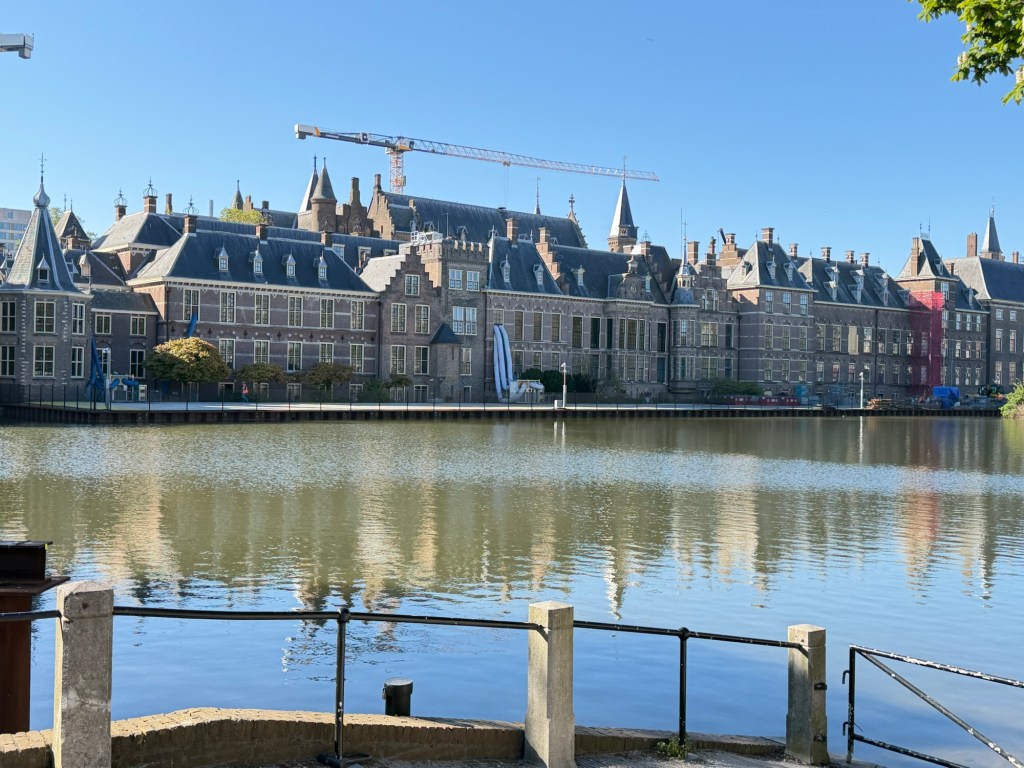
A short walk later, the scene opened up to the Binnenhof, reflected perfectly in the still waters of the Hofvijver. The old brick facades and pointed roofs sat quietly along the edge, their reflections nearly more vivid than the buildings themselves. This is the seat of the Dutch government, though under renovation.
A few minutes later, Linda led us to the Jantje statue. Standing beside the small bronze figure, she broke into song, bringing the story to life in a way no guidebook ever could. The inscription at the base—“In Den Haag daar woont…”—suddenly had meaning, no longer just words, but something remembered and shared.
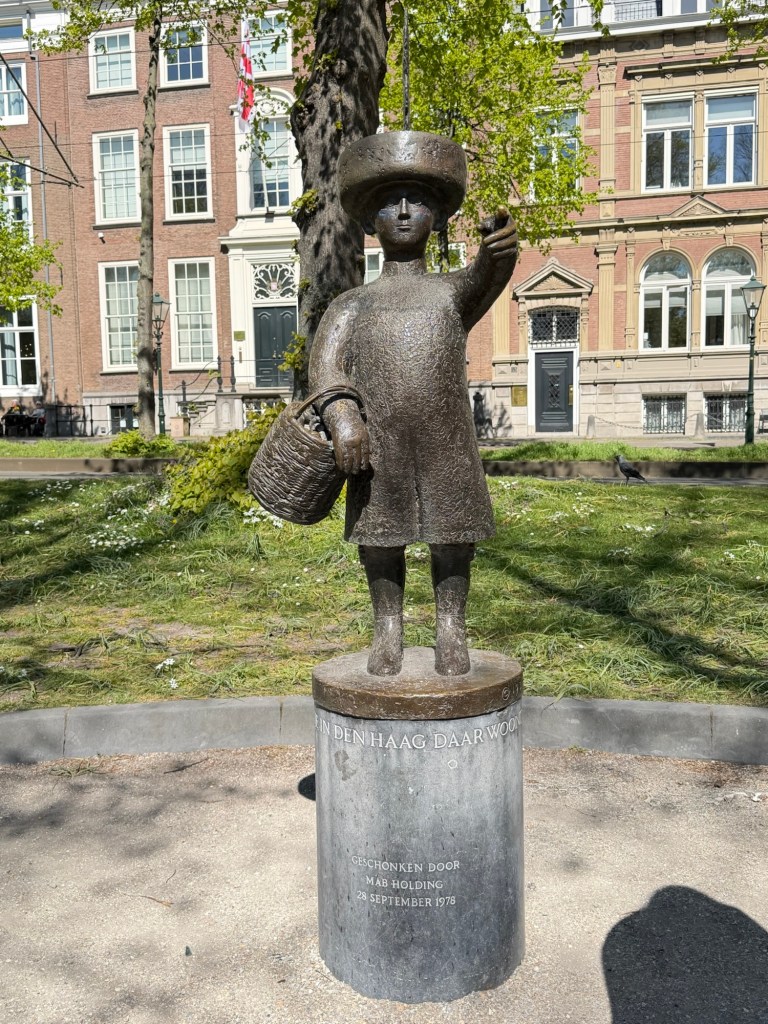
Jantje himself is charmingly understated: wide-brimmed hat, basket in hand, one finger pointing ahead as if he knows exactly where he’s going. Set along the elegant Lange Voorhout, framed by tall trees and stately facades, the statue adds a touch of whimsy to an otherwise refined setting.
It was one of those moments that travel does best—not just seeing a place, but feeling it, if only briefly, through someone else’s memory.
Mauritshuis
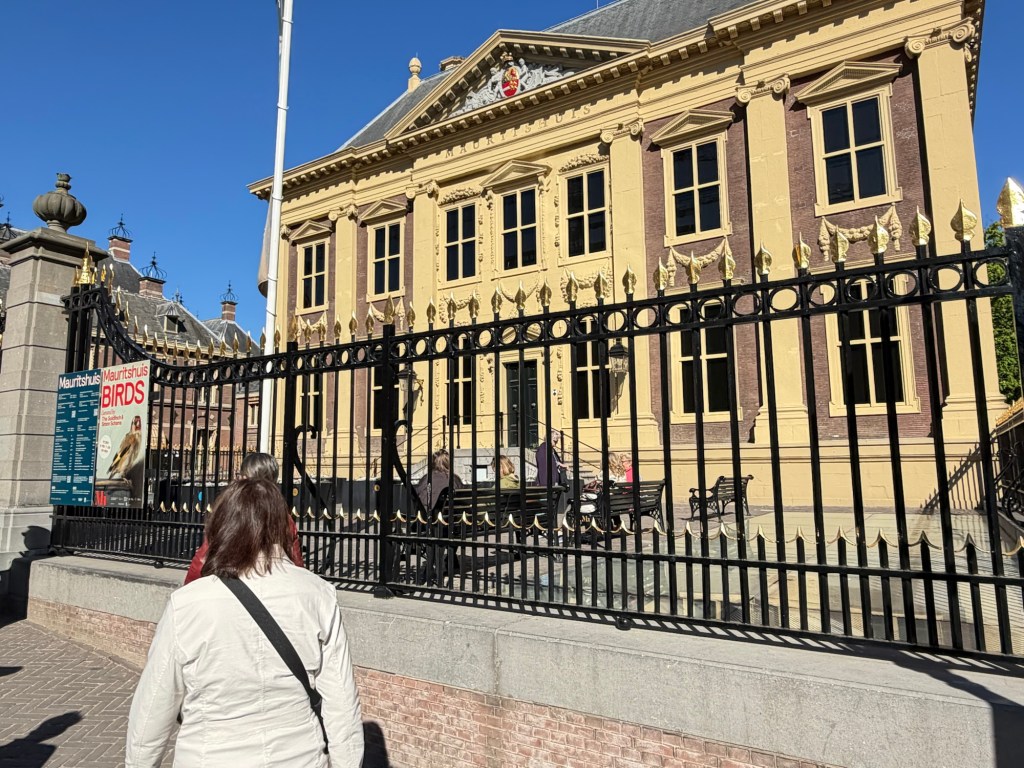
We walked over to the Mauritshuis (https://www.mauritshuis.nl/en/), a 17th-century mansion built for Johan Maurits of Nassau-Siegen—governor of Dutch Brazil and a figure tied to the Netherlands’ colonial past—later transformed into one of the country’s most intimate and renowned art museums.
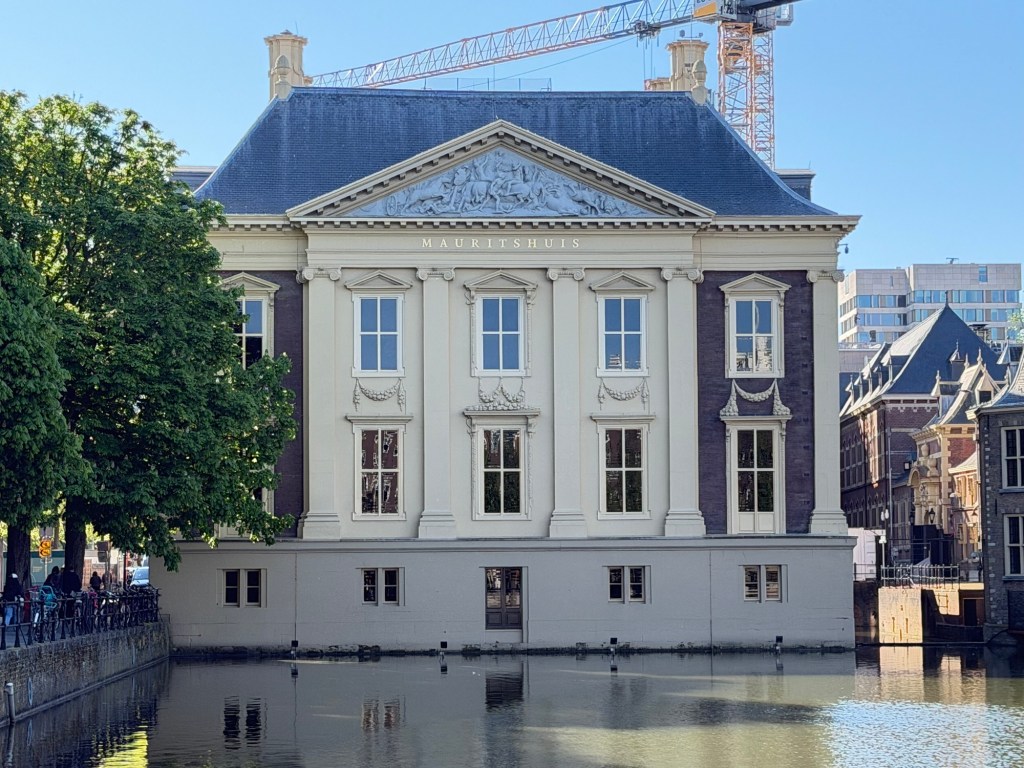
Linda proved a font of information on the collection and the building’s layered history, including the quiet irony that Maurits’ statue was removed in recent years as his ties to slavery have been reevaluated. I can’t help but wonder, though, whether removing such statues serves any real remedial purpose. Sunshine can be an antidote; exposure has a way of clarifying and, in its own way, cleansing. History is not undone by being unseen—if anything, it is better understood by being seen.
Inside, Linda didn’t rush us to the obvious highlights. Instead, she first let us take in the grandeur of the building itself, and then brought us to this small, almost easily overlooked painting—a winter scene by Hendrick Avercamp, alive with skaters, villagers, and daily life unfolding across the ice. Avercamp, Linda noted, was deaf and mute, yet his work is filled with a remarkable sensitivity to human interaction and movement.
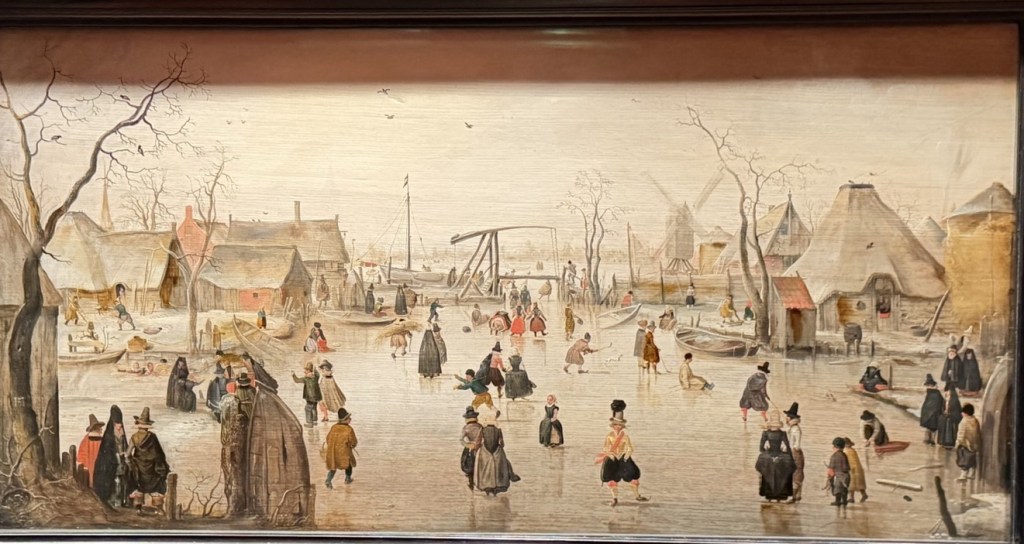
At first glance, it feels simple, even charming. But the longer you look, the more it opens up—dozens of tiny stories playing out at once. Figures from every walk of life share the frozen surface, turning the ice into a kind of democratic stage. And then there are the small, irreverent details: a woman who has taken a spill, her skirts flipped just enough to reveal more than she might have intended—a fleeting, humorous moment that reminds you these scenes were never meant to be entirely polite.
Next we moved to works by Rembrandt —a shift in tone that was immediate and unmistakable.
We stopped us in front of this painting, Two African Men. The mood is entirely different: quieter, heavier. The light doesn’t illuminate so much as reveal—faces emerging from shadow, expressions caught somewhere between presence and introspection.
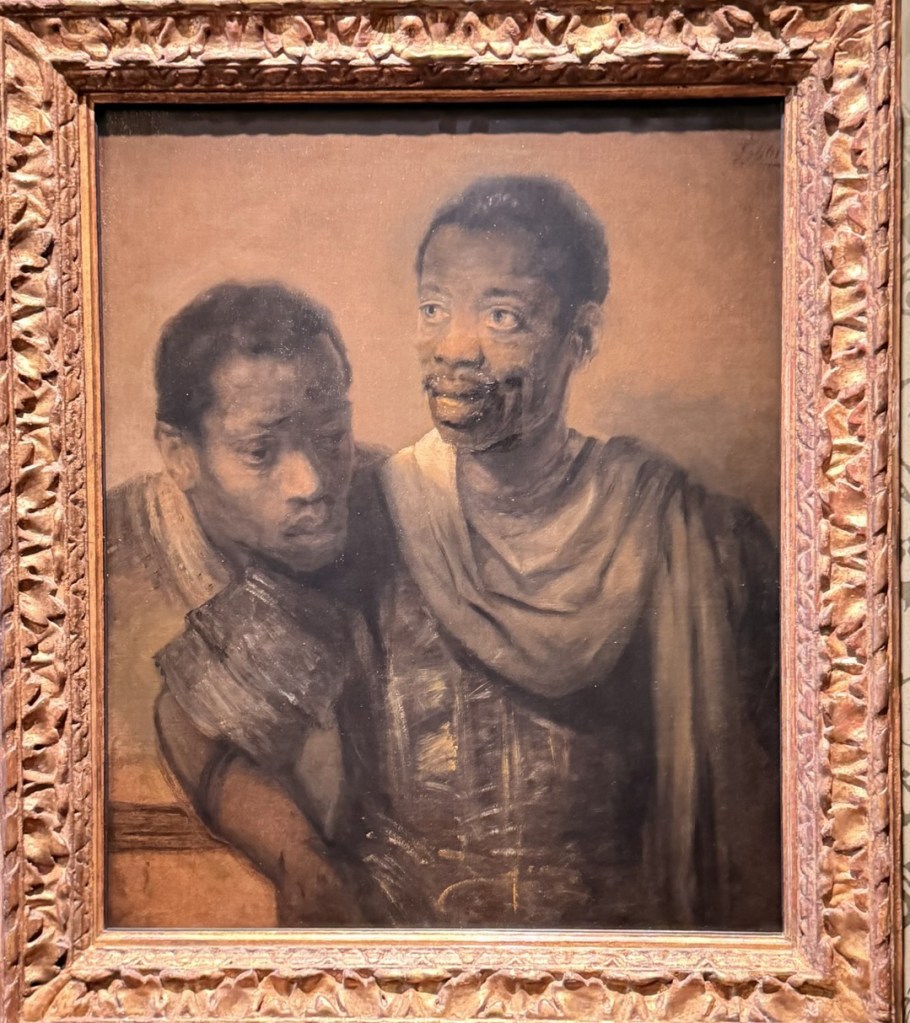
In contrast to the bustling world of Avercamp, this felt intimate and unresolved. The relationship between the two figures isn’t explained; it’s suggested. One leans forward, the other turns slightly away, and you’re left to fill in the space between them. One man draped in a classical shawl. It’s less a scene than a moment—and one that lingers longer than you expect.
Linda noted that paintings like this sit within a broader and more complicated history. The presence of Black people in Dutch Golden Age art often reflects the realities of trade and empire that underpinned the period’s prosperity. And yet here, Rembrandt resists turning them into symbols or background. Instead, he gives them weight and individuality.
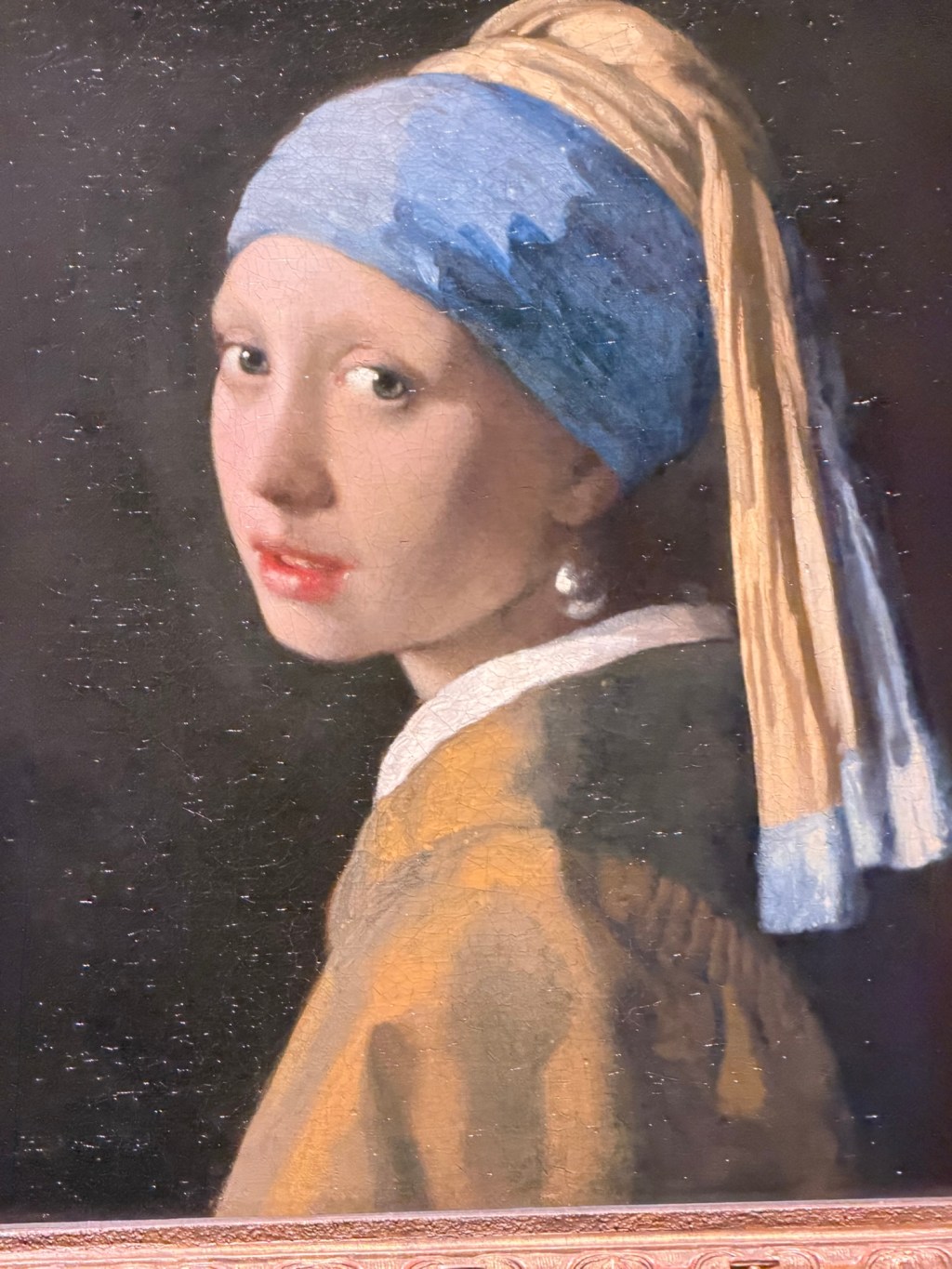
In another quiet turn, Girl with a Pearl Earring catches the corner of my eye, and I turn toward her.
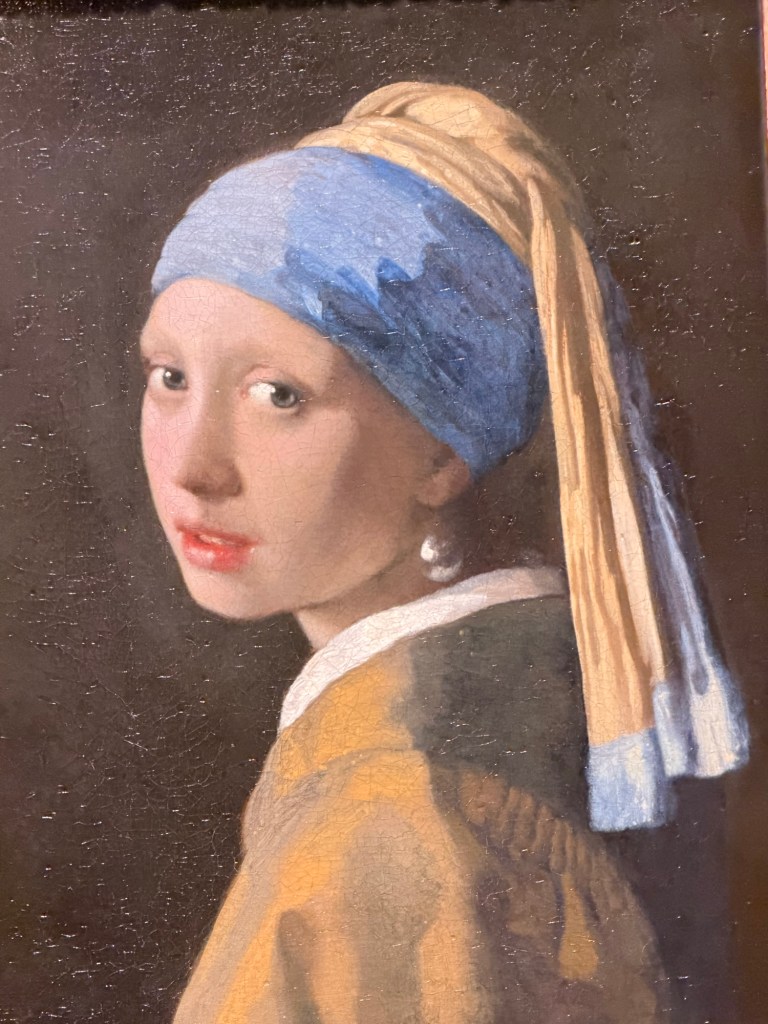
Not large, not imposing—almost surprisingly so. In fact, the painting is quite small, which only heightens its effect. She doesn’t command the room so much as draw you in. Set against a dark, undefined background, she seems to emerge from the shadows, turning toward you as if caught mid-moment.
Her face is luminous, softly lit, every detail rendered with quiet precision—the curve of her cheek, the slight parting of her lips, as though she’s about to speak or has just been interrupted. Her eyes meet yours, direct but unreadable.
The blue and gold of her turban catches the light, but it’s the pearl that anchors everything—impossibly large, almost unreal, reflecting just enough to suggest rather than declare itself.
There’s no setting, no story spelled out. Just her—and the quiet, fleeting sense of connection she creates.
Painted around 1665 by Johannes Vermeer, she is a study of expression rather than identity. Whoever she was remains unknown, which only deepens the sense of mystery.
There are paintings that command a room—and then there are those that quietly command you. In The Goldfinch by Carel Fabritius, it’s the latter.
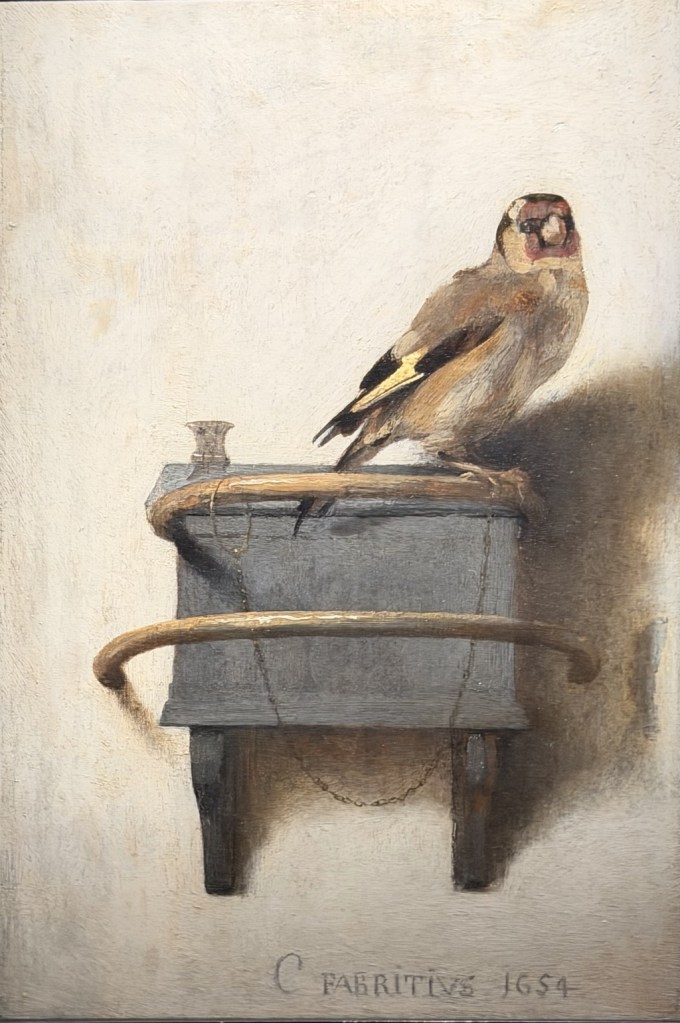
At first glance, it feels almost modest: a small bird perched on a simple feeder, chained in place, set against a pale, nearly empty wall. No grand narrative, no sweeping landscape, no theatrical flourish. And yet, standing before it, the silence becomes the story.
Painted in 1654, the same year Fabritius, a student of Rembrandt, died in the explosion of the Delft gunpowder wharehouse, the work carries an unintended poignancy. The bird—delicate, alert, restrained—feels suspended in time. The fine chain, rendered with disarming precision, both anchors and unsettles the composition. It’s a detail you can’t ignore
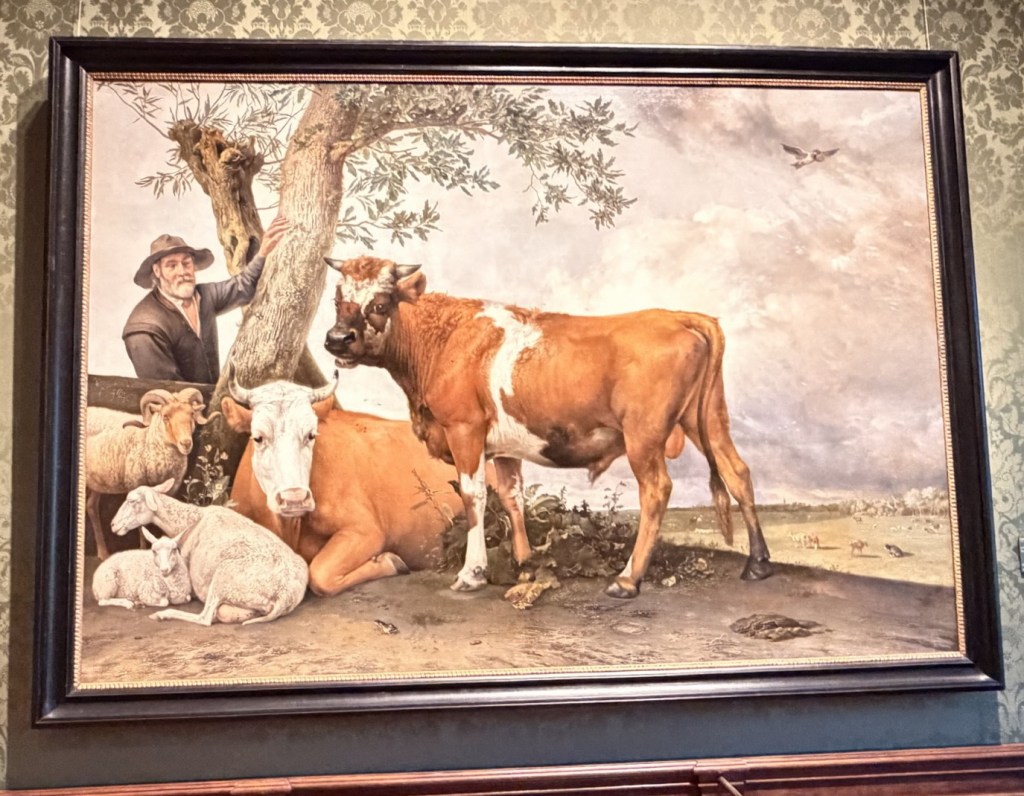
We saw many other remarkable works at the Mauritshuis, such as the Young Bull by famed Dutch artist Paulus Potter (1647).
As this post is already running long—I’ll leave the rest for your own visit.
Panorama Mesdag
Panorama Mesdag offers something altogether different—less a painting than a world you step into and quietly find yourself within. (panorama-mesdag.nl)
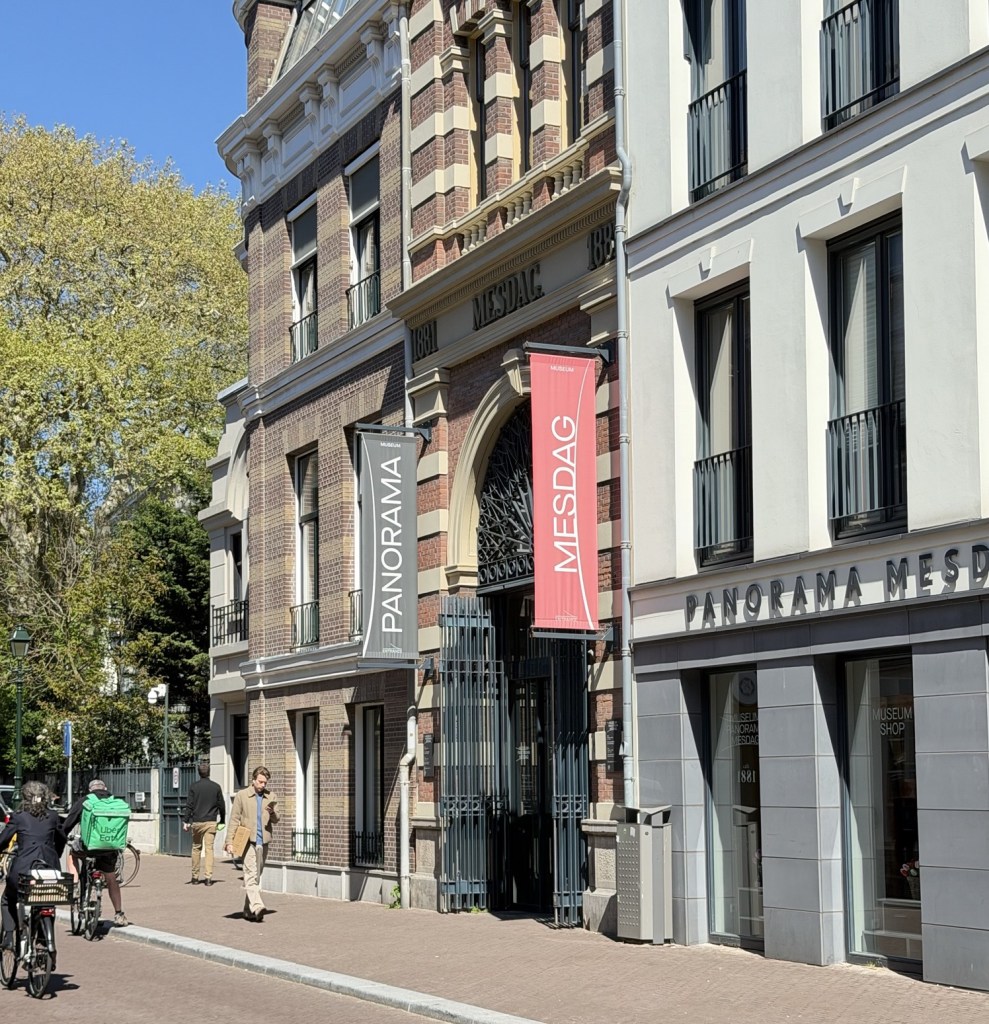
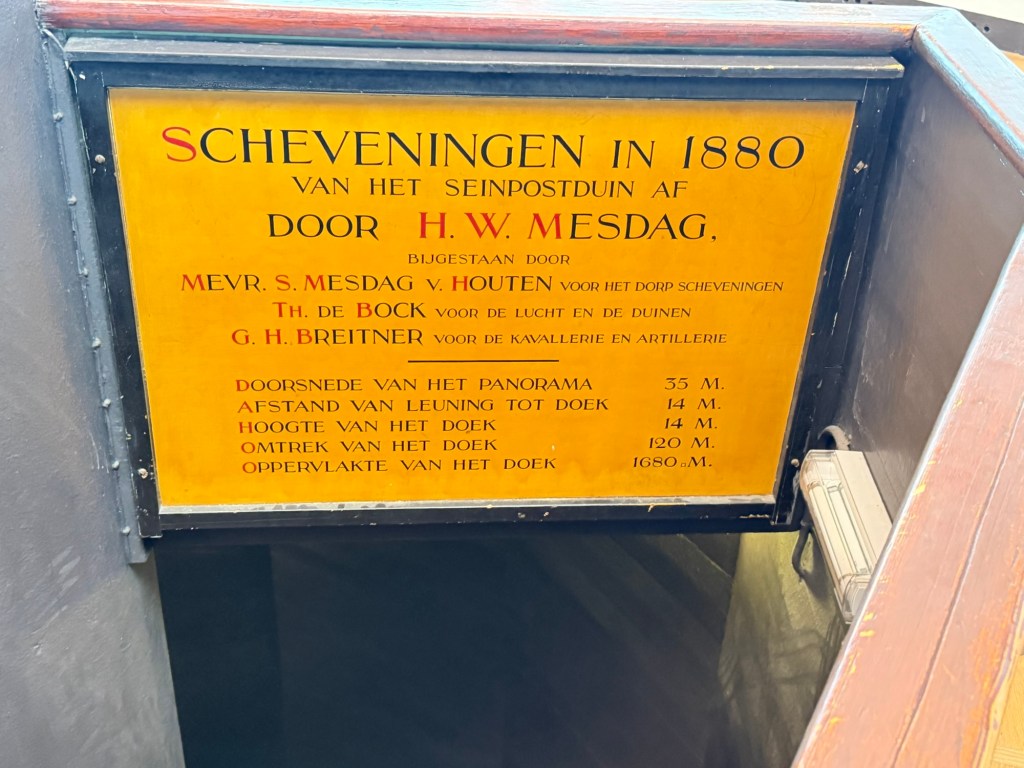
There is a formal entrance, though it doesn’t announce what lies beyond. A narrow façade gives way to a long corridor lined with studies, sketches, and fragments of explanation—context for the work of Hendrik Willem Mesdag and the panorama ahead. Mesdag, best known for his marine paintings, did not work alone; his wife, Sientje Mesdag-van Houten, along with several Hague School artists, contributed to the vast canvas. It was completed in 1881 at the height of a brief but intense European fascination with panoramic paintings—precursors, in their way, to cinema and immersive media.
Then the light fades, the passage narrows, and you step upward into the central platform.
The effect is immediate. The horizon appears all at once—and then continues, unbroken, in every direction. The canvas itself is monumental: roughly 46 feet high and more than 394 feet in circumference, making it the largest painting in the Netherlands and one of the few surviving panoramas still in its original setting. From this vantage point, you stand atop a dune, looking out over Scheveningen as it appeared in 1880—before the seaside resort took hold—when it was still a working fishing village.
What makes it work is not spectacle, but precision. The illusion depends on a carefully constructed foreground of real sand, nets, and simple props that conceal the base of the canvas, allowing the painted dunes to rise seamlessly into view. Above, a diffused canopy admits natural light, eliminating harsh shadows and maintaining the continuity of sky and atmosphere. The perspective is calibrated so that, from the central platform, the horizon aligns perfectly with your eye level.
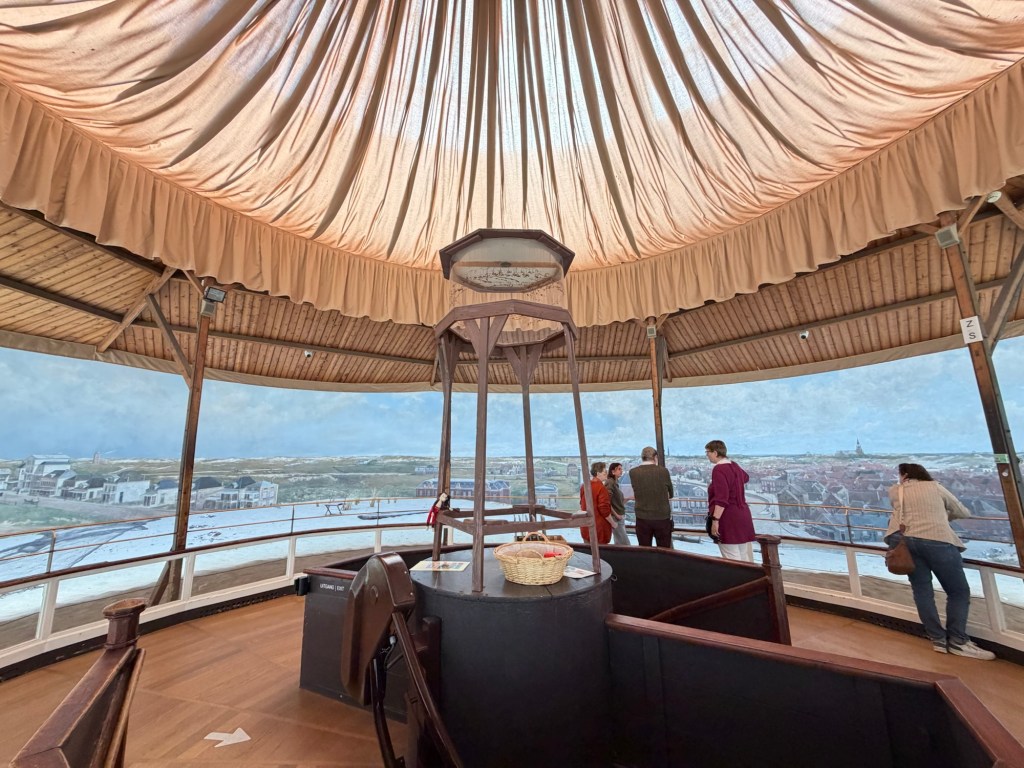
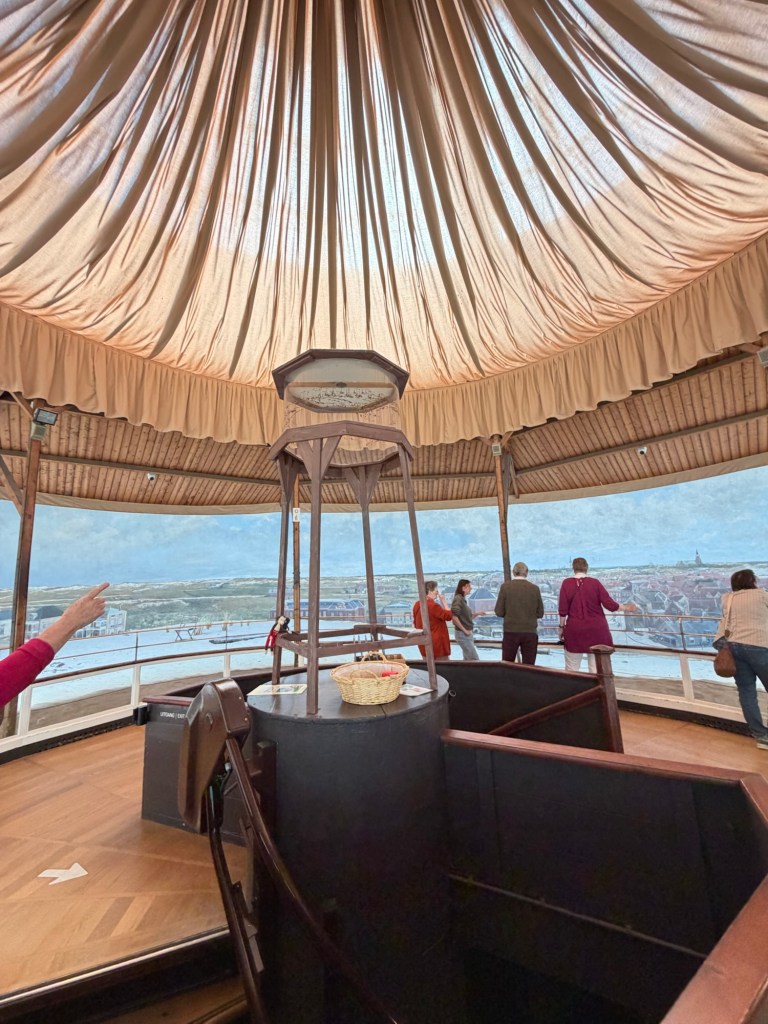
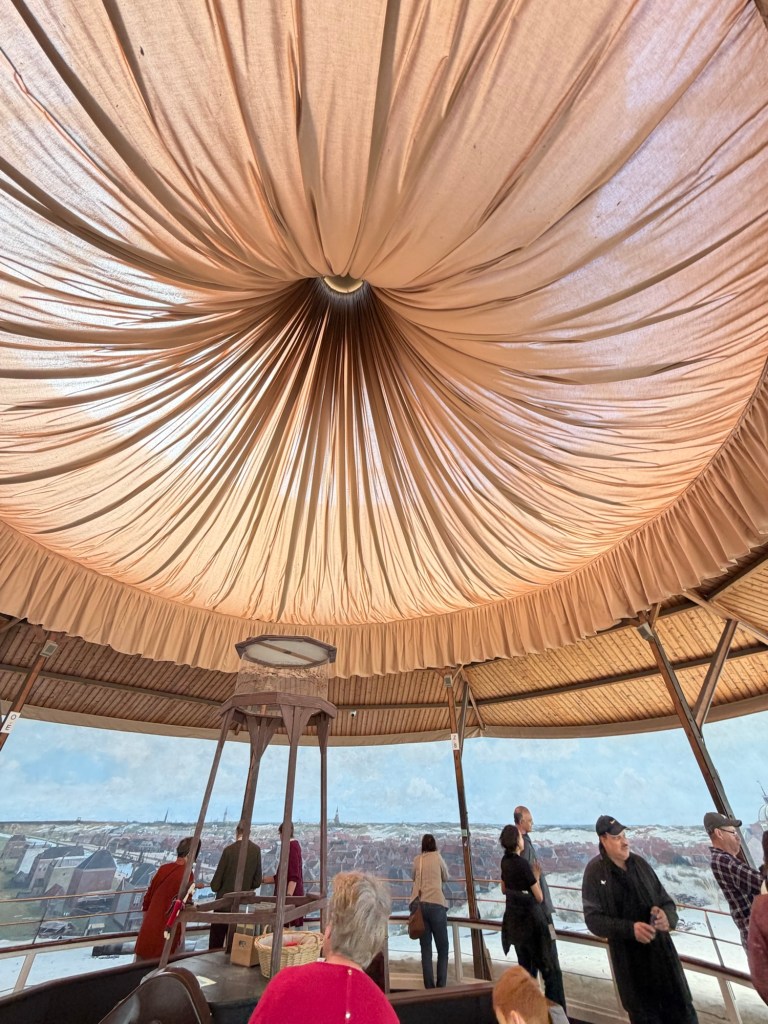
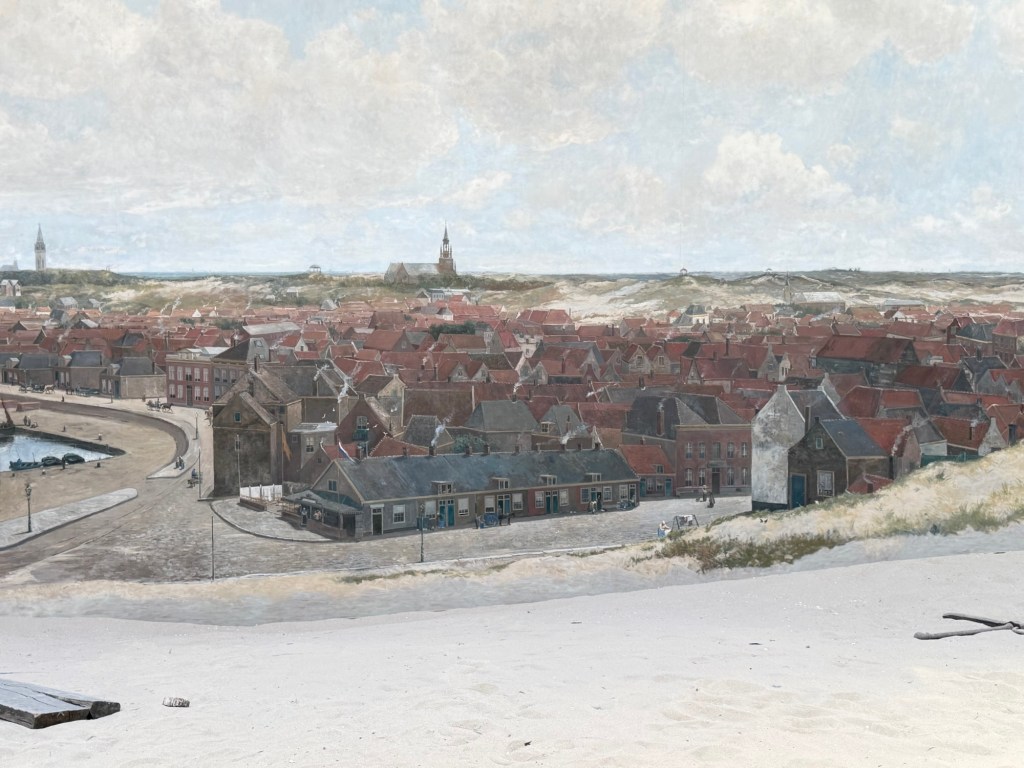
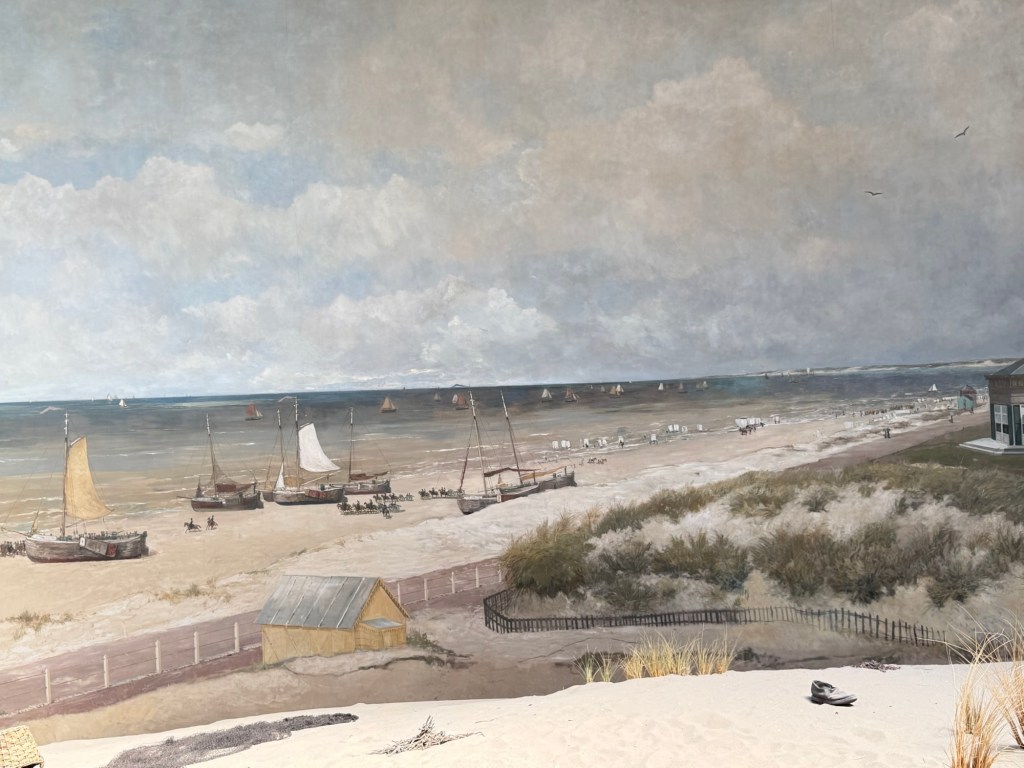
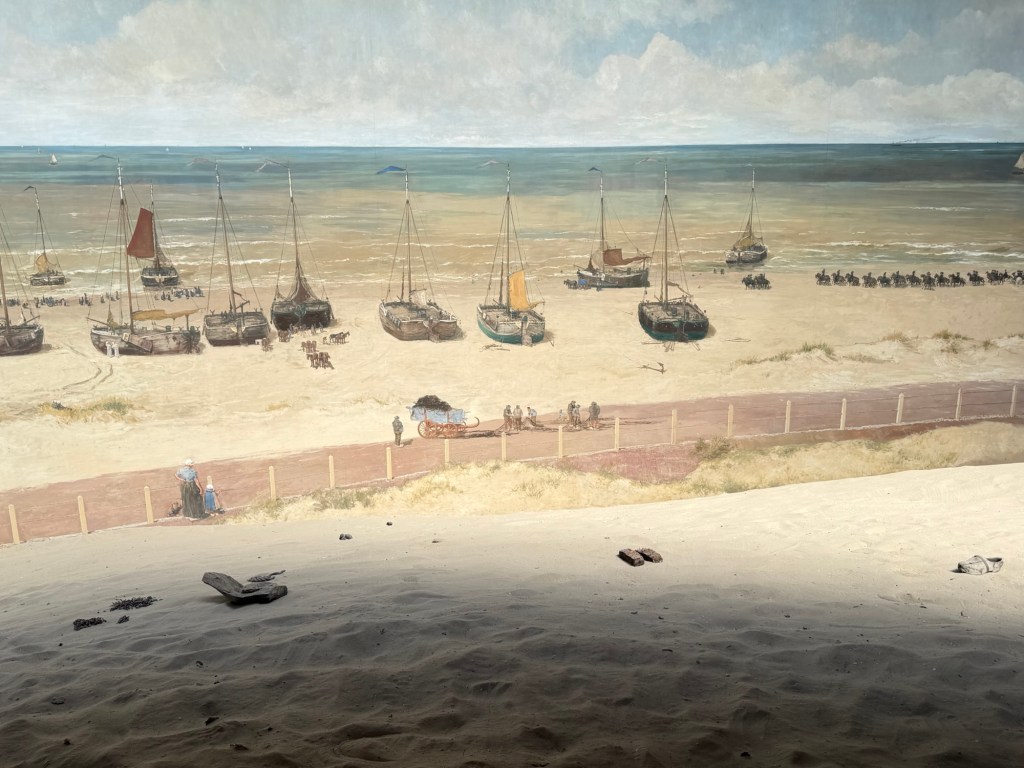
There is no focal point, and none is needed. Your eye moves as it would outdoors—following a sail, drifting along the surf, pausing on a cluster of houses before moving on again. Mesdag’s wife is even seen painting in the picture. The scene does not present itself; it simply exists, fully formed and indifferent to where you stand.
The panorama’s survival is something of a historical accident. When the fashion for panoramas faded in the late nineteenth century, most were dismantled or lost. Mesdag himself ultimately purchased the building to save the work from demolition, preserving it much as it appears today.
For something created in 1881, it feels unexpectedly modern—an early, analog form of immersion achieved without machinery or illusionistic excess. Visitors stand quietly at the rail, turning in place, orienting themselves, pointing things out. And then, almost without noticing, you begin to do the same—circling, pausing, returning—until the scene no longer feels like something you entered, but something you briefly inhabited.
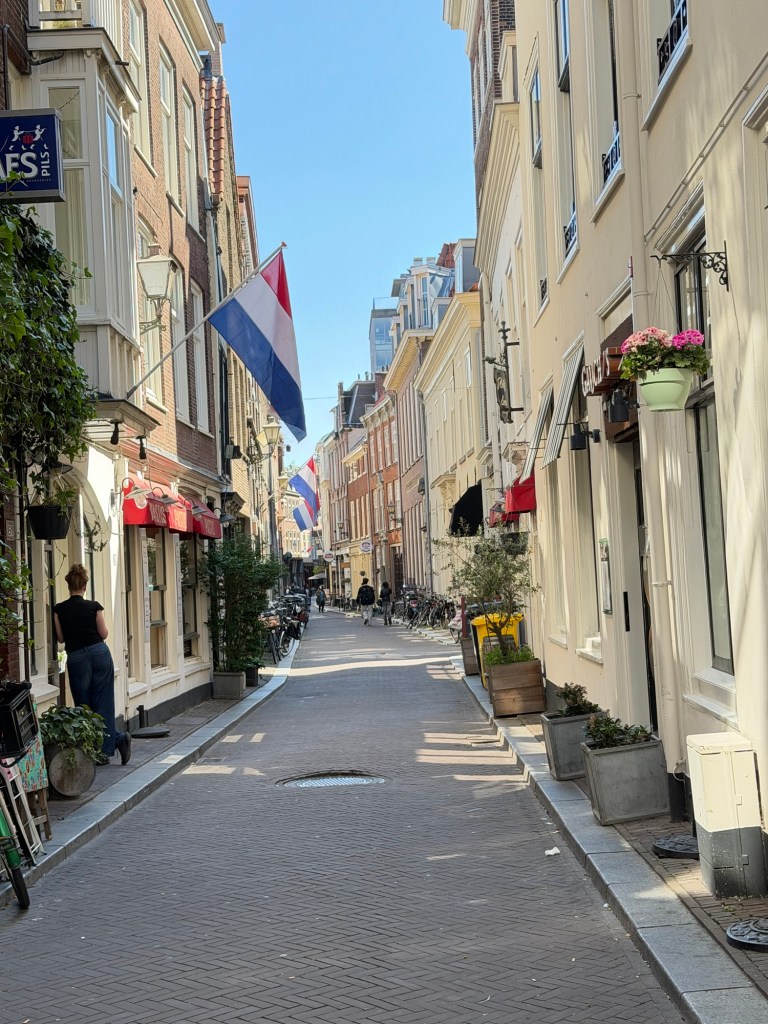
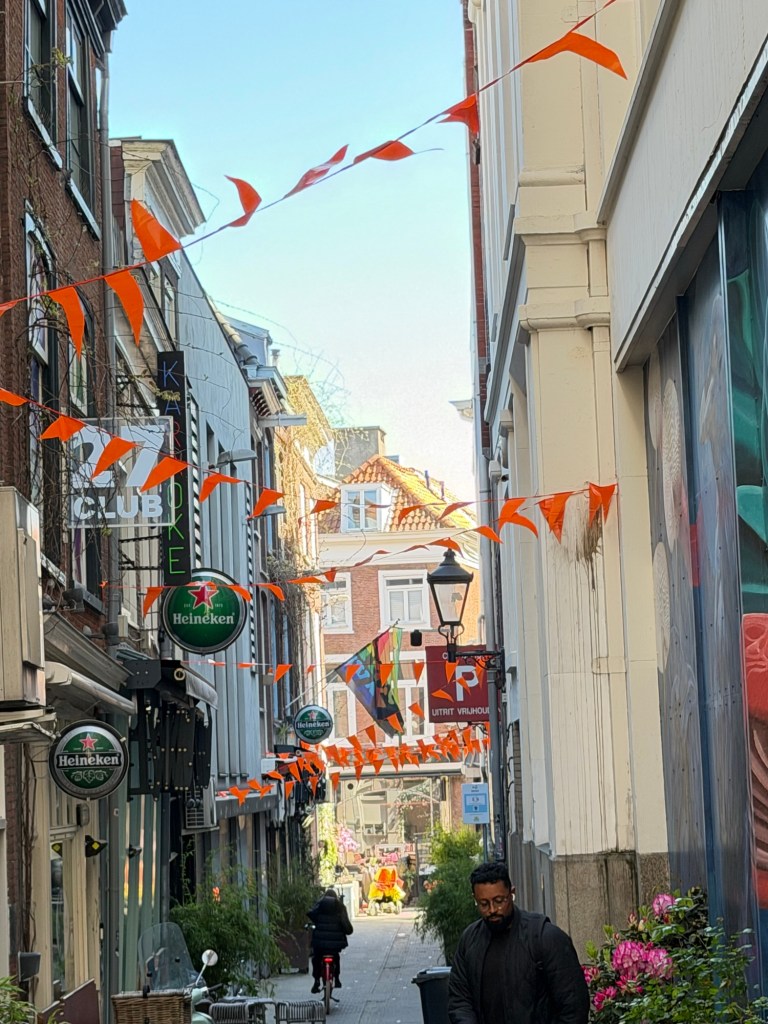
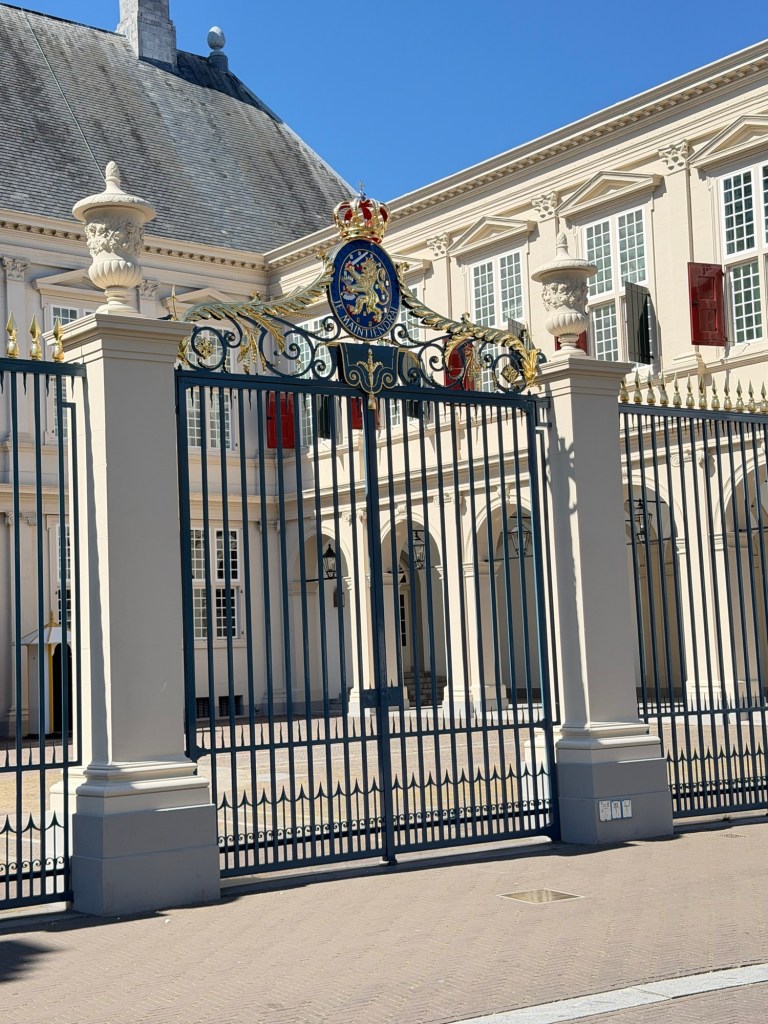
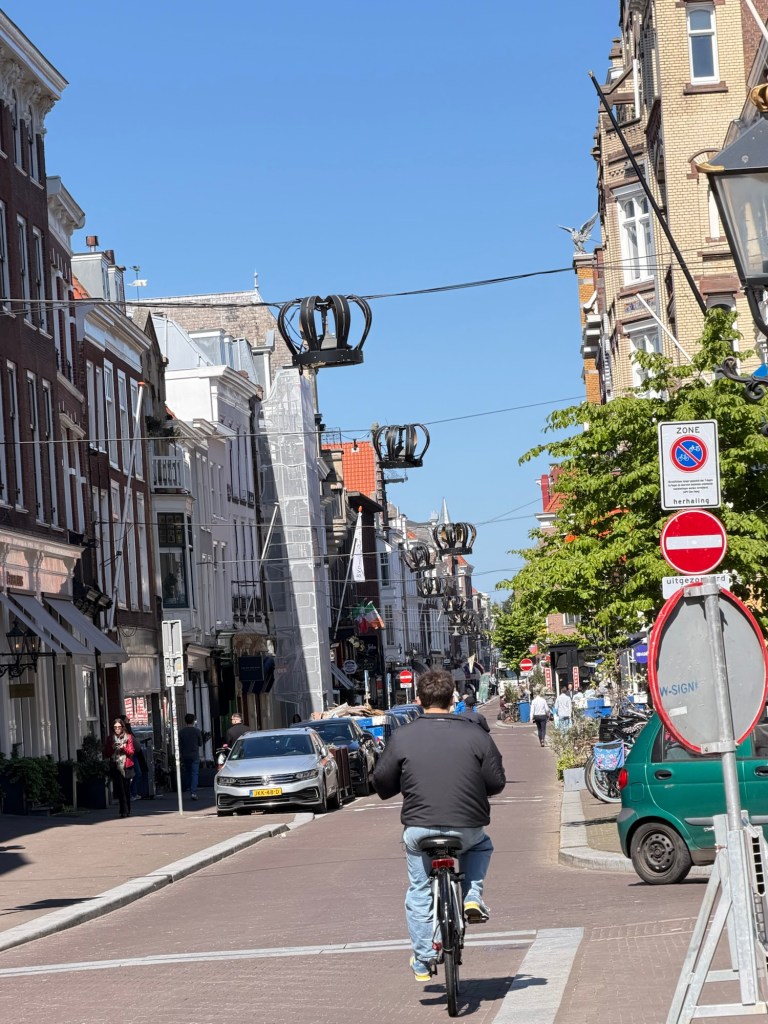
After leaving the Panorama, Linda guided us through the city, pointing out the King’s palaces along the way.
Escher Museum
We ended the day at the Escher Museum, housed in a former royal palace along the Lange Voorhout. After the quiet intimacy of the Mauritshuis, the Panorama, and the city tour, the shift was immediate—this was a place where perspective bends and certainty slips just enough to make you look twice.
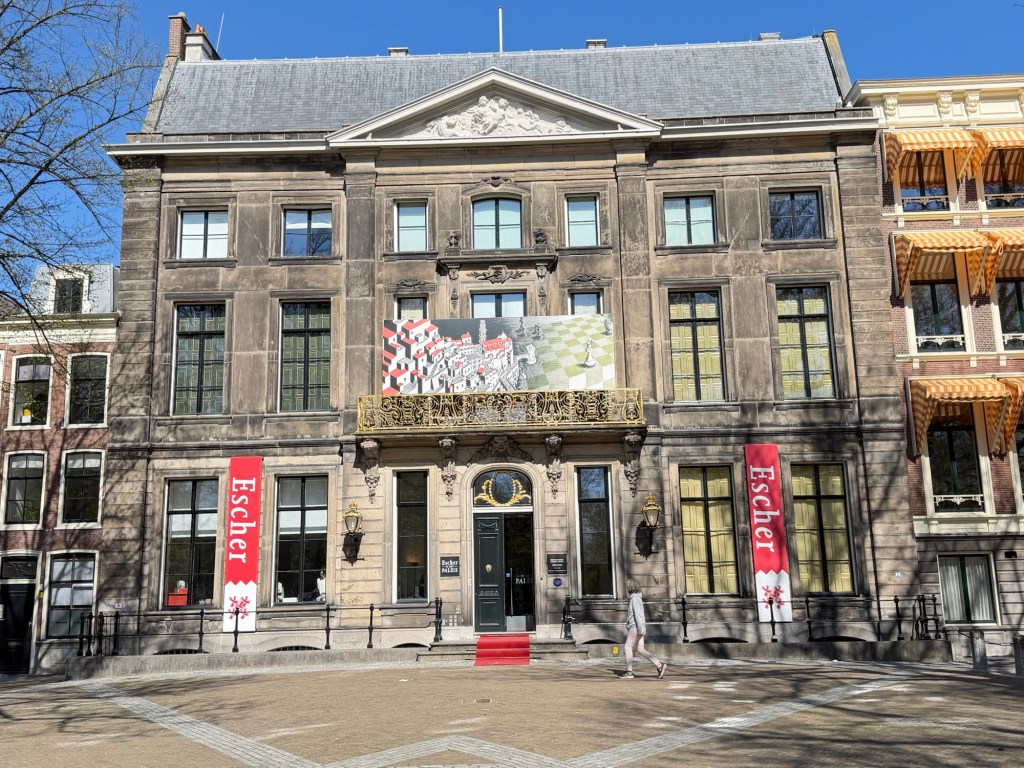
Dedicated to the work of M. C. Escher, the museum is as playful as it is precise. Staircases seem to lead nowhere and everywhere at once, birds dissolve into fish, and patterns repeat with hypnotic logic. What begins as curiosity quickly turns into a kind of visual puzzle, each piece inviting you to reconsider what you’re actually seeing.
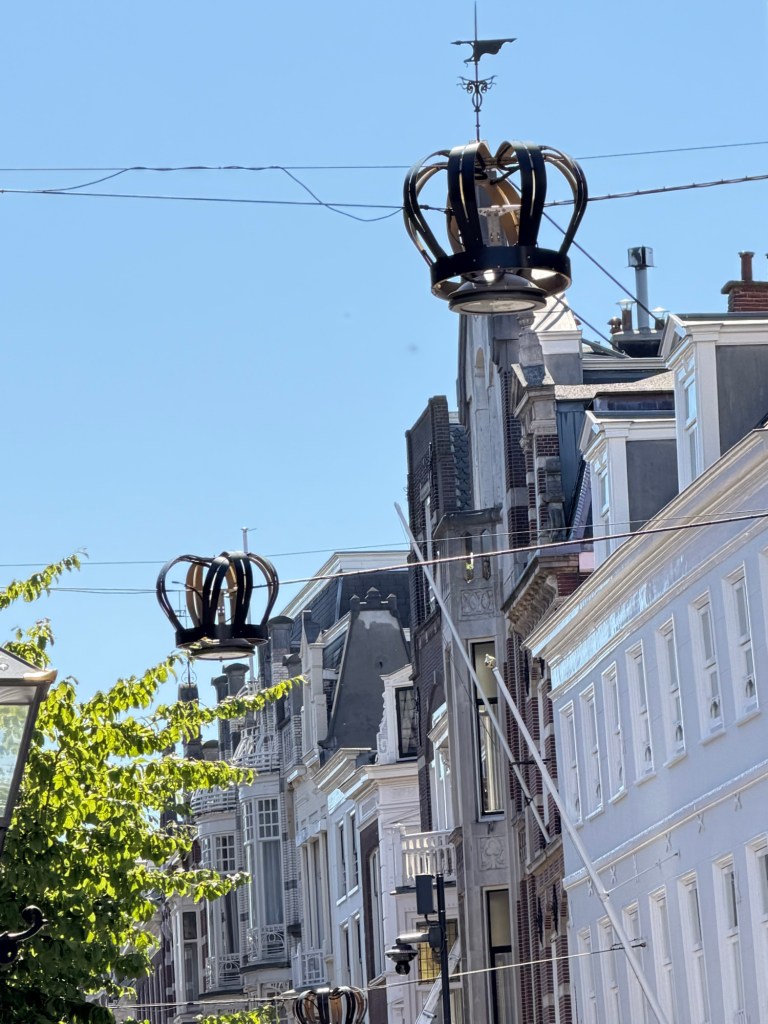
The setting adds to the experience. Ornate rooms, once meant for royal life, now house images that quietly defy order. Even the chandeliers have been reimagined, echoing Escher’s fascination with transformation and illusion. The collection is extensive.
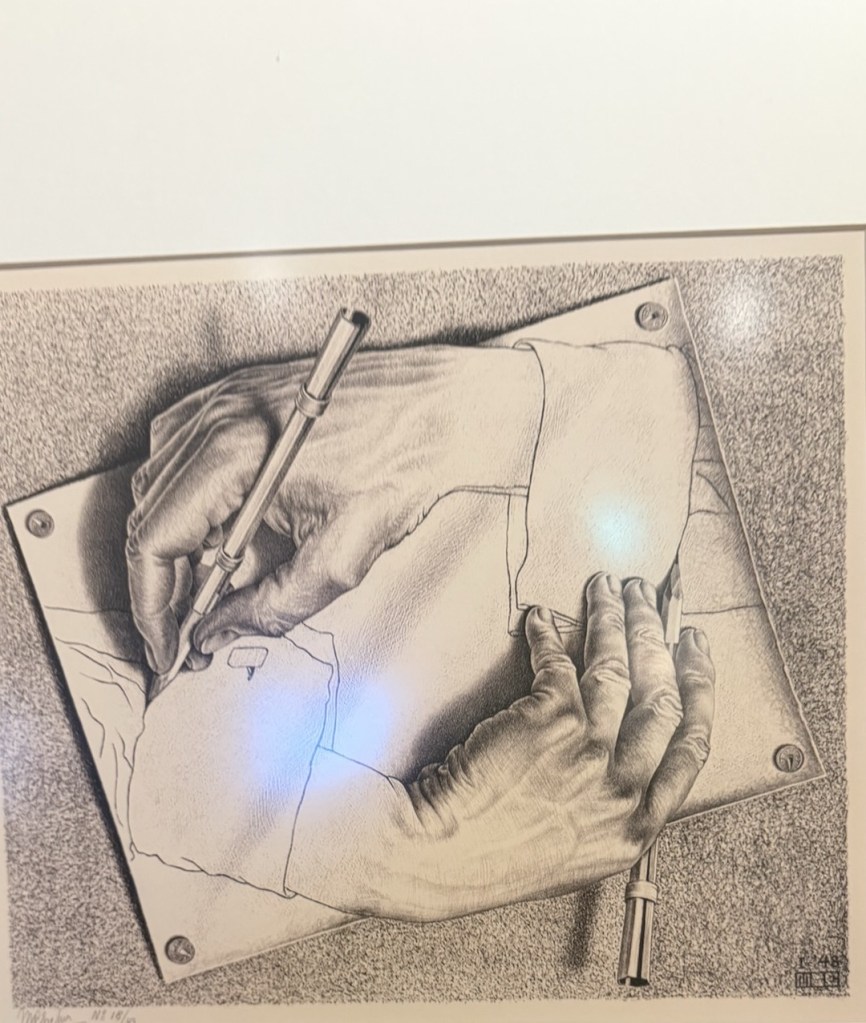
One piece, in particular, stopped us: Drawing Hands by M. C. Escher.
Two hands, each emerging from a flat sheet of paper, calmly drawing the other into existence. It’s simple at first glance, almost clinical in its precision—but the longer you look, the more it unravels. Which hand came first? Where does the drawing end and reality begin? The logic loops in on itself, perfectly balanced and quietly unsettling.
Unlike the patterns that playfully repeat and evolve elsewhere in the museum, this one feels more philosophical. It’s about creation, authorship, and the strange moment where imagination becomes tangible. The illusion isn’t loud—it’s exacting, deliberate, and impossible to resolve.
Standing there, it felt like the perfect distillation of Escher’s world: elegant, controlled, and just disorienting enough to stay with you long after you’ve stepped away.