Just across from the hotel’s front entrance, the dock awaited us, where our saloon boat was already moored—an effortless and elegant start to the evening that felt perfectly in step with the charm of the setting.
Then the confusion began. We spotted what we thought was our boat—a large canal vessel capable of seating eighty—and, reassured by a crew member that we were in the right place, were helped aboard. As we stepped inside, we found ourselves in a spacious hull lined with tables draped in crisp white linens, all set as if for an elaborate feast.
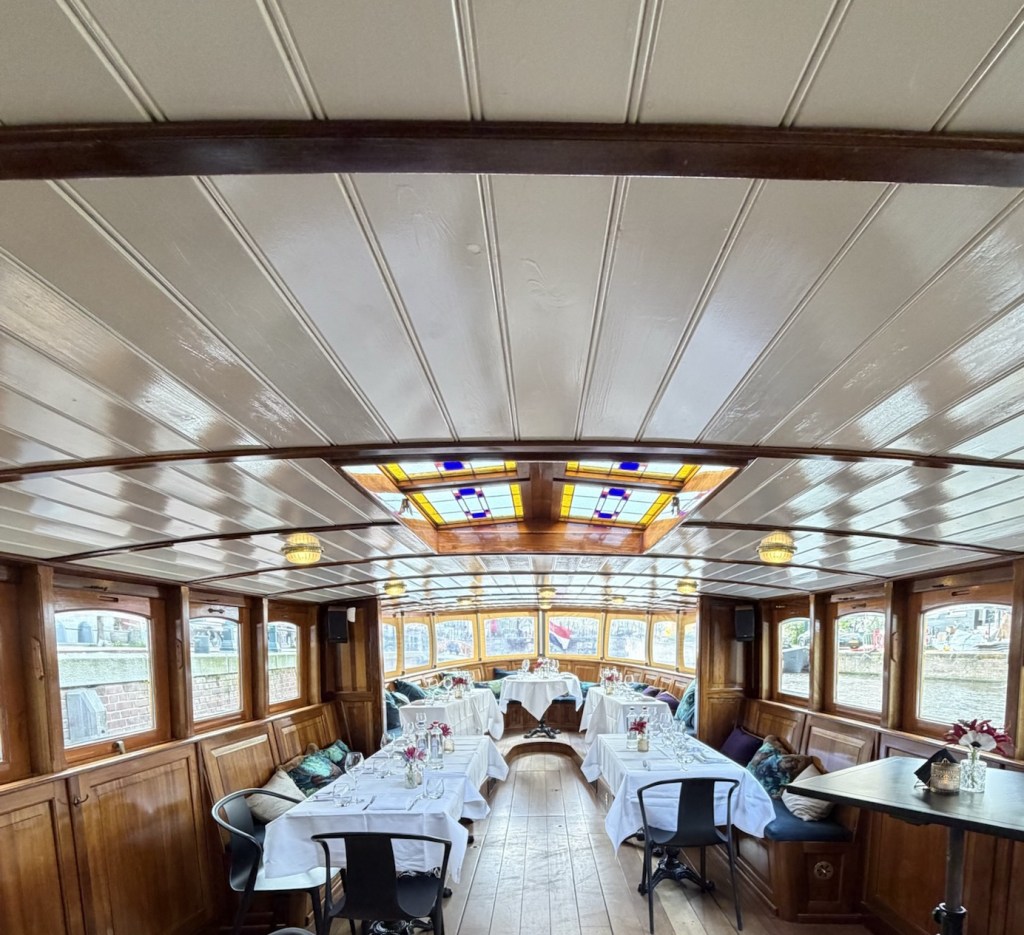
It all felt a bit off for just the two of us. When we were told that twenty other guests would be joining, the confusion only deepened—after all, we had arranged a private dinner. What followed was a mildly comical mix-up, and it soon became clear that we had boarded the wrong boat.
We quickly disembarked and, moments later, found our actual vessel moored just behind it, almost completely obscured from view. Had we stayed aboard with twenty unsuspecting strangers, we might have had an even better story—an accidental dinner party that would have taken the evening in a very different direction.
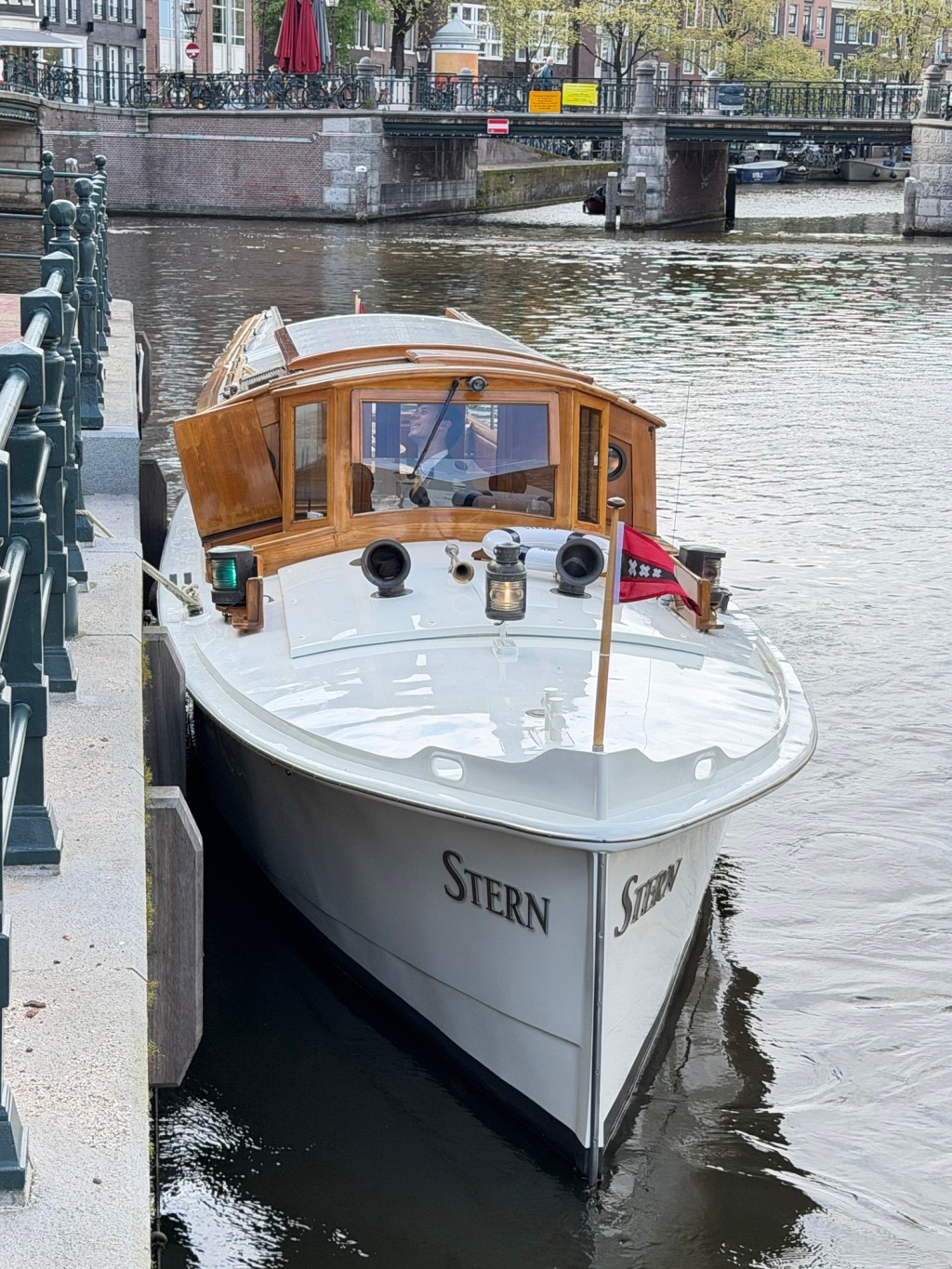
And then, just behind the larger vessel, partially hidden from view, we finally spotted her—our boat.
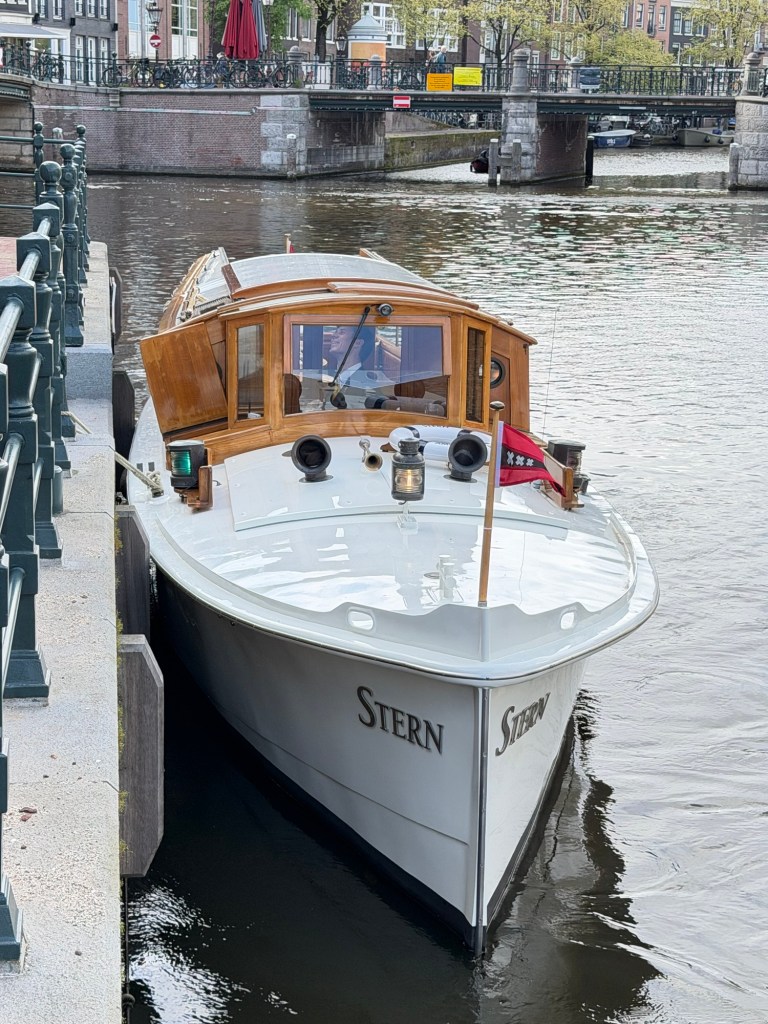
Sleek and intimate, with a gleaming white hull and warm varnished wood cabin, she felt worlds apart from the bustling dinner barge we had just left. The name Stern was painted neatly across the bow, a small Dutch flag fluttering at the front, adding a quiet sense of place. Moored gently along the canal’s edge, she seemed to promise exactly what we had envisioned all along: a private, unhurried evening on the water, set against the timeless backdrop of Amsterdam’s bridges and narrow streets.
We were then warmly greeted by Captain Will, who immediately set us at ease with a quiet confidence and understated charm. Impeccably dressed in a tailored navy jacket with brass buttons and a gold tie, he looked every bit the part—more like the steward of a private yacht than the captain of a canal boat.
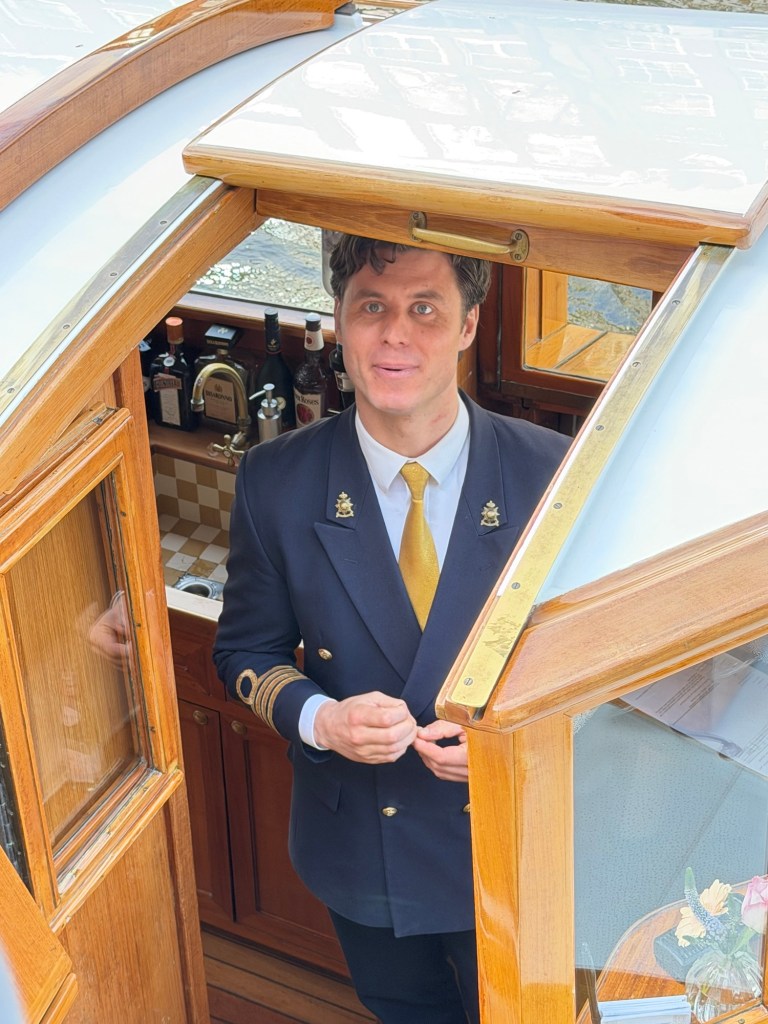
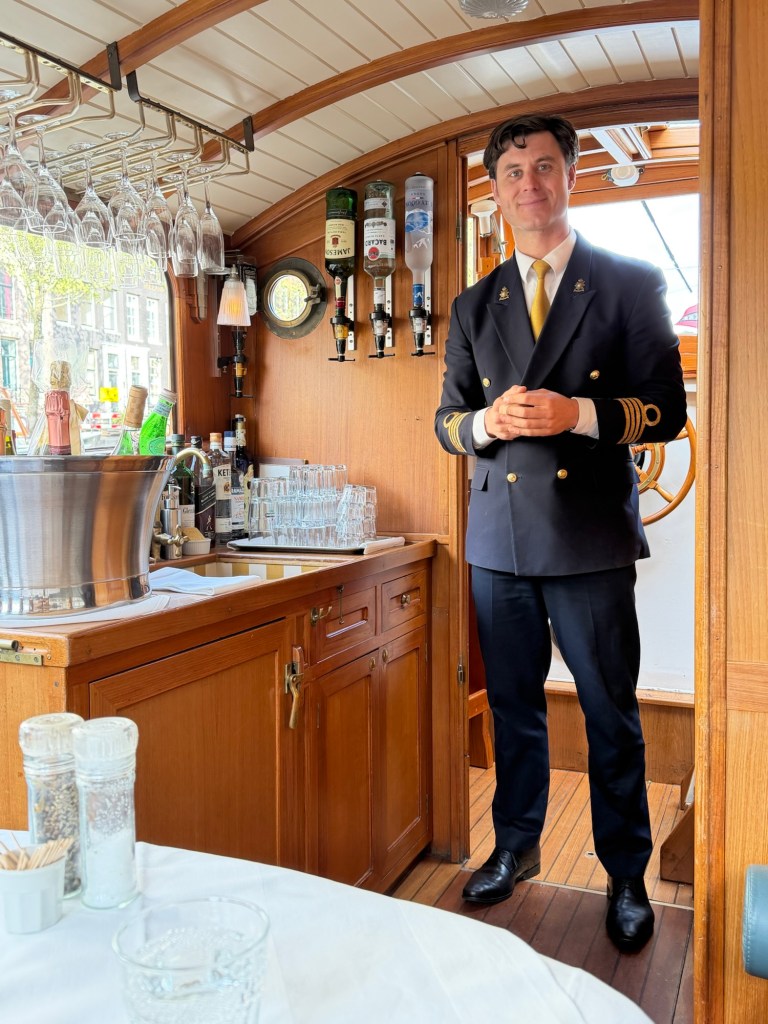
Captain Will was an affable young man, easygoing yet quietly professional. As it turned out, nearly ten years earlier, on one of his first tours, he had hosted Mick Jagger and the Rolling Stones—a detail he shared with a modest smile that made the story all the more memorable. The evening itself had been arranged for us by Thomas Stinglhamber of Brilliantideas.travel (who arranged our entire Benelux excursion) through Private Boat Tours Amsterdam (www.privateboattoursamsterdam.com), and from that point forward everything unfolded exactly as it should.
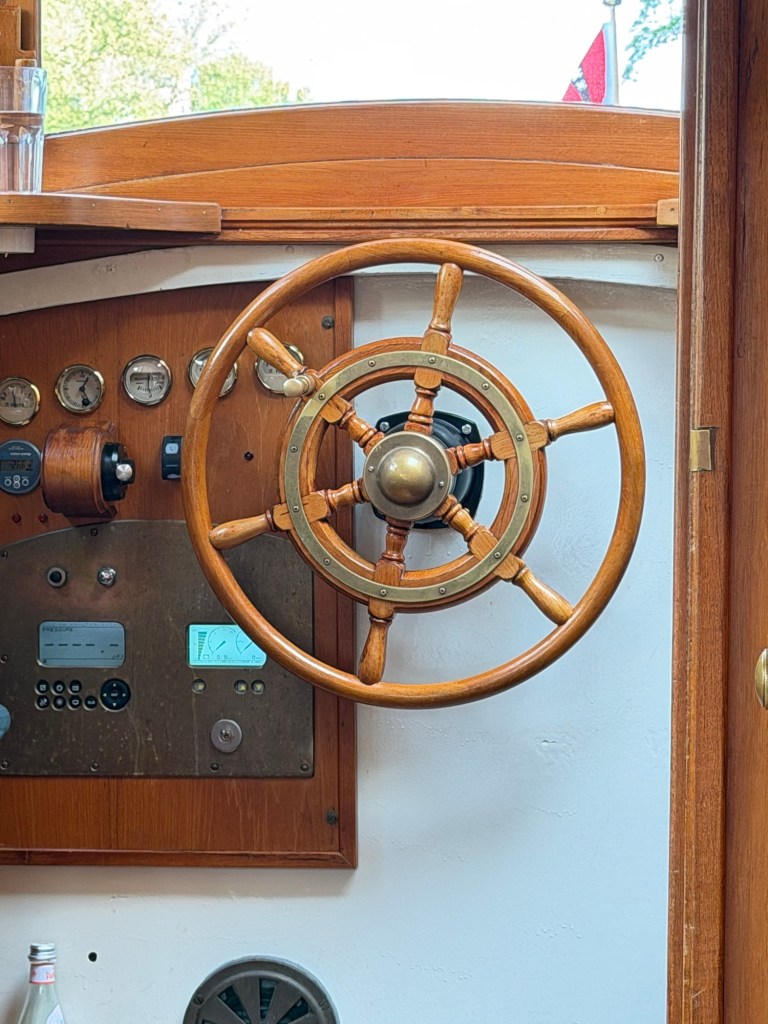
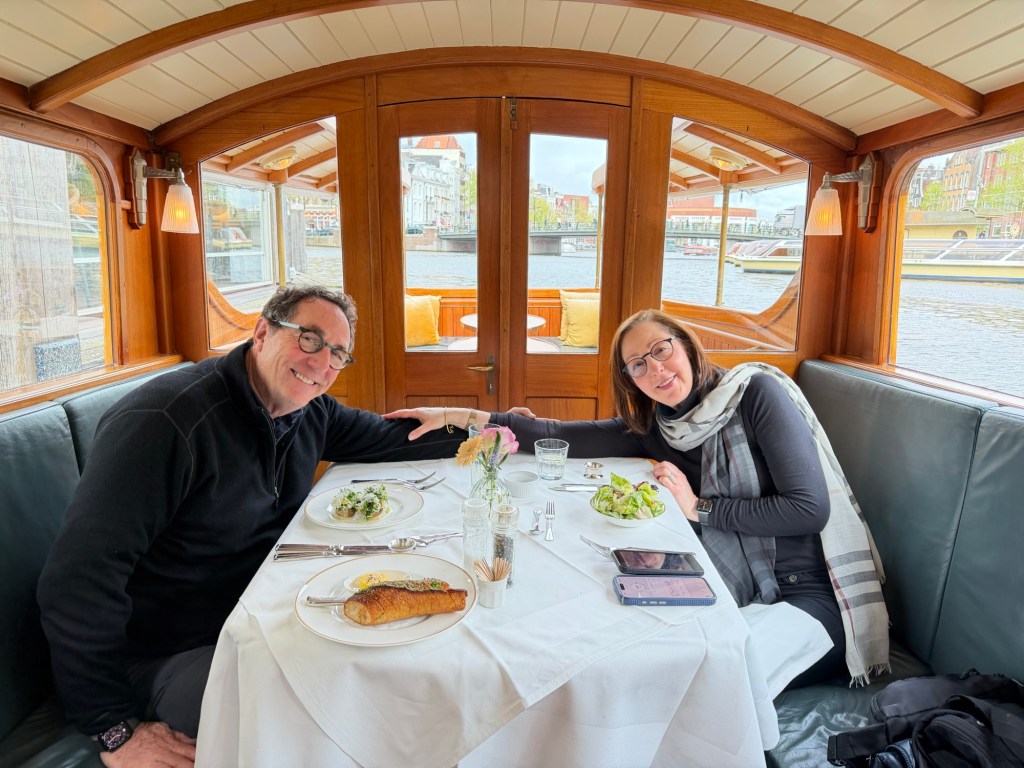
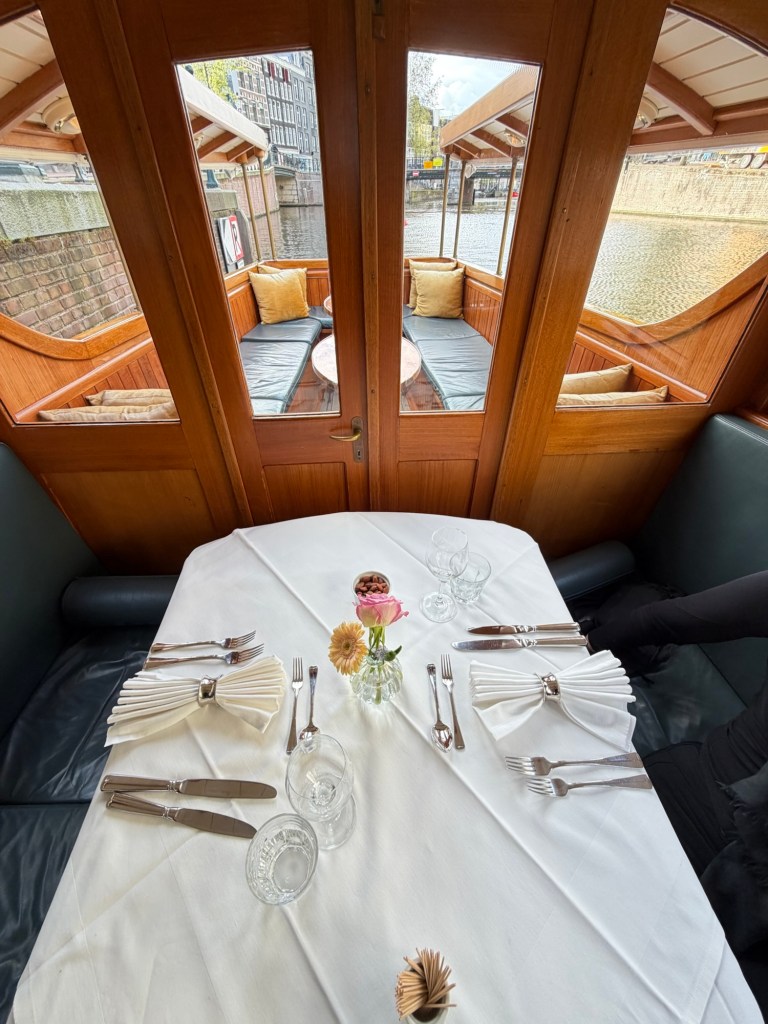
Stepping inside, the intimate scale of the boat became clear. The warm glow of varnished wood surrounded us—polished cabinetry, curved beams, and large windows framing the canals like moving paintings. Our table was set simply but elegantly: crisp white linens, neatly folded napkins, polished silver, and a small vase with fresh flowers at its center. It was unmistakably designed for two.
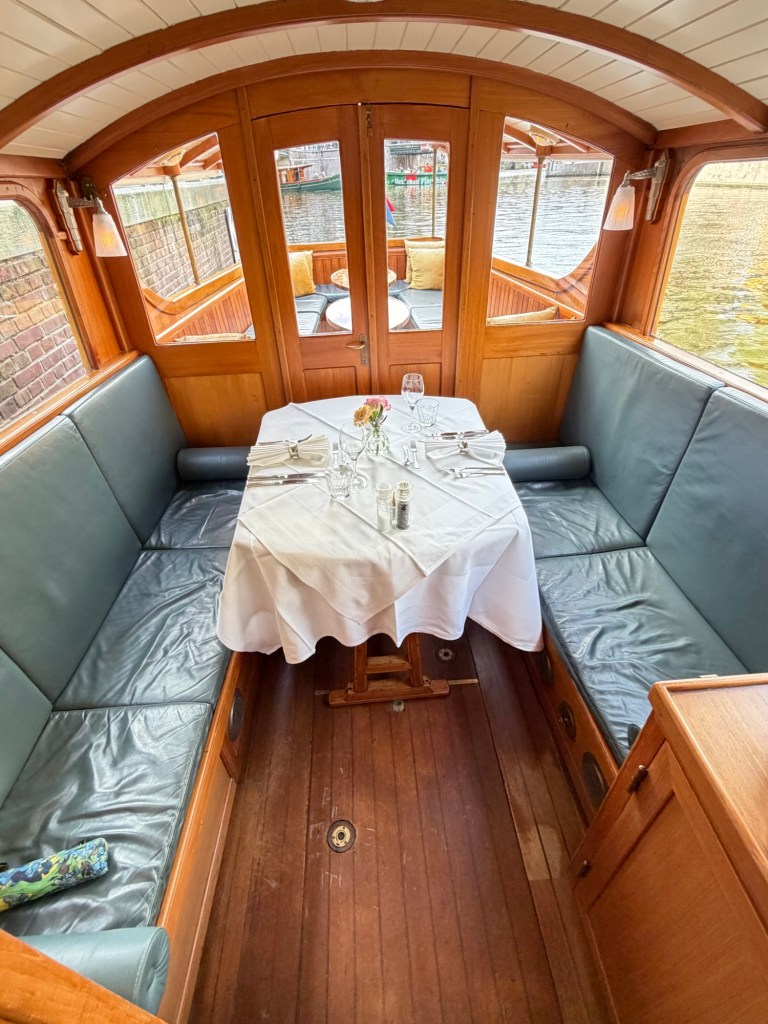
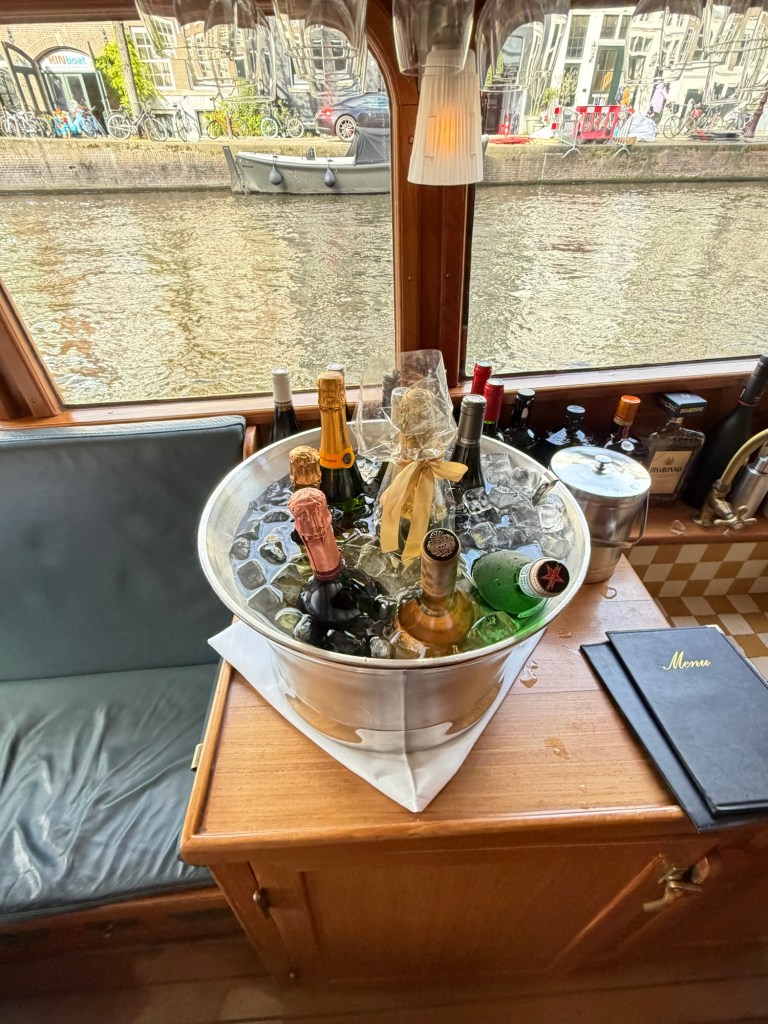
Just beyond, a chilled bucket held a thoughtful selection of wines and champagne, while the small bar—tucked neatly into the cabin—was stocked with spirits and glassware, hinting at the care that had gone into every detail. Overhead, rows of hanging glasses caught the light as the boat gently shifted with the water.
Captain Will presented the menu, a carefully curated progression that felt more like a restaurant experience than something one might expect on a boat. As it turned out, the evening had another thoughtful twist: each course would be collected along the way from a selection of restaurants carefully chosen along our route.
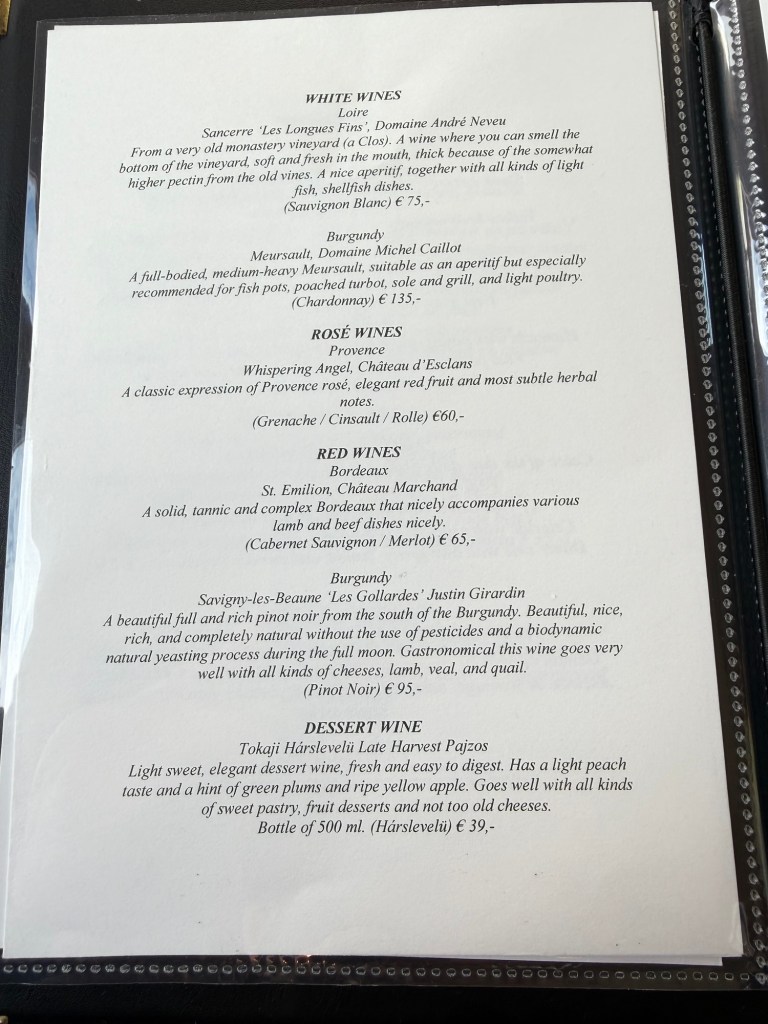
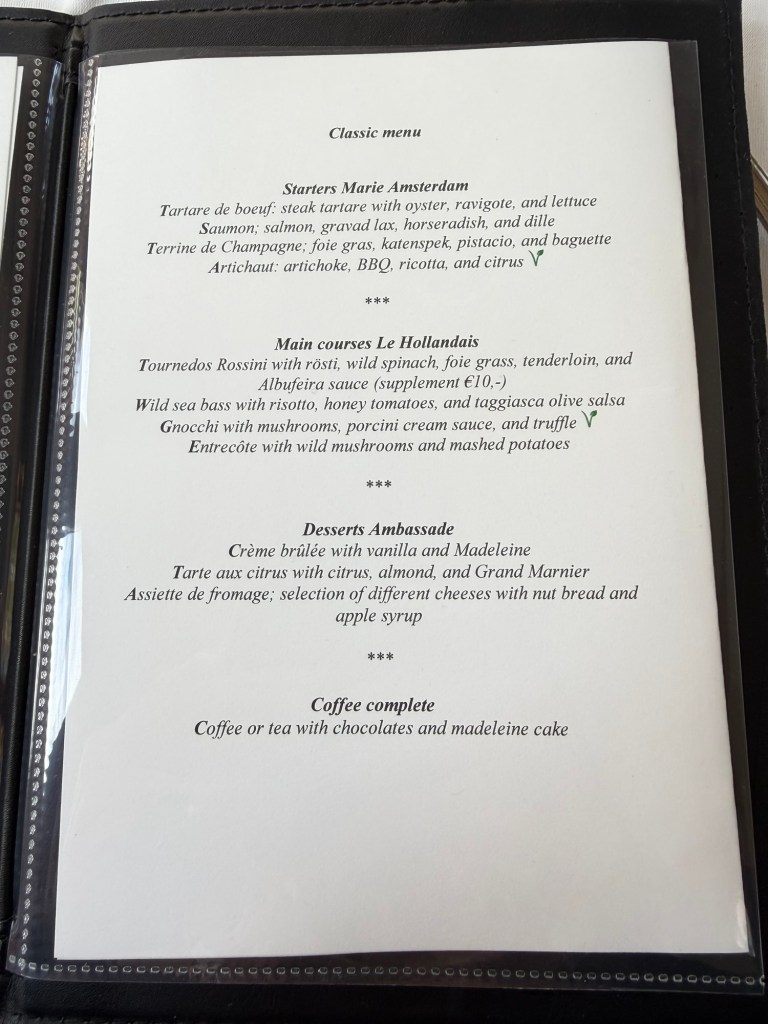
It added an element of anticipation to the journey—gliding through the canals, stopping discreetly at different points, and watching as each dish was brought aboard. The experience became not just a dinner, but a moving tasting of the city itself, with each course reflecting a different kitchen, a different style, and a different corner of Amsterdam.
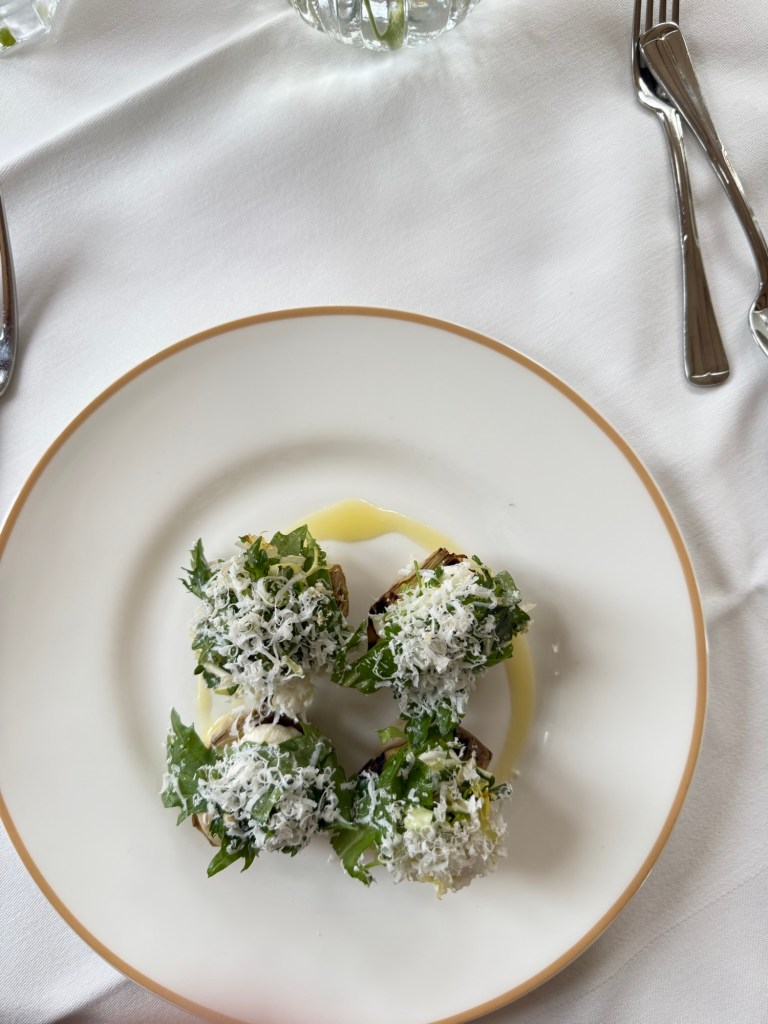
The first course arrived with a quiet elegance—artichoke hearts, lightly charred and arranged with precision, topped with a delicate tangle of greens and a generous shaving of cheese, finished with a drizzle of golden oil. Simple in appearance, yet layered in flavor.
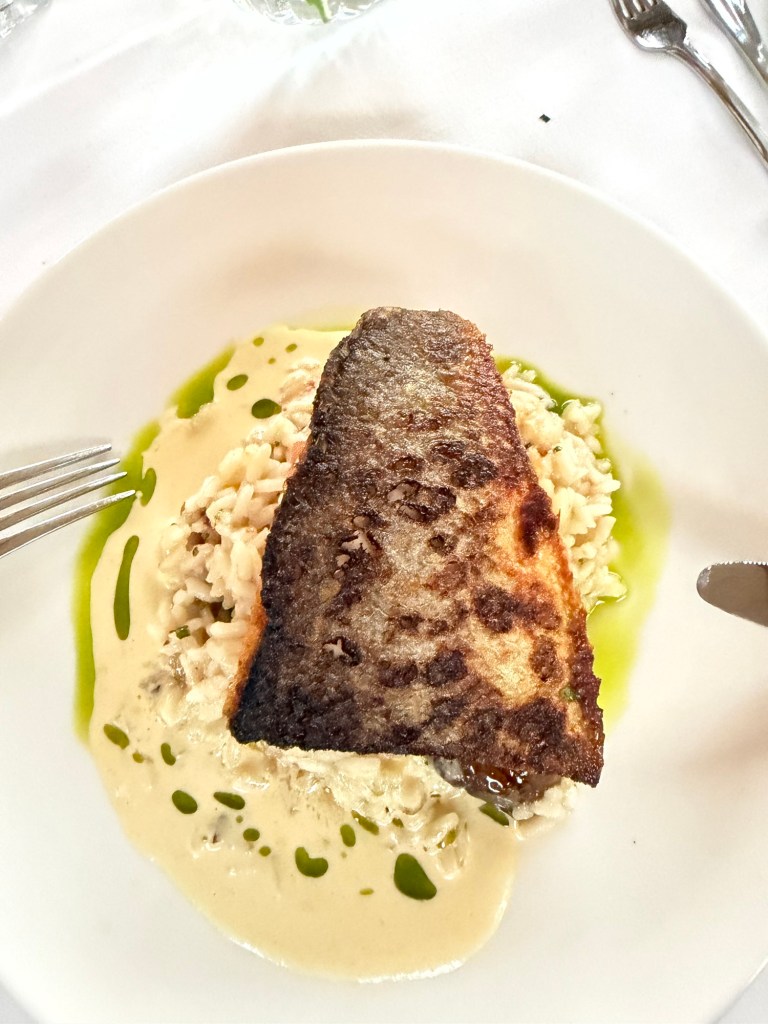
For the main course, we each went in a different direction. I chose the wild sea bass with risotto, honey tomatoes, and taggiasca olive salsa, while Beth opted for the tournedos Rossini with rösti, wild spinach, foie gras, and tenderloin.
My sea bass was beautifully prepared, the skin crisp and golden, resting atop a creamy risotto. The sweetness of the honey tomatoes and the briny lift of the taggiasca olive salsa brought brightness and balance, making each bite feel light yet satisfying.
Beth’s tournedos Rossini, by contrast, leaned into pure indulgence—a perfectly cooked tenderloin paired with foie gras, complemented by a crisp rösti and earthy wild spinach. Rich, layered, and deeply satisfying, it was the kind of dish that doesn’t try to hold back.
I finished the meal with a classic crème brulee—its caramelized sugar top giving way with a gentle crack to reveal a smooth, custard-like center beneath. When it arrived, I remarked to Captain Will that the portion seemed enormous, to which he quipped, with a knowing smile, that it had been designed for the American palate. It was a lighthearted moment and a fitting, indulgent end to the evening.
As we eased into the canals, Amsterdam unfolded around us in a way that felt both intimate and cinematic. Low stone bridges arched overhead one after another, each framing the next stretch of water like a carefully composed photograph. Bicycles lined the railings above, their silhouettes a constant reminder of the city’s rhythm just beyond the canal’s edge.
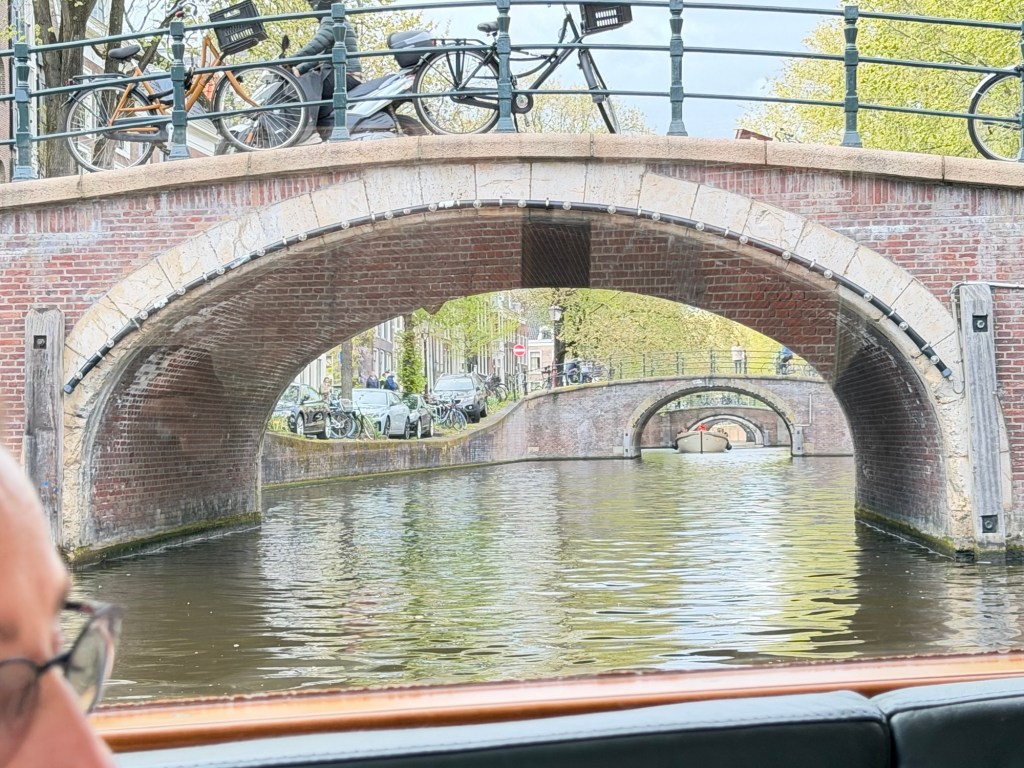
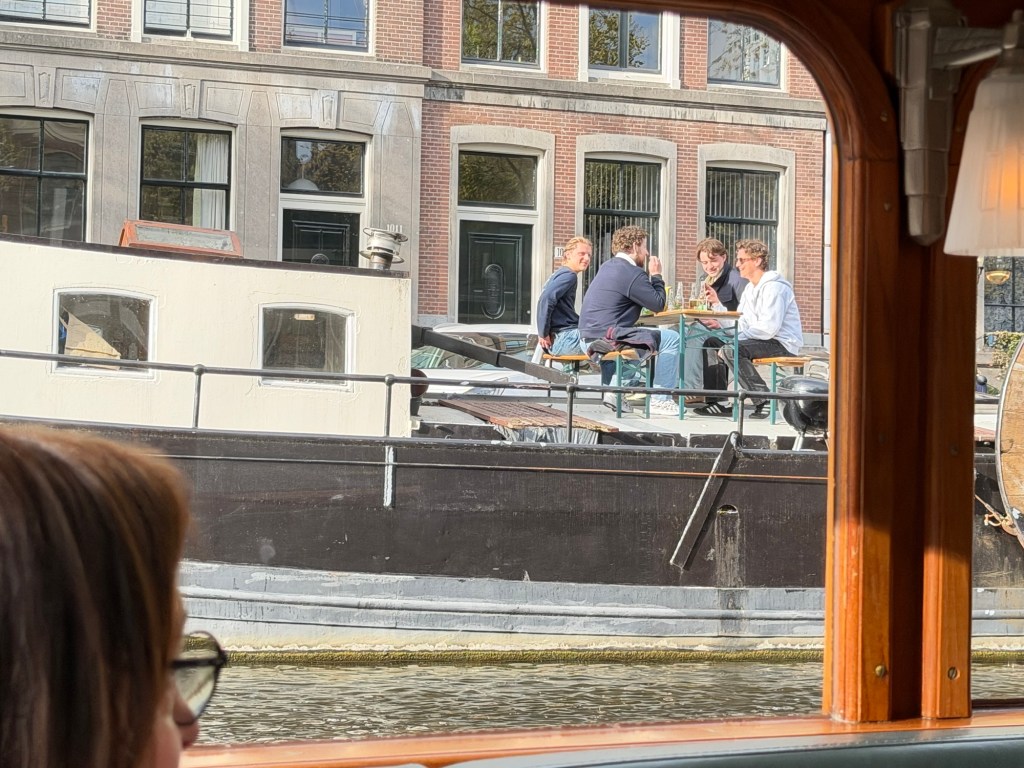
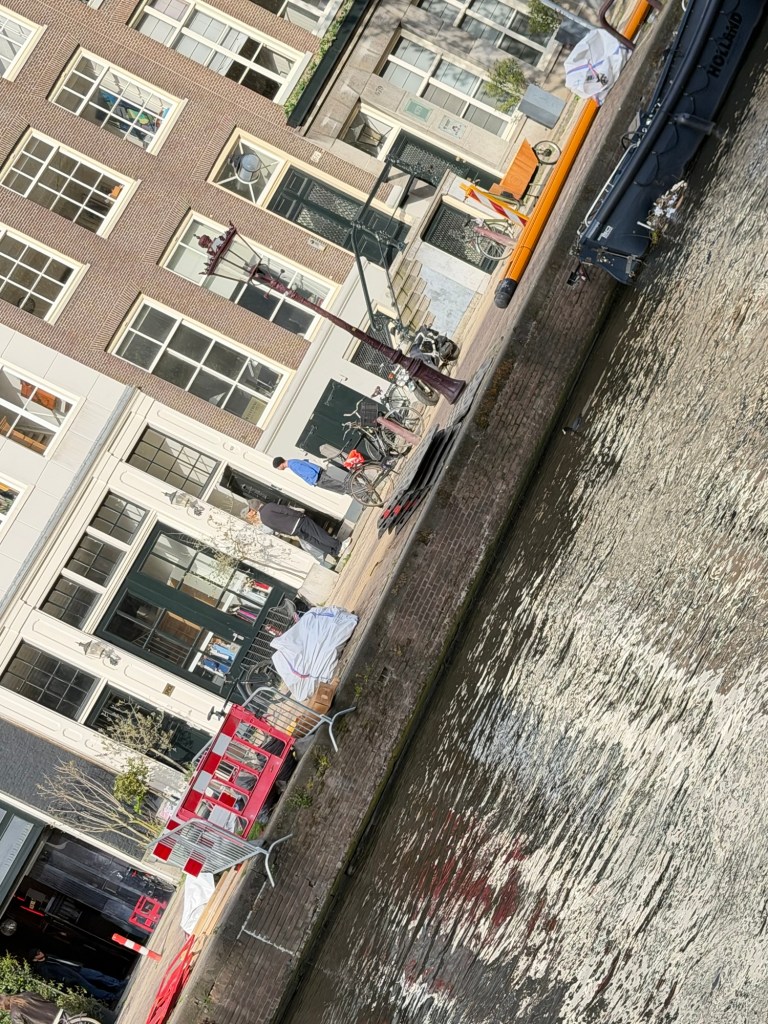
Along the banks, the narrow canal houses stood shoulder to shoulder—brick facades in varying shades, some pristine, others wrapped in scaffolding, quietly revealing the ongoing effort to preserve centuries of history. One of the more striking features was the number of houseboats—many of them beautifully kept, with potted plants, outdoor seating, and even small rooftop gardens. What might once have been working vessels have been thoughtfully transformed into full-time homes, each with its own personality. Drifting past them offered a glimpse into a quieter, more intimate side of Amsterdam life, where the water isn’t just scenery, but an address.
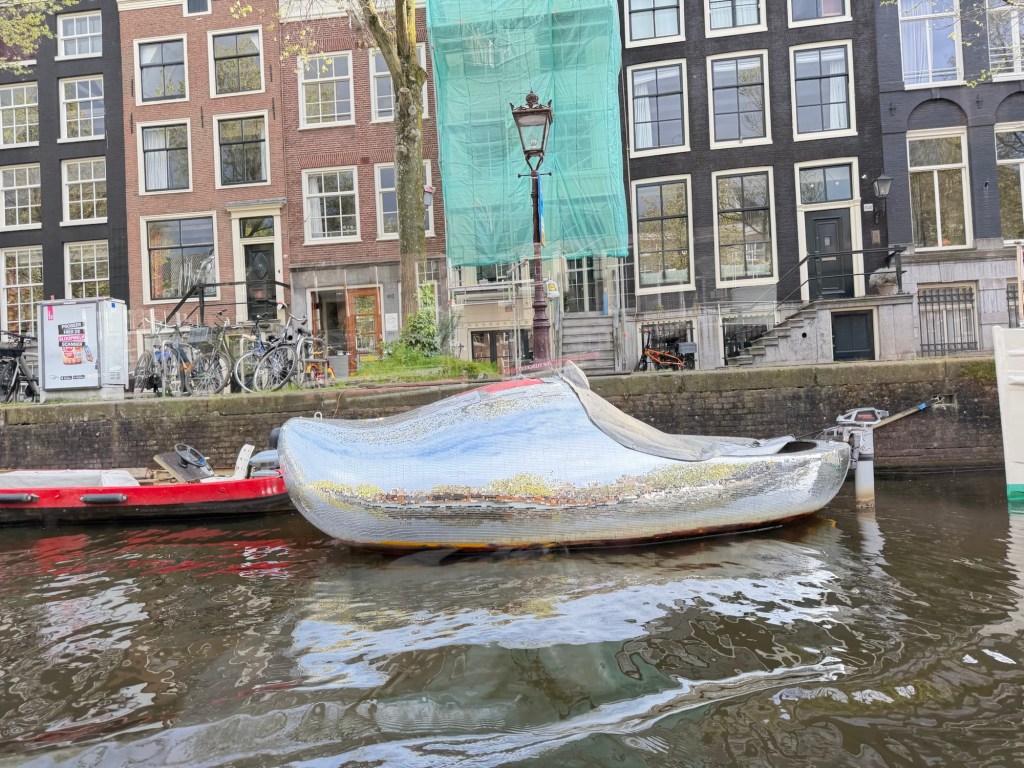
At one point, we passed a curious sight: a boat clad entirely in mirrored tiles, shimmering softly in the water, reflecting the city back in fragments as we glided by.
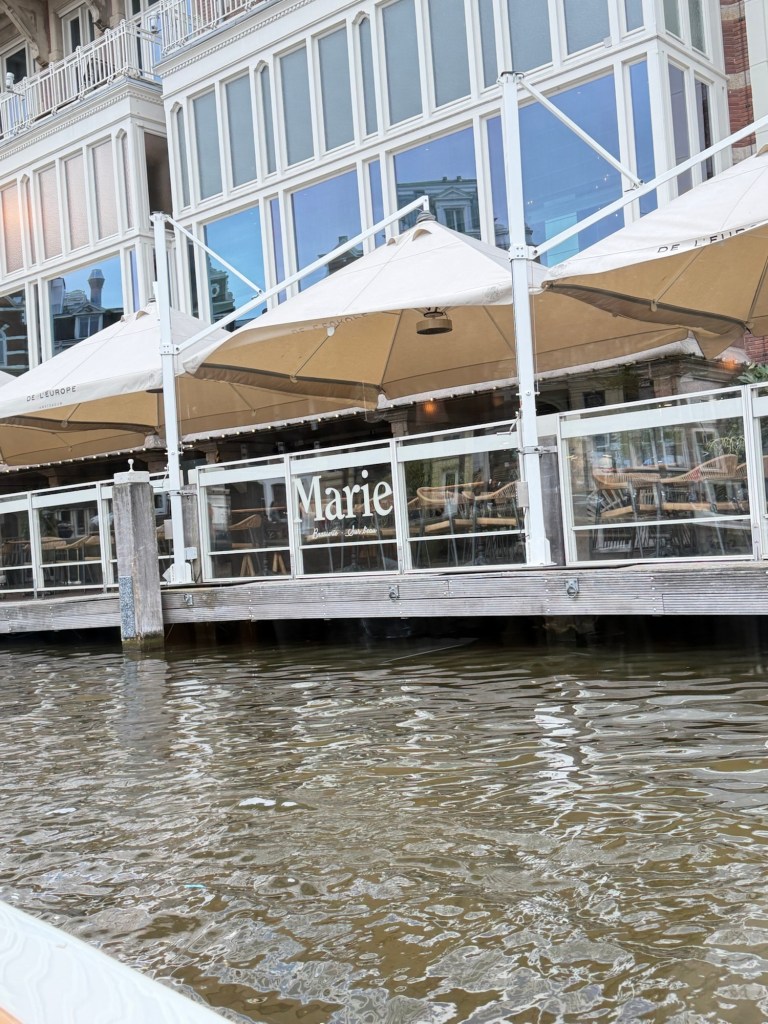
The route carried us past waterside cafés and restaurants, their terraces hovering just above the canal. Diners lingered under broad umbrellas, glasses in hand, while we drifted by at water level—an entirely different vantage point on the same scene.
And then there were the small, fleeting moments: a lone boat tied along the wall, ripples catching the light; pedestrians pausing at a bridge to watch us pass; the quiet hum of life along the water. Seen from the canal, Amsterdam feels less like a city to be navigated and more like one to be gently experienced—one slow turn at a time.
In the end, the brief confusion at the dock felt like part of the charm—a small detour that made the destination all the more rewarding. As the canals slipped quietly past and the last lights of the city shimmered on the water, it was clear we hadn’t just found the right boat—we had found exactly the evening we had hoped for.