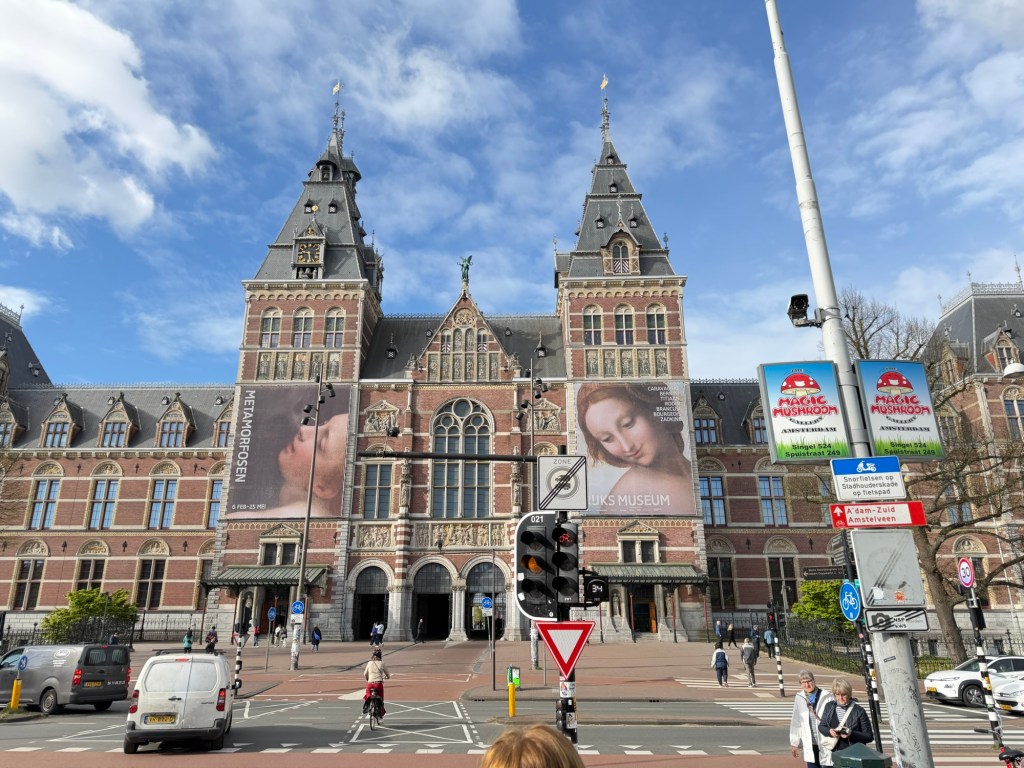
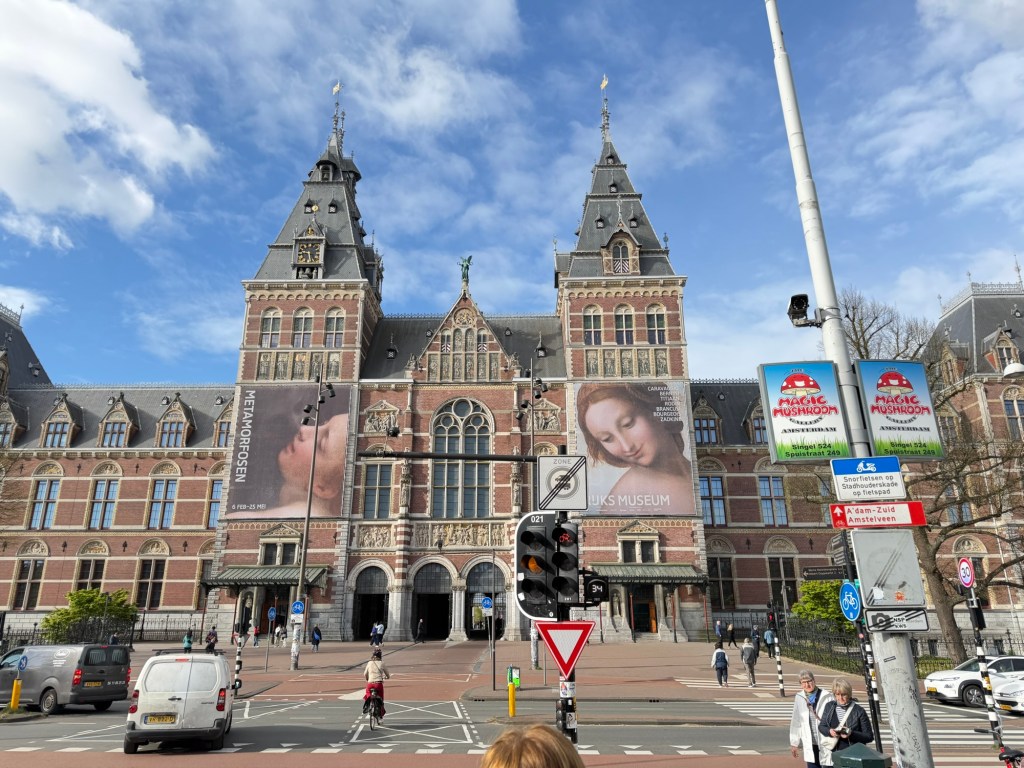
We met our guide Anita Liemburg ( https://www.muzeaalverhalen.com/) who spent the morning guiding us through the Rijksmuseum and the van Gogh Museum—two of the world’s most renowned museums.
At the Rijksmuseum, the Dutch Golden Age unfolds in grand scale, where works by Rembrandt and Johannes Vermeer anchor a collection that feels both monumental and deeply human (https://www.rijksmuseum.nl/en).
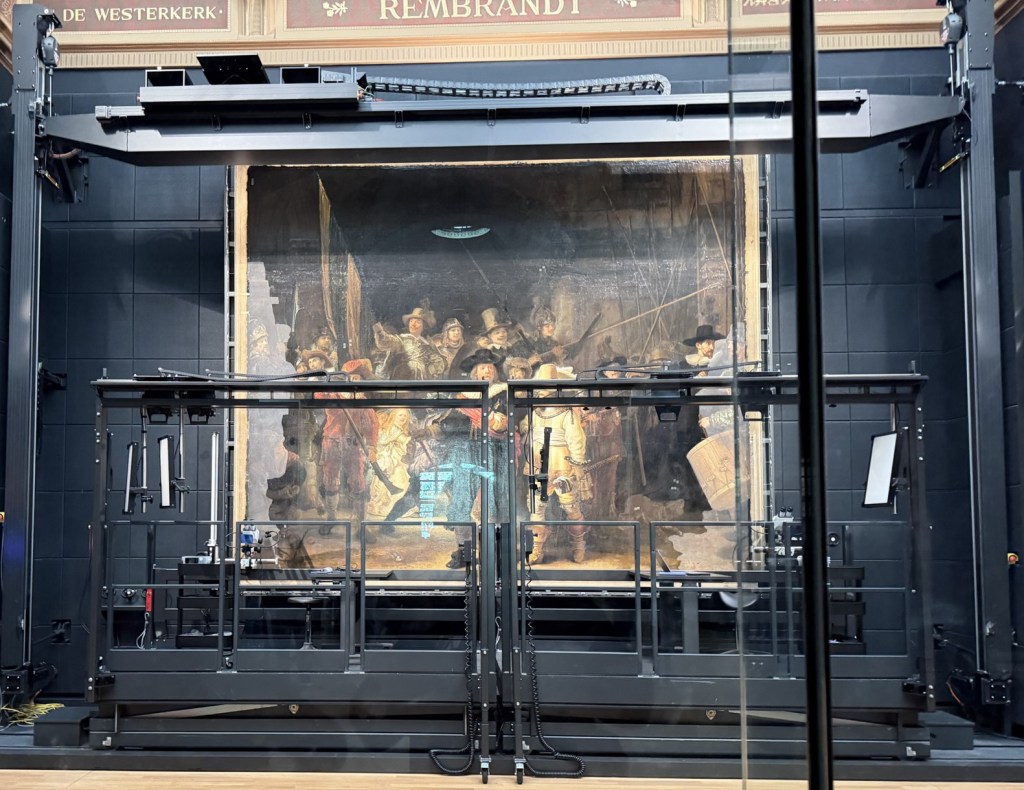
We caught a rare glimpse of Rembrandt’s The Night Watch mid-restoration, suspended behind glass like a patient in surgery, its details slowly being brought back to life.
There are paintings you admire from a distance—and then there are paintings that seem to notice you first.
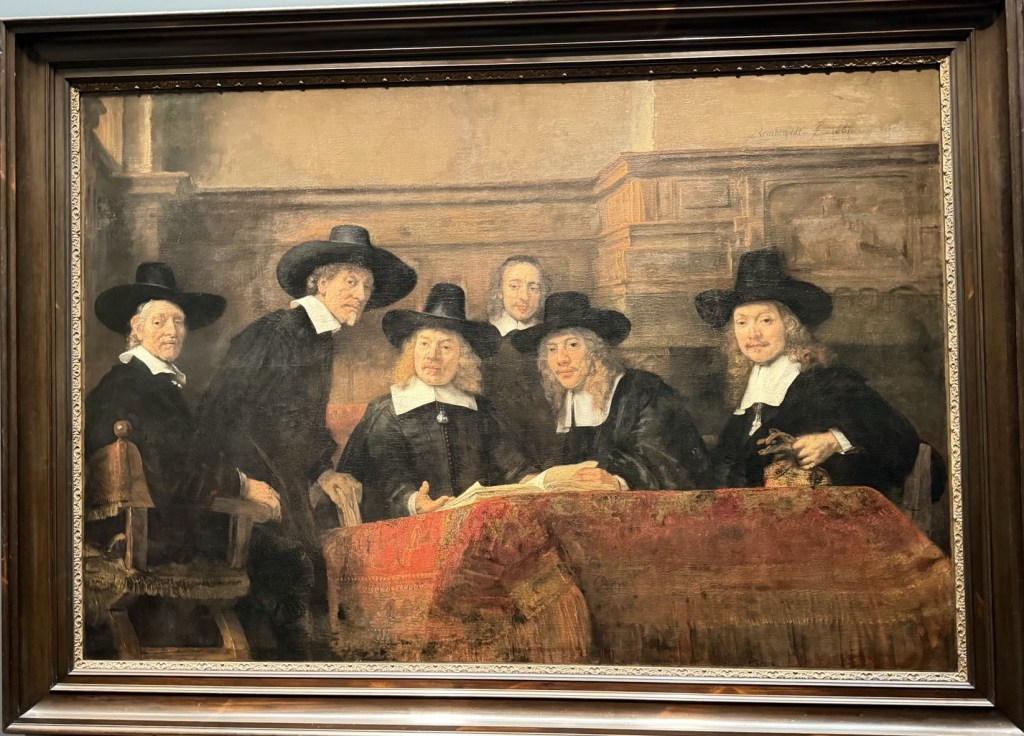
Standing in front of The Syndics of the Drapers’ Guild, I had the distinct feeling I had walked into a meeting I wasn’t supposed to attend.
Six men sit around a table, dressed in sober black, wide-brimmed hats framing faces that are anything but uniform. A ledger lies open before them. Papers are being reviewed. Decisions are being made. And then—almost collectively—they look up.
At me.
It’s not dramatic. No one rises. No one gestures. But the effect is unmistakable: the room shifts, and suddenly you’re part of the scene. It’s as if Rembrandt has captured not just a portrait, but a moment of interruption.
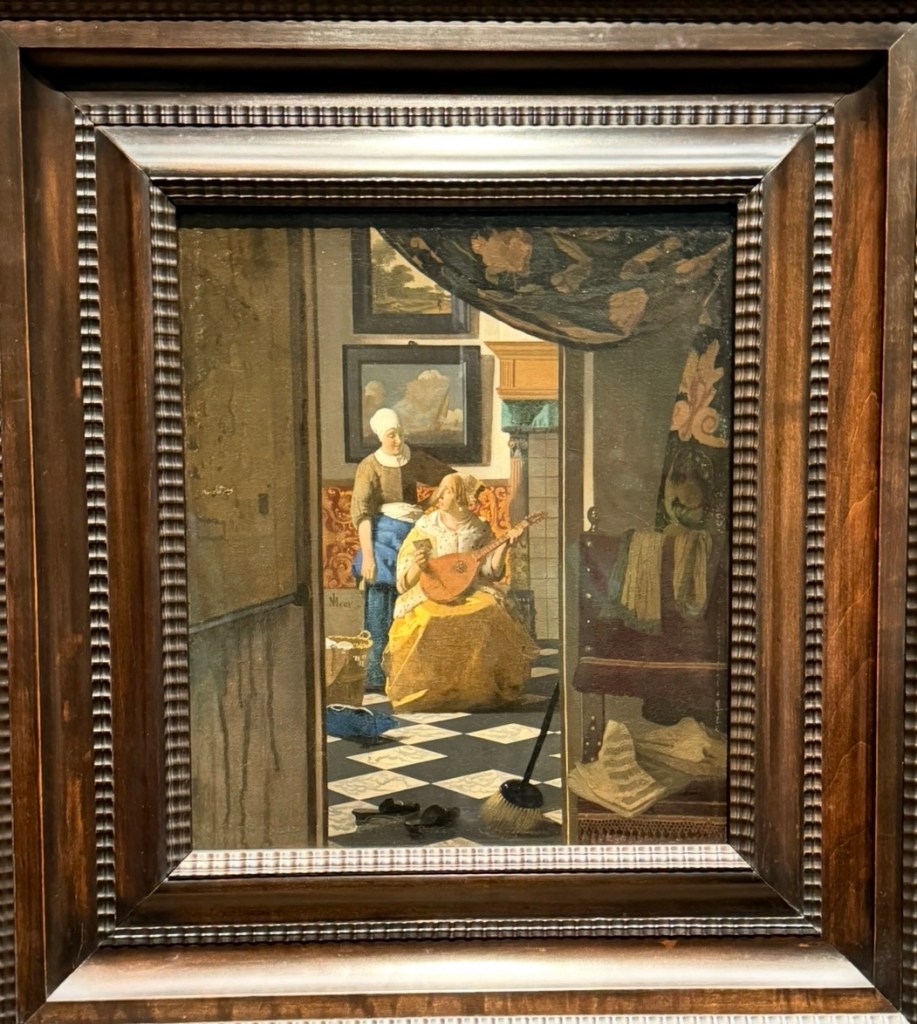
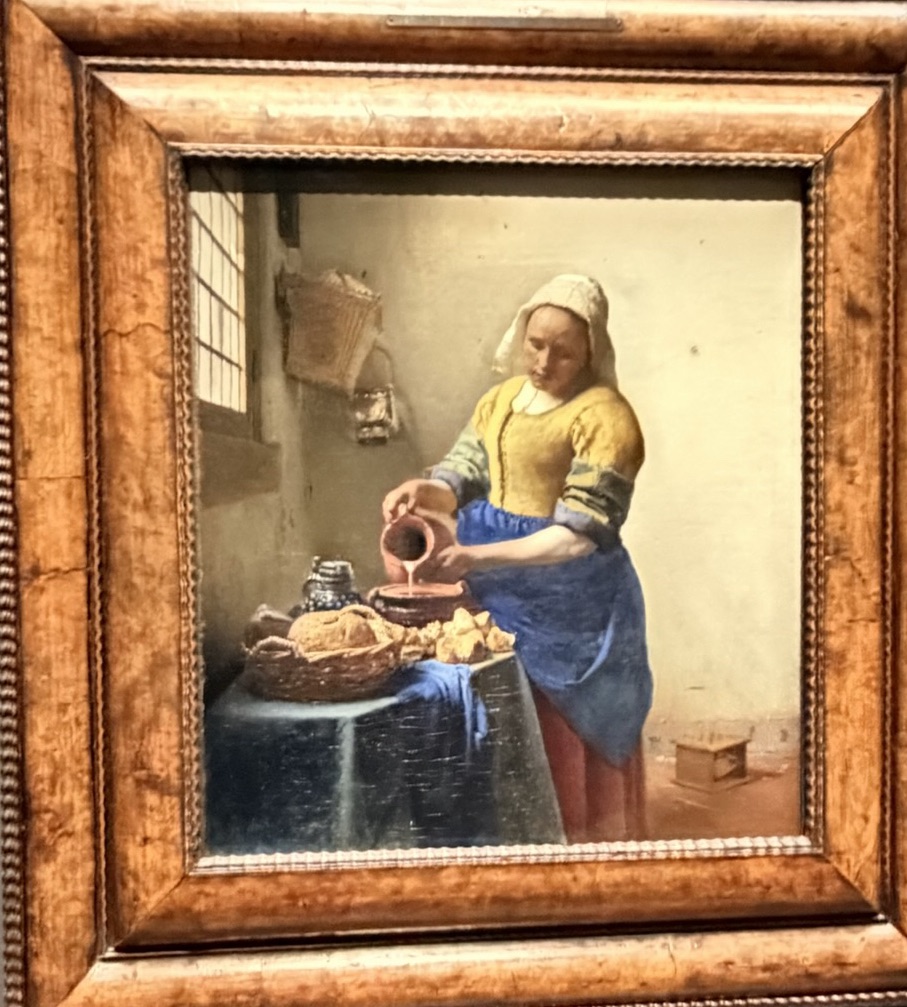
And then there is Johannes Vermeer: intimate, luminous—paintings that do not demand attention so much as quietly hold onto it. Small canvases, almost easy to miss, but impossible to forget. In scenes like The Milkmaid and The Love Letter, light becomes the subject—soft, deliberate, and somehow alive.
And then The Little Street—There is no drama here. No grand subject. Just a narrow street, a few brick houses, a woman bent over her work, children nearby. It would be easy to walk past. But stay a moment, and it begins to settle in.
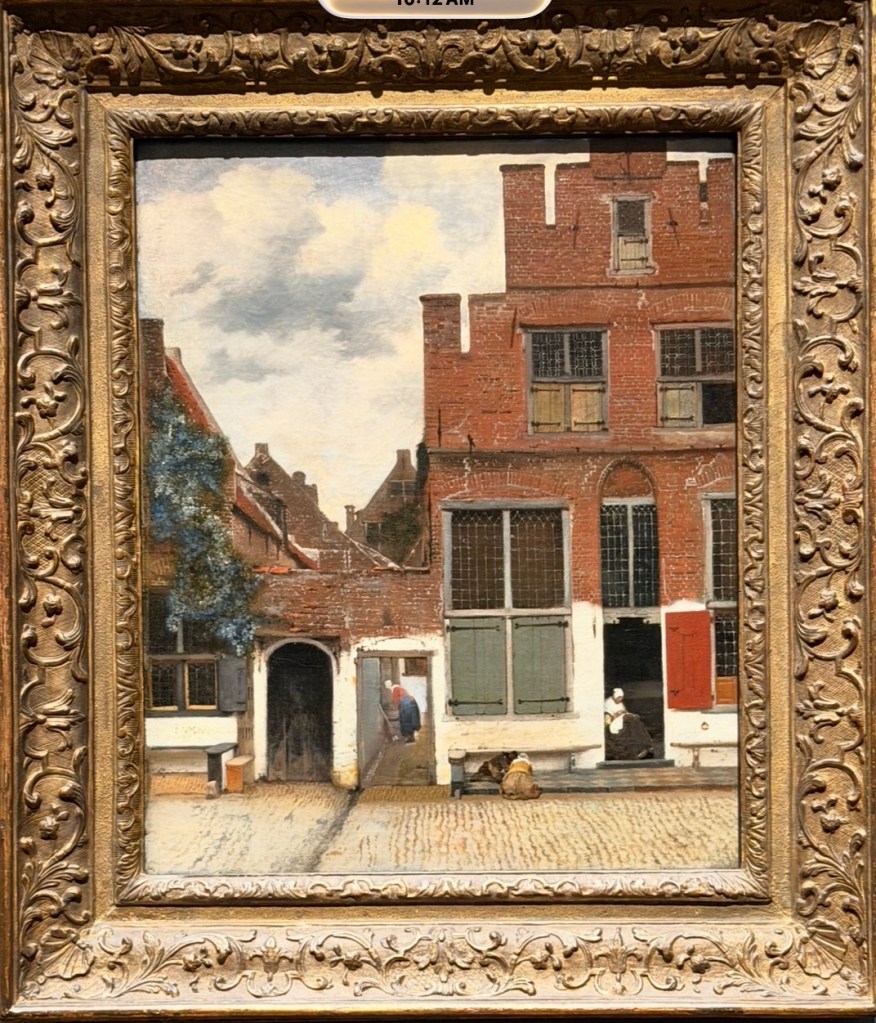
Vermeer gives weight to the ordinary. The bricks are uneven, weathered, imperfect. Doors stand slightly open. Life is happening, but softly—contained within the rhythm of daily routine. Nothing is staged, yet everything feels composed.
What’s remarkable is the stillness. Not frozen, but steady. The kind of stillness that suggests continuity—this moment has happened before and will happen again. You’re not witnessing an event; you’re stepping into a world that exists whether you’re there or not.
The light does not spotlight or dramatize. It simply rests—on the walls, the doorway, the figures—binding everything together. It makes the ordinary feel enduring.
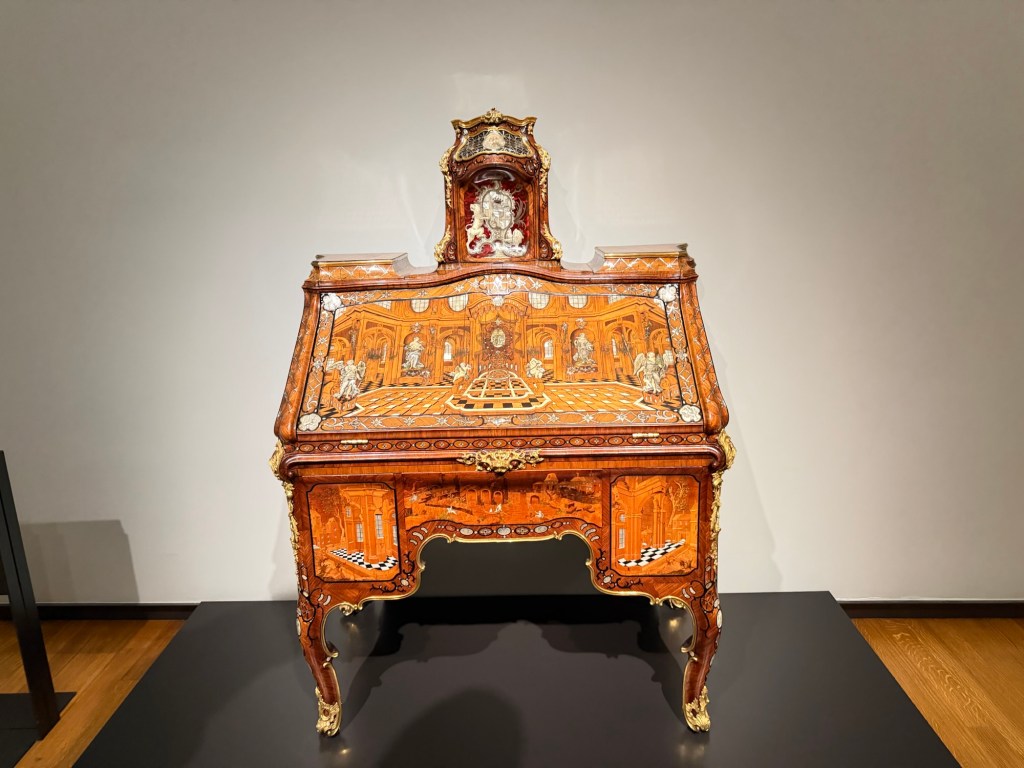
Anita brought us to an off the beaten path object.
Created by Abraham Roentgen for archbishop Johann Philipp von Walderdorff, it’s more than a desk. The surface opens into a detailed architectural scene, crafted from inlaid wood so precise it looks like a painting.
Elegant, theatrical—and almost certainly full of hidden compartments—it’s a reminder that even a desk can carry power, status, and a few secrets.
A short walk away, the van Gogh Museum shifts the tone entirely—more intimate, more personal—tracing the restless, brilliant arc of Vincent van Gogh’s life through color, texture, and emotion (https://www.vangoghmuseum.nl/en).
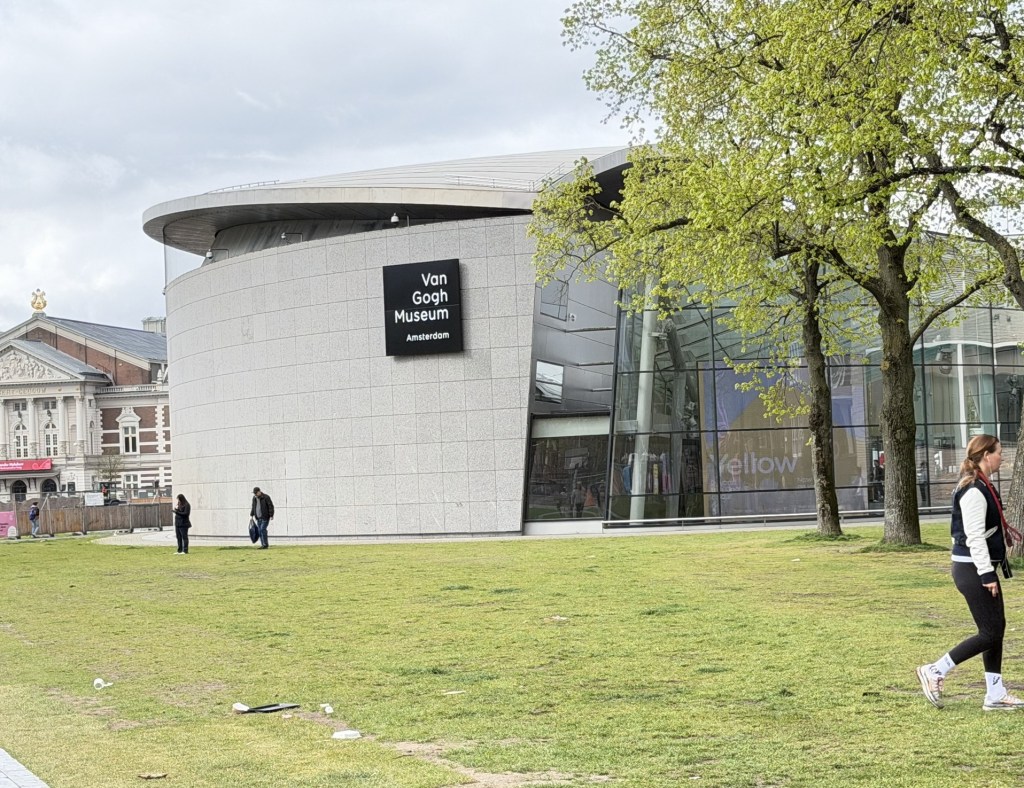
As the Van Gogh Museum holds so much of Vincent van Gogh’s world, it’s difficult to decide what to share.
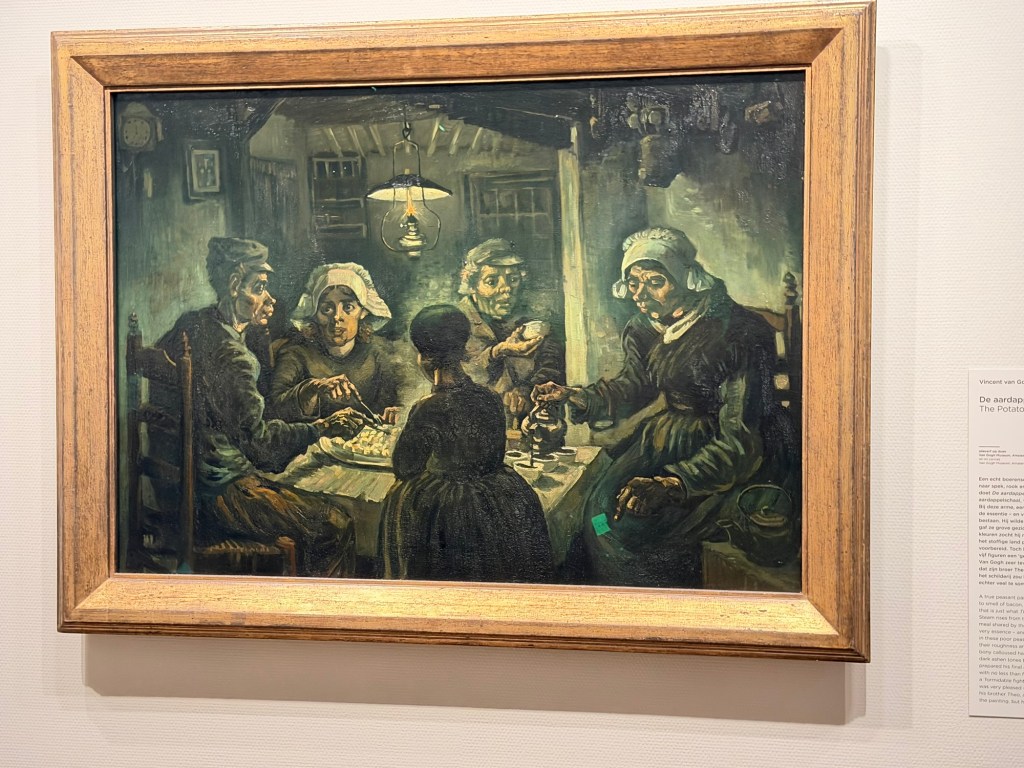
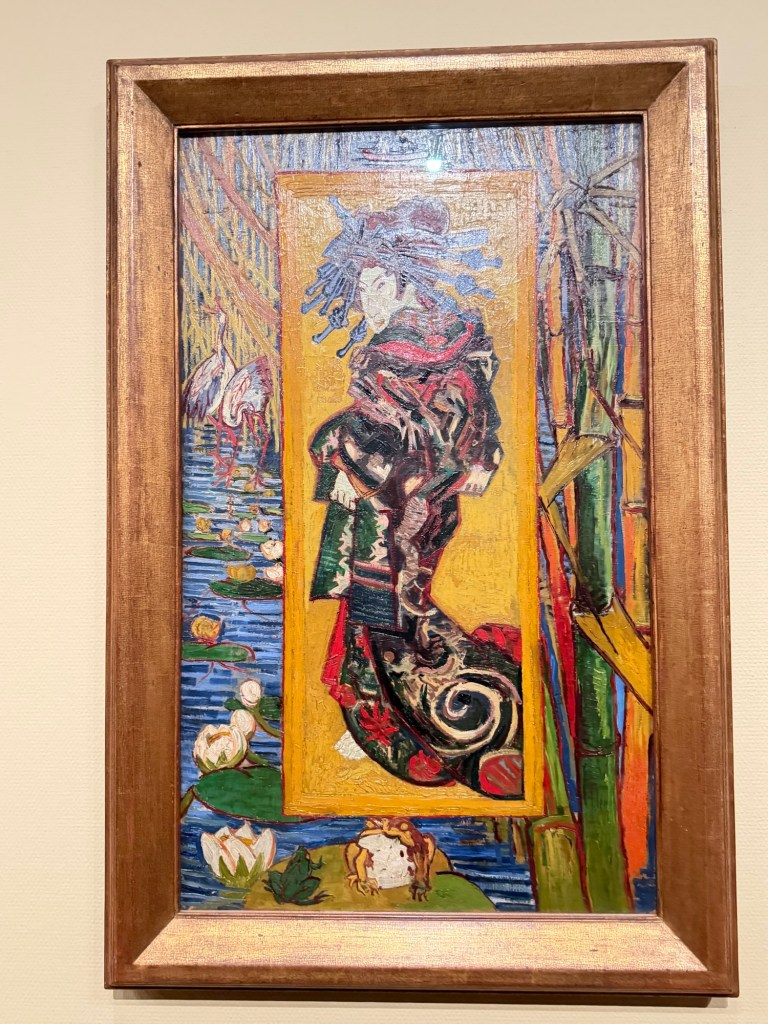
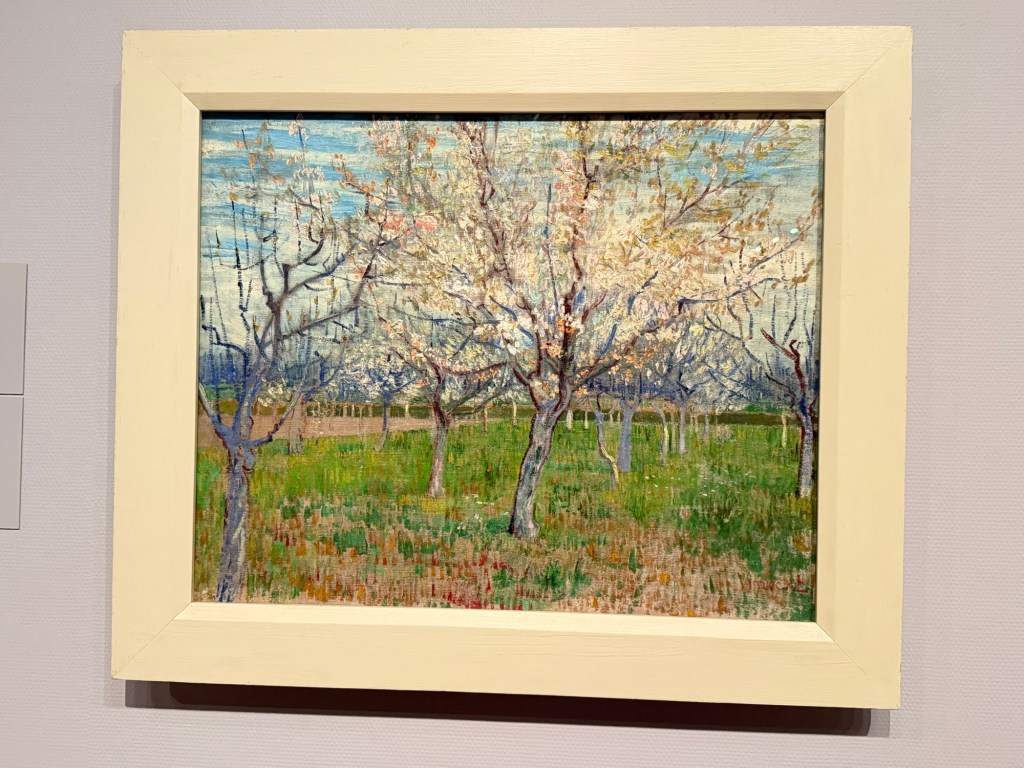
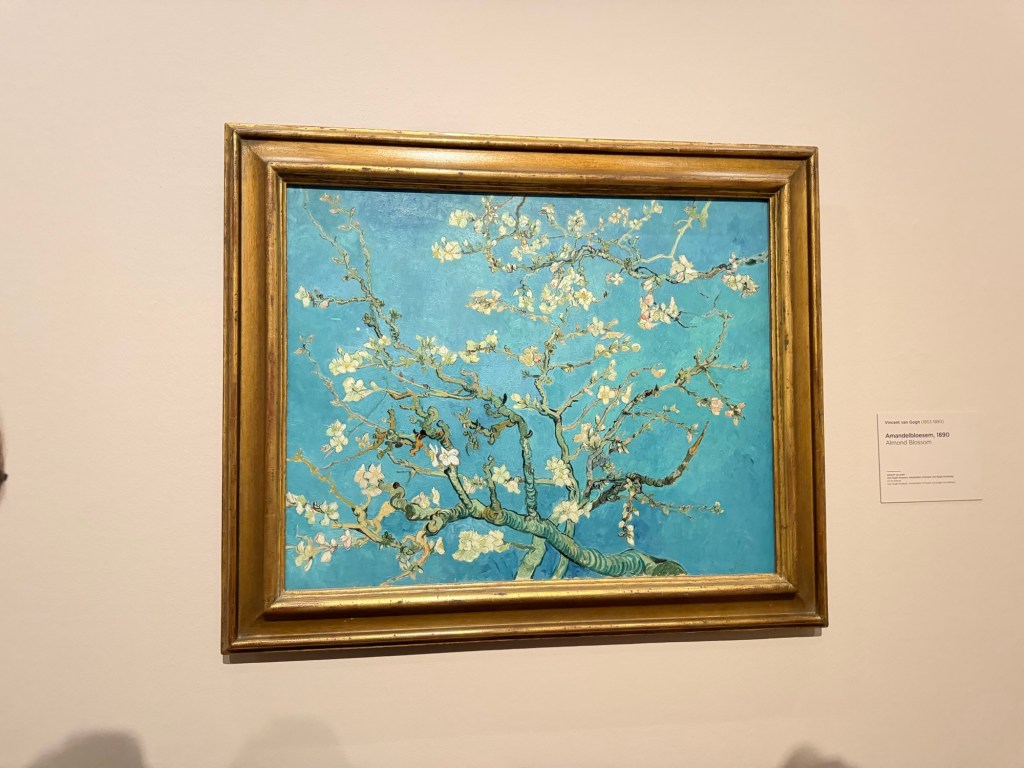
The dark weight of The Potato Eaters hits you first, where life feels hard and close. And just when the mood settles, the color shifts—landscapes and unexpected influences burst forward with energy and experimentation. A self-portrait stops you—direct, unguarded, almost confrontational—pulling you into the world of van Gogh.
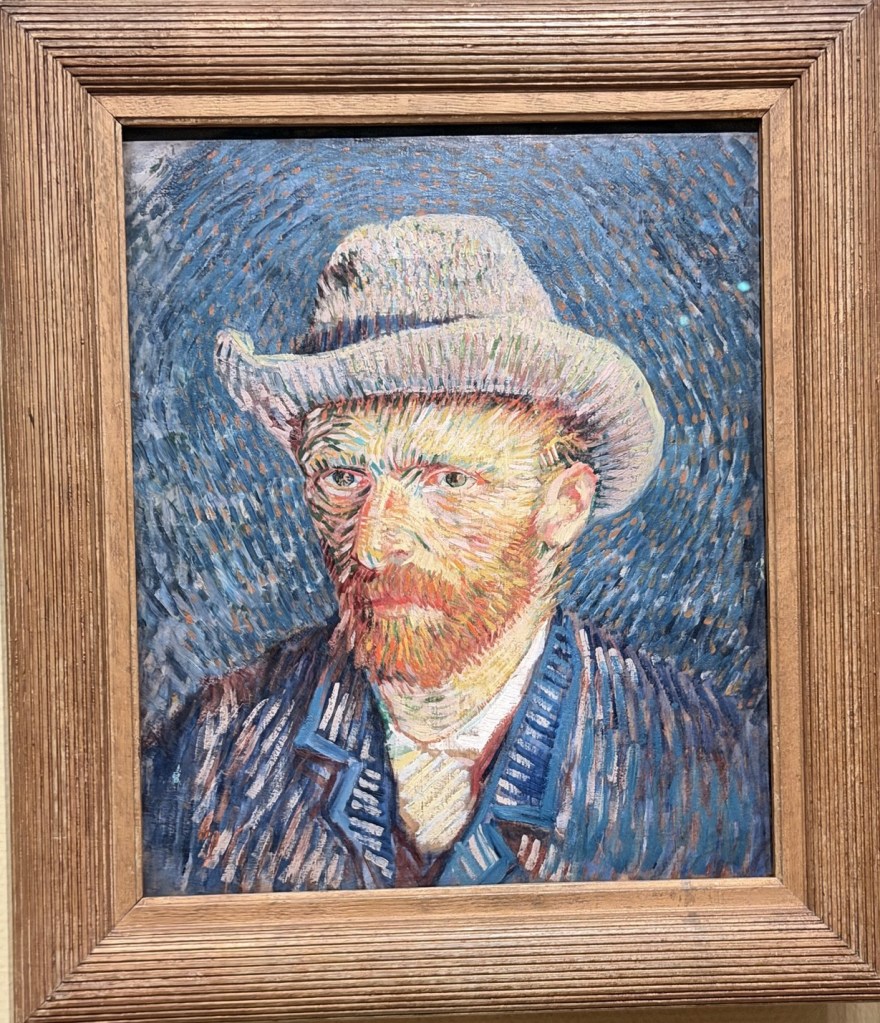
It’s less a collection and more a progression—each room revealing a different state of mind, each painting a piece of a emotionally turbulent life.
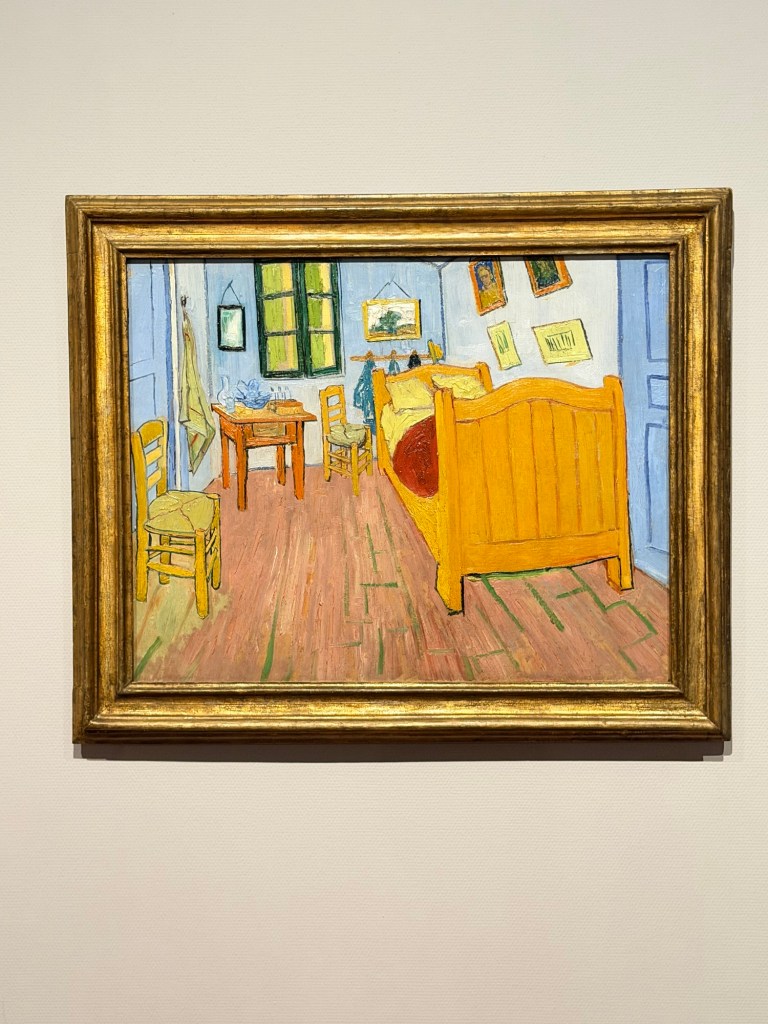
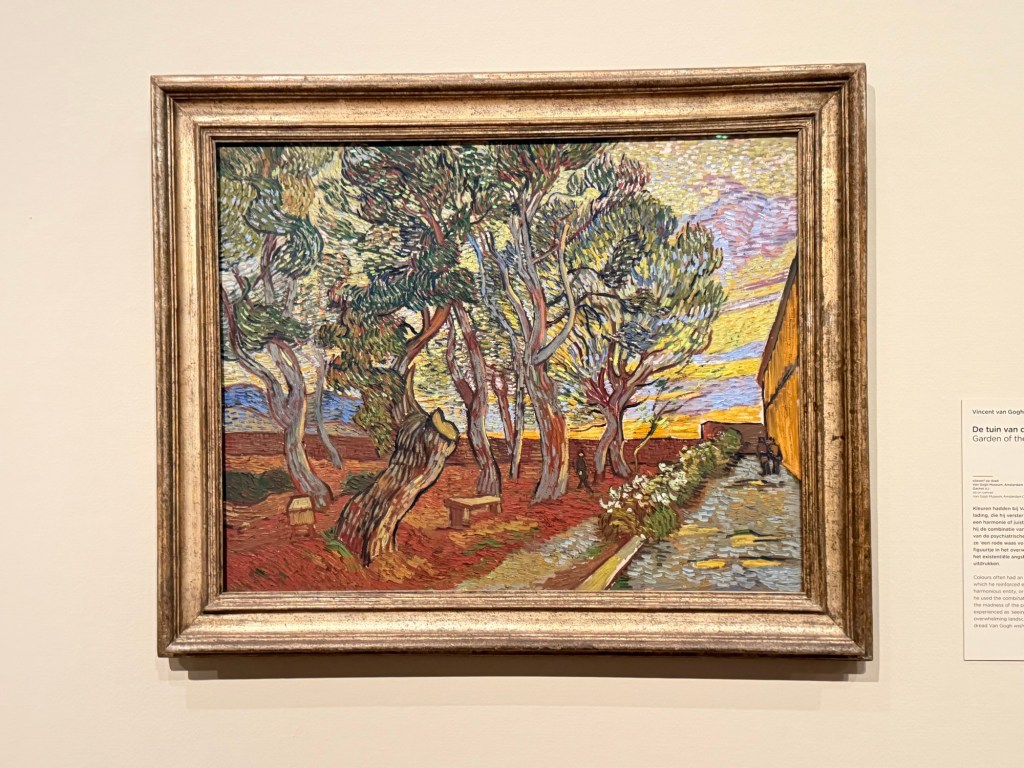
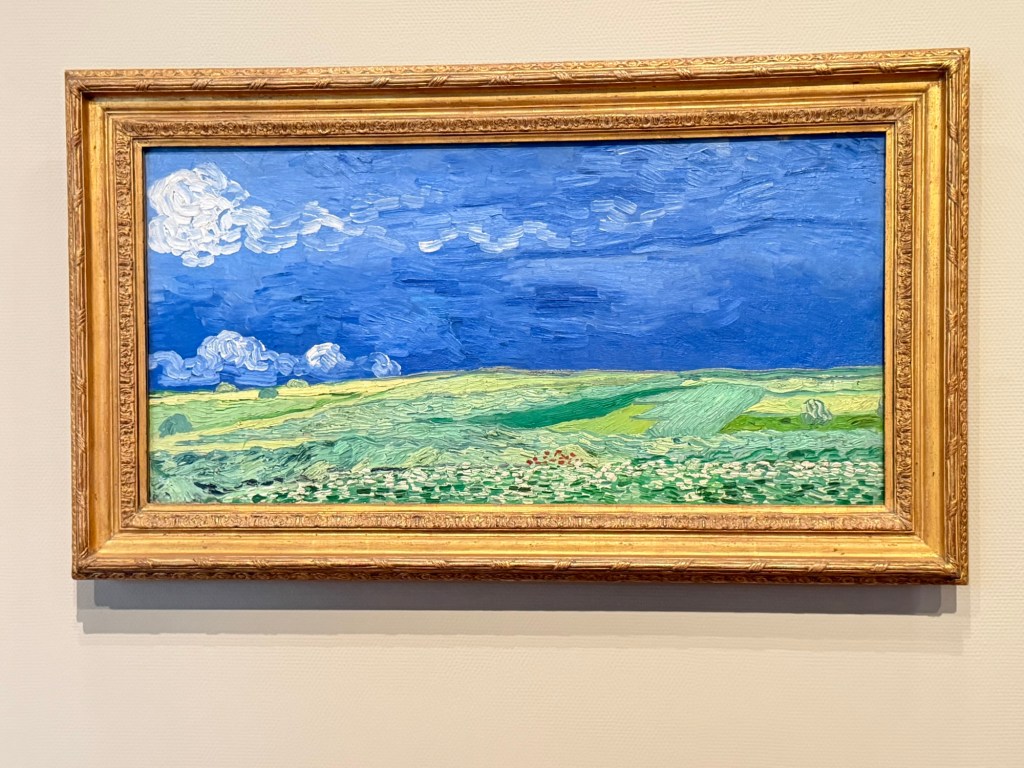
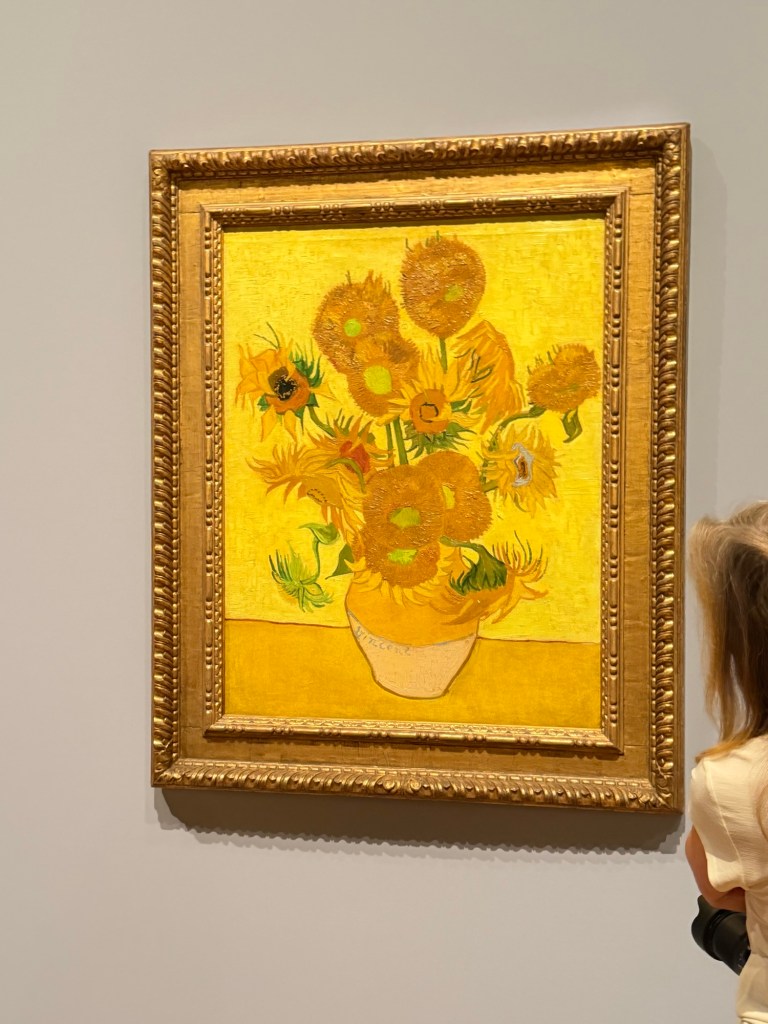
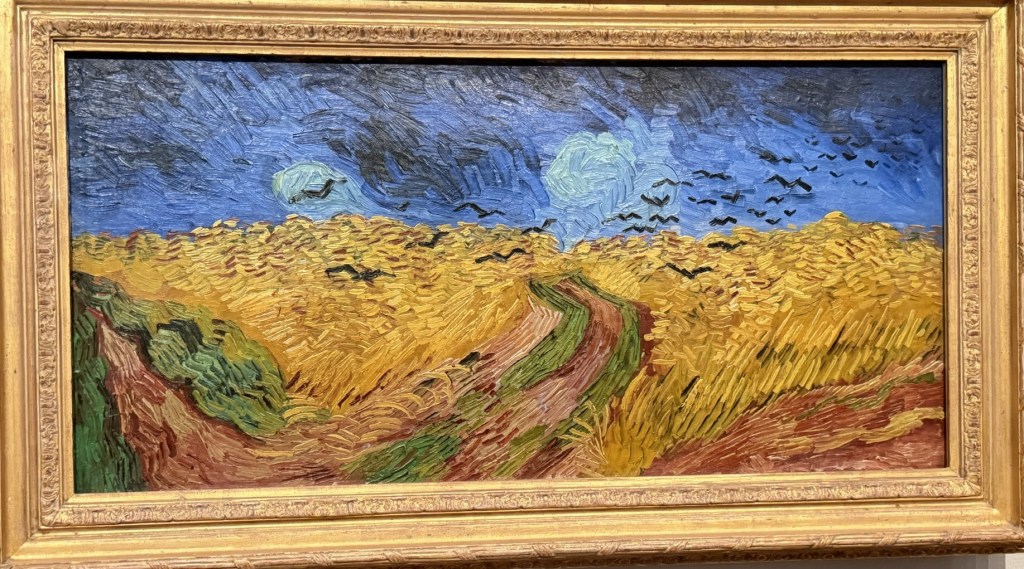
Very memorable for me—arguably the most emotional of all is Wheatfield with Crows. The sky feels heavy, almost pressing down, while the crows scatter in uneasy motion and the path pulls you forward without offering a clear way out. A dead End. It’s not just a landscape—it’s a mood, raw and unresolved.
Painted in July 1890, it has often been seen as a final, turbulent statement. Within weeks, Vincent van Gogh was found shot and died a few days later, officially a suicide (though some claim murder) a context that makes the painting feel even more charged—though its power stands on its own, regardless of how we read it against his final days.
Together, the two visits offer a striking contrast: one a sweeping view of a nation’s artistic legacy, the other a deeply personal journey into Van Gogh’s seemingly troubled mind.