We were picked up by Monica, our driver for the day, and Joris van Vuure—an outstanding guide who brought the day to life.
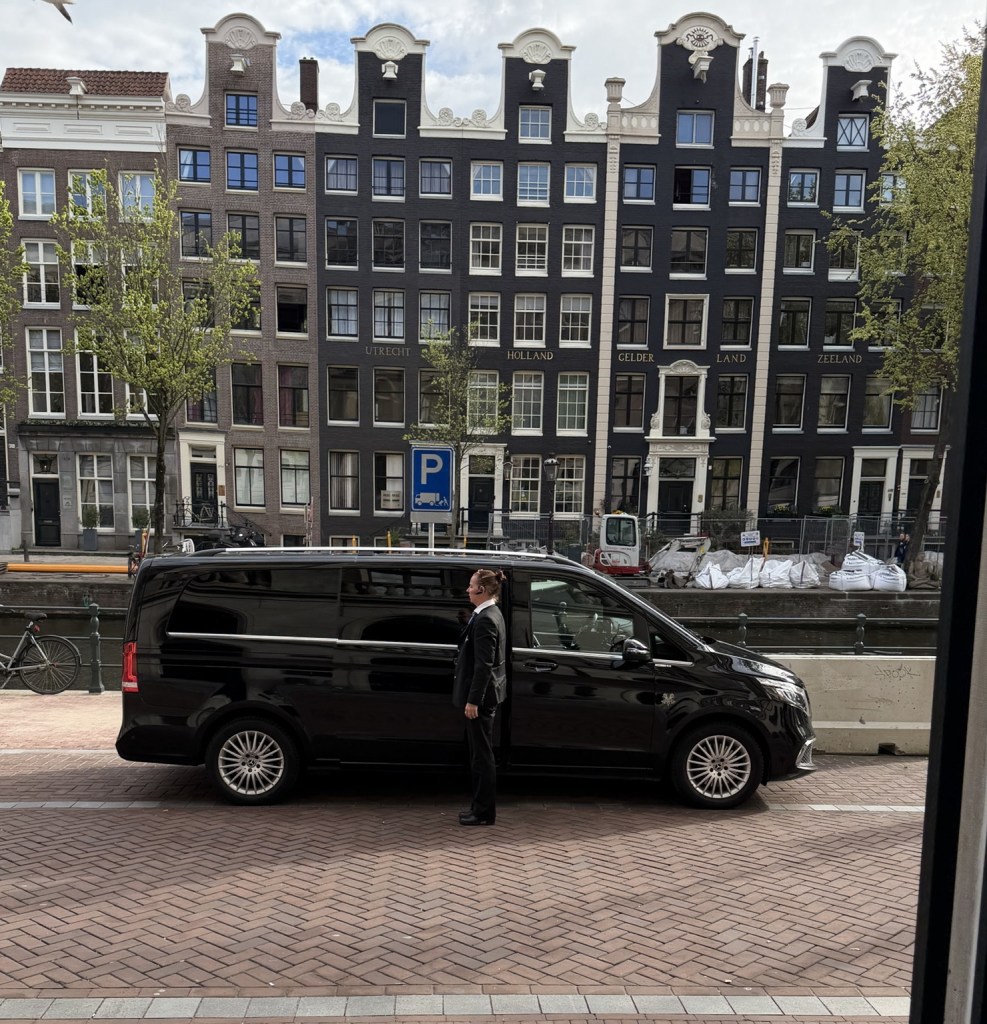
Flevoland
Our first stop was Flevoland, about 80 minutes northeast of Amsterdam.
It’s not the kind of place most visitors think to go—and that’s part of the point.
Flavoland is kind of new. It’s land that didn’t exist a century ago, reclaimed from the sea as part of the massive effort that reshaped the old Zuiderzee. You feel that history in the landscape. Everything is flat, deliberate, and quietly ordered—fields, canals, and roads laid out as if they were drawn first and built later.
And then, without much warning, the color appears.
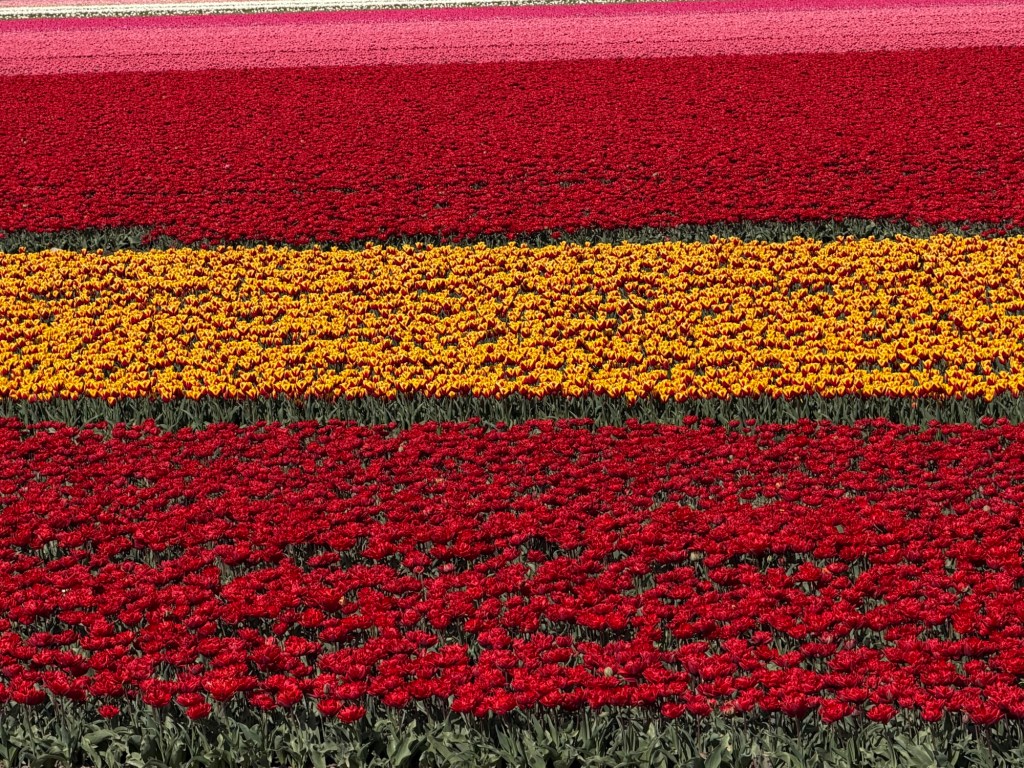
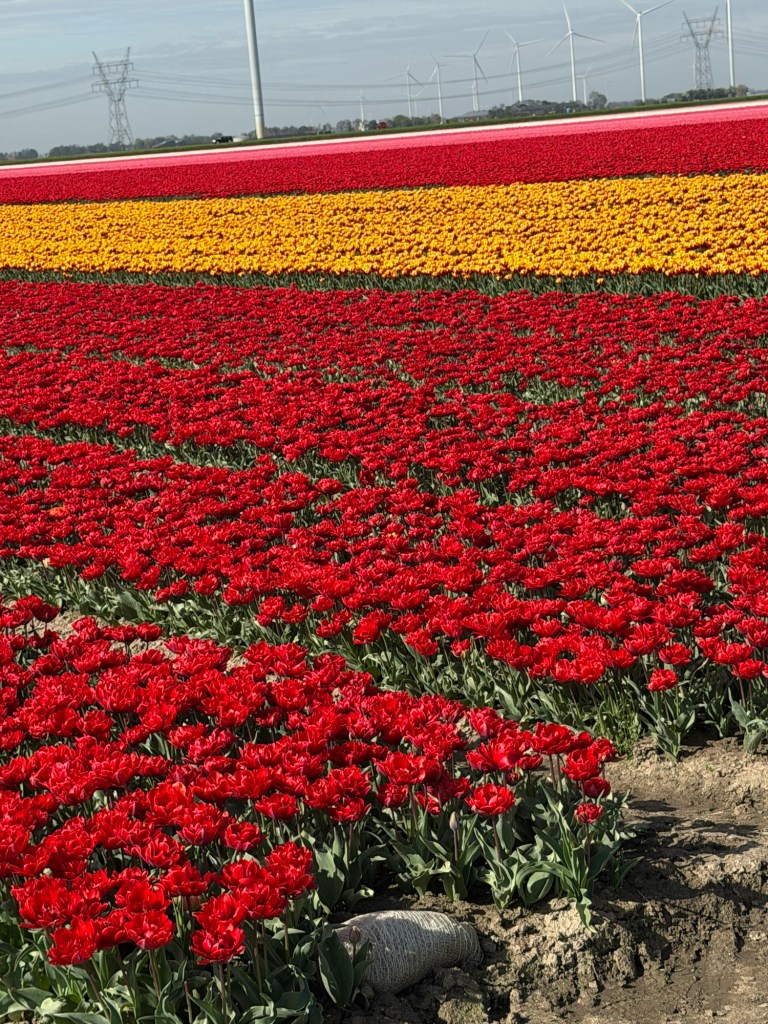
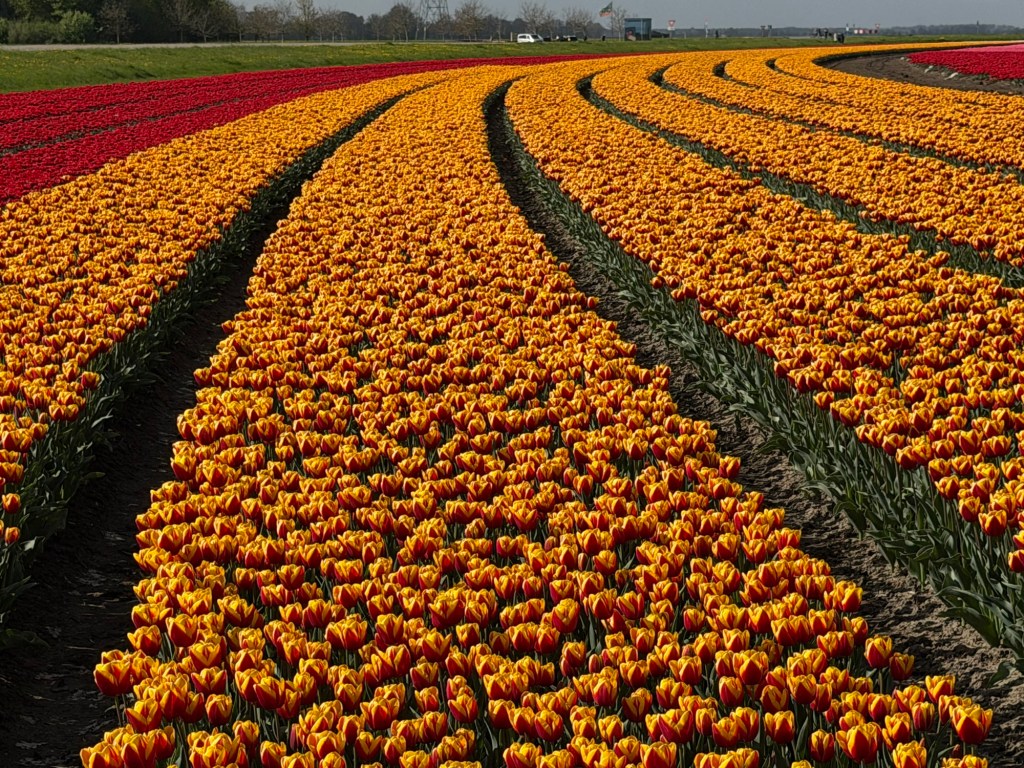
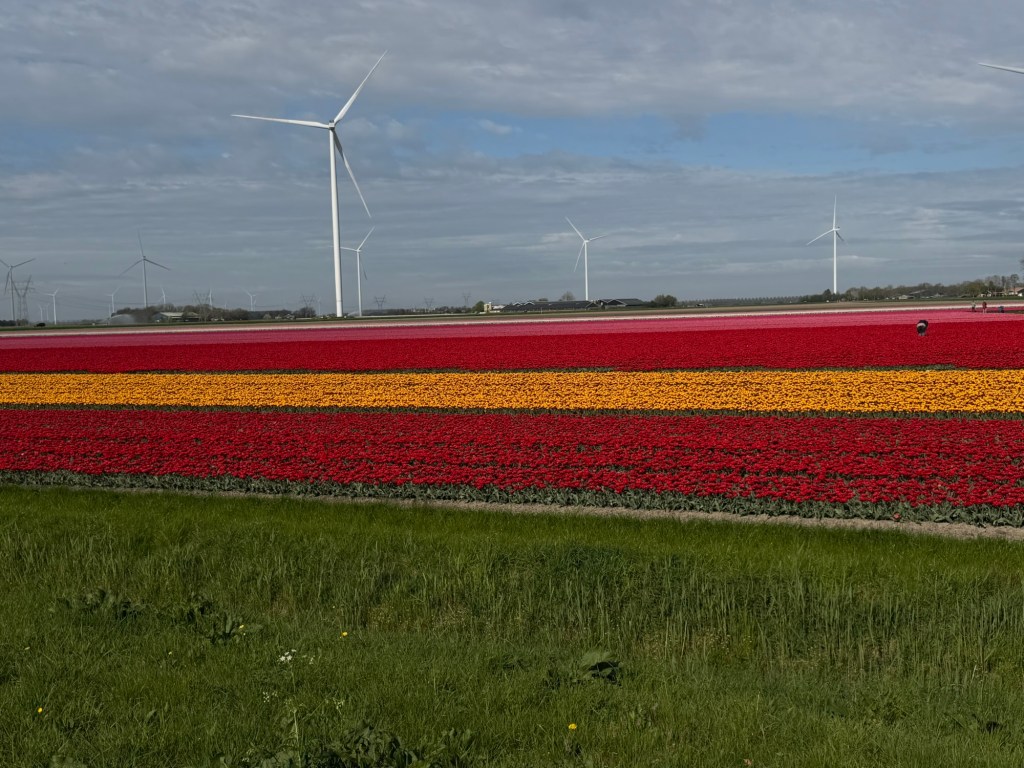
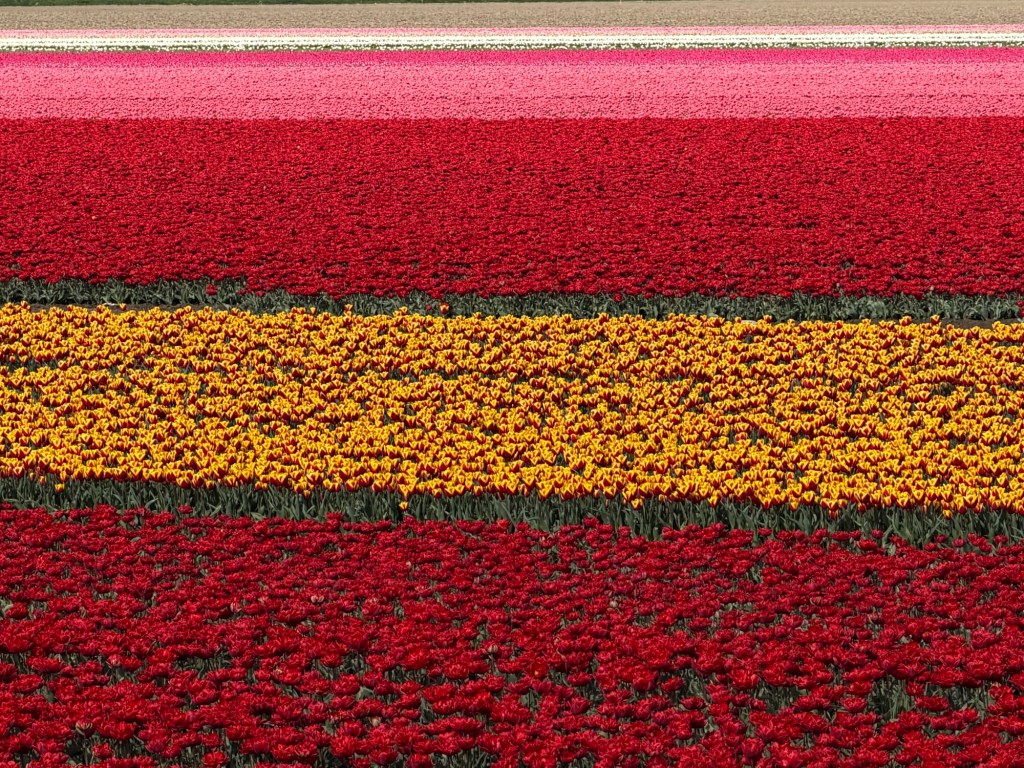
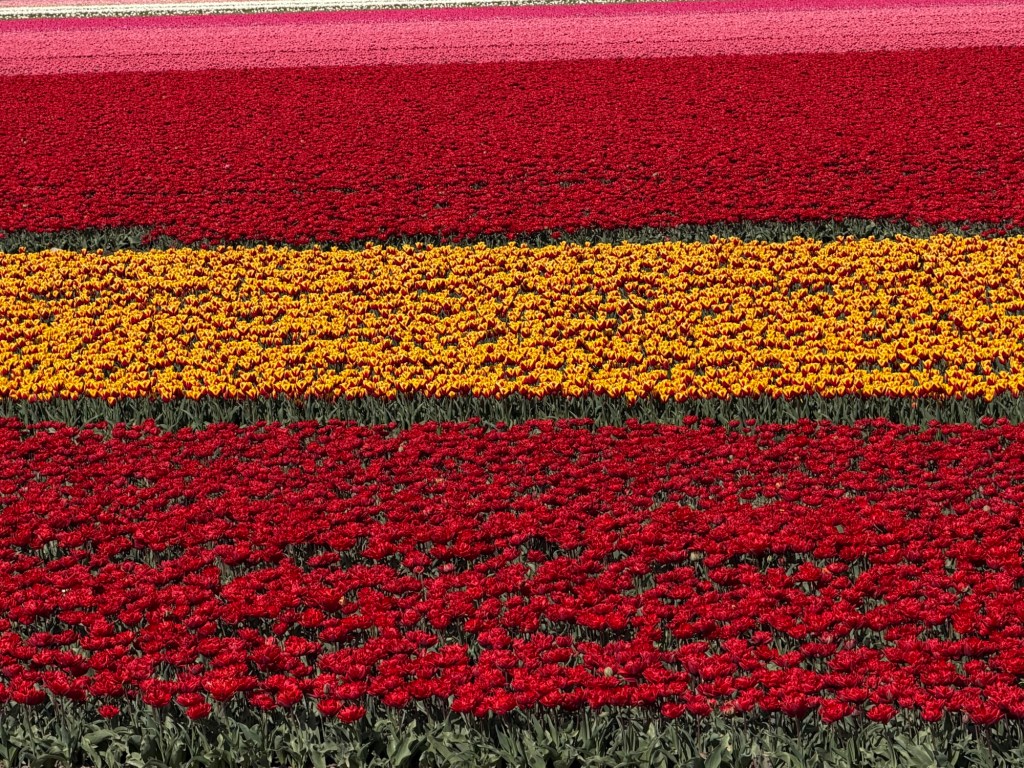
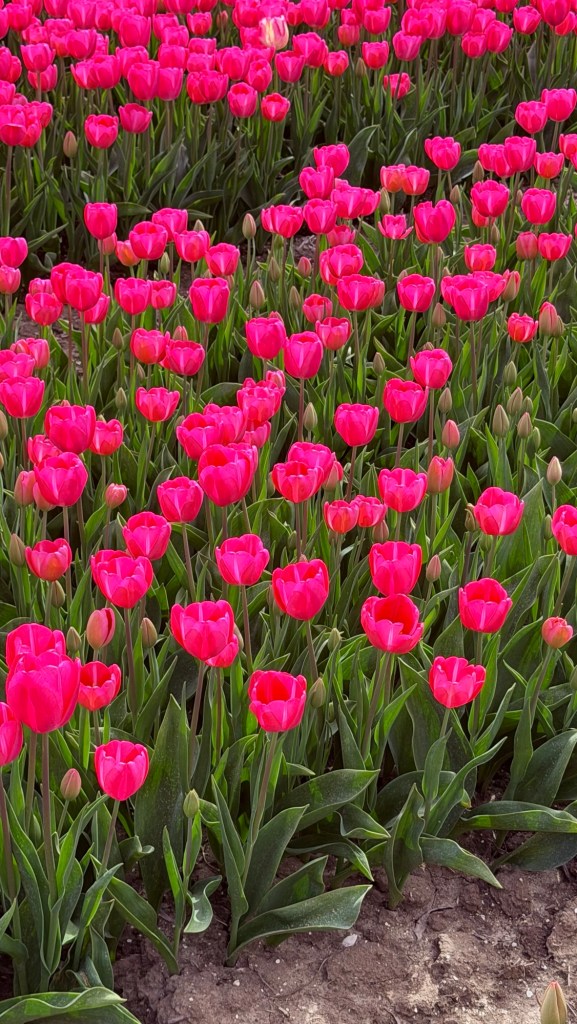
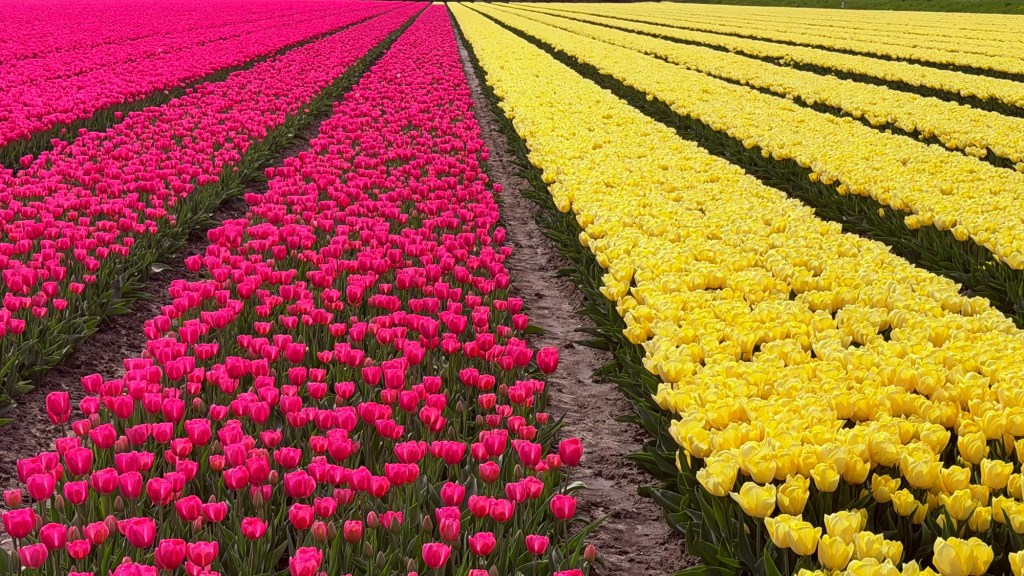
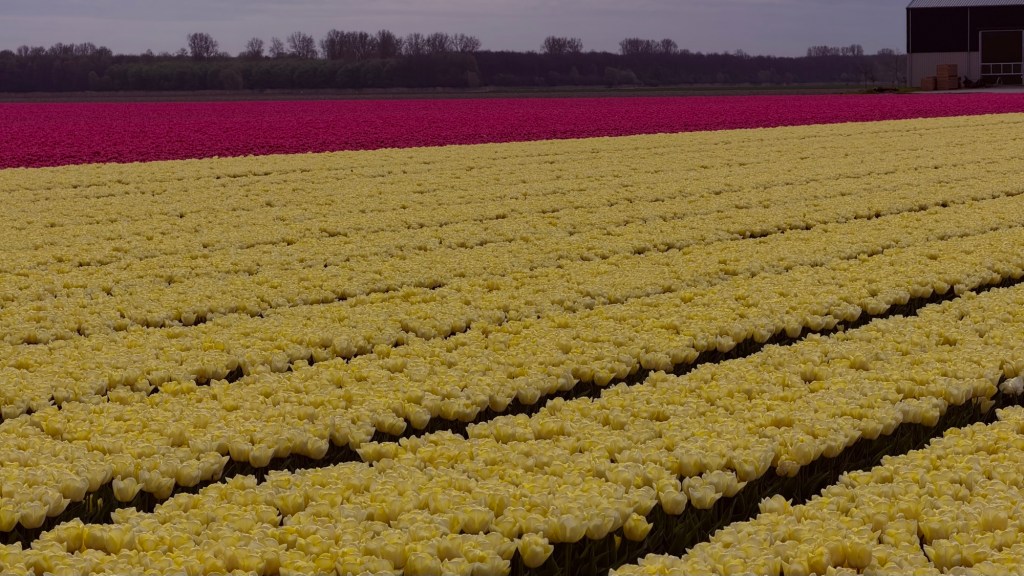
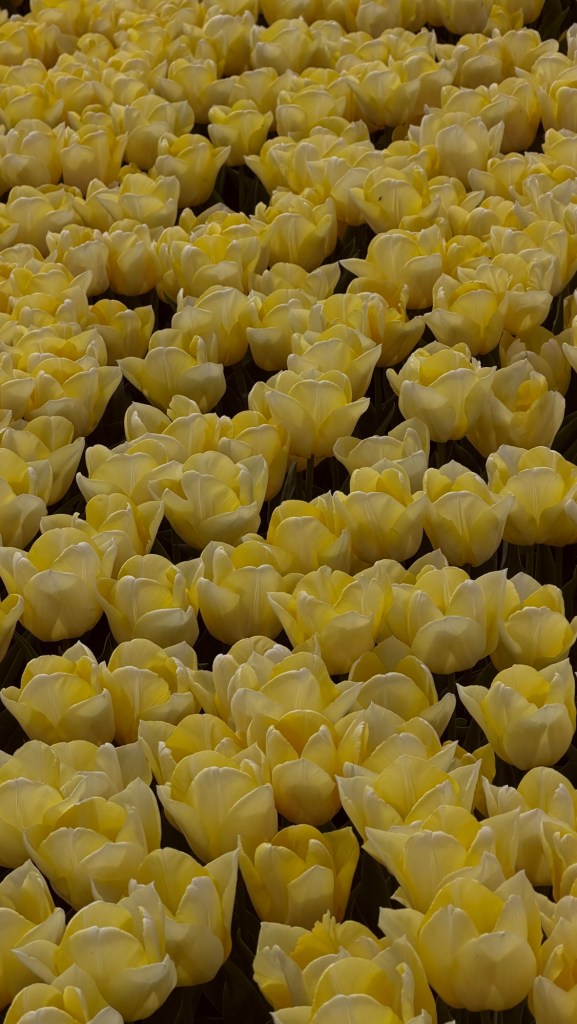
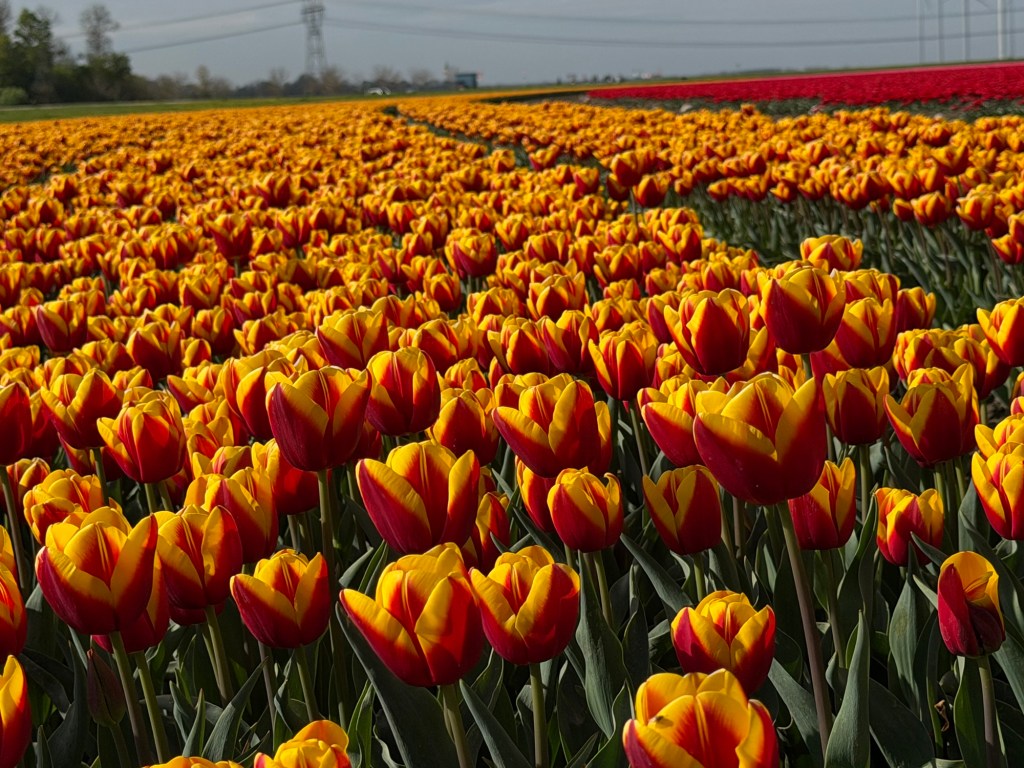
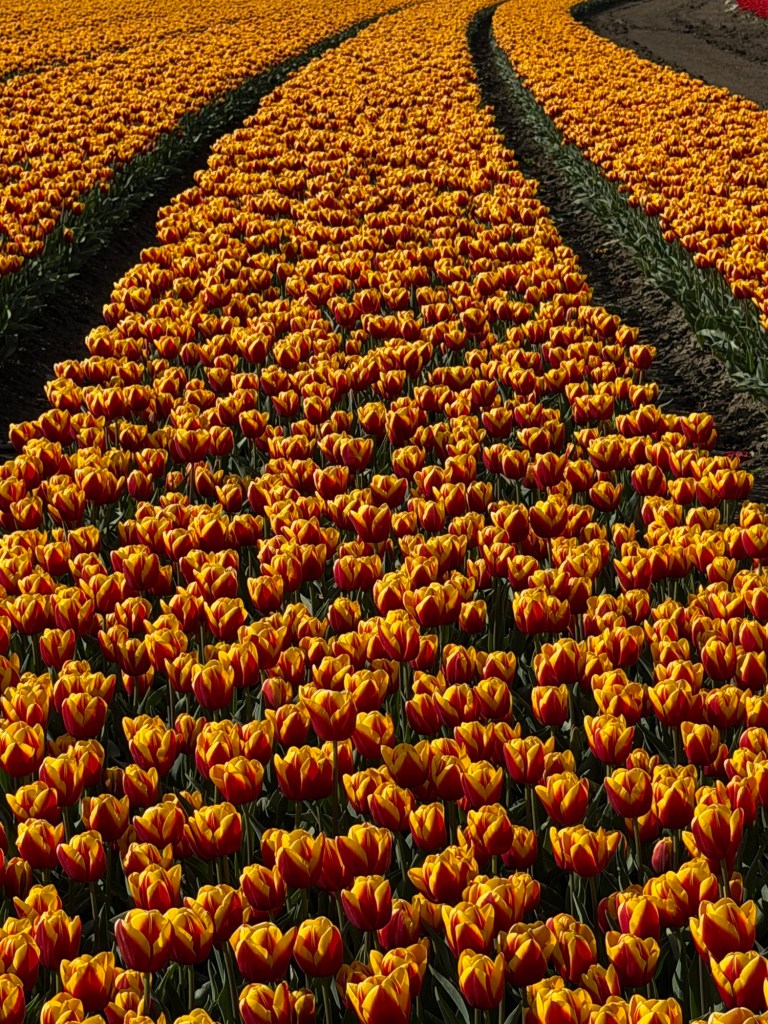
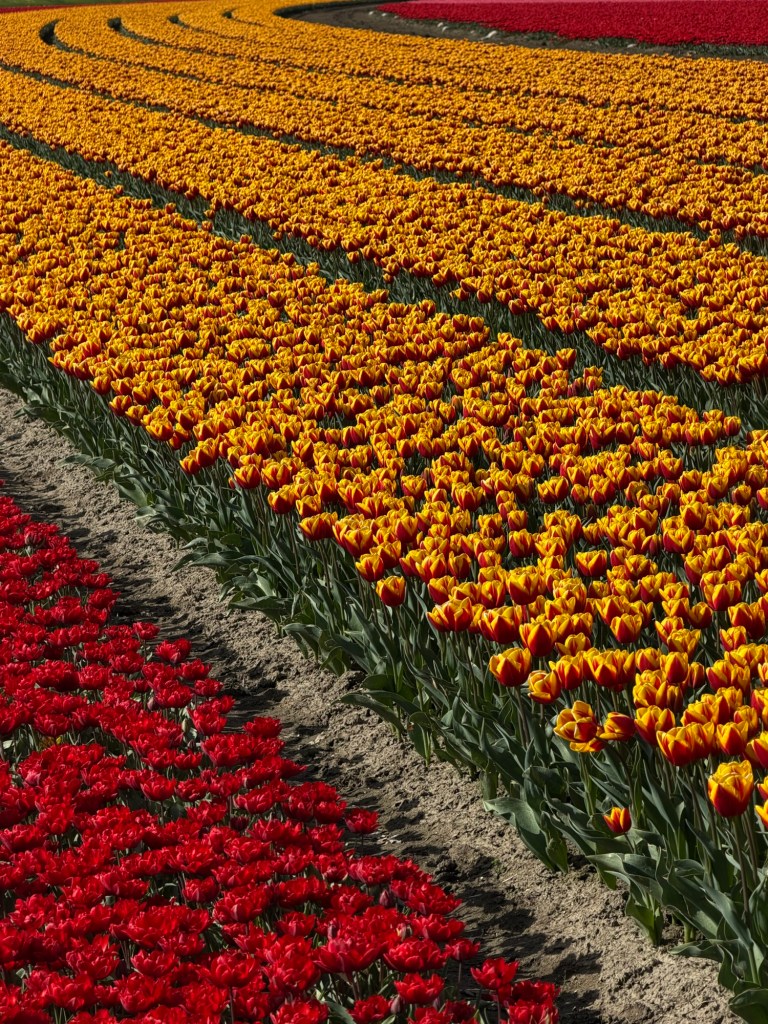
At first, it’s just a hint—something brighter off in the distance. And then the land opens up into long, uninterrupted bands of red, yellow, purple, and pink, stretching so far they almost lose their edges.
These aren’t gardens. There are no winding paths or curated displays. This is the Noordoostpolder, where tulips are grown as a crop, not arranged for visitors. The beauty feels incidental, almost accidental—something that happens when purpose and scale align.
It was a fitting close to the day—unhurried, a little indulgent, and distinctly Dutch.
The rows are exact. Perfectly straight, running in parallel lines across land that was once seabed. It gives the whole scene a kind of quiet precision, as if even the color has been planned.
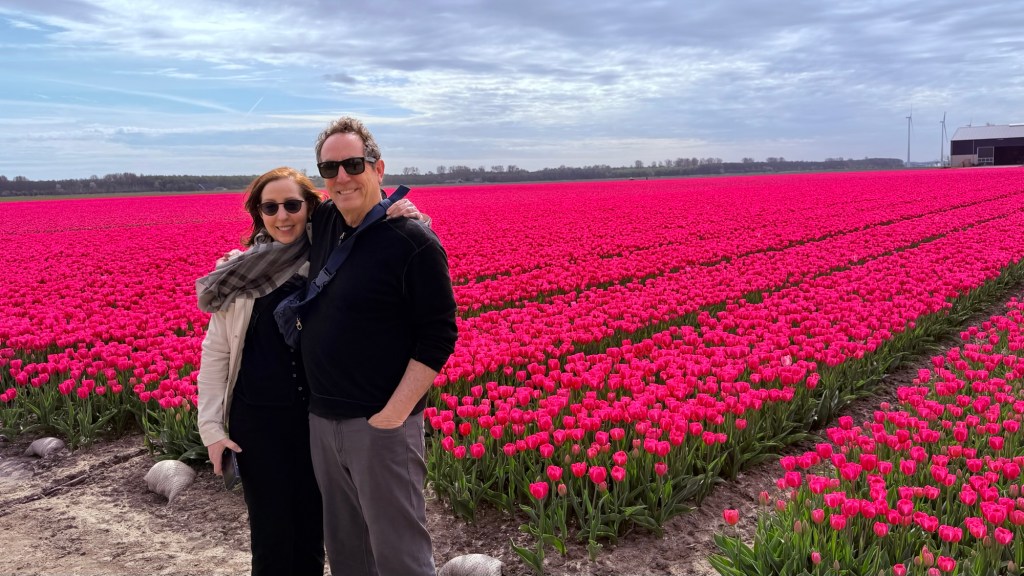
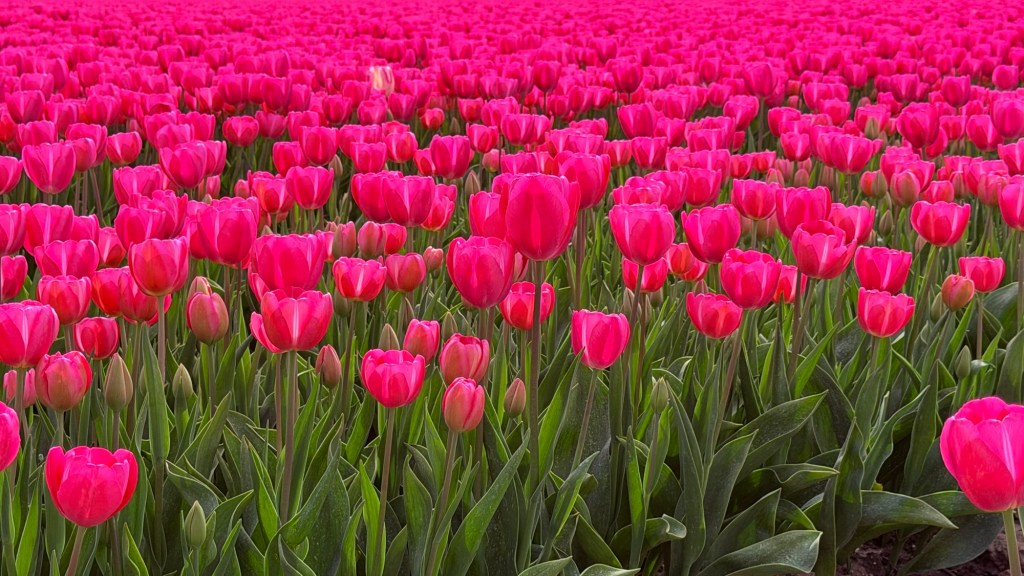
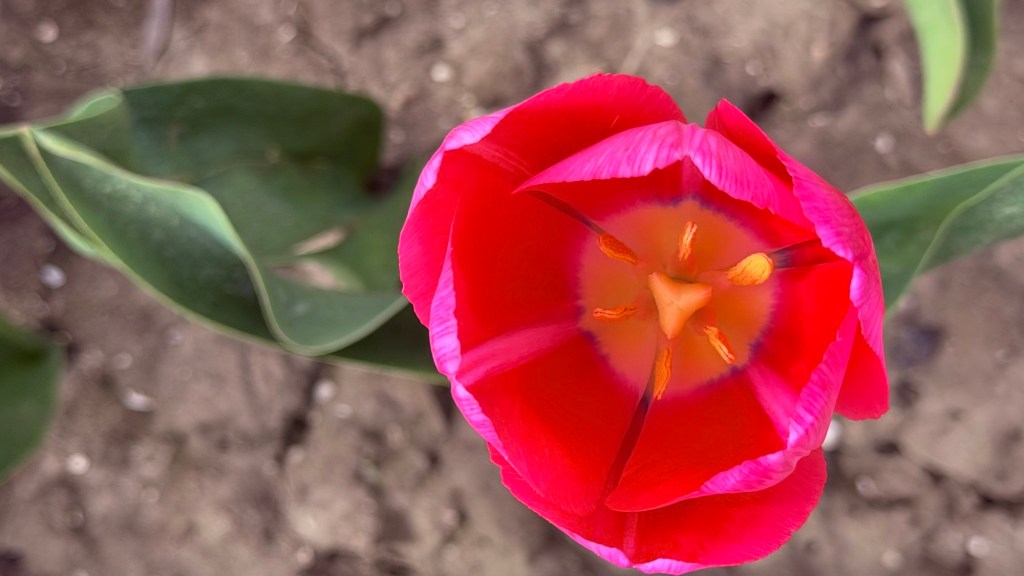
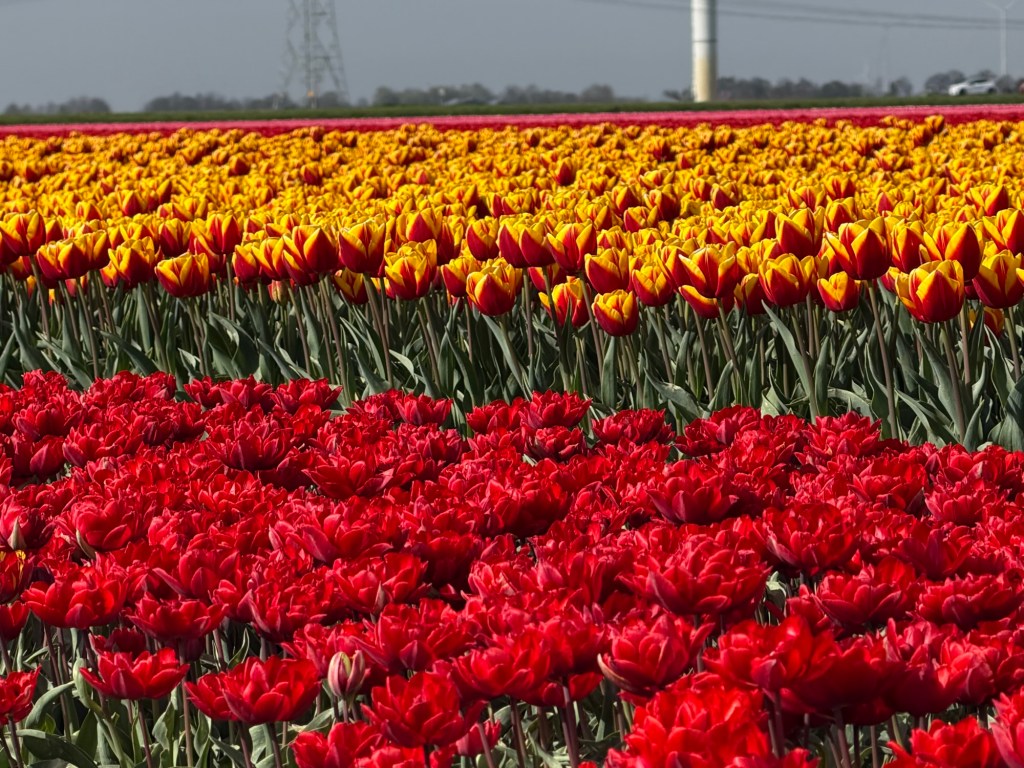
Tenders inspect the fields for disease, and before the tulip bulbs are harvested, the tops are cut off—redirecting the plant’s energy back into the bulb below. It feels counterintuitive, almost, to remove the very part people come to see.
Which makes the timing matter.
Right now, in mid-April, the fields are peaking—just before that brief moment passes. The color is still intact, the rows still full, the landscape still alive with it.
How fortunate are we to have caught it when we did.
Harbors of the VOC
The Dutch East India Company (VOC) —built a vast network of trading posts and “harbors” in Holland and beyond in the 1600s–1700s. These weren’t just ports; they were fortified hubs controlling trade routes, then accessible only by water.
Here’s a slightly polished version that keeps your tone but tightens the flow:
We planned visits to two of the old VOC ports—Enkhuizen and Hoorn—both remnants of a bygone era when trade, risk, and ambition rose and fell with the tides.
From these now-quiet North Sea harbors, ships once set out toward places that must have sounded almost mythical at the time: Batavia, Ceylon, and the far-off Spice Islands.
Enkhuizen
From the tulip fields, we made our way toward Enkhuizen.
The route takes you over the Houtribdijk, a long, perfectly straight causeway connecting Flevoland to North Holland. It isn’t quite a bridge: more like a line drawn across the water.
For miles, there’s nothing but road ahead and water on either side—the Markermeer on one side, the IJsselmeer on the other. No curves, no interruptions, just a steady horizon that seems to move with you.
It’s a quiet kind of crossing. No drama, no height, none of the cues that usually tell you you’re going somewhere else. And yet, somewhere along that stretch, you feel the shift—from reclaimed land to older ground, from something engineered to something that feels more rooted in time.
By the time you reach Enkhuizen, the road disappears back into land almost without notice. But the crossing stays with you—another reminder, here, that the Dutch don’t just live with water.
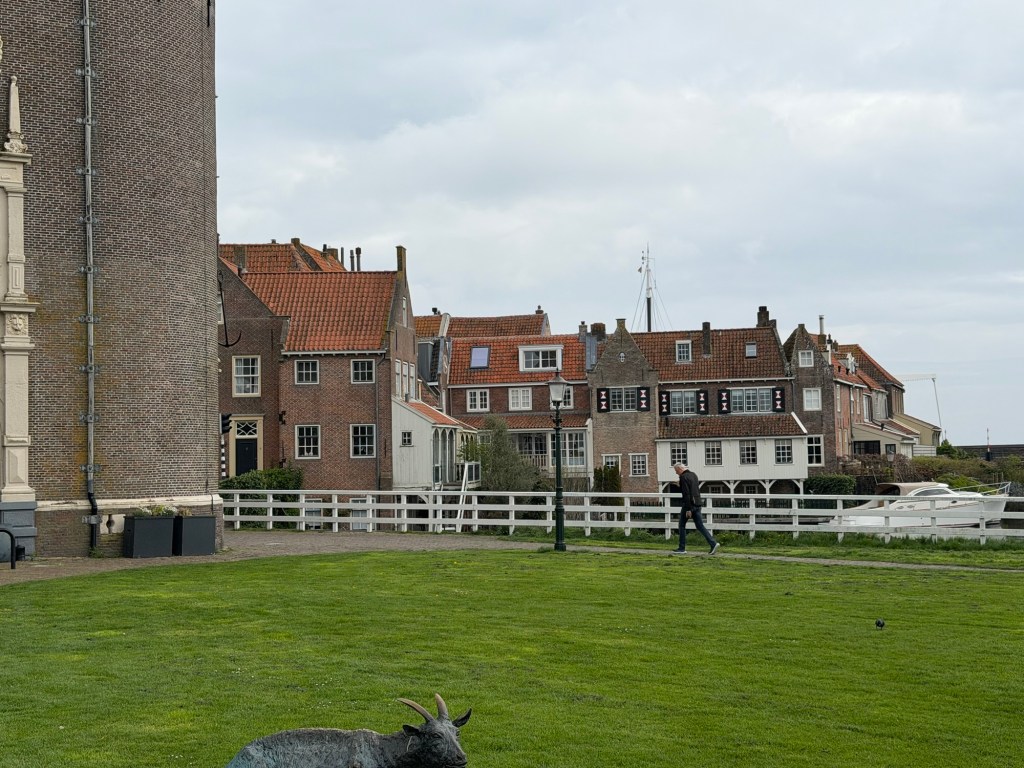
Set on the edge of the IJsselmeer, the town still feels like what it once was—a prosperous harbor fueled by sea travel and distant trade. The streets are narrow and unhurried, lined with brick houses that lean sightly with design and age, their details understated but unmistakably Dutch.
At the edge of the harbor is Drommederis, a fortification once the protected entrance to the town.
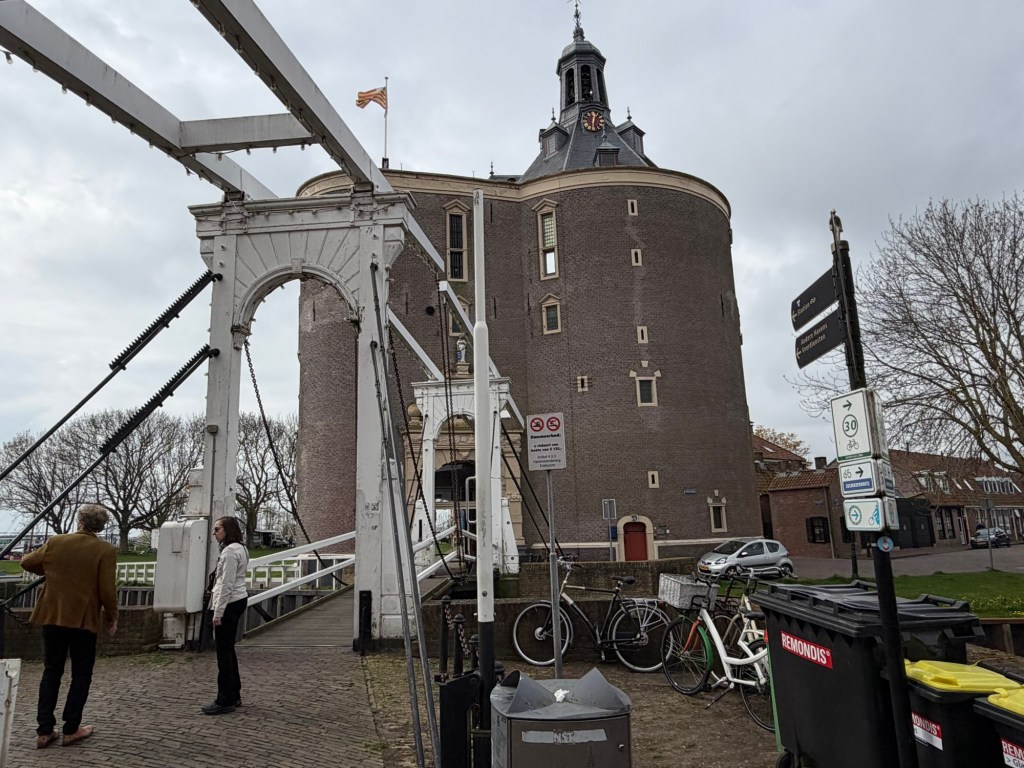
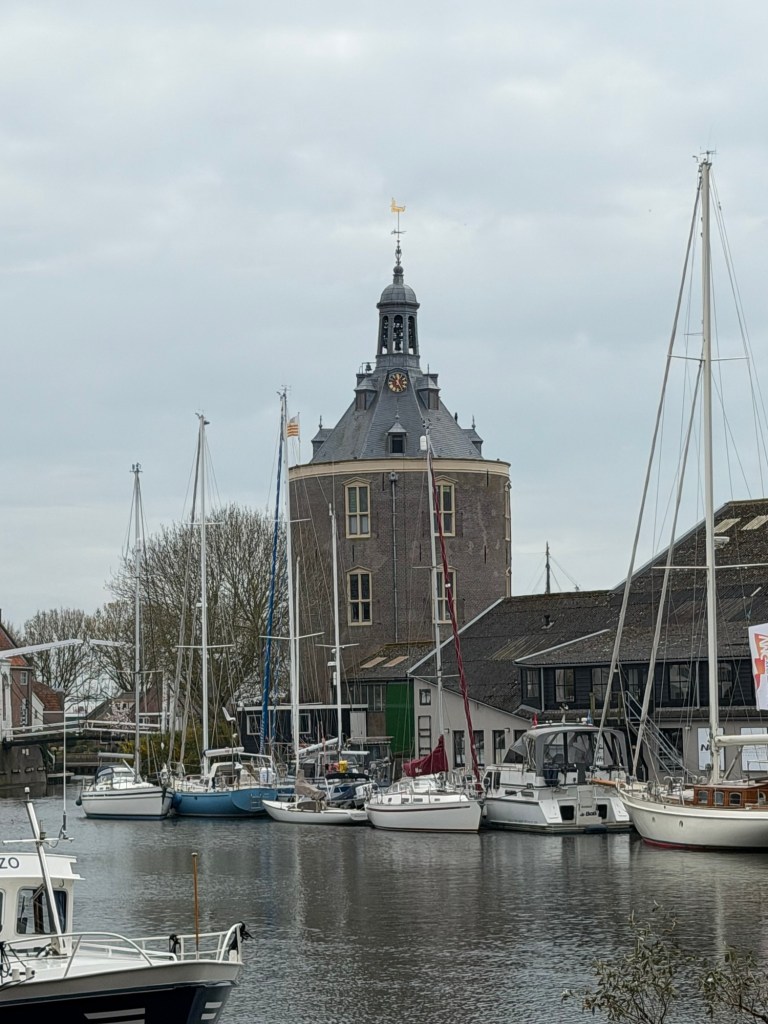
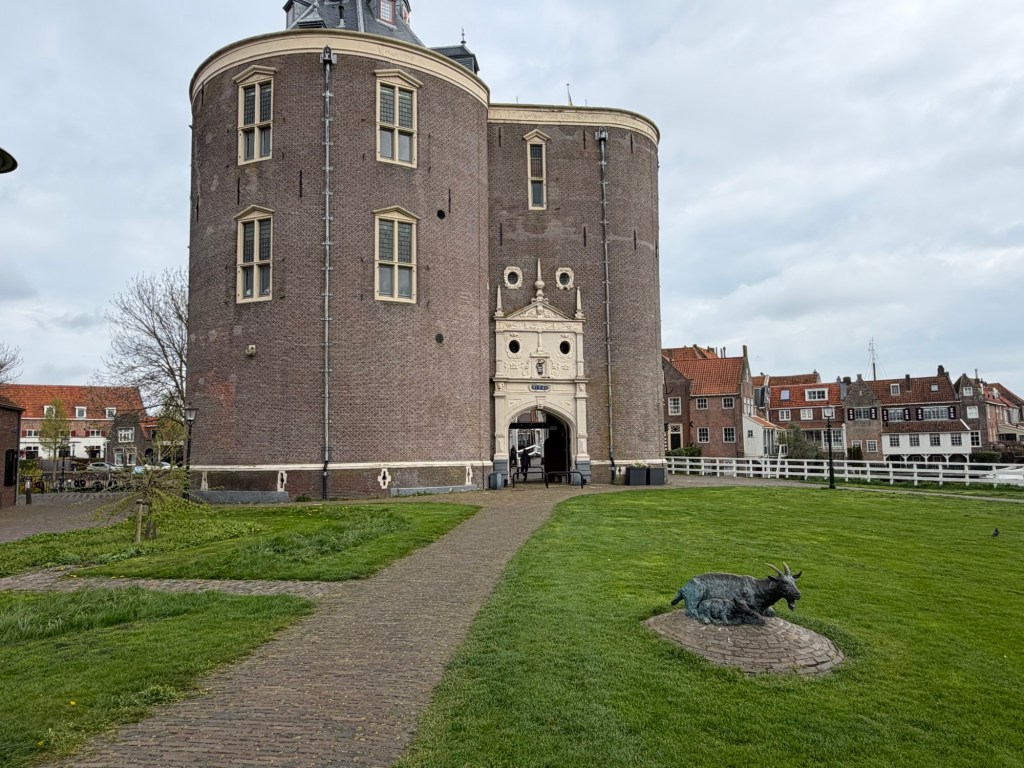
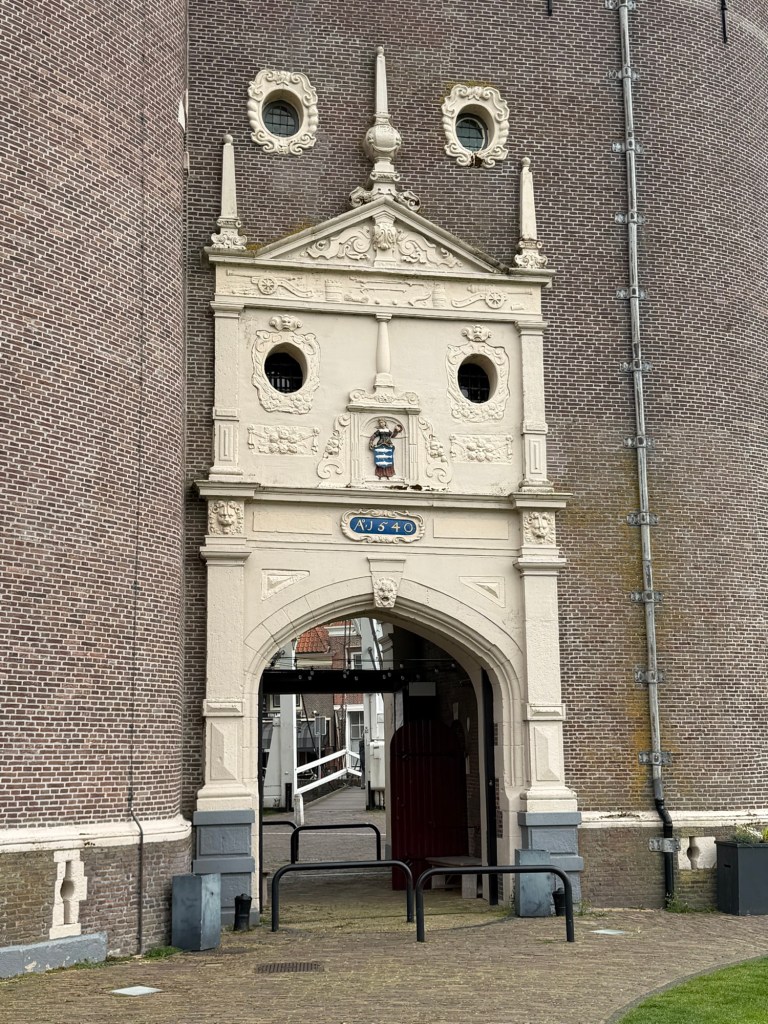
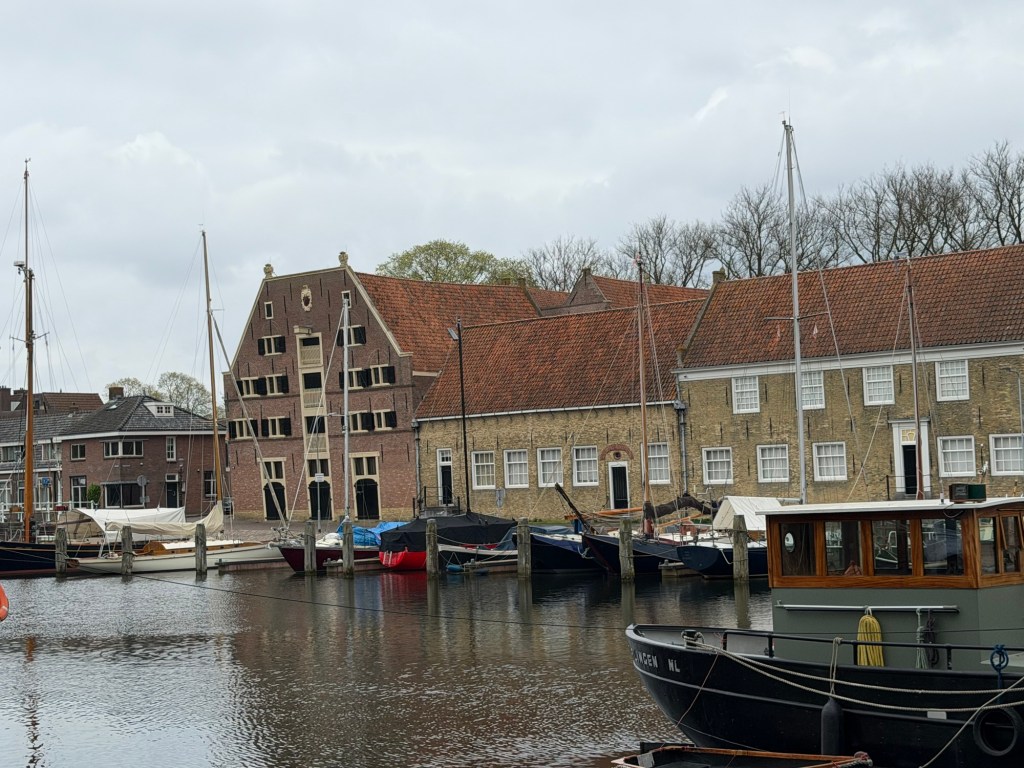
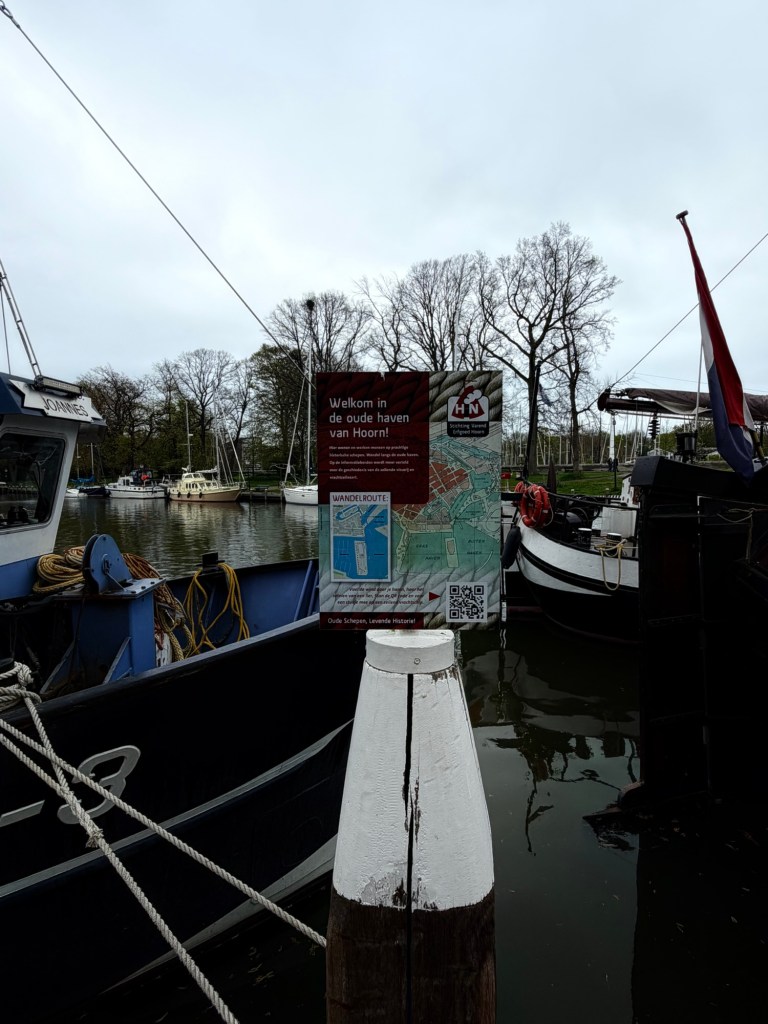
Walking along the harbor we see masts where there would once have been scores more. A few historic ships remain, gently shifting with the water, reminders of a time when Enkhuizen played a much larger role in the world. The presence of the VOC still lingers here, not in any single landmark but in the character of the town itself.
The scale is what strikes you. After the openness of Flevoland and the long, linear crossing over water, Enkhuizen feels enclosed in the best possible way—human in proportion, easy to move through, inviting you to slow down.
In the 17th century, towns like Hoorn were not just picturesque—they were powerful. As a key VOC port, Hoorn helped drive an era defined by maritime trade, exploration, and immense wealth. Ships departed from its harbor carrying spices, textiles, and goods that connected Europe to Asia, Africa, and beyond.
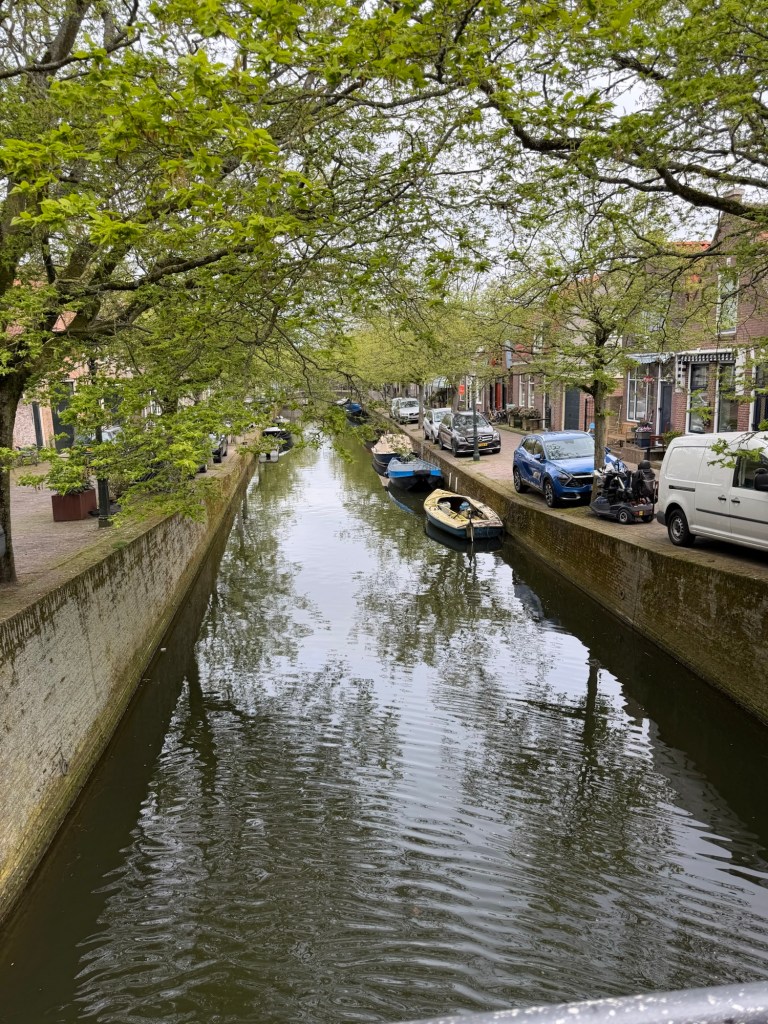
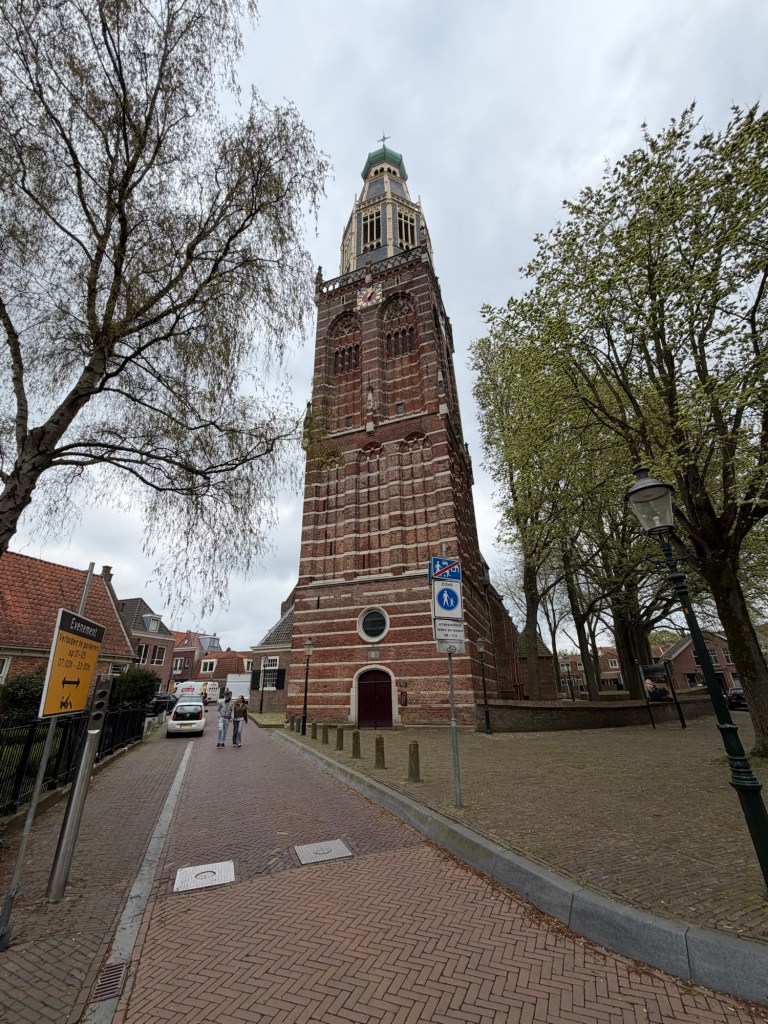
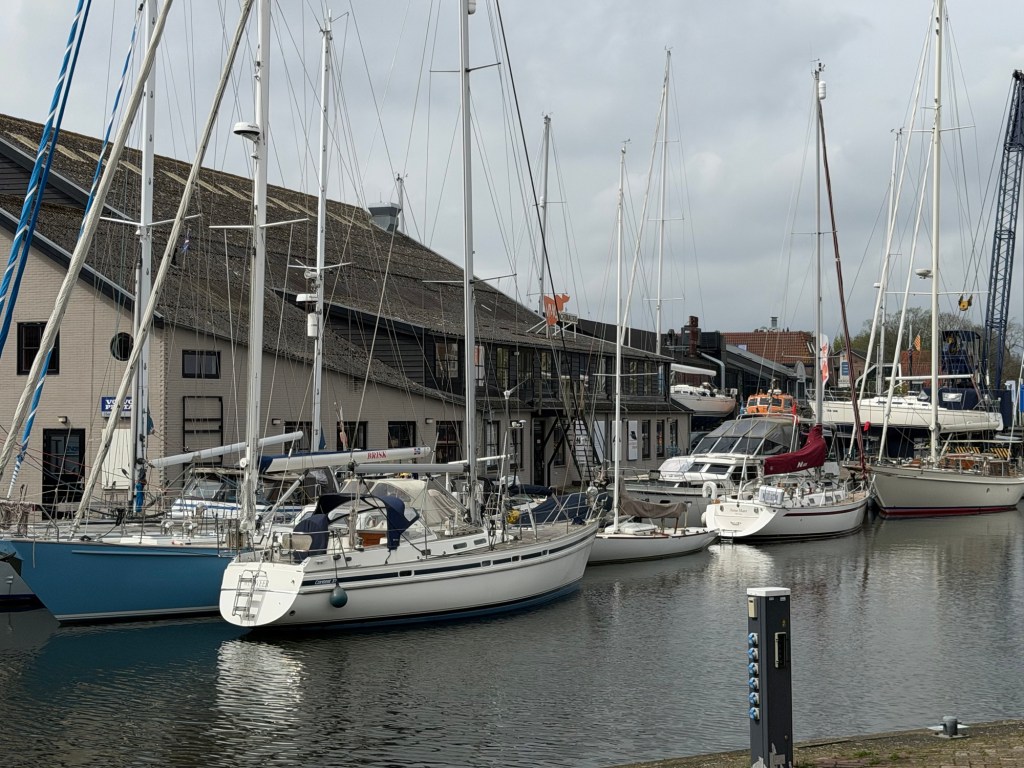
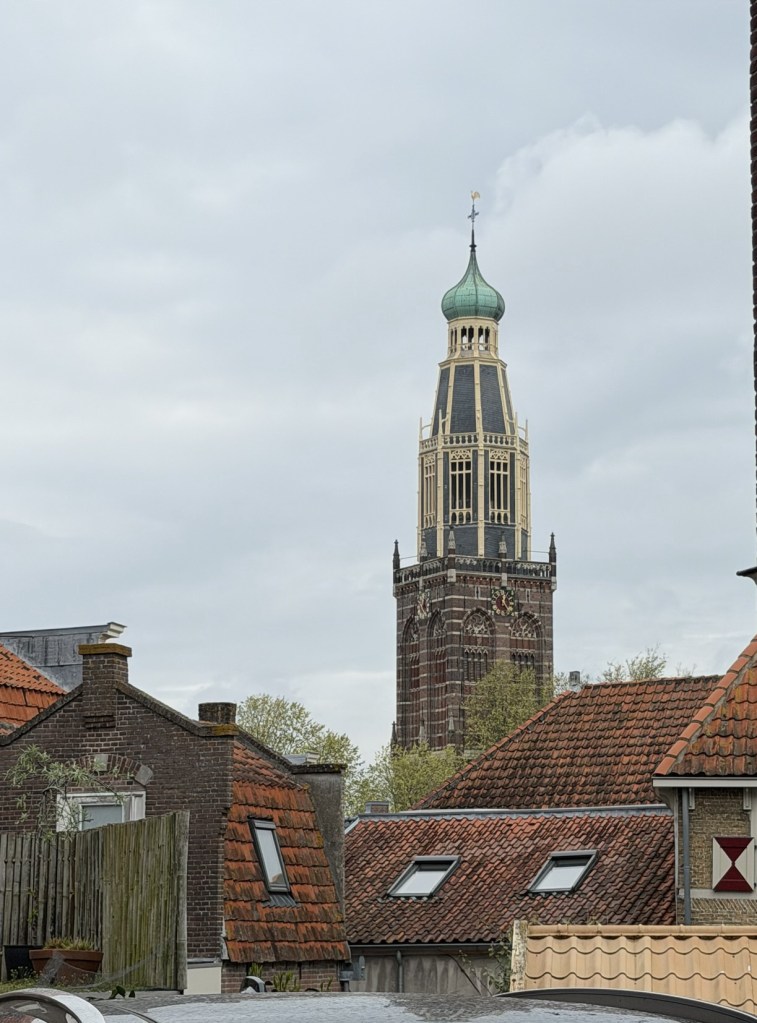
Nothing competes for your attention. A church tower rises above the rooftops. A canal turns quietly out of sight. A door stands half open to a courtyard you won’t see unless you’re looking for it.
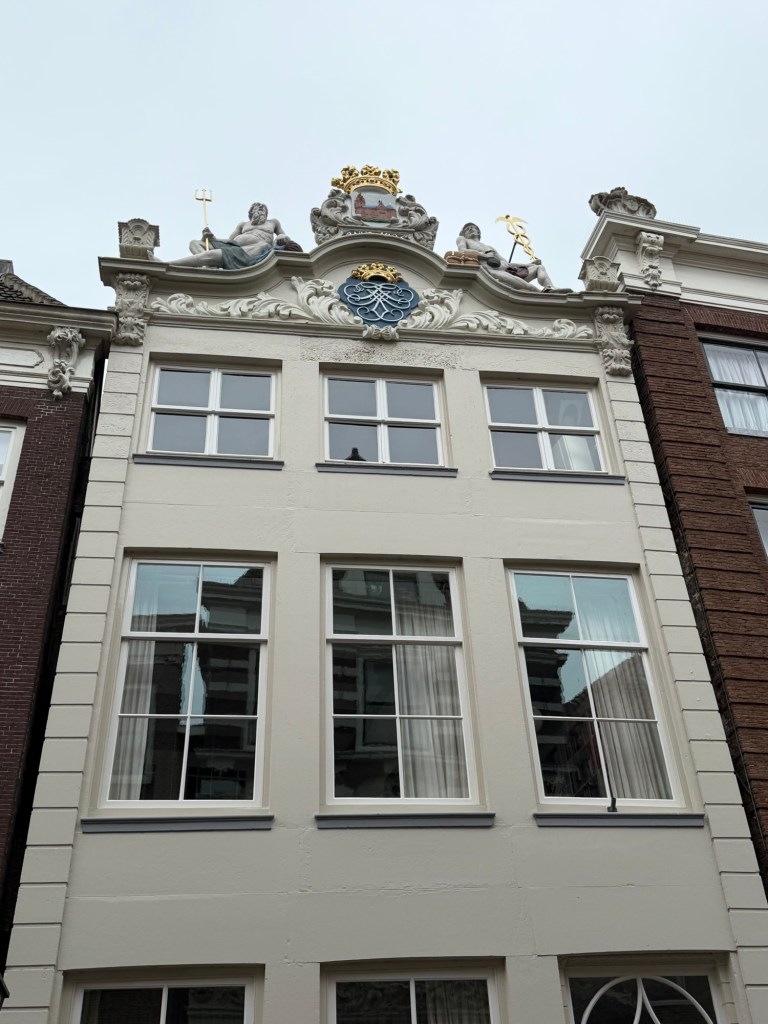
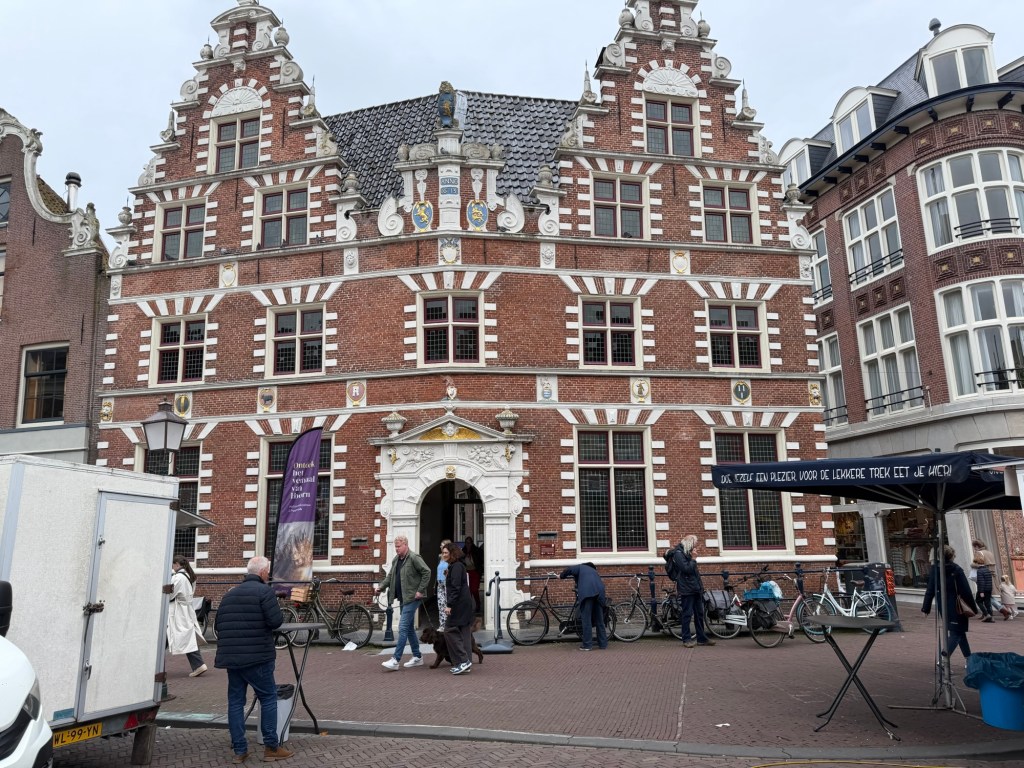
The houses rise directly from the street—narrow, tall, and closely set, their proportions shaped as much by history as by design. Many date back to the 16th and 17th centuries, when wealth from maritime trade passed through this harbor and settled into brick and timber.
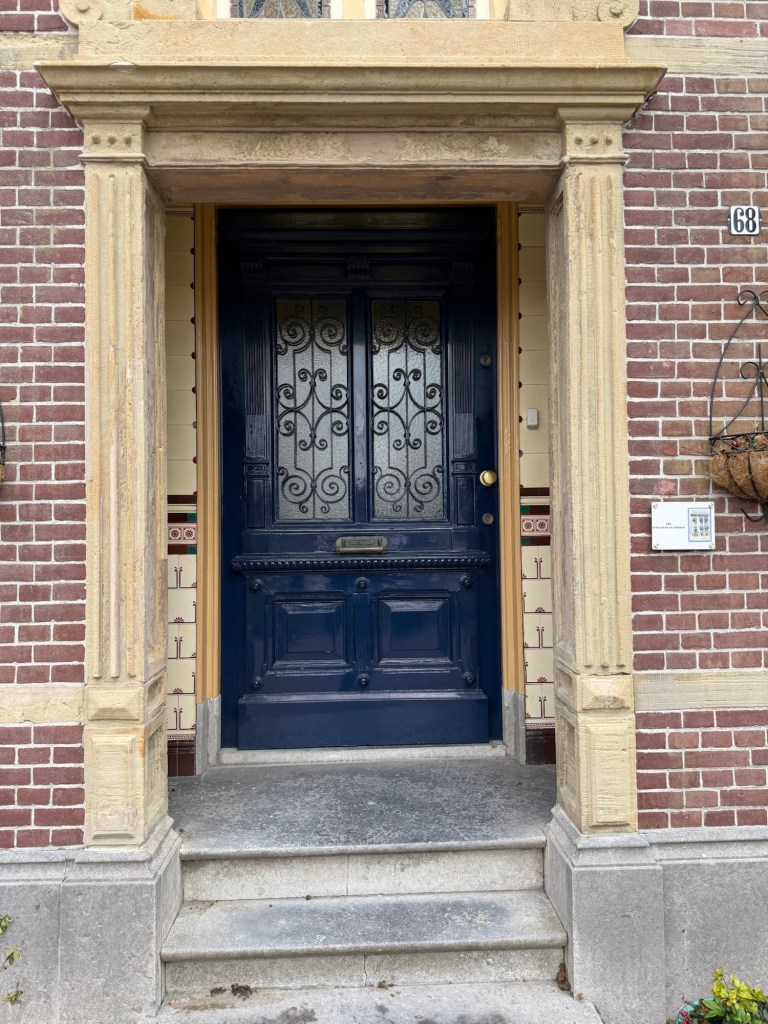
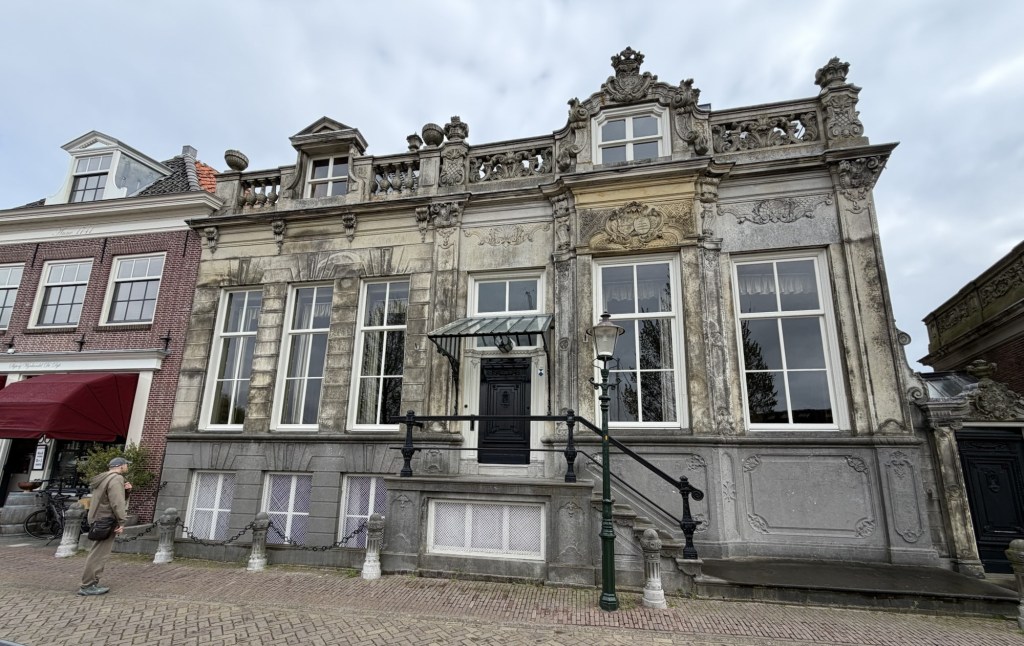
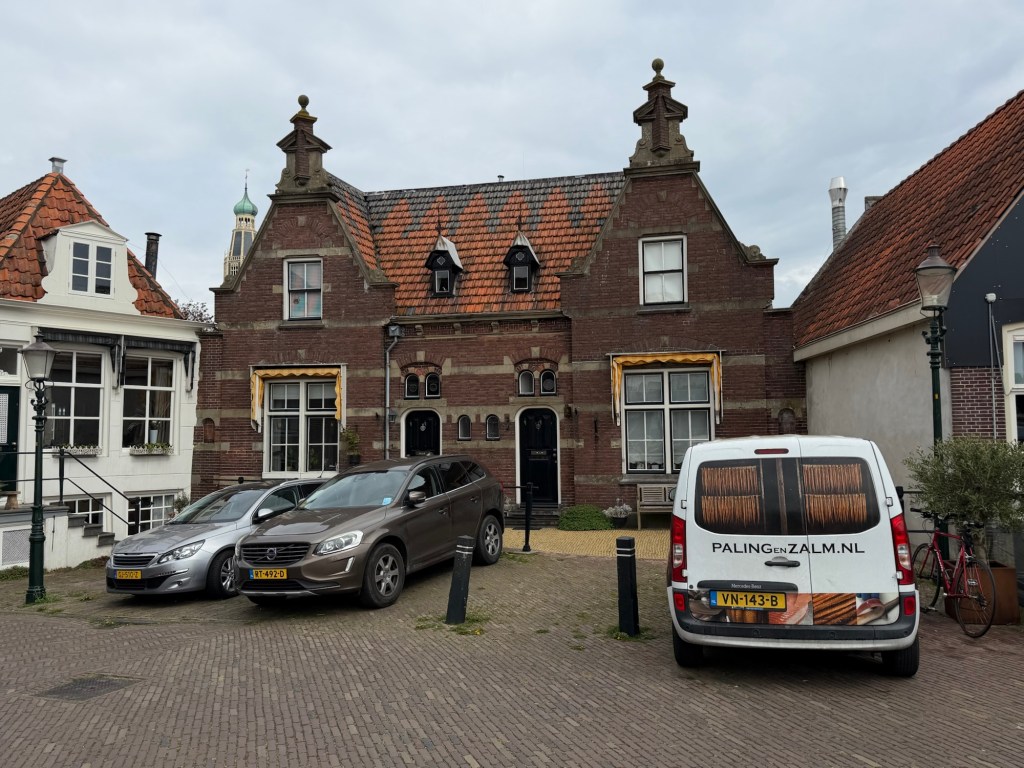
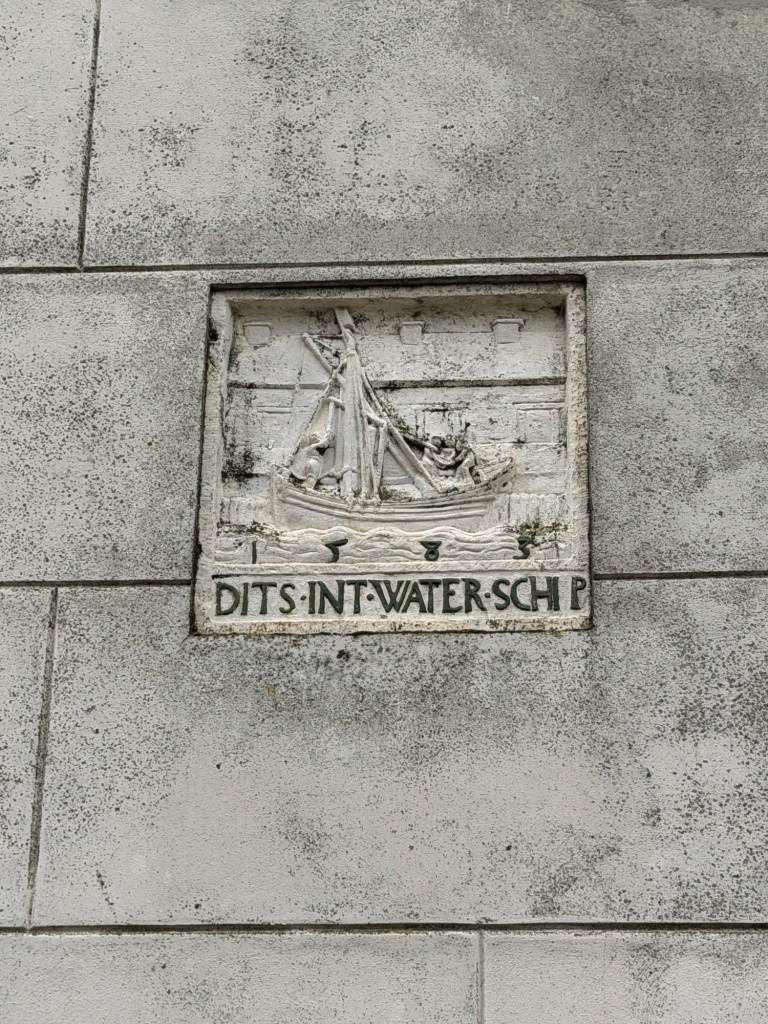
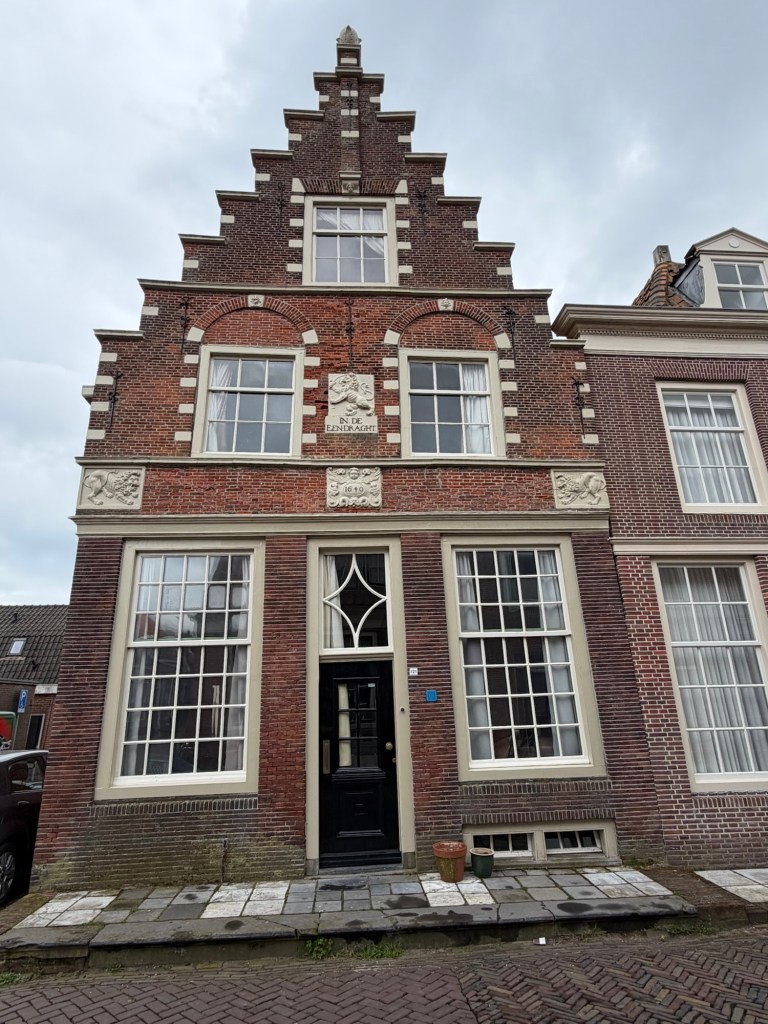
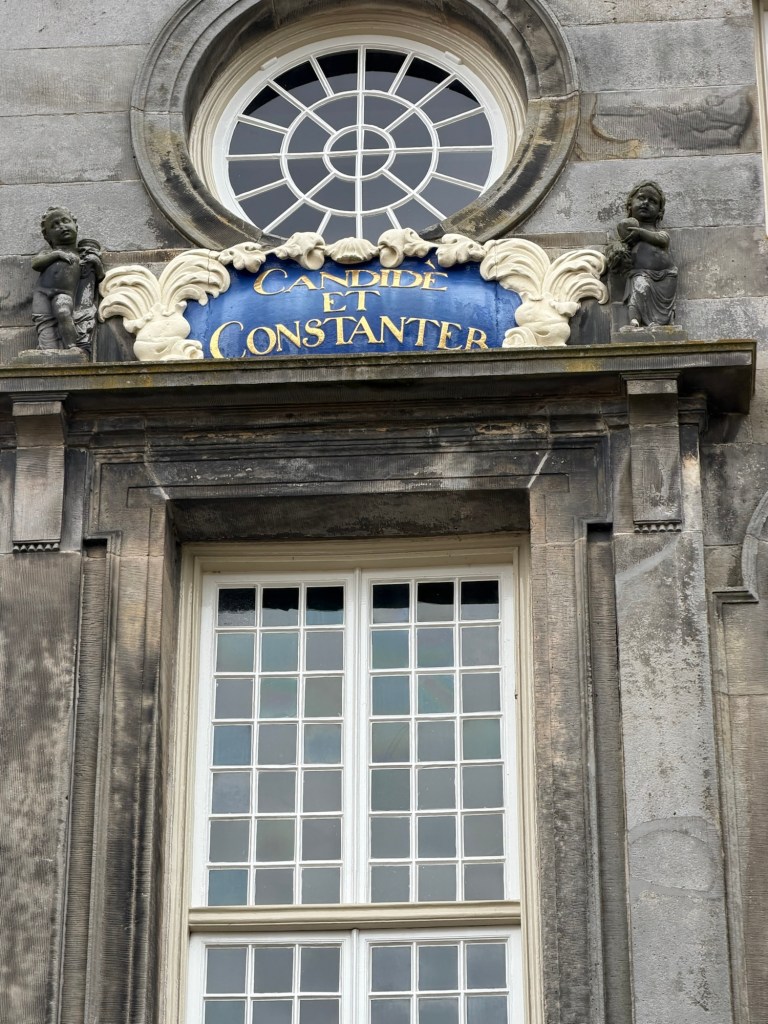
Windows are tall and vertical, often divided into smaller panes, catching and reflecting light from the canals and harbor. Shutters, doors, and trim are painted in muted greens, blacks, and occasional deep blues—colors that feel intentional without calling attention to themselves.
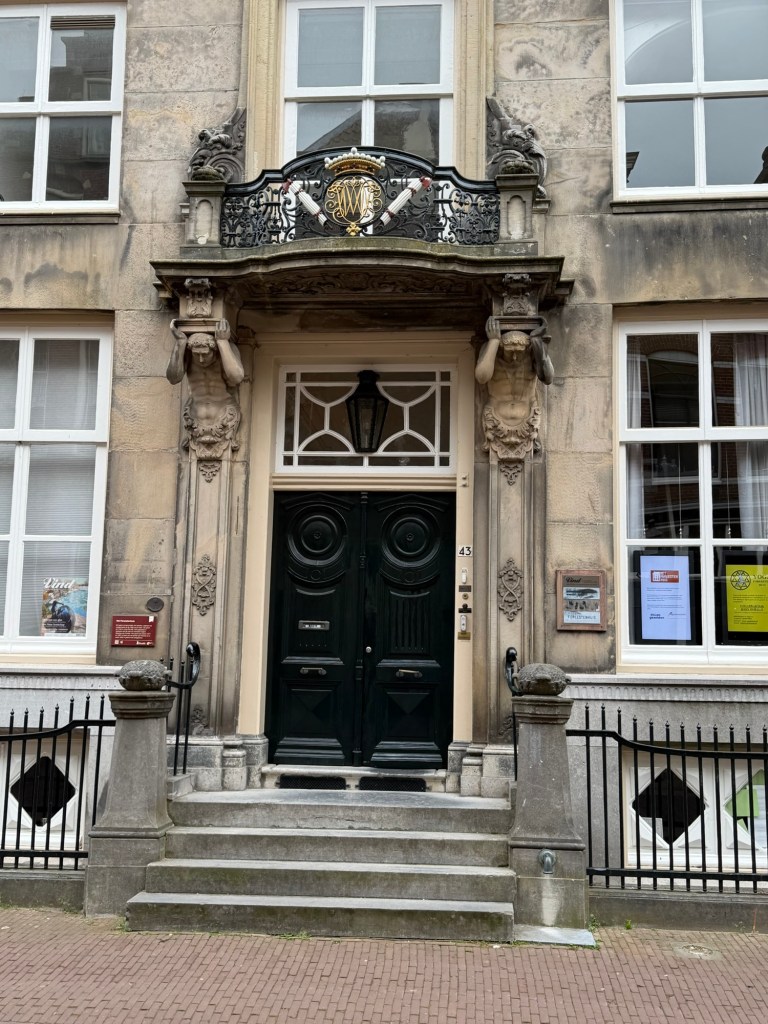
The facades are where the personality lives. Some are simple and restrained, others more expressive, crowned with stepped, bell, or neck gables that give each building a distinct silhouette against the sky. The brickwork carries subtle variations in color—deep reds, weathered browns—softened over time by wind off the water. Some are constructed of more expensive materials other than brick, as a symbol of even greater wealth.
Nothing is oversized. Everything is in proportion.
Near the harbor, the buildings take on a slightly more utilitarian character—warehouses and former trading houses with larger openings and simpler lines, built for function but still carrying the same careful craftsmanship. You can almost trace the town’s commercial past just by walking along the waterfront.
Church towers rise above it all, not dramatically, but steadily—anchors in the skyline rather than statements.
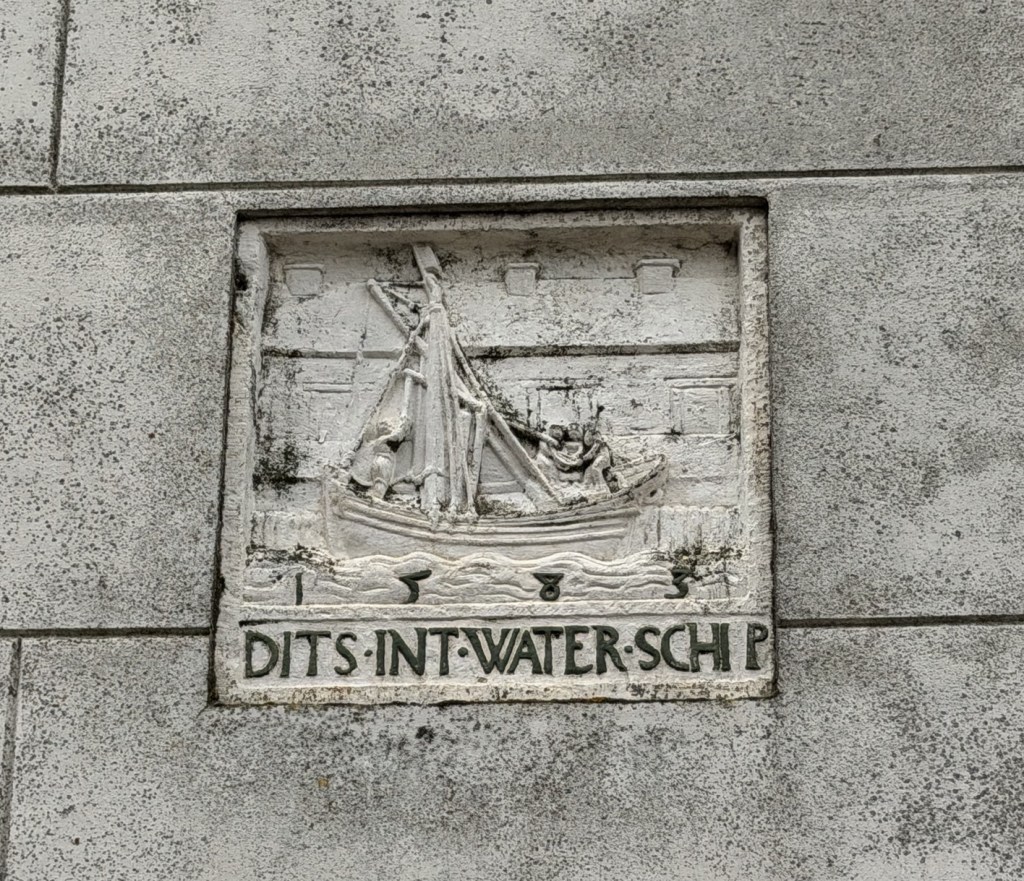
What stands out most is how little feels altered. The town hasn’t been reimagined or recreated. It has simply been maintained, layer by layer, with an understanding that the character was already there.
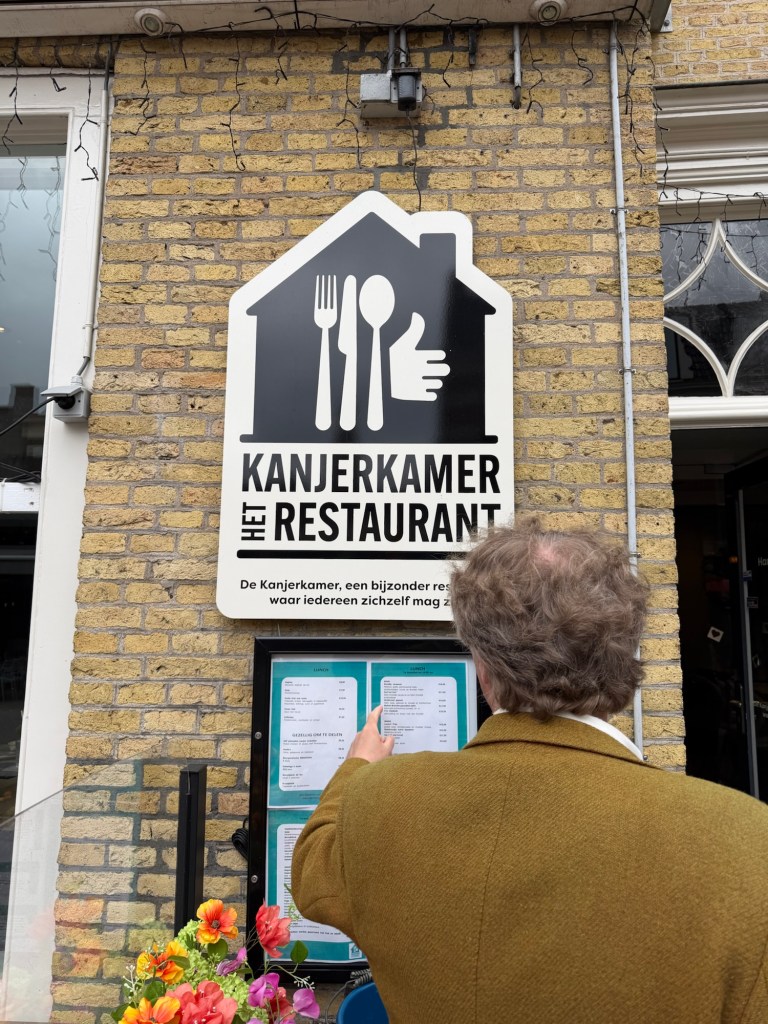
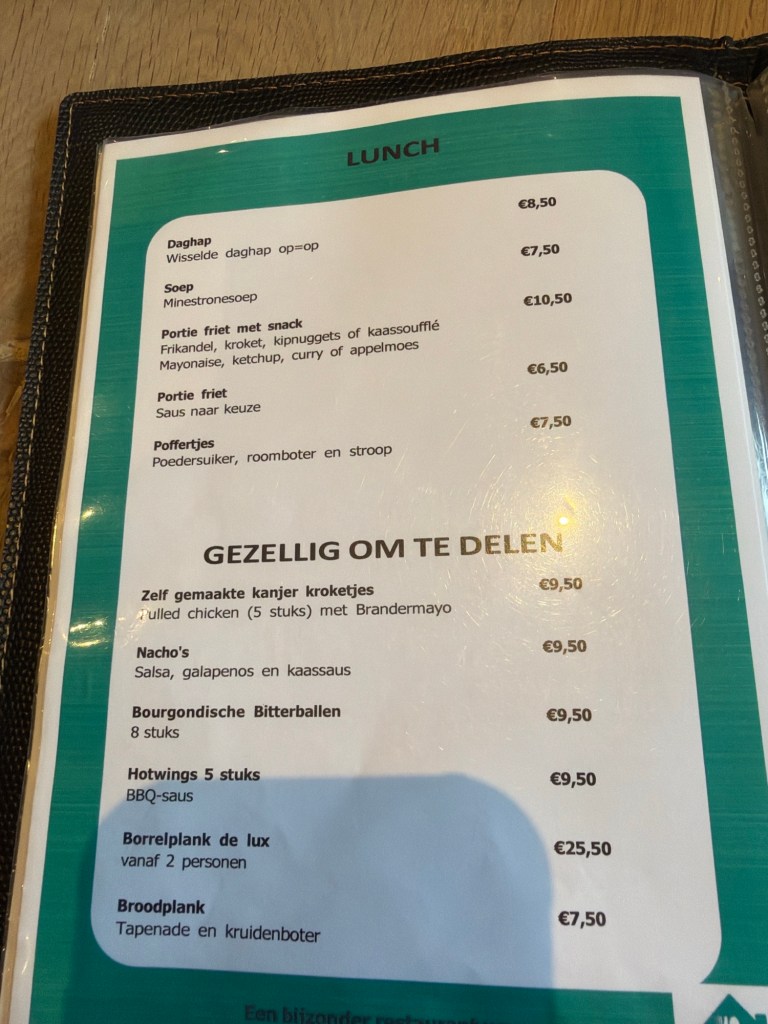
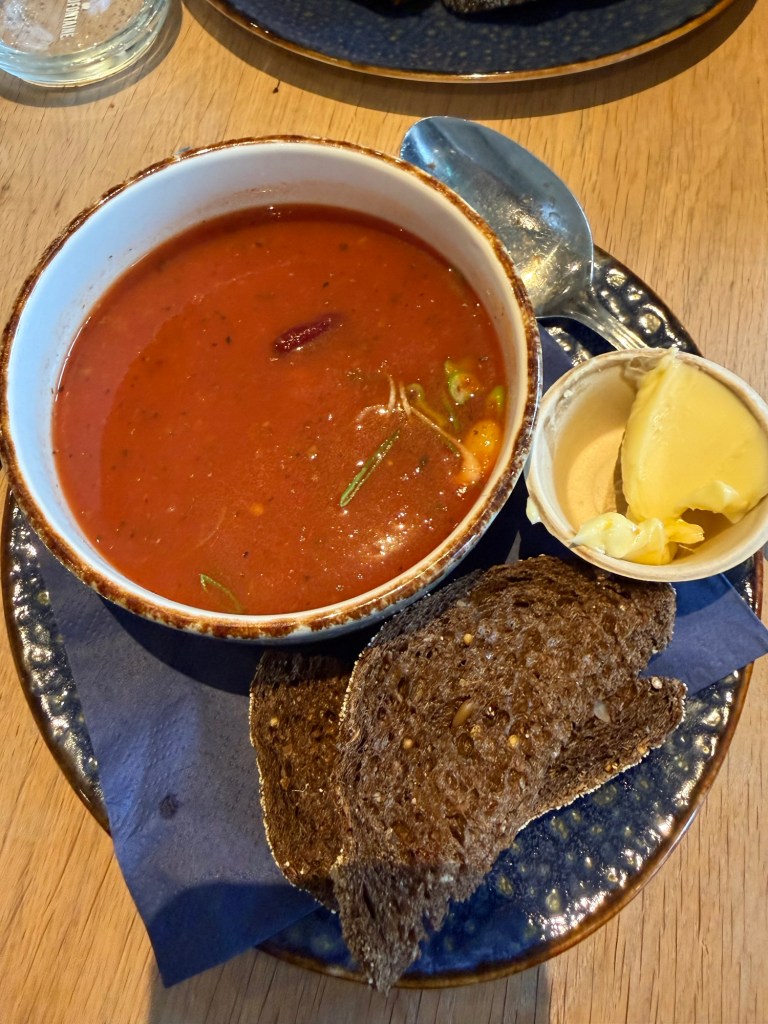
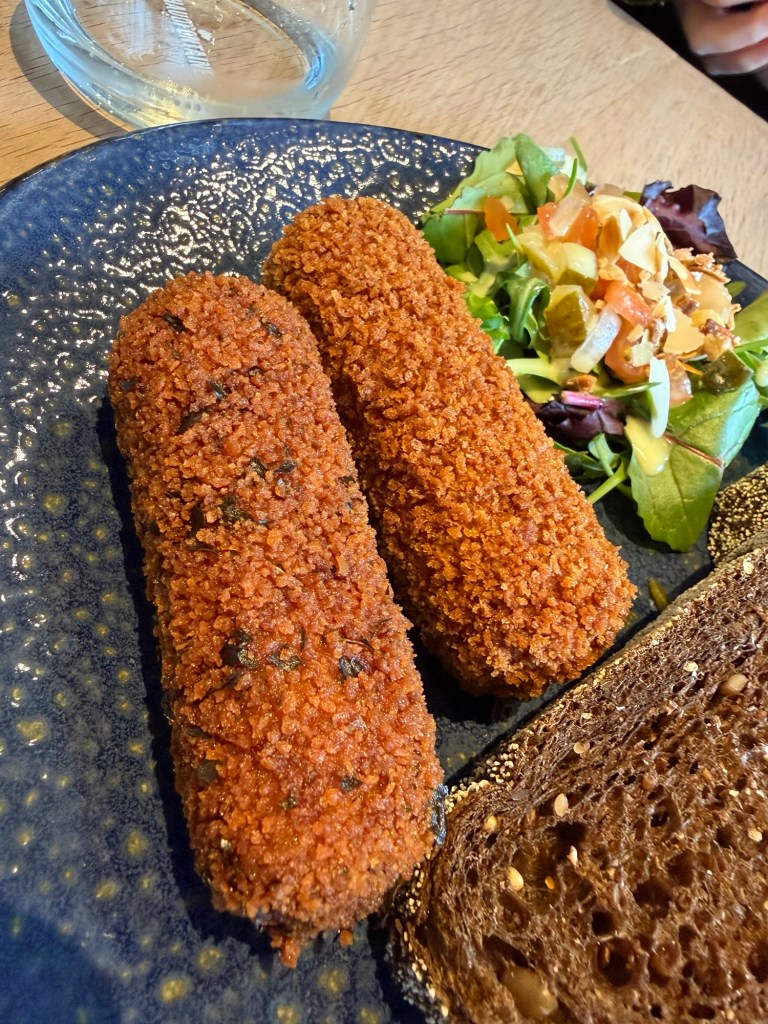
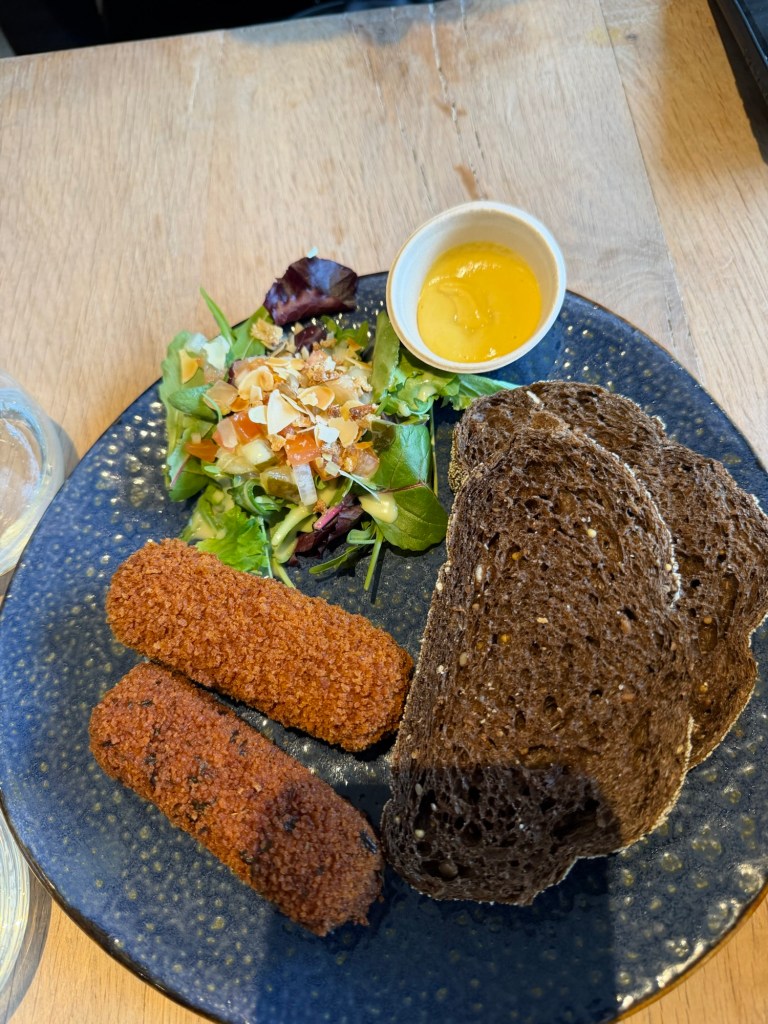
Before leaving Enkhuizen for Hoorn, we had a quick lunch with Joris at Kanjerkamer Restaurant, where sampled some of the local fare. The vegetarian croquets were memorable.
Hoorn
We next traveled to Hoorn, about 30 minutes away.
Hoorn’s identity is inseparable from the Dutch Golden Age—a period when a small country projected enormous influence across the globe.
As in Enkhuizen, the port is protected by a substantial fortification, this one known as the Hoofdtoren. Built in the early 1500s, the Hoofdtoren served as part of the city’s defensive system, guarding the entrance to the harbor. It functioned both as a watchtower and a control point for ships coming in and out—very much tied to Hoorn’s rise during the era of the Dutch Golden Age and its role in the VOC.
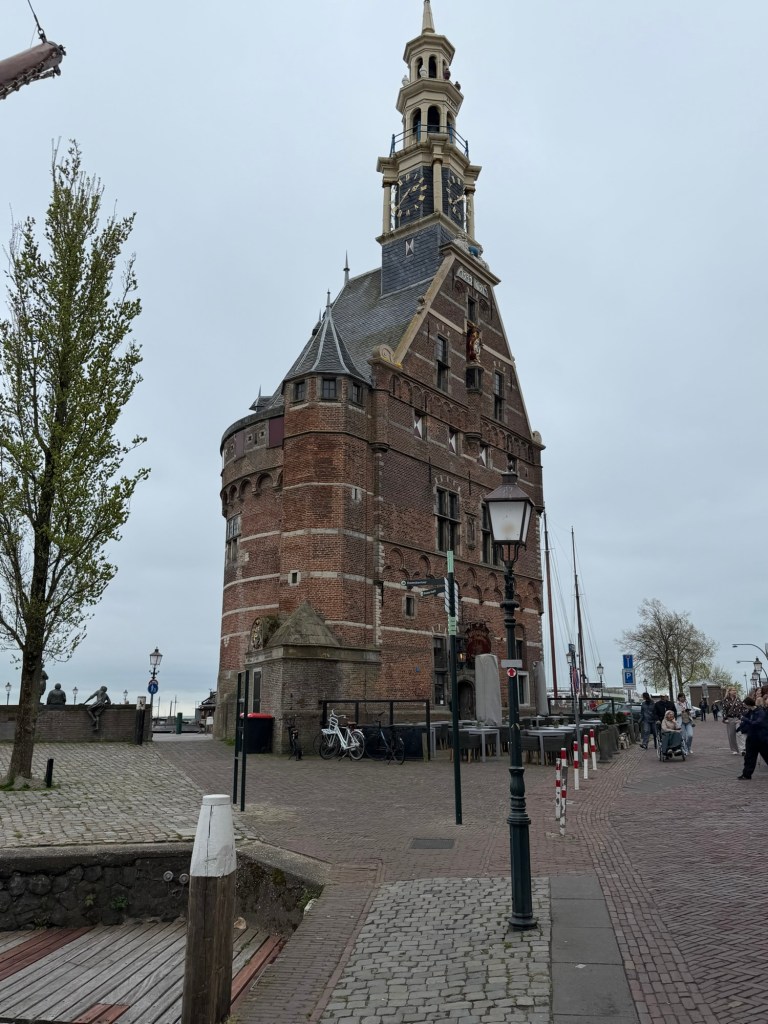
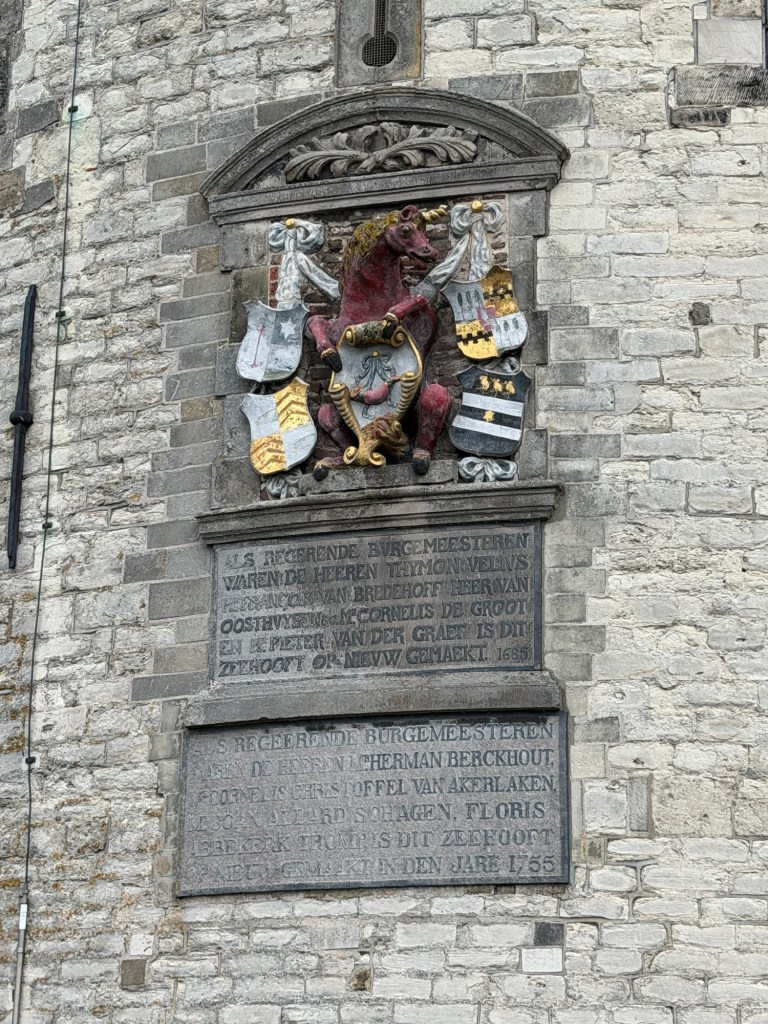
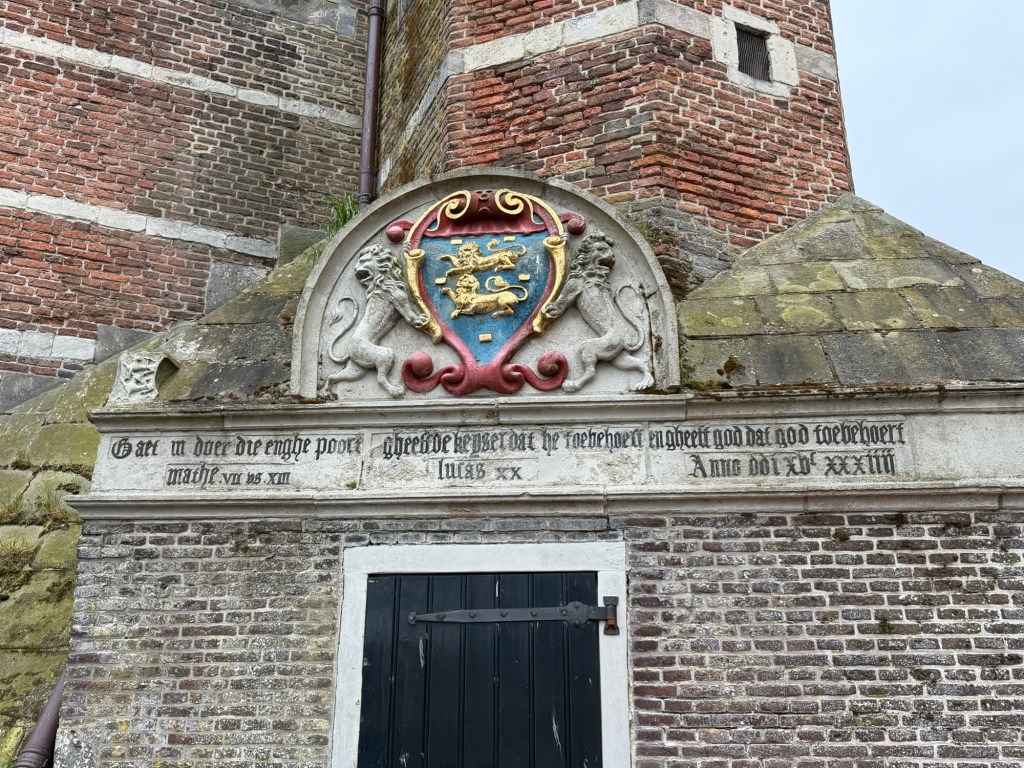
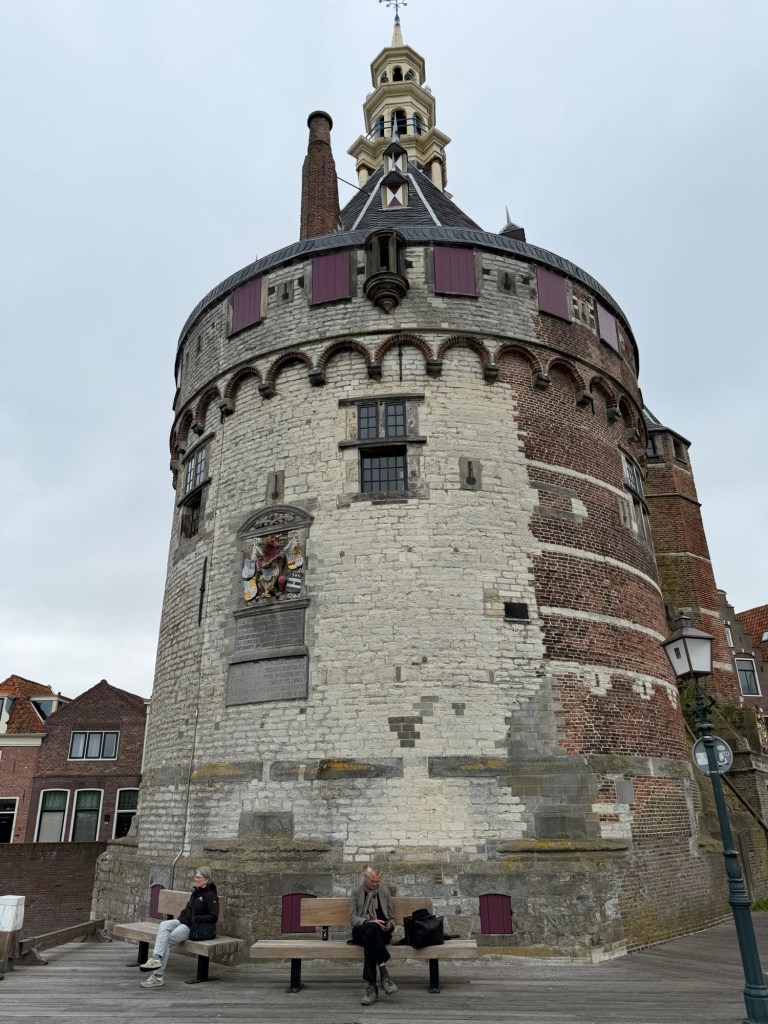
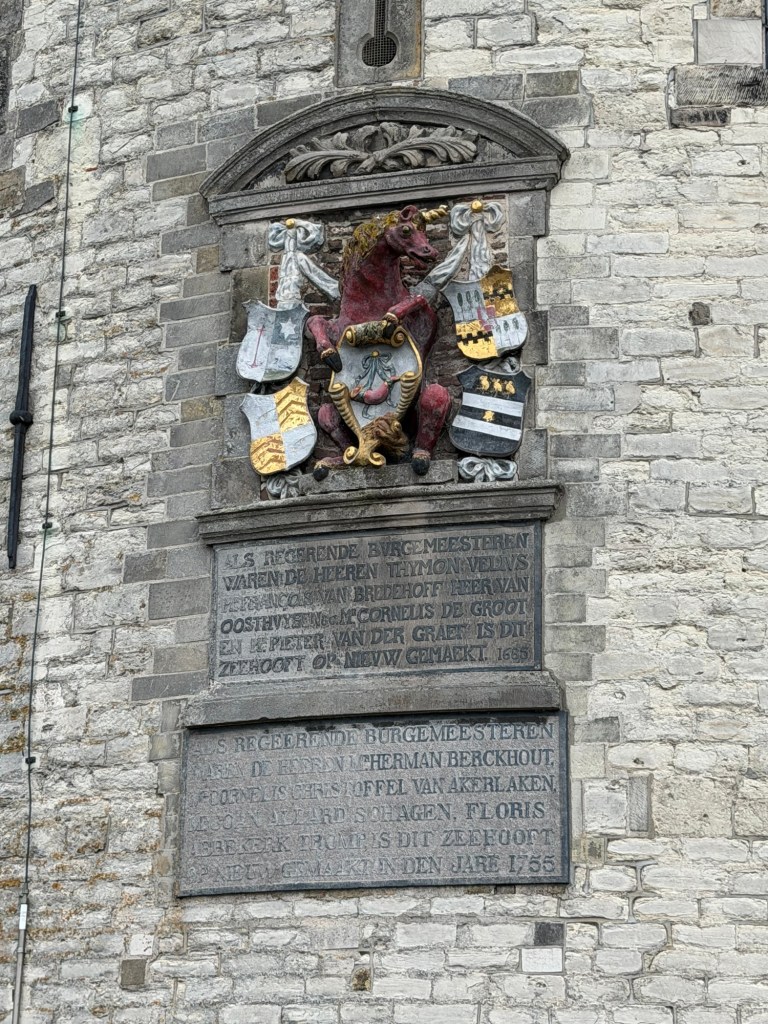
At the height of the Dutch Golden Age, the Netherlands led the world in commerce, shipbuilding, and finance. The prosperity funded art, science, and architecture, traces of which still line Hoorn’s streets today.
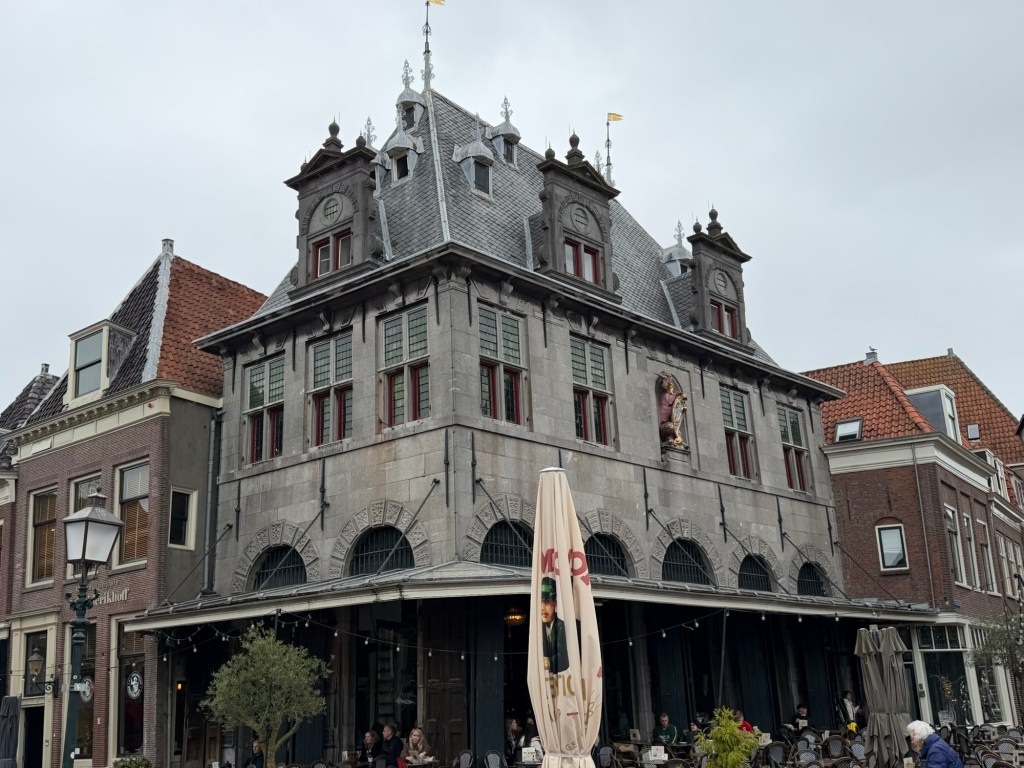
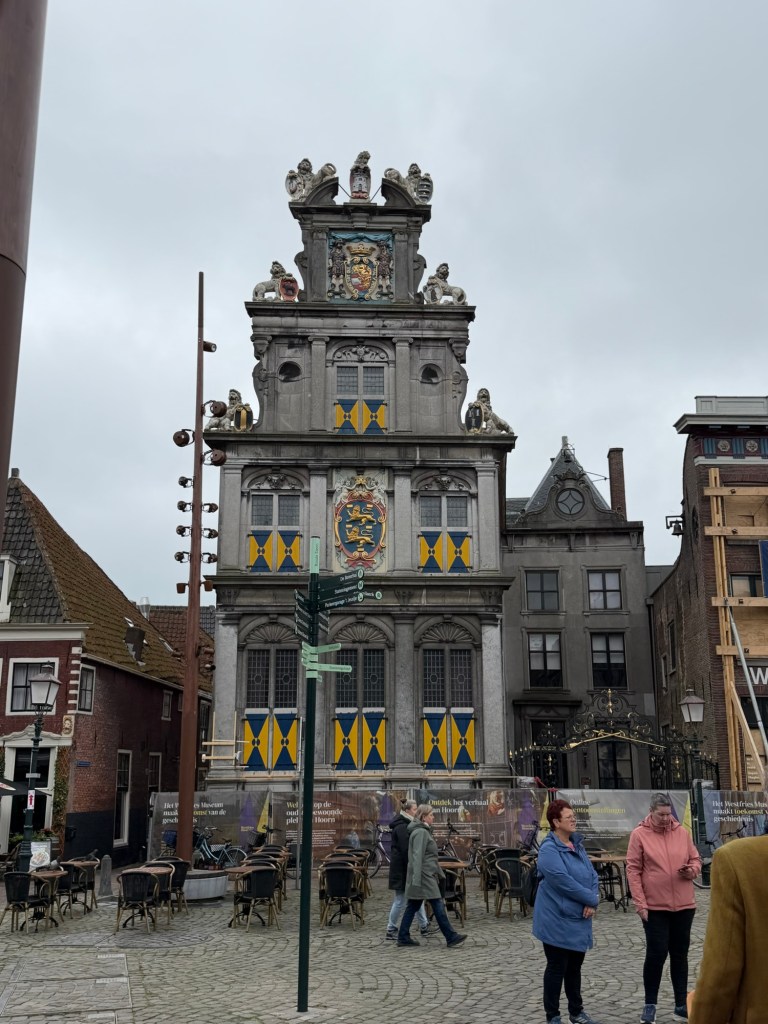
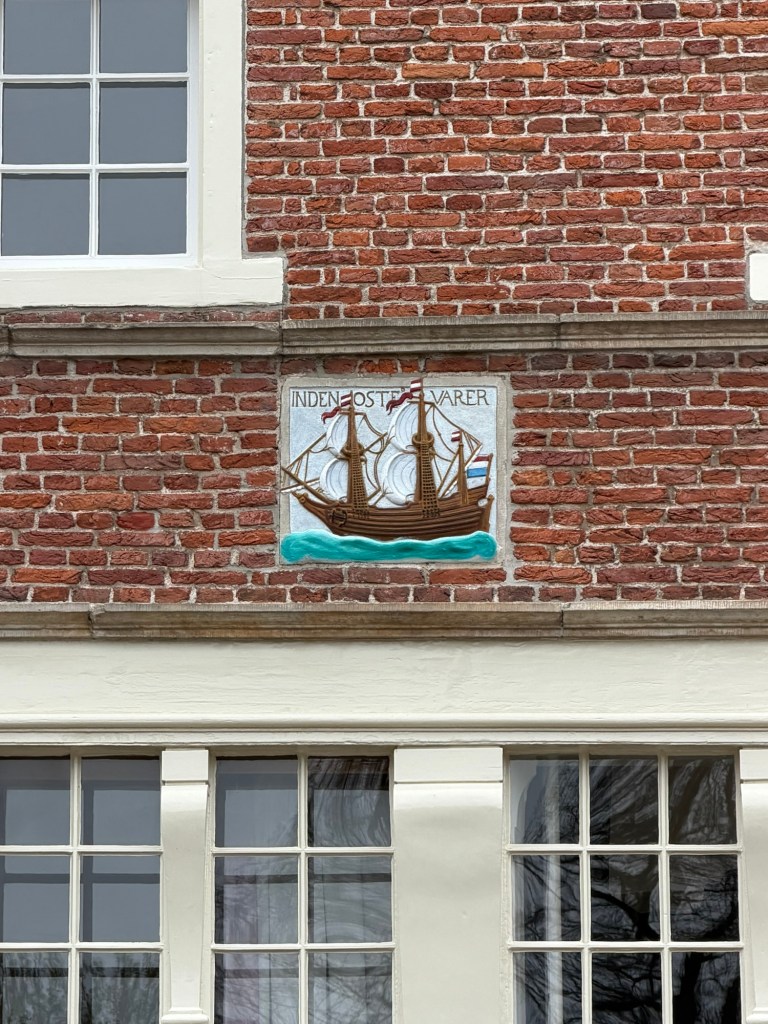
But the Golden Age was not just about success. It also came with a human cost—colonial expansion, exploitation, and systems that benefited some while harming others.
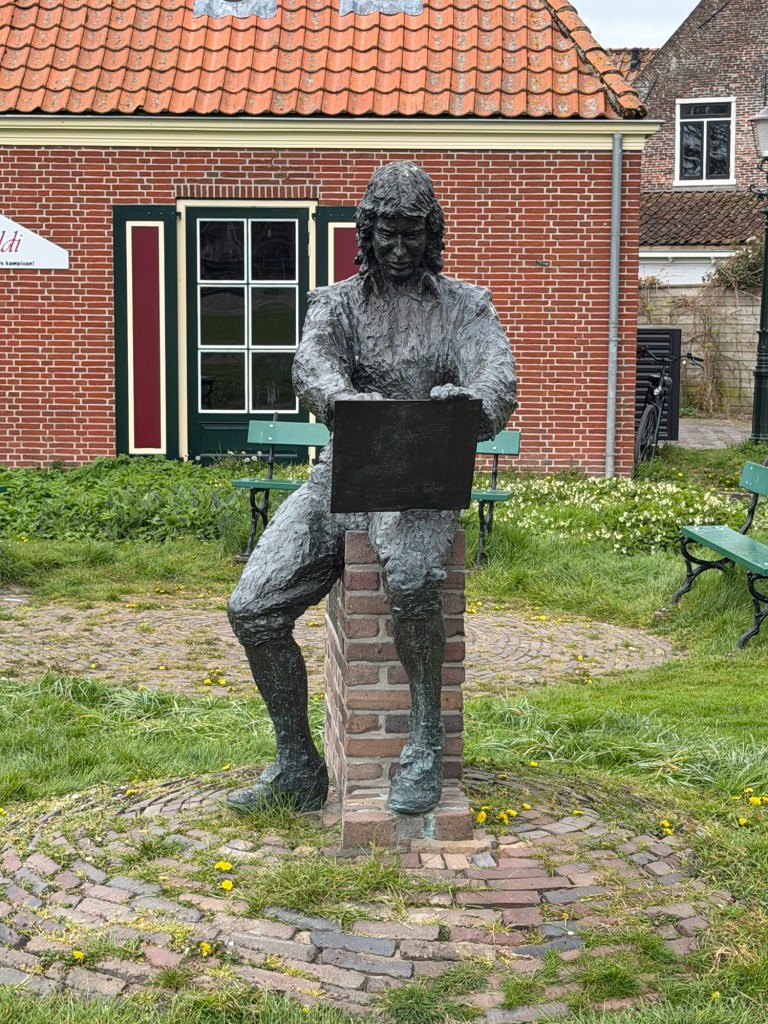
Case in point, Joris brought us to the statue of Jan Pieterszoon Coen—a 17th-century Dutch figure (1587–1629) and a central figure in the VOC. Today, he is viewed by some through a more critical lens, given his role in establishing Dutch colonial control in Asia, particularly in Indonesia. Whether villain or hero, Coen is undeniably part of history, his statue removed or not.
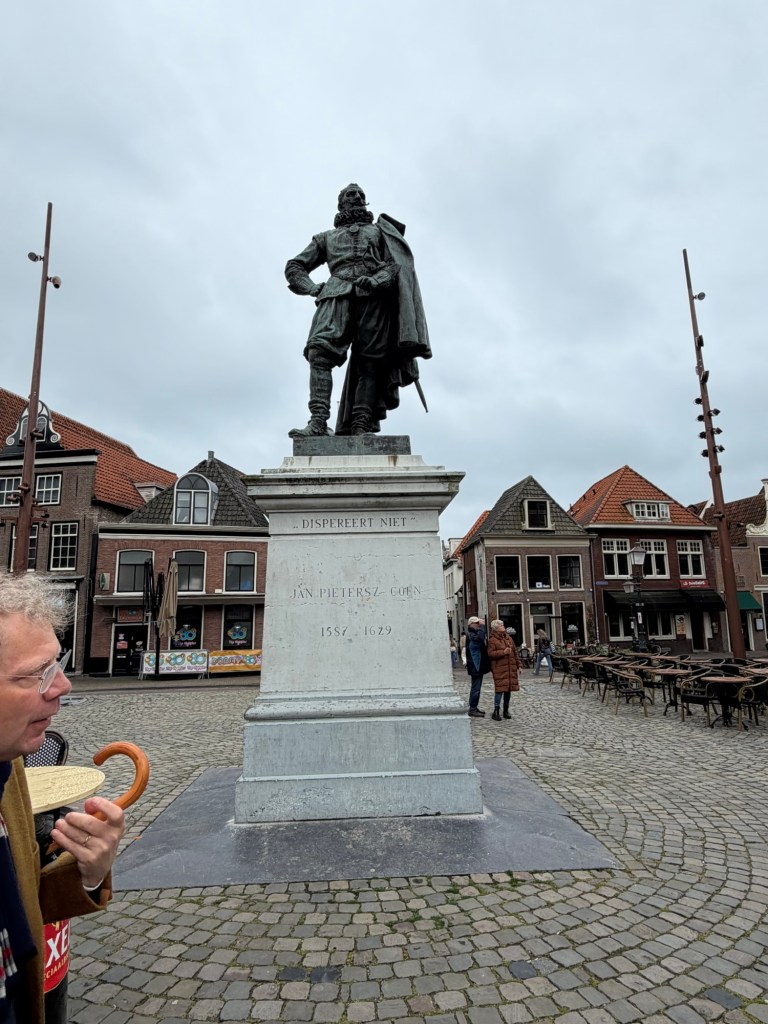
That fuller history sits quietly behind the beauty you see now.
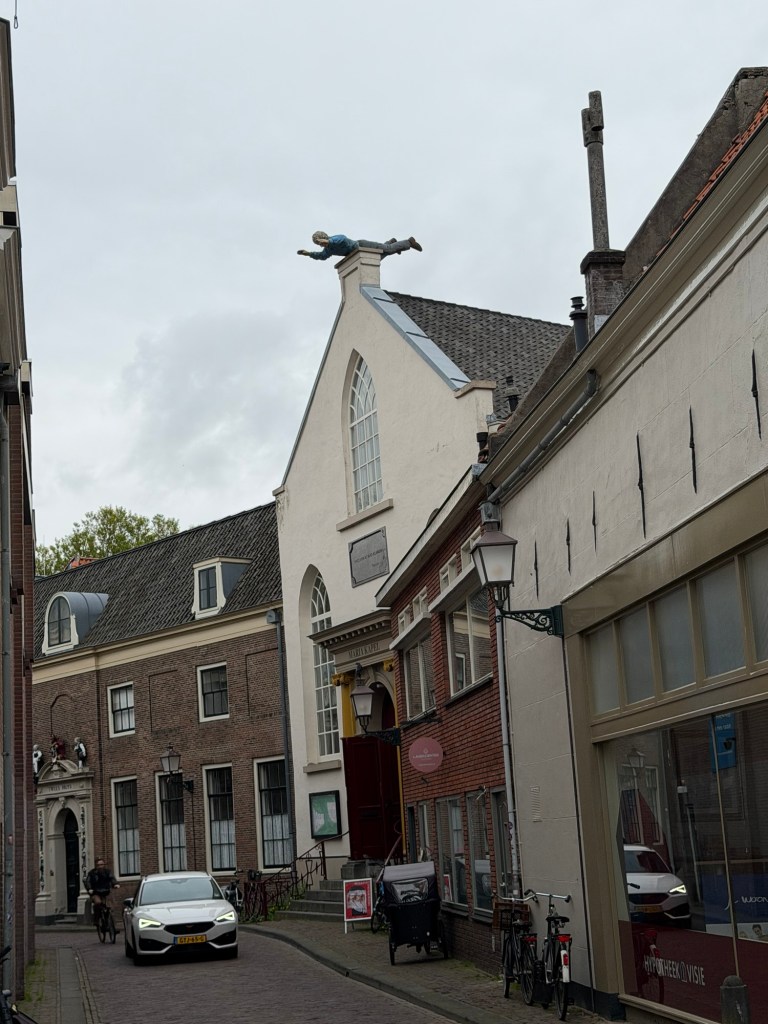
Walking through Hoorn, you feel both sides of it: the elegance of a town shaped by wealth, and the weight of the history that created it.
D’Vjiff Vileghen
At the end of a longish day, we had dinner at D’Vijff Vlieghen (“The Five Flies”), an Amsterdam institution for more than 85 years.
The setting alone is part of the experience—rooms spread across a series of adjoining canal houses, low ceilings, dark wood, and walls lined with Dutch paintings that feel quietly original. It’s intimate without being cramped, the kind of place where the past lingers without trying too hard to be noticed.
I opted for the mystery meal—a small gamble that turned out very well for my palate. The flavors speak thy mystery: thoughtful, seasonal, and rooted in Dutch tradition but presented with a light, modern touch.
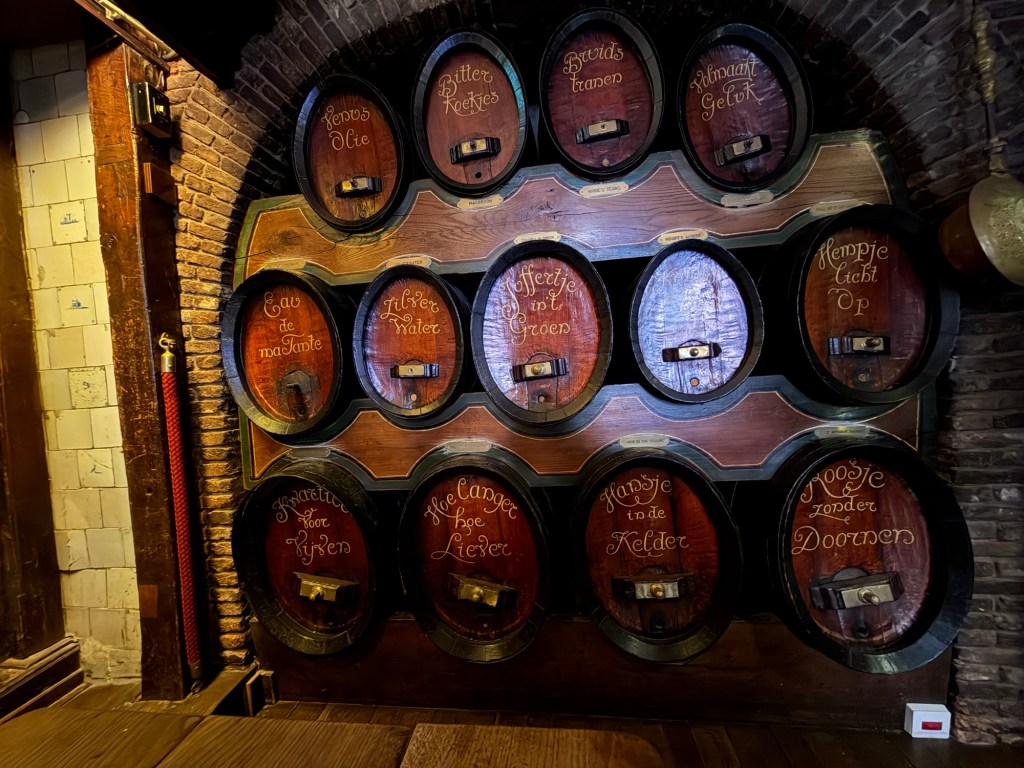
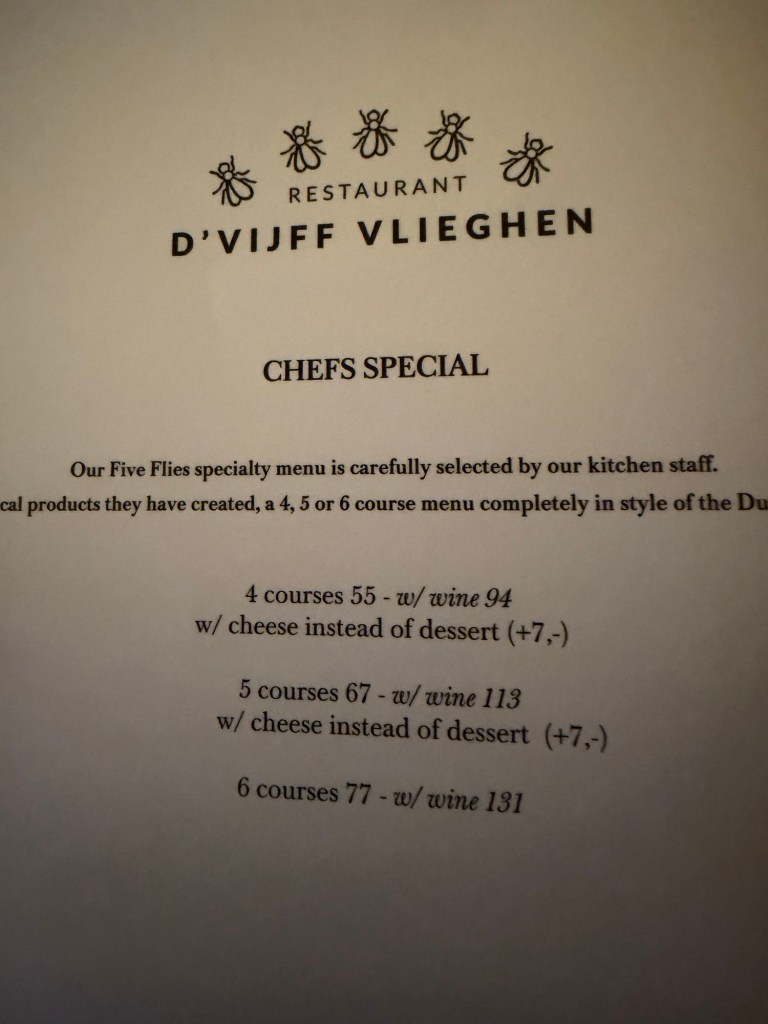
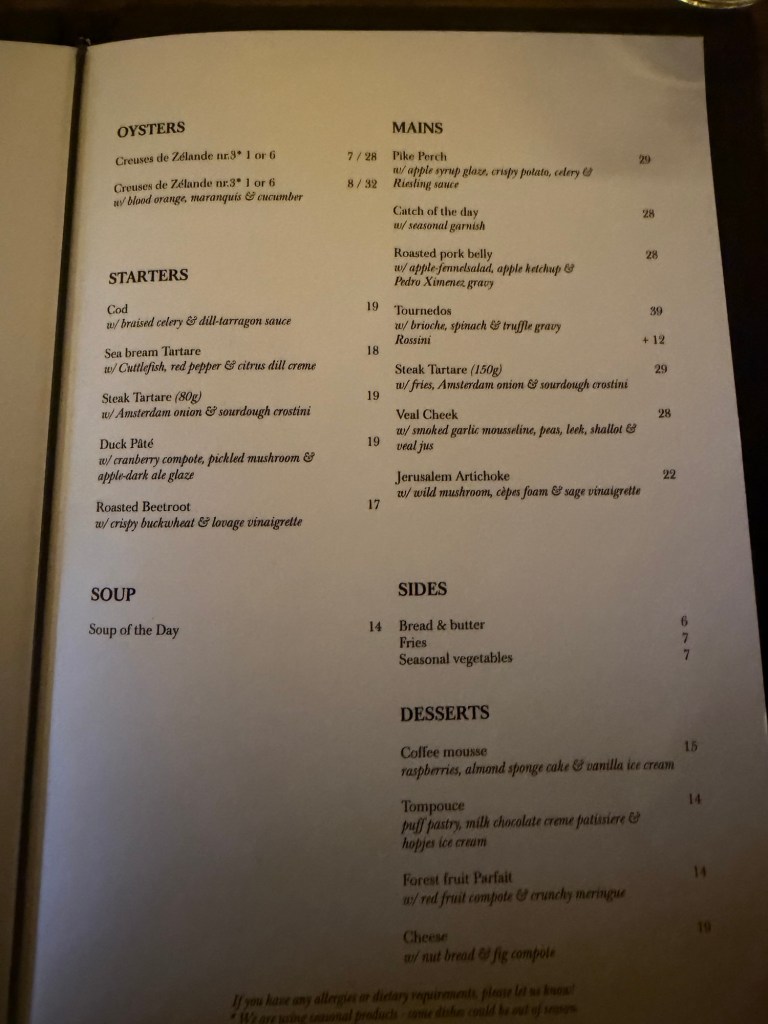
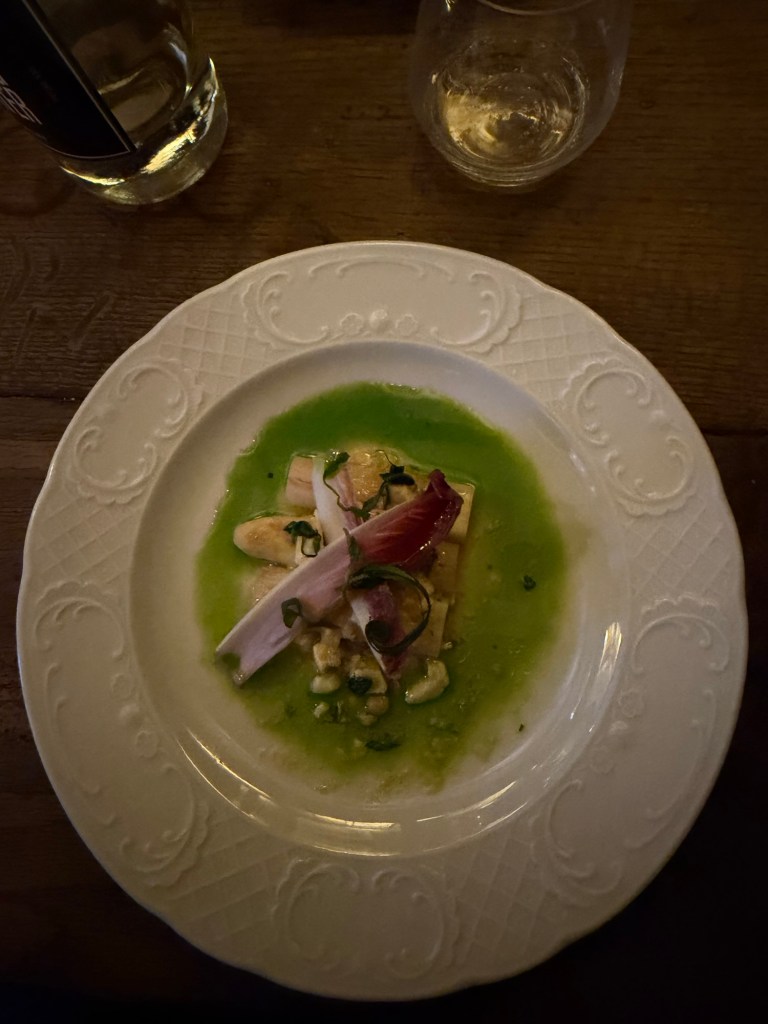
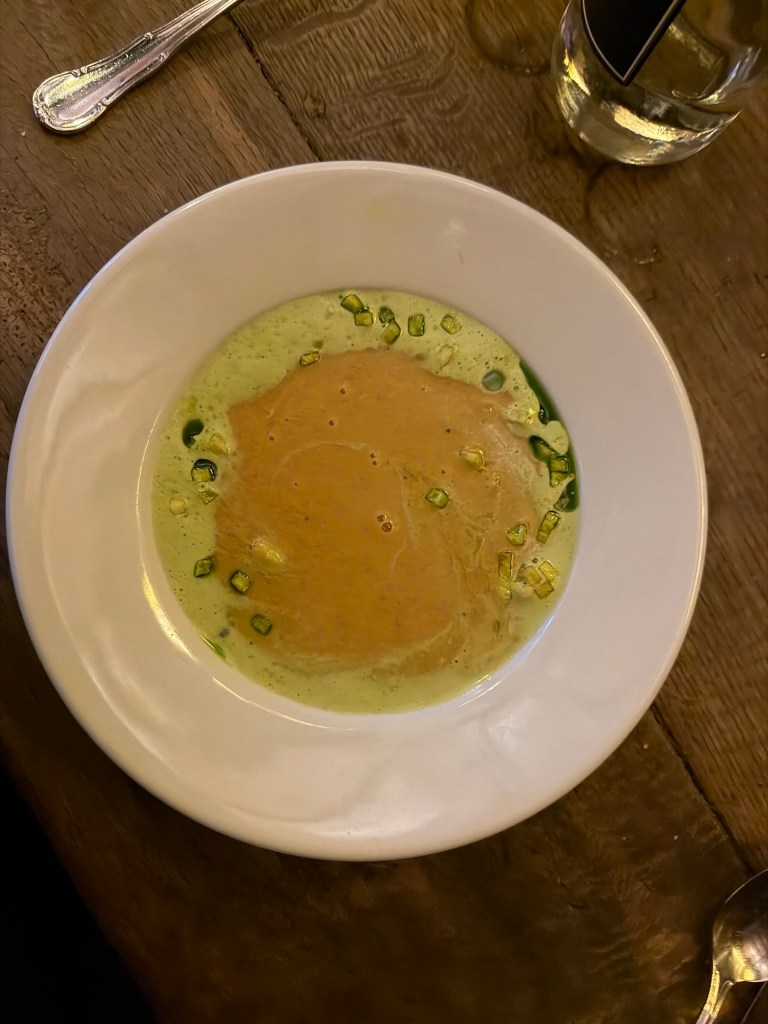
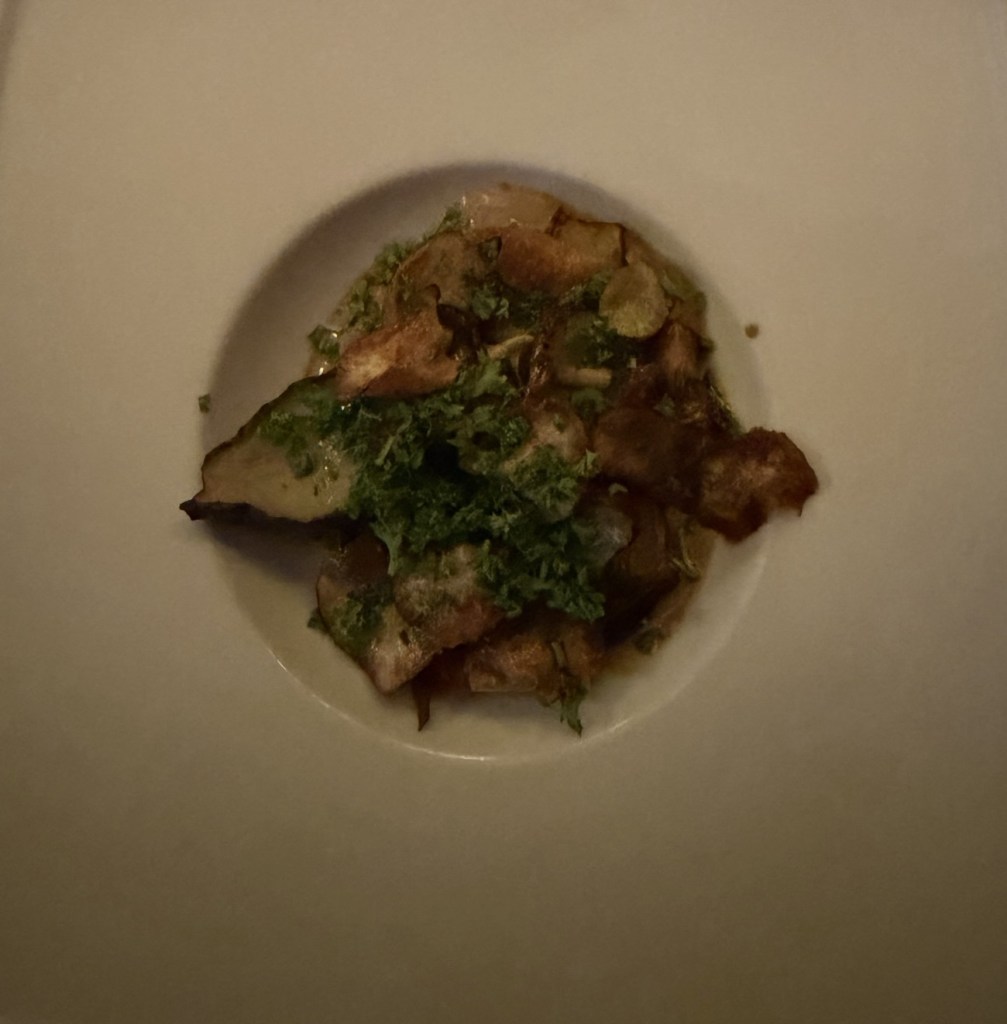
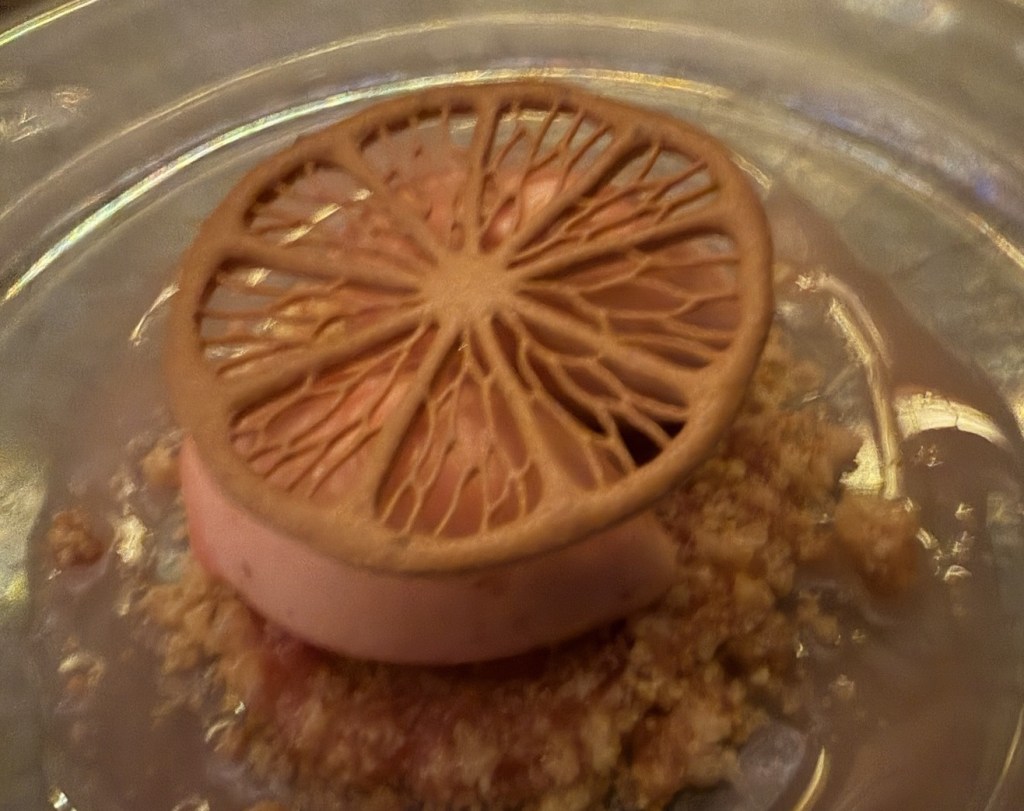
There’s something satisfying about giving up control for an evening and simply seeing where the kitchen takes you.