Our last day in Iceland is jam packed with more to see—Kristinn keeps us moving right up to the moment he ditches us at the airport and can finally breathe again.
Lava Lava and More Lava
We start just down the road from the Retreat, where the newest lava fields sprawl out in every direction. It’s staggering—lava as far as the eye can see, and then some, as if Iceland ordered a few extra truckloads just in case.
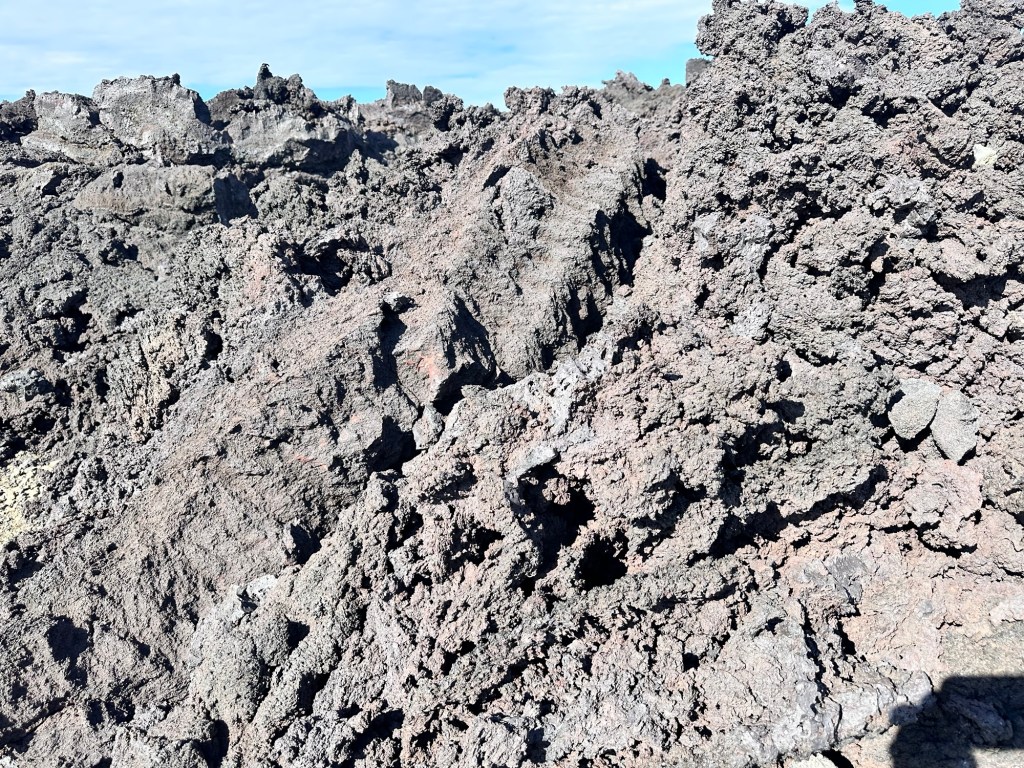

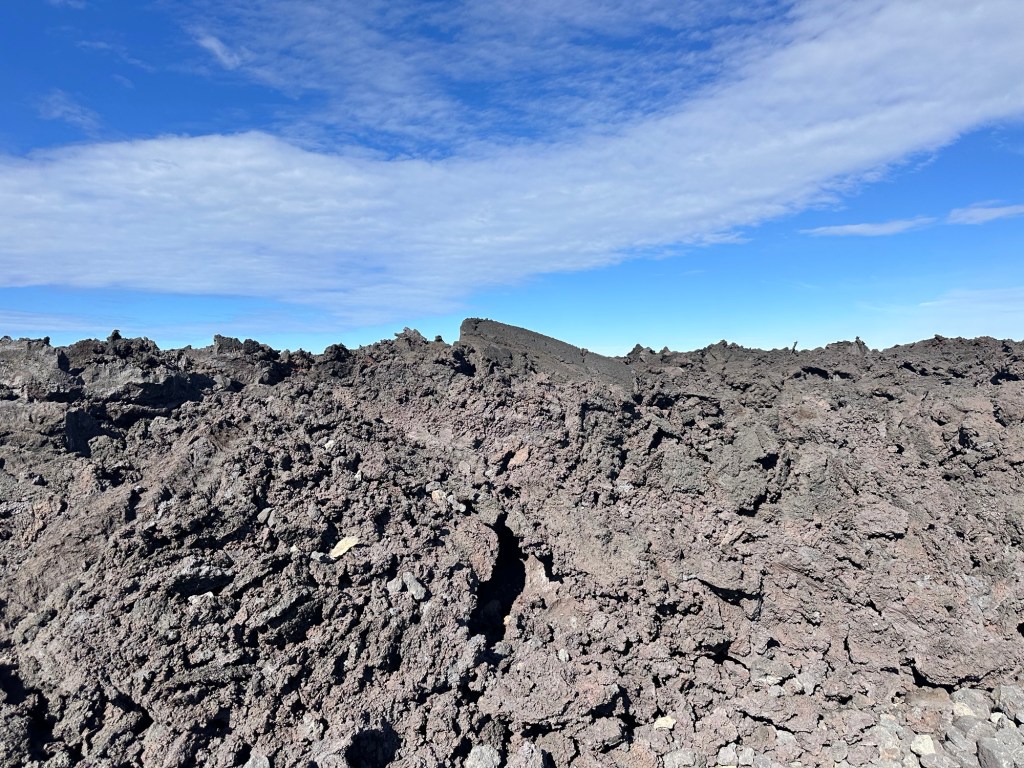
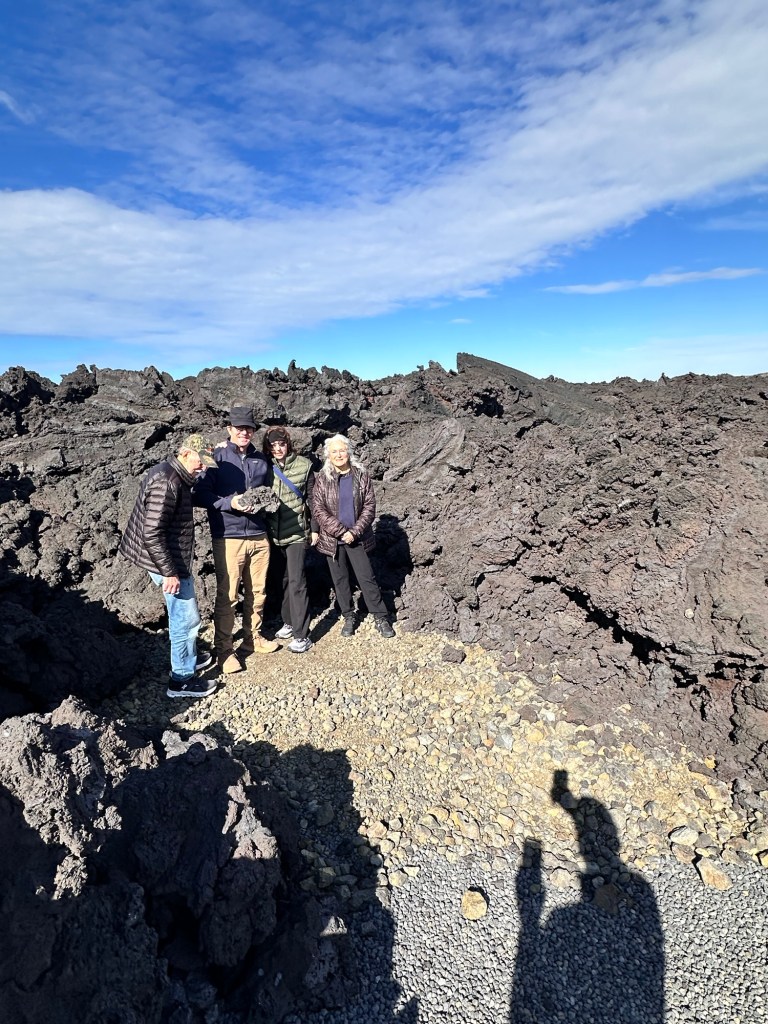
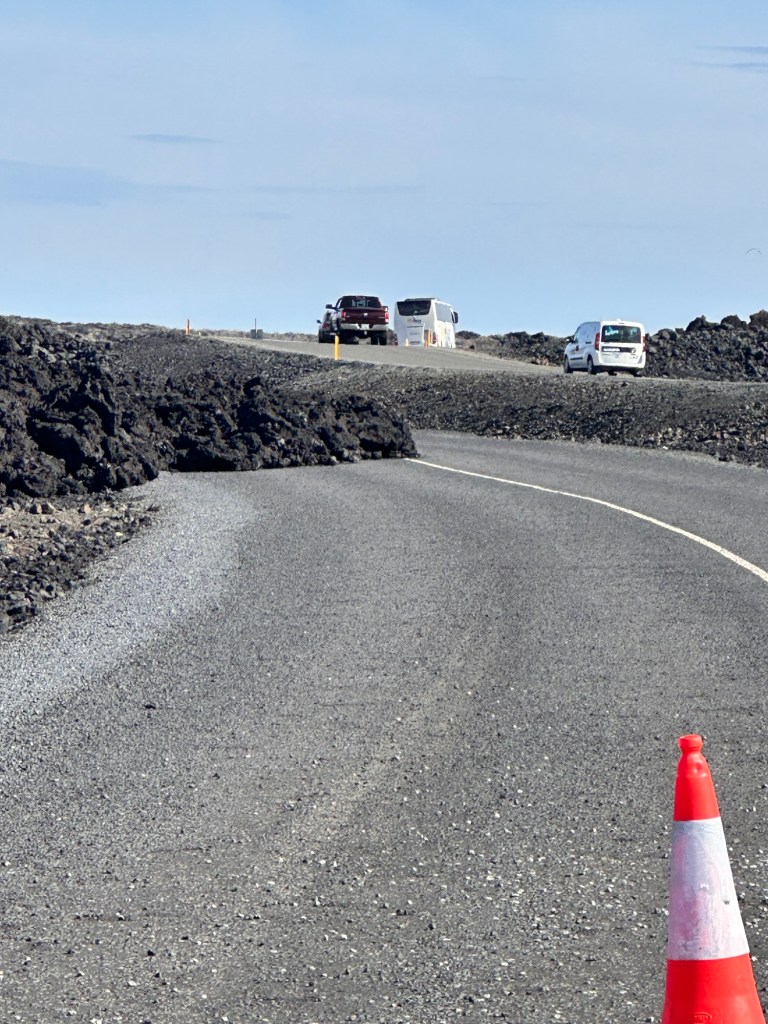
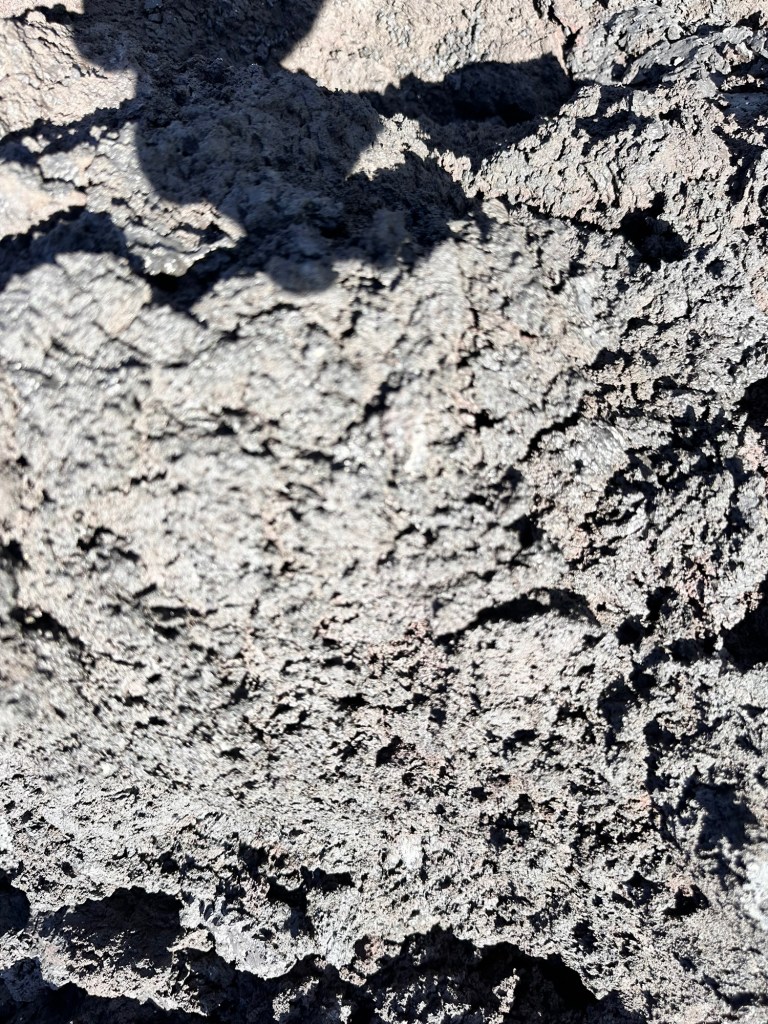
Further down the road we roll into a what is or was a town, called Grindavik. At first glance it looks like any other small Icelandic settlement—until you notice the silence. Homes stand half-built, their skeleton frames exposed to the elements, but no one’s there swinging hammers or pouring concrete. The whole place has been abandoned, frozen in time. Why? An eruption!
It feels less like a town and more like a movie set left behind after the cameras stopped rolling. You can almost imagine the construction crew dropping their tools mid-shift and heading out of town in perfect unison. Grindavik is now a ghost town with street signs—a haunting contrast to the raw energy of the lava fields we’d just seen.
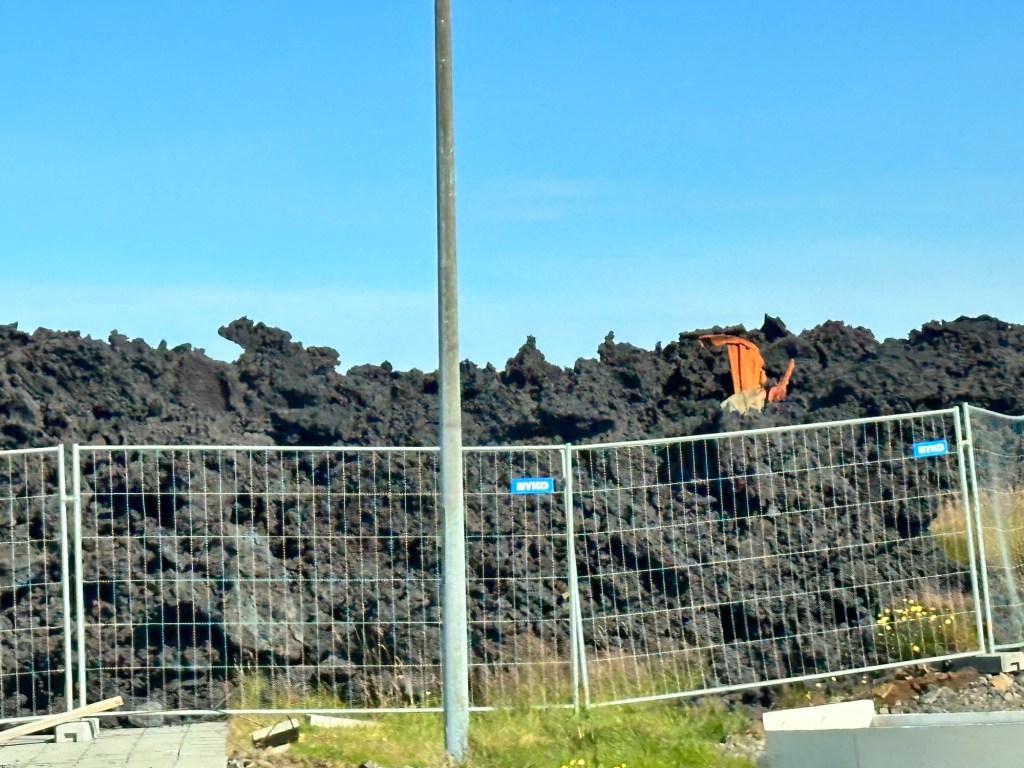
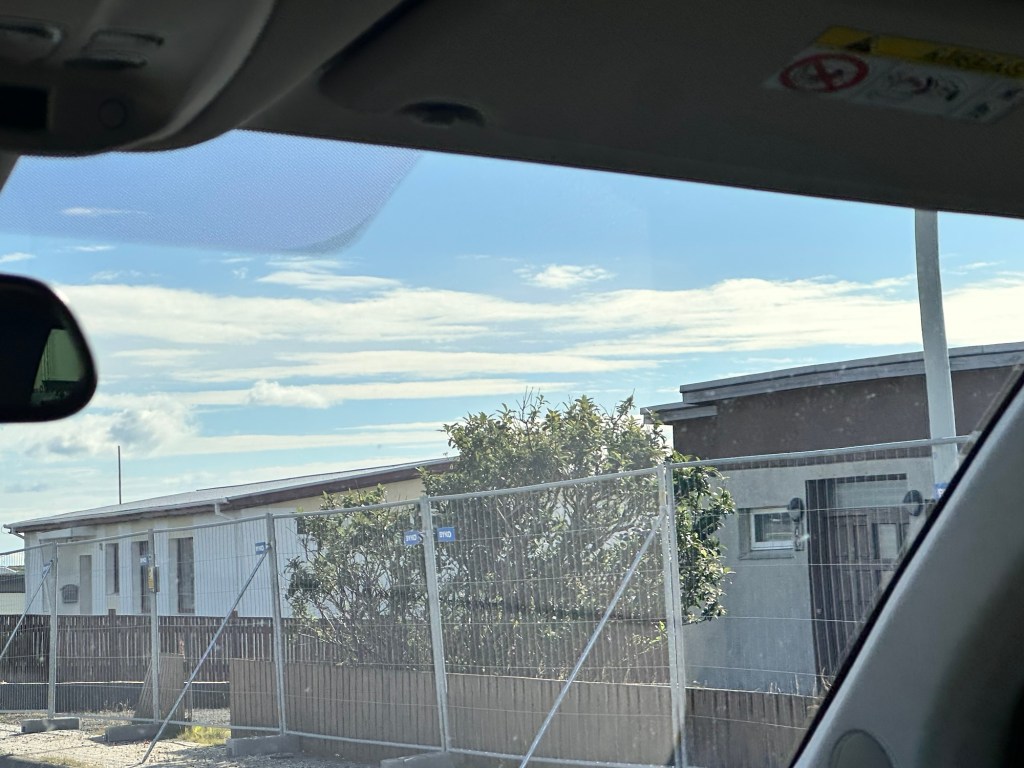
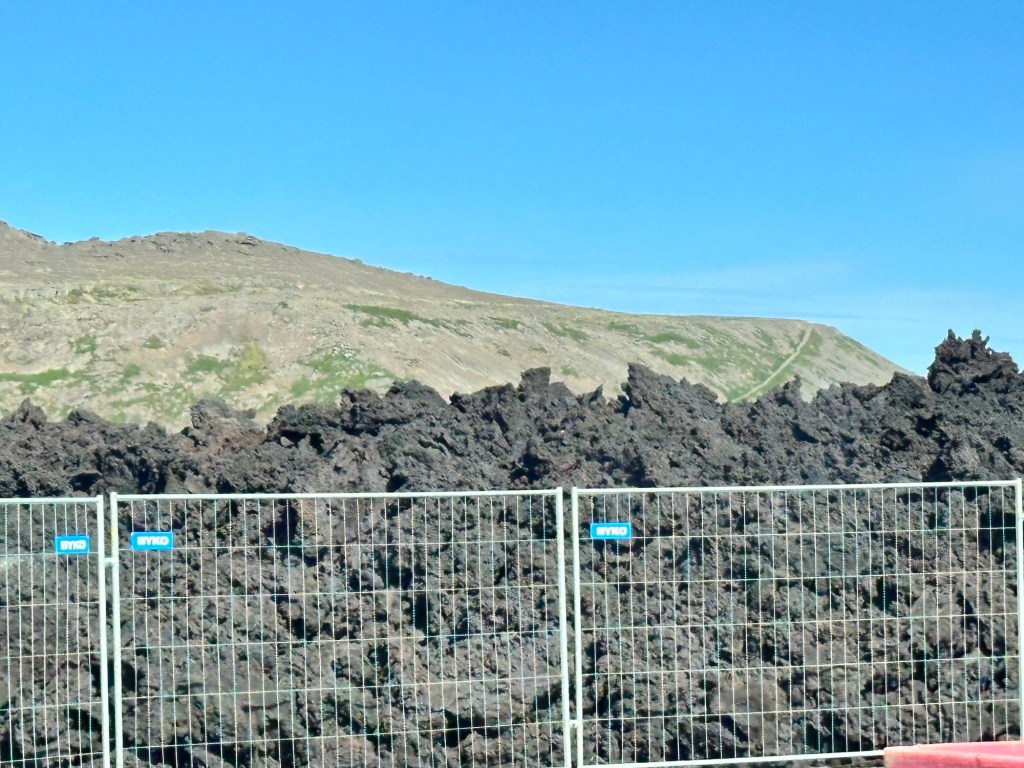

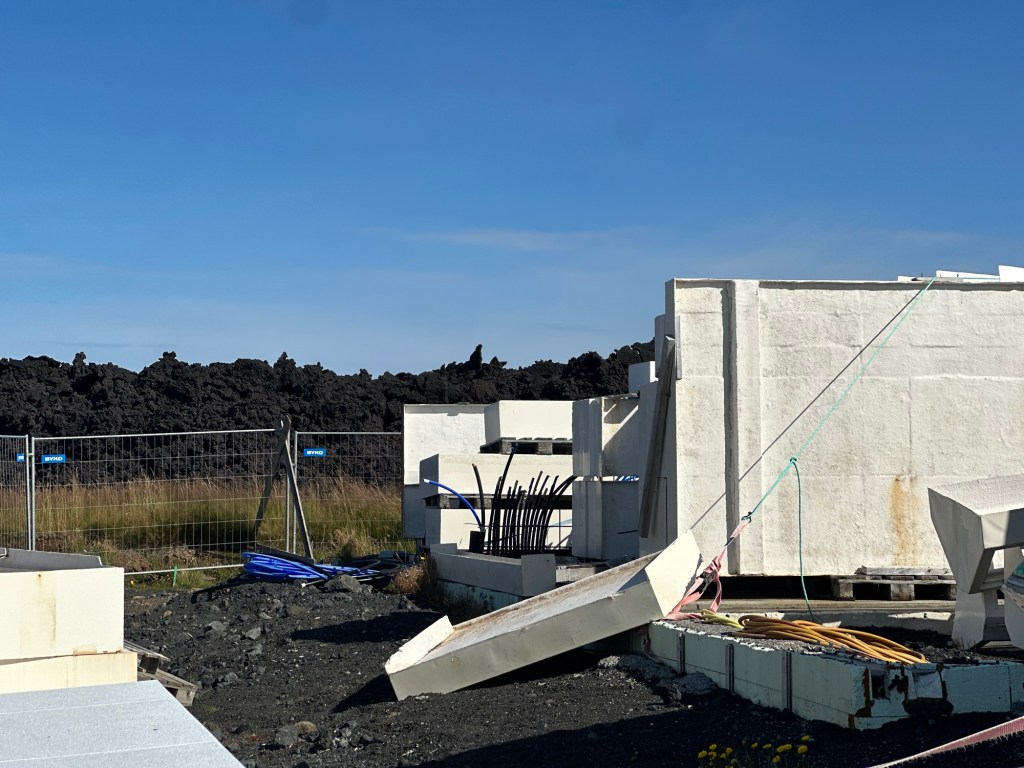
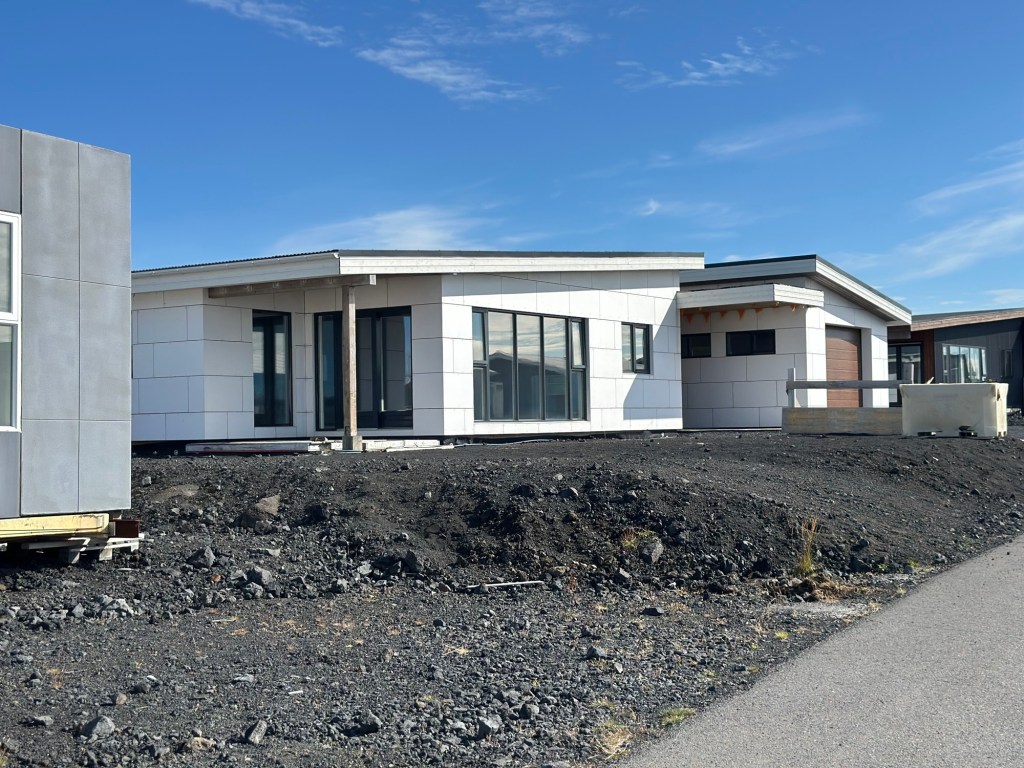
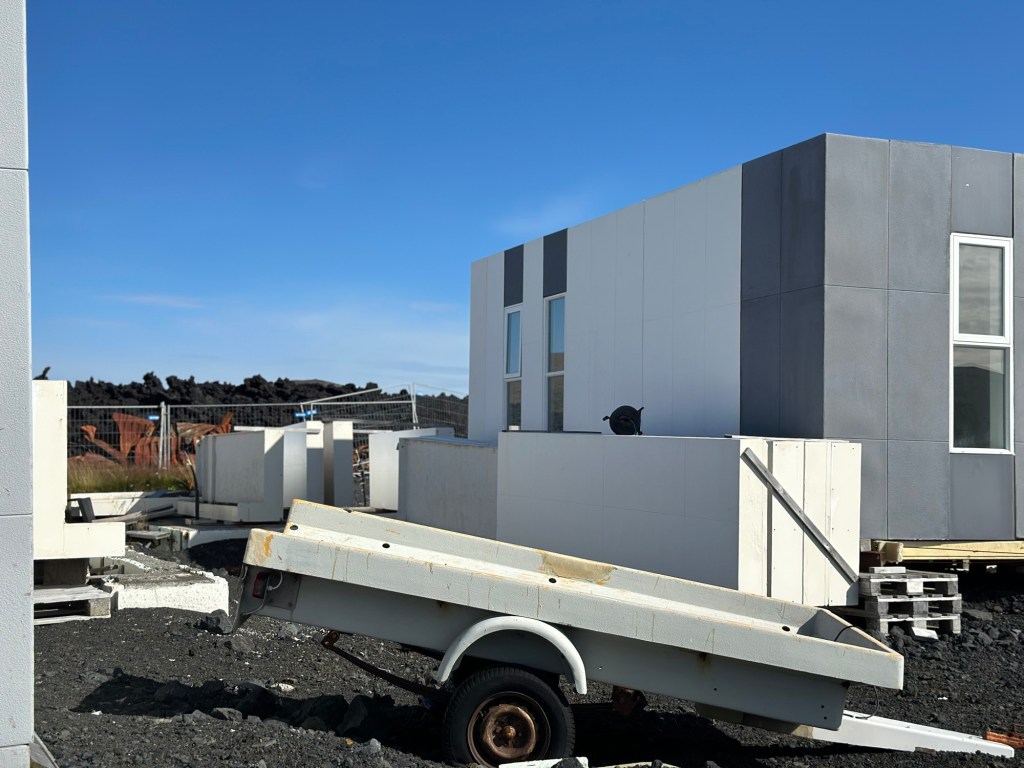
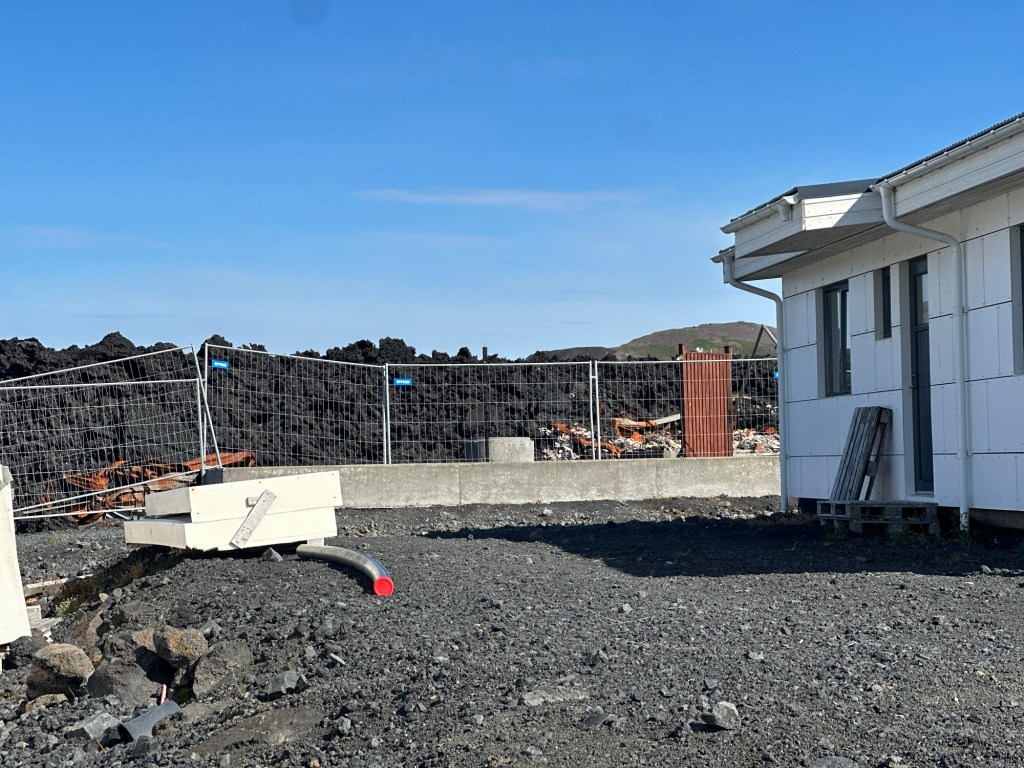
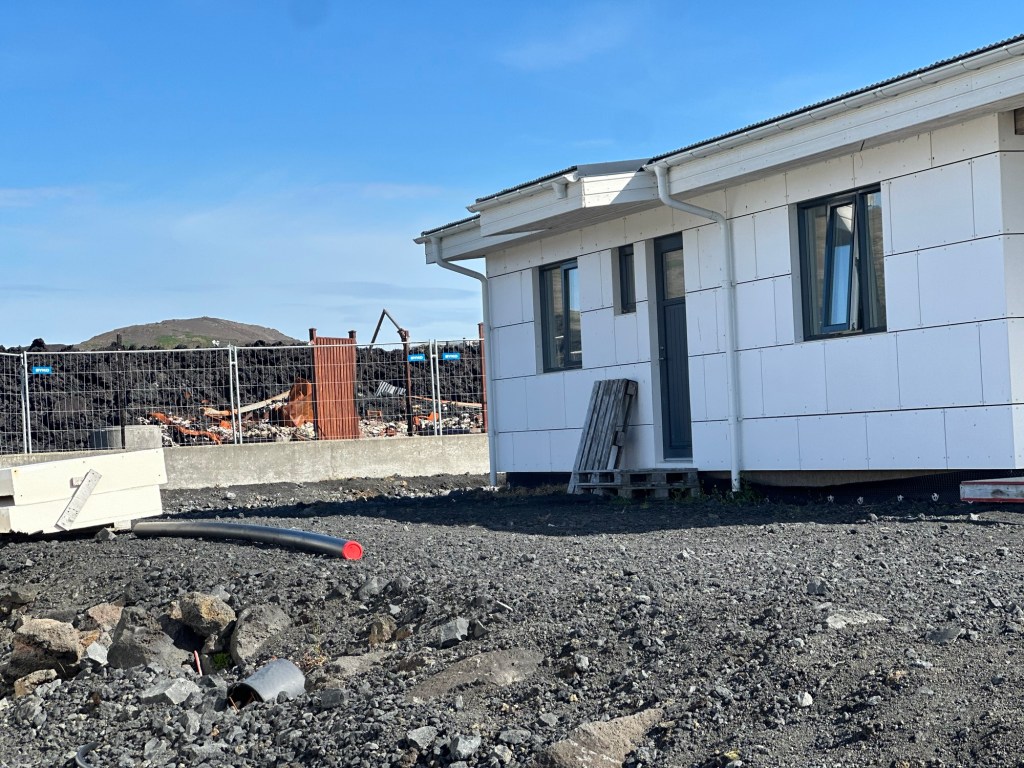
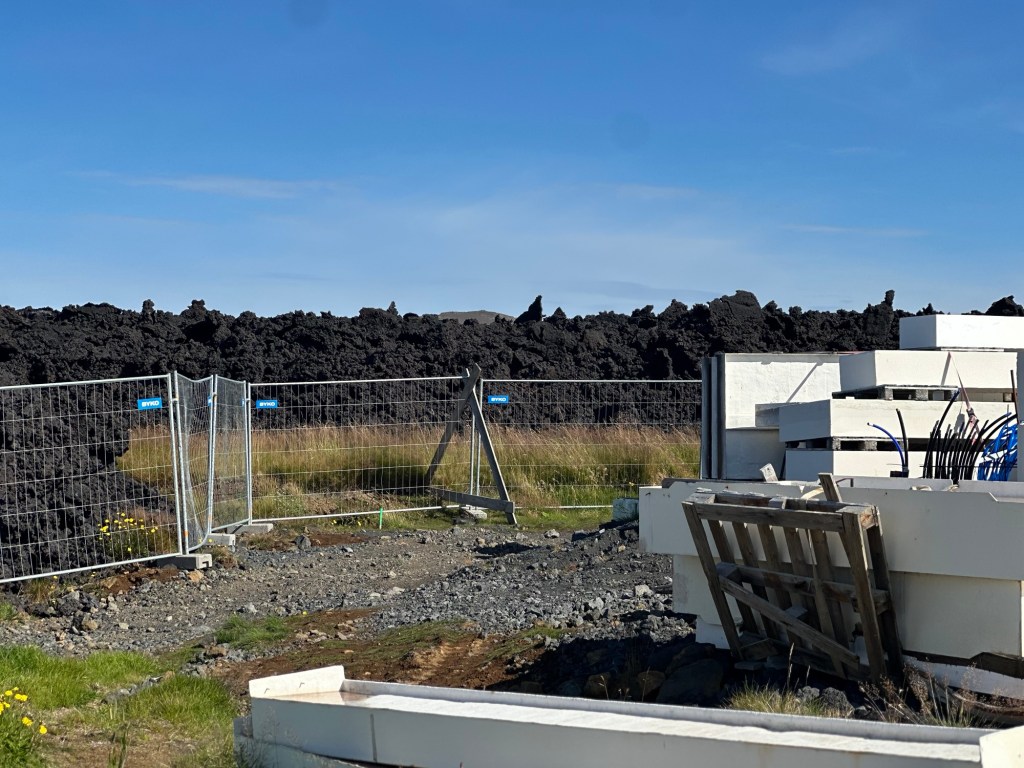
It seems that when volcanic eruptions threaten a town—Grindavik being the most recent example—the Icelandic government doesn’t mess around with half measures. Rather than rebuilding in the shadow of molten uncertainty, they simply buy out the homeowners and call it a day. It’s a very Icelandic kind of pragmatism: if lava wants your backyard, best to hand it over and start fresh somewhere else.
Brimketill
Our journey along the coast next brings us to Brimketill, a natural lava pool perched at the edge of the North Atlantic. According to legend, this was once the private bathing spot of a troll woman named Oddný.
The pool itself is stunning, carved by the sea into the jagged lava, filling and emptying with every crashing wave. On a calm day it might pass for a rugged infinity pool, but most of the time the ocean makes sure you know who’s in charge. Signs warn visitors not to get too close, and after watching the Atlantic throw its weight around, you understand why.
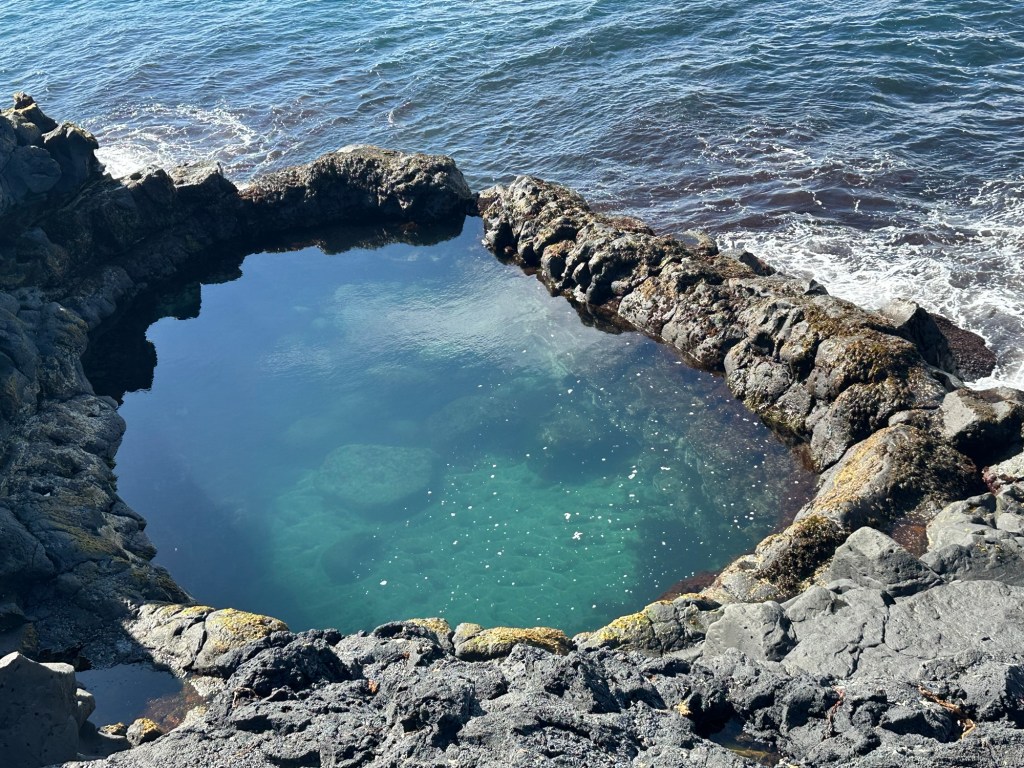
Brimketill isn’t for swimming; it’s for marveling. And true to form, Kristinn has slotted it neatly into our jam-packed farewell tour. It’s yet another reminder that in Iceland, even a quick roadside stop comes with myth, danger, and a front-row seat to nature’s most dramatic performance—before Kristinn hustles us on to the next wonder.
Gunnuhver
Our route takes us to Gunnuhver, a steaming, boiling geothermal field named after a troublesome ghost. Legend has it that Gunna, a local woman with a bad temper (and an even worse afterlife), haunted the area until a priest trapped her spirit in these very hot springs. Judging by the constant hiss and roar of the earth here, she’s still not entirely at peace.
The ground is alive—mud pots bubble, steam vents roar, and the air is thick with the sharp tang of sulfur. Wooden walkways guide you safely across the landscape, though it feels like the surface might split open at any moment. Unlike other geothermal sites in Iceland, Gunnuhver is almost theatrical: the largest mud pool in the country belches clouds of steam that rise like curtains on a stage.
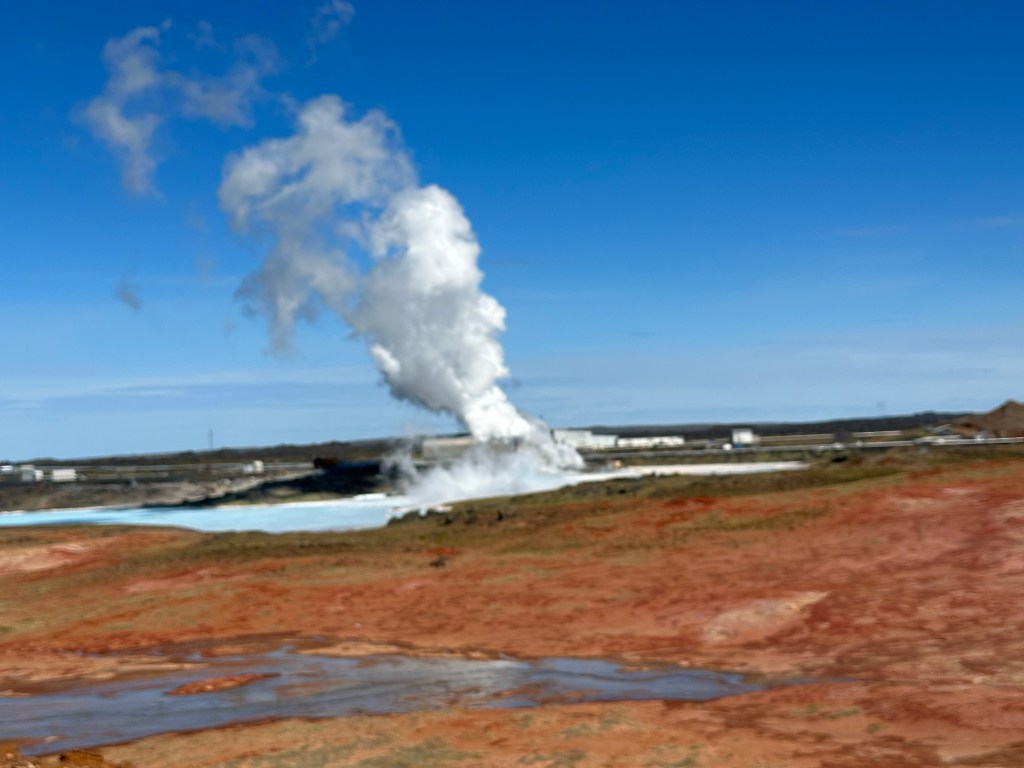
Standing here, you get the sense that Iceland’s folklore and geology are two sides of the same coin—myth and magma, both bubbling just beneath the surface.
Reykjanesta
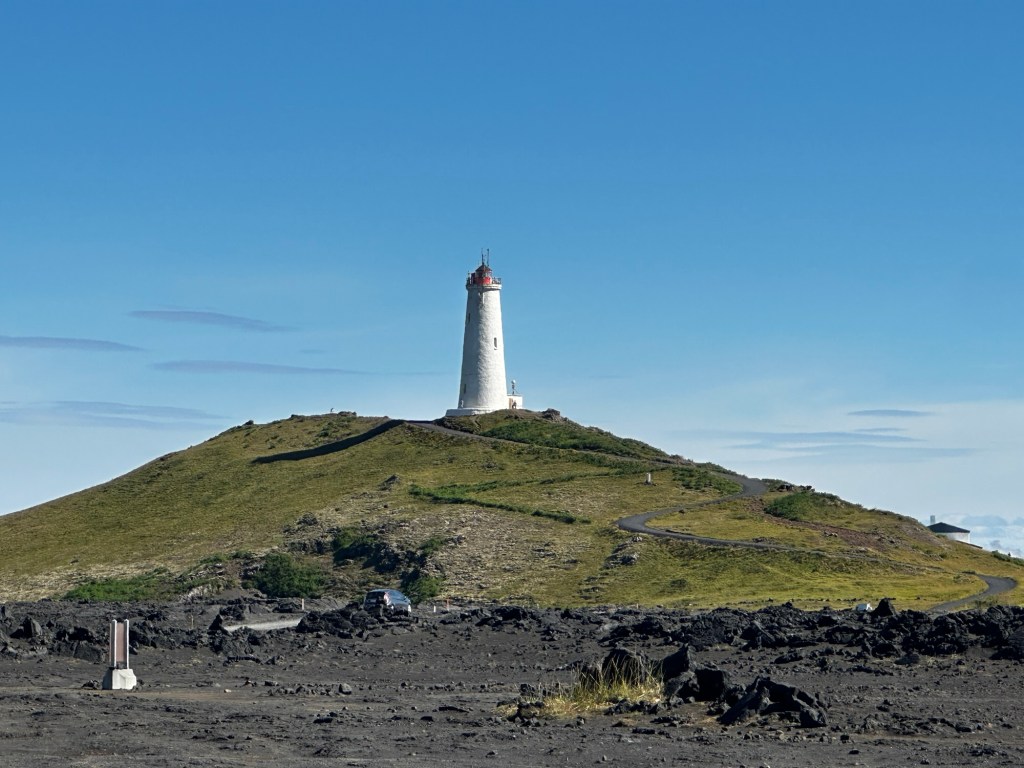
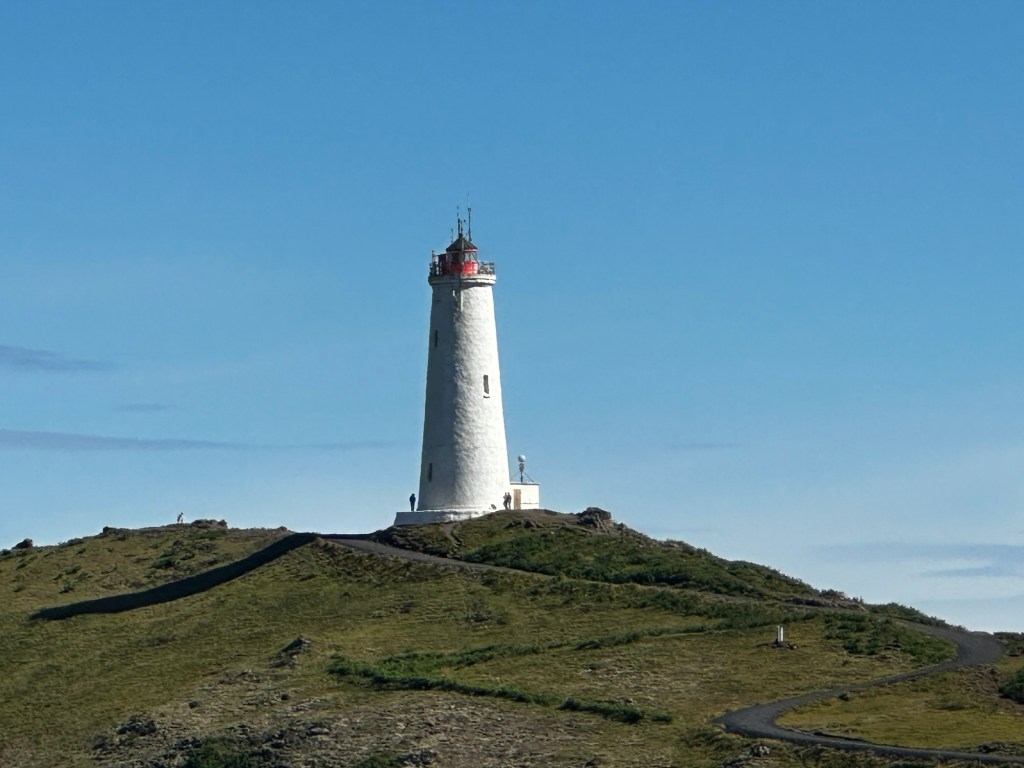
At the far southwestern tip of Iceland lies Reykjanesta, a raw edge of the earth where the Atlantic hammers ancient lava and seabirds wheel endlessly overhead. The approach feels otherworldly—black rock plains, split by winding tracks, leading straight into the sea. And then, rising above it all, the white tower of Reykjanesviti, Iceland’s oldest lighthouse, standing since 1907 as both beacon and guardian.
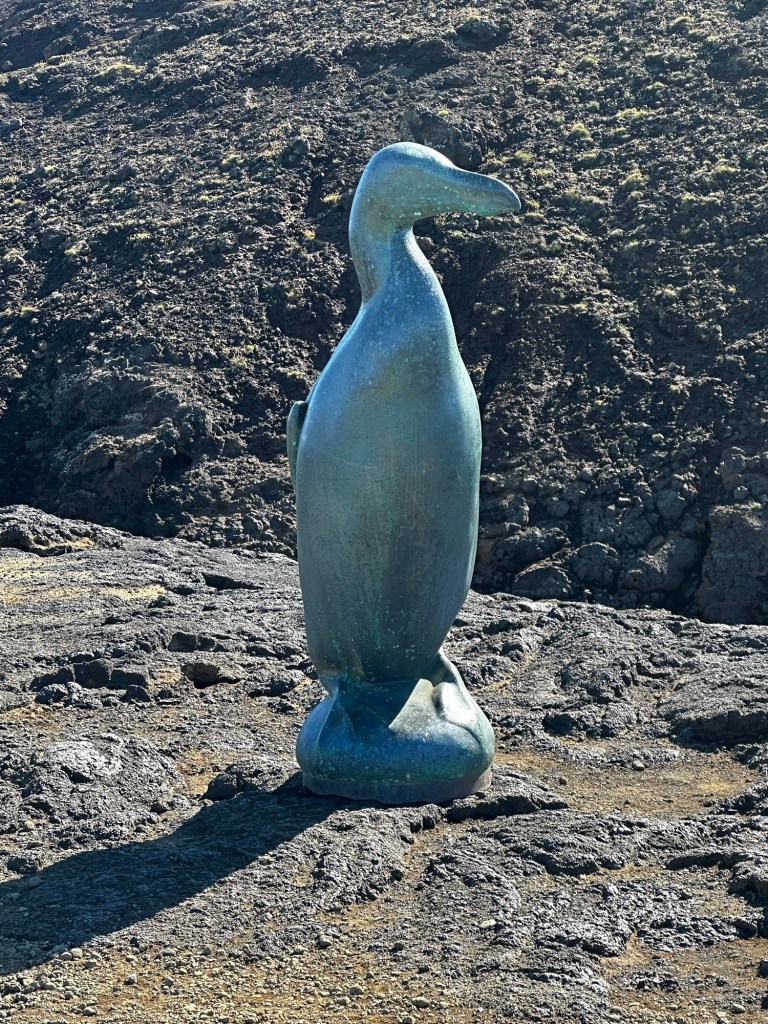
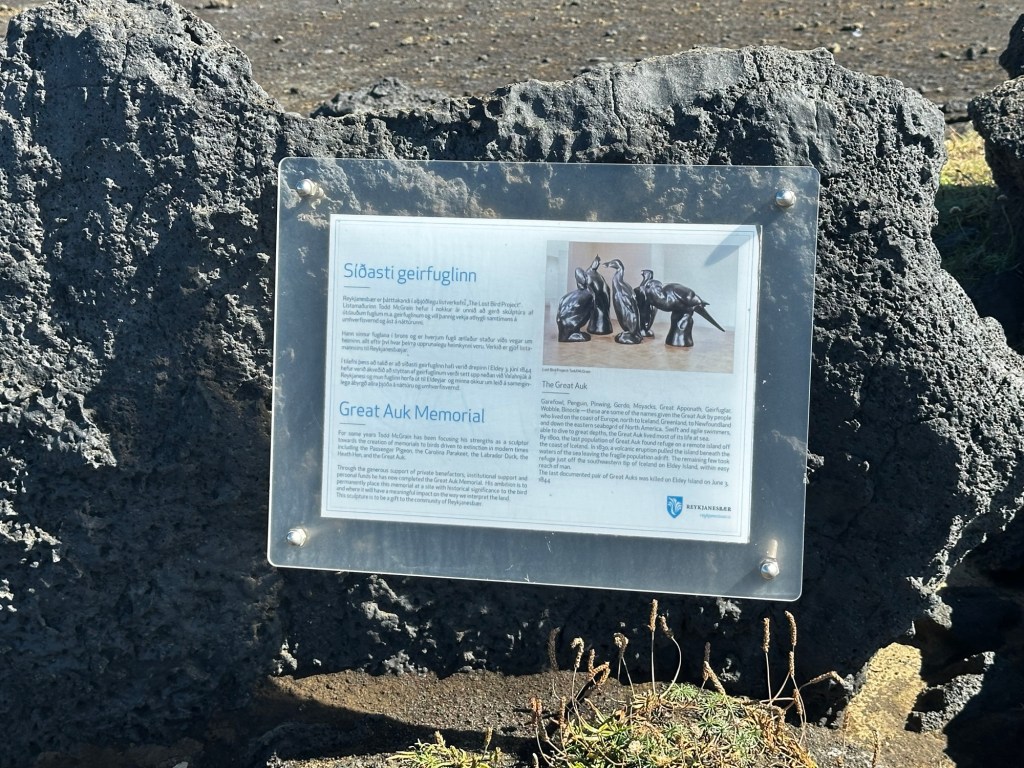
Just below, amid the lava, I stumbled upon a small bronze bird—solemn, upright, almost mournful. This is the Great Auk Memorial, a tribute to the last of a species once common in the North Atlantic. The Great Auk, flightless and penguin-like, was hunted into extinction. The final pair was killed on Eldey Island—the steep rock you see offshore—in 1844. Today, the island is alive with tens of thousands of gannets, but the statue stands as a quiet reminder of what was lost.
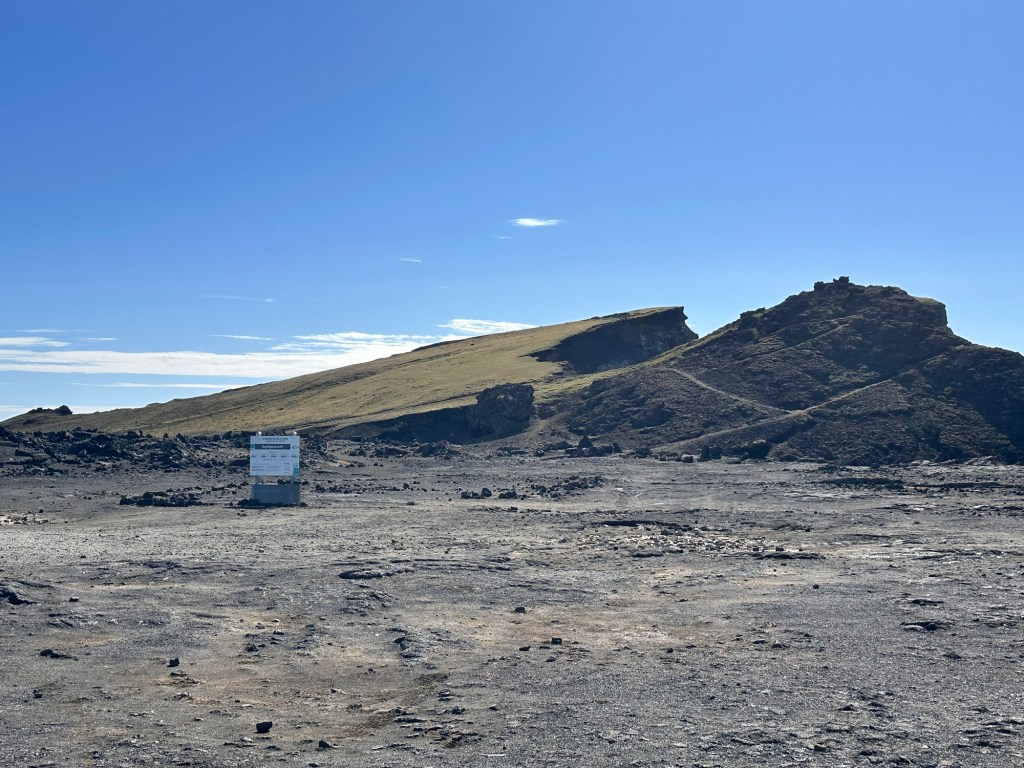

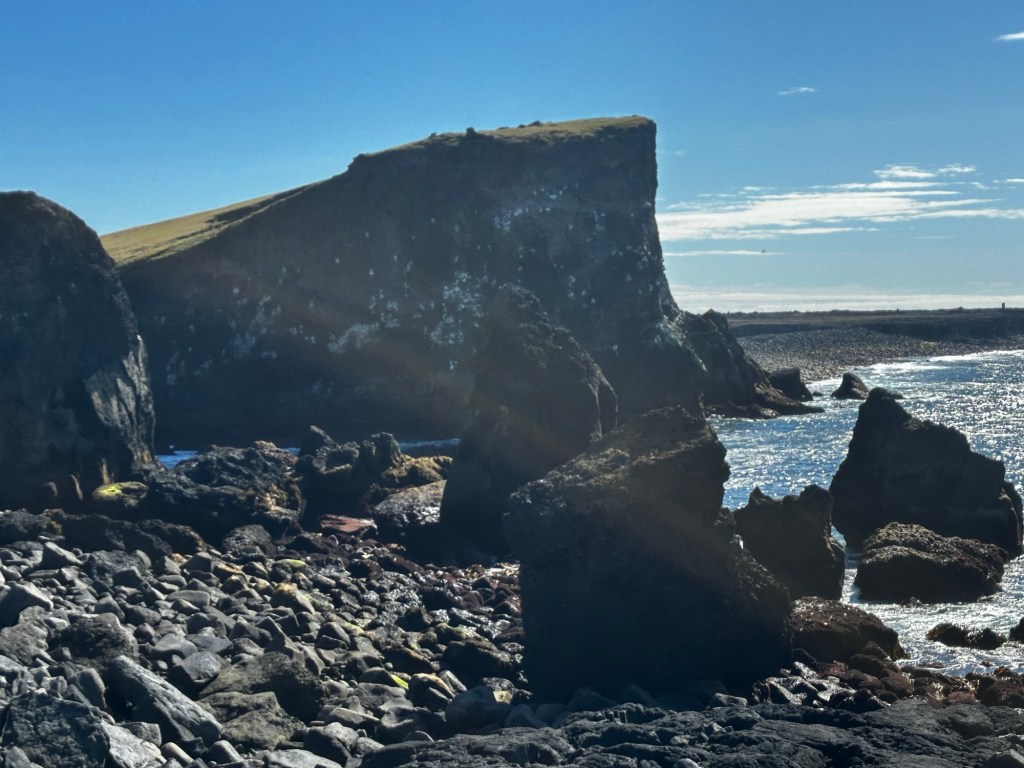

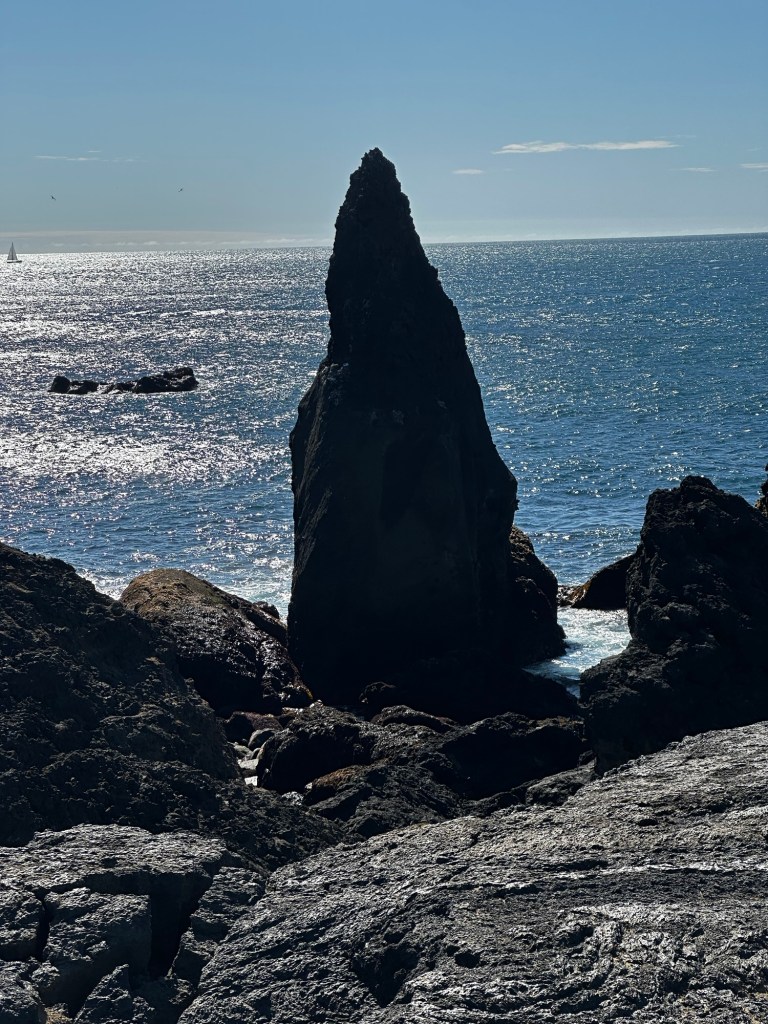
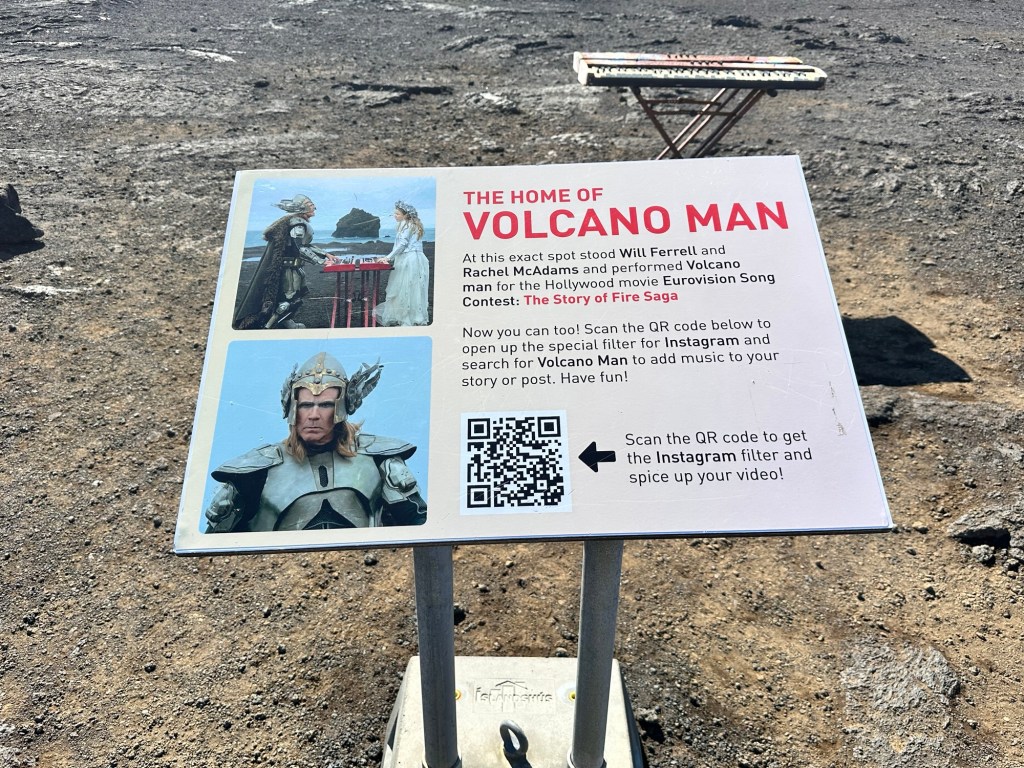
The cliffs here are dramatic, ripped by the sea into jagged stacks and arches. Waves crash, foam hisses, and spray leaps high into the air. One basalt spike juts straight from the surf like a dark spear; others crouch like sentinels along the shore. It’s no wonder filmmakers found this place irresistible—just steps from here, Will Ferrell and Rachel McAdams filmed the outrageous “Volcano Man” opening for Eurovision Song Contest: The Story of Fire Saga.
Bridge between continents
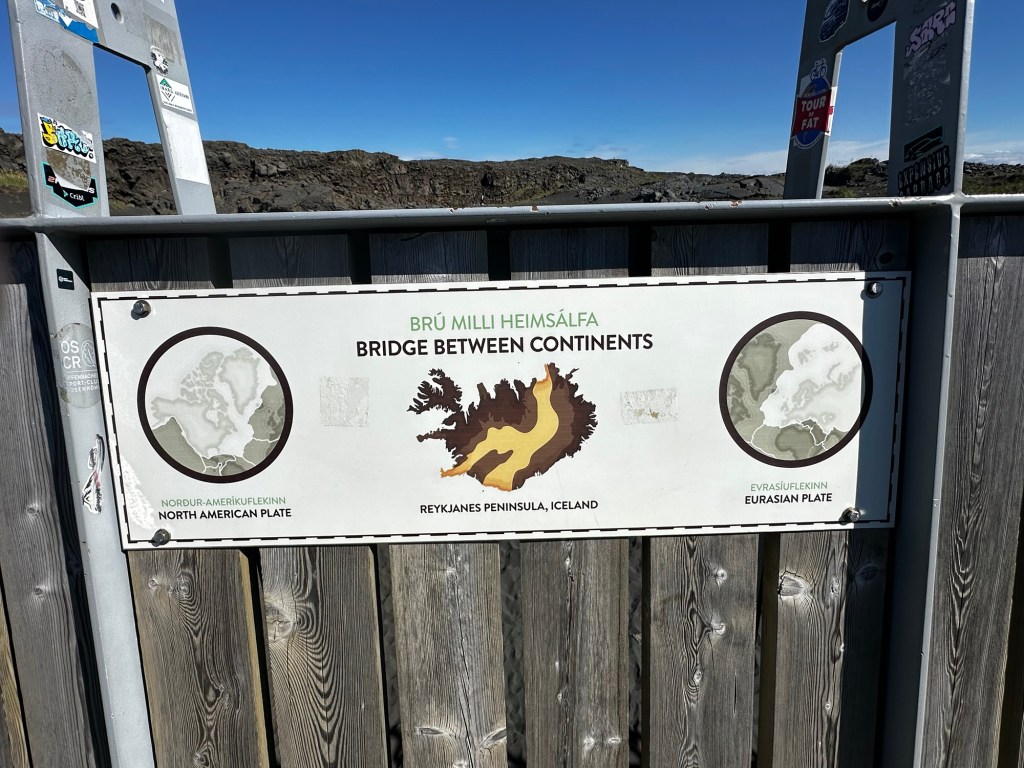
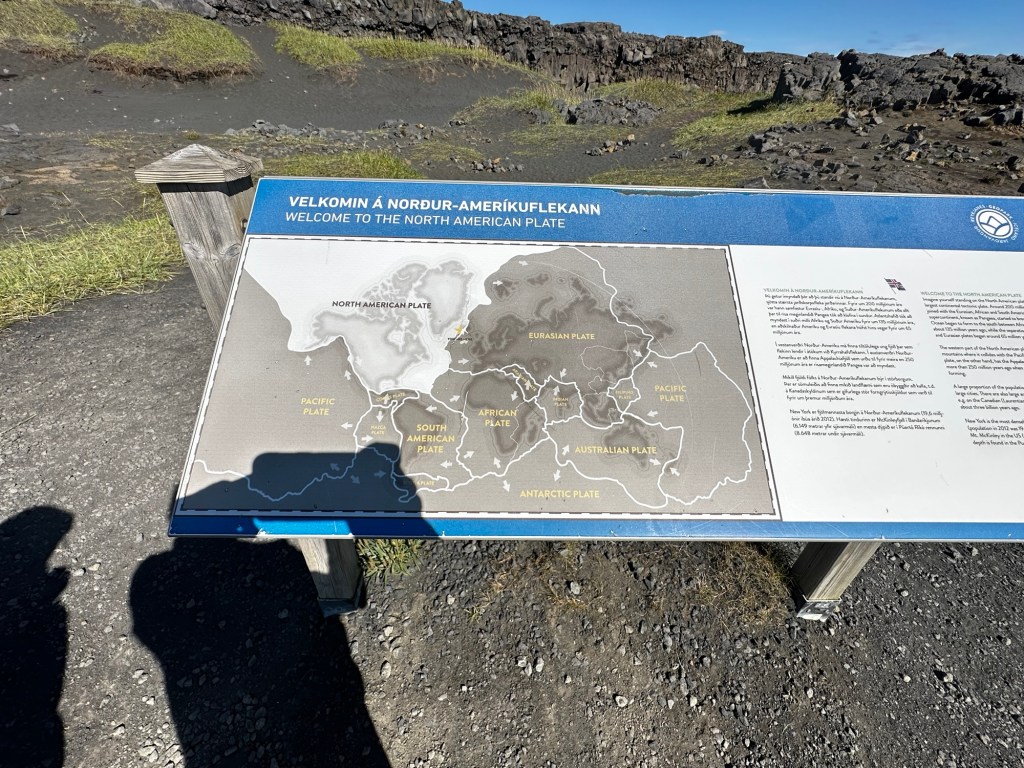
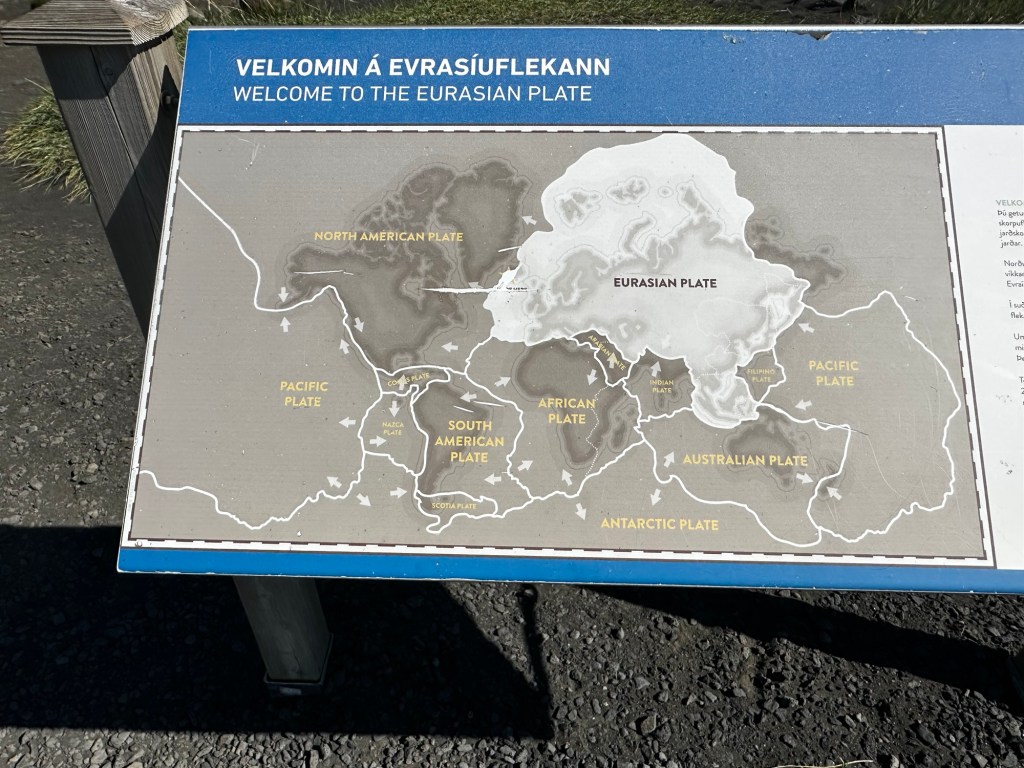
On our way across the Reykjanes Peninsula, we pulled over at what might be the strangest pedestrian crossing in the world: the Bridge Between Two Continents. Forget tolls, traffic, or GPS confusion—this bridge takes you straight from North America to Europe in about ten steps. No passport required.
Stretching over a sandy rift, the bridge spans the gap where the North American and Eurasian tectonic plates are slowly pulling away from each other—about two centimeters per year. The earth below looks raw and unsettled, like it’s still deciding which continent it belongs to.
In Icelandic, it’s called the Leif the Lucky Bridge, named after Leif Erikson, the Viking who made it all the way to North America centuries before Columbus thought to pack a lunch. Today, it’s a simple steel walkway with plaques marking each side. Still, there’s something satisfying about straddling two worlds at once, like you’ve hacked geography itself.

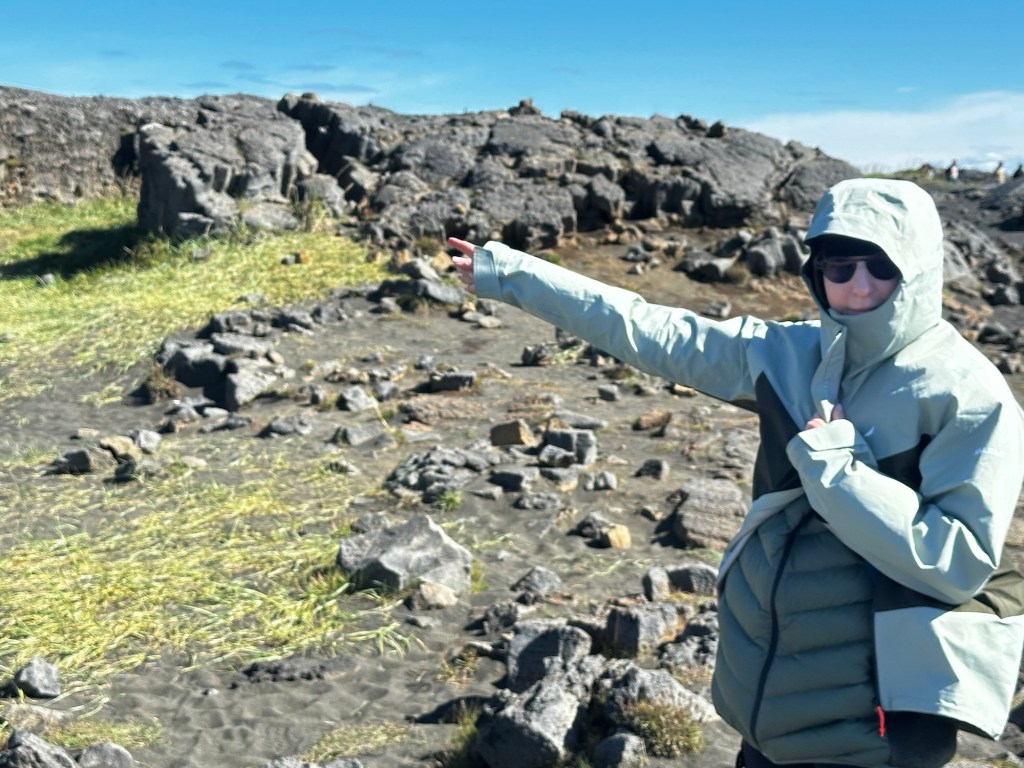

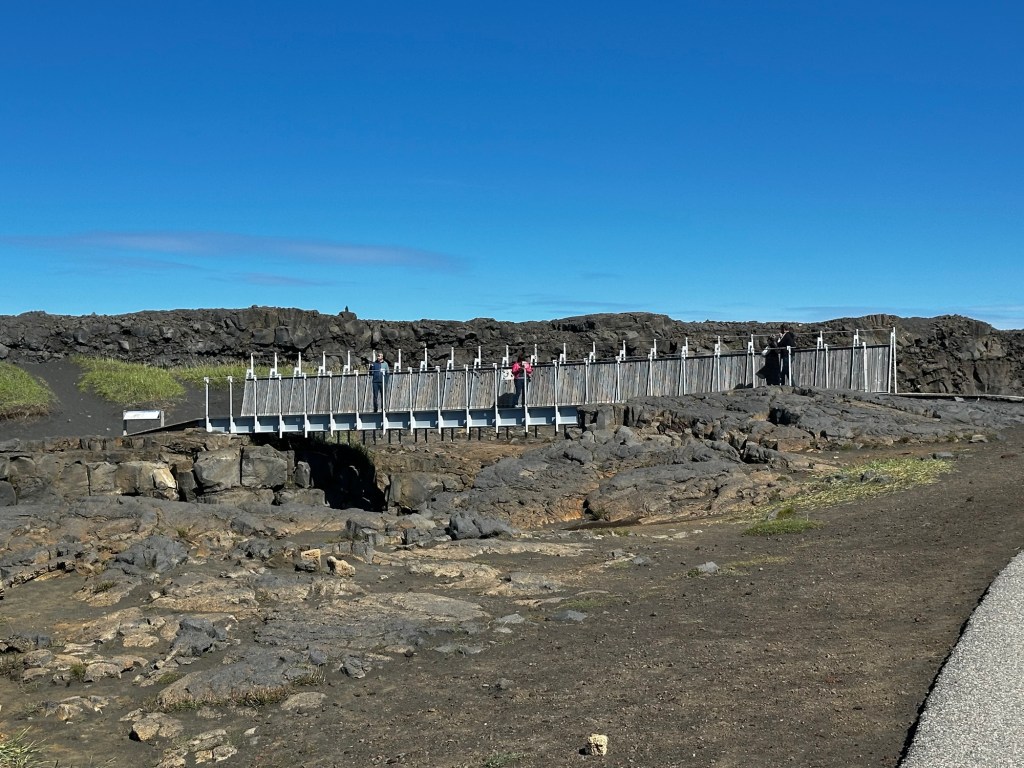
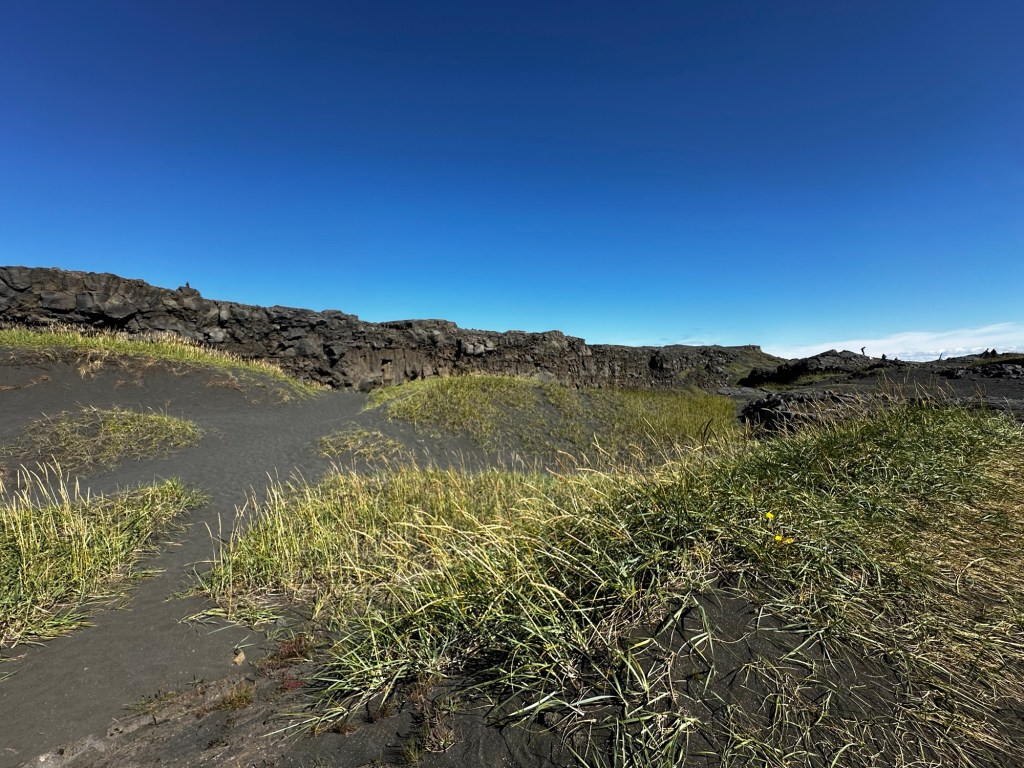
The surrounding landscape is bleakly beautiful—black lava fields, windswept sand, and a horizon that feels endless. Standing there, we couldn’t help but laugh: after weeks of leaping over streams, climbing volcanoes, and trekking through lava tubes, the easiest continental crossing of all was right here, a five-second stroll.
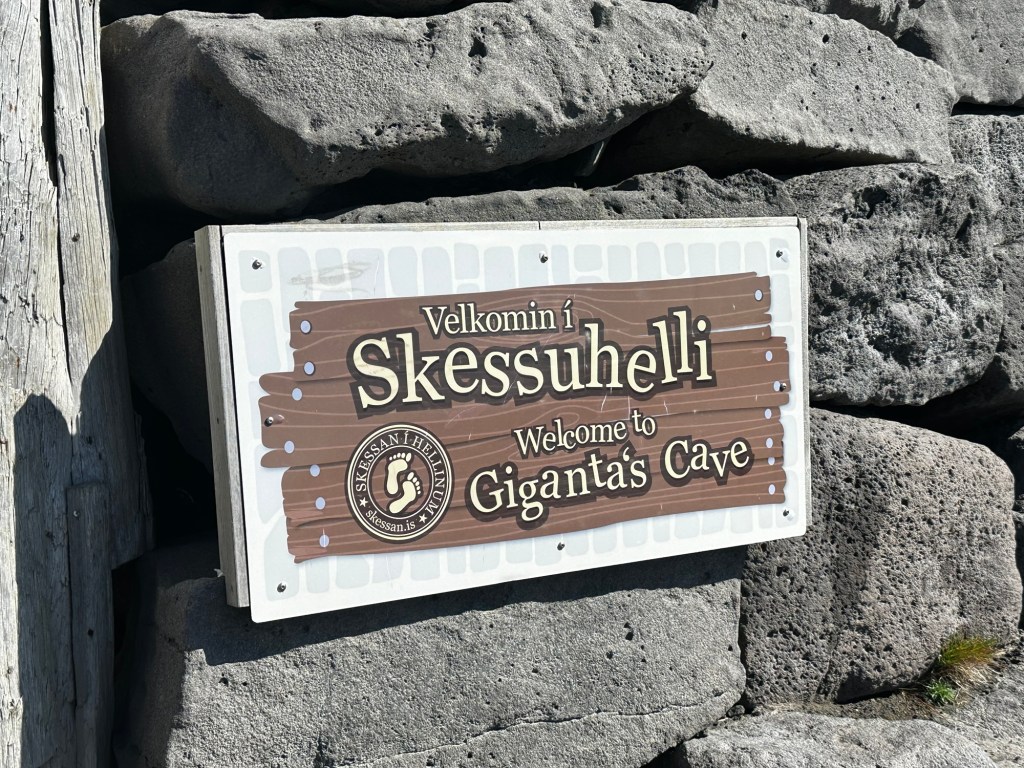
Skessuhelli the Giant’s Cave
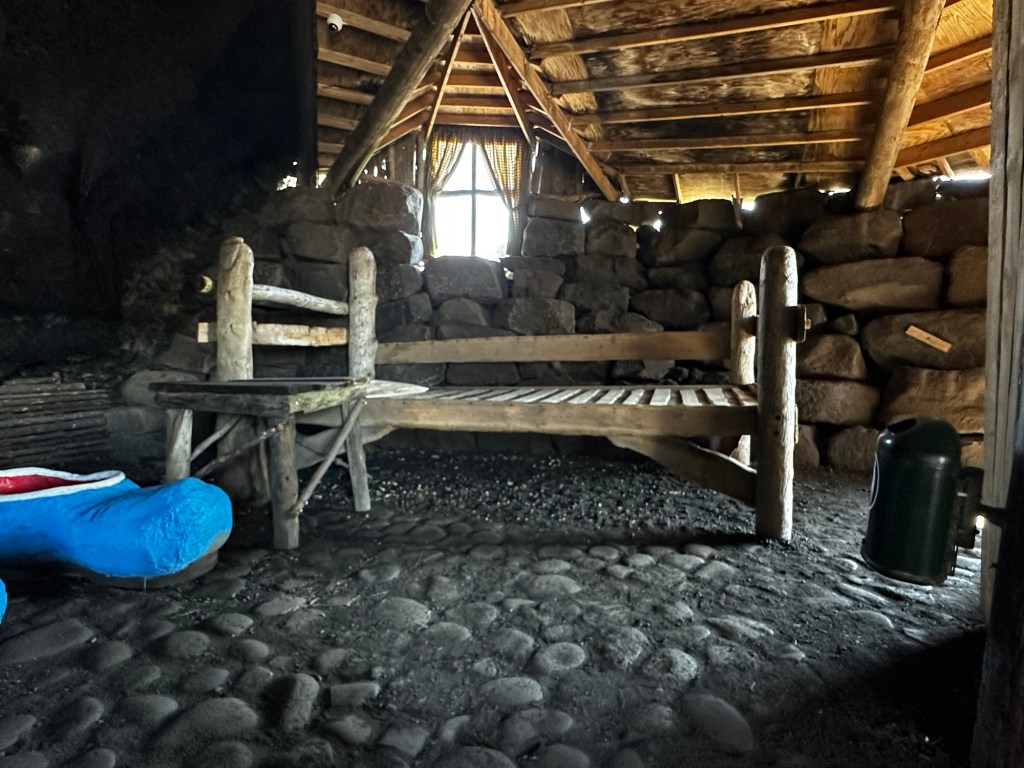
After days of chasing waterfalls, climbing volcanoes, and trying not to slip into glacial rivers, we finally met the most intimidating creature of our trip: the Giantess of Keflavik.
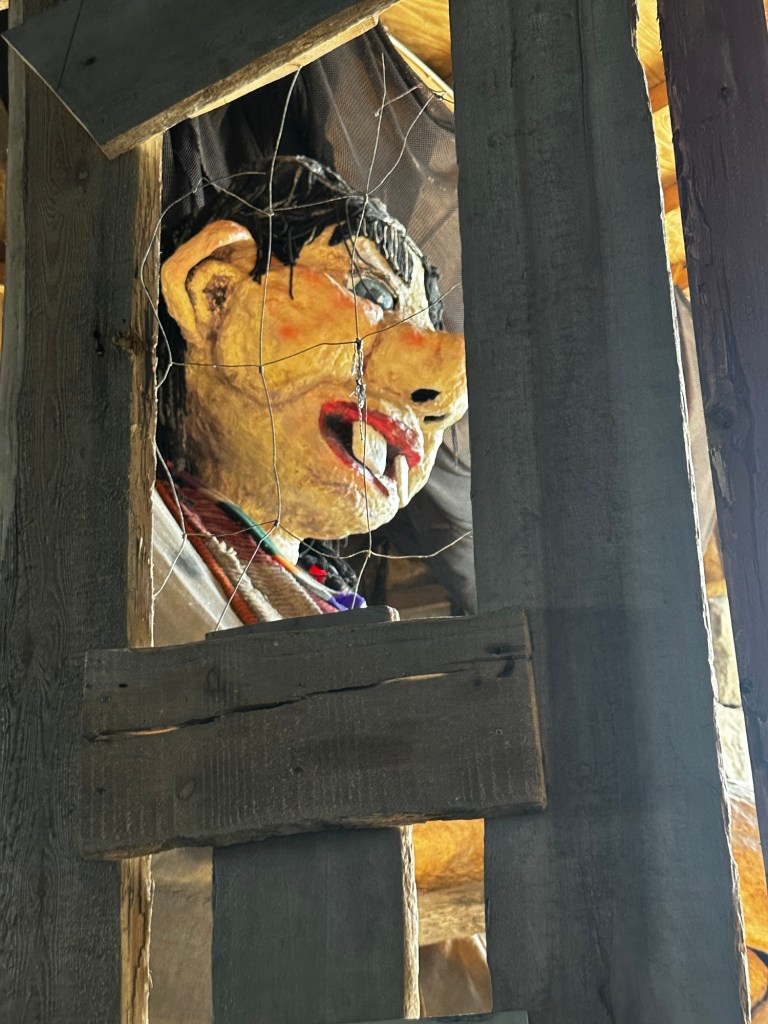
She lives in a cave down by the harbor, and let me tell you, she’s not the chatty type. We walked in and there she was—enormous, wild-haired, and snoring like a freight train. Apparently, she retired from terrorizing children and now spends her golden years napping in a rocking chair. Not a bad gig.
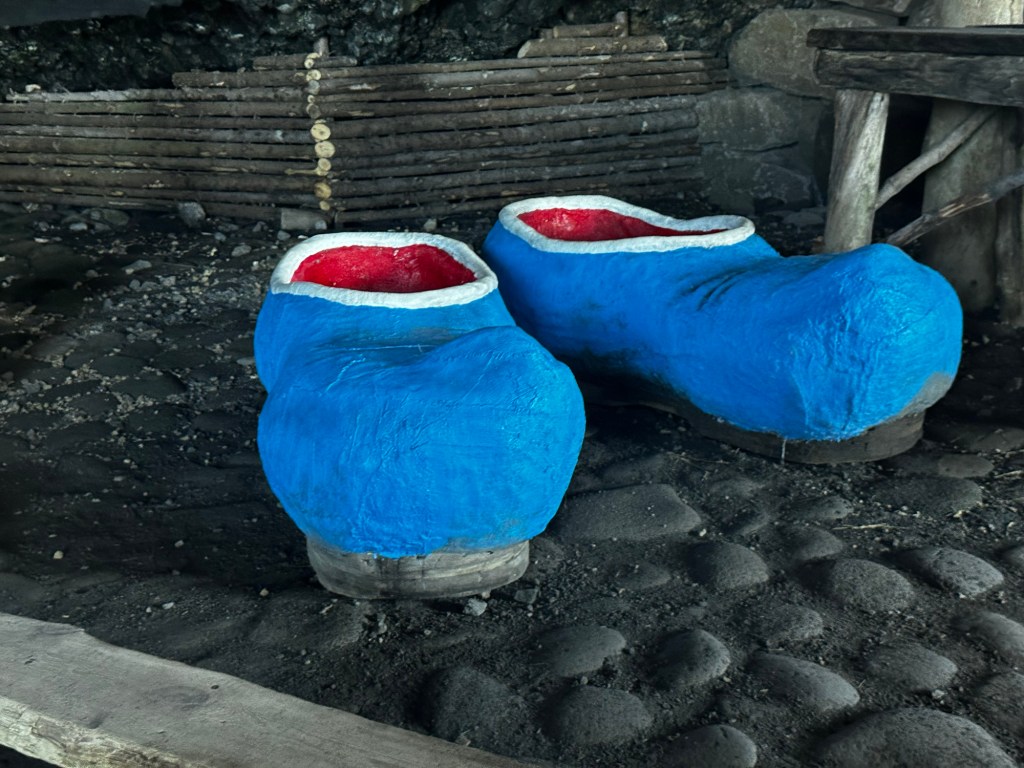
The cave is cluttered with her things—oversized shoes, pots, pans, and what I can only assume is a week’s worth of stew simmering for one giant appetite. Every so often she lets out a snort loud enough to rattle the walls, reminding us that if she wakes up in a bad mood, the all-you-can-eat buffet might be us.
Tourist attraction? Folk tale? Icelandic inside joke? Who knows. But one thing’s for sure: after visiting Skessuhellir, we no longer fear volcanoes, rogue waves, or customs officers. The only true danger in Iceland is a giantess with insomnia.


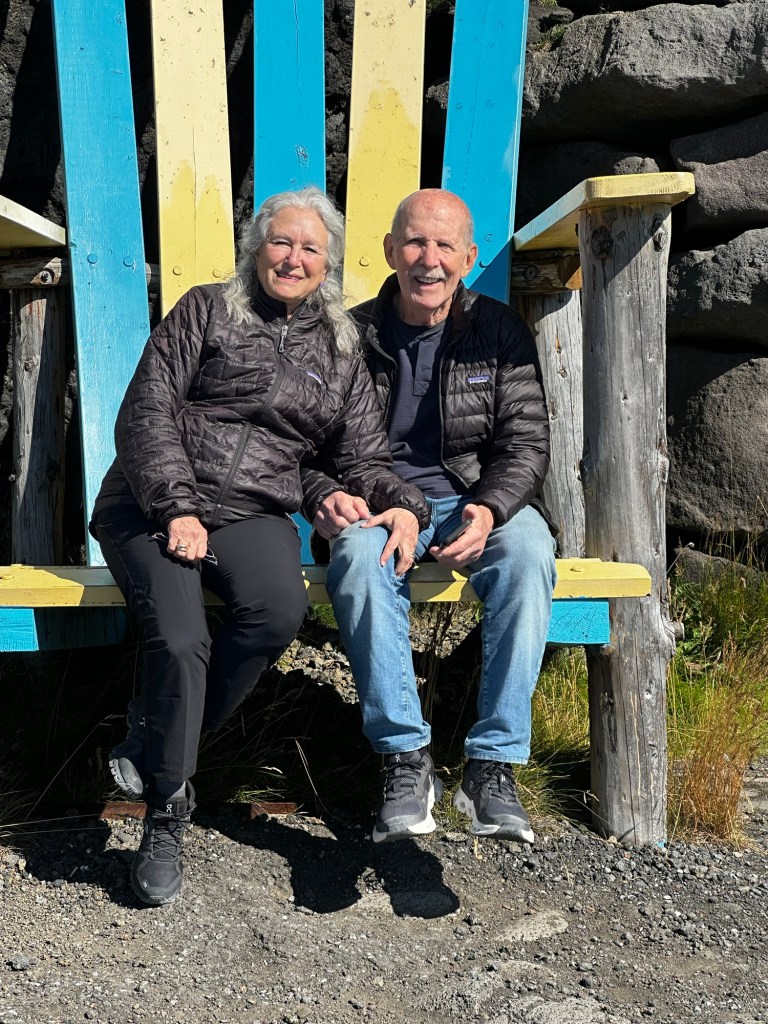
These two lovers decided to enjoy a moment in her chair.
At last, it was my turn to say goodbye—to Iceland, to Kristinn, and to Absorb Iceland. Each had shaped this journey in its own way: Iceland with its raw beauty and restless geology, Kristinn with his humor, patience, and unshakable good sense, and Absorb Iceland with its knack for turning a trip into a story worth telling. From the first steps in Reykjavik to the windswept lava fields and glacier-fed rivers, every moment felt like a gift. We leave with full memories, a touch of volcanic grit in our shoes, and gratitude that this land and its people welcomed us so completely.


After an uneventful flight home, we were met by this stone-faced lady. She didn’t crack a smile, didn’t offer us a ride, and certainly didn’t guide us anywhere. Instead, she unleashed her customs agents on us, who dove into our luggage with the enthusiasm of puffins at a herring buffet.
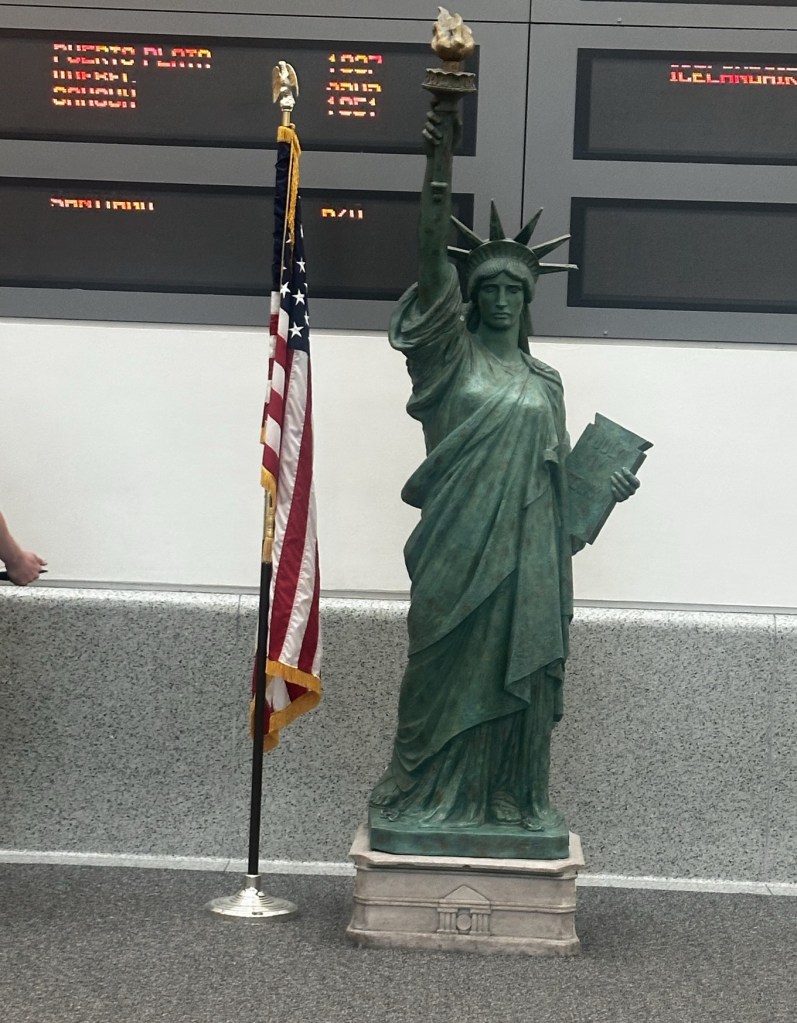
Of course, they found nothing—unless you count a few stray lava rocks, the lingering scent of geothermal sulfur woven into our clothes, lots of chocolate and a stuffed puffin tucked away for my granddaughter.

 YouDontKnowJackTravels