
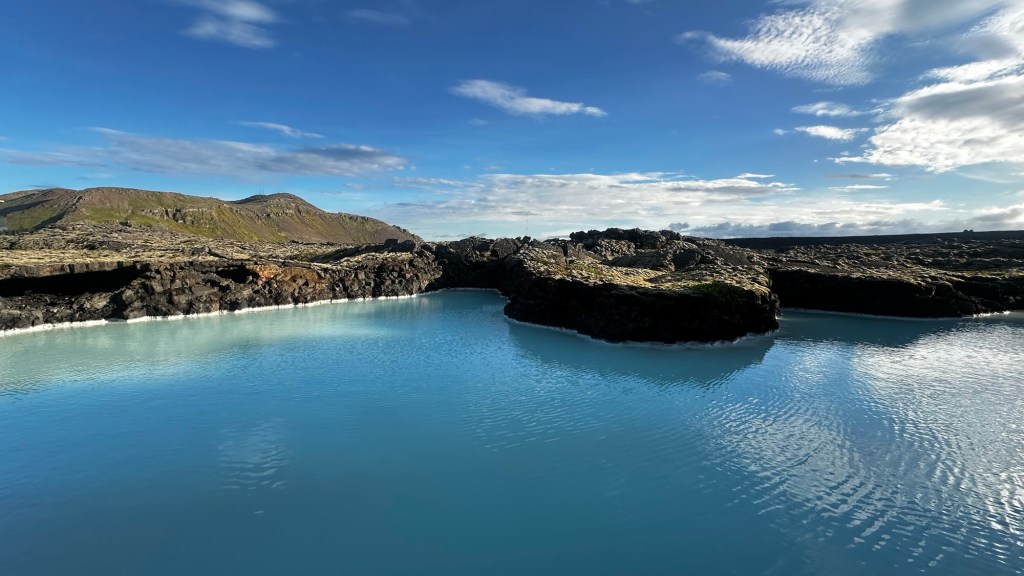
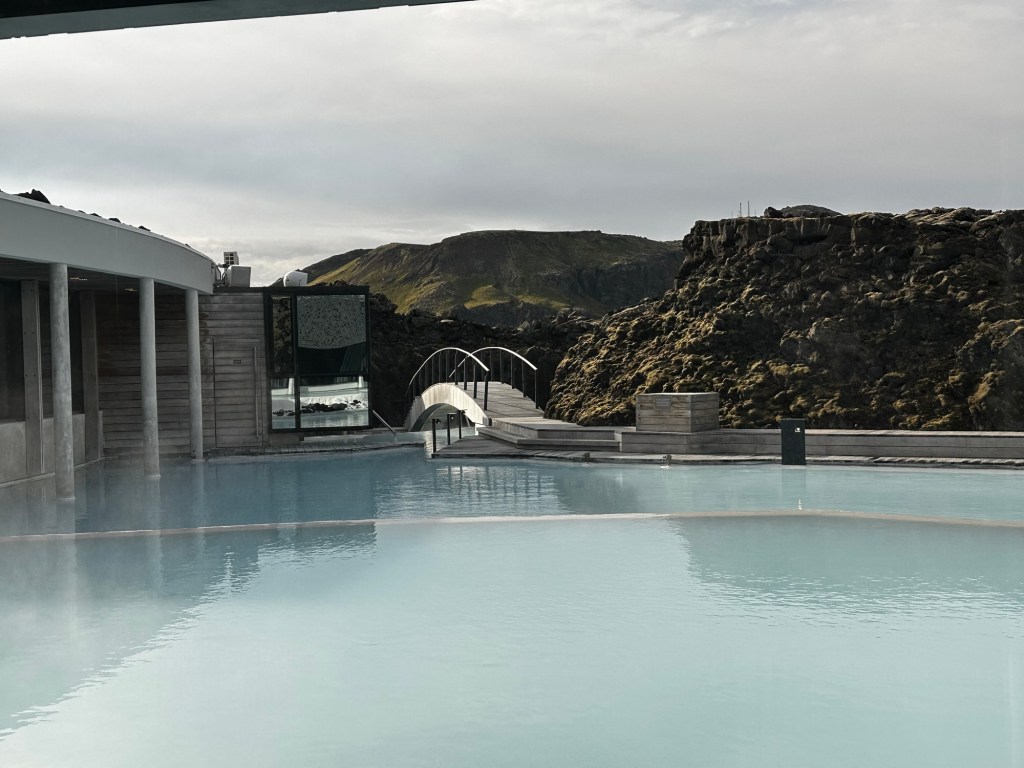
The Retreat Hotel at the Blue Lagoon feels less like a place you check into and more like a place you dissolve into. Tucked into a lava field, its low, glass-lined buildings blend seamlessly with the surrounding black rock, steaming milky-blue waters curling right up to the terraces.
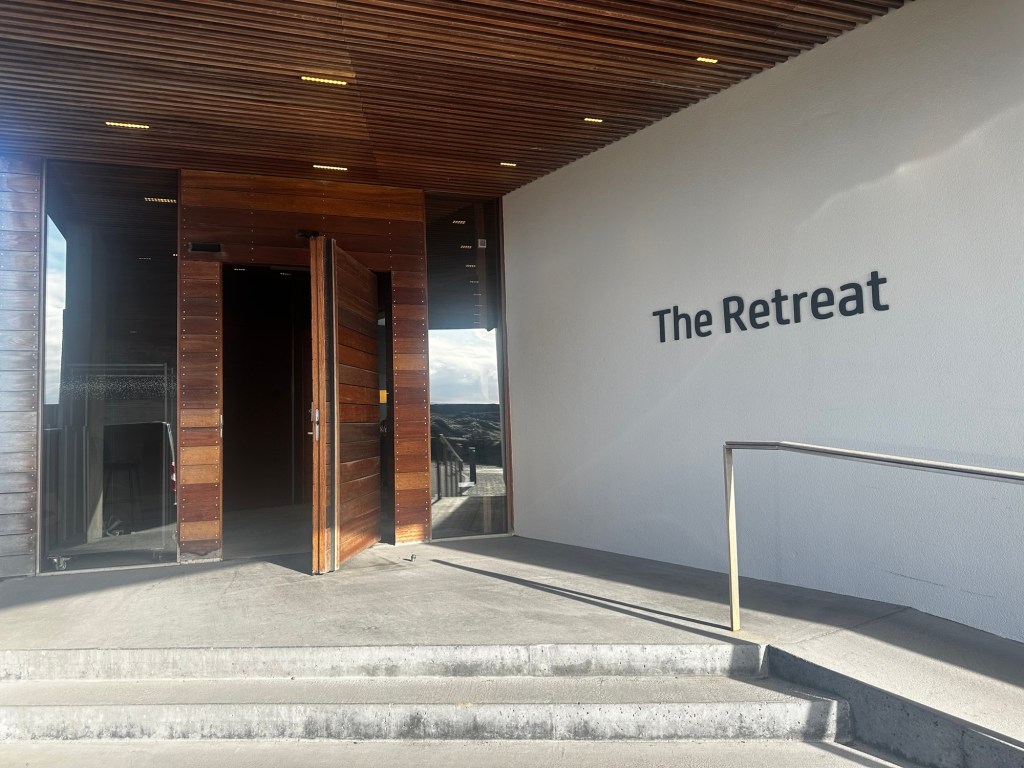

Recently, nearby Sundhnúkur volcano erupted, with lava flowing into one of the parking lots and access roads, causing a temporary route to be constructed. Not unusual here as there have been 12 eruptions since 2021. You come to learn that Icelanders simply shrug these things off.
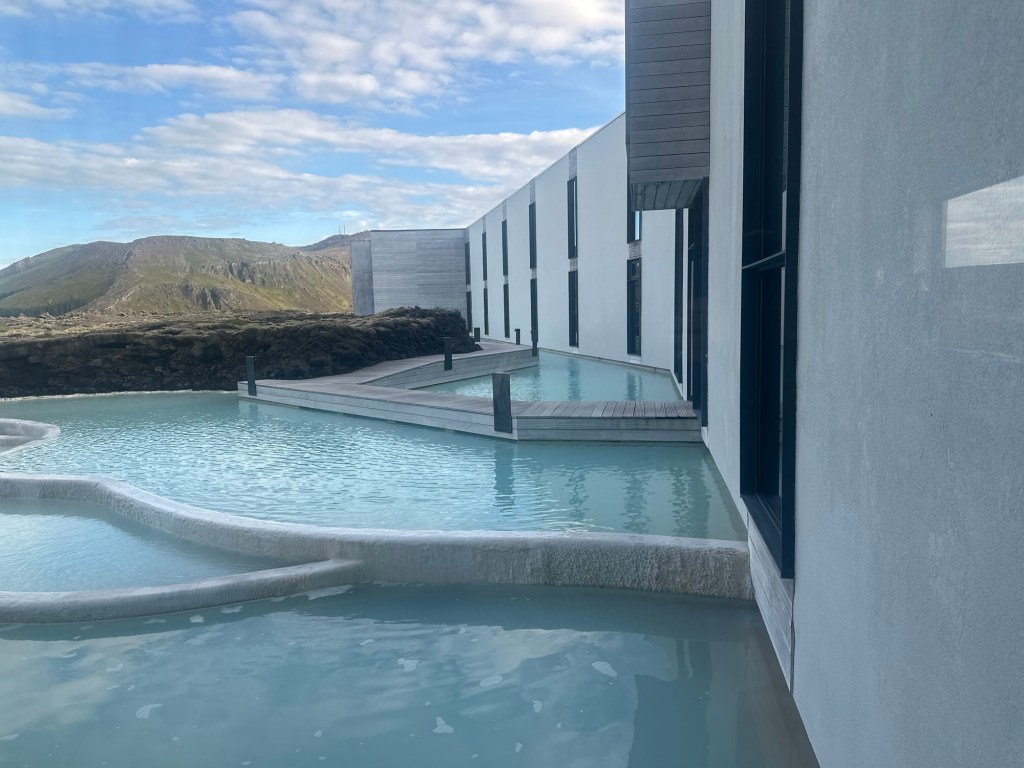


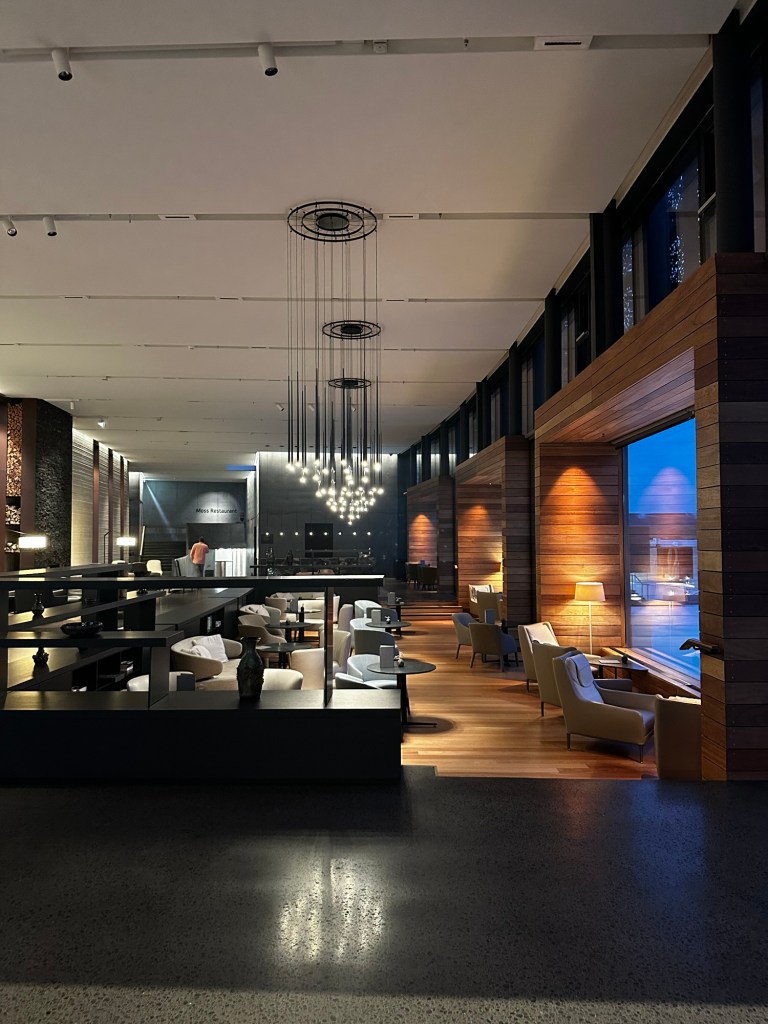
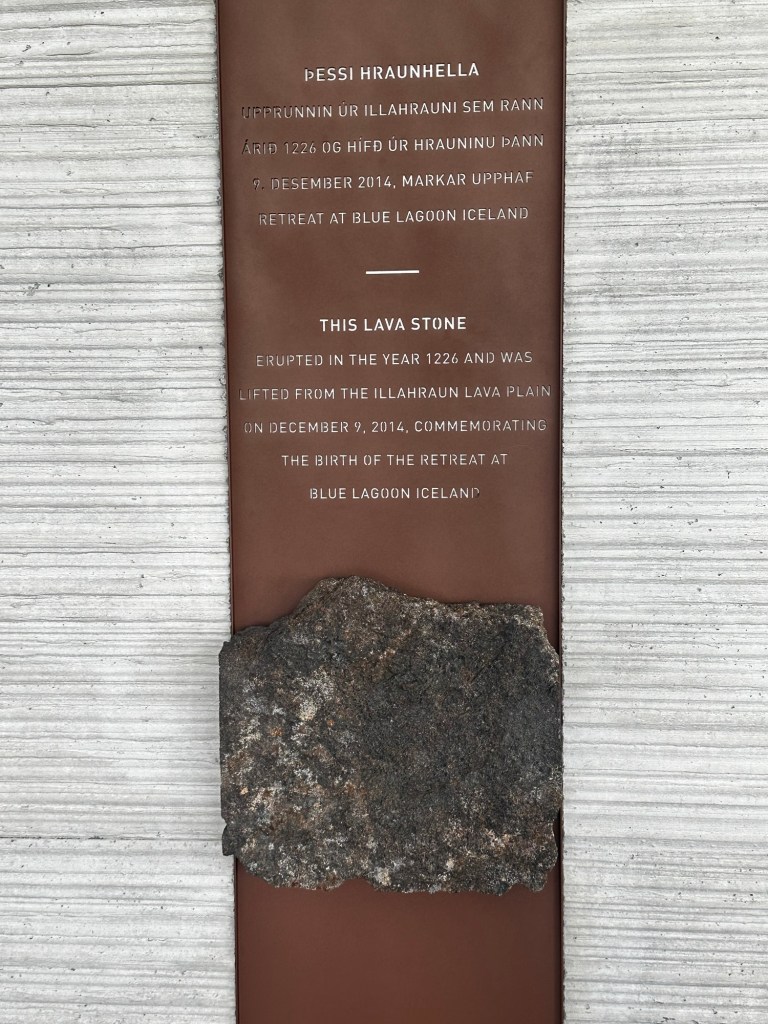
Inside, the design is pure Icelandic minimalism — stone, wood, and soft earth tones — warmed by flickering fireplaces and walls of glass that frame the ever-shifting sky. Guests slip from suites into the private lagoon, a network of quiet, mineral-rich pools sheltered from the main crowds of the Blue Lagoon. The spa is carved directly into the lava, with candlelit corridors, secluded soaking chambers, and the signature silica, algae, and mineral treatments drawn from the lagoon itself. The hotel is also home to two exceptional restaurants — Lava and Moss — which I’ll dive into in greater detail later. Here, the only soundtrack is the whisper of water, the rustle of robes, and the occasional sigh of someone who has truly let the outside world go.
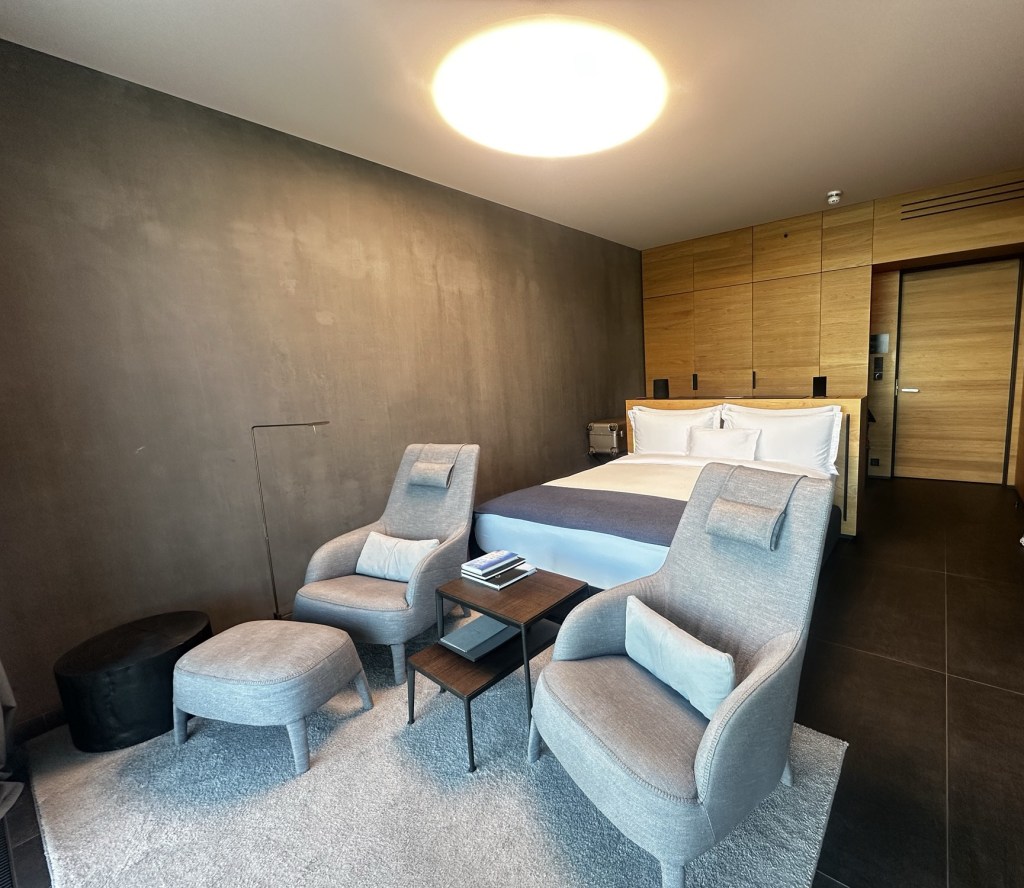
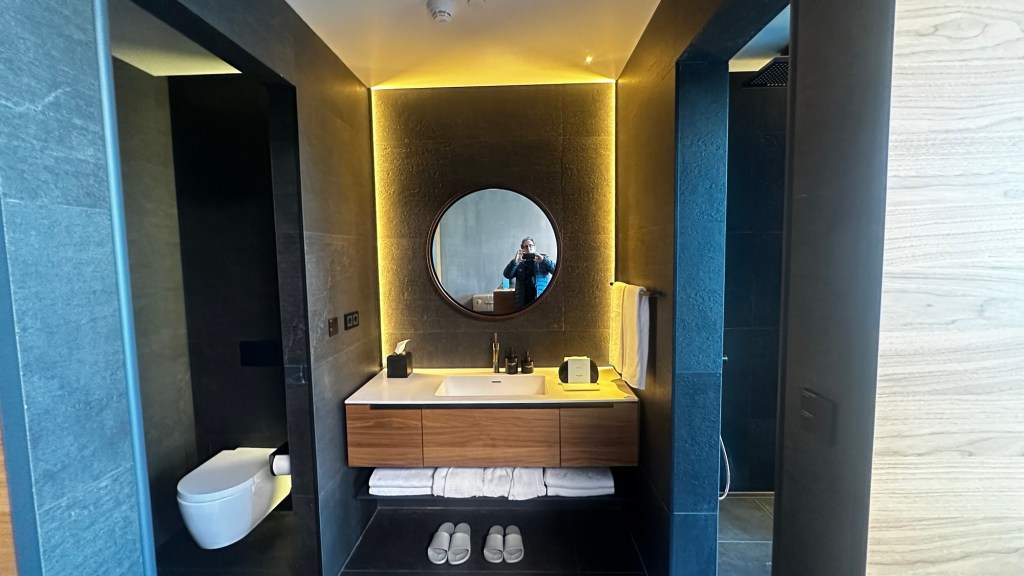
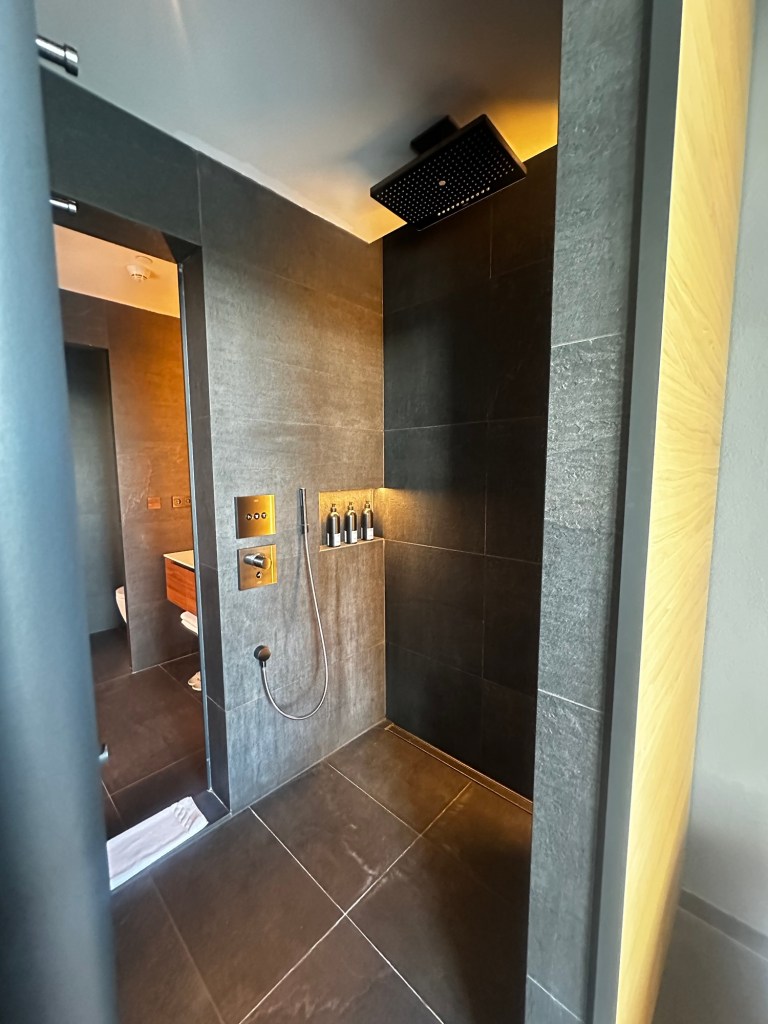
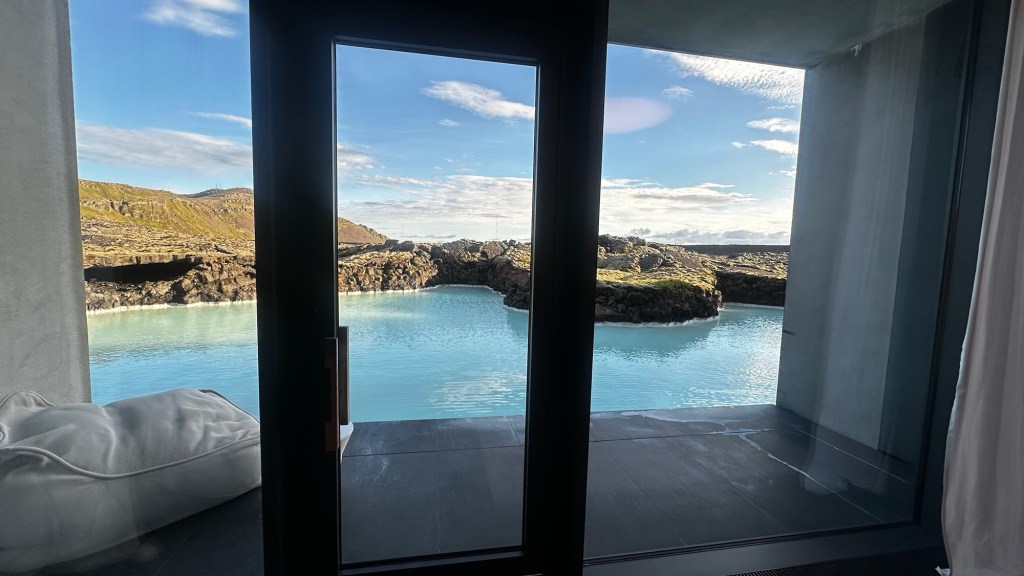
Our room was a sleek cocoon of modern comfort—floor-to-ceiling windows, soft linens, and warm wood accents framing the wild Icelandic landscape like a living painting. Just beyond our terrace lay a private lagoon, its glassy surface reflecting the endless lava fields. A sturdy lava barrier wall stood guard, ready to fend off any overly enthusiastic molten visitors should the nearby volcano get ideas. But would it? The water here wasn’t warm enough for a swim, but it was perfect for gazing, daydreaming, and pretending we were the lords of our own volcanic kingdom.


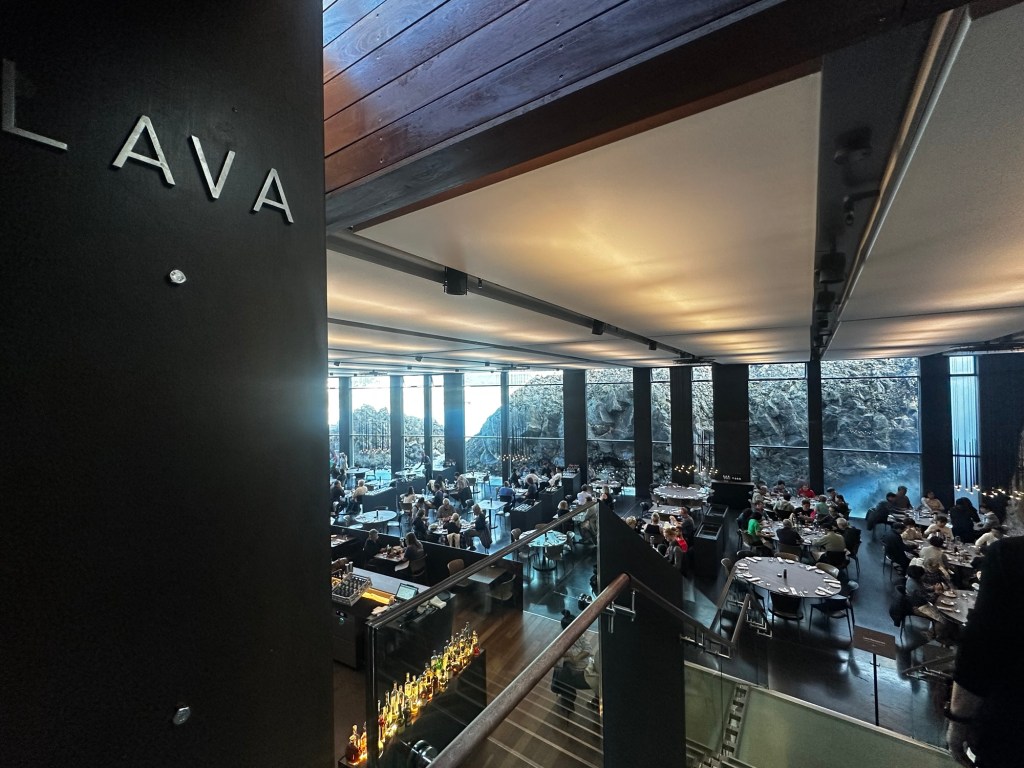
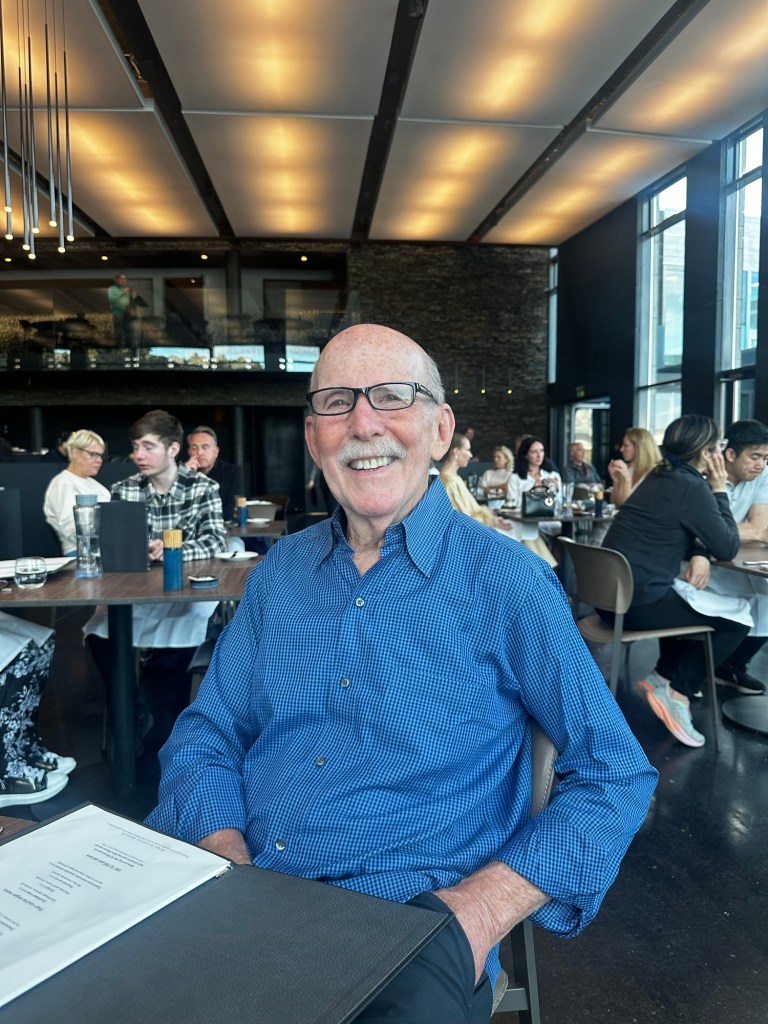
On our first night at the Retreat, we dined at Lava—the more relaxed of the hotel’s two restaurants, though in truth, neither takes itself too seriously. The restaurant is built right into a wall of ancient lava rock, which forms one side of the dining room. Floor-to-ceiling windows frame the milky-blue waters of the Blue Lagoon, so you can watch the steam drift across the surface while you eat. The atmosphere is warm and relaxed—servers in dark uniforms glide between tables. With the glow of the lagoon outside and the dark lava rock at your back, the whole experience feels anchored in the place, as if the meal were an extension of the landscape itself.
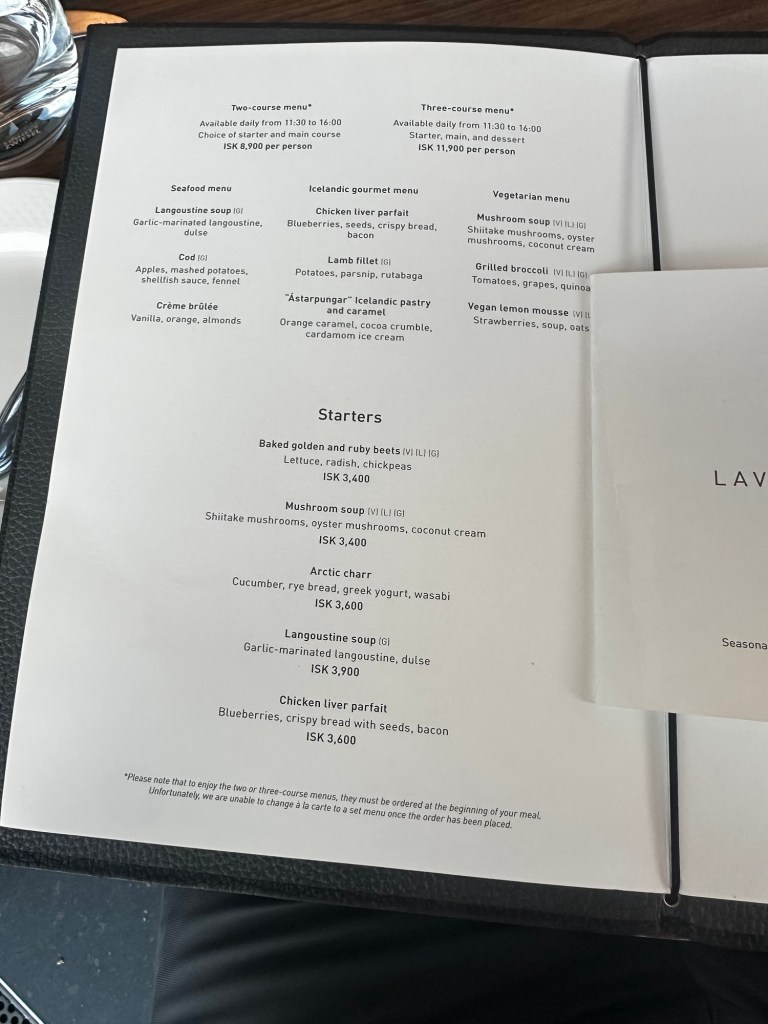
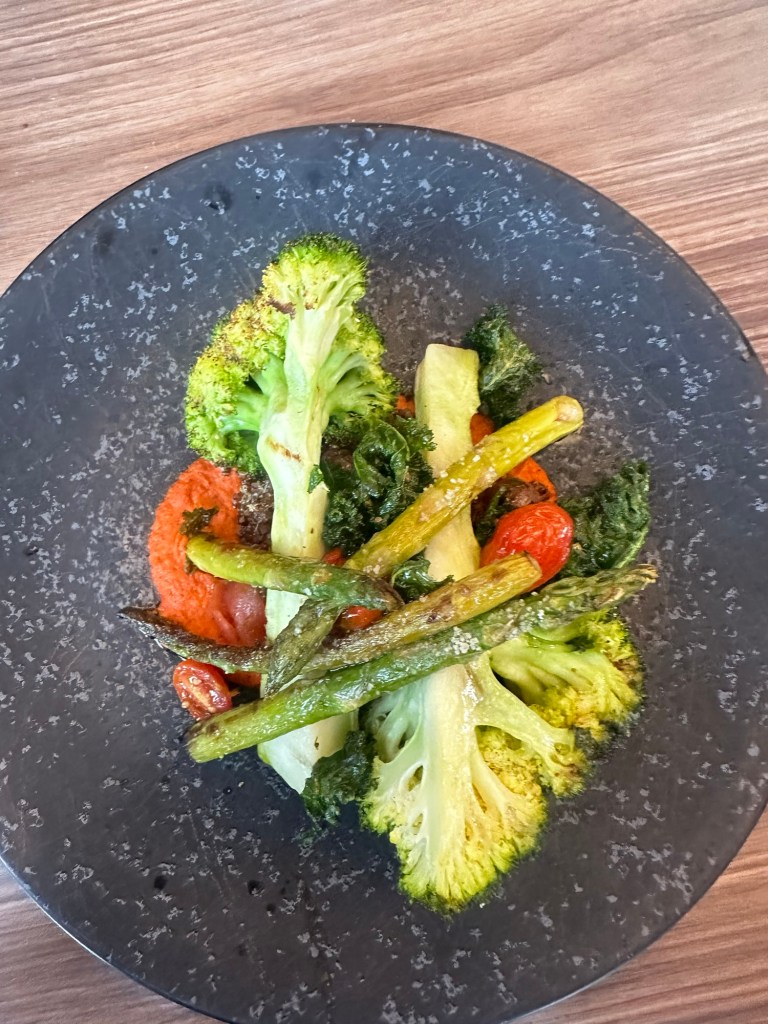
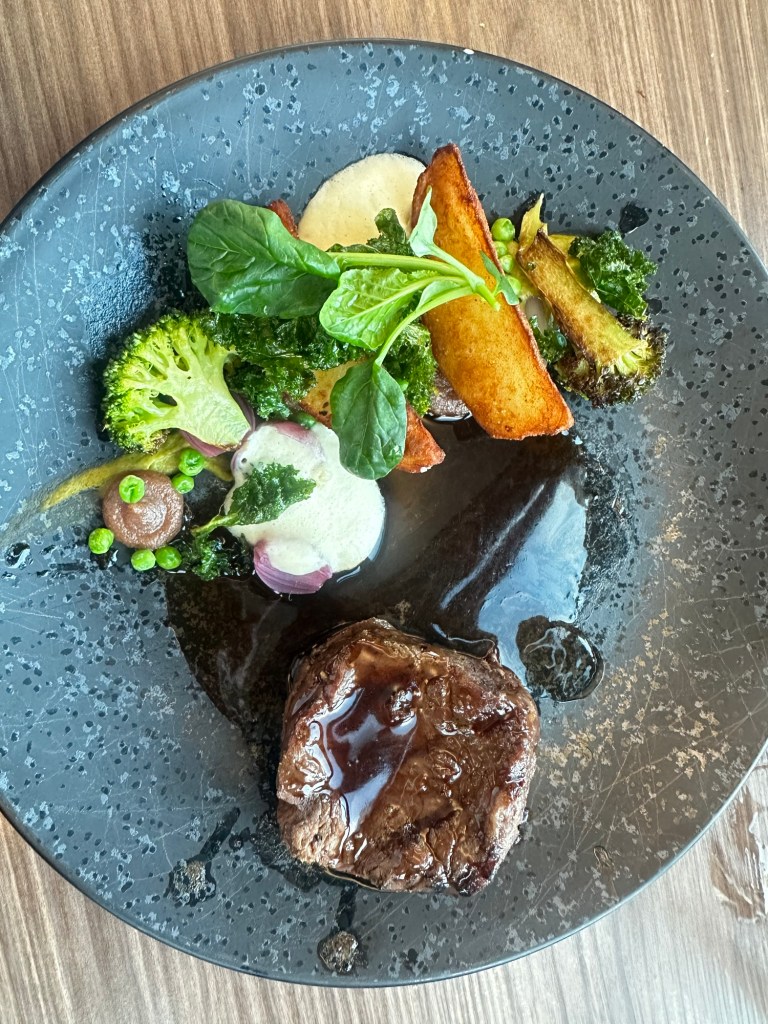
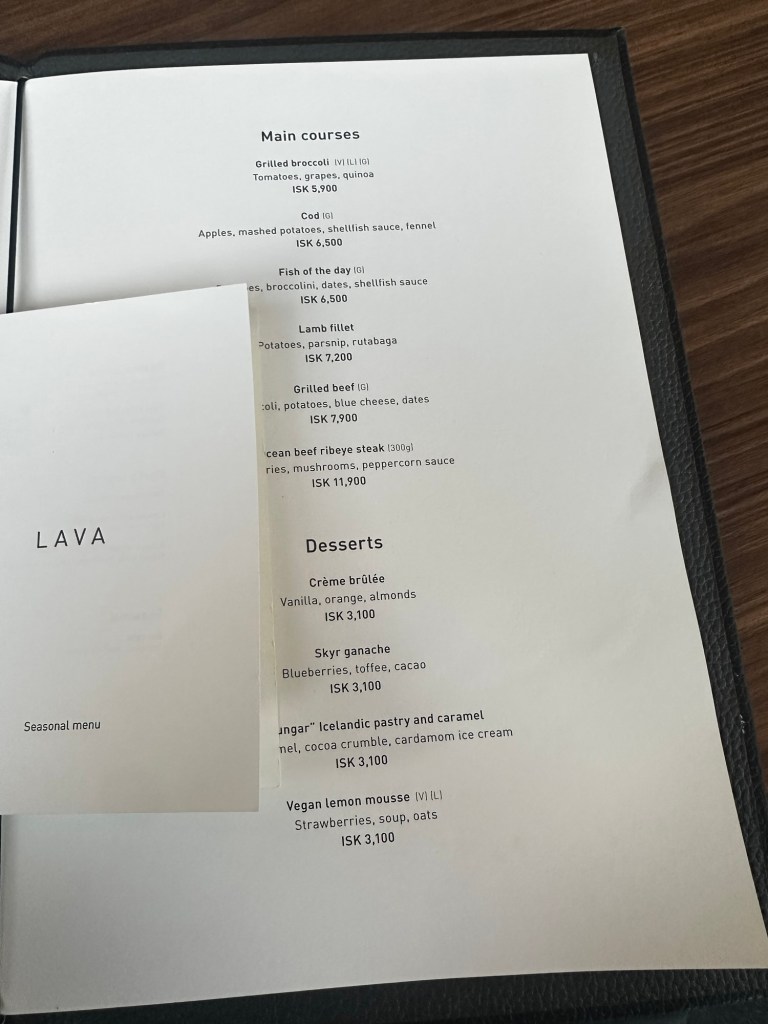
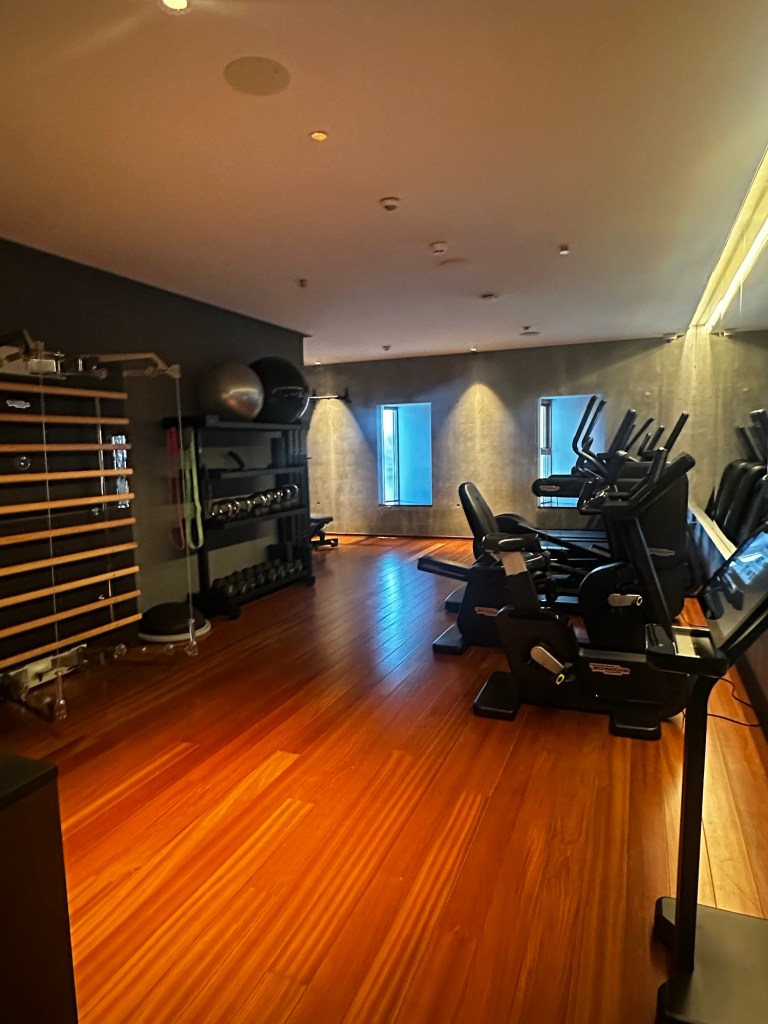
I didn’t sleep much—summer in Iceland means the sun is almost always up, and so was I. By 5 a.m., I’d already found my way to the gym. After a leisurely breakfast at the Retreat, we set off for the day’s main event: heading inside a volcano—literally.
Into the Volcano
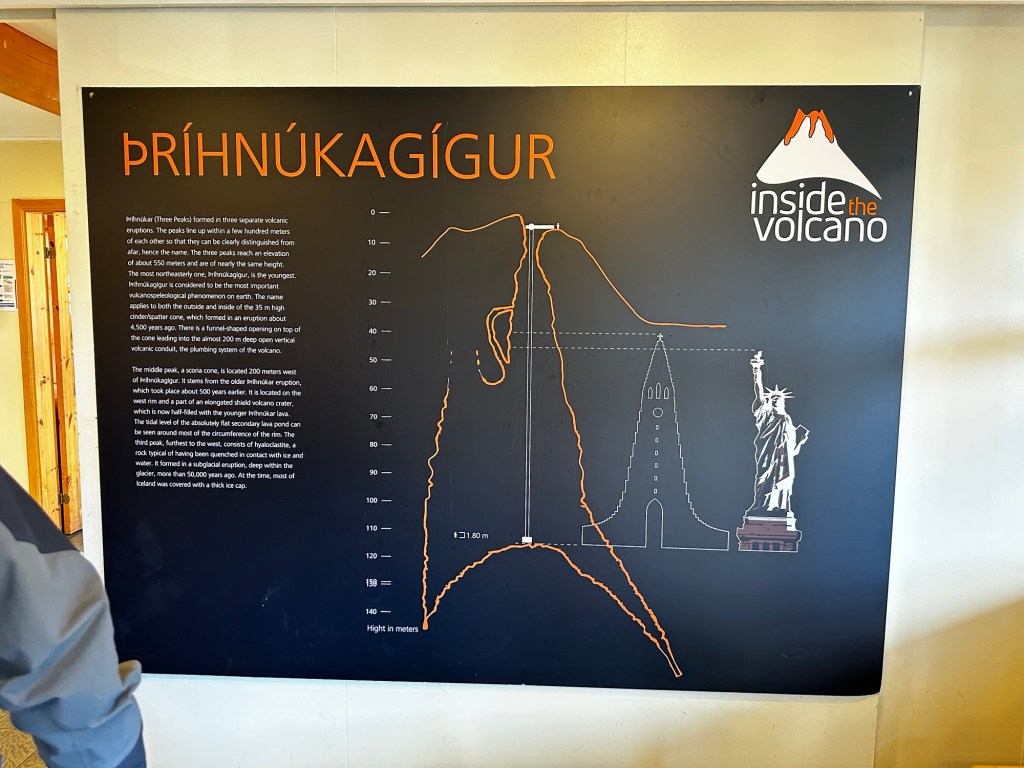
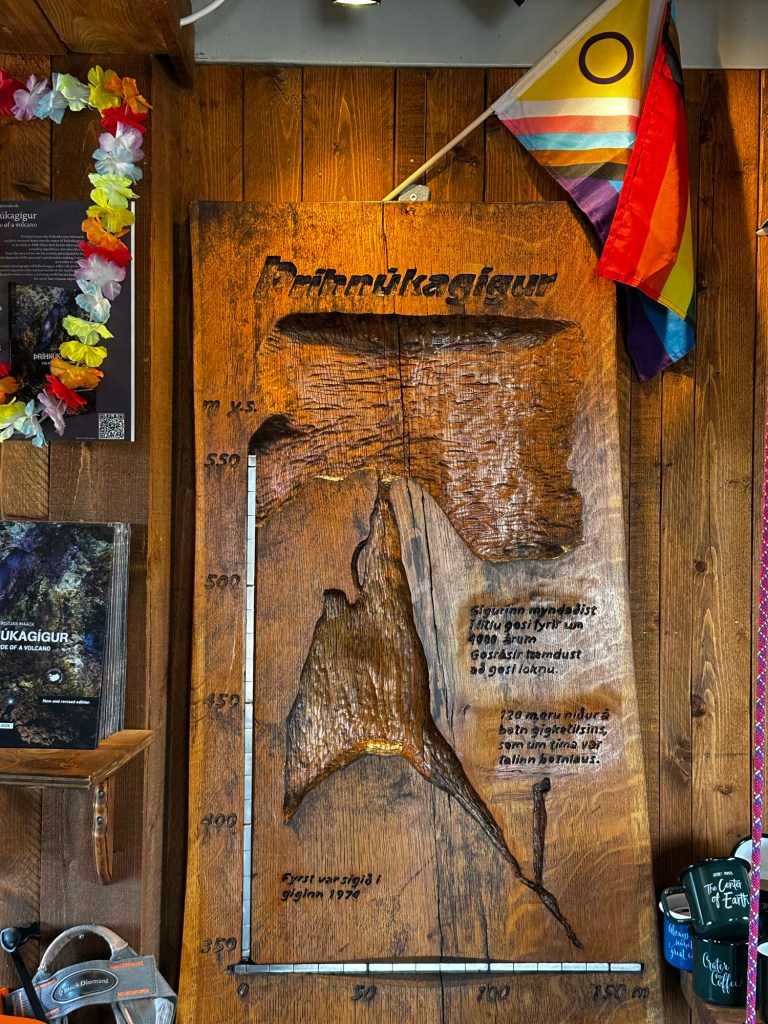
The volcano is called Þríhnúkagígur (pronounced roughly “Three-noo-ka-geegur”), which translates to Three Peaks Crater in Icelandic. After about an hour drive, we arrived at the parking area and stepped into a small building where the staff welcomed us and outlined the plan for the visit—what to expect on the walk to base camp, the climb up the cone, and the descent into the volcano itself. Apparently, this is the only of volcano in the world accessible to people other than scientists- aka Judy, Bud, Beth and me.
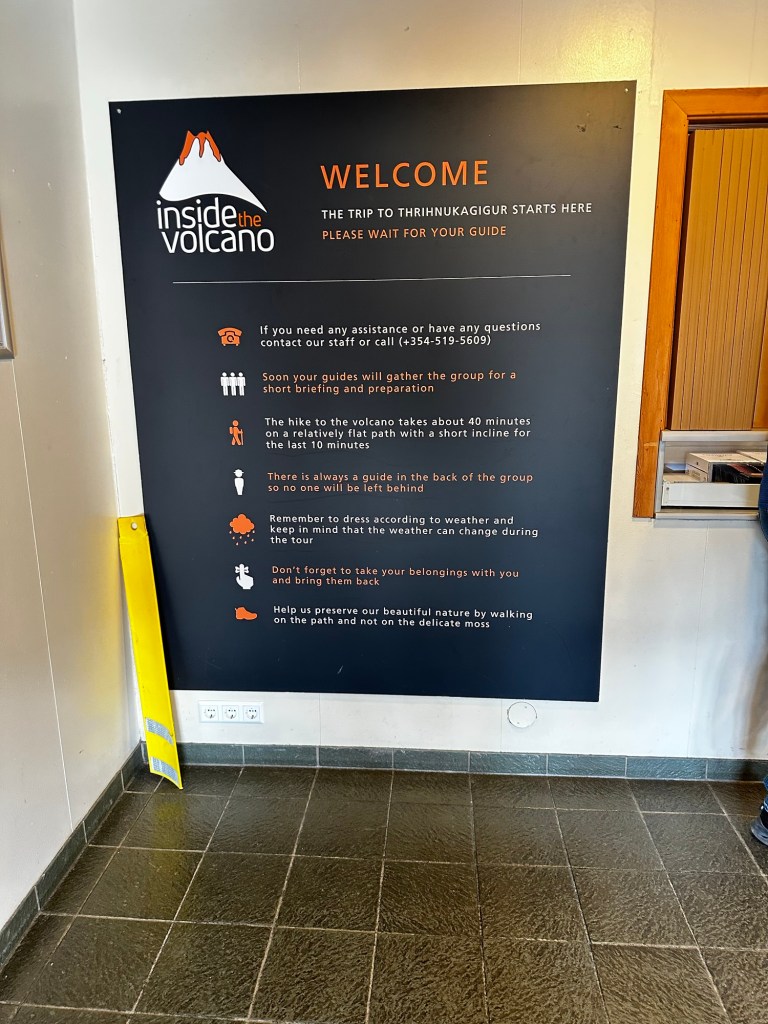
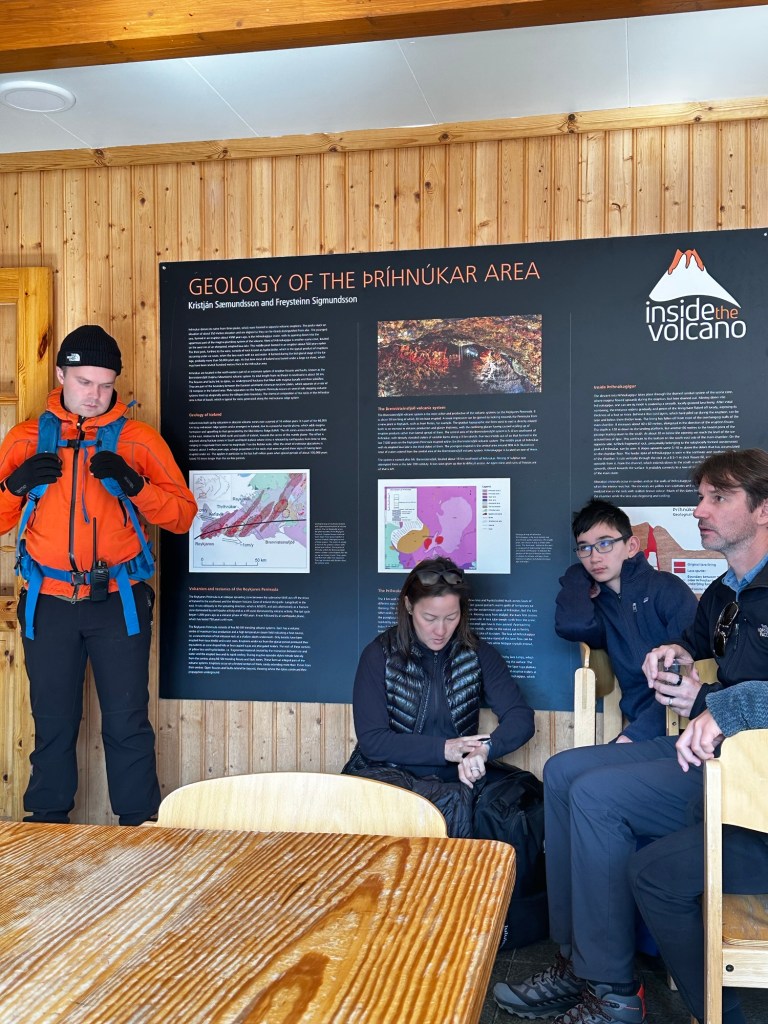
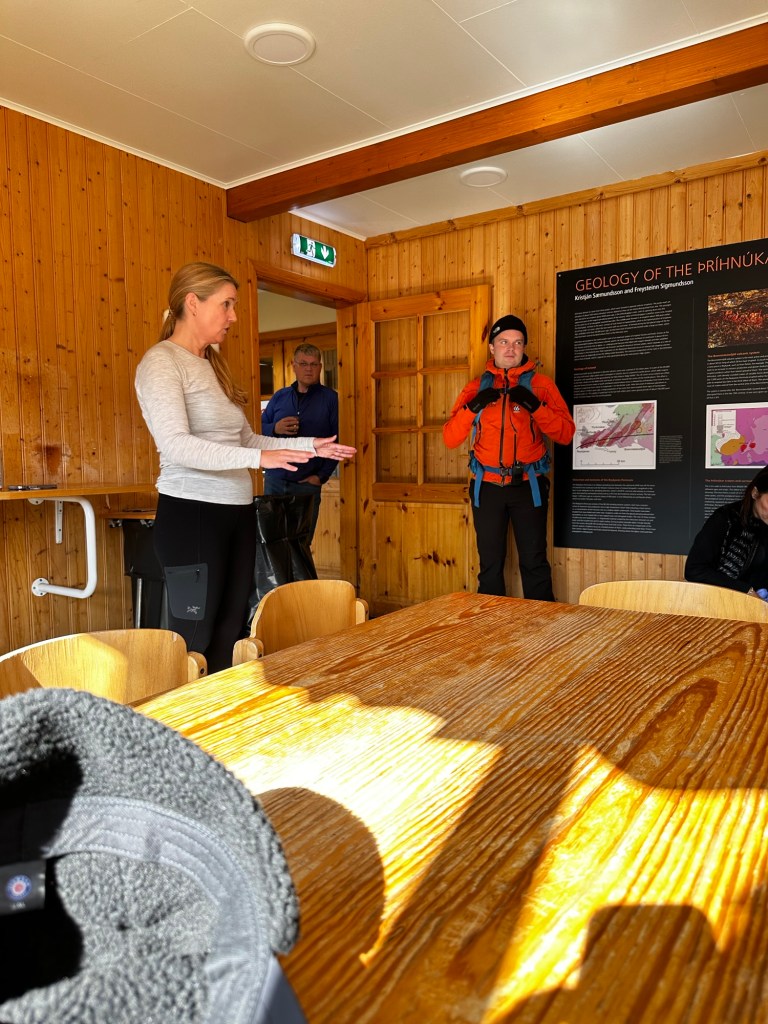
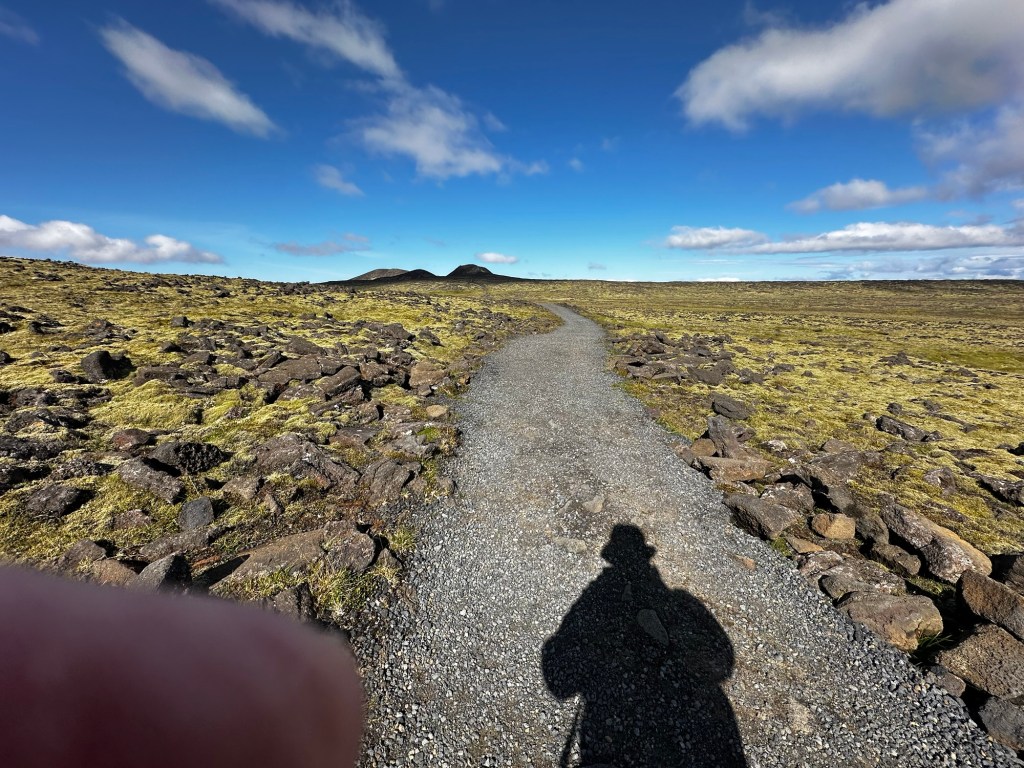
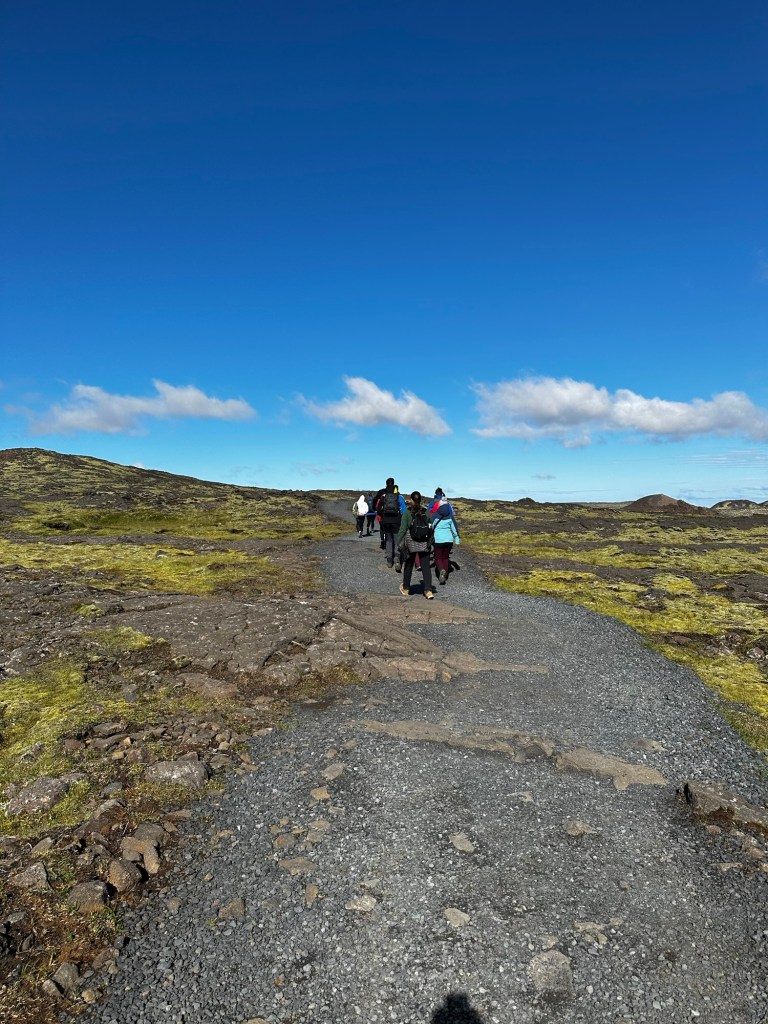
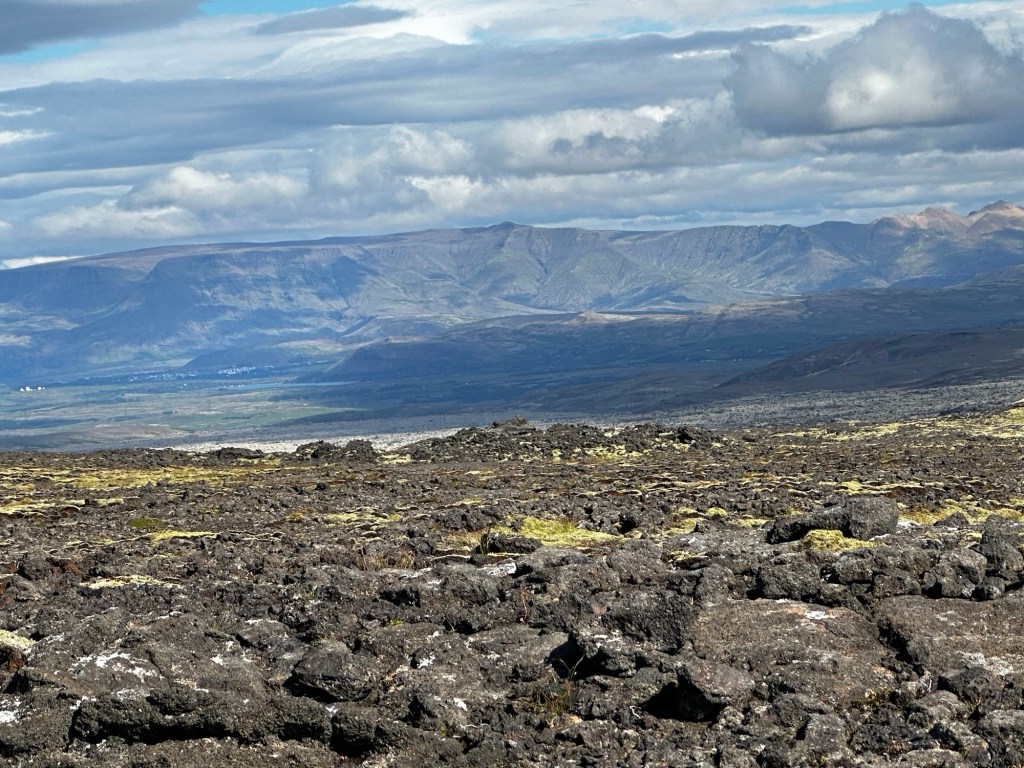
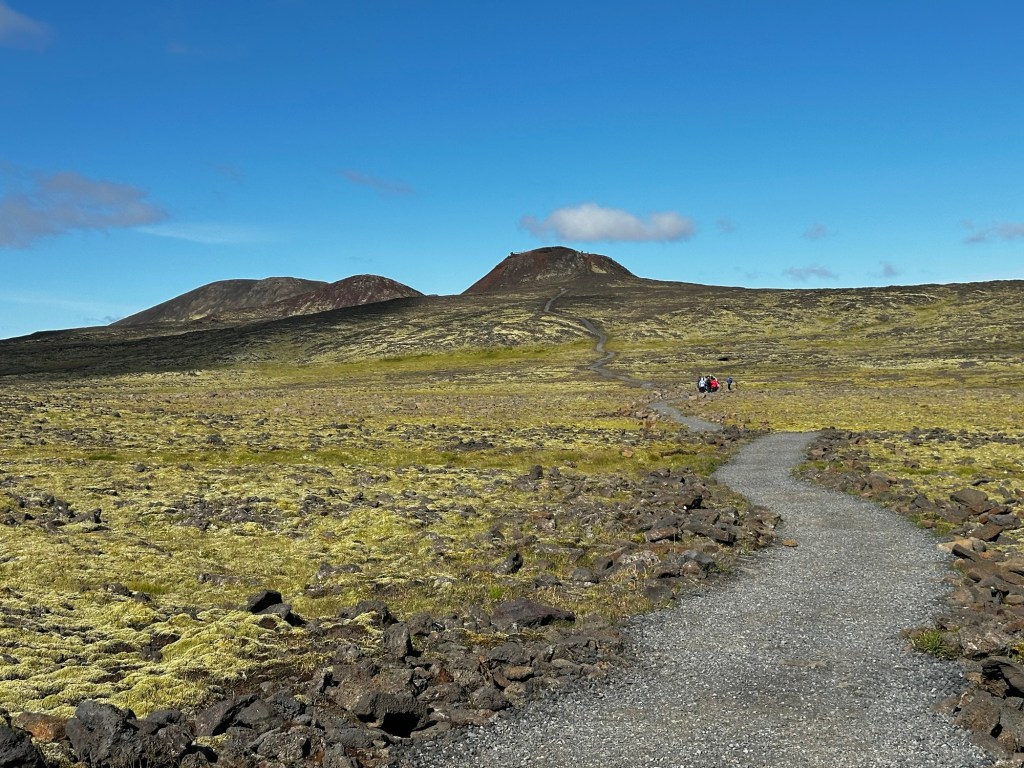
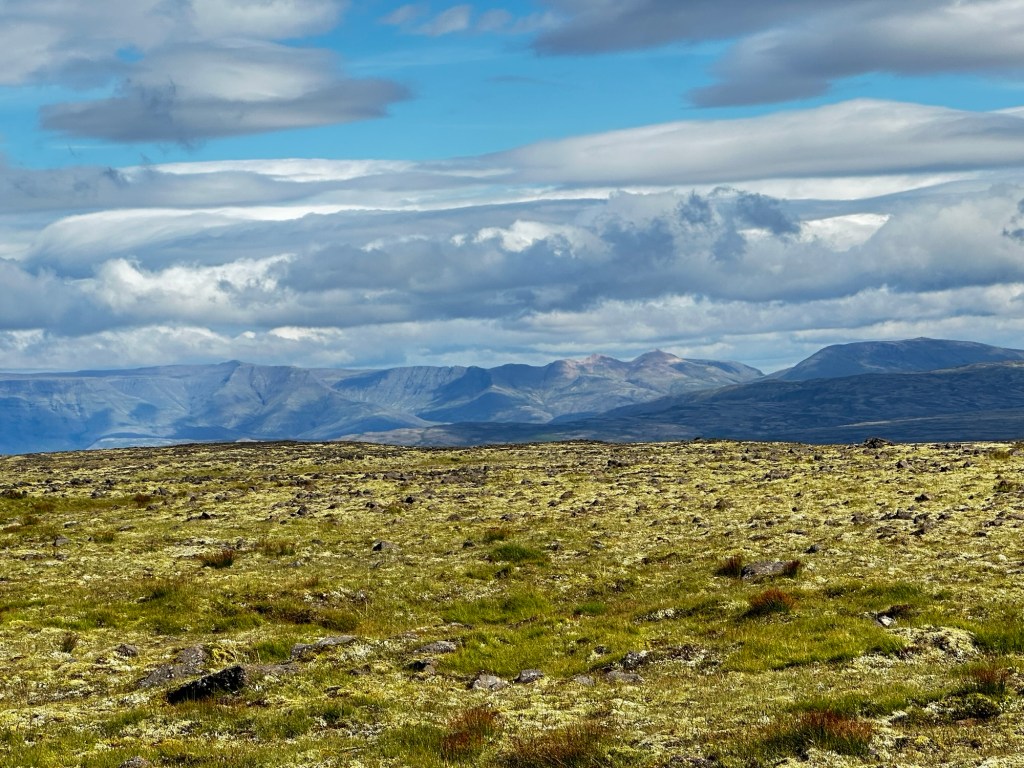
Two guides accompanied us on the walk to the base camp, one up front, and the other at the tail. The walk to base camp feels less like a simple approach and more like a slow immersion into another planet. It begins on a narrow, well-trodden path that threads through a rolling expanse of moss-covered lava, the soft green growth draped over jagged black rock like a thick quilt. In places, the ground is uneven and fractured, a reminder of the forces that shaped it.
The air is crisp and often laced with a fine mist, and the silence is broken only by the crunch of boots and the occasional call of a seabird overhead. Along the way, small footbridges carry you over crevices, and the view opens now and then to reveal distant volcanic cones and the pale shimmer of far-off steam vents.
It’s about a 30-50 minute walk, steady but not strenuous, and with each step the world of cars and asphalt recedes. By the time the dark cone of Þríhnúkagígur comes into full view and the low buildings of base camp appear at its feet, you’re already feeling the shift—less like a tourist arriving somewhere, more like an explorer closing in on the mouth of an ancient giant.
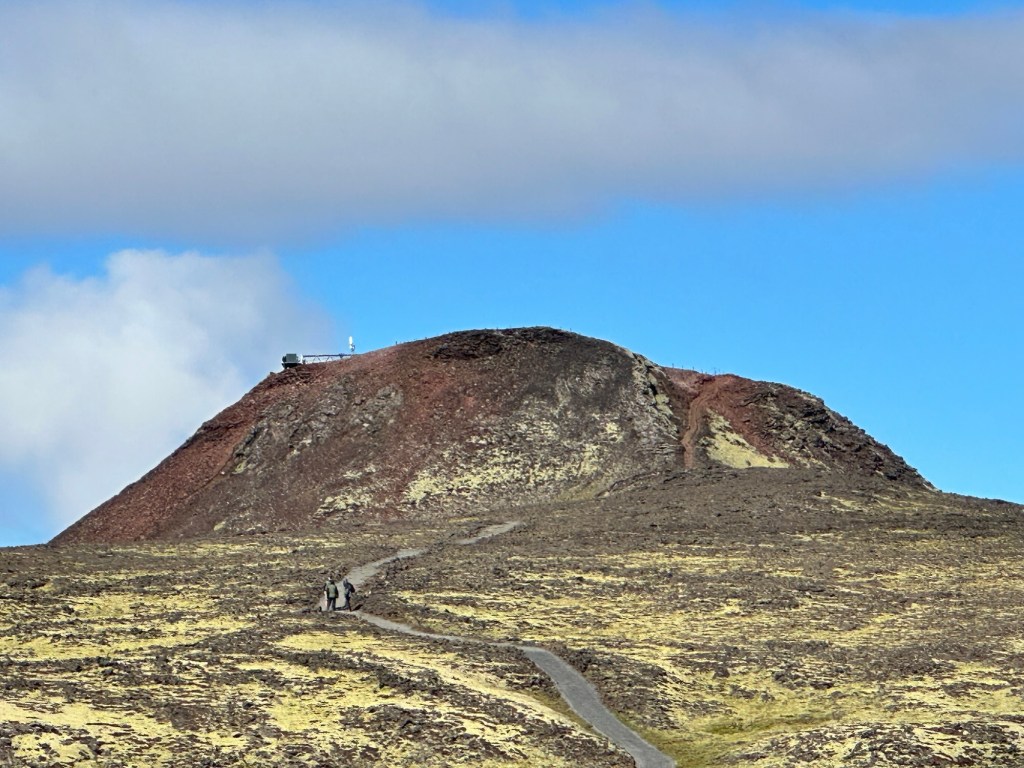
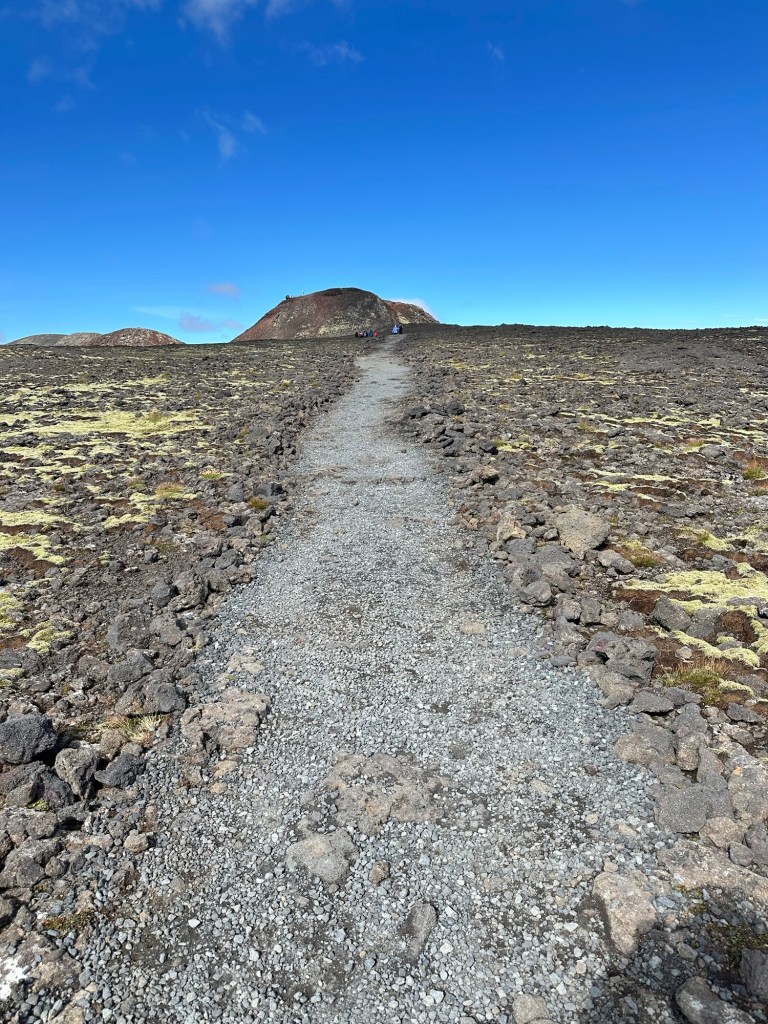
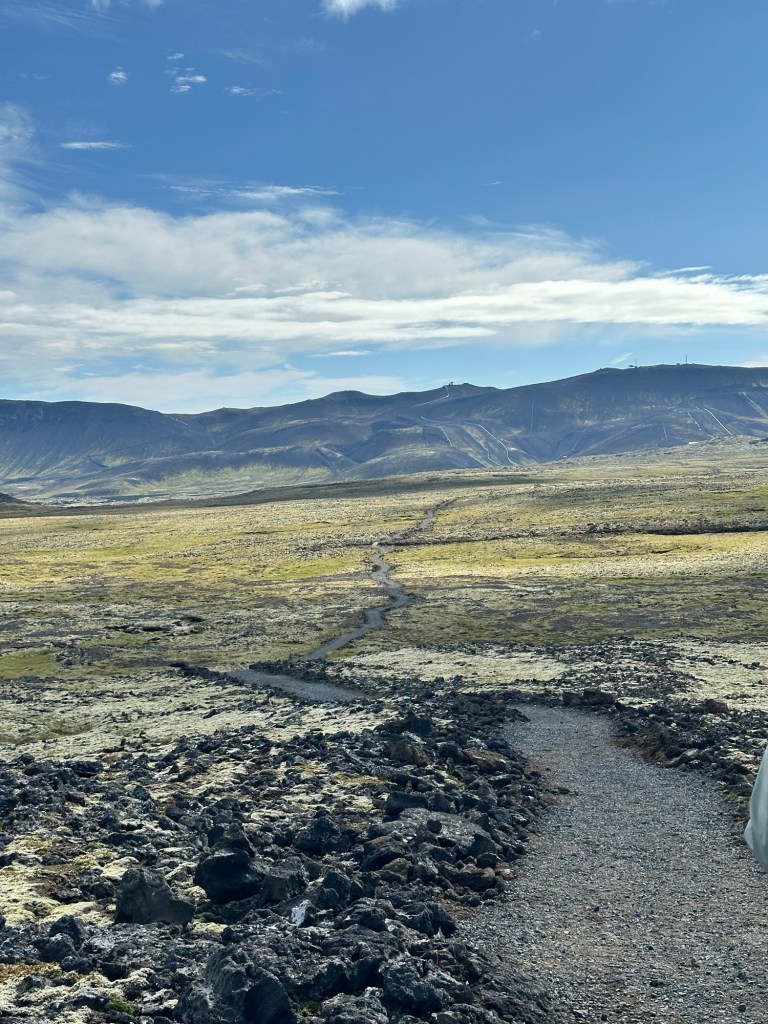
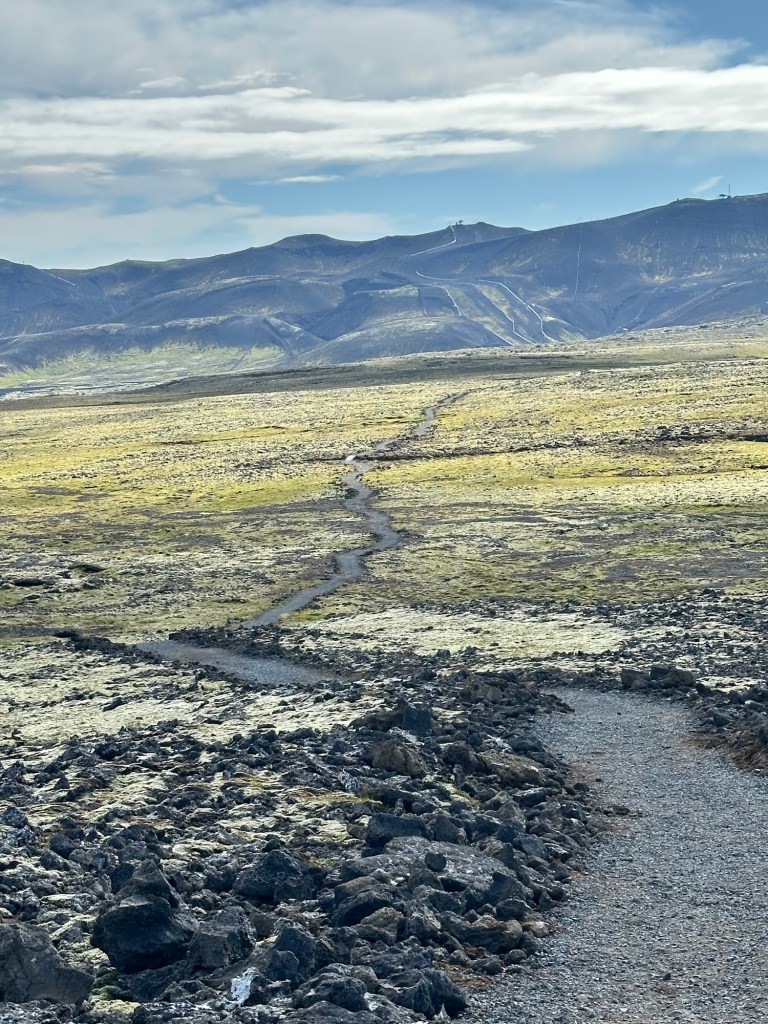
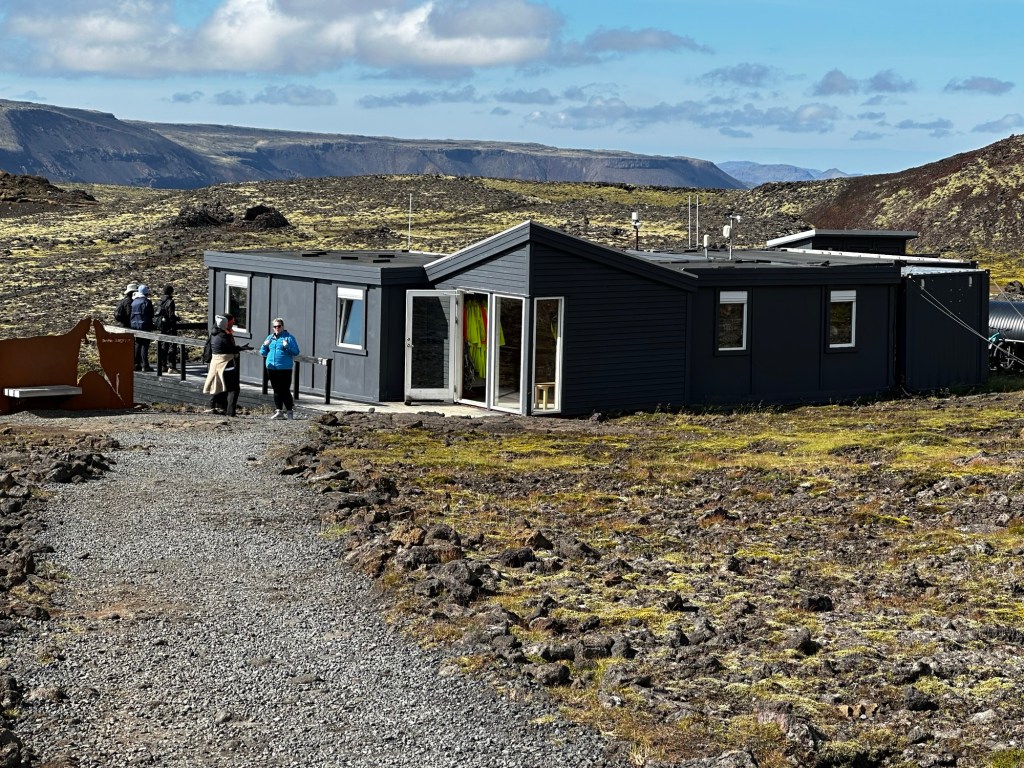

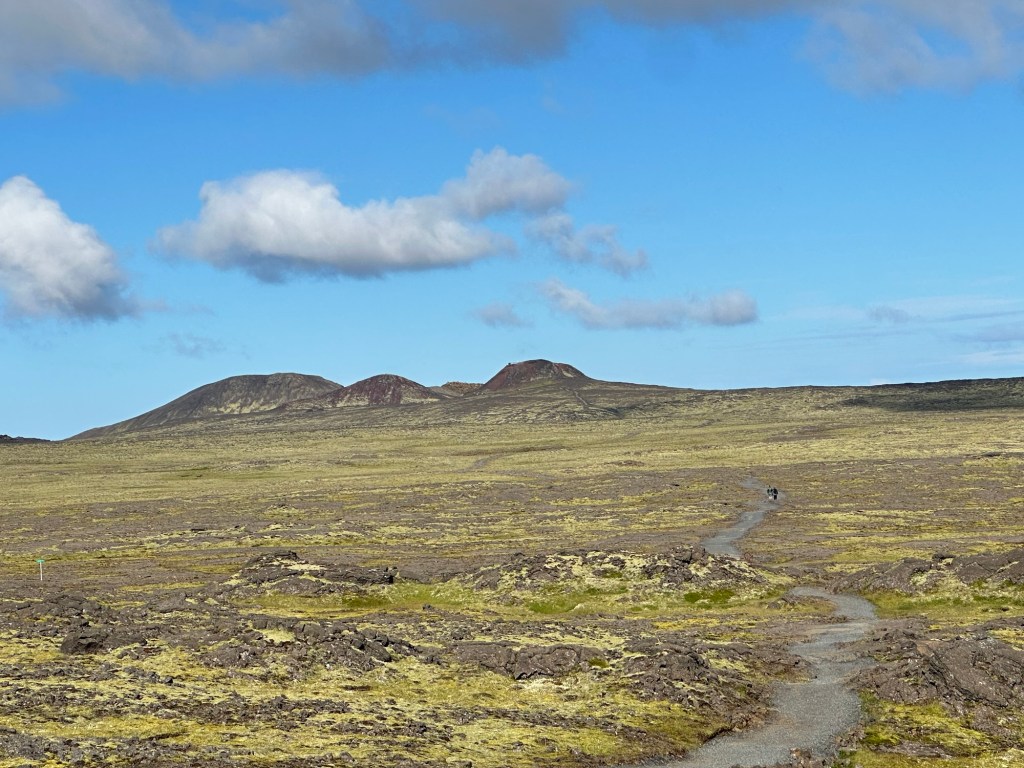
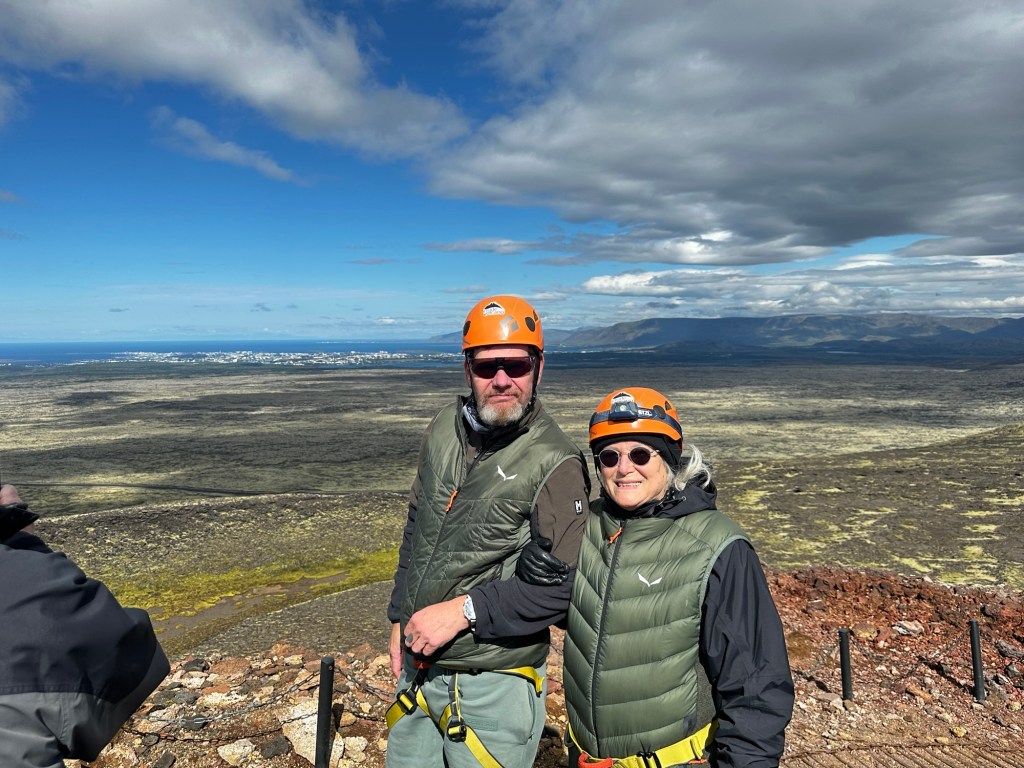
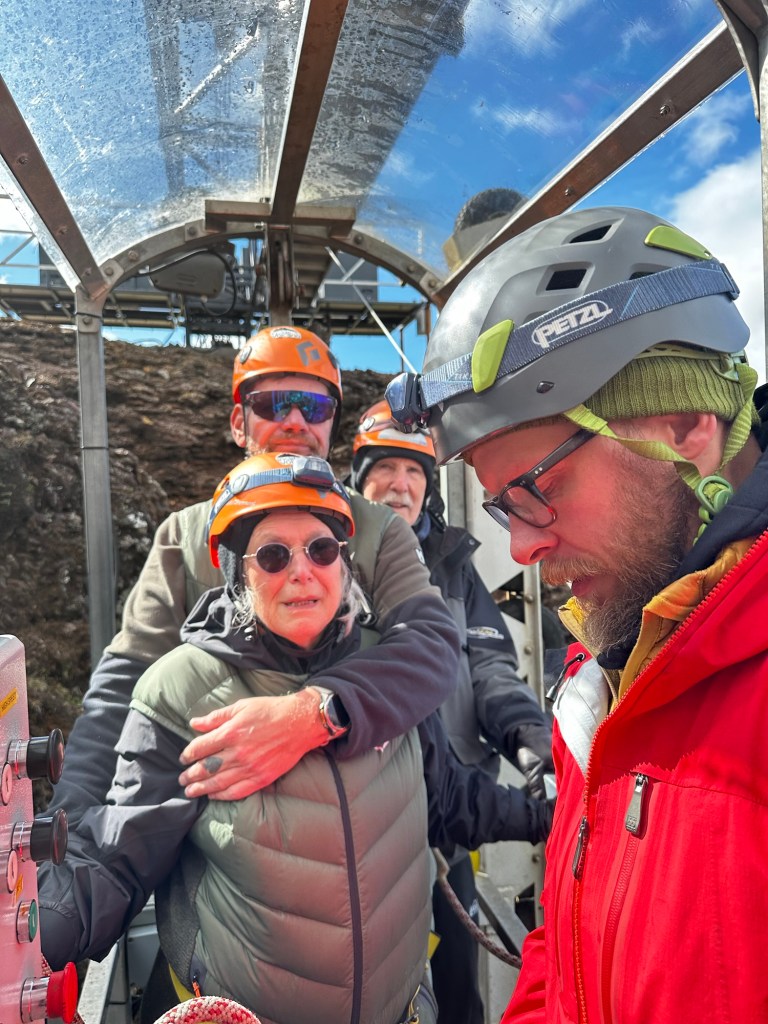
The base camp sits right at the foot of the volcano’s cone. Here, we were outfitted with safety harnesses and helmets, while the guides—equal parts geologists and adventurers—outlined the journey ahead.
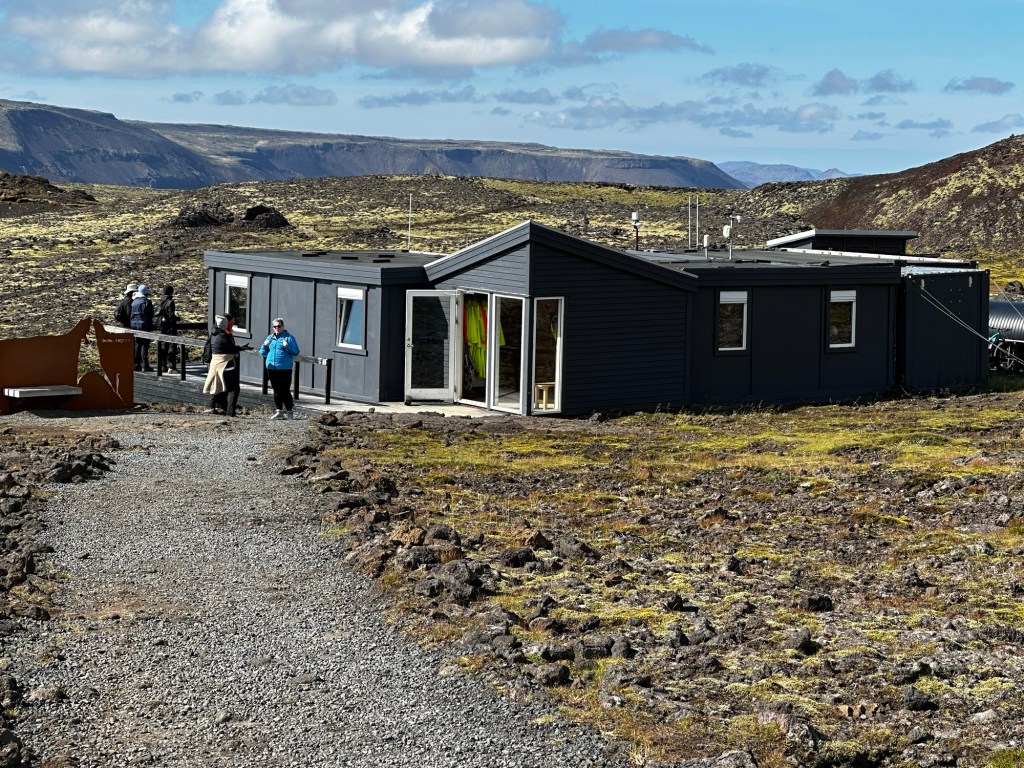
Once briefed, we began the short but steep climb to the cone’s ridge, the starting point for our 400-foot descent to the volcano’s floor.
The climb starts the moment you step outside. It’s only about 50 meters to the rim of the cone but the slope is fairly steep, the loose volcanic gravel shifting underfoot with each step. Metal rods anchored into the hillside are strung with sturdy ropes, offering both guidance and a reassuring grip. The wind seems to pick up as you near the top, carrying the faint scent of volcanic rock, and then—suddenly—you’re standing at the crater’s edge, staring into its dark, vertical maw.
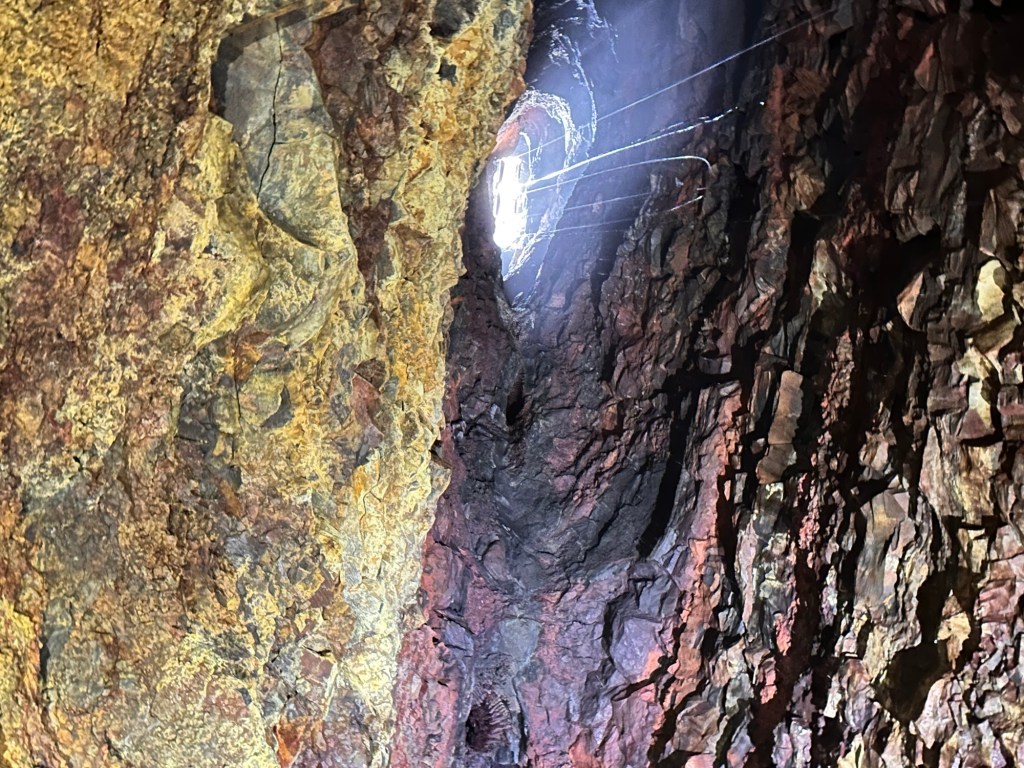
We stepped onto the open elevator platform, where the guides clipped our safety ropes in place,as we climbed in to the lift. With a low hum, the lift began its slow descent—six or seven minutes to cover the 400 feet down into the magma chamber. The walls closed in at first, streaked with rust-red and charcoal-black, then opened into a vast, cathedral-like space. Cool, damp air rose to meet us, carrying the echo of dripping water, and above, the crater’s mouth shrank to a small, bright circle against the dark.
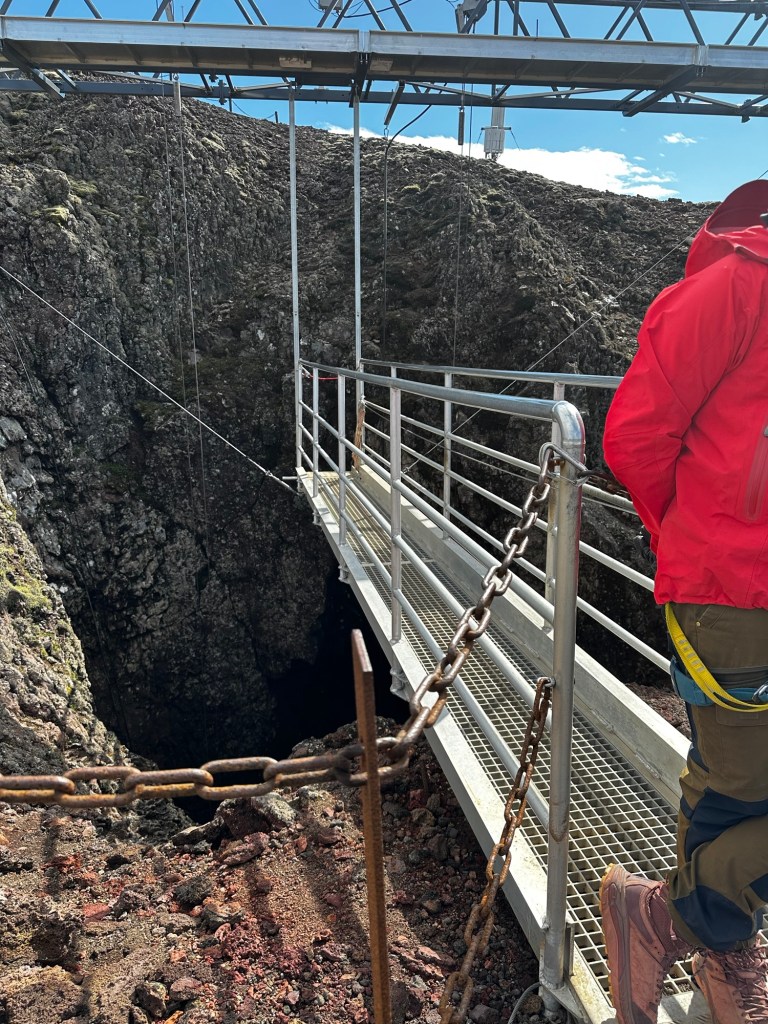

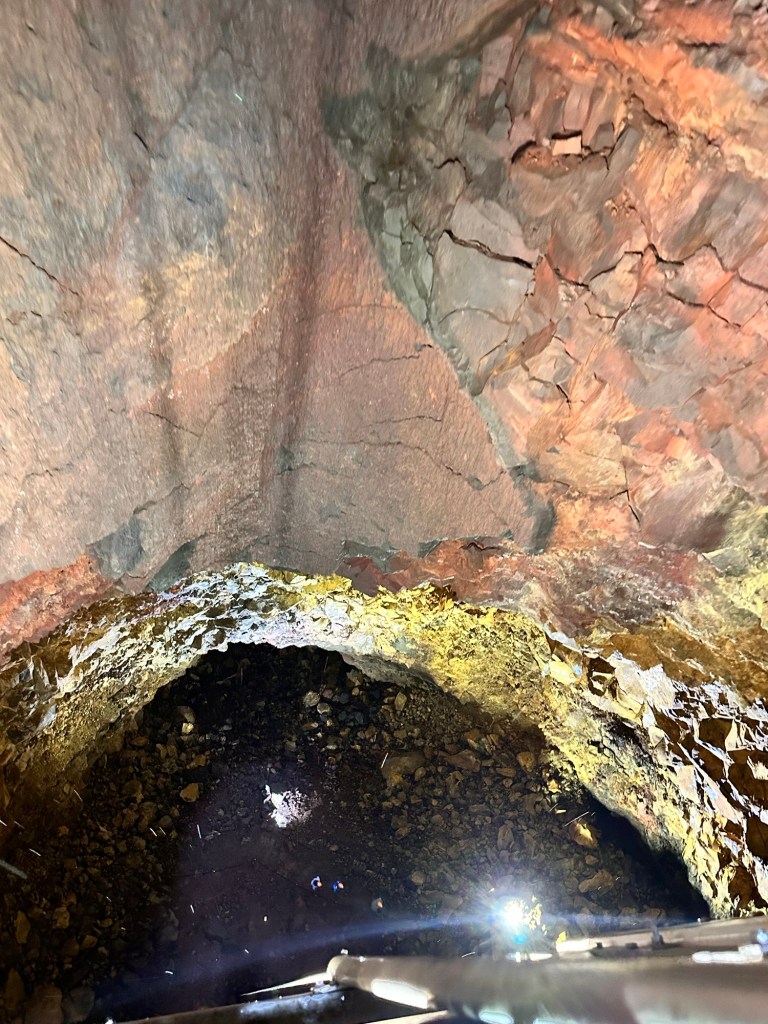
At the bottom, it feels like you’ve stepped into the hollowed-out heart of the earth. The chamber is vast—large enough to fit the Statue of Liberty—its walls rising in jagged tiers of volcanic rock streaked with reds, yellows, purples, and deep blacks, each hue the result of different minerals baked and transformed by the heat of the eruption.
The air is cool and damp, carrying the faint, mineral-rich scent of wet stone. Water drips from fissures high above, the droplets echoing as they strike the rocks below. Looking up, you can see the pinpoint of the crater opening far above, the ropes and elevator cables disappearing into the distance like threads into the sky.

It’s eerily quiet except for the occasional creak of the elevator platform and the steady patter of water—an ancient stillness that makes you instinctively lower your voice. The scale, the colors, and the sheer improbability of standing here combine into something almost dreamlike, a moment where you feel both impossibly small and deeply connected to the forces that shaped the planet.
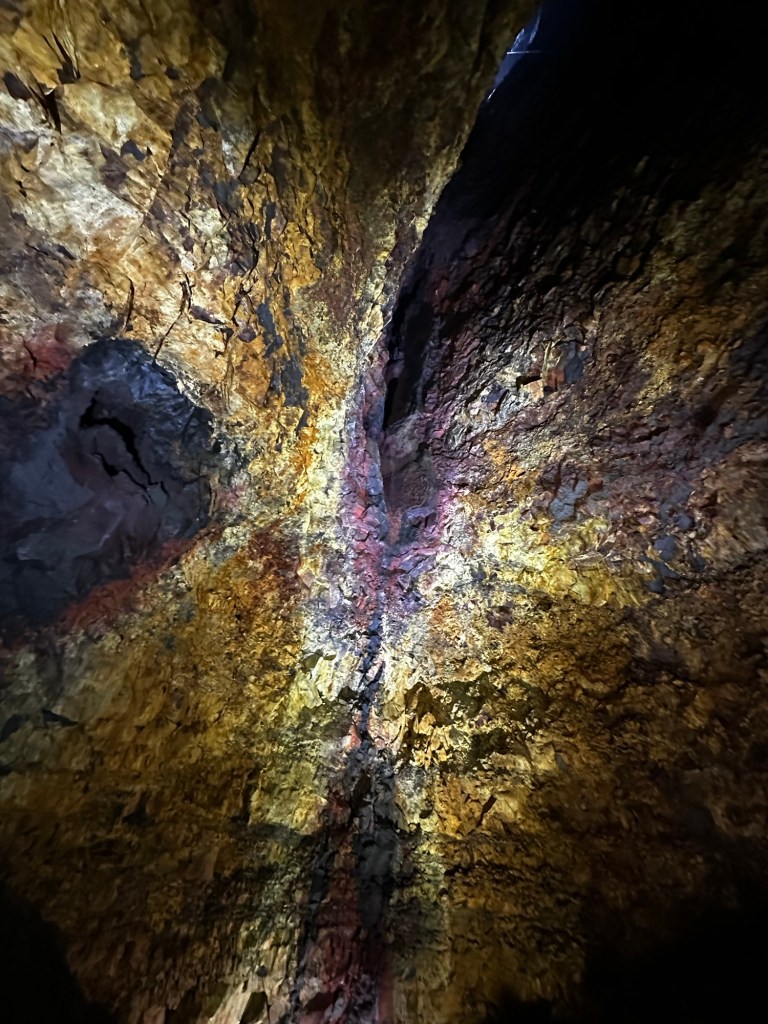
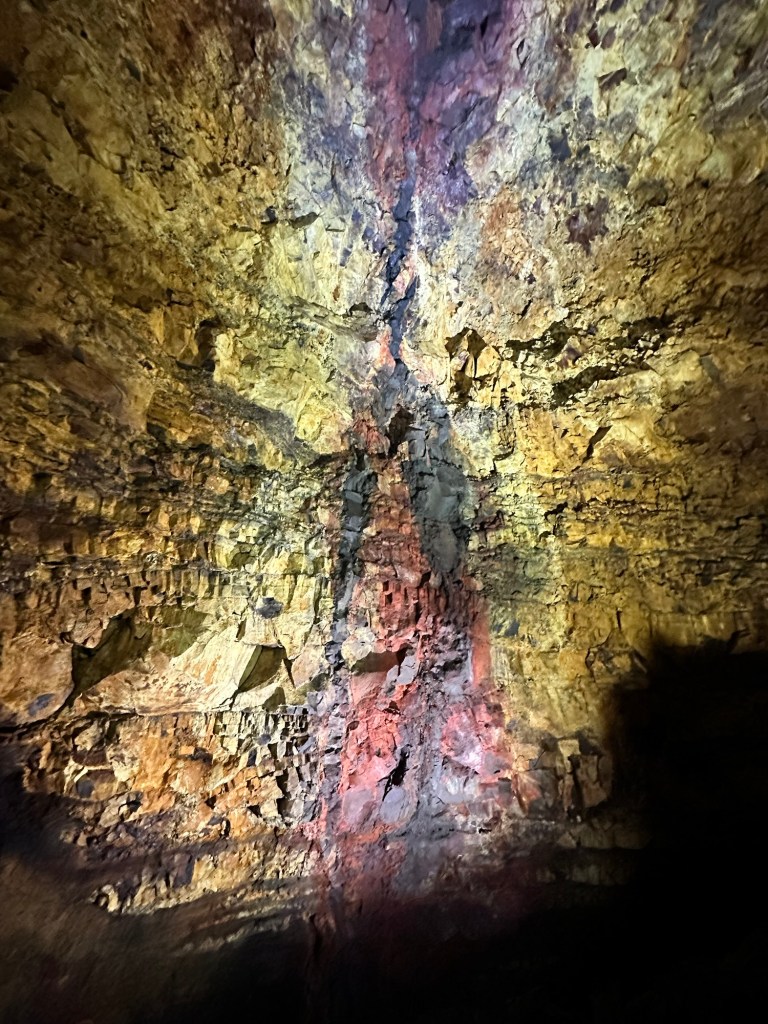
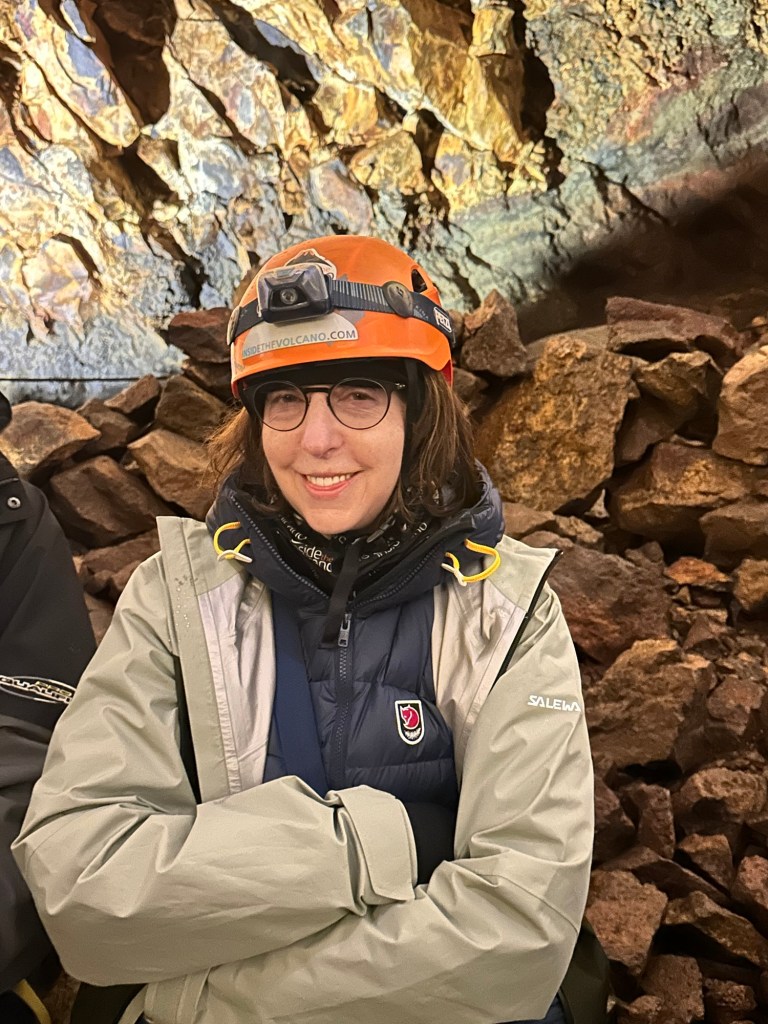
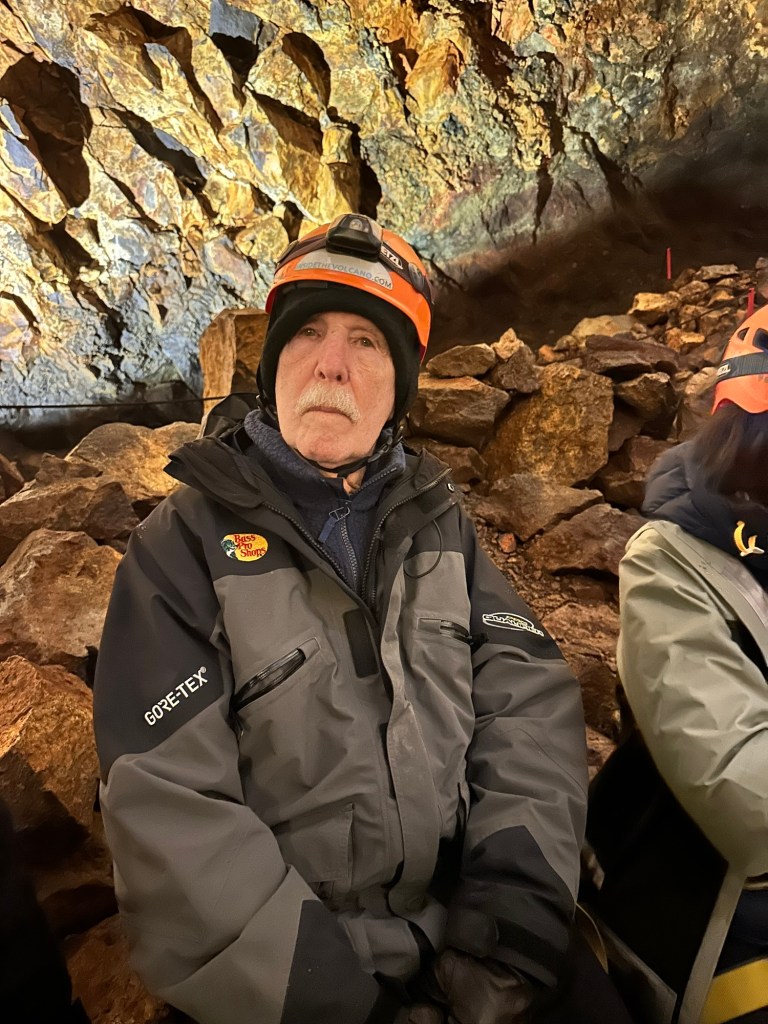
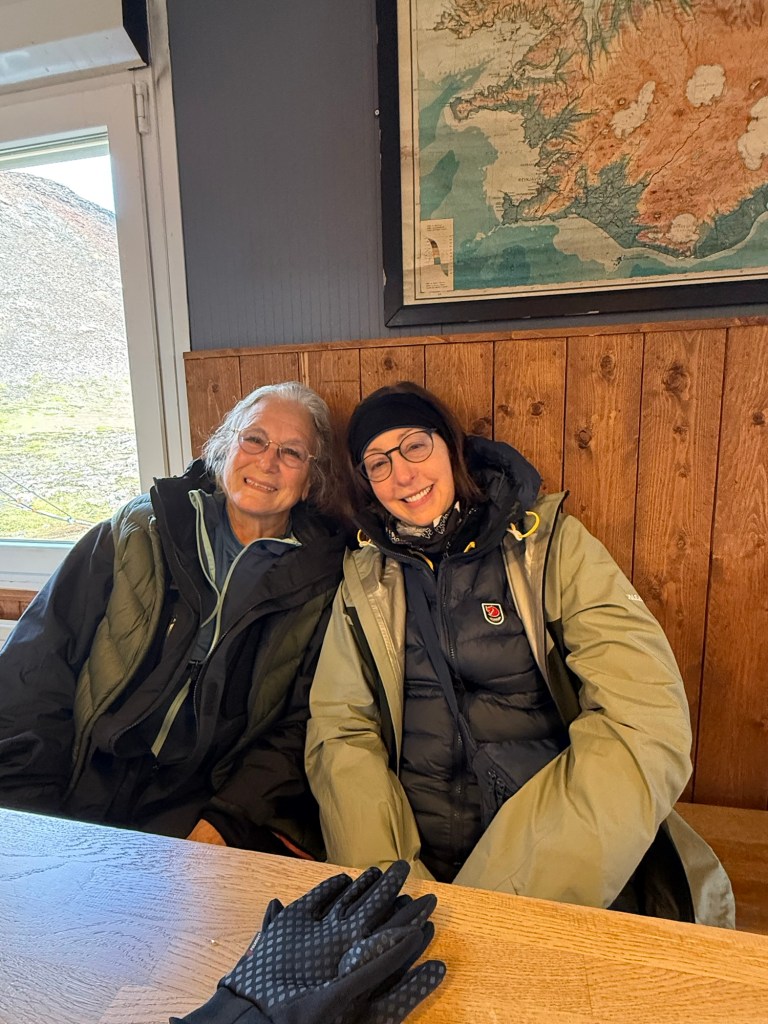
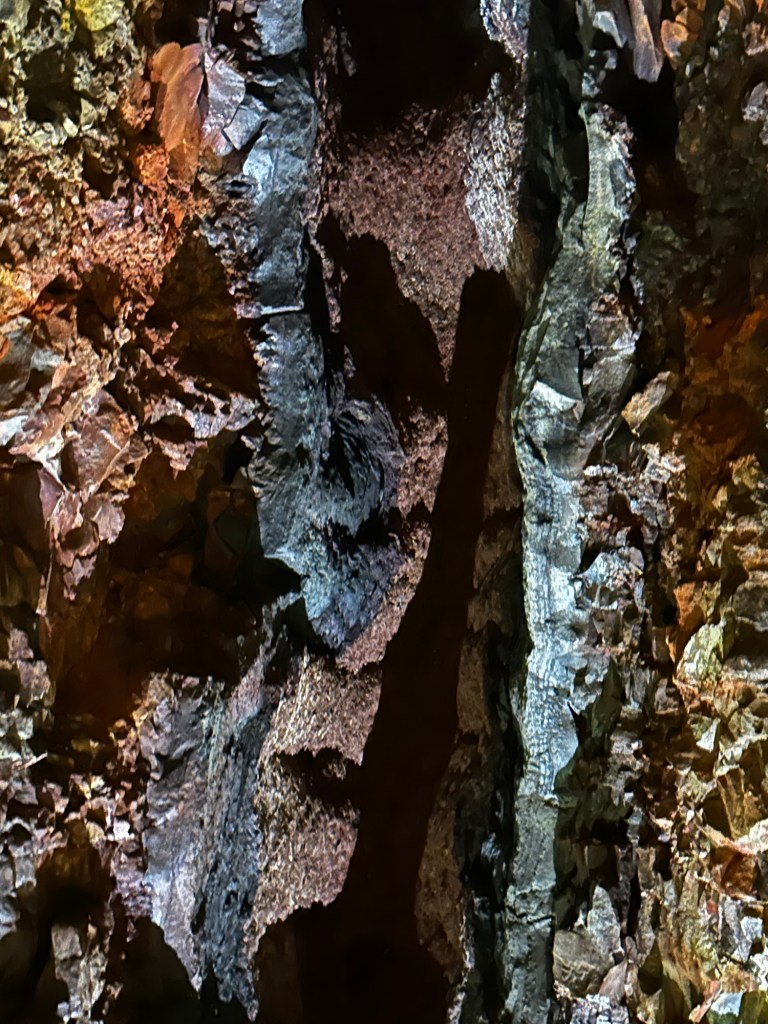
I hiked around the perimeter at the bottom of the volcano, picking my way over uneven, jagged rock. For about half an hour, I explored the vast chamber, its towering walls a kaleidoscope of mineral colors. Eventually, we stepped back onto the lift and began the slow ascent to the rim. From there, it was a short walk down to base camp, where hot soup and a brief rest awaited before the trek back to the parking lot. The entire adventure—from descent to return—was nothing short of extraordinary.
Retreat Spa
No phones or cameras are permitted in the Retreat Spa, so the experience unfolds entirely in the moment. I had signed up for something called the Relaxing In-Water Massage with Full-Body Silica Salt Scrub, though I wasn’t entirely sure what I was in for. Wrapped in a white robe and slippers, I made my way through the vast, hushed spa to the secluded section of the Lagoon reserved exclusively for spa guests.
Slipping into the milky-blue water—about 102°F—the warmth enveloped me instantly, a sharp contrast to the crisp, cold air on my face. Steam drifted across the surface, blurring the edges of the black lava walls around me, as if the whole world had been pared down to water, heat, and sky.
Wrapped in the steam of the Lagoon, I floated effortlessly on a soft mat, the warm mineral water holding me as if I weighed nothing at all. My therapist, Anna, began with a full-body silica salt scrub, the fine crystals brushing away every trace of roughness while the natural minerals seeped into my skin. The scrub left me tingling and awake, but then came the slow, hypnotic rhythm of the massage—long, flowing movements made even more fluid by the buoyancy of the water.
You might think this mineral-rich lagoon is nature’s doing—but it’s actually the world’s most relaxing side-effect of making hot water with geothermal energy.
Overhead, the sky was its own kind of theater, shifting from pale gray to a faint, silvery blue. Around me, the lava cliffs stood like silent sentinels, their dark shapes softened by mist. By the time the session ended, I felt polished and renewed, my skin satin-smooth, my muscles liquid, and my mind somewhere between Iceland and a dream.
Moss Restaurant
At the Retreat at Blue Lagoon, dinner at Moss Restaurant—a proud holder of a Michelin star—feels like stepping into a culinary dream woven straight from Iceland’s landscapes. Perched high above the lagoon, its floor-to-ceiling windows frame the surreal blues of the water and the inky lava fields beyond, a view that shifts with every flicker of sunlight or shadow of cloud. Inside, the space is all clean lines and natural textures—stone, wood, and soft light—calm enough to let the food take center stage.
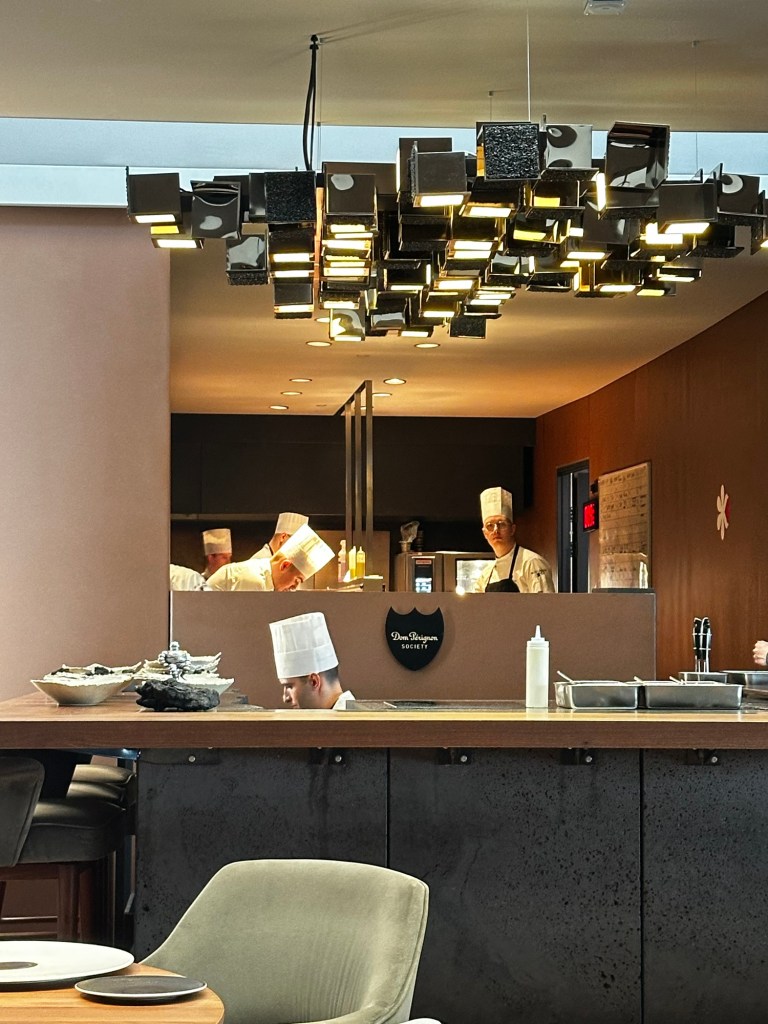
Chef Aggi Sverrisson leads the kitchen with a quiet confidence, crafting a seven-course tasting menus that roam from mountain to sea.
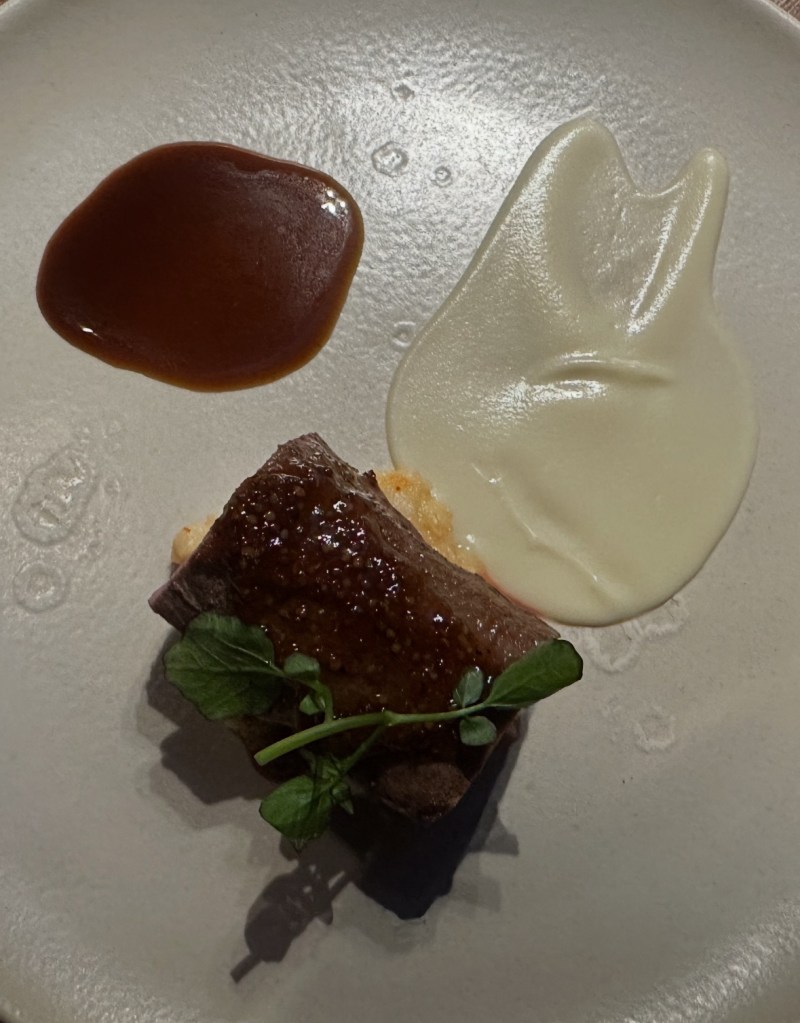
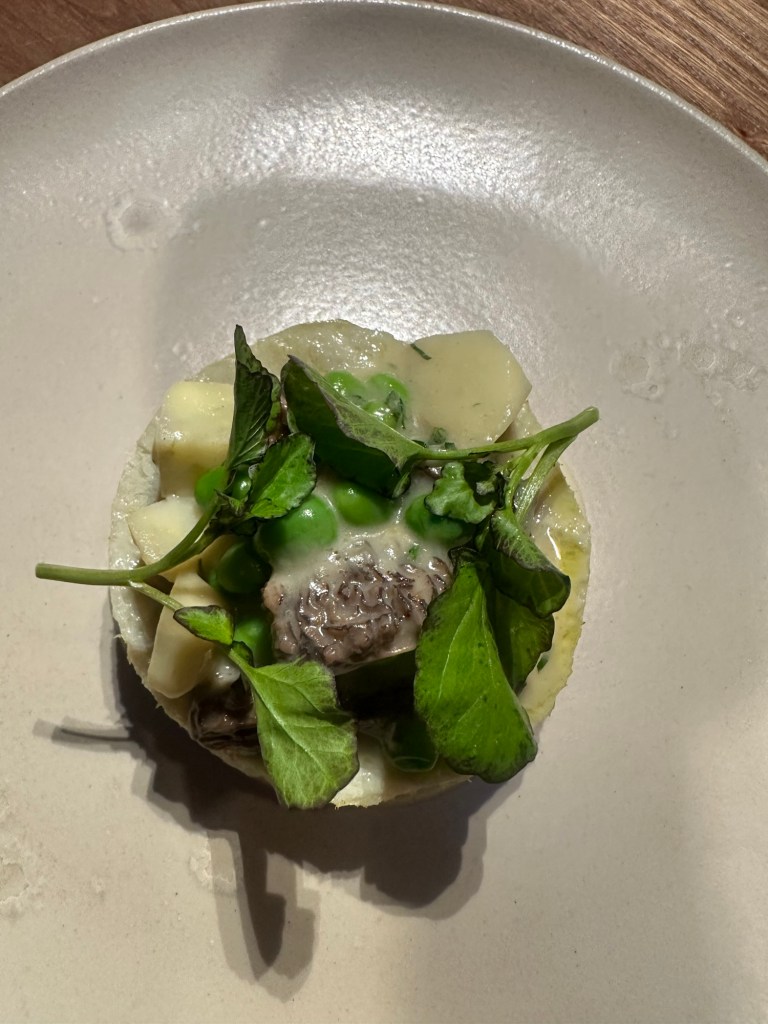
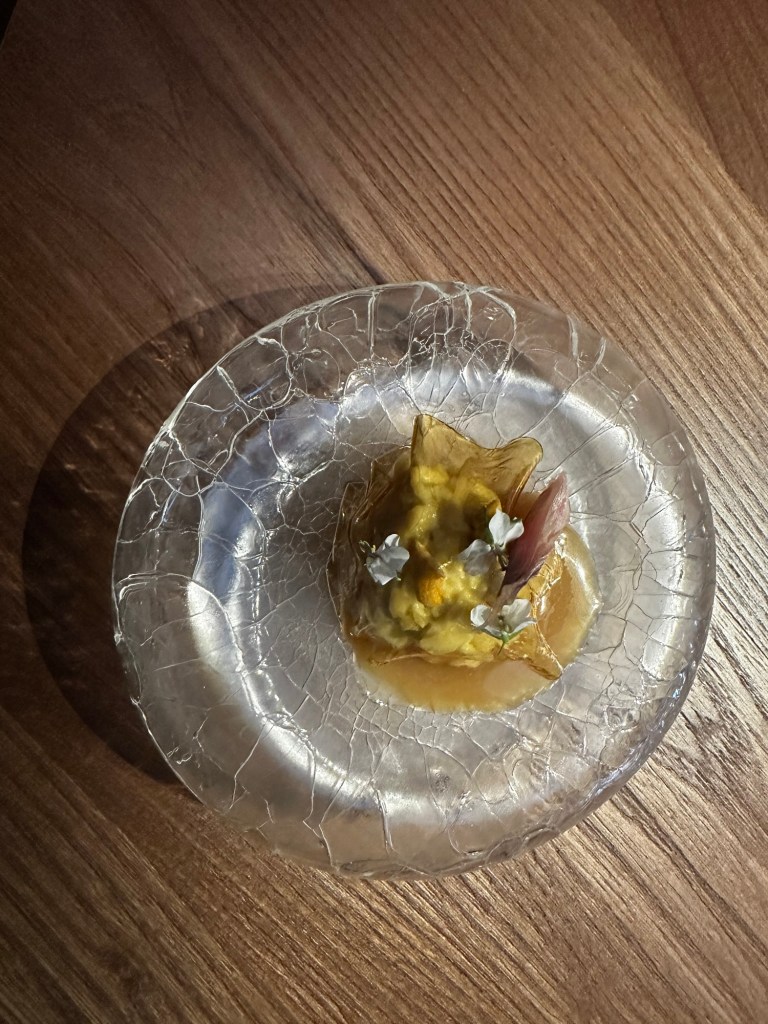
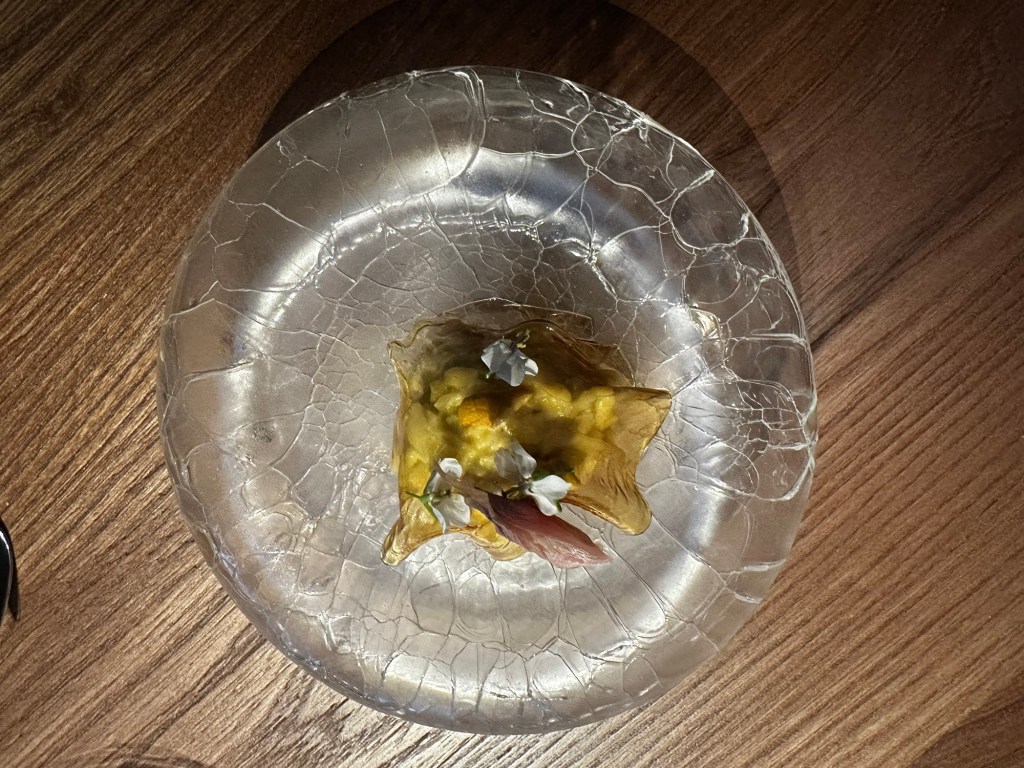
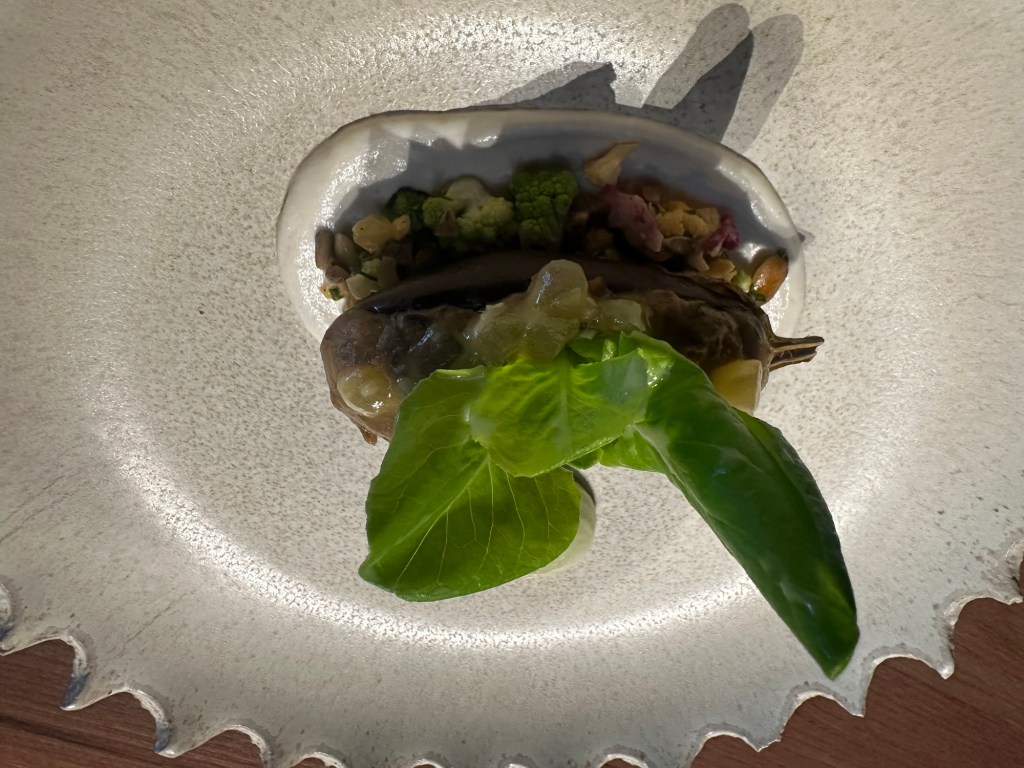

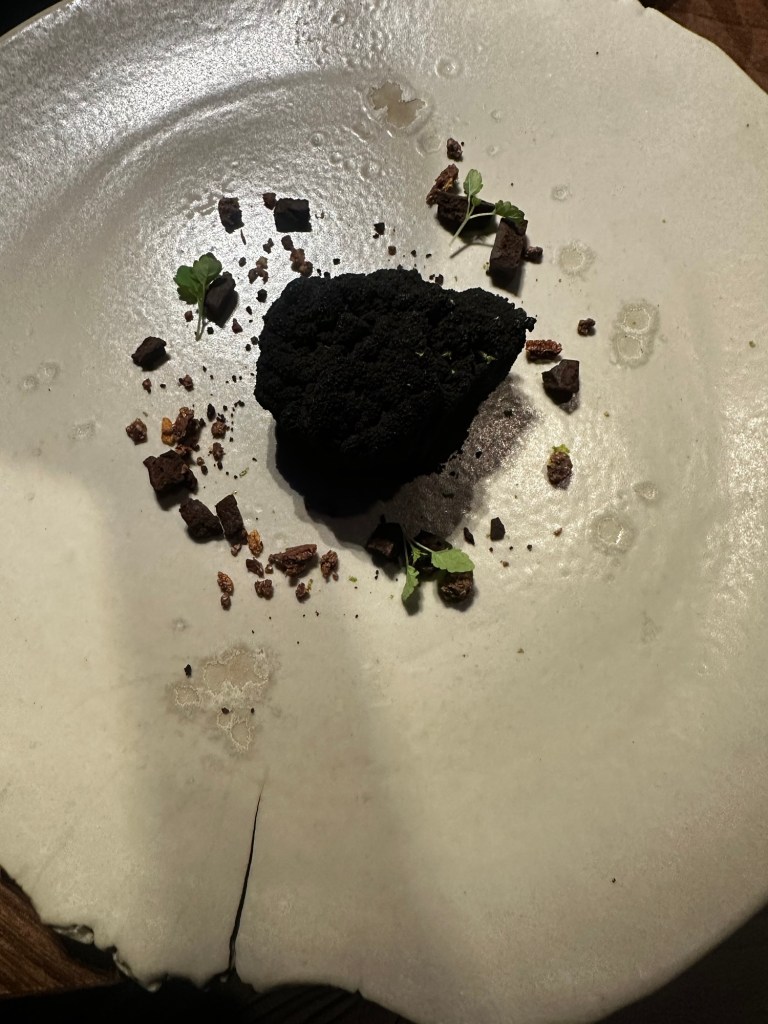
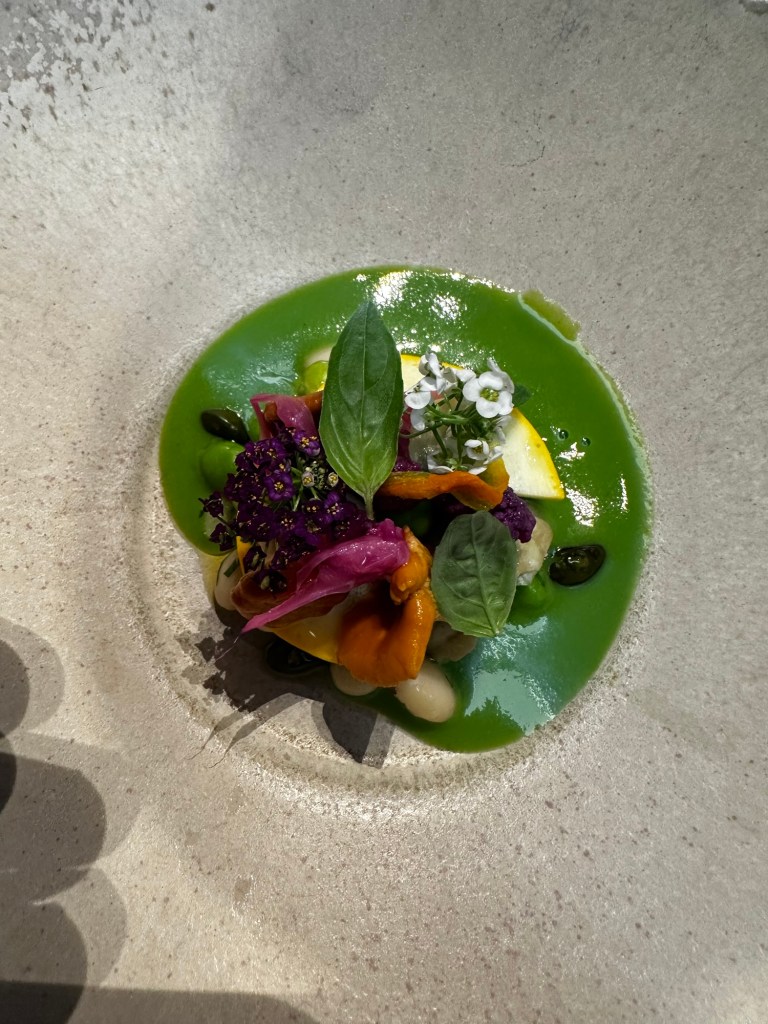
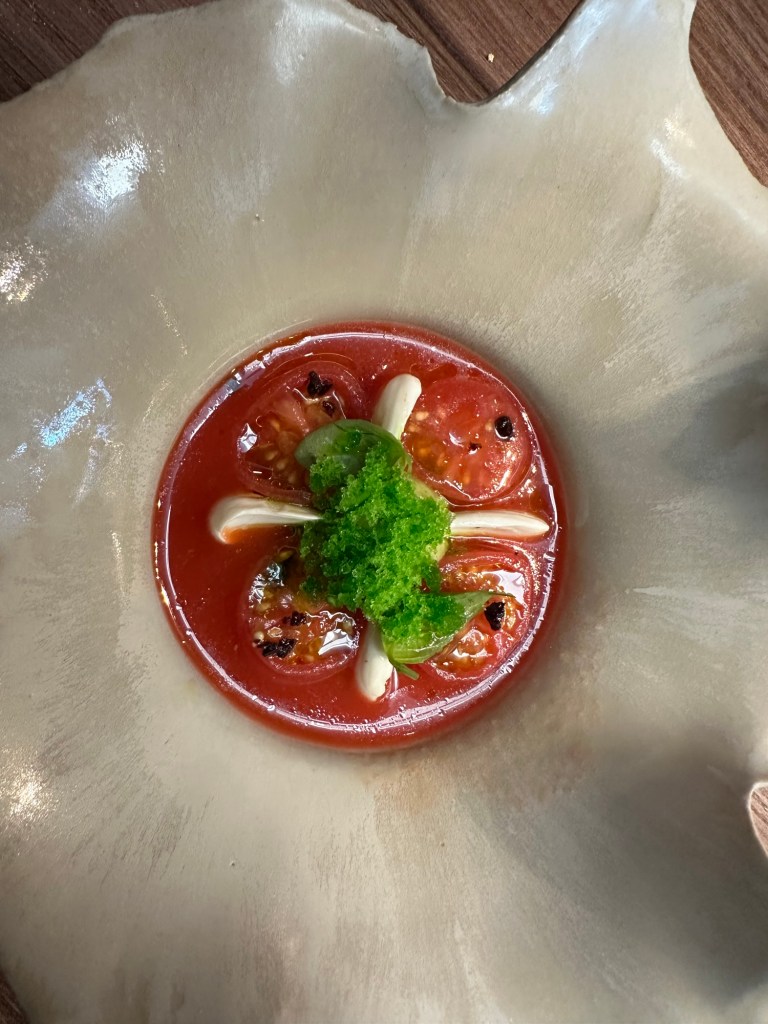
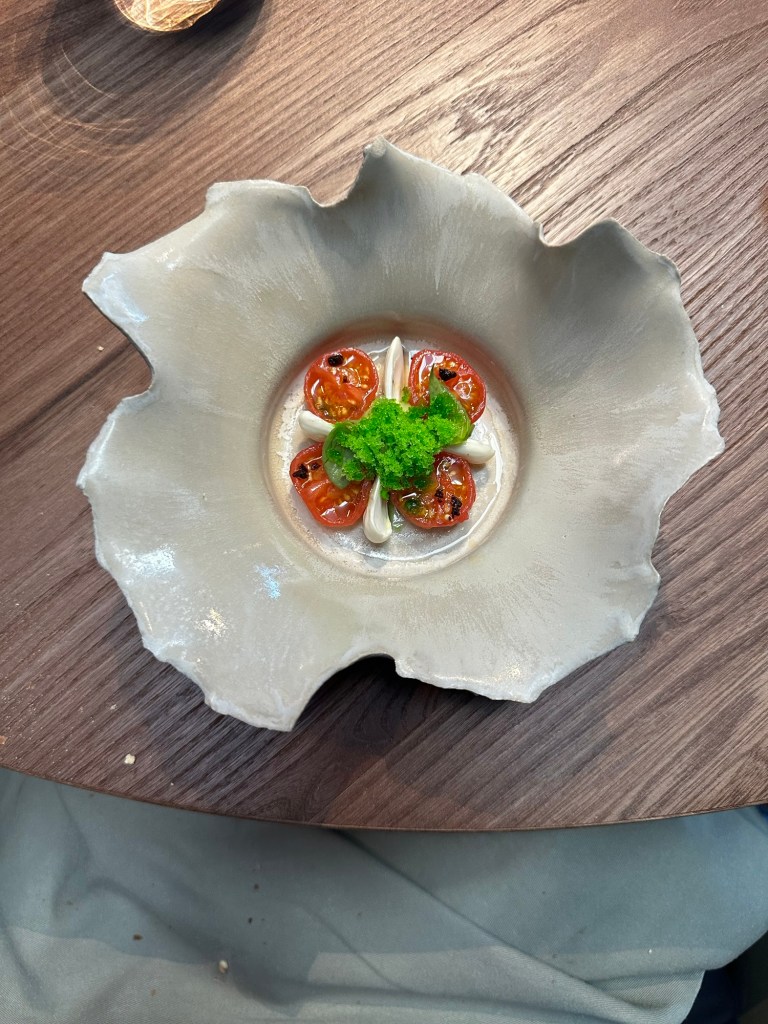


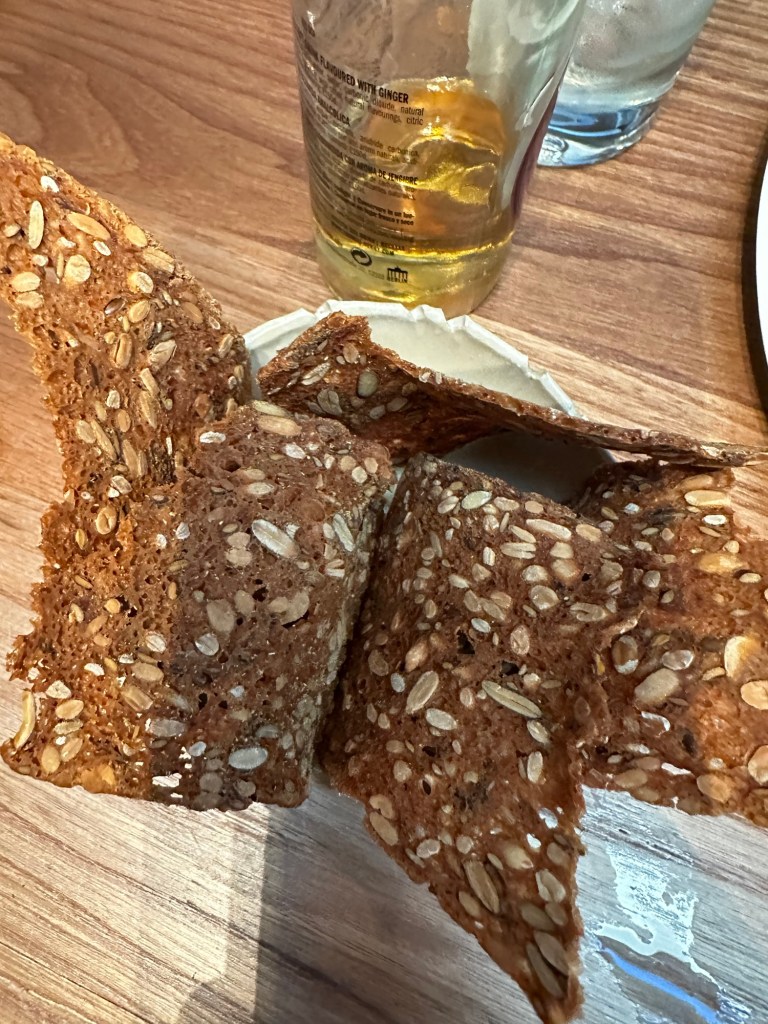

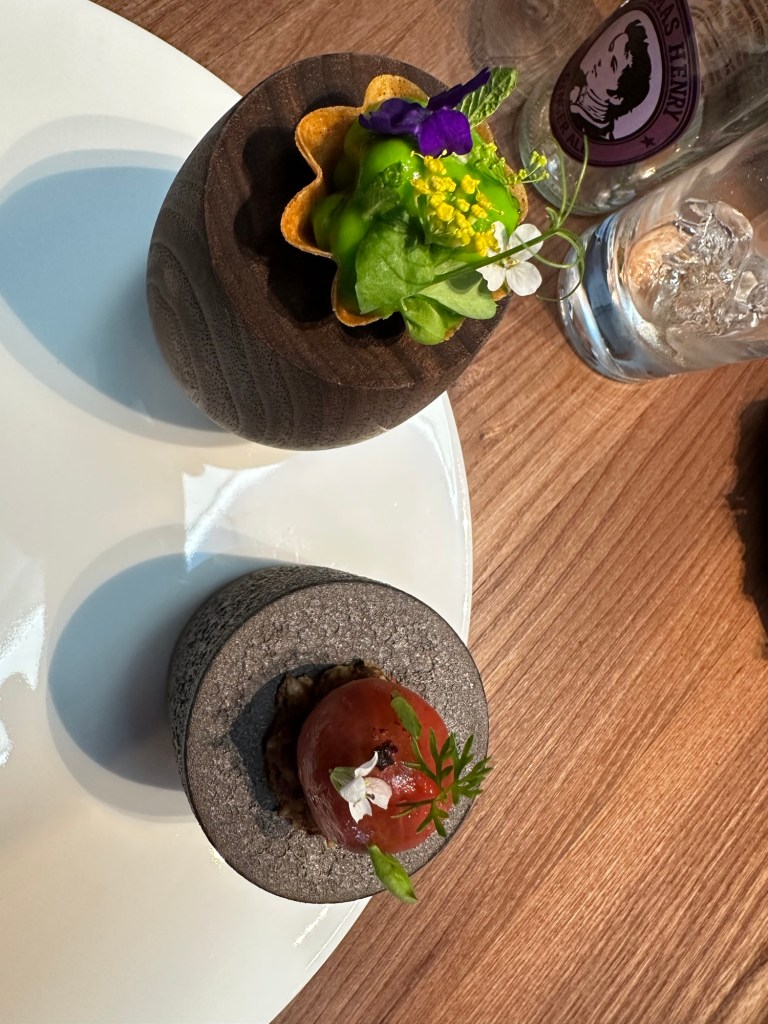
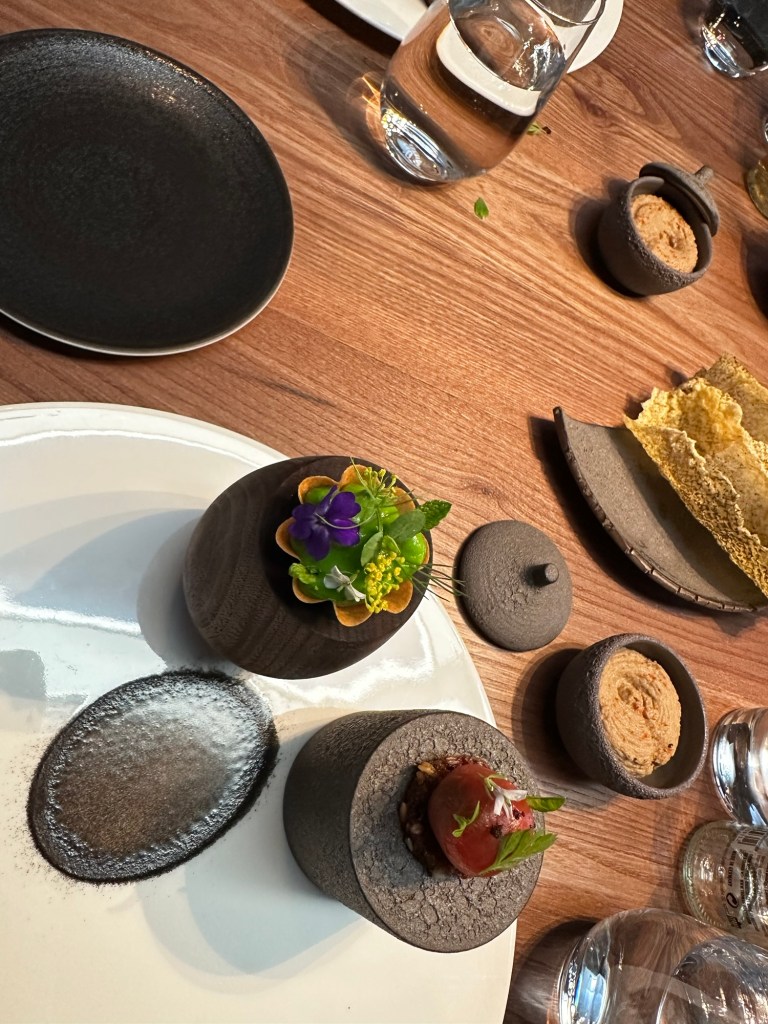

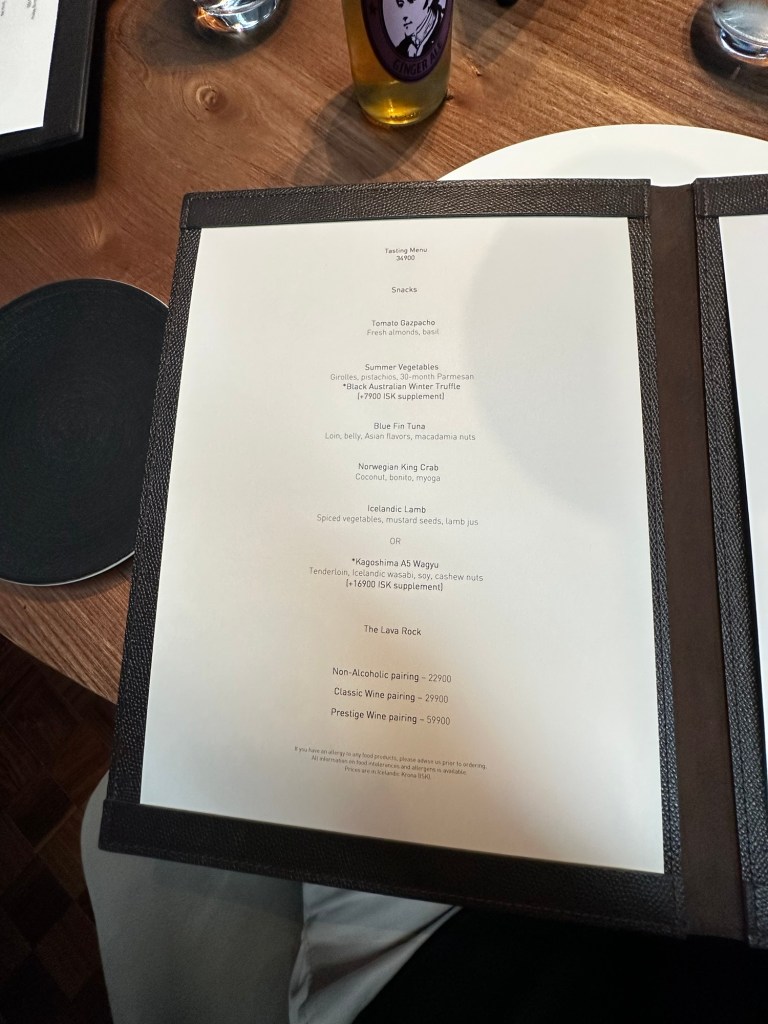
Two of us indulged in the signature tasting menu, while the other two embraced the vegan version — each course a small work of art.
The signature tasting menu opens with elegant snacks and a chilled tomato gazpacho brightened by fresh almonds and basil. Summer vegetables arrive dressed with girolles, pistachios, and a snowfall of aged Parmesan, with the tempting option to crown it with Black Australian Winter Truffle. From there, the meal travels through the ocean’s depths with silky bluefin tuna in multiple cuts, then the sweet, briny indulgence of Norwegian king crab with coconut, bonito, and myoga. The centerpiece: tender Icelandic lamb in a spiced vegetable medley, marbled perfection paired with Icelandic wasabi, soy, and cashew nuts.
The vegan tasting menu mirrors this arc with its own artistry. Tomato gazpacho remains the bright and refreshing opener, followed by summer vegetables in a velvety pea soup, again with the option of black truffle for those seeking a touch of luxury. Baby beetroots arrive dressed in pistou, horseradish, and yuzu, while aubergine takes center stage in a harissa and Thai curry embrace, paired with cauliflower in multiple guises. Globe artichoke closes the savory courses, spiced and nestled atop celeriac.
Dessert comes in the form of The Lava Rock — playful and dramatic.
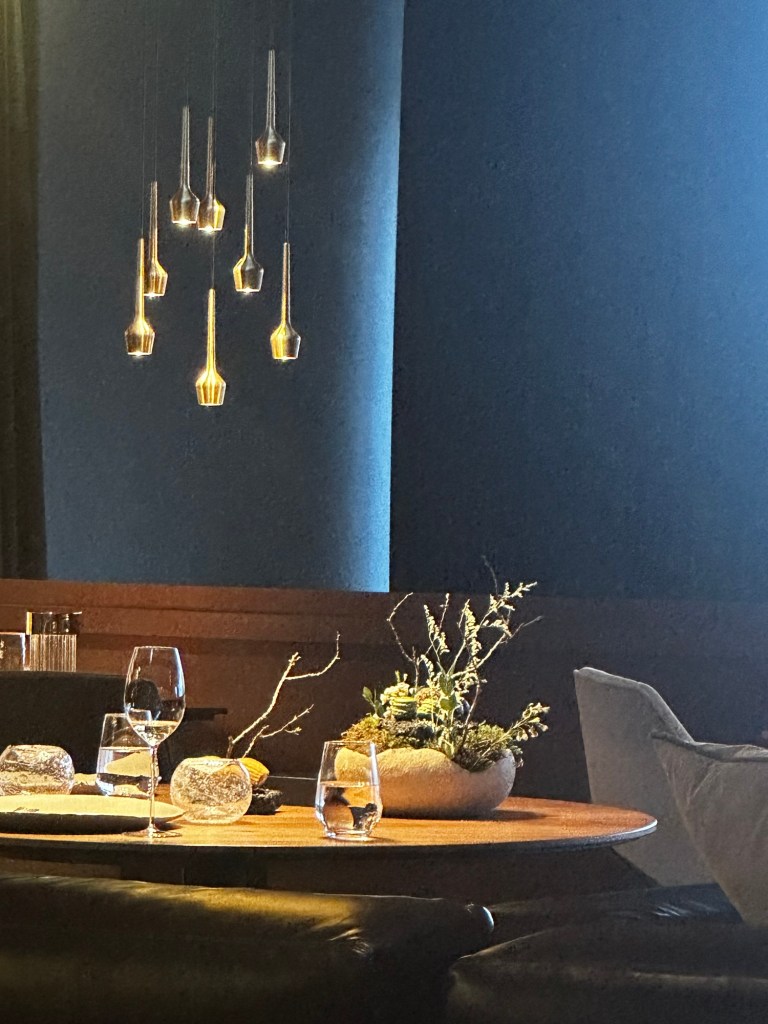

At other Michelin-starred restaurants, I’ve sometimes left feeling a bit queasy and still hungry, but Moss was different. Here, every plate felt nourishing, generous, and alive with flavor — the kind of meal that lingers in memory for all the right reasons.
Sadly, this will be our last night in Iceland.
 YouDontKnowJackTravels