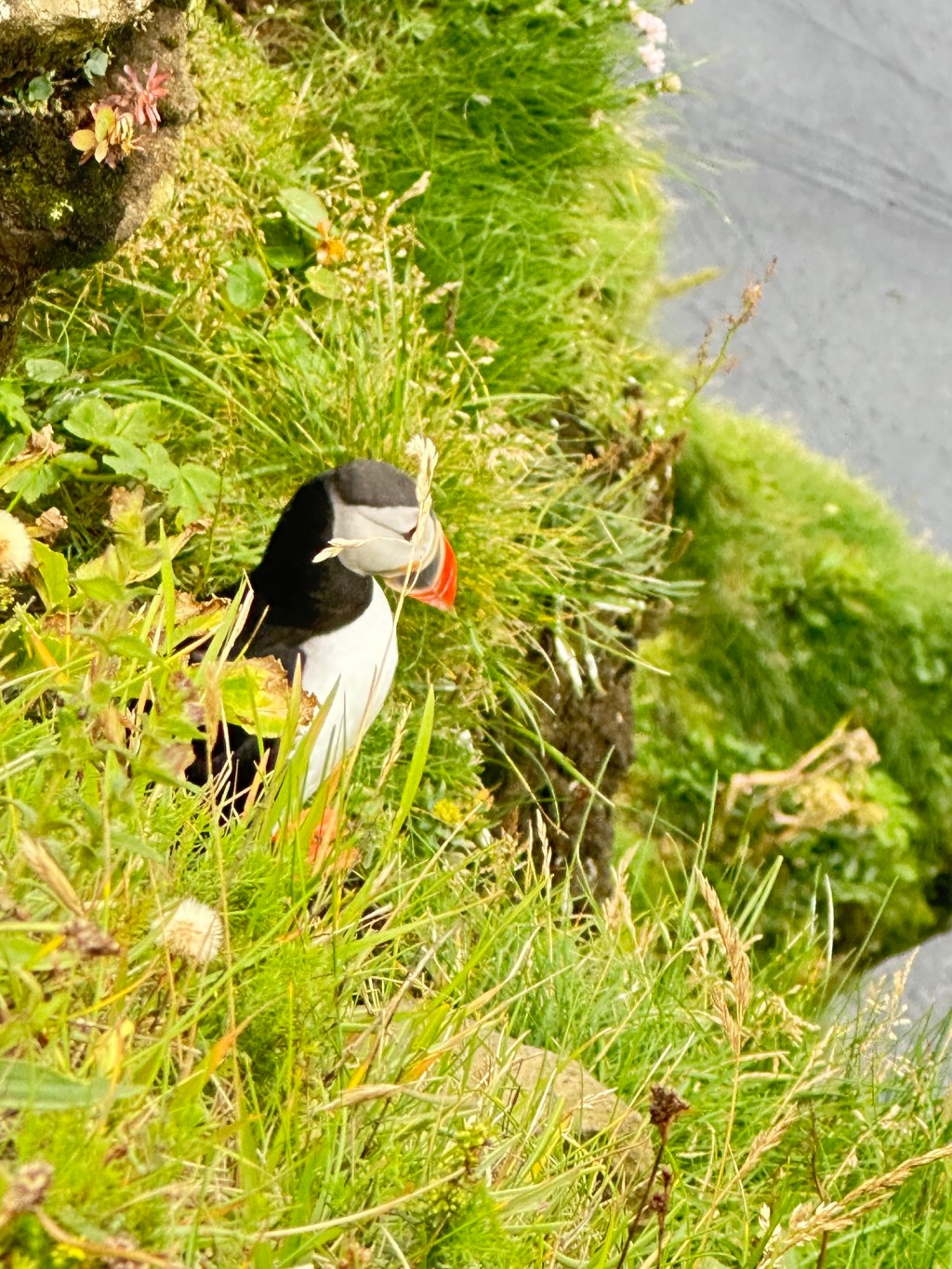
Today’s journey along Iceland’s southern coast takes us from iceberg lagoons to diamond-strewn beaches, across sweeping landscapes, and finally to a close encounter with Puffins — ending with a bit of horsing around. Let’s take it in that order.
Fjallsarlon Lagoon
We left the Ring Road behind and turned toward a quiet stretch of shoreline at the foot of Vatnajokull, where Fjallsarlon waited like a secret. Smaller than its famous neighbor Jokulsarlon, this glacier lagoon feels more like a private audience with the ice. The parking lot was not nearly full, and the only sound was the wind sweeping across the moraine.
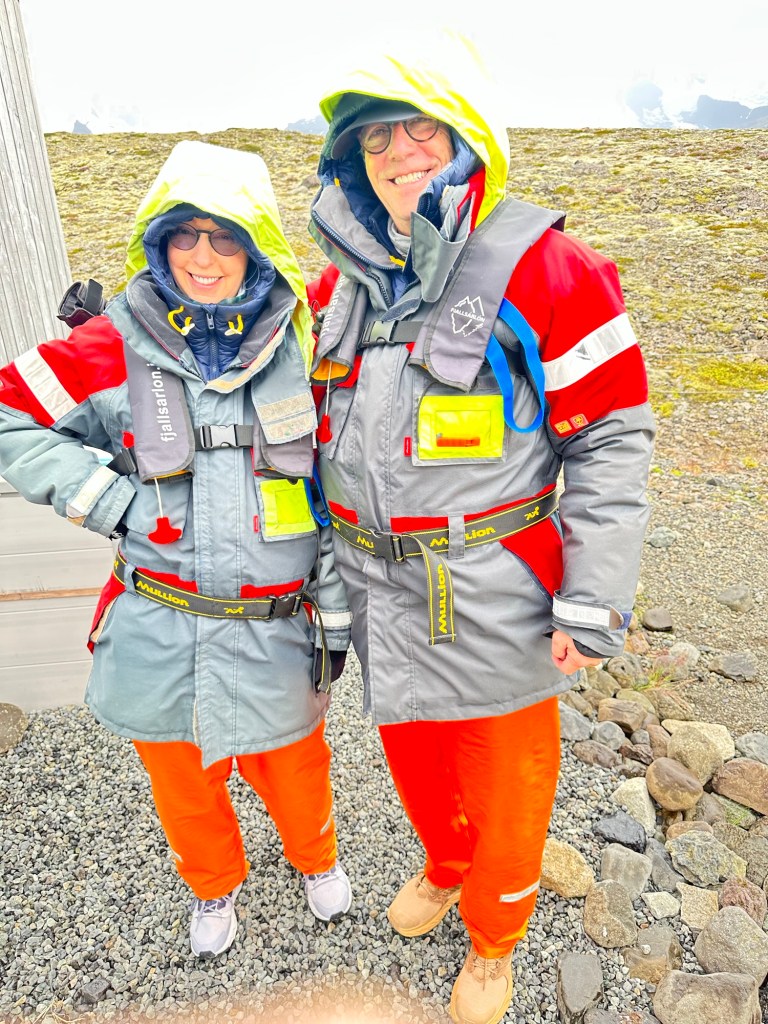
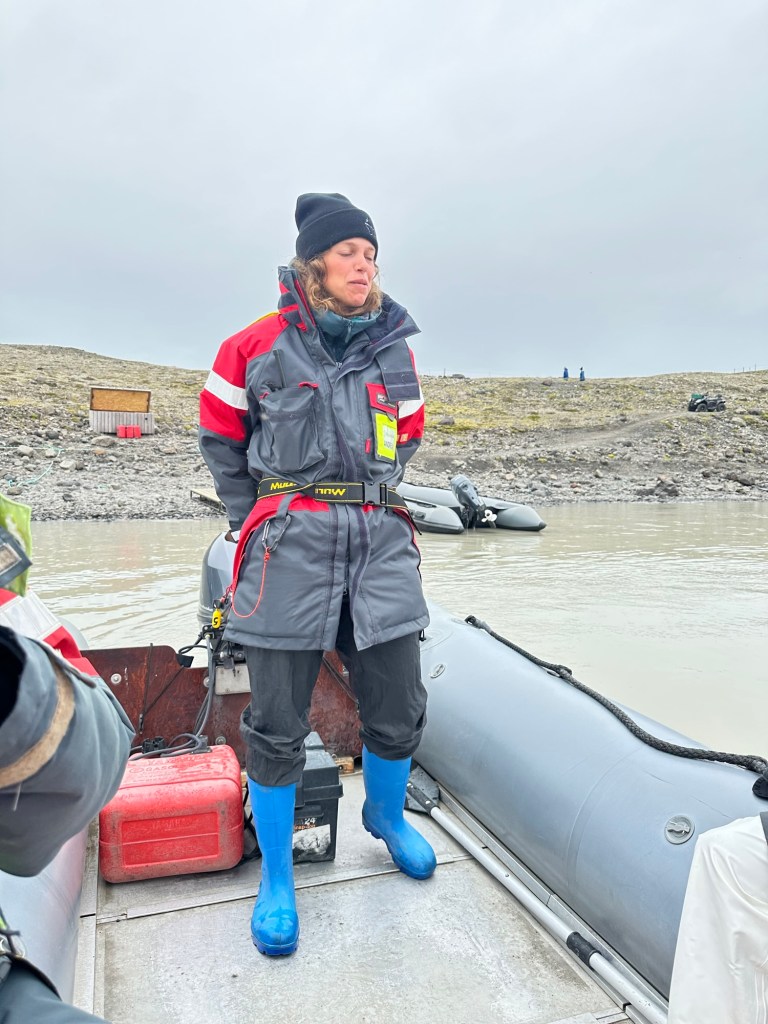
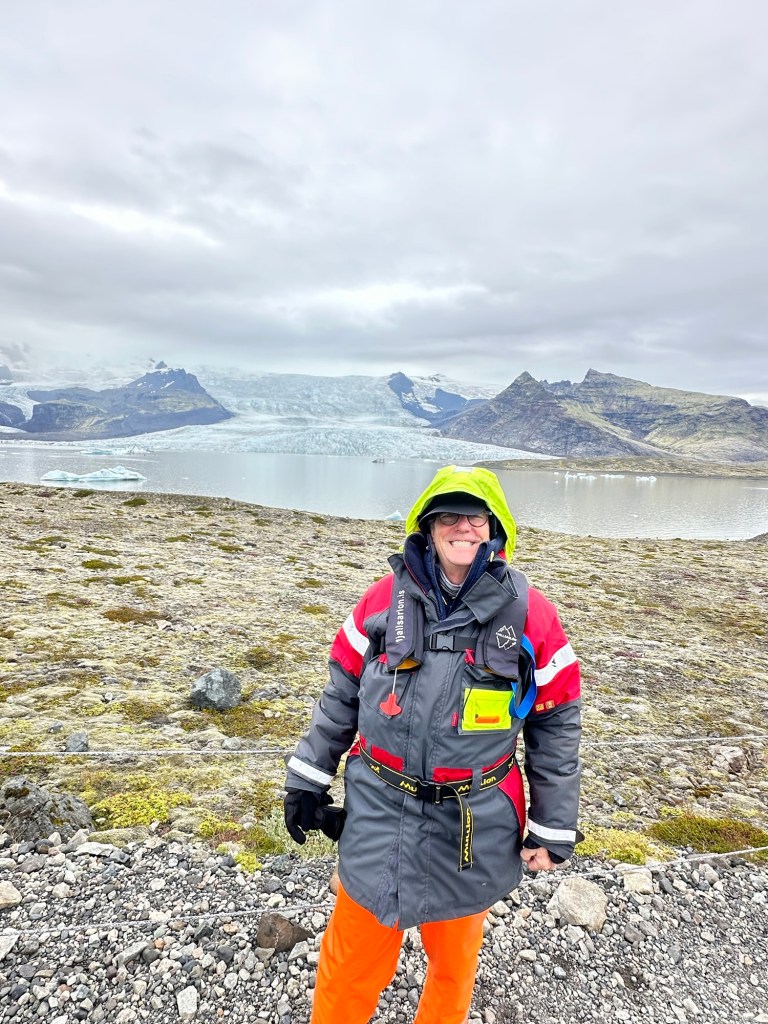
At the staging area, local staff handed us bright flotation suits—white or orange—equal parts safety gear and instant costume for an Arctic adventure. Kristinn and our local guide, Anna, helped us wrestle into them, tugging zippers and fastening straps until we were securely sealed in and just a bit Michelin-Man-esque. Apparently the suits will float if you go overboard, coupled with a life vest that automatically deploys should it get wet. They are very proud that no one has yet gone into the water, and that we should not be the first.
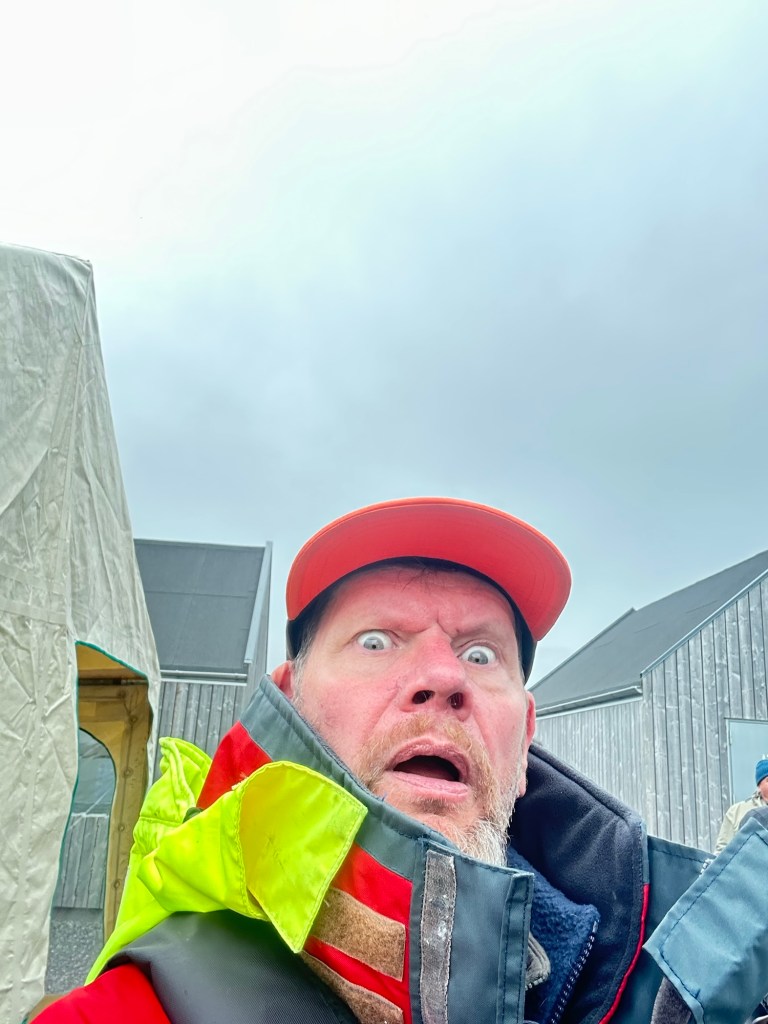
Kristinn, with a twinkle in his eye, demonstrated how years of Icelandic weather had etched its story across his face.
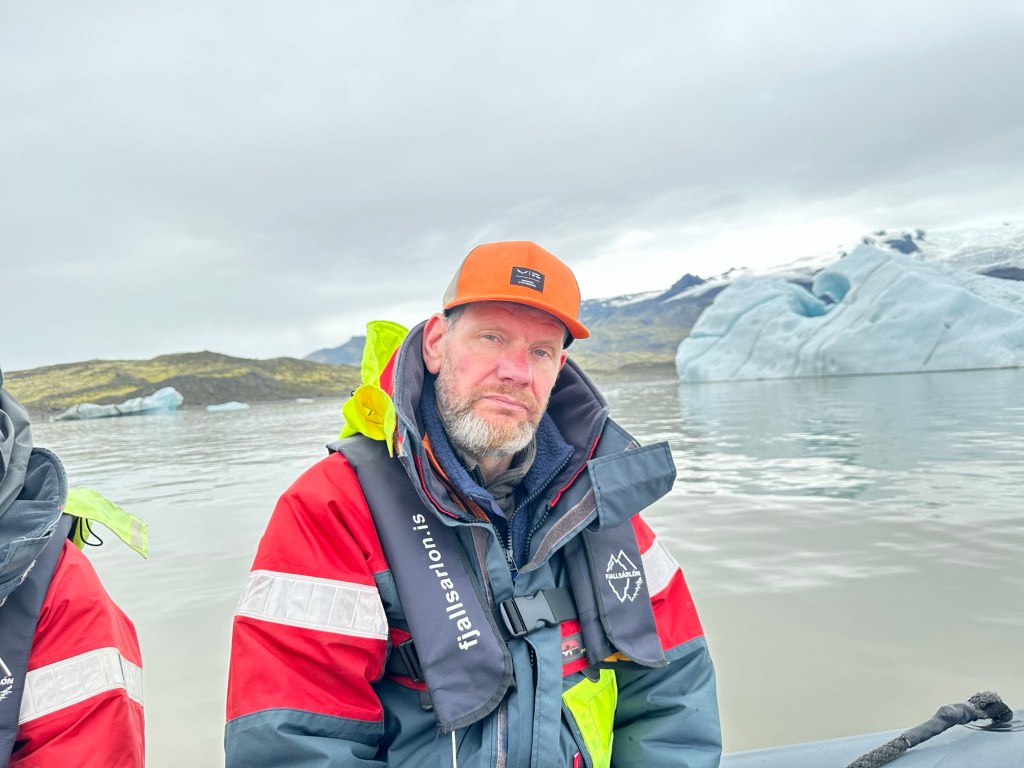



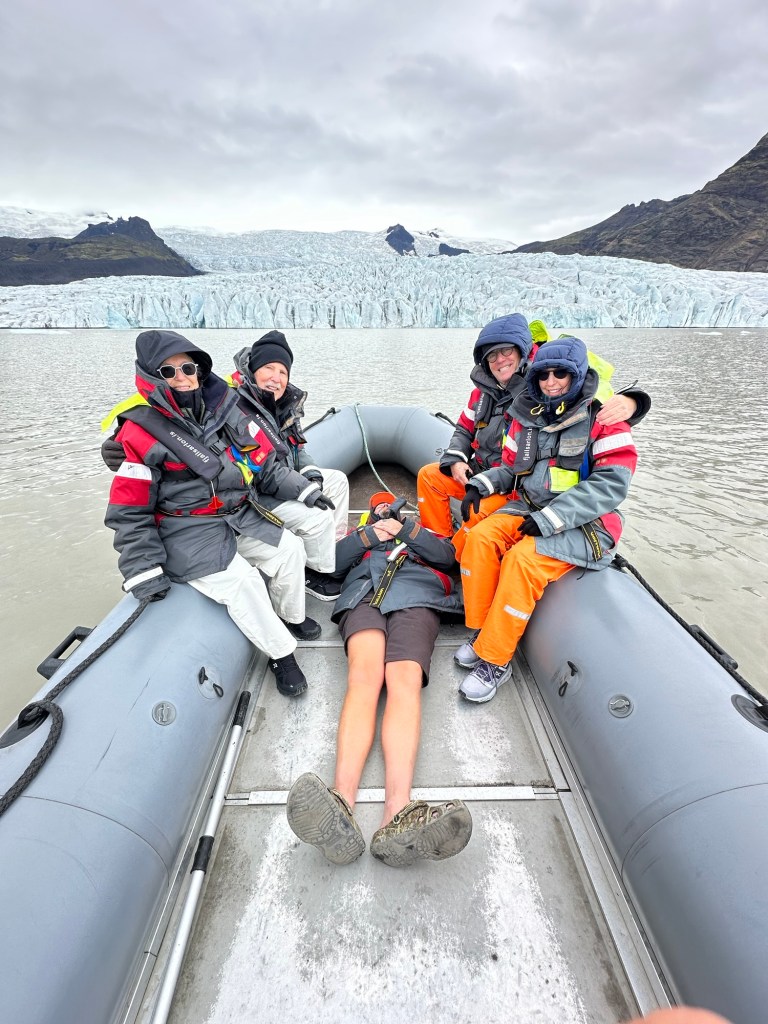
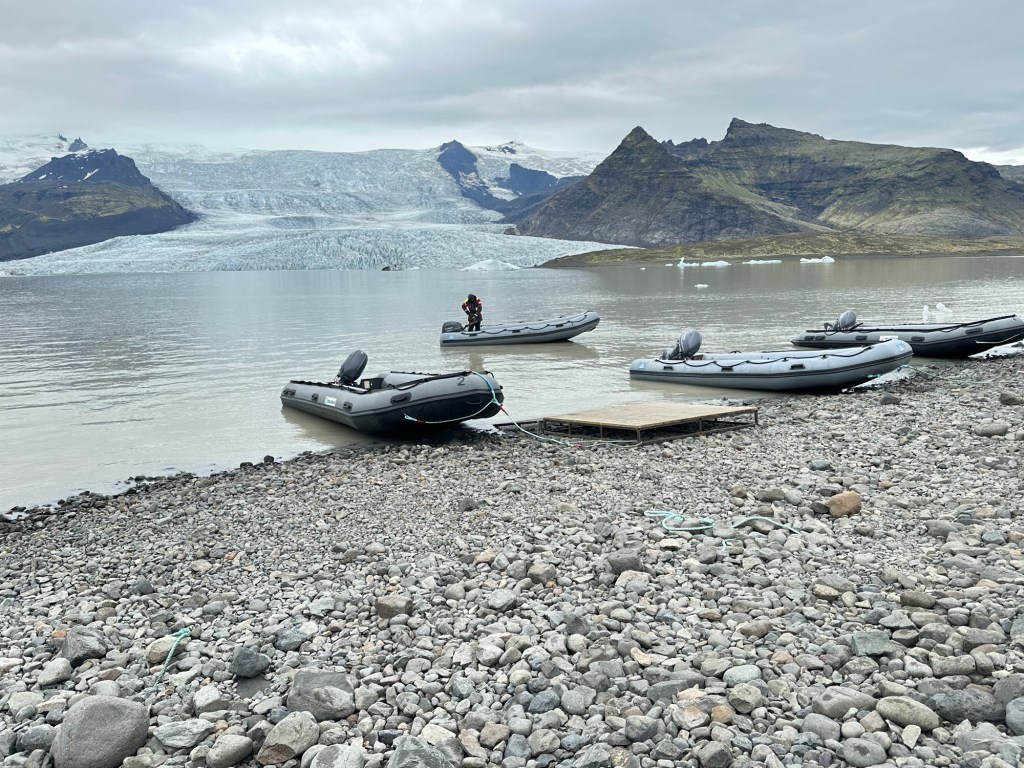
A short walk brought us to the water’s edge, where a black zodiac bobbed gently on the glassy lagoon. We clambered aboard with Kristinn and Anna, the outboard murmuring to life as we slid away from shore toward the icebergs and glacier. With each passing minute, the air grew sharper, the temperature dropping noticeably as we closed in on the ice.

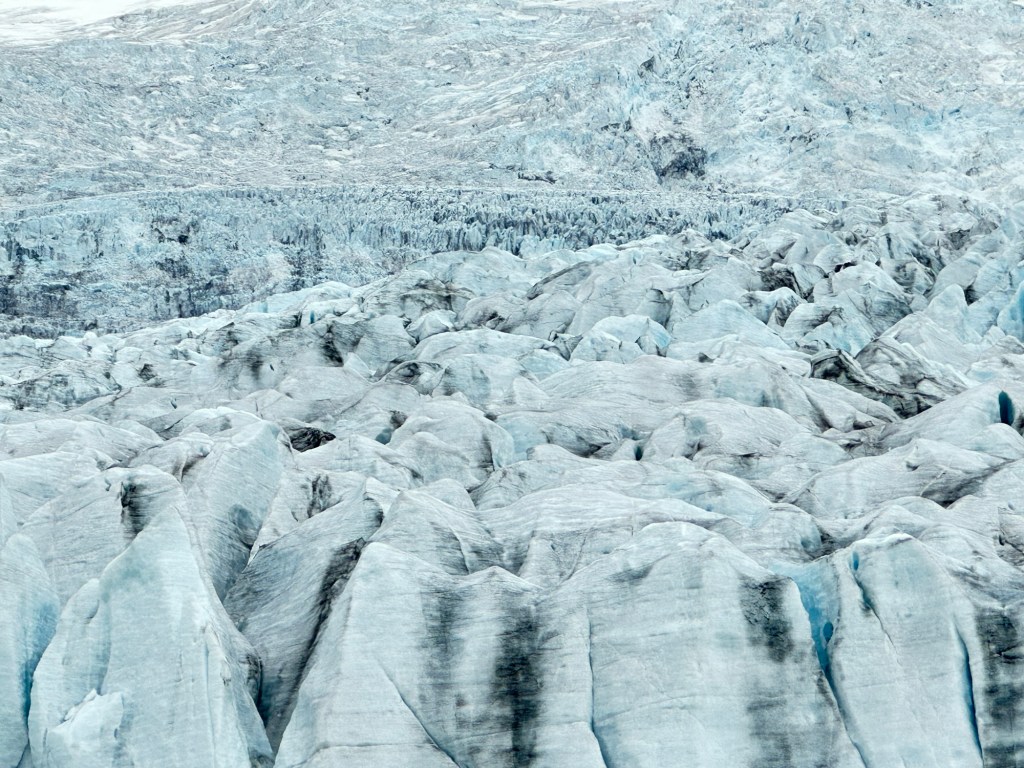
The water’s surface was a mirror, broken only by the occasional ripple of our wake or the sharp crack of ice breaking free. Each iceberg was a sculpture in motion—some jagged and towering, others low and rounded, their surfaces streaked with volcanic ash from eruptions long past. In the deeper shadows, ice turned an almost impossible shade of blue, the color of centuries trapped beneath the glacier.
We wove among them slowly, close enough to see the meltwater streaming in rivulets and hear the hiss as air escaped from ancient ice pockets. Every so often, a piece would calve with a deep, resonant groan, sending ripples fanning out across the lagoon.
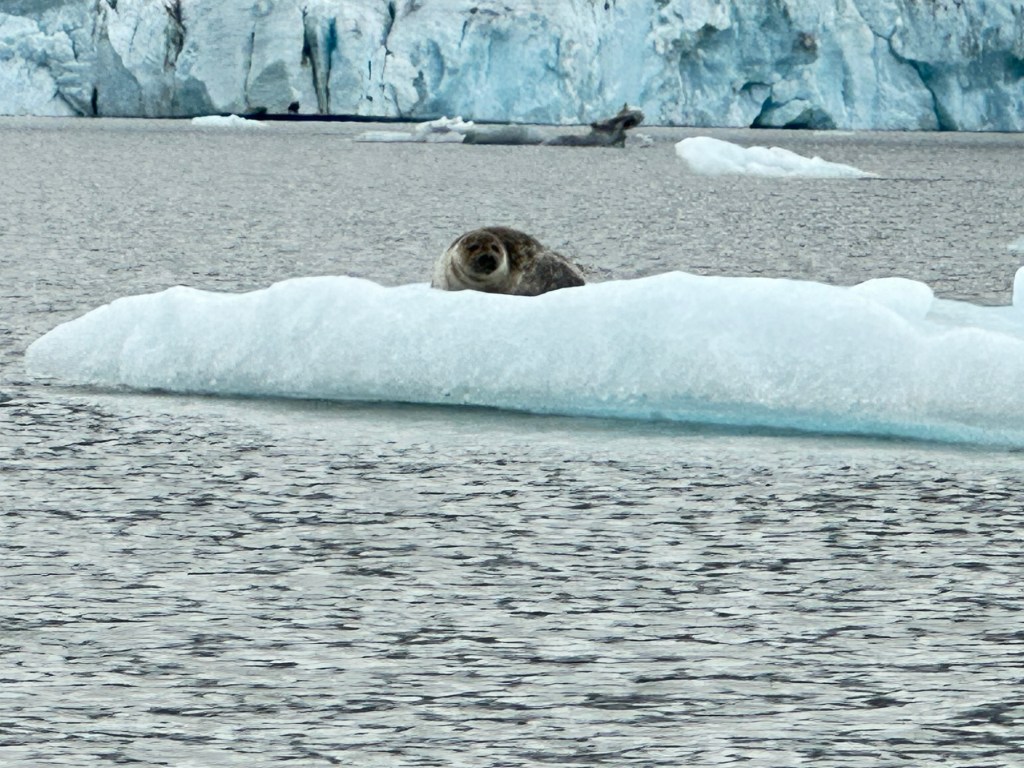
One of the day’s highlights was spotting a baby seal draped across an iceberg like it owned the place. It gave us only a brief, disinterested glance before turning its attention back to whatever mattered more than the curious intruders.
Anna gave us a vivid, step-by-step account of how icebergs are born from the glacier’s edge, drift into the lagoon, and slowly transform — melting, flipping, and sometimes shattering in a final burst of drama.
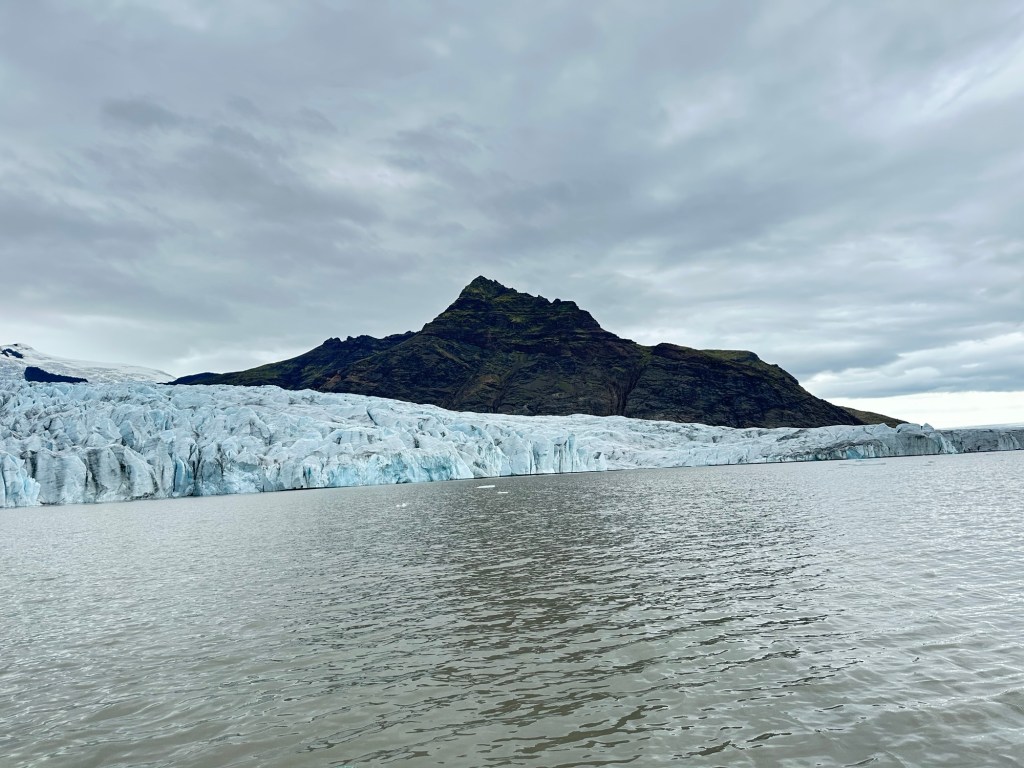

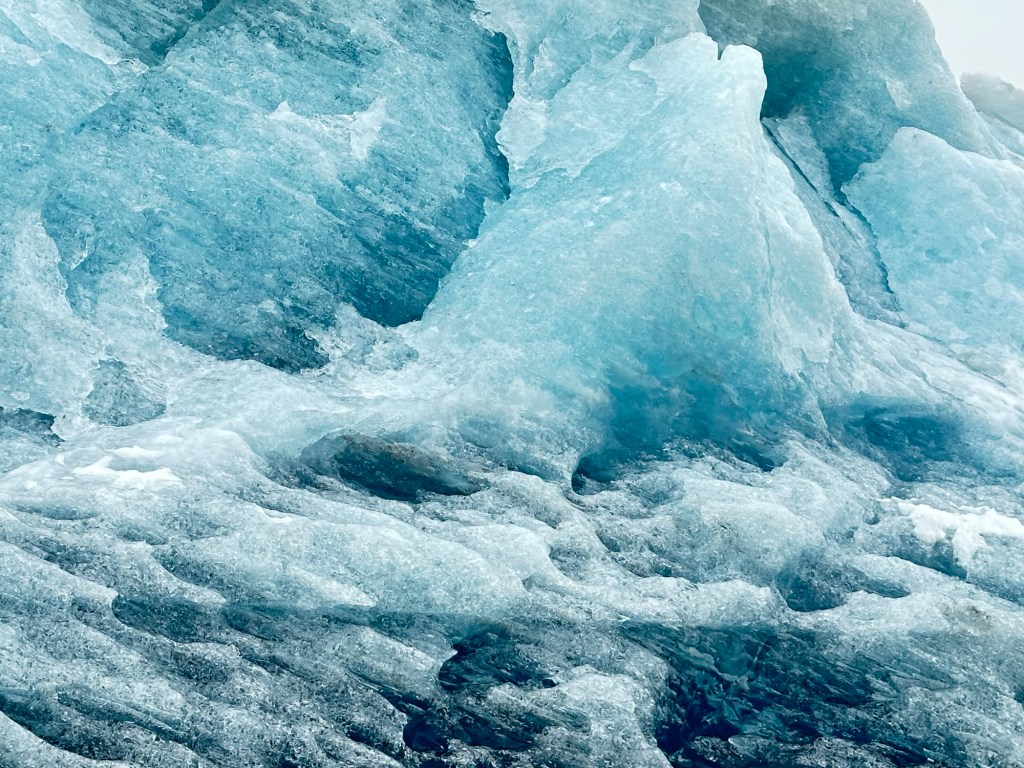
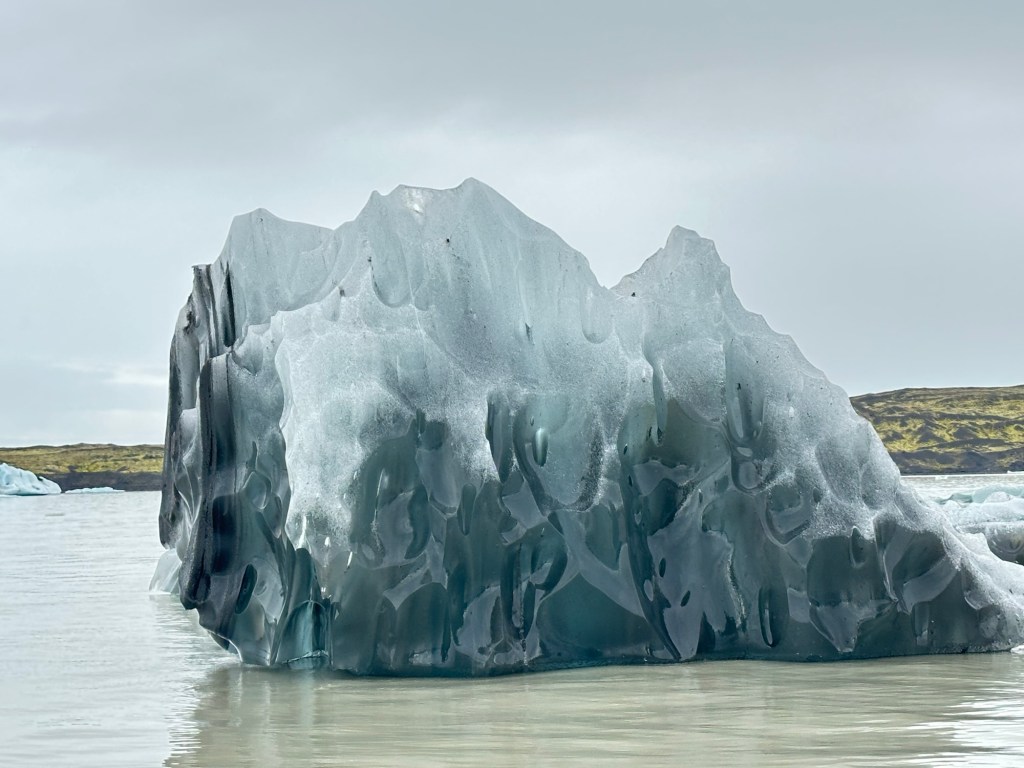
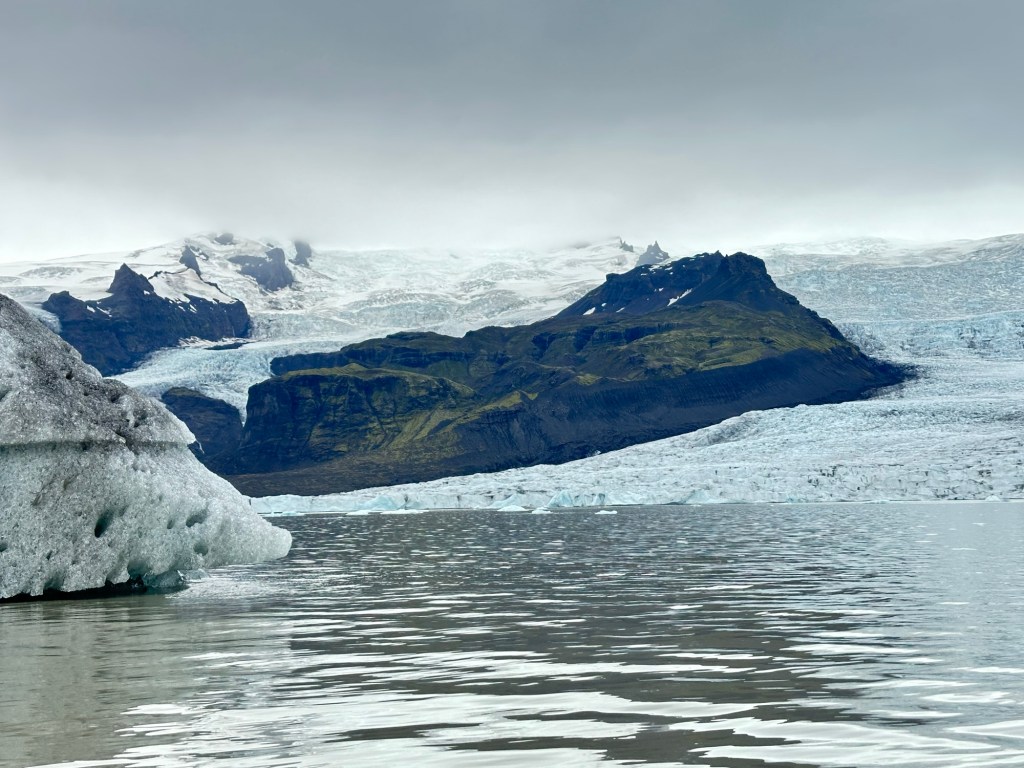
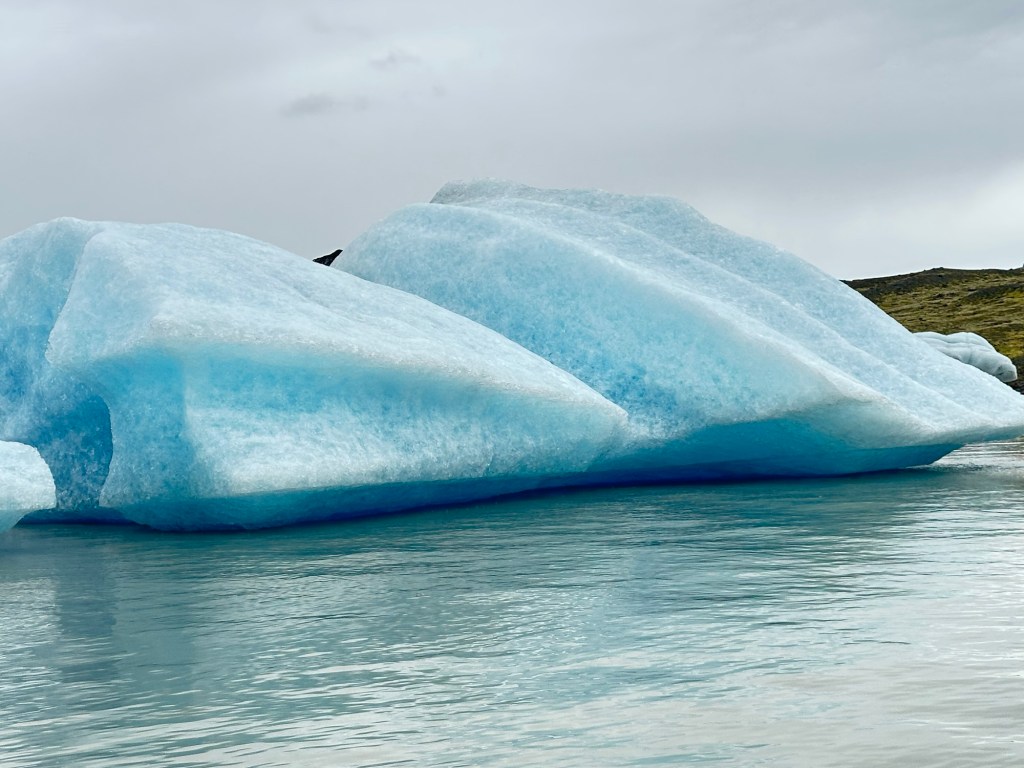

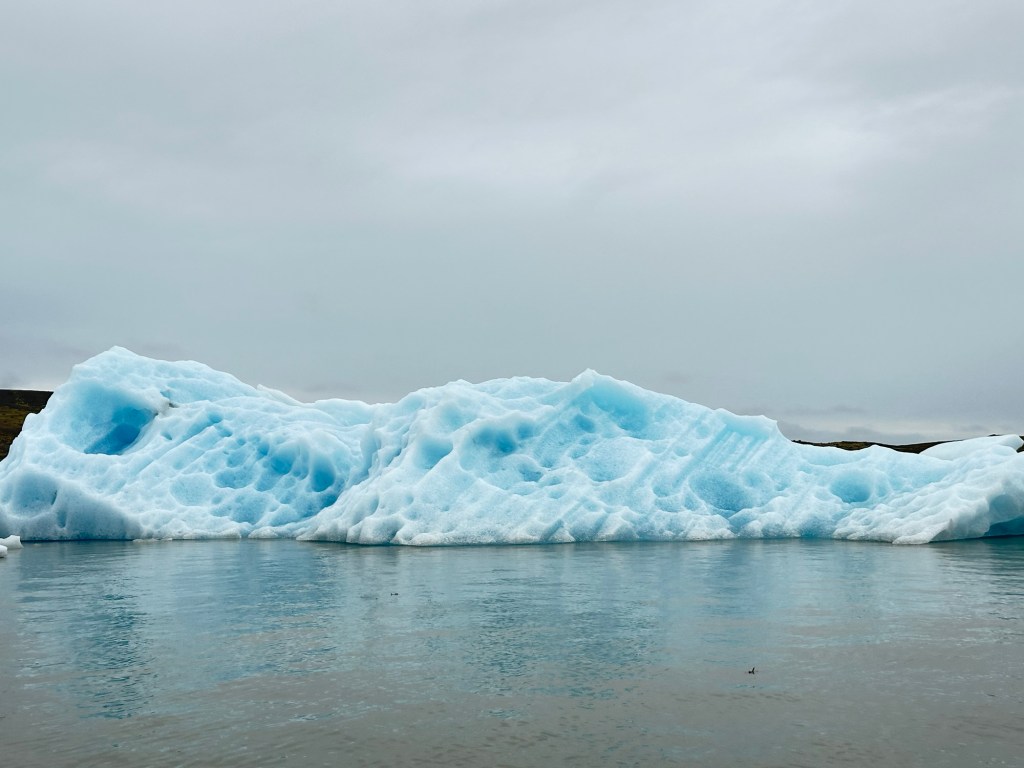
We left the lagoon with cheeks flushed from the cold air and the thrill of the ride, salt still on our lips and glacier mist in our hair. Behind us, the ice wall faded into the distance, but the image of that shimmering blue expanse will linger far longer than our footprints on the dock.
Lomagnupur
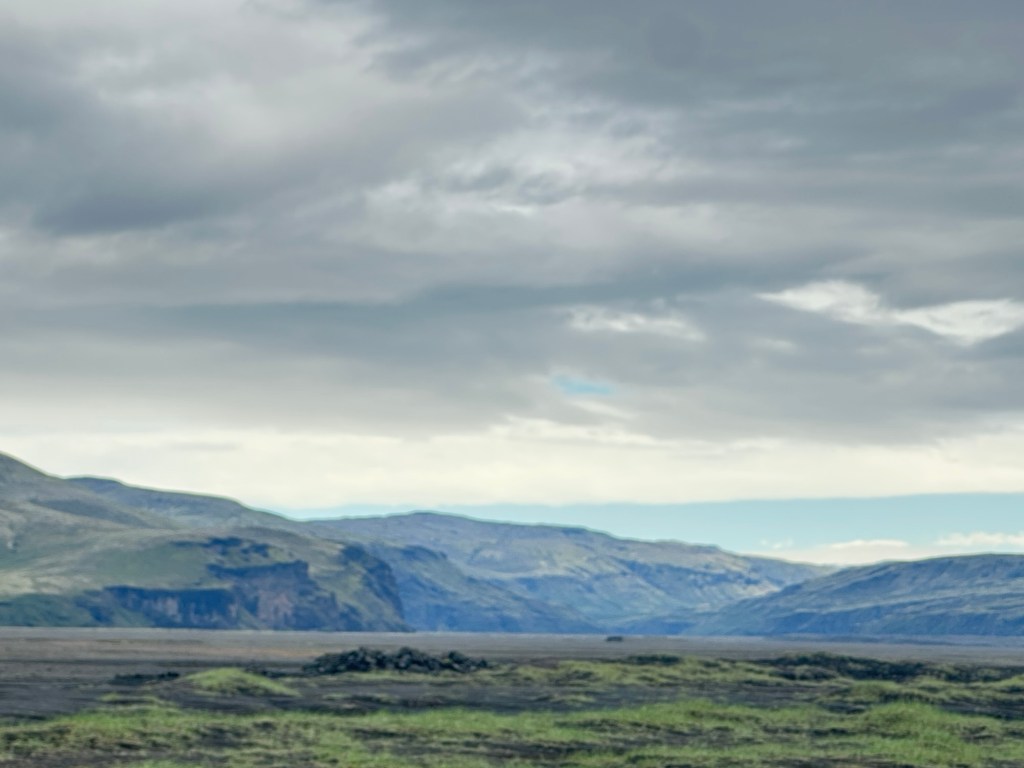
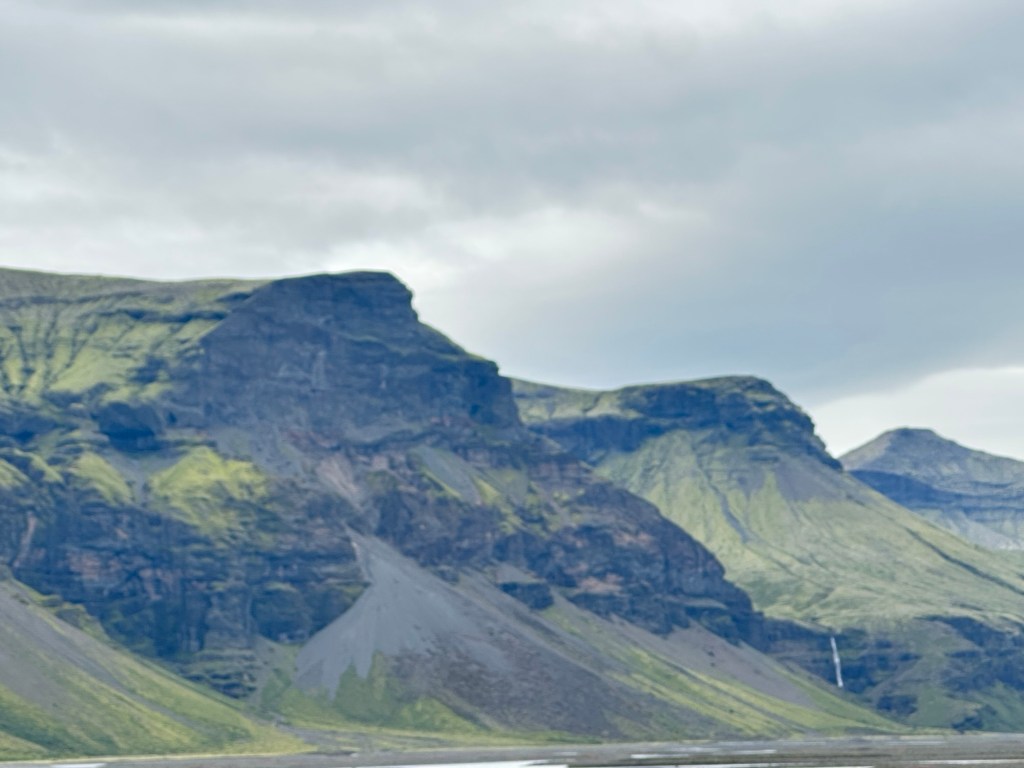
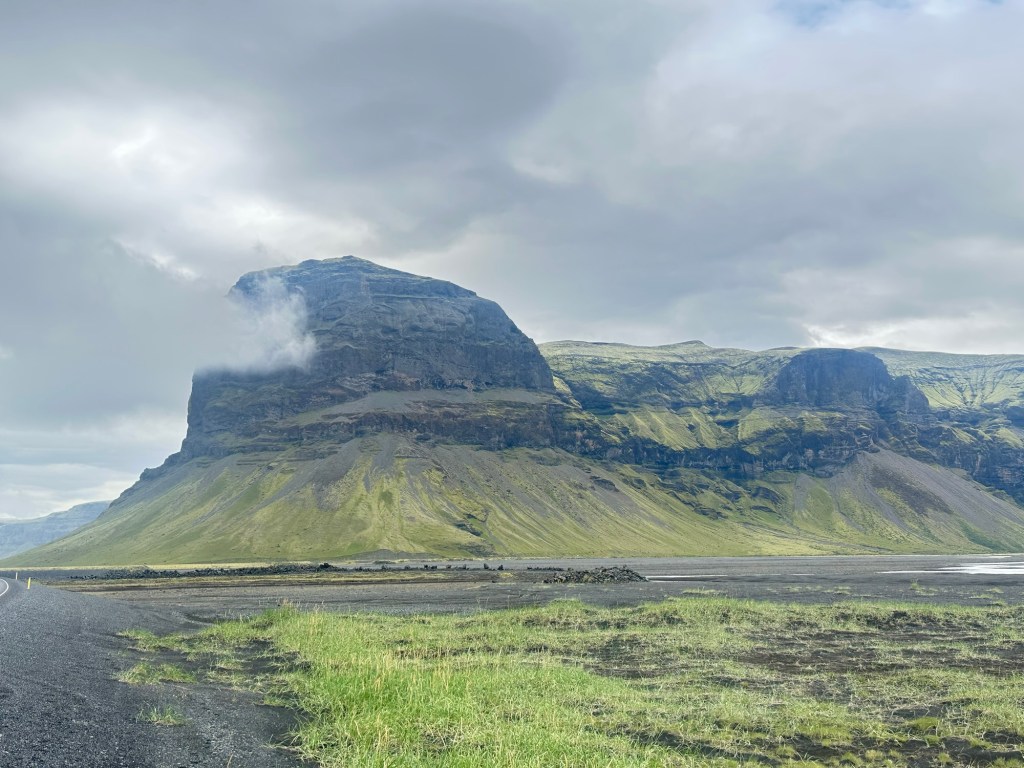
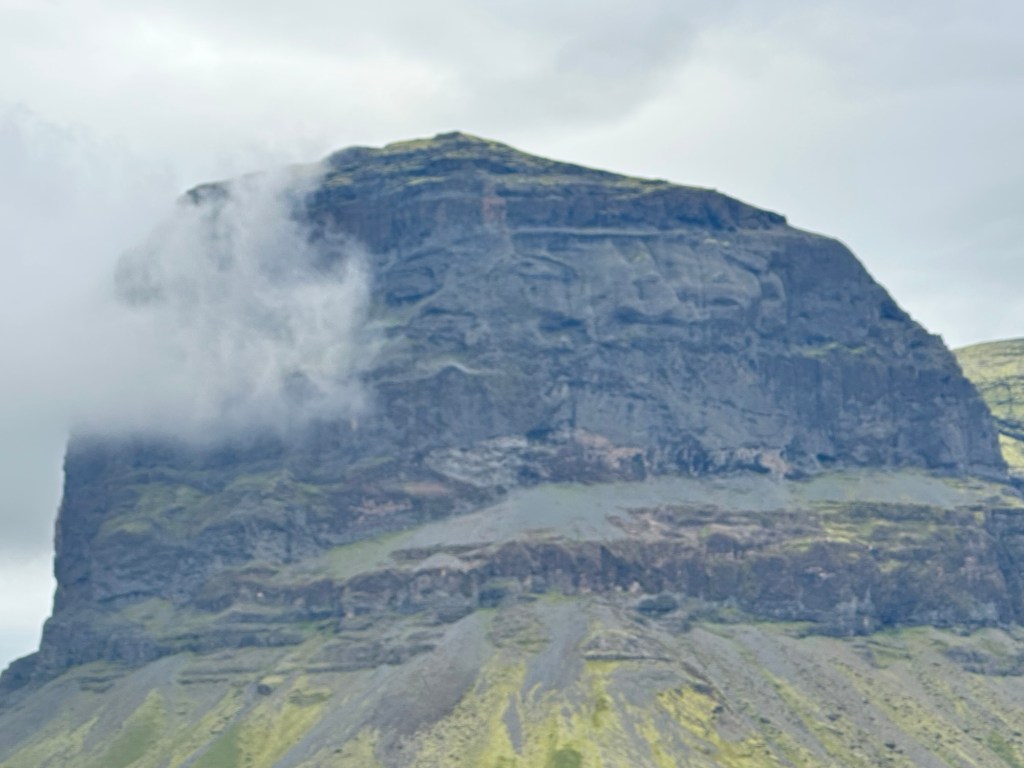
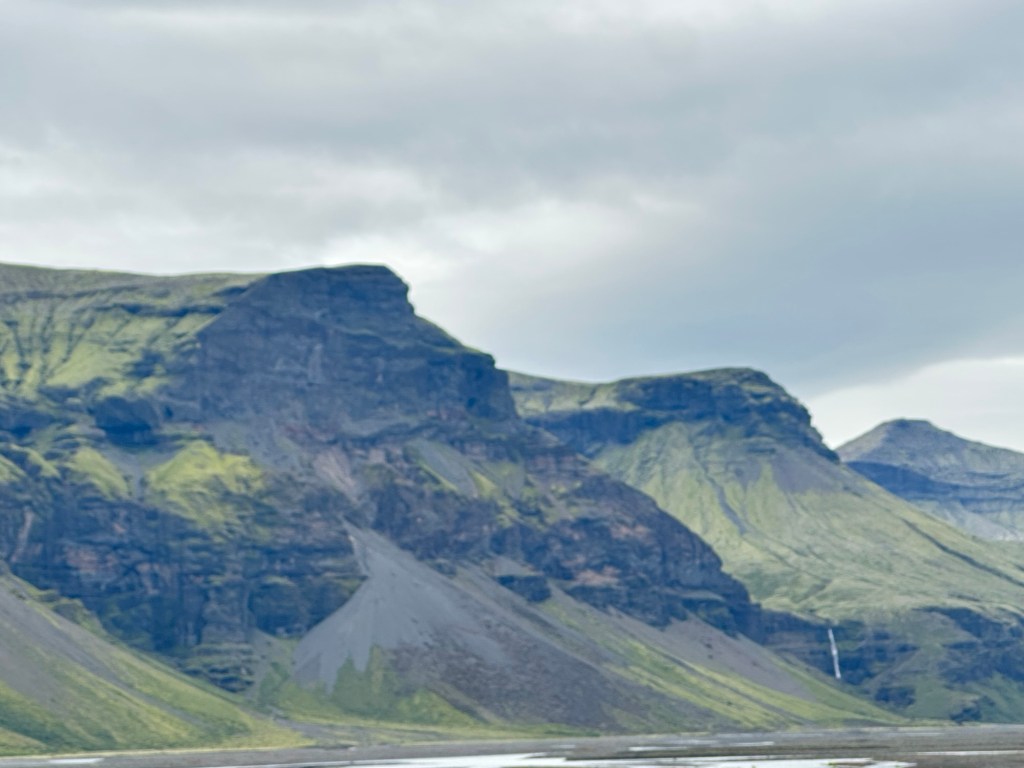
Kristinn made a brief stop at Lomagnupur, a striking massif on Iceland’s south coast, its sheer cliffs and moss-cloaked slopes rising abruptly from the vast black-sand plain. According to legend, it is home to a guardian giant who appears in dreams to warn of impending disaster. Kristinn has a passion for such places, talking about them as if he’d stepped straight out of their myths.

Diamond beach and Jokulsarlon Glacier Lagoon
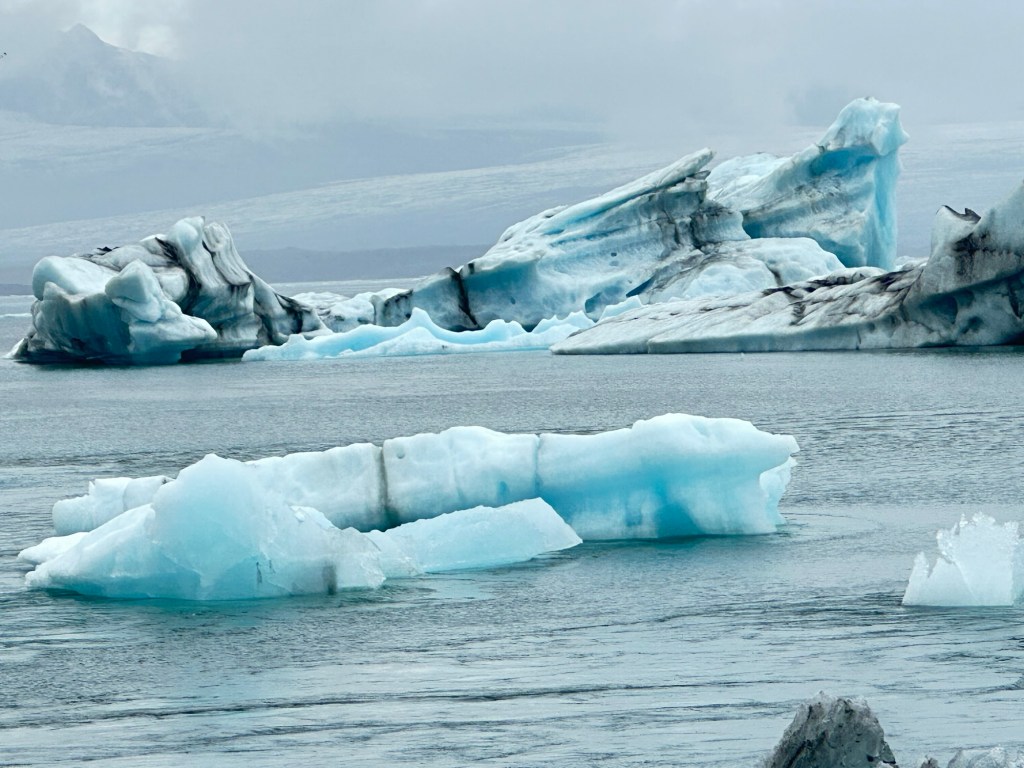
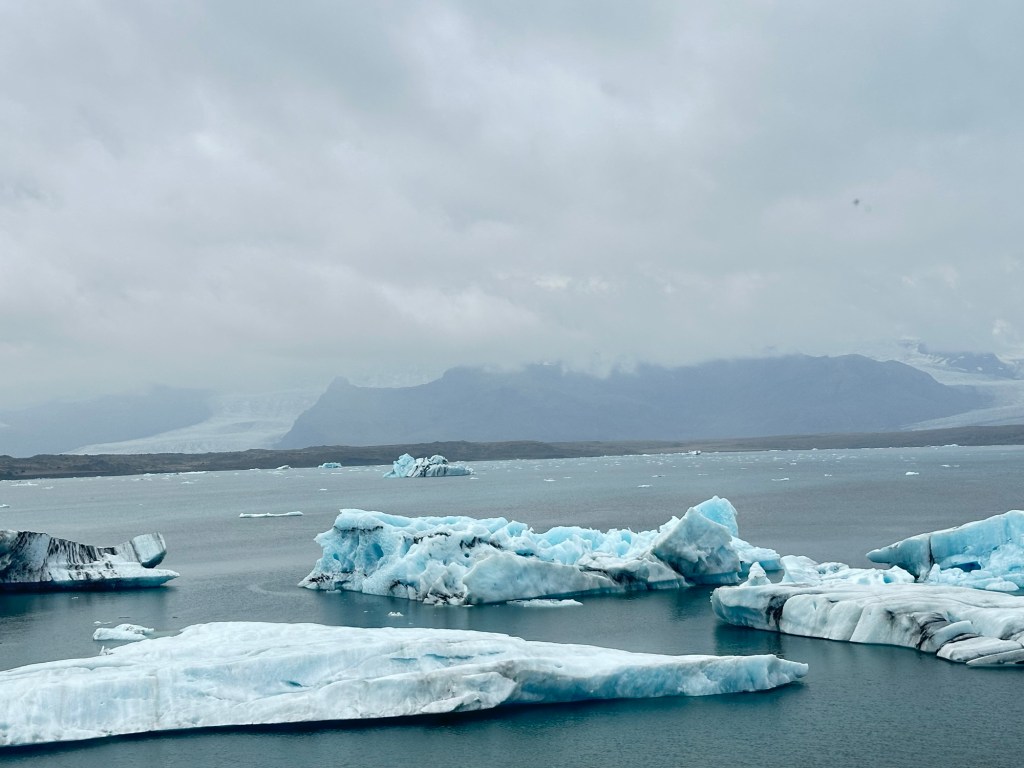
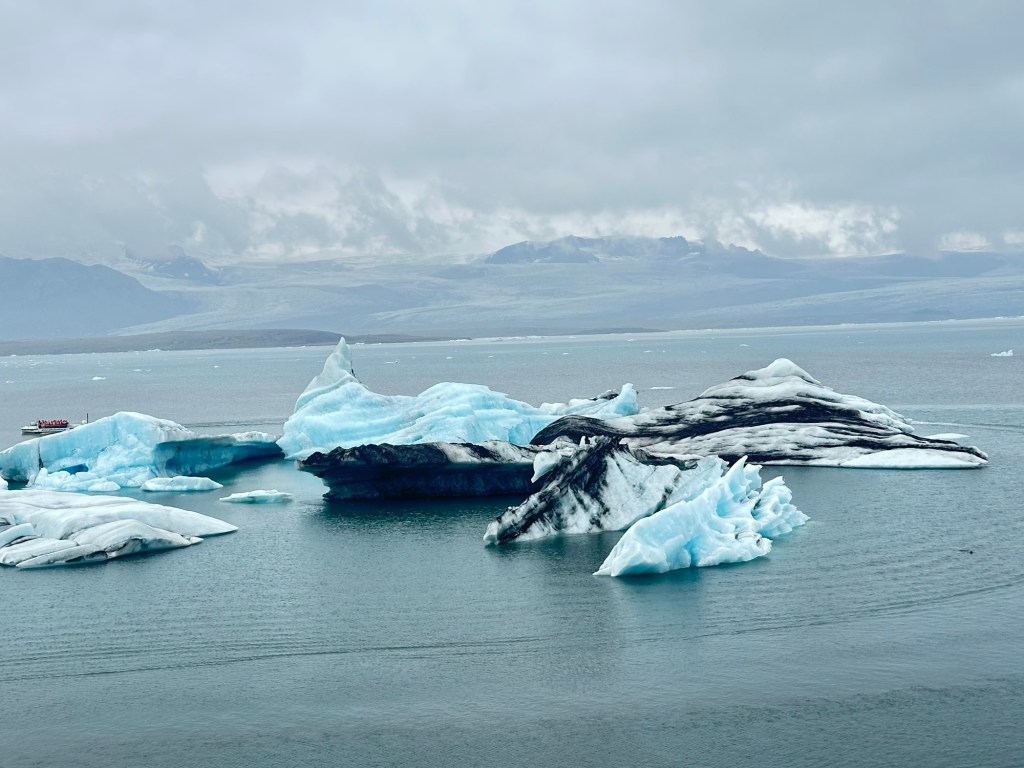
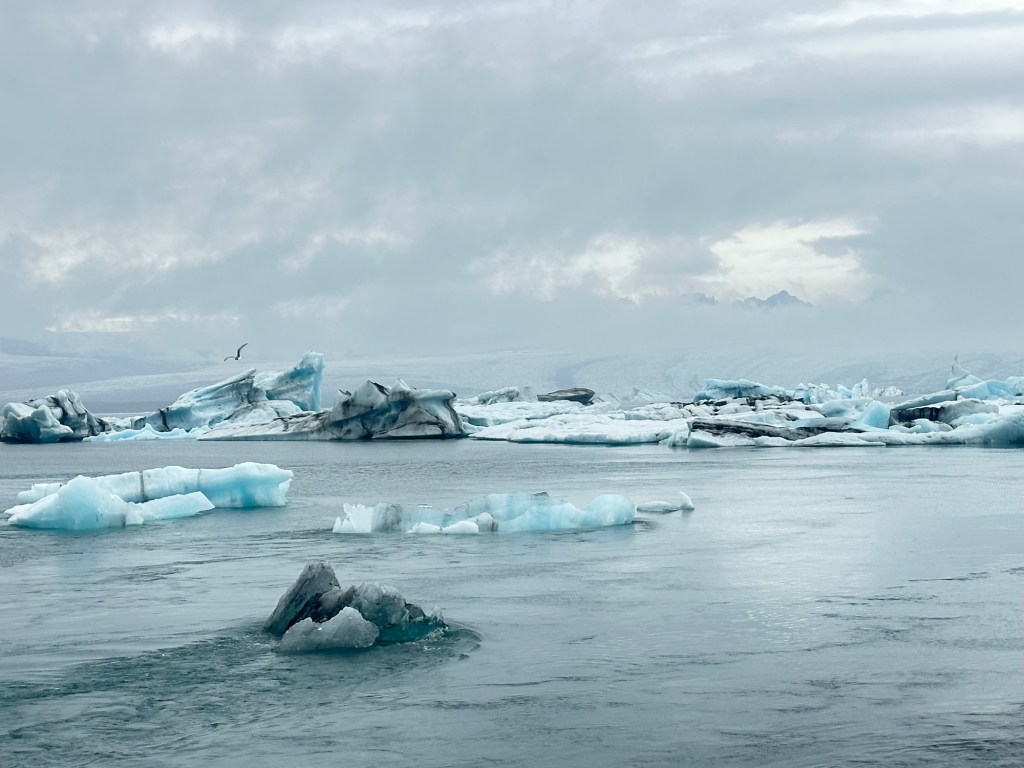
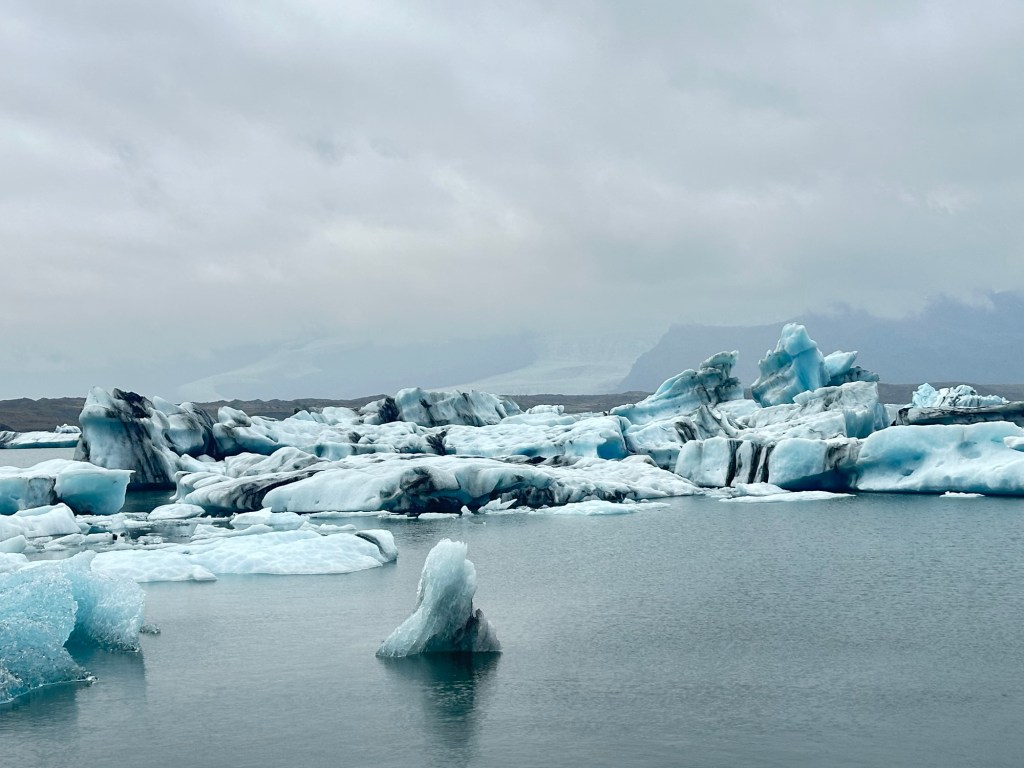
Just across the road from the vast Jokulsarlon glacier lagoon lies Diamond Beach — a stretch of black volcanic sand strewn with glacial ice. Fresh from their slow voyage through the lagoon, the icebergs wash ashore in every size and shape, from glittering shards to towering, translucent sculptures. In sunlight, they blaze like cut diamonds; under clouds, they glow with a ghostly blue light. With each wave, the scene shifts — today’s treasures will be gone tomorrow, replaced by a brand-new collection courtesy of the North Atlantic.
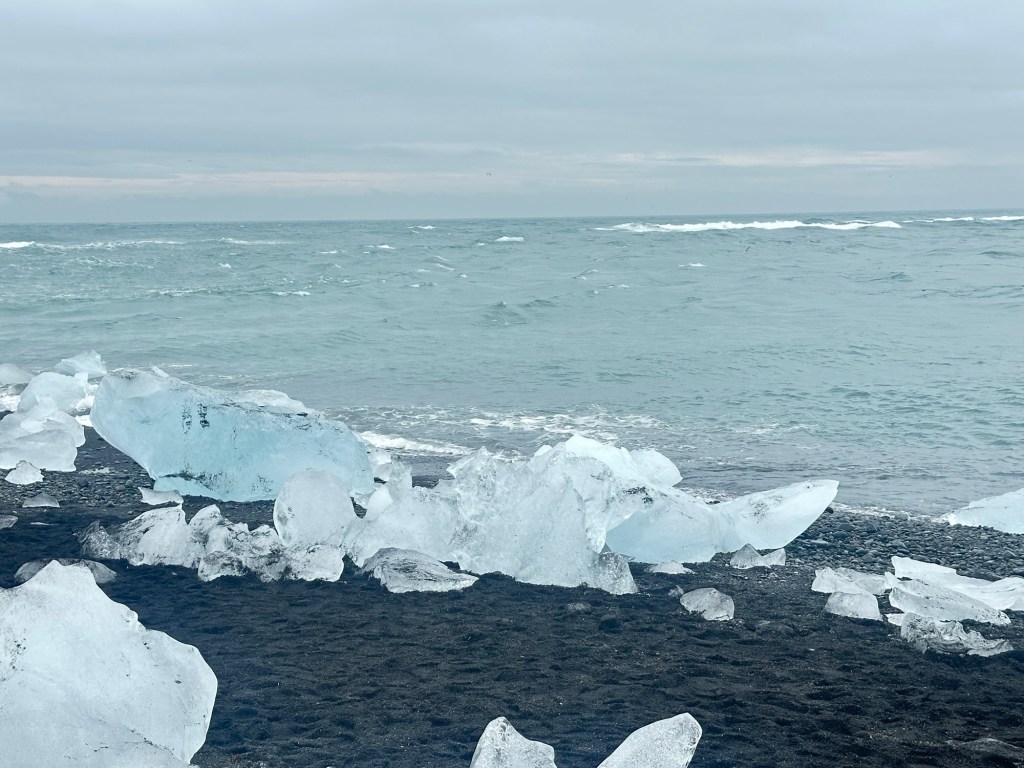

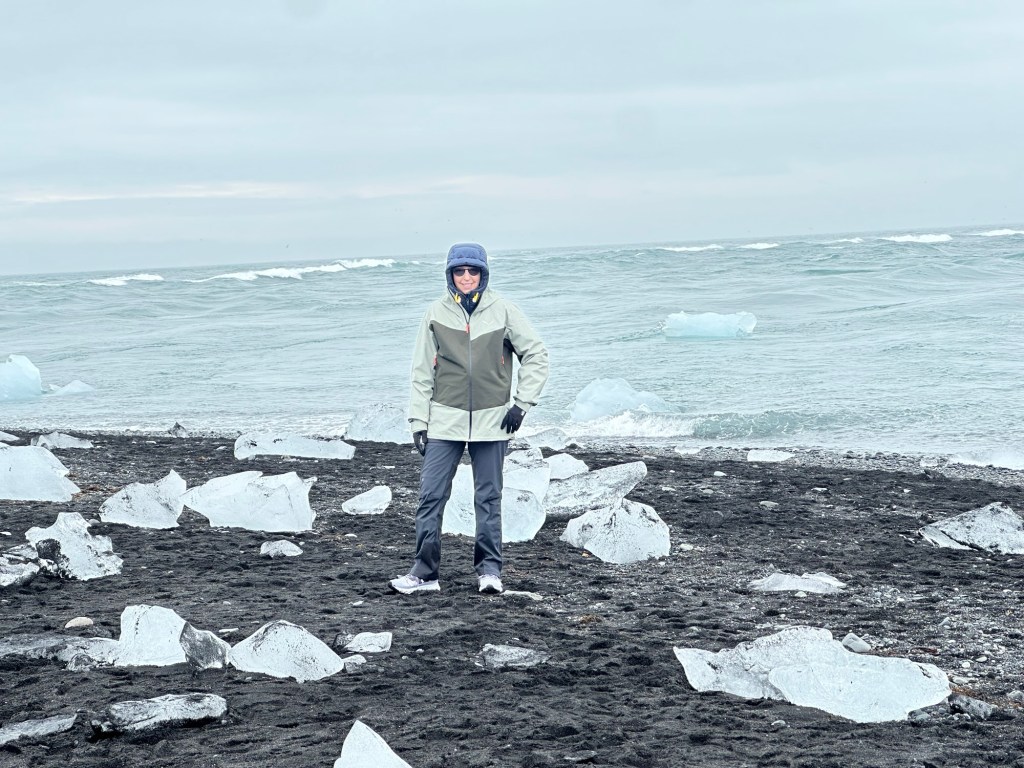
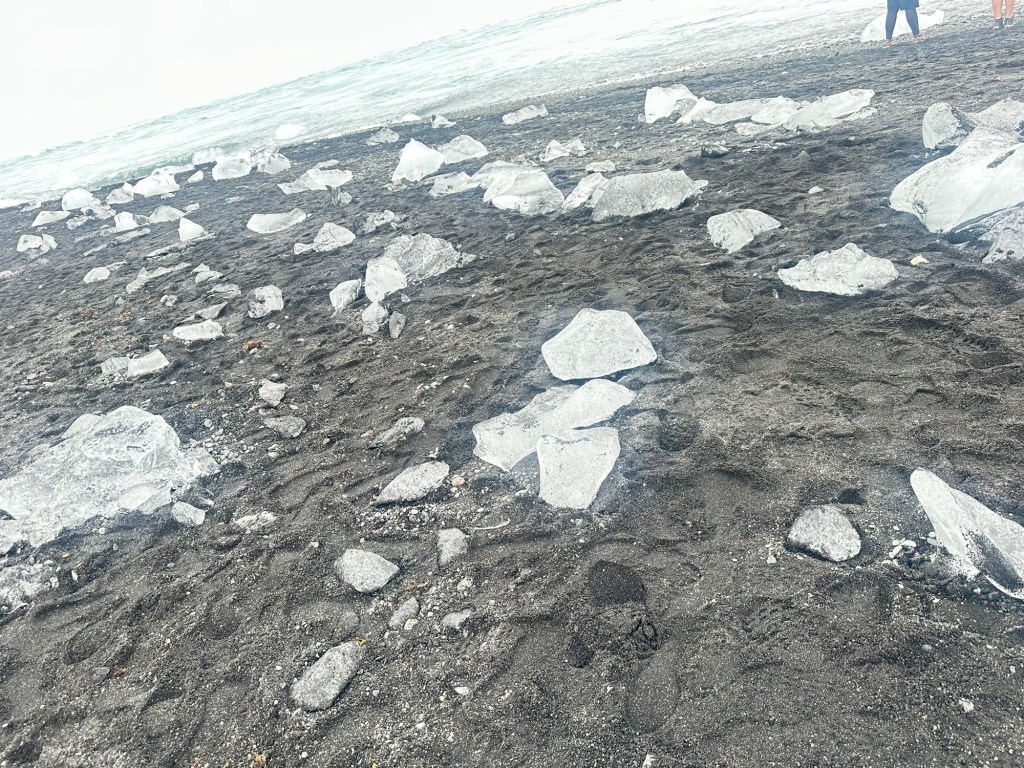
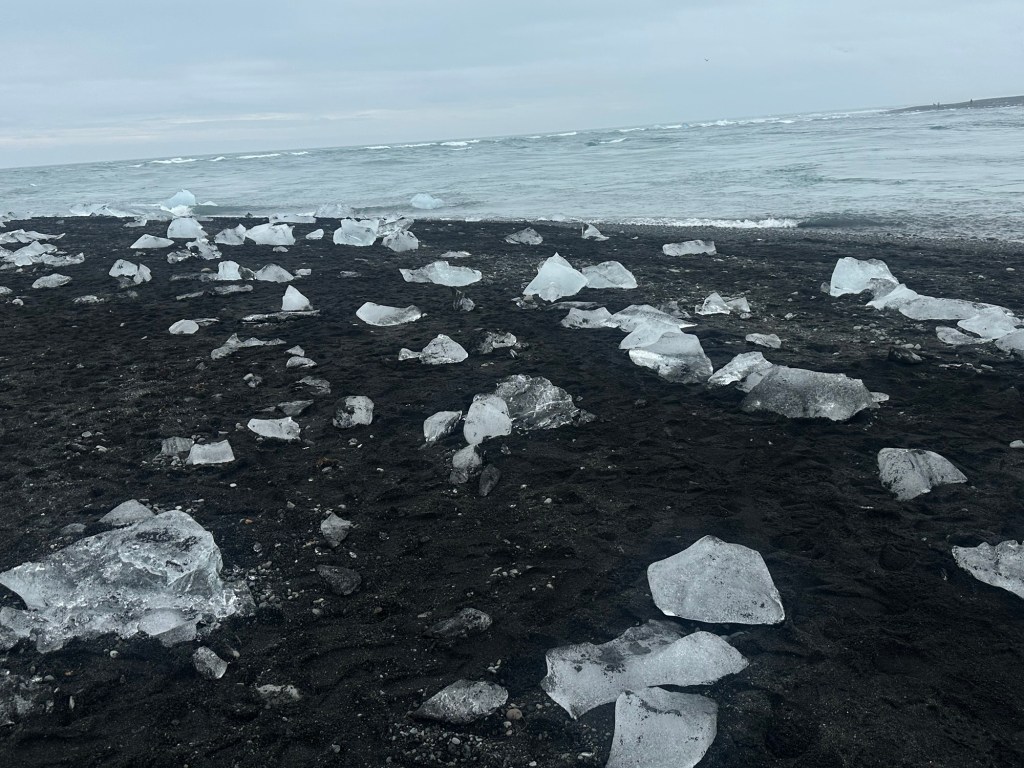
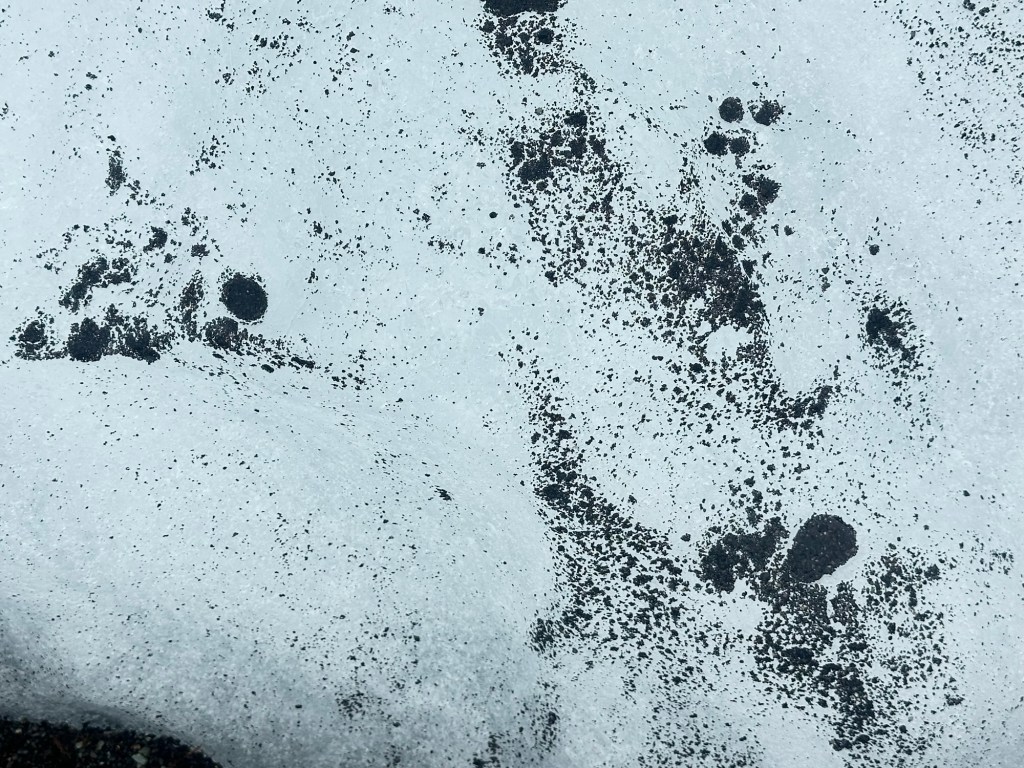
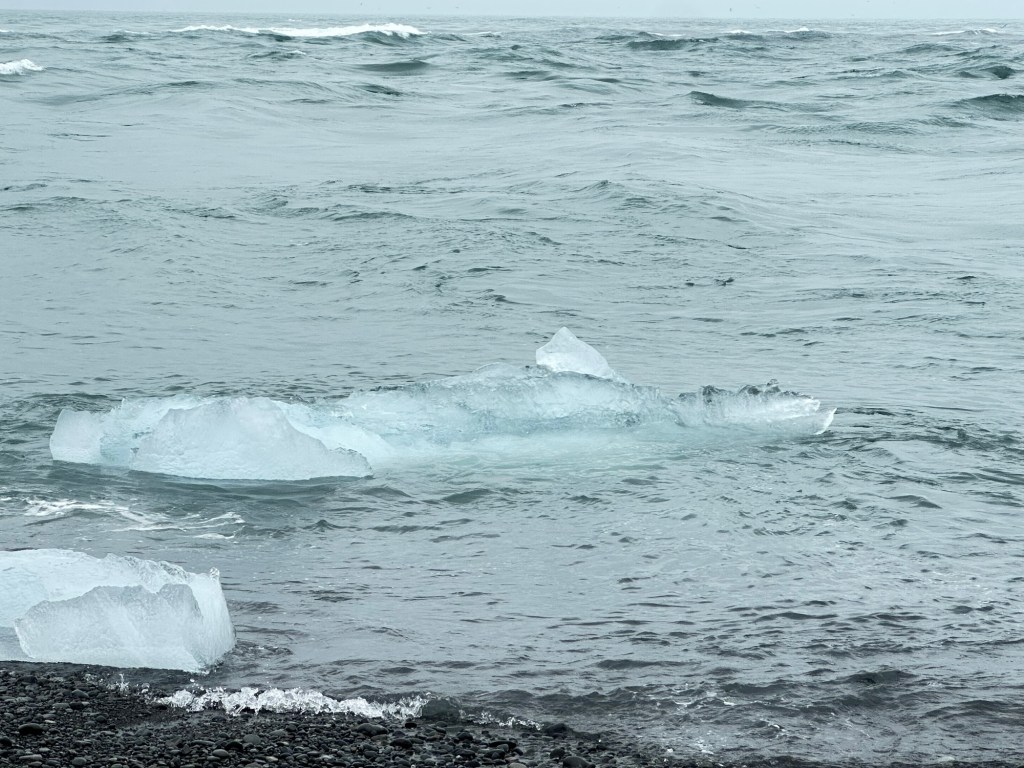
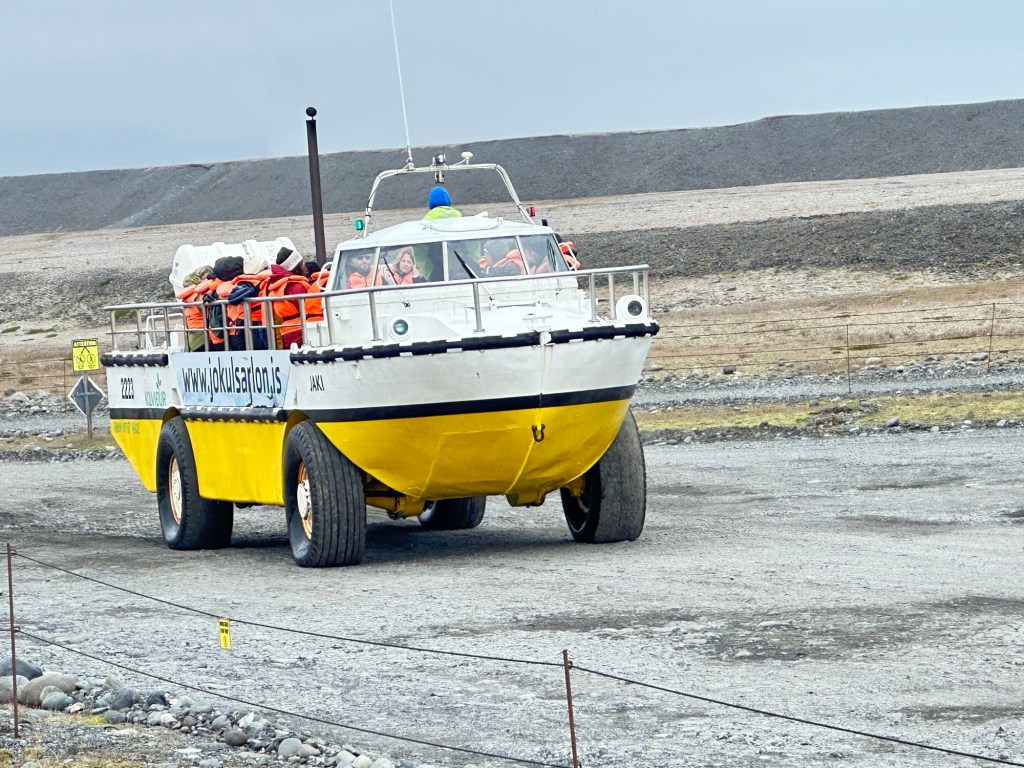
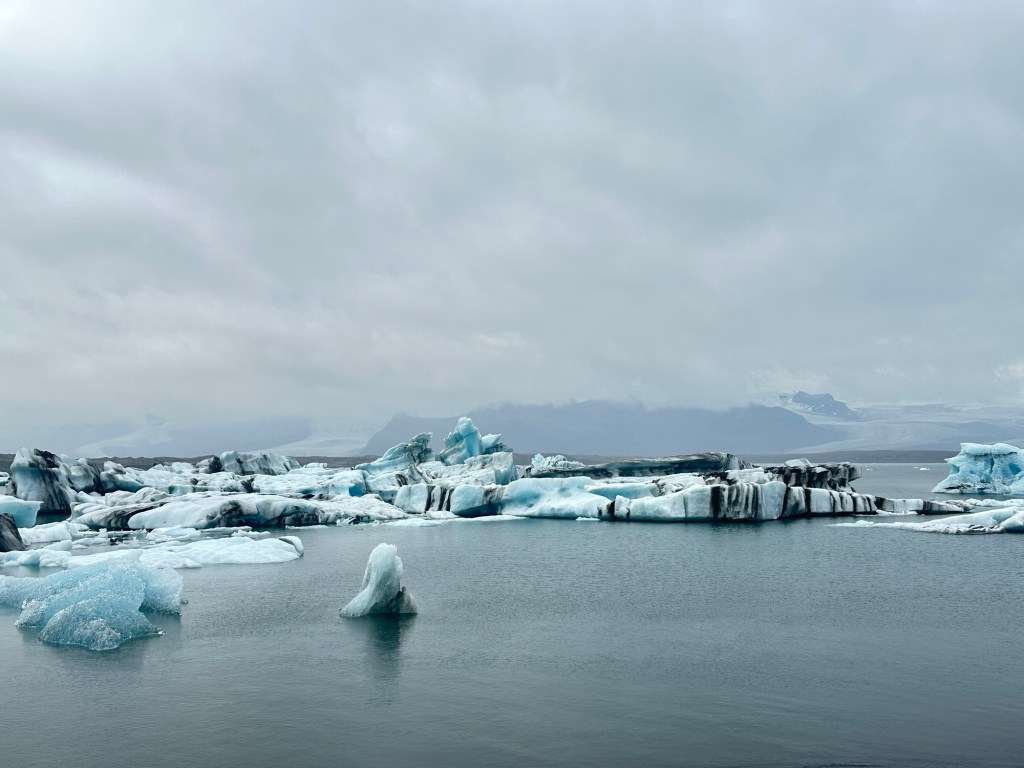
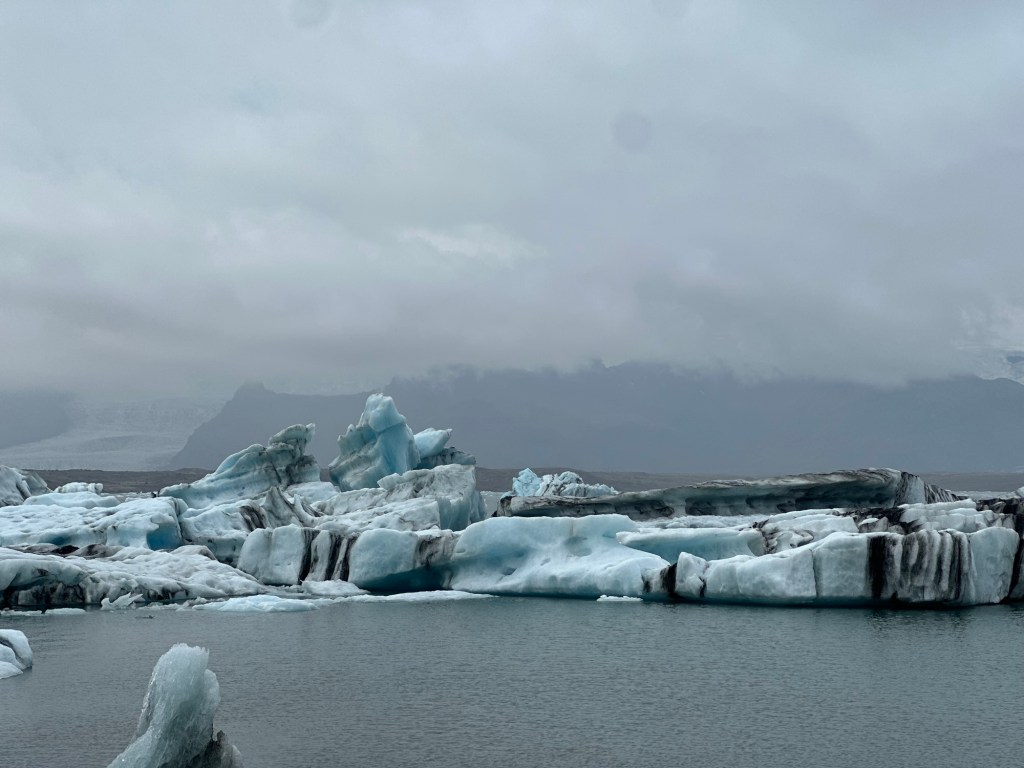
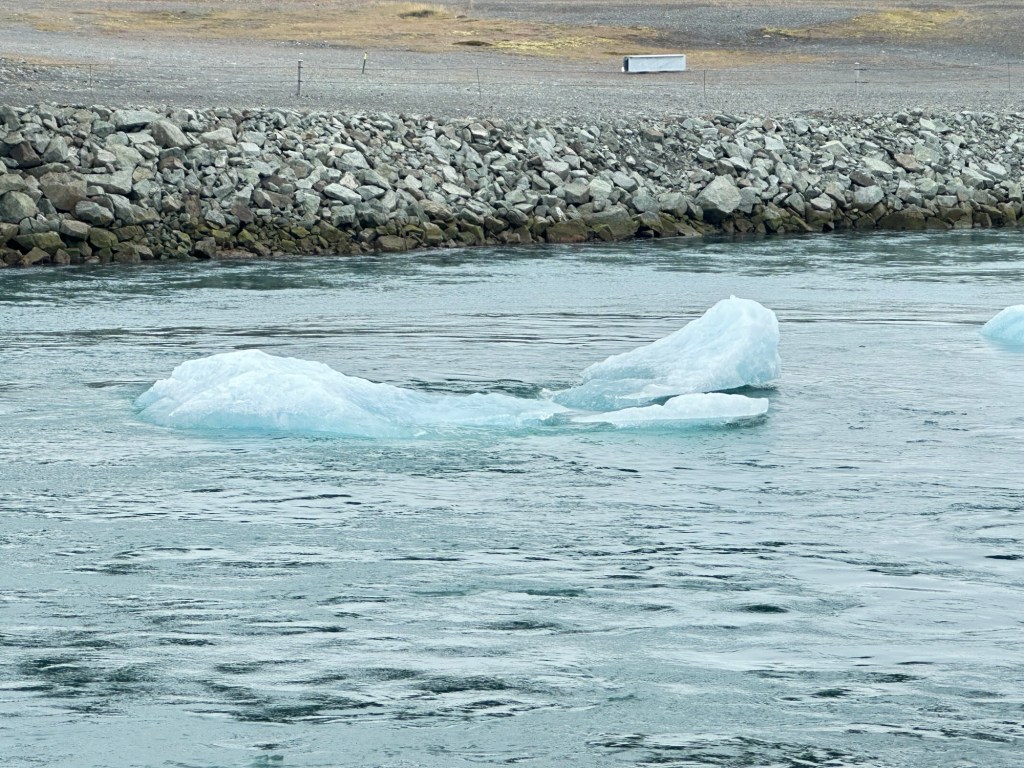
Jokulsarlon Glacier Lagoon is far larger than Fjallsarlon — and so are its crowds and flotillas of watercraft. Kristinn made the perfect call for our lagoon voyage: instead of jostling for space on the water, we could admire Fjallsarlon in an intimate Zodiac boat and Jokulsarlon on foot on the trail that runs from Diamond Beach. In the still, milky-blue waters, icebergs floated like a scattered archipelago. Some were jagged and fortress-like, others smooth and rounded as if shaped by a sculptor’s hand. Their colors shifted from pure white to luminous blue, streaked here and there with volcanic ash — a frozen record of eruptions long past. The scene was ever-changing, as wind, tide, and current slowly transformed each floating isle before it drifted out to sea.
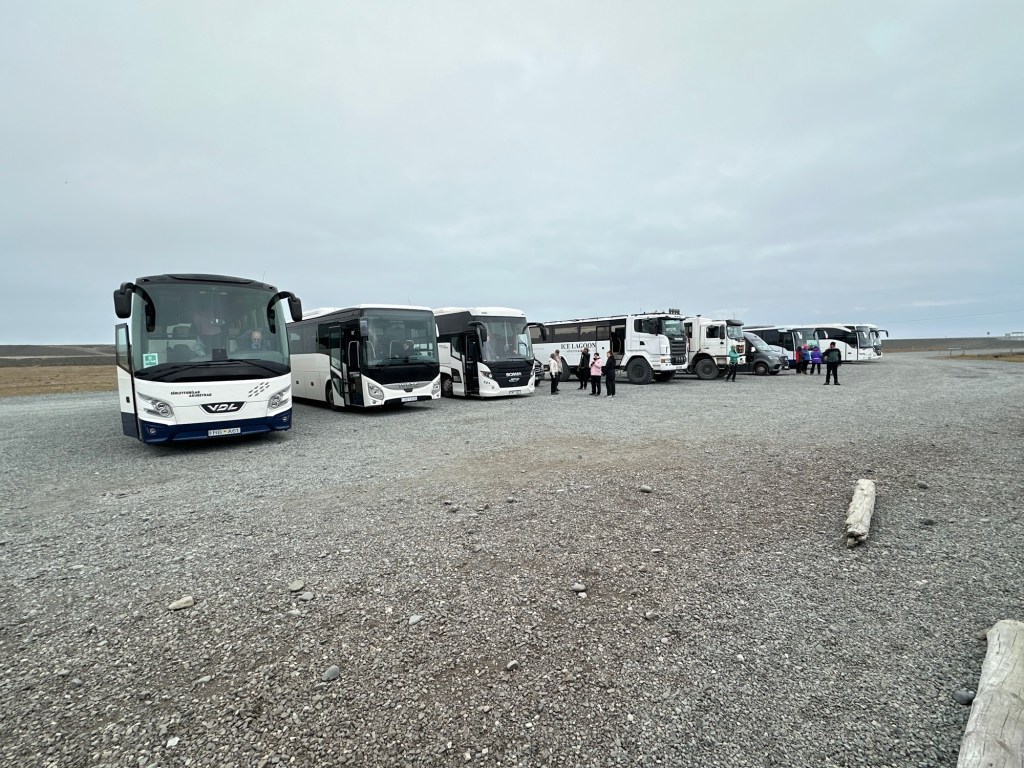
Just up from the water’s edge, a small cluster of food trucks offered their own kind of Arctic treasures — lamb burgers, fresh fish and chips, waffles dusted with sugar, and hot chocolate that could thaw even the chilliest fingers. The air smelled of frying batter and coffee, a cozy counterpoint to the cold breath of the glacier drifting across the parking lot. I opted for the veggie burger and fries, Beth and Judy had the Lamb. Bud sat the meal out.
Dyrholaey

Thought to be over 80,000 years old, perched on Iceland’s southern coast, Dyrholaey is a dramatic headland crowned by a massive stone arch — wide enough for a small boat to pass through and, once upon a time, even a daring pilot’s airplane.
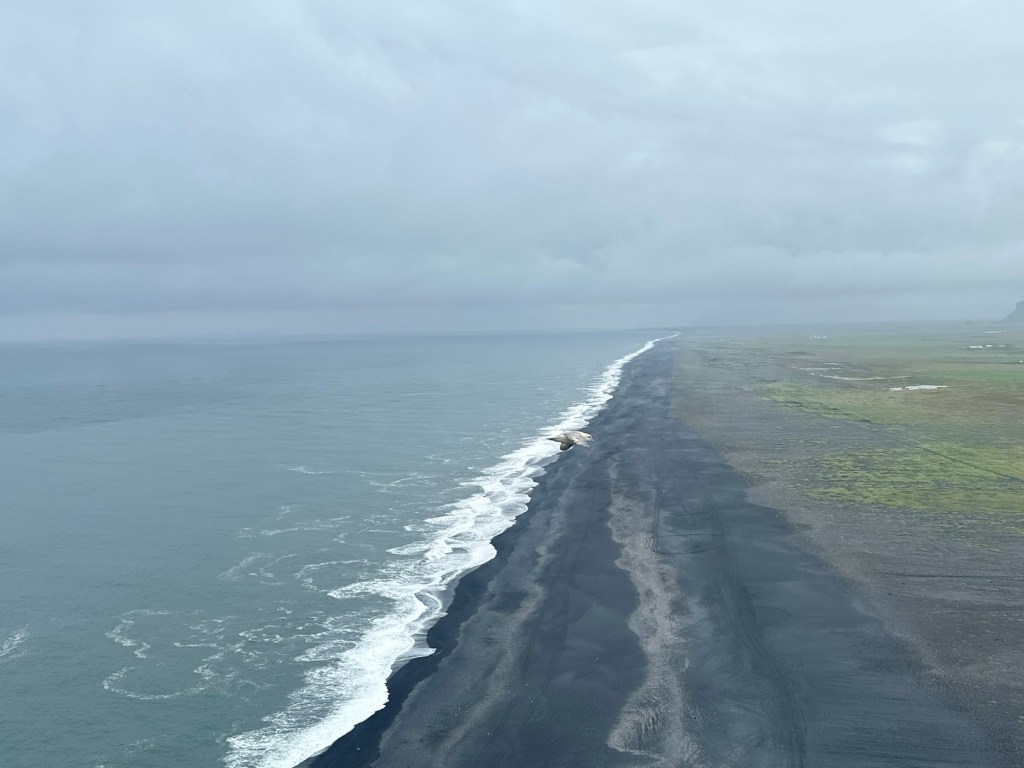
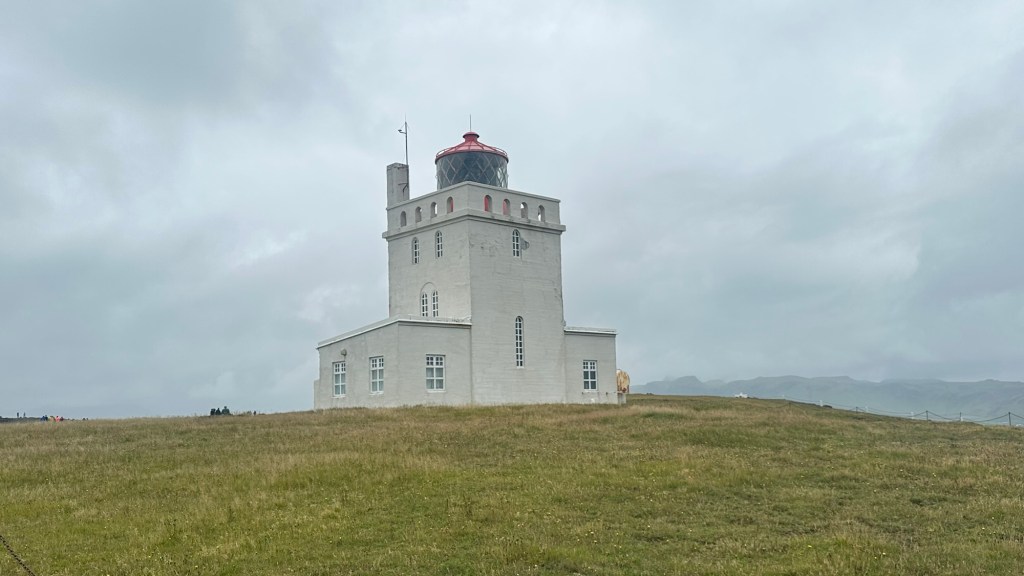
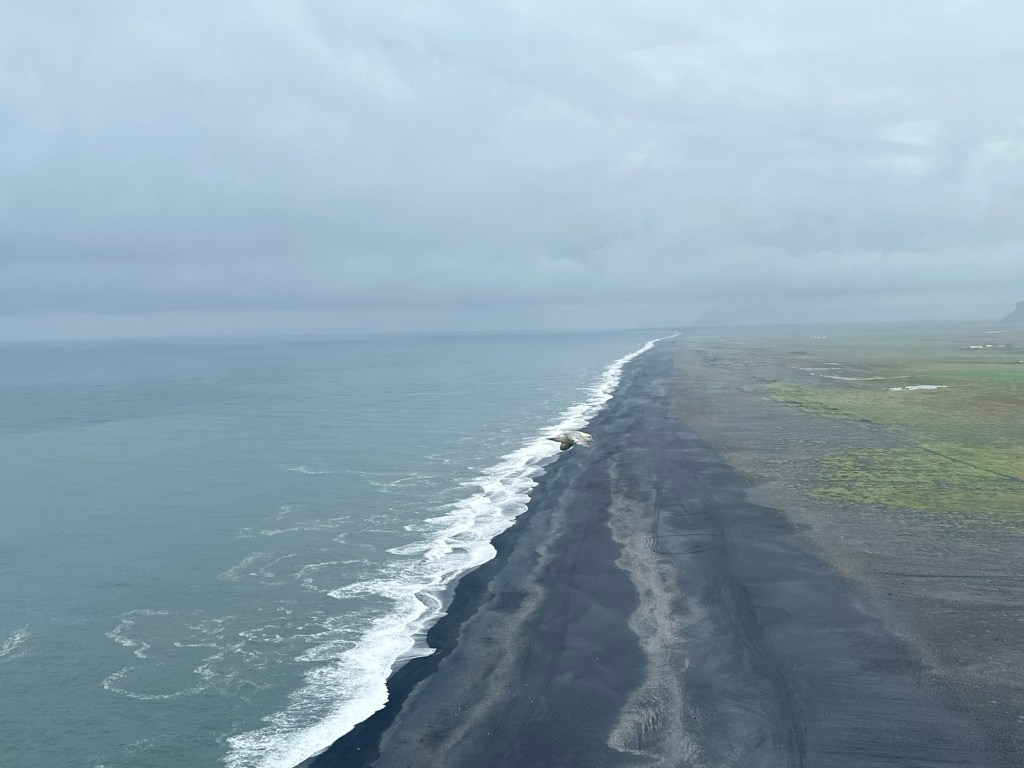
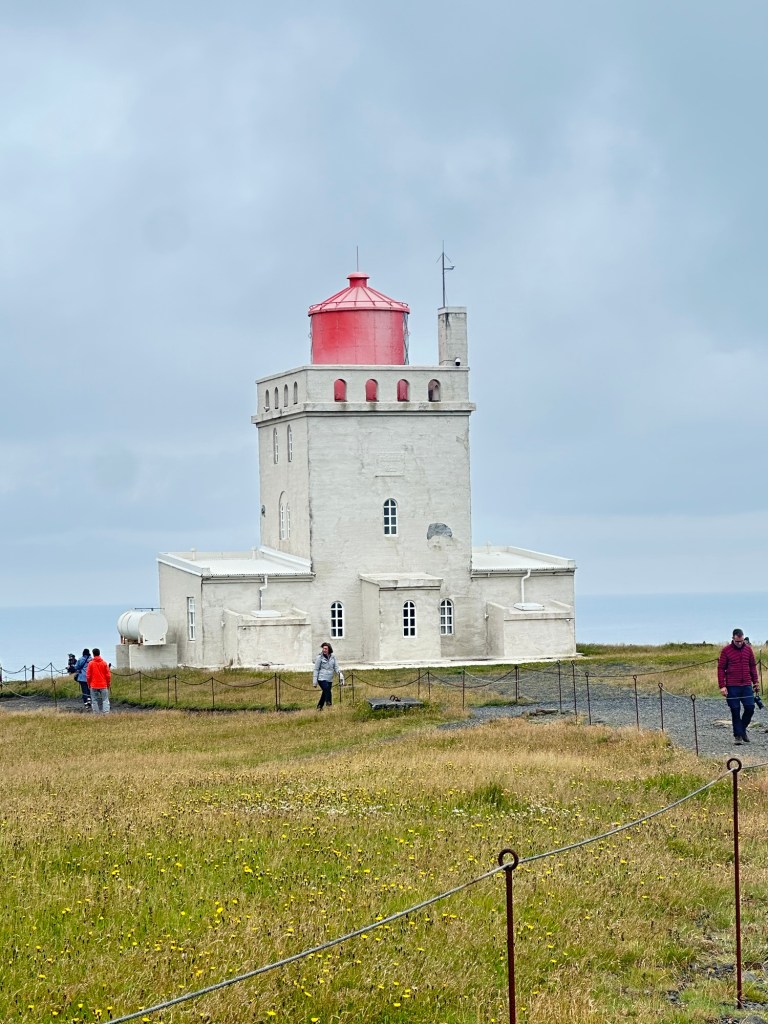
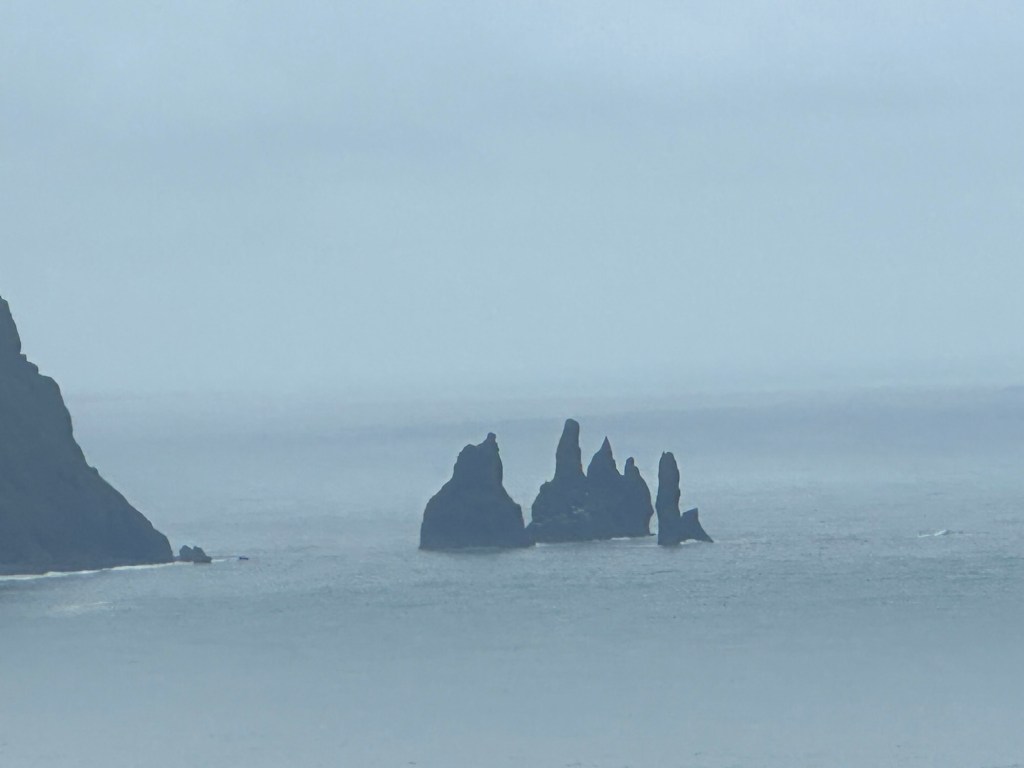
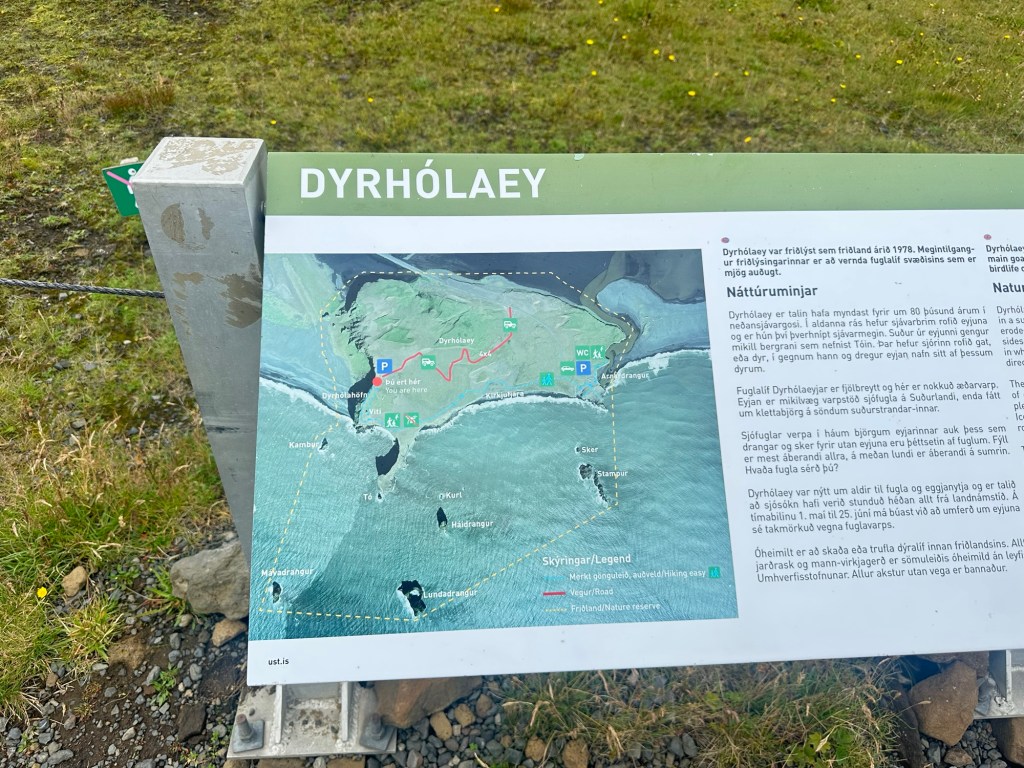
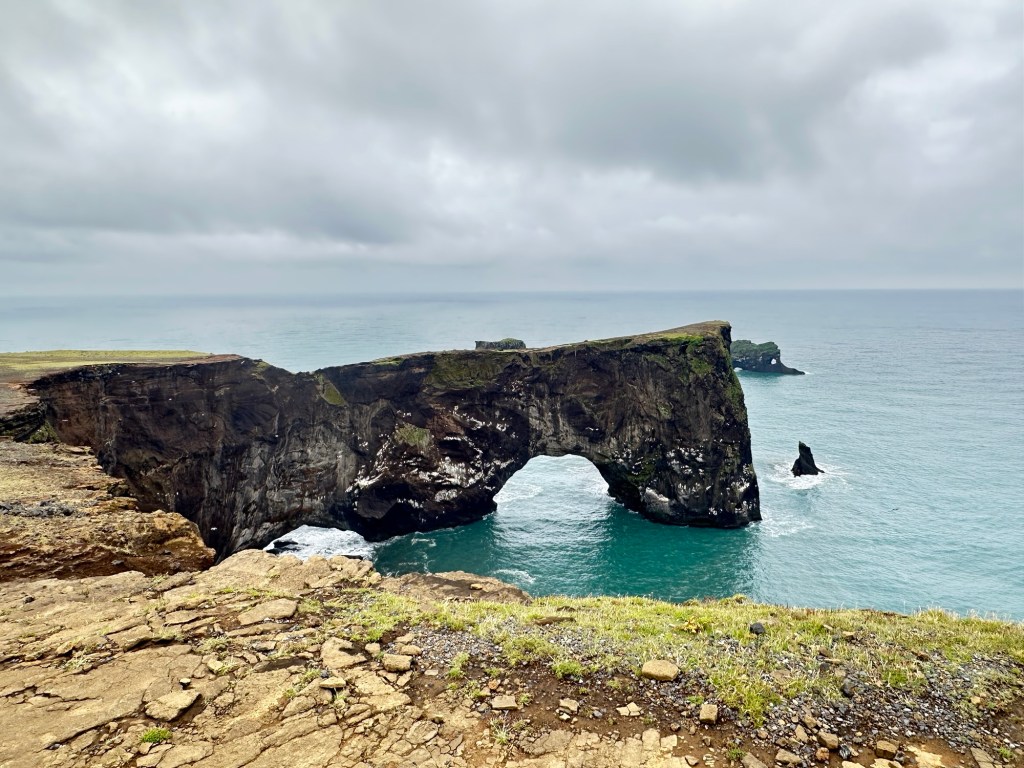
From the cliff’s edge, the view sweeps across endless black-sand beaches, with the Reynisdrangar sea stacks rising like sentinels from the surf and puffins wheeling in the wind. One of these beaches served as a filming location for Katla, the Netflix series that weaves ancient Icelandic myth into a contemporary tale. It’s the kind of place where ocean, sky, and land converge in one grand, untamed panorama.
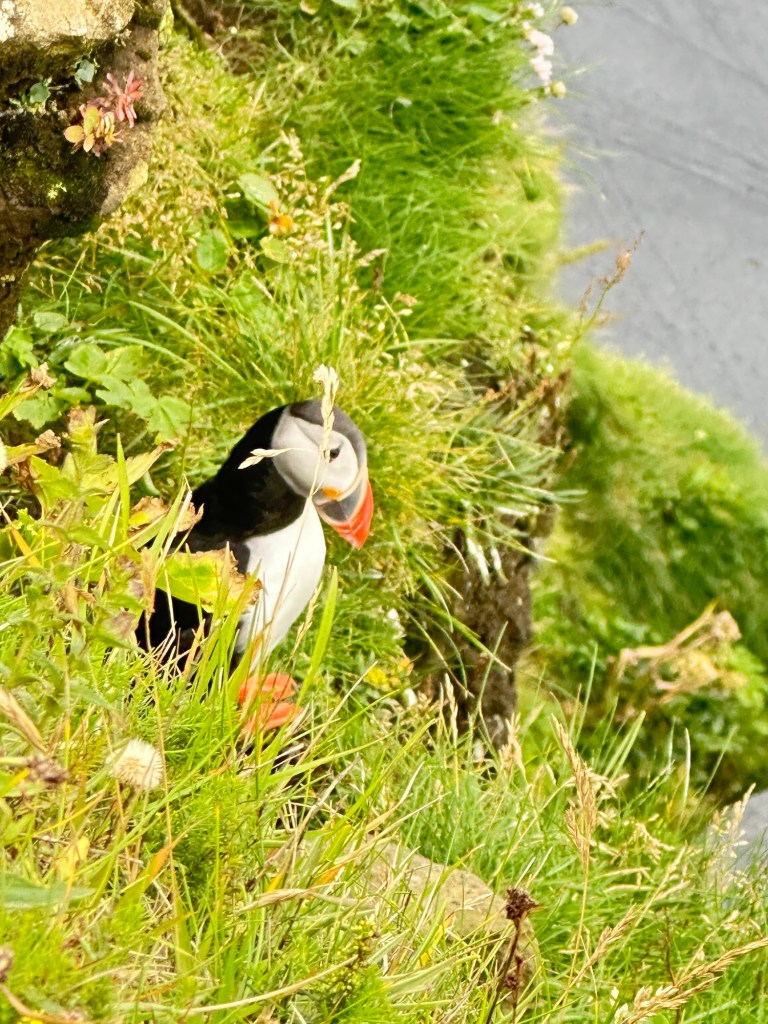
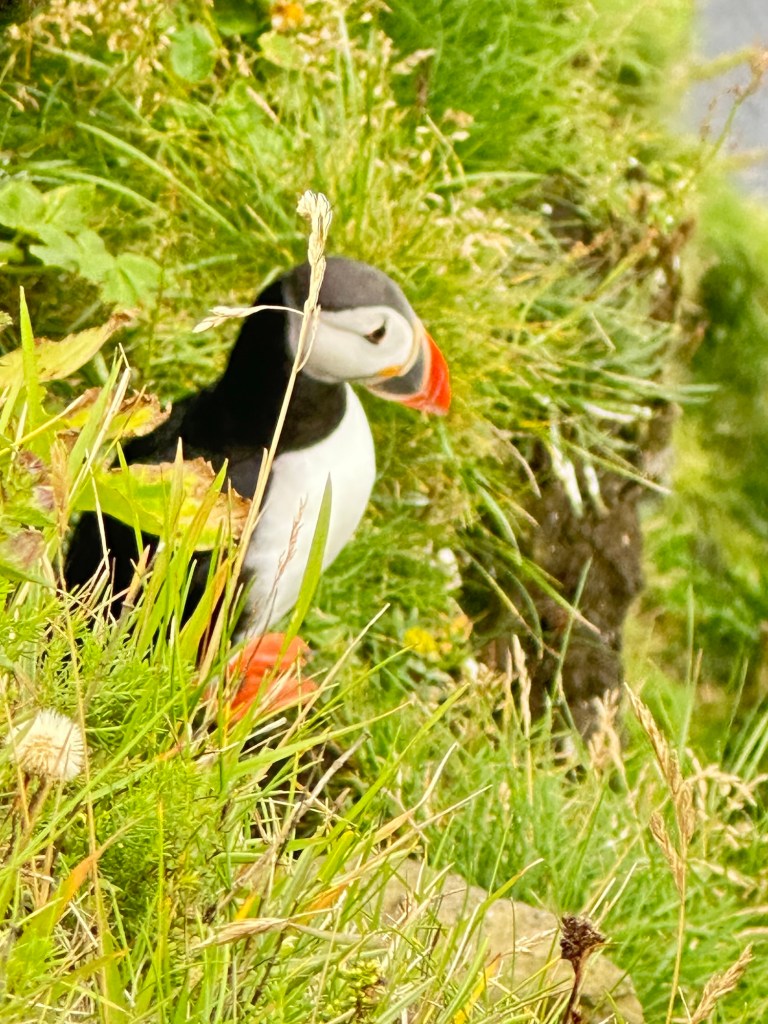
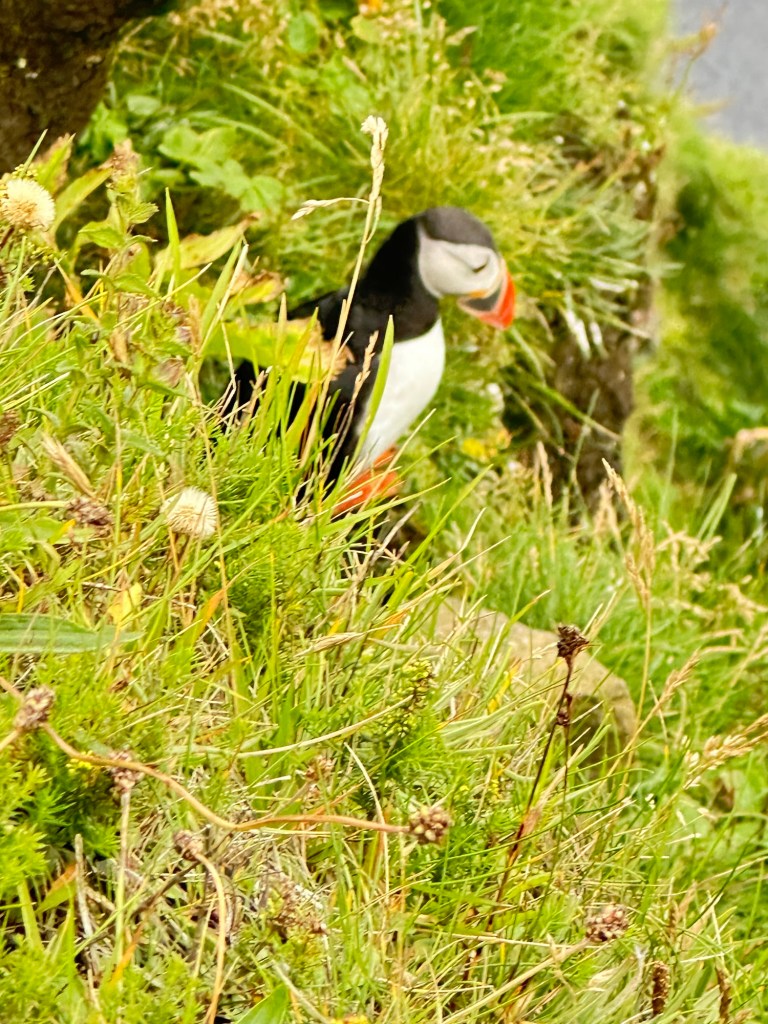
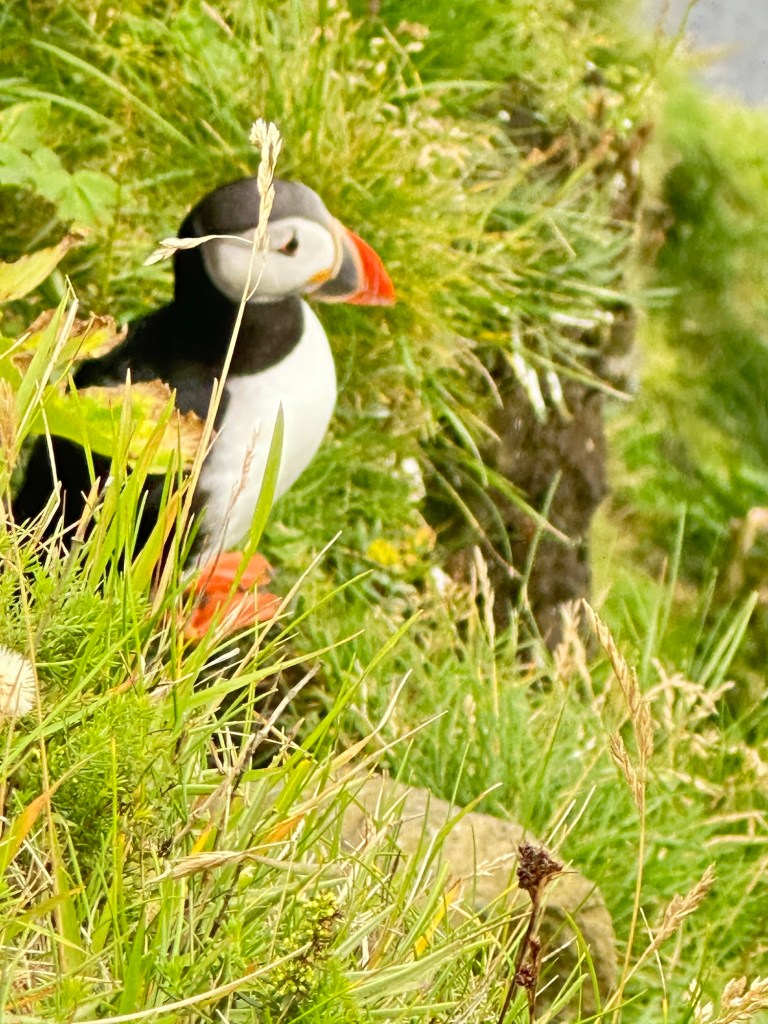
We were blessed to spot puffins here — the first of only two places we’d see them on our trip. Perched on the grassy cliff edges, they looked like little wind-up toys, all bright beaks and stubby orange legs, peering out to sea as if waiting for their next fishing mission. Every so often one would take off, wings beating furiously in a blur, diving into the waves below in search of sand eels. Watching them felt like stumbling into a secret club — a glimpse of Iceland’s most charming seasonal residents before they vanished back to their ocean home.


UMI Hotel
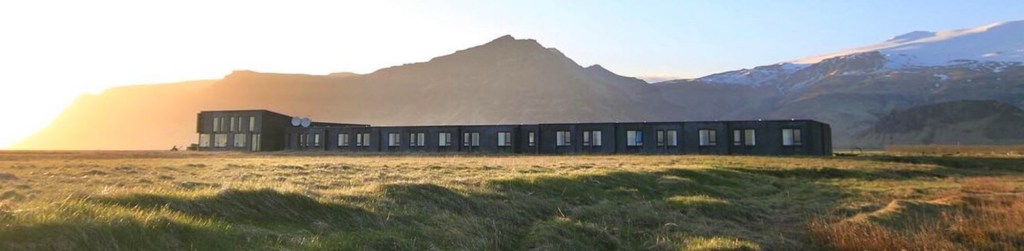
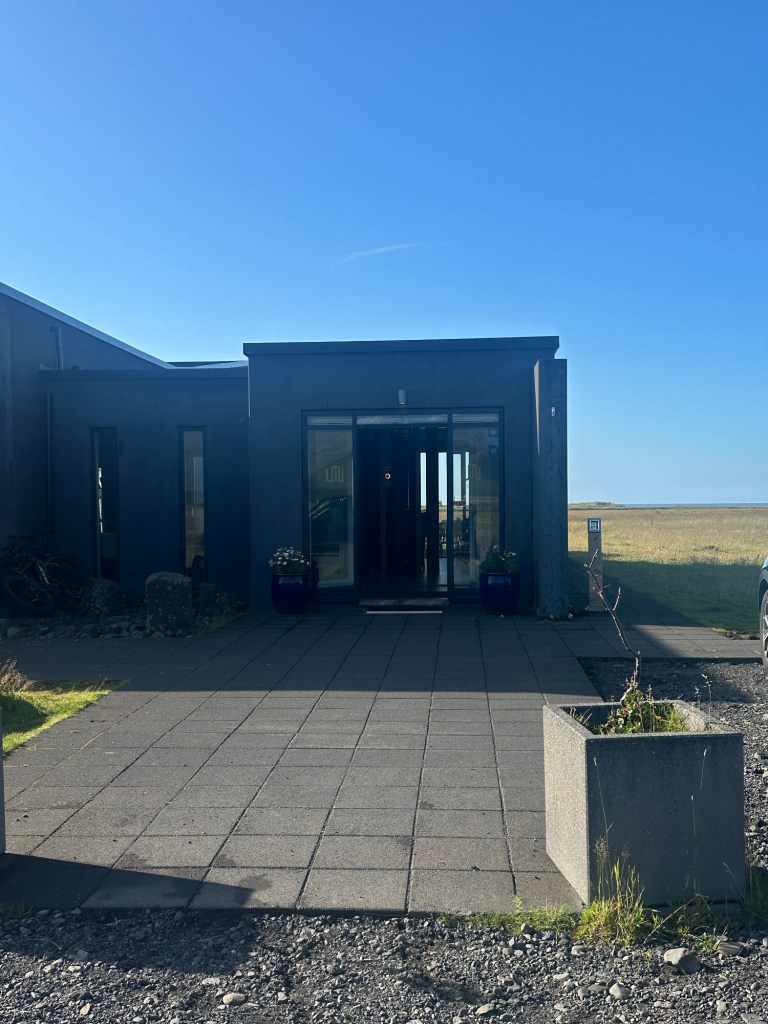
Our extraordinary day ended at UMI Hotel, a sleek, glass-fronted retreat tucked between the black-sand shore and the looming slopes of Eyjafjallajokull. Inside, the air was warm with the scent of fresh-baked bread drifting from the restaurant, and soft light spilled across polished wood and deep armchairs. Beyond the floor-to-ceiling windows, in the distance the Atlantic rolled in under a silver sky, while inland, the glacier’s white crown caught the last blush of evening. It felt like the kind of place where the day’s adventures could finally settle into memory, one quiet breath at a time.
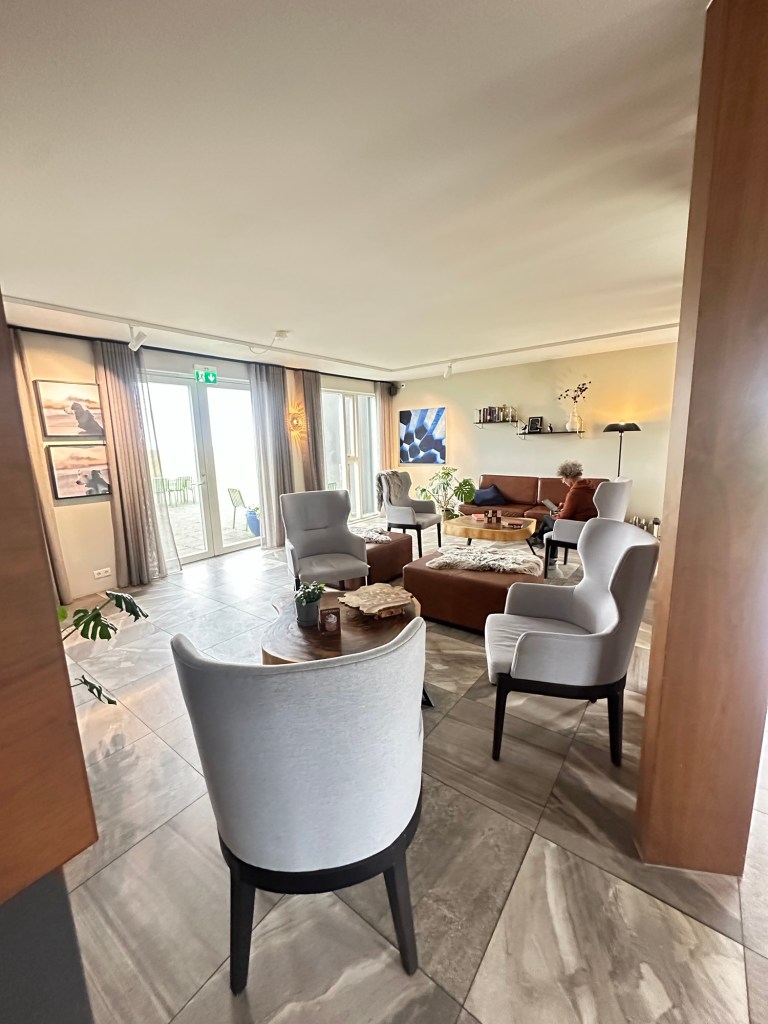
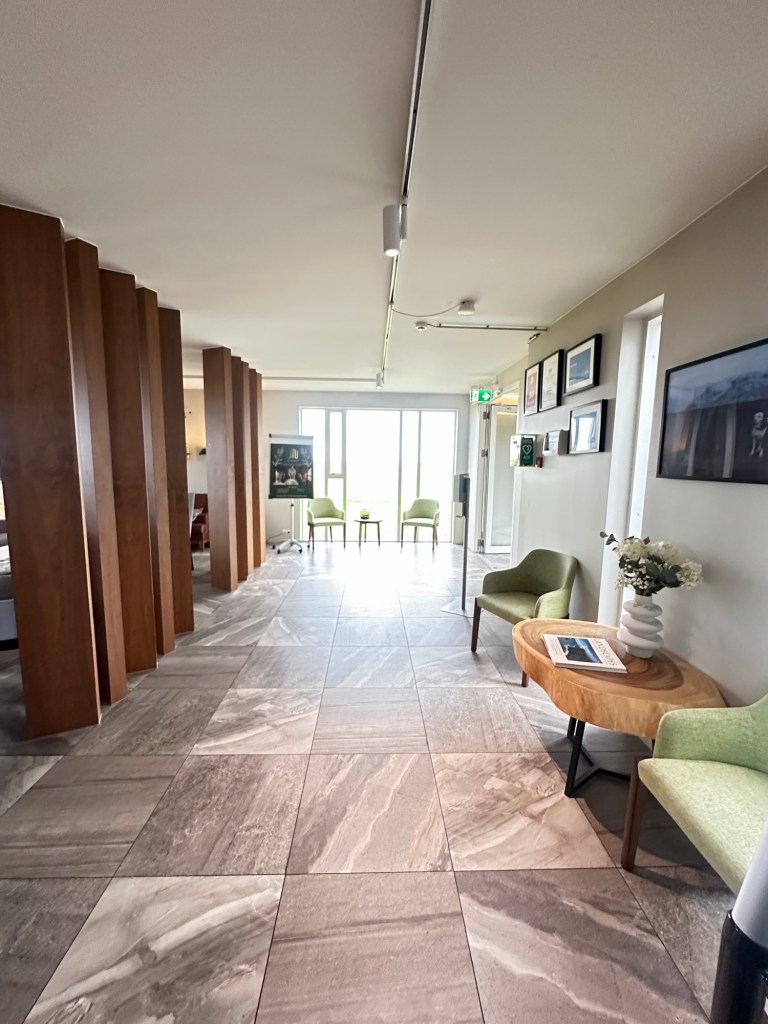

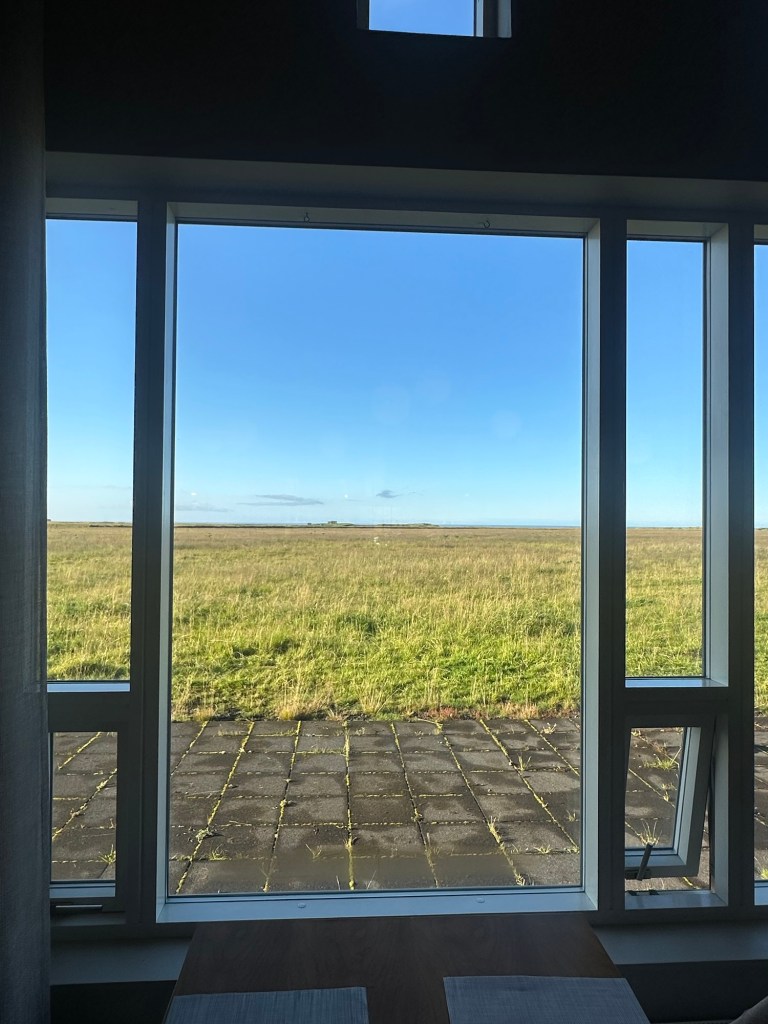

Dinner at UMI Hotel felt like the perfect reward after a day of exploring Iceland’s south coast. The restaurant’s floor-to-ceiling windows provided a dining room with a built-in postcard. We started with warm, crusty bread served alongside creamy Icelandic butter, followed by plates that showcased the kitchen’s Nordic flair: tender Arctic char with a hint of dill, lamb slow-cooked until it nearly melted, Langoustine soup and crisp garden vegetables grown in nearby geothermal greenhouses.
For dessert, we couldn’t resist the lava cake — a playful nod to Iceland’s fiery heart. It arrived warm, the chocolate shell giving way to a molten center that flowed like fresh magma onto the plate. The richness was tempered by a scoop of tangy skyr ice cream, its cool creaminess a perfect counterpoint to the warm, velvety chocolate. A dusting of cocoa and a few bright berries completed the scene, making it as photogenic as it was indulgent. Outside, the late-summer light lingered, and for a moment it was hard to tell whether the view or the food was the bigger indulgence.
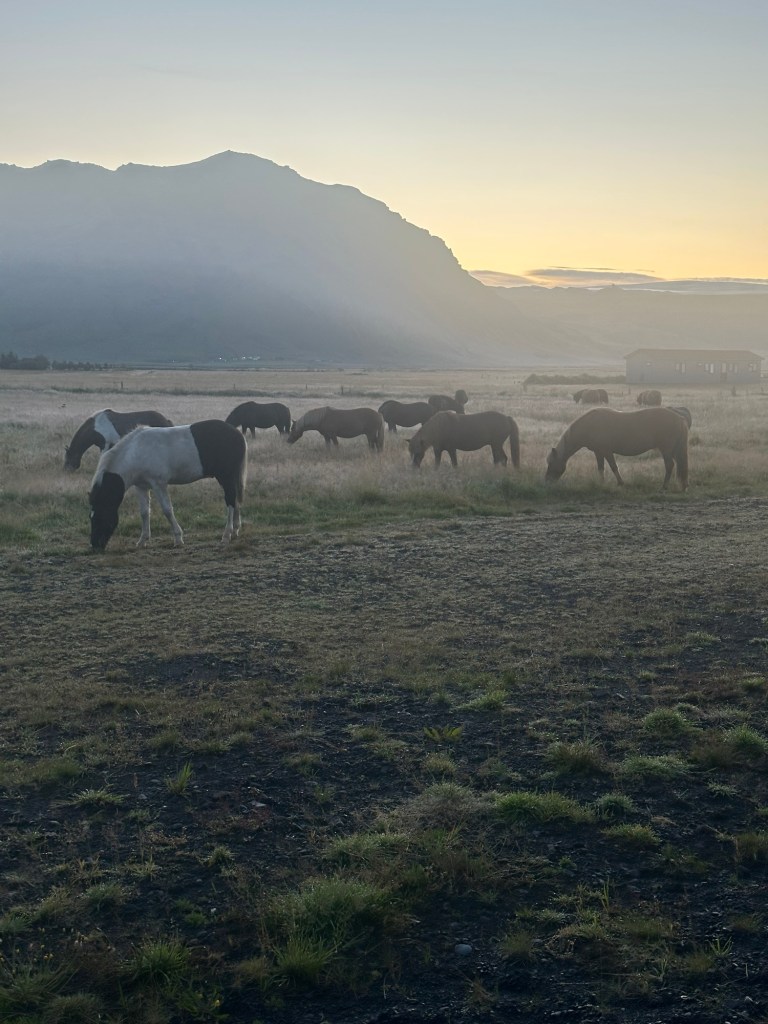
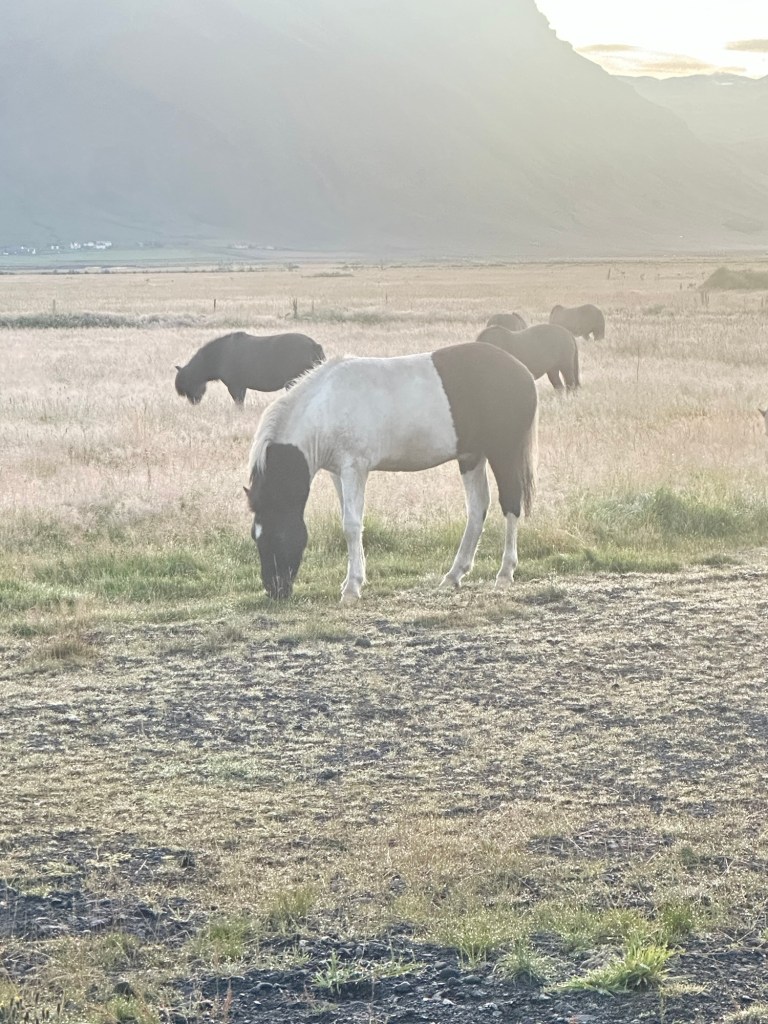
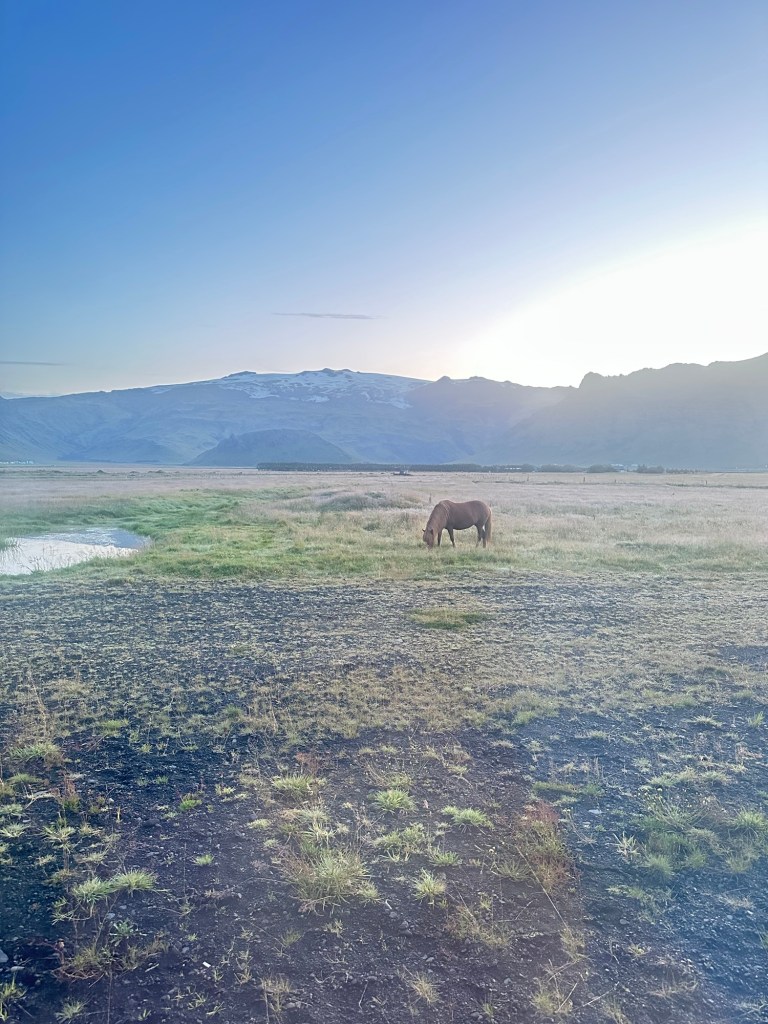
Then came a bit of horsing around — quite literally. At 4 a.m., with the summer sun already shining brightly, strange noises drifted up to our hotel window. Pulling back the curtain, we discovered a small herd of Icelandic horses grazing just outside. One particularly curious fellow ambled right up and poked his head in the window, as if to say hello — or perhaps to check if breakfast was being served early.
We’ll see you tomorrow for further adventures.

 YouDontKnowJackTravels