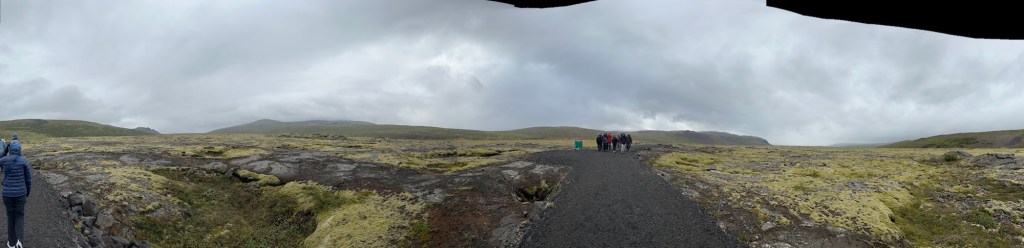
Today we left Reykjavík with Kristinn—our guide and logistical wizard—to explore some of Iceland’s most iconic natural wonders. Trading the city’s minimalist charm for wide-open landscapes, we drove past moss-draped lava fields, rising steam vents, and skies that couldn’t seem to make up their mind. Our destination: the famed Silver Circle—a culturally rich route through West Iceland that offers a deeper dive into the island’s geology, history, and lesser-known marvels.
“The Cave”
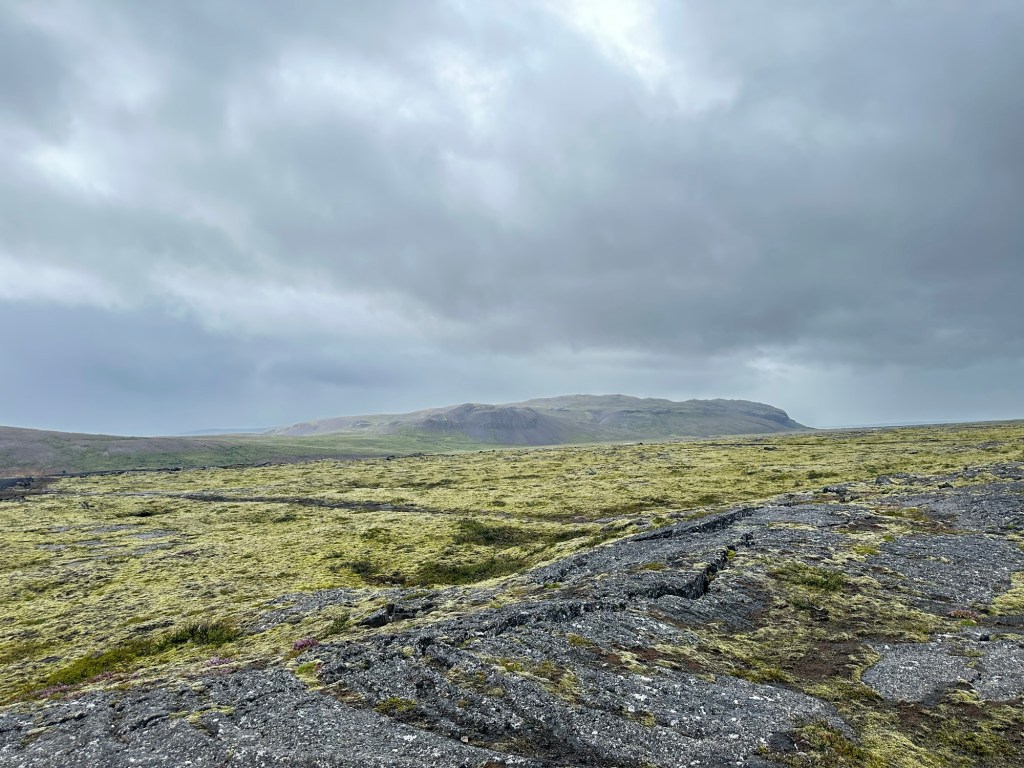
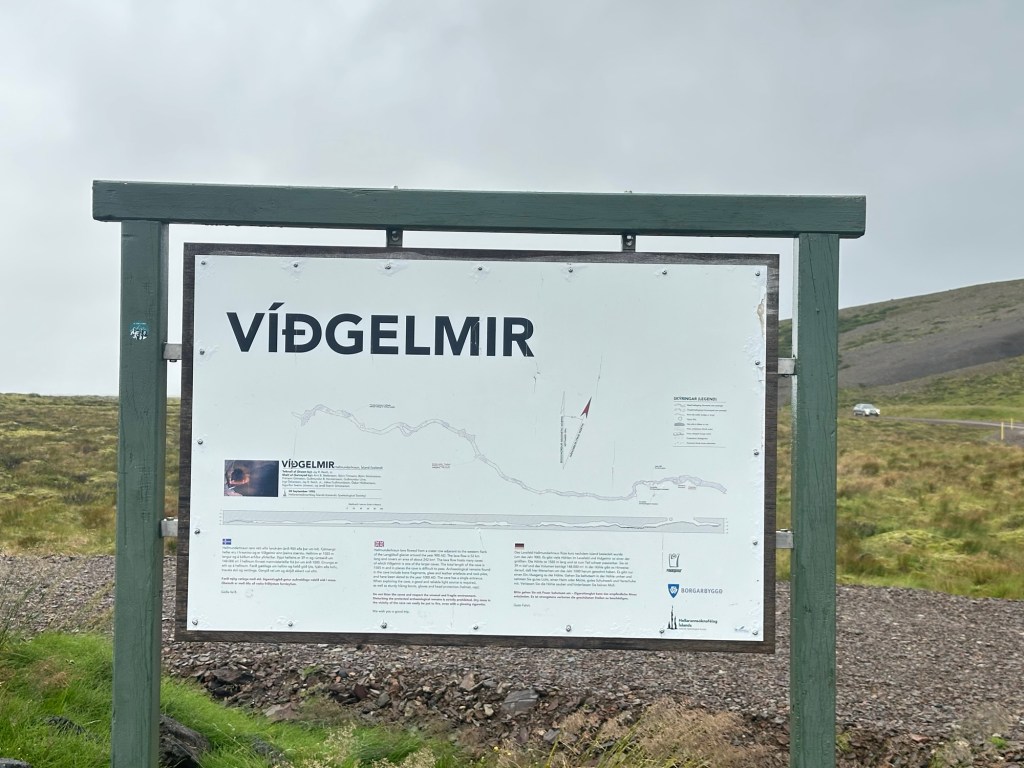
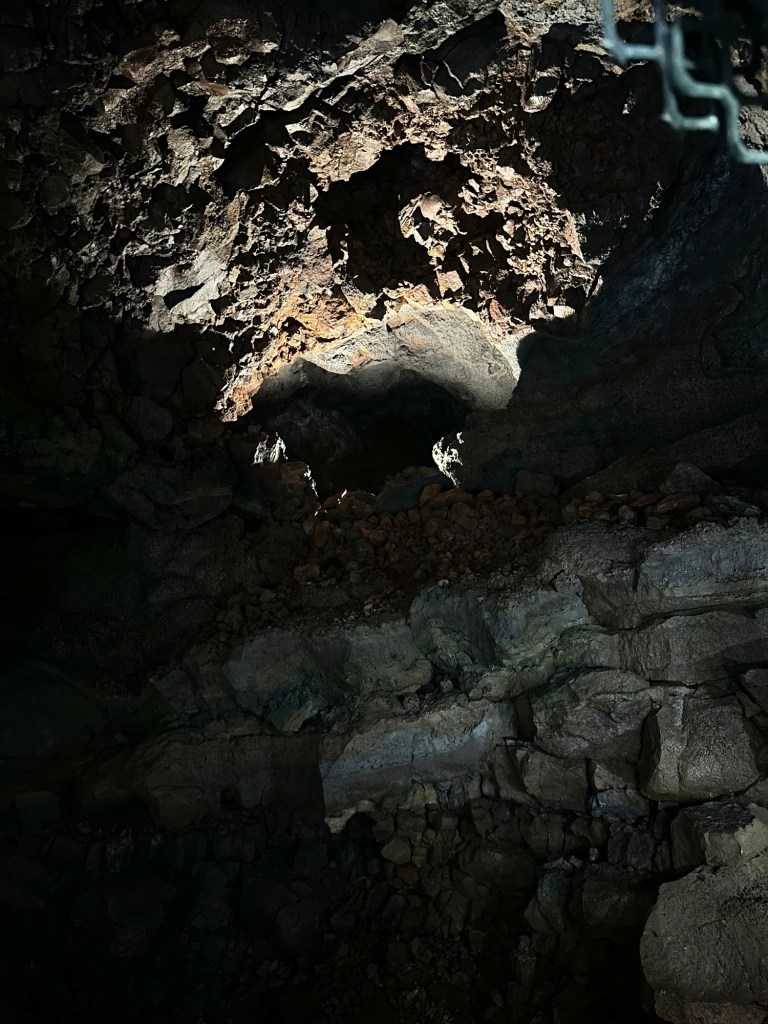
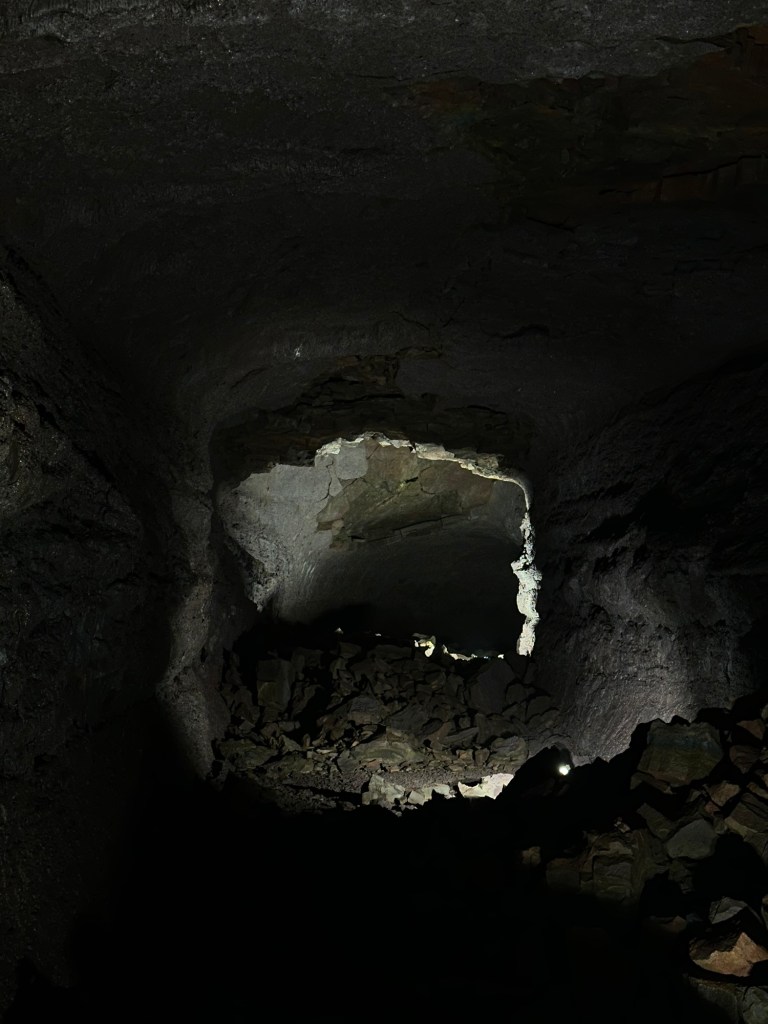
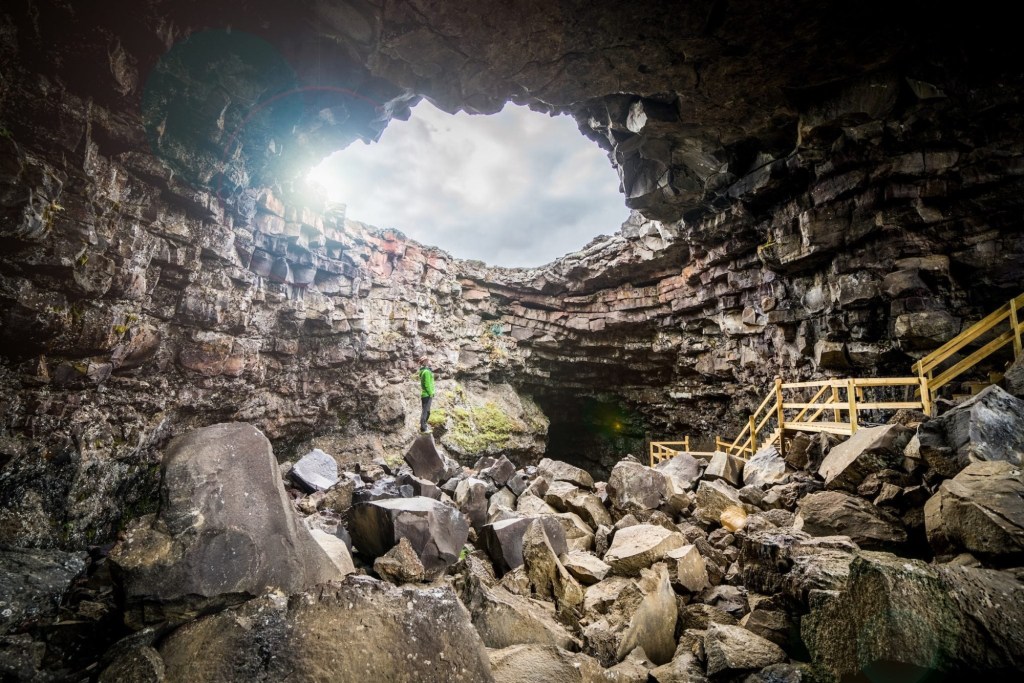
Our first stop, venturing deep beneath a sprawling lava field into one of Iceland’s largest and most awe-inspiring lava tubes. Known to tourists as simply “The Cave,” its true name—Víðgelmir—carries more weight among locals, evoking centuries of myth, geology, and mystery. Formed over 1,000 years ago by a volcanic eruption in the Hallmundarhraun lava field, Víðgelmir is a cathedral of basalt, its ceilings vaulting high above icy stalagmites and frozen drips of stone.
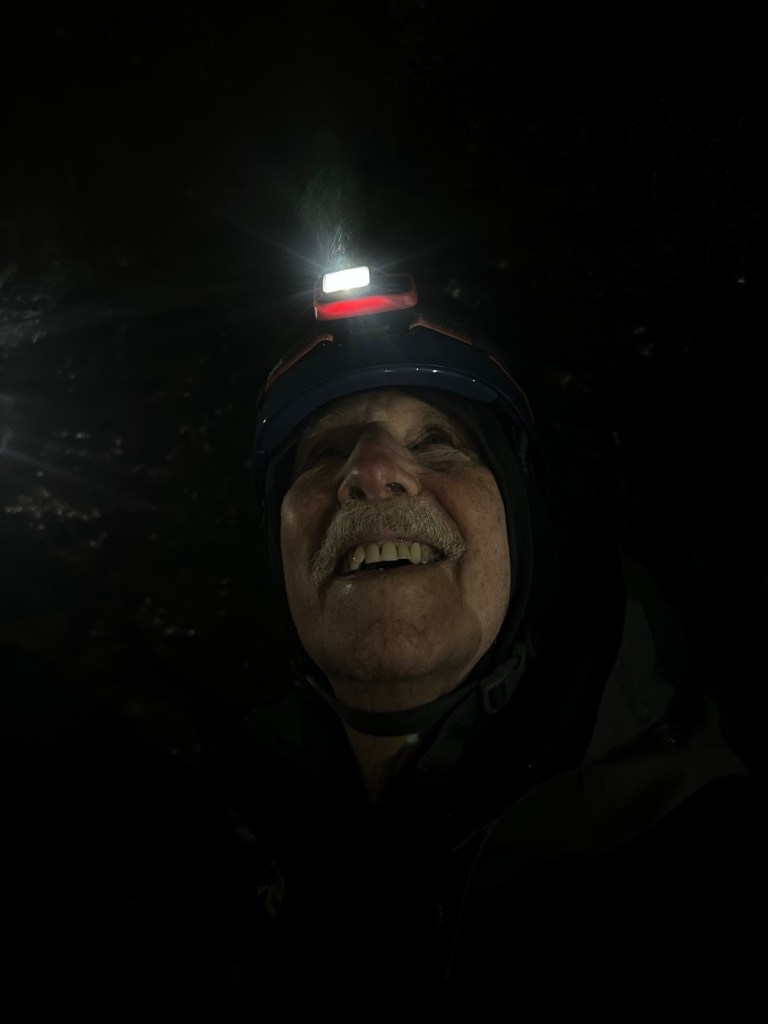
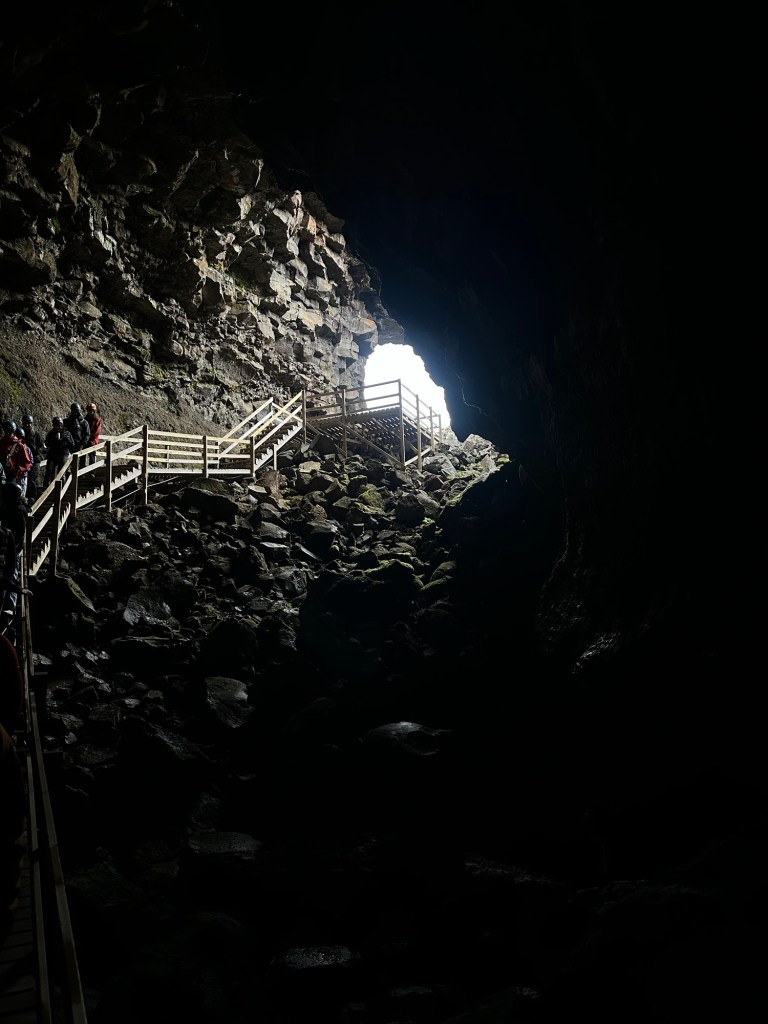
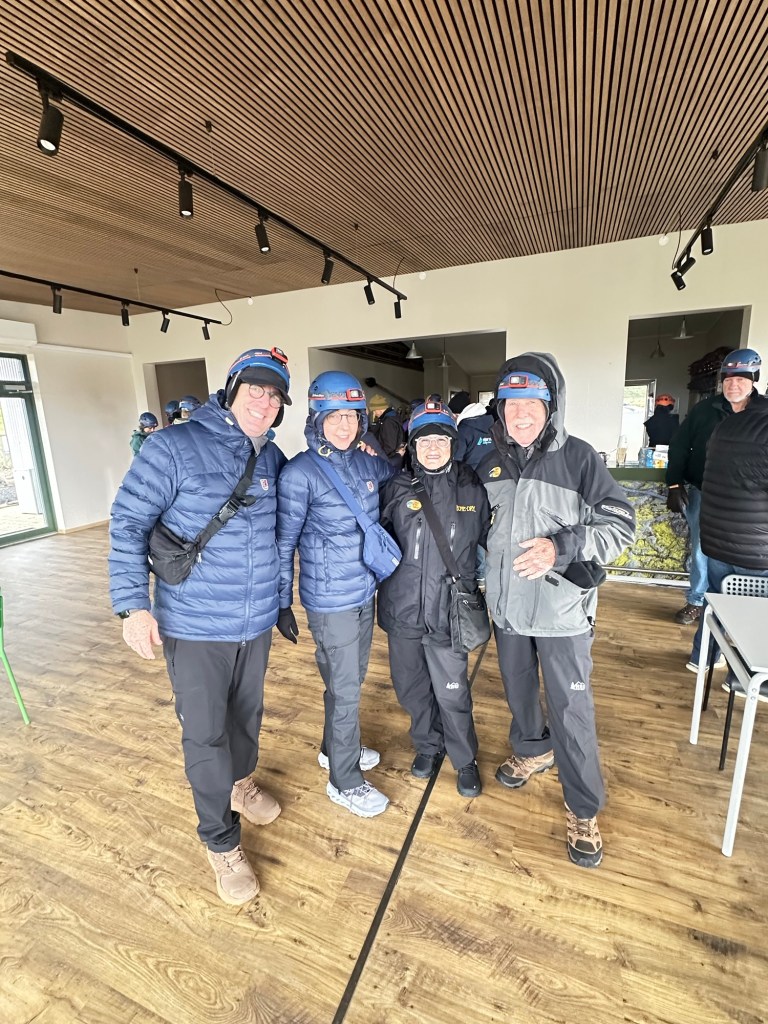
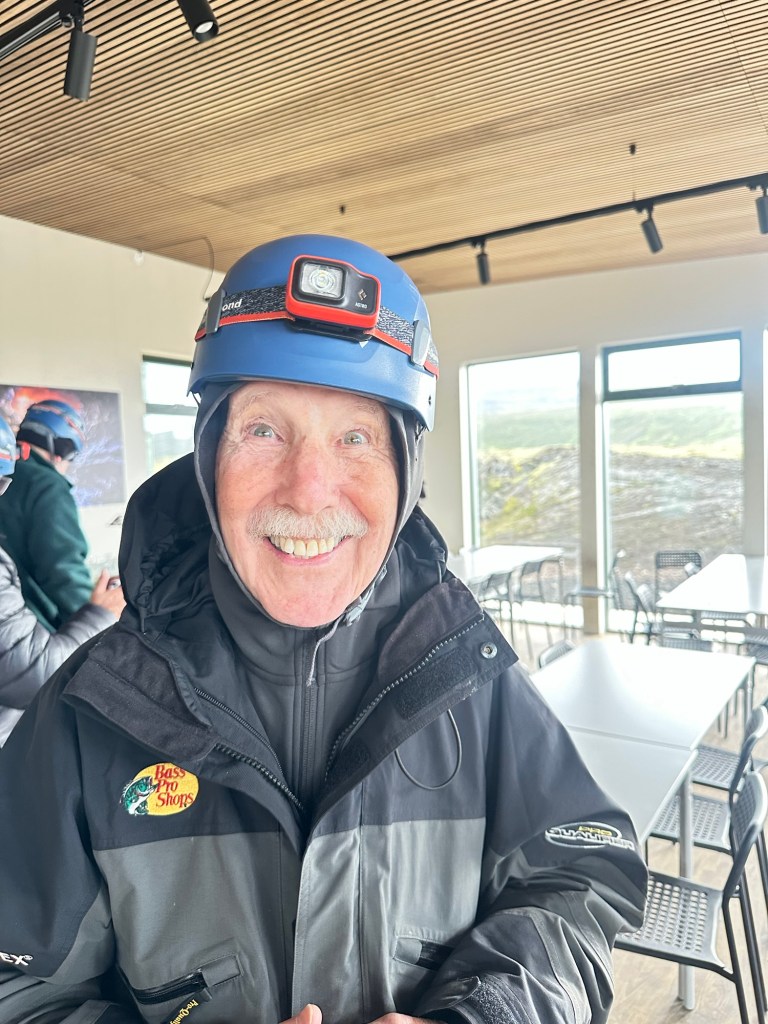
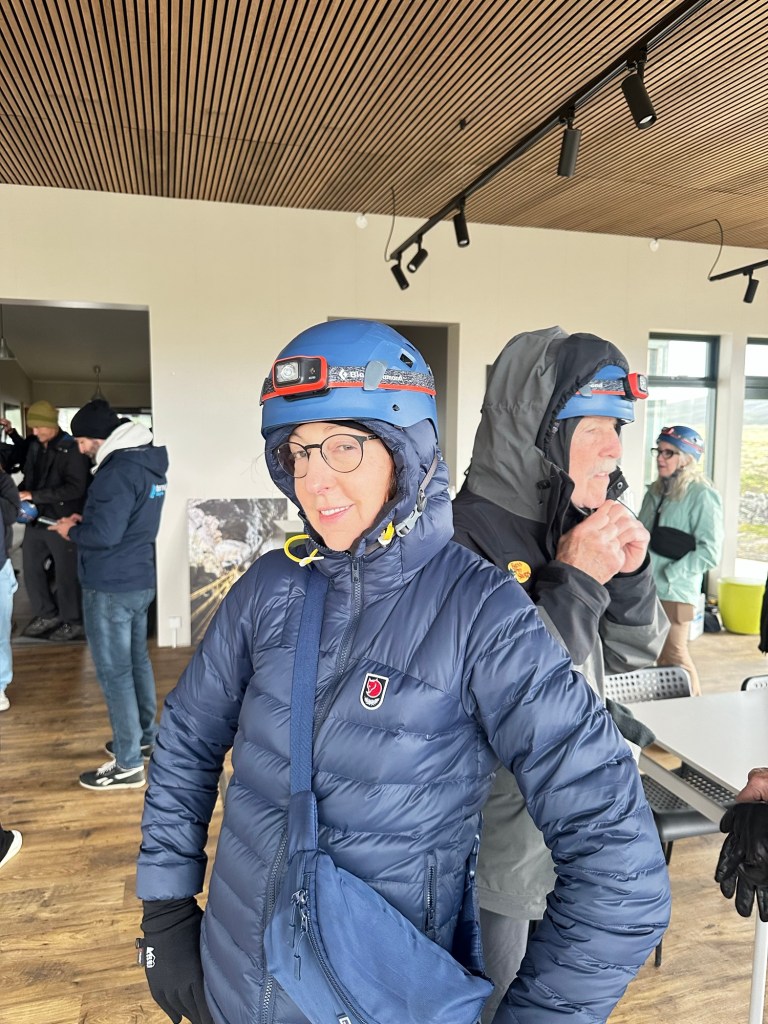
What makes this cave more than a geological curiosity is its archaeological significance. Ancient artifacts have been uncovered here, evidence that early Icelanders may have used the cave for shelter—or perhaps for rituals we can only imagine. As you descend into the darkness on wet rickety stairs, fitted with a helmet and headlamp, there’s an uncanny silence, broken only by the drip of water and the crunch of gravel underfoot. The lava walls ripple with the textures of fire, some glassy and smooth, others twisted like cooling taffy.
At one point, we reached a section Anna, our guide, cheerfully called “the squeeze”—an apt name for a narrow stretch where the lava tube’s ceiling dips dramatically. Unlike the lofty chambers we’d passed earlier, this part demanded a slow crouch and careful footing. I nearly tripped on the green safety mat rolled out over the volcanic floor. My helmet scraped against the rock more times than I could count—a rhythmic reminder of just how close the Earth was above me. Thank goodness for helmets. Without one, I might have come away with more than just memories.
At another point, Anna had us extinguish our headlamps and experience the total darkness. It enveloped us completely—a velvet void without shape or end. A ripple of unease stirred beneath the silence, as my sense of sight, suddenly useless, receded into irrelevance.
Víðgelmir is remarkably unspoiled. The tour is respectfully minimalist: a wooden walkway, a soft voice guide, and the drama of the Earth itself. It’s a place that feels at once ancient and alive—a frozen memory of Iceland’s fiery origins.


Into the Glacier
Our second stop, Langjökull Glacier (“Long Glacier”), is Iceland’s second-largest ice cap—stretching across 368 square miles, with ice up to 1,900 feet thick and rising to nearly 4,760 feet above sea level. Kristinn dropped us off at the Húsafell Activity Center, where we boarded a shuttle bus bound for Klaki Base Camp, the staging point for our glacier adventure.
As we arrived Húsafell and took in the scale of the operation—massive vehicles, icy terrain, and the experience of venturing inside a glacier—we exchanged a few apprehensive glances. But Kristinn, ever the calm navigator, with a curious semi- smirk, assured us this would be an exceptional shared memory builder. His confidence steadied us. We were about to step quite literally into the heart of Iceland.
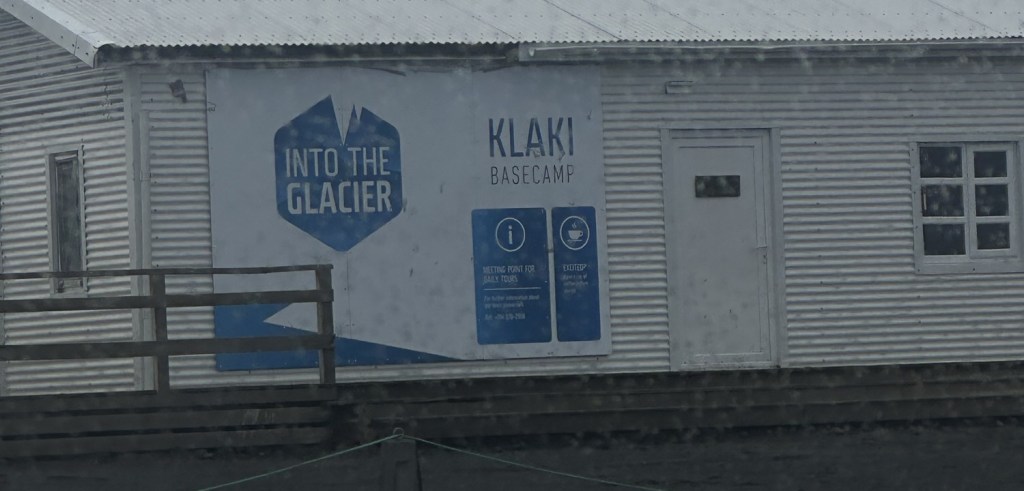
The wind was already doing its best to knock us over at base camp, but when I looked up toward the glacier, I realized that was just the opening act. The air above was a meteorological blender—clouds, snow, hail, rain, sleet, and what I swear might have been gravel. The only thing missing was a flying sheep. Even that didn’t feel entirely off the table.
We stepped inside the base station to don some additional protective clothing—in our case, two pair of insulated boot covers that required a semi-magician act to put on. Waiting for us at nearby was a vehicle that looked less like a tour bus and more like something NASA might send to Mars if Mars had glaciers. Towering on eight enormous tires, it sat like a white leviathan against the black volcanic plain—part monster truck, part mobile bunker.
This was our ride into the glacier.
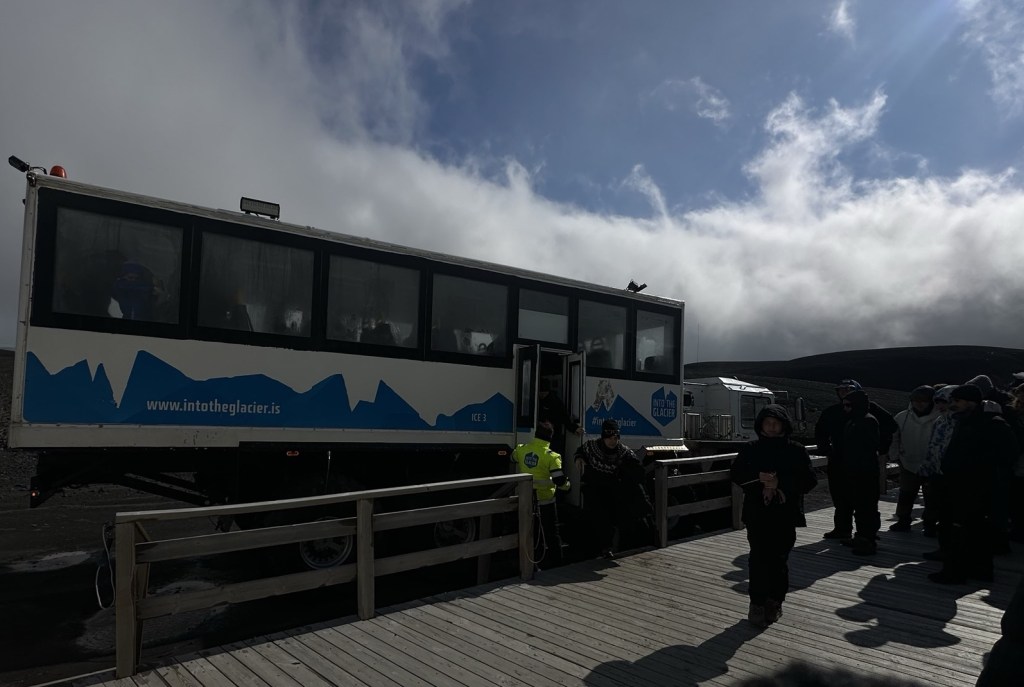
Outfitted with reinforced suspension, insulated windows, and the kind of traction that laughs in the face of blizzards, this purpose-built beast is designed to do one thing: conquer ice. Its massive wheels could have flattened a small car, but instead, they’d gently carry us across Langjökull’s frozen crust, where weather can mutate in minutes. Remarkably, the multiple tires of the beast, inflate and deflate with a rhythm intended to put us where it thought we needed to be.
Inside, the passenger cabin was surprisingly warm and civilized. Rows of cushioned seats, panoramic windows, and just enough room to feel like we weren’t in a science fiction film—though the landscape outside said otherwise.
As the engine rumbled to life and we began our slow, lurching climb toward the glacier’s heart, there was a moment of quiet awe. Then someone whispered, “This is insane.” And it was. Wonderfully, impossibly, Icelandically insane.
Sadly, a tragedy is unfolding here—undeniable, evidence-based, and indisputable. The fact is, the icefield is disappearing before our eyes: year by year, month by month, day by day, minute by minute, and second by second. more and more stone, less and less ice. It’s not theory. It’s fact. Markers placed along the glacier’s surface show exactly how fast it’s retreating, turning what once seemed eternal into a vanishing timeline etched in ice. If you are not concerned about this, you ought to be.
But we weren’t here to contemplate the survival trajectory of the human race. We were here to build memories with our friends—just as Kristinn had promised. And that, we did.
Climbing down from our gargantuan ride, we spotted the tunnel entrance about fifty feet away: a low, corrugated pipe embedded in the glacier, looking more like a makeshift emergency hatch than the gateway to an extraordinary experience. Under ordinary conditions, it would’ve been a short, unremarkable walk.
But this wasn’t ordinary.
The wind came in violent bursts, sharp as blades and cold enough to burn. Snow and sleet whipped across our faces, crawling into every seam in our clothing. The ground was slick and uneven, and each step became a negotiation between gravity and sheer willpower. Hoods flapped wildly, glasses fogged, and gloved hands reached for anything that might offer balance—even if that meant grabbing onto each other. ICEland was in charge now. Those fifty feet became a test—of footing, of patience, and of humor. At one point, I squinted through the storm and laughed aloud: we looked like a ragtag expedition in a wind tunnel, one step from crawling.
Eventually, battered and breathless, we reached the entrance. And just like that, the world changed or did it?
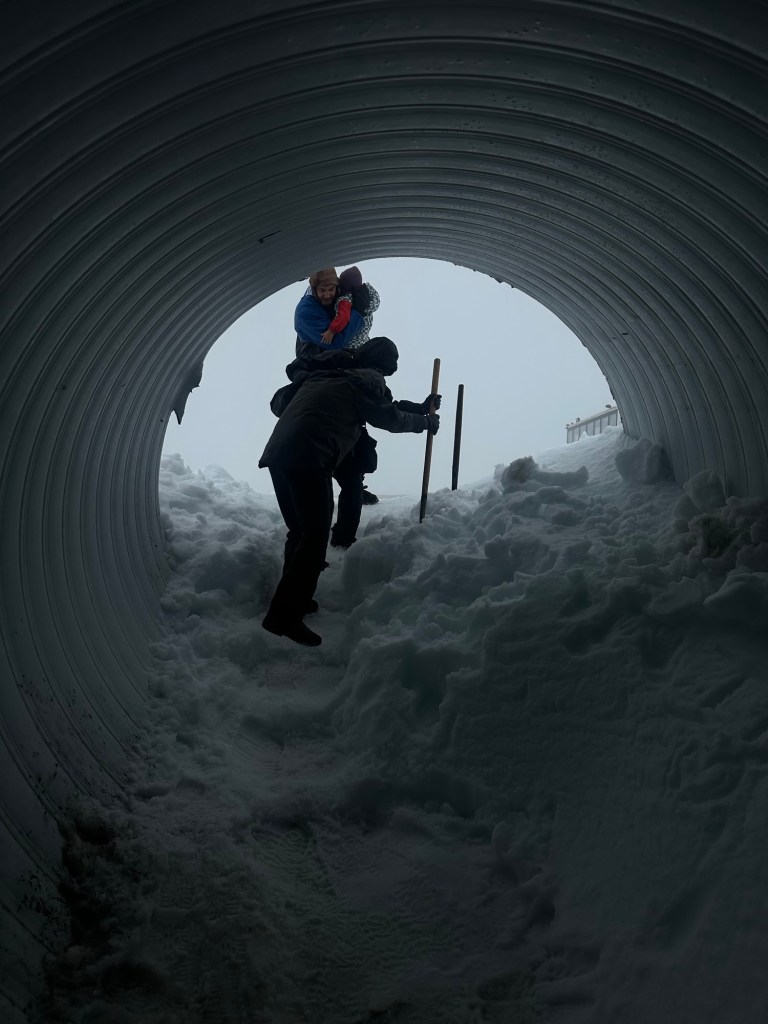
Of our group, Beth and I were the first to step inside the tunnel. Step, of course, being a generous term—what we actually did was attempt to step, only to find our feet sliding in every direction at once, like clumsy ice dancers. The ice beneath us was polished slick, as if someone had Zambonied it just for laughs. Beth stopped dead in her tracks.
A couple of upright shovel handles, planted near the entrance for support, offered the only hope of stability. They helped—briefly—but not enough to save us from a graceless descent into a position somewhere between vertical and horizontal. We clung to the shovels and each other, slipping and half-laughing, half-panicking, as the glacier made clear who was in control.
I looked back and caught a quick video of Bud and Judy performing their own impromptu ballet as they attempted to enter the tunnel—an icy pas de deux of slipping, sliding, and flailing limbs worthy of its own standing ovation. Memory building, Indeed.
Beth, Judy, Bud, and I continued our clumsy rendition of the Icecapades for another hundred feet—slipping, sliding before someone finally handed us crampons to strap onto our boots. With sudden traction came a sense of relief… and a fair bit of indignation. One can’t help but wonder why these marvelous little devices hadn’t been issued earlier—perhaps before we’d performed our unintentional ice ballet for the amusement of the glacier.

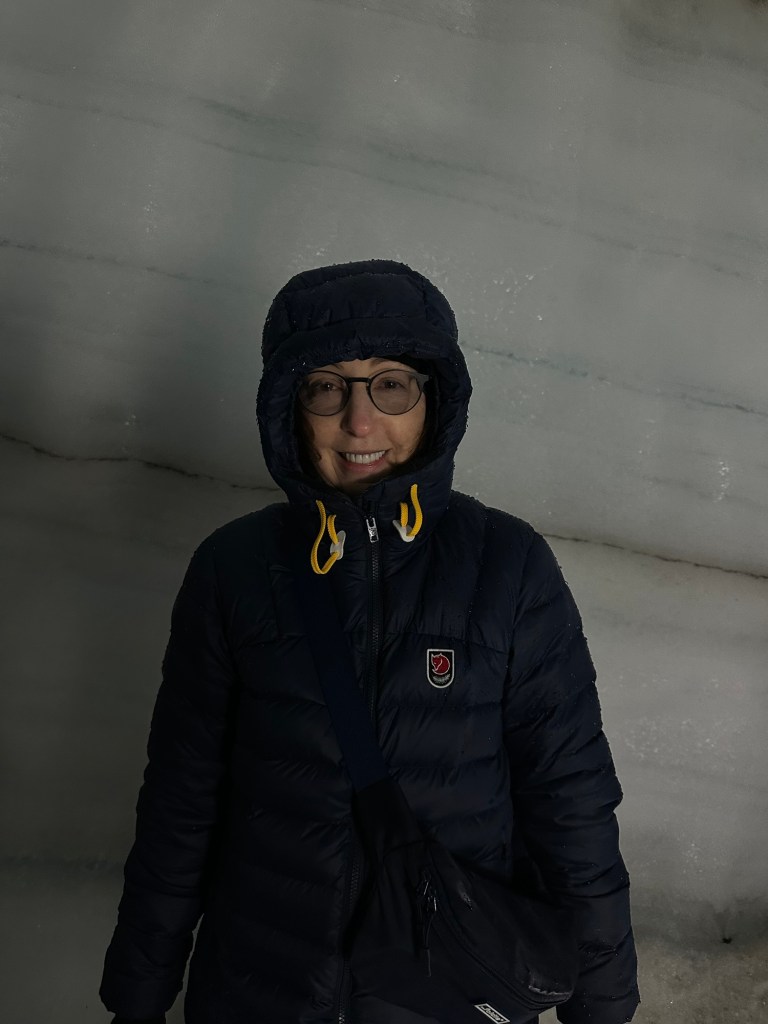
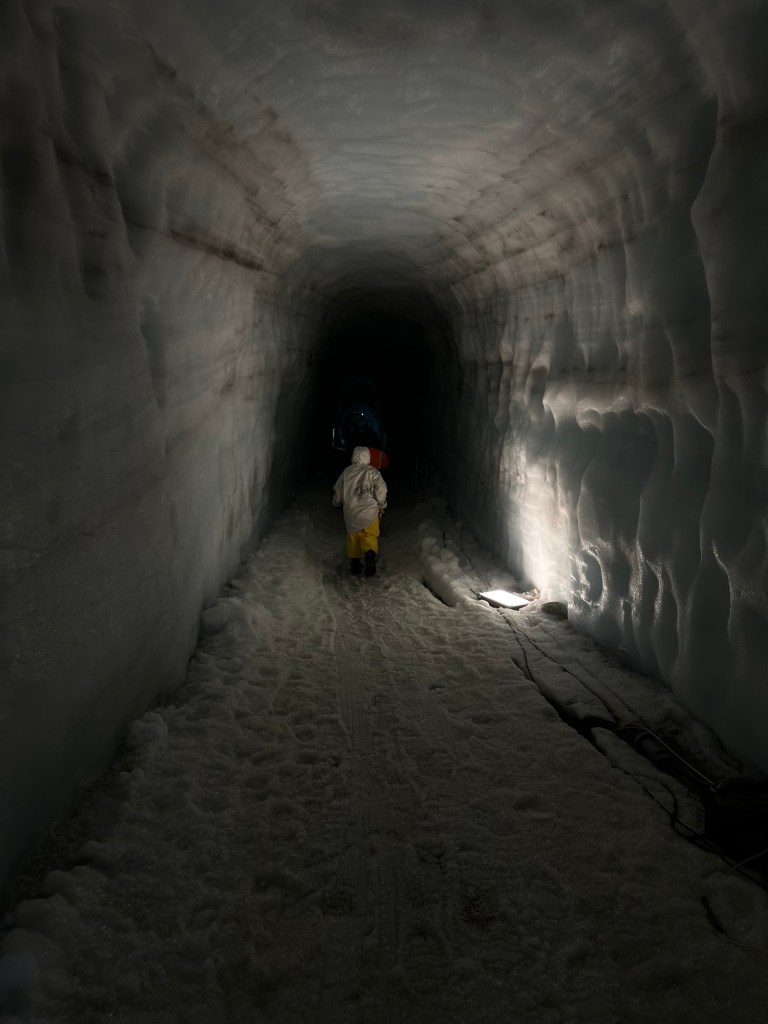
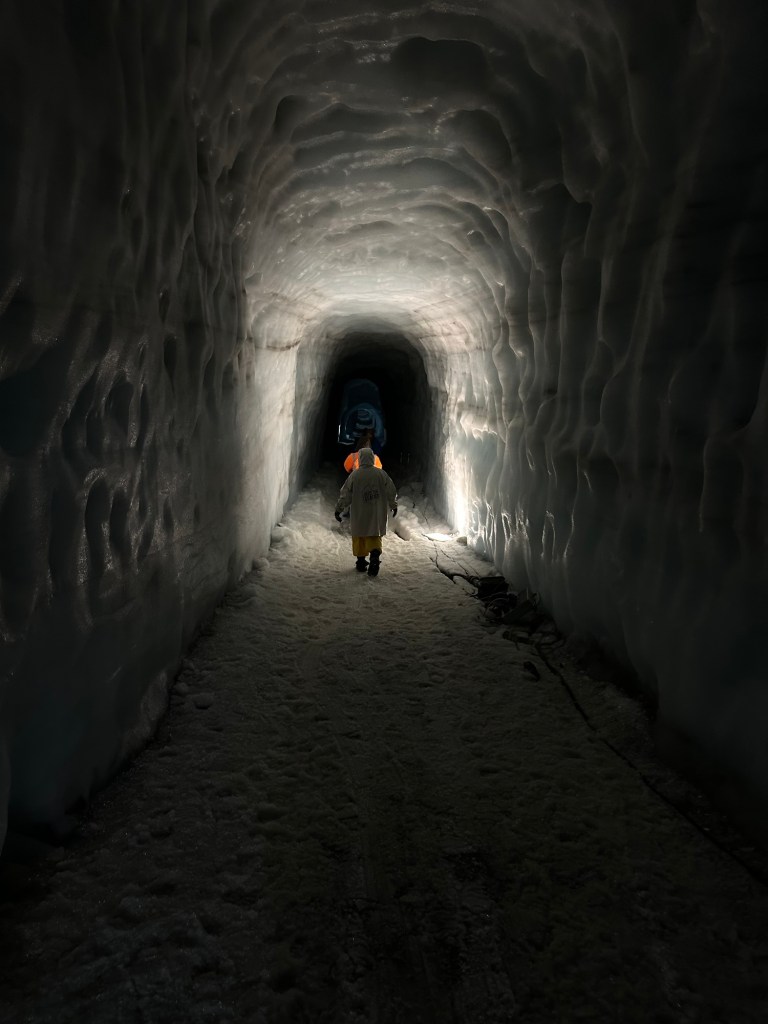
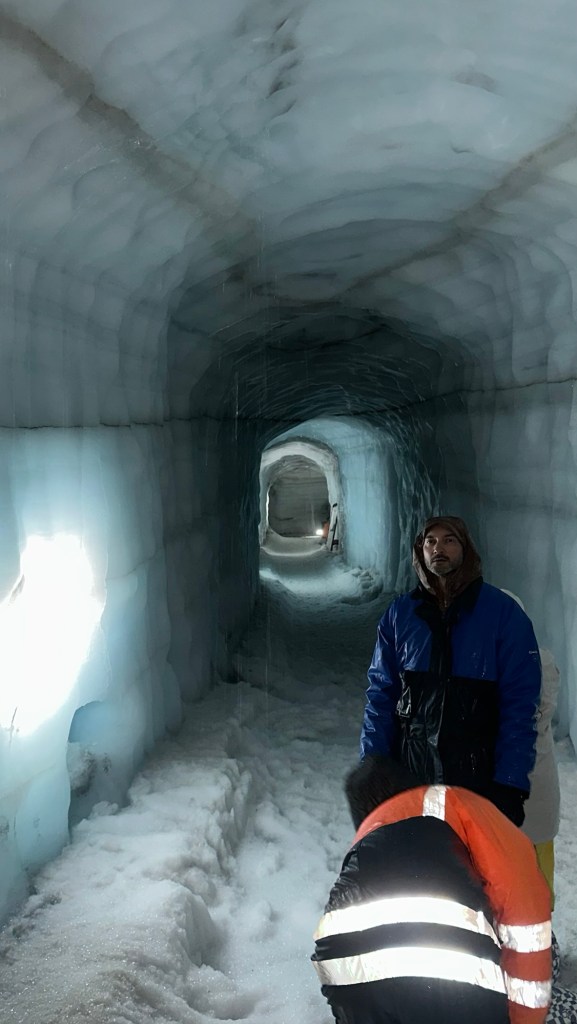
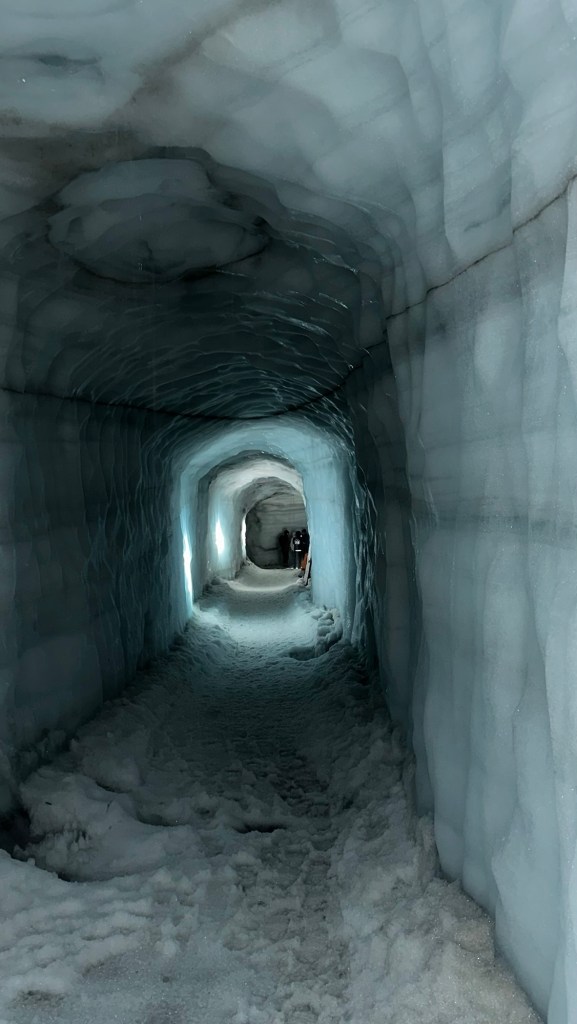
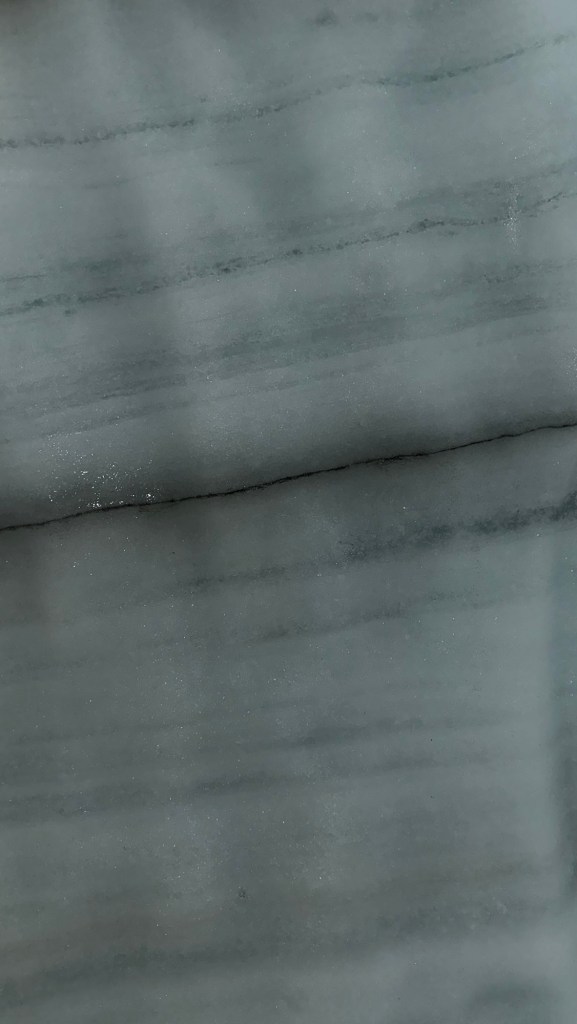
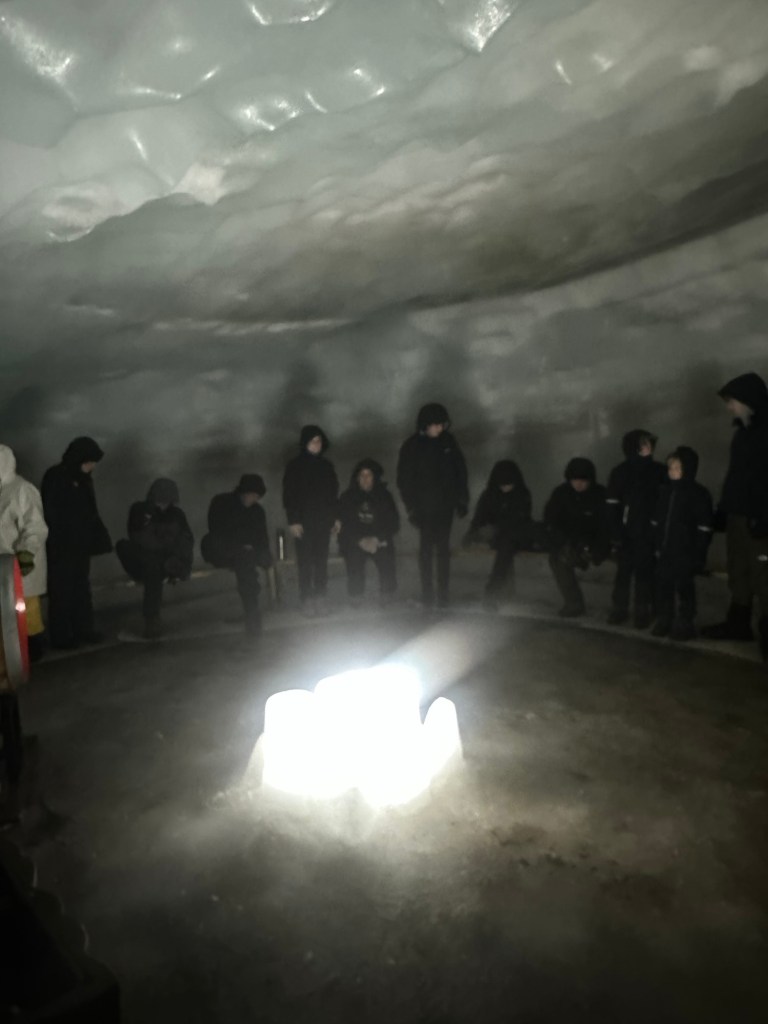
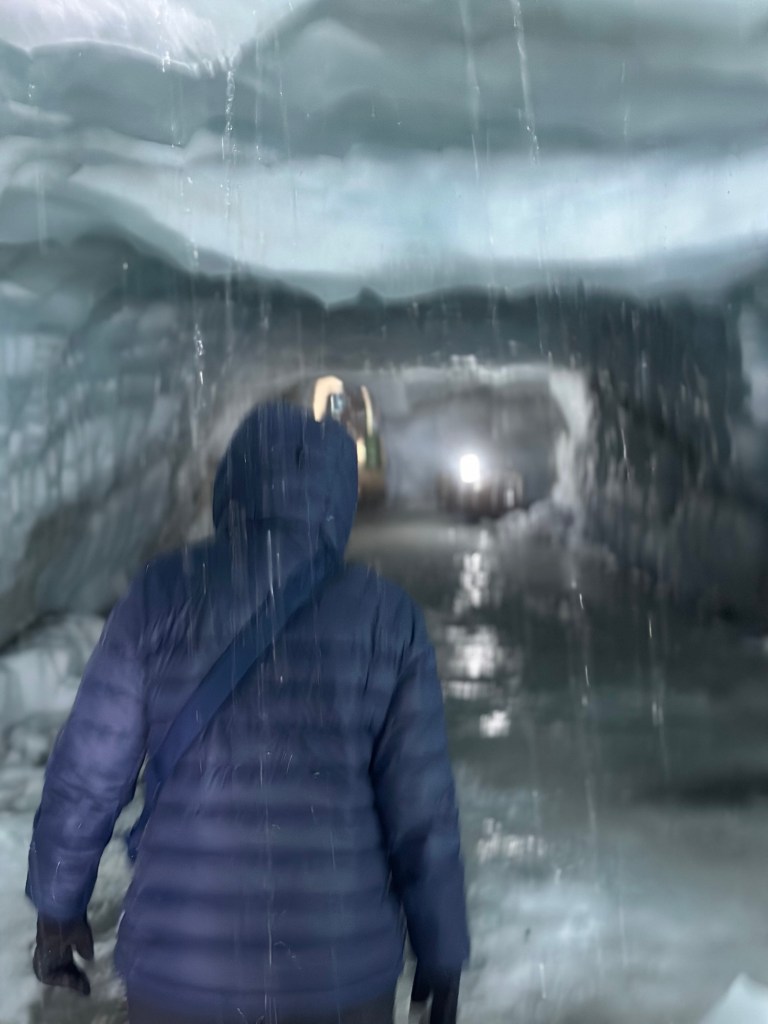

Inside the glacier, the world turned cold, blue, and surreal. The tunnel curved ahead in a soft glow, its walls layered with centuries of compressed ice. But instead of crisp stillness, we found wet slush underfoot, with meltwater dripping and pouring from the ceiling. The floor was slick, the air heavy with moisture. It was both stunning and disorienting—a reminder that this ancient glacier is not frozen in time, but quietly slipping away.
We decided to duck out of the tour a little early. But not so fast—there was waiting involved. We had to regroup with the others, then retrace our journey in reverse: back through the tunnel, across the icy plain, and into the belly of the monster truck once more.
The entire excursion took about four hours.
When we finally reunited with Kristinn, we were cold, tired, and hungry—but we also carried exactly what he had promised: a memory etched in ice.
Hraunfosser
Our final stop of the day was Hraunfossar, a waterfall unlike any we’d seen before. Instead of crashing over a cliff’s edge, it emerged gently and almost mysteriously—from beneath a wide expanse of lava rock. Dozens of clear, cold rivulets streamed out from under the moss-covered basalt, spilling into the Hvítá River in a series of delicate, shimmering veils.
After the icy intensity of Langjökull, there was something peaceful about this place—calmer, softer, as if the land itself was exhaling. This was like a decompression chamber without walls.
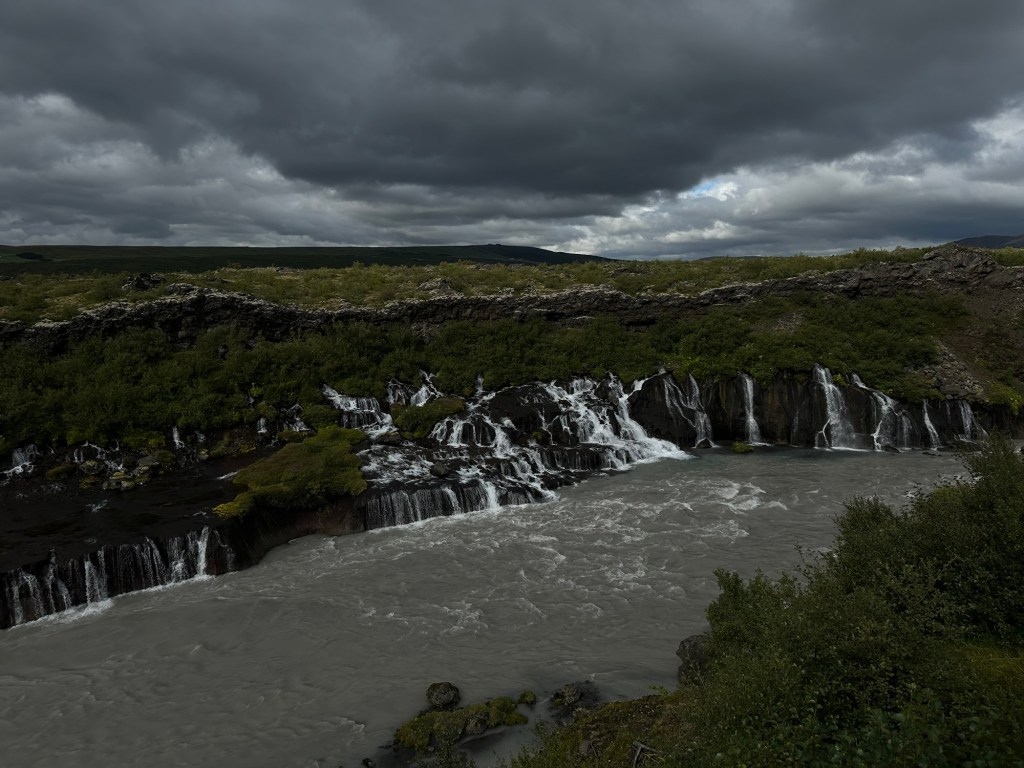
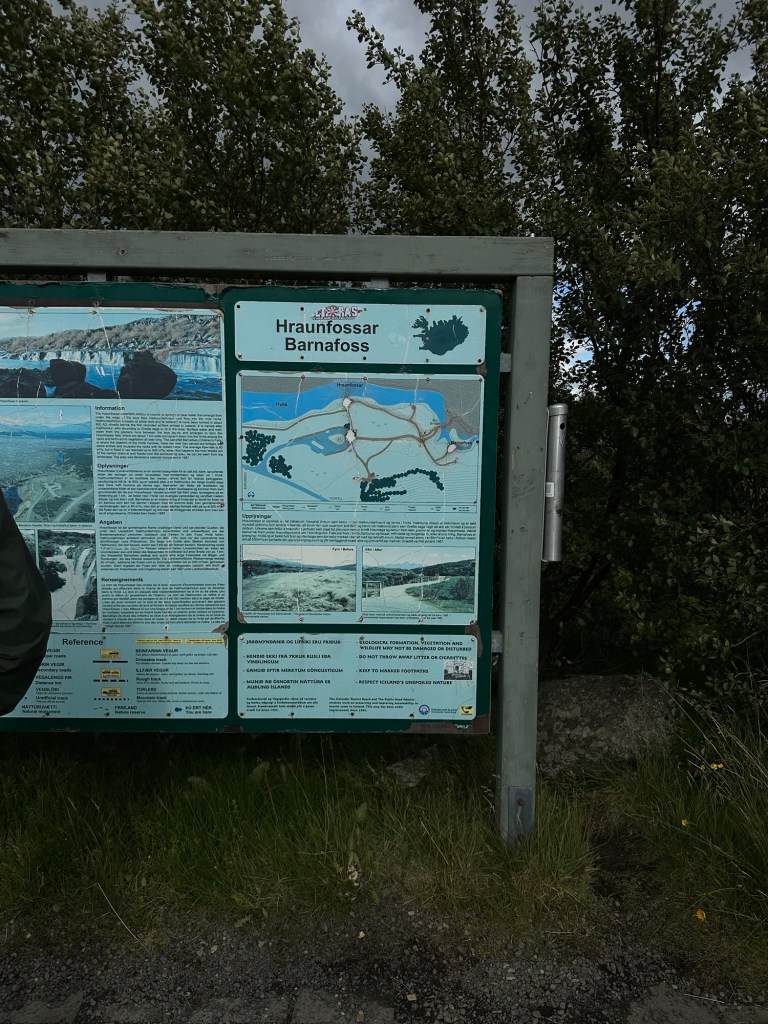
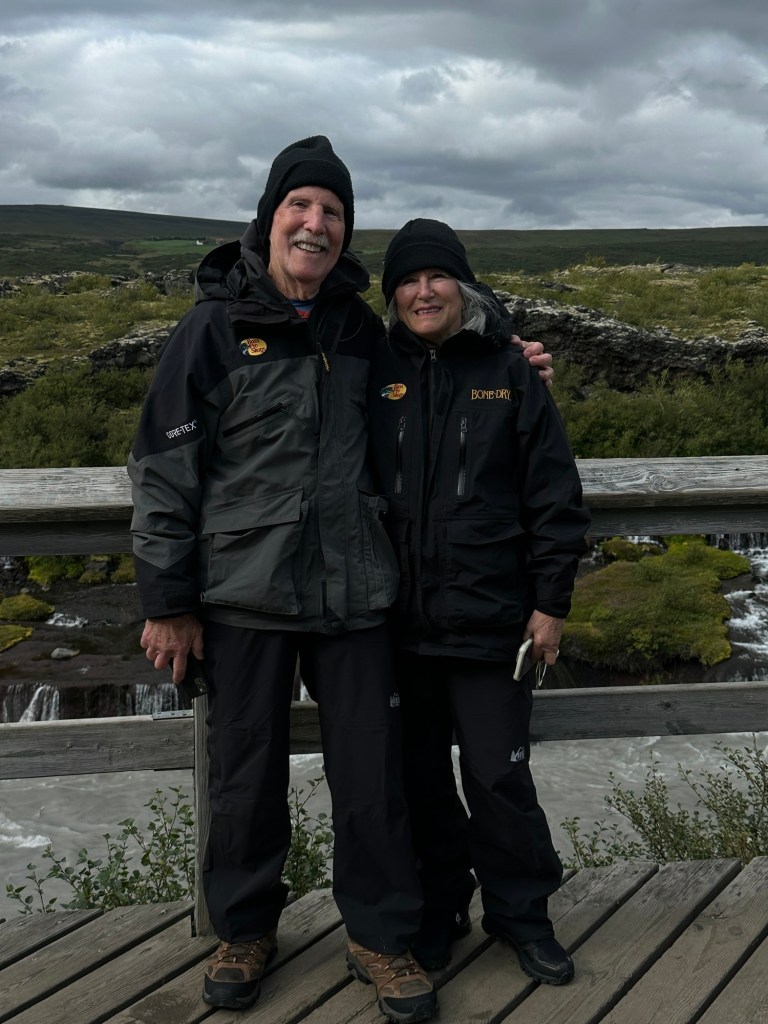
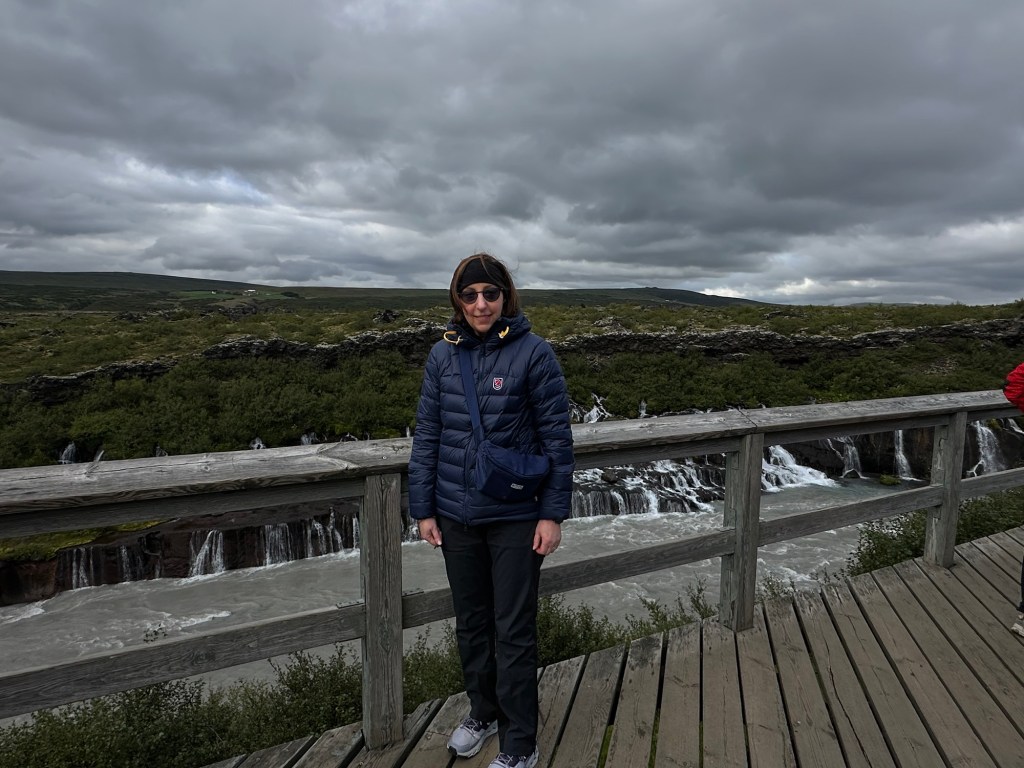
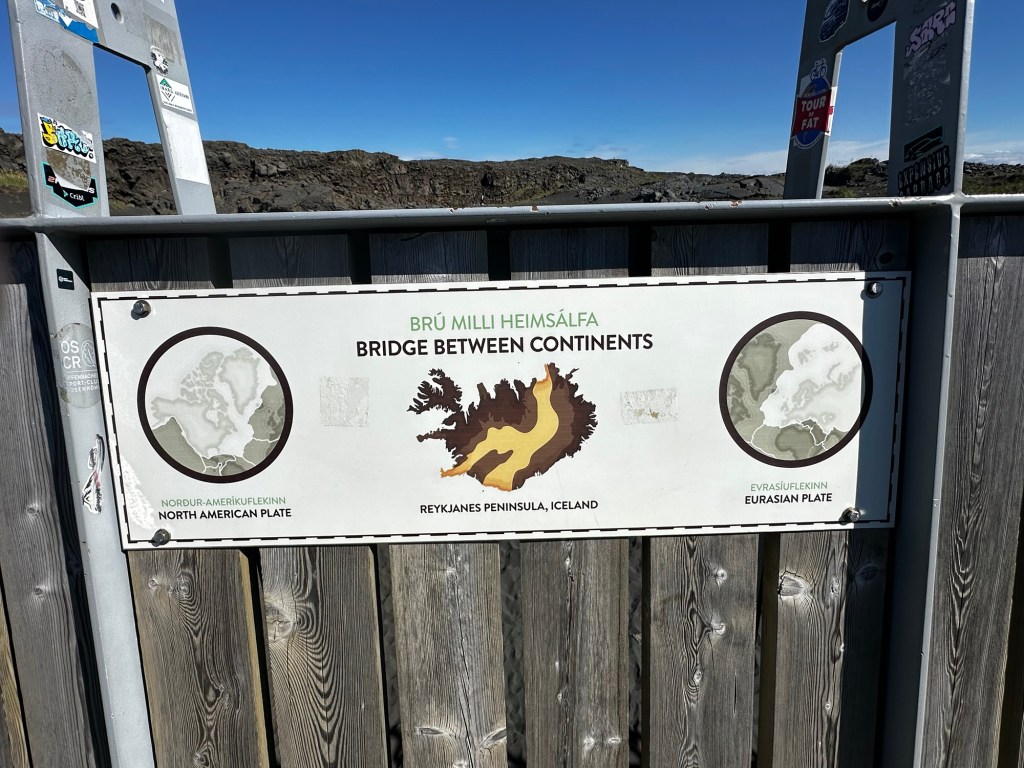
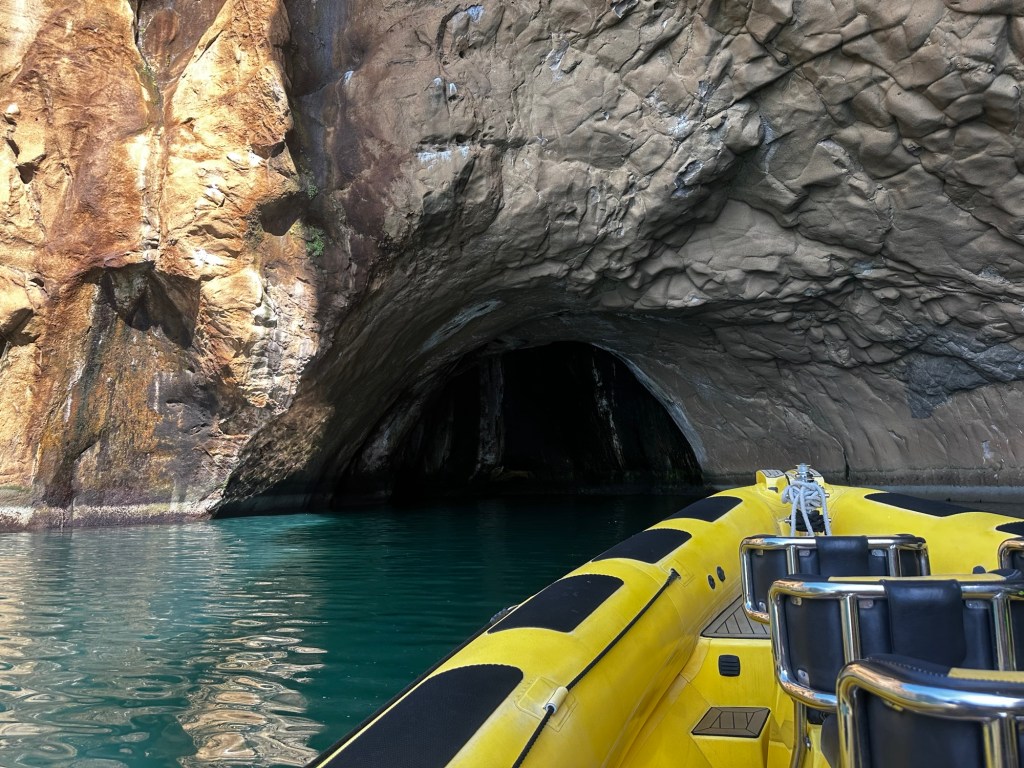
On our way through the Silver circle to our new hotel in the Golden Circle we did see a number of other wonders. A sampling of those of those is below.

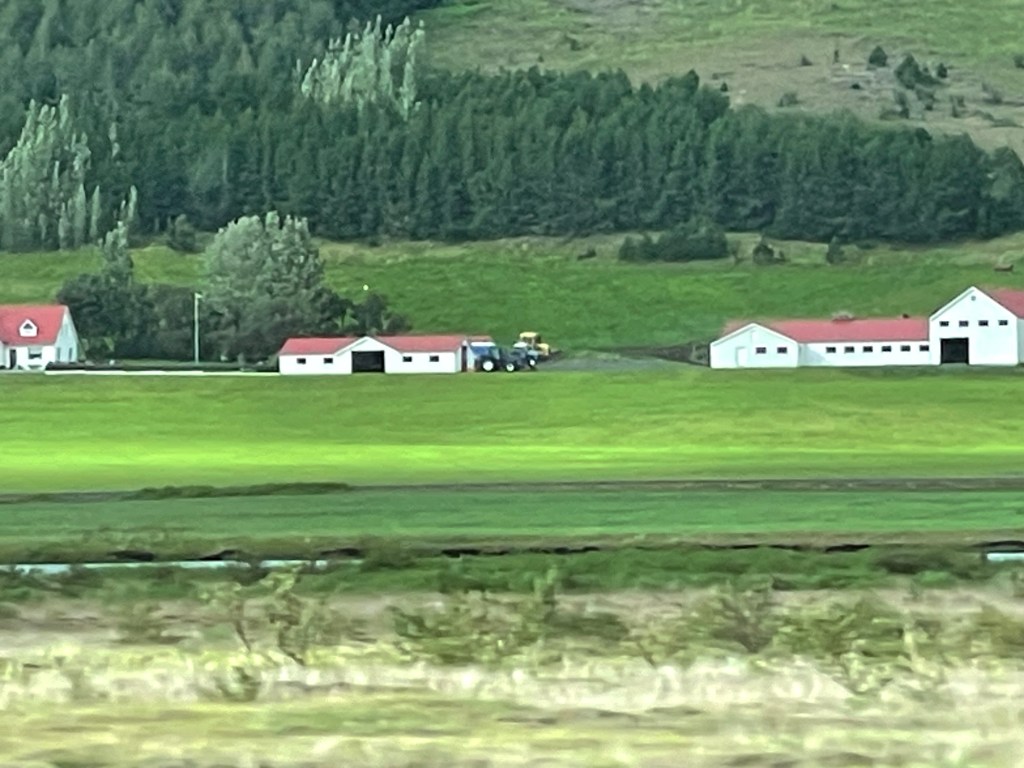
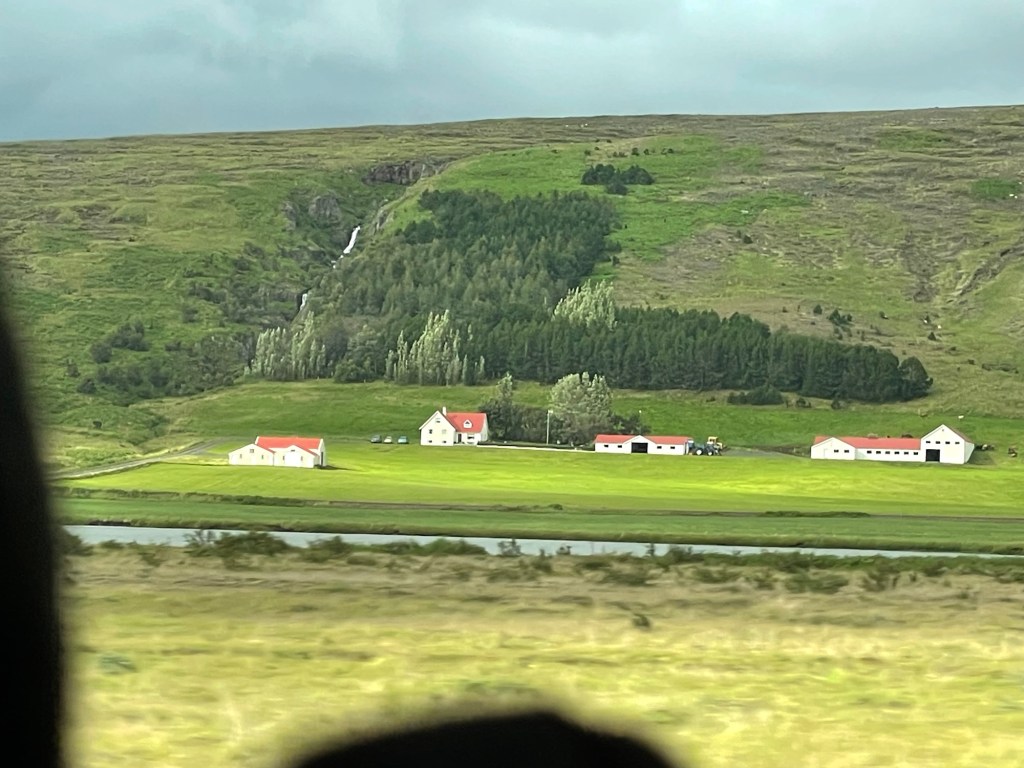
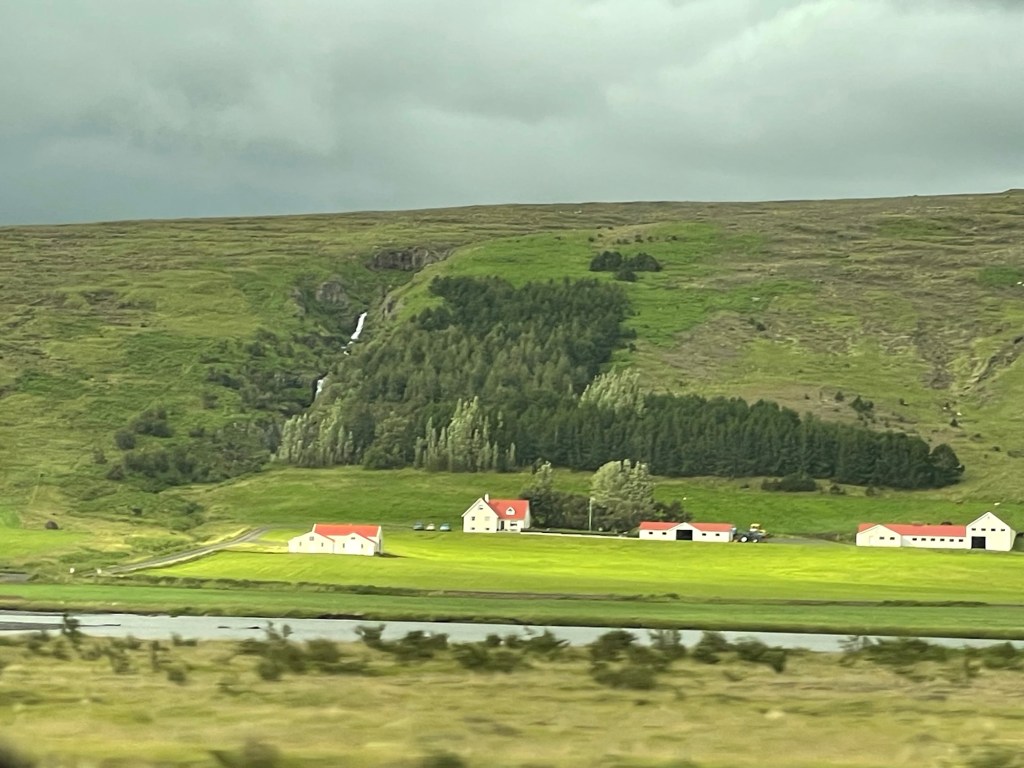
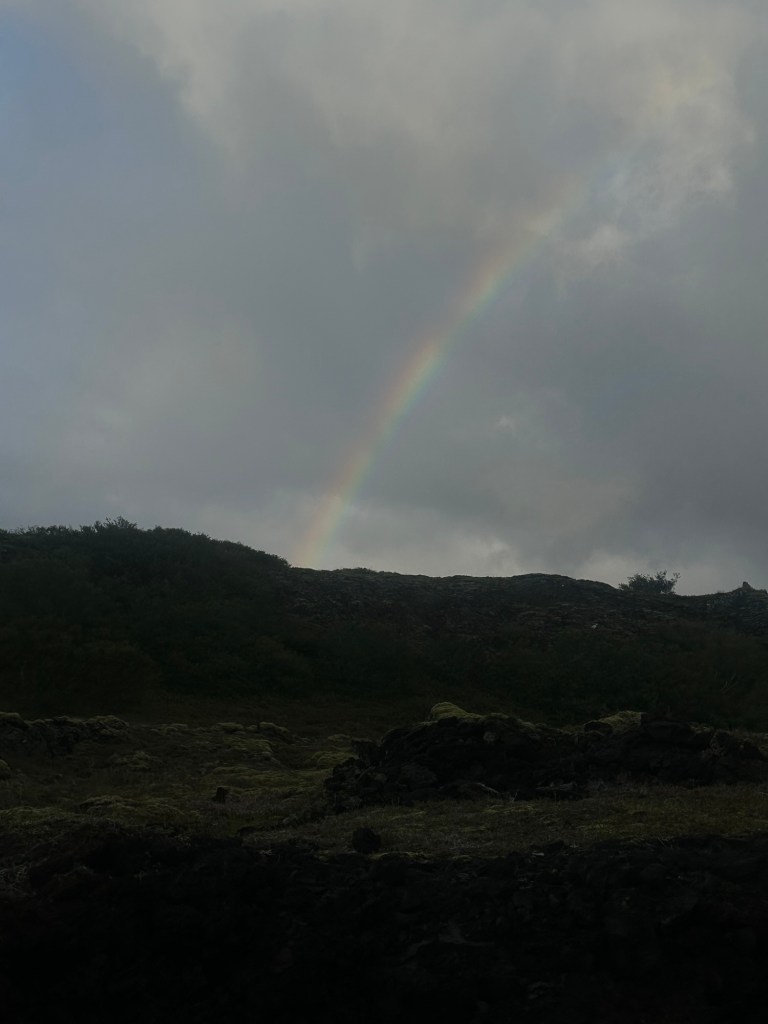
We’ll soon be arriving at our next stop: the Ion Adventure Hotel, tucked into the wild landscape of Iceland’s Golden Circle. Check back with us from there—more stories to come.

 YouDontKnowJackTravels