After an early workout and a satisfying breakfast, we set out in the morning for Olympia, located in the western Peloponnese—an hour and a half drive from the Mandarin Oriental. This famed archaeological site, was once the spiritual and athletic heart of Ancient Greece.
Visiting Olympia feels like a rite of passage on any journey through Greece—a sacred portal into the ancient world, where the spirit of the past still lingers in the dust and stone.
We met our local guide, Maria, just beyond the shaded entrance to the Olympia. Maria carried a large umbrella for sun protection, and it quickly became clear why: the day was scorching, the sun high and merciless in the summer sky.
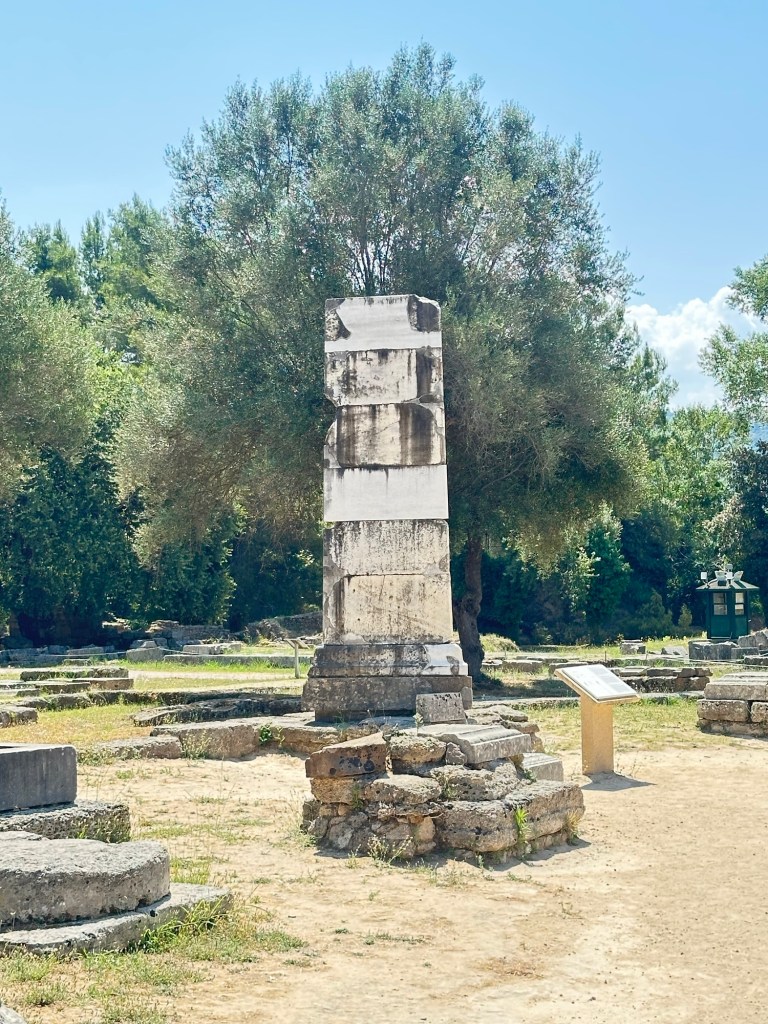
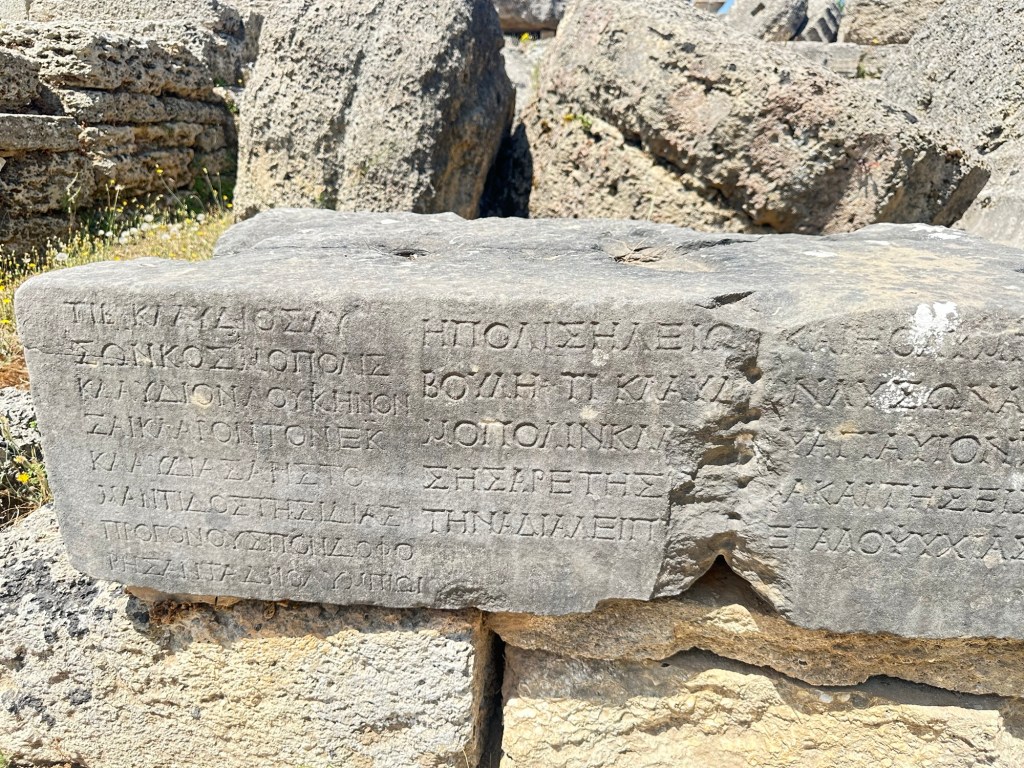
Yet even in the heat, Olympia unfolds with quiet majesty. The crowds were modest—present, but not overwhelming—allowing the space to breathe, to pause, to listen. With each step, the hum of the present fades, and imagination takes over. The worn marble paths, the scattered columns, the wild olive trees that have borne witness for centuries—all conspire to summon the ancient world to life.
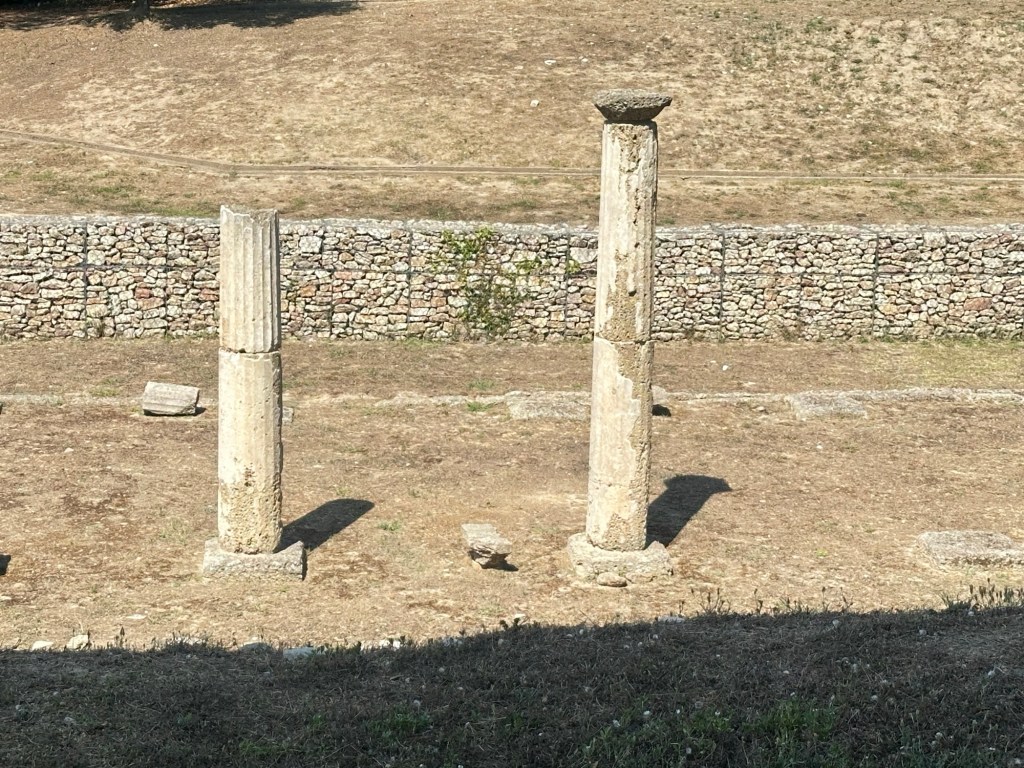
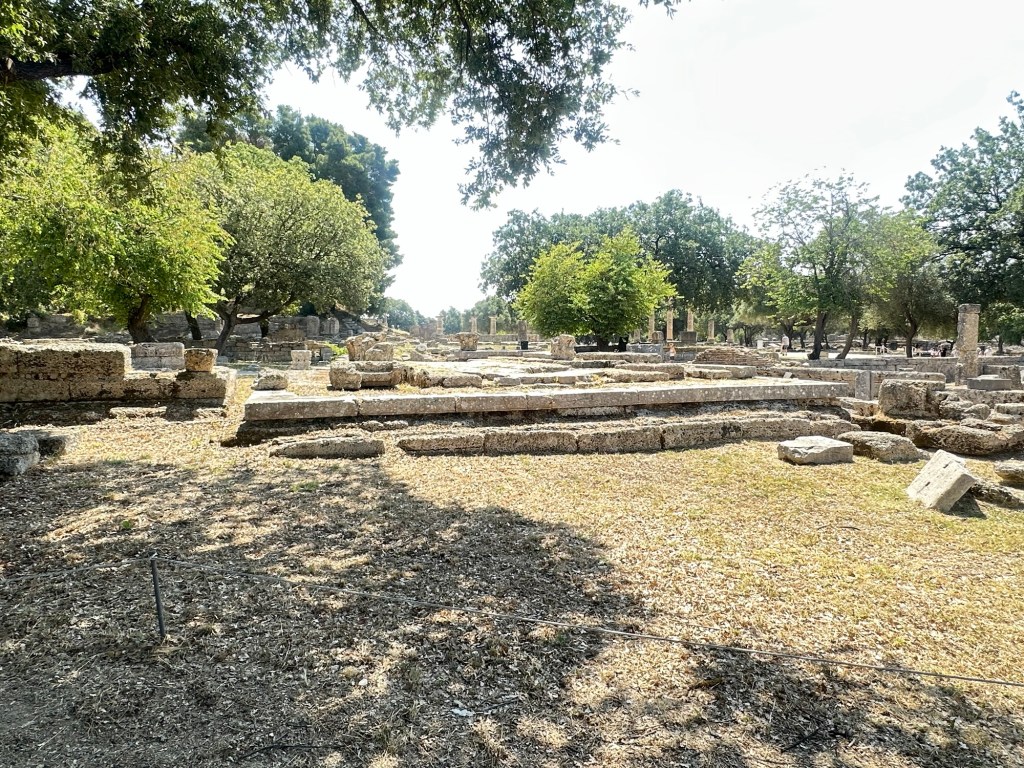
The scale is striking: the vast open areas, colonnaded paths, and foundations of temples, training grounds, and lodgings—all arranged in a kind of natural amphitheater framed by gentle hills.
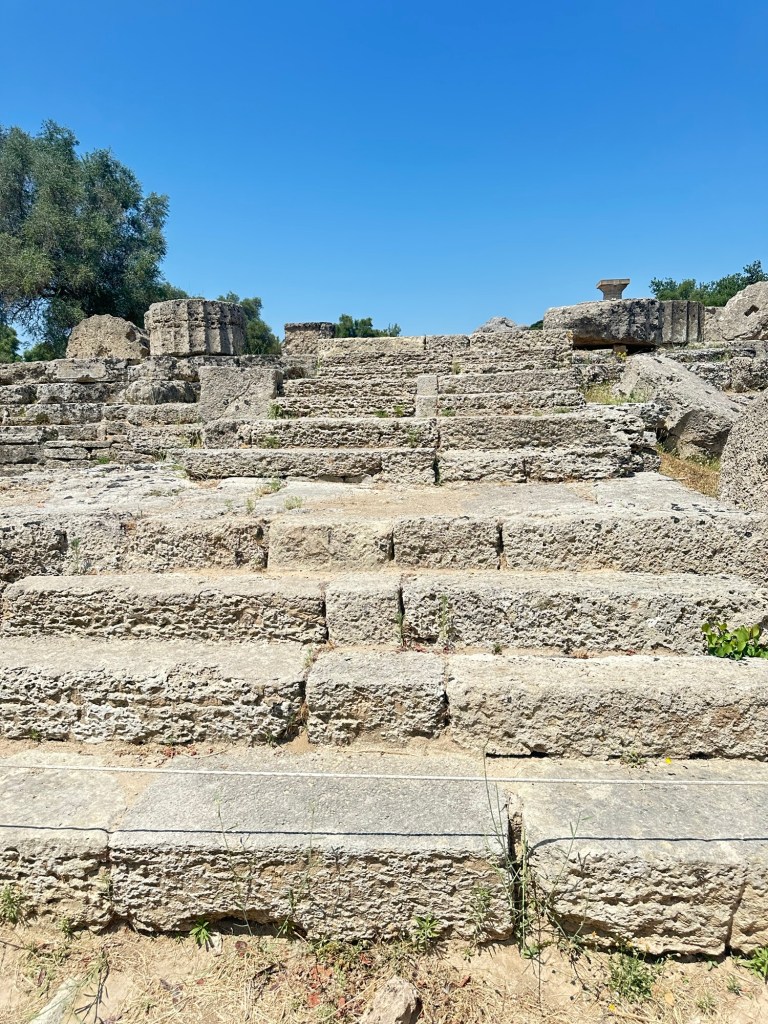
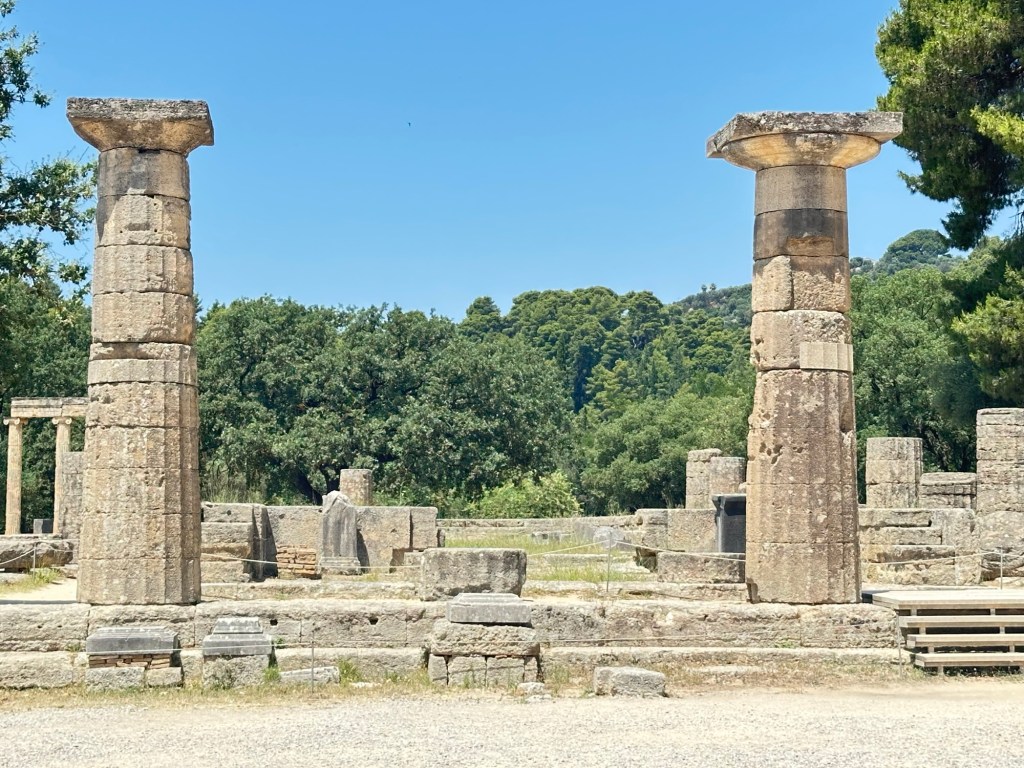
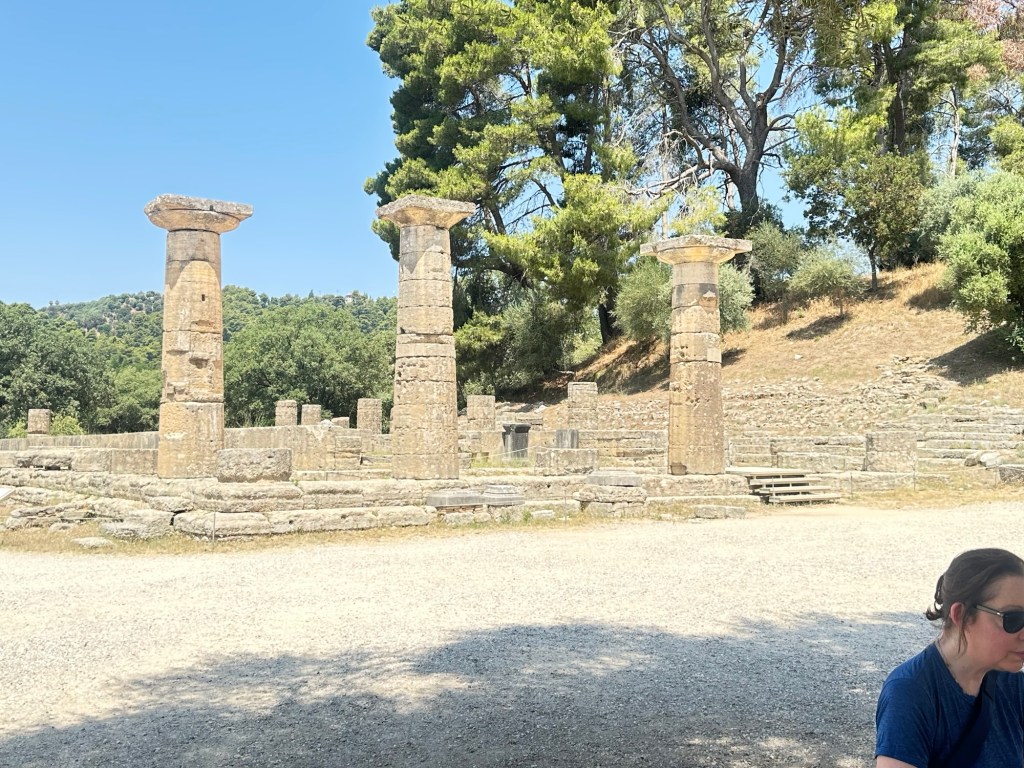
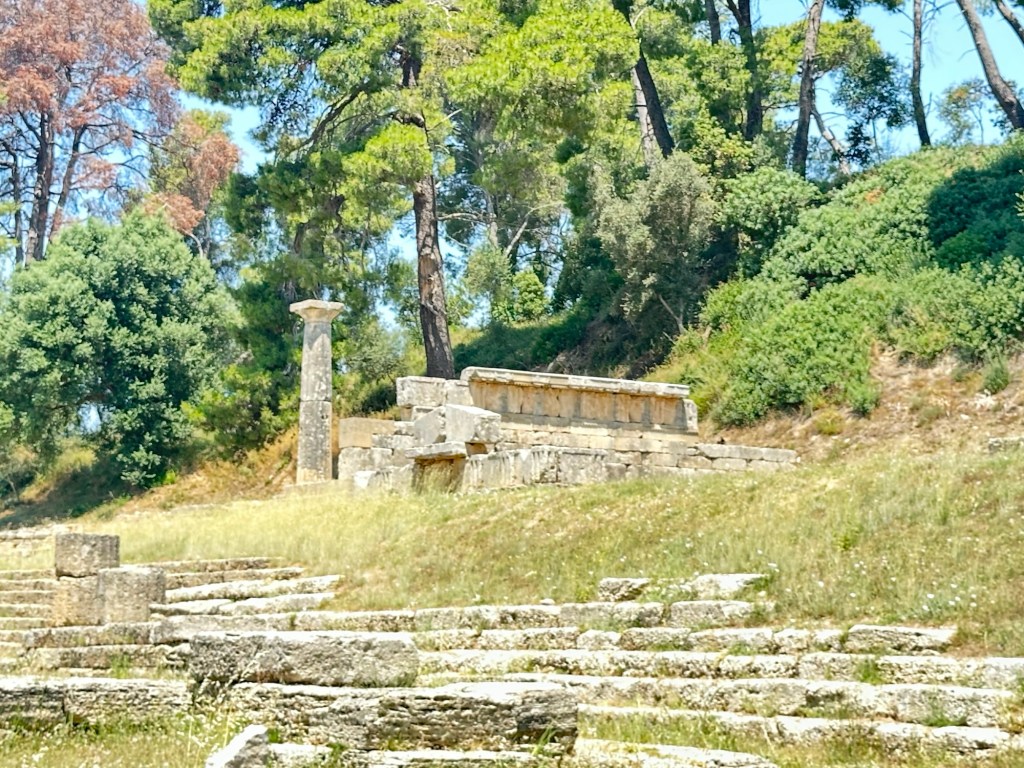
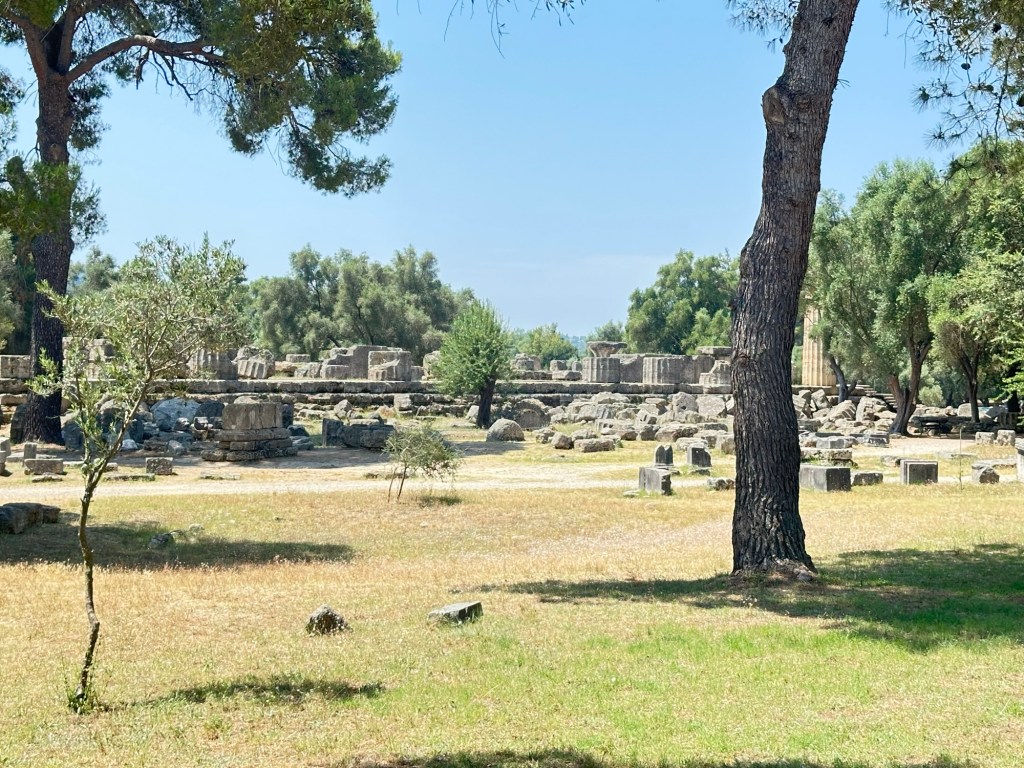
The Temple of Zeus, once home to one of the Seven Wonders of the Ancient World (a massive gold-and-ivory statue of Zeus by Phidias removed and lost to history), lies in majestic ruin. Nearby, the Temple of Hera stands older and sturdier, its weathered columns a testament to the passage of millennia. It is in front of this temple that the modern Olympic flame is lit every four years.
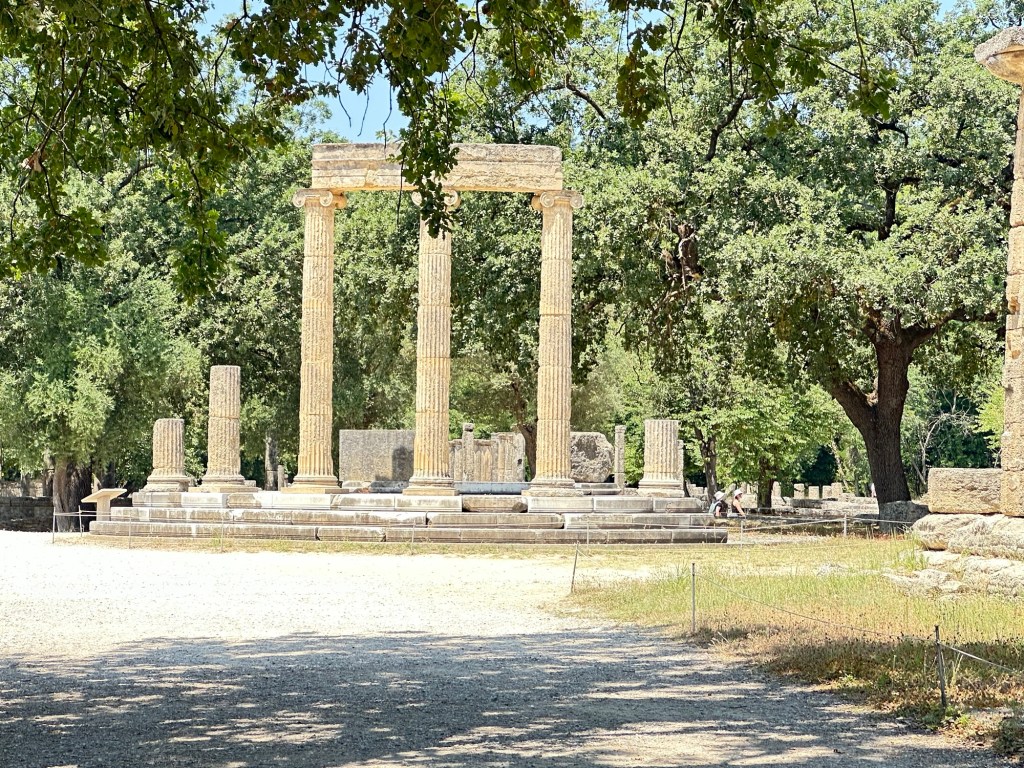
Nearby the Philippeion, a circular monument built by Philip II of Macedon (father of Alexander The Great, the Hellenic Warrior), and the Palaestra and Gymnasium, where athletes trained for the ancient Olympic Games. The Leonidaion, once a grand lodging for VIPs, hints at the prestige of the event.
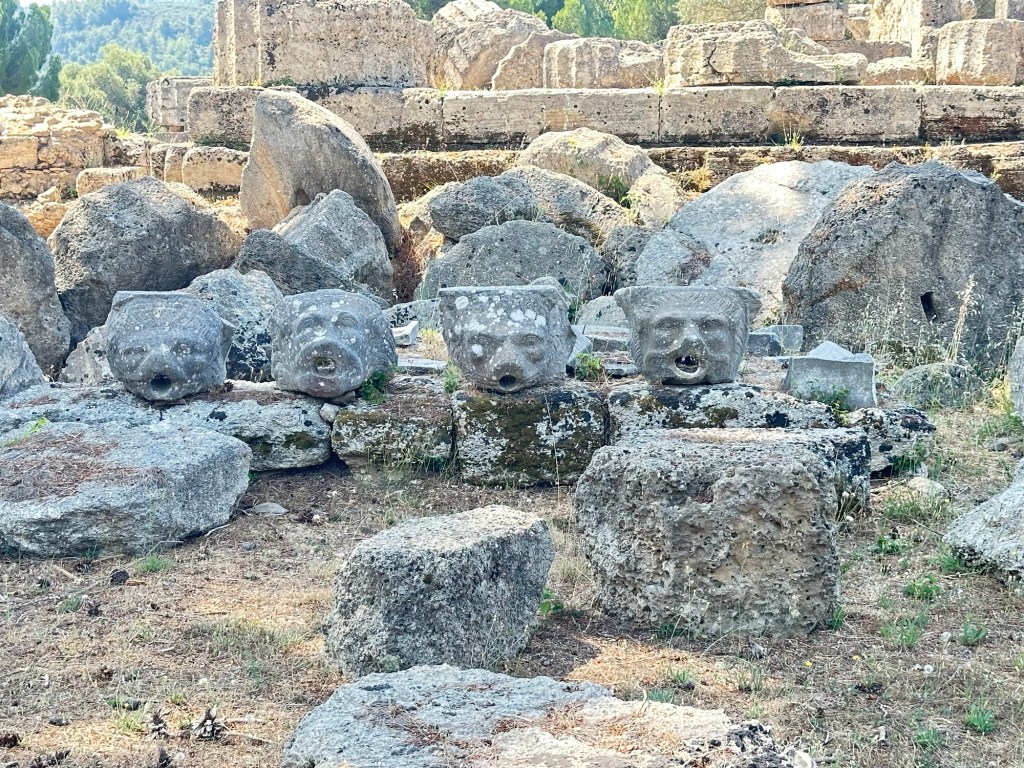
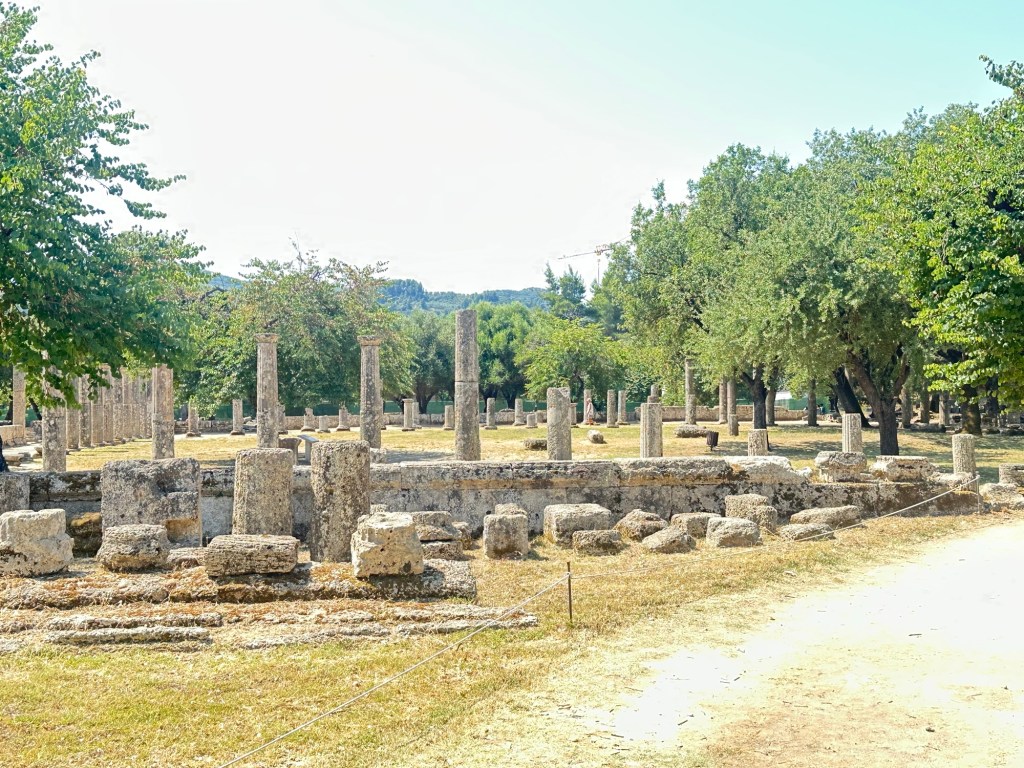

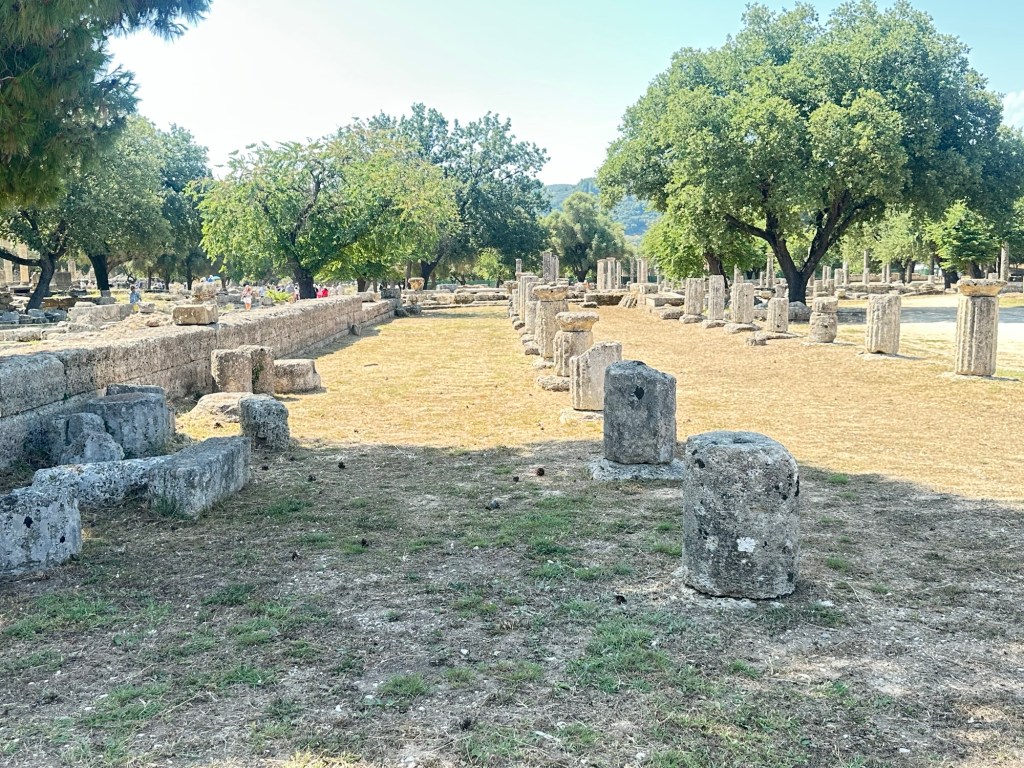
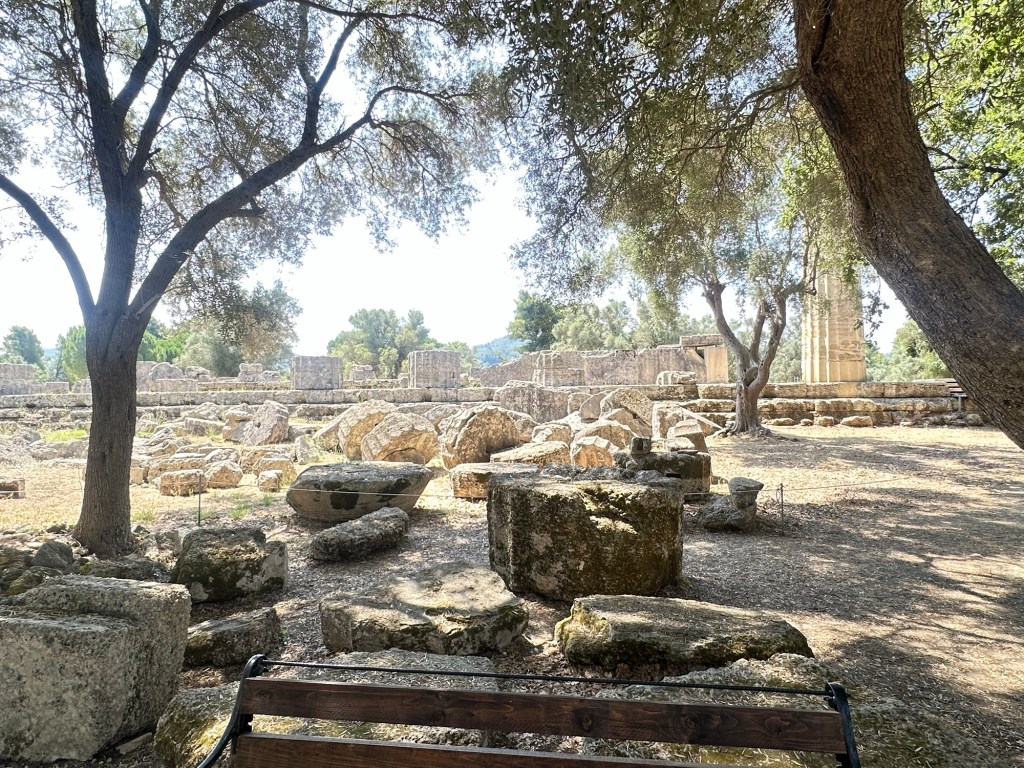
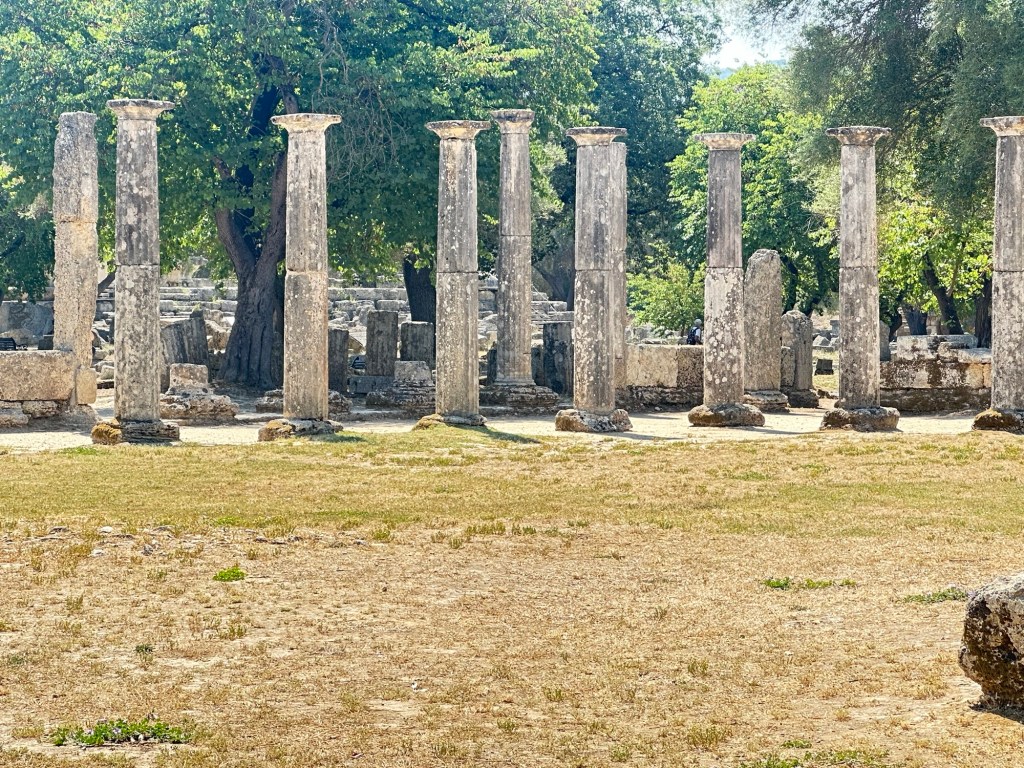

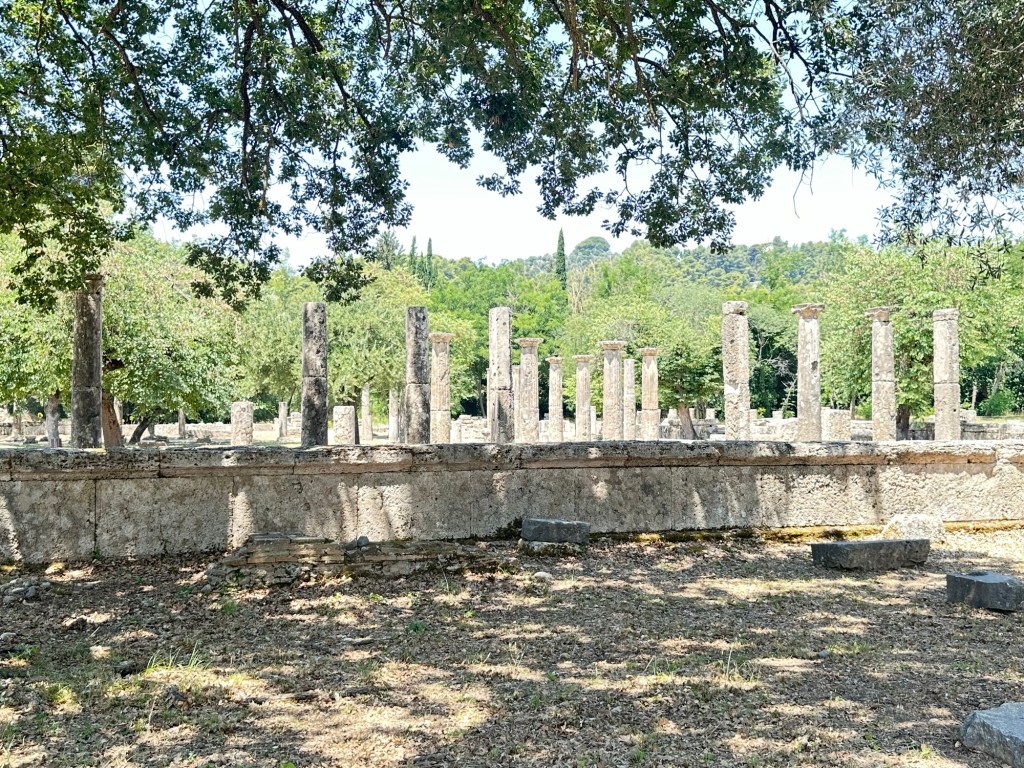
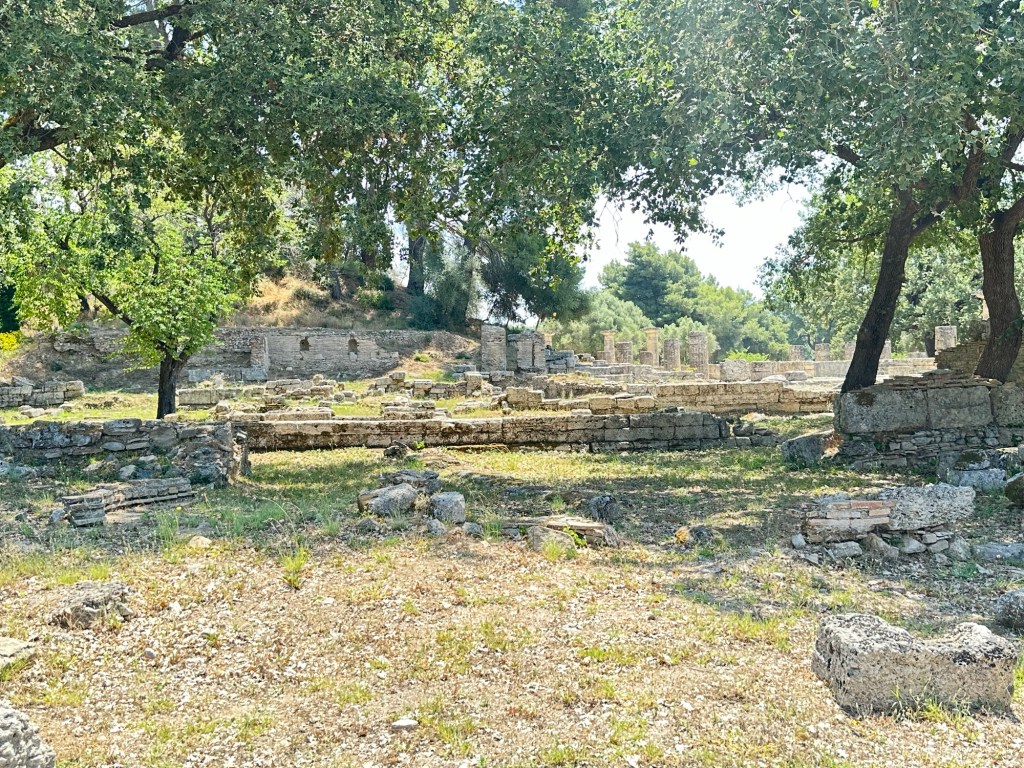
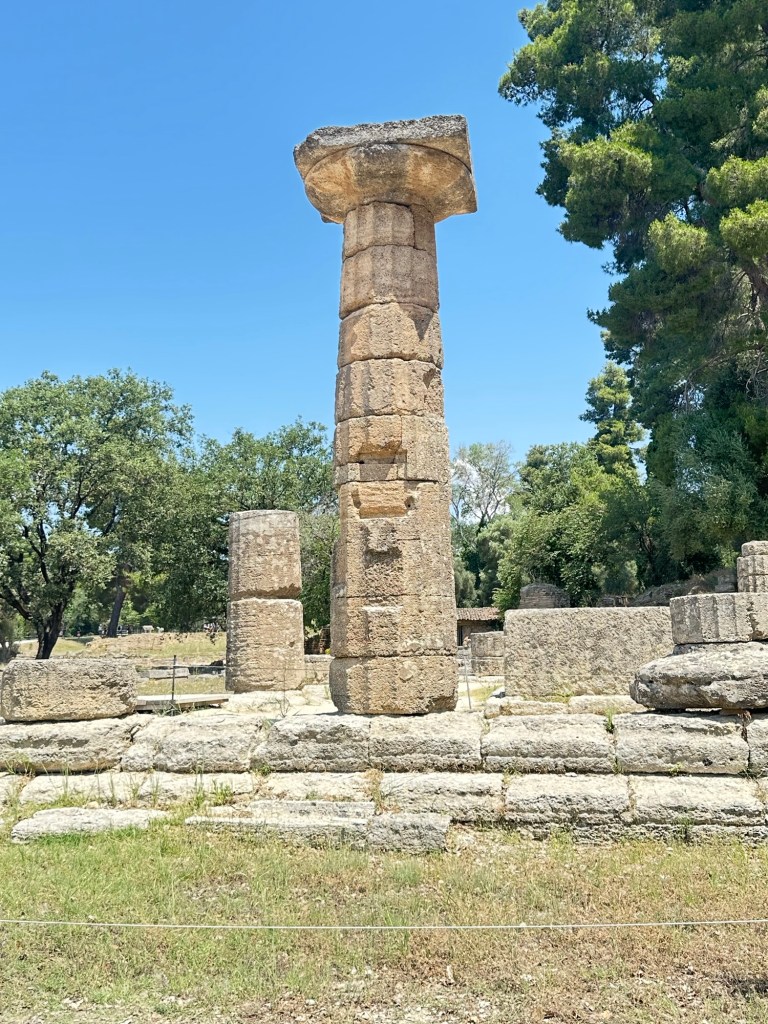
The demise of Olympia came gradually, brought about by a convergence of natural and cultural upheavals—a devastating earthquake in the sixth century, relentless river flooding that buried much of the sanctuary in silt, and the rise of Christianity, which diminished the old gods and their sacred sites.
Here, in the cradle of the Olympic Games, history feels intimate. You can almost hear the distant echo of athletes preparing in the palaestra, the cheers from the stadium, the solemn rituals at the altar of Zeus. Olympia is not just a place to see; it’s a place to feel—to stand still and let time collapse into myth.
The highlight is actually putting feet in the original Olympic stadium. Entering through the arched stone passage used by ancient athletes, we emerged into a long, grassy field where the games were held starting in 776 BCE. There are no bleachers, just grassy embankments where tens of thousands once sat.
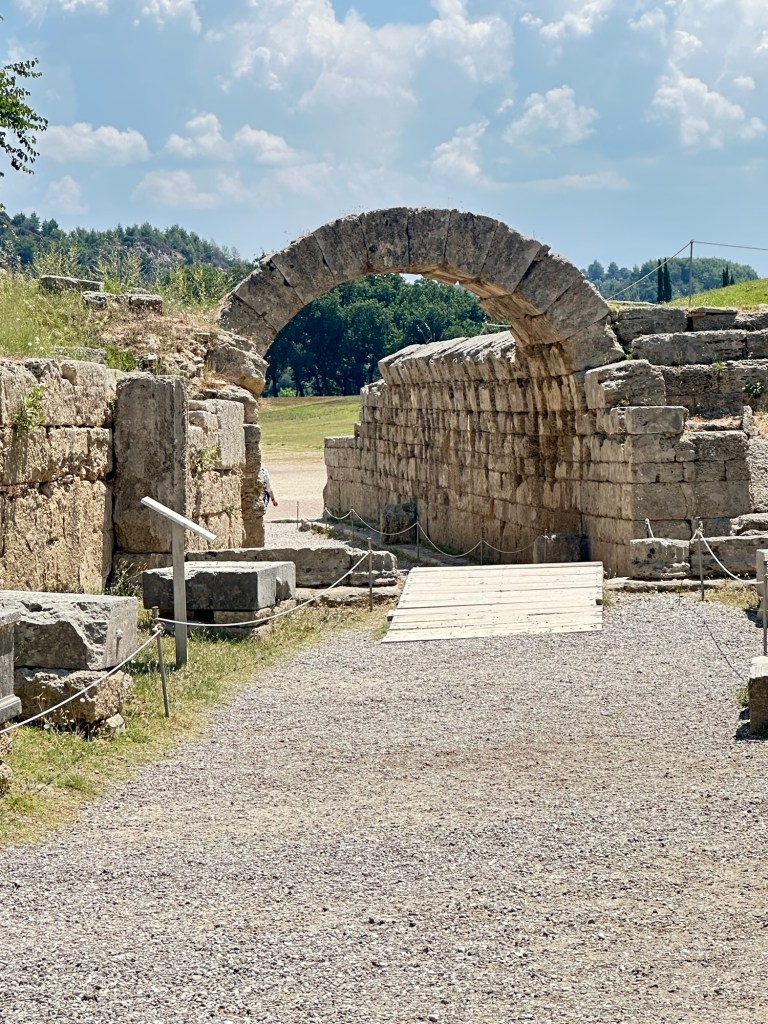
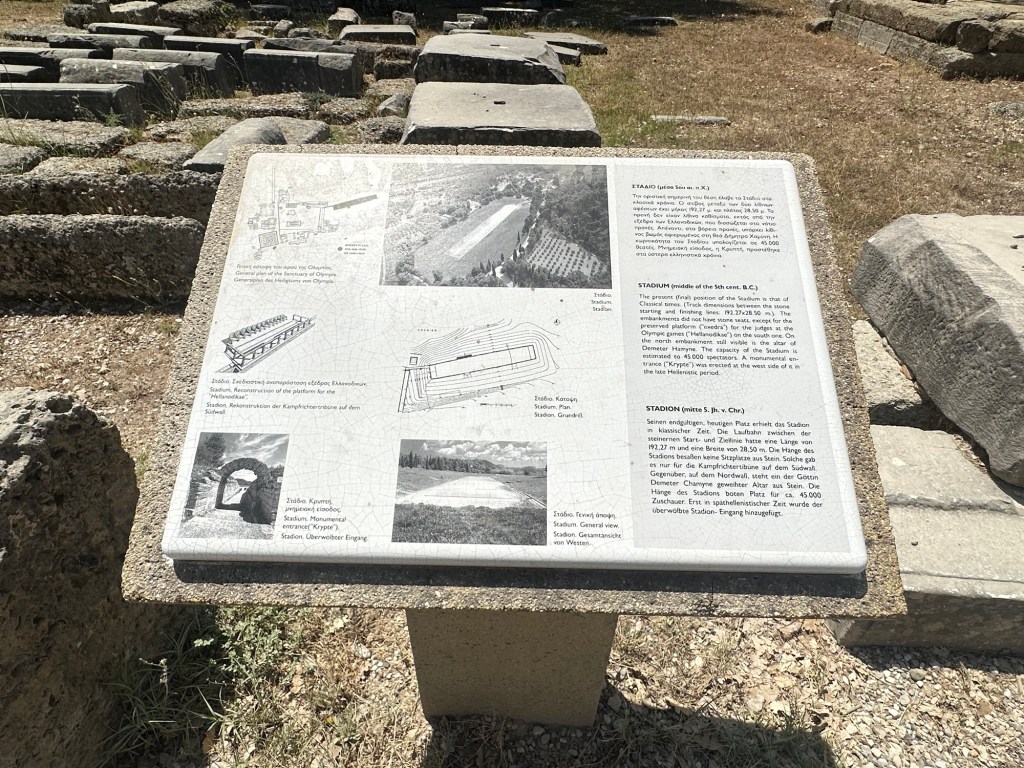
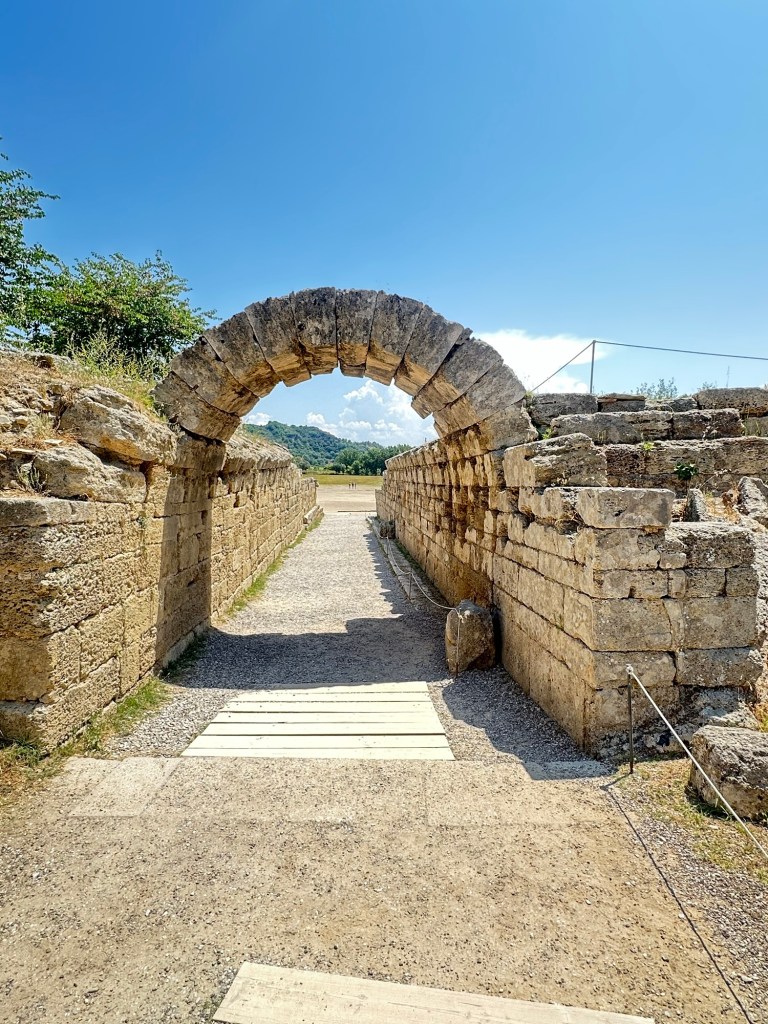
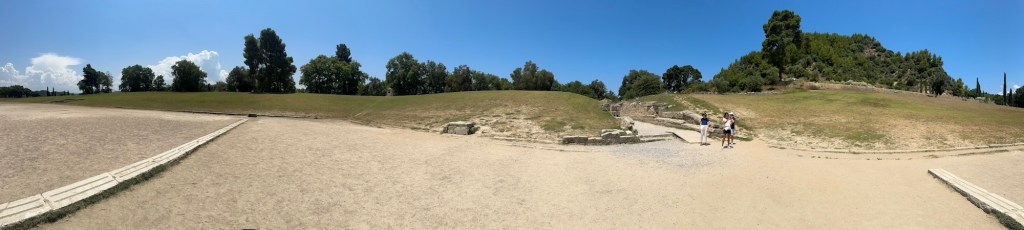
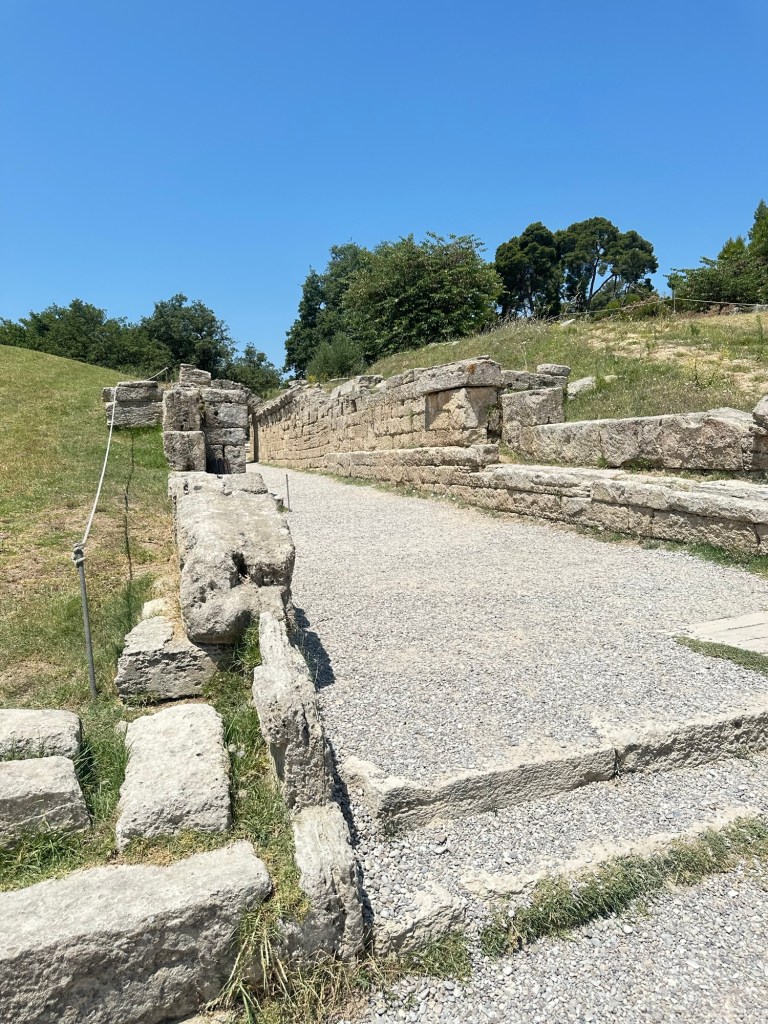
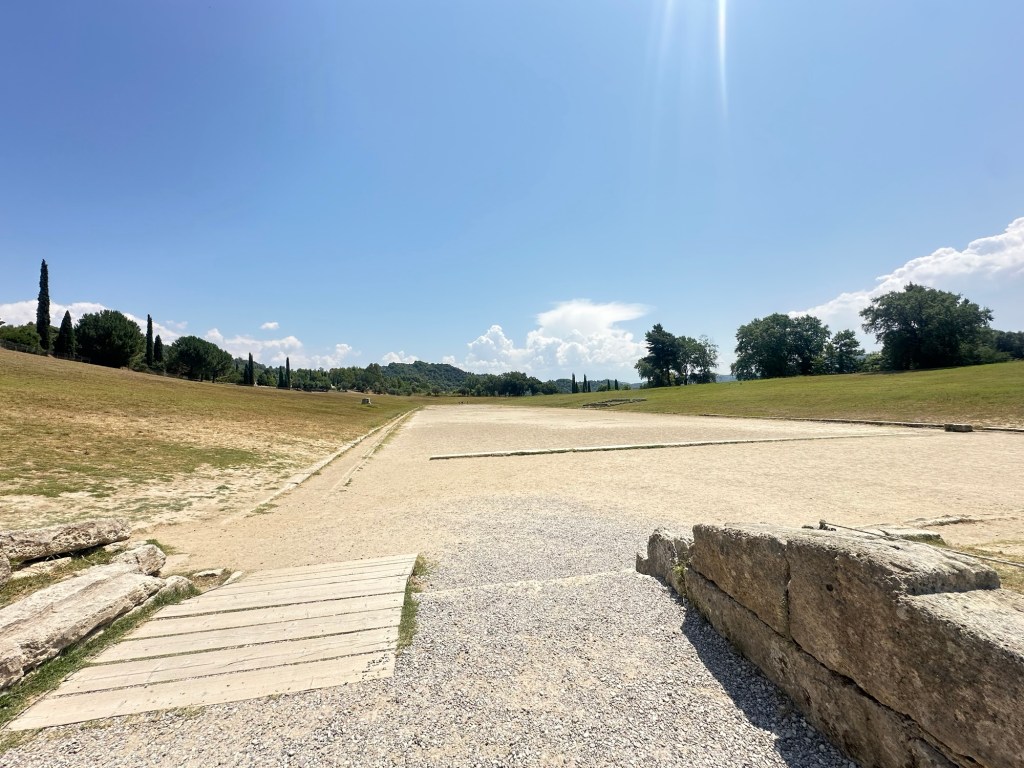
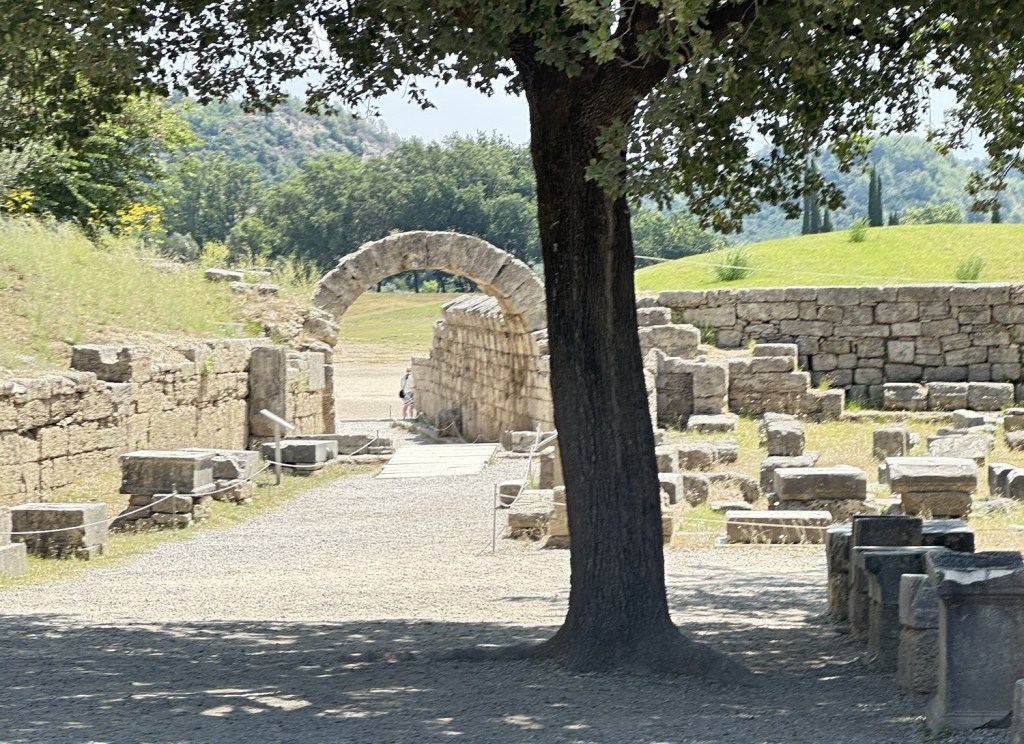
Maria explained that the purpose of the ancient Olympic Games was to promote peace, equality, and friendship among the Greek city-states. She emphasized the Greek ideal of balance between body and mind—athletic excellence was not just physical, but intellectual and spiritual as well. Athletes competed in the nude, their bodies glistening with olive oil and dusted with sand, celebrating the human form and discipline.
Remarkably, even warring states would lay down their arms during the games, observing a sacred truce to allow safe passage for athletes and spectators alike. The games continued for over a thousand years, until 393 CE, when Roman Emperor Theodosius I banned them as part of his campaign against pagan practices. They would not be revived until 1896 CE, when the modern Olympic Games were born in Athens.
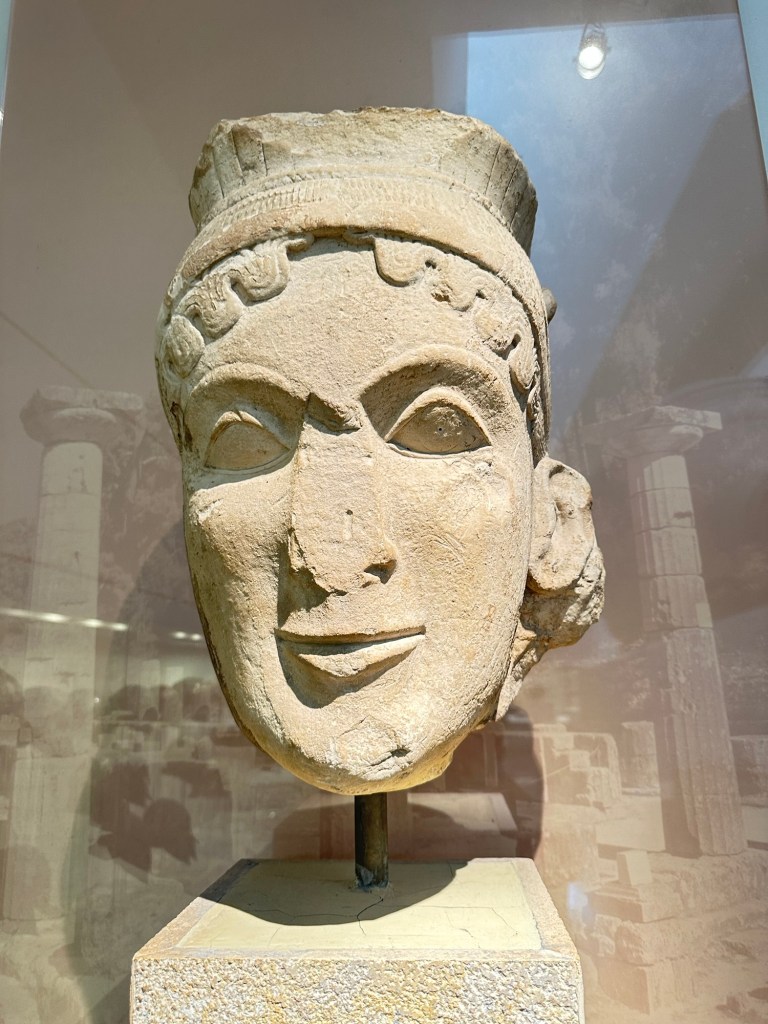
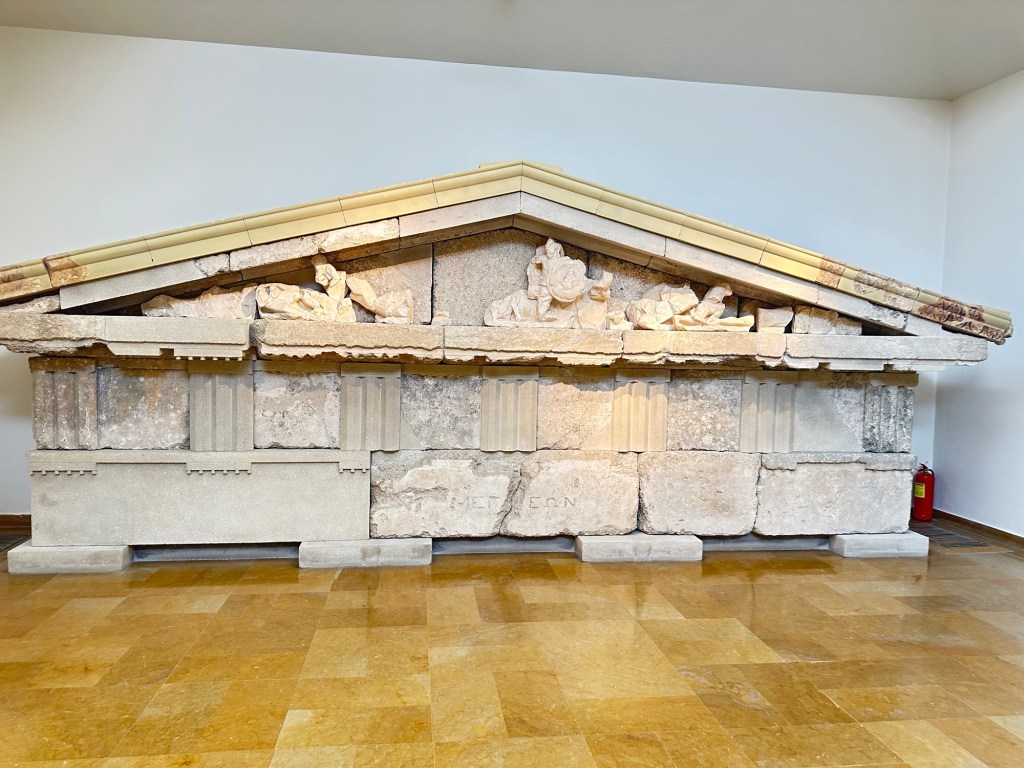
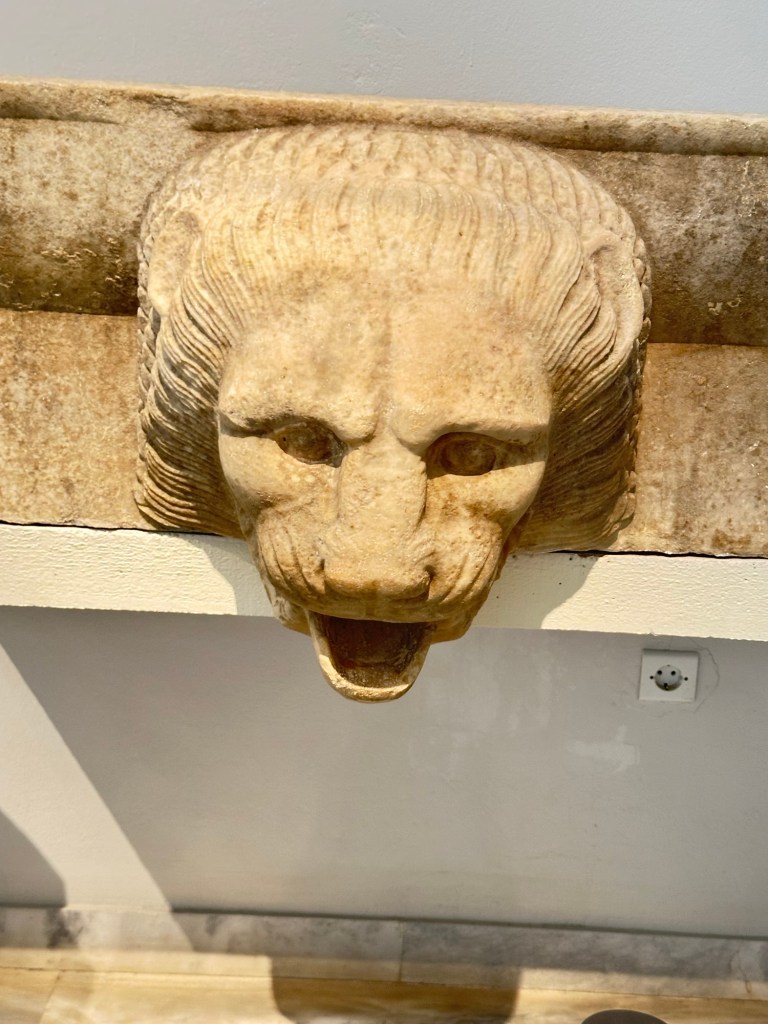
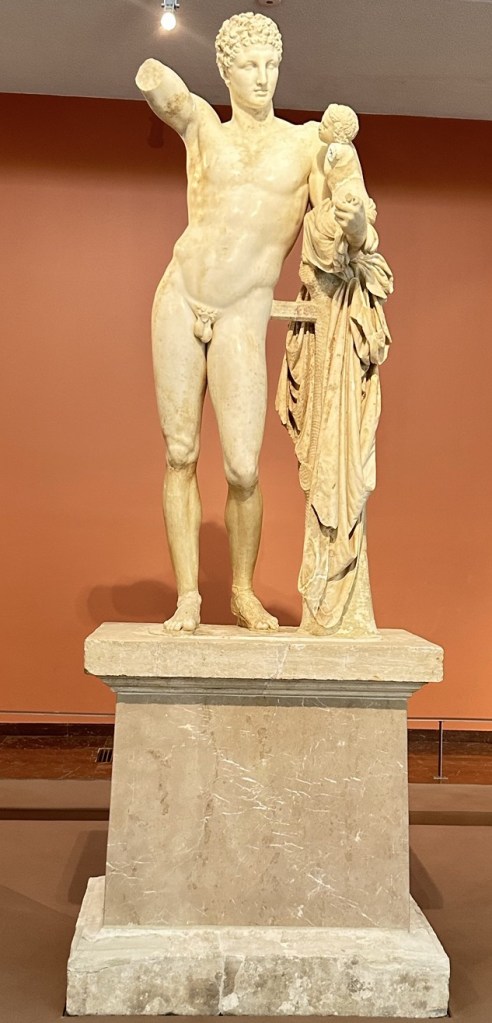
Nearby is the Archaeological Museum of Olympia, which houses remarkable finds from the site, including famous sculptures from the Temple of Zeus, votive offerings, and tools used by athletes. The exhibits bring depth to what you’ve seen outdoors, illuminating how much art, religion, and sport were intertwined in ancient Greek life.

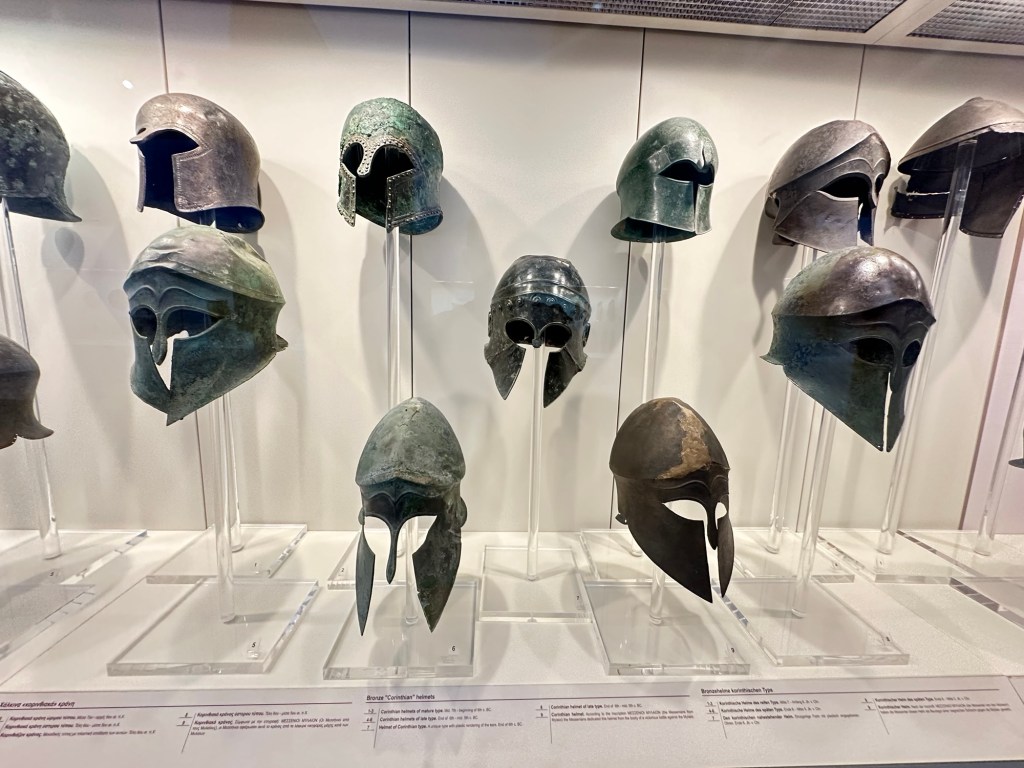
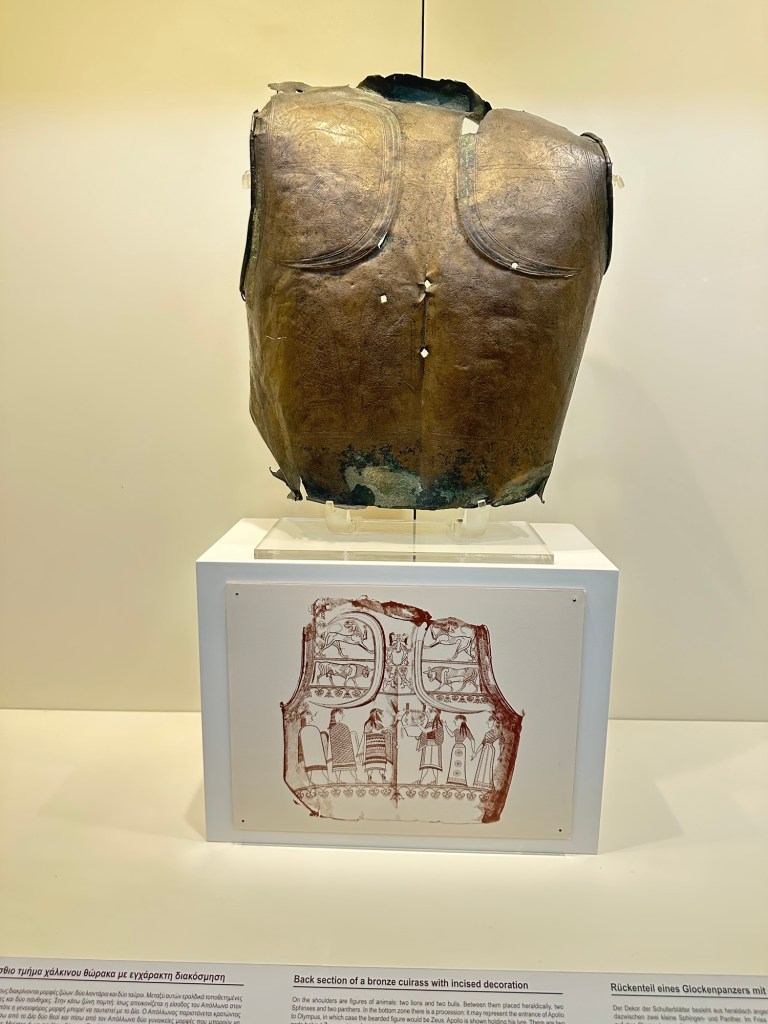

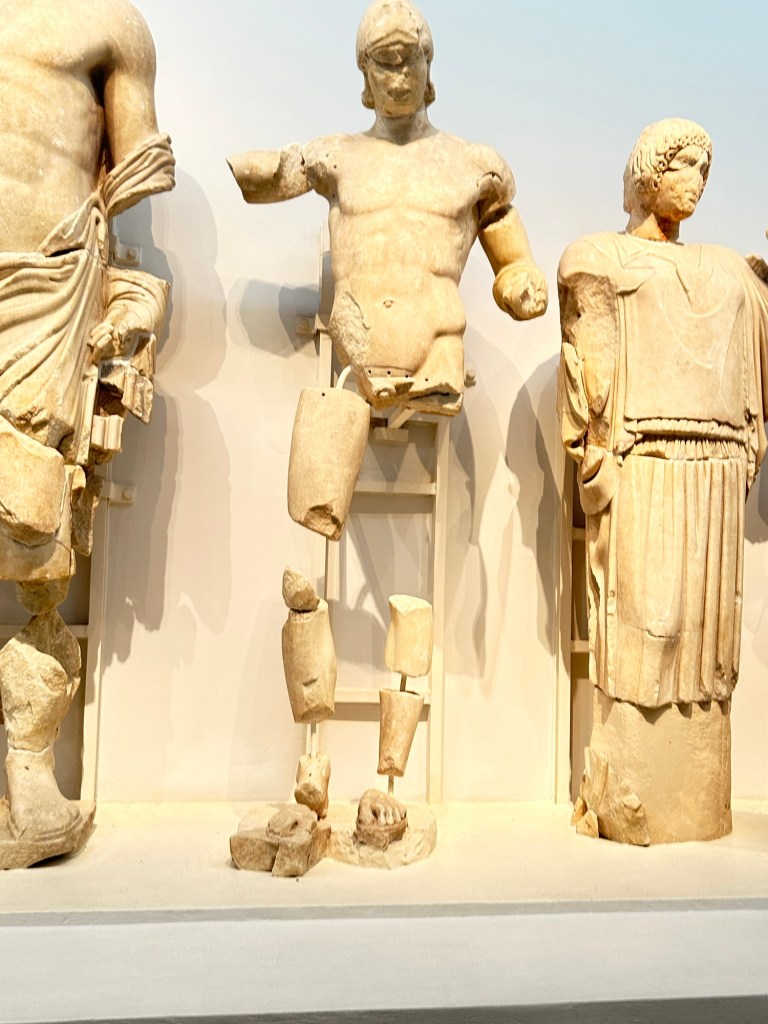
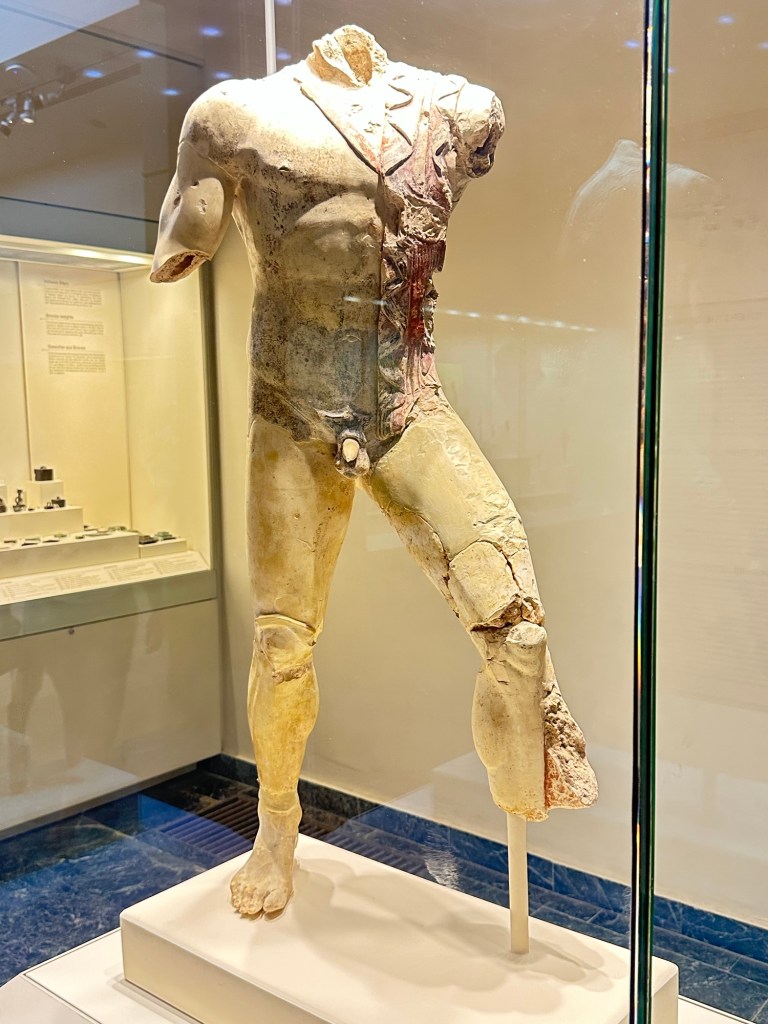
While Olympia is a historical site— it’s also a sacred place that celebrates human achievement, competition, and reverence for the divine. The atmosphere is quiet, reflective, and somehow charged with the energy of centuries past. A visit here left me with a powerful sense of continuity and awe.
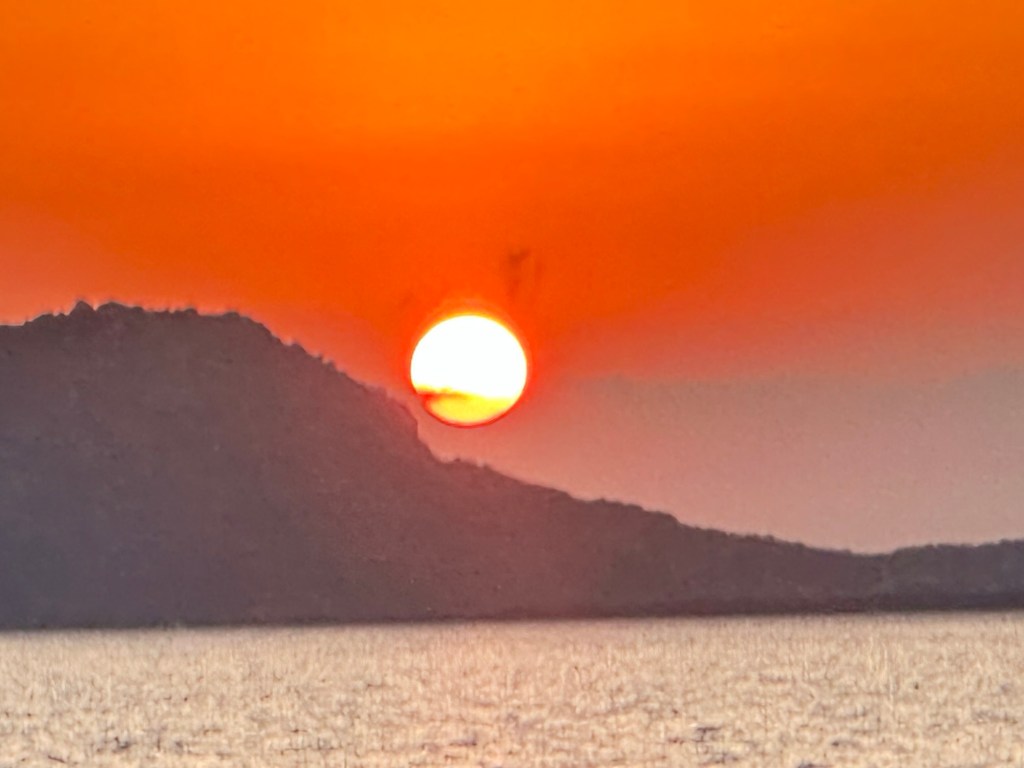
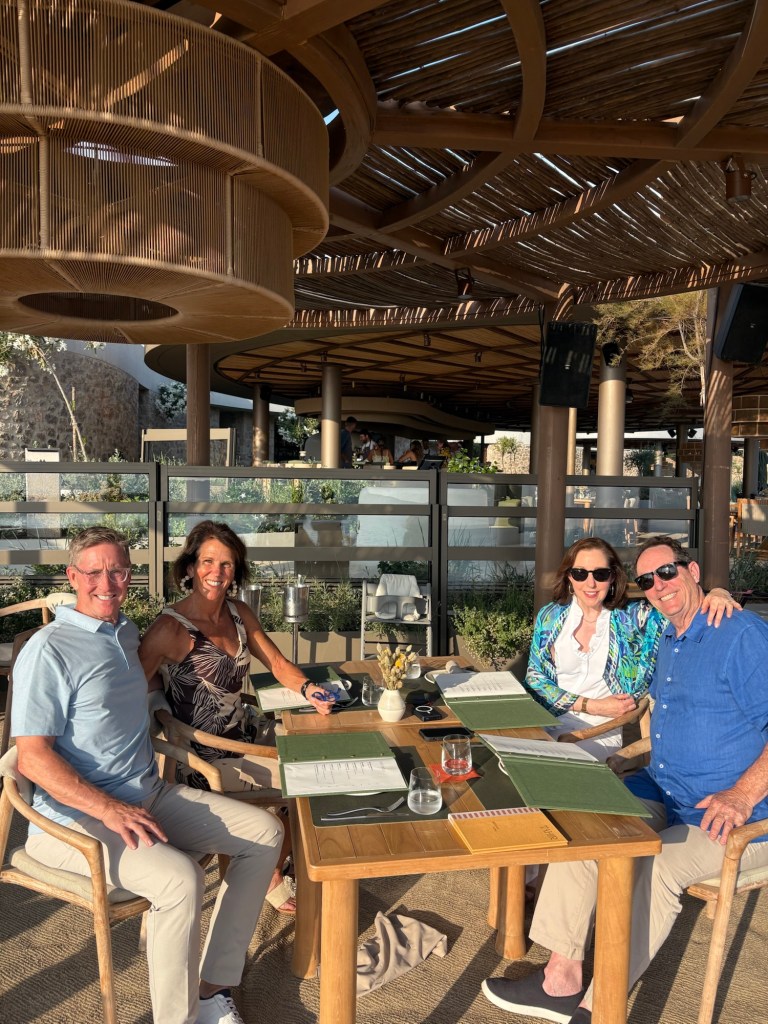
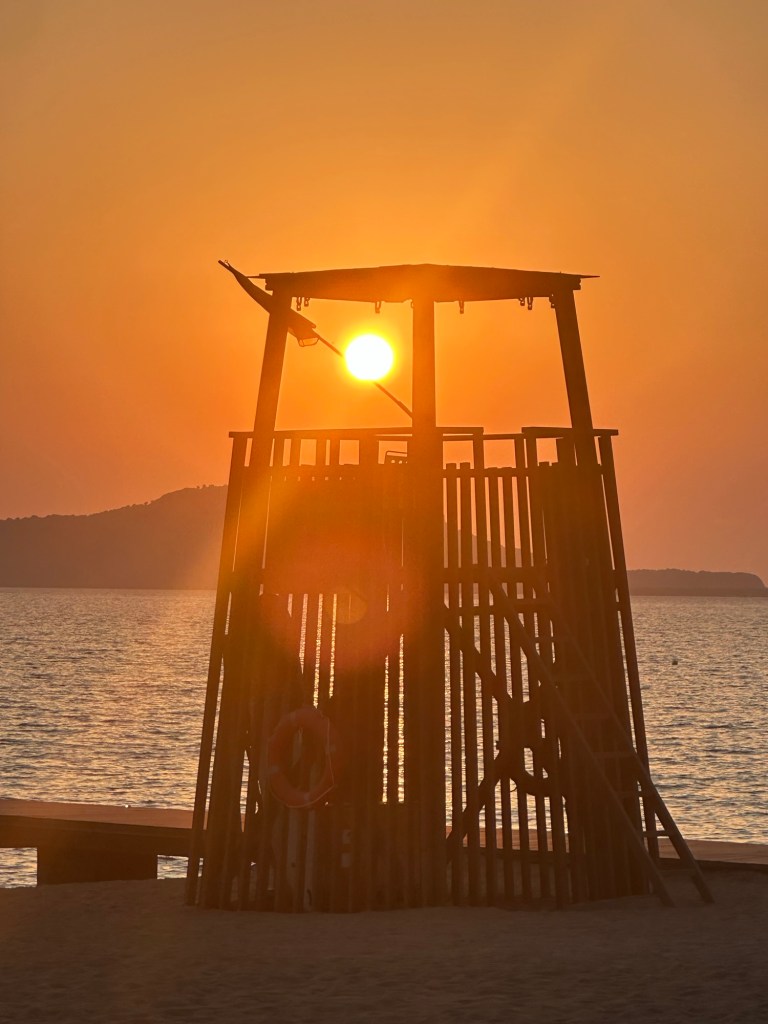
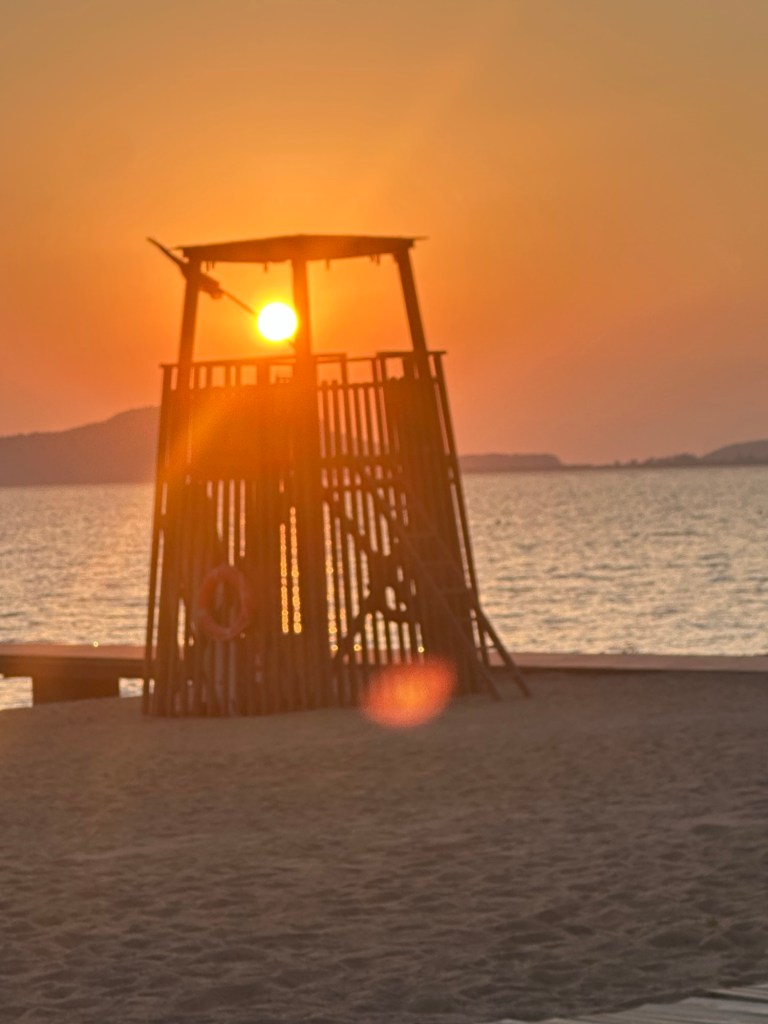
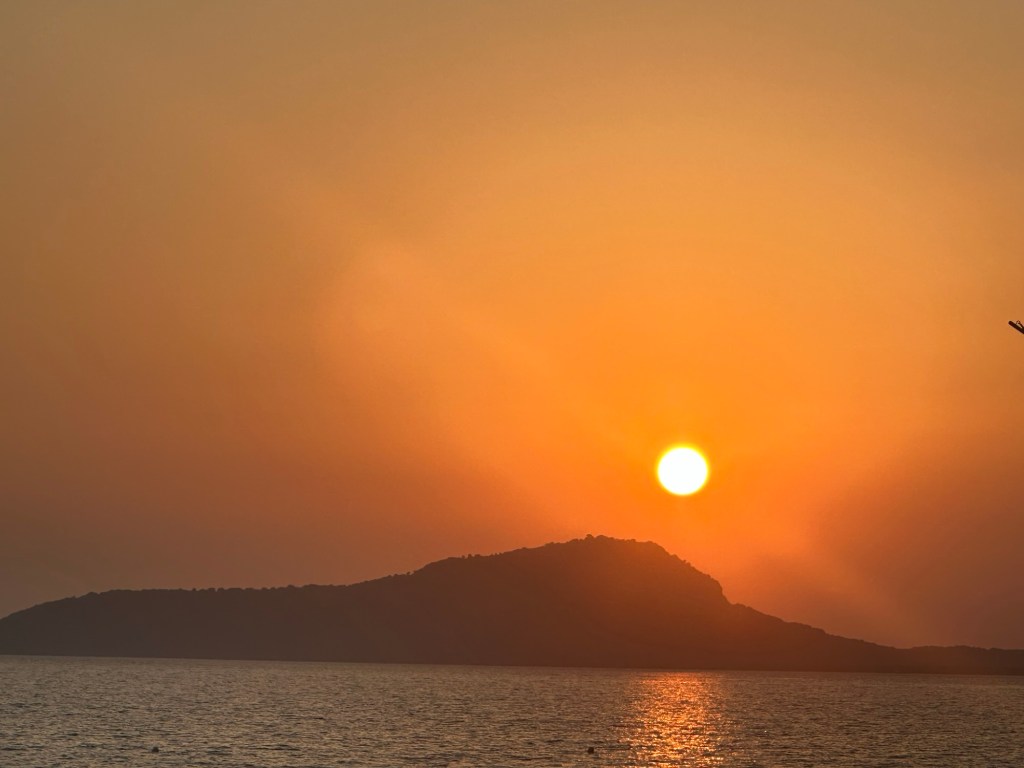
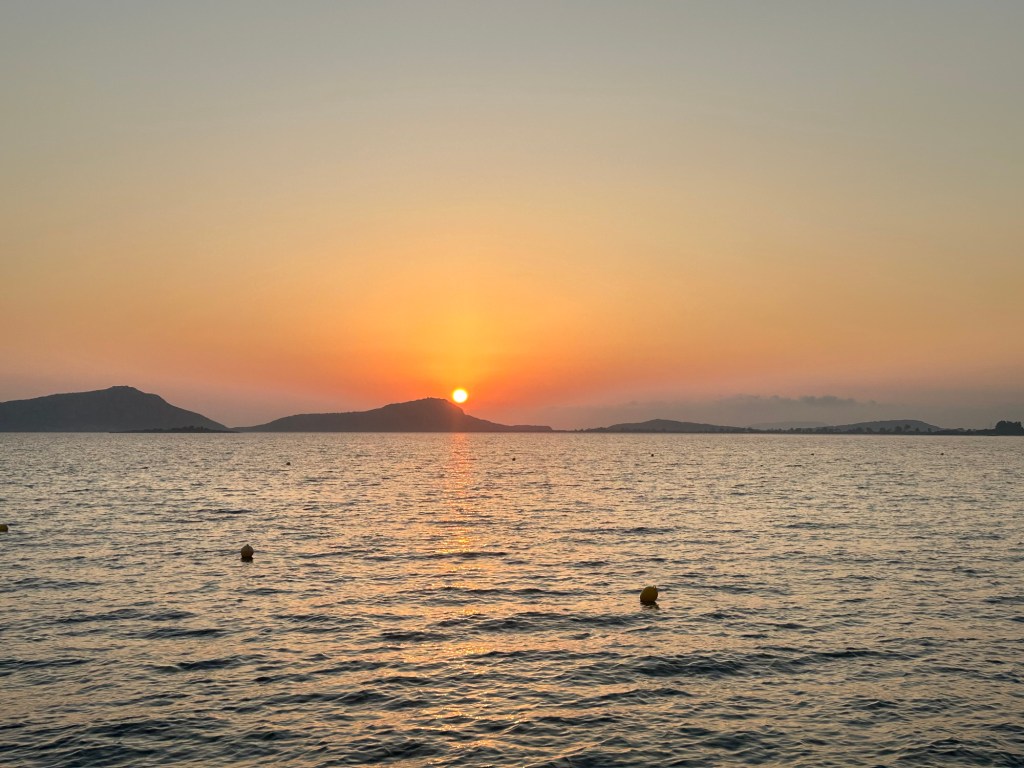
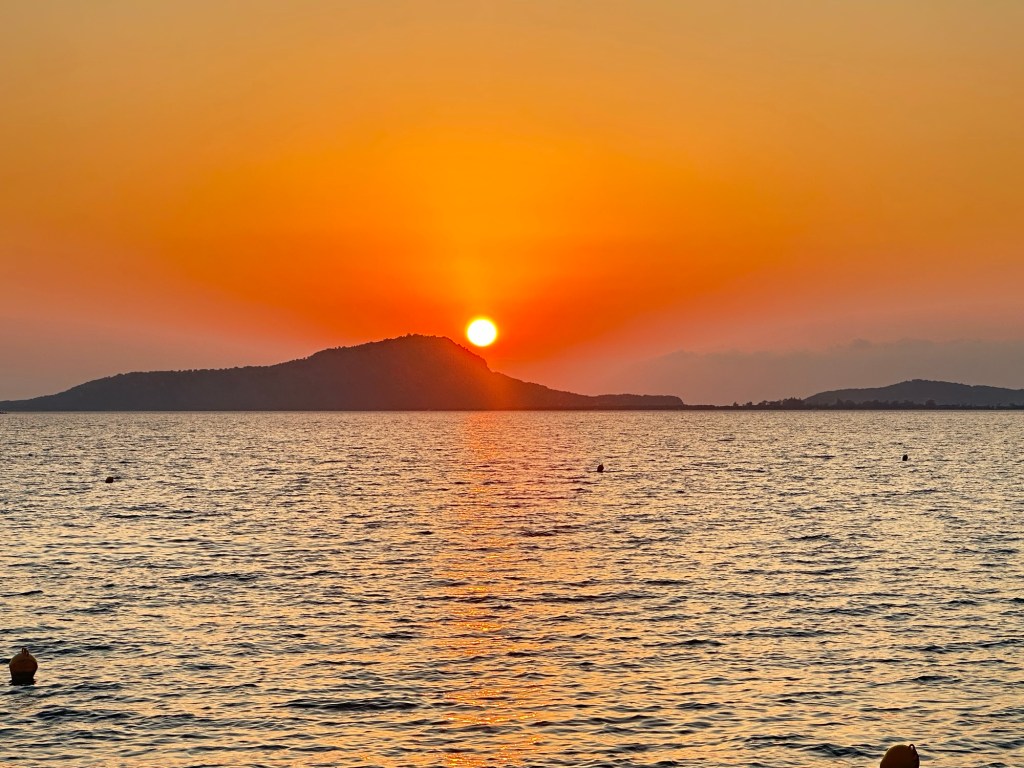
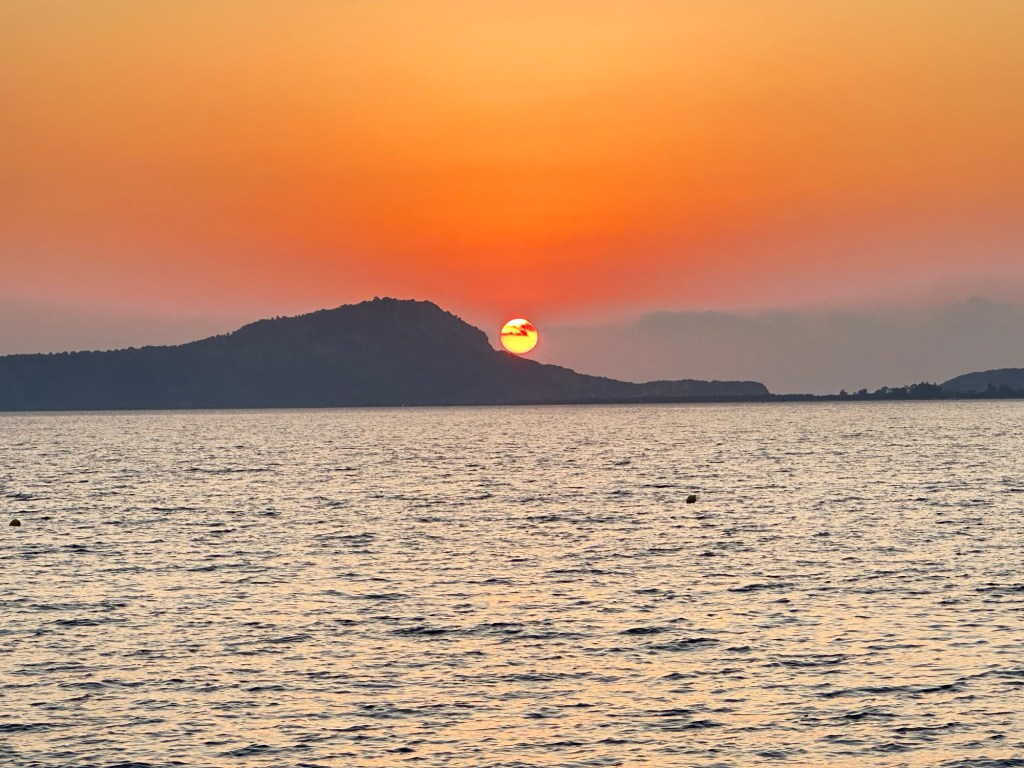
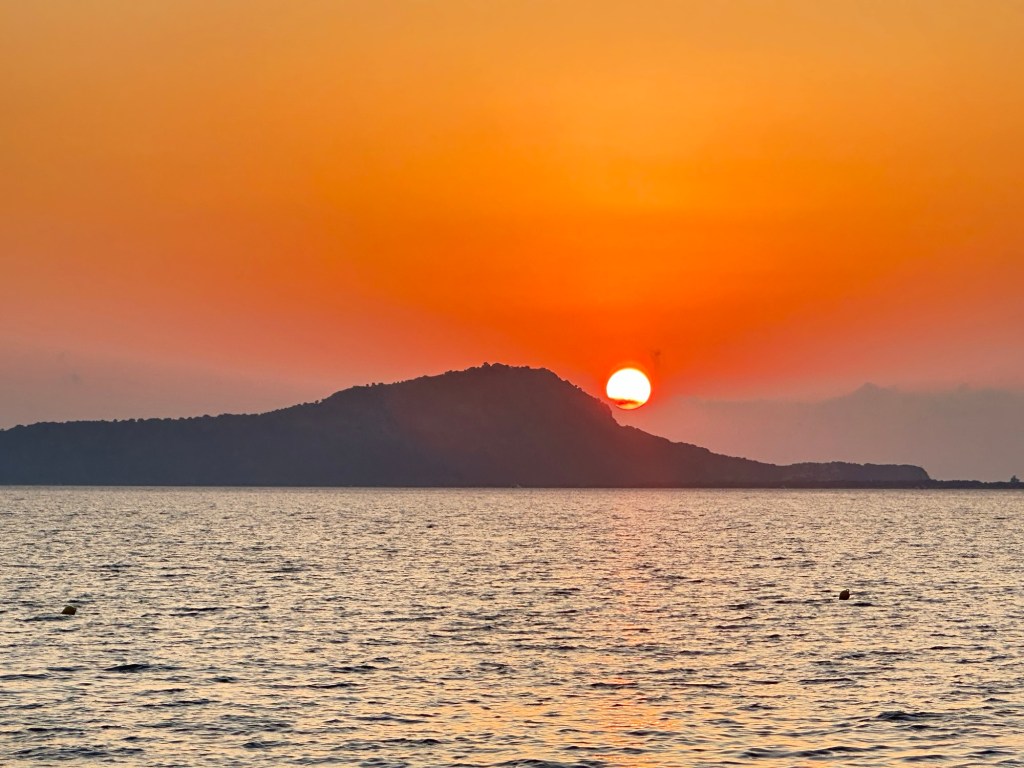
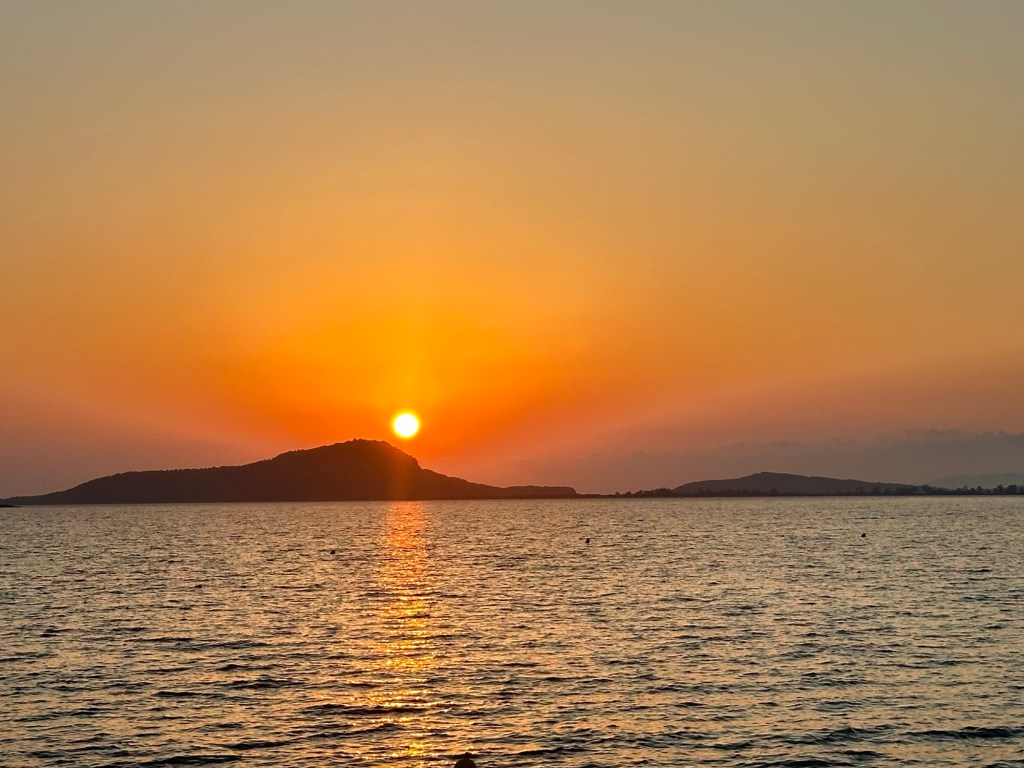
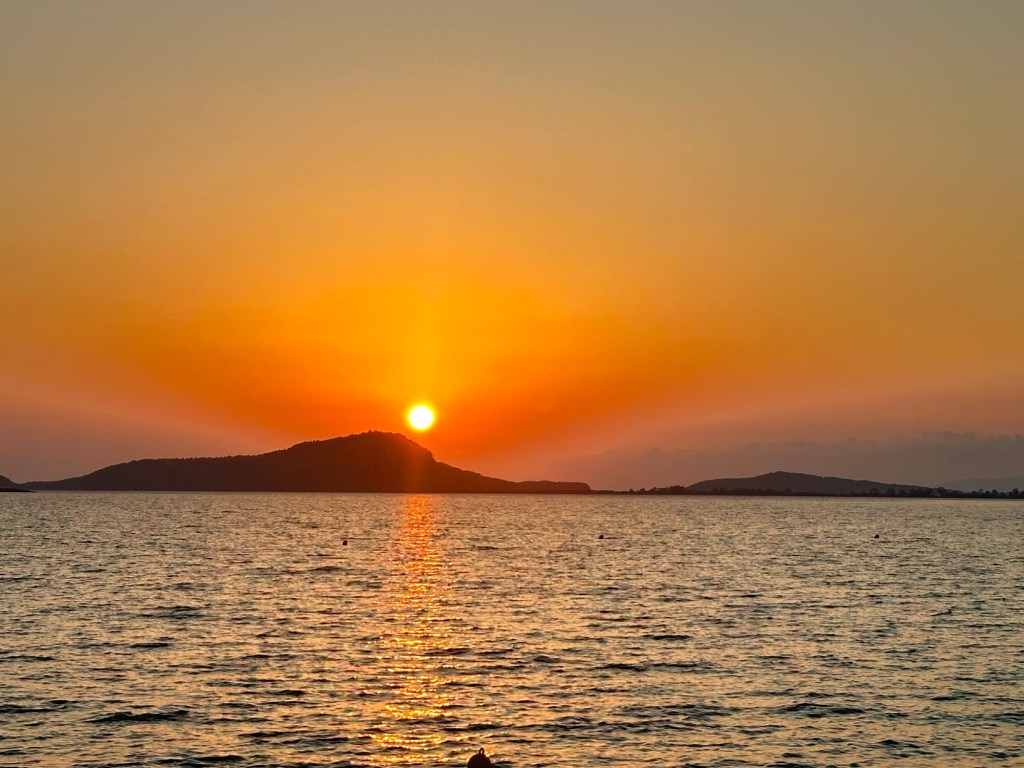
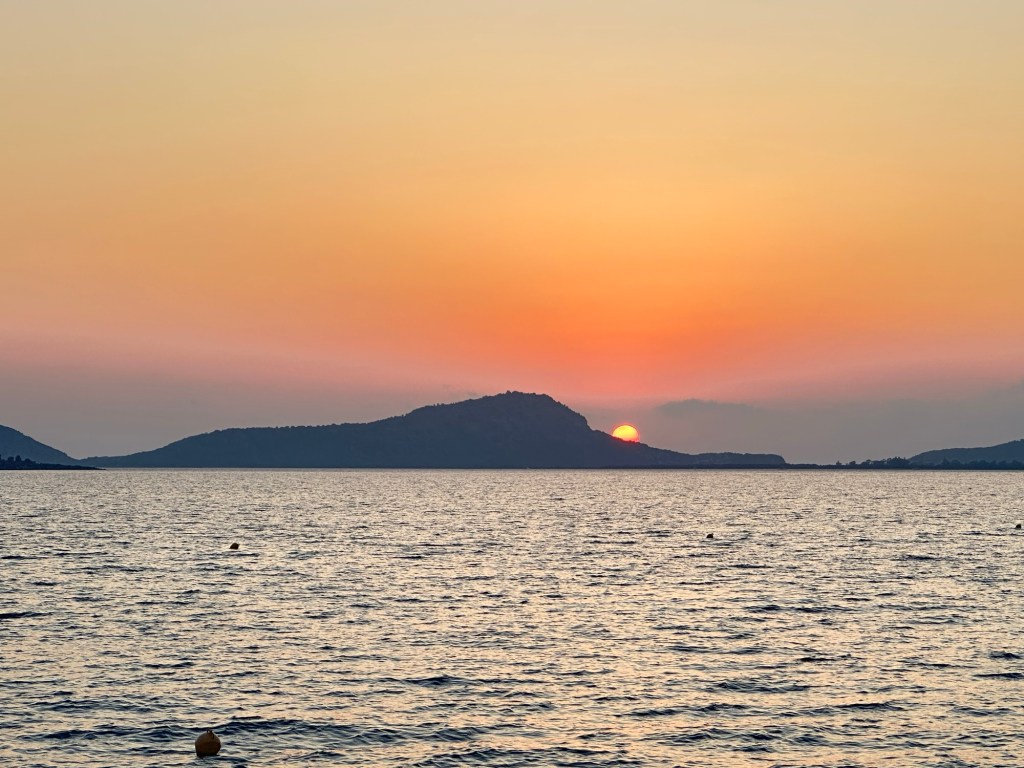
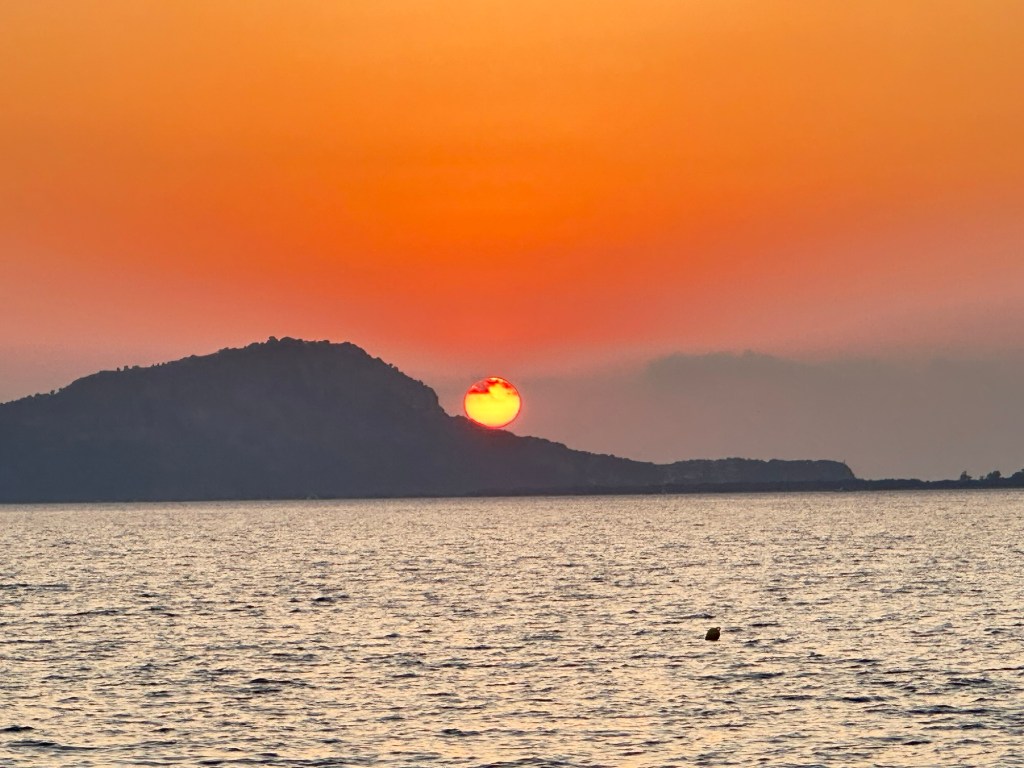
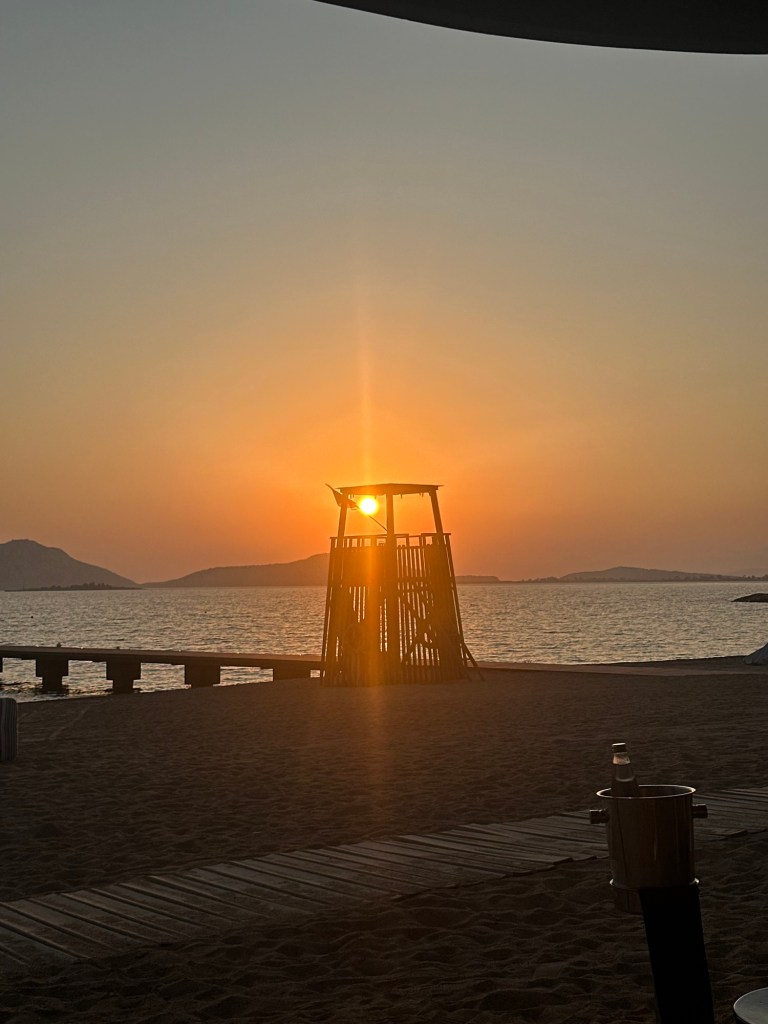
Once back at the hotel, we had dinner at Tahir, a restaurant quietly nestled into the beach club. We indulge ourselves with the flavors of a Levintine cuisine, a balanced and savory complement for our day. During this magnificent indulgence, we trades thoughts about our travels. As our meal came to a close, the sun began its descent. Drawn by the deepening hues on the horizon, we wandered out onto the hotel pier to witness what can only be described as the show of shows—a sunset that bathed the sky and sea in liquid gold and dusky rose, a moment of stillness and splendor that felt both timeless and fleeting.

Tomorrow morning we leave this oasis for Athens, where our journey is almost over.

 YouDontKnowJackTravels