We were picked up from the Petra by a local guide named Nicholas, who takes us to extraordinary historical sites.
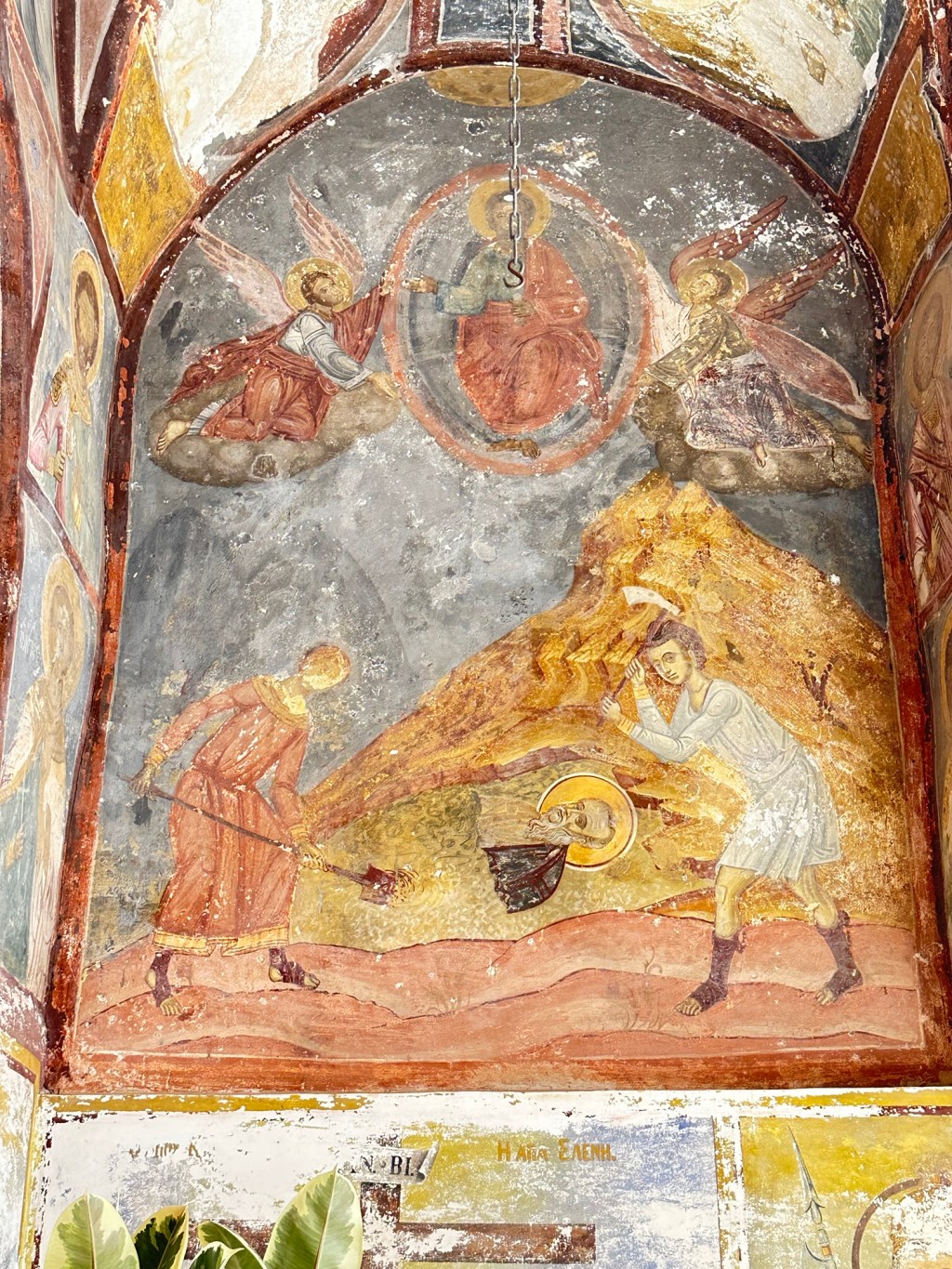
The first, tucked in windy hills above Patmos Skala, is the Cave of the Apocalypse, one of Christianity’s most revered pilgrimage sites. According to tradition, here in 95 AD the exiled Apostle John received the visions that would become the Book of Revelation of the New Testament. The cave, cool and dimly lit, is marked by a triple fissure in the rock—believed by the faithful to symbolize the voice of God, echoing through the earth as John recorded his apocalyptic visions. Over the millennium, additional structures have been added to the cave, most recently to provide pilgrimage access.
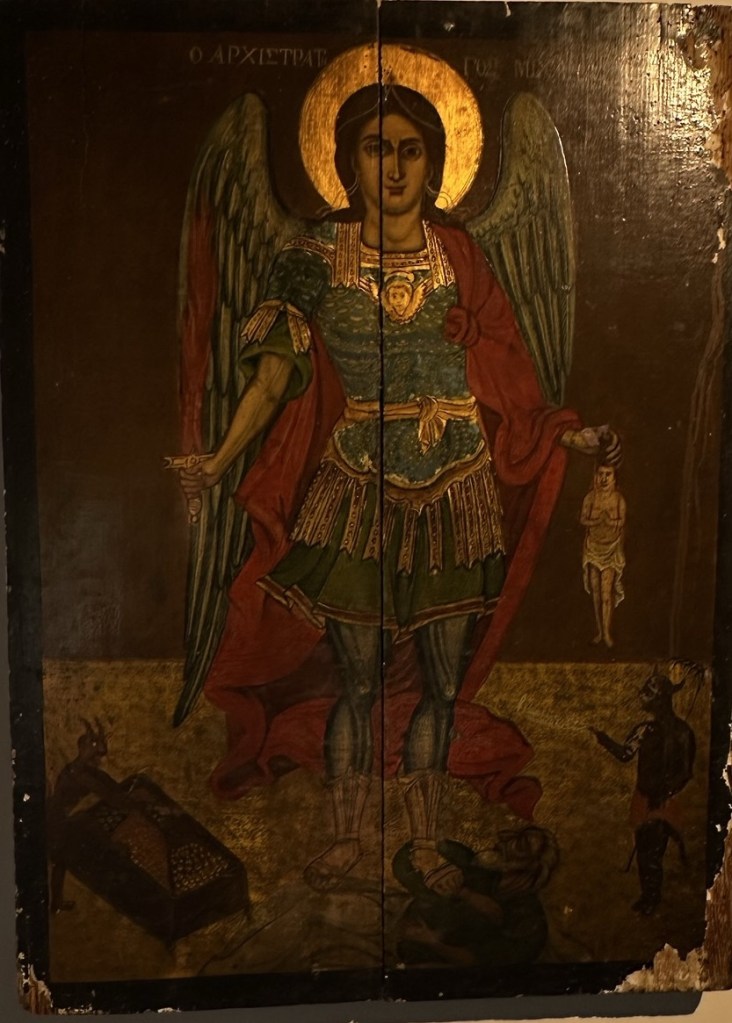
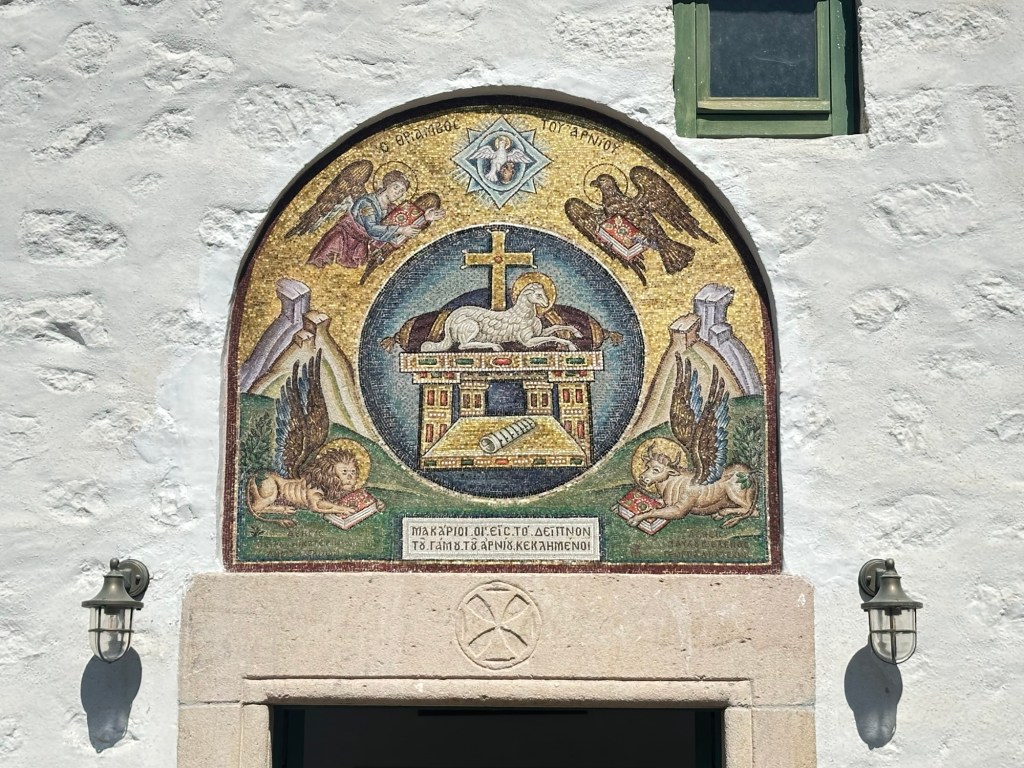
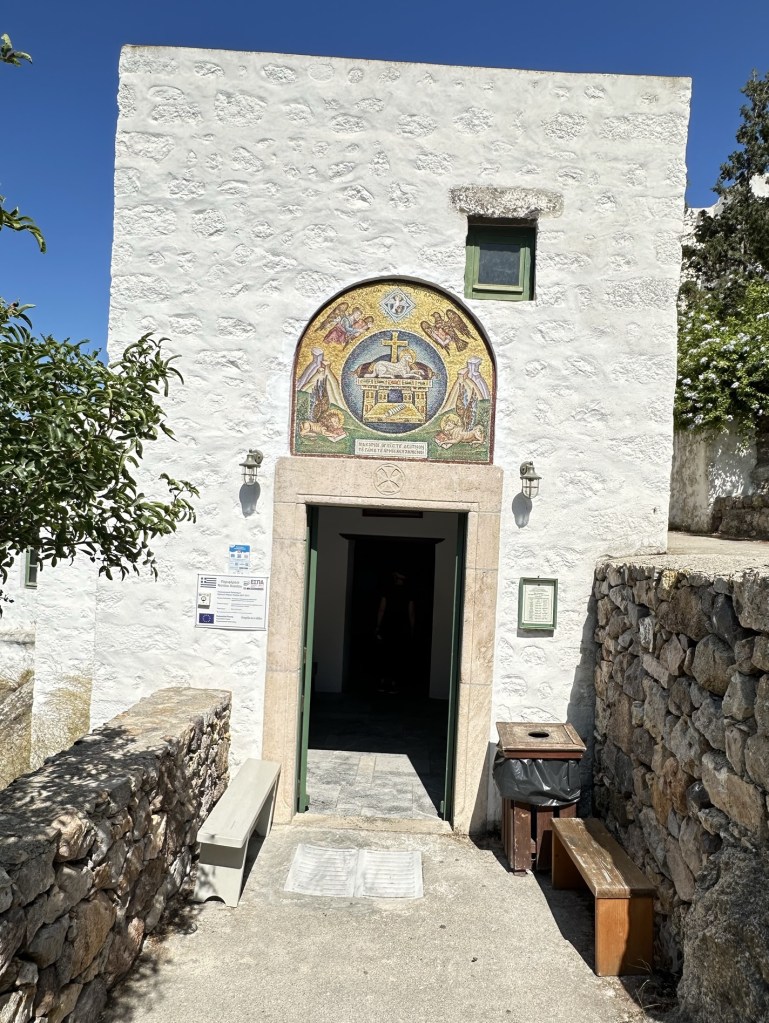

Inside, centuries of devotion have transformed the grotto into a chapel. Candles flicker in brass sconces, the scent of incense lingers in the air, and richly painted icons line the rough stone walls. Whether visited in faith or fascination, the cave is a timeless invitation to listen, watch, and wonder. Photography is not permitted.
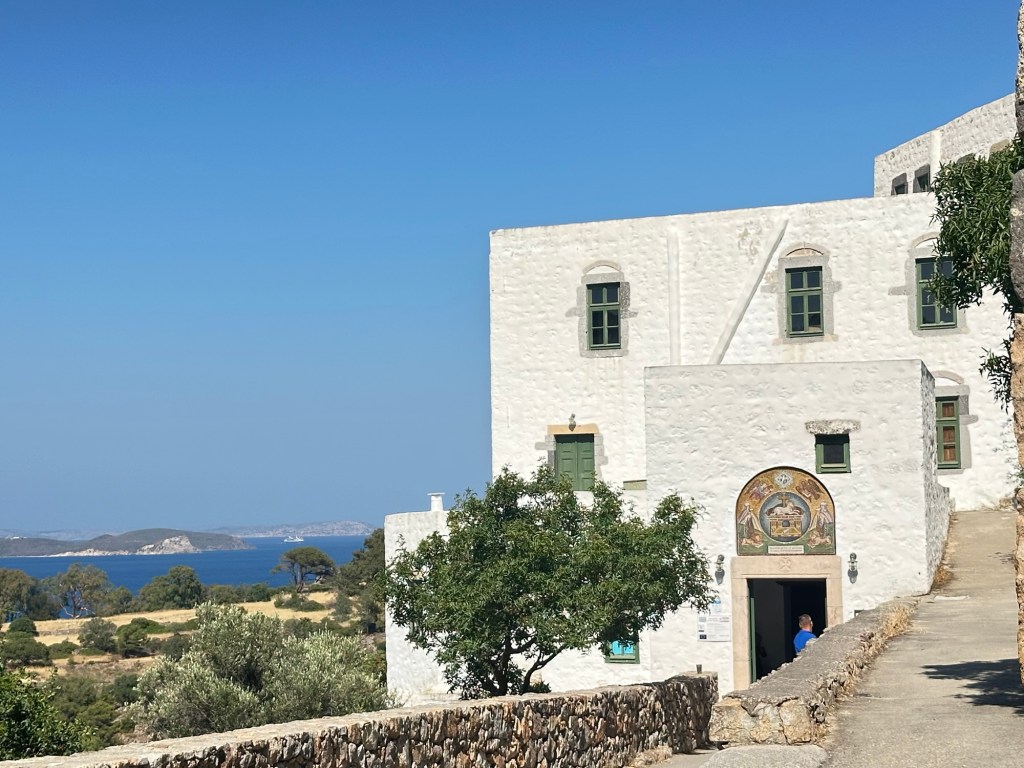
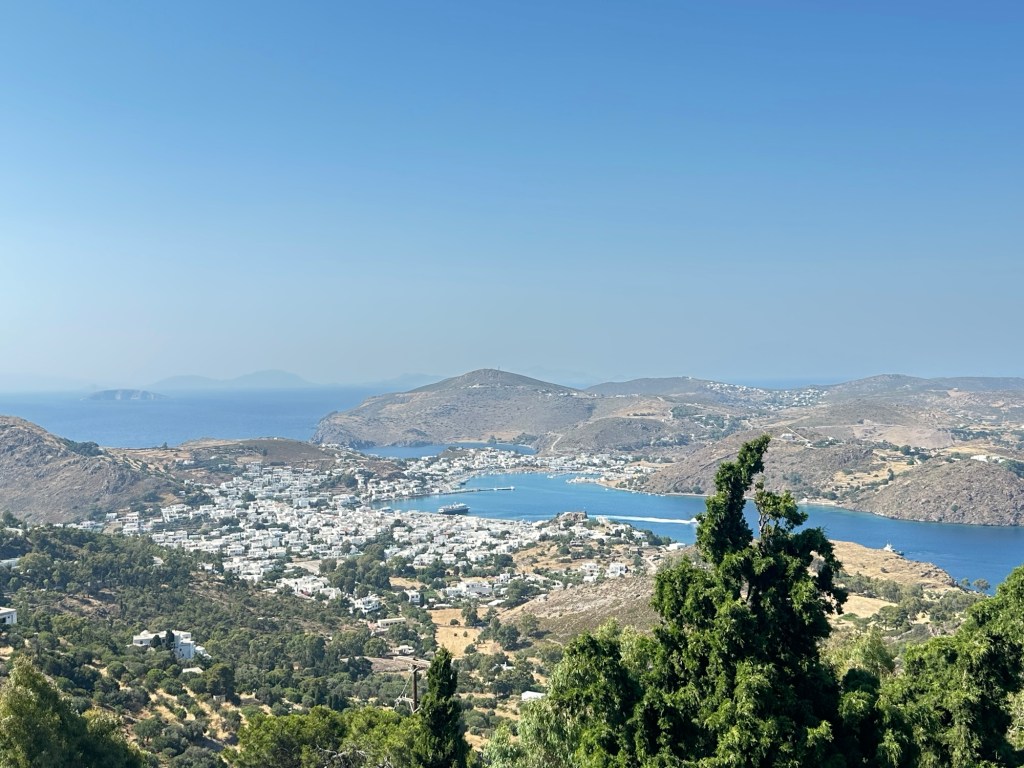
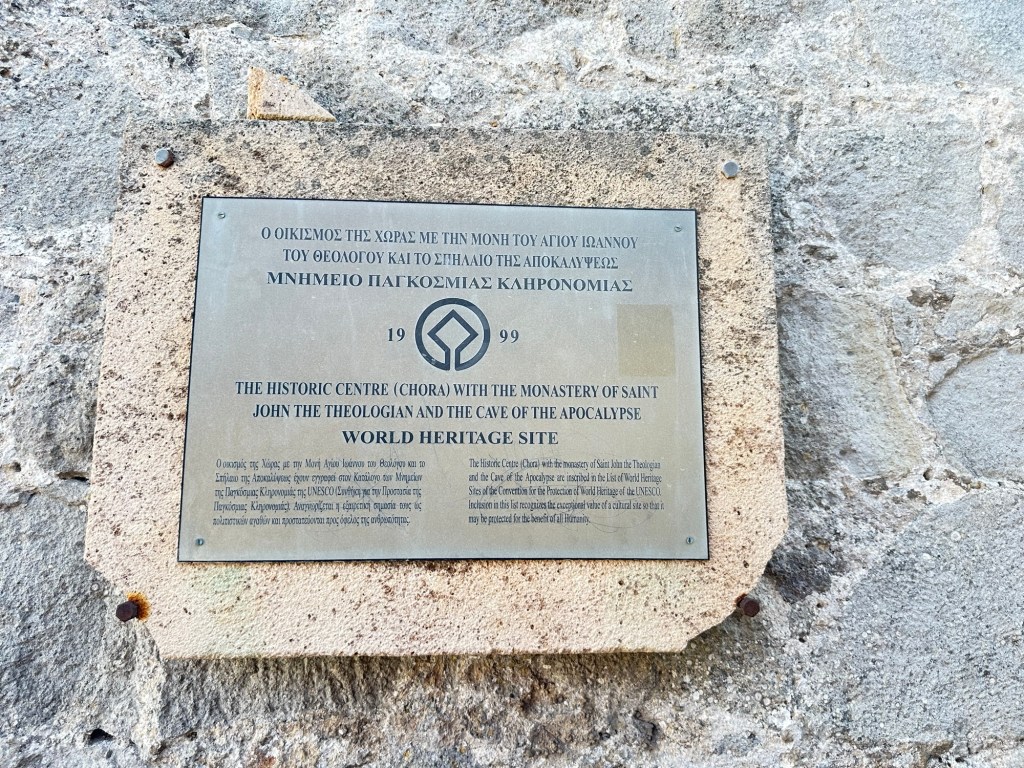
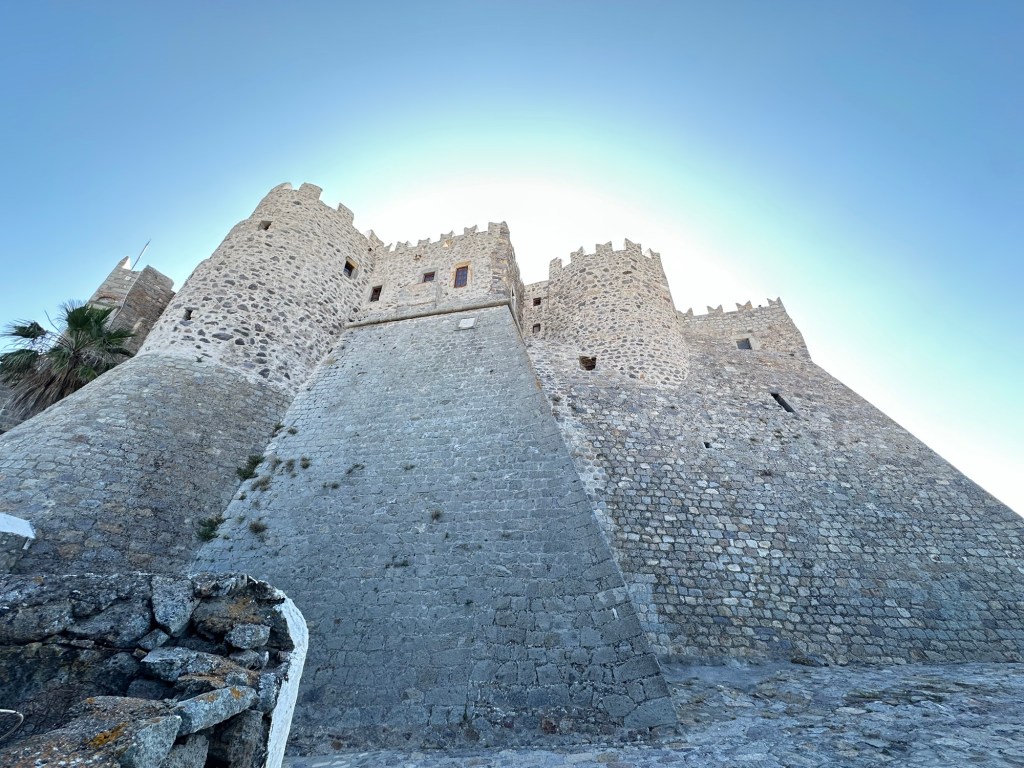
The second site to visit is further up the hillside, perched like a crown on the island’s central ridge, the city of Chora is visible from afar, its labyrinth of whitewashed houses and narrow stone lanes spiraling out from the formidable Monastery of Saint John the Theologian. This UNESCO World Heritage site is more than a village—it’s a living monument to both Byzantine tradition and Greek island life.
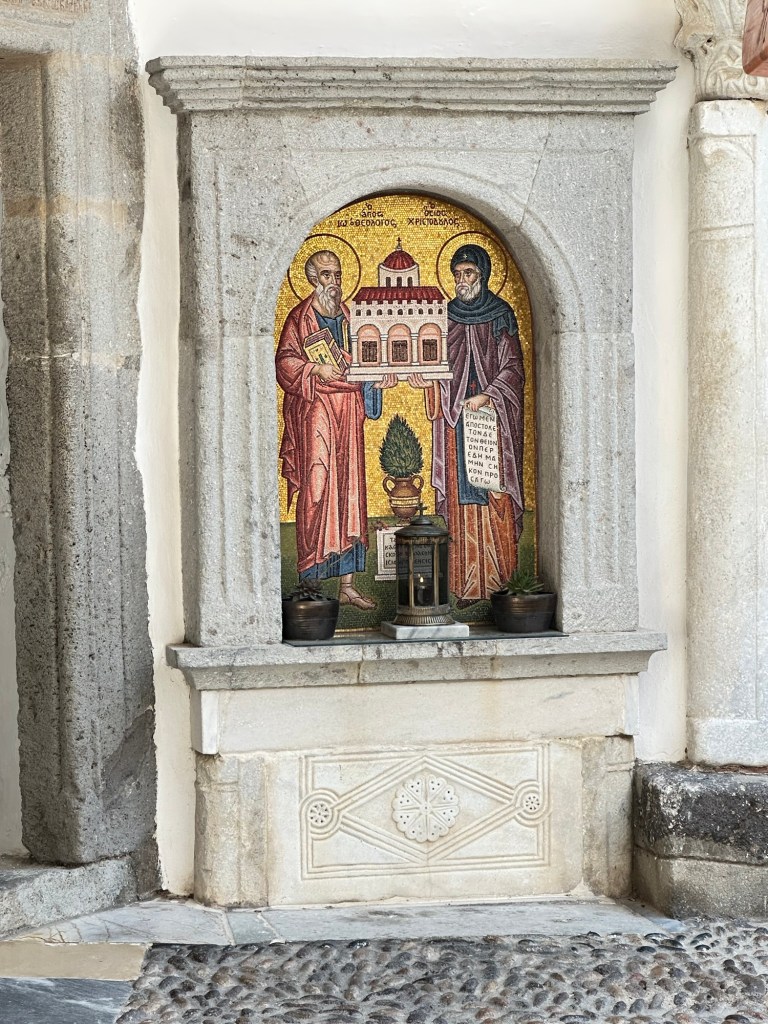
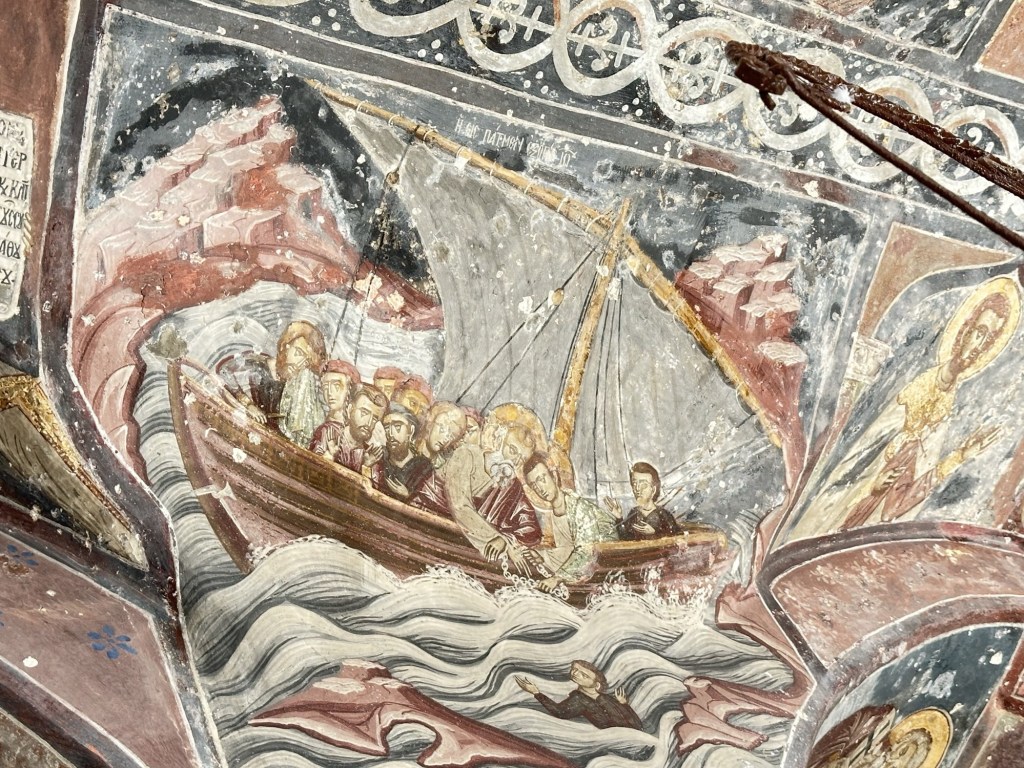
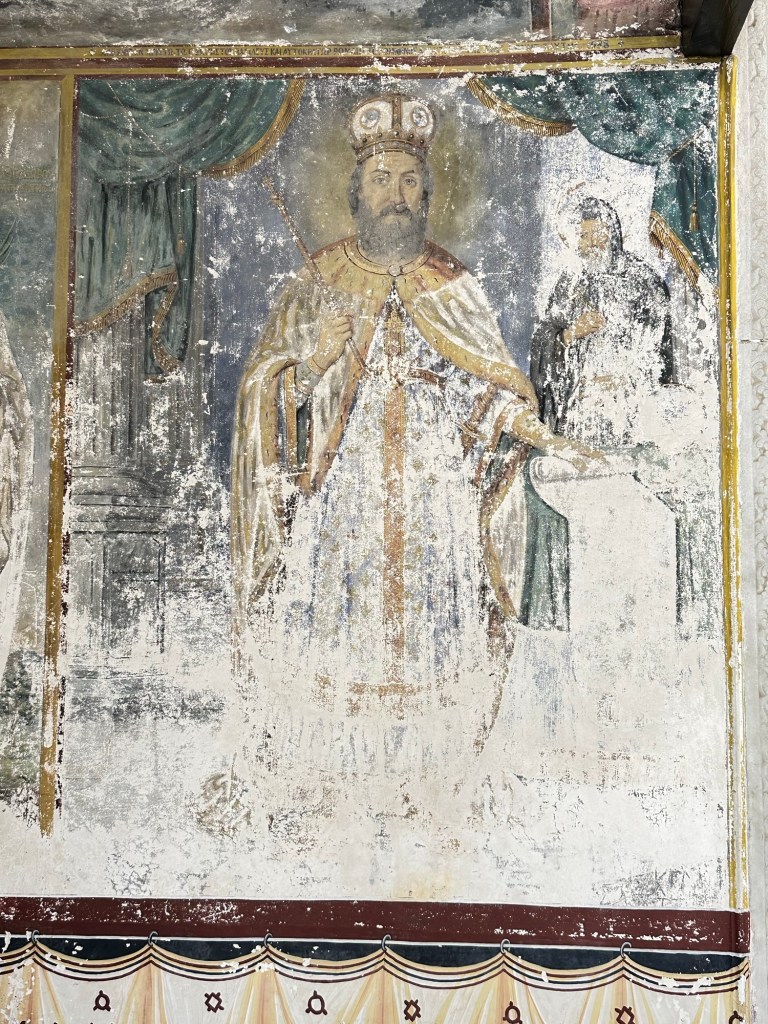
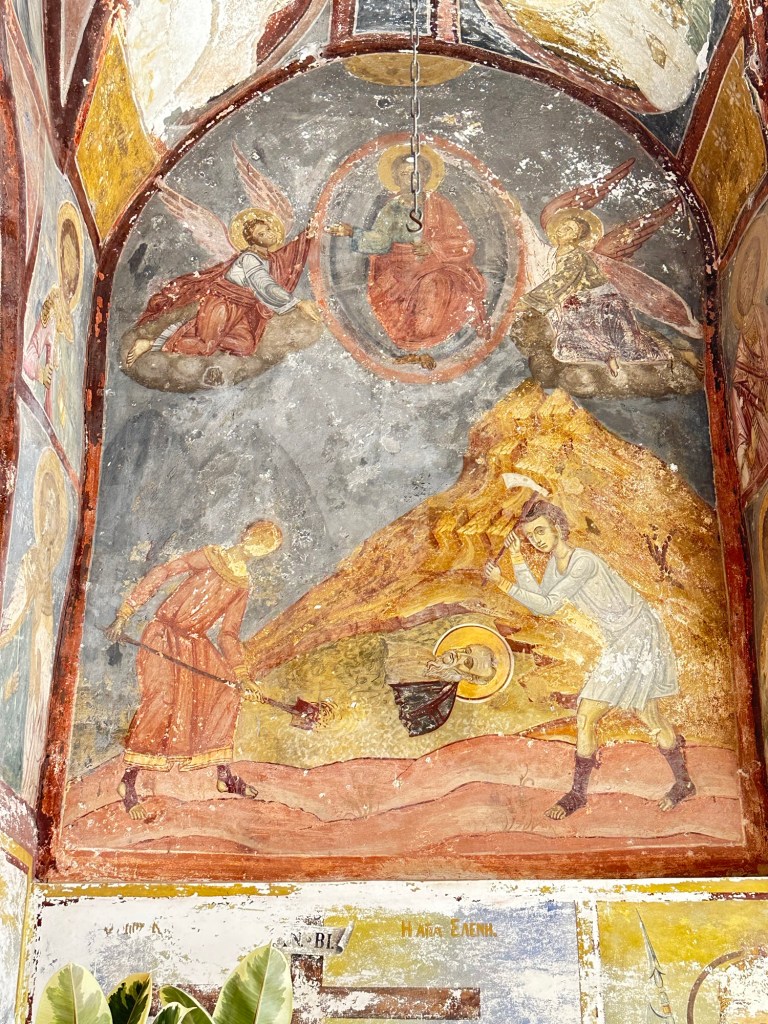
At the center of it all stands the Monastery of Saint John, a fortified structure founded in 1088. In 1088, Byzantine Emperor Alexios I Komnenos gave the island of Patmos to a monk, Christodoulos Latrinos. The greater part of the monastery was completed by Christodoulos three years later. He heavily fortified the exterior because of the threats of piracy and Seljuk Turks. Since the Covid period, most of the interior of the Monastery is not open to the public. That which is open provides a glimpse a richly decorated church, gold-encrusted icons, along with a silver coffin said to hold the bones of Christodoulos. An attached Museum holds historic artifacts of the Monastery.
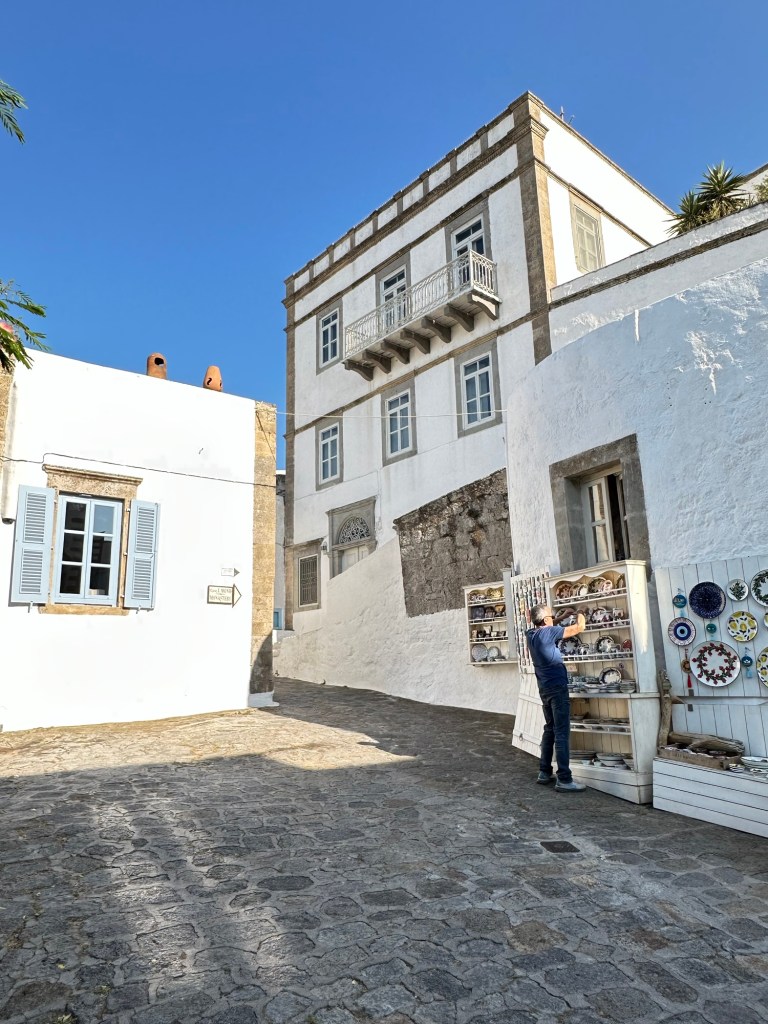
Nicholas takes us through the streets of Chora. The streets are too narrow for cars, and the village must be explored on foot, heightening the sense of discovery. Arched passageways, secluded courtyards, and elegant mansions—many dating back to the 16th and 17th centuries—reflect the village’s prosperous past as a spiritual and trading hub. Sadly, Nicholas tells us that only 10% of Chora is owned by locals, and that most of the houses are in the hands of Americans and Italians, who summer here.
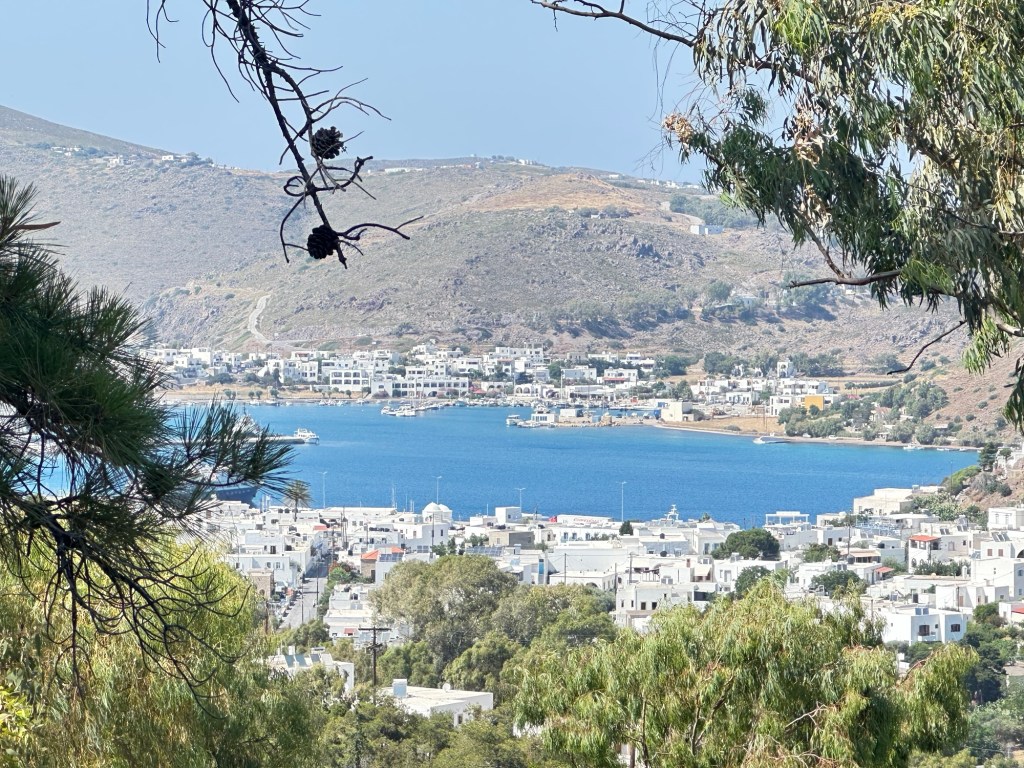
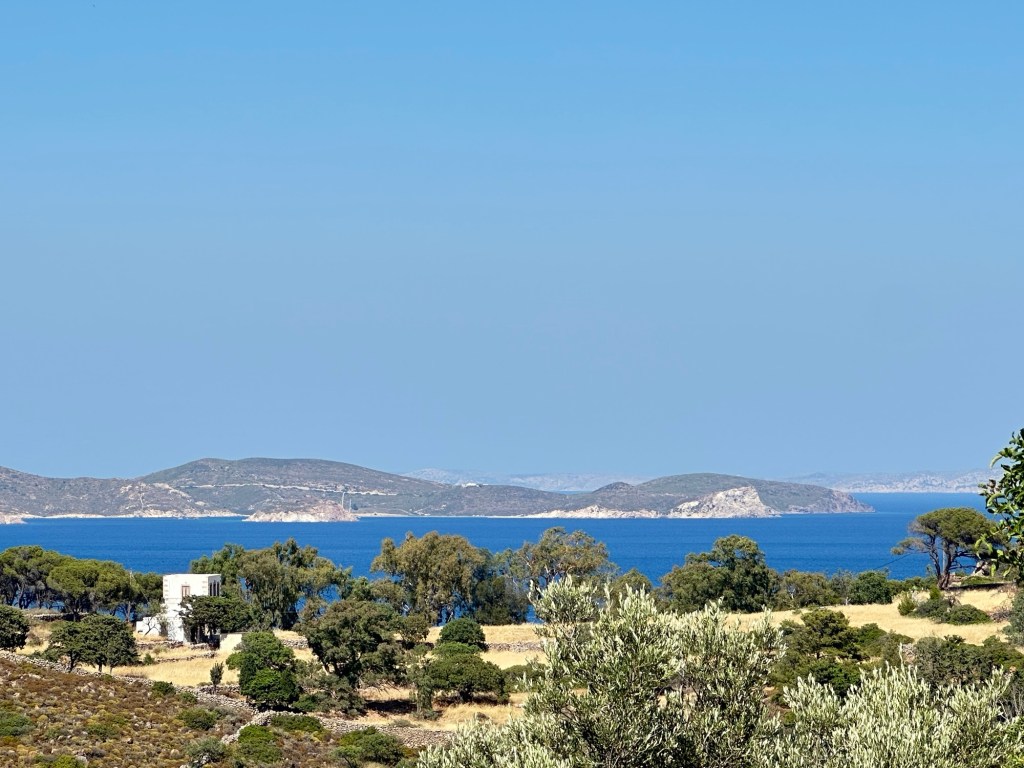
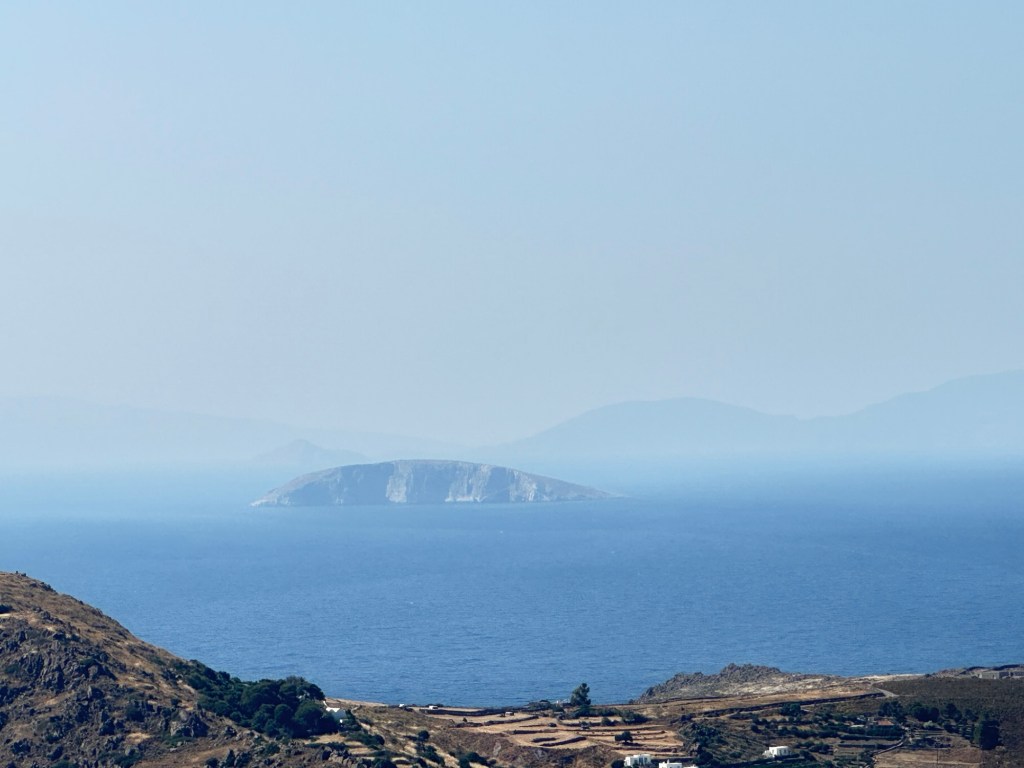





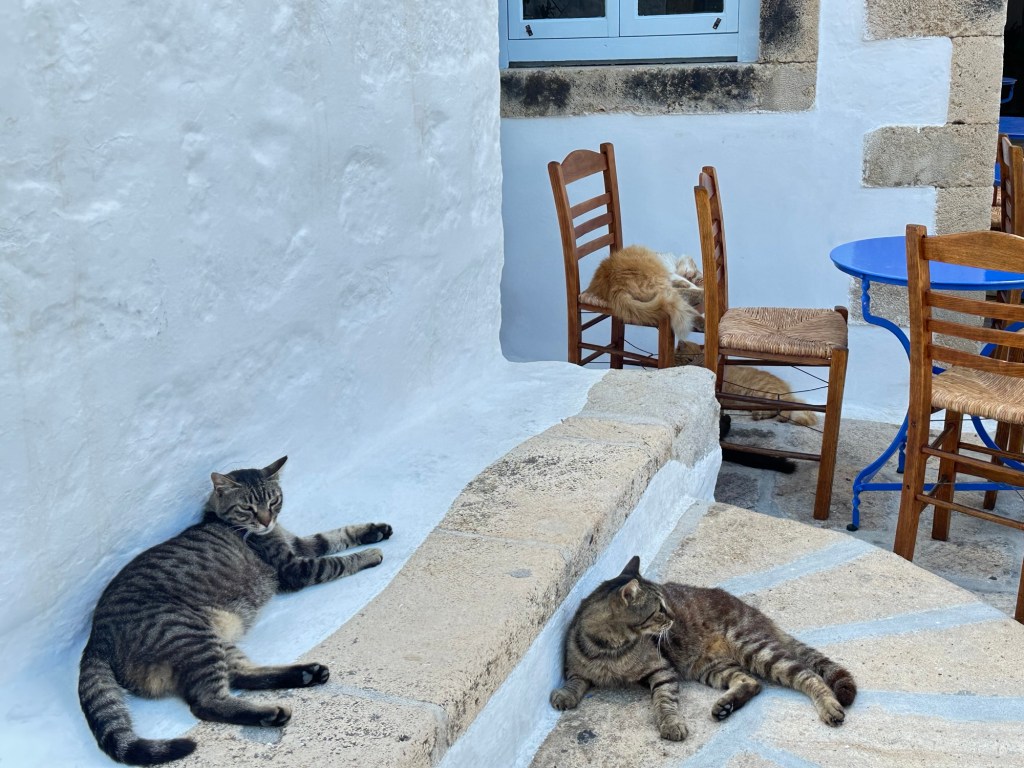
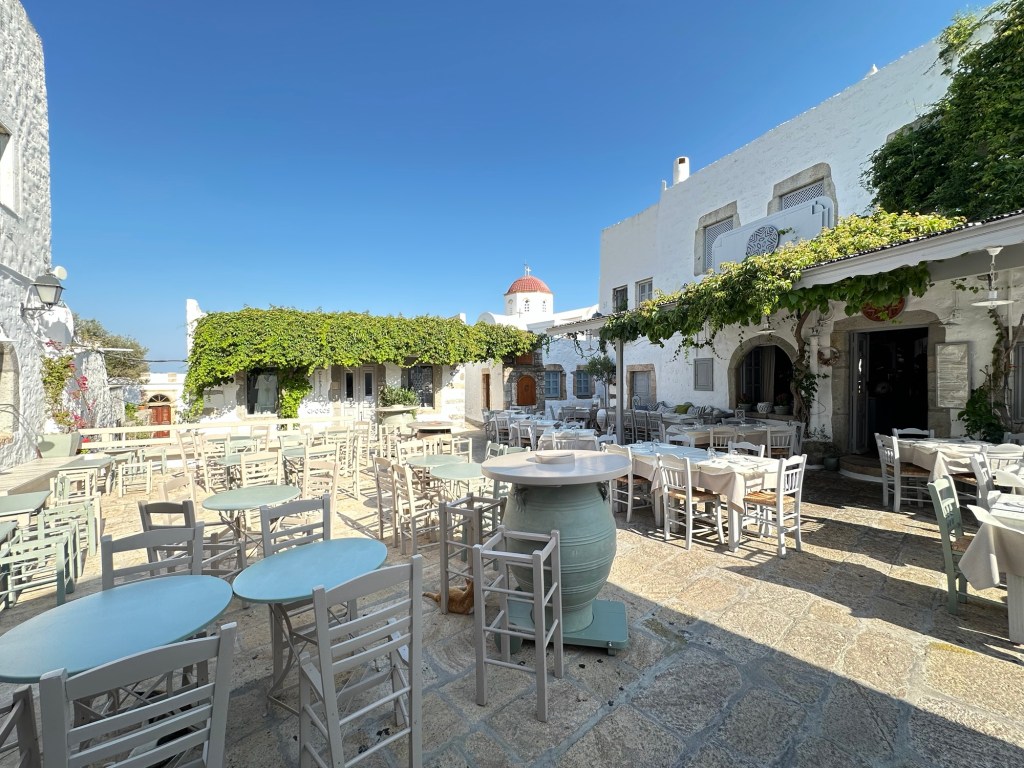
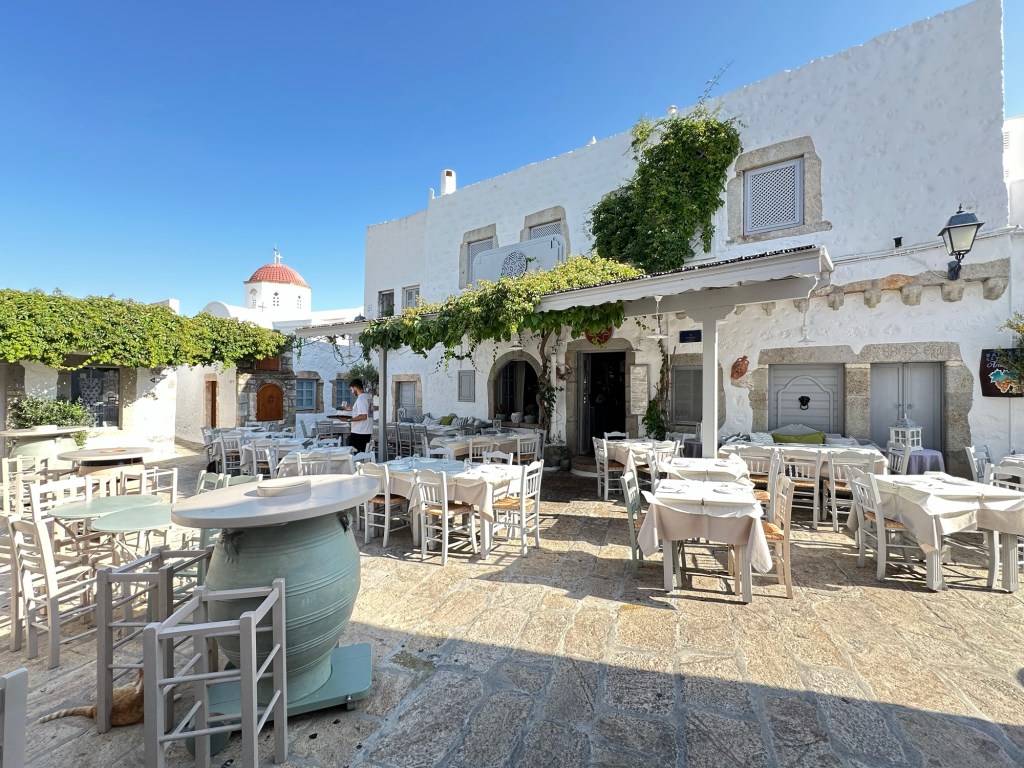


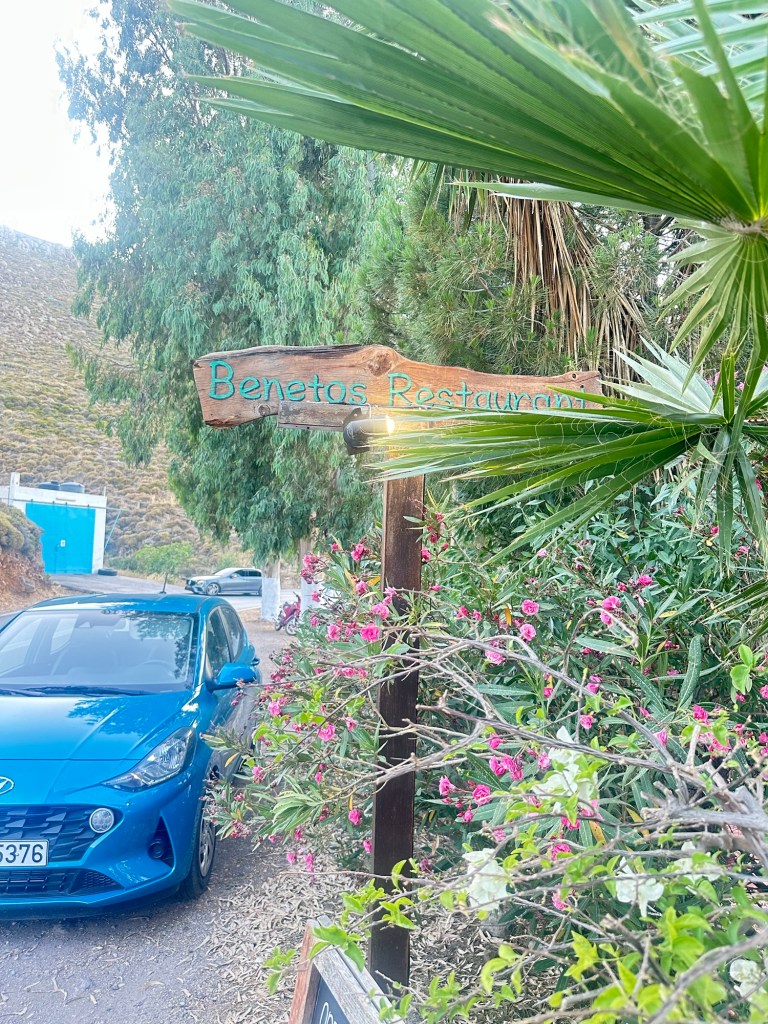
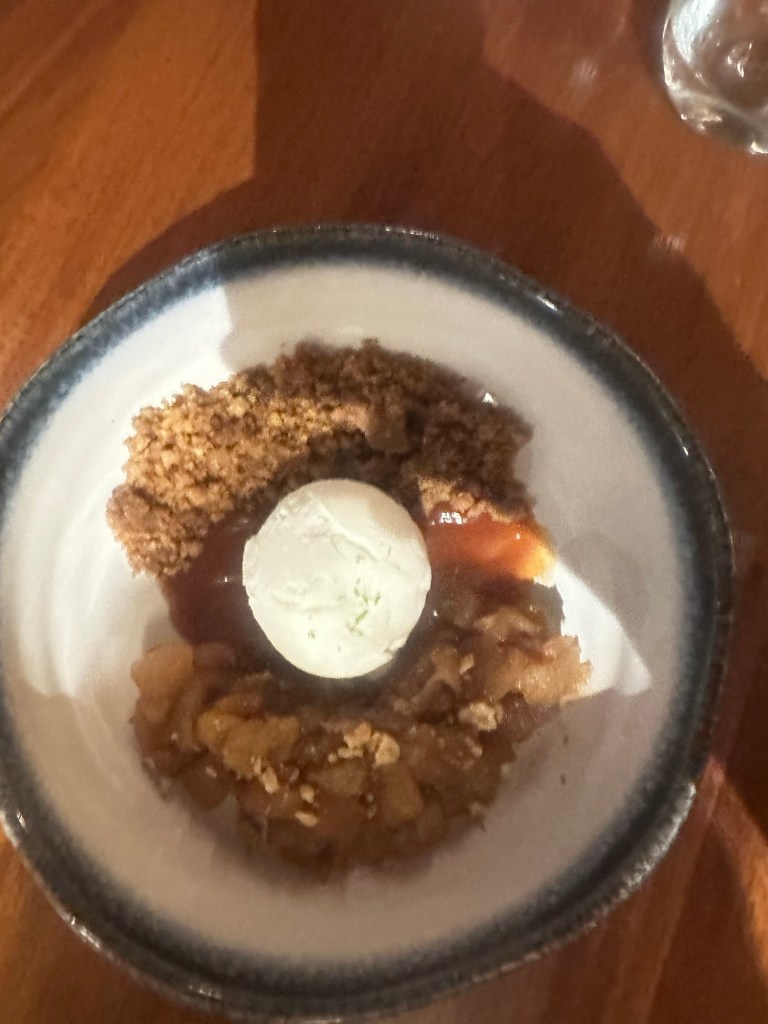
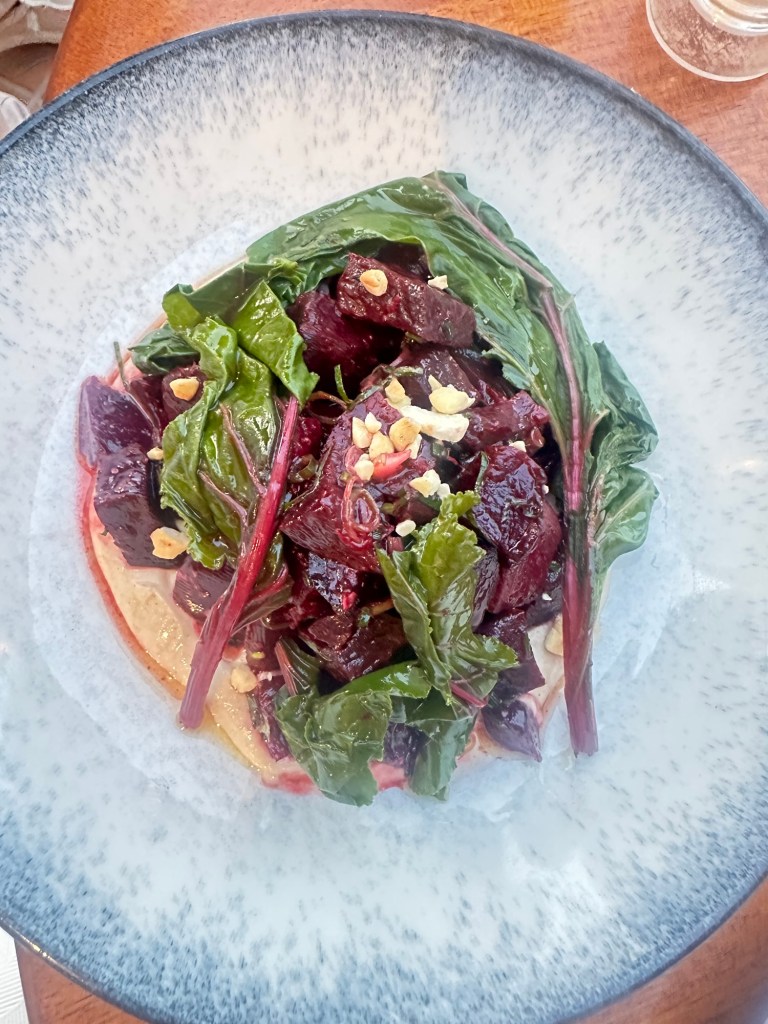
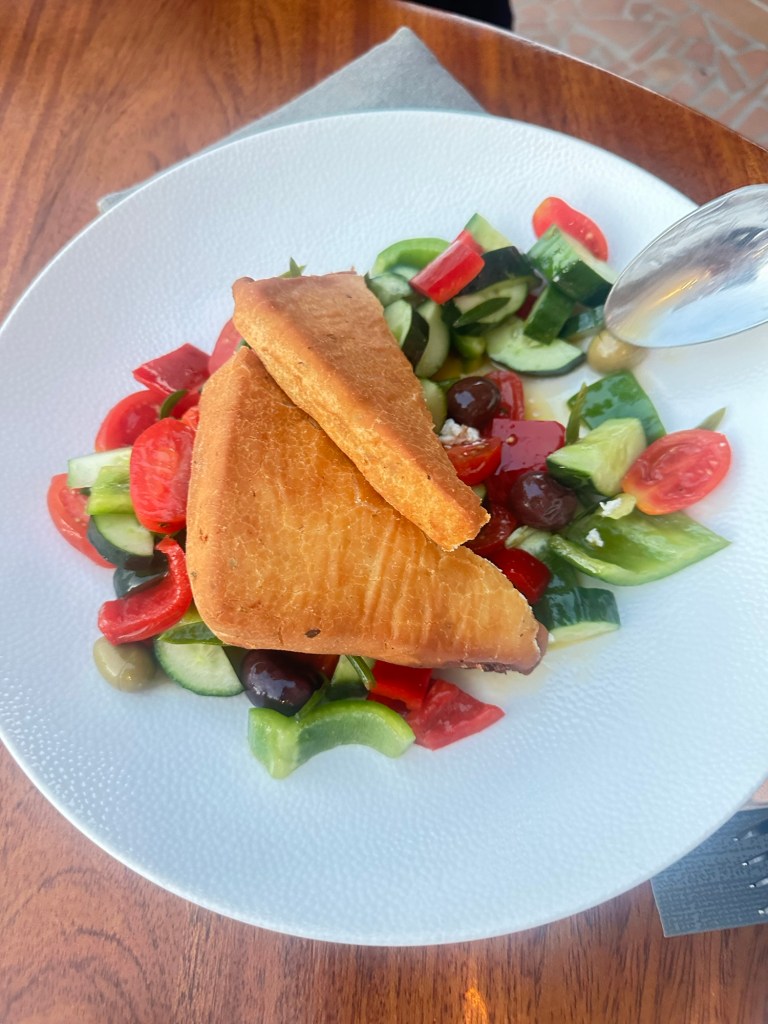
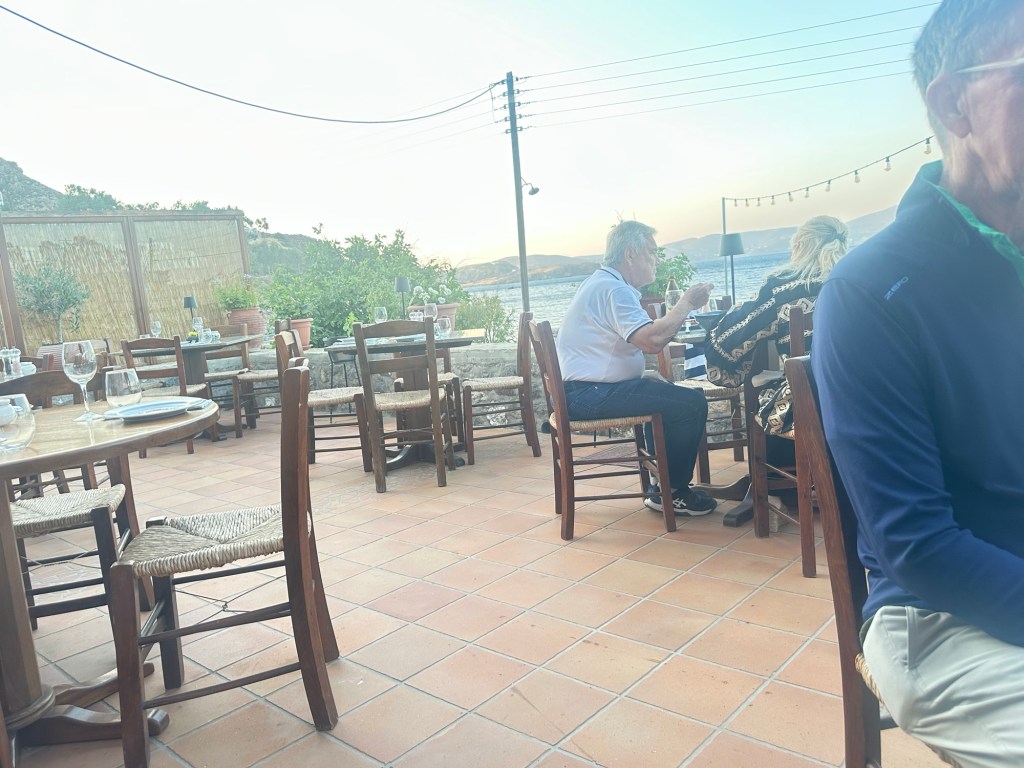
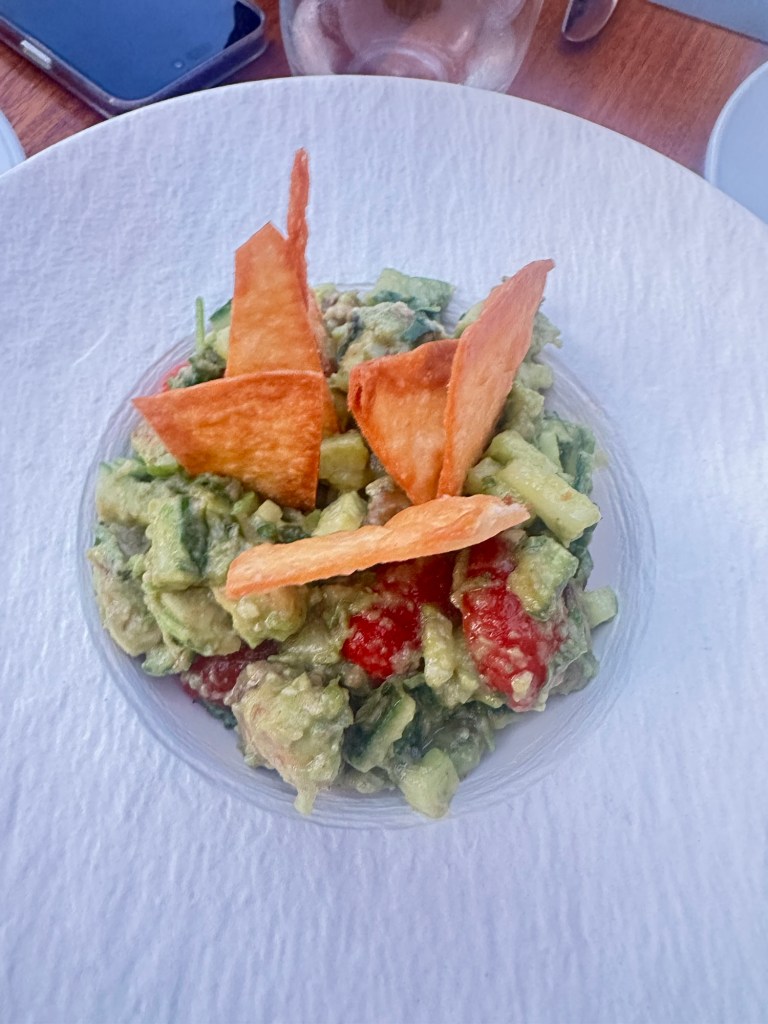
This is our last day in Patmos. Before taking over night ferry back to Athens for a morning flight to Paros, we enjoy an excellent dinner at Benetos Restaurant (https://benetosrestaurant.com/) not far from the Petra.




 YouDontKnowJackTravels