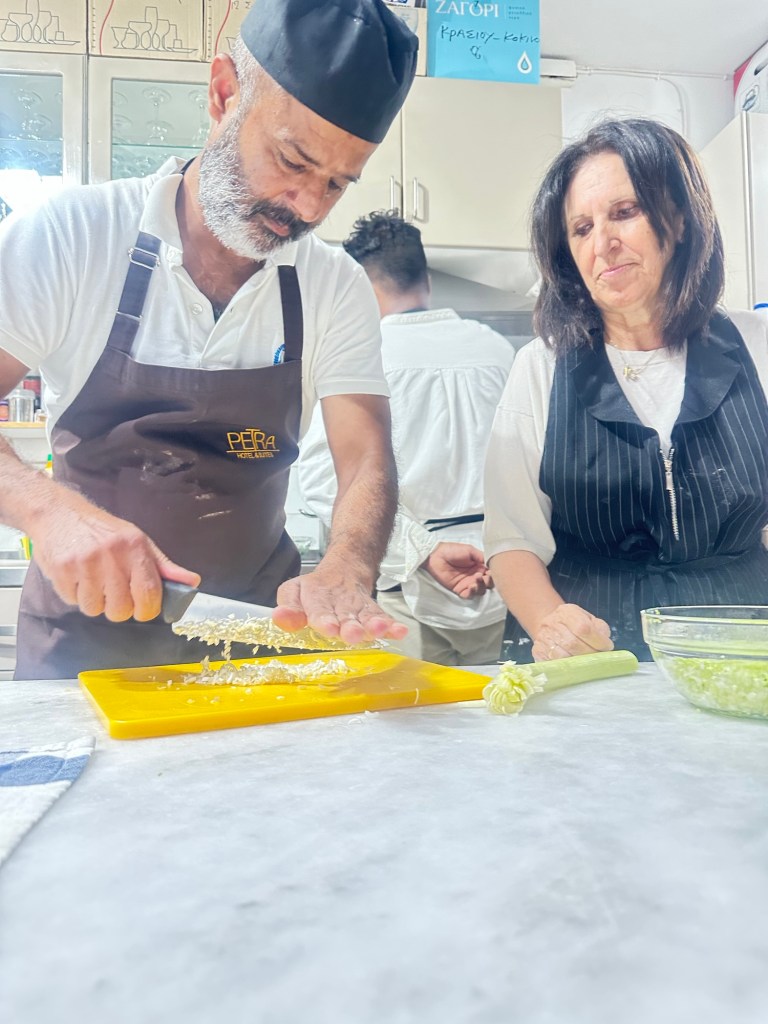
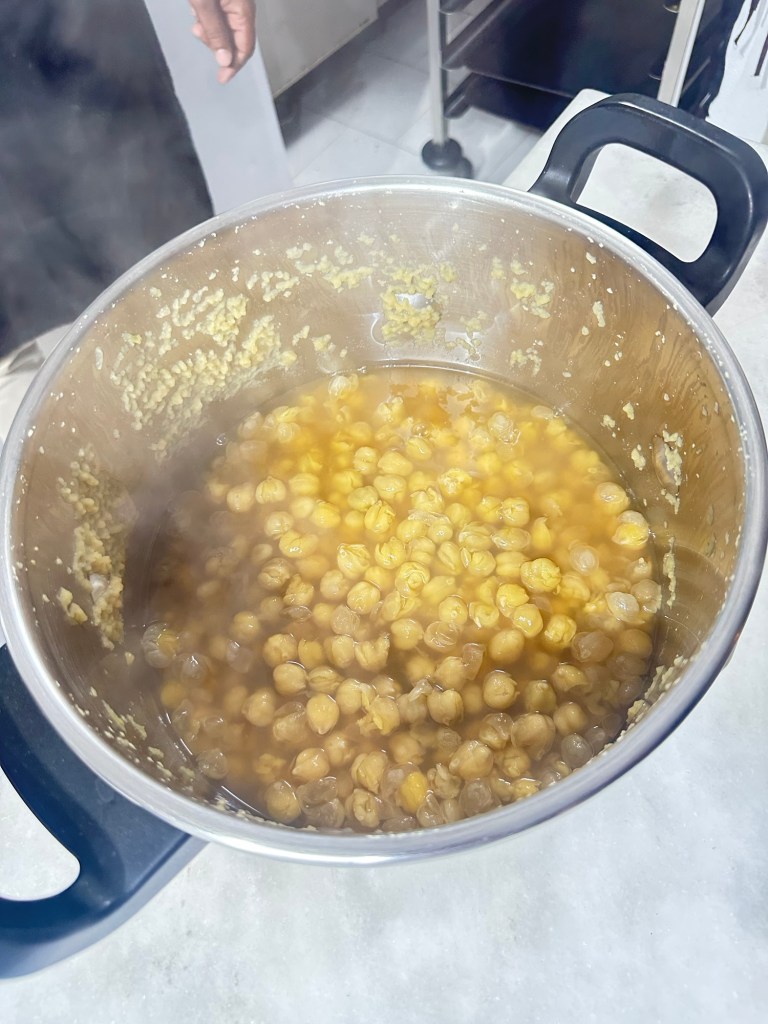
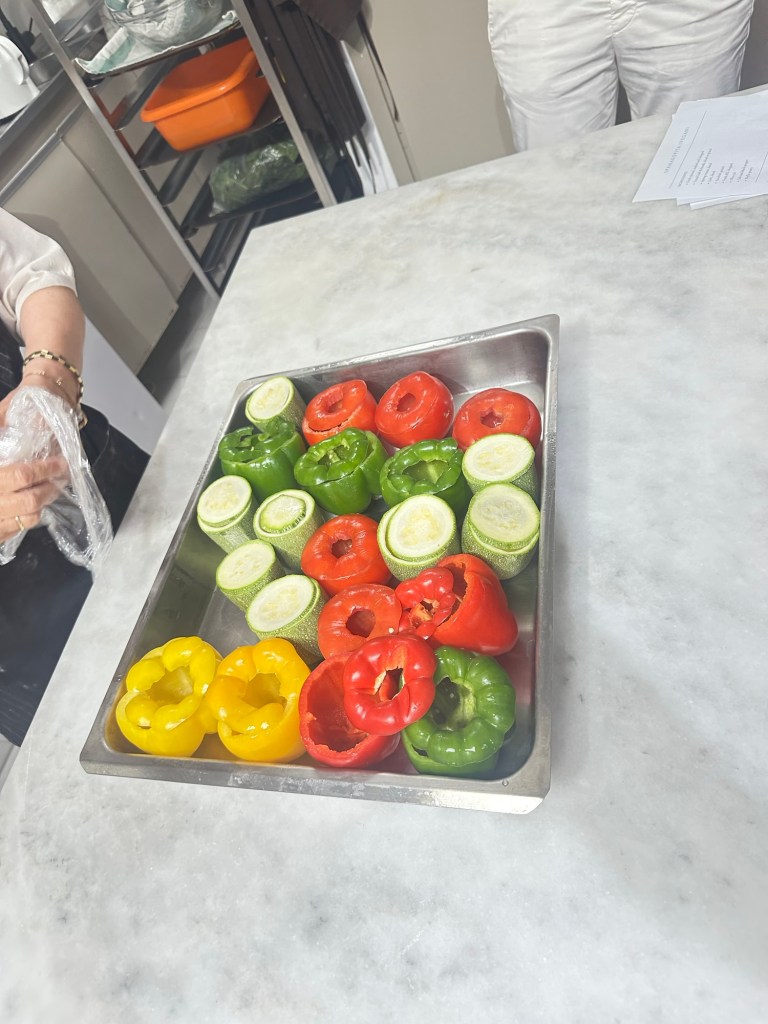
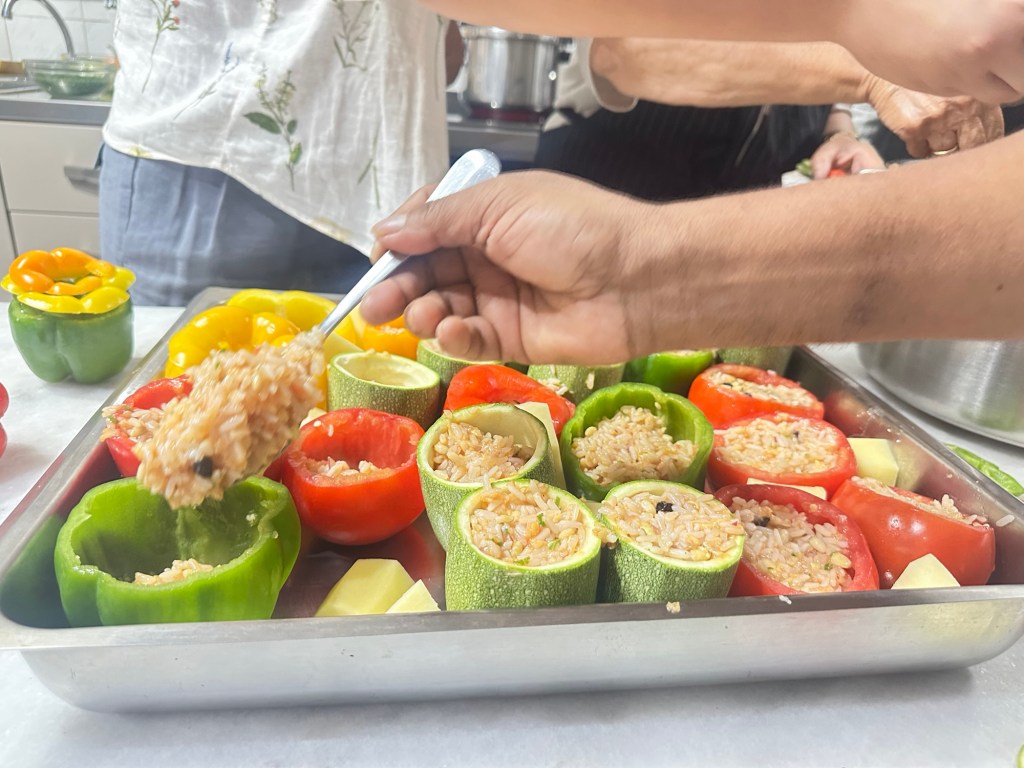
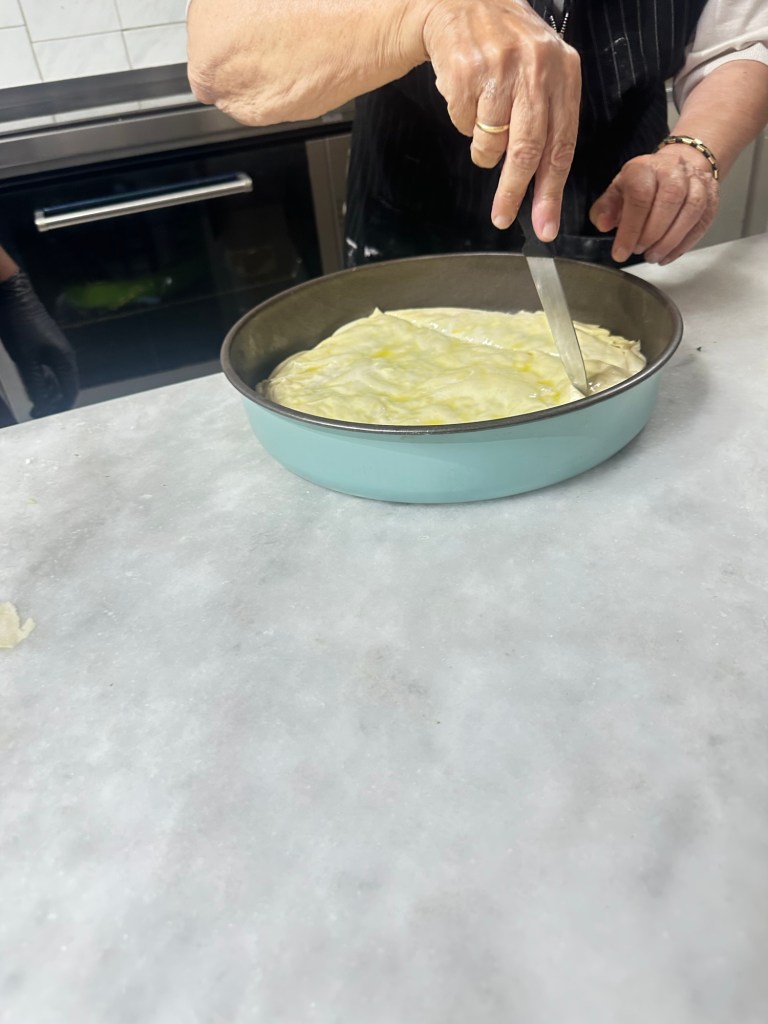
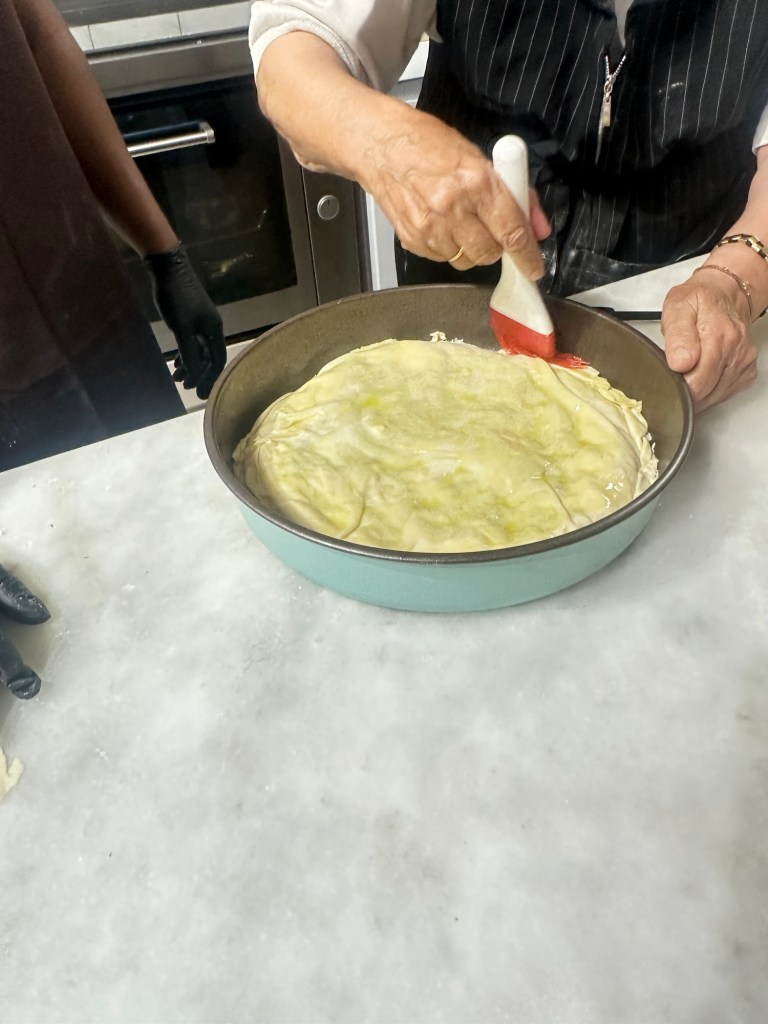
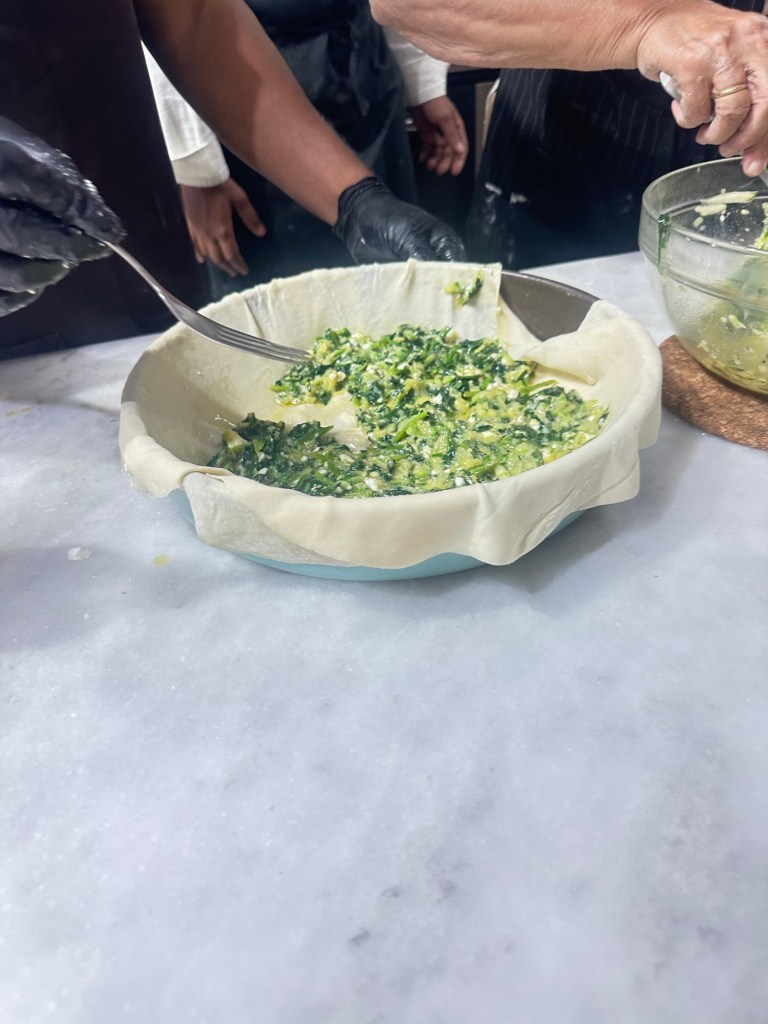
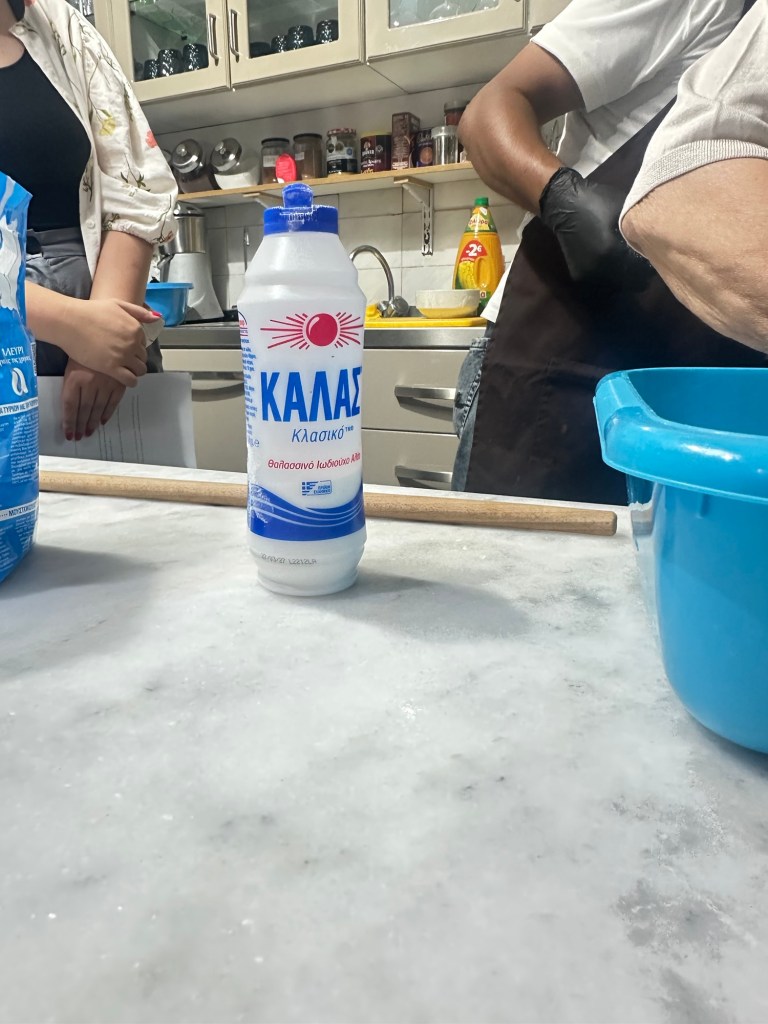
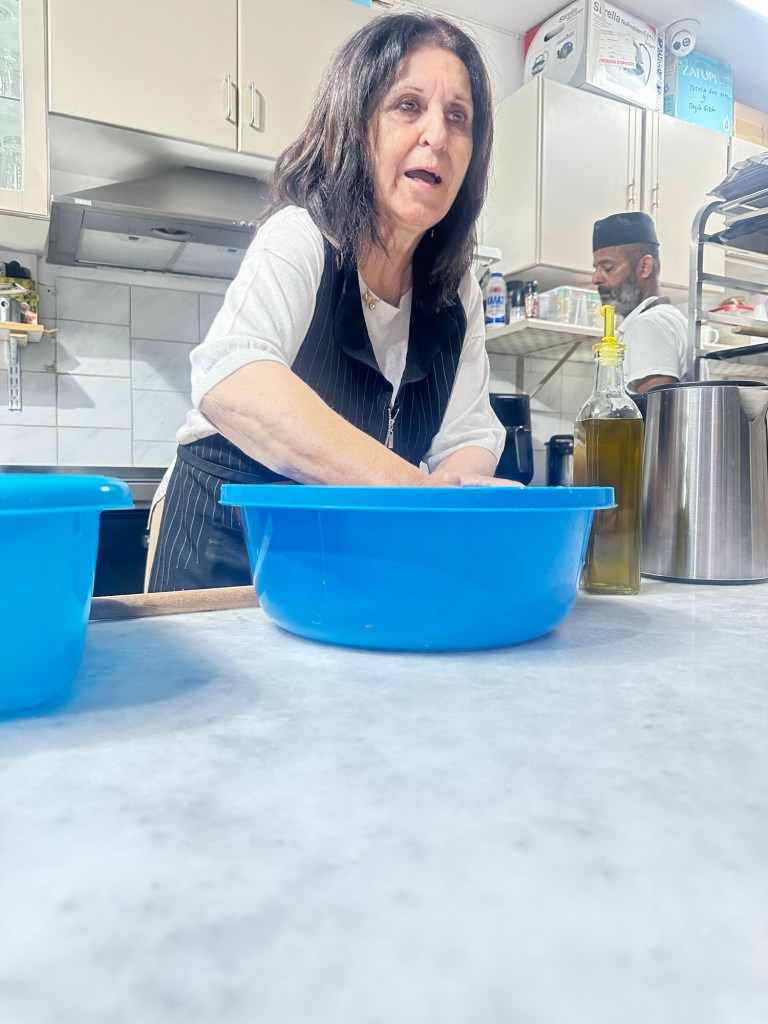
Day 3 brings cooking instruction by Petra, in the hotel kitchen, a small room stacked from floor to ceiling with equipment and supplies. My companions and I are seated tightly around a well-worn rectangular, grey marble topped table where Petra recipes are made into delicacies time after time. Over the next three or so hours, we learn the intricacies of making filo dough, spanakopita, stuffed peppers and hummus. Beth, my wife, and I give a try at rolling out filo dough. We experience small pride when Petra gives her approval and puts ours in the stack of usables. We taste small amounts of the food as it is being prepared.
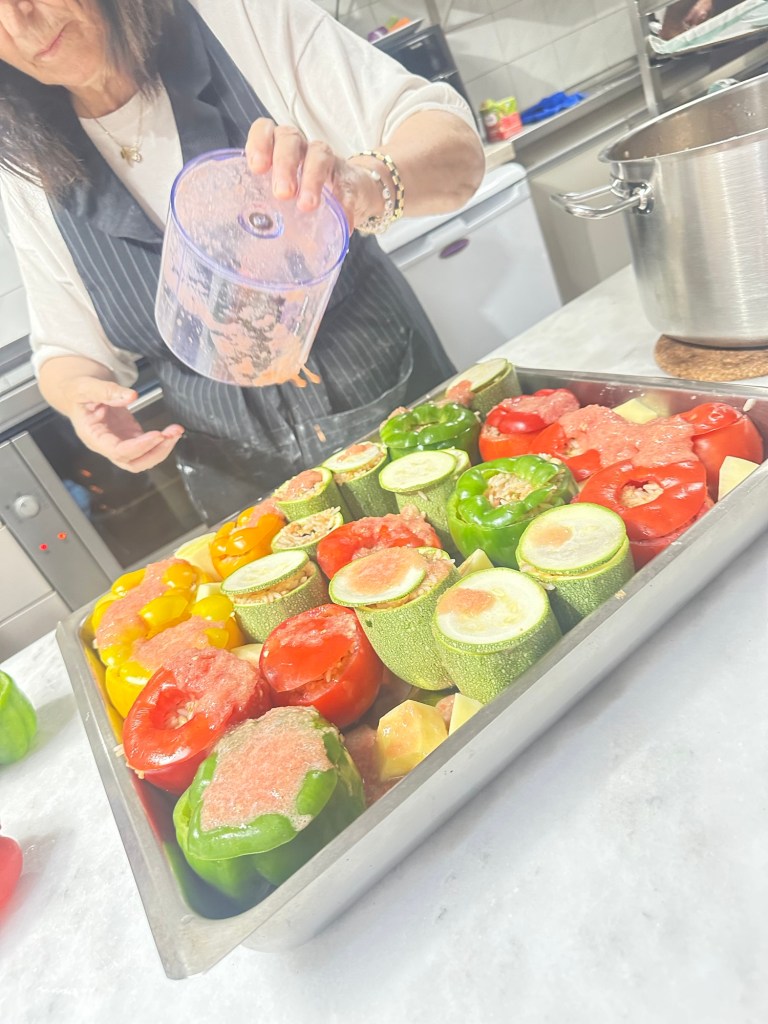
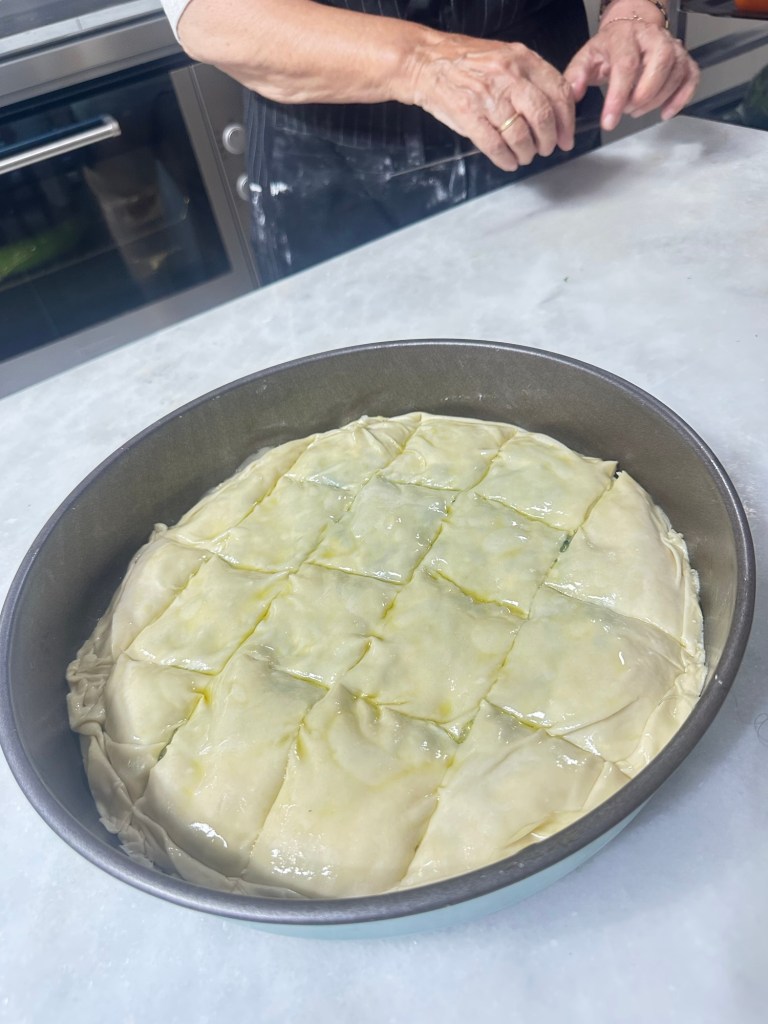
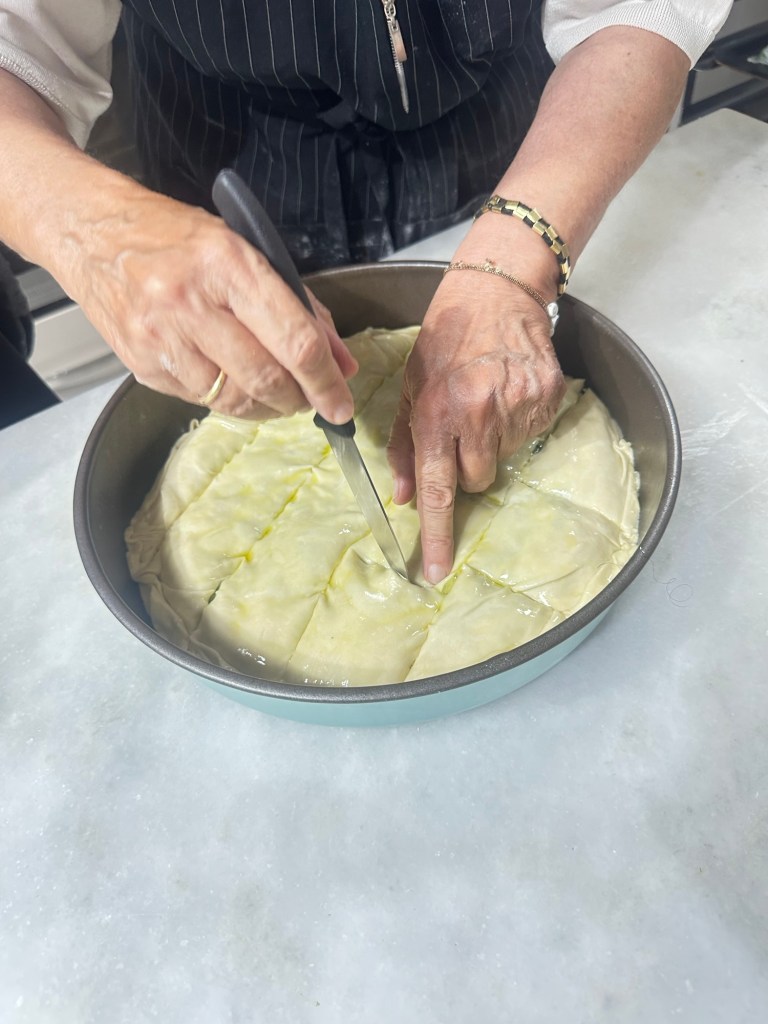



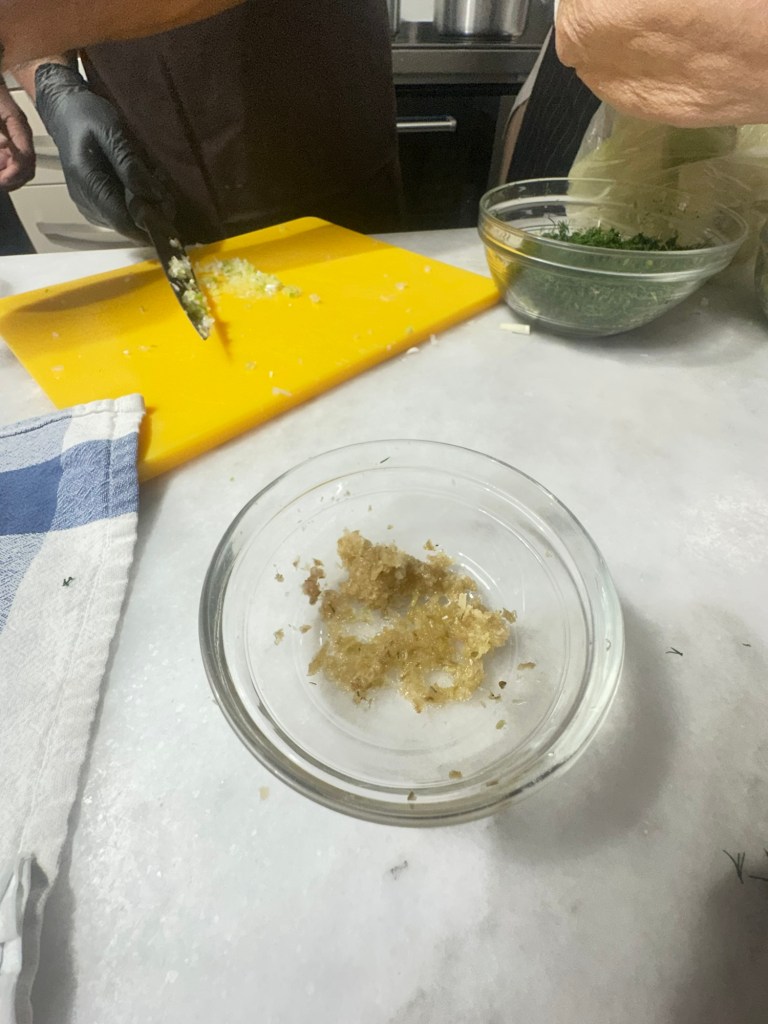
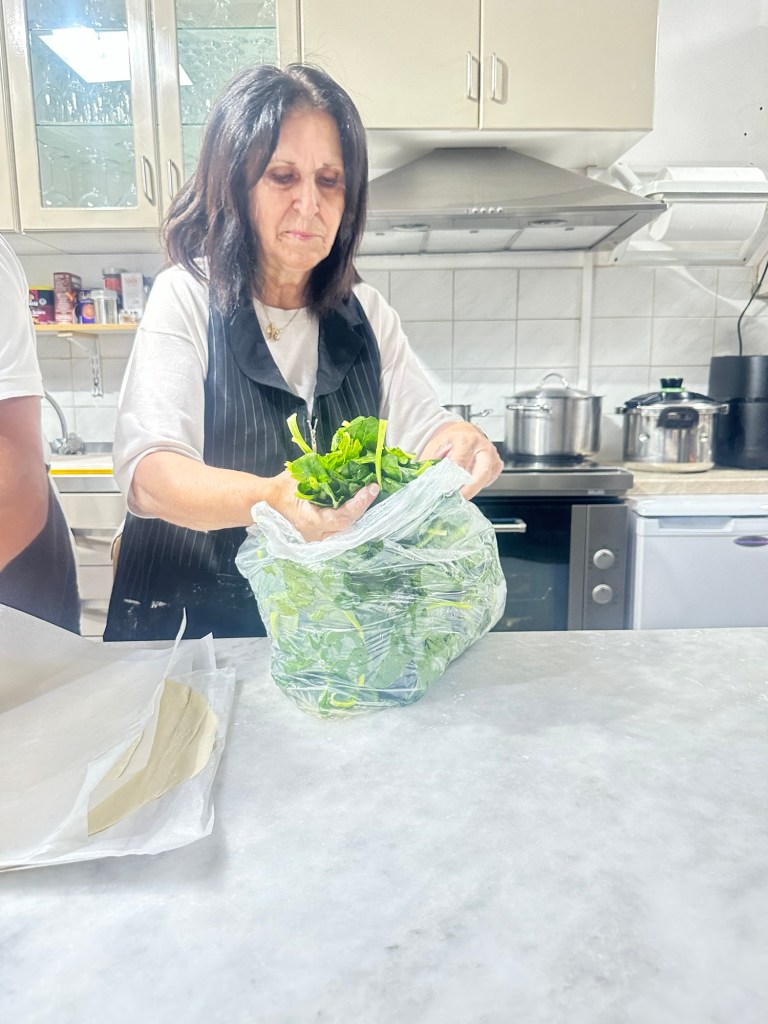
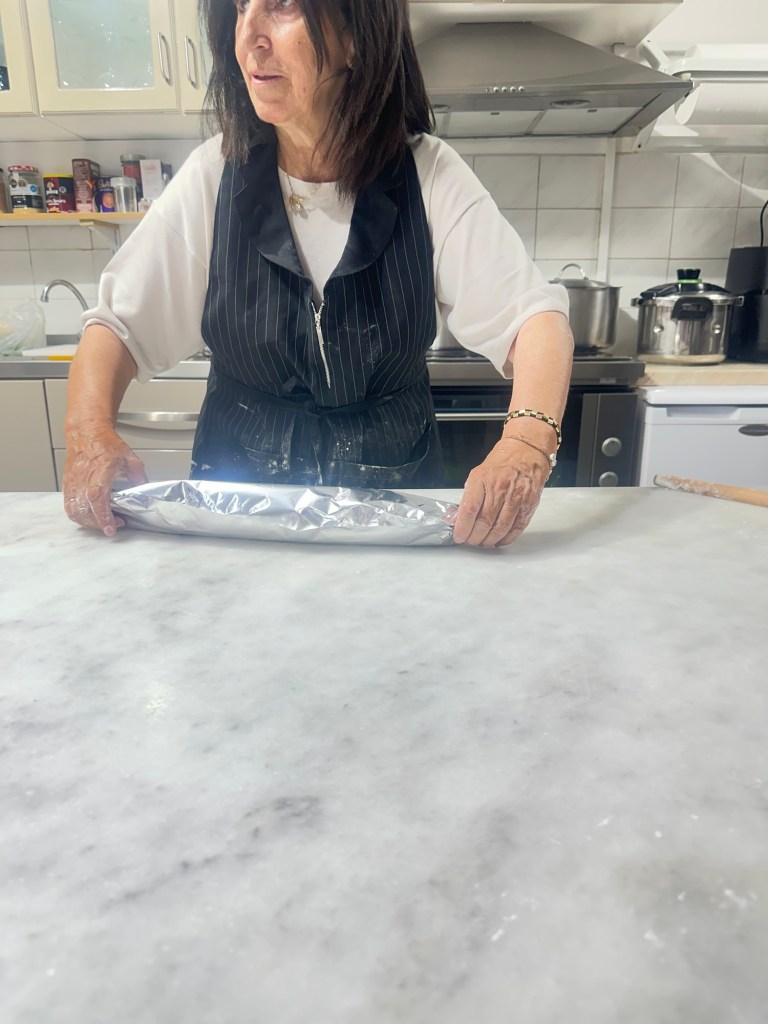
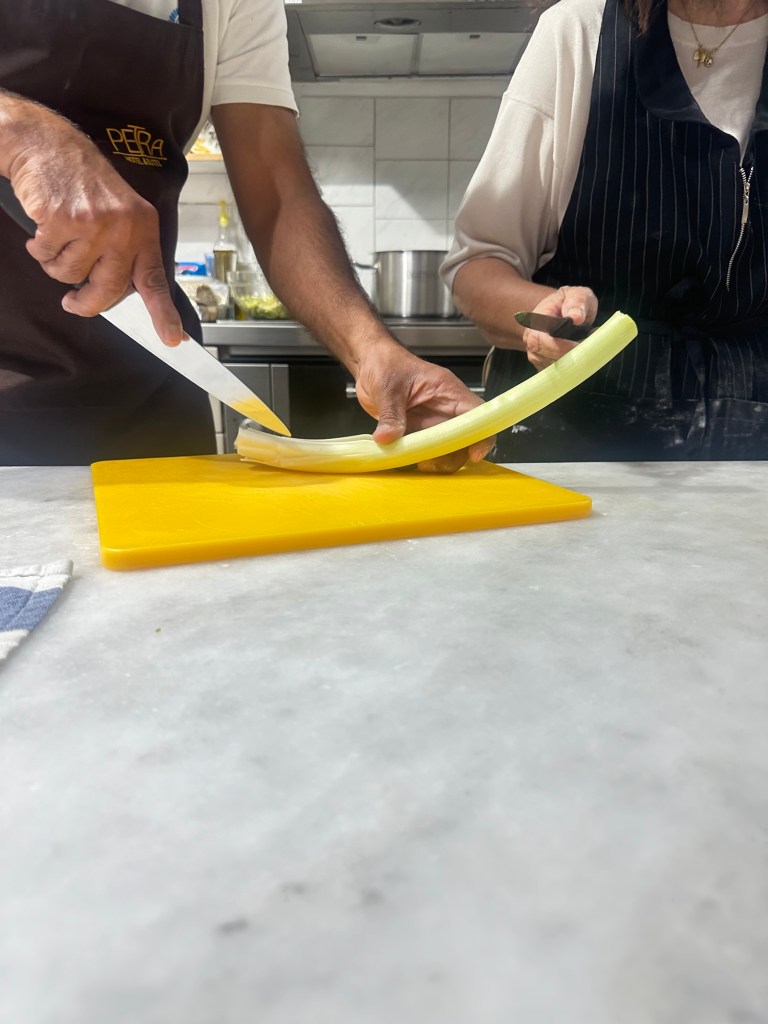
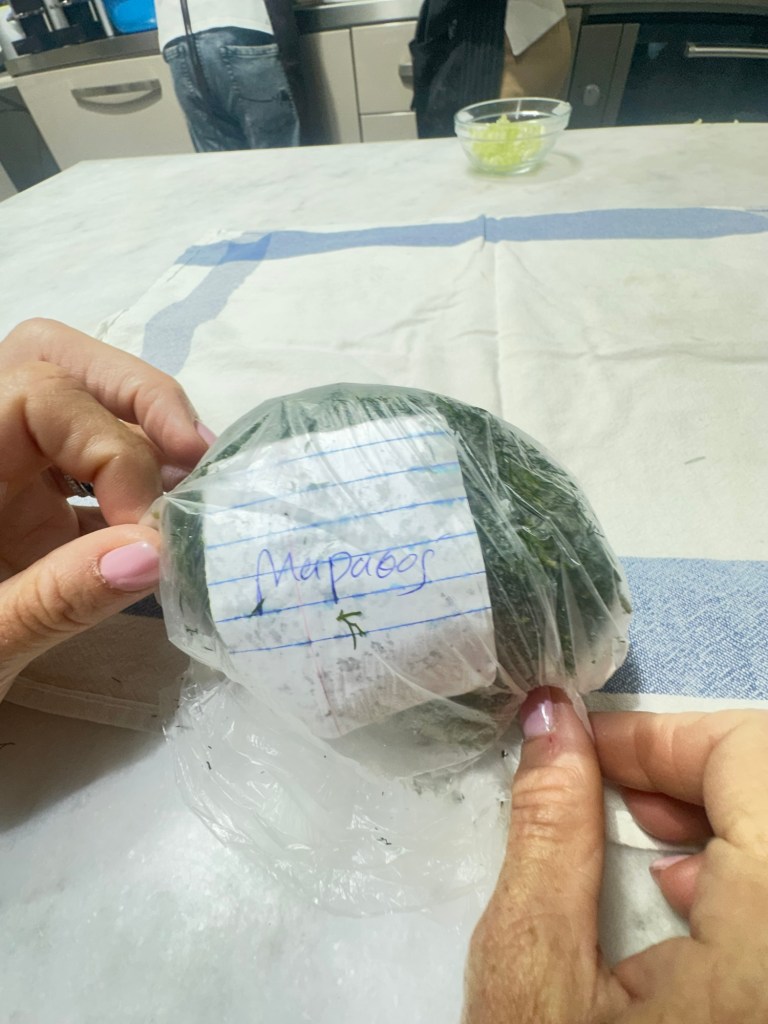
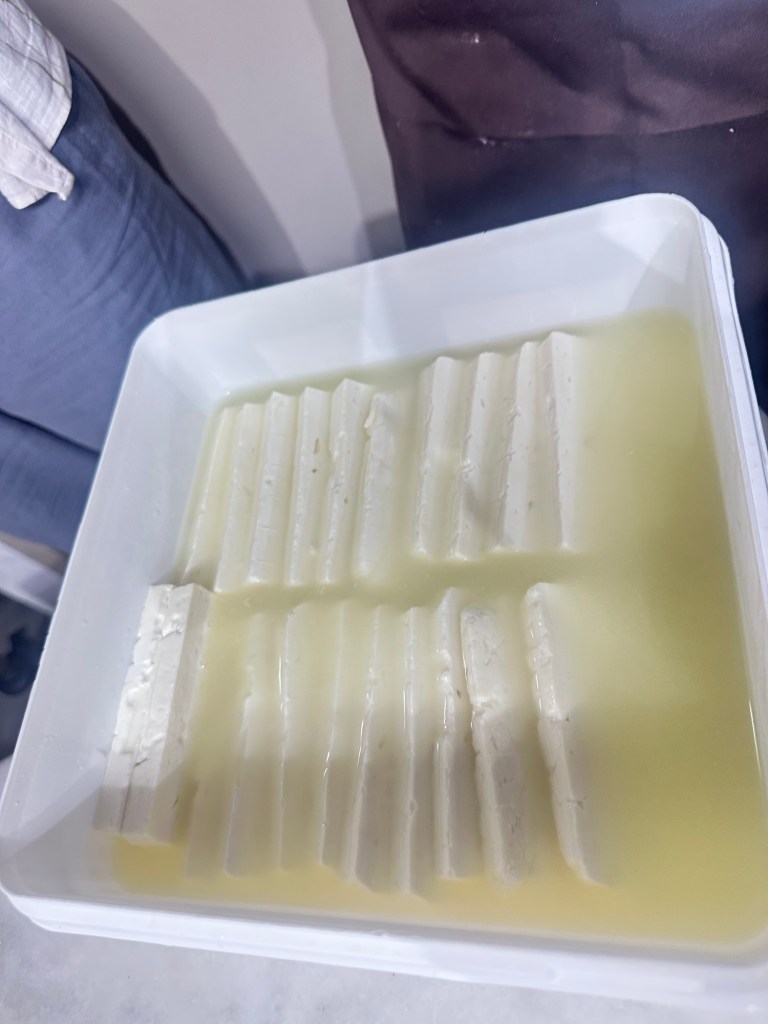
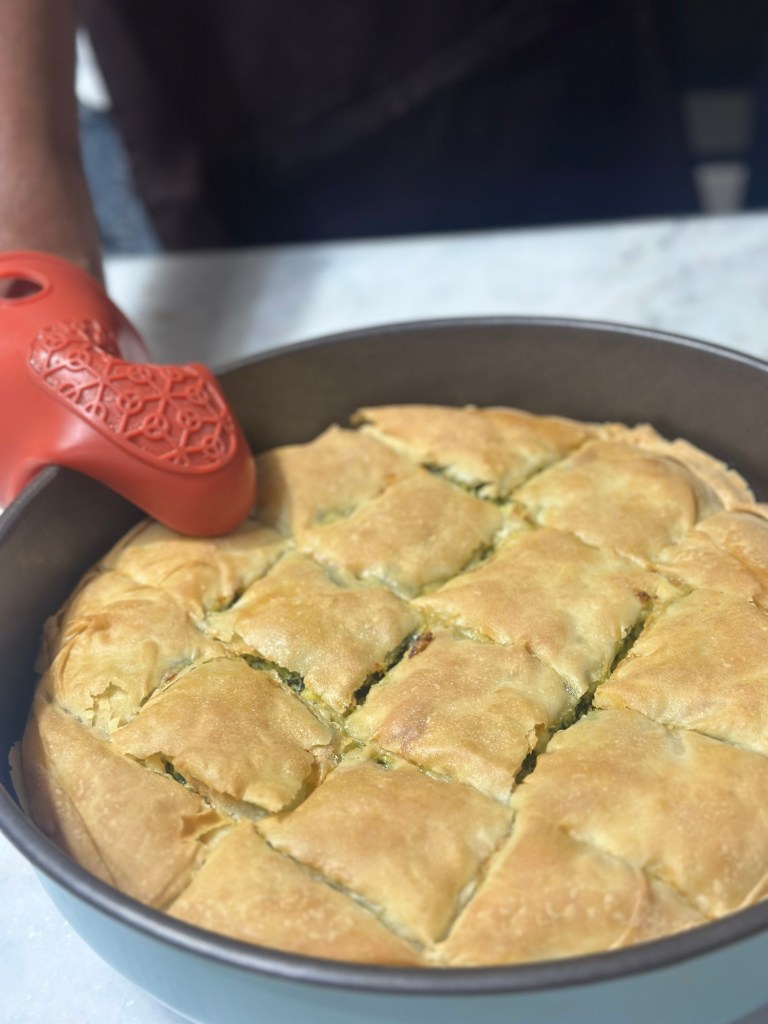
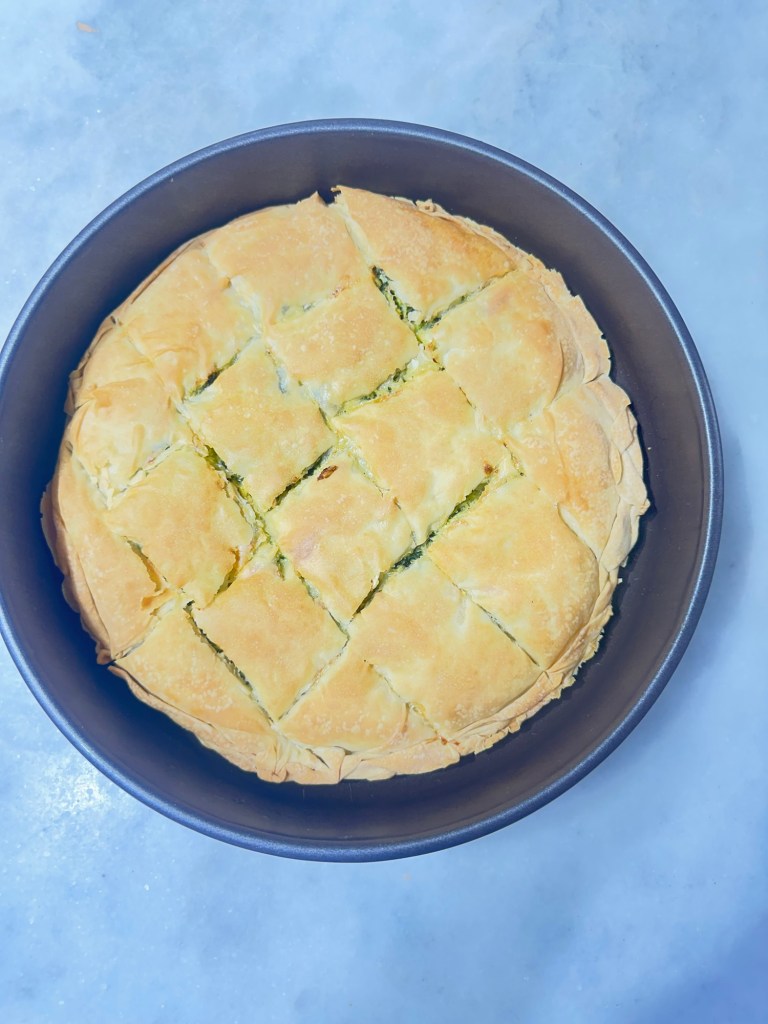
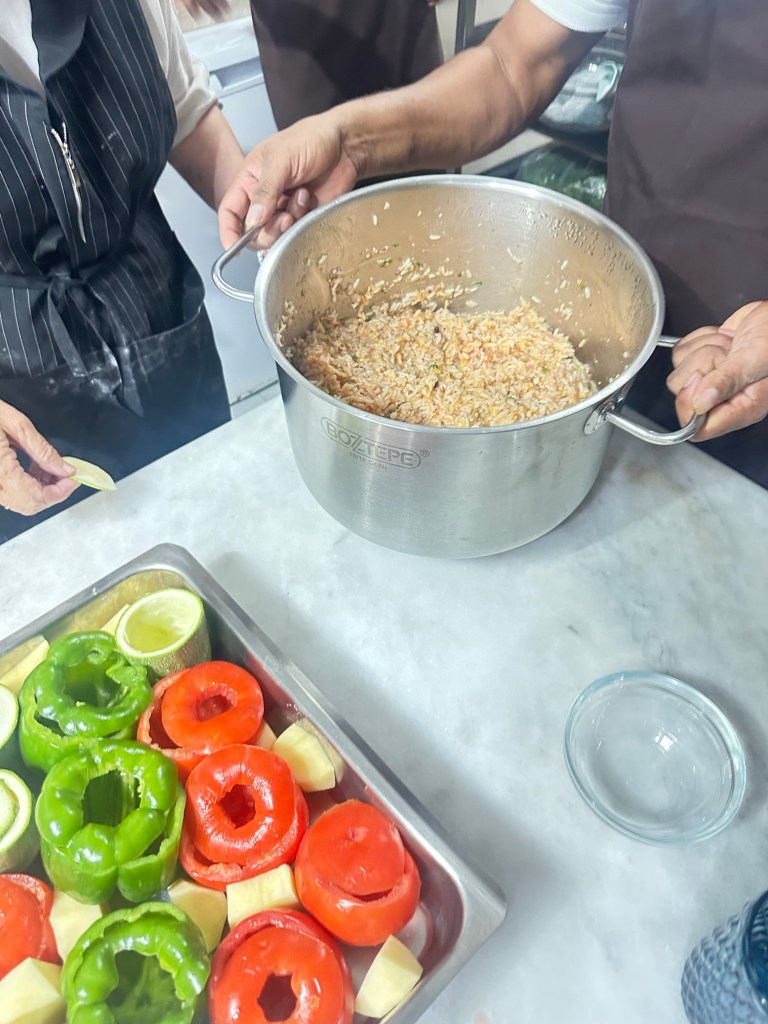
Petra tells us that the food needs to cook for another hour and that we should return to eat it. We tell Petra that we have a dinner reservation, and that we will only likely taste test the food. Something appears to have been lost in translation. When we arrive an hour or so later, Petra has an entire meal prepared for us. We eat the whole thing quickly and then catch a taxi to Patmo Skala for a second dinner. Adonis, our taxi driver takes us to Patmos Skala, and in the short distance, with pride in this voice, tells us his entire family history, that there are 400 churches in Patmos, including one his family owns, of which he says he has no need. Once in Patmos Skala, we follow the winding streets full of local life and check out stores. Every structure is white, but has unique scars of time.
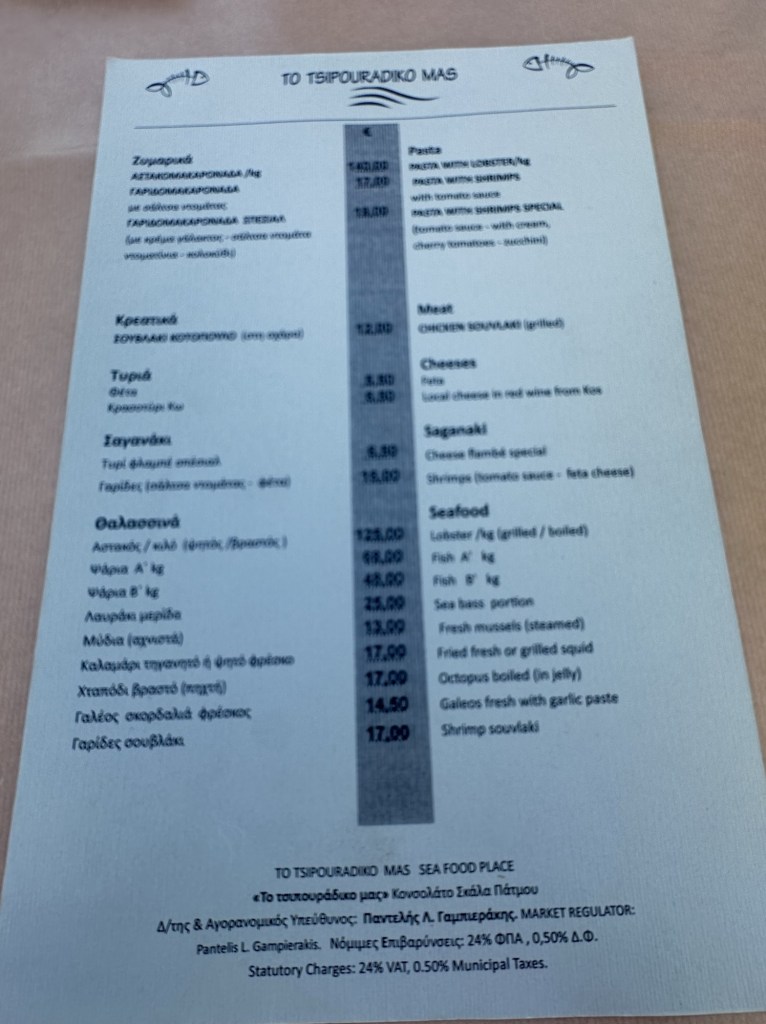
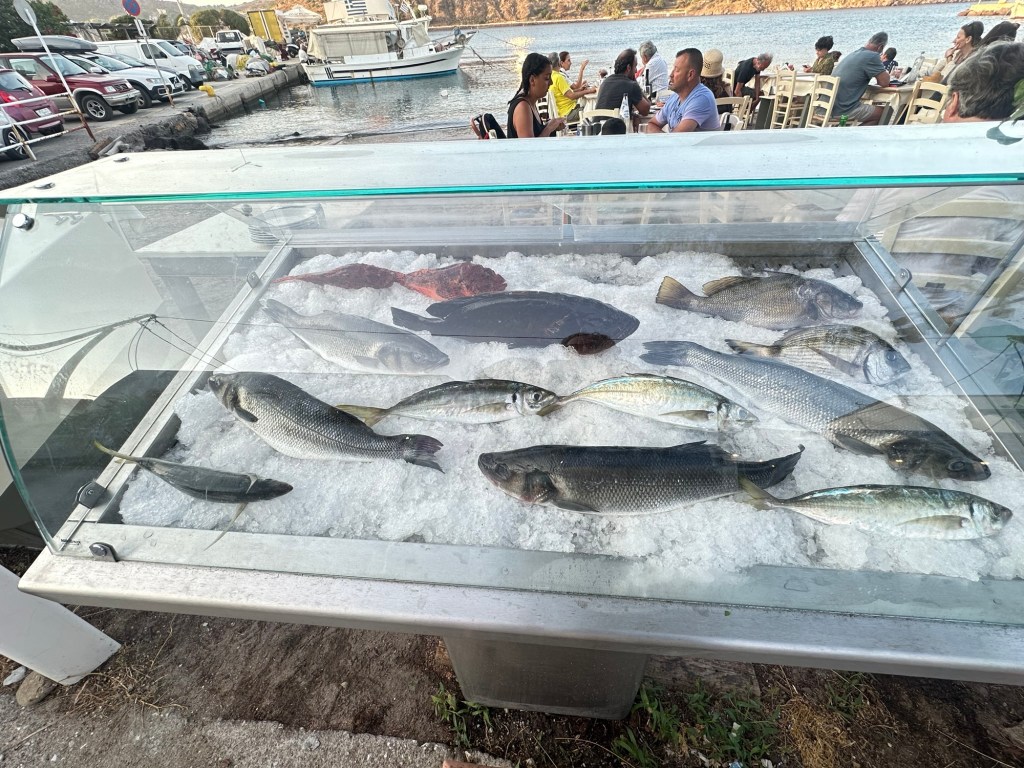
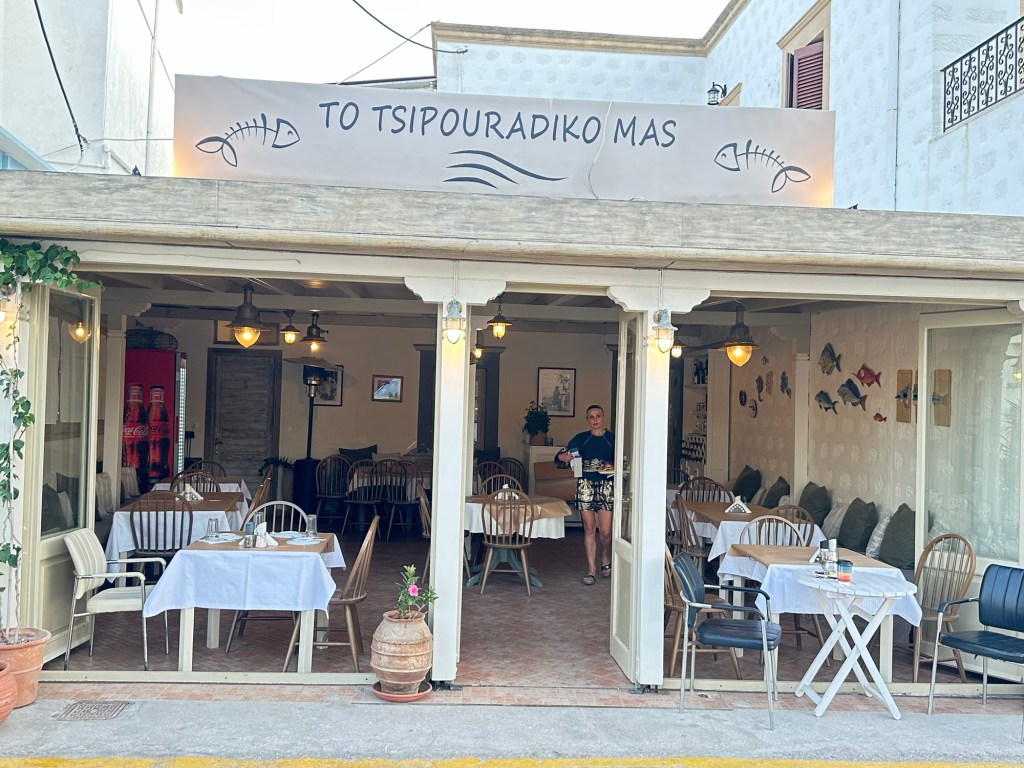
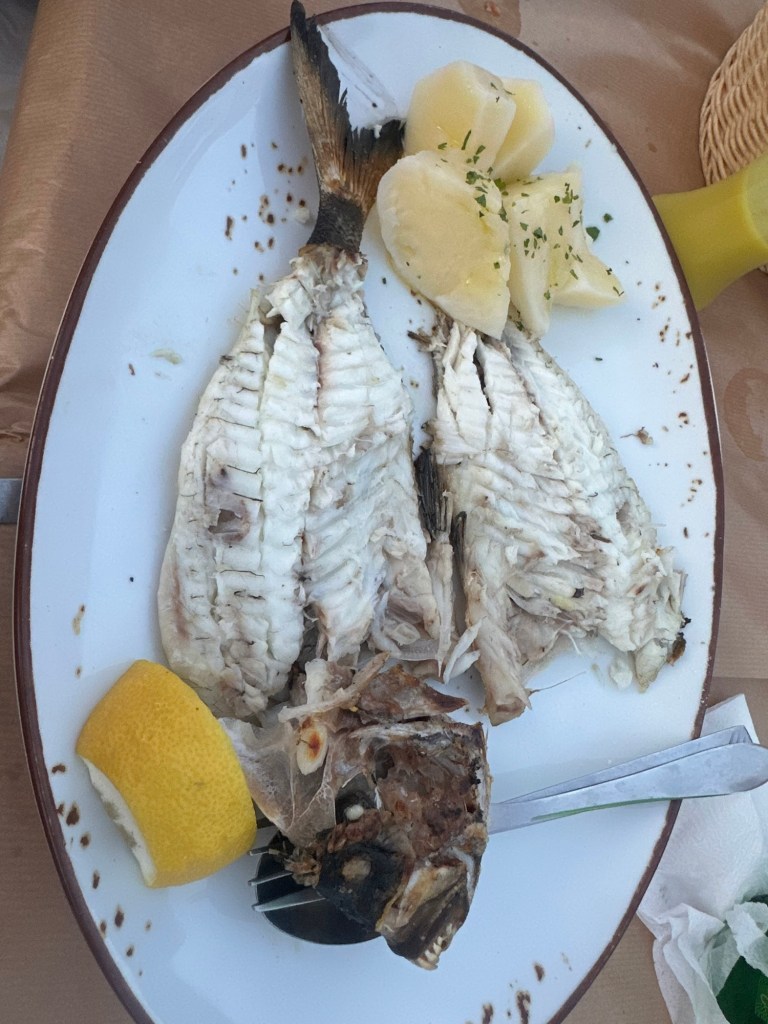
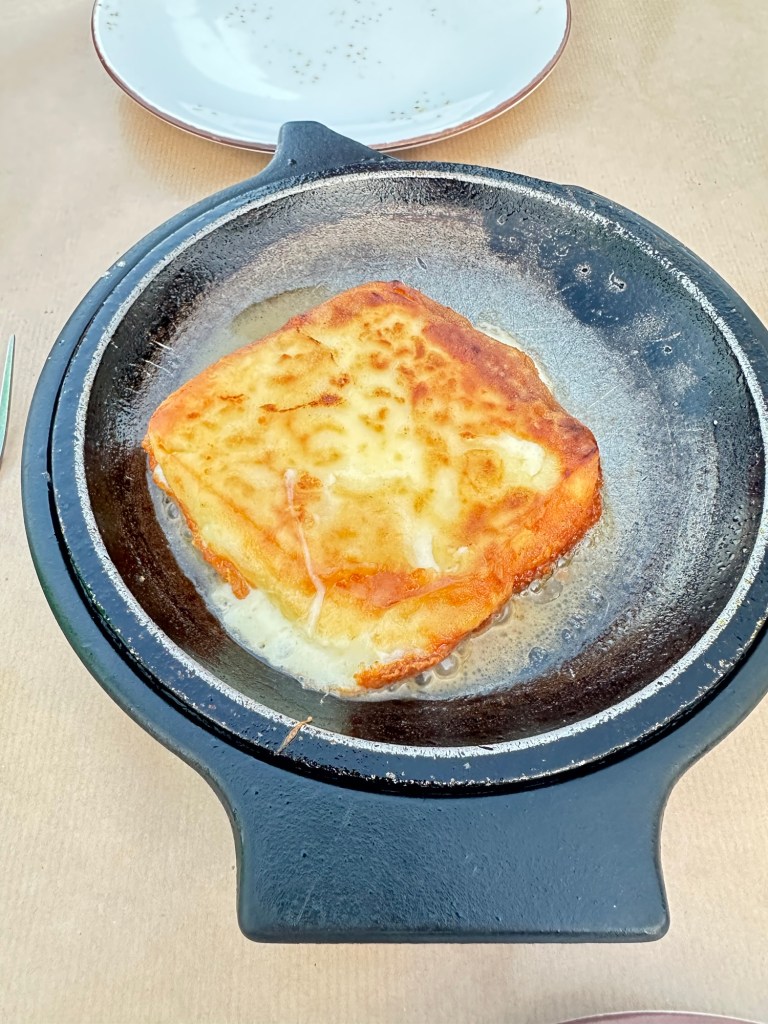
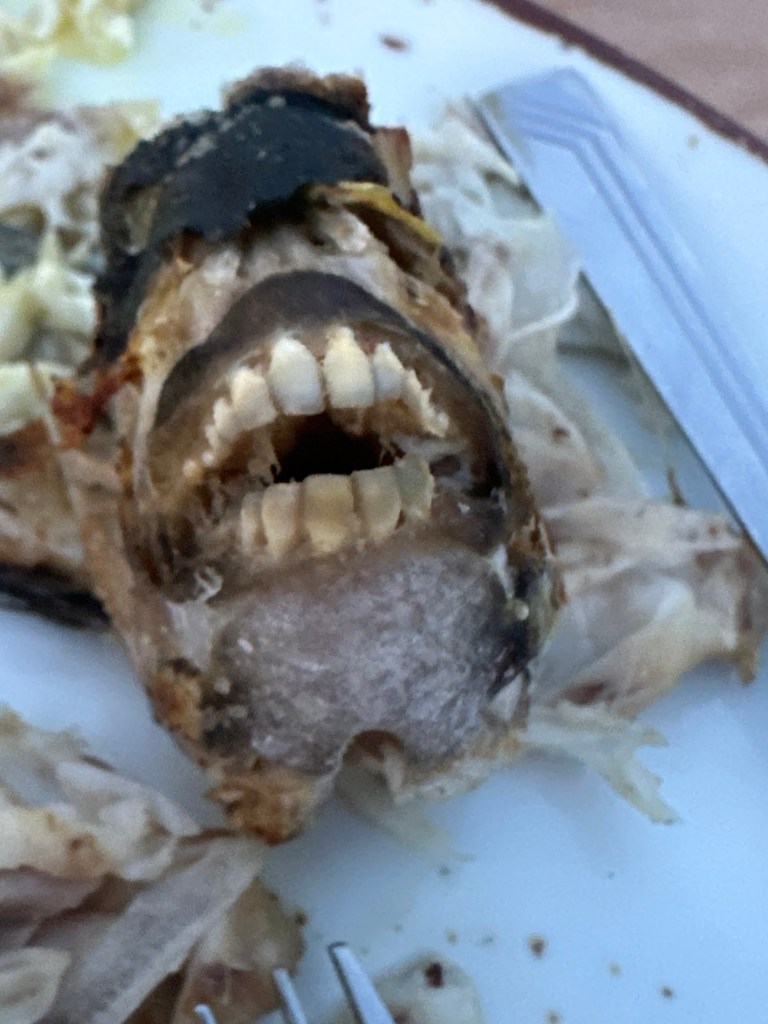
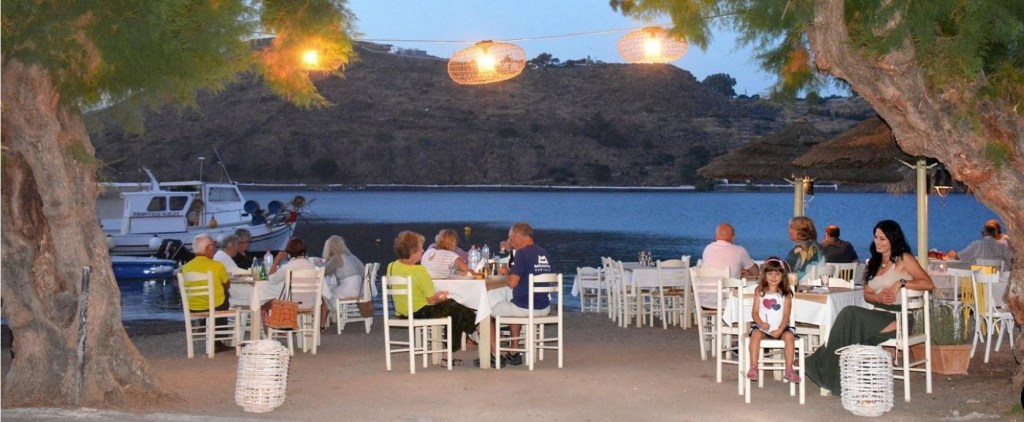
We eat on the beach at To Tsipourdidi Mas (https://totsipouradikomas.4ty.gr/el/), a chill Mediterranean fish restaurant just feet from the lapping tide. We enjoy a flambéed cheese made with a mix of local cheeses. We order salema porgy, a fish, which to our surprise, has human like teeth. We negotiate with Saloma, our server, for complete de boning, which is not the local custom, but we are not local and don’t want to choke. Despite the teeth, we savor this fish. The weather is perfect. A glowing orange moon begins to form. A breeze carries with it the scent of herbs and sea salt, and the stillness of the moonlight amplifies the feeling that time moves differently on Patmos, more slowly, more meaningfully.

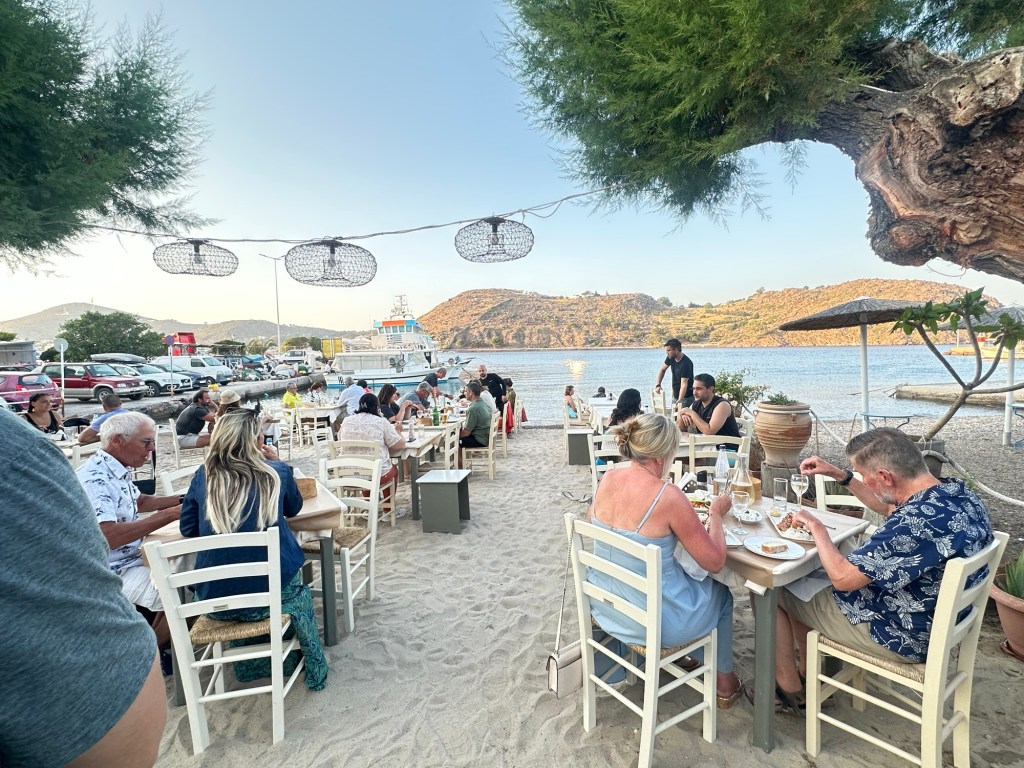
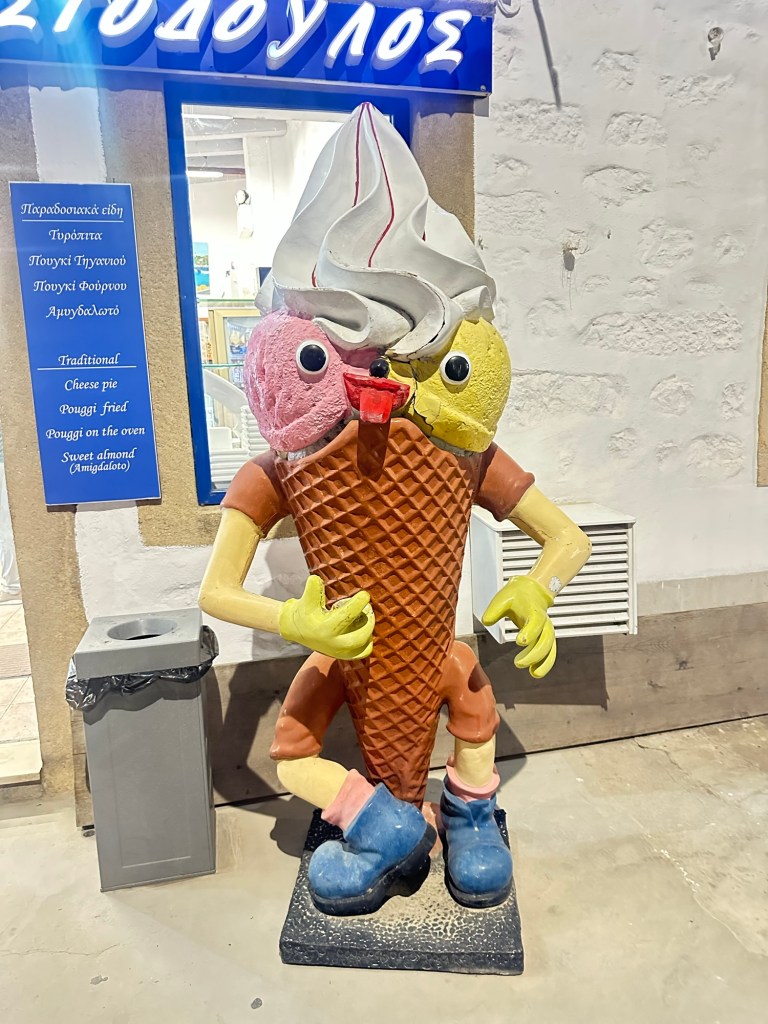
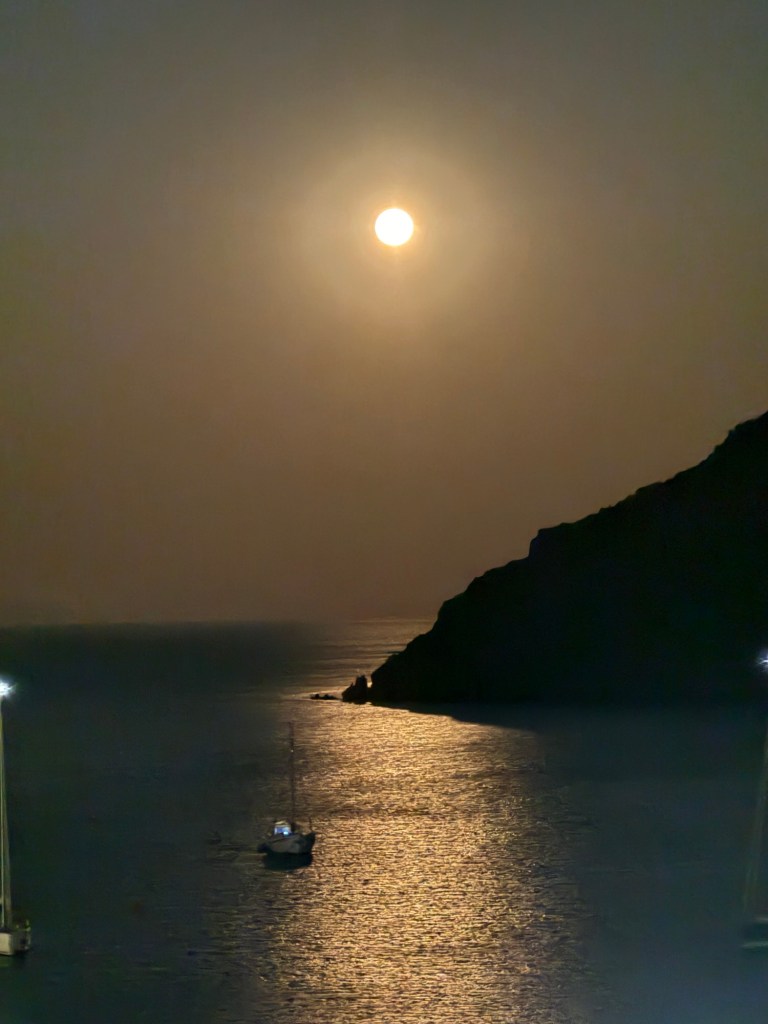
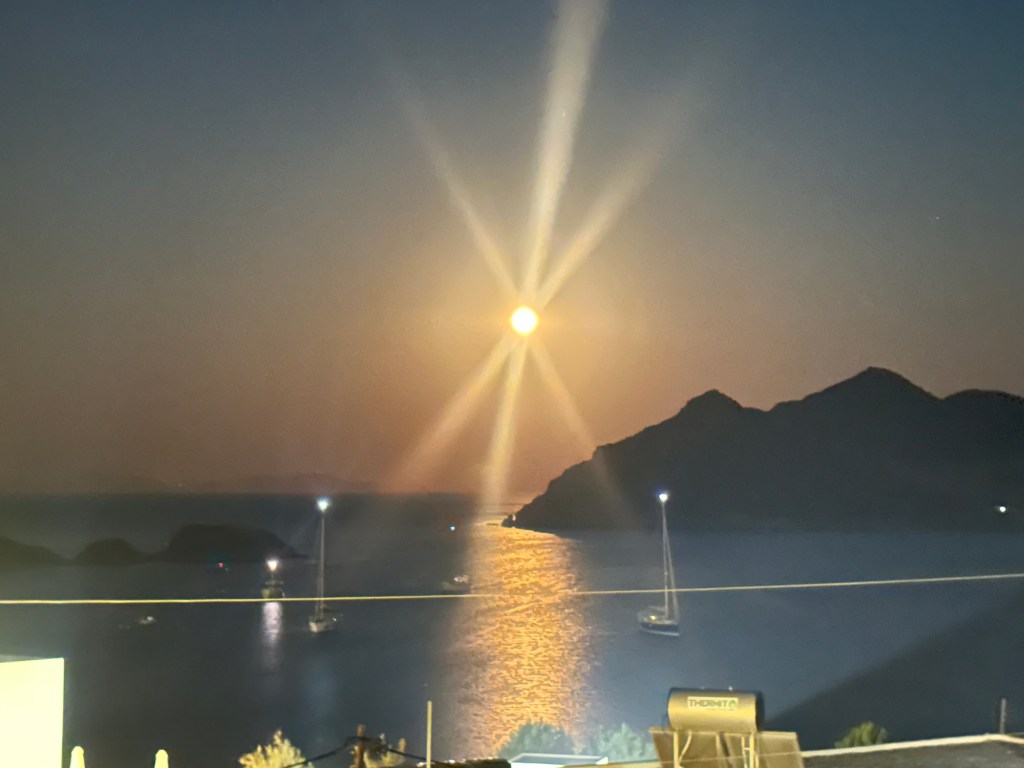
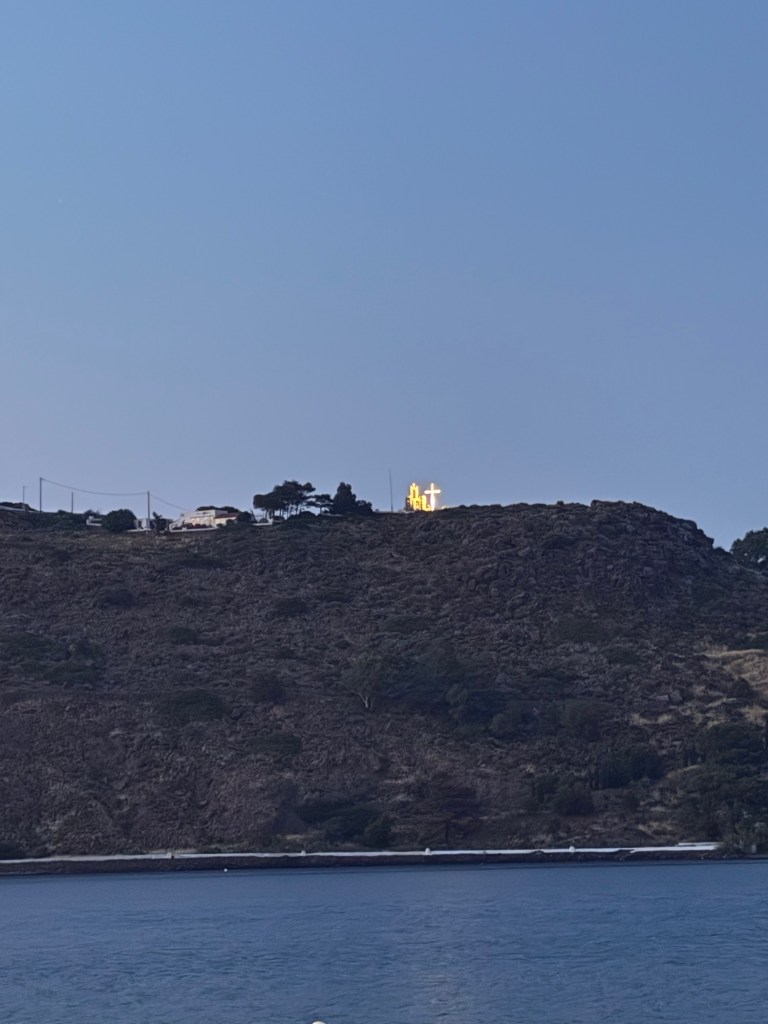
Patmos Skala feels eternal, almost contemplative—like the island itself, wrapped in its layers of myth, revelation, and quiet beauty. The relationship between the Greeks of Patmos and food is deeply rooted in tradition, community, and spiritual rhythm. Food on Patmos isn’t merely sustenance — it’s a cultural expression shaped by the island’s history, its religious heritage, and its natural bounty. Despite the quantity of food consumed, Charles insists on ice cream, and most of sun cave. Adonis takes us back to the hotel, but stops at a location he says is best suited to photograph the setting sun.

 YouDontKnowJackTravels